RSS
 

Posts Tagged ‘production’

Hasselblad X1D final production sample gallery

15 Apr

Of the recent digital medium format releases, one could argue the Hasselblad X1D carries the most-revered name. Based around a similar 44 x 33mm sensor found in the Pentax 645Z and Fujifilm GFX-50S, it offers the most ‘portability’ of the three, especially when coupled with its smaller leaf shutter lenses. Does the image quality live up to the name? Check out our samples to find out.

View our Hasselblad X1D sample gallery

View our Hasselblad X1d beta sample gallery

$ (document).ready(function() { SampleGalleryStripV2({“galleryId”:”4234210046″}) })

Sample photoSample photoSample photoSample photoSample photo

Articles: Digital Photography Review (dpreview.com)

 
Comments Off on Hasselblad X1D final production sample gallery

Posted in Uncategorized


Reclaiming Urban Food Production: 12 Smart Designs for Farms & Gardens

23 Feb

[ By SA Rogers in Architecture & Cities & Urbanism. ]

urban garden main

Most urban environments aren’t lacking in sunlight – it’s a lack of square footage and healthy soil that makes it hard to use these spaces to grow food. While many a high-tech concept design has envisioned vertical skyscraper farms or entire cities built from scratch, we need low-cost solutions that can be implemented into disused urban spaces, easily assembled and moved when necessary. These smart urban farming and gardening ideas reclaim pallets, cardboard tubes, shipping containers and bicycle wheels, and many take advantage of sunny available spaces on rooftops, in abandoned buildings or along stretches of hot concrete walls.

The Growroom: IKEA Flat-Pack Spherical Garden

space10 garden

ikea urban garden 1

ikea urban garden 2

ikea urban garden 3

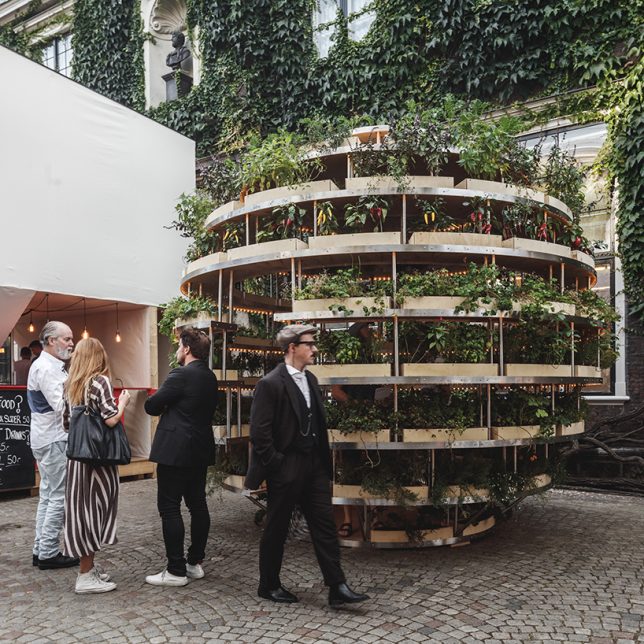
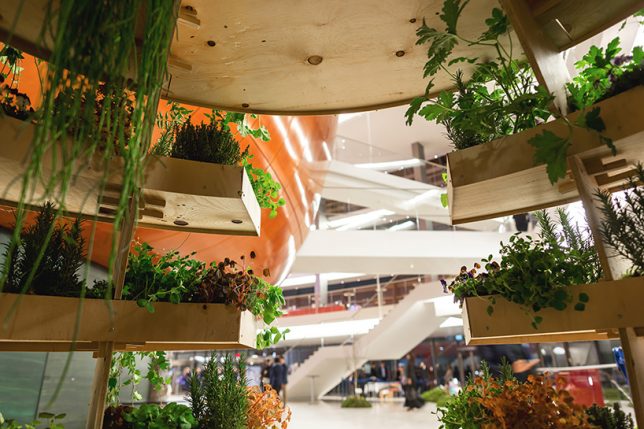
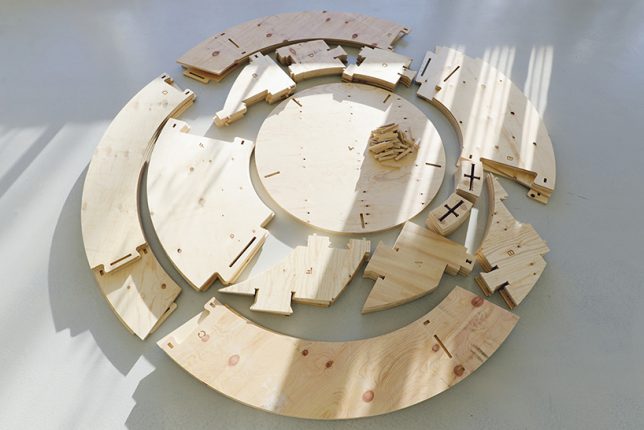
Developed by IKEA’s external innovation hub, Space10, the Growroom is a spherical structure that makes it easy to grow lots of food in a compact space thanks to its unique design. Since shipping the structure around the world would be too expensive and negate some of the benefits of local food sourcing, IKEA decided to offer the structure as an open-source design built with plywood, a CNC milling machine and a rubber hammer.

Floating Gardens in an Abandoned Chinese Factory

floating gardens 1

floating gardens 2

floating gardens 3

floating gardens 4

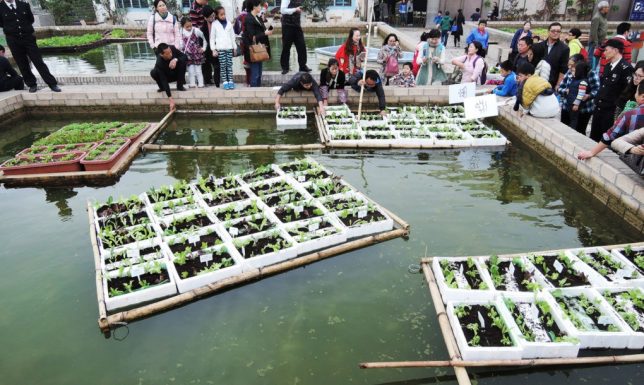
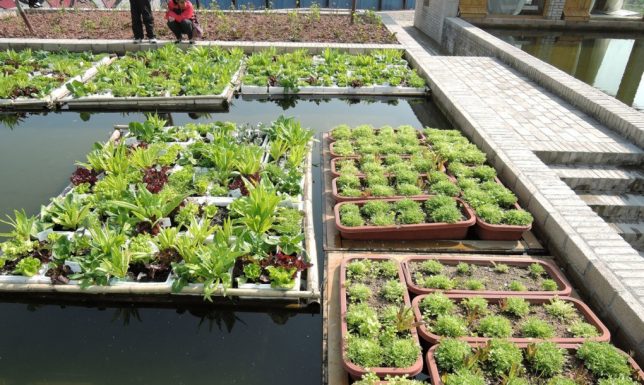
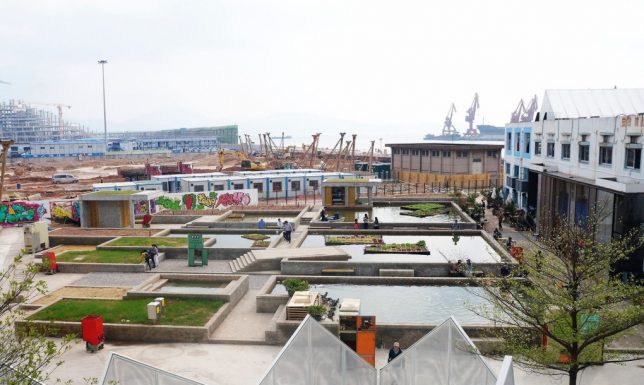
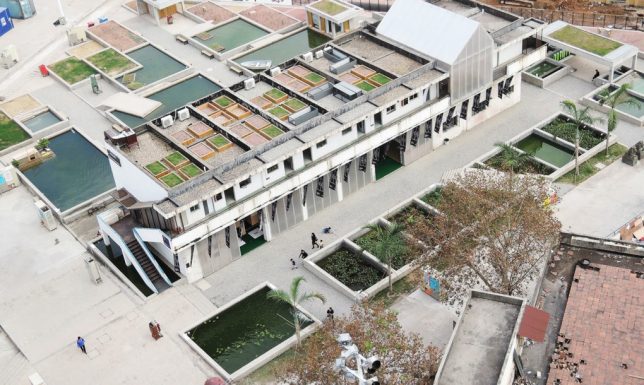
This area along the Pearl River Delta in Shenzhen was once a thriving community relying on fish ponds and water-based commerce, but most of that has since vanished in the face of rapid urbanization, leaving many abandoned structures behind. ‘Floating Fields’ occupies this space and makes it useful again as an aquaponic garden. Created for the Urbanism\Architecture Bi-City Biennale, the installation is an experiment in water-based gardening, algae cultivation, sustainable food production and water filtering in an underutilized urban environment.

Recycled Cardboard Tube Garden

recycled cardboard tube garden 1

recycled cardboard tube garden 2

Water-resistant, recyclable cardboard tubes provide the basis for a modern pop-up garden in Sydney by Australian design studio Foolscap. The tubes were used to build the walls of a temporary outdoor recreation space, taking inspiration from the formwork used to cast concrete columns in a nearby Sydney neighborhood. In addition to an outdoor theater, food and co-working areas, ‘Wulugul Pop Up’ had its own edible garden full of native plants.

Grid Garden on Wheels

grid garden on wheels

grid garden on wheels 2

grid garden on wheels 3

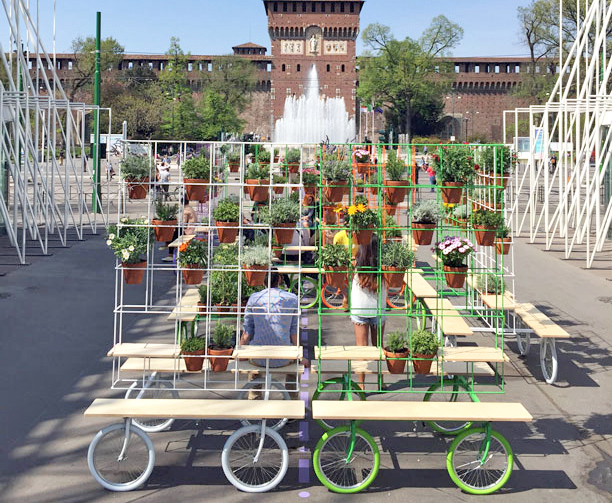
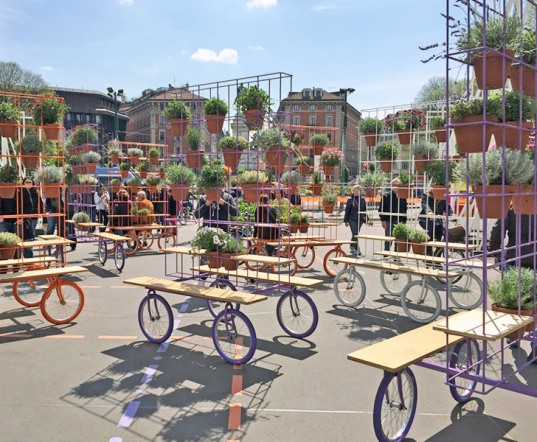
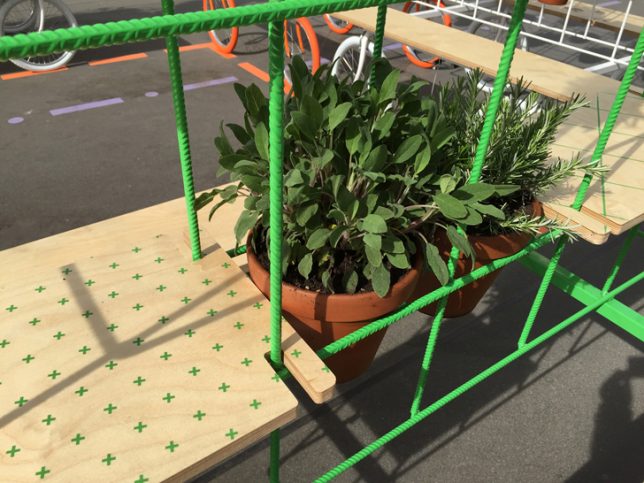
This clever portable garden rests on reclaimed bicycle wheels and features an open gridded design so sunlight can reach tiered plants. The ‘Why not in the garden?’ installation by A4A Rivolta Savioni Studio was literally rolled out into a Milan city square to demonstrate how concrete urban spaces can be temporarily used for food production.

Next Page – Click Below to Read More:
Reclaiming Urban Food Production 12 Smart Designs For Farms Gardens

Share on Facebook


[ By SA Rogers in Architecture & Cities & Urbanism. ]

[ WebUrbanist | Archives | Galleries | Privacy | TOS ]


WebUrbanist

 
Comments Off on Reclaiming Urban Food Production: 12 Smart Designs for Farms & Gardens

Posted in Creativity


ADOX is doubling the size of its film production plant in Germany

22 Feb

The analog revival seems to roll on, as film producer ADOX has announced it’s doubling the size of its facility that produces photographic chemicals, film and papers. This latest facility comes shortly after ADOX acquired a facility in Marley, Switzerland, which itself joined the company’s Berlin facilities. The new production plant is being constructed alongside the company’s current ‘crowded and stuffed’ facility in Germany.

Per a statement from ADOX, the additional space will enable ADOX to construct additional laboratories, a new emulsifying machine, build a large freezer for storing master rolls, incorporate a Super 8 production line, relocate its packaging factory and setup more offices. 

Via: PhotoRumors, DSLR Magazine

Articles: Digital Photography Review (dpreview.com)

 
Comments Off on ADOX is doubling the size of its film production plant in Germany

Posted in Uncategorized


Shooting With Your Creative Team & Post Production

18 Jul

Make It happen & Post-Production


Hi FashionPhotographyBlog.com readers,

Last time we talked about how to communicate with your creative team clearly using mood boards, today we are talking about how to make the process of shooting with your team and taking the shots into post-production run smoothly. So here we go…


Once everyone on the creative team and everything for the shoot is confirmed, I’ll reach out to agencies and find a girl that suits the idea. This isn’t always the case. Oftentimes you’ll see a model and be inspired by their look. 


Be sure to send out a call sheet the day before your shoot. This serves as a reminder for everyone as to the time and location of the shoot as well as provides everyone with the contact information for all involved. This is a standard protocol on any professional shoot.


fashion-photoshoot-run-sheet-example

 Then… Shoot! If you keep everything organized and set yourself a bit of a time table to stick to, you’ll be on track for a successful shoot. For “Surrealia,” we managed to shoot two models with several looks in just a few hours.


Remember, make it fun! If everyone is enjoying what they’re doing, it will show. Put on some music – ask the model what their favorite band is or put on something that sets the mood to help convey the feeling in the images.


Post-Production


I know, this is the least fun part of any shoot. The edit. Jocelyne and I decided to pick our final images together and made sure our selects portrayed the model and clothing nicely.


As with any good retouch.. It took forever. Well worth it though! After retouching the images and converting to black and white, it was time to send them off to Matt for illustration.


The process I went through with Matt is basically the same as the process you go through when sending images off to a retoucher:


1) Send over the images and let them do their thing (of course, with a general sense of guidance from you.)

2) You’ll receive a “first round” which you can mark up anything you dislike or don’t see fit and send it back for revisions.

3) Repeat the process of markups and revisions until the image is complete. Don’t forget to be conscious of budget when working with a retoucher.


Working with Matt was fantastic. There was bright color, organic shape, line; all the elements we had like in the editorials we found when doing our research. Except they suited us! Matt did an excellent job of taking those elements we liked and translating them to suit his vision and compliment my photographs.


The result? A batch of images I’m proud to have my name on and remain some of my favorites to this day.


The best thing you can do when planning a shoot is be meticulous. Leave no leaf unturned. Be sure to think of every detail and put your stamp on it. The same type of work goes into planning a test, however you don’t need as extensive a concept. It can be as simple as just shooting a portrait.


Hope you liked my posts about finding, planning and working with a creative team. As always, if you have any questions, feel free to leave a comment below or shoot me an email.


Until next time.. See ya!

Alana


IMAGE SOURCE:

Feature image: Ophelia by Gregory Crewdson

Image 1: courtesy of Alana Tyler Slutsky


Fashion Photography Blog

 
Comments Off on Shooting With Your Creative Team & Post Production

Posted in Uncategorized


DEAL: $5000 worth of Post Production Tools for Just $79

13 Jul

It’s the 7th and final day of our 2016 Summer Sale… and we’ve saved the biggest deal until last!

The good people over at Photographypla have made their Ultimate Photography Bundle, worth a whopping US$ 5,000+, available to dPS subscribers for just US$ 79.

NewImage

Yes, $ 5,000+, worth of resources for Lightroom and Photoshop for $ 79.

In it you’ll get:

  • 1,000+ Lightroom presets
  • 1,000+ Photoshop actions
  • 500+ actions for Photoshop Elements to apply a huge variety of different effects to your photos in no time.
  • 1,000+ photo overlays for weddings, engagements, graduations and more
  • 130+ print templates with announcements for births, graduation, weddings and more
  • 120+ digital frames
  • Collection of business and marketing resources (including contract templates)

Why buy presets or actions in small packs when you can get this MASSIVE bundle at an amazing price? Get it while it lasts!

googletag.cmd.push(function() {
tablet_slots.push( googletag.defineSlot( “/1005424/_dPSv4_tab-all-article-bottom_(300×250)”, [300, 250], “pb-ad-78623” ).addService( googletag.pubads() ) ); } );

googletag.cmd.push(function() {
mobile_slots.push( googletag.defineSlot( “/1005424/_dPSv4_mob-all-article-bottom_(300×250)”, [300, 250], “pb-ad-78158” ).addService( googletag.pubads() ) ); } );

The post DEAL: $ 5000 worth of Post Production Tools for Just $ 79 by Darren Rowse appeared first on Digital Photography School.


Digital Photography School

 
Comments Off on DEAL: $5000 worth of Post Production Tools for Just $79

Posted in Photography


Sony expects to restart image sensor production by end of month

17 May

Sony, one of the biggest image sensor manufacturers for the photographic industry, has announced its sensor plant in the earthquake-hit Kumamoto region will be ready to begin production again by the end of this month.

The company says it has been able to resume back-end processes like testing sensors and camera modules, and that assembly lines for new units should begin working again any day now. Wafer manufacture, it says, should begin on 21st May, though not all lines will start on that date. 

Damage caused by the earthquake forced the Sony Semiconductor Manufacturing Corporation to halt production at the Kumamoto Technology Center where it produces imaging sensors for digital cameras. According to a report from the Nikkei Asian Review, the damage and lost business caused by the series of earthquakes and aftershocks has cost the Japanese economy $ 4.6 billion. Sony itself says it is still evaluating the cost of the disaster, and it is due to publish forecast figures for the current financial year on 24 May.

For reports on Sony’s recovery process see the company’s investor relations website.


Press release:

Status of Sony Group Business Operations Affected by 2016 Kumamoto Earthquakes
(Fourth Update)

The status of Sony Group business operations affected by the earthquake of April 14, 2016 and subsequent earthquakes in the Kumamoto region, as of today, is as follows:

Operations at Sony Semiconductor Manufacturing Corporation’s Kumamoto Technology Center (located in Kikuchi Gun, Kumamoto Prefecture), which is the primary manufacturing site of image sensors for digital cameras and security cameras as well as micro-display devices, had been suspended due to the impact of the earthquakes. However, as of May 9, 2016, testing operations, which are one of the back-end processes carried out on the upper layer of the building, have resumed and other back-end processes, such as assembly, are also expected to restart sequentially beginning May 17, 2016.

Wafer processing operations located on the lower layer of the building are expected to restart sequentially beginning May 21, 2016.

Although there was a delay in the supply of components to Sony from certain third-party suppliers that also have manufacturing facilities in the Kumamoto region, inventory adjustments have been made and a timeframe for regaining supply levels is now in place, so no material impact is anticipated on Sony’s business operations.

Based on the above, the effect of the Kumamoto earthquakes on business operations within the Mobile Communications, Game & Network Services and Home Entertainment & Sound segments is not anticipated to have a material impact on Sony’s consolidated results.

On the other hand, regarding the Devices and Imaging Products & Solutions segments, the impact on Sony’s consolidated results due to the effect of the earthquakes, including from opportunity losses, as well as expenses for recovery and reinforcement work, continues to be evaluated. Sony is scheduled to announce on May 24, 2016 its consolidated results forecast for the fiscal year ending March 31, 2017, as well as its forecasts for the Mobile Communications, Game & Network Services, Imaging Products & Solutions, Home Entertainment & Sound and Devices segments for the fiscal year ending March 31, 2017.

Articles: Digital Photography Review (dpreview.com)

 
Comments Off on Sony expects to restart image sensor production by end of month

Posted in Uncategorized


Fujifilm facilities resume some production following Kumamoto earthquakes

03 May

Fujifilm is slowly but surely bringing a key subsidiary’s production facilities back online after earthquakes forced a shut down, and expects to be back at full production by the end of May. In a statement issued today, Fujifilm confirmed that trial operations began on April 23 at the facilities and were ultimately successful. Barring any further problems, the company anticipates being back at pre-earthquake production levels by the end of this month.

Fujifilm Kyusyu Co., Ltd operates the facilities that were impacted by the earthquakes that struck Japan’s Kumamoto prefecture on April 16. These facilities are responsible for manufacturing a key component of LCD panels. A few days after the event, the company announced that operations in the area would be stopped while assessments were performed. None of the facilities were found to be seriously damaged, but at the time the company said it hadn’t yet decided when operations would restart, and that it would hold a trial run on April 23 and 24.

Inspections of warehouse stock are still underway; as of April 19, Fujifilm says it has been shipping out products that pass inspections. ‘Fujifilm Kyusyu is doing its utmost to resume all operations,’ says the company; the rate at which it does so is determined in part by the number and intensity of aftershocks.

Articles: Digital Photography Review (dpreview.com)

 
Comments Off on Fujifilm facilities resume some production following Kumamoto earthquakes

Posted in Uncategorized


Epson announces mass production of 4.41m dot LCD likely used in Leica SL

11 Dec

Epson has announced its latest electronic viewfinder panel: a 4.41m dot SXGA+ display, a spec that may sound familiar to anyone who’s been reading about Leica’s SL full-frame mirrorless camera. Epson had shown a mockup of the panel at CP+ back in February 2015, and says the unit is now in mass production.

The 4.41m dot unit offers an SXGA+ display: 1,400 x 1,050 pixels. This equates to 1.87x as many pixels as the existing XGA viewfinders used in most high-end mirrorless cameras: a 36% increase in linear resolution. Everyone who’s used it at DPReview has been very impressed by the level of detail shown by the SL’s 4.41m dot viewfinder.

Leica has previously offered Epson-based EVFs as accessory finders for its X1 and X2 models, but these were likely to have been brought in from Olympus, given the similar styling and cross-compatibility with Olympus units. Considering the dot count and panel size (0.66″), it seems very probable that this is the LCD panel in the SL.

The Leica SL, as seen from behind

At present, most high-end EVFs we’ve seen are XGA 2.36m dot displays, using either LCD or OLED technologies. Olympus used LCD panels in its earlier OM-D cameras but has shifted towards OLED in its latest generation. Likewise, Fujfilm used LCDs in its X-Pro1 and X100 series models, only to embrace OLED across the rest of its range. Despite this shift, we’d be surprised if we didn’t start seeing this LCD panel in some of the higher-end mirrorless cameras over the coming year or so, especially given the greater longevity of LCD panels that Leica mentioned as its reason for choosing the technology.

That said, the 0.66″ panel size could limit its usage, since this is considerably larger than the 0.48″ LCD and 0.5″ OLEDs currently in use.

Articles: Digital Photography Review (dpreview.com)

 
Comments Off on Epson announces mass production of 4.41m dot LCD likely used in Leica SL

Posted in Uncategorized


Phase One buys Mamiya, gains ownership of camera and lens production

03 Dec

Digital medium format brand Phase One has bought the whole of the Mamiya Digital Imaging Company and has taken over Mamiya’s Saku factory for its Japanese HQ. The Danish company has had a long-standing relationship with the Japanese camera and lens manufacturer, and since 2009 has owned 45% of the company’s shares. Phase One sold customised Mamiya bodies and redesigned lenses under its own brand name, with the 645DF+ being a very close relation to the Mamiya 645AFD III – cameras the two companies launched simultaneously in 2012. 

For Phase One the move will almost certainly be about acquiring a closer control over the manufacturing side of its business so the company can enjoy a freer reign over what happens in the factory. What Phase One has been able to do in terms of the bodies it offers has so far been dependent on what Mamiya could or was prepared to do, and with no products of its own Mamiya may not have been able to invest sufficiently to develop significantly different new cameras. 

The new president of Phase One Japan, Makoto Honda, hinted that optical design and lens upgrading would also be a major focus in comments in the press release: ‘Phase One Japan is committed to developing new and custom designed masterpiece leaf shutter optics in close partnership with top photographers, imaging companies and long term design partner Schneider Kreuznach.’ 

At the moment lenses branded ‘Phase One’ are made by Mamiya and require in-body focal plane shutters. All the compatible leaf-shutter lenses are made with help from Schneider in Germany. That may not change, of course, but the buyout gives Phase One more control of what can and can’t be done. What the deal will mean for the future products of the company we’ll have to wait and see. 

Mamiya was started by camera designer Seiichi Mamiya in 1940, and produced the wonderful Mamiya Six rangefinder series and then the equally fabulous Mamiyaflex TLRs in its first ten years. Having started in medium format the company went on to produce rangefinder and SLR cameras for 135 film, as well as slim pocket compacts for the miniature ‘spy’ 16mm format film. The modern 6×4.5cm format cameras were introduced in 1975, and it was these that went on to become the basis of the current Phase One digital bodies. Perhaps some of the best loved and revered models the company made were the RB and RZ 6x7cm studio cameras, which were big and heavy but lovely to use. 

The company struggled on its own in the digital market and its 2004 ZD integrated digital camera, and the ZD back for Mamiya film bodies didn’t achieve great success. Phase One bought a large stake in the company in 2009, and in 2012 formed the Mamiya Leaf medium format brand. 

The original company was also a producer of fishing rods and reels until 2000. 

For more information on Phase One see the company’s website. 


Press release: 

Phase One acquires Mamiya Digital Imaging (MDI) assets & establishes Phase One Japan

COPENHAGEN, December 2, 2015 — Phase One, A/S, the leading provider of open-platform, high-end camera systems and solutions, today announced that it has acquired the assets of Mamiya Digital Imaging Company, Ltd (MDI) and has appointed Makoto Honda as the new president of Phase One Japan. Terms of the transaction were not disclosed.

Mamiya has held a long and established reputation in the camera sector.  As a 45 percent shareholder in MDI since 2009, Phase One has developed detailed insight into the camera & lens design and production process and engineered important improvements through its close collaboration with the MDI team in Japan. With this transaction, Phase One now also takes total ownership for all aspects of design and development of medium format camera systems, central shutters & lenses.

“Phase One is now the only medium format camera company that has full internal control of all critical components in a world class imaging system,” says Niels V. Knudsen Phase One’s Image Professor. “This is the best news in many years for quality-focused photographers and imaging companies as Phase One works to consistently raise the bar in medium format photography.” 

“The very successful introduction of the Phase One XF Camera System in June 2015 illustrates the power of our collaboration,” says Henrik Håkonsson Phase One President & CEO.  He added, “The Phase One XF Camera System is the new much improved standard for medium format photography, with the incorporation of significantly enhanced technology.”

Phase One’s mission is to keep pushing the limits for ultimate camera systems and imaging quality, meeting the demand of the world’s leading photographers and industrial imaging companies. 

Makoto Honda President of Phase One Japan said: “Phase One Japan is committed to developing new and custom designed masterpiece leaf shutter optics in close partnership with top photographers, imaging companies and long term design partner Schneider Kreuznach.” 

About Phase One

Phase One is the leading provider of open-platform, high-end camera systems and solutions. Phase One camera systems and lenses are designed to deliver superior quality image capture and investment value. Phase One’s Capture One Pro and Media Pro software help streamline capture and post-production processes for both medium format and 35mm cameras. Phase One products are known for their quality, flexibility and speed enabling pro photographers and industrial imaging companies shooting in a wide range of formats to achieve their creative visions without compromise. 

Phase One is based in Copenhagen with offices in New York, London, Tokyo, Cologne, Hong Kong, Shanghai, and Tel Aviv. Phase One and Capture One are registered trademarks of Phase One A/S. Mamiya is a trademark licensed by Phase One A/S. All other brand or product names are trademarks or registered trademarks of their respective holders.

About Mamiya Digital Imaging

Mamiya Digital Imaging is the digital successor to the reputable Mamiya brand, an innovative company fresh with enthusiasm and dedicated to continuing a legacy of excellence. Mamiya has consistently been a forerunner in medium format camera design, and Mamiya lenses, manufactured following a tradition of precision and quality, are celebrated worldwide. Mamiya Digital Imaging is headquartered in Tokyo with a factory in Saku, Japan and totals a team of 80 dedicated engineers and technicians, and distributors in more than 100 countries. 

Articles: Digital Photography Review (dpreview.com)

 
Comments Off on Phase One buys Mamiya, gains ownership of camera and lens production

Posted in Uncategorized


Sony Xperia Z5 Premium features first 4K screen on a production smartphone

03 Sep

Sony announced the Xperia Z5 Premium today, boasting a 5.5″ 4K display. It was unveiled alongside the Xperia Z5 and Xperia Z5 Compact, and each offers a new 23MP 1/2.3-inch Exmor RS BSI CMOS sensor with an F2.0 lens. A new hybrid AF system claims to acquire focus in 0.03, which would make it the fastest AF system on any current smartphone camera. Read more

Articles: Digital Photography Review (dpreview.com)

 
Comments Off on Sony Xperia Z5 Premium features first 4K screen on a production smartphone

Posted in Uncategorized