RSS
 

Posts Tagged ‘Power’

Android-powered Samsung Galaxy Camera 2 adds processing power

03 Jan

GALAXY-Camera-2_004_Right-Angle1_white.png

Samsung has released its newest Android-powered Galaxy Camera, aptly named the Galaxy Camera 2. While the GC2 retains the slim form factor, 21X zoom lens, and huge 4.8-inch touchscreen LCD of its predecessor, it adds a faster quad-core processor, double the memory, a more recent version of Android (4.3), and a more powerful battery. Naturally, the camera has Wi-Fi built in (with NFC), and has the latest and greatest Samsung ‘Smart’ features, including a ‘selfie alarm’. 

News: Digital Photography Review (dpreview.com)

 
Comments Off on Android-powered Samsung Galaxy Camera 2 adds processing power

Posted in Uncategorized


Only in Russia: World’s First Floating Nuclear Power Plant

16 Nov

[ By WebUrbanist in Technology & Vehicles & Mods. ]

russian floating power plant

It sounds at best far-fetched and at worst frightening, at least at first, but this unique water-based energy station is already under construction and is designed to (safely) generate power and fresh water to over 200,000 people.

russian nuclear power station

The Akademik Lomonosov is being built at a submarine construction facility and is set to launch before 2020. While it is set to be stationed offshore, it opens up a new world of possibilities for fueling remote settlements, temporary outposts, research stations or floating cities.

russian power plant design

The vessel will produce an impressive 70 megawatts of electricity – more than enough to support a mid-sized city. It will also desalinate ocean water to increase regional freshwater supplies.

russian mobile energy source

With the world wondering about the fate of the Fukushima plant in Japan, following its fateful impact by a tsunami and subsequent fallout, it seems like a strange time to be working on projects where water meats nuclear power. Still, in this case the uranium is far less enriched and of the same type being used in Russian icebreakers already. The power plant is a project of LLC Baltiysky Zavod Shipbuilding, a St. Petersburg division of United Shipbuilding Corporation (USC).

Share on Facebook


[ By WebUrbanist in Technology & Vehicles & Mods. ]

[ WebUrbanist | Archives | Galleries | Privacy | TOS ]


WebUrbanist

 
Comments Off on Only in Russia: World’s First Floating Nuclear Power Plant

Posted in Creativity


The Power of Black & White

03 Nov

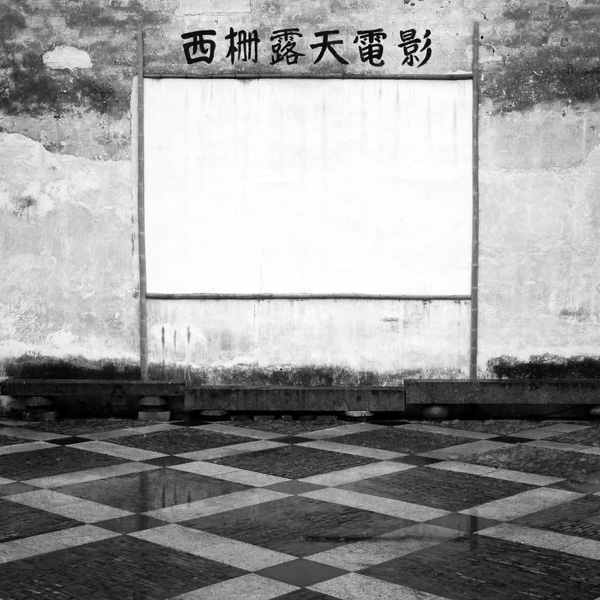
The power of black & white photography

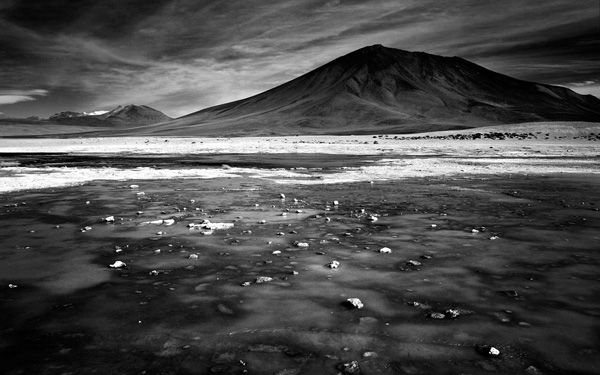
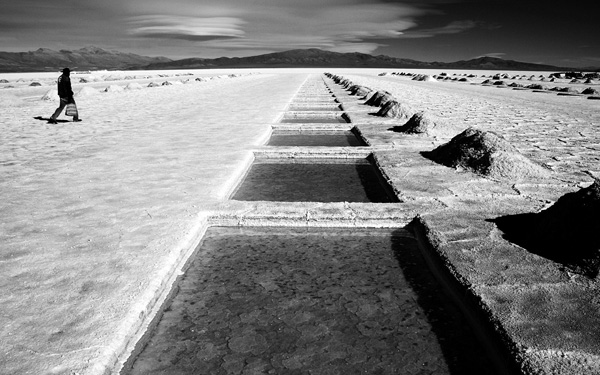
If you read my articles about long exposure photography and intentional camera movement in the landscape you may have noticed a common theme amongst the photos illustrating the articles – most of them were in black and white.

I’ve been thinking about the reasons that black and white photography appeals to me. Regular readers of my articles will know that I’m a big fan of tonal contrast in both colour and monochrome work. I use it as the basis of many of my compositions and it helps me create atmosphere and mood.

But things became clearer today when I read an interview with Joel Tjintjelaar, a well-known fine art photographer who works exclusively in black and white. He is one of the leaders in the discipline of long exposure photography (I interviewed him myself as a case study in my book Slow).

The power of black & white photography

In the interview Joel talks about photos representing the vision, or the essence, of the artist rather than reality. Black and white, in addition to being a beautiful medium in its own right (he uses words like mysterious, nostalgic and dramatic to explain its appeal) is a step removed from reality. Add in changes in tonal values achieved in post-processing, the surreality of long exposure photography techniques and the manipulation of light (also in post-processing) and you finish with a photo (or a work of art, depending on your world view) that is an expression of the artist, rather than the original subject.

Make sense? There are many ways of expressing yourself creatively in photography, and black and white is just one of them, but it certainly is a powerful medium. Trends come and go. Whether it’s the fast film, high grain techniques popularised by Robert Farber and Sarah Moon in the seventies, or the Photoshop based techniques of modern times such as using texture layers or HDR, most of these are ephemeral. They won’t be remembered as anything more than dated trends in decades to come. But black and white will endure.

The power of black & white photography

Learn more about black & white photography

Now that I’ve piqued your interest you’ll no doubt want to learn more about black and white photography. I’ll write about that in the future, but first I think it’s a good idea to go have a look at the work of some of the best black and white photographers out there. I’ve picked out five of my favourite photographers from 500px – looking at their work will help you appreciate the true power of the monochrome image.

Have a think about the following points while you look through their portfolios:

  • Why do you think these photographers have chosen to work in black and white? How would their images look if they were in colour?
  • How important is tonal contrast in the composition of their images?
  • How important are other elements of composition, such as line, texture, form and shape? How does black and white emphasise these elements?
  • How important is light in these images?
  • How far removed from reality are the photos in these portfolios? How do they express the photographer’s vision?

Here are the links:

Hengki Koentjoro

Hengki is an Indonesian photographer who creates beautiful black and white landscapes (read my interview with him here).

Sabrina de Vries

Sabrina is a young Dutch photographer who creates black and white portraits. Some of her work is in colour, so it’s a good chance to compare the way she works in both mediums.

Andy Lee

Andy is a professional film maker and photographer who works in black and white. Tonal contrast is a strong element of his work.

Joel Tjintjelaar

You should definitely take a look at Joel’s work. One of the interesting things about the way that Joel works is his painstaking attention to detail – he may spend 40 hours working on a single image before he is happy with it. This approach is very unusual.

Michael Diblicek

Michael shoots both the landscape and architecture. He is another photographer who uses tonal contrast really well (read my interview with him here).

Mastering Photography
Mastering photography ebook

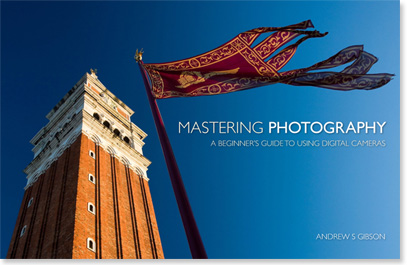
My ebook Mastering Photography: A Beginner’s Guide to Using Digital Cameras introduces you to photography and helps you make the most out of your digital cameras. It covers concepts such as lighting and composition as well as the camera settings you need to master black and white photography and take photos like the ones in this article.

Post originally from: Digital Photography Tips.

Check out our more Photography Tips at Photography Tips for Beginners, Portrait Photography Tips and Wedding Photography Tips.

The Power of Black & White

The post The Power of Black & White by Andrew Gibson appeared first on Digital Photography School.


Digital Photography School

 
Comments Off on The Power of Black & White

Posted in Photography


How to Harness the Power of Lightroom Print Collections

20 Oct

LR print collection opener

In a post last year I explained a process for exporting images from Lightroom (http://digital-photography-school.com/output-from-lightroom-to-your-blog) sized and all ready for posting to a blog. Since then I discovered a more robust solution to the problem of outputting images using a custom print layout from Lightroom. This can be used when printing images or saving them as jpeg files.

The process of preparing and outputting images can be simplified by taking advantage of the Single Image/Contact Sheet Layout in Photoshop and combining this with a print collection. The result is that printing to a specific layout is as easy as dropping the image into a collection and switching to the Print module and clicking to print – it’s a simple process once it is all setup.

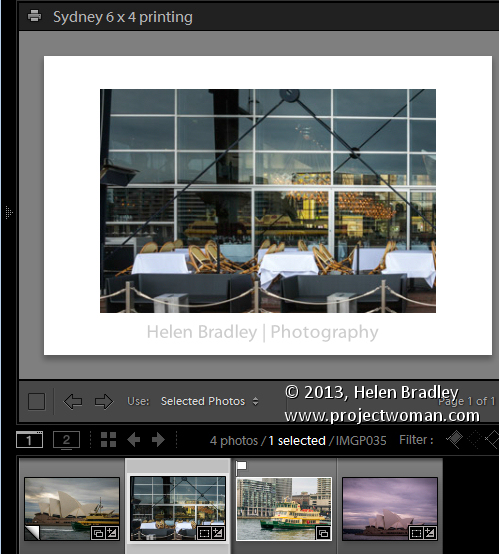
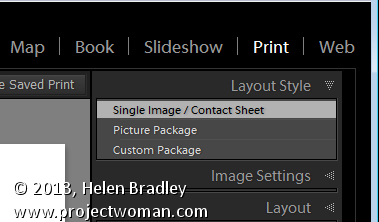
To do so, start out by selecting an image to use to configure your print layout and click to launch the Print module. In the top right panel select Layout Style: Single Image/Contact Sheet. The image which appears on the page is the one selected in the filmstrip.

LR print collection 1

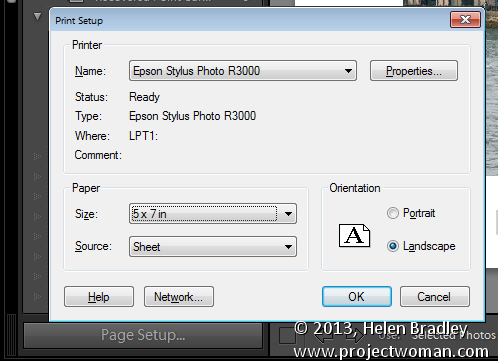
Set up this image so that it looks the way you want to print all images of this type. If you plan to print the image to paper, click Page Setup and select your printer and the page size and orientation.

LR print collection 2

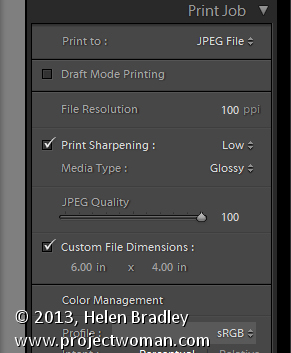
To print to a file, open the Print Job panel and from the Print to dropdown list select JPEG file. Deselect the Draft Mode Printing checkbox, select Custom File Dimension and set the output dimensions and file resolution.

LR print collection 3

Adjust the image size and placement on the page using the Image Settings and Layout panel options. You can also add an Identity Plate and/or Watermark as desired.

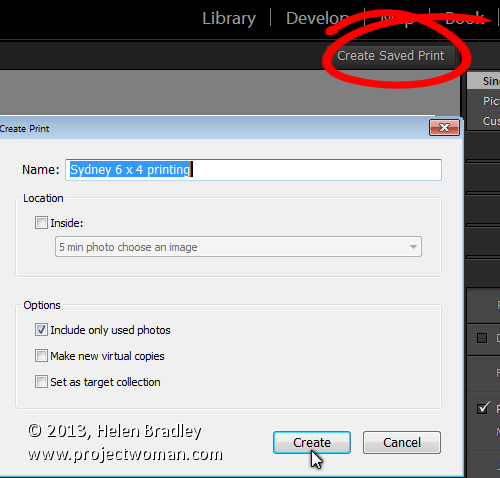
Once you are done, click the Create Saved Print button at the top right of the screen above the print layout and type a name for your new collection. This saves the image and the layout as a special Print collection in the Collections panel.

LR print collection 4

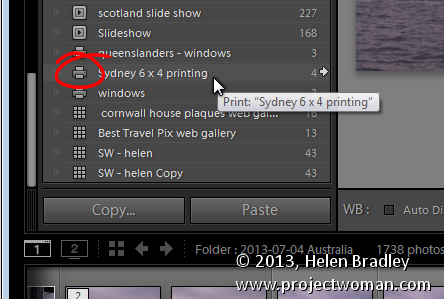
In future to set up images ready to print them, add them to this collection in the Library module, double click the collection in the Collections panel and it will automatically launch the Print module.

Click on any image in the filmstrip and the image will be assembled ready to print or save to a jpeg file.

LR print collection 5

A number of readers have asked me for solutions to outputting images with watermarks in different positions and using different text colors from Lightroom. If you’re outputting to jpeg files or printing images you can do this using this process. Set up a print collection for each of the watermark options. You can then drop the images into the appropriate collection and they’ll be automatically laid out ready for printing. The layouts are saved in the collection so simply selecting the collection automatically recreates your layout.

Post originally from: Digital Photography Tips.

Check out our more Photography Tips at Photography Tips for Beginners, Portrait Photography Tips and Wedding Photography Tips.

How to Harness the Power of Lightroom Print Collections

The post How to Harness the Power of Lightroom Print Collections by Helen Bradley appeared first on Digital Photography School.


Digital Photography School

 
Comments Off on How to Harness the Power of Lightroom Print Collections

Posted in Photography


Black-and-white images capture the power of summer storms

02 Sep

Mitch-Dobrowner_Arm-of-God.jpg

Summer in North America means severe weather for much of the continent. Powerful storms are accompanied by unusual cloud formations, signs of the violent atmospheric conditions that spawn turbulent weather. Photographer Mitch Dobrowner and guide Roger Hill have spent the past few summers traveling the US chasing storms, and creating stunning black-and-white images in the process. Click through to see some of these gorgeous photos of some ugly weather.

News: Digital Photography Review (dpreview.com)

 
Comments Off on Black-and-white images capture the power of summer storms

Posted in Uncategorized


Composition and the Power of Line

21 Aug

Composition and line

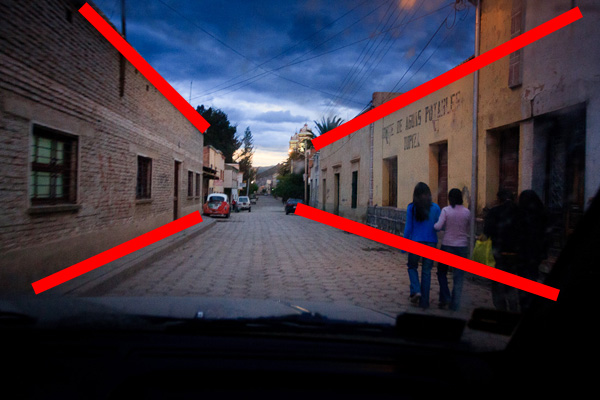
Lines are all around us in photography. Conscious use of line can add depth or dynamism to your composition. Let me show you what I mean. Take a look at the following image:

Composition and line

It’s an okay landscape. l like it, but it’s nothing special. Maybe what it lacks is a sense of depth. Now compare it to this landscape:

Composition and line

See how three-dimensional it looks by comparison? The lines in the composition create the illusion of depth. They converge as they disappear into the distance creating a sense of distance and space. I’ve marked the lines so you can see them clearly:

Composition and line

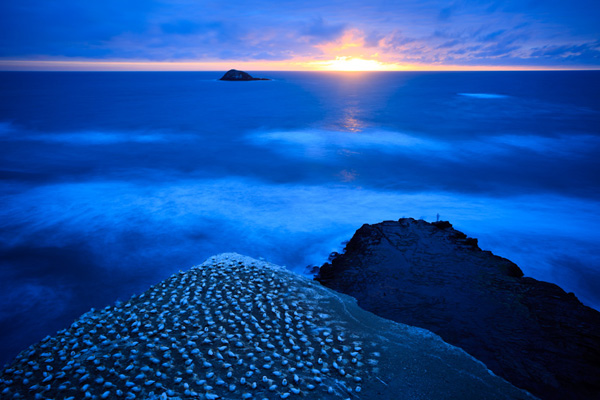
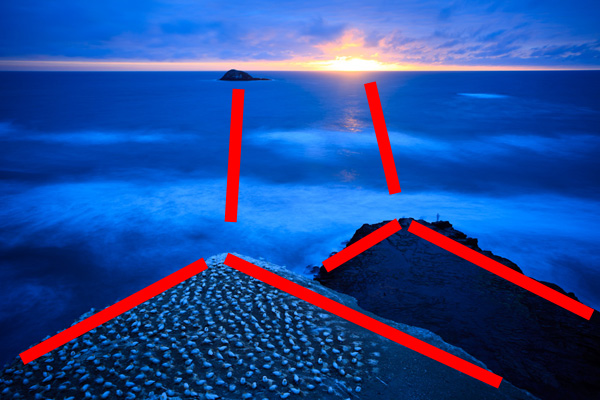
Not every landscape has lines that are so easy to find. Most of the time they are more subtle. In this landscape, the triangular shapes of the rocks in the foreground are like arrows that point to the island in the distance and the setting sun:

Composition and line

It is almost a case of implied line, rather than actual line. The shape of the rocks is a visual clue that directs the eye along invisible lines to the horizon:

Composition and line

Let’s look at this image again in a different way. There is a strong horizontal line in the distance created by the horizon. What happens if we crop the image to a panorama? The ‘feel’ of the photo is completely different. Horizontal lines direct the eye from side to side and create a sense of stability and peace. The panoramic crop emphasises that:

Composition and line

Composition and line

Whereas in the original image the implied lines create a sense of motion. The composition is more dynamic. The principles here are:

  • If you want to create a landscape with a peaceful, tranquil feel, then use horizontal lines.
  • If you want to create a more exciting, dynamic landscape then use diagonal lines.
  • In landscape photography, wide-angle lenses emphasise lines that lead from the foreground to the horizon.

Line outside the landscape

Line comes into play in subjects other than landscapes. You need to train your eye to look for lines, and then figure out ways to use them in your composition. Remember lines are not just straight. They can be curved, they can even be implied. Here’s a photo I took with a very powerful diagonal line that creates a dynamic, exciting composition:

Composition and line

Composition and line

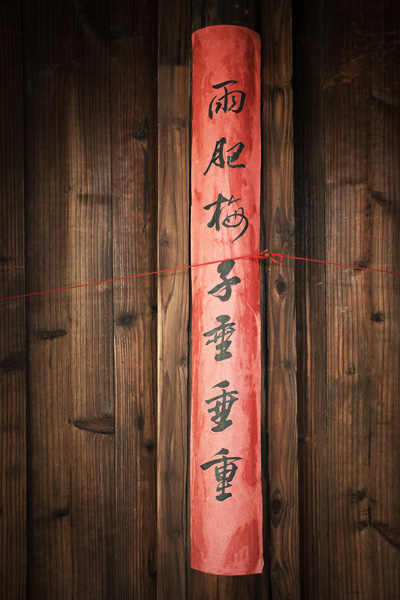
Next, here’s a photo that uses a strong vertical line. The line created by the shape of the red sign is echoed by the lines in the wooden wall. The red string creates another line that intersects the others. See how the vertical line isn’t nearly as dynamic as the diagonal line in the previous image?

Composition and line

Composition and line

Lines in portraiture

The most obvious use of line is in landscape photography, but is it useful in portraiture? I think so, although again it’s a case of subtle use of line. In this example, the woman’s arms create lines that lead the eye up through the image to her face:

Composition and line

The lines are created by tonal contrast – her arms are a light tone and contrast strongly against her black dress and the dark background:

Composition and line

Final thoughts

Lines are all around us and are a very useful tool that can help you create strongly composed images. One way of making the most out of line is to keep the composition of your images as simple as possible. A busy image has lots going on that may distract the eye from elements such as line. Simplifying the composition makes elements like line stronger and more effective.

Mastering Photography

Composition and line

My latest ebook, Mastering Photography: A Beginner’s Guide to Using Digital Cameras introduces you to digital photography and helps you make the most out of your digital cameras. It covers concepts such as lighting and composition as well as the camera settings you need to master to take photos like the ones in this article.

Post originally from: Digital Photography Tips.

Check out our more Photography Tips at Photography Tips for Beginners, Portrait Photography Tips and Wedding Photography Tips.

Composition and the Power of Line


Digital Photography School

 
Comments Off on Composition and the Power of Line

Posted in Photography


Gravity-Defying House Gives Visitors Climbing Power

03 Aug

[ By Delana in Art & Installation & Sound. ]

dalston house gravity defying art installation

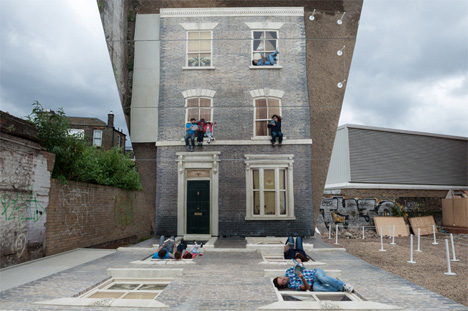
Some London residents have recently acquired an incredible ability to scale walls with ease. They climb the facade of a building, sit quietly on windowsills, and simply enjoy their ability to see the world from a different angle.

dalston house installation art

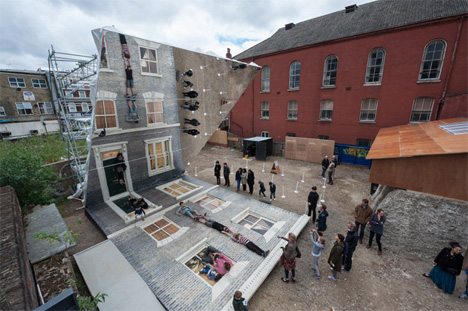
The illusion is made possible by a large-scale installation called Dalston House, created by Argentine artist Leandro Erlich. He painstakingly recreated a London house facade, complete with brickwork detail and ornate windowsills. The facade doesn’t stand up vertically, however. It lies flat on the ground.

house climbing illusion

A huge mirror is positioned at a 45 degree angle from the “house,” allowing people playing and climbing on the facade to look up and see themselves seemingly performing incredible gravity-defying feats.

leandro erlich dalston house london

Passers-by probably also experience a moment of bewilderment as their gaze is first drawn up toward the standing mirror and the people hanging there in impossible positions.

Some visitors to the temporary installation at the Barbican Art Centre‘s Dalston Mill site have gotten very artistic with their interactions. These videos demonstrate just how creative one can be given the ability to leave gravity behind.

Share on Facebook


[ By Delana in Art & Installation & Sound. ]

[ WebUrbanist | Archives | Galleries | Privacy | TOS ]


WebUrbanist

 
Comments Off on Gravity-Defying House Gives Visitors Climbing Power

Posted in Creativity


Lunar Power: Solar Spheres Energized by Both Sun & Moon

24 Apr

[ By WebUrbanist in Gadgets & Geekery & Technology. ]

lunar energy orb

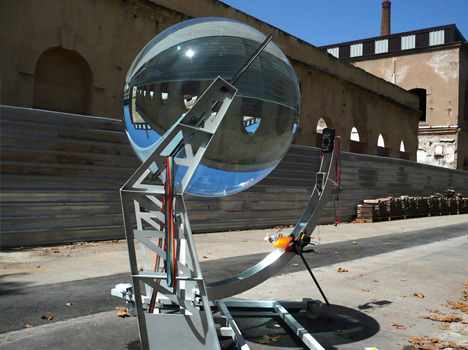
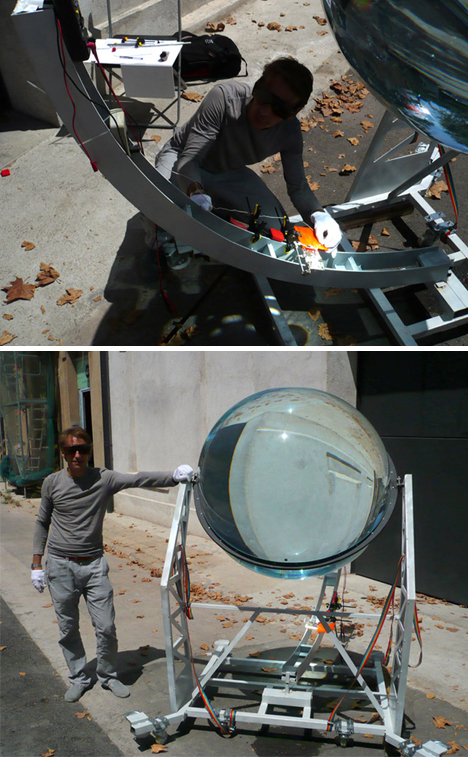
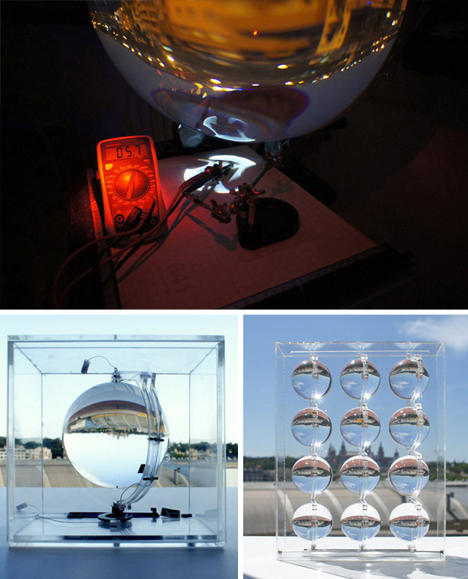
This liquid-filled glass sphere design is so powerful (no pun intended) in its ability to turn light into heat that it can not only harvest the rays of the sun, but even draw on energy reflected from the moon.

lunar energy thermal concentration

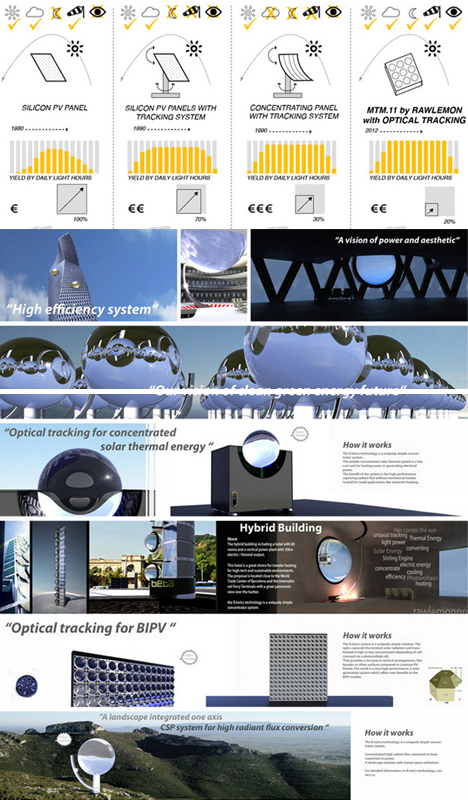
André Broessel is the European architect and engineer behind this weatherproof harvesting system. It is in many regards more robust, efficient and versatile than traditional photovalics, concentrating available light sources and multiplying their thermal effect more than 10,000-fold.

lunar solar collecting ball

Made to be mounted on buildings individually or in arrays, a computerized control system passively tracks available illumination in the day, but can even follow and be fueled by moonlight.
lunar power architectural applications
The balls can work both to generate power and as replacements to traditional window apertures, creating a wide variety of potential hybrid architectural applications as well.

Share on Facebook


[ By WebUrbanist in Gadgets & Geekery & Technology. ]

[ WebUrbanist | Archives | Galleries | Privacy | TOS ]


WebUrbanist

 
Comments Off on Lunar Power: Solar Spheres Energized by Both Sun & Moon

Posted in Creativity


Panasonic develops Lumix G Vario 14-140mm F3.5-5.6 ASPH. Power OIS

24 Apr

panasonic_14-140_3p5-5p8.png

Panasonic has created the Lumix G Vario 14-140mm F3.5-5.6 ASPH Power OIS, a second-generation 10x zoom for Micro Four Thirds cameras. The lens offers a smaller, lighter, less-expensive alternative to the original G Vario HD 14-140mm F3.5-5.8 ASPH Mega OIS. The latest version features three aspheric and two ED elements and an internal focus design with linear stepper motors to make the most of the faster focus processing of the latest Micro Four Thirds bodies.

News: Digital Photography Review (dpreview.com)

 
Comments Off on Panasonic develops Lumix G Vario 14-140mm F3.5-5.6 ASPH. Power OIS

Posted in Uncategorized


Developing Your Photographic Style: Adding Power And Impact To Your Photography

14 Mar

I’ve been working as a photographer for almost 2 years now. And looking back at this time, I can see a number of stages I’ve grown through. Each stage is characterised by what I believed is the most important element of great photography. And in this post I decided to analyse them and come to a conclusion on the benefits Continue Reading

The post Developing Your Photographic Style: Adding Power And Impact To Your Photography appeared first on Photodoto.


Photodoto

 
Comments Off on Developing Your Photographic Style: Adding Power And Impact To Your Photography

Posted in Photography