RSS
 

Posts Tagged ‘Polaroid’

Polaroid sold to new owner

13 May
Photo by Martin Martinsson licensed under Creative Commons

PLR IP Holdings, LLC, the company that owns the Polaroid brand, is under new ownership. Wiaczeslaw (Slava) Smolokowski is a Polish investor and businessman who owns a majority share in the Impossible Project, the company that continues to produce Polaroid’s legacy instant film. A press release issued today mentions that Polaroid headquarters will remain in Minnesota and maintain its Hong Kong and New York City offices, with ‘plans for expansion into other international offices.’

Polaroid first filed for Chapter 11 bankruptcy in 2001. It was acquired in 2005 by Petters Group Worldwide, but more trouble followed and the brand filed for Chapter 11 again in 2008. It was acquired as a joint venture by Hilco Global and Gordon Brothers in 2009. Since then, the company has overseen licensing of its name on a range of digital cameras and accessories, from colorful action cams to an ill-advised Nikon 1 imitator. 

Polaroid Acquired by New Ownership Group

Minneapolis, MN—May 12, 2017— PLR IP Holdings, LLC, the owner of the Polaroid brand and related intellectual property, has been acquired by a group of investors led by the Smolokowski family. The new owners acquired 100% of the shares, effective May 5, 2017, from the Pohlad family, Gordon Brothers, Hilco Global and others.

The lead investor in the new ownership group, Wiaczeslaw (Slava) Smolokowski, is a Polish businessman and investor with holdings in the energy, biotech and real estate sectors. He is the cofounder of Mercuria Energy Group Limited, one of the world’s largest commodity trading houses.

Mr. Smolokowski is also the majority shareholder of The Impossible Project, the company that purchased the last remaining Polaroid factory in 2008 and continues to manufacture instant film for legacy Polaroid cameras.

Polaroid is an iconic brand known the world over for pioneering and perfecting instant photography – both in the analog and digital eras. 2017 marks the 80th anniversary of the venerable company’s founding. Today, Polaroid products are sold in over 100,000 retail stores in more than 100 countries throughout the world.

“I’d like to thank the outgoing board members and shareholders for their outstanding leadership and support over the last several years,” said Scott Hardy, President and CEO of Polaroid. “Under their stewardship, we achieved the tremendous growth and success that has led us to where we are today. We are also very pleased to welcome the new ownership group to the Polaroid family, and excited to begin writing the next chapter in the story of the Polaroid brand.”

“We are very pleased that this strategic transaction unites the Polaroid brand with its heritage – a move that’s exciting for both the buyer and the Twin Cities-based Polaroid team,” said Jann Ozzello Wilcox, chief investment officer for the Pohlad organization. “It was important to us that the headquarters remain here, and that management and the employees not only retain, but expand their roles with the new owner’s exciting plans for the brand’s future.”

“The transformation Polaroid has achieved is a credit to the brand’s strength. We’re proud to have been a part of it and know it will be in good hands under its new ownership,”said Ken Frieze, CEO of Gordon Brothers.

Polaroid’s headquarters and management team will remain in Minnetonka, Minnesota. The company also maintains offices in New York City and Hong Kong, with plans for expansion into other international offices.

Articles: Digital Photography Review (dpreview.com)

 
Comments Off on Polaroid sold to new owner

Posted in Uncategorized


First Look: Polaroid BrightSaber Travel LED Wand

01 Mar

Portable light sources are essential to your photography toolkit when you’re ready to progress beyond natural lighting and take your images to the next level. While off-camera flash photography can be intimidating, LED lights can be quality solutions that are much easier to operate. One of the leading LED lights for photographers is the popular, yet pricey, Westcott Ice Light. If you’re looking for a similar solution that is significantly more affordable, the Polaroid BrightSaber Travel LED Wandd might be for you!

First Look: Polaroid BrightSaber Travel LED Wand

BrightSaber Pro Versus BrightSaber Travel

As its name suggests, the Polaroid BrightSaber looks very much like a sci-fi lightsaber, so it has the immediate bonus of functioning as a fun conversation piece or photography prop. But the main intent of the BrightSaber is to serve as a handheld portable continuous (LED) light source for photography or videography.

To be clear, there are two versions of this light, and they are quite different. The Polaroid BrightSaber Pro looks more like the Ice Light; it is more powerful, and thus more expensive at $ 169.99. There is also the BrightSaber Travel, which is less powerful, yet much more affordable at $ 69.99. This article is focused on the travel version.

BrightSaber Travel Specs

  • Dimensions of 16.4 x 5.4 x 2.1 inches
  • Item weight of 1 lb (450g)
  • Array of 98 efficient, low heat 32000k bulbs
  • 10 power settings for variable lighting output
  • Three included color filters and diffuser
  • Easy disassembly
  • 50,000 hour LED life
  • Tripod screw at the base for mounting on a light stand or tripod

What’s in the Box

  • Polaroid BrightSaber Travel portable lighting wand
  • Detachable wand handle
  • 3 color temperature filters and diffuser
  • Rechargeable lithium ion batteries and battery charger
  • Battery charger cables

First Look: Polaroid BrightSaber Travel LED Wand

Pros

Intuitive and easy to use

Out of the box, the devices arrives in two separate pieces that must be snapped together. The button controls are located on the handle, which is also where the two included lithium ion batteries must be inserted. For most people, assembling the BrightSaber Travel will be a pretty intuitive process. Once assembled, the light works as advertised. The few buttons enable you to turn the light off and on and choose from 10 power settings to adjust the level of brightness needed. Unlike most other lightsaber LED lights out there, the BrightSaber Travel is flat rather than round. A thinner profile truly makes it easier for traveling.

Nice quality of light

The BrightSaber Travel packs an array of 98 low-heat 32000K LED bulbs that produce a very nice quality of light. If you wish to change the color temperature, you can simply slide on one of the three color gels included, or snap on the included diffuser panel. Due to the specific size and shape of the BrightSaber, it’s not very easy to get your hands on other color gel choices without resorting to a DIY solution.

First Look: Polaroid BrightSaber Travel LED Wand

Lighting was done with the Polaroid BrightSaber Travel LED Wand

Affordable

It’s really difficult to argue about the low price point of the Polaroid BrightSaber. Even the Professional version is significantly more affordable than the popular Ice Light, and the Travel version is even cheaper! While there are other competitively priced light saber-esque LED lights on the market, none of them are produced by as reputable a brand as Polaroid.

Cons

No bag included

As mentioned above, there are quite a few moving parts to the Polaroid BrightSaber Travel. There are the two pieces that must be snapped together, two lithium ion batteries, three color gels, and one diffuser.

Unfortunately, there is no bag included that will hold all of these pieces together, thus increasing the chance of losing parts. The lack of a bag is especially perplexing since this device is intended for travel use and its unique shape and size make it difficult to fit into standard camera bags.

Non-standard batteries

Another downside to the BrightSaber Travel is its use of two non-standard batteries. They look like elongated versions of double AA batteries, and in my experience, they take an extremely long time to charge. It would be preferable for the device to use either one single rechargeable battery like the BrightSaber Professional does, or to use two standard batteries that can be more easily replaced.

In Conclusion

If you’re seeking a portable, handheld LED light to one-up your photography, I highly recommend checking out the Polaroid BrightSaber. It comes in either the BrightSaber Pro version or the more affordable, slightly less powerful Travel version. Both work very well at extremely affordable prices.

First Look: Polaroid BrightSaber Travel LED Wand

The Polaroid BrightSaber Travel LED Wand next to the Ice Light.

First Look: Polaroid BrightSaber Travel LED Wand

Side by side with the Ice Light

The post First Look: Polaroid BrightSaber Travel LED Wand by Suzi Pratt appeared first on Digital Photography School.


Digital Photography School

 
Comments Off on First Look: Polaroid BrightSaber Travel LED Wand

Posted in Photography


Review of the Polaroid PL-190 TTL Flash

22 Feb

Review of the Polaroid PL-190 TTL FlashPopping open the generic black carrying case of the Polaroid PL-190 TTL flash is an unimpressive endeavor. Not that these things ever are of course. The flash which slid smoothly out into my hand looked unremarkable as well; an LCD screen and a series of buttons below. The lens had the typical integrated bounce card and diffuser. But when I slid the sizeable flash onto the hot shoe of DSLR, the un-remarkability ended. In use, the PL-190 TTL was far more impressive.

Equipped with an 18-180mm zoom, swivel/bounce head, TTL, and wireless remote capability, and it started to look pretty comparable to the high-end flashes available from Canon and Nikon (though much, much less expensive).

Note: the Polaroid PL-190 TTL flash is available for both Nikon (PL-190N) and Canon (PL-190C).

Review of the Polaroid PL-190 TTL Flash

Brand comparison

As a largely Canon shooter, I’ve always been a bit disappointed by my brand’s flashes. Designed to be so closely integrated into the operating system of the camera, they can produce great results. But making swift changes to settings, power, and TTL exposures can be a slow, button-pushing, menu-searching process. Then, of course, there is the cost of the Canon flashes. The higher end can run close to $ 500, which is almost five times the cost of the Polaroid PL-190 TTL flash, which I held in my hand.

Review of the Polaroid PL-190 TTL Flash

On-camera, the PL-190 TTL is as large as Canon or Nikon’s high-end flashes. And it’s just about as powerful.

In part due to the fiddly nature of Canon flashes, I’ve often defaulted to using basic, inexpensive, manual control lights. Plus I can buy two, three, or even four for the price of a Canon 600EX. So I was excited about this new offering. The specs of the Polaroid PL-190 TTL flash are similar to that of Canon’s high-end ones (the Speedlite 600EX II-RT), though perhaps not quite as capable, and as a third party offering, the integration with my standard operating system is not quite as smooth. This flash is capable of TTL, but also easily adjustable through manual power settings. Basically, the flash seemed like a great compromise, and much more affordable.

Using the flash

In using the flash, that pleasure continued. Frankly, I love this thing and didn’t want to return the demo I’d received on loan from Polaroid.

The controls on the back are simple, a pleasant change from the various wheels and menus required to Canon’s 580ex. It’s powerful too, lighting up distant objects even under fairly bright conditions. The zoom capability, which was automated, to correspond with the focal length of the camera’s lens reached to nearly 200mm, throwing a light cone that worked nicely with my 70-200mm (one of my favorite lenses).

Review of the Polaroid PL-190 TTL Flash

Straight flash, is typically direct and bright, mostly lacking shadows and textures. (True of any camera when used on-camera.)

Review of the Polaroid PL-190 TTL Flash

Using the built-in diffuser, you lose about two stops of light (this is the same flash power and camera settings as the previous, straight-flash shot). The light does soften somewhat but is still direct and harsh.

Review of the Polaroid PL-190 TTL Flash

This image shows the same camera setting and flash power as the previous two images but is using just the bounce card with the flash aimed straight up. It creates a softer, top-light look, though you lose about three or four stops of light.

Here, I increased the flash power three stops and used the bounce card with the flash aiming up. The result is brighter but retains the softness and directionality of a top light.

TTL and Manual Settings

Since the TTL functionality worked well with my camera, I could take advantage of that one shot then quickly switch over to full manual functionality the next. I could zoom manually as well, allowing me to focus the beam narrowly while shooting with a wide angle lens on the camera, highlighting a single portion of a much larger frame.

Review of the Polaroid PL-190 TTL Flash

Off-camera the Polaroid PL-190 TTL flash was easy to use. Manual settings are easy to control, providing a great deal flexibility when creating the proper exposure.

Review of the Polaroid PL-190 TTL Flash

Another off-camera image. When used with the bounce card and placed close the subject, the light was surprisingly soft.

Now I want to note, that since I was primarily interested in the basic functionality and usability of this flash, I tried it only briefly off-camera, making a few images of flowers. Off-camera, I used the manual settings. As I noted earlier, the simple adjustment of power makes this a breeze. With a simple radio trigger on board, I was set to go. The Polaroid PL-190 TTL flash does have wireless slave capability and although I did not test this, given the smooth operation of the flash in general, I’m sure this too would work well.

Review of the Polaroid PL-190 TTL Flash

With a 1/200th sec flash sync speed the PL-190 TTL is easily capable of images like this. Fast moving subjects like flying birds retain sharpness, with little motion blur.

Summary

In short, I think the Polaroid PL-190 TTL flash is a great lighting tool. It worked flawlessly in the brutal cold of an Alaska winter day when I played with it outdoors, and it has easy to use controls with some helpful camera integration. In fact, I liked its simplicity and ease of use so much that as my Canon 580ex ages, this Polaroid flash may be the replacement. With a $ 109 price tag (at major online retailers) I can buy four with change for the price of one Canon 600ex. Guess that means I can quadruple my creative lighting options…now, where did I leave my credit card?

Shop for the Polaroid PL-190 TTL flash on Amazon.com (Nikon PL-190N or Canon PL-190C ) or B&H Photo (Nikon PL-190N or Canon PL-190C ) .

googletag.cmd.push(function() {
tablet_slots.push( googletag.defineSlot( “/1005424/_dPSv4_tab-all-article-bottom_(300×250)”, [300, 250], “pb-ad-78623” ).addService( googletag.pubads() ) ); } );

googletag.cmd.push(function() {
mobile_slots.push( googletag.defineSlot( “/1005424/_dPSv4_mob-all-article-bottom_(300×250)”, [300, 250], “pb-ad-78158” ).addService( googletag.pubads() ) ); } );

The post Review of the Polaroid PL-190 TTL Flash by David Shaw appeared first on Digital Photography School.


Digital Photography School

 
Comments Off on Review of the Polaroid PL-190 TTL Flash

Posted in Photography


The Polaroid Pop instant digital camera produces 3 x 4″ prints

05 Jan

$ (document).ready(function() { SampleGalleryV2({“containerId”:”embeddedSampleGallery_7138693871″,”galleryId”:”7138693871″,”isEmbeddedWidget”:true,”standalone”:false,”selectedImageIndex”:0,”startInCommentsView”:false,”isMobile”:false}) });

Meet the Polaroid Pop, a new instant camera that produces classic Polaroid-sized 3 x 4″ prints. Like the Polaroid Snap and Snap Touch, the Pop combines a digital sensor with an integrated ZINK Zero Ink printer. But unlike the Snap, which produces 2 x 3 prints, the Pop prints to a 3.5 x 4.25 format, with the image itself occupying 3 x 4 inches to give each print a faux Polaroid-style border.

The Pop uses a 20MP CMOS sensor and features a dual LED flash, 3.97″ touch LCD and image stabilization. It can also shoot 1080p HD video and stores everything to a Micro SD. When used in conjunction with the Polaroid print app and one’s smart device, users can edit images before printing. Photos print in just under a minute.

If you’re itching to get your hands on one, expect the Polaroid Pop to ship in late 2017. Pricing info is forthcoming.

The Polaroid Pop Instant Digital Camera Offers a Modern Take on the Classic Polaroid Instant Print

Debuting at CES 2017, the Latest Camera in the Polaroid Instant Digital Print Line Pairs Wireless Technology With the Iconic Polaroid 3×4” Print

LAS VEGAS, January 5, 2017– CES 2017 marks debut of the newest camera in the wildly popular line of Polaroid instant digital photography products, the Polaroid Pop. The Polaroid Pop instant digital camera combines a sleek, modern design and digital technology with the classic 3×4” Polaroid instant print format that is reminiscent of the brand’s iconic legacy instant print cameras.

Polaroid is celebrating its 80th anniversary in 2017 and we could not think of a better way to kick-off this milestone year than with the debut of the Polaroid Pop instant digital camera at CES 2017,” said Scott W. Hardy, President and CEO of Polaroid. “Perfectly blending nostalgia with modern design and functionality, the Polaroid Pop embodies the brand’s 80-year history; staying true to the Polaroid core values of sharing, instant, fun and easy-of-use, while pushing the envelope with a fresh form factor and the latest technology.”

The Best of Both Worlds

Just like the Polaroid Snap and Polaroid Snap Touch instant digital cameras and the Polaroid Zip instant photoprinter, at the heart of the new Polaroid Pop instant digital camera is an integrated printer using ZINK® Zero Ink Printing Technology. This gives users the ability to automatically print full color photos in the iconic 3×4” format with the Polaroid Classic Border Logo resulting in a 3.5×4.25” print. The Polaroid Pop also features a traditional digital camera experience. The camera includes a a 3.97-inch touchscreen LCD for framing shots and navigating the camera’s menu, a 20-megapixel CMOS sensor and dual LED flash for high quality images, image stabilization, as well as 1080p full HD video recording capability. All images and video are stored on a micro SD card (up to 128GB).

The Polaroid Pop can quickly and easily connect to a mobile device using a Wi-Fi and Bluetooth dual chip, transforming the camera into an instant photo printer. Via the Polaroid print app, available free for iOS and Android, users can edit and enhance their prints with a number of creative filters, digital stickers, effects and controls. Once again, consumers will have an all-in-one solution for capturing and sharing images on-the-go. No matter what device they use to capture images, users will be able to share the fun with their own creative flair. The Polaroid Pop is ideal for today’s selfie shooters thanks to a self-timer. Additionally, the Polaroid Pop has three color modes—black and white, color, and vintage sepia to give users that iconic Polaroid look and feel.

The Polaroid Pop instant digital camera was designed in partnership with renowned design firm, Ammunition, the studio that was also behind the Polaroid Zip instant photoprinter, Polaroid Snap instant digital camera line and Polaroid Cube lifestyle action camera line. With the Polaroid Pop, Ammunition continued the simple, modern and stylish design aesthetic reflected throughout the current instant and action product offering. The jet-black camera body is accented with a pop of color, or a contemporary monochromatic look. The iconic red shutter button provides users with the easy-to-use one-button shutter control they have come to know and love from legacy cameras like the Polaroid One Step. Led by industrial designer Robert Brunner, Ammunition has partnered with award-winning consumer brands including Adobe, Beats by Dre, Square, Lyft, and Williams-Sonoma.

ZINK Zero Ink® Printing

The Polaroid Pop instant print camera uses the revolutionary ink-free Zero Ink® Printing technology developed by ZINK. The ZINK-enabled printer uses heat to activate and colorize cyan, yellow and magenta dye crystals embedded in the paper. The result is full-color, high quality, long-lasting and smudge-proof images without ink cartridges, ribbons or toner

The 3×4” photo prints in just under a minute so consumers can instantly share the photo with their friends and family. Additionally, because ZINK Paper® is adhesive backed the photo can be used as a sticker as well.

Offered by C+A Global, an authorized Polaroid licensee, the Polaroid Pop instant print camera will be available Q4 2017. Pricing is not yet available. To learn more about the Polaroid brand, please visit polaroid.com

The Polaroid Brand

Polaroid is one of the most trusted, well-respected and recognizable brands with a rich 80-year history beginning with Polaroid instant cameras and film. Our range of products include instant print cameras, action sports cameras, smartphones, flat-screen TVs and emerging technologies that deliver the fun, instant gratification and value for which the brand has long stood. Today, the Polaroid Classic Border Logo, rooted in our beginnings of instant photo sharing, serves to designate genuine Polaroid branded products. For more information, visit Polaroid.com.

Polaroid, Polaroid & Pixel, Polaroid Color Spectrum, Polaroid Pop, Polaroid Cube, Polaroid Zip, Polaroid Snap and Polaroid Classic Border Logo are trademarks of PLR IP Holdings, LLC.

Articles: Digital Photography Review (dpreview.com)

 
Comments Off on The Polaroid Pop instant digital camera produces 3 x 4″ prints

Posted in Uncategorized


Product Review: Polaroid Carbon-Fiber Travel Tripod and Varipod

02 Dec

First a little background: I’m a wilderness photographer. I spend time, a lot of time, every year on multi-day river, backpacking, and winter trips in Alaska. This past summer, between June and mid-September, I spent more than 60 days in the backcountry. On every one of these trips, to one degree or another, weight was an issue, and I’m always on the lookout for good, light equipment that might suit my travels. With that in mind, on to the review of two new support products from Polaroid, the Polaroid Pro Series Carbon Fiber Travel Tripod, and the Varipod.

ak-homer-109256-sunset-48

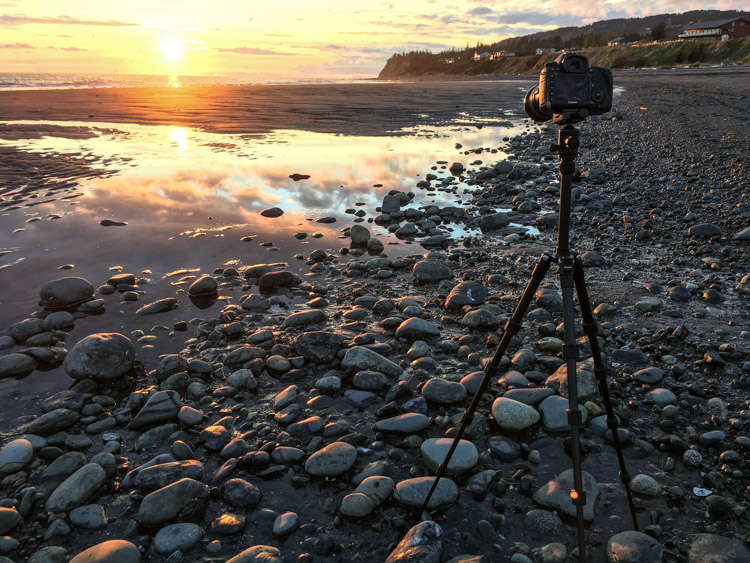
Image made using the Polaroid Pro Series Carbon Fiber Travel Tripod (ISO100, 1/5th sec @ f22)

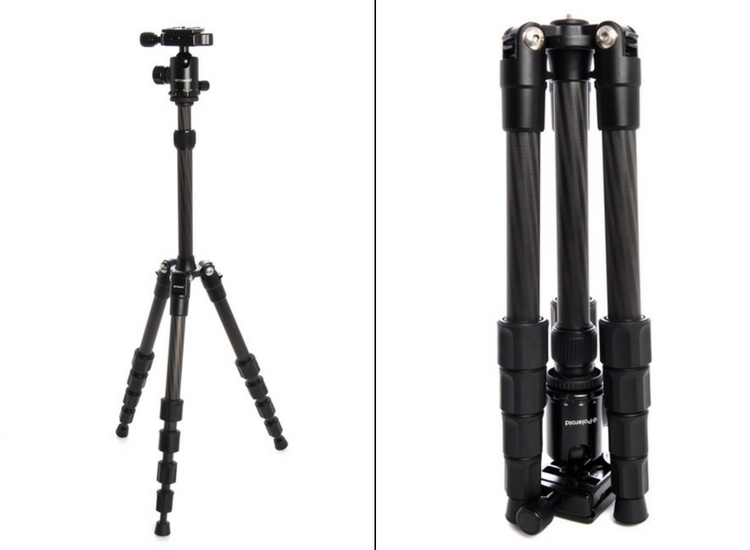
Polaroid Pro Series 55″ Carbon Fiber Travel Tripod With Removable Ball head
polaroid-tripod-review

I was excited to open up the box containing Polaroid’s new carbon travel tripod. Upon first inspection, I was impressed. There are five leg segments, each about eight inches in length making the tripod very compact. Additionally, it is designed so the legs fold back over the center post and included ball head, making the fully collapsed tripod very small indeed.

Build

The leg segments are of the twist-lock variety, ergonomic, and very effectively hold the sections in or out with a simple, quick twist. The numerous legs section means that the lowest sections are thin, giving the impression of flimsiness. However, after several days of use, they did not strike me as fragile.
img_3264

The legs of the tripod, even when fully extended are not very long. Polaroid has made up for this shortcoming by having a fixed center post that extends up another foot or so from the top of the tripod, adding substantially to the height. The post itself is expandable, allowing the very compact tripod to stretch almost to my eye level (I’m six foot). Though using this extendable system reduces stability.
polaroid-tripod-review-01

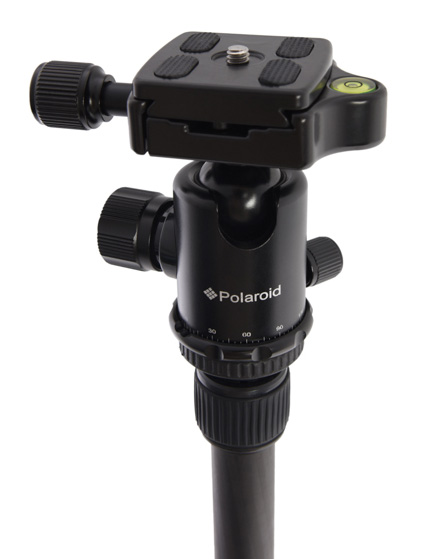
The included ball head is the highlight of this tripod. Made of machined aluminum, it’s designed much like the large Kirk Industries head on my full-size tripod. Polaroid’s version uses three knobs, one to lock the quick release (similar to Arca-style plates), one to control the rotation, and one to lock and unlock the ball itself. One side cut allows for vertical compositions. Simply, it’s a great little ball head that held my big Canon SLR easily. In fact, it was so good, I wish I could purchase it separately to replace the flimsy head atop my current compact tripod. As the head is the point where many light and entry-level tripods fall short, I was impressed and surprised by this one.
img_3248

Usability of the tripod

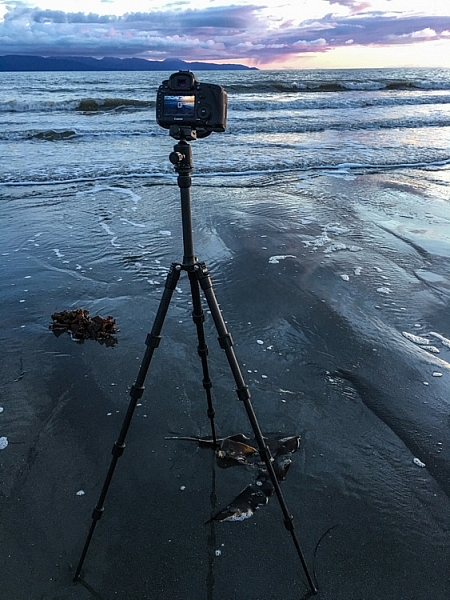
I put this tripod to use a number of times over a couple of weeks, including a couple of sunset photo shoots on a beach, and two evenings photographing the aurora borealis. In bright conditions and relatively fast shutter speeds, the tripod worked well. The height adjusts easily and quickly, though the center post system does limit how low the camera can go. (At its lowest, the camera is still 12-15 inches off the ground, see photo below.)
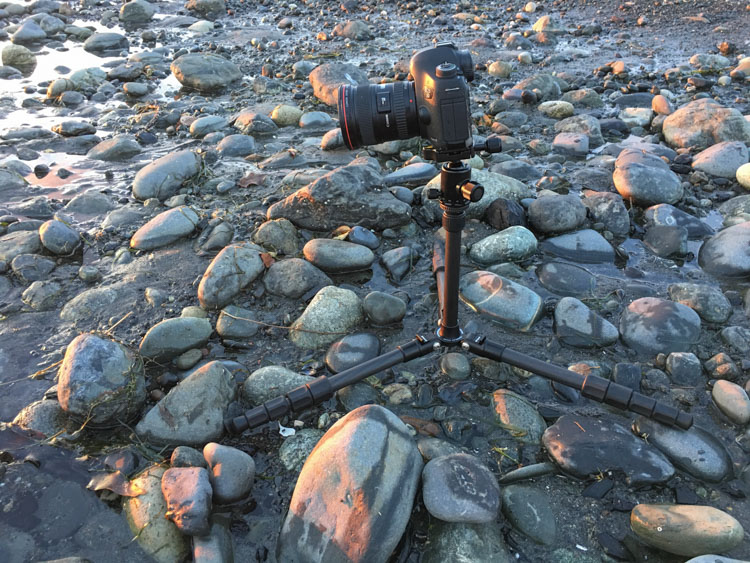
img_3255

During my sunset photo shoots, the system worked fine at a variety of heights, and I was able to use shutter speeds down to about 1/5th of a second, and still maintain sharp images (see top image in this article).
pltric-90-final

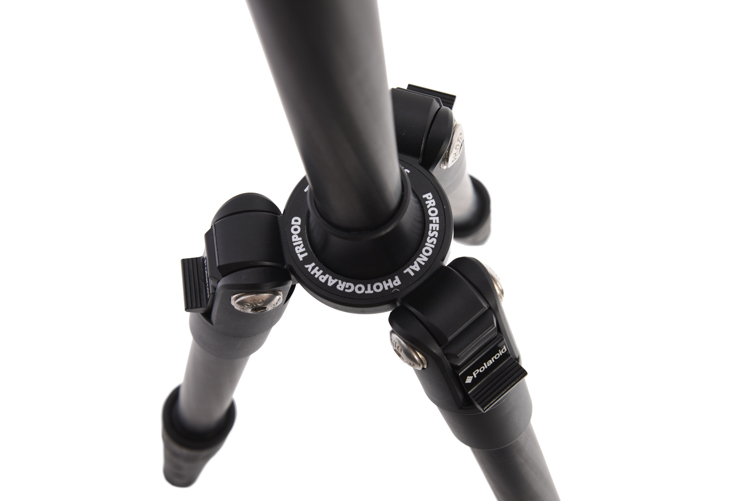
Image showing the design of the non-retractable center post on the Polaroid Carbon Travel Tripod.

It was when I tried to shoot the northern lights that the tripod showed its one flaw – instability with a heavy camera. The non-retractable, non-removable center post, make the tripod a bit jiggly when used with a full-size DSLR. A point and shoot, or mirrorless system would not likely have the same trouble. However, even with the heavy camera, I was able to attain sharp images when I used a remote shutter release and the mirror lock-up function of the camera.

To maintain sharpness, I was forced to use the camera's timer and mirror lock-up functions.

To maintain sharpness at extended shutter speeds, I used the camera’s timer and mirror lock-up functions.

Conclusion

If it weren’t for that wobbly center post, I would give this small, light tripod, with an awesome ball-head, a glowing review. I’d like to see Polaroid include a system to retract the center post to add stability when I drag the shutter. If the next version of this tripod includes such a feature, I’ll strongly consider adding it to my quiver. In the mean time, I can easily recommend this tripod to anyone shooting with a light-weight camera system. If you are working with a point and shoot, or mirrorless, the simplicity, flexibility, and the particularly impressive ball head make the Polaroid Pro Series Carbon Fiber Travel Tripod a contender.

Rating 3.5 out of 5 stars.

Polaroid 65″ VariPod

2-in-1 Telescoping Camera Monopod with Removable Tripod Balance Stand Base
varipod-polaroid

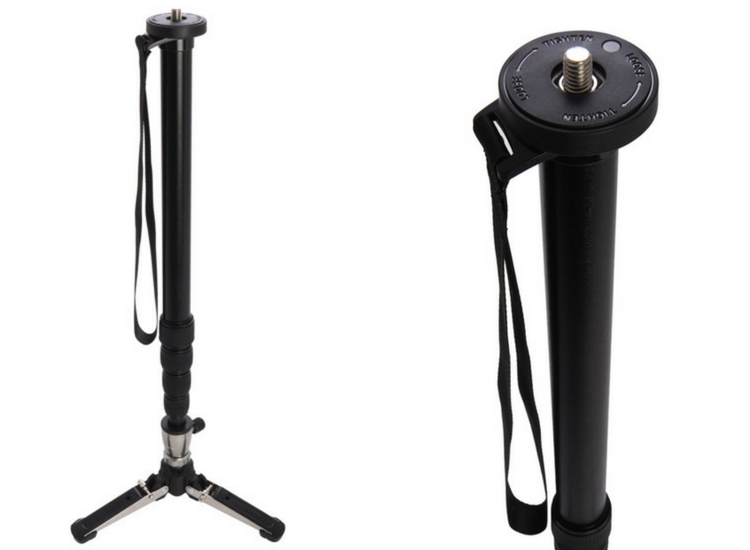
Out of the box, Polaroid’s rendition of this classic long-lens tool, the monopod, looked more or less like a standard version of the product, with one exception. The foot of the monopod incorporates a removable, articulated, three-legged base. At first, I didn’t understand the purpose of this feature, but later, as I used the Varipod outdoors, I figured it out (more on that in a moment). The expandable leg, like the tripod reviewed above, uses a twist-lock system that holds the aluminum tubes firmly extended. I had no issues with segments collapsing, even with a heavy lens and SLR.

In the field, the monopod worked well. The removable foot is articulated so it doesn’t interfere when you tip the monopod forward or back. Though at first confused by this seemingly unnecessary add-on, as I shot with a 500mm f/4 on a sandy beach, the usefulness of the stand was obvious; the monopod foot didn’t sink into the muck. This could be useful to anyone shooting in soft terrain, whether the sidelines of a sports field or a muddy wetland.plmonstand-66-final
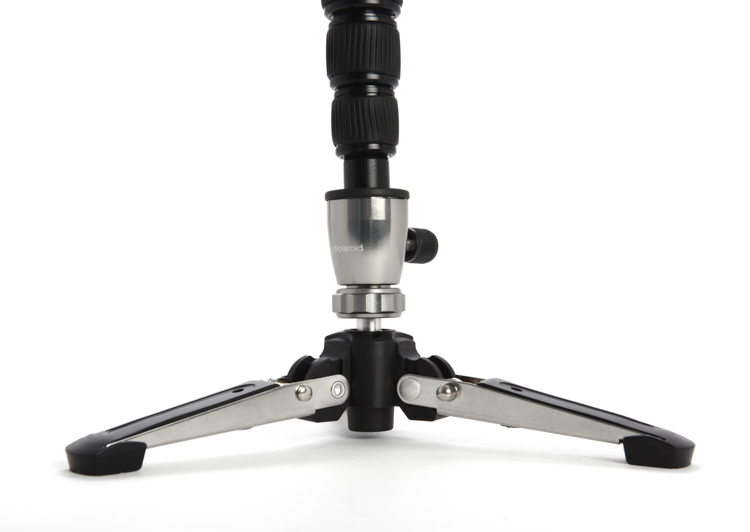
The foot system did seem overly complex. It is made of aluminum with various hinges and springs. Though effective at providing support in soft terrain, it also got dirty and was very difficult to clean. The foot had to be blown out, rinsed, and shaken before I eventually managed to remove all the grains of sand.

The support provided by the monopod allowed me to achieve sharp images with my 500mm f/4 at shutter speeds as low as 1/30th, opening up creative composition possibilities with moving subjects. The monopod is also far lighter and maneuverable, though of course less stable, than a full-size tripod.

Conclusion

The Polaroid Varipod works. The articulated foot provides support in soft terrain, and the legs are sturdy and easy to adjust. My main complaint is the complexity of the foot and difficulty in cleaning. I’d like to see this made simpler, with fewer parts that can jam with sand and dirt. Otherwise, it’s a solid contribution to the market.

Rating 4.5 out of 5 stars.

googletag.cmd.push(function() {
tablet_slots.push( googletag.defineSlot( “/1005424/_dPSv4_tab-all-article-bottom_(300×250)”, [300, 250], “pb-ad-78623” ).addService( googletag.pubads() ) ); } );

googletag.cmd.push(function() {
mobile_slots.push( googletag.defineSlot( “/1005424/_dPSv4_mob-all-article-bottom_(300×250)”, [300, 250], “pb-ad-78158” ).addService( googletag.pubads() ) ); } );

The post Product Review: Polaroid Carbon-Fiber Travel Tripod and Varipod by David Shaw appeared first on Digital Photography School.


Digital Photography School

 
Comments Off on Product Review: Polaroid Carbon-Fiber Travel Tripod and Varipod

Posted in Photography


MINT SLR670-S Noir is a refurbished Polaroid SX-70 with added auto modes

17 Nov

MINT has launched a refurbished and upgraded Polaroid SX-70 camera, dubbing it the SLR670-S Noir. In addition to all the features of the original Polaroid base model, MINT’s updated version includes A100 and A600 auto modes for using SX-70 film and ISO 600 film. 

According to MINT, its refurbished camera features ten shutter speeds with speeds up to 1/2000sec, two shutter options for long exposure, a focusing distance of 26cm to infinity, and a three-year warranty for maintenance. The camera itself is priced at $ 675, though a ‘Starter Pack’ with limited accessories is offered at $ 765 and an ‘Ultimate Package’ is offered at $ 869. It isn’t clear how many of these refurbished cameras MINT has available.

Via: The Phoblographer

Articles: Digital Photography Review (dpreview.com)

 
Comments Off on MINT SLR670-S Noir is a refurbished Polaroid SX-70 with added auto modes

Posted in Uncategorized


Polaroid puts Snap Touch digital instant camera on display

20 Sep

Polaroid licensee C&A Marketing is showing an upgraded version of its original Polaroid Snap digital instant camera. The Polaroid Snap Touch adds a 3.5″ LCD touchscreen on the back of the camera for easier framing and control of the menus and settings. Images are captured on a new and improved 13 MP CMOS sensor and the new model is capable of recording 1080p Full-HD video. Images and video footage are saved on a microSD card up to 128GB in size. 

Remote connectivity through Bluetooth to the Polaroid Print app for iOS or Android allows for printing from other devices, such as smartphones or tablets, and the app also offers editing functions including a range of filters and digital stickers. 

As before, at the heart of the camera there is an integrated printer that uses using ZINK Zero Ink Printing Technology, allowing for 2×3” prints in under a minute. Up to ten images can be queued, so that you can keep shooting while printing is still in progress. Selfie shooters will appreciate the self-timer and a pop-up selfie mirror for easy framing.  The Polaroid Snap Touch is available in several colors and can now be preordered for $ 179.99. 

Articles: Digital Photography Review (dpreview.com)

 
Comments Off on Polaroid puts Snap Touch digital instant camera on display

Posted in Uncategorized


Polaroid LED photo studio color box light offers portable, low-heat lighting

03 Sep

A new Polaroid-branded LED photo studio color box light has been introduced: a 907g / 2lb lightweight offering with an attachable handgrip, remote control and quiet operation easy-press buttons. Information including the color temperature, brightness and mode, as well as battery life, are displayed on an integrated LCD.

The new color box light is designed to be highly portable with support for both handheld and tripod usage; it can also be connected to other photo boxes for larger projects. According to Polaroid, the light features 600 LEDs and can achieve up to a 93% efficiency. 

The Polaroid LED photo studio color box light is available from Amazon now for $ 120.

Articles: Digital Photography Review (dpreview.com)

 
Comments Off on Polaroid LED photo studio color box light offers portable, low-heat lighting

Posted in Uncategorized


Polaroid Swing is a new take on Apple’s Live Photos

14 Jul

Apple didn’t invent the concept, but ever since the company launched its Live Photos feature it has been en vogue to add a touch of motion to still images – just enough to give you a better idea of the atmosphere at the time and place of capture.

The latest new app to slightly vary this theme is Polaroid Swing. The app captures 60 frames in a quick burst and combines them into an animated image. When viewing you can trigger the 1-second animation by twisting your device or swiping across the screen. This works in both directions. Below are a couple of samples for you to try, just move the mouse across the images:

As you would imagine, final results can be shared via Facebook, Twitter and other means. The effect is pretty neat but, as we’ve seen many times before, there is danger of the novelty factor wearing off pretty quickly. That said, the owners of the legendary Polaroid name seem to firmly believe in Polaroid Swing’s success. They have not only licensed the Polaroid name but also invested in the app. Polaroid Swing is available as a free download from the App Store now; an Android version is still in the works.

Articles: Digital Photography Review (dpreview.com)

 
Comments Off on Polaroid Swing is a new take on Apple’s Live Photos

Posted in Uncategorized


20×24 Studio will stop producing Polaroid 20 x 24 film next year

25 Jun
20 x 24 camera designed and built by Tracy Storer, Operator of Polaroid 20×24 Studio West

The Polaroid 20 x 24 is facing extinction as the last company producing the large-format instant film, 20×24 Studio, has announced plans to stop production at the end of 2017. 

The studio and its owner John Reuter originally purchased an original Polaroid 20 x 24 camera from Polaroid after it declared bankruptcy in 2008, as well as hundreds of cases of existing film for it. The company sought to keep the format alive by producing its own iteration of the cameras and film, but a lack of demand and other issues have forced it to abandon that dream.

In a statement posted on 20×24 Studio’s website, Mr. Reuter said:

“Our hope now is that we can work on some great projects with many of our legacy clients as well as new artists who have yet to experience the ultimate in instant analog image making. Our original business plan was for five years with the inventory purchased and for a variety of reasons we have not worked through the material. Instant film will not last forever and despite storing the film stock in cold storage and mixing the chemical reagent only as needed the studio projects that they can maintain the quality for two more years.”

Elaborating on this to the New York Times, Mr. Reuter said it would take a massive ‘multimillions’ investment to continue producing the film, something that isn’t feasible for the company given the relative lack of demand. As it stands, the camera itself costs $ 1750 to rent per day and each film exposure costs $ 125. Mr. Reuter anticipates the existing stock being used up by the time 20×24 Studio closes its doors next year.

Take a look below at the 20×24 camera in action as Douglas Doubler photographs ballet dancer Rachelle di Stasio. 

Via: New York Times

Articles: Digital Photography Review (dpreview.com)

 
Comments Off on 20×24 Studio will stop producing Polaroid 20 x 24 film next year

Posted in Uncategorized