RSS
 

Posts Tagged ‘Pitfalls’

Tips for Light Painting and Some Common Pitfalls to Avoid

18 Apr

In this article, I will focus on light painting objects in night scenes during a single long exposure (rather than multiple exposures combined in Photoshop) and some of the pitfalls I have experienced. I hope you will gain an understanding of how different light sources, intensity, and warmth can illuminate your foreground elements in a balanced way to provide a creative twist to your shot.

A beautiful night sky filled with stars is often laced with compelling foreground elements that can provide context and intrigue to your shots. You have likely seen many examples of these things in other people’s work such as a saguaro cactus under The Milky Way in the middle of the desert, a homestead cabin in the middle of an old pasture, or a boat floating on a still lake.

Light painting DSC 1215

This single exposure captures The Milky Way over a field of yellow wildflowers in central Minnesota. I used light painting to emphasize the flowers which were an important part of the scene.

I am positive you can think of foreground elements in your personal environment. Although silhouettes of those foreground elements can provide you with stunning imagery, you may consider using light painting techniques to emphasize the foreground elements of your shot.

What is light painting?

Light painting is a night photography technique where you use a light source to illuminate an object (in other words you “paint it”). The digital camera era has made light painting much more common as it is easier to check and compensate for your exposure of the shot. Because light painting provides so many creative options there are many forms it can take.

In order to do light painting, you will need to carry a little bit of extra equipment and have some basic knowledge about your camera’s manual settings. A grasp of these basic camera settings will increase the enjoyment of your night out by helping you make beautiful imagery.

Camera Settings

Manual Mode will be necessary to shoot your long exposures. You should be aware of how to switch to Manual Mode and then adjust your aperture and shutter speed. For night photography, you will want to use a large aperture (e.g., f/2.8) and slow shutter speeds of often 5 seconds or more.

ISO changes will be necessary in order for your camera to pick up the most amount of light possible. I recommend beginning at ISO 800 and then adjusting accordingly as you learn about your particular scene and shooting conditions. It is important to remember that a really high ISO will require you to post-process out digital “noise” and each camera model has a range of ISO values it can shoot at before it will become very grainy.

White Balance adjustment is critical to shooting at night and for light painting. Look in your camera’s manual or play with your camera settings to ensure you can access manual White Balance and you can create lower or higher White Balance values. White Balance is measured in Kelvin and most cameras will represent it with “K” after the White Balance value (e.g. 4500K).

I bounced the light off the snow to light this shot because direct light caused the totem to become too bright and out of balance.

Equipment

An appropriate light source is necessary to do light painting. You should consider bringing multiple light sources that have both wide and narrow beams as well as multiple color temperatures. You may consider things such as a headlamp, cell phone, flashlight, or professional lighting as these have different beam widths and intensities.

To determine the warmth of your light source, check the box as it may tell you the temperature rating. For instance, many lightbulbs from the store will say 4500K on the side of them. Some professional lighting sources will allow you to adjust both the temperature and intensity of the light, so you may consider those as you progress and become more proficient at light painting.

Beyond the camera and a light source, a tripod is the next most important thing you can bring when shooting long exposures. Ensure your tripod can remain stable for long (up to several minutes occasionally) exposures.

A friend is a great addition to a night of light painting! Your friend can help sidelight objects while you take the photos, provide for creative solutions to problems, and keep you safe as you move around in the dark.

Light painting 0314181950b

I use this LED light panel which allows me to control the light intensity and color.

Basic Light Painting Techniques

Each night has unique conditions that need to be accounted for, but I like to begin each night with a familiar set of steps. Set your camera up on a tripod and take a few test shots. I usually start at f/2.0, ISO 800, 10-15 seconds, and 4500K.

From those base settings, you can experiment with ISO, shutter speed, and set a White Balance that looks good to you. Once you have the settings for the scene right, set up a composition you like and which ties together the necessary foreground elements. Begin your exposure then use a light source to paint the foreground in front of you.

Light painting DSC 5562

This image of the Aurora Borealis captures the beauty of the boreal forest and the subtle aurora behind it. I used standard settings (ISO 2000, f/2.2, 20 seconds) and a light panel to make this image.

Selecting a light source is important. Its qualities will determine how it can be used. There are three considerations you should think about:

  1. What is the intensity of the light?
  2. How wide is the beam?
  3. What is the color temperature of the light?

Keeping these things in mind will help you immensely when you go out to shoot. A wide beam can help you light close objects while a more focused beam can light a more distant one. I often use a professional light panel because it gives me control over the beam intensity, width, and warmth.

A good light source will help you get over the pitfalls identified below.

Pitfall #1: Not matching the color balance

When I first began doing light painting, I had a really hard time matching the color of my light and the context of my scene. Your camera will key in on bright objects in the shot such as the moon, a street lamp, or the Aurora Borealis which will become the dominant temperature in the shot.

Keep this in mind as you take your test shots because you will need to adjust your White Balance according to those light sources. If the White Balance of your light source is adjustable set it to the same as the camera. If you cannot control the temperature of your light source (e.g., a cell phone) then consider adjusting the White Balance of your camera to match the light source. You will know the light source and camera are calibrated together properly when the color of your foreground elements look natural (neutral) to your eye.

I’ve provided some examples of images below which came out well and some that did not (according to my eye) due to incorrect White Balance calibration. You should be able to spot images demonstrating the matching warmth pitfall that we just reviewed. I’ve left some thoughts in the captions of the images to reflect on each further.

Light painting DSC 7887

It is not too hard to diagnose what’s wrong with this image – I did not properly calibrate the temperature of my camera and light source. The light source is too cold compared to my camera’s settings.

Light painting DSC 2136

The calibration of camera and light source were close on this one, but the temperature was a bit too cold on the light source as evidenced by the bluish tinge to the tree on the left.

Light painting P3090697

A good match! I was able to use the white of the American Flag to calibrate the light source and camera to get good colors from both the flag and the aurora.

Light painting DSC 9355

This is a good match on the color balance. There were a moon and aurora on this night, so I only used a headlamp to softly light this sled dog that appears to be watching the aurora.

Pitfall #2: Not balancing the light in your scene

Choosing the right beam width and intensity will help you balance the lighting of the foreground elements to the rest of the scene. A digital camera set at ISO 800 or above is incredibly sensitive to light and it is very easy to “blow out” a shot by overexposing the foreground elements. Here are a few tips to help balance the light in your scene.

  • A broad beam will help evenly light an entire scene and a narrow beam can light specific aspects of the scene. I have provided thoughts and examples below about when my light source width was appropriate and when it was incorrect.
  • If you have close foreground elements consider bouncing your light source. I often use reflective surfaces like snow to indirectly light the foreground through bouncing. If you cannot bounce the light, try side lighting or lighting the object from behind.
  • You can decrease the exposure by closing down the aperture. I have found increasing the aperture (say from f/2.0 to f/4.0) and increasing the exposure time make it dramatically easier to create a balance of light in the scene.
  • It stands to reason that if you paint an object for a long time with the light it will show up brighter. You will find that duration is critical when light painting and often less is more. Try light painting the object in a short burst of one half, to one second of light and see if it adequately lights the object.
Light painting P9110093

Blowout! I was light painting these autumn aspens to capture the fall colors with the Aurora Borealis. However, my beam was too narrow for the work I wanted to do.

Light painting DSC 8007

A small beam allowed me to light up this “old man’s beard” hanging from spruce trees in Southeast Alaska. A wide beam would not have worked here as it would have lit the entire scene.

Light painting DSC 7085

Here I wanted to capture the glacier face and the aurora together so I placed my light panel behind a block of ice. This masked it from direct view and allowed me to bounce the light off the snow.

Light painting P9110170

A passing car provided the lighting for this shot, and I liked the warmth of the light a lot! The broad beam was most appropriate here.

Food for Thought and Wrapping Up

I hope this article can help you get over a couple of the steep learning curves of light painting. Remember, any light source at your disposal can be used to light your scene and each may have its own unique benefits. Experiment with headlamps, cell phones, car headlights, and professional lighting sources to see what each can provide to the shot.

I hope you enjoy your night out! As I always like to say, “Pixels are cheap”, so make lots of them as you learn light painting.

The post Tips for Light Painting and Some Common Pitfalls to Avoid appeared first on Digital Photography School.
Digital Photography School

 
Comments Off on Tips for Light Painting and Some Common Pitfalls to Avoid

Posted in Photography


Travel People Photography – Tips and Pitfalls

21 Apr

“Oh the people you will meet!” goes one of Dr. Seuss’ famous lines, speaking to a particular joy of travel. We don’t just travel to see new places, we travel to experience new cultures full of new people – and as photographers, we’re intrigued to take their photo.

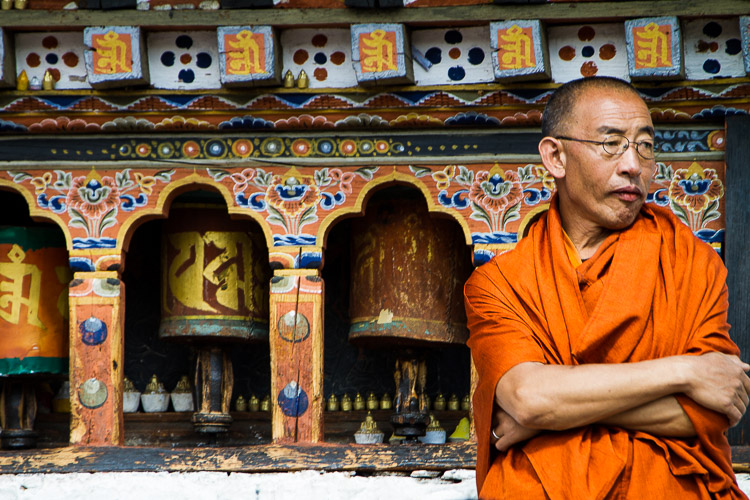
Monk, Paro, Bhutan

Yet it’s not as easy as taking photos of foreign mountains or cityscapes. because, gasp!, those people are full of life and feelings and opinions. They might be speaking a language we don’t understand. We are left wondering what they are thinking as we start to bring our camera up to our eye.

I’ve been photographing for 26 years, and traveling regularly for the last eight. I don’t know it all, but I have learned, through trial and error and research, what helps and what hinders travel portrait photography.

The Tips

Watch the light

Photography is about light. You’ve likely heard it a hundred times before. Sometimes we forget that when out of our comfort zone, but it’s important to remember that great photos need great subjects, and great use of light.

PWC-Nepal100509-093652-4565-b

Before raising your camera, know your light. Know what light will be available, and how best to use it. This article: Understanding Natural Light Part 3: Direction of Light – has a wealth of knowledge to get you thinking about the natural light at your location. Of course, you can use a flash as well, but most of us rely on natural light for our travel portraits.

Connect

Hot Button Topic: To connect before or after you take a photo? This decades-old discussion will not be settled here, but I will give my opinion as fuel to the fire.

I believe in give and take. If I’m always taking photos when I travel, I feel more the part of an interloper than a welcome guest. There are irresistible times when someone is doing something soooooo perfect, we have to have a photo, we think. Introducing ourselves will ruin the moment and break the magic we are witnessing.

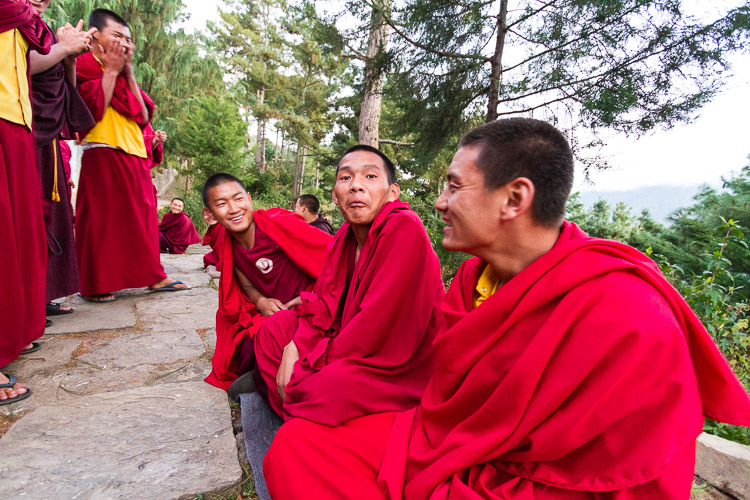
Monk Debates, Jakar, Bhutan

My advice is to take those photos, but give something back. Approach your subject after the fact and introduce yourself. Smile, make eye contact, promote goodwill, and be nice.

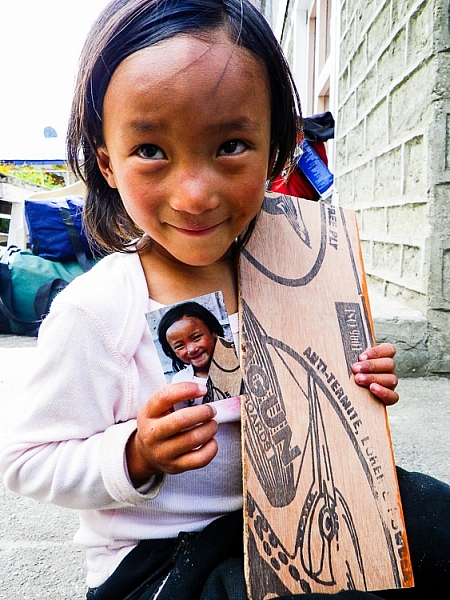
If they are a vendor, buy something they are selling, or at least take a look. Canon, Sony and others now have portable printers you can bring with you, and what better way for give and take than to hand over a printed copy of the portrait you now treasure. It’s more work than just taking photos and continuing on your way, but it is also more rewarding.

PWC-Nepal2011-1001-0530

Get their feedback

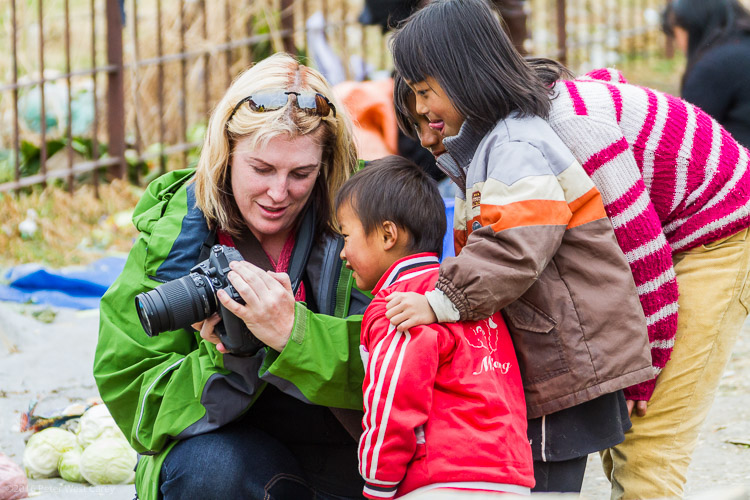
Building on the point above, show your subject their portrait. It’s part of giving back. Get their feedback on how they think they look.

You might hear good things or bad, because everyone tends to be their own worst critic. Ask their friends as well, if they are around, to know if you have captured an accurate representation of your new friend.

PWC-Bhutan2013-0317-4766

They may have an idealized portrait they want you to take. What’s the harm in taking the photo they would like and the one you like? The more interaction, the better the portrait.

To smile or not to smile

This argument goes both ways. Some photographers want all smiles, especially if they believe there are in a happy place. Others abhor a grin. What a different story Steve McCurry’s Afghan Girl photo would tell if he was playing the ham and got her to smile!

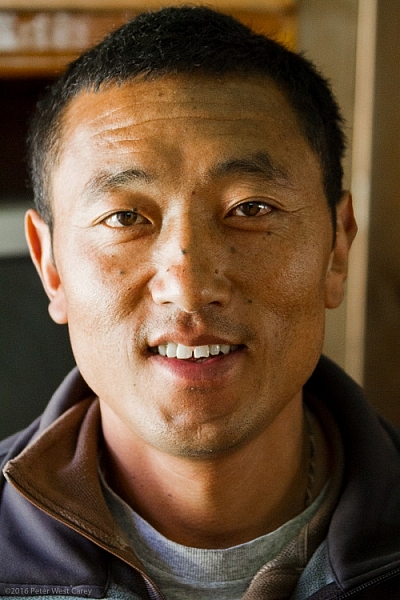
As artists, we always instill our own bias into our art, that is okay. Sometimes your subject will also instill their bias. For instance, in Bhutan I encountered mostly stern faces when I took portraits, even if the subjects were lively, happy and smiling while I talked to them for a few minutes beforehand. I didn’t feel the stoic portraits the subjects wanted to portray accurately, reflected the warmth I felt while walking the countryside. So, what to do?

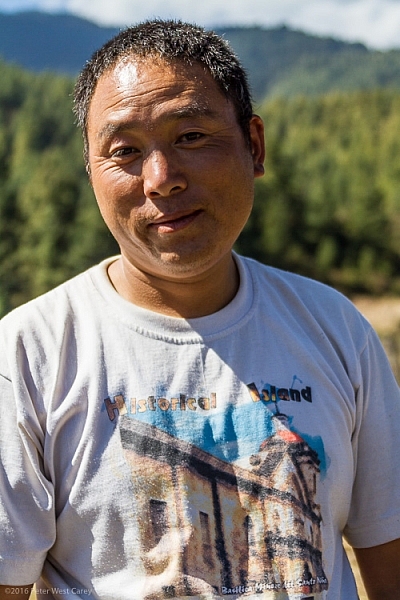
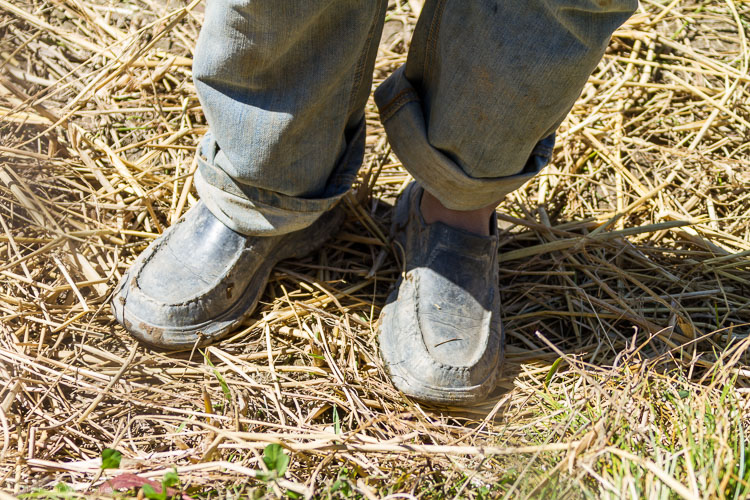
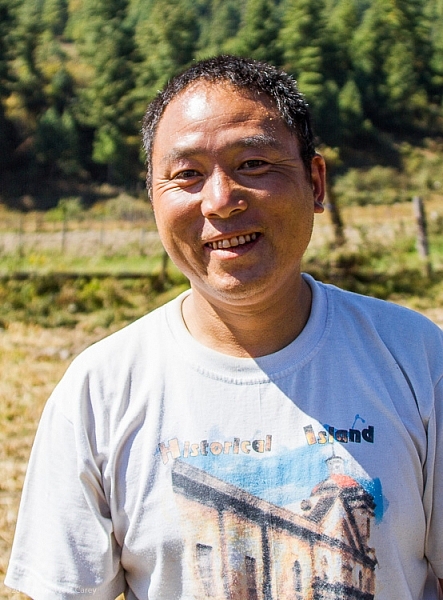
I developed a technique on that trip of taking pictures of people’s shoes. This served two purposes; I got images that tell their own story (footwear can tell you a lot about the wearer) and, in that moment when the subject was wondering why the heck is this guy taking pictures of my shoes, they let their guard down and returned to the smile I had encountered until the portrait was taken.

PWC-Bhutan2011-1024-9664

Before shoe photo

PWC-Bhutan2011-1024-9666

PWC-Bhutan2011-1024-9667

After shoe photo

My suggestion is to get to know your subject before taking their portrait. Then find a way to help that personality shine in their portrait.

Let them do their thing

To tell a better story of an individual is to put them in their environment. It helps travel portraits if there is context of the individual, in relation to the space around them.

Interact with your subject, take their posed portrait to your liking, then let them return to what they were doing. This is probably what drew you to them in the first place. Sit, observe, and be patient with your next photos.

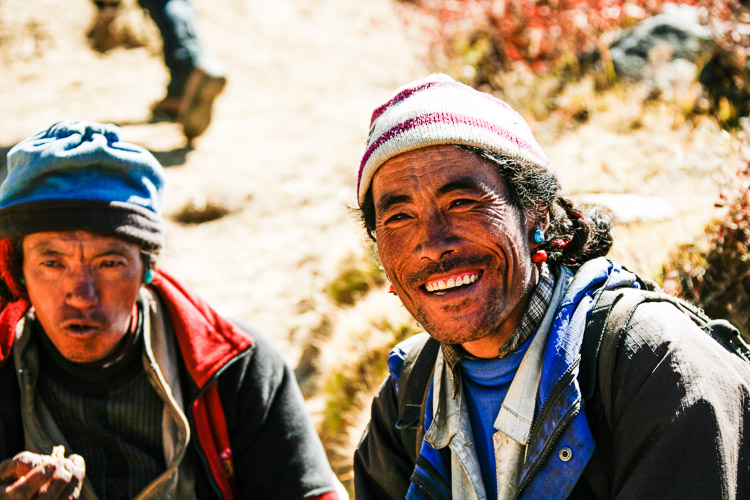
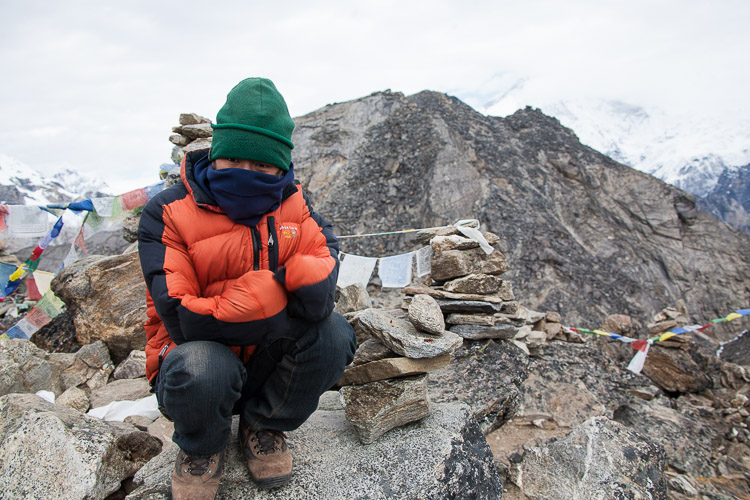
Tibetan Shepherds

They might not be classic portraits, subject’s eyes on the lens. To tell the story of the individual in the digital age is to have the ability to show more than one side, more than one image of your subject. You’re not a National Geographic photographer who will only get one image of the person in the magazine. You’re someone with a Facebook or other online account, and you can share both the portrait and the person in their element.

The Pitfalls

The Death Stare

You can probably feel the chill down your spine right now when I mention the Death Stare. Every street photographer has felt it at one point, and most every travel photographer as well.

PWC-Nepal2008-1010-3229

The Death Stare comes when someone sees your camera pointed their way, and fully disapproves of being the object of your desire. It’s important to realize the Death Stare is usually not so much about you, it’s about the situation, and empathy goes a long way to avoiding it. So does the tip above about connecting.

Recovery from the Death Stare can be hard. It chips at your confidence while you are in a foreign environment, already feeling out of place. Now you are unwelcome?

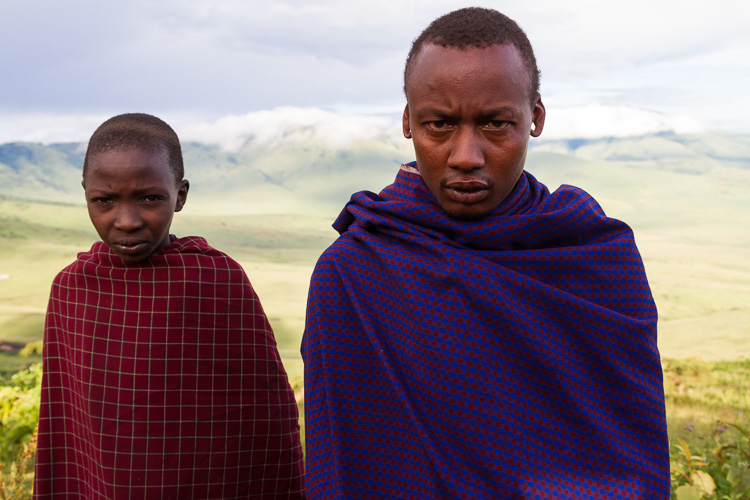
Maasi On The Rim

When I receive the Death Stare, I take a few mental steps backward, and put my camera away for just a bit – maybe 10 minutes, maybe an hour. I spend that time soaking in my surroundings and trying to connect with locals instead of capturing them.

Super posers

Kids are famous posers, but the disease travels across every age range. Some societies are more prone than others to super posing. By super posing I mean the tendency to totally ham it up for the camera. We all like to put on our best face, but the super poser makes almost a 180 degree change from what you first saw in them and wanted to photograph.

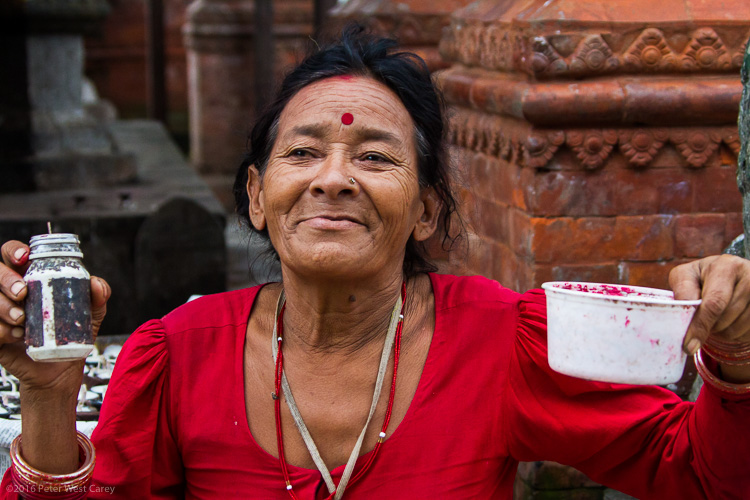
Pay Me For Paint, Kathmandu, Nepal

I have watched enough parents try to get their kids to, “smile normally, please?” and spend tens of minutes in frustration at their children being children. My suggestion with travel photos is to not fight the super poser. Accept that the moment you saw in them has passed, and move on.

Only telephoto

Afraid of the Death Stare, or an imaginary worse reaction, the telephoto-only portrait becomes the easy out. If I can shoot from 100 feet away, in obscurity, why get closer?

Because your images will lack intimacy, that’s why. I’m not saying don’t shoot with a telephoto from a distance – but don’t only shoot from a distance. If I peruse your gallery of images from Egypt and only see telephoto attempts at portraits, I’m going to feel as distant as you physically were from your subject.

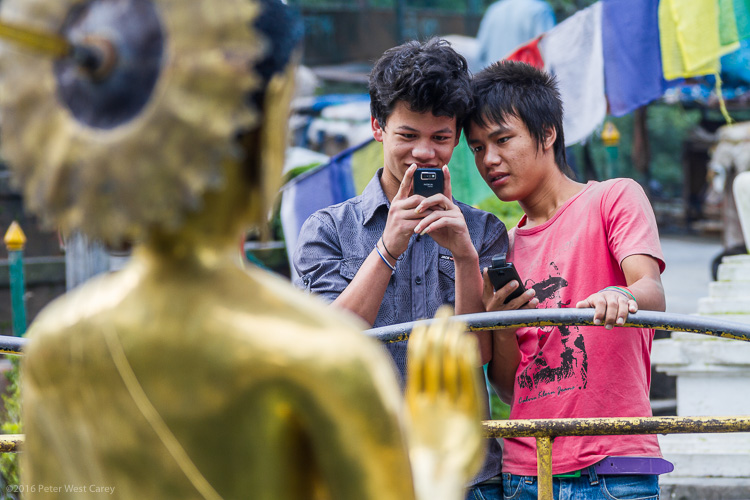
Boys photographing statue of buddha - Nepal

In my mind, connecting with strangers and only obtaining a few mostly-posed portraits is better than 100 shots from across the street. To me it says, “I traveled to this land, but didn’t really get into it.”

“Please don’t use that”

Following the advice above, you show some shots to your subject. They reply, “Oh, please don’t use any of those. I look horrible!” Now what?

If there is a chance, reshoot the images. If you must move on with your travels, I suggest you take the high road and respect the individual’s wishes. You may think they look perfect. Yet being respectful is more important than impressing your Facebook friends or Instagram followers.

This makes my original advice a bit of a double edged sword. Maybe you shouldn’t show them if there is a chance they will say no? The problem is face recognition software is getting more and more powerful, and Facebook’s (and other companies’) database is getting larger and more accurate. I live of the virtue it is better karma to error on the side of not potentially ticking people off.

Use of the photos after the fact

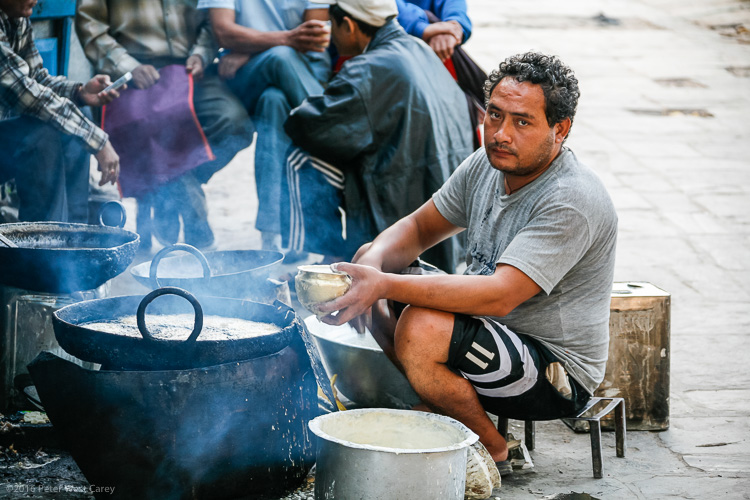
Ghombu

This brings up a good point about use. What are you going to do with those images?

Again, street photographers know this argument well. “You can’t take my photo!” they have had shouted at them if they have been in the game long enough. While this may be true in certain countries or situations, in most public spaces, especially in the US, you are free to photograph individuals.

What you do with the images after is the key point. Your own personal, artistic use is okay – included in a gallery on Facebook or a post on Twitter, a slideshow presentation at the local social club, or a gallery showing. Commercial use, where a model release is needed (think: ad campaigns, brochures, catalogs, stock), is not. Editorial use in a magazine or newspaper generally is okay.

DPS has some excellent resources, including our article Model Releases: What You Need To Know (with samples).

Conclusion

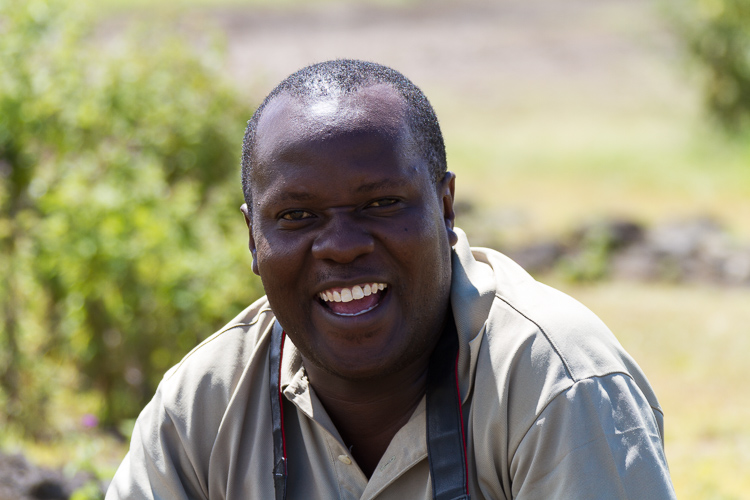
PWC-Tanzania100321-105740-2967

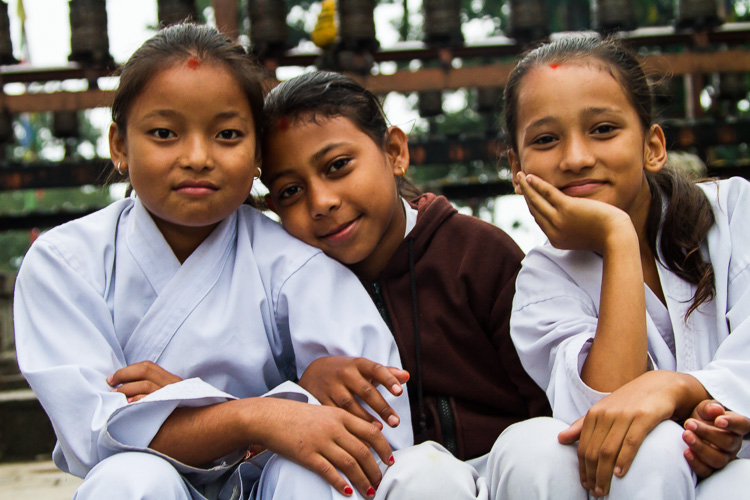
PWC-Nepal2011-0929-8494

Travel portrait photography can be a tricky world to navigate. You’re out of your comfort zone, you may not speak the language or know the customs, but you want to bring home photos of not just the pretty sites, but the interesting people, too.

Be kind. Treat people as people, not objects. Share your images and take time to connect.

Speaking of sharing, what other advice would you give those wishing to bring back travel portraits?

People photography week

This week on dPS we’re featuring articles all about different kinds of people photography including portrait, event and travel photography. See all the previous ones below, and watch for more people photography articles over the next few days.

  • How to Take Low Key Head-shots
  • How to Do a One Light Portrait Setup and Use it as Your Back-up Plan

googletag.cmd.push(function() {
tablet_slots.push( googletag.defineSlot( “/1005424/_dPSv4_tab-all-article-bottom_(300×250)”, [300, 250], “pb-ad-78623” ).addService( googletag.pubads() ) ); } );

googletag.cmd.push(function() {
mobile_slots.push( googletag.defineSlot( “/1005424/_dPSv4_mob-all-article-bottom_(300×250)”, [300, 250], “pb-ad-78158” ).addService( googletag.pubads() ) ); } );

The post Travel People Photography – Tips and Pitfalls by Peter West Carey appeared first on Digital Photography School.

Digital Photography School

 
Comments Off on Travel People Photography – Tips and Pitfalls

Posted in Photography