RSS
 

Posts Tagged ‘Pieces’’

10 Essential Pieces of Landscape Photography Gear

02 May

The post 10 Essential Pieces of Landscape Photography Gear appeared first on Digital Photography School. It was authored by Jeb Buchman.

10 essential pieces of landscape photography gear

What’s the best landscape photography gear? What gear do you need to take stunning landscape photos?

In this article, I share with you my 10 most essential gear items – items that I use all the time in my own landscape photography, and items that I highly recommend you purchase if you’re after the best landscape shots.

So read through this list. And ask yourself, “What am I missing?”

Then, if you can, take a trip to the (online) camera store!

Let’s get started.

1. The internet

Whenever I plan a landscape photography photoshoot, I usually begin by googling the area. If it’s a relatively well-known location, you will probably find some very interesting, comprehensive websites made by other photographers or adventurers/bloggers.

The problem is that if it’s a famous location, you will also get a ton of not-so-interesting (and even incorrect) information, as well. Going through Google results to separate the helpful and high-quality blogs or websites from the crummy ones is an art form. But with a little practice, reading a few sentences of a blog will clue you in as to whether or not the information you’ve found is worth considering.

If you can’t find two or three really good blogs about your location, head over to AllTrails. It has a sizeable database of locations that have been hiked, including user reviews of the location and the level of difficulty. If you’re planning to photograph a famous site, Tripadvisor has a good database of information, including nearby places to stay.

With blogs, AllTrails, and/or Tripadvisor, you’ll be off and running (probably with more information than you need). In most cases, the tricky part is searching through everything you find and turning it into an overall plan of action.

essential landscape photography gear

2. A strong backpack

When it comes to landscape photography gear, a backpack is absolutely essential – and it’s not a good place to go cheap. You get what you pay for, and it’s very important you use a strong, water-resistant bag, one with reinforced padding.

Do yourself a favor and invest in a high-quality bag, like the Lowepro Pro Trekker. It will take care of your camera and lenses, and it will last you many years.

essential landscape photography gear waterfall

3. A weather-sealed camera

Eventually, you’re going to drop a camera. It happens to the best of us (at least, that’s what everyone told me the first time I dropped a camera!), especially those of us who shoot in less-than-perfect weather conditions.

So make sure you purchase a camera made from durable materials – go for a metal alloy body instead of a plasticky, entry-level camera. My first full-frame DSLR was the Nikon D700, and that camera could survive being run over by a small truck. A perfect companion for the clumsy beginner that I was back then.

Also consider investing in a quality raincoat for your lens/camera. I don’t recommend getting one of the cheap, flimsy, clear plastic covers made from recycled sandwich bags; they will tear easily and won’t stay put in windy conditions. Instead, get a cover that is heavy duty because one good coat will last a long time, and they aren’t too pricey.

4. A sturdy tripod

A tripod is an item you don’t want to mess around with. In fact, this is the one item more than any other that I would recommend you consider really splurging on.

Why? A tripod is designed to keep your camera steady, to handle poor footing out in the muddy, rocky, sandy wilderness, and to protect your camera setup from sudden falls. This requires ultra-solid construction – which doesn’t come cheap.

Plus, a flimsy tripod could end up costing you a chunk of cash in repair bills. It only takes one good gust of wind to knock over an unstable tripod. If you buy a nice camera and lens but mount it on an entry-level tripod, it’s like putting old, worn tires on a Ferrari. The car won’t run properly, and it’s dangerous for the rest of the setup.

waterfall with long-exposure stream

A good tripod will outlive the rest of your kit, so it’s rare you’ll need to invest in more than one over the course of many years. Spending a few extra bucks goes a long way toward having a more stable, secure setup.

To find an excellent tripod, check out Really Right Stuff, Manfrotto, Gitzo, and Feisol. In my opinion, you should strongly consider carbon fiber tripods over aluminum; they’re lightweight, and they’re also ridiculously strong.

5. Lenses

Lenses are where the fun begins and your wallet ends.

See, lenses are the single most important piece of landscape photography equipment you can buy. You can have the finest camera, tripod, backpack, memory cards, and accessories available – but if you don’t have quality glass, you’ll seriously struggle to take a great photograph.

I typically prefer to shoot with prime lenses as opposed to zoom lenses. Why? Because I want to get as intimate with the scene as possible. With zoom lenses, I tend to get a bit lazy and shoot without adequately working the scene. There is no substitute for moving your feet and seeing the composition with your own eyes rather than through the viewfinder. This special perspective is lost if you zoom instead of walking around and considering the scene.

That said, lens choice is pretty subjective. I know plenty of photographers who prefer using zoom lenses; that’s great, and most of the time, the best gear for you is the gear you’re most comfortable with.

But here’s my suggestion: Before buying any lens, prime or zoom, rent it first. Because you can’t know how the lens will work for you until you use it in various situations.

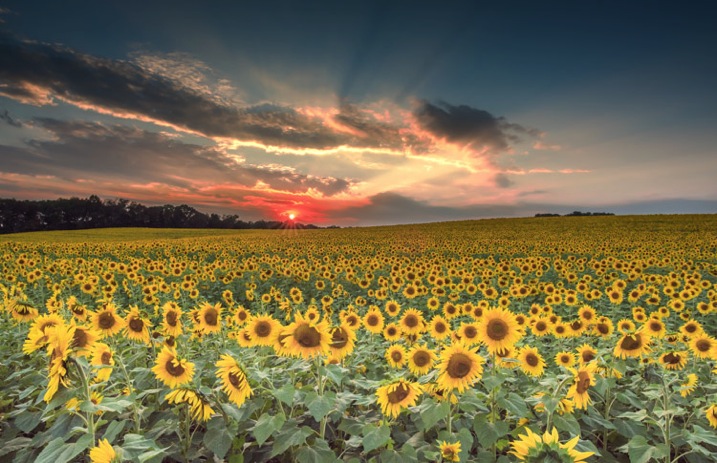
field of sunflowers at sunset

6. A reliable remote trigger or shutter release

Remote triggers are often overlooked by landscape photographers. But I firmly believe that a remote trigger makes a big difference.

Without a remote, you have to physically press the shutter button on top of the camera, and no matter how careful you are, and no matter how securely fastened the camera is to the tripod, this will introduce some shake.

So if you want a tack-sharp image, don’t let anything touch the camera. Get your setup as steady as a concrete slab.

Instead of pressing the shutter button with your finger, invest in a reliable remote shutter release. They aren’t expensive, and they can go a long way toward keeping your photos sharp.

7. Filters

In landscape photography, some filters are almost as essential as good lenses. I’ll keep it brief here and stick with just a few basic filters I always travel with.

A circular polarizer

A polarizing filter helps mitigate the nasty, harsh reflections of the sun off shiny objects such as water and wet rocks. Using a circular polarizer is easy; you simply turn the filter until you see the glare disappear.

A polarizer will also help darken the sky and make it a deeper, richer blue. Some people like that look, and some don’t. I use a polarizer practically all the time when shooting in daylight.

A neutral density filter

An ND filter basically acts as sunglasses for your lens: it blocks some light from reaching the camera’s sensor, thereby slowing down the exposure.

For example, a 3-stop ND filter allows through three stops less light than you’d get without the filter attached. A 5-stop ND filter will allow five stops less light, and so on.

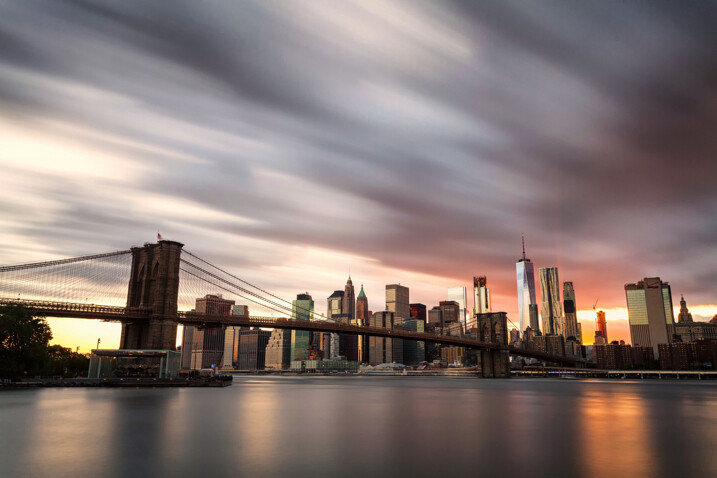
For the serious landscape photographer, I’d recommend carrying a 2-stop, 3-stop, and 10-stop ND filter. If you want to do some long exposure waterscape work, the 10-stop filter will help make the water silky smooth. You can also stretch out clouds or turn people into invisible ghosts with ND filters.

A graduated neutral density filter

GND filters are similar to ND filters, but only the upper portion of the filter is darkened. And the darkening effect is gradual, starting strong at the top and getting darker as you move toward the middle:

graduated neutral density filter

When would you need a GND filter?

Generally, in sunrise and sunset situations when the sky is brighter than your foreground. You can use a graduated neutral density filter to darken the horizon while keeping the foreground nice and bright.

In other words, a GND filter balances the light from the brighter horizon and the darker foreground.

A reverse graduated neutral density filter

A reverse GND filter is like a standard GND, except the tint gets darker as you move from the outer edge of the glass toward the middle.

reverse graduated neutral density filter

When would you use a reverse GND filter? They’re great for shooting sunrises and sunsets where the horizon line is the brightest area of the frame and the sky gets progressively darker as you move upward.

A UV or clear filter

I want to do everything I can to protect my lenses from wear and tear.

So I always have a clear or UV filter on the front of every lens I own.

This does nothing to help improve the photograph, but it does a great job protecting the front lens element from dirt and dust, or from me walking into a door lens-first, which has happened more times than I prefer to admit.

essential landscape photography gear waterfall with rainbow

8. Extra batteries and memory cards

Always, without exception, carry an extra battery for your camera, an extra memory card, and extra batteries for other battery-powered devices.

If you’re bringing along a flash that takes four batteries, take an extra set of four with you. Chances are you won’t need them – but there will always be the one time when you do want them and wish you had thought to pack them.

9. The Photographer’s Ephemeris

The Photographer’s Ephemeris is a clever app that accurately details when and where the sun and moon will rise and set.

If you’re out chasing sunsets and sunrises for photographs, this app is a must-have.

10. A good pair of shoes

No joke. For landscape photographers, having a comfortable pair of shoes is like having good vision. If your feet aren’t comfy, then nothing else matters; you will not be as good a photographer as you would be with comfy feet.

This especially holds true on longer hikes, so invest in a good pair of hiking boots. Make sure the boots strike a balance between breathing well and offering some water resistance.

long exposure farm

Essential landscape photography gear: conclusion

Now that you’ve finished this article, you know all about the best landscape photography gear – and you’re hopefully ready to take a few stunning landscape photos of your own!

So buy the gear you need. Then get out, have fun, and start shooting!

What do you view as essential landscape photography gear? What gear do you always take with you when shooting landscapes? Share your thoughts in the comments below!

The post 10 Essential Pieces of Landscape Photography Gear appeared first on Digital Photography School. It was authored by Jeb Buchman.


Digital Photography School

 
Comments Off on 10 Essential Pieces of Landscape Photography Gear

Posted in Photography


10 Great Pieces of Camera Equipment for the New Year

10 Dec

The post 10 Great Pieces of Camera Equipment for the New Year appeared first on Digital Photography School. It was authored by Simon Bond.

great-pieces-of-camera-equipment

The equipment you use in photography can do much for the types of photos you create. The purchase of an additional lens can unlock new areas of photography for you that were otherwise not an option. There are lots of pieces of equipment you can buy for photography beyond the camera body and lens. In this article, you will learn how to accessorize your equipment. Interested in that? Read on and discover ten great pieces of camera equipment you could buy to boost your creativity!

LED light stick

There are many items you can use for light painting. A simple flashlight, your smartphone, or a glow stick, to name just a few.

A few years ago a new product entered the market though, and it’s changed the game. There are two companies you can look towards if you want to get hold of an LED light stick yourself. The choice of the product then is the pixelstick and the magilight.

These are both LED light sticks, and each product has its good and bad points. The bottom line is they both allow you to program light patterns that then transmit through a series of LED lights. They allow you absolute control of the light painting, and therefore give you maximum creativity!

Image: An LED light stick can be a lot of fun to use.

An LED light stick can be a lot of fun to use.

A glass ball for camera equipment?

Yes, that’s right! Those who have read articles written by me for digital photography school will know I often use a crystal ball for my photography. The product has been rebranded in recent years, and in photography circles, it’s now known as the lensball.

This is a great piece of camera equipment, that’s relatively inexpensive. How many camera lenses have you bought for less than fifty dollars? That’s what this product represents – it’s like an external lens optic that you can place almost anywhere within your scene.

Are you looking to buy a lensball? You can do that from lens ball, or refractique. These are rival companies that offer a similar package, they’re more expensive than some others on amazon but come with better quality glass and other items that make the package better-suited for photographers.

great-pieces-of-camera-equipment-lensball

A glass ball works just like an external lens, or put simply, a lensball.

Tripod

This item might just be the most creative item you’ll ever buy for your photography.

Other items you can buy will give you an extra option in your photography, a tripod, on the other hand, opens up a host of new ways for you to photograph.

Take a look at some of the photography techniques that need, or benefit from, having a tripod. Now it’s worth investing in a good tripod, one that’s sturdy enough that it doesn’t move during the exposure. If you’re traveling and want something smaller and less heavy, then the Gorillapod or a carbon fiber, lightweight tripod from K&F Concepts might be for you. See a reviews on the Gorillapod here and the K&F Concepts tripod here).

  • Light painting – The use of products such as an LED light stick for creating interesting light patterns in your photo requires a tripod because it’s a long exposure.
  • Long exposure – Lots of creative landscape photos use long exposure. This could be to flatten seawater, create silky white water at a waterfall, or to produce traffic light trails in a cityscape image.
  • Digital blending – While it’s possible to take a set of bracketed images with your camera handheld, it’s much better to use a tripod. Digital blending works best with a set of bracketed images of different exposure values.
  • Cloning – Set up your tripod and clone yourself or an inanimate object across the scene your camera is recording.
  • Infra-red – Unless you convert your camera to infra-red, you’ll need to use a filter for this form of photography. That will mean a long exposure.
  • Self-portraits – The next step up from the handheld selfie. Get your camera set up on a tripod, and properly place yourself within the scene!
Image: Use a tripod and take multiple photos to clone yourself!

Use a tripod and take multiple photos to clone yourself!

Filter set

Now, of course, this is more than one item! However, they’re so small, that for this article, I’ll treat them as one piece of camera equipment.

It could be said that in the days of post-processing the need for a bag of filters is not there anymore. You want to get your image as correct in-camera as you can, though, so having a handy set of filters to facilitate this is always good.

These are some of the filters you should consider.

  • Circular polarizing filter – A must for any outdoor photographer. Use a circular polarizing filter to increase the vibrancy of your scene, and to intensify or reduce reflections.
  • Graduated neutral density filter – Great for landscape photography, where you want to balance light in the foreground against light in the sky.
  • Neutral density filter – The weaker ND filters are often used with strobes to allow the use of higher apertures, while still keeping within the flash’s sync speed for shutter speed. The stronger ND filters allow you to practice long exposure photography during the day. This one by K&F Concepts is an adjustable 2-32 ND filer in one.
  • Infra-red filter – A fun niche area of landscape photography is infra-red. Using a filter allows you to take this type of photo without adapting your camera.
  • Colored filters – These can be used to add color to your sunsets, produce sepia photos, or to enhance your black and white photos.
  • UV filters – UV filters are essentially clear glass that absorbs the ultraviolet (UV) rays. While they can reduce the effect of haze, they’re mainly lens protection.

There are some filter sets available such as those by NISI.

Drone

Image: The bird’s eye view provided by a drone is a great angle.

The bird’s eye view provided by a drone is a great angle.

A drone is the ultimate new toy for any photographer!

The sky literally is the limit! The bird’s eye perspective you’ll be able to achieve will be unique.

Take care to learn how to fly these before attempting the more ambitious photos. This costs a lot of money if you lose it through the battery running out or losing its signal.

You’ll also find an increasing number of countries tightening up the certificates you need to fly them. In addition to this, you need to know where the no-fly zones are. These are typically around airports, but other sensitive locations can also restrict drone flights.

Which is the best drone out there? It’s really hard to look past the DJI Mavic drones; they’re very portable, which is a huge plus. Read some reviews on DJI’s drones here.

Reflector disc

Another small and inexpensive item that can add to your photography is a reflector disc.

You can use this to reflect sunlight onto your subject, or in conjunction with a strobe set up. These reflectors fold up into a small space in your bag, but then open up into a larger disc for maximum reflective effect.

They come in different sizes, and you can get rectangular or circular shaped discs. In addition to that, you can get silver, gold or white as a reflective surface that will make your subject warmer or cooler from the reflected light.

great-pieces-of-camera-equipment-lastolite-halo-reflector

Rogue flashbender

There are quite a number of lighting modifiers you can use with a flash, the Rogue Flashbender Kit makes the list here for its versatility compared with other products.

The concept is fairly simple.

You attach the flashbender to your flash, and then use the white surface to bounce light onto your subject. The flashbender panel itself can be manipulated into various shapes, giving you the following options.

  • Bounce the light – The primary use of the flashbender is to aim the flash upwards, so you can bounce light off its white surface. This softens the light, giving you nicer light on your subject.
  • A softbox – Through buying an additional translucent panel that can be attached to the flashbender, you can soften the light even more.
  • A snoot – Shape the flashbender into a cylinder and wrap it around your flash to convert it into a snoot, now that’s versatility.

The full kit can give you even more options, such as using color gels to alter the color-tone of light.

great-pieces-of-camera-equipment-rogue-flashbender-kit

Smartphone apps

While not physical pieces of gear, they’re just as important for the modern photographer. The information they can give you on-the-go is vital. There are many apps out there. Some are specifically about photography, while others are very helpful to photographers like weather apps.

  • Photographer’s ephemeris – Knowing where the sun is in relation to your main subject is very important. Get this planned ahead with the Photographer’s Ephemeris.
  • Snapseed – A nice app for editing your photos on the go.
  • Photoshop express – Everyone knows Photoshop, and with this app, you can edit your photos on a smartphone or tablet.
  • Windy – This is the best app out there for knowing weather conditions on the ground, and ahead of time.
  • Photopills – Like the ephemeris, Photopills gives you all the information you need to know on the celestial bodies in the sky. This also comes with information about the Milkyway, making it essential for astrophotography.
  • Camera+ 2 – The leading app for using your phone as a camera.

Lightbox

great-pieces-of-camera-equipment-lightbox

A lightbox is essential for any still life photography.

You’ll need some form of lighting to get the best results, with off-camera flash working best.

This piece of camera equipment will allow you to get the best product photos. You can also do some food photography with it. The aim of this is to get even light throughout your photo, with no strong shadows. It does this by bouncing light around the white surfaces that surround the box.

Image: Product photography with a lightbox is better.

Product photography with a lightbox is better.

Business cards

Having a set of business cards that you can use to build up your contacts is just as important as any other gear you might have as a photographer.

There is nothing like those face-to-face meetings with people to gain potential business, whether that’s being hired or selling prints. These can be inexpensive, or you can go for the more designer business cards.

  • Moo – These are the best quality cards you can get. You can get your photos printed on the back, and each one can be a different photo. That means when someone takes your card, they’ll also be taking a look at a portfolio of your work!
  • Print shop – A cheaper option is to head to your local print shop. A lot of these will create a design for you, and may even print one of your photos on the back of the card.
great-pieces-of-camera-equipment

Business cards made by Moo are of top quality.

Which camera equipment is for you?

There are many items you can buy for your photography.

Which item is for you?

Perhaps you’ll focus more on buying the right lens for your photography style. However, there are other items you can buy that will give your photography a creative boost.

Have you ever tried any of the items on this list, or are you tempted to buy one? As always at digital photography school, we love to see your comments in the comments section, together with any images you have.

The post 10 Great Pieces of Camera Equipment for the New Year appeared first on Digital Photography School. It was authored by Simon Bond.


Digital Photography School

 
Comments Off on 10 Great Pieces of Camera Equipment for the New Year

Posted in Photography


The 10 Best Pieces of Creative Photography Equipment

10 Jul

The post The 10 Best Pieces of Creative Photography Equipment appeared first on Digital Photography School. It was authored by Simon Bond.

Your dSLR is an incredibly creative tool, which when used correctly can give you dramatic results. A lot of techniques can be achieved with your camera body and a lens, such as panning, zoom bursts or bokeh. With some more equipment, you can really hit the ball out of the park. In this article, you’ll discover what that equipment is and some of the techniques that equipment will allow you to practice. So read on and discover the ten best pieces of creative photography equipment.

Digital blending is a powerful technique that can enhance sunset photos.

1. Tripod

This is almost always one of the first additional pieces of equipment a photographer will purchase, and with good reason.

A tripod allows for a lot of creativity, and you’ll want to get a good tripod. Avoid getting a cheap tripod that has unsteady legs, and instead, invest in a heavier sturdy tripod. If you’re traveling and need a lighter backpack you can compromise a little. You still want a strong tripod, and preferably a hook on the central tripod pole that allows you to add more weight to the tripod once it’s set up.

Now, let’s look at some of the techniques a tripod will allow you to try:

  • Digital blending – Digital blending requires a set of bracketed images for best results. While it’s possible to do this handheld, your results will be improved a lot by using a tripod.
  • Cloning – You can layer several photos together showing yourself or someone else.
  • Light painting – Use your own light sources, or external light sources such as car light trails to light paint across your photo.
  • Astrophotography – Even longer exposures will be needed for astrophotography, together with a lens that has a large aperture.
  • Long exposure – Long exposure also does interesting things during the day. Experiment with moving water, or perhaps on a windy day moving clouds.

A strobe is required to take this type of photo with a water drop.

2. Strobe

Strobes are a great piece of creative photography equipment. They are a little intimidating to learn, with many people preferring natural light. The advantage of learning to use them is great, so push yourself out of your comfort zone. The first step for many will be placing a strobe onto your camera, and bouncing light off a ceiling to produce a well-balanced exposure. Strobism requires more commitment than that though. Look to invest in radio triggers and receivers so you can practice off-camera flash with multiple strobes. Experiment with modifiers like snoots, umbrellas, softboxes and color gels.

The following are a couple of techniques you’ll need your strobe for:

  • Water droplets – Capture a water droplet mid-air by photographing it with a strobe. The idea is to bounce the light off a background behind the droplet, and the light will shine through the droplet.
  • Low-key – Use snoots and a darkened background to create low-key photos. This will often be portrait photos. The bright flash will light your main subject, allowing you to underexpose the background to be black.
  • Stroboscopic – Get repeated images in the same photo by using a high-speed pulse of multiple flashes. A tripod is also needed for this technique.

LED light sticks can be used to create light patterns, like the ones in this photo.

3. LED light stick

There are lots of ways you can create light paintings. The LED light stick is a game-changer for this genre. This is an immense piece of creative photography equipment. This is long exposure, so of course, a tripod will also be required. You can now use this gear to create more abstract light paintings, or use it for portrait work.

The great thing about these devices is they’re fully programmable. You can design the exact light you want to paint, how much color, stripes, pictures or patterns. At the moment the two main LED light sticks on the market are the pixelstick and the magilight.

Lensball photography is a lot of fun, this photo has used post processing to make the ball “float”.

4. Lensball

The lensball acts as an external lens optic, possibly one of the most creative lenses you’ll own. The price is right as well. How many lenses have you bought for less than $ 50? At first glance, this piece of creative photography equipment might not look that useful beyond a few landscape photos. How wrong you’d be, though. It’s like saying a 50mm lens can only ever be used for street photography. So look through your glass sphere, and try out a few of these photography styles with it.

  • Floating ball – Capture the ball in mid-air, this requires some photoshop work, and you’ll need to learn how to set up the three photos you’ll need to create this type of image.
  • Portrait – A little trickier to achieve. You’ll need to exploit techniques that avoid showing the background if you want to focus in on the ball, so the portrait appears within the ball. Alternatively, use the ball as more of a prop within a regular portrait photo.
  • Landscape – Use the lensballs’ fisheye like properties to capture a unique lensball landscape, and give locations that have been photographed many times before a creative twist.

Infra-red photography can create interesting scenes on a sunny day.

5. Filters

Is there a need for filters when post-processing is so powerful? The answer to that is certainly “yes” since the aim is to get as much of the photo you wish to achieve in-camera. You can add filters to the front of your camera that modifies the light coming into your camera, usually by reducing it, but there are other effects as well. Filters can be used for the following forms of creative photography.

  • Infra-red – Filter out all light except for infra-red. Doing so will likely mean you need to use a long exposure, and you’ll then need to post-process your results. The photo will appear red, so you’ll need to adjust the color channels so that the red areas of the photo become white.
  • Long exposure – The use of a strong neutral density filter will allow you to take daytime long exposures, with some very interesting effects.
  • Adding color – You can use filters to make your photo sepia or add more color to the sky during sunset. This is an area where post-processing offers an improved solution though.
  • Starburst – These filters make points of light into a starburst. The same effect can also be achieved by using a smaller aperture.
  • Softening – Portrait photos can be enhanced by using this type of filter, giving them a Hollywood glow. Alternatively, you could stretch a stocking over the front of your lens, and it will also soften the photo by diffusing the light.

Prisms will create double exposure-like images from a single photo.

6. Prism

Like the lensball, the prism alters the light coming into the camera through refraction. Other than holding this glass object in front of your camera lens that’s where the similarities end.

A prism is nevertheless an interesting object that can be used for creative results. You’ll be doing two things for your photographs with a prism. The first is redirecting the light to create interesting double exposure-like images with a single exposure. The second is projecting a rainbow spectrum of light onto a surface of some description, maybe even someone’s face.

Fractal filter

Fractal filters are to prism photography what LED light sticks are to light painting. They come as a set of three different filters, each offering slightly different results. So this is a handheld filter and one that works very well for portrait photos.

Wire wool is fun to use, but be careful with it.

7. Wire wool

Wire wool allows you to light paint with an urban industrial twist.

You’ll use the wool to create lots of flying metal sparks that light paint across your photo as they hurtle through the air. This is a really fun technique to try out, but the issue is safety. You’re creating 1000’s of red hot metal shards, and each of these has the potential to start a fire. You’ll need to exercise an abundance of caution when taking this type of photo. Avoid locations that could start a forest fire during the dry season.

The technique can also be used for portrait photography. Once again, ensure the safety of those involved in your photoshoot by making sure water is on hand just in case.

So how do you use wire wool to create these sparks? Check out this guide and learn how to do it.

8. Metal tube

Another piece of creative photography equipment you can hold in front of your camera lens is the metal tube! The diameter of the tube you’re holding will affect the result you get. The typical pipe to use is the copper pipe often used in household plumbing.

The idea is to photograph through this, and you’ll create a ring of fire within your photo. This ring of fire is in fact flare, and you’ll be able to use it to frame something or someone in your photo. The most obvious application of this photo is for portrait work.

This photo uses umbrellas to frame the subject.

9. Umbrella

This is a popular item for portrait photographers and can be used as a prop. There are several different ways you might use this with a model. If you’re photographing their whole body, the umbrella will take up a small part of the frame. Alternatively, you can use the umbrella as the entire background of your frame, with the model’s head and shoulders featuring in the photo. Not all umbrellas are designed the same.

The best options are the rainbow-colored umbrella, the traditional paper umbrellas, or the transparent umbrellas. The transparent umbrellas also offer the option of an object you can hold in front of the lens, with the spokes acting as a frame for your main subject.

Water droplets were added to the stem of this plant. The background was also added.

10. Water

Is water really creative photography equipment?

Taking water to the location you’re going to photograph makes it equipment. To do that, you’ll need to fill a bottle of water and take it with you to your location. Why might you decide to do this? The most obvious reason is to create reflections in your photo.

In order to do that, you’ll need to find somewhere that creates a natural puddle, and in a location that forms an interesting reflection. Not much water will be needed for this. A good wide-angle lens can make the most of a small reflection puddle.

Water has other uses as well, the following are some ideas you can try:

  • Splash – Use water to add dynamism to your portrait work by throwing it at your model, with their permission of course!
  • Droplets – In droplet form get your macro lens out, and see the little worlds within the droplet caused by refraction.
  • Ice – Take photos of object frozen in ice, to give your still life photos a different feel.


Which creative photography equipment will you use?

There are many items you can use to boost your creativity. Perhaps you use a magnifying glass or a mirror to add something to your images, or even an empty picture frame. There are lots of ways you can curate your photo by adding creative photography equipment to the scene. Have you tried any of the items listed in this article? What’s your favorite item to use, and are there items you use that are missing from this list? Please share your ideas and photos in the comments section of this article, so everyone in the digital photography community can enhance their photography.


10 Best Pieces of Creative Photography Equipment

The post The 10 Best Pieces of Creative Photography Equipment appeared first on Digital Photography School. It was authored by Simon Bond.


Digital Photography School

 
Comments Off on The 10 Best Pieces of Creative Photography Equipment

Posted in Photography


8 Pieces of Architecture Photography Equipment You Need

22 Mar

The post 8 Pieces of Architecture Photography Equipment You Need appeared first on Digital Photography School. It was authored by Simon Bond.

A great subject for photography is Architecture. Whether you’re a commercial photographer, or you enjoy photographing interesting buildings for fun, this is a great area of photography to explore. In this article, you’ll learn about some of the essential equipment you’ll need. Through using this equipment, you’ll be able to get great results each time you photograph. So read on and find out what architecture photography equipment should be in your camera bag.

A tripod combined with a decent wide-angle lens. This is a great architecture photography equipment combination.

1. Tripod

The tripod is a great piece of gear to have, and that’s certainly true for architecture photography. If you’re photographing indoors, or as it’s getting dark, it’s essential you have this. Even when the light is good, using a tripod will improve your results. The following are the main reason you’ll want to bring a tripod with you.

  • Interior photography – The lower light levels for interior photography mean using a tripod is necessary. You’ll need to use slower shutter speeds while keeping the aperture at around f/8.
  • Manual focus – The best way to gain the sharpest focus is to use live view, and then manual focus. This is easiest to achieve with the camera on a tripod.
  • Bracketing – There are many occasions you’ll need to take bracketed photos to balance the light across the scene. When photographing towards the light, or if there is a bright light source such as a window, you’ll need a range of exposure to use in post-processing to balance the scene. In this case, you will need a tripod.
  • Blue hour – A great time for exterior architecture photography is Blue Hour. During this time you’ll need to take long exposure photos from a tripod.

Bracket and clamp

An alternative piece of architecture photography equipment is the bracket and clamp. This can be used as an alternative to the tripod, and you can use it to secure the camera to a structure such as a metal railing. There are locations where a tripod won’t be allowed, and in some cases having a bracket and clamp instead, will allow you to secure the tripod for your needs.

2. Wide-angle lens

The next most widely used piece of architecture photography equipment is the wide-angle lens. This will almost certainly be needed for interior work and is often needed for exterior work as well. Those photos taken in a room, where you need to capture the entire room, will need a wide-angle lens of at least 17mm on a full-frame camera. A lot of architecture is often large in scale, so a wide-angle lens is needed to capture the full size of the architecture you’re photographing. The exception comes when you are some distance from the subject you’re photographing, in this case, a longer focal length would then be required.

The interior of the grand mosque in Abu Dhabi. This requires a wide-angle lens to capture how impressive it is.

Which wide angle lens?

Here is a selection of some of the best wide-angle lenses you can use. Depending on the system you have, you may go for a different lens from this list.

  • Canon 17-40mm f/4L – A great lens at a budget-friendly price. This lens is wide enough for most situations.
  • Sigma 14-24mm f/2.8 DG HSM Art – Great quality lens, made to fit numerous camera manufacturers. Great focal length – and if you need it – a large aperture.
  • Nikkor 14-24mm f/2.8G ED – An excellent lens for those using Nikon cameras. Once again, very wide at 14mm.

3. Bubble level

Getting a bubble level is a good idea to ensure your camera is completely lined up. You’ll find that with a wide-angle lens the distortions they produce can make it difficult to see if the camera is truly level. Using a bubble level, which can easily attach to the hot shoe, you’ll have a quick and easy visual reference. In some cases, you may have a bubble level built into your tripod head. This is a great alternative to a separate bubble level.

4. Strobes

The use of strobes is not just for portraits, you can use them in architecture photography as well.

Strobes are excellent at close quarters, but perhaps not for outdoor use with a larger structure.

You’ll get the best use out of these when you’re doing interior photography.

They’ll come in handy when you have a bright window, and a dark room. You can now use the strobes to light up the room, by bouncing light off the ceilings or walls. This will balance the light across the photo, and can either supplement or replace the need to bracket your photos.

Take care when bouncing the light off a surface that isn’t white, as the light from the flash could potentially color cast the room, in the color the strobe has bounced off.

5. Tilt-shift lens

You’ll be photographing your architecture at a wide angle, and it’s likely you’ll be aiming up from street level. This causes problems for architecture photography due to lens barrel distortion. The result is you’ll have buildings that bow inwards towards the center of your image. This is a problem that can be solved using a tilt-shift lens. It’s also possible to correct this distortion in post-processing, so the tilt-shift lens is not strictly needed. It’s best to get your photo as correct as possible in camera though, so using a tilt-shift lens is best.

This photo has not been adjusted for barrel distortion since the minarets lead the eye into the center of the image. It is an example of where a tilt-shift lens could be applied, as this would fix this distortion.

6. Cable release

You’ll want to get the sharpest results possible for architecture photography. You will take the majority of your photos from a tripod to achieve increased sharpness.

However, when you press the shutter, you’ll move the camera a little. To avoid this, you’ll need a cable release cord or a remote control shutter release. Using these tools ensures your camera will be completely steady when you expose.

Those using DSLR cameras should remember to lock up their mirrors ahead of exposure. If you were using live view to compose and focus your photo, then the mirror will already be locked up.

A cable release is a great piece of architecture photography equipment to have.

7. Post-processing

Post-processing is an important part of architecture photography. Post-processing software might not be physical gear, but it’s easily as important. To get successful architecture photos you’ll need to learn how to sharpen your image in the right area, and how to apply noise reduction software. One of the most useful post-processing techniques you can learn is digital blending, this is essentially manual HDR photography. A correctly blended image will have a lot more impact with certain areas of the photo made brighter and distracting highlights such as window light reduced in brightness. So which software is worth having?

  • Photoshop – The Goliath of the post-processing world, a package widely used by the best photographers and with good reason. You’ll need this for digital blending, and through Adobe Camera Raw you’ll be able to do some sharpening and noise reduction work.
  • Nik collection – A really great set of programs that can be used to polish your photo in post-processing. A combination of Nik color EFEX, Dfine, and Pro sharpener can lead to great results.
  • Raya pro – You’ll need Photoshop to use this, but this excellent tool will make digital blending much easier, and there are guides that go with this program to help improve your work.

Learn to use Photoshop effectively. Your photographs will improve.

8. Filters

A good set of filters are great pieces of architecture photography equipment. It could be argued the need for filters is diminished due to the advance of post-processing. Those that are best at post-processing will tell you to use filters though because it makes life a lot easier once you get the photos onto your computer. The two main filters worth having in your bag are a circular polarizing filter, and a graduated neutral density filter.

  • Circular polarizing filter – This is great for adding vibrancy to your scene, especially useful for outdoor architecture photography. This can be used to enhance or reduce the amount of reflection in your photo.
  • Graduated neutral density filter – Used to balance the light across the scene, these are primarily used by landscape photographers. In architecture photography, you can use the dark portion of this filter to balance the light across the scene. A window will often be too bright in your photo, so you can position this filter on your lens, to reduce the brightness in a portion of your photo.

There are many types of filters, these can all help your photography.

Which architecture photography equipment do you use?

There is a wealth of good camera equipment available for you to use. Which pieces of architecture photography equipment do you find best? Do you have experience of using some of the items in this list? What other items are in your photography bag, and why would you recommend them?

At digital photography school we’d love to see your images of architecture photography, so please share them in the comments section.

The post 8 Pieces of Architecture Photography Equipment You Need appeared first on Digital Photography School. It was authored by Simon Bond.


Digital Photography School

 
Comments Off on 8 Pieces of Architecture Photography Equipment You Need

Posted in Photography


4 Great Pieces of Camera Equipment to Help You Get Creative

08 Jan

A great way to broaden your horizons in photography is to try out something new. In some cases, that will be a different technique, and in others, this will be using new gear. In this article, you will see four different kinds of camera equipment to help you get creative.

The obvious new gear for you as a photographer is a new lens. But there are other options though, and these will be explored in this article. Of course, it’s not the best idea to get new equipment until you have thoroughly mastered what you already own. But there comes a time when further growth needs some investment. Luckily there are options for all budgets, and there are so many items to explore.

4 Great Pieces of Camera Equipment to Help You Get Creative

The tripod is my number one pick for camera equipment to get creative.

1 – Is the tripod the best camera equipment to get creative?

What the best purchase you’ll ever make as a photographer? If you were to say a tripod you’d not be far off, as bang for your buck this is the best value piece of equipment you can buy. Once you have learned to properly master the various techniques that a tripod opens up for you, it will be a permanent fixture in your bag.

With such an important item it’s worth spending a little more money to get good quality one, and it’s still great value for the creativity this will then offer. So what kind of photographic opportunities does having a tripod open up?

4 Great Pieces of Camera Equipment to Help You Get Creative

For this photo, I used an ND1000 filter, which allowed long enough exposure to capture motion in the sky.

  • Self-portrait – If you want professional level portraits, ditch the selfie stick and use a tripod. This will allow you to join group photos with your friends. Setting the camera on a tripod, and using the camera’s self-timer will allow you to put yourself in the frame.
  • Bracketing your photos – This means setting your camera up to take three or more photos in rapid fire. These photos will usually be one exposure value apart, so typically -1, 0 and +1 EV. This will allow you to experiment with HDR photography or the more advanced skill of digital blending.
  • Long exposure – Any kind of long exposure needs a good quality tripod. There are so many options available to you once you are exposing for one second or longer. Long exposure is the subject of multiple articles, examples of the types of photographs you can take are; Infrared, Astro-photography, light painting and long exposures of moving water.
  • A light stand – A tripod can double as a light stand when using strobes. Using off-camera flash is great for portrait photography, so this is yet another use for a tripod.

2 – Light up your world

4 Great Pieces of Camera Equipment to Help You Get Creative

A strobe combined with a radio trigger is a great creative tool.

As photography is the art of using light to create images, so the strobe is a very good piece of camera equipment to help you be creative. Take care to make sure the strobe is compatible with your camera, the wrong brand can fry the electronics in your camera.

If you are wishing for the best value you can look at the second-hand market, as getting more than one strobe will give you many more options. The title here is lighting gear, as a strobe on its own won’t give you maximum creativity. The purchase of radio triggers and receivers, for doing off-camera flash is also a great idea.

4 Great Pieces of Camera Equipment to Help You Get Creative

The use of color gels in this photo adds more interest to this portrait.

Tips for using flash

  • Enhance those details – Use a strobe (speedlight) to light a surface such as bank notes, or a brick wall. With the light coming in from the side you will get a lot more texture and detail in your photo.
  • Throw shadows – Use your strobe to throw scary shadows, for the night is dark and full of terrors! Alternatively, you could make a heart shape from a ring, by placing it on a book.
  • See the world in color – The addition of color gels to the front of your flash can make for some nice creative photography. How about experimenting with complementary (opposite) colors? This can work nicely for portrait photos, or you can use the gels to color a background wall.
  • Studio level photos – This is an entire genre and whether you’re interested in portrait photos, or still life photography you could do a lot worse than checking out the strobist.

Do you want something to go with your lighting gear that’s travel size? The Rogue Flashbender is a great off-camera lighting accessory that works both as a soft-box, and as a snoot.

3 – Get that creative filter on

4 Great Pieces of Camera Equipment to Help You Get Creative

There are so many filters to choose from, and they are among the most affordable pieces of camera gear.

Prior to Instagram adding a filter to your photo meant adding something to the front of your lens.  This is really camera gear to get creative with. Let’s take a look at some of the most important lens filters you can use in photography.

  • Circular Polarizing Filter – This is often referred to as a CPL. This has the effect of polarizing the light, so only light from one direction enters the camera. This can be used to either enhance reflections or eliminate them from reflective surfaces such as water. The CPL will also give color images more punch, and on cloudy days you can adjust the filter by rotating it and see the clouds pop out of the frame.
  • Neutral Density Filters – As above, these are commonly referred to in shorthand as ND filters. They have the effect of reducing the amount of light coming into the camera. This is useful when you wish to use a large aperture on a bright sunny day. The filters come in gradients, typically ND2, ND4, and ND8. ND2 is the weakest of these filters. At the more extreme end of the scale are filters like the ND110, or even the ND1000 (10-stops). These more extreme filters are used by landscape photographers for daytime long exposures.
  • Graduated filters – The most common of these are the graduated ND filters, used by landscape photographers to balance the light across the frame. The next most common in this category are sunset filters, that color half the sky in a specific color such as orange or red.
  • The best of the rest – Black and white film photographers will often use red, orange, or yellow filters to enhance the contrast in their scene. Another popular type of filter is the starburst, that makes light sources appear like stars.
4 Great Pieces of Camera Equipment to Help You Get Creative

Infrared photography can be great fun to experiment with.

4 – Specialist camera equipment

In addition to the above, there is some very good niche specific camera equipment to get creative with. These will allow you to take outstanding images, with the effect produced in camera.

  • The Pixelstick – This is a great tool for light painting that will take your photos to a different level. This allows you to fully control the light that’s emitted, and even program in your own patterns. The cheaper variant is to use a glow stick, or fairy lights attached to a stick. The ability to fully program the light source though makes the pixelstick a creative beast.
  • A glass ball – A personal favorite of mine is the glass ball. This can be used for refraction photography and could be referred to as an external lens optic that you carry around with you. If you think of this as a lens, it’s, without a doubt, the cheapest lens you’ll ever buy. Those that want to learn more can read my previous article on this, or perhaps follow the links in my bio below.
  • The dripkit – Have you ever tried your hand and water drop photography? If you haven’t you really should, it’s a ton of fun. The next level up here is the dripkit, which allows you to control every aspect of these types of photo. With the dripkit, you can now create some out of this world splash photography. Truly this is a camera equipment accessory to get creative.
4 Great Pieces of Camera Equipment to Help You Get Creative

This photo of Boston was taken through a glass ball.

Which gear is most interesting to you?

There are so many choices when it comes to camera equipment to help you get creative. The choice of gear you use is down to personal taste.

Here at dPS, we would love to hear your experiences. Have you tried any of the above pieces of equipment? Is there any other gear you’ve used that’s not mentioned here, something that really took your photography in a new direction? Let’s hear from you whether you’ve already tried any of these, or if you are thinking about taking the plunge.

This photo was taken in a single frame. The strobe was used to throw a self-portrait shadow on the wall. The tripod was used as this is a long exposure, also freeing me up to both light paint, and be in the frame. Finally, the light painting was produced using a pixelstick.

The post 4 Great Pieces of Camera Equipment to Help You Get Creative by Simon Bond appeared first on Digital Photography School.


Digital Photography School

 
Comments Off on 4 Great Pieces of Camera Equipment to Help You Get Creative

Posted in Photography


Stacked Ceramics: Shop Floor Made from 25,000 Pieces of Pottery

13 Sep

[ By WebUrbanist in Design & Fixtures & Interiors. ]

ceramic surface side view

A 400-year-old ceramics studio in Japan has completely remodeled their store with a most remarkable addition: a walkable surface constructed from a stack of tens of thousands of scrapped pieces of crockery.

ceramic walkable surface

ceramic stacked tableware discards

Yusuke Seki (photos by Takumi Ota) collected plates, saucers, bowls and cups for this creative endeavor, all to create a display platform for Maruhiro Ceramics in Hasami, Nagasaki.

ceramic steps display level

ceramics on display

To facilitate a more intimate experience, a pair of stairs is placed by the display platform, allowing visitors to walk up and peruse wares, all while enjoying a sense of wonder from the layers of history right beneath their feet.

ceramic platform in use

ceramic wood display cases

Traditionally, flawed ceramics are simply thrown into dedicated landfills, while this rethought application brings pieces of history back up to the surface.

ceramic top detail

ceramic space exxterior

Since the discards are eliminated before the coloring and glazing process, there is an aesthetic consistency to the materials reused in this creative context.

ceramic stairs side

ceramic view outside

Individually fragile, the tableware was turned into modular bricks by being filled with concrete, but their individual shapes and sizes still made this a daunting endeavor to actually deploy. Still, the result is compelling and interactive – not so much of a crackpot idea after all, as it turns out.

Share on Facebook


[ By WebUrbanist in Design & Fixtures & Interiors. ]

[ WebUrbanist | Archives | Galleries | Privacy | TOS ]


WebUrbanist

 
Comments Off on Stacked Ceramics: Shop Floor Made from 25,000 Pieces of Pottery

Posted in Creativity


Art Glass Pieces for an Appealing Interior Design

06 Sep

A living space must be decorated by at least one item that directs its attention their way. One of the best items to place in your common living spaces is a piece of art glass. Made with great care, through long processing and with a high sense of art, these art glasses are your next […]
Digital Photography Information Center

 
Comments Off on Art Glass Pieces for an Appealing Interior Design

Posted in Equipment


10 Essential Pieces of Gear you Need for Landscape Photography

22 Jun

If you are interested in going out and getting some high quality landscape photographs, here’s a comprehensive list of items you will either want to consider, or must have, in order to increase your chances of getting some keepers:

002

#1 – The Internet

Whenever I start to plan a photo shoot to a particular location, I usually begin by googling the area. If it’s a relatively well-known location, you will probably find some very interesting, and comprehensive, websites made by other photographers or adventurists/bloggers. The problem is, if it’s a famous location, you will also get a ton of not-so-interesting and even incorrect information as well. Weeding through Google to isolate the helpful and high quality blogs or websites from the crummy ones is an art form all its own. Once you get used to perusing Google, reading just a few sentences of a blog will clue you in as to whether or not the information you’ve found is worth taking it to heart or not.

If you aren’t lucky enough to find two or three really good blogs about the location, head over to Alltrails.com. It has a sizeable database of locations around the country that have been hiked, including user’s reviews of the location and the level of difficulty in getting there. If it’s a famous site, TripAdvisor.com has a good database of information, including the places to stay nearby.

From there, you’ll be off and running with more information than you probably need. In most cases, what becomes tricky is weeding through everything you find and parsing it down into just a few brief paragraphs on your overall plan of action.

#2 – A Strong Backpack

If you’re looking for a place to save some money, a backpack is not where you want to be counting pennies. You get what you pay for, and when it comes to choosing a backpack to take on a landscape shoot, it is very important you use a bag that is strong and water resistant, with reinforced padding.

Don’t fall victim to the lame zipper bug (you know you’ve been there before, trying to unzip the bag and before you know it, the zipper pops off the bag like a cricket). Do yourself a favor and invest in a high quality bag, like the Tamrac Expedition Series, or the Lowepro Pro Trekker. It will last you many years, and will help you take care of your camera and lenses in the long run.

001

#3 – A Weather-Sealed DSLR Camera

Generally speaking, for various reasons, I still much prefer a DSLR (such as the Nikon D810) over a full-frame mirrorless camera (such as the Sony A7r) for landscape photography. One reason is that certain DSLR models are significantly more rugged and weatherproof than mirrorless.

Eventually you’re going to drop a camera. It happens to all of us (at least that’s what everyone told me the first time I dropped a camera), especially those of us who are out in less than perfect weather conditions. DSLRs made from composite magnesium handle some rough treatment much better than the plastic-bodied entry level DSLRs. My first full-frame DSLR was the Nikon 700. That camera could survive being run over by a small truck. A perfect companion for the clumsy, just-starting-out landscape photographer that I was then.

Also consider investing in a quality raincoat for your lens/camera. I don’t recommend getting one of the cheap, flimsy, clear plastic covers made from recycled sandwich bags…they will tear easily and won’t stay put in windy conditions. Get a cover that is heavy duty…one good coat will last a long time, and they aren’t pricey.

#4 – A Sturdy Tripod

To handle poor footing out in the muddy, rocky, sandy wilderness, and to protect your camera lens setup, a tripod is one item you don’t want to mess around with. In fact, this is the one item more than any other that I would recommend you consider heading to the northern end of your projected budget in order to select a high quality tripod.

A flimsy tripod could end up costing you a chunk of a paycheck in repair bills. It only takes one good gust of wind to knock over an unstable tripod. Having a nice camera and lens, but an entry-level tripod is like putting four worn down, old tires on a Ferrari. It won’t run properly and it’s dangerous for the rest of the setup.

003

A good tripod will outlive both of us, so it’s rare you’ll need to invest in more than one over the course of many years. A few extra bucks goes a long way towards getting having a more stable, secure setup.

See Really Right Stuff, Manfrotto, Gitzo, or Feisol for excellent tripods. In my opinion, you should strongly consider carbon fiber over aluminum; they are the lightest and strongest on the market.

#5 – Lenses

This is where the fun begins, and your wallet ends. Lenses are the single most important piece of equipment in photography. You can have the finest camera, tripod, backpack, media card, and accessories available, but if you don’t have quality glass, it will severely complicate your ability to take a good photograph.

I typically prefer to shoot with prime (fixed focal length) lenses, as opposed to using zoom lenses. My preference for primes is mostly about making sure that I get as personal and into the scene as possible.

With zoom lenses, I tend to get a bit lazy and shoot without adequately working the scene. There is no substitute for moving your feet and SEEING the composition with your own eyes, and not just through the viewfinder. The element of perspective is lost if you simply zoom, instead of walking around and checking things out with your own eyes first.

That said, it’s strictly a subjective thing. I know plenty of photographers who prefer using zoom lenses, and that’s great. Most of the time, the best gear for you is the gear you’re most comfortable with. The key suggestion here, with any lens, prime or zoom, is that you RENT one and try it out before buying it. You can’t know how the lens will work for you until you use it in various situations.

004

#6 – A Reliable Remote Trigger or Shutter Release

This is often overlooked by many photographers, but I firmly believe having a remote trigger makes a big difference. Without one, you have to physically press on the top of the camera. No matter how careful you are, and no matter how securely fastened the camera is to the tripod, this will introduce some micro-shake into the setup. If you want your image to be as tack-sharp as possible, you don’t want anything touching the camera that doesn’t have to. Once the mirror locks up, you want your setup to be as steady as a concrete slab. Every DSLR has its own proprietary remote shutters, and you can also find quality third-party remote shutters available at a lower cost.

#7 – Filters

For landscape photography, some filters are almost as essential as lenses. I’ll keep it brief here and stick with just a few basic filters I would always want to travel with:

Circular Polarizer

A polarizing filter helps mitigate the nasty, harsh reflection of the sun off of shiny objects such as water or anything wet. To get it to work, you simply turn the filter until you see the glare disappear, then you stop turning the filter. A polarizer will also help darken a blue sky and make it a deeper, richer blue. Some people like that look, some don’t. If you do, a polarizer will help you achieve it. I use a polarizer practically all of the time when shooting in daylight.

Neutral Density Filter

An ND filter basically acts as sunglasses for your lens, it blocks some light from reaching the camera’s sensor, thereby slowing down the exposure. For example, a 3-stop ND filter (usually denoted as an 8X or 0.9 ND filter) allows three stops less light through than you’d get without the filter attached. A 5-stop ND filter will allow five stops less light, and so on. For the serious landscape photographer I’d recommend having a 2-stop, 3-stop and 10-stop ND filter. If you want to do some long exposure waterscape work, the 10-stop will come in handy to help make the water look silky smooth. You can also stretch out clouds or turn people into invisible ghosts with ND filters.

Graduated Neutral Density Filter

These are similar to ND filters, but instead of the entire filter being tinted, only the upper portion is darkened, with the tint getting darker from the middle to the edge. So, for example, if you’re photographing a horizon with a sky that’s two or three stops brighter than your foreground, you could use a graduated ND filter to help bring out the foreground more, without blowing out the horizon. It will effectively balance the amount of light received from both the brighter horizon and the darker foreground. Usually just a two or three stop GND filter is necessary. Here’s a photograph of a Graduated ND Filter:

005

Reverse Graduated Neutral Density Filter

Same principle as the one above, except instead of the tint getting darker from the middle of the filter to the edge, it’s reversed. The middle of the filter starts out the darkest, and gradually gets lighter as you travel towards the edge. These are excellent for shooting sunrises and sunsets, where the horizon line is the brightest area of the frame, and as you go higher in the sky, it becomes less bright. This is what a Reverse Graduated ND Filter looks like:

006

UV or Clear Filter

If it’s my lens, I want to do everything I can to protect it from wear and tear. I always have a clear, or UV, filter on the front of every lens I own. It does nothing to help improve the photograph in any discernible way, but it does a great job protecting the front lens element from dirt and dust, or from me walking into a door lens-first, which has happened more times than I prefer to admit.

007

#8 – Extra Batteries and Media Cards

Always, without exception, carry an extra battery for your camera, an extra media card, and an extra battery for any other battery-consuming device. If you’re bringing along a flash that takes four AA batteries, take an extra set of four with you. Chances are you won’t ever need them, but there will always be the one time when you do, and you’ll wish you had them.

#9 – The Photographer’s Ephemeris

This clever app (TPE) does an amazingly accurate job at detailing when and where the sun, and moon, will rise and set. If you’re out chasing sunsets and sunrises for photographs, this app is a must-have.

#10 – A good pair of shoes

No joke; having a comfortable pair of shoes is like having good vision. If your feet aren’t comfy, then nothing else matters. You will not be as good a photographer as you otherwise would be with comfy feet. This especially holds true on longer hikes; invest in a good pair of hiking boots. A pair that strike a balance between breathing well but also offering some water resistance.

That’s enough for the list of equipment you’d want to consider having to photograph landscapes. If you’ve made it this far in this article, I hope you’ve gotten something useful out of it. Have fun shooting those landscapes!

008

googletag.cmd.push(function() {
tablet_slots.push( googletag.defineSlot( “/1005424/_dPSv4_tab-all-article-bottom_(300×250)”, [300, 250], “pb-ad-78623” ).addService( googletag.pubads() ) ); } );

googletag.cmd.push(function() {
mobile_slots.push( googletag.defineSlot( “/1005424/_dPSv4_mob-all-article-bottom_(300×250)”, [300, 250], “pb-ad-78158” ).addService( googletag.pubads() ) ); } );

The post 10 Essential Pieces of Gear you Need for Landscape Photography by Jeb Buchman appeared first on Digital Photography School.


Digital Photography School

 
Comments Off on 10 Essential Pieces of Gear you Need for Landscape Photography

Posted in Photography


Seven Pieces of Advice for New Lightroom Users

08 Apr

Lightroom Develop module

Andrew S. Gibson is the author of Mastering Lightroom: Book 2 – The Develop Module. There’s a special deal on now at Snapndeals, get 40% off for a limited time only.

A Digital Photography School poll held earlier this year revealed that the majority of readers carry out their post-processing in Lightroom. Lightroom is attracting users all the time as it is not just a photo processor – it helps you organize, search and view your photos as well. If you are new to Lightroom then these tips will help you get started.

1. Understand the Lightroom Catalog

The Lightroom Catalog is a database containing all the information that Lightroom holds about your photos. It includes metadata, records of any edits you have made, star ratings, keywords, Collections and the locations where your photos are saved.

***An important note: the Catalog doesn’t contain any photos, just information about them.***

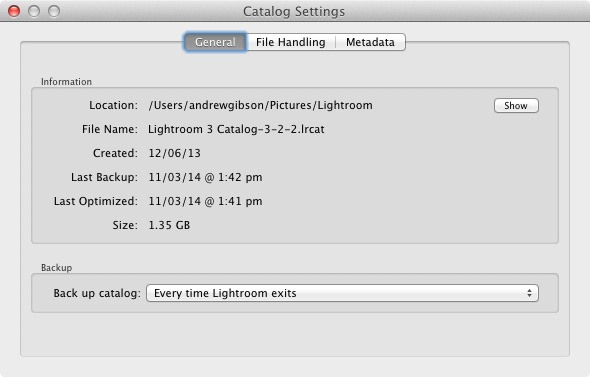
The Catalog is important, and for maximum peace of mind you should set Lightroom to make a backup copy every time you close the program. Do this by going to the General tab in Lightroom > Catalog settings and setting Back up Catalog to Every Time Lightroom Exits:

Lightroom Catalog settings

The next time you exit Lightroom it will give you the choice where to save the backup – it’s a good idea to save it on a separate hard drive to the one containing your Lightroom Catalog (located on the computer’s main hard drive). If the backup and the original Catalog are on the same hard drive, and it fails, you will lose both.

2. Appreciate the advantages that using Lightroom gives you

The main benefit of using Lightroom is that it becomes the heart of your post-processing workflow. You can do most of what you need in Lightroom: including viewing, organizing, searching and key-wording photos, through to post-processing and exporting. If you need to finish a photo in Photoshop or another program you can export it from Lightroom first, then bring it back into Lightroom when it’s done, where the two versions will exist side by side.

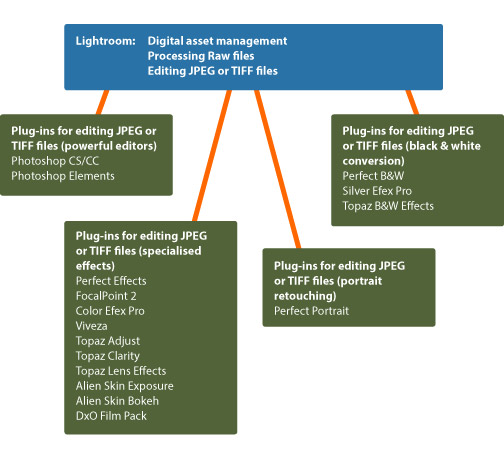
This diagram shows the workflow:

Lightroom workflow

Another advantage is that Lightroom saves you hard drive space. Think about what happens if you process a Raw file in Photoshop. You start by converting it in Adobe Camera Raw, then open the file as a 16 bit TIFF in Photoshop itself, before finally saving it. Depending on what format you save it in, you end up with either a Raw file and a JPEG, or a Raw file and an 8 bit or 16 bit TIFF.

In Lightroom, on the other hand, all the edits you carry out on your photos are saved as text commands in your Lightroom Catalog. This takes up a lot less space and you only need to export your files into another format (JPEG, TIFF etc.) when you actually need them for something.

You can save even more hard drive space by converting your Raw files to the DNG format when you import them into Lightroom. This also makes Lightroom run faster. This is covered in more detail in my article Make Lightroom Faster by Using DNG.

3. Learn what you can and can’t do in the Develop module

Lightroom is primarily for processing Raw files, although it can also be used for editing JPEGs and TIFFs. All this is done in the Develop module. Even if you are processing a Raw file with the intention of exporting it to another program (like Photoshop or a plug-in) it is a good idea to do as much editing as you can in Lightroom first.

Why? The main reason is that using Lightroom saves you hard drive space, as mentioned earlier. When you export a photo to use in a plug-in, Lightroom converts it to a 16 bit TIFF (or other format of your choice) first. This negates the benefit of using Lightroom to save hard drive space, so you should avoid it where possible.

Things you can’t do in the Develop module are anything involving layers, creating HDR images by tone mapping, exposure blending, adding textures, creating composite images or adding fancy borders. For these you will need Photoshop or another program.

4. Retouching portraits in Lightroom

There are lots of Lightroom plug-ins available designed to help you retouch portraits. Indeed, there are so many that it’s difficult to know which are any good, especially as some cost more than Lightroom itself.

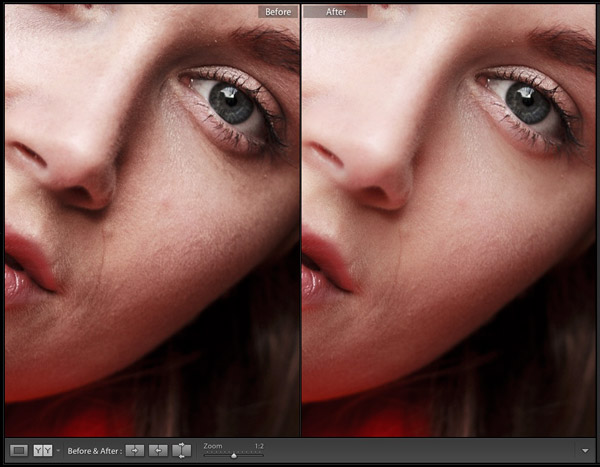
While you may need a plug-in (or Photoshop) for high-end retouching work, Lightroom has a built in Adjustment Brush preset that will do the job for you. It’s called Soften Skin and is a quick and easy way to retouch a portrait.

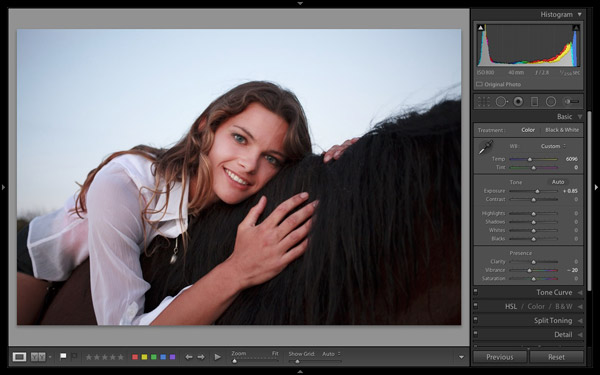
This before (left) and after (right) comparison shows what you can achieve in Lightroom:

Lightroom portrait retouching

This is a good example of learning what you can achieve within Lightroom, saving yourself time, hard drive space and the expense of purchasing another plug-in in the process.

For more on retouching portraits in Lightroom see: How to professionally retouch portraits in Lightroom

5. Learn to organize your images in the Library module

If you are new to Lightroom you will be accustomed to organizing your photos into folders on your hard drive. In Lightroom though, things are different. There’s only one module (Library module) that gives you direct access to the folders on your hard drive. The others all use Collections instead.

Lightroom is set up that way because Adobe wants you to organize your photos in Collections. The advantage of working this way is that a Collection can contain images that reside across a multitude of folders and bring them together in a way that makes sense for you. You can organize your images by date, subject matter, people’s names or any other way that is useful. My article Use Lightroom Collections to Improve Your Workflow goes into this in more detail.

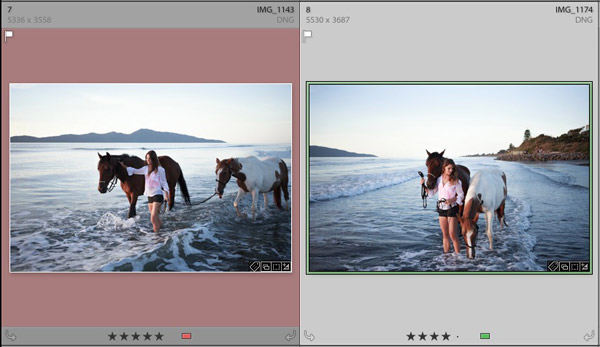
6. Decide how to use colour labels, star ratings and keywords from the beginning and stick with it

This is the hardest piece of advice to follow because when you are starting out you’re still figuring how to use these features. As your understanding of Lightroom grows, you will work out how to use these things in a way that suits you. Just be aware that consistency is your friend. If you start out using (for example) colour labels one way, then change your mind after a few months, it has the potential to cause confusion.

Lightroom colour labels and star ratings

For help with keywords, read my article Creative Ways to Use Keywords in Lightroom 5.

7. Put all your Raw files in a single folder on an external hard drive

This makes it easy to back them up. If you need help with deciding on a file structure then my article Organising Photos for Lightroom will help. The main benefit of keeping all Raw files in a single folder is that it is easy to back up. I recommend that you back your Raw files up to at least two different hard drives. Given that hard drive failure is inevitable (it is always a question of when, not if, even if the when is years into the future) it is wise to have multiple copies. That way if the worse happens it is an inconvenience, not a disaster.

Over to you

Now it’s your turn. What advice would you give to new Lightroom users? What do you wish you had known from the start?


Mastering Lightroom: Book Two

Mastering Lightroom: Book Two – The Develop Module ebookMy new ebook Mastering Lightroom: Book Two – The Develop Module teaches you how to process your Raw files in Lightroom for spectacular results. Written for Lightroom 4 & 5 it takes you through every panel in the Develop module and shows you how to creatively edit your photos. It’s now 40% off at Snapndeals for a limited time only.
The post Seven Pieces of Advice for New Lightroom Users by Andrew S. Gibson appeared first on Digital Photography School.


Digital Photography School

 
Comments Off on Seven Pieces of Advice for New Lightroom Users

Posted in Photography


5 Pieces of Photography Gear to Consider as Your First Upgrade

26 Nov

Neil Creek is the author of our newest ebook Photo Nuts and Gear. In this post he offers some advice to the beginning photographer about the first upgrade they should buy for their camera.

So you’ve been getting into this photography thing pretty seriously ever since you bought that “good” camera you wanted. It turns out that you really enjoy photography, and you think you’ll be doing it for a while. You want to know what cool camera gear is out there, and you know there’s a lot, but what should you get first?

Where to start on the photography gear upgrade trail

When you’re just starting your photography journey, it’s intimidating how much gear there is and how much it costs. It’s obvious that some photos are impossible without certain gear, and sometimes it’s not obvious when gear has helped a photo.

I’ve been shooting and helping new photographers to get the most out of their gear for years, so I have a few suggestions for great first investments in photography to suit your varying interests and budget.

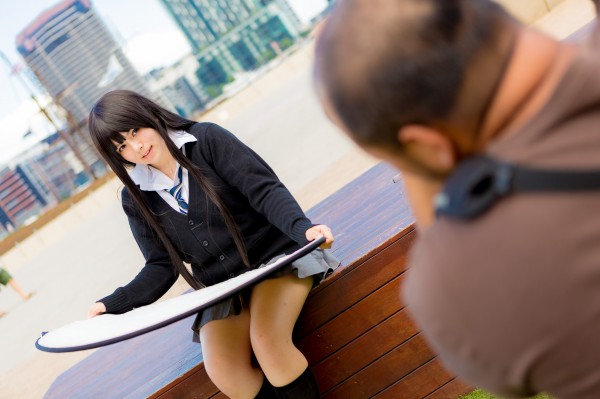
A 5-in-1 reflector

5in1reflector

Light is everything in photography, but sometimes you can’t quite get the right kind of light where you need it. A great example is outdoor portraits. With the light predominantly coming from overhead, there are often dark circles under the eyebrows. A reflector can be used to reflect some light back up into the face of your subject to fill these shadows.

A 5-in-1 reflector is cheap and very versatile. Built around a collapsible steel ring spanned by diffusion material, it has a reversible cover with four different surfaces. The diffusion material inside is great for turning full sun into bright shade, for small and macro subjects as well as head and shoulder portraits. I’ve even used it as a flash diffuser in a pinch. The cover has three reflective surfaces: white for gentle fill, silver for strong fill, gold for a warm strong fill, and a black surface for eliminating light to bring shade back to a scene which is too evenly lit.

This is an incredibly versatile tool at a very affordable price, and it neatly fits into the “laptop pouch” in camera bags which have one. This item should be in every portrait photographer’s kit.

Who is this for: photographers on a budget who shoot in natural light
Approximate cost: $ 20-50 depending on size

creek-130310-051

The Nifty 50 lens

Lenses are a critical part of the optical system that creates the photographic image. Unfortunately almost every lens choice is a compromise between price, speed, image quality and more. Plus, lenses are expensive!

creek-131028-048

There is one lens however that is possibly the best of all worlds: the 50mm prime, also known as the “Nifty 50″. Several lens makers have their own or similar versions of this lens, but the most famous is probably the Canon 50mm f/1.8. This lens is small, fast (thanks to its wide f/1.8 aperture), tack sharp and extremely affordable. If you are looking for an excellent portrait lens that will take well exposed photos in low light, it’s hard to go past the Nifty 50 especially if you are on a budget.

These lenses aren’t without their weaknesses of course: cheap plastic body construction keeps the price and weight down, but negatively affects the durability; weather sealing is also thus not an option; it is notoriously slow to focus in low light; there’s no image stabilization; andthe focus ring is very small. Despite all this, it is hard to resist the appeal of professional level image quality, at a hobbyist price.

Who is this for? Anyone looking for a high image quality, fast, small lens on a budget
Approximate cost: $ 100-200 depending on brand

A good solid tripodcreek-131031-028-Edit

Photographers are always limited by the amount of light, and without adequate amount, you are forced to make compromises with your settings. When you have to use a slower shutter speed you risk getting blurry photos from camera shake. A tripod fixes that. By providing a stable platform you can almost eliminate camera movement from short, to incredibly long shutter speeds.

Not only does a tripod fix the problem of a shaky camera, it opens up whole new photographic and creative opportunities. Seven of the eleven special effects photography techniques discussed in my ebook Photo Magic use a tripod. A Tripod is possibly the most versatile piece of photography equipment you can buy. You will be able to try photos and techniques otherwise impossible.

Buying a tripod can be like walking through a minefield however. There are so many options from the very bad to the very expensive so it pays to do your research. For a first time tripod for a small DSLR user, I recommend one of the base end models from the big name tripod makers. I go into a lot of detail in Photo Nuts and Gear on choosing the right tripod for you. One tip – avoid department store tripods!

Who is this for? Photographers shooting in low light, with macro subjects, landscapes, and creative low light photography such as light painting.
Approximate cost: $ 100-200 for a first tripod

creek-130928-341 - Copy

An external hot-shoe flash or speedlight (speedlite)

creek-131102-035

A flash unit or speedlight is often one of the first big purchases camera owners make, and unfortunately it’s very easy to pay more than necessary. The flagship units from Canon and Nikon are very expensive and packed with features, many of which a new photographer won’t need. I personally recommend buying a cheaper, manual power, third party flash first. The ETTL, or auto exposure, feature of the expensive flashes is handy, but I find that manual power control is pretty easy to master, and it will save you a lot of money: enough to buy one or two more flashes for the price of a flagship model. Manual flashes are also compatible with the more affordable radio triggers that let you fire your flash off the camera and enter the amazing world of Strobist photography.

Flashes adds a good deal of versatility when shooting in low light, but their real power comes when you get them off camera. A couple of flashes, triggers, light stands and simple modifiers can utterly transform your photography, and add creative options that match those offered by a tripod. A little research and careful spending can put all of these within reach for the about same price as a top of the line flash from Nikon or Canon.

Who is this for? Photographers shooting indoors in low light, Strobist wannabes

Approximate cost: $ 100-200

creek-130426-192-hdr

Walk-around lenscreek-131028-056

Like most people, you likely bought your camera with a kit lens. These lenses are often good enough for most photographers, but unless you buy a top end DSLR (which come with higher quality lenses as standard), they’re not going to be the best you can find. Most kit lenses are a bit slow, a bit soft, a bit “plastic-y”. If you’re getting serious about being a photographer, you’ll probably want something better. A walk-around lens is one you leave on your camera by default, and use all of the time you don’t have a specific need for another lens. As such, most of your photos will be taken with it, and you’ll probably want to upgrade it once you can afford to grow your lens collection.

There are a lot of options available, so you need to think a bit about how you use your camera, and what features are important to you. You will want to consider:

  • how heavy is the lens
  • how often you shoot in low light
  • what frustrates you most about your current lens
  • whether you’re always wanting to fit more in your shots or if you want to bring distant things closer

All of these issues will affect the best choice of walk-around lens for you. Be prepared to possibly spend a lot of money. Lenses are expensive, especially high quality ones. Since there are so many options and factors to consider it’s hard to offer much practical advice in a blog post, but I go into a lot more detail in Photo Nuts and Gear. In short however, be prepared to do a lot of research to understand your options and how to choose between them. A good walk-around lens will get a lot of use over many years, and the quality of your images will be impacted by the choice you make.

Who is this for?  Someone who is taking the first big step into turning photography from a pastime into a serious hobby
Approximate cost:  $ 300-1800

Post originally from: Digital Photography Tips.

Check out our more Photography Tips at Photography Tips for Beginners, Portrait Photography Tips and Wedding Photography Tips.

5 Pieces of Photography Gear to Consider as Your First Upgrade

The post 5 Pieces of Photography Gear to Consider as Your First Upgrade by Neil Creek appeared first on Digital Photography School.


Digital Photography School

 
Comments Off on 5 Pieces of Photography Gear to Consider as Your First Upgrade

Posted in Photography