RSS
 

Posts Tagged ‘Photos’

Tips for Taking Documentary Style Travel Photos

14 Oct

Documentary style photography has long been of great fascination to me. The sheer act of photographing people and places to document spontaneous moments and the imperfections associated with it gives such photography, and the photographer, a sense of being authentic, real, and free to exercise his/her creative freedom.

Officially, documentary style photography has many technical definitions. As per Wikipedia, documentary style of photography is used to chronicle events and environments in a naturally occurring state very much like photojournalism. I like to think of a documentary style of photography as the letting go of my inhibitions and preconceived notions of perfection. That I’m documenting people and places in their natural environment – being or doing what they do on any given day.

Tips for Taking Documentary Style Travel Photos

This scene literally happened right in front of me in Jaipur, India – the classic story of the billy goats!

I find that by approaching travel photography in a documentary fashion, I am able to have a richer travel experience. Because I can relieve my mind of the pressures of photographing just like everyone else and also walk away with some unique frames that speak to my own experiences.

To that end, here are a few tips to keep in mind for a documentary style approach towards your travel photography.

#1 – Be present in the moment

Being present in every moment of every day is a life lesson we all can benefit from. It doesn’t just apply to travel photography. Great moments happen every day around us that are worth documenting not just for our clients but also for ourselves so that we can live a richer, fuller life.

Tips for Taking Documentary Style Travel Photos

People watching is a great exercise in training your eye to really catch that which is unusual and unique to a place – these boys in the market in Jaipur were observing me just as much as I was observing them!

By training your mind to really live life in the moment and not worry about all the other distractions will also help you really “see” what is around you. More often than not, you likely travel with a very tight agenda and timeline. No sooner than you get to your destination, you are already mentally prepared to move on to the next stop. Instead, try and plan a single excursion for a day and really focus on learning and experiencing that place or activity before moving on.

#2 – Be observant of your surroundings

Life is happening all around you all the time. People interacting with each other, people interacting with nature, nature putting on a grand show during sunrise, sunset, or even during a thunderstorm. But don’t wait for some preconceived notion of the perfect moment to take your camera out and take a photo.

At the same time, don’t see the world simply through your viewfinder. Observe the scene, anticipate the shot that you really want to get and be ready to take the shot. Don’t just fire away at every situation only to get home to realize that you completed missed the moment and hence missed the shot as well.

Tips for Taking Documentary Style Travel Photos

I once found myself in the middle of a village festival/ritual when I was traveling in India. I had no idea what was going on but knew I had to document this. Luckily a female photographer was somewhat of a rarity in this village and I was given a special seat in the middle of all the action (without a word spoken amongst me and these women)! It was fascinating to see and experience.

Tips for Taking Documentary Style Travel Photos

I later found out that these women were taking one of the female members of their family to each house to get blessings as she was supposed to be possessed by a female deity and have god-like powers…certainly an experience I will never forget!

#3 – Be real about your travel photography goals

A very famous travel quote says, “We travel not to escape life, but so that life does not escape us” really hits the nail on the head for me. Be real about why you travel and what you want to gain out of each travel experience. If you are traveling to a marketplace and want to get a true sense of local lifestyles and customs, then look for naturally occurring scenes. Don’t look for people that you can pose or stage to get your shot.

Tips for Taking Documentary Style Travel Photos

This is by no means a perfect shot but I love the fact that this angle shows just how crazy transportation choices can be in smaller villages and towns in some countries!

#4 – Be aware of your gear choices

Packing for any sort of travel is an art in itself, especially if you are going away for an extended period of time. Documentary style travel photography requires a slightly different mindset in terms of gear than say perhaps wildlife or portrait photography.

I find that for documentary style travel photography a zoom lens like the ultra-wide angle focal length like the Canon 16-35mm f/4 or one like the Canon 24-70mm f/2.8 works well for me. While a fast lens is ideal, I don’t usually find myself photographing at an aperture lower than f/4 or f/5.6. More often than not, I have more than one subject in the scene and also want to capture some of the background in order to provide content to the shot.

Tips for Taking Documentary Style Travel Photos

I was in Rome for three days this past summer but couldn’t get the famous Spanish Steps without people no matter what time of the day I tried. So instead, I chose to embrace the crowds and showcase this famous monument as the tourist attraction it really is!

#5 – Be confident in your skills

Documentary style photography is generally quite fast paced. You are trying to capture a scene as it is playing out in front of you. You don’t really have the time or the opportunity to re-compose the shot and then click the shutter. However, this does not mean

However, this does not mean that you have to just fire away at the maximum fps (frames per second) that your camera can handle, then pick the best of the lot in post-processing. Instead, use your technical as well as artistic skills to read the scene, analyze the light, assess the right camera settings, imagine the outcome, anticipate the shot and then take the picture. Oh, by the way, bear in mind that you will not likely get a redo.

Portland Mountains from the flight - Tips for Taking Documentary Style Travel Photos

I had almost no time to really plan this shot out…I knew I wanted to try and get all three of the famous peaks of the Pacific Northwest in one frame while at about 35,000 feet in the air.

Conclusion

I hope these tips convey my love for documentary style photography and do not scare you away from it. This style of photography has its own charm. Even though it may appear to be highly unplanned and random, it is also a good mix of carefully anticipated planning and authenticity. Give it a try the next time you travel and let me know how it goes.

The post Tips for Taking Documentary Style Travel Photos by Karthika Gupta appeared first on Digital Photography School.


Digital Photography School

 
Comments Off on Tips for Taking Documentary Style Travel Photos

Posted in Photography


3 Tips to Help You Take Better Autumn Photos

13 Oct

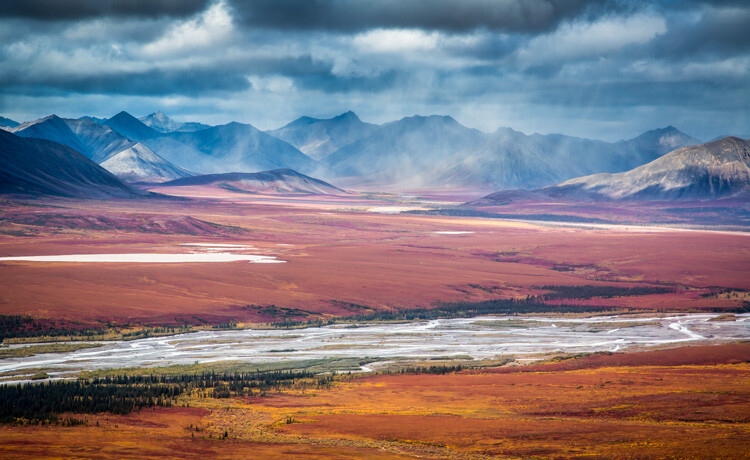
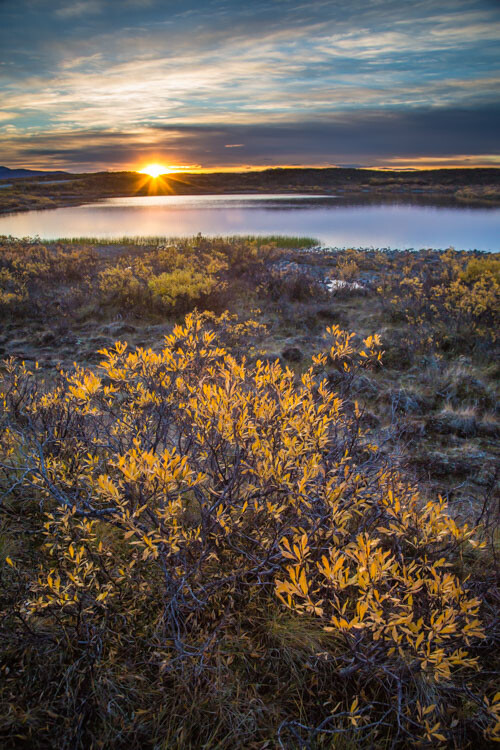
I’ve recently returned from leading a photography workshop in the Alaska Range, south of my home in Fairbanks, Alaska. The trip was timed with the peak of fall colors. My students and I spent dozens of hours over the week, exploring the vibrant colors, and trying really hard to make the weird orange, red, and yellow landscape look the way we wanted it to in our autumn photos.

It occurred to me that autumn, photographically speaking, is weird. It throws our perception of colors through a loop. The world, normally a mix of blues and greens, suddenly shifts to crazy warm tones of yellow, orange, and red.

4 Tips to Help You Take Better Autumn Photos

To effectively photograph autumn colors, you need to refocus not just your camera, but also your brain. The standard compositional “rules” of landscape photography shift quite a bit during the fall. The background, which for much landscape work is the actual subject of the image (think big mountains) becomes the setting rather than the subject in the autumn. Our attention falls to the foreground, where the colors are exploding.

In this article, I’m going to cover three composition types for autumn: details, broad landscapes, and local landscapes. When mixed together, these three types of images will help you tell a compelling visual story of your autumn experience.

#1 – The Details

4 Tips to Help You Take Better Autumn Photos

Photographing details lies in the fuzzy gray area between macro and landscape photography. Sometimes it’s one or the other, sometimes it is a little bit of both. In general, however, I see photographing the details as another part of landscape work. These images tell a small, but important part of the story.

Mentally, details give us a starting point for seeing the way a landscape will come together, and they also play an important role in providing a sense of scale. The small bits of the scene are rarely captured in a big landscape photo, and yet they are a very important part of our experience in the field. The details too should be an important part of the story we are telling our audience.

4 Tips to Help You Take Better Autumn Photos

Lens choice

Close-up work requires a lens capable of a relatively close focus, or a powerful telephoto. I’ve used big 500mm and 600mm for this kind of shot and I’ve used wide angles that have the ability to focus a few inches away from the lens. But most often I use a moderate telephoto with decent macro capabilities. Nothing fancy, just a good lens that lets me get close to the subject.

4 Tips to Help You Take Better Autumn Photos

Whichever you choose, these kinds of images rarely have a great deal of depth. Even photos from a low perspective only show a few inches from front to back. Therefore detail shots are usually about pattern and color. Here are a few things to look at as you compose:

  1. Consider how the lines in the image interact. Do they cross distractingly or guide your eye around the frame in a pleasing way?
  2. Which color dominates? In the autumn, colors like red can be overwhelming and often need to be balanced by cooler greens or blues.
  3. Isolate your subject by cropping out extraneous details, or using a shallow depth of field.
  4. Embrace the autumn colors, but don’t overwhelm your viewer with too much of the same thing. Good images usually show a variety of textures and colors.

#2 – The Local Landscape

4 Tips to Help You Take Better Autumn Photos

When you zoom back a bit from the details, you get local scenes within the landscape. This type of image is rarely shot wide, rather you apply medium to strong telephotos to isolate compelling parts of the scene. I really like these kinds of shots. They allow enough space to apply the elements of both depth and scale, and yet are tight enough that distractions are more easily avoided and make great autumn photos.

4 Tips to Help You Take Better Autumn Photos

This type of shot is particularly suited to autumn photography because the fall colors are by nature, patchy. Using a short to moderate telephoto, you can select the patches of dramatic color that may be surrounded by brown in late autumn or green early in the season.

Consider using focal lengths in the 70-200mm range, and select a part of the landscape that draws your eye. Find lines that guide your image through the frame, not out of it, or look for juxtapositions of color and texture.

#3 – The Grand Scene

4 Tips to Help You Take Better Autumn Photos

I’m going to be honest here. In the fall, when the colors of my home state are going off like fireworks, it is rarely the wide open scenes that draw my eye. However, sometimes the scope and size of the landscape cannot be ignored. It is in those rare moments that I reach for my wide angle lenses.

And yet, my focus often remains close to me. The foreground in the autumn, perhaps even more than other times of the year, is vital. When shooting wide, I will often get low, using my background not as the subject, but as the setting for something bright, flashy and interesting close by.

4 Tips to Help You Take Better Autumn Photos

Use the foreground

I was shooting in late August in Denali National Park. The colors were bright and beautiful, and on one sunny day, the mountains of the Alaska Range, including Denali itself, had emerged from behind the clouds to loom, white and glaciated, over the landscape. It was beautiful, and yet my focus kept falling on the colors in front of me. I didn’t ignore that dramatic backdrop, but I used it as just that, a backdrop.

When shooting wide, don’t forget about the details I noted earlier, nor the patterns of local landscapes. Those two are integral to the wide scene and will help you understand how the elements of the landscape fall together.

4 Tips to Help You Take Better Autumn Photos

I once heard it said that wide-angle landscapes were easy. I disagree entirely, wide angles are the hardest because there is so much space for distraction. Understanding and including compelling foreground subjects, like a splash of fall color will take you a long way toward creating a dynamic wide angle landscape.

Bonus tip – Bring it all together

In a world where most of our images end up on Facebook and Instagram, the art of a photo story is fading. Stand-alone shots get the most attention, the most likes, hearts, or whatever, on social media, but they do a lousy job of telling the whole story. Details, local scenes, and wide landscapes in combination are far superior.

4 Tips to Help You Take Better Autumn Photos

In conclusion, I encourage you to tell the whole story by embracing numerous shots. Use the focal lengths available to you, all of them. Through your lens, explore the fall landscape, and share your autumn photos in the comments section below.

The post 3 Tips to Help You Take Better Autumn Photos by David Shaw appeared first on Digital Photography School.


Digital Photography School

 
Comments Off on 3 Tips to Help You Take Better Autumn Photos

Posted in Photography


How to Make Your Photos More Creative Using Camera Angles

10 Oct

A creative use of camera angles is one of the quickest ways to add interest and variety to your photos.

Even if you don’t know how to use your camera very well, angles are easy! All you have to do is move your camera higher or lower to dramatically change the angle of your photo. It doesn’t matter what camera or what lens you’re using (even your smartphone), you can always make more creative photos by changing the camera or shooting angle.

Five Different Camera Angles

You have five main camera angles to choose from. Each one will add a different perspective, giving your photo the mood or feeling that you want it to have.

#1 – Bird’s Eye View

The highest camera angle is “bird’s eye view.” This is when you get up above the scene and look straight down. This angle is great for looking down and seeing all the details of a scene from above.

A bird’s eye view is an unusual angle because you’re not normally up high looking down on a scene. Any angle that is beyond your usual daily experience will make your photo more interesting to look at.

Bird Eye View How to Make Your Photos More Creative With Angles

I chose a bird’s eye view for this photo of our sleeping baby. By choosing this angle, I was able to look down and frame him with blueberry branches.

Bird Eye View - How to Make Your Photos More Creative With Angles

A bird’s eye view is great for food photography, allowing you to see everything on the dish.

#2 – High Angle

A “high angle” is not quite as extreme as the bird’s eye view. You just need to be a little bit higher than the person or thing that you are photographing.

Think of a high angle as a very normal view of the world for most adults. This is especially true for parents who are always looking down toward their kids.

Even though you experience this angle or perspective a lot throughout the day, it can still be perfect for some of your photos. A high angle is useful for making your subject look smaller or more vulnerable and perhaps making the viewer seem more dominant.

High Angle How to Make Your Photos More Creative With Angles

This high angle allowed me to look down at my son and also work in some interesting background elements.

How to Make Your Photos More Creative With Angles

Since this is a photo of “little sister,” a high angle gives her a smaller more vulnerable appearance.

#3 – Face-to-Face

A face-to-face angle is taken at eye level to your subject. This is a very engaging angle and helps to establish a personal connection between the person in your photo and the person viewing it.

This is a great angle for portraits, though a slightly higher than eye level angle is great for portraits too.

Face to Face How to Make Your Photos More Creative With Angles

When she came in from playtime covered in mud, I knew I had to use an engaging face to face angle.

Face to Face How to Make Your Photos More Creative With Angles

I love this captivating perspective.

#4 – Low Angle

For a low angle, you need to be below eye level. As you get down lower, you make the subject of your photo appear a larger. This may add a larger than life feeling to your photos and is great for emphasizing toughn s, or making things look scary or epic.

Low Angle How to Make Your Photos More Creative With Angles

A low angle is absolutely necessary when photographing sharks. It’s the only way to see their most frightening feature; teeth!

Low Angle 2

This moment was exploding with energy as the kids ran from the bus stop. Dropping down to a lower angle helps to emphasize the energy of the moment as well as bring the buses in the background in line with the kids.

#5 – Bug’s Eye View

Also known as “worm’s eye view,” this angle is just like it sounds. You get down as low as you can and look straight up toward your subject.

Again, this is a very unusual angle. You rarely experience this point of view, so it will add an interesting or creative perspective to your photo.

Bug Eye View How to Make Your Photos More Creative With Angles

I had to lay down on the ground and look up for this photo. It seemed like the perfect angle to capture my son’s first major climb!

Bug Eye View How to Make Your Photos More Creative With Angles

It’s easy to get a bug’s eye view at a playground. Just wait for your kids to start climbing and then look straight up at them.

One Scene – Three Angles

It’s a great idea to capture more than one angle every time you take photos of a moment. It will push your creativity, help you to explore new perspectives and provide you with more views to tell the story.

These next photos demonstrate how I captured one scene from three different angles.

How to Make Your Photos More Creative With Angles

In this first photo a higher angle was used to look down on the scene and see the puddle.

Three 2

A face to face angle is perfect for a muddy faced portrait.

Three How to Make Your Photos More Creative With Angles

This lower angle perspective makes the moment feel a little bigger and emphasizes the excitement she felt after having fun in the mud puddle.

Beyond Everyday Perspectives

Knowing these five camera angles, and practicing them will help you get unstuck anytime you’re uninspired or find that your photos are turning out boring or predictable. To spice up your photos, simply choose the most unusual angle. Once you’ve done that try at least two more angles and figure out which one has best captured the moment.

As you experiment with angles you’ll boost your creativity by breaking out of everyday perspectives. Try capturing a few different angles right now. I would love to see your photos in the comment section below.

The post How to Make Your Photos More Creative Using Camera Angles by Mat Coker appeared first on Digital Photography School.


Digital Photography School

 
Comments Off on How to Make Your Photos More Creative Using Camera Angles

Posted in Photography


Google shares high-resolution Pixel 2 sample photos

10 Oct

$ (document).ready(function() { SampleGalleryV2({“containerId”:”embeddedSampleGallery_6275889395″,”galleryId”:”6275889395″,”isEmbeddedWidget”:true,”standalone”:false,”selectedImageIndex”:0,”startInCommentsView”:false,”isMobile”:false}) });

As with the original Pixel handsets, Google is stressing the quality of its Pixel 2 phone’s 12MP camera, calling it the “world’s highest rated smartphone camera” thanks to its DxOMark score of 98. The smartphone doesn’t start shipping to buyers until November 15th, but ahead of that the company has shared a gallery of unedited images and videos taken with the handset.

The gallery was shared on Saturday by Google employee Issac Reynolds, who explained that the content includes two videos that were edited to demonstrate the camera’s video stabilization through a side-by-side comparison. In addition, Reynolds says that the only equipment used in these shots, the Pixel 2 aside, were hand grips and, in certain instances, handheld reflectors.

Anyone can view and download the gallery’s content for analysis using third-party software. As recently reported, Google will allow Pixel 2 owners to upload unlimited full-resolution videos and photos to Google Photos for free until 2020. Once that date arrives, and assuming the regular 15GB threshold is reached, Pixel owners will need to pay for additional storage or continue using free backups at a lower quality compressed resolution.

Articles: Digital Photography Review (dpreview.com)

 
Comments Off on Google shares high-resolution Pixel 2 sample photos

Posted in Uncategorized


From Mundane to Magical: Tips on Taking Your Photos to the Next Level

05 Oct

You may be at a point with your photography where you are comfortable operating your camera and are capable of taking a good picture. You can work with exposure, you understand composition, and can even enhance your photos in post-processing. You should be pleased with this, as this puts you ahead of the vast majority of other photographers. But at the same time, perhaps you are not seeing the elevation in your results that you expect. You are beginning to wonder why you aren’t getting more stunning pictures. Are you doing something wrong? Is there some part of this you’re not getting?

From Mundane to Magical: Tips on Taking Your Photos to the Next Level

We all go through a phase where we feel like we know what we’re doing but are frustrated by a lack of great results. In fact, for some of us, it always feels like this. You’ll never go through a time where you’re hitting magical shot after magical shot. It just doesn’t work like that. You are after something extraordinary, and by definition that is rare.

How do you maximize your chances of finding these great shots? The short version is, “through a lot of effort,” and – while true – that isn’t very helpful. So here are some areas where I focus my efforts and perhaps they will help you too.

1. It Starts with Location

We all seem to want to take our cameras down to the local park or take a stroll around a nearby lake and then come home with stunning pictures. For the most part, it just doesn’t work like that. You typically need a great location in order to end up with a great picture.

You have likely heard that “you can take a great picture anywhere” – and that is true. But just because it is possible doesn’t mean it is probable. Magical lighting or sheer genius may allow some to get great shots in ordinary places, but it is extremely unlikely. To put the odds in your favor, you need to start with an extraordinary location.

How to Scout Your Photography Locations

From Mundane to Magical: Tips on Taking Your Photos to the Next Level

Everyone from tourists to photographers, to the producers of the Game of Thrones use this location as the background for their shots. Dark Hedges, County Antrim, Northern Ireland.

How do you find such a location? There are lots of ways. If you are going to a well-traveled place such as a large city or a national park, some enterprising photographer has likely done the work for you. They will have written a book on how to photograph that particular place. These guides are invaluable and often all you will ever need. Beyond that, there are a plethora of online resources. I personally start with the 500px World Map and look at where great shots have been taken. I also like to check out the work of photographers who specialize in whatever I am going.

These resources will help you pick out good places to go. But they will also help you pinpoint specific spots to head to once you are in the area. None of this is to say you should slavishly copy any of these people, but rather that you should let their work inspire you and give you an idea of great locations that might serve as a backdrop for your upcoming stunning picture.

2. Getting that Magical Lighting

A great location alone will not result in a stunning picture. I’ve been to countless areas of great natural beauty or stunning urban environments only to walk away empty-handed. To create the stunning picture you are after, you are also going to need great lighting.

Some of you will create your own lighting through the use of flash. In that case, you’ll be able to create your own stunning lighting – and the whole thing is up to you. But that doesn’t work for me since I am always out and about photographing scenes, which aren’t as conducive to using flash.

Assuming you are like me and are relying on natural lighting, you just cannot guarantee great lighting. We all have to deal with bad weather and occasionally things don’t work out. That said, you can put the odds more in your favor.

Photograph at Sunrise and Sunset

From Mundane to Magical: Tips on Taking Your Photos to the Next Level

When you are photographing the outdoors, the sky is often a big part of the picture. A great sunrise or sunset, therefore, goes a long way toward helping you create a great picture.

The first thing to do is make sure you are photographing around sunrise or sunset. I cannot tell you the number of times people have asked me how to elevate their photography and when I look at their pictures I find that they were all taken in the middle of the day. Usually, that’s just not going to work.

Photographing at sunrise or sunset has a myriad of advantages. The sky will often be very colorful. You will also not have to deal with the extreme contrast created by bright light and dark shadows. The diffuse rays of the sun are more pleasing as well. Think about it this way: there is a reason people sit outside and watch the sun come up or go down. Take advantage of that.

Don’t Overlook Bad Weather

Keep in mind that bad weather can often lead to the best shot. It is very much a risk/reward situation. Most of the time, cloudy hazy conditions result in failure. Sometimes, however, the sun might peek through or do something interesting such that you get magical rays in your photo. Typically, nice weather will result in nice pictures. Dramatic weather can result in dramatic pictures, and that is what you are going for.

From Mundane to Magical: Tips on Taking Your Photos to the Next Level

Even an average marina can become a great shot when there is a storm approaching.

3. Creating the Composition

A great scene does not necessarily make a great photo. You’re probably familiar with rules of composition such as the rule of thirds. That is great, but this alone won’t result in the stunning photos you are after. To get there, you need something more. Here are some ideas to think about.

Start with a Center of Interest

The first thing you need is a subject or center of interest. Again, simply capturing a scene in front of you might create a nice picture, but not the shot that will cause people to say “wow” that you are after. You need something to hold the picture together. I cannot tell you exactly what that is since there are so many different things to use in this world, just be on the lookout for that.

Lead the Viewer’s Eye

Another thing that will help you is if you think about leading the viewer’s eye. You might immediately leap to the concept of leading lines, but it goes further than that. Think about where you want the viewer’s eye to start in your picture and then the route you want them to travel around it. Many times this is done in the post-processing phase. Remember that the eye is attracted to areas of brightness and sharpness. You might darken areas where you don’t want the viewer to concentrate while sharpening areas where you do want their eyes to go.

From Mundane to Magical: Tips on Taking Your Photos to the Next Level

A nice view made more interesting by the path leading the viewer’s eye into the picture.

Concentrate on the Foreground

While you’re setting up your picture, be sure to think hard about the foreground. Think of your pictures as consisting of a background, subject, and foreground. The background is already largely set by your choice of location and lighting. The subject might be the thing that caused you to raise your camera to your eye in the first place (or in any event, you will already have thought about it). That leaves the foreground as the final variable. Don’t give it short shrift. Very often, getting low to the ground gives a sense that the viewer can walk into the picture and really enhances the image.

Add Mood and Emotion

Finally, be sure to think about the mood of your picture. A great picture stirs some emotion in your viewer. Therefore you’ll need to think about the emotion or mood as you are creating it. In the field, you might underexpose a bit to add some drama to your shot. Later, when you are on your computer, you will have time to consider this further and tweak your photo with an eye towards setting this mood.

4. Enhancing the Shot with Post Processing

There are photographers who shun the use of post-processing and devote all their time and energy to getting the shot right in the field. I’m not one of them. I have never taken a shot that I didn’t think could be improved with the use of post-processing.

From Mundane to Magical: Tips on Taking Your Photos to the Next Level

Of course, there are a million things you can do to enhance your photos in post-processing. It is not my intent to walk through them all here. Rather, I just want to stress the importance of taking your time and thinking about what you want to accomplish with your picture when you sit down with it at your computer. When you are sitting down in front of your computer, you have time to think it through and work on it. In the field, you may have been rushed – dealing with a moving subject or fleeting light. Now you have as much time as you want.

Think about what your picture is about. If a part of your image does not support that idea, crop it out. Use some selective sharpening and brightening/darkening to lead the viewer’s eye. Set the mood of your picture using brightness values.

The point is not to take a mundane picture and try to post-process it into some masterpiece. Rather, selectively take a few shots and enhance them with an eye towards both (a) what you were trying to accomplish and (b) what you want the viewer to think/feel when they are looking at your photo.

From Mundane to Magical: Tips on Taking Your Photos to the Next Level

5.  Have Realistic Expectations

Finally, it is important to have realistic expectations. You aren’t going to go out and come home with a stunning picture every time. I fail all the time, and to avoid getting frustrated about it, I think about the words of Ansel Adams. He once said that he got about one great picture a month. Only one a month! If this master of photography was forced to settle for that kind of hit rate, then who am I to think I can do better? I ought to be happy with one shot a year.

From Mundane to Magical: Tips on Taking Your Photos to the Next Level

Creating the Magic

This all takes time and effort. In a lot of ways, it is like waiting for the stars to come together. There is no magic formula for going out and getting a stunning picture every time. If there were, we would all do it. Again, the whole idea is that you are looking for the extraordinary – and that doesn’t happen all the time.

Of course, these factors all work together somewhat. You can have magical lighting at a mundane location and end up with a stunning picture. Or the right post-processing can take a B+ picture and turn it into a winner.  The point is not to get you to wait around for perfect conditions. Rather just to keep moving forward with the mindset that it isn’t always going to work, but when it does it is magic.

These are the things I look for in trying to create a great photo. But that’s not to say there aren’t other – even better – ways to go about it. What do you look for in trying to elevate your photos from the mundane into something magical? Please let us know in the comments below.

The post From Mundane to Magical: Tips on Taking Your Photos to the Next Level by Jim Hamel appeared first on Digital Photography School.


Digital Photography School

 
Comments Off on From Mundane to Magical: Tips on Taking Your Photos to the Next Level

Posted in Photography


Adobe unveils Photoshop Elements 2018: Can open closed eyes, find your best photos and more

04 Oct

A before and after of Photoshop Elements’ new Open Closed Eyes featured at work.

While the professional photography market waits with bated breath to see what Adobe has in store for us at AdobeMAX, the company behind Lightroom and Photoshop unveiled something that appeals to a bit broader of an audience today: Photoshop Elements 2018 and Premiere Elements 2018.

The new, user-friendly versions of Adobe’s photo and video editors come with some really creative and easy-to-use features that the company says are aimed at “memory keepers.” The idea was to create two programs that make finding, enhancing and sharing the precious memories hidden away inside random memory cards, hard drives and (most likely) smartphones almost totally automatic.

Photoshop Elements 2018

Photoshop Elements 2018 tackles the same problem that everyone—Google’s Photos App, Apple Photos, etc.—is trying to tackle: how do you help the typical shutterbug find their best images out of the thousands they take every week on their smartphone, and enhance those images so they look ‘professional’ and worth sharing on social media?

As with everybody else, Adobe is leaning heavily on machine learning and computer vision (different types of ‘AI’) for this trick.

It starts with an easy-to-use Organizer view and something called Auto Curation, which uses computer vision and some nifty algorithms to guess (because it can’t REALLY know, can it?) which of your images are the best. So if you have a group of 200 images, you can ask Photoshop Elements to cull those down automatically to just 15.

Once you’ve selected your shots, you can use the program’s new Guided Edits and a new feature called Automatic Selection to do things like drop in a new background, create a double exposure effect using two of your images, or add ‘artistic’ overlays.

The coolest feature, though, has to be Open Closed Eyes, which allows you to select two frames, and replace the closed eyes in one with the open eyes from another. The results are incredibly lifelike given that whole thing can be done in a matter of seconds.

Premiere Elements 2018

Like Photoshop Elements, Premiere Elements 2018 also leans heavily on AI-powered features to make video editing as automatic and pain-free as possible.

Smart Trim does for videos what Auto Curate does for photos, namely: it asks you what ‘style’ of video you want to create, tries to intelligently find the best clips that match this style, and tosses out the rest to create a coherent clip.

Another interesting addition is a feature called Candid Moments, which tries to find the best candid ‘photo’ hidden within a video clip and pull it out for you. With new smartphones like the iPhone 8 Plus shooting gorgeous 4K 60p, we could see this feature being a huge hit with those ‘memory keepers’ Adobe is all trying to target.

Admittedly, neither Photoshop Elements 2018 nor Premiere Elements 2018 are really targetted at more professional photographers out there (read: many of the people who enjoy reading DPReview). But as these beginner-focused programs get more and more powerful, amateur photographers who are allergic to the subscription model and don’t like to do much post-processing anyhow might actually enjoy using Photoshop and Premiere Elements 2018.

Of course, that’s not to say we won’t be keeping a very close eye on AdobeMAX this year.

To learn more about Photoshop Elements 2018 and Premiere Elements 2018, head over to the Adobe blog by clicking here, or visit their dedicated landing pages by clicking on the program names above. Both programs are available now for $ 100 new or $ 80 as an upgrade. You can also buy them together for $ 150 new or upgrade both programs at once for $ 120.

Articles: Digital Photography Review (dpreview.com)

 
Comments Off on Adobe unveils Photoshop Elements 2018: Can open closed eyes, find your best photos and more

Posted in Uncategorized


Apple acquires AI startup that scores your photos’ framing, composition and more

03 Oct

Apple has reportedly acquired a small computer vision startup called Regaind, according to TechCrunch, who is citing ‘multiple sources.’ The acquisition falls onto our radar because of what Regaind’s technology is designed to do, namely: score photographs based on their composition, lighting, perspective, and other aesthetic qualities.

In other words, the company’s computer vision algorithms can tell how ‘good’ your photo is, insofar as such things can be analyzed objectively.

TechCrunch reports that the acquisition happened ‘earlier this year’, and while Apple hasn’t confirmed the news, the statement it sent to TechCrunch doesn’t deny it either. In fact, it’s about as close to ‘confirmation’ as Apple ever gets in such matters:

Apple buys smaller technology companies from time to time, and we generally do not discuss our purpose or plans.

A quick look at Regaind’s website will give you a look at the kind of information the company can ‘see’ in your photographs. This more professional portrait, for example, scores high in the areas of Aesthetics, Sharpness and Exposure, with multiple positive ‘Properties’ highlighted such as ‘Subject Well Framed’ and ‘Pleasant Blur.’

This birthday snapshot, however, scores much lower and suffers from ‘Dull Colors’ and an ‘Annoying Background.’

How Apple intends to use this technology (or already is?) may never be explicitly stated, but Regaind’s technology will no doubt make it into Apple’s Photos app on both macOS and iOS, and may even help future iterations of the iPhone camera prompt you to frame your subject better, seek better lighting, or get rid of that ‘Annoying Background’.

Your guess is as good as ours, but if you want to learn more about this company Apple almost certainly acquired, head over to the Regaind website by clicking here.

Articles: Digital Photography Review (dpreview.com)

 
Comments Off on Apple acquires AI startup that scores your photos’ framing, composition and more

Posted in Uncategorized


K-Pan is a 3D-printed panoramic film camera that shoots 6 x 14cm photos

26 Sep

The 3D-printed camera formerly known as the ‘Cycloptic Mustard Monster’ has launched on Kickstarter under the name K-Pan Panoramic Camera. This medium-format analog camera has the same design showcased earlier this year, and assuming the crowdfunding campaign is successful, it’ll be made available to buyers as a DIY kit. Creator Paul Kohlhausen is also offering 10 limited edition pre-assembled camera units.

The K-Pan’s components are printed from SLS nylon, and once assembled, the camera measures 22cm x 9cm / 8.6in x 3.5in and weighs 350g / 12oz (without a lens). Users supply their own 4 x 5 lens and 120 film, of which the camera shoots five 6 x 14cm frames per roll. When assembled according to its default design, the K-Pan’s focus is set to infinity; however, users can change that by inserting spacer brackets as desired.

Kohlhaussen is offering K-Pan in various bundle options with pledges starting at £270 / $ 364 for a standard kit. Shipments to backers are available globally and are anticipated to start in March 2018.

Articles: Digital Photography Review (dpreview.com)

 
Comments Off on K-Pan is a 3D-printed panoramic film camera that shoots 6 x 14cm photos

Posted in Uncategorized


Take Your Photography into Hyperdrive with Zoom Blur Photos

26 Sep

Warning: preg_replace(): The /e modifier is no longer supported, use preg_replace_callback instead in /home/forge/content.photojojo.com/content.photojojo.com/wordpress/wp-content/plugins/ozh-better-feed/inc/feed.php on line 134


Photojojo

 
Comments Off on Take Your Photography into Hyperdrive with Zoom Blur Photos

Posted in Equipment


Two Photos Combine for a Perfectly Mirrored Sunset

26 Sep

Warning: preg_replace(): The /e modifier is no longer supported, use preg_replace_callback instead in /home/forge/content.photojojo.com/content.photojojo.com/wordpress/wp-content/plugins/ozh-better-feed/inc/feed.php on line 134


Photojojo

 
Comments Off on Two Photos Combine for a Perfectly Mirrored Sunset

Posted in Equipment