RSS
 

Posts Tagged ‘Photography’

NEA report reveals photography industry’s contribution to US economy

22 Mar

A report from the National Endowment for the Arts sheds light on the photography industry’s contribution to the US economy. The report breaks down data from the US Bureau of Economic Analysis (BEA), revealing that the arts overall contributed more to the US economy than warehousing, agriculture, and transportation at $ 763.6 billion.

Photography and photo-finishing services in particular contributed $ 10.2 billion of that in 2015, with the industry experiencing a 2.9% average annual growth from 2012 to 2015. The industry’s total production, according to the NEA, were 97.7% made up of arts and cultural goods.

The arts industries as a whole employ 4.9 million people across the nation, and they boast a positive trade balance of $ 20 billion. Further breaking down the numbers, the NEA says the arts added 4x more to the nation’s economy than agriculture, also exceeding warehousing and transportation by $ 200 billion. Jewelry, movies, and television fueled the trade surplus, while web publishing and streaming, architectural service, performing arts, and design saw the fastest growth.

The National Endowment for the Arts offers a tool for viewing the economic contributions of each art industry individually.

Via: PDN

Articles: Digital Photography Review (dpreview.com)

 
Comments Off on NEA report reveals photography industry’s contribution to US economy

Posted in Uncategorized


6 Tips for Aiming Low and Going Unnoticed in Street Photography

21 Mar

One of the biggest hurdles to overcome in street photography is inhibition. Taking candid photos of strangers is not for everyone. Your demeanor should be cool, calm, and confident, even if that’s not how you feel inside.

Looking sheepish or, worse, creepy, is the last thing you want. The way you dress might have an effect. Rightly or wrongly, people will assess you based on their first impression. Think about ways you can blend in.

6 Tips for Aiming Low and Going Unnoticed in Street Photography

If confidence eludes you when photographing strangers, there are other ways of approaching street photography—ways that are passive and non-confrontational.

#1 Pick a background

Before discussing the main topic, let’s look at backgrounds. One way of taking street photos is to find interesting backgrounds and wait for suitable subjects to move into view. This works especially well if you can establish a link between the person entering the shot and your chosen backdrop.

Perhaps you want someone dressed in a particular way or with a specific pattern or color of clothing. Often, style or elegance is enough. When you arrive at the scene before your subject, the feeling of invading his or her space reduces.

6 Tips for Aiming Low and Going Unnoticed in Street Photography

The problem you’re most likely to face with this method is people stopping to let you take the photo, not realizing that they are the vital element. It helps if you’re ready to take the shot in advance rather than lifting the camera abruptly as someone draws near.

Working distance also plays a part: the closer you are the more noticeable you become. Master the art of loitering, and look relaxed while you’re doing it.

6 Tips for Aiming Low and Going Unnoticed in Street Photography

#2 Aim low

Pointing your camera downwards is an easy way to take street photos. As in other areas of life, your presence will be better tolerated if you’re not in anyone’s face. People with a keen sense of personal space are less likely to care about a lens aimed at their feet.

Even if you’re a confident street photographer and have no qualms about taking photos of strangers, some great photos exist at ground level. This is not purely a technique for the shy or meek.

6 Tips for Aiming Low and Going Unnoticed in Street Photography

One famous exponent of low-level pictures is Elliott Erwitt, who is especially known for photos of dogs and their owners’ ankles. You can emphasize the character of a pet by getting down to its level when taking a photo. In effect, Erwitt was humanizing the animal and making the human subordinate.

6 Tips for Aiming Low and Going Unnoticed in Street Photography

#3 Pick a background and aim low at the same time

By combining both the techniques we’ve discussed, the process of taking street photos becomes simpler still. That’s not to say that good results are any easier, but you might feel more comfortable with what you’re doing. The only trait you’ll need is patience.

Choose an interesting low-level background and imagine the type of subject you want to walk across it. Then, wait.

6 Tips for Aiming Low and Going Unnoticed in Street Photography

In a city, you’ll become almost invisible by standing casually around and pretending to fiddle with your camera settings. In fact, the more baffled you look by your own camera, the more innocent you seem.

This is the opposite of the “confident photographer act”. When you look distracted, nobody cares what you’re doing and they’re unlikely to realize that they’re the prop you’ve been waiting for.

#4 Cameras and Camera Settings

You can use any camera for street photography, but some degree of discretion is an advantage. A bulky DSLR with a big lens is likely to get you seen. A smaller rangefinder or compact camera is ideal.

The extra depth of field you’ll get from a compact camera is also useful for this subject matter. You can also configure an SLR to be more of a point-and-shoot camera (high ISO, small aperture).

Taking good street photos is so hard that you need to sort out the technical settings beforehand. There’s usually little time for fine-tuning once you’ve seen the picture.

6 Tips for Aiming Low and Going Unnoticed in Street Photography

#5 Capturing movement

To capture movement in your subject, a camera or lens with image stabilization (IS) is useful. It will help keep the background sharp while enabling movement in your subject.

For this, you could shoot in twilight hours or even after dark. Or else, you’ll need to manually set a slow shutter speed of about 1/8th to 1/30th second and let the image stabilization take care of the background. Compact cameras typically allow low handheld speeds with good results, especially with a wide-angle focal length.

6 Tips for Aiming Low and Going Unnoticed in Street Photography

#6 Background ideas

Photographing people’s lower extremities is easier if you’re on a slightly different level. To that end, slopes, steps, and escalators are ideal. If you don’t want your motives and character being questioned, be wary of your camera position in relation to the subject and don’t take photos that look remotely voyeuristic.

Ground-level backgrounds might include cobbles, grating, wooden boards, road markings, or street art. Above the ground, you could be looking for anything to complement the subject. It might be a wall, shop window, or an advertising hoarding.

The background is as important as the subject – you’re trying to find an interesting juxtaposition.

6 Tips for Aiming Low and Going Unnoticed in Street Photography

Generally speaking, a “fussy” background (one with lots of small detail) is likely to clash with a fussy main subject. The main elements of the picture should not rival each other.

Finally

Aiming low with your photography doesn’t sound like encouragement, but good pictures await you at ground level. Perhaps above all else: learn how to loiter. Stay relaxed, move slowly, lean on stuff, and wait.

Until the moment you release the shutter, you’re only an observer. Try to anticipate, so you don’t have to lift your camera at the final moment. Keep an eye on who’s coming your way. Casually point your camera down and wait for the actor to enter the stage.

The post 6 Tips for Aiming Low and Going Unnoticed in Street Photography by Glenn Harper appeared first on Digital Photography School.


Digital Photography School

 
Comments Off on 6 Tips for Aiming Low and Going Unnoticed in Street Photography

Posted in Photography


Tips for Creative Plant Photography

20 Mar

In this article, we’ll discuss the whys and hows of photographing plants. Don’t worry if you’re not a nature nerd, if your fingers are distinctly non-green or if you find plants generally dull. Plants can offer great photographic opportunities to any photographer. Give plants a chance!

01 plant photography tips

If you start thinking about plants and the role they play in our history and our lives, you might find it hard to stop. After all, they produce most of the oxygen we breathe, they provide us with nutrition, we make clothing and build shelter out of them, just to mention a few things; we even print our photos on them!

More relevant to this article, though, they also inspire us with their alien beauty and comforting stillness to create art.

02 plant photography tips

Why photograph plants?

First of all, plants are really convenient subjects. They’re found more or less everywhere, and they don’t run or fly off when you approach them. That makes things so much easier!

But being common doesn’t make them boring – there are so many different varieties to choose from, they change their appearance with the seasons, and the longer you look, the more detail you will find. It would be hard to find a more patient (living) subject!

03 plant photography tips

Plants have inspired artists for thousands of years: they’re in the art of the ancient Egyptians, and the Chinese. Plants are also a central part of a wide variety of more modern art, such as arabesque, still life paintings, Mapplethorpe’s photography – the list goes on and on.

Some of the most aesthetically pleasing shapes and forms in the world are found in plants.

04 plant photography tips

Photographing plants is a rewarding activity for any photographer. If you’re a beginner, you can use plants to learn more about photography: check out some tips for beginners and use these really friendly subjects for your early experiments.

And if you’re a professional wedding photographer, you can always practice your bouquet and decoration photography!


How to do plant photography

Plant photography is perhaps the easiest kind of photography. All you need is a camera and a plant, and you can start your exploration. Yes, it really is that easy!

But sure, there are some tips that can make your experience more fun and your photographs more unique. The most important thing is for you to open your mind, explore the things you find interesting, and have fun.

06 plant photography tips

Some ideas on what to look for in a plant

Flowers may seem like the obvious thing to photograph when it comes to plants, but these living beings offer so much more than just their reproductive structures. They sure are fine-looking, though!

07 plant photography tips

To get the most out of plants, you should also remember to check out the other visible parts such as the leaves, fruit, and bark. Taking group photos also works with plants.

Play with light, focus, and composition – use all of the tricks in your photographic toolbox.


09 plant photography tips

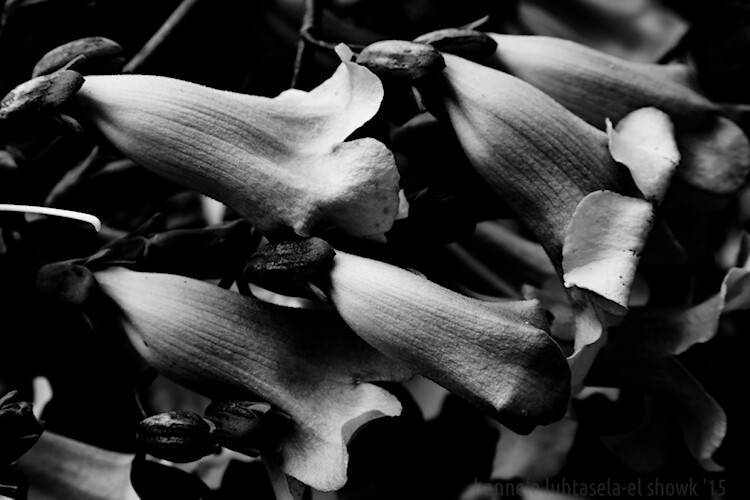
For me, the best plant photos arise when I move beyond just looking at specific parts, and start focusing instead on shapes, textures, and symmetries. Look for interesting patterns in light or texture, experiment with black and white, zoom in and zoom out, find the abstract.

10 plant photography tips


And, as always, try to evoke a feeling and create a story.


Conclusion

Do you enjoy photographing plants? What are your best tips? Do you have any favorite photos to share? I’d love to hear your thoughts and see your art in the comments below.

The post Tips for Creative Plant Photography by Hannele Luhtasela-el Showk appeared first on Digital Photography School.


Digital Photography School

 
Comments Off on Tips for Creative Plant Photography

Posted in Photography


Tips for Making Your Travel Photography Packing List for International Trips

19 Mar

Packing for any trip abroad can be a chore. Then add in the task of making sure you have all of the photography bits and pieces you need, and it’s enough to send your head spinning. Thankfully there is a cure for this craziness: The Travel Photography Packing List.

Tips for Making Your Travel Photography Packing List for International Trips

The Packing List is my go-to resource for ensuring I have all the gear I need in order to bring back the best photos. No one wants to deal with dead batteries or a lack of memory cards while they are exploring the world at large. That’s why I use the list below to sooth my packing-frazzled mind and to get on with creating amazing photos.

Camera

I know it seems obvious but the camera is the first thing on my packing list. Why? Because I take time to check it and give it a good cleaning, inside and out, before packing it away. I often carry a spare camera these days, which doesn’t get a lot of action until it is desperately needed.

Packing time is a good opportunity to make sure all cameras are in working order. You might also want to adjust the clock (set it to the time zone you’ll be traveling to) on your camera(s) so you can hit the ground running.

Tips for Making Your Travel Photography Packing List for International Trips - camera in a tripod

Lenses

Lens choice is a dilemma for most of us. Bring them all and suffer the back strain of having to lug them around, or bring just a few and worry about missing the shot? As individual as this choice can be, I suggest thinking about what you will shoot the most if you want to limit the number of lenses you take along. Also, ask other photographers who have traveled where you are going or your tour operator for suggestions.

On my own tours, where our focus is on people, nature, and wildlife photography, I suggest a 24-105mm lens for walking around and city photos. These lenses are great for a variety of situations from close to medium distance.

Then for the landscape shots, a wide-angle or wide zoom, like a 16-35mm lens or 10-22mm on a crop sensor camera, can work wonders.

Tips for Making Your Travel Photography Packing List for International Trips - guy taking a photo on a safari

All-in-one lenses

My go-to lens for travel is the venerable Canon 28-300mm L-series Lens. It covers a huge range and with some panorama stitching, I can get mildly wide-angle shots without switching lenses. It’s a heavy lens indeed, but I’ve grown used to it. I will then bring a 10-22mm wide-angle for the monumental landscape shots I love to capture.

Optionally, a long lens may be needed in certain situations, but they can be cumbersome. For instance, I would not have gone to Panama and Costa Rica, lands rich in birds and wildlife, without a Sigma 150-600mm Sport lens. Yet, that same lens will not follow me to the Himalayas, where weight is certainly a factor and the chance for birds is lessened.

A Flash or Speedlight

For all my travels in the past decade, I have rarely found myself wanting to have a strobe along for the ride, especially due to the added weight involved. Yet I still tend to bring just one flash and I have been happy every time I did.

Tips for Making Your Travel Photography Packing List for International Trips - people shooting the Taj Mahal

What I have found valuable when bringing a strobe is to make sure it is one that I can use off-camera. A flash that can be remotely triggered either with a tether or a smaller unit on the camera (either the built-in flash or a unit that attaches to the hotshoe). This has allowed me the greatest flexibility to add well-directed light to my travel photos.

Tripod

A good travel tripod is a thing of beauty. These units, built for packability and lightweight, have been following me on more and more trips abroad.

My main issue with packing a full-size tripod, even if it is carbon fiber, is the need to take larger luggage. The legs of a super sturdy tripod are often longer, even when broken down, than the luggage I wish to take.

Tips for Making Your Travel Photography Packing List for International Trips - canyon in Utah

It’s a balancing act and it matters what you intend to shoot. If you have space, bring the monster tripod, especially if you are accustomed to hauling it around with you near home. If you have limited space, but still want stability in your landscape or astrophotography shots, consider something along the lines of the MeFOTO Globetrotter. It packs small, can double as a monopod and has a fully functional ball head.

Power Strip

Power strips are great for travel and there are a variety of options. I prefer a brand where the cord is easy to store and the strip comes with two USB ports. The two outlets in the power strip are meant for a variety of international plugs so it’s easy to share when you find the outlet at the airport overloaded. I’ve done this more than once and was able to get a charge when I couldn’t have without a power strip.

Girl in flowers taking a photo - Tips for Making Your Travel Photography Packing List for International Trips

WARNING: See the next section about converters because it’s important to make sure the power strip is set up for universal power. I once had a strip with USB ports go, “Pop!” and puff smoke arose when I didn’t realize it was only set for US power and I was using it in India. Know before you go!

Chargers, Adapters, and Converters

Almost any charger from a major manufacturer these days will work on what’s known as “Universal Power”. They have an input range that straddles 110V-240V and 50Mhz-60Mhz. This fits almost any AC power around the world. If your charger is not set up for Universal Power (check the charger itself for those phrases above printed somewhere on its label), then you need a converter.

A converter will change the power coming out of the wall in your hotel to the power your charger needs. This stops things from literally catching fire.

Photographer and sunset - Tips for Making Your Travel Photography Packing List for International Trips

Different than a converter is an adapter. All it does is makes the plug on your charger fit the wall socket in your hotel. There is a handy guide on the Internet that lists the types of plugs in use around the world, by country, so you can see if your plug will fit.

If not, I’d suggest picking up either a small adapter specific to your host country or a universal adapter that will serve you for almost any country around the world for decades to come.

Memory cards

How many memory cards should you bring? Oh boy, that’s the big question. I’m sure if we ran a poll we’d have a huge range of answers. To help in planning, I take a per diem method and figure out what my average has been on previous trips, per day. I then multiply that by the number of days I’ll be gone to get a total number of photos I estimate that I’ll take over the duration of the trip.

Next, take the total (let’s say 4000 photos) and multiply it by the average size of a photo from your camera. Mine is about 24MB, so for 4000 images, I’d need 96,000MB or roughly 96GB. I then throw in an extra card, just in case. In this example, I will bring four 36GB cards and call it good. Especially if I am going to a country where I know it will be easy to buy more.

If you shoot a lot of videos, you should do the same calculations for video and add the two together.

Snowy mountains - Tips for Making Your Travel Photography Packing List for International Trips

Lens Cleaning Kit

You can’t get a clear shot with a dirty lens and a proper cleaning is vital. We cover the basics of a simple and portable kit in our article, How Should I Clean My DSLR’s Lens?, and I’d also include a sensor brush if you are comfortable with in-field sensor cleaning.

Filters

Most of us own and carry a circular polarizing filter and they certainly have earned a solid reputation. So throw one in your bag if you are familiar with them.

girl taking a photo of a lake - Tips for Making Your Travel Photography Packing List for International Trips

Next, include a graduated neutral density (GND) filter unless you are proficient at bracketing your shots and merging them artfully in your computer later. A GND helps in situations where there is a large difference between the lighting in a scene. They will slightly darken a sky so it won’t blow out when compared to a darker foreground.

Lastly, I’d suggest a quality neutral density filter, maybe a three or 6-stop.

Shot List

We’ve released shots lists on DPS before and they can be helpful to keep you on track when every single thing you see is new and photo-worthy. A shot list is by no means a dogmatic requirement, but I have found it helpful to bring back a nice variety of shots.

Otherwise, we all tend to slide back into what we like (landscape, food, astrophotography, etc.) and miss out on all the other subjects that make our trip so memorable.

Notebook

For me, a notebook is invaluable for remembering the little things that go with those photos. Maybe you have a mind like a steel trap, in which case you’re blessed, but for the rest of us, by the time day-three rolls around, we can’t really remember little things that happened on day one.

Tips for Making Your Travel Photography Packing List for International Trips - sunset

Sure, your photos will help you remember, but they don’t always capture the emotions and conversations you might have had. They are also great for sharing information with strangers, such as writing down the name of a restaurant or attraction you shouldn’t miss.

I fill a couple of pages before my trip with ideas of what I want to see or shoot. It’s then an easy reference later when I’m feeling rudderless and need some direction.

Your List

I hope this gives you a good start the next time you make a packing list for a trip. It’s not meant to be exhaustive so I would love to hear what else you have on your list. Leave a comment below so others can benefit from your experience with travel photography.

The post Tips for Making Your Travel Photography Packing List for International Trips by Peter West Carey appeared first on Digital Photography School.


Digital Photography School

 
Comments Off on Tips for Making Your Travel Photography Packing List for International Trips

Posted in Photography


Tips for Doing Nature Photography at Your Local Parks

18 Mar

For myself and many other photographers, probably you included, one of the more difficult parts of the hobby is figuring out where to shoot things like nature photography.

If you have a big trip or a vacation planned, whether it be an exotic location or somewhere not so far away, then that question is answered for you. But for evening shoots after work, spontaneous sessions or weekend outings, a bit of planning is necessary. Enter the wonders of your local parks!

Tips for Doing Nature Photography at Your Local Parks

A park can take many forms and can exist in any location, and almost any country. It is generally defined as a “large public green area, used for recreation”. They come in all sizes, and each features their own unique variety of plants, animals, and landscapes.

Parks can be as small as a local city or county park, a larger state park, all the way up to a massive national park. Their common thread is that they have been well-defined and set aside for public use, and are perfect areas to practice nature photography.

Why shoot at a park?

Parks are unique and useful to us photographers because they can be a testing ground for new equipment, a safe practice area for new techniques, or a fully-realized background for your real work.

Parks are attractive because they are a (usually) safe, well-defined area, a miniature representation of the local environment. They give you a small, diverse biosphere of flora and fauna, all wrapped up in one package.

Tips for Doing Nature Photography at Your Local Parks

Parks are also numerous, and you have a lot to choose from, regardless of size or classification. Even national parks, with the fewest number of all the types, are plentiful. Over 100 countries worldwide have lands designated as national parks, including 59 in the United States alone. This doesn’t even count other sites in the national registry, such as forests, seashores, and historic sites.

The bottom line is you’ll never have a lack of subject matter when visiting one of these areas.

Preparing for the shoot

Preparing for a photo shoot in a park isn’t really any different than most other outdoor environments. You’ll want to pack and check all of your normal gear, including:

  • Camera body – If you’re hiking to a location, you’ll probably want to keep the number of bodies down to one; otherwise, maybe bring a film or instant camera as well for backup.
  • Lenses – Again, you don’t want to weigh yourself down too much, but always bring lenses to cover most of the situations you’ll find yourself in. If you’re shooting landscapes, bring a wide-angle prime lens, or at least a zoom that covers focal lengths down to 18 to 24 mm.
  • Tripod – Some camera bags and backpacks have holders for your tripod. Otherwise, take this into consideration as tripods are often not heavy, but bulky and unwieldy to carry while tromping through the park with your other gear.

Tips for Doing Nature Photography at Your Local Parks - use a tripod

  • Filters and other accessories – Don’t forget the little things such as UV filters, neutral density filters, remote shutter releases, and microfiber cloths to keep lens glass clean.

Since you’re shooting outside, you also need to be prepared for events and conditions outside your control, such as the weather. Depending on the size of the park, there may be hiking and long walking involved. So, you’ll also need to plan ahead and consider items such as:

  • Appropriate clothing – Long sleeves and long pants for mosquito-prone environments, hats, extra dry socks for long hikes.
  • Items to protect against the sun – Sunscreen and sunglasses.
  • Defensive items to keep yourself safe – A knife, or bear spray, if you’re traveling into areas where bears are known to live.
  • Location tools – To help identify where you are and where you’re going, such as a GPS receiver, paper maps (absolutely the best idea), and a compass.

Safety

As with any outdoor excursions, you’ll need to plan ahead a little, both physically and mentally, when venturing out into a park, especially a state or national park or forest.

First, just make sure you know what you’re getting into. If you’re going to a large, sprawling national park and have never been to the area before, then it’s pretty tough to physically scout the location before your shoot. The best you can do in that situation is to do as much research as you can online, or talk to friends or co-workers that have been to the area before.

For a smaller park, or one that’s close by, the best idea is to scout the location first. What hazards are present? Native animals? Plants?

Here in Florida, we have a tree (uncommon, but it exists in the wild) called a Manchineel. Everything about it from the leaves to the wood itself is extremely toxic. Even brushing up against it can end badly. These are the kinds of things you want to research well before you explore a park, especially the larger ones that may take you into more remote areas.

photo of a lake - Tips for Doing Nature Photography at Your Local Parks

Wildlife dangers

On the fauna side of possible dangers, you have the local wildlife. Here in Florida, it’s primarily alligators and snakes, although some areas of our state are habitats for small populations of bears and panthers. First aid and snakebite kits are a smart idea for almost any wilderness area around the world. Other areas of the United States and around the world have larger animals that can pose a serious threat to explorers and photographers, such as bears.

Black bears alone exist in approximately 40 of the 50 states in the U.S., and they, along with the other species, need to be respected and avoided. Many photographers and tourists have been making headlines in recent years by getting too close to bears, without thinking of the possible outcomes to themselves or the bear.

While unprovoked attacks aren’t very common, it is very easy to surprise or startle a bear, and it’s always recommended to carry bear spray in the wild when in bear territory.

What to Shoot

The possibilities of subjects in an outdoor park are almost endless. Some of us will go just to shoot a sunrise or sunset, while others want to take home photos of local wildlife.

Landscape photographers can focus on grabbing a shot of that sunset, or other features of the environment, such as lakes, mountains, and rivers. Open, panoramic scenes captured with wide-angle lenses are a favorite, as are forests, trees and the changes in the color of leaves. Flowing water such as waterfalls or fast moving rivers are good candidates for a long exposure photo, and even plains and prairies can be framed into beautiful minimalist compositions.

Tips for Doing Nature Photography at Your Local Parks

There is a never-ending variety of flora and fauna that can be photographed, such as flowers, trees, plants, and animals such as small mammals, reptiles, and an endless variety of birds. Many parks have some species that are concentrated in that area and offer opportunities for us photographers that we can’t get anywhere else.

Here on the west Florida coast, my nearest state park is home to the Florida Scrub Jay, endemic to this area, and concentrated higher in this one park than anywhere else. It’s almost a rite of passage to photograph one. Many parks around the world are home to their own species as well.

Tips for Doing Nature Photography at Your Local Parks - bird

Environmental Awareness

Finally, we need to address an overall importance when discussing capturing images of our beautiful environment; we as photographers need to be nature’s greatest champions.

I would suspect that most of us who love to be outdoors, already have a desire to be careful when enjoying our parks. But as we’ve seen recently in the news, not all of us take that into consideration. The commonly heard phrase, “leave nothing but footprints” may sound cliche, but it really is a best-case scenario of what we should strive for as we enjoy the great outdoors.

Tips for Doing Nature Photography at Your Local Parks - bird photo

The plants and animals that make their home in these areas were likely there long before we visited. It is our responsibility to leave the areas as we found them, without adding or taking away anything from the environment. This will ensure that future generations of photographers and explorers will be able to enjoy those areas too.

What was your best experience visiting and photographing a park for nature photography? Where do you want to go that you haven’t been yet? And what tips would you give others who are ready to visit and document the great outdoors? Please comment and let’s discuss below.

The post Tips for Doing Nature Photography at Your Local Parks by Tim Gilbreath appeared first on Digital Photography School.


Digital Photography School

 
Comments Off on Tips for Doing Nature Photography at Your Local Parks

Posted in Photography


Weekly Photography Challenge – New Things

17 Mar

Last week your challenge was antiques or old things. So let’s change it up and do the opposite this week.

I photographed my new Fuji X00F when I first got it.

Weekly Photography Challenge – New Things

Simply upload your shot into the comment field (look for the little camera icon in the Disqus comments section) and they’ll get embedded for us all to see or if you’d prefer, upload them to your favorite photo-sharing site and leave the link to them. Show me your best images in this week’s challenge. Sometimes it takes a while for an image to appear so be patient and try not to post the same image twice.

Image by dPS writer Meredith Clarke.

Share in the dPS Facebook Group

You can also share your images in the dPS Facebook group as the challenge is posted there each week as well.

The post Weekly Photography Challenge – New Things by Darlene Hildebrandt appeared first on Digital Photography School.


Digital Photography School

 
Comments Off on Weekly Photography Challenge – New Things

Posted in Photography


Large format macro: a crazy wet plate photography experiment

15 Mar

Austrian wet plate photographer Markus Hofstaetter is back with another crazy large format photography experiment. This time, he decided to find a way to shoot macro photos on a large format wet plate camera. To do this, he actually had to stack two wet plate cameras front to back, bellows fully extended.

Markus documented the whole experiment on his blog, and shares a behind-the-scenes ‘Making Of’ look at the shoot in the video above. His subject was a little snowdrop from his garden, with a simple tin-foil background for some pretty bokeh. But getting any sort of magnification with a large format camera is no easy feat. He needed a lot of distance between his film plane and the little flower.

That’s why he decided to ‘connect’ two large format wet plate cameras together, giving him enough extension to magnify the flower onto an 18x24cm plate.

Here’s a diagram that shows the difference between your standard “full-frame” size, a 10x12cm plate, and an 18x24cm plate (left) and that same diagram overlaid on the final plate:

The next problem he faced was getting enough light. The farther the plate is from the subject, the more light he needs—the plate has an ISO value of about 0.5—and he was pretty far away from his subject. The trick to solving this problem, says Markus, is using fresh chemicals and a LOT of artificial light.

“Freshly mixed chemicals are more sensitive to light,” he tells DPReview. “If I had used older chemicals, I’m not sure if this macro shot would have been possible.” Add to that two flashes of 7,000W of light, and you’ve got JUST enough exposure to make this work.

Mix all of this together and here’s what you get. Scroll to the very end to see the final image:

$ (document).ready(function() { SampleGalleryV2({“containerId”:”embeddedSampleGallery_9257219705″,”galleryId”:”9257219705″,”isEmbeddedWidget”:true,”selectedImageIndex”:0,”isMobile”:false}) });

Definitely check out the whole Making Of video at the top if you want to see how this shot came together. Markus goes into more detail, revealing interesting tidbits about the lens he used, his lighting setup, and lets you tag along for the entire developing process as well.

And if you like his work, don’t forget to visit his website, check out his blog, and give him a follow on Facebook and Instagram. His quirky experiments—several of which we’ve featured on DPReview—might just get your creative juices flowing, too.

Articles: Digital Photography Review (dpreview.com)

 
Comments Off on Large format macro: a crazy wet plate photography experiment

Posted in Uncategorized


5 Tips for Using a Tripod in Landscape Photography

14 Mar

Over the years I’ve learned some hard lessons when it comes to landscape photography and the obligatory use of a tripod. Love them or loath them, tripods are an essential piece of kit for landscape photography. With these 5 simple tips I hope to help you love your tripod and improve your photography experience.

1 – How to shoot vertical with your tripod

When you need to shoot a vertical image you’ll find it much more comfortable to tilt your camera to the left (counter clockwise) when using a ball head. If you tilt it to the right (counter clockwise) you’ll discover that things get really cramped, especially if you want to get your camera low to the ground and you can’t physically fit your arm in the space you’ve got left.

How to go vertical on your tripod - 5 Tips for Using a Tripod in Landscape Photography

Tilt the tripod head to the left!

Most cameras also have the battery compartment under the hand grip on the right side so when you need to change batteries you’ll find it much easier if your camera is tilted to the left (counter clockwise). If you look at the image above you’ll notice all of the camera controls are easily accessible on the top of the camera.

2 – Don’t force it

Don't force tha camera on the tripod - 5 Tips for Using a Tripod in Landscape Photography

An example of the camera being forcibly adjusted. Instead of stressing the clip, simply adjust the ball head.

I often see my beginner students trying to use brute strength to reposition the camera on their ball head tripod. The result will eventually be a broken ball head, and on one extreme occasion I actually watched the camera pop out of the clip and plummet to its untimely death.

So if you need to reposition your camera simply loosen one of the locking mechanisms on the ball head, reposition it, and then tighten the locking mechanism. You’ve paid for all of that engineering, you might as well use it.

3 – Let go of the tripod

Hands off your tripod - 5 Tips for Using a Tripod in Landscape Photography

Unless you’re worried it’ll blow away, let go of your tripod!

Sounds obvious right? I’ve been shooting professionally for a few years and yet I still occasionally do this. It makes sense to hold on to your tripod when shooting in gale force winds. But in most circumstances you won’t need to do that and you’ll capture much sharper images without the vibration of your hands touching the tripod.

The purpose of a tripod is to keep your camera perfectly still so that you capture a beautifully sharp image. Touching it defeats the purpose – so hands off!

4 – Make sure everything is locked down tight

Tighten Up Your Tripod - 5 Tips for Using a Tripod in Landscape Photography

A common problem with tripods is that the screw which attaches the clip mount to the ball head can often work itself loose. Be sure to always carry the correct hex key for those rare but vitally important moments when you’ll need it.

I also recommend that you make sure that all of the other locking mechanisms on your tripod are firmly locked down. If there’s even the slightest amount of play in any of these you’ll have problems later during post-processing if your images don’t line up and you planned on blending multiple exposures.

Check that the legs lock securely as well – the screws may need to be tightened from time to time. Sometimes the legs work themselves loose and can slowly close in on themselves causing movement during your exposure, or worse – the entire tripod to collapse.

5 – Empty the water out of the tripod legs

If you do a lot of shooting in rivers, lakes, and oceans, you’ll discover that your telescopic tripod legs magically suck in and store water. To avoid a surprise drowning of your camera, be sure to remove the camera before you pick up the tripod and tip it upside down as water from the legs will pour out of the top of the tripod – all over your precious camera.

It’s also a good idea to do this before putting the tripod back in your car, tent, or camera bag. The last thing you want is a soggy tent.

Want more tripod tips?

I’ve got more tips where these came from so please let me know if you’d like to see more. If you’ve got your own tips to add please post a comment and let me know what tripod lessons you’ve learned the hard way.

The post 5 Tips for Using a Tripod in Landscape Photography by Gavin Hardcastle appeared first on Digital Photography School.


Digital Photography School

 
Comments Off on 5 Tips for Using a Tripod in Landscape Photography

Posted in Photography


Adobe Creative Cloud prices will increase April 16th, Photography Plan will stay the same

13 Mar

Yesterday, a few of our staffers received an email from Adobe warning them that, in a little over a month, the price of their Adobe Creative Cloud subscriptions would increase on their next renewal date. The email read:

Dear *subscriber*

The price of Creative Cloud will increase on April 16, 2018. However, your price will not change until your next renewal date. Please note that this is the first time in over five years that we’ve raised the base price of Creative Cloud.

The price of Adobe Creative Cloud All Apps will change to US$ 52.99/month on your renewal date of *insert date here*. A reminder email will be sent to you as your renewal date gets closer.

It seems these prices changes were initially announced in October at Adobe MAX, but the email still came as news to us. So when we received the notice, we reached out to Adobe to confirm and to ask if the Creative Cloud Photography plan pricing would also increase.

Here’s what we got back:

As announced in October 2017 at Adobe MAX, for the first time since the introduction of Creative Cloud five years ago, a modest adjustment in commercial pricing will take effect for customers in the United States, Canada and Mexico on April 16, 2018 or at existing customers’ next contract renewal. Beginning April 16, new subscribers will benefit from the current pricing and can lock in a year subscription at no additional charge. Prices will vary by plans—for example, Creative Cloud for Individuals All App annual plans will experience a 6% increase to $ 52.99 per month from $ 49.99 per month. These pricing updates do not impact our Student/Education, Creative Cloud Photography, XD or Acrobat CC plans.

For more pricing details visit: https://theblog.adobe.com/adobe-updates-creative-cloud-pricing/

So, the good news for photographers is that the Creative Cloud Photography plan price is not changing. You will still pay $ 10/month for Photoshop CC, Lightroom Classic CC, and Lightroom CC with 20GB of cloud storage, or $ 20/month to increase that cloud storage quota to 1TB. But if you’re on an All App or Single App plans, you’re going to see a price hike.

In addition to the Individual All App plan increasing in price to $ 53/month (previously $ 50), Creative Cloud for Individual Single App plans will now cost $ 21/month (previously $ 20), and Creative Cloud for Teams All App plans will now cost $ 80/month (up from $ 70).

For more info on this price increase, you can read the original announcement post here.

Articles: Digital Photography Review (dpreview.com)

 
Comments Off on Adobe Creative Cloud prices will increase April 16th, Photography Plan will stay the same

Posted in Uncategorized


10 Amazing Camera Hacks for Better Dog Photography

13 Mar

In this article, you will learn 10 camera tricks and hacks that could help you take far more interesting dog photography — or photos of any pet, for that matter.

If you love taking pictures of your pooch but don’t feel that you are getting any spectacular results that are worth framing, then perhaps some of the following tips will help inspire you to take your pet and dog photography to the next level.

Let’s see if these 10 dog photography hacks will inspire you to try something new today.

1. Use window light

Use window light - 10 Amazing Camera Hacks for Dog Photography

This might not seem like much of a hack, but it is your job as a photographer to look for the best light. Many photographers say that window light is their favorite light because it’s a soft light that creates beautiful shadows across your subject.

If you are looking for the quickest and easiest way to create a more professional look for your pictures, moving them closer to a soft light source such as a window would be my first tip.

With without window light - 10 Amazing Camera Hacks for Dog Photography

In the image above, you can see the difference between having the dog by the window and not. Not only is the light more dynamic, because your camera will detect more light, but it will use a lower ISO, which all means a cleaner, less “noisy” image.

Photo with window light - 10 Amazing Camera Hacks for Dog Photography

2. Use your phone light

Phone lighting

We probably all know the saying, “Never work with children or animals”. The reason is that they are unpredictable and quite often do not do what you want them to do when you want them to do it. There may be times when your dog is doing something cute, and it is simply not possible to move them to a window to get that perfect lighting.

These days, however, you have access to light right in your pocket. Next time your dog is doing something cute in lousy lighting conditions, rather than pushing that ISO up and just dealing with the bad light, why not introduce some of your own light using the phone in your pocket? It takes seconds to set up and can instantly give your pictures a far more dynamic feel.

Photography camera light - 10 Amazing Camera Hacks for Dog Photography

3. Tin foil

Tin foil - 10 Amazing Camera Hacks for Dog Photography

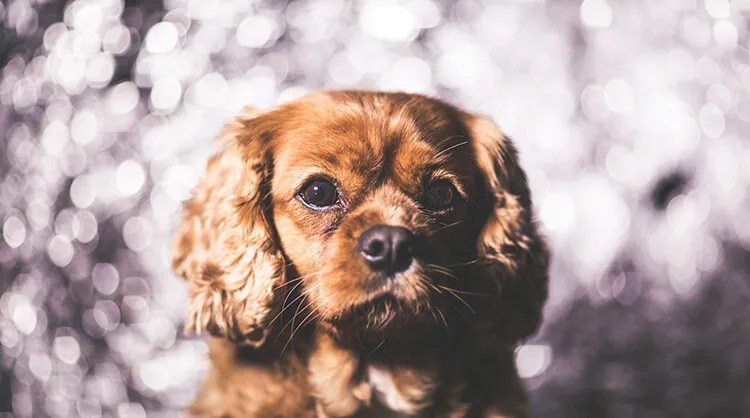
Now that we have covered the basics of good lighting, we can move on to some of the fun stuff. If you are a fan of beautiful round bokeh (blurred background), then tin foil could be your new best friend. By putting some scrunched up foil behind your subject and shining a light on it, you will instantly get a “starry” bokeh effect.

This technique requires a bit of practice, but my top tips are to use a lower aperture and move your dog far enough in front of the foil that the camera focuses on the dog, causing the background to blur.

Tin foil bokeh

My second bit of advice is to use a short telephoto or zoom lens, preferably above 50mm to 85mm. This is because a wider lens takes in more of the background so you will need more foil. If you use a telephoto lens, less of the background will be in the shot, which means you will need less foil to create the effect.

4. The upside down reflection shot

Reflection shot - 10 Amazing Camera Hacks for Dog Photography

This tip is as simple as it sounds! The next time you are near some still water, such as a puddle or a pond, try holding your camera upside down and shooting your dog’s reflection in the water. When you look at the image the correct way, you will create a fantastic illusion. When people see your dog’s feet at the bottom of the picture, they will realize that they are looking at a reflection.

Dog reflected puddle - 10 Amazing Camera Hacks for Dog Photography

This tip works well with dogs as they are so low to the ground.

5. Use a mirror to create white space

White space mirror - 10 Amazing Camera Hacks for Dog Photography

It is your job as a photographer to lead the viewer’s eye to the subject that you want them to look at. This is part of the beauty of these fast lenses with really blurry backgrounds; you can leave your subject in focus and blur the background, so it is clear what you want our viewer to look at.

Another way to do this is the use of white space. By shooting in a mirror, you can purposely introduce a significant portion of the wall behind the mirror and put your subject off to the corner of the image. This creates a massive amount of white space, producing a far more interesting picture.

White space dog - 10 Amazing Camera Hacks for Dog Photography

6. Fairy lights

Fairy lights

Fairy lights are great as they introduce three elements that photographers love:

  1. Added detail.
  2. Possibility for nice round bokeh.
  3. Additional light.

Why not get your dog to sit on some fairy lights when you are taking his picture next? You can also add your phone light as well to add that lovely dynamic shadow at the same time.

Dog on fairy lights - 10 Amazing Camera Hacks for Dog Photography

7. Phone or Perspex reflections

Phone reflection - 10 Amazing Camera Hacks for Dog Photography

Symmetry will become your best friend when taking pictures. There is something about reflections and balance that are very pleasing to the human eye.

If you find yourself without a reflective surface to shoot into, why not make your own? I carry a small bit of perspex with me wherever I go. However, many photographers use their mobile phones.

All you need to do is hold it next to your lens to create a reflection of your pet.

Dog reflection hack - 10 Amazing Camera Hacks for Dog Photography

7. Prisms

Prism dslr hack

Prisms mix two elements that we have already discussed; they can create white space, almost blurring out a significant portion of your photographs, and you can get some exciting reflections out of them.

However, the reason why I love using prisms is that they can add some fantastic color to an image that might otherwise be a little dull.

Camera hack prism

9. Phone flare

Phone flare technique

Flare is a real sought-after look. We have all spent time pointing our lenses almost directly at the sun trying to get that beautiful lens flare look.

Well, the next time you want instant lens flare, just get your trusty phone out of your pocket again and try shining that light into the camera to get a very similar effect.

Phone flare hack

10. Change your perspective

Dslr perspective

Finally, why not just change your perspective? The number one thing that will make your pictures look more professional is capturing things in a different way from others.

Most of the time, this just comes down to shooting something from a different angle. People are used to looking down at their dogs, so they will typically take images of their dogs from above. Why not take your pictures from floor level to get pictures of your pet you may not have seen before?

Also, try mixing my technique of using white space in combination with this tip. Purposely shoot more of the floor and put your dog in the corner of the image to help lead the viewer’s eye.

Dog photography

11. One final bonus tip for good luck

One of the best tips I have ever received for my photography comes in particularly handy photographing dogs.

Always focus on the eye that is nearest you.

Your viewers will always focus on the subject’s eyes. If they are sharp, then people do not worry so much about the rest of the image.

If you look back at some of the pictures above, you will notice that sometimes the nose is slightly out of focus due to the use of a shallow aperture. However, you may not have noticed that when you first looked at the images because the eyes are in focus. I do this with all the pictures I take.

Conclusion

I hope the video and these tips have inspired you to go try and take new images that you may not have thought of before. Even if you don’t use these exact tips, perhaps some of them might help you think more about using reflections, lighting, and white space, which will help your pictures stand out from the crowd.

Please share some of your tricks and tips in the comments below.

The post 10 Amazing Camera Hacks for Better Dog Photography by Phil Harris appeared first on Digital Photography School.


Digital Photography School

 
Comments Off on 10 Amazing Camera Hacks for Better Dog Photography

Posted in Photography