RSS
 

Posts Tagged ‘Photography’

Tips for Doing Photography On Gray Gloomy Days

10 Apr

Few things dampen photo-taking spirits more than rainy and gloomy days. Especially if you are on a trip to an exciting location and the clouds and wind are conspiring to keep the sun from those beautiful, but hidden, landscapes you know exist.

Tips for Doing Photography On Gray Gloomy Days

Fear not, intrepid photographer, there are still many subjects for you to capture on gray, gloomy days. They may not be what you typically shoot or what you really want to be shooting. But that doesn’t mean you can’t stretch your creative muscles a little and create some memorable photos.

Express the mood

The first mistake is assuming that when your mood doesn’t match the mood of the weather or scene in front of you, you should pack it up and go home. Viewers connect with photos because of emotion and emotions are highly tempered by mood.

While gray moods are not as popular to express as say, a sunny golden sunset, they are just as prevalent. I like to highlight the relative emptiness of a scene when the color has been sucked out of it and show a sense of loneliness when possible.

Tips for Doing Photography On Gray Gloomy Days

Washington State Ferry alone in the gray of Puget Sound.

Add some grit

In the days of film, the higher ISO emulsions (think ISO 1600 and more) allowed for photography in low light but was a trade off for what most of us consider image quality. The emulsion accomplished the low light performance by having larger grains of silver, which were far more visible than their ISO 50 counterparts, which tended to blend smoothly and be almost invisible. That grain didn’t do well for fine art landscape photos, but it worked wonders for conveying the grit of a scene.

Grit is a hard thing to define. It’s not necessarily dirty, but it’s not sharp and clean, either. It’s a little muddled and it’s more real than posed. It’s more of a feeling than anything else and it is available more on gloomy days than when the sun is bright.

Tips for Doing Photography On Gray Gloomy Days

Lighting candles in Kathmandu to chase away the gloom.

It can also be added to photos in post-production. Lightroom has a section to add grain back into a photo with three different sliders to show just the right amount of grit you are looking for.

Think on the Grayscale

With all the wonderful colors we experience in the world, I think the thing we like least about the gloomy weather is that it compresses our palate to fewer options. Or so we think. Just because the colors aren’t popping like they do in bright sunshine, doesn’t mean you don’t have a range of options.

Enter the grayscale and zone system. For a primer, check out this article. The idea is different colors and patterns get accentuated differently when seen in just grayscale. Even composition should change a little when considering grayscale photos. Contrast can be enhanced if you like.

I’d start by using the monochrome setting on your camera. Most cameras have a scene or profile mode to shoot images in black and white. That will give you instant feedback on your LCD screen and is an awesome gateway to shooting black and white images that don’t need blue skies and sunshine.

Zero In

Tips for Doing Photography On Gray Gloomy Days

Flowers and plants are especially happy to be photographed on gloomy days.

“Get Closer” is a common refrain in the photography world, and for good reason. It’s a tried and true method of finding more interesting subjects, or for framing subjects more interestingly.

If the background of your subject is drab and dull, work to crop it out in-camera. It’s a bit of forced tunnel vision and it can help bring out new subjects when the skies are gray. Plants, I find, are especially happy for a nice close-up on gray days when their colors seem more saturated.

Tips for Doing Photography On Gray Gloomy Days

Look For Patterns and Abstracts

You might not have that bright, sunny landscape you were looking for but that doesn’t mean you are without subjects. Besides getting closer, look for patterns and abstracts.

For instance, yesterday the weather was threatening (and later delivered) snow. I was itching to get out and shoot something. I found some birds but they were too far off for decent photos. Then I found some old bridge pilings crossing over a lake and was instantly excited.

Tips for Doing Photography On Gray Gloomy Days

The gray of the sky reflected in the lake and the gray of the pilings helps the moss and grass pop out.

Likewise, lower light makes for easy purposeful abstract blurring. I covered this before in a dPS article (6 Tips on How to Create Abstract Photos) and I love the simple technique of camera movement, coupled with low light and low ISO, to create unique images.

Tips for Doing Photography On Gray Gloomy Days

Streaks of gray and steel cut across a black background in striking abstract patterns.

Conclusion

The gray gloomy days don’t need to keep you inside feeling uninspired. They are a challenge to us all to get out there and see the world in a different light. Then express that world through photos.

I’d love to see your gloomy day and gray work, please share in the comments area below.

The post Tips for Doing Photography On Gray Gloomy Days appeared first on Digital Photography School.


Digital Photography School

 
Comments Off on Tips for Doing Photography On Gray Gloomy Days

Posted in Photography


6 Travel Photography Secrets That You May Not Have Tried

10 Apr

Great travel photography has the power to take the viewer to that destination and make them feel like they are there. It can evoke memories of faraway lands and local people and culture that the viewer might have never seen.

You may have heard the usual advice about travel photography like “getting up early” and photographing at the “golden hour”. But here are six travel photography secrets that you have probably never tried that will help you capture stunning photos.

6 Travel Photography Secrets That You May Not Have Tried

#1 Walk Around

Often the biggest advice for any prospective travel photographer is to simply walk around. It’s incredible how many different photo opportunities you will find simply walking around a city rather than getting in trains, buses, and taxis. Not only will you be able to get a better understanding of the geographical side of the city, but you will also notice moments that would often get missed if using transport.

Just get yourself a handy local map, set a route, and walk. Once you finish the route set another and walk again. Sometimes you might not see anything, and it will feel like a waste of time, but every now and again a photo opportunity will present itself that will make you glad you did walk.

6 Travel Photography Secrets That You May Not Have Tried

#2 Find High Vantage Spots

Getting up high for an aerial view of a place is a wonderful way to capture great photos. But it can also help get an understanding of the layout of the city and aid you in finding potential shot locations. Often most places have well-defined lookout or viewpoints and there’s nothing wrong with going to those locations and capturing photos even though they have been done before.

But in addition to that, when you are at the location try to figure out if there are any other places that can help you capture great elevated shots.

The great thing these days is that you can find a ton of information online about every location. So always try to build in time at a location to capture some photos from a high viewpoint.

6 Travel Photography Secrets That You May Not Have Tried

#3 Change Your Hotel

A great trick for photographing cities and being able to capture a good variety of photos is to change your hotel. So rather than staying in the same place for a week, aim to stay at two different hotels around the city.

By choosing your hotels carefully you may be able to capture photos from a rooftop bar or even from your room of different views of the city. Often these photos can work better than those from lookout points as only those people who have stayed at the hotel will be able to capture it.

But the other advantage of staying at a hotel in a different part of the city is that you will get to learn that area and naturally spend more time around there. This will mean rather than focusing most of your time in one location if you were staying in one hotel, you can now spend time in two.

Clearly, if the city is small you won’t need to do this, but in a big city such as Moscow or London this could be useful and help you capture more photos.

6 Travel Photography Secrets That You May Not Have Tried

On a recent trip to Bangkok, I was able to my hotel room balcony to capture a cityscape shot.

#4 Speak to a Local Photographer

Let’s be honest, no matter how good of a photographer you are and how well you plan your trip, a local photographer will always have an edge purely because it is their home city. So why not use that to your advantage.

Contact a local and ask them some questions or get some tips about places you are looking to photograph. Obviously, the key here is not to try to copy their photos but get advice about anything you want to capture. The great thing about doing this rather than contacting a tour guide is that as a photographer they will understand your needs and can help you capture the shots you want.

You never know they may even tell you or show you around a few places that you never knew about. Just think of it as paying it forward, so if one day someone contacts you for information, do the same thing.

Note from the editor: Please do your due diligence and use normal safety precautions when meeting someone you do not know over the internet or in person. Always put your safety first over getting a shot.

6 Travel Photography Secrets That You May Not Have Tried

#5 Hire a Translator

Whilst not absolutely essential, sometimes having a translator can come in handy. This is especially true if you are photographing anywhere that might be sensitive such as religious buildings or even women in some cultures.

Having a translator can mean that they can ask permission for you, speak to locals to put them at ease, and even help you get model release clauses. You could look to hire a translator just for a day or for the duration of your stay, but they can be a big help in capturing photos in a place where you don’t speak the language.

6 Travel Photography Secrets That You May Not Have Tried

#6 Ask Tourists

More and more these days picture editors want photos of experiences rather than just another standard snap of the Eiffel tower. Sometimes you can capture those photos naturally with things that happen before your eyes. At other times you may need to set something up to help get that story across.

One of the best ways to do this is by using other tourists. Firstly, if they are from your country you will be able to communicate without any problems. Second, and most importantly, they would probably love to have some great photos of themselves from their trip for their personal use.

Just explain what you are doing and ask if they are willing to participate. Then take their email address and email them a copy of the photo when you get home. The bonus here is that you also have their email address and if one day you require a model release form, you can contact them.

Just be aware of time. No one wants to spend half of their day on holiday posing for photos. Work quickly, take a few photos, and let them get on with their day.

6 Travel Photography Secrets That You May Not Have Tried

Conclusion

Travel photography often requires a lot of “out of the box” thinking as you’ll rarely encounter exact situations over and over again. Over time you’ll build up your own arsenal of solutions to potential creative challenges. In the meantime use the tips above to help you capture great travel photos.

Have you got any travel photography tips and tricks? Please share them below.

The post 6 Travel Photography Secrets That You May Not Have Tried appeared first on Digital Photography School.


Digital Photography School

 
Comments Off on 6 Travel Photography Secrets That You May Not Have Tried

Posted in Photography


10 Photography Lessons I’ve Learned Over 10 Years

09 Apr

When learning any new skill, it’s universally agreed that you need to put time into it to grow. There’s a popular theory by Malcolm Gladwell that it takes 10,000 hours to master any skill. That theory is pretty controversial these days, but the number of hours isn’t important. What’s important is that you must put time into learning a skill if you want to become better at it.

Photography is no exception. Ask any of the photographers you admire how long they have been developing their photography skills, they will all tell you that it’s taken them years.

So, how do you speed this learning process up? There are a few ways, but one of them is to learn from other’s mistakes and successes. Every photographer starts out as a beginner, so it would make sense that others have learned a few lessons along the way from which you can benefit.

10 photography lessons 07

I’m no photography master by any stretch, but I’ve learned a few valuable lessons in the 10 years since I picked up a camera. Here are a few of them.

1. Great light beats a great subject every time

If you’re anything like me, you’ve probably had the experience of visiting a gorgeous location with grand visions of the stunning photos you’re going to come home with, only to be bitterly disappointed and wonder what you did wrong. On the flip-side, you’ve likely been pleasantly surprised by the beautiful photos you’ve taken of a very ordinary scene or subject.

So, what is the one thing that makes a great photo above anything else? Great light. This is the reason why I will often return to the same location to photograph the same scene repeatedly. The scene hasn’t changed, but the light will never be the same twice. Learn to predict, look for, and create great light.

10 photography lessons 06

2. Shoot for love, not likes

Social media has changed the world we live in, which is a great thing for photographers. Of course, there are negatives to this as well. The biggest drawback, in my opinion, is the eternal quest for likes. Not a single one of us is immune to it.

It’s flattering and gives a nice ego-boost when someone “likes” your photo on Instagram or Facebook. But it can become a dangerous obsession when you begin to shoot or edit your photos with the motivation of getting more likes.

Sure, we all change and develop our style over time, and this is partly influenced by current trends. Just try to stay focused on shooting what you love, and don’t let the desire for validation on social media make you shoot for likes.

3. Post-processing is part of your artistic expression – learn it well

It’s no secret we live in a digital age. Despite Photoshop having some pretty negative connotations at times, post-processing your photos in the digital darkroom is a necessity, and the sooner you learn it, the sooner your photography will really take off.

10 photography lessons 04

Capturing your photos well in-camera is only half of the process. As a visual artist, what happens to those RAW images is entirely up to you. If you don’t know how to edit them well, then you’re short-changing yourself.

You don’t need to become a professional retoucher, just start with the basics and learn them well. Post-production software is cheap these days, and you can learn how to use it for free. There’s no excuse. Your inner artist will thank you for it.

4. Keep your gear simple

My gear has fluctuated from a single point-and-shoot to a bag heavy enough to crush a camel, and everything in-between. When I switched from a large Nikon full frame kit to Sony mirrorless a couple years ago, I intentionally simplified my gear, and I’ve kept it that way.

There are three reasons for this. Firstly, as a landscape and travel photographer, I don’t want or need large or heavy gear. Secondly, I’m more likely to consider a new purchase more seriously. And thirdly, simplifying your gear (especially lenses) forces you to develop your creativity.

10 photography lessons 03

One of the best exercises you can do for your photography is to go out with your camera and only one prime lens and shoot with just that setup. You don’t need anywhere near as much gear as you think.

5. Make friends with other creatives

For most of us, photography is a solitary pursuit. That’s part of the attraction. Even for an extrovert like me, getting out by myself to explore with my camera is one of my favorite things to do. However, networking with other creative people has a number of benefits that you should try to make the most of as well.

You can do so online, but doing it in person is even better. These creatives could be photographers, but they don’t have to be. They could be filmmakers, painters, illustrators, cake decorators, or musicians. It doesn’t matter what their outlet is or how you spend your time together. Just find other people who will inspire and motivate you, and who you can do the same for. The benefits will surprise you.

6. Hold off trying to make money as long as possible

10 photography lessons 05

Do a quick Google for “how to make money with photography” and you will be drowning in the sea of photo-selling tactics. There’s no question, you can make money selling photography, but that doesn’t mean you should.

I’m not going to go into the pros and cons of trying to turn your photography into a business. I will say, however, that you should try not to rush into monetizing your passion. Turning a hobby into a business (even just a side-hustle) changes things. It can be very satisfying, but mixing art and money isn’t for everyone. Just keep enjoying your hobby as long as you can.

7. Comparison will cripple you and steal your passion

This is in some ways an extension of #2 above. If you spend any time at all on Instagram, you will see there is a massive amount of very talented photographers out there. It’s easy to get discouraged by comparing your photography to that of others.

Again, nobody is immune to this. I often catch myself being overly critical of my own photography because I’m not just viewing the work of others, but comparing mine to it. Nothing good comes from this.

10 photography lessons 02

It’s great to be inspired by the work of others, but if it’s stealing your love for your own photos, it’s turned into something else. Comparison can be a very useful tool, but only if you’re comparing yourself to yesterday.

8. Invest in your craft

Unless your gear was gifted, borrowed, or stolen, then you understand that photography will cost you some of your hard-earned pesos. You can spend a little, or you can spend a LOT.

There are some things that will give you a far better return on your investment than others, though. For example, good lenses are a far better investment than a new camera body. The thing that will give you the best return on investment, in my opinion, is photography education.

There are a lot of great free resources out there, but as the saying goes, you get what you pay for. You can learn a hell of a lot from very affordable ebooks and online courses. And if you really want your photography to flourish, take a workshop with a master. You’ll never wish you hadn’t made the investment.

10 photography lessons 08

9. Start a blog

You might be thinking, “The world doesn’t really need another blog”, and you’d be right. But you’re not doing this for the world are you?

When I started my travel photography blog back in 2010, I never had any visions of millions of readers, I just wanted somewhere I could share photos of my travels and stories of my adventures. I wanted a medium other than Facebook, where I could choose how it looked. It was one of the best things I have ever done.

It’s since grown into somewhere that I now teach travel photography, but it’s still my photo blog, and it’s been a hugely creative outlet for me. I recommend Pro Blogger’s free Start A Blog course (by dPS’s very own Darren Rowse).

10. Your best image is yet to be made

10 photography lessons 01

As I mentioned in #7 above, it’s easy to get discouraged from time-to-time in photography. This happens for a number of reasons, but there’s one thing that I have learned which helps me get back on the horse when I feel like I’m wasting my time. I remember that I still haven’t made my best photo yet.

Of course, there is no such thing as a “best photo”, because photography is an art, not a science. What I’m getting at is that if you keep going, keep learning, keep practicing, you will keep making images that you think might be your best image yet. There will be dry periods, but push through them, try something different, get out of the rut, and you’ll come out the other side and continue to make images that remind you why you do it.

Conclusion

I hope you can take away something to help you in these photography lessons which I’ve picked up over the years. Do you have any pearls of wisdom that you’d like to share with other dPS readers? What have you learned that has made you a better photographer?

The post 10 Photography Lessons I’ve Learned Over 10 Years appeared first on Digital Photography School.


Digital Photography School

 
Comments Off on 10 Photography Lessons I’ve Learned Over 10 Years

Posted in Photography


How to Choose the Right ISO for Landscape Photography

08 Apr

In this article, I will give you some tips on how to choose the right or best ISO for landscape photography.

The challenge as a beginner

Choosing the ideal settings in different scenarios is quite challenging as a photography beginner. We’ve all been there and I certainly know your frustration when your images don’t look as good as you want.

There’s so much to think about including; the composition, the perspective, the camera gear, do you need filters? And what about the shutter speed, aperture, and ISO? Don’t worry, though. It takes some trial and error but soon enough it will be a piece of cake!

How to Choose the Right ISO for Landscape Photography

Since my camera was mounted on a tripod I could use a low ISO of 80 for this image.

I hope to make one of these questions a little clearer through this article, though. Choosing the ideal ISO is crucial for the image quality, and it has a direct impact on both the shutter speed and aperture.

Always use the lowest possible ISO

I won’t go too much into detail regarding how the ISO works in this article, but to simplify, the ISO expresses your camera’s sensitivity to light. The higher the ISO number, the more sensitive it is to light, while a lower ISO makes the camera less sensitive to light.

Please note: This is a simplification for beginners. It is actually much more complex than this but you don’t need to understand all the science behind the scenes to use ISO correctly.  

While a higher ISO is good when aiming for a quick shutter speed, it also introduces a significant amount of grain or digital noise into the image. That’s something you want to avoid, and it’s the reason that you’ll often hear that you should always use ISO100.

How to Choose the Right ISO for Landscape Photography

To achieve the longest possible exposure I could use an ISO of 64 here.

Now, I agree that you should aim to use ISO100 for most stationary landscapes, you shouldn’t make the mistake of only using that setting. It took me several years before I managed to accept that there’s not only one correct ISO in landscape photography. In fact, I was pretty much an ISO100-nazi, and except for night photography, I stuck to it.

In later years I’ve learned that this isn’t necessarily the best practice.

First of all, you aren’t always able to use ISO 100. Here are a few scenarios where you might need to bump up the ISO:

  • Photographing handheld.
  • When trying to freeze moving subjects.
  • When photographing at night.
How to Choose the Right ISO for Landscape Photography

ISO 640 was the lowest ISO I could use here in order to achieve a quick enough shutter speed to get a sharp handheld image.

These are just some of the scenarios where ISO 100 might not be possible. However, there are other, and less talked about, times where you need to increase the ISO as well:

  • When adjusting the shutter speed for capturing the perfect motion/flow in water.
  • If you need to freeze elements moving in the wind (such as bushes, branches etc.).
  • When you’re using a telephoto lens handheld.

In other words, you should always aim to use the lowest ISO possible but that doesn’t always mean ISO 100 (even though that’s the “ideal” ISO quality-wise).

Adjusting the ISO at night

I briefly mentioned that ISO 100 is not ideal for night photography. Let’s look a little closer at that and find the best option. Remember that a higher ISO is more sensitive to light. In other words, that means you need less time (a shorter exposure) to achieve a correct exposure when it’s increased.

Now, at night there’s not a lot of light which means that you need more time to capture a well-exposed image. However, just setting the shutter speed to 30-seconds and leaving the ISO at 100, will still result in an underexposed image.

How to Choose the Right ISO for Landscape Photography

I had to increase the ISO to 4000 to get a well-exposed shot of this night scene.

Instead, you need to sacrifice some image-quality and increase the ISO. Exactly what ISO you need depends on the moon phase and overall brightness of your scene (for example, being close to city lights or other light sources will have an impact on your choice).

The first steps in my night photography workflow are to set the Aperture and Shutter Speed I’m going to use. Next, I use my base ISO for night photography, 1600.

However, just as with ISO 100, it’s not the only one you should use. ISO 1600 works as a starting point and after taking a test shot I’ll often make small adjustments. Most of the time you’ll use an ISO between 1200 and 3200 for night photography (though a full-moon or Aurora session might allow for an ISO as low as 800).

Adjusting the Aperture or ISO for a Quicker Shutter Speed

The most difficult part of manually adjusting settings is to learn what adjustments you need to make in certain situations. Should you adjust the ISO, Aperture, or Shutter Speed? I remember this being one of my biggest frustrations when first making the switch to Manual Mode.

How to Choose the Right ISO for Landscape Photography

ISO 100 – f/10 – 0.4 seconds.

While leading photography workshops I often tell the participants to adjust the settings as they normally would before I help them. I often notice that many are photographing with an aperture of f/22 and ISO 100. However, when they need a faster shutter speed, their first instinct is to increase the ISO.

That’s when I ask the question; “Do you really need an aperture of f/22? Will an aperture of f/16, f/11 or f/8 give you similar results? If so, then leave the ISO alone.

Remember, always use the lowest ISO possible. In this scenario, the image will benefit from using a wider aperture and maintaining a low ISO.

Let’s Summarize

I hope that I haven’t made you even more confused than what you were before. Understanding the ISO and choosing the correct one is a little tricky, as there isn’t always one correct choice. However, what I hope you take away from this article is that you should aim to use the lowest ISO possible in each given scenario.

For regular daytime photography, I typically use an ISO between 64 and 400 – the latter is when I’m using a telephoto lens handheld, which requires a quicker shutter speed to keep sharp. For night photography, I typically use an ISO between 1200 and 3200.

How to Choose the Right ISO for Landscape Photography

I used ISO 400 to capture this sharp handheld shot with my 200mm.

Most DSLR cameras are able to take relatively noise-free images at ISO 400 but I recommend spending some time getting used to your camera and finding its limit.

So, as the final word, there isn’t one single correct ISO for each and every scenario but aim to use the lowest possible.


Learning how to choose the ideal settings takes some trial and error to learn. In my eBook, A Comprehensive Introduction to Landscape Photography, I teach the techniques you need to know in order to capture beautiful images, and how you easily can master them. 

The post How to Choose the Right ISO for Landscape Photography appeared first on Digital Photography School.


Digital Photography School

 
Comments Off on How to Choose the Right ISO for Landscape Photography

Posted in Photography


The Winners of the Three NYIP Photography Courses Are . . .

07 Apr

A BIG thank you to everyone who entered our recent competition to win one of three photography courses from our friends at New York Institute of Photography.

The response was wonderful. In fact, it was so wonderful that the team at NYIP decided to offer a special 20% discount off any of their courses (details below).

The winners of the three NYIP photography courses are…

But first – here are the three winners of the competition for Professional Photography Course – worth $ 1,199 (the winners were chosen by NYIP).

  • Harry McCann
  • Matt Bingaman
  • Elizabeth Hollis

A message from NYIP (and a 20% discount offer)

“Congratulations to all three winners! Thank you to all the participants for your many comments. We were so excited to see how many people were interested in our Professional Photography Course. To those who did not win, we wanted to let you know that for a limited time we are offering you the chance to save 20% on the NYIP course of your choice. Learn more here. Simply use the code NY20 at sign-up. But don’t wait, because this offer is only available until April 27th, 2018 (USA time).” – The NYIP Team”

Winners will be emailed with details of how to collect their prize by the team at NYIP.

Thanks to everyone for entering and to NYIP for yet again, sponsoring another wonderful competition.

Photo by Steve Coulombe, NYIP Graduate

The winning comments

By Harry McCann – Nearing the end of my current career I have finally begun to devote more time to my love of photography. For as long as I can remember I have loved to capture the moments. I still remember the Christmas (many, many years ago) I got my Polaroid and the little note on it said: “Open me first.” Since that time I have taken 1000s of photos. However, it wasn’t until recently that I began to take the time and learn what was needed to take photographs that others would also enjoy. I have learned quite a bit in the last couple years. The biggest thing I have learned…is that I still have a lot to learn. A course from the New York Institute of Photography would provide me with the skills and technical experience to take my photography to the next level. I would be grateful for the opportunity.

By Matt Bingaman – I am nearing the end of my Air Force career. This course will help me take my photography to the next level so I can recoup some of the time I lost with my family due to my job. Thank you for the opportunity.

By Elizabeth Hollis – This is a wonderful opportunity for someone like me! I’ve been an enthusiastic amateur for many years and feel I have improved as much as I can through self-direction. I crave a comprehensive course like this to help me grow my skills and determine my focus. Feedback on my photos and goals from an actual professional would be invaluable. My ultimate dream is to become a professional photographer and own my own photography business. This course would be a big step in achieving that goal. Thank you for making this opportunity available.

Thank you all again.

You can learn more about NYIP HERE

Disclaimer: NYIP is a paid partner of dPS.

The post The Winners of the Three NYIP Photography Courses Are . . . appeared first on Digital Photography School.


Digital Photography School

 
Comments Off on The Winners of the Three NYIP Photography Courses Are . . .

Posted in Photography


Weekly Photography Challenge – Cats

07 Apr

Whether you’re a cat or a dog person we’ve got you covered. Last week’s photography challenge “went to the dogs” and now it’s time for the kitties!

My girls, Munchkin (Munch) on the left and Fuzz on the right.

Need some help? Try these dPS articles:

  • 9 Tips for Taking Better Photos of Cats
  • Your Essential Guide to Photographing Cats and Dogs: Snapn Paws
  • 6 Tips for Working with Unruly Animals in Pet Photography
  • 8 Tips for Better Pet Photography

Weekly Photography Challenge – Cats

Simply upload your shot into the comment field (look for the little camera icon in the Disqus comments section) and they’ll get embedded for us all to see or if you’d prefer, upload them to your favorite photo-sharing site and leave the link to them. Show me your best images in this week’s challenge. Sometimes it takes a while for an image to appear so be patient and try not to post the same image twice.

Share in the dPS Facebook Group

You can also share your images in the dPS Facebook group as the challenge is posted there each week as well.

The post Weekly Photography Challenge – Cats appeared first on Digital Photography School.


Digital Photography School

 
Comments Off on Weekly Photography Challenge – Cats

Posted in Photography


How Slow Photography Can Help You Improve Your Images

06 Apr

So often we are caught up in hectic schedules and checking completed items off our to-do lists that we don’t make time to truly enjoy our photographic experience. I believe slow photography can be a fabulously enjoyable, and even therapeutic experience, especially when you give yourself time to indulge.

Woman making giant soap bubbles in a park. - How Slow Photography Can Help You Improve Your Images

When you have a camera in hand you can set your mind and emotions free from the troubles of the day and step into another world, one of inspiration and creative expression. But you must be mindful and make time for yourself to achieve this.

Man with his tricycle taxi in Chiang Mai, Thailand - How Slow Photography Can Help You Improve Your Images

Being Patient

Patience is a virtue and should not be exclusive to bird and wildlife photographers. Maybe these genres require somewhat more patience, but street photography, sports, landscape and most other kinds of photography require you to slow down and take time to obtain the best possible images from most situations.

Some of the very best street photography is not brought about by spontaneity alone, but by careful planning, anticipation and patience. Finding a great location on the streets is one thing, but often you’ll have to wait for the best light and the most interesting action to present itself in your chosen location to capture the most impressive photographs.

Street with activity in Muang Mai Market, Chiang Mai, Thailand. - How Slow Photography Can Help You Improve Your Images

Even the best sports photographers take time with their photography. The time they invest may be in studying the game more or getting to know the players and coaches of the teams they photograph the most.

Doing this will give them the knowledge and relationships which will enable them ultimately to capture more dynamic pictures in the spur of the moment. They will more easily anticipate the flow of the game than someone who’s inexperienced and knows little or nothing of the character of the team.

Thai man working as a porter at the fresh market in Chiang Mai - How Slow Photography Can Help You Improve Your Images

Observe

Taking time to observe the environment in which you are photographing will help include more sense of feeling into your photos. Rather than rushing in to get some photos as soon as you arrive at your location, leave your camera in its bag or case and just observe what’s there and what’s happening.

Use your other senses too, not just your eyes. Listen, feel, smell and even taste (when it’s appropriate) to become more aware of the environment where you want to take photos.

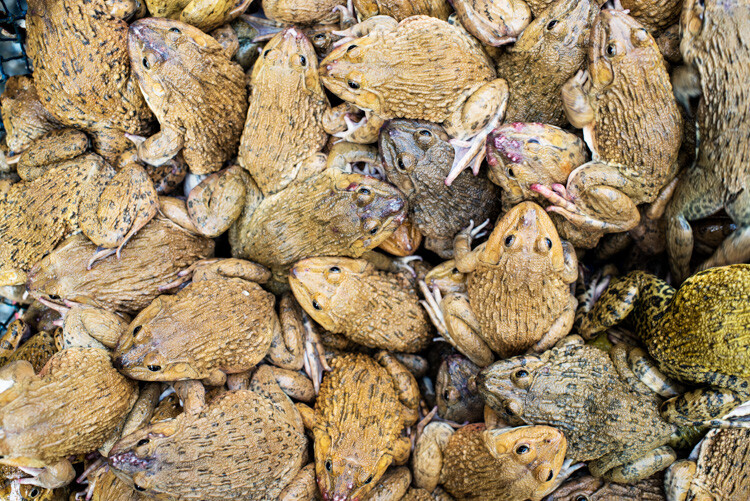
Lots of frogs - Slow Down and Take Your Time – Don’t Rush Your Photography

Give yourself space to slow down, to take a step back and observe what’s going around you. You will often discover interesting and photogenic subjects that you may not notice if you move in too quickly and start taking photos immediately.

Incorporate Photography into Your Schedule

Take your camera with you wherever you go. To work, school or university, when you exercise, when you go shopping, and when you walk the dog. By doing so you will learn to see your regular environment in different ways.

Thai woman outdoors - Slow Down and Take Your Time – Don’t Rush Your Photography

Making time to use your camera each day is one of the best ways to improve your skill and technique and to develop your own unique style. Giving yourself time within the regular context of your day might seem hard or a little strange at first. But as you commit yourself to doing this you can begin to find ways you hadn’t thought of to make interesting photos.

Think outside the box as you go about your regular routine. Make the ordinary things in your life look extraordinary in pictures.

Thai woman selling mangos at the fresh market in Chiang Mai - Slow Down and Take Your Time – Don’t Rush Your Photography

Revisit Locations and Subjects

Visiting the same locations multiple times and photographing the same subjects more than once is often worth taking the time to do. If you go someplace just once you will never really know if you’ve gotten the best photos possible.

Reviewing the images from your first or subsequent visits to a location will help you build a more critical eye. Then when you return to that place and subject you will have a more experienced perspective than at first go around.

Female butcher are a Chiang Mai market - Slow Down and Take Your Time – Don’t Rush Your Photography

By making time to do this you will most likely enjoy the experience more and produce better photographs.

Be careful to opt for places you really enjoy and feel good about as this will help compel you to return and seek to make better photographs than you have done previously.

Kayaw girl blowing bubbles in Chiang Mai, Thailand.

In Conclusion

By allowing yourself time to slow down and enjoy using your camera you will begin to see a progressive improvement in the quality of your images. Continuing to delve into techniques you’ve not previously mastered and experimenting with new subjects will help maintain a freshness in your pictures and you will enjoy your photography time even more.

Maybe we can make slow photography the next popular craze!

The post How Slow Photography Can Help You Improve Your Images appeared first on Digital Photography School.


Digital Photography School

 
Comments Off on How Slow Photography Can Help You Improve Your Images

Posted in Photography


MIOPS Splash: The world’s first smartphone-controlled water drop photography kit

04 Apr

Camera trigger company MIOPS has launched a new specialized photography kit that aims to help photographers get into water drop photography. Called the MIOPS Splash, this standalone kit doesn’t require an extra trigger, and is said to be the first of its kind that’s controlled with a smartphone.

MIOPS Splash doesn’t just control a flash or camera, it also controls the timing and size of a liquid drop, essentially taking all of the hardest parts of out of water drop photography. Settings are chosen using a companion smartphone app, and users are given two setup options:

In addition to the Splash kit, which is available now for $ 80 USD, MIOPS offers the Splash Holder kit for an extra $ 20. The Holder kit enables users to mount Splash on a tripod with an included tripod mount and box clip.

The MIOPS Splash kit comes with a 2-year warranty and is available now with free global shipping. To learn more about Splash or order your own, head over to the MIOPS website.

Articles: Digital Photography Review (dpreview.com)

 
Comments Off on MIOPS Splash: The world’s first smartphone-controlled water drop photography kit

Posted in Uncategorized


4 Marketing Mistakes – How NOT to Promote Your Photography Business

01 Apr

You can market your photography business in hundreds of different ways — some incredible effective, and some a total waste of your time. Here are four marketing mistakes or wrong ways to promote your photography business and what you should be doing instead.

How To Market Your Photography Business1

Mistake #1 – You’re Too “Professional”

By no means does this mean you should act or present yourself unprofessionally in your photography business — but often we hide behind a front of professionalism. If being a professional means a headshot on your website holding your camera (or no headshot at all) and a story about how you love love, and love photographing weddings, it’s unremarkable. Every other photographer does and believes those things.

Through trying to be perceived as a professional, you’ve becoming boring! Yes, you need to conduct your business professionally – but add some zest to your brand. What makes you unique as a human, and therefore, a photographer?

What 5-10 things could you talk about all day? Which things make you excited? What 5-10 things do you dislike? What are 5-10 ways you could describe your personality and your images?

4 Marketing Mistakes - How NOT to Promote Your Photography Business

Brainstorm the list of you! Get clear on your interests, personality, photography style, brand, and voice and consistently communicate this uniqueness to your clients.

It’s simple to do a brand audit of your website, blog, and social media accounts. Within 30 seconds, would a new client know what makes you different? What facts will they remember? This is the key to non-boring, but still professional marketing.

4 Marketing Mistakes - How NOT to Promote Your Photography Business

Mistake #2 – You’re Advertising Without Intention

In the name of honesty, I have never paid to advertise my photography business. But I’m not against advertising in magazines, wedding shows, or placing Facebook ads. However, advertising without intention is a big marketing mistake many photographers make.

Before you pay hundreds or thousands of dollars for an ad, ask yourself this question, “Is my ideal client hanging out here?”

4 Marketing Mistakes - How NOT to Promote Your Photography Business

If you’re not clear on who your ideal client is, that will be the first step! Think back to some of your favorite clients and scribble a list of describing words about their personalities, wedding day, and photos. After you’ve reviewed at least 10 of your past couples, circle any common themes that occur.

4 Marketing Mistakes - How NOT to Promote Your Photography Business

Testimonials are a gold mine for sketching out your ideal client. If you don’t have one already, start a document with feedback from your clients and look for themes. What are clients most excited about after working with you? A few more details to include in your client profile include their age, location, career, income bracket, and hobbies.

Once you get clear on who your ideal client is, then you can filter every advertising opportunity through your client profile. Would your ideal client be looking for a wedding photographer in that magazine, at the bridal show, through Facebook ads? If so, wonderful but if not, perhaps your marketing efforts and dollars are best spent elsewhere.

4 Marketing Mistakes - How NOT to Promote Your Photography Business

Mistake #3 – You’re EVERYWHERE on Social Media

You have a limited amount of time to market your photography business, and you have to make your moments count. Before you get involved on Google Plus, Pinterest, Facebook, Twitter, YouTube, Tumblr, Instagram, etc. – pause.

Is your ideal client finding their wedding photographer on that platform? If you’re not sure — a good place to start would be surveying your past clients and asking “Where did you find me?”

4 Marketing Mistakes - How NOT to Promote Your Photography Business

Chances are that a few social media platforms (2-3 maximum) are bringing in most of your inquiries. The other platforms are a waste of your time. For photographers, I have found Instagram and Facebook to be front-runners, perhaps with Pinterest as a third. But you’ll have to investigate the stats for your business.

Once you’ve narrowed down the platforms you want to pursue, let go of the ones that aren’t working! On your chosen platforms, engage consistently with a mix of personal and business posts – sharing your face regularly, sharing work you love and calling prospective clients to action.

4 Marketing Mistakes - How NOT to Promote Your Photography Business

Mistake #4 – You’re Sending Cold Emails

One of the best ways to market your photography business is building a strong network within your own industry. By this, I mean connecting with other photographers as well as wedding vendors and venues. However, sending cold impersonal emails is the wrong way to market your business.

If you want to send emails that not only get read but receive a reply back, make sure you do your research. Before you send an email, follow their accounts on social media, leave comments on their blog — so do that at least a week in advance of emailing. When you email, keep it short and to the point. Genuinely compliment their work. Share who you are, what you want and how you can help that person achieve their business goals.

4 Marketing Mistakes - How NOT to Promote Your Photography Business

Practically, this may mean helping a vendor by providing free headshots of their staff, photos of their storefront, or offering to help them improve their website or blog one afternoon. Most industry leaders want to help, they were new once as well – but not at a disadvantage to their own time.

If you want to connect with a fellow photographer, asking them for coffee for “tips” is a terrible way to get an email response. Instead, focus on relationship building, helping them in their business, sending a gift in the mail and asking to take them out to their favorite lunch spot. I guarantee your “cold emailing” success rate will increase if you follow these tips

Conclusion

What other mistakes have you make marketing your photography business, or seen others make? Please share your ideas in the comments below.

All the best to you as you work to market your photography business!

The post 4 Marketing Mistakes – How NOT to Promote Your Photography Business appeared first on Digital Photography School.


Digital Photography School

 
Comments Off on 4 Marketing Mistakes – How NOT to Promote Your Photography Business

Posted in Photography


Panasonic interview: “Our business philosophy is based on ‘changing photography'”

31 Mar
From L-R, Hidenari Nishikawa, Asistant Chief, Merchandising Group, Kohei Fukugawa, Supervisor, Software Design Group, Tetsuji Kamio, Staff Engineer, Image ENgineering Group, Emi Fujiwara, PR / Communication Group, Naoki Tanizawa, Manager, Communication Group, Michiharu Uematsu, Advisor, Merchandising Group.

Recently we visited the 2018 CP+ show in Yokohama, Japan and booked an in-depth interview with Panasonic. Among the topics covered were the company’s new twin flagships, the Lumix GH5S and G9, as well as how Panasonic hopes to grow their appeal to professional and advanced amateur stills photographers.

The following interview has been edited slightly for clarity and flow.


Why did you feel that the GH5S was necessary, when the updated GH5 is in many ways so competitive?

The Panasonic Lumix GH5S comes with an oversized 10MP sensor that forgoes a stabilizer, but allows for shooting in multiple aspect ratios without cropping the field of view.

For the GH5, we aimed for hybrid users shooting both photos and video. We thought that we needed 20MP for stills, and that was kind of a compromise for video users. With the GH5S, we had a lot of video users who wanted more video capability, but with the conventional [20MP] sensor, it was quite difficult to shoot in low light situations because of [hardware and software] limitations.

Professional shooters will prefer a multi-aspect sensor versus IBIS

So we developed a video-centric camera to open up more freedom for video users by having a 10MP sensor, which is good for low light. Also, we incorporated multi-aspect ratios, which many people prefer to have. For example, professional shooters will prefer a multi-aspect sensor versus IBIS.

Is there a technical reason why the G9 and GH5-series continue to rely on contrast-detect autofocus with depth-from defocus technology in preference to a hybrid/PDAF system?

The speed-and-stills oriented Lumix G9 can shoot at up to 20fps bursts in Raw, and is the first Micro Four Thirds camera to come with a top-plate LCD.

When we were developing the GH4, we were discussing whether to go with phase detection AF, or hybrid AF system of contrast AF with our own DFD (depth-from- defocus) technology. We thought that by having contrast AF with DFD, we could maximize picture quality.

With phase detection AF, picture quality can be damaged

This is because with phase detection AF, picture quality can be damaged [by the phase detect pixels]. With contrast-detection AF and DFD technology, we don’t need any dedicated pixels [for autofocus] and we believe it is more precise.

With the release of the G9, since it’s so sports and speed-focused, is this an ongoing conversation, or are you committed to going forward with DFD?

After we put DFD and contrast AF into GH4, we’ve been continuing to develop this format. At this point, we’re not thinking about shifting, but rather trying to make it better and better. We do see room for improvement; we’re studying to improve the algorithms in DFD to minimize the range of hunting, or AF ‘flutter,’ required for accuracy.

Do you think there’s an opportunity for Panasonic to develop more fixed-lens large-sensor compacts?

Panasonic’s LX100 incorporated a large Four Thirds type sensor and fast zoom lens. It remains a very capable camera, but in some ways – particularly its 12MP of resolution – it’s looking a little dated.

Yes, we have lots of requests from editors and users waiting for the next LX100, so we are studying that. At this point, we can’t say when, but it is something that people are expecting.

As we head into 2018 and 2019, how will Panasonic send the message that it wants to be taken seriously by stills, as well as video professionals?

When we developed the GH5, a lot of video users were attracted to it, but we were aiming for stills users as well. In developing the G9, we wanted to communicate to customers that we are also capable of creating a more stills-focused camera; in terms of marketing, we are trying to communicate that we have cameras that are focused on stills, video, or a hybrid of both.

It’s been ten years since Panasonic introduced the Lumix G1, the first Micro Four Thirds interchangeable lens camera.

Our business philosophy is based on ‘changing photography.’ And any change we make must be a benefit for the customer, and for the last two or three years, we’ve really focused on our video capabilities. But we still want to satisfy stills-focused users with our philosophy. It’s been ten years since we introduced the first mirrorless camera, and many things have changed in the mirrorless industry in terms of innovation, but we are trying to continue to change the market to satisfy our customers.

We don’t want to just pick one feature and improve it; we want to improve more generally

We are going to continue to develop video features, but we also want to improve stills performance in terms of speed and autofocus. We don’t want to just pick one feature and improve it; we want to improve more generally, and we are trying to re-brand somewhat in the stills category. And we want to do this not only for professional cameras, but entry-level and midrange cameras as well.


Editors’ note:

Always an influential and respected brand in professional video circles, Panasonic deserves a lot credit in recent years for introducing high-quality video capture into small cameras with a conventional form-factor. In fact it’s arguable that without cameras like the Lumix GH-series laying the foundation, the prosumer hybrid ILC class would look very different today – if it existed at all.

It’s clear from speaking to Panasonic’s executives that the GH5S was designed as a no-compromises video platform. That’s the reason for its low pixel count, and why the company opted to include a multi-aspect sensor in preference to in-body stabilization. I happened to be speaking to a professional filmmaker recently who told me that the GH5S is at least on a par, if not superior in some respects to his usual Arri Alexa cameras, and that’s a pretty big deal for such a small camera. One of the reasons he said he likes the GH5S so much is that he can use the camera in tight spots – and in lightweight rigs – that he wouldn’t normally be able to.

The LX100 is still one of our favorite large-sensor compacts, and we’d love to see some proper competition in a segment increasingly dominated by Sony

The market for stills cameras is pretty tough right now, and Panasonic could be forgiven for continuing to focus on video, but it seems that the company still sees some opportunity in the stills-dedicated market segment. The hint at ‘re-branding’ in the stills market is intriguing, and could suggest that the high-performance G9 is just the beginning of Panasonic’s renewed attempt to capture the hearts – and cash – of working stills photographers. The explanation for Panasonic’s continued use of DFD contrast-detection autofocus technology in preference to phase-detection was interesting. It’s true that PDAF-equipped ILCs can have issues with so-called ‘striping’ artifacts in images taken in certain conditions, but whether this is a solvable problem remains to be seen. For now, Panasonic clearly believes that DFD works well enough, and appears committed to continued improvement of the system.

We were excited too to hear that a successor to the LX100 is probably on the way. It’s still one of our favorite large-sensor compacts, and we’d love to see some proper competition in a segment increasingly dominated by Sony.

Articles: Digital Photography Review (dpreview.com)

 
Comments Off on Panasonic interview: “Our business philosophy is based on ‘changing photography'”

Posted in Uncategorized