RSS
 

Posts Tagged ‘Photography’

How to Use a Photography Ring Light in Unconventional Ways

03 Jun

The post How to Use a Photography Ring Light in Unconventional Ways appeared first on Digital Photography School. It was authored by John McIntire.

With a ton of options on the market, adding a ring light to your kit has never been cheaper.

Continuous photography ring lights seem to be everywhere nowadays. There are dozens of offerings from dozens of companies that you can choose from, and they are popular with photographers, make-up artists, and videographers. The main use of a ring light is on-axis lighting for an even, somewhat flat exposure.

However, what do you do if you don’t like that effect or the distinctive ring-shaped catchlight for that matter? Because these lights are continuous, and because of their size, they have more uses than ring flashes of the past. If you don’t like the straight-on effect, you don’t have to use a ring light in that way.

In normal use, you would place the light directly in front of your subject and shoot through the aperture of the light.

This article demonstrates six uses of a continuous ring light that isn’t their intended use. It will also (hopefully) show you that these relatively cheap and effective lights are useful to have for any photographer in the studio.

Normal use

While not to the taste of many photographers, ring lights can be used to create bold and vibrant images.

If you’re unfamiliar, a ring light is a circular, ring-shaped light with a large aperture designed to be placed directly in front of a subject. You then take your images by positioning your camera through the aperture of the ring.

Traditional ring flashes had the light attached to the camera. This front (on-axis) lighting provides an evenly lit image. This is one of those things that you either love or hate, but photographers who love it tend to really love it.

Versatility

With the continuous versions of these lights, you have a wealth of options with how to use a ring light. Because the light is always on, you can position it anywhere you want. With a lot of the options on the market, this gives you a high-powered, lightweight and versatile continuous light for around $ 100.

Because of the brightness of a continuous ring light, your subject’s pupils will be constricted, allowing you to see more of the color in their eyes.

Here’s a bonus if you’ve never used continuous lights before. Because the output is constant, your portrait subject’s pupils get constricted. This means you will see more of the color of their eyes in your photos.

Options

Below are five examples of ways you can use a continuous ring light to great effect without ever using it as a ring light.

1. As a normal light

Placed at a 45-degree angle and angled downwards, these ring lights work well as normal light source.

Despite its circular shape, ring lights are great when used as a normal light. Raise the light and angle it towards your subject to distort the effect the shape of the light has, and you can use it as a small softbox. You’re not limited to how you can light your subject this way, but I’ve found that all of the basic lighting patterns work well.

You are not limited to the shape of the ring. Use flags to block off portions of the light to shape it however you want.

If you have more than one ring light, you can use them together to create just about any two-light setup that you can imagine. If the ones you have have an adjustable output, managing your key to fill ratios should be pretty easy.

2. As a prop

Having your subject pose with the light itself can create some interesting and fun portraits. It can also help to lighten the mood during a session.

If you have an LED ring light, they don’t get very hot. Feel free to have your subject pose with the light itself for some very different images. The results will vary with ring lights of different sizes, and you have to worry about the plug and the cables, but it’s still a fun technique. Though you probably won’t use it very often thanks to its tendency towards uplighting.

3. As ambient fill

Modern ring lights are getting quite powerful and it is more than possible to use them as fill lighting in conjunction with studio flash.

You can mix any continuous light with studio flashes for some interesting effects. By using a strobe as your key light, you can then bring a ring light in for some gentle fill.

A couple of things that you will want to keep in mind is that your strobes are probably way more powerful than your ring light, so set the power accordingly. Also, you will probably want to have a ring light with an adjustable color temperature if you are going to be mixing light sources.

You could also reverse this and use the ring light as key and flash as fill. As before, make sure the power on your strobes goes down that far before committing to this.

4. As a compositional device

Putting the light behind your subject creates an interesting tool for composition. Also, it may just be me, but I love that rim light that it is producing.

In its normal use, I am a fan of creating a composition with the actual ring light framing the subject. I just like it for whatever reason. However, you are not limited to that. You can place the ring light anywhere in your frame for some cool effects. Try placing one behind your subject for a halo effect, or placing one at an angle just inside your frame for a curved band of light running through the composition.

5. Dragging the shutter

When you’re mixing a ring light with studio flash, it opens the door to some interesting techniques like dragging the shutter. Here, flash is acting as fill and the shutter speed is set to 1/15th of a second.

This is similar to using the ring light as ambient fill, but if you use your strobe normally, you can expose for the high-powered strobe and the low-powered ring light by dragging the shutter.

This technique is not for everyone, but it can produce some interesting results.

A little warning: if you’re a technically-minded photographer, you’re probably going to hate this technique, as the results tend to be a little soft. However, it can be used for some striking results. If you do like it, you still have to be careful with controlling the movement of your camera.

You do have to manage any movement in your camera while using this technique. If in doubt, use a tripod.

Because the power output on your flash is not in any way controlled by shutter speed, you can set your shutter speed as slow as you need to make this work. However, you may want to use a tripod for really slow shutter speeds. This technique can provide some cool effects in its own right, but no two attempts are going to be the same.

That’s it

There you have it. That’s six ways that you can use a continuous ring light without ever having to use it as a ring light. Considering how cheap these things are, they are a very useful tool for any photographer who wants to get into off-camera lighting but for some reason is put off by flash.

Do you have other ways that you use a ring light? Please share with us in the comments below.


The post How to Use a Photography Ring Light in Unconventional Ways appeared first on Digital Photography School. It was authored by John McIntire.


Digital Photography School

 
Comments Off on How to Use a Photography Ring Light in Unconventional Ways

Posted in Photography


Weekly Photography Challenge – Travel

01 Jun

The post Weekly Photography Challenge – Travel appeared first on Digital Photography School. It was authored by Caz Nowaczyk.

This week’s photography challenge topic is TRAVEL!

Ross Parmly

Let’s face it; we all love to travel – especially as photographers. So, go out and take some of your best travel photography images and share them with us all. As usual, they can be color, black and white, moody or bright. They can be people, iconic travel landmarks, stunning landscapes, aerial shots etc. You get the picture! Have fun, and I look forward to seeing what you come up with!

Steven Lewis

Alan Hurt Jr.


Check out some of the articles below that give you tips on this week’s challenge.

Tips for Shooting TRAVEL images

The dPS Top Travel Photography Tips of 2018

5 Ways to Photograph Travel Icons

8 Elementary Travel Photography Mistakes to Avoid When Starting Out

How to Find the Best Kinds of People to Photograph While Traveling

The Best Fujifilm X-Series Kits for Travel Photography

How to Travel Light With Your Photography Gear


Transcending Travel


Weekly Photography Challenge – TRAVEL

Simply upload your shot into the comment field (look for the little camera icon in the Disqus comments section) and they’ll get embedded for us all to see or if you’d prefer, upload them to your favorite photo-sharing site and leave the link to them. Show me your best images in this week’s challenge.

Share in the dPS Facebook Group

You can also share your images in the dPS Facebook group as the challenge is posted there each week as well.

If you tag your photos on Flickr, Instagram, Twitter or other sites – tag them as #DPStravel to help others find them. Linking back to this page might also help others know what you’re doing so that they can share in the fun.

The post Weekly Photography Challenge – Travel appeared first on Digital Photography School. It was authored by Caz Nowaczyk.


Digital Photography School

 
Comments Off on Weekly Photography Challenge – Travel

Posted in Photography


How to Nurture and Build a Child’s Interest in Photography

31 May

The post How to Nurture and Build a Child’s Interest in Photography appeared first on Digital Photography School. It was authored by Simon Ringsmuth.

One of the most important things you can do as a photographer is to help guide, nurture, and inspire the next generation of artists. It’s a humbling experience to know that you might be the person who inspires the next Ansel Adams or Annie Leibovitz. It could come from something as simple as sharing some pictures with a young person or helping them figure out how to use their camera. You never know when you might have the opportunity to make an impression on a child, or anyone for that matter.

But if you’re not careful, these moments of creative awakening can quickly die before even given a chance to blossom. With that in mind, here are a few ways you can help and build a child’s interest in photography instead of accidentally snuffing it out.

It’s not about you

Before I get into some specifics, I want to make it clear that the important thing here is to realize that it’s not about you.

When you’re helping kids explore photography (especially this generation of digital natives), there’s going to be many times when you might be inclined to sigh, roll your eyes, or tell them that the latest filter, effect, or trend isn’t real photography. Or it’s not how you do things.

I’ve got kids in elementary school, and I also help out with my church youth group. One of the things I’ve had to come to terms with is that kids today are not learning photography how I did. My first camera was a Kodak that shot 110 film. It cost money to buy and develop each roll.

Today, like it or not, most young people get introduced to photography via mobile phones. They seem to snap away without any care for composition.

They would rather use filters, effects, and apps instead of learning about aperture, shutter, and ISO.

And that’s just wrong! It’s not real photography!

If you’ve ever shown a child how to fix things, you know it’s not about the end result but about passing on something special to the next generation. The same holds true for photography.

Or is it?

Who am I to say that a child using Instagram filters is any less worthy of creating meaningful images than me with my big chunky DSLR?

Just because mobile phones and photo apps aren’t my tools of choice it doesn’t mean other people, especially children, can’t find joy and creative outlets when using them.

There are two choices when faced with the dilemma of what to do when working with kids who are interested in photography.

You can make it about yourself and tell the kids what you think they should be doing. Show them the tools you think they should be using, and explain how to get pictures you think are interesting.

Or you can help young people find what they like. Explore photography in a way that is meaningful to them, and even (gasp!) learn to use apps and filters to create images they think are beautiful.

My wife and I were with a group of kids at the local botanic garden. One of them shot dozens of pictures of this outdoor train set.

The former can easily lead to apathy or resentment, while the latter often gives way to a whole new creative outlet for the child. It’s about them, not you. If that means you have to leave your comfort zone and explore photography in a way that makes you uncomfortable, then do it for the sake of the child and his or her learning and growth. Who knows…you might just learn something new along the way!

Give compliments instead of criticism

When a youngster invites you to look at a stream of pictures from his or her phone, you might have an initial tendency to offer unsolicited advice or, worse yet, outright criticism.

You might find yourself thinking things like:

  • The lighting in that shot is all wrong.
  • I don’t get it. What is this picture supposed to be about?
  • Your picture is way underexposed!
  • What’s with all the selfies?

If this sounds familiar, you’re not alone.

A lot of people may react similarly, but remember that children’s egos are fragile things. One word from an adult they admire or respect can be all the difference between sparking enthusiasm and causing depression.

Most of the time, when a child wants to show you their photos, what they are seeking isn’t criticism but validation. They want to know that they are doing a good job. That their efforts are worthwhile, and that they are on the right track.

The kid who took this photo thought it would be really cool to have the rope cut across the frame. I thought about telling him to shoot it differently, but instead, I just said “Nice job on those colors!” He was really really happy to hear that.

As an adult, you might think you’re helping if you offer what you think is constructive criticism, but there will be a time for that later. The most helpful thing you can do is offer compliments and words of encouragement. Even if you don’t find their photos entirely compelling, find something nice to say.

Try tactics such as:

  • That’s a really interesting lighting choice!
  • I like the colors in this photo.
  • Can you tell me how you got this shot?
  • Look at those fun selfie filters you’re using! Can you show me how to do that?

Give children compliments instead of criticism, and ask questions to show them you are interested. It sends a strong message that you care about their creativity and value their work. This could help set them on a lifelong photography journey, and you might be just the person to do it!

Shot by a seven-year-old who thought this dinosaur was really fun to look at. Fun enough to take over two dozen photos of it.

Encourage experimentation

As someone who grew up with analog cameras and physical rolls of film, there’s a lot about modern photography I don’t quite understand. This goes double when it comes to mobile phones. Especially with filters, effects, stickers, and other image-altering features found in a lot of photo apps.

But for kids today, these types of alterations are just enjoyable ways to explore photography. Just because I, and others my age, didn’t grow up with all this technology doesn’t mean we should spoil it for the next generation!

One of my young relatives loves playing with color-inversion filters. I think the results look awful, but he loves this picture that he shot and others like it. And if he likes it, then who am I to tell him otherwise?

Instead of dwelling on what we might not comprehend, try the opposite approach when dealing with budding photographers. Don’t run away from filters if you’re with kids who are excited about them, and instead get them to try even more.

Some might seem silly, and you might never choose to willingly give yourself cat’s ears or apply an over-saturated look to your nature shots, but there’s no harm in trying things like this when you’re with a child who wants to experiment for fun.

My son took this picture of me sharpening a lawnmower blade. He used a night-time mode which, as he discovered, made the shutter stay open longer and capture some spark trails.

You can also encourage kids to try new techniques like time-lapse photography, look at accessories like the OlloClip which lets you take macro shots with a mobile phone, and experiment with basic editing and image processing. Photography today, especially with mobile devices, allows creative possibilities light years beyond what we had when I was a youngster.

Just imagine what kids can create with a few encouraging words from an adult photographer whom they admire and respect!

Another one of my young relatives was really interested in shooting familiar objects from different perspectives. This was the result of one of his recent experiments, and while it won’t win any awards, he was thrilled to try something new. I happily encouraged his experimentation.

Give advice, but only if they ask for it

This is one of the hardest but most important parts of helping a young person nurture their interest in photography. To illustrate it, I’ll share an example from a visit with my out-of-town family.

My 14-year-old niece is constantly snapping pictures with her phone of anything that she thinks is interesting: insects, flowers, fences, cars, and, of course, her friends. During their stay, she bombarded me with requests to look at her pictures. She couldn’t wait to show me the photos she took even just out in the backyard.

While this happened, it was difficult for me to hold my tongue and just let my niece bask in the glow of her newfound love for photography. I wanted to give her advice about lighting, offer tips about composition, show her how to hold her phone at different angles to get better pictures, and so on. However, I held my tongue and just tried to be a voice of encouragement and validation, telling her I liked her pictures and asking if I could see more.

My niece loves taking pictures such as this one using portrait mode on her phone. I wanted to tell her she could get better results with a real camera. But that kind of attitude is toxic and hurtful for a child who just wants to experiment with photography.

What my niece (and most young people) aren’t looking for are instruction and advice. They’re seeking validation, often on a personal level, that their work is good and that they are pursuing worthwhile goals. When you, someone whom they respect and admire, can only tell them why their work isn’t good or instruct them on how to fix what they are doing, it sends the wrong message even if you have good intentions. You could inadvertently stifle the very sense of creativity you are hoping to inspire.

What you should do instead is play the long game. Use opportunities like this to build a sense of trust and goodwill. That way, when young people do want you to help them with their photography, they will ask you.

Later that same weekend, my niece asked if she could use one of my cameras. So I let her use my old Nikon D7100.

We talked about lenses, apertures, and how to control the camera to make the background get all blurry. Then we went out to take pictures of flowers as the sun was setting. She was eager to learn all about how to control the camera settings to get photos she could never pull off with her cell phone and some filters.

When she showed interest in some of my camera gear, I let her try it out and gave her some advice about composition, lighting and controlling the aperture. But only after she asked me for help.

After putting her photos into Lightroom, I showed her how to do some basic cropping and adjustments. She told me repeatedly that these were some of her favorite shots she had ever taken. If I had started the weekend by chastising her for not using a real camera, or told her what I thought she should be doing differently with her photography, she would probably not have wanted to go out and get flower photos later on.

This is the result of her efforts, and she was extremely pleased with the results. Hopefully, this is just the start of a lifelong photographic journey!

Conclusion

Young people are finicky, and their moods and tastes change as quickly as the wind. Today their interest may be in photography, and by next week they have moved on to archery, pottery, or guitar. You never know what’s going to stick with them in the long run.

If you want to nurture an interest in photography and help make sure it’s not just a passing phase, you have to be careful what you say and do. Make it about them and not about you. Hopefully the photography seeds you help plant will take root in good soil to produce a lifelong appreciation for the art.


The post How to Nurture and Build a Child’s Interest in Photography appeared first on Digital Photography School. It was authored by Simon Ringsmuth.


Digital Photography School

 
Comments Off on How to Nurture and Build a Child’s Interest in Photography

Posted in Photography


Tips for Achieving Minimalism in Photography

30 May

The post Tips for Achieving Minimalism in Photography appeared first on Digital Photography School. It was authored by Karthika Gupta.

Minimalism seems to be a hot topic of discussion these days in almost every facet of life. It has made its way into a lifestyle that is often associated with a particular way of living, of creating and even a certain way of traveling. Even though the interpretation is subjective, the Webster dictionary defines it as a “style or technique that is characterized by extreme sparseness and simplicity.”

Karthika Gupta CulturallyOurs Minimalism in photography Jaipur Fort India

Many of us are drawn to the ‘less is more’ concept, with simple lines, geometric patterns, clear shadows, colors, and isolated subjects. Sometimes these elements occur automatically in our surroundings and at other times requires some manipulation in terms of decluttering and removing elements from the frame.

The key is to train your eye to assess what is required to create a strong story. Here are a few tips and examples to get you started in your quest for minimalist imagery.

Tips for achieving minimalist imagery

1. Composition techniques

One of the key elements of minimalism is the concept of less is more. Keep it simple, light – concise.

However, keeping it simple does not mean keeping it boring.

Contrary to popular belief, a minimalist approach requires a lot of creativity. Well-placed subjects and key elements that help communicate a story are all challenging to get right all the time. These concepts often require much practice until it becomes the way you see.

Start asking yourself these questions even before you bring the camera to your face to take the shot. Take your time in composing and don’t be in a rush to click and move on. Put some thought into it. Sometimes if it is not obvious, look through the viewfinder and see the shot instead of cropping unwanted distractions in post-processing.

Karthika Gupta CulturallyOurs Minimalism in photography Portugal

I did not have room to move back and take a wide-angle shot. So in post, I just added a few layers and made the scene appear further than it actually was, and added negative space.

In situations where it is not possible to remove distracting objects from the frame, use depth of field to isolate your subject from the background by shooting with an aperture as wide (smallest number) as your lens allows. This, in effect, blurs the background, distracting elements and gives a sense of minimalism. You will need a lens that can effectively give that bokeh effect.

2. Colors and textures

Bright colors or even contrasting colors help with the minimalistic approach by adding the right amount of contrast. The key is not to go extreme but to pick one or maybe two colors that work well with each other and use them prominently in the image. Sometimes even adding a little texture in the image can assist in improving the visual appeal like the lines of sand in the image below.

Karthika Gupta CulturallyOurs Minimalism in photography

Initially look at the color wheel and familiarize yourself with contrasting colors. But don’t just focus on that. Trust your eye to catch situations like this one to practice minimalism – even if its on your phone (like this shot).

3. Leading Lines and Patterns

Lines and patterns, if done correctly, can also assist in the minimalistic approach. However, aim to keep it simple. Leading lines and other geometric shapes can make great backdrops for minimalist pictures.

But if there are too many elements in the frame, it can make the image appear chaotic and busy, which is not the minimalistic clean way.

Sometimes all it takes is to find a creative angle to photograph. Experiment with different angles – straight on, high up, or low down until you get a shot that showcases your vision for the image.

Karthika Gupta CulturallyOurs Minimalism in photography Portugal

A typical leading line lead the eye and the camera to this lady drying her rugs (which add a pop of color in an otherwise monotone scene).

4. Negative Space

Learning to use negative space is a huge advantage when embracing the minimalistic movement. Negative space allows the main subject matter to breathe freely. It conveys a sense of lightness in both place and space. Negative space is a great way to isolate your subject so that the viewer can easily interpret the story you are trying to convey.

Remember negative space does not always mean a single subject and nor does it mean always photographing in the rule of thirds. It means allowing less clutter in the frame. Negative space, along with the posing, can add a lot of drama to an otherwise simple portrait.

Karthika Gupta CulturallyOurs Minimalism in photography

Karthika Gupta CulturallyOurs Minimalism in photography Horses in shadow

5. Concise Storytelling

One of the best ways to practice and perfect minimalistic photography is to tell a story. Ask yourself if the elements in the frame help move the story forward or are hindering the story. Sometimes a human element is needed to tell the story, and other times, it is not needed. Symmetry, lines, patterns, and shadows take on the role of telling the story.

Karthika Gupta CulturallyOurs Minimalism in photography Utah

In the above image, the lack of a human subject is overcome by using the yellow median as well as the curve in the road to communicate the feeling of going off the beaten path. There really was not a single car for miles, and we had this magnificent landscape all to ourselves.

Sometimes the story and the environment come together spontaneously, and it’s the photographer’s job to see it and respond quickly. Other times it requires a bit of patience for the right subject to walk through the frame.

The good thing is that a minimalist approach to photography can be applied in nature as well as in an urban environment. You can practice anywhere, so get out there and open yourself to a different way of seeing with your camera – no matter the genre.

6. Post-Processing

Minimalistic photography doesn’t end once you take the shot. You can extend this concept into post-processing as well. The easiest way to approach minimalistic photography in post-processing is to keep the image treatment simple. Avoid highly saturated images, a lot of contrast, and intense color corrections.

With portraits, don’t correct all the skin and tone imperfections. Let the subject’s natural beauty show without too much retouching.

The image below uses grain and emulates a film look. This adds to the minamalism.

Karthika Gupta CulturallyOurs Minimalism in photography Lifestyle Editorial

A simple lifestyle editorial that focused on solitude and idleness was the epitome of minimalism. The post-processing here supported the story with a very light and airy look and feel.

Conclusion

In photography, minimalism is a visual statement where the story of the photograph is simplified, elements reduced, and clean space added. Not only has minimalist photography become its own genre, but photographers specializing in the discipline have come into their own. They have created an attractive space of art and creativity for us all to enjoy. As industry professionals, it behooves us to pay attention to this trend and see how we can apply this in our own body of work.

Feel free to share some of your minimalist images with us in the comments below.


The post Tips for Achieving Minimalism in Photography appeared first on Digital Photography School. It was authored by Karthika Gupta.


Digital Photography School

 
Comments Off on Tips for Achieving Minimalism in Photography

Posted in Photography


Mastering Color Series – The Psychology and Evolution of the Color ORANGE and its Use in Photography

29 May

The post Mastering Color Series – The Psychology and Evolution of the Color ORANGE and its Use in Photography appeared first on Digital Photography School. It was authored by Megan Kennedy.

Situated between yellow and red on the visible spectrum, orange has a long history in visual culture. Dubbed the “happiest color” by Frank Sinatra, we’ll take a look at the color orange and its significance from antiquity to contemporary art.

The psychology of orange

Named after the citrus fruit, the word orange is derived from the old French phrase orenge. The earliest use of the word orange in English dates back to the 1300s. However, orange’s use as the name of a color didn’t occur until the early 1500s. Before that, orange was simply called yellow-red.

The distinctive orange color of many fruits and vegetables comes from carotenes, a photosynthetic pigment. As a result, the orange pigmentation has fostered associations between orange and nourishment, refreshment and energy. Autumn leaves also get their orange color from carotenes, forging links between the color and Autumn, beauty, preparation, and change.

Orange cultivates optimism, enthusiasm, cheerfulness, and warm-heartedness. Orange’s boldness denotes confidence and creativity. Manifested in fire, orange can be associated with heat and destruction. Eye-catching and vibrant, orange is often used to direct attention. Furthermore, as the complementary color to azure, orange has the greatest contrast against sky blue tones. This means orange (or safety orange as it’s known) is often used in marine safety devices like life rafts, life jackets, and buoys.

In European and Western countries, orange is associated with harvest time, frivolity and extroversion. For Indian cultures, orange is considered to be lucky and sacred. In Japanese and Chinese cultures, orange denotes courage, happiness and good health. Buddhist monks’ of the Theravada tradition and Hindu swamis wear orange robes. Orange is the national color of the Netherlands, but in many Middle Eastern countries, orange can be associated with mourning.

The evolution of the color orange

Ocher

The history of orange pigment begins with ocher. As a family of natural clay earth pigments, ocher ranges in color from yellow to red, sienna and umber. Orange ocher is composed predominantly of limonite. Thanks to the pigment’s excellent light fastness, some of the worlds best-preserved cave painting sites still feature orange ocher today. The pigment continues to see application within modern art, in both traditional and contemporary practice.

Vermilion

Made with ground cinnabar, the use of vermilion pigment dates back to 8000–7000 BC. Produced artificially from the 8th century, the orange-red pigment was used by painters up until the 1800s. However, the cost, poor light fastness, and toxicity of vermilion led to it being superseded by modern synthetic pigments like cadmium red.

Realgar and orpiment

An arsenic sulfide, realgar is an orange-red mineral that saw artistic use in ancient Egypt, China, India, and Central Asia. Prized for its richness in color, realgar most commonly occurs as a low-temperature hydrothermal vein mineral. Highly toxic, realgar was the only pure orange pigment available until modern chrome orange.

Orpiment, also a sulphide of arsenic, was found in the same locations as realgar. Producing a golden yellow-orange pigment, orpiment was just as toxic as realgar and was also used as a fly killer and to taint arrows with poison. An important item of trade in the Roman Empire, orpiment was ground down and used in paintings up until the 19th century.

Chrome and cadmium orange

In 1797, French scientist Louis Vauquelin discovered the mineral crocoite. This led to the invention of the synthetic pigment chrome orange. Ranging from a light to deep orange, chrome orange was the first pure orange pigment since realgar. And while it’s no longer in production, chrome orange can be viewed in Renoir’s Boating on the Siene. 

As a by-product of zinc production, cadmium, was discovered by Friedrich Stromeyer in 1817. While heating zinc in his laboratory, Stromeyer observed a sample of zinc carbonate that formed a bright yellow oxide. Stromeyer realized the results of his experiment could prove useful to artists, but it wasn’t until the 1840s that cadmium pigments entered production industrially.

Quickly becoming popular among the Impressionists and post-Impressionists, the scarcity of cadmium meant that the availability of cadmium pigments was fairly limited up until the 1920s. Today, pigments like cadmium orange set the standard for coverage, tinting, and light-fastness.

Orange in visual arts

Prehistoric to pre-raphaelite

From prehistoric periods to the present day, orange has had a continuing presence in visual arts. Figures sketched into rock by neolithic artists were often filled out in orange ocher. Orange was present in the elaborate art and hieroglyphics of the ancient Egyptians. In ancient Rome, the orange-red vermilion was used to paint frescoes, decorate statues and color the faces of victors in Roman triumphs. Vermilion was also used by North and South Americans to paint burial sites, ceramics, figurines and murals.

In medieval art, shades of orange were used in the coloring of illuminated manuscripts. During the renaissance, orange was featured in lustrous drapery. Creating dramatic contrasts between brightness and shadow, Baroque artists used orange to illuminate detail and light. For instance, in The Abduction of Ganymede, Rembrandt centered on the boy Ganymede’s orange tassel as a visual pendulum, indicating momentum and resistance. Depicting lush landscapes and well-to-do inhabitants, rococo art featured light, airy oranges. And the red-orange hair of Elizabeth Siddal, model and wife of the painter Dante Gabriel Rossetti, became a symbol of the pre-raphaelite movement.

Impressionism to abstraction

In 1872, Claude Monet painted Impression, Sunrise. Featuring a luminous orange sun sprinkling light onto a hazy blue landscape, the painting lent its name to the impressionist movement. Post-impressionist Paul Gauguin used vivid oranges for backgrounds, clothing and skin color. And Vincent Van Gogh balanced rich blues and violets with bold oranges saying “there is no blue without yellow and without orange”.

Fauvists believed color should operate free from physical reality. Mountains at Collioure by André Derain expresses a landscape made up of patchwork oranges, an active contrast against the blues, greens and deep pinks that complete the image. Expressionist Edvard Munch used the visual activity of orange to suffuse his paintings with density and crowded movement. Later, abstract artists like Wassily Kandinsky and Robert Motherwell took advantage of orange’s internal buzz, generating movement and emotion within their canvasses.

Orange in contemporary art

As the possibilities of art have evolved, so has the application of color. As a color of great visual density, orange continues to have a significant role in contemporary art. Aboriginal and Torres Strait Islanders, painting in both traditional and contemporary styles, continue to use orange ocher in their artworks today.

Wilhelm Roseneder’s Orange Expansion uses orange to exaggerate a separation between art and setting. Roelof Louw’s Soul City (Pyramid of Oranges) invites viewers to take and eat one of the oranges that make up a pyramidic sculpture of citrus fruit. With each orange taken, the sculpture changes form and is eventually consumed in its entirety by the sculpture’s participants. Anish Kapoor’s Mirror (Pagan Gold to Orange to Pagan Gold) is a large concave dish that reflects the viewer within the orange haze of the artwork itself, re-expressing the self through materiality. And artist Alexander Knox chose orange as the prevailing color in his Moth Ascending the Capital, capturing the energy of a Bogong moth bursting into flight.

Orange in photography

Orange’s associations conveys a rich photographic landscape. Photojournalist Ozier Muhammad’s photograph Marines Move through Sandstorm is an insight into the nature of war. The density of orange, though natural, significantly dampens visibility, creating a palpable tension. Depicting humans and objects as things to be studied, Martin Parr’s ultra-saturated oranges pair with his inquisitive photography. And Uta Barth’s …and of time series documents the quality of light and the passage of time, an orange hue feeling out the dimensions of a room with ephemeral softness.

On the bucket list of many a photographer, Antelope Canyon, located just outside of Page, Arizona, is a natural photographic wonder. The warm orange tones of the canyon are captured in countless images online. Nevertheless, photographers still flock to the spot to make their own photographs of the beautiful eroded Navajo Sandstone.

Occurring during the golden hour, orange-to-yellow light floods the atmosphere, creating ideal opportunities for landscape and portrait photography. Often manifested in steel wool photography, photographers can create effervescent trails of burning orange light with a few kitchen items. Orange filters are also a popular general-purpose tool for black and white photography. Balancing out the extremes of red filters and the subtlety of yellow filters, orange filters add a moderate degree of contrast to an image, darkening skies and emphasizing clouds. Furthermore, orange filters deliver a warm, smooth skin tone, reducing the appearance of freckles and blemishes.

Conclusion

Wassily Kandinsky once said, “orange is red brought nearer to humanity by yellow.” Energizing the viewer, orange conveys optimism, enthusiasm, and cheerfulness. Capturing attention, orange imparts vibrant emotion and illuminates detail. Found in food, orange also communicates nourishment and health. And reflected in nature, orange can be a signal of seasonal change, fire, and heat. A color of tenacity, endurance, and impact, orange reflects bold emotions, its historic presence and versatility inspiring and energizing audiences at the same time.

We’d love for you to share with us and the dPS community your photos that make use of the color orange in the comments below.

See other articles in the Mastering Color Series here.


The post Mastering Color Series – The Psychology and Evolution of the Color ORANGE and its Use in Photography appeared first on Digital Photography School. It was authored by Megan Kennedy.


Digital Photography School

 
Comments Off on Mastering Color Series – The Psychology and Evolution of the Color ORANGE and its Use in Photography

Posted in Photography


How to Mix Lifestyle and Posed Photography Styles to Add Variety

28 May

The post How to Mix Lifestyle and Posed Photography Styles to Add Variety appeared first on Digital Photography School. It was authored by Jackie Lamas.

As photographers, we take time to hone in our craft and practice many hours getting it right. When it comes to photographing people, there are two main approaches in directing clients to get the photos you want. I’ll explain the difference between both, and how to apply the two during the same session to get the most variety in the final gallery that your clients will absolutely love!

Mixing posed and lifestyle can add variety to your photos.

What is lifestyle photography?

Lifestyle photography is when you capture your clients a little more naturally than you would if you were posing them. It’s all about letting the session unfold naturally all while you photograph your couple, family, or individual being themselves.

Lifestyle can mean going for a walk through a botanical garden with your clients.

It’s also about showcasing the person in their daily life or routines too. For example, joining a family as they casually hang out at their home and bake together. Or joining a couple for coffee and a stroll through the park.

Going for coffee while you photograph your clients can also be considered lifestyle.

Lifestyle photography can be both natural or styled. Styled simply means curating the look so that even though the person is hanging out drinking coffee on their sofa, they are dressed and using items that make the photos have a cohesiveness.

Using a styled home can also offer a great location for lifestyle photos of a couple hanging out in the living room.

Much of what you see on Instagram can be considered lifestyle photography.

What is posed photography?

Posed photography is when you are directing your clients to sit, stand, and well, pose exactly how you would like them to. This gives you a more controlled and directive role in addition to being the photographer.

Directing people to pose a certain way is posed photography.

Posed photography can be really beautiful and usually lies in the editorial, fashion, or fine art styles of photography. However, posed photography can be used in every session where you want to control the final pose in your photo.

How to mix both styles to get variety

In a portrait session, it doesn’t matter if it’s family or just one person, mixing the two styles can really help add variety in the final images that you deliver to your client.

Mixing styles

When you’re starting the session, begin with posed photography because most clients are nervous at the beginning of a session. Getting them comfortable posing, and being more direct in how you want them to stand can help them to feel more comfortable in front of the camera.

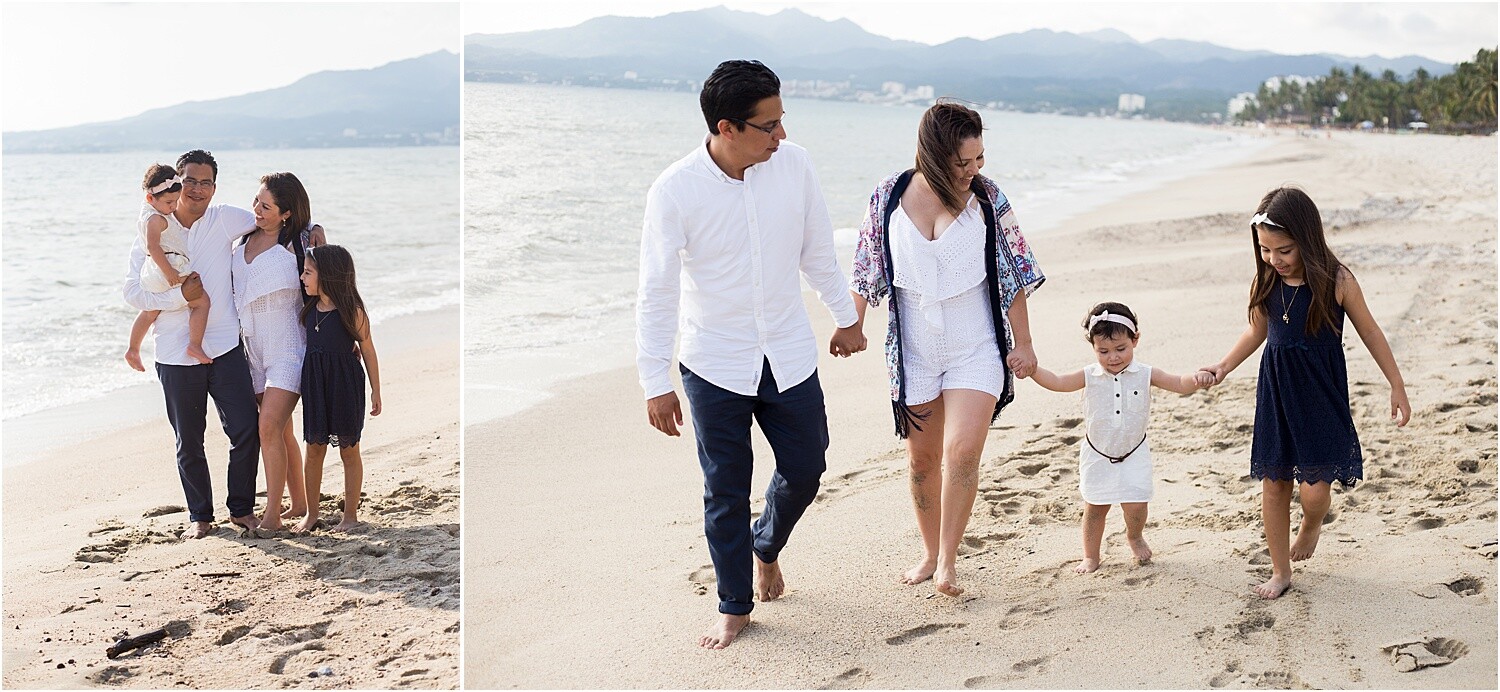
The photo on the left was lifestyle, and the right is posed. Same family, same session, two different styles that add variety to the final images.

While you’re posing, show your client exactly how you want them to pose rather than merely instructing, which can get confusing.

For example, instead of saying “put your left hand on your right elbow,” you would instead go over to where they are standing and show them how you want them to put the left hand on their right elbow.

This is a quicker way to help your client visually see what you want them to do.

After you’ve posed your client enough, and they seem a little more comfortable in front of the camera, go for the lifestyle approach.

Tell your client to relax and walk around the area. If it’s a family, for example, ask them to walk and talk to each other while telling a funny joke. Make sure to keep your camera at the ready during these times. That way you can achieve photojournalistic style photos that make lifestyle so meaningful.

With children, you can capture them playing with their toys and also get posed photos during the same session.

As you go through the session, keep alternating between posed and lifestyle. You can also pose your clients, a couple, for example, so that they’re facing each other, take a few photos and then ask the couple to say one nice thing about the other.

This is a great way to transition from posed to lifestyle. You will get authentic expressions from the couple because you are putting them in a particular pose then giving them something to do that will seem natural. It’s a perfect mix of the two styles at the same time.

If you’re more comfortable with lifestyle and candid photography styles, don’t be afraid to stop your clients in mid-walk, hug, or whatever they are doing naturally to hold the pose. This is a transition from lifestyle to posed.

Mixing the two styles offers your clients more variety as well as an overall great experience. They will feel more comfortable being in front of the camera because they were allowed to be themselves while you also stopped to make sure to get posed photos as well.

Using both styles will give the session a more fluid flow and also allows your clients to have a good time during the session. This is especially important when photographing children. Letting them play and have a good time while mixing in posed photos will give them a fun experience.

In conclusion

lifestyle-and-posed-photography

Mixing the two styles, lifestyle and posed photography, will add variety to your client’s photos and will also ensure that they have a great experience without feeling stiff or uncomfortable in front of the camera.


The post How to Mix Lifestyle and Posed Photography Styles to Add Variety appeared first on Digital Photography School. It was authored by Jackie Lamas.


Digital Photography School

 
Comments Off on How to Mix Lifestyle and Posed Photography Styles to Add Variety

Posted in Photography


How You Treat Your Subject in Photography Affects Your Photos

27 May

The post How You Treat Your Subject in Photography Affects Your Photos appeared first on Digital Photography School. It was authored by Kevin Landwer-Johan.

A great subject does not necessarily make a great photograph. The way you treat your subject will reflect in your photographs.

© Kevin Landwer-Johan

Don’t be a travel snapshooter. This is advice I frequently give people during our travel photography workshops in Chiang Mai, Thailand. There’s an abundance of interesting subject material here. As is often the case when you are outside your normal environment, it’s easy to think that grabbing a quick photo will suffice.

Returning home with thousands of impulse photos will be a disappointment. If you don’t pay attention to creating an interesting photograph, the results will be lacking. Temples, monks, tuk-tuks and the likes are all interesting but can make rather boring pictures if you don’t treat them well.

How to treat your subject well

I watched this video about renowned Magnum photographer Elliot Erwitt recently. About halfway through he makes an interesting statement saying, “It’s not the subject, it’s how you treat the subject.” Unfortunately, he does not go on to expand this thought, but he certainly provoked curiosity in me.

This idea is one I believe is very important to the development of your photography. The way you treat your subject influences the potential impact your photos will have.

© Kevin Landwer-Johan

Grabbing quick snapshots will typically produce lackluster results. Treating your subject with more attention and intent will compel you to make more interesting photographs.

“Treat” is an intriguing word. Particularly in the context, Erwitt uses it in the video. It can be taken to mean the way you chose to artistically represent your subject. It could also mean the manner with which you:

  • Communicate with them
  • Act or behave towards them
  • Consider or regard them
  • Or, if you give them gifts

Any of these will affect different responses from a living subject.

Artistic treatment in photography

Choices you make will influence the way your photos look and how your subject is represented.

Photographing a beach on a sunny day when it’s full of activity, will look significantly different than on a winter’s afternoon with an overcast sky. Your choice of when you take a photograph is part of how you treat your subject.

Timing when you photograph someone speaking can make them look attractive or not. Those open-mouthed, contorted faces we often see politicians with are used by news editors to portray them negatively. This treatment may seem unkind, but it is certainly intentional.

© Kevin Landwer-Johan

Lighting choice between soft or hard light alters the artistic treatment a subject is given. A wrinkled face will become more exaggerated using hard lighting at certain angles. The choice of a softer, more diffused light will be kinder to your subject.

Composition is without a doubt influential on the way viewers will understand the main subject of any photograph.

You can crop in tight, showing little or no context. This limits any relationship of your subject to its environment.

A looser crop, made with careful intention, can include or exclude elements. This will influence the look and feel of your photographs.

Contrast in color and tone within your photos helps a viewer determine the meaning of a photo. Pastels or soft tones provide a gentleness. High-contrast black and white or color combinations will induce a different look and feel.

Your awareness of these aspects of photography allows you to make intentional use of them.

© Kevin Landwer-Johan

Relational treatment of your subjects

This has more influence on subjects that can respond to you. The way you talk to a rock or flower will not have so much impact on the photos you make of it. Talking to your pet dog or goldfish will also elicit different responses.

Doggie treats given during pet photo sessions can provide huge assistance to a photographer. Offering more food to your goldfish will not likely arouse a more favorable response from it.

Speak politely to the person you want to photograph you’ll be more likely to receive a positive response. If you approach a stranger with uncertainty their response may not be so conducive to you getting a good portrait of them.

Treating someone with a smile and an air of respect will provide you a more positive opportunity. Most people will respond well. Projecting a positive attitude during a portrait session will enable you to make more attractive photos. Your subjects will be more relaxed and assured.

© Kevin Landwer-Johan

Even when you’re traveling and may not be able to verbally communicate, a smile often does the trick. Approach someone with an open, happy look on your face with your camera in hand. This usually communicates your intention clearly enough. Add in a few appropriate hand gestures and watch for the person’s response.

Take time to observe your subject

When you’re not sure how to treat your subject, step back and observe for a while if you can. Don’t rush to capture your photo.

Look at the environment and how your subject relates to it. Is it a prominent or a minor part of the location? Does it interact significantly with the surroundings? Can you find an angle that will suit the intention you have for your photo?

© Kevin Landwer-Johan

The more you understand about your subject, the better photos you will make of it. Understanding can affect the way you relate to any chosen subject.

If you see someone who is shy and reserved, treat them in a similar manner. They’re more likely to appreciate it than if you boldly get in their face with your camera.

A more extroverted person may require a different treatment. Be bolder. Be more effusive in your approach. Mirror back to them how you are experiencing them.

Take some time to research. Engaging in longer-term projects, or even before heading away on holiday to somewhere new. Find out as much as you can about what you want to photograph.

Do you want to photograph monks in Thailand? Is it okay to do so politely? Is this culturally fitting? Can you safely photograph beggars in San Francisco? Is street photography including people welcome in Paris? Knowing the answers to pertinent questions before you set out will enable you to treat your subject appropriately.

© Kevin Landwer-Johan

Conclusion

The right treatment of your subject will result in more compelling photographs.

Think about both aspects of treating your subjects. Considering the methods you use with your camera is one aspect. Communicating well with living subjects will influence the response you receive from them.

Take your time to practice. Apply yourself well. You will see an improvement in your photographs.


The post How You Treat Your Subject in Photography Affects Your Photos appeared first on Digital Photography School. It was authored by Kevin Landwer-Johan.


Digital Photography School

 
Comments Off on How You Treat Your Subject in Photography Affects Your Photos

Posted in Photography


Mastering Photography: Nature vs. Nurture

26 May

I have three kids and they are all so different, one is quite shy, one is super confident and the third never stops talking – they have all been raised the same so I often wonder about ‘nature or nurture’.

I was recently in the Faroe Islands and had planned to make a video on the rules of photography but ended up discussing the nature vs. nurture argument for photography, which actually produced a more compelling result.

Evening rays on one of the many amazing fjords in the Faroe Islands.

Ever since I can remember, I have been fascinated by photos and rich visual communication. At school I had difficulties with English, reading and writing and it was only when I was in my twenties that I found out I was dyslexic. Although reading was a struggle, I loved to look at photo books and would spend hours studying them, pondering over the photos, and trying to work out why they looked so good.

I took up photography at the age of 13 and found it to be a great way to express myself – I was much more comfortable producing a photograph that told a story, rather than the written word. Even though I enjoyed being creative through photography, I didn’t have a natural talent for it and my early results left a lot to be desired!

Jump forward over 30 years and I now consider myself to be a competent landscape photographer. Practice doesn’t make perfect, and there is always something new to learn; but I feel that I can usually find a good composition when I go out shooting; and I now have a portfolio of photographs of which I am proud and which people are willing to buy so that they too can enjoy the images.

Spring – Printed on Fotospeed NST bright white paper.

So if I didn’t have a natural talent for photography, have I managed to nurture what little artistic talent I did have to make myself into a better photographer?

Ansel Adams once said, “There are no rules for good photographs. There are just good photographs.”

Although I agree with the sentiment behind this quote, I have actually spent the last few years building my YouTube channel and trying to explain to people what makes a good photo and how they can improve their photography. There are certain rules, or maybe best to call them guidelines, that apply to landscape photography that usually help us to achieve better results.

Ansel Adams once said, “There are no rules for good photographs. There are just good photographs”.

Photography isn’t quite like the art of drawing a cartoon or painting a picture. It is a combination of technical knowhow and artistic interpretation. If you just have one part of the puzzle, you aren’t likely to get the best results. Don’t get me wrong, give an accomplished artist a camera phone and they would likely produce something superior to a less artistic person. But a non-artist can also produce a great photo.

My wife, Ann is a prime example – she can’t even draw a straight line but she is actually great at finding unique and interesting compositions for photographs (probably a result of spending hours out on location with me and listening to me rambling on about composition and getting excited about great light).

When it comes down to it, there are four elements that you need to master in photography and these are subject, light, composition and timing which are discussed in my video on the four elements of landscape photography. It is really only the composition element that is the artistic one – how you go about placing all the elements in the scene in the most pleasing way; or perhaps more importantly, what do you leave out?

Passing Storm, Faroe Islands.

So, can you learn this? Is there a set of rules for you to follow to improve your composition? Is there a limit to how good you can get by learning such rules and can you become more artistic?

Take this image for example – can you say what makes it a good photo or what can be improved?

Essence of the Faroes.

Try it with a friend. Critically consider ten photos that aren’t yours and explain to each other why they are good or bad, what you like and what you think could be improved – you’ll be surprised how useful an exercise this is.

In this video I consider a number of photographs and explain why I think one of the keys to becoming a great photographer is to study accomplished images and try to work out what makes them so good.

The first shot I took: great composition, great subject, but poor light and poor timing. Ten minutes later: great composition, great subject, great light, great timing.

Even if you have all the elements in the same place, you also need to have patience (a quality that I wasn’t born with, but which I have learned to master) in order to wait for the best conditions and get the timing right. Light can make an enormous difference to a shot. Take a look at the two images above. The only difference is time. The light has changed significantly and the photographer moved, but it was just a case of waiting for the right moment.

I explore ‘nature or nurture’ a bit more in the video below, where I also discuss light and simplicity in more detail. What are your thoughts on nature vs. nurture? Let me know in the comments!

Articles: Digital Photography Review (dpreview.com)

 
Comments Off on Mastering Photography: Nature vs. Nurture

Posted in Uncategorized


7 Photography Exercises to Take Your Nature Photos to the Next Level

26 May

The post 7 Photography Exercises to Take Your Nature Photos to the Next Level appeared first on Digital Photography School. It was authored by Jaymes Dempsey.

Do you want to improve your nature photography skills? Do you want to take stunning nature photos, consistently?

Don’t worry.

In this article, you’ll discover 7 photography exercises all designed to get you capturing unbelievable nature images.

(Plus, the exercises are a lot of fun!)

So, if you want to improve your nature photography…

…keep reading.

1. Shoot a single nature subject from 9 different angles

Here’s your first nature photography exercise (and my favorite):

Choose just one nature photography subject.

And shoot it from at least nine different angles.

This will force you to stretch the boundaries of your creativity. It will force you to start looking at your subjects in many different ways.

The first five angles might be easy enough. But the last four will be a struggle – as it should be!

A few excellent angles to try:

  • Shoot on a level with your subject
  • Shoot from directly above your subject (if you can)
  • Get below your subject and shoot upward

Then, once you’ve finished the exercise, pull up the photos on your computer. Take note of the different angles and how they gave your subject slightly different looks.

And next time you’re doing photography, use those angles!

2. Shoot a subject you normally avoid

This exercise is all about getting you out of your comfort zone.

Because if you don’t get out of your comfort zone, you’ll never grow as a photographer.

So here’s what you do:

Think about the subjects that you normally shoot.

And then…

Pick a subject that’s radically different. And shoot that subject, instead.

If you normally photograph birds, shoot flowers for a day.

If you normally photograph landscapes, shoot wildlife.

Just pick something that you don’t normally like shooting.

If you want to make this exercise extra useful, then don’t just shoot another subject for a single outing. Instead, do it for a week (or even a month).

You’d be amazed by the tricks you pick up from learning another area of photography.

3. Bring just one lens into the field

Here’s the thing:

When photographers go out for a photoshoot…

…they tend to take multiple lenses (and even multiple cameras).

And while this will give you a lot of flexibility, it won’t force you to think outside the box.

But I want you to think outside the box. I want you to think in new ways.

So the next time you go out to shoot, leave all your normal lenses behind.

Instead, bring just one lens.

And (if you’re feeling adventurous) make sure it’s a lens that you don’t use very often.

This will force you to take nature photos that you would’ve never even considered.

4. Shoot a Scene With Four Types of Light

Nature photography is all about the light.

Which means that, as a nature photographer, you must learn to master the light.

This exercise is designed to help you do that.

You start by picking a scene.

Then you photograph that scene with four types of light:

  • Cloudy light
  • Midday light
  • Sunrise/Sunset light
  • Shade

This will undoubtedly involve coming back several days in a row.

But it’s worth it.

Because once you’re done, you should look at all the photos you took.

And note how the different types of light gives you different types of nature photos!

5. Take both still shots and action shots of your subject

Oftentimes, we get in the habit of shooting the same type of subject, over and over again.

I’ve already given you one way of avoiding this problem.

But another way…

…is to keep shooting that same subject. But shoot it in a different way.

Specifically, try to take a combination of shots:

Still shots.

And action shots.

For those of you who shoot birds or wildlife, this shouldn’t be too difficult.

But for flower and landscape photographers?

This will be tough.

If you generally photograph still subjects, you may have to get creative. Try to take some intentional camera movement photos. Or see if you can get some sort of action to happen in the frame (e.g., flowers blowing in the wind, waves crashing on the beach).

And that’s it! This will force you out of your comfort zone. And get you taking some fresh photos!

6. Edit your favorite nature photo in 5 different ways

One thing that you need to know:

Post-processing is a significant part of capturing stunning nature photos.

Even small adjustments go a long way.

So for this exercise, you should start thinking about different post-processing options. And edit your favorite nature photo in five distinct ways.

You should experiment with edits in Lightroom, Photoshop, or another high-quality editing program. See what happens when you increase the saturation. See what happens when you drop the contrast.

And try to do some new edits. Things that you haven’t done before.

For instance, try some yellow/blue split toning. And try playing with the HSL options.

You’ll be amazed by what you can do!

7. Take a nature photo every single day for a month

This last exercise is a classic – but that doesn’t mean it’s any less useful!

One of the absolute best ways of improving your nature photography…

…is to photograph constantly.

Because practice really does make perfect.

And if you take a nature photo every day, you’ll find that your mind starts to open up. You’ll start to see photography opportunities that you didn’t even know were there.

Your skills will increase rapidly.

And you’ll start to take stunning nature photos, consistently.

Nature photography exercises: next steps

Now you know 7 great exercises – all designed to improve your photography skills, fast.

You don’t have to do them all at once. But try them out whenever you can.

That way, you’ll become better, faster.

You’ll soon be taking nature photos like a pro!

Feel free to share some of the photos you take with the dPS community in the comments below.


The post 7 Photography Exercises to Take Your Nature Photos to the Next Level appeared first on Digital Photography School. It was authored by Jaymes Dempsey.


Digital Photography School

 
Comments Off on 7 Photography Exercises to Take Your Nature Photos to the Next Level

Posted in Photography


How to Achieve an Airy, Light and Bright Look in Photography

25 May

The post How to Achieve an Airy, Light and Bright Look in Photography appeared first on Digital Photography School. It was authored by Karthika Gupta.

The beauty of photography is that there really is no right or wrong way to take pictures (excluding any technical camera issues). It is such a subjective medium – what someone may consider a bad photograph, others might consider artistic. There are many different styles of photography. Dark and moody versus light and bright, or HDR and oversaturated versus desaturated and selective coloring. And there’s many more. But no matter your imaging preference, there is bound to be a market for that particular style of photography.

Karthika Gupta CulturallyOurs Light Bright Airy Photography Style

Having said that, I gravitate toward images that have a clean, natural look. My aesthetic style lends itself toward light, soft pastels, and bright images that have a sense of freshness. I find that I am my most creative self when I put myself in situations that give me the ability to photograph in this way.

Give me a dark room, or a scene with lots of bold, warm colors and tons of contrast, and I feel mentally bogged down. I almost start to feel claustrophobic with all that color and contrast. Now perhaps this might seem a little silly, but that is my personal preference. It also goes back to my earlier comment about photography being a very subjective art form.

I get asked quite frequently about how I achieve this “light, pastel, and airy” look in my photographs. It’s not that hard. It boils down to a few simple tips. These tips will help you to better visualize your intended photograph, and thus help you to achieve the light, pastel look.

1. Lighting

I can’t stress enough how important the lighting is when using it to achieve a particular look for your photography. Not all lighting is equal. And I have to say that there is no such thing as bad light. Light is just different at different times of the day. Sometimes the light is perfect – that warm, soft glow that translates beautifully in pictures. Other times, the lighting is harsh and strong. I wouldn’t say that type of lighting is always bad; it is just not the same every time.

Once you train your eye to read the different types of light, and what the light can do to your images, you will be able to analyze your imagery better. You’ll also get photos closer to the style you like without wasting too much time in post-processing. No amount of editing can really fix an image taken in poor lighting.

a. Golden Hour light

Karthika Gupta CulturallyOurs Light Bright Airy Photography Style

For outdoor photography, if you want those warm, creamy tones, then schedule your photo sessions as close to sunset as possible. That last hour, the Golden Hour, is when you will get some of the best light. This is because as the sun sets closer to the horizon, the range of light is broad and spreads more evenly.

This type of light also lends itself well to the light, bright, and airy look that so many of us love in photographs. One thing to be aware of when you are using the Golden Hour lighting (a.k.a. shooting around sunset), make sure that you don’t photograph directly into the setting sun. This leads to a lot of sun flare entering your frame. It can also make the shot appear muddy and blown out to the point of not being able to see the subjects clearly, as shown in this image.

When all else fails, a little bit of editing in post-production can fix it.

b. Soft morning light

Soft morning light is another favorite lighting scheme of mine because the light is subtle and soft. It tends to be more even-toned than when the sun is high up in the sky.

Karthika Gupta CulturallyOurs Light Bright Airy Photography Style

c. Harsh midday sunlight

High noon lighting can be thought of as a spotlight directly over your head. This overhead lighting tends to create unflattering shadows. These shadows result from the angles and protrusions on your face, like your nose and eyebrows. If you wait until the sun hits the horizon, you will be pleasantly surprised to see how soft the tones are and how beautiful and even the lighting is. At this time of day, you can open up your aperture to smooth out the background.

Sometimes when you are traveling or taking landscape shots, you cannot always control the time of travel. Here, you must make the best of the lighting situation and photograph scenes that will lend themselves to the light and airy look when tweaked in post-processing.

Karthika Gupta CulturallyOurs Light Bright Airy Photography Style

I added a bit of contrast and brought down the blues in post-production just to keep with my style. I have nothing against blue skies but maybe not so much blue in my photos!

d. Overcast light/diffused light

This type of light is also great for images where you want an even tone. The clouds act as a natural diffuser and help to balance out the light falling from the sun. However, this light does tend to be a little flat. But the good news here is, when there is cloud cover or an overcast sky, you can shoot at any time during the day without worrying about harsh, strong shadows.

Karthika Gupta CulturallyOurs Light Bright Airy Photography Style

This day in the marina was overcast with a lot of clouds. Considering most of the boats were also white, I had to blow out the sky a bit and use the accessories (like the yellow kayak) to add a pop of color.

e. Backlighting/open shade lighting

The bright, even lighting of open shade plays well into the light and airy style of photography. However, playing with backlit sunlight is another way to get that bright, fresh look. Light and airy photographers shoot backlight about 80% of the time.

This means the sun is somewhere behind the subject. This is the tricky part. It’s more than just having the sun behind your subject. If you only do this, you’ll find that your images have a lot of sun flare – to the point of haze – and your camera autofocus may have trouble grabbing focus, resulting in out-of-focus shots.

The trick here is to block the sun from actually hitting your lens. My favorite way to do this is the use of trees. The branches and leaves act as a type of diffuser that filters the sun’s light rays from hitting your lens.

What you will get is called rim light from the rear of your subject. In front of your subject, you will achieve an even unshadowed lighting scheme. You might have to look for a natural reflector to bounce light back onto your subject’s face. Sometimes it is as simple as wearing something white so you can act as a natural reflector.

Yup, being a photographer also means being aware of fashion and color trends!

Another trick is to overexpose the skin tones by at least half a stop. Your highlights may blow out a little, but your subjects’ skin tones will look great. Of course, if you have a very interesting sky that you want to retain, you may not be able to overexpose your image. Most light and airy style photographers are okay with blowing out the details in the sky because this slight overexposure lends itself to a brighter image that is part of the light and airy look. If the background is important, you must consider that in your exposure calculations.

Karthika Gupta CulturallyOurs Light Bright Airy Photography Style

90% of my shots have the sky blown out and I am okay with that. My style is consistent with what my personal preference is with my images. To each their own.

2. Scenery or background

Personally, I feel like scenery or background is as important as the lighting for a great image – no matter what the style. Gorgeous mountainous backdrops with tall pine trees will look more majestic than a messy backyard with overgrown grass and a swing set in the shot.

But don’t let a simple background deter you from taking a shot.

Every place has hidden treasures, and it is up to you as the photographer to seek them out. I have been known to clear out a client’s home if I feel some furniture or clutter is getting in the way of the shot.

For outdoors and travel photos, I wait patiently for crowds to clear if I feel all the other elements are there to make a great shot. After you’ve established where the good lighting falls, you can then search for the pretty scenery.

For light and airy photos, look for backgrounds that are white or have pastel colors. White or light colored backgrounds add even more “airiness” to the image. It is hard to achieve a light, bright look if you have a dark or black wall in the background.

Remember that both the lighting and scenery combined make for a natural recipe to that “light and airy look” that you want to achieve in your image.

When in doubt, choose a clean neutral-colored background that can make the subject pop even more by eliminating any distractions.

Karthika Gupta CulturallyOurs Light Bright Airy Photography Style

3. Details

Often, as photographers, we tend to only focus on the lighting, location, and subject. We feel that once we have these three elements, all else will magically fall into place.

However, remember this; every single detail that is a part of the frame helps to make or break the image.

If you have the perfect soft light, perfect background, and perfect subject, but they happened to show up wearing a graphic t-shirt with neon shoes, then that is not going to get you that light and airy image! In fact, details like the clothing, accessories, and props play a huge part in the overall look and feel of an image.

For my portrait and editorial work, I am not afraid to send clothing and prop choices to my clients. It is there for them to use if they need it. This gives them an idea of “the look” that I am going for, and it helps me to get the images that I want for my portfolio based upon my style and my brand aesthetics. Props don’t have to be elaborate or expensive. Sometimes it is the little things like a simple off-white napkin that can do the trick.

Karthika Gupta CulturallyOurs Light Bright Airy Photography Style

Clothing choices and color preference is given but my clients have the freedom to choose what they want to wear at the end of the day!

4. Camera settings

If you are shooting digital and have a camera that allows you to photograph in RAW format, then definitely do so. Images created in RAW format retain more of the original details than a JPEG file format. The RAW file format also provides the most leeway for making edits to the image in post- processing when looking to achieve a specific “look.”

Avoid extreme bright spots in your photograph by using the histogram feature on your camera. Digital images don’t handle the result of huge overexposure very well, so you’ll want to watch for that.

Karthika Gupta CulturallyOurs Light Bright Airy Photography Style

Having said that, I tend to overexpose my images by about 1/2 a stop about 95% of the time. I find that editing an underexposed image to the “light and airy look” is more difficult than adjusting a slightly overexposed image. I am less concerned about blown-out highlights than I am about dense shadows.

5. Consistency in photography and editing styles

Consistency in photography and editing styles is huge, and not something that too many photographers pay attention to. Photographic style develops over time. It takes a lot of practice, continuous shooting, and consistent editing procedure to make our pictures look a certain way and convey certain emotions. This is my 9th year in business, and my style has taken time to develop. After a lot of trial and error, I know what I like and how I want my images to look and feel – even if it is just for me!

Some people jump on the latest editing bandwagon and are all over the place in terms of trying everything out there. Tempting as it may be, I have found that it just leads to more frustration and anxiety when finding one’s style. When you are just starting out, go ahead and try out all the different styles of photography. See what you like and dislike. Once you have narrowed down your personal style, stick to it. That way, it becomes second nature and helps you develop a consistent and strong portfolio.


The post How to Achieve an Airy, Light and Bright Look in Photography appeared first on Digital Photography School. It was authored by Karthika Gupta.


Digital Photography School

 
Comments Off on How to Achieve an Airy, Light and Bright Look in Photography

Posted in Photography