RSS
 

Posts Tagged ‘Photography’

How to Use an Art Gallery Visit to Inspire Your Photography

17 Nov

The post How to Use an Art Gallery Visit to Inspire Your Photography appeared first on Digital Photography School. It was authored by Charlie Moss.

art-gallery-visit-inspire-photography

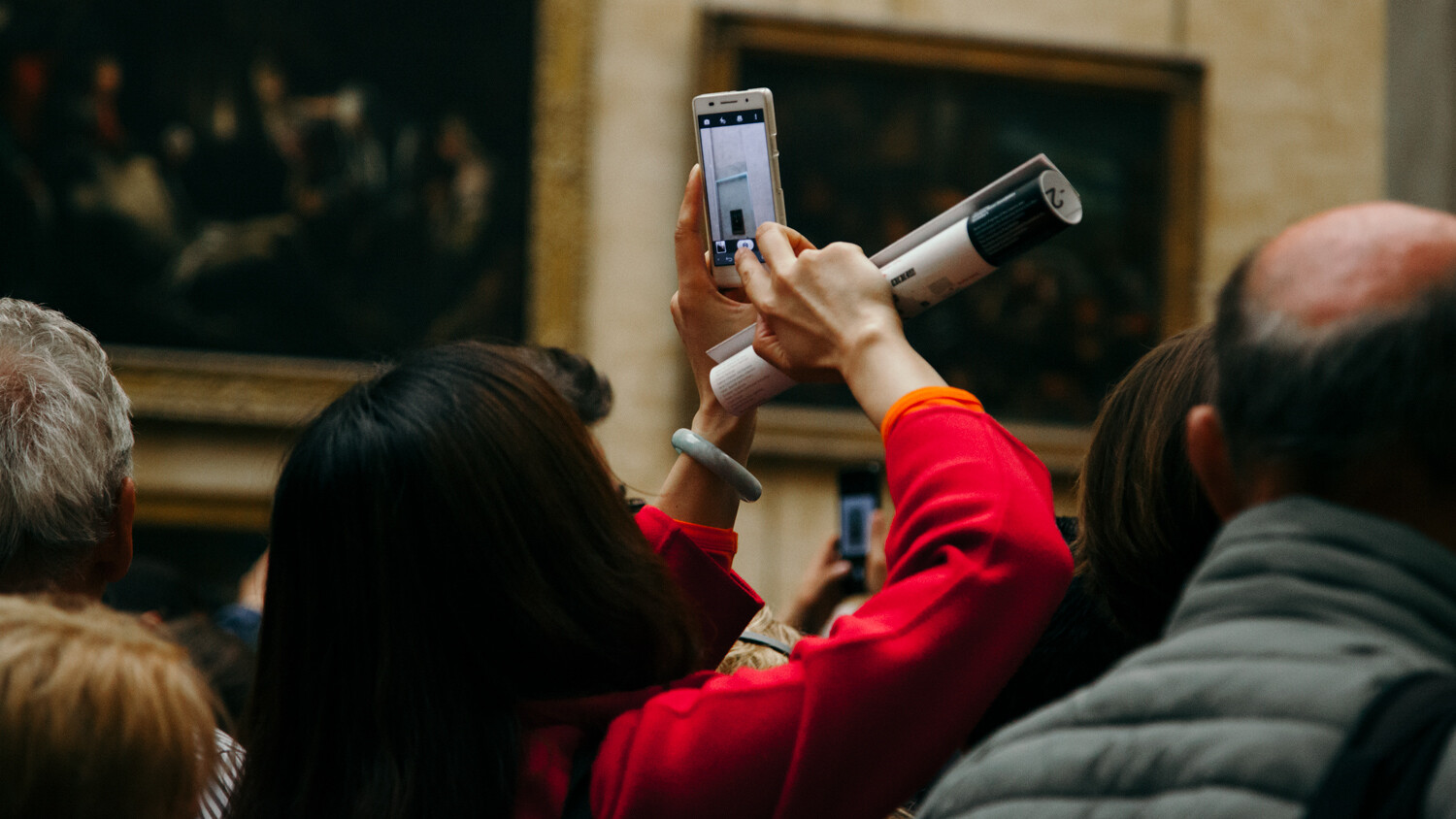
We’ve almost all done it. We’ve gone to an art gallery to look for inspiration for our photographic work and ended up just snapping some pictures of paintings we like on our phones for later reference.
How to Use an Art Gallery Visit to Inspire Your Photography

While that is one way to approach the task of finding inspiration for photography in art galleries, there are other ways that you might find more success.

In this article, I’m going to explore some different ways that you can use an art gallery to find inspiration for your photography. And they’ll all result in a more original result than if you just photograph the actual work of art itself.

Visiting a gallery

When you visit an art gallery, make sure you allow yourself enough time. Ideally, set aside a whole morning or afternoon for a larger gallery.

When going to a new gallery that I’ve never been to before, I love to take a trip around the whole thing. Then I go back and visit rooms or artworks that I loved to see them in more detail. At very large galleries or museums, you might want to look on the floor plan ahead of time and identify a smaller section to see on that visit.

How to Use an Art Gallery Visit to Inspire Your Photography

After you’ve viewed works of art for an hour or so, take time to visit the cafe and relax a bit. This will give you time to think about what you’ve enjoyed so far. Use this time to make some notes if you want to.

Of course, it’s not possible for everyone to visit a gallery, or to do so regularly. Instead, perhaps ‘visit’ the online archive of a museum or gallery on their website. Some museums and galleries offer themed collections that you can browse. Others have lists of the artwork in each room so that you can ‘tour’ it virtually!

Take a sketchbook

So many photographers don’t use a sketchbook, but I think they’re vital to inspiration-gathering. You don’t have to be good at drawing to use a sketchbook. My sketching abilities extend to a fraction more than stick figures. But it isn’t your drawing ability that counts; your sketchbook will just be a place to record ideas for your own reference.

art-gallery-visit-inspire-photography

As you make your way around the different rooms of the art gallery, stop in front of any work that catches your eye. Ask yourself why that piece of art caught your attention. Perhaps it was the:

  • pose
  • colors
  • concept
  • composition

This approach for finding inspiration is applicable to all types of photography. You could be interested in still life, landscapes, architecture, or any other kinds of photography!

Record what you see

Take out your sketchbook and record those thoughts. Draw a sketch of the pose or the composition. It doesn’t have to be an elaborate or detailed sketch. Just a thumbnail to serve as an aide-memoire in the future when you’re planning shoots.

If it was the concept or the colors that caught your eye then make a note of them. Write down the things that you particularly liked about it. Perhaps pink roses against a blue background seemed particular striking for you. Or maybe a bright blue gown gave you ideas for something in the future.

Image: These six thumbnail sketches were done at the Tate Modern in London to record down quick idea...

These six thumbnail sketches were done at the Tate Modern in London to record down quick ideas of pose and composition.

It might not even be important to you to record the name of the artwork or the artist. If it’s just a pose you like, then who cares who originally painted the picture?

This approach is nothing new in the art world. The eighteenth-century British painter, Sir Joshua Reynolds, allegedly had a book where he would sketch down poses that other painters had used. When you commissioned him to paint your portrait, you could pick your pose from the book!

When you come to create new photographs, go back and look at your sketchbook. Pull together your ideas from these notes, and you’ll soon find yourself with some interesting inspiration for your photography that doesn’t rely heavily on a single source.

Taking inspiration from single works of art

If there’s a particular artwork that you love then start to analyze that piece and see what it really is that you love about it. You might surprise yourself.

art-gallery-visit-inspire-photography

Researching Van Gogh’s paintings of sunflowers revealed themes of hope and gratitude as well as life and death. I created my own interpretation which I wrote about here.

I always start with a blank page in my notebook, where I sketch out the pose or composition of the work of art. Then I identify different elements. Perhaps the colors that seem particularly strong, the mood of the image, or the concept. There might be a key prop or costume piece that I like, and I’ll note that down too.

Try doing the same and then use that information, rather than the original artwork, to shape the photoshoot you have planned. You’ll almost certainly find that your ideas take on a life of their own that is quite different from the original piece of inspiration.

Taking inspiration from a whole exhibition

It can be an interesting creative exercise to take inspiration from a whole exhibition rather than a single artwork. And it often results in the creation of some very different photographs that don’t resemble the exhibition at all!

See the exhibition and, again, take out your notebook or sketchbook. Write down the themes of the exhibition that you can identify. Look around and see if you can find any compositions, styles, or techniques that reoccur in the work of the artist and make sketches or notes about those.

Image: This image was created on a visit to Monet’s home in Giverny in France where he painted...

This image was created on a visit to Monet’s home in Giverny in France where he painted. The day before I had seen the incredible display of his impressionist water lilies paintings at the Musée de l’Orangerie in Paris.

Don’t be afraid to put your notes to one side for a while. I often wait for weeks or even months before creating an image inspired by the art I have seen.

Sometimes it can be good to wait a while – you’ll be using the concepts and ideas as a starting point for your own work rather than just copying what you have seen. A break can help you to interpret the themes of the exhibition in your own way.

Venture outside your comfort zone

Be bold and try something new! Experiment with taking inspiration from different genres of art. Use the process of creating new photographs to motivate you to visit the kinds of galleries and exhibitions that you might not have visited before.

But most of all, try and interpret the artworks and exhibitions that you see into something original. Focus on bringing a part of yourself to the work that you create, no matter where your inspiration comes from, and you’ll be well on the path to originality.

How to Use an Art Gallery Visit to Inspire Your Photography

And while you’re there, don’t forget to take some photographs of the gallery itself and the people around you! There’s no reason why you can’t be finding inspiration for future image-making while also practicing your street photography.

The post How to Use an Art Gallery Visit to Inspire Your Photography appeared first on Digital Photography School. It was authored by Charlie Moss.


Digital Photography School

 
Comments Off on How to Use an Art Gallery Visit to Inspire Your Photography

Posted in Photography


A Quick Guide to Amazing Bird Photography Compositions

16 Nov

The post A Quick Guide to Amazing Bird Photography Compositions appeared first on Digital Photography School. It was authored by Jaymes Dempsey.

amazing-bird-photography-compositions

Do you want to capture amazing photos of birds? If so, you have to master bird photography compositions.

Composition refers to the arrangement of elements within the photo. And it’s often the difference between a creative, compelling image, and an image that just falls flat.

In this article, I’m going to share with you everything you need to know about bird photography composition. I’m going to give you several tips that ensure you capture beautiful bird photography compositions, without fail.

Sound good?

Let’s dive right in.

amazing-bird-photography-compositions

The composition basics: Capturing a gorgeous bird photo

When you take a bird photo, everything in the frame matters.

The bird. The position of the bird. The position of the bird’s head. The background. Any elements behind the bird. Any elements in front of the bird.

It’s all important.

Because the key to a gorgeous bird photography compositions is keeping the shot focused on your main subject.

amazing-bird-photography-compositions

You want to make sure that the bird stands out in the frame. You want to make sure everything else in the photo emphasizes and enhances the bird.

So how do you do that?

A few simple ways, starting with:

Simplify the entire composition to make the bird stand out

If your composition is chaotic, then the viewer is going to get lost.

And that’s absolutely not what you want.

Instead, you should aim to simplify the composition as much as possible. The best compositions tend to include a bird and a background. That’s it.

A Quick Guide to Amazing Bird Photography Compositions

While it’s possible to create beautiful shots by including additional birds or interesting features (e.g., shells, flowers), I recommend avoiding that as much as possible. These mess up compositions more often than they enhance them.

Also, in the interest of simplicity: If there’s anything in the frame that’s distracting, get rid of it. So make sure there are no branches behind the bird. Make sure there’s nothing in the background that dominates the frame or draws the eye.

That’s how you’ll keep your bird photography compositions beautiful.

And speaking of backgrounds:

Aim for a uniform, simple background that makes the bird pop

If you want a beautiful bird photography compositions, then you need a beautiful background.

What does this involve?

First, the best bird photography backgrounds are simple. They’re also uniform.

Like this:

A Quick Guide to Amazing Bird Photography Compositions

Notice how the background is a nice uniform color.

It keeps the attention on the bird. It doesn’t distract.

To create a background like this, you want to start by ensuring a large separation between the bird and the background. One trick is to get down low, on the bird’s level; this will cause the ground behind the bird to fall away, creating a more distant background.

You should also make sure you use a decently wide aperture, such as f/5.6 or f/6.3 (the particulars depend on the size of your bird, because you don’t want to accidentally make parts of the bird soft!).

Finally, you should ensure that the background doesn’t include colorful elements that catch the eye. Before you take a shot, look behind your bird, and ask yourself: Will anything in the background dominate the frame? Will anything pull the viewer away from the bird?

If the answer is “Yes,” then you should consider moving slightly to the left or right so that you’re no longer stuck with a distracting background.

Use the rule of thirds to position the bird’s eye

Now that you know how to capture beautiful backgrounds, it’s time to look at your main subject and how to position it.

Generally speaking, you’ll have a single bird in your photos. And you need to position this bird carefully.

You don’t want to put it smack-dab in the middle of the frame. That’s a recipe for a boring, static composition.

Instead, I recommend you place the bird so that its eye falls along a rule of thirds power point.

What is the rule of thirds power points?

They’re simply points that are a third of the way into the frame, both vertically and horizontally.

The eye in this photo, for instance, falls along a power point:

A Quick Guide to Amazing Bird Photography Compositions

It’s a third of the way down, and a third of the way from the left.

Now, the rule of thirds is misnamed; it’s a guideline, not a hard-and-fast rule. But it is a great way to position your bird and will ensure that the shot feels a lot more interesting.

So use the rule of thirds whenever you can to position your bird within the frame.

Point the bird into the frame to add movement

I’ve talked about positioning your main subject using the rule of thirds, but there’s another aspect to positioning that you should always, always consider:

The direction the bird is pointing.

You see, most bird photos have some empty space in the frame.

And when they do…

…you want to point the bird into the empty space, rather than away from it.

amazing-bird-photography-compositions

You see, by making sure the bird is looking into the empty space, it adds a sense of completeness and a sense of motion to the frame. The viewer’s eye follows the birds line of sight, and everything feels satisfying.

Whereas if you point the bird out of the frame, the whole shot feels tense. The viewer wants to know what’s outside the frame, with no resolution in sight.

That’s why bird photographers love to point the bird into the frame. It’s far more satisfying, and can turn the shot into something powerful.

Capture the bird in a creative pose for increased interest

Now, when it comes to bird photography, you can capture birds in a normal standing pose.

And that’ll get you some nice photos.

But sometimes…

This isn’t enough.

If you want to create truly creative bird photography, you need to go beyond the simple standing pose. And capture the bird doing something interesting.

What counts as interesting?

For one, preening birds look really interesting. They appear wonderfully tranquil as they clean their feathers.

A Quick Guide to Amazing Bird Photography Compositions

And birds that are sleeping also give off a sense of peace that I love.

You can also go for action shots: Birds feeding, for instance, can create a lot of interest. You can capture photos of birds that are about to catch food, are currently catching food, or have just caught food. Think of a bird with a huge fish in its mouth.

It’s guaranteed to add interest.

Cool, right?

You can also go for shots of birds fighting or, as is a common bird photography practice, shots of birds flying. Photographing birds in flight can be a challenge, but a really rewarding one.

So whenever you’re able, don’t just take a standard bird photo. Go beyond this.

Make something unique!

A quick guide to amazing bird photography compositions: Conclusion

You should now have a sense of the best ways to capture beautiful bird photography compositions.

And remember:

Getting amazing compositions isn’t hard. You just have to use the tips that I’ve given you, and you’ll be taking stunning photos in no time.

Have other tips for gorgeous bird photography compositions? Share them in the comments!

amazing-bird-photography-compositions

The post A Quick Guide to Amazing Bird Photography Compositions appeared first on Digital Photography School. It was authored by Jaymes Dempsey.


Digital Photography School

 
Comments Off on A Quick Guide to Amazing Bird Photography Compositions

Posted in Photography


Weekly Photography Challenge – Clocks

16 Nov

The post Weekly Photography Challenge – Clocks appeared first on Digital Photography School. It was authored by Caz Nowaczyk.

This week’s photography challenge topic is CLOCKS!

weekly photography challenge – clocks

Anna Marinicheva

Clocks can be a thing of beauty, or they can simply be functional. Whatever form they take, we’d love you to go out and capture their many ‘faces’ in this week’s challenge!

They can be color, or black and white. They can be a small part of a wider composition or you can focus in on their fine details – the decision is yours!

So, check out these inspiring pics by some of the dPS writers, have fun, and I look forward to seeing what you come up with!

weekly photography challenge – clocks

Allef Vinicius

Image: Nick Fewings

Nick Fewings

Image: Joan You

Joan You


Check out some of the articles below that give you tips on this week’s challenge.

Tips for Shooting CLOCKS

6 Ways to Do Architecture Photography That Stands Out

Tips for Different Approaches to Architecture Photography

3 Easy Tips for Photographing Details in a Scene

5 Tips for Developing an Eye for Details in Your Photography

Portraits: Shoot Details and Evoke Imagination

6 Tips for Aiming Low and Going Unnoticed in Street Photography

The Ultimate Guide to Street Photography

10 Non-Technical Ways to Improve Your Street Photography

Simply upload your shot into the comment field (look for the little camera icon in the Disqus comments section) and they’ll get embedded for us all to see or if you’d prefer, upload them to your favorite photo-sharing site and leave the link to them. Show me your best images in this week’s challenge.

Share in the dPS Facebook Group

You can also share your images in the dPS Facebook group as the challenge is posted there each week as well.

If you tag your photos on Flickr, Instagram, Twitter or other sites – tag them as #DPSclocks to help others find them. Linking back to this page might also help others know what you’re doing so that they can share in the fun.

The post Weekly Photography Challenge – Clocks appeared first on Digital Photography School. It was authored by Caz Nowaczyk.


Digital Photography School

 
Comments Off on Weekly Photography Challenge – Clocks

Posted in Photography


These hilarious photos are the winners of the 2019 Comedy Wildlife Photography Awards

15 Nov

2019 The Comedy Wildlife Photography Awards

The winners for the 2019 Comedy Wildlife Photography Contest have been announced, showcasing some of the more humorous wildlife photos from around the globe.

This year, more than 4,000 entries from 68 countries were whittled down to 40 finalists. Of the finalists, Sarah Skinner’s photo titled ‘Grab life by the…..’ took home Overall Winner, as well as the Creatures of the Land Award. The painfully funny image was captured in the plains of Botswana and depicts a little lioness ‘playing’ in the most unfortunate sense of the word.

In response to taking home the Overall Winner prize,, as well as the Creatures of the Land Award, Skinner had the following to say:

‘I am absolutely delighted to be awarded the title as Overall Winner in the Comedy Wildlife Photography Awards 2019. It certainly warms my heart to know that this image will spread some laughter and happiness around the world. I am happy to report that this lioness continues to thrive in the pride, having seen her again in October this year. I can only hope and encourage everyone, as a collective to each do our part in the conservation of all wildlife species so that future generations can enjoy them, in the same way that I have done during my career as a wildlife photographer. Long may lions walk the plains……….’

In addition to Skinner’s winning photograph, we’ve rounded up the winning photographs from each of the categories as well as the Highly Commended Winners and presented them in the following gallery with permission from the Comedy Wildlife Photography Awards.

As funny a the contest may be, the organization also takes a very serious role in conservation, saying ‘is at the heart of our competition.’ To help kickstart conservation efforts, the Comedy Wildlife Photography Awards offers three tips:

SHOP RESPONSIBLY.?

Try to shop locally and avoid buying un-recyclable products and one-use plastics/packaging.

RESTRICT WATER USE AT HOME.?

Ok, this is the thing, each time you flush the loo we send approx. 20?litres?of water down the drain – seriously, it’s crazy. Have shorter showers, water your garden less and stop flushing the loo every single time. This would save billions of litres of fresh water that could support our environment as well as supply homes and food for a global plethora of wildlife.?

BECOME A “WILD INFLUENCER.”?

This is a special person?who?may be not a mega activist, but really, really cares about the environment and wants to do something to help. For more ideas, please go to: www.comedywildlifephoto.com

Overall Winner/Alex Walker’s Serian Creatures on the Land Award Winner

©Sarah Skinner / Comedy Wildlife Photography Awards 2019 — Grab life by the…..

Image description: African Lion, Savuti (Chobe National Park) Botswana

Spectrum Photo Creatures in the Air Award

©Vlado-Pirsa/ Comedy Wildlife Photography Awards 2019 — Family disagreement

Image description: Birds, Croatia

Olympus Creatures Under the Water Award/Affinity Photo People’s Choice Award

©Harry Walker/ Comedy Wildlife Photography Awards 2019 — Oh My!

Image description: Sea Otter, Seward, Alaska

Amazing Internet Portfolio Award

©Elaine Kruer / Comedy Wildlife Photography Awards 2019 — First comes love…then comes marriage

Image description: Cape Squirrels, Kalahari, South Africa

Highly Commended Winner

©Tilakra Nagaraj / Comedy Wildlife Photography Awards 2019 — Warning! Territory marking, follow at your own risk

Image description: White Rhino, Egret, Nairobi National Park, Nairobi, Kenya

Highly Commended Winner

©Corey Seeman / Comedy Wildlife Photography Awards 2019 — Who would like a peanut?

Image description: Fox Squirrel, University of Michigan, Ann Arbor, Michigan, USA

Highly Commended Winner

©Geert Weggen / Comedy Wildlife Photography Awards 2019 — Squirrel Wishes

Image description: Red Squirrel, Sweden

Highly Commended Winner

©Tom Mangelsen / Comedy Wildlife Photography Awards 2019 — Chest Bump

Image description: King Penguin & Antarctic Fur Seal, South Georgia Island

Highly Commended Winner

©Alastair Marsh / Comedy Wildlife Photography Awards 2019 — Waltz Gone Wrong

Image description: Red Fox, Amsterdam, Holland

Highly Commended Winner

©Martina Gebert / Comedy Wildlife Photography Awards 2019 — Dancing Yeah!

Image description: Marmot, Austria

Highly Commended Winner

©Eric Keller / Comedy Wildlife Photography Awards 2019 — Inconspicuous

Image description: King Penguin, South Georgia Island

Highly Commended Winner

©Elmar Weiss / Comedy Wildlife Photography Awards 2019 — Surfing, South Atlantic Style!

Image description: Gentoo Penguin. Bleaker Island, Falkland Islands

Highly Commended Winner

©Roie Galitz / Comedy Wildlife Photography Awards 2019 — Space Man

Image description: Japanese Snow Monkey

Highly Commended Winner

©Txema Garcia Laseca / Comedy Wildlife Photography Awards 2019 — To be or not to be

Image description: Snow Monkey, Japan

Articles: Digital Photography Review (dpreview.com)

 
Comments Off on These hilarious photos are the winners of the 2019 Comedy Wildlife Photography Awards

Posted in Uncategorized


10 Ways to Make a Living from Photography

11 Nov

The post 10 Ways to Make a Living from Photography appeared first on Digital Photography School. It was authored by Kav Dadfar.

10-ways-to-make-a-living-from-photography

It has never been harder to make a living from photography than it is in this day and age. But that doesn’t mean the game is over for you as a photographer. There are still plenty of ways to make money from photography if you are willing to make the effort and have a well-thought-out plan. So here are 10 ways to make a living from photography.

10 Ways to Make a Living from Photography

Portrait photography

Portraits can be a great little money earner for any photographer. There is even more opportunity for those photographers in smaller towns. Yes, there may not be as many potential customers but the competition will also be much smaller. From the initial shoot fee to prints (digital or analog) and frames, there is an opportunity to make additional sales on top of just the portrait shoot. So any portrait photographer has a few potential steady income revenues.

The overheads to start with are also fairly minimal as you can offer location shoots or even set up a small studio in your home to keep you going until you can get a proper space to work.

10-ways-to-make-a-living-from-photography

Event photography

Event photography is another good genre of photography that offers great opportunities for earning money. Events can be anything from birthday parties to trade events or even company events like Christmas parties.

The advantage of this genre of photography is that there is always going to be a demand for it. So if you can get a good reputation, then word of mouth can spread and get you more and more work.

10-ways-to-make-a-living-from-photography

Photojournalism

Similar to other genres of photography, there is always a steady supply of work for a photojournalist. Being a photojournalist is hard work, both physically and, more importantly, emotionally. But it can also be one of the most rewarding genres of photography as it has the power to change the world.

If you are willing to make the sacrifices needed and are good at capturing photos that tell stories, then this genre of photography could be for you.

10 Ways to Make a Living from Photography

Wedding photography

A few years ago, weddings would have been one of the top earners in this list of 10 ways to make a living from photography. But like most genres of photography, things have changed.

Less than a decade ago, an average wedding photographer could command $ 2000 plus per wedding and easily shoot 30-40 weddings a year. Unfortunately, the influx of photographers who undercut each other in price has had a detrimental effect on wedding photography. There are photographers now offering to shoot weddings for a few hundred dollars.

Nevertheless, wedding photography is still a market that has lots of opportunities to make money.

10-ways-to-make-a-living-from-photography

Product and food photography

As long as people are making things to sell or eat, they will need images of their products to help sell them. Product and food photography is a great source of income and a steady stream of work for any photographer.

It can be a little mundane for some, but I actually enjoy the process. I really like that I can shoot at my own pace and control every aspect of the shoot. This is not something anyone who works as an outdoor photographer gets to experience. From local restaurants to design companies, there is an endless amount of work available if you can find it.

10-ways-to-make-a-living-from-photography

Commercial photography

Commercial photography can consist of things like:

  • Shooting lifestyle campaigns or adverts for tourist boards and companies.
  • Photographing hotel rooms and venues.
  • It can consist of both interior and exterior shots with or without people.

I find it works really well combined with my editorial work as I often find myself getting an audience with someone in a position of power in these areas through my various commissions.

10-ways-to-make-a-living-from-photography

Editorial photography

Editorial photography was a great source of revenue for photographers.

This changed with the introduction of digital photography all those years ago, which led to the slow demise of staff photographers. It is cheaper and easier to use stock images than it is to send a photographer out to photograph a feature. The other benefit of using stock photos for an editor is that they can see exactly what images they are purchasing.

There are still higher-end magazines like National Geographic and agencies that will commission a photographer for an editorial feature, but they are few and far between.

10 Ways to Make a Living from Photography

Stock photography

Gone are the good old days of being able to make a living solely from stock photography. But all is not lost.

Assuming you are getting work from one of the other aspects of photography on this list, you will be accumulating a body of images that you can more than likely put with a stock agency. Whilst this won’t make you rich, it could provide a nice additional income. Just make sure to get model release forms where possible, and find the right agency for your style of photography.

10 Ways to Make a Living from Photography

Prints

Selling prints is another good revenue stream, whatever your genre of photography is. Big names aside, most of us photographers are not going to be lucky enough to sell prints for thousands of dollars. But, again, like stock photography, if you have a body of work, you might as well try to earn an income from it.

10 Ways to Make a Living from Photography

Sports photography

Sports photographers will always be in demand as long as our love for the various sporting games continues. If you can get yourself in with a good agency or accreditation and get those awesome shots that are grace the pages of newspapers and websites worldwide the next morning you can make a very good and steady living. To get to that level will take time and a lot of hard work.

But there are also lots of opportunities at the local level of photographing such as school sports days or even local sporting events. These are much easier to get into and can provide a steady income to supplement your other photography work.

10-ways-to-make-a-living-from-photography

10 Ways to Make a Living from Photography: Conclusion

Whilst many photographers specialize in one specific area of photography these days, most photographers have to be willing to offer a few of these services. I shoot a lot of editorial and food photography and some commercial projects. I then use stock and print sales to increase that revenue stream.

Whatever genre of photography you specialize in, it’s important to diversify your work. Not only because of the income but also because you might make contacts that will lead to other jobs within your chosen genre.

Remember to price yourself accordingly and try not to work for free. Always keep in mind that if you don’t respect your work enough to be paid for it, why should someone else?

Do you have any other ways to make a living from photography that you’d like to add to this list? Share with us in the comments!

10 Ways to Make a Living from Photography

The post 10 Ways to Make a Living from Photography appeared first on Digital Photography School. It was authored by Kav Dadfar.


Digital Photography School

 
Comments Off on 10 Ways to Make a Living from Photography

Posted in Photography


11 Great Songs About Photography (includes link to playlist!)

11 Nov

The post 11 Great Songs About Photography (includes link to playlist!) appeared first on Digital Photography School. It was authored by Megan Kennedy.

11-great-songs-about-photography

As a symbol of memory, art, time and technology, the theme of photography has inspired musicians for decades. Need some photography-based tunes to listen to? Here are 11 great songs about photography – or at least, that feature photographic themes.

11-great-songs-about-photography

1. Kodachrome – Paul Simon

As the lead single from Paul Simon’s third studio album There Goes Rhymin’ Simon (1973), Kodachrome is titled after Kodak’s 35mm film format introduced by Eastman Kodak in 1935.

Referring to the characteristics of the Kodak film and its effect on visual culture, Simon sings “they give us those nice bright colors, they give us the greens of summers.”

Interestingly, although the album version of Kodachrome states that “…everything looks worse in black and white,” Simon later went on to perform the song live with the lyrics “…everything looks better in black and white“.

In an interview with Daniel Levitin for Grammy Magazine in 1997, Simon stated, “I can’t remember which way I originally wrote it, better or worse, but I always change it.”

2. Picture This – Blondie

“All I want is a photo in my wallet, a small remembrance of something more solid…”

Blondie’s Picture This touches on the driving force behind a considerable amount of photography – the desire to preserve memory.

Blondie’s first two albums were hits in many parts of the world. However, they still hadn’t garnered much attention in America.

As the band’s first overseas single in 1978, Picture This became Blondie’s breakthrough track in the U.S.

3. This is not a Photograph – Mission of Burma

11 Great Songs About Photography (includes link to playlist!)

Short and to the point, This is Not a Photograph by Mission of Burma is probably a reference to La Trahison des Images (The Treachery of Images) by surrealist René Magritte.

Magritte’s painting, which pairs the image of a pipe with the phrase “Ceci n’est pas une pipe” (this is not a pipe) illustrates the duality of the artistically-rendered subject matter.

In addition, the artwork speaks to the intention and power of the artist.

As the lyrics declare, Mission of Burma’s This is not a Photograph is clearly not a photograph, but it maintains photographic qualities in that it is a marker of a specific moment in time.

4. Camera – R.E.M

Pioneers of alternative rock, R.E.M. is known for hits including Losing My Religion, Everybody Hurts, Man on the Moon and The One I Love.

But before their breakthrough stardom, songs like Camera established the distinctive lyrics and jangly riffs that would mark R.E.M.’s influential approach to music.

Featured on the 1984 album Reckoning, Camera was written about the death of photographer friend Carol Levy.

The lyrics “will you be remembered? Will she be remembered?” Refers to memory, and perhaps the power of the camera to still time.

R.E.M. also has a track titled Photograph – a collaboration with Natalie Merchant.

The little gem speculates on the story of a photograph found “In stacks between the old joist walls/In a place where time is lost“.

5. Swap Meet – Nirvana

11 Great Songs About Photography (includes link to playlist!)

Forming in 1987, American grunge band Nirvana rose to fame with the success of Smells Like Teen Spirit, About a Girl and Come as You Are.  

Featured on their 1989 album Bleach, Swap Meet paints a moody picture of a couple that “make a living off of arts and crafts“.

The song’s chorus illustrates the entanglement of keeping cigarettes (addiction), photographs (memory) and bitterness close to the heart.

6. Distant Camera – Neil Young

Released in 2000, Silver & Gold is the 23rd studio album by Neil Young.

For a Reprise Records promotional piece, Young wrote a comment about each song on the album.

For Distant Camera, Young wrote “there was one thing I let go on this album. It’s on this song and it still bothers me. There was a misplaced beat and nobody liked it but me and I wanted to leave it in because that’s just the way it had happened originally. But I took it out and to this day, whenever I hear this song I think about that kick drum. And I probably always will. That’s just the way my mind works.”

Despite Young’s dissatisfaction, Distant Camera is a touching song about love, change, memory and time.

7. Kamera – Wilco

11-great-songs-about-photography

Featured on the 2001 album Yankee Hotel Foxtrot, Kamera is a song by Chicago-based band Wilco.

In the lyrics, the subject of the song appears to view the camera as a tool to remind them of “which lies I have been hiding, which echoes belong“.

The camera is presented as a revealer of truths, a property that has been explored extensively over the history of photography.

8. Seventeen – Ladytron

Seventeen features on Ladytron’s 2002 album Light & Magic.

The song itself is made up of a single verse repeated throughout the song;

“They only want you when you’re seventeen/ when you’re 21, you’re no fun/ they take a Polaroid and let you go/ say they’ll let you know, so come on”.

Paired with a robotic musical score and voice modulators, Seventeen could well be about the exploitative, youth-obsessed culture of the entertainment and fashion business.

“They take a Polaroid and let you go” indicates the process undertaken by industry selectors, but it could also refer to a part of a person’s psyche being robbed by the industry itself.

9. Paparazzi – Lady Gaga

11 Great Songs About Photography (includes link to playlist!)

In 2008 Lady Gaga dropped her debut studio album The Fame.

Released as the album’s fifth and final single, Paparazzi reached top-ten in music charts across the globe.

On the song, Lady Gaga has said “…there are a few different interpretations…It’s a love song for the cameras, but it’s also a love song about fame or love — can you have both, or can you only have one?”

Paparazzi alludes to the camera as a tool that drives the trajectory of fame.

10. Itchin’ on a Photograph – Grouplove

American alternative rock band Grouplove, formed in 2009 and released their debut album Never Trust a Happy Song in September 2011.

As the third single off the album, Itchin’ on a Photograph reached number 43 on Australian national radio station Triple J’s Hottest 100.

The song also reached number 10 in 2012 on Billboard’s Alternative Songs and number 30 on Billboard’s Hot Rock Songs.

Itchin’ on a Photograph delves into the emotional and physical experience of dwelling on the past.

Building on a central theme of memory, the photograph itself represents a source of discomfort, but also a stepping stone from which the subject alights.

11. Taro – alt-J

11-great-songs-about-photography

Taro is written by English indie rock band alt-J and features on the 2012 album An Awesome Wave.

The song is about war photojournalist couple Robert Capa and Gerda Taro.

In 1934 Endre Erno Friedman met Gerda Pohorylle, a German Jewish refugee. In Paris, the pair invented the name and image of Robert Capa.

For a while, Friedman and Pohorylle both published their photographic work under the Robert Capa name.

Pohorylle then took the name Gerda Taro, becoming successful in her own right while Friedman retained the Capa identity.

Sadly, both Taro and Capa died during conflict.

In 1937 Taro was killed covering the Republican army retreat at the Battle of Brunete. In 1954, Capa died when he stepped on a land mine in Thai Binh in Indochina.

Alt-j’s song Taro describes the lives of the two pioneering photographers and their reunification in the afterlife.

Conclusion

Photography and music are similar in many ways. Perhaps that’s why the meeting of photographic themes and music creates such compelling listening.

If you’d like to treat your ears to these songs about photography and many more, you can check out my Photography Songs Spotify playlist here.

And if I’ve missed your favorite photography-based song, share it in the comments!

Happy listening!

The post 11 Great Songs About Photography (includes link to playlist!) appeared first on Digital Photography School. It was authored by Megan Kennedy.


Digital Photography School

 
Comments Off on 11 Great Songs About Photography (includes link to playlist!)

Posted in Photography


Weekly Photography Challenge – Street Markets

09 Nov

The post Weekly Photography Challenge – Street Markets appeared first on Digital Photography School. It was authored by Caz Nowaczyk.

This week’s photography challenge topic is STREET MARKETS!

Image: Photo by: Kav Dafar ©

Photo by: Kav Dafar ©

Street markets happen day and night and are filled with bustling crowds, fresh produce, and hand-made arts and crafts.

You can do detail shots of items for sale, or capture portraits in the crowd. Alternatively, try using long exposures to blur the crowd and really capture the hive of activity. Snap vendors interacting with customers, or the colors of the gazebos or fresh fruit and vegetables.

Play with black and white or work with contrasting light and shadows.

So, check out these inspiring pics by some of the dPS writers, have fun, and I look forward to seeing what you come up with!

Myanmar Market Vendor DPS Ultimate Guide to Photographing People for Shy Photographers

Photo by: Kevin Landwer-Johan. ©

Image: Photo by Simon Bond ©.

Photo by Simon Bond ©.

Check out some of the articles below that give you tips on this week’s challenge.

Tips for Shooting STREET MARKETS

10 Tips for Photographing Street Markets

7 Tips to Help You Take Better Photos of Markets

How to Photograph Markets

5 Essential Shots You Need to Get for Street Market Photography

21 Images That Show a Trip to the Market

Tips for Getting Started in Street Photography

7 Ways to Become More Spontaneous with Your Street Photography

Simply upload your shot into the comment field (look for the little camera icon in the Disqus comments section) and they’ll get embedded for us all to see or if you’d prefer, upload them to your favorite photo-sharing site and leave the link to them. Show me your best images in this week’s challenge.

Share in the dPS Facebook Group

You can also share your images in the dPS Facebook group as the challenge is posted there each week as well.

If you tag your photos on Flickr, Instagram, Twitter or other sites – tag them as #DPSstreetmarkets to help others find them. Linking back to this page might also help others know what you’re doing so that they can share in the fun.

The post Weekly Photography Challenge – Street Markets appeared first on Digital Photography School. It was authored by Caz Nowaczyk.


Digital Photography School

 
Comments Off on Weekly Photography Challenge – Street Markets

Posted in Photography


How to Capture the Colors of Autumn in Your Photography

08 Nov

The post How to Capture the Colors of Autumn in Your Photography appeared first on Digital Photography School. It was authored by Jeremy Flint.

capture-colors-of-autumn-in-photography

Autumn is a great time to get out with your camera. This magical season brings an array of attractive photography conditions including wonderful morning mist, dramatic light and a palette of changing colors. Capturing the colors of autumn is high on the bucket list of many landscape photographers and it is the favourite season for nature photographers in pursuit of the perfect fall photo. To help you get the best photos possible during this popular season read on to consider some fundamental points:

1. Find a suitable subject

Autumn Colors 01

With the right approach, you can achieve some of your best scenic autumn shots.

The first thing to think about is what subject you are going to shoot. There are a number of great subjects that vie for your attention including scenes of vibrant landscapes, a tree, leaves or water and the landscape. These subjects are suitable because they show the true spirit of autumn and the best of the season when the leaves change color and become more intense.

Other ideas for subjects include capturing a building, landmark, footpath or bridge within a colorful landscape. Combining these elements with fall foliage illustrate the season beautifully.

2. Light

Autumn Colors 02

Don’t limit yourself to shooting on bright and sunny days. Overcast conditions are also great for recording subtle, even tones as the light is soft with less contrast. Rivers are particularly enticing to shoot when there is cloud cover, particularly when adding warmth with autumn colors.

3. Location

How to Capture the Colors of Autumn in Your Photography

Location is everything when it comes to achieving your best autumn pictures. You could focus a photography vacation around the colors of autumn, or spend a day or two chasing the season’s hues.

Some of the best regions in the world include New England and the Colorado Rockies. Whilst some countries such as the UK are not renowned for their autumn splendor, there are many parks, woodlands, and areas of outstanding natural beauty that you can visit for a shoot.

4. Shoot a wide view

Autumn Colors 04

One great way to document the autumn colors is to capture a wider field of view. Photographing trees as part of a larger landscape, using colorful leaves in the background or to frame your subject works really well. This approach gives a more visually interesting image than a picture of a building or landmark on its own. It also helps tell the viewer the time of year the photo was created.

5. Isolate patterns of color

Another technique is to shoot the colors of autumn in isolation. Beautiful shades of red, yellow, brown and orange can look great. Look out for patterns amongst leaves which could include single and complementary colors or interesting shapes. By focussing your lens towards a particular section of a forest canopy or an attractive collection of leaves, you can add order and impact to your images whilst creating some visually pleasing results.

6. Use backlight

A great technique to use when shooting fall foliage is to shoot directly towards the sun. Shooting into the light can result in stunning images as the backlit leaves of autumn glow and reflect the vibrant colors. Be aware of flare when using backlight and shooting into the sun. By partially shielding the sun behind a tree it can help to reduce any unwanted flare.

7. Shoot with sidelight

Autumn Colors 05

Another way to shoot autumn is to use sidelight to your advantage. Capture the canopy of colors side-on to the angle of the sun. The complementary colors of oranges and yellows combined with a blue sky can work very well together. The warmer tones from the foliage offset the coolness of a blue sky perfectly.

8. Look down

Autumn Colors 06

When exploring wonderful scenes of autumn color, it is easy to forget to look down. Don’t be disheartened if the trees are bare and the leaves have all fallen; you can still capture the colors of autumn on the ground. This is evident in late autumn when the forest floor is as colorful as the treetops. Depending on the type of tree, there are often varying elements of fall color from these leaves, which are definitely worth photographing.

9. Fog and mist

How to Capture the Colors of Autumn in Your Photography

Finally, incorporate any signs of fog and mist into your autumn photos. These dramatic conditions can lift a picture by adding a touch of mood, atmosphere, and mystery to a colorful scene. Capture the morning mist rising from a lake, a forest cloaked in fog or subtle mist over a city or landscape for a visually stunning element that will improve any autumnal scene.

How to capture the colors of autumn in your photography: conclusion

Autumn is an awesome time of the year to be out with your camera capturing beautiful photos, particularly when exploring locations in search of color. So grab your camera and get out to your nearest park or woodland. Enjoy the autumn and see what you can create.

What other tips do you have to photograph the colors of autumn? Share with us in the comments and share your autumn images too!


The post How to Capture the Colors of Autumn in Your Photography appeared first on Digital Photography School. It was authored by Jeremy Flint.


Digital Photography School

 
Comments Off on How to Capture the Colors of Autumn in Your Photography

Posted in Photography


Storytelling in Photography: What It Is and How You Can Improve It

08 Nov

The post Storytelling in Photography: What It Is and How You Can Improve It appeared first on Digital Photography School. It was authored by Ana Mireles.

storytelling-in-photography

From photography contests to job offerings, the term storytelling is becoming more and more popular. But, do you know what storytelling in photography is? In this article, I’ll share with you some facts that help you understand what it is; and some tips on how you can improve it in your photography.

What is storytelling in photography?

I’ve heard many definitions of storytelling in photography from an explanation that compared it to a bowl of ice cream, to the classic “an image is worth a thousand words.” What I got from all of them is that you need to portray a message and convey a feeling.

Storytelling in Photography: What It Is and How You Can Improve It

Let’s get started by clarifying some of the most common doubts.

Types of photography

So, what type of photography uses storytelling? The truth is, if you want to improve your photography, you have to tell a story regardless of the type of photography you do. A wedding photographer tells the story of a couple as much as a documentarian reports an event. Here are some ideas:

  • How to Create a Documentary Photography Project.
  • How to Make Storytelling Landscape Photos – 4 Steps.
  • 5 Steps to Creative Storytelling in Pictures with Your Kids.

Single photos vs. multi-image projects

Think about it this way: in magazines, sometimes you have an entire article spanning pages, and other times just a cover image. Storytelling in photography can be about an entire project, but it also refers to single images. For example, this image was picked as the cover for a compilation of short stories centered around women’s sensuality.

storytelling in photography

Perhaps it’s easier to think about storytelling when you refer to a series of images. This is because we can associate it with a narrative that has a beginning, middle with a climax, and an ending. If you’re not feeling confident about it yet, learn How to Shoot a Sequence of Photos That Capture a Story.

How to tell a story?

Research

First of all, you need to do your research. Each type of photography will have different needs and it’s harder to tell a story that you don’t know. For example, once I was invited to visit a beekeeping farm “whenever I wanted.” At that moment, the extent of my knowledge about honey was simply where to buy it and how much I like to put in my tea.

Storytelling in Photography: What It Is and How You Can Improve It

To make the most of my visit, I had to pick the right time to be there. I learned about the process of honey harvesting and extraction, and the time of the year it happens. Then I learned how it depended on the weather and the type of flowers in the area. Thanks to this research, I was able to capture an image of a fully-capped honeycomb ready for harvesting.

Technique

It’s a given that being a photographer means you know how to take a well-exposed photograph, but this isn’t enough when it comes to telling a story. The technique needs to work in your favor, so it’s not just about which settings but why those settings.

Storytelling in Photography: What It Is and How You Can Improve It

Every decision you make changes the final result. A warmer or cooler light gives a different type of atmosphere. Where you put the focus point and how deep you set the depth of field directs your viewer’s eye, and so on.  It’s not only about having a technically perfect photo, but it’s also about making the perfect photo to tell the perfect story.


How to improve your storytelling in photography

Ask for help

Always ask others what they ‘read’ in your photographic images. This will help you understand if the message you want to portray is being received. This scene I witnessed in a local park really moved me, so I decided to photograph it. I later found out that I didn’t manage to capture the feeling of the moment, as the photo wasn’t much appreciated when I asked for opinions.

[Editor’s comment: I don’t agree here – I think this photo says a lot about the connection of a child and their favorite toy that they love to include in everything they do. To me, the child is treating the toy as a friend who is playing on the see-saw with them. Also, while there is a level cuteness, there is also a sense of sadness at perhaps having no one else to play with but a stuffed toy.]

storytelling in photography

Passion

Your work will always be more effective if you are passionate about what you’re doing. Find out what interests you and what your style is. If you’re having trouble finding your way, I suggest reading To Specialize or Not to Specialize with Your Photography.

storytelling in photography

Training

Keep your eye trained by looking at how the professionals tackle storytelling. Browse through magazines, go to exhibitions, check the winning images in contests, and follow them on Instagram. While you do this, also start doing your own and keep on practicing. Remember, it’s okay to fail, as long as you learn from it and keep trying.

Conclusion

Storytelling in photography is the ability to transport the viewers into a particular scene and atmosphere. While in there, you convey the message in a way that gets your audience involved, interested and leaves them wanting more. It doesn’t matter if you’re doing a single photo or a full project, a documentary or advertising, tell your story so that you can portray exactly what you want your viewer to know, or leave them to ponder multiple possibilities.

Do you have other tips for doing storytelling in photography? If so, share with us in the comments, along with any images you’d like to share.

The post Storytelling in Photography: What It Is and How You Can Improve It appeared first on Digital Photography School. It was authored by Ana Mireles.


Digital Photography School

 
Comments Off on Storytelling in Photography: What It Is and How You Can Improve It

Posted in Photography


Your Workflow for Styling Food Photography

05 Nov

The post Your Workflow for Styling Food Photography appeared first on Digital Photography School. It was authored by Darina Kopcok.

styling-food-photography

The success of any shoot relies on the timing and organization of the various elements to your workflow. There are so many things to remember when shooting. In food photography, forgetting one detail can make the difference between a great picture and one that is so-so. Here are my tips on what to consider during every stage of your food shoot and styling food photography.

styling-food-photography

Choose the right lens

Like with any genre of photography, choosing the right lens for what you’re trying to achieve is essential. In food photography, you can get a lot of mileage out of a couple of key lenses.

One of these is a 100mm/110mm macro lens if you’re shooting with a camera with a full-frame sensor. The macro capabilities will allow you to take the tight shots of ingredients or dishes, but you can also step back to take beautiful “food portraits.” This can make it a really versatile lens.

Another important lens is a 50mm. This will allow you to take overhead shots, and it’s a good lens to have for food portraits as well. Just keep in mind that on a full-frame, a 50mm is actually a wide-angle lens for food photography. You might need to use large backgrounds, and you can also end up getting distortion when shooting at a 3/4 angle — another good reason to have 100mm macro in your kit.

A 35mm lens is best suited to overhead shots and capturing large spreads of food and some lifestyle type of shots.

If you have the budget for it, I recommend a 24-70mm, as it’s an excellent all-around food photography lens.

Your Workflow for Styling Food Photography

Check your camera settings and exposure

If you want to shoot food, it’s best to set your camera to take RAW images. JPEG images are processed, which is handy, but they have a very limited color range as opposed to a RAW file. They also degrade in quality each time you retouch them, whereas you can edit RAW images as much as required without losing important information.

Do what you can to obtain the best exposure in-camera. Getting things right in-camera saves you a lot of time. It’s much harder and more time-consuming to try to fix things in post-production, and you still can’t always get as good of a result as you would if you just took the time to get things right in-camera.

When shooting in natural light, put your white balance on Auto and correct it in post-production if you need to. If you’re shooting with flash, be sure to set it to Daylight white balance.

If you’re using artificial light, set your ISO to 100. Your shutter speed should not exceed the sync speed of your camera. If you don’t know that, you’ll have to look it up. It’s generally around 200.

When shooting in natural light, use a tripod and lower your shutter speed to account for lower light conditions rather than cranking up your ISO, which will give your images unwanted noise.

Your Workflow for Styling Food Photography

Harness the light

Before you put the “hero” food down on the table, do a lighting test with a stand-in that is a similar shape and size of the dish you are shooting. Food dies very quickly, so you don’t want it sitting around while you’re tinkering with your lights.

Soft light is usually best for food photography, so use a diffuser, scrim, or translucent fabric to diffuse the light. In most cases, directional light (coming from one direction) will look best. Use black cardboard to create shadows, white cardboard or reflectors to kick in light or fill shadows.

The light should come from the side, the back, or somewhere in between to be most flattering to food. Never use front light – it looks great in portraits, but is too flat for food and will cause unwanted shadows on your set.

styling-food-photography

Choose the right surfaces and backdrops

Styling food photography also includes your surfaces. Your surface is what you place your food on. The backdrop is what goes behind your scene.

Slightly textured backgrounds and surfaces add more dimension and interest. But you can have too much of a good thing; a lot of texture will detract from the food, so tread lightly.

Avoid backgrounds or wood surfaces that are orange in tone, which looks unattractive with food. Most food is warm-toned, so a cool or neutral backdrop will make it pop. A warm backdrop with warm food can end up looking dated.

When choosing custom backdrops, avoid those that are shiny or reflective in any way. Metallic paint, black marble and such will be difficult to work with. A lot of matte varnishes also end up having a bit of glare, so do a patch test first.

Get creative with your surfaces and backdrops. Tablecloths, tissue paper, craft paper, canvas, linen, cheesecloth are all inexpensive DIY backdrops you can use.

 Choose the right props and shooting them correctly

There is a reason that “prop stylist” is a whole occupation on its own. Don’t underestimate how powerful the right props can be.

The key is to not over-prop your scene. One or two props are often all you need unless you’re telling a wider food story like a tablescape. Too many props distract from your food.

It’s also vital that you use dishes and flatware that are on the smaller size. Props can often appear to the camera much larger than they really are, and dominate the image.

Go for matte dishes as much as possible. You can manage reflections in glass and cutlery by spraying them with “Dulling Spray” by Krylon.

You can also use a polarizing filter to cut down on reflections, although you’ll lose 1-2 stops in doing so.

Your Workflow for Styling Food Photography

Food styling tips

Use garnishes, herbs, seasonings, crumbs etc to create interest and texture on your set. Use them sparingly though, to avoid a messy look.

Keep herbs fresh by storing them between sheets of wet paper towels. You can also put them in a Mason jar filled with water to make them last longer.

When dressings salads, do so at the last minute, and always have extra dressings and sauces ready to brush on your food subjects.

One great tip used by pro food stylists is to use citric acid, a product like “Fruit Fresh,”  to keep produce fresh-looking. Simply dissolve it in water and soak fruits and vegetables in the solution for 1/2 an hour. To keep a misted look on produce without having the water droplets evaporate quickly, use glycerine mixed with water and spray it on the items.

A food photographer should always have a food styling kit with items like brushes, cotton swabs, water spritzers, and squeeze bottles to bring to shoots. Other important items for your kit are drinking straws, tweezers, paper towel, and clean cloths.

Your Workflow for Styling Food Photography

Be aware of composition

Composition is a big subject and it can have a lot of impact on your food photography. Without it, the eye loses interest in what’s in the frame.

When shooting, check that you don’t have too much empty/passive space; crop tighter or rearrange your composition. On the other hand, you can shoot a bit wider to give yourself more leeway for cropping your compositions in post-production.

Remember that odd numbers of elements create balance and harmony, while even numbers compete with one another and weaken the impact of the image. There are many other principles of composition, like the Golden Mean, as well as leading lines, patterns, repetition, and texture.

Color is also a part of composition, so think carefully about how the colors of your props and backdrops complement your food.

Colors that are opposite the color wheel are called “complementary colors” and are especially pleasing to the eye.

Shooting your image

It’s best to shoot with a tripod and tether to your computer or laptop so you can see a larger and more accurate rendition of your image on the screen.

If you’re working with clients, they will expect you to shoot tethered. You’ll need to be able to show them every image and get their approval before moving on to the next shot to avoid them coming back to you, saying they didn’t like the image.

Shoot at a minimum of f/5.6 if you’re shooting overhead images

As for your aperture in general, f/5.6 or f/8 is a good default for food shots. You can have some nice bokeh with more of the food in focus.

While you’re shooting, don’t forget to take an image with a grey card or Color Checker to properly white balance in post-processing.

styling-food-photography

Focus and angle

To get the correct focus and angle, think about which would best complement the food and show it to the best advantage.

Overhead shots are the most graphic and work for many types of flat foods, such as pizza. They’re also a great way of getting more elements into the shot because the depth becomes flattened.

Use lower angles or straight-on angles for tall foods, such as burgers and stacks of pancakes. Keep in mind that lower angles create more surface shine

In general, you usually want to focus on the front of the food.

styling-food-photography

Post-Processing

Everyone has their own personalized workflow, but here are some tips for editing and retouching that you might find helpful.

If you use Lightroom, work on virtual copies of your files and keep the original untouched. Organize your images in Collections and input metadata that will help you find certain images according to keywords and other attributes.

If you’re more of a Photoshop person, save working copies as you retouch to avoid losing your work. Make sure you are using the correct color space for your purposes.

Always back up your RAW files and your work in at least three places, including a cloud backup system.

Your Workflow for Styling Food Photography

Your workflow for styling food photography: conclusion

There are a lot of details to remember while shooting and styling food photography. Hopefully, these workflow points can function as a kind of checklist for you of all things to keep in mind so you can take your images to the next level.

Do you have any other tips on styling food photography that you’d like to share? Please do so in the comments!

The post Your Workflow for Styling Food Photography appeared first on Digital Photography School. It was authored by Darina Kopcok.


Digital Photography School

 
Comments Off on Your Workflow for Styling Food Photography

Posted in Photography