RSS
 

Posts Tagged ‘Photography’

Confessions of a camera snob: DPR reviewer explores mobile photography

14 Mar

Camerasnob.jpeg

When Dpreview.com camera reviewer Amadou Diallo found himself assessing a smartphone camera for our mobile photography site, Dpreview Connect, he had his doubts about what the hardware could accomplish. But his review of the HTC X One (published late last year) challenged his preconceptions about camera phone photography and inspired him to embrace both the limitations and the possibilities of shooting with a mobile device. Read more about his experience on connect.dpreview.com.

News: Digital Photography Review (dpreview.com)

 
Comments Off on Confessions of a camera snob: DPR reviewer explores mobile photography

Posted in Uncategorized


Developing Your Photographic Style: Adding Power And Impact To Your Photography

14 Mar

I’ve been working as a photographer for almost 2 years now. And looking back at this time, I can see a number of stages I’ve grown through. Each stage is characterised by what I believed is the most important element of great photography. And in this post I decided to analyse them and come to a conclusion on the benefits Continue Reading

The post Developing Your Photographic Style: Adding Power And Impact To Your Photography appeared first on Photodoto.


Photodoto

 
Comments Off on Developing Your Photographic Style: Adding Power And Impact To Your Photography

Posted in Photography


Legal Photography Nightmares — and What They Mean for You

13 Mar

It’s not just photographers and social media fans who like Instagram; lawyers love the photo-sharing site too. After Instagram announced a badly-written change to its terms of service that would apparently have allowed the Facebook property to sell contributors’ images without compensation, the lawyers brought out their briefcases. Even though Instagram quickly took down the new terms and reverted to the old ones, the lawyers filed a class action suit alleging breach of contract. Last month, Instagram applied to have the case thrown out.

That case may not lead anywhere, and if it did, it would benefit photographers at the expense of a big company. That doesn’t always happen. Photographers, amateur as well as professional, need to be wary of being sued just as much as they need keep an eye out for big firms trampling over their legal rights.

Wedding Photographer Sued for Missed Kiss

That happened earlier this year to Australian wedding photographer George Ferris of Studio Edge & Multimedia who found himself in court defending a lawsuit brought by two unhappy clients. Ferris, said the couple, Jarrad and Sheree Mitchell, had missed all of the most important moments of the wedding, including the ribbon cutting, the certificate signing and the pair’s first kiss as husband and wife. They withheld $ 400 of the $ 2,700 fee — and sued for $ 6,700.

Ferris countersued for $ 6,000, claiming the remainder of the fee, court costs and $ 63 for a meal that he bought at his own expense. The Victorian Civil and Administrative Tribunal showed a surprising amount of sympathy for the difficult work of wedding photography; it agreed with Ferris that capturing the kiss is a challenge. But ordered him to pay the Mitchells $ 750 for failing to supply the full value of the package he’d sold, and told the couple to compensate the photographer for the cost of his meal.

That’s the sort of case that haunts every wedding photographer. The photographer appears to have screwed up. If you’re blaming shadows and blur on flowers and flash bounce, and missing key moments of the event, you can expect clients to be unhappy — and you can be afraid that they’re going to overreact and demand a giant chunk of compensation.

User Uploads Images, Photographer Sues the Site’s Owner

But it’s not just clients who can reach too fast for their lawyers. Photographer Charlyn Zlotnik recently threatened to bring a suit against Les Irvin, owner of jonimitchell.com. According to a page that went up on the site, Zlotnick demanded between $ 25,000 and $ 600,000 in compensation after an anonymous user uploaded four of her images without her permission.

Irvin’s site includes a legal page that explains how copyright owners can claim infringement, and he removed the images from the site as soon as he was informed of a claim. That quick deletion and the fact that the images were uploaded by a user and not by himself should have been enough to clear him of any accusation of copyright infringement.

Despite some apparent initial obstinacy, Irvin’s plea for the site’s users to write to the lawyers and to the photographer pleading with them to drop the suit might have been successful. The site no longer mentions the suit and the plea has been removed. BoingBoing has noted that the photographer was recently caught up in a drugs bust, while the legal firm that sent the letter demanding compensation has been mentioned on watchdog sites Ripoff Report and Extortion Letters Info. There may have been a lot less law to this case than meets the eye.

Prepare the Evidence Before the Suit

Zlotnick’s attempt to catch some cash might have had little credit but a recent case about one iconic image has a lot more justice on its side and offers a number of lessons for photographers.

The photograph at the center of the case dates to 1991 and shows University of Michigan’s Desmond Howard striking the Heisman Pose after returning a 93 yard punt for a touchdown. The shot was taken by freelance photographer Brian Masck who initially licensed it to Sports Illustrated.

Last month Masck sued a long list of targets, including Sports Illustrated, Nissan, Getty Images, Champions Press, Photo File, Inc., Fathead, Wal-Mart, Amazon.com, and even Desmond Howard himself for violating his copyright, either by reproducing the image without his permission or for selling unauthorized copies.

Law professor Eric Goldman has written about the suit and noted that it raises a couple of interesting issues.

The first is that because there were three photographers at the game, and all captured the image in slightly different ways, in 2011 Masck altered the image so that he would be able to track its use:

He added two tells to the photograph. First, he removed the branding from the glove on Desmond Howard’s right hand. Second, he extended the lettering on the football. These small alterations do not appear to the untrained eye, but assist Brian Masck in tracking infringing uses of his photograph.

That’s an interesting little trick that other photographers would do well to emulate especially when they’re shooting the same scenes alongside other photographers. Watermarks can be removed but these small “tells” are much harder to hide.

The second point concerns the importance of registering images with the Copyright  Office. Blaming bad legal advice, Masck didn’t register the image until 2011. That’s an error which would cost him the higher rate statutory damages.

Even without those damages though, Goldman believes that the actual damages and infringer’s profits should be both high enough and hard enough to prove for the parties to settle out of court.

That might suggest that turning to a lawyer when you think your copyright is being infringed is a good idea. Sometimes it will be. But street photographer Brandon Stanton come up with much more elegant response to an example of copyright infringement.

According to PetaPixel, Stanton was approached a few months ago by clothing firm DKNY who wanted to license 300 photos from his Humans of New York site to decorate its stores worldwide. The company offered a flat fee of $ 15,000. Believing that $ 50 per photograph was too low, Stanton rejected the offer.

That should have been the end of it. And it was until one of his fans sent Stanton a photograph of his images used to decorate a DKNY store in Bangkok.

Instead of demanding payment or calling his lawyers, Stanton told his Facebook page and asked his followers to share his demand that DKNY give a $ 100,000 donation to the YMCA in Bedford-Stuyvesant, Brooklyn. The company responded within 24 hours. The images, it said, had been used in an internal mock-up which that store had used by mistake. It apologized and donated $ 25,000 to the YMCA in Stanton’s name.

That’s not a decision that the lawyers will like but it should make photographers and social media fans happy.


Photopreneur – Make Money Selling Your Photos

 
Comments Off on Legal Photography Nightmares — and What They Mean for You

Posted in Equipment


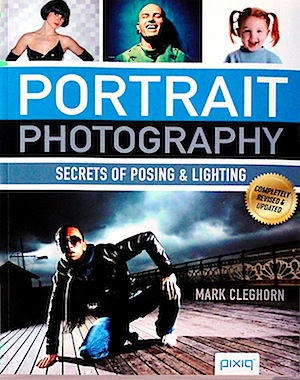
Portrait Photography: Secrets of Posing & Lighting [Book Review]

12 Mar

Portrait Photography.jpgPortrait photography, IMHO, is up there in degrees of difficulty with wildlife and sports/action photography … but at least, when faced with a tiger or a pole vaulter, you don’t have to face a possibly irate subject when you’ve finished the shot. Hopefully!

With portrait photography you not only have to face the sitter during and after the session but you also have to deal with that particular person if they’re also the client!

The book’s author Mark Cleghorn has been a pro photographer for over 30 years, specialising in ‘creative’ wedding and portrait photography. He is a member of a number of pro associations and has won a number of awards for his work as well as running many training workshops and seminars.

In Cleghorn’s view ‘Understanding the fundamentals of posing and lighting is crucial to successful portrait photography.’

You might also add the stricture — KISS! His own personal motto is ‘Natural light before reflector, reflector before flash, and flash as a last resort.’ He also suggests you should understand how to use and manipulate natural ambient light before you complicate things with technology …. Got me!

The chapter headings are informative:

  • So much equipment, so little money.
  • Poses and expressions.
  • Studio lighting made simple.
  • Creative lighting techniques.
  • On location.

First up, choosing a camera and lenses. The advice is that while a bulky, expensive medium format camera gives a better quality of image and delivers huge file sizes that are perfect for advertising, they are overkill for a simple portrait.

The DSLR is a preferable choice due to its comparatively reasonable cost, moderate size, along with access to a wide range of lenses and access to complete camera control.

This is followed by a rundown of the three types of flash available: accessory, shoe-mounted; power pack kits; monolights. Considerable detail is given on how to modify their flash output, the use of gels, metering, softboxes, reflectors, snoots and spotlights, diffusion, etc.

A key chapter covers posing and expression, which is where the human interface is at its most important and Cleghorn displays his extreme knowledge of the human figure and how to show it off at its best: ‘Every pose … starts with the feet, as it is the way in which the subject stands that determines whether or not he or she looks comfortable.’

His advice on how to photograph children is golden: keep things simple, allow the expressions to tell the story, work on the same level and, with very young children, encourage them to move around the studio, make it seem like a game.

And how to cope with problems like a subject’s bald head, spectacles, double chins, squinting and those who are obviously overweight, disabled subjects, those with ‘sleepy eyes’, big ears or noses and (with couples) differing heights. The advice is magic!

Moving on to lighting, there’s detailed discussion on how to place lights, control fill, hair and backlights and control their output. Low, mid and high key lighting is covered in considerable detail, with excellent examples shown.

Some off the wall techniques are demonstrated, like the projection of another image onto the subject, introducing a surreal effect. The use of a single light source and softlight are discussed as well as the role of the cross processing effect achievable in Photoshop.

Quite a few pages are given over to the searching for and use of suitable locations, natural exteriors and shooting in the home.

I often wonder, having read such a useful book, as to the sanity of such a high end and obviously successful photographer in this field in giving away such seriously useful hints, tips and advice.

This is the ‘go to’ book on the subject!

Author: M Cleghorn.
Publisher: pixiq.
Size: 28x22x1cm. 128 pages.
ISBN 978 1 4547 0243 6.
Price: get a price on Portrait Photography: Secrets of Posing & Lighting at Amazon (currently 36% off).

Post originally from: Digital Photography Tips.

Check out our more Photography Tips at Photography Tips for Beginners, Portrait Photography Tips and Wedding Photography Tips.

Portrait Photography: Secrets of Posing & Lighting [Book Review]


Digital Photography School

 
Comments Off on Portrait Photography: Secrets of Posing & Lighting [Book Review]

Posted in Photography


Why Making Mistakes is Good for your Photography

12 Mar

A Guest Contribution by Draycat

It is said the longest journey starts with a single step. The unfortunate part of life is that sometimes that step will cause you to fall, or you may even find you are walking in the wrong direction. But such things are normal and natural in life, and these are often the experiences that we learn the most from. A baby will fall down many times as he/she learns to walk. The falling down is part of the process of learning to walk, and without it the baby will never learn.

It is the same for photography, from the first day you pick up a camera you will make mistakes.

  • You may spend a day shooting only to realise that your camera was on the wrong setting and instead of shooting full size RAW you’ve been shooting the smallest size jpg
  • you may leave the house with all your equipment prepared only to take the first shot and realise that you forgot to put a memory card in the camera (and find the nearest place to buy one is miles away)
  • you may take lots and lots of pictures which look good in the camera’s LCD, only to find they are all soft when you see them on your computer screen – you didn’t realise at the time because you didn’t zoom in and check on the camera’s LCD.

These are just a few of the mistakes that I have made since I’ve been shooting, and after each one I generally felt foolish and sometimes demoralised. I felt like my photographic journey had taken me no where while everyone else flew past me with their great camera skills.

But if you speak to any of the great photographers in world, present or past, they will smile and tell you that they made exactly the same mistakes, and many more besides.

They will tell you that they often learned more from their mistakes than from their successes. Often when we make mistakes we are too hard on ourselves, and beat ourselves up about how stupid we were, or how foolish we feel. This photographer or that photographer would never do such a thing, but the fact is that we all do.

The truth is that it isn’t about the mistakes you make, but rather about how you deal with those mistakes.

If you look at them and work out how they happened, what you did wrong, or what you forgot to do then it becomes a learning experience – something that will ultimately help you to be a better photographer. In a shoot I once wanted a little motion blur in a dance section.

I shot at 1/15 of a second, and on my small LCD camera screen the images looked ok. When I got home and put them on my main monitor, they were all a little too blurred. The next time I shot in a similar situation I set my camera to 1/25 of a second and made sure I got what I wanted by zooming in on the LCD on the camera, and I got exactly what I wanted. It was a learning curve and now in that situation I know exactly what to do or rather what not to do.

On the other hand, if you make a mistake and beat yourself up about it constantly it becomes something negative. It will create fear and actually stop you from moving forward. When you encounter a similar situation instead of going in there with a good idea of what not to do, you will instead do everything possible to avoid the situation altogether. Can you imagine a baby thinking ‘this walking stuff is just too difficult and falling down is painful. Who needs walking anyway, crawling is perfectly good enough. I’ll just stick to this crawling stuff in future.’

Being a good photographer is as much about learning what not to do as it is learning what to do.

Without making mistakes we could never become well rounded photographers, so the next time you make one when you shoot and you feel frustrated, walk around for a while and think about learning to walk. Then, get up, work out what you did wrong and then go and try it again.

Draycat is British photographer, teacher and writer currently based in Tokyo, Japan. See more from him at his Website on Twitter on Facebook and on Youtube.

Post originally from: Digital Photography Tips.

Check out our more Photography Tips at Photography Tips for Beginners, Portrait Photography Tips and Wedding Photography Tips.

Why Making Mistakes is Good for your Photography


Digital Photography School

 
Comments Off on Why Making Mistakes is Good for your Photography

Posted in Photography


Meet The Photographers Who Write For Digital Photography School ~ Alex Smith

10 Mar

You’ve been reading their articles for months or years, have you ever wondered “Who are the photographers who write for dPS”? Today we meet Alex Smith, another of the newer writers brought on to dPS last year.

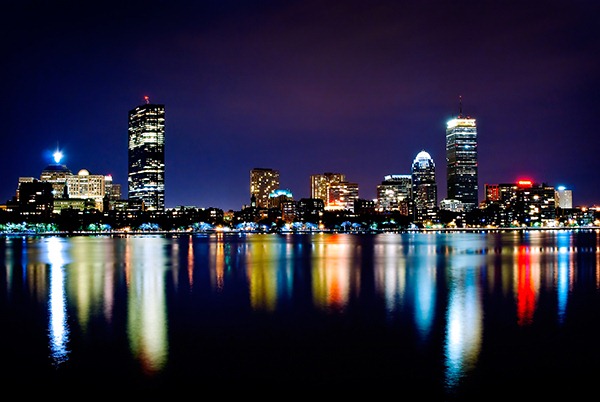
Boston Trip_043010_0352(sRGB-websize)

1.) How long have you been shooting?

I have been shooting for the past 7 years in some way, shape or form.

Self Portrait-17(sRGB-websize)2.) Do you have a full time job or are you a full time photographer?
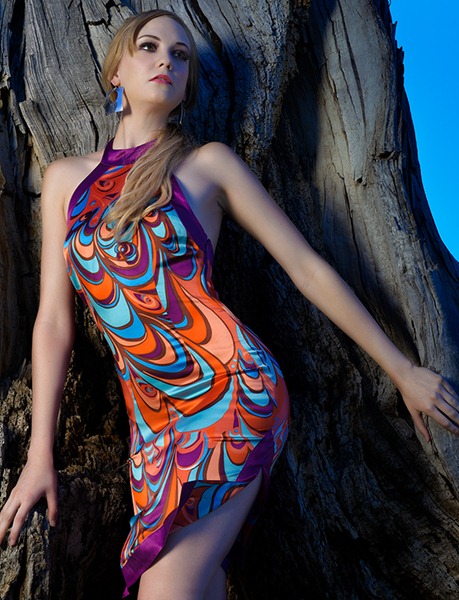

Photography for me is a hobby that has gotten out of control. I am not a full time photographer and spend my days as a member of one of the scariest, most fear-inducing professions in the world. I work as a dentist.

3.) If you had to limit yourself to one genre of photography, what would it be and why?

This is a tough one. I really enjoy all aspects of photography and love to push myself into the different genres as I find I always learn something new. If I had to limit myself though, it would be to conceptual portrait/fashion photography. I love pushing my own creativity and it is a blast to come up with an idea and see it through to the final image. Not to mention you get to meet a lot of great people with which to collaborate and create.

4.) When did you start writing for dPS and why?

I am new to dPS as of Oct/Nov 2012. I applied to write for dPS because I feel that I have learned a great deal from the site. I wanted to be able to give back to the site by contributing and communicating what I have learned to others. Also, I hoped to be a good motivational factor and example for all the other self taught hobbyists out there that are working hard to learn photography.

5.) What do you shoot with and what’s your favorite lens?

I started with a Nikon D80 and moved to a Nikon D3s a few years ago. Really, my favorite lens is whatever is on my camera, but if forced to choose it is likely the Nikon 24-70 mm f/2.8. It is extremely versatile and I find that it is on my camera most of the time.

6.) What would be your number one tip to any new photographer?

My number one tip to anyone starting out in photography is not to let fear rule you. This is a craft and skill that takes time to learn and you should approach it as something that you will be continuously learning more about. Don’t be afraid to make mistakes, try new things and get out of your comfort zone. You have to practice and make errors to get better and you can’t let all your blunders stand in the way of your progress. Just remember that all photographers start at the same point…the beginning. Don’t be ashamed of your skill or progress and just continue to work at areas you feel you need to improve.

7.) What’s your next big project?

Currently, I am working on a series of themed or conceptualized portraits in collaboration with a local make-up artist. I have been getting into more styling and planning with each shoot and am excited to see where these shoots are heading.

8.) Where can people go to find out more about you and your work?

You can find out plenty about me here on dPS and also at www.shutterhogs.com which is an ongoing project that I am trying to develop with a colleague. Also, I am on Twitter as @shutterhogs and my portfolio can be seen at 500px.com/alexsmith88.

Brittney Outdoors-34-Edit(sRGB-Websize)

Fire Creative Make-up-293(websize)

Denver Botanic Gardens-36(sRGB-websize)

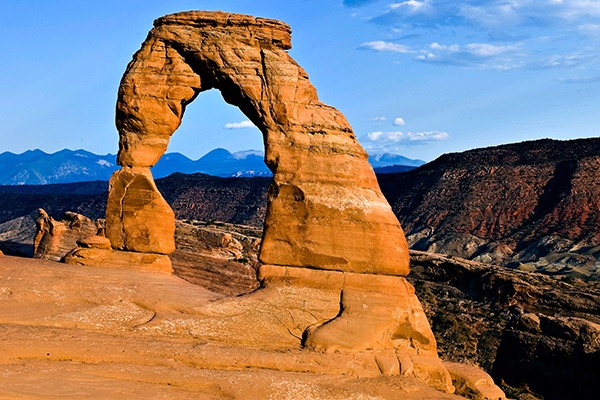
Delicate Arch_073109_0045(sRGB-websize)

Image 7

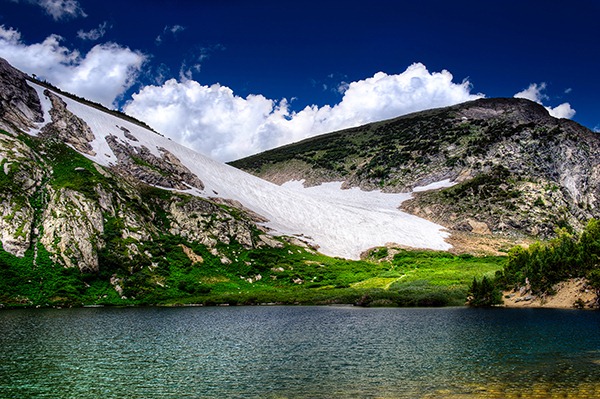
St. Mary's Glacier HDR final (sRGB-websize dPS)

Shayla C-56 (sRGB-DPS)Websize

Natalie-332(sRGB-websize)

Katie Make-up-4(sRGB-websize)

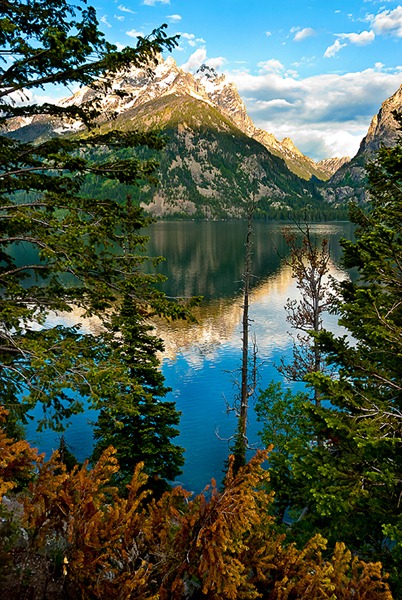
Jenny Lake_Jun302010_0001(sRGB-websize dPS)

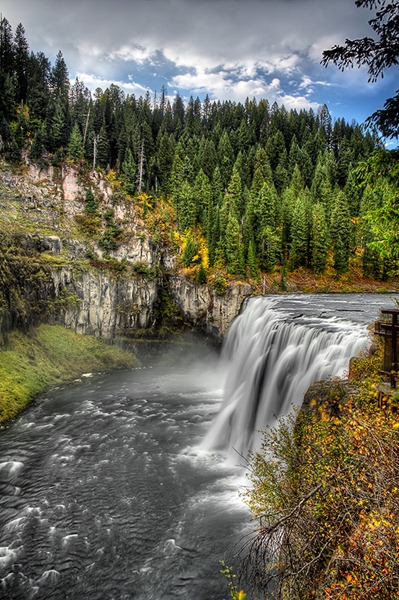
Mesa Falls-HDR(sRGB-websize)

Post originally from: Digital Photography Tips.

Check out our more Photography Tips at Photography Tips for Beginners, Portrait Photography Tips and Wedding Photography Tips.

Meet The Photographers Who Write For Digital Photography School ~ Alex Smith


Digital Photography School

 
Comments Off on Meet The Photographers Who Write For Digital Photography School ~ Alex Smith

Posted in Photography


Lines: Weekly Photography Challenge

09 Mar

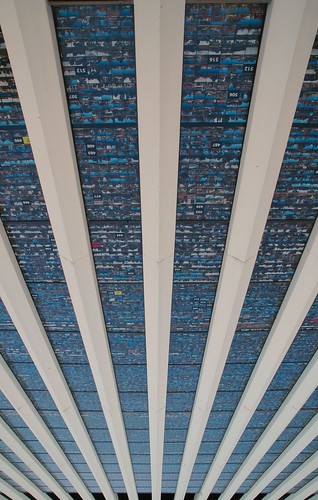
Vertigo  - a building covered in buildingsThis week your photographic challenge is to shoot and share an image or two on the theme of ‘lines’.
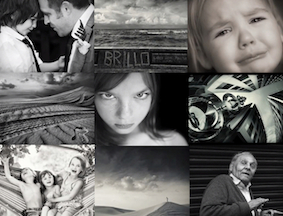
‘Lines’ are all around us – they’re in architecture, they’re in landscapes, they’re in many of the things we use on a day to day basis.

In photography spotting lines and working with them can really help with composition and have a dynamic impact on an image – they’re also really helpful in leading the eye of people through an image. We’ve talked about using lines in composition numerous times in the past – check out these articles before you go shooting:

  • Using Horizontal Lines in Photography
  • Using Vertical Lines in Photography
  • Using Diagonal Lines in Photography
  • How to Use Converging Lines to Enhance Your Photography

Once you’ve taken your ‘Lines’ image upload it to your favourite photo sharing site and either share a link to it or – embed it in the comments using the our new tool to do so.

If you tag your photos on Flickr, Instagram, Twitter or other sites with Tagging tag them as #DPSLINES to help others find them. Linking back to this page might also help others know what you’re doing so that they can share in the fun.

Also – don’t forget to check out some of the images posted in our last challenge – Nature challenge where there were some great images submitted.

Post originally from: Digital Photography Tips.

Check out our more Photography Tips at Photography Tips for Beginners, Portrait Photography Tips and Wedding Photography Tips.

Lines: Weekly Photography Challenge


Digital Photography School

 
Comments Off on Lines: Weekly Photography Challenge

Posted in Photography


National Geographic celebrates 125 years of photography with Tumblr

09 Mar

tumblr_mj9r0ioIjH1s7f3fyo1_1280.jpg

The National Geographic Society continues to celebrate its 125th anniversary, and has launched a Tumblr blog called ‘Found’, which hosts a curated collection of photos from the National Geographic archives. The curation is done by Nat Geo’s William Bonner who has been scanning through the company’s extensive photography archive in the basement of its Washington, D.C. headquarters. Click through for more information and some fascinating photos.

News: Digital Photography Review (dpreview.com)

 
Comments Off on National Geographic celebrates 125 years of photography with Tumblr

Posted in Uncategorized


DEAL: 50% Off The Art of Black and White Photography Online Course

07 Mar

NewImageThis week’s deal over at our sister site – SnapnDeals – is one that I know will appeal to a lot of dPS readers.
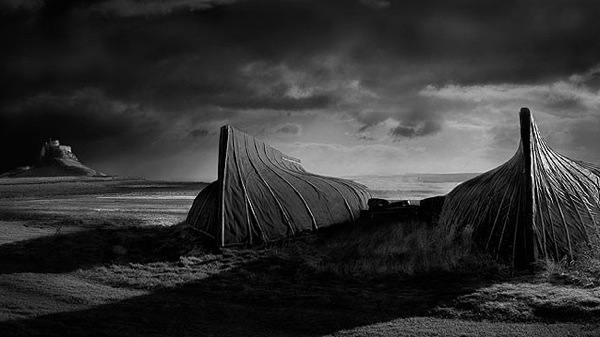
It is 50% off The Art of Black and White Photography Online Course at Udemy.

Created by David J. Nightingale this course will help you to:

  • Master the techniques to create amazing black and white photographs.
  • Make more of your black and white portraits.
  • Learn from a world-renowned expert.

It contains over 19 lectures and 6.5 hours of content – all delivered online.

It is normally $ 79 but this week through SnapnDeals it is just $ 39.50 USD. Check it out at SnapnDeals.

Post originally from: Digital Photography Tips.

Check out our more Photography Tips at Photography Tips for Beginners, Portrait Photography Tips and Wedding Photography Tips.

DEAL: 50% Off The Art of Black and White Photography Online Course


Digital Photography School

 
Comments Off on DEAL: 50% Off The Art of Black and White Photography Online Course

Posted in Photography


OPINION: Why Photoshop is Ruining Landscape Photography

06 Mar

This opinion piece was contributed by Declan O’Neill from www.newzealandscape.com.

The winner of one of Britain’s most prestigious photographic competitions was stripped of his title recently because of excessive use of Photoshop. David Byrne was the winner of the Landscape Photographer of The Year award and a £10,000 ($ 16000) prize but has now had his title and prize money taken away in a surprise move by the organisers of the competition which is supported by Epson, The Sunday Times Magazine and The National Theatre.

607589 landscalandscape photographer of the yearpe photographer of the year

The dramatic reversal came about after other photographers pointed out that the image had been photoshoped to include clouds not in the original image. Other photographers pointed to the impossibility of the sun casting shadows in different directions.

Mr. Byrne defended his manipulation of the image by pointing out that altering images is hardly new. He was quoted by The Daily Mail as saying, ‘The purists out there were not happy. Messing about with pictures has been done for over 100 years. I treat my photography as art and I try to make the best looking picture.’

Those three sentences neatly define the battle lines which have been drawn over the digital manipulation of photographs.

First of all he seems to suggest that anyone who objects to manipulating images is a ‘purist’. It seems clear that ‘purist’ is not a compliment in this context. What this veiled insult fails to acknowledge is that many photographers do not object to using Photoshop to enhance photographs but they do object to its use in altering photographs.

The problem comes in defining when enhancement crosses a boundary into alteration. Removing power lines from a landscape is one thing. Changing the colour of the sky from grey to orange quite another. It isn’t as if there is any shortage of sunsets around to photograph and the joy of landscape photography is capturing the elusive, not manufacturing it with software. It’s no crime to create a sunset sky, it’s just rather sad that someone would need to do it when there is so much natural colour to photograph. How many times have you looked at a super saturated landscape photograph and known instinctively that it’s false? Yet we see these photographs constantly win awards in club and national competitions. Anyone who has studied the way sunlight paints the landscape from different angles knows how to capture the best colour without needing Photoshop. That’s what being out in the field teaches you. You learn how to use the light to maximum effect.

The second defence that Mr. Byrne advances is that photographers have been ‘messing about’ with photographs for a long time. His choice of words is both unfortunate and revealing. Photographers should respect their subject matter. You do not have to go very far to capture truly beautiful natural photographs and the idea that it’s ok to mess about with the captured image is a depressing comment on the craft of photography. This attitude tells us that the photographer has no qualms about creating a vision of what they wish they had captured, but failed.

Finally Mr. Byrne tells us that he treats his photography as ‘art’ and tries to make ‘the best looking picture’. Here is the real problem with the software tools that allow us to create our own photographs. Photography has always been a craft. Ansel Adams had no need to add clouds or alter tree shapes because his images were honest and beautiful. There is nothing wrong with painting new images with Photoshop, just don’t call it photography. It is something entirely different when a photographer wants to be an artist. An artist creates images from their imagination and that is a wonderful thing. Just leave photography to record what the camera sees not what the photographer wishes it had seen.

What is extraordinary is that Mr. Byrne should have won such a prestigious title as Landscape Photographer of the Year. Luckily, his alterations were brought to the attention of the judges who had been unable to detect them for themselves. But for the ‘purists’ his accolade would have reinforced the idea that we can alter images in the name of ‘art’ and still claim they are photographs. If something good can come out of this sorry debacle it is the lesson that landscape does not need our interference. The true joy of landscape photography lies in capturing its pristine beauty. Painting it in the crude lipstick of Photoshop is both unnecessary and an admission that we cannot leave it to speak for itself through our lenses.

Declan O’Neill is a photographer who lives in Nelson New Zealand. He specialises in landscape photography and runs photographic tours of the South Island. His website can be found at www.newzealandscape.com.

Post originally from: Digital Photography Tips.

Check out our more Photography Tips at Photography Tips for Beginners, Portrait Photography Tips and Wedding Photography Tips.

OPINION: Why Photoshop is Ruining Landscape Photography


Digital Photography School

 
Comments Off on OPINION: Why Photoshop is Ruining Landscape Photography

Posted in Photography