RSS
 

Posts Tagged ‘Photography’

Slideshow: Nature inFocus Photography Awards 2020 winners and finalists

10 Sep

Nature inFocus Photography Awards 2020 winners and finalists

Winners and finalists were announced for the latest annual Nature inFocus Photography Awards. Due to the pandemic, the festival was cancelled and selections were shared via a live announcement on YouTube. More than 1,600 photographers submitted roughly 14,000 images from around the world.

A 5-member jury, including nature photographer Dhritiman Mukherjee, picked winners and finalists. Yashpal Rathore won for his image depicting a bad frozen against an urban landscape in Bangalore, India. A Special Jury Award was given, for the very first time, to Magnus Lundgren as 3 of his photographs were selected – 2 are featured in this slideshow.

The Nature inFocus Photography Awards aims to recognize photographers whose work helps preserve our natural history and raise awareness around conservation. A full gallery can be viewed here.

Winner, Wildscape & Animals in Habitat & Nature inFocus Photograph of the Year: The Dark Knight’ by Yashpal Rathore

Location: Bangalore, India

Artist Statement: A Greater Short-nosed Fruit Bat drops out of a Singapore Cherry tree on the walkway of a busy street in the capital city of Karnataka. The headlamp streak of a speeding vehicle, the neon lights of business hoardings – the long-exposure shot perfectly captures the dynamism of city life.

The ever-growing city has seen these nocturnal winged mammals adapt to the chaos of the urban environment. Though vilified by much of the human population, bats play a vital role in our ecosystem as seed dispersers and pest-controllers. The photographer used a laser trigger and low-powered flashlights to freeze the bat in its flight.

Winner, Creative Nature Photography: ‘A Mirage In The Night’ by Nayan Jyoti Das

Location: Manas National Park, Assam

Artist Statement: Occasionally, nature surprises us with moments so dramatic and beautiful, like right out of a fairytale. Caught in the warm embrace of a posse of fireflies, a family of wild elephants huddles together under the night sky, mirroring the asterism of Alnitak, Alnilam and Mintaka of Orion above.

Special Mention, Creative Nature Photography: ‘Order in Chaos’ by Jayesh Joshi

Location: Vadodara, Gujarat

Artist Statement: Rosy Starlings perch on the edge of a parapet like substitute players on the bench, waiting to join in the action. The long exposure shot captures the frenzy of the murmuration above, hundreds of starlings swooping across the sky in intricately coordinated patterns.

Runner-up, Animal Portraits: ‘The Boxer’ by Mofeed Abu Shalwa

Location: Qatif, Saudi Arabia

Artist Statement: The Red Palm Weevil is a species of snout beetle, recognised by its distinctive long snout and geniculate antennae. First reported on coconut trees in Southeast Asia, they have since gained a foothold on date palms in several Middle Eastern countries and have spread to Africa and Europe through the movement of infected planting material.

Special Mention, Animal Portraits: ‘Monsoon Matchmaking’ by Ripan Biswas

Location: Cooch Behar, West Bengal

Artist Statement: Pre-monsoon storms known as ‘Kalboishakhi’ in Bengali bring the first rains after months of the dry season. The skies open up with thunder and lightning, announcing the arrival of the mating season for amphibians. This single exposure image of a Fejervarya sp. was made by shifting focus initially from the frog and then on to the clouds.

Winner, Animal Behavior: ‘The Hitchhiker’ by Magnus Lundgren

Location: Balayan Bay, Luzon, Philippines

Artist Statement: The Brown Paper Nautilus is an argonaut, a free-swimming octopus of open ocean habitats. A species that is widely distributed in the Indo-Pacific Ocean, the Brown Paper Nautilus is known to cling to objects floating on the surface of the sea, including other argonauts. Here a female nautilus is seen surfing on a free-floating medusa.

Though the relationship is not fully understood yet, the nautilus is believed to use its host as a food source and as a defensive weapon. When the nautilus was photographed, it used the medusa as an active form of protection by turning it towards the camera, which it presumably perceived as a potential predator.

Second Runner-up, Animal Behavior: ‘Water Wars’ by Chaitanya Rawat

Location: Jhalana Forest, Jaipur

About this Photo: On a hot day in the forests of Jhalana, with temperatures touching 45ºC, the photographer waited under the shade of a tree near a man-made waterhole. His patience was rewarded when a leopard slid down the rocks like melted wax and strolled towards the waterhole.

His camera zoomed in on the spotted, ochre and black coat as he watched the gorgeous feline drink its fill. Suddenly, the scene turned electric as a Striped Hyena made an appearance, unaware of the presence of the cat. Expecting the hyena to quickly slink away, the photographer was surprised to watch it go on the offensive and chase the leopard up a tree. The hyena then drank its fill and moved away.

Special Mention, Animal Behavior: ‘Breed The Red’ by Varun Thakkar

Location: Masai Mara National Reserve, Kenya

Artist Statement: A Southern Ground-hornbill, the largest hornbill species on Earth, feeds its young one. Found in grasslands, woodlands and open savannas of southern Africa, they are recognizable by their jet black feathers and the bright red throat wattle in males. Juveniles instead have yellow patches on the face and throat. Pollution, logging and agricultural expansion which often destroy nesting habitats are the primary threats for this species.

Winner, Conservation Issues: ‘Circle Of Death’ by Srikanth Mannepuri

Location: Kakinada, Andhra Pradesh

Artist Statement: Fishermen surround the lifeless body of a Mobula Ray at a fish landing site in Kakinada as they determine its value in thousands of rupees. The winner of the auction will then prepare the fish and trade it illegally to Southeast Asian countries for high-profit margins. The gill rakers of the Mobula Ray is believed to hold medicinal properties.

Second Runner-up, Conservation Issues: ‘Plastic Surfer’ by Magnus Lundgren

Location: Balayan Bay, Luzon, Philippines

Artist Statement: A male paper nautilus rides a piece of plastic in the pelagic zone. In the ocean, plastic debris injures and kills fish, seabirds and marine mammals. Marine plastic pollution has impacted at least 267 species worldwide, including 86% of all sea turtle species, 44% of all seabird species and 43% of all marine mammal species.

Winner, Young Photographer: ‘Dust To Dust’ by Sitara Karthikeyan

Location: Corbett Tiger Reserve, Uttarakhand

Artist Statement: A majestic tusker walking head-on towards the photographer showers himself in dust sprayed from his trunk. Elephants dust bathe to keep their skin healthy and to keep parasites at bay. It also helps them to cool down their bodies.

Second Runner-up, Young Photographer: ‘Harmony In Faith’ by Abhikram Shekhawat

Location: Jaipur, Rajasthan

Artist Statement: A large population of Rhesus Macaques rules the Aravalli landscape, which is also home to the renowned Galtaji temple. Though these monkeys create a lot of nuisance, they are treated respectfully by the devotees who visit the temple to worship the monkey god, Hanuman. Photographed here is a female Rhesus Macaque sitting in front of the glorious temple edifice.

Special Mention, Young Photographer: ‘Catch The Sun’ by Sumit Adhikary

Location: Indian Ocean, Maldives

Artist Statement: A breaching Spinner Dolphin casts a striking silhouette against the light reflecting off the deep blue ocean from the setting sun. Breaching is a very common activity among cetaceans, and though there are a number of hypotheses, scientists still really don’t know why they do it.

Second Runner-up, Wildscape & Animals in Habitat: ‘Cinderella Of The Ghats’ by Mandar Ghumare

Location: Coorg, Karnataka

Artist Statement: A terrestrial snail endemic to the Western Ghats, Indrella ampulla is the only species in the monotypic genus, Indrella. The species is polymorphic – the visible soft parts of the snail show great colour diversity, ranging from pale yellow to red like in this particular individual. The wide frame showcases the evergreen forests of the Western Ghats which it calls home.

Articles: Digital Photography Review (dpreview.com)

 
Comments Off on Slideshow: Nature inFocus Photography Awards 2020 winners and finalists

Posted in Uncategorized


Fashion photography with Ulysses Curry and the Zeiss Batis 85mm F1.8

09 Sep

The Zeiss Batis 85mm F1.8 is a short telephoto prime lens for the Sony E-mount, compatible with both full-frame and APS-C format cameras. 85mm is a classic focal length for portraiture, while on an APS-C body, the lens becomes a 128mm equivalent, making it a useful general-purpose telephoto.

In this video, photographer Ulysses Curry takes the Zeiss Batis 85mm F1.8 to a fashion shoot in downtown Seattle, working with stylist Margo Jones to create unique looks.

Zeiss Batis 85mm F1.8 sample images by Ulysses Curry

$ (document).ready(function() { SampleGalleryV2({“containerId”:”embeddedSampleGallery_1882377589″,”galleryId”:”1882377589″,”isEmbeddedWidget”:true,”selectedImageIndex”:0,”isMobile”:false}) });


This is sponsored content, created with the support of Amazon and Zeiss. What does this mean?

Articles: Digital Photography Review (dpreview.com)

 
Comments Off on Fashion photography with Ulysses Curry and the Zeiss Batis 85mm F1.8

Posted in Uncategorized


Nature and Wildlife Photography Tips for Beginners

08 Sep

The post Nature and Wildlife Photography Tips for Beginners appeared first on Digital Photography School. It was authored by Adam Welch.

If you have an interest in wildlife or nature photography, then there is a good chance you have seen an image at some point that has completely taken your breath away. Maybe it was a photograph of a sweeping landscape washed in the golden light of the dying afternoon sun, or a close-up of some small natural miracle that you had never noticed before that moment.

You might even have asked yourself, “How did they do that?”

Winter landscape

Well, the majority of those incredible photographs came about through a good deal of physical hardship, practiced patience, and a healthy amount of self-made luck.

Here are some tips to help you become stronger at wildlife photography and better at recording the natural world.

Do your homework before heading out

Be as educated as possible before you ever make a photo. Doing your homework is one of the most important, yet loathed, parts of wildlife photography. It never pays to walk into a situation and be completely clueless.

Though you can never be totally prepared for every challenge you will face (that’s part of the fun), you can educate yourself so that you safely make the most of your outing.

What gear to pack

Advanced gear is not a requirement. However, patience and perseverance are essential. You don’t need the latest and greatest zoom lens or space-age gadgetry in order to produce outstanding nature and wildlife photos.

At the same, you must also understand any limitations of your kit, so that you will have realistic expectations and avoid disappointment.

Deer

This photograph was made using the 28-135mm kit lens that came with my camera after I slowly and quietly crawled into range.

Gear up for what you’ll most likely be shooting. Packing for a photographic outing can cause a lot of anxiety. It’s easy to overpack due to fear of lacking a piece of gear.

Overpacking, though, can be even worse than underpacking. You become weighed down and uncomfortable. You find yourself not enjoying what you’re doing, which is one of the most preventable of all mistakes made by photographers.

Research the animals and scenes you are likely to encounter. Decide what gear most and least important to you. Make choices, commit to them, and then let it go. It will make packing a lot less stressful.

If you plan on photographing wildlife, such as birds and animals that scare easily, then pack your best zoom lens so you can keep distance between you and your subject.

Are you shooting landscapes or scenes where stealth is not a concern? You might consider taking along a wider angle lens to better capture your scene.

Ultimately, there is no secret formula and no true all-in-one lens to cover every situation. Be informed before you leave so that you can make the best use of whatever lens you have.

A good bag is worth its weight in gold

All the planning in the world isn’t worth much unless you can comfortably carry your essential tools with you. Find a camera bag that can carry the gear you need easily and is equally comfortable on your body.

Bags range greatly in price and quality, but you usually get what you pay for. For added peace of mind, you might consider a bag that is semi-weatherproof or water-resistant.

Here’s my go-to lightweight bag for wildlife photography, shown with and without the handy rain cover deployed:

Camerabag

Read reviews and find a bag that fits your body, your gear, and your planned outing. You will have a much more comfortable and enjoyable experience.

Speaking of comfort:

Shoes

Comfort items

Shoes: A good pair of hiking shoes or boots is one of the most important pieces of gear for any wildlife photographer. Grit, dirt, mud, water, insects, rocks, and creepy-crawlies; you need a pair of shoes or boots that can handle all of these elements.

Your shoes should be well-fitting and suitable for walking long distances. If your feet become uncomfortable, it won’t be long before you start thinking about cutting your trip short.

Prepare a checklist

It’s always a good idea to have a mental checklist before beginning any shoot. Before your outing, ask yourself the following questions:

  • Are any special permits or permissions required? Some national parks, state parks, and wildlife sanctuaries require special permits for access to certain areas, especially backcountry environments.
  • Where will I park my vehicle? This is very important. Believe me, if you park your vehicle in an unauthorized area, then you will be stuck with a sizeable fine. Or worse, you’ll return to find your vehicle has been towed.
  • Are there time restraints of any kind? Most natural areas and parks have hours of operation just like a business. You might arrive expecting to shoot a great sunrise, only to find out the location you chose isn’t accessible until after daybreak. Also remember that wild creatures and critters are usually most active in the early morning or late evening.
  • What are the expected weather conditions? This is a biggie. Know what to expect as far as the weather is concerned. Check the forecast the day of departure and keep tabs on it throughout the day if possible. Never risk endangering yourself or your equipment by venturing out unprepared for bad weather.
  • What are the times for sunrise and sunset? Again, be sure the places you want to capture a sunrise or sunset are accessible during those times. You need to also be aware of the sunrise-sunset schedule so that you can allow enough time to reach your location and set up your gear before it’s go time.
  • Are there any commonly photographed animals, landmarks, or structures? Research what is usually photographed around the area you plan to visit. Find a park ranger or staff member and ask about lesser-known spots that are less traveled by tourists. Knowing what’s popular will save you time and help you avoid shooting a scene the same way it has been done time and time again. Look for ways to be creative and set your work apart!

So, you’ve researched your location and have a good idea of what to expect. Here are a few basic tips that can help you after you’ve reached your destination.

Shoot RAW

Shootraw

If possible, set your camera to capture images in RAW format. RAW image files are basically unprocessed (one might say uncooked), straight from your camera’s image sensor. They contain a massive amount of pixel information when compared to JPEGs and take up a lot more memory card space. However, this additional information allows more latitude for adjustments in post-processing.

Use the lowest practical ISO

The ISO number of photographic film and image-sensors relates to their sensitivity to light. The boiled-down explanation is that, everything else being equal, the higher the ISO number, the less light that is required to make an image.

Unfortunately, with higher light sensitivity comes increased image noise. In most (but not all) situations, you will want to use the lowest ISO possible. That is not to say you should be afraid of bumping up the ISO. A fast shutter speed is often needed to capture the quick movements of wildlife, and increased noise is far less noticeable than a blurred image.

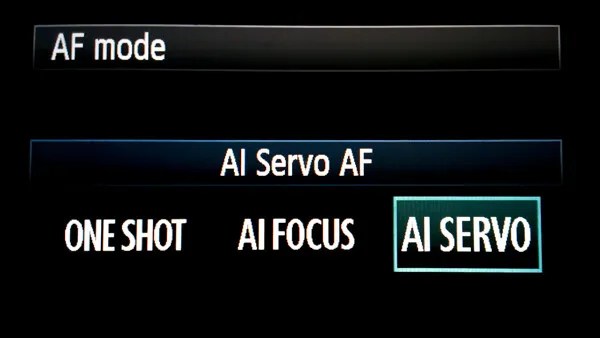
Use AF continuous (AI Servo) mode when photographing wildlife

Afservo

Autofocus (AF) can be your best friend or your worst enemy. When it comes to photographing most wildlife, however, autofocus is a great tool!

Animals and birds, especially the wild variety, are almost constantly on the move. They shift positions and move closer or farther away selfishly, with little regard for the photo you are so carefully trying to compose. This is when AF-Continuous and AF-Servo modes come in handy.

Though called different names depending on your camera’s make, these settings both accomplish the same objective: They keep a moving subject constantly in focus.

Place your selected focus point over your subject and half-press the shutter button to engage the AF. Focus will be tracked for as long as you follow your subject while maintaining pressure on the shutter button. Read your camera’s manual (you’ve done that already, right?) for detailed information concerning specific autofocus capabilities for your model, and how each mode can be selected.

Don’t forget the tripod

“I really didn’t think I would need my tripod” are words that usually begin a sad story about how a potentially great shot was missed. In most wildlife and nature photography situations, a tripod is always a good idea. It’s better to have access to a tripod and not need it than to need it and not have one available. Find the lightest and most compact tripod that is sturdy enough to handle your camera setup.

Learn so you can prepare. Prepare so you can photograph. Photograph so you can grow.

Photographing wildlife can be difficult, but it can also yield huge artistic, personal, and even spiritual rewards. So go out and have fun doing what you do, but don’t forget to put the camera down every now and then to enjoy the world around you.

“Nature never goes out of style.” – Unknown

The post Nature and Wildlife Photography Tips for Beginners appeared first on Digital Photography School. It was authored by Adam Welch.


Digital Photography School

 
Comments Off on Nature and Wildlife Photography Tips for Beginners

Posted in Photography


Video: How to choose your focal length for landscape photography

06 Sep

Every landscape scene offers a collection of compositions just waiting to be framed by the proper focal length, but how do you choose what one to go with? While the answer will always be subjective, photographer Nigel Danson has shared a video showing how he goes about choosing the best focal length for certain scenes.

The video is a longer watch, coming in at just under 27-minutes, but through it, Danson explains how he chooses a specific focal length and shares example photos captured at different focal lengths to show what tends to work best with different lenses, from a 14mm ultra-wide-angle lens to a 200mm telephoto lens.

It’s a fantastic deep dive into the selection process for landscape photos and even Danson was surprised when he looked through what his most-used focal length was — 24mm. He notes this focal length is likely the most used due to it being difficult to capture portfolio-worthy shots at ultra-wide-angle focal lengths, leaving him ‘more disappointed than pleased,’ upon returning home to cull and edit the captured frames.

Despite his most-used focal length, Danson says his favorite focal lengths to shoot with are at either extreme — either ultra-wide or telephoto — due to the ability to ‘create something more dramatic […] and creative,’ despite it ‘not being easier.’

You can find more videos from Danson on his Youtube channel, follow him on Instagram and visit his website to view his portfolio of work and purchase his new 2021 calendar.

Articles: Digital Photography Review (dpreview.com)

 
Comments Off on Video: How to choose your focal length for landscape photography

Posted in Uncategorized


Weekly Photography Challenge – Spring

05 Sep

The post Weekly Photography Challenge – Spring appeared first on Digital Photography School. It was authored by Sime.

Well, here in Australia where dPS is based, it’s SPRING and I can tell you, we’ve been looking forward to it! Share your ‘Spring’ photographs in the comments, or via social media (details below) make sure you tag your photos #dPSSpring

Weekly Photography Challenge – Spring

If it isn’t Spring where you are, we challenge you to interpret the weekly challenge theme in any way you see fit, as long as there’s a ‘Spring’ connection!

Some stunning photos from last week, here’s one from the blog comments by Rhonda Martin (See more of Rhonda’s here) beautiful work, Rhonda!

Weekly Photography Challenge – Spring

Great! Where do I upload my photos?

Simply upload your shot into the comments field (look for the little camera icon in the Disqus comments section) and they’ll get embedded for us all to see. Or, if you’d prefer, upload them to your favourite photo-sharing site and leave the link to them.

Weekly Photography Challenge – Looking Up

Share in the dPS Facebook Group

You can also share your images in the dPS Facebook group as the challenge is posted there each week as well.

If you tag your photos on Flickr, Instagram, Twitter or other sites – tag them as #DPSSpring to help others find them. Linking back to this page might also help others know what you’re doing so that they can share in the fun.

Follow us on Instagram?

The post Weekly Photography Challenge – Spring appeared first on Digital Photography School. It was authored by Sime.


Digital Photography School

 
Comments Off on Weekly Photography Challenge – Spring

Posted in Photography


5 List-Making Exercises to Improve Creativity in Photography

01 Sep

The post 5 List-Making Exercises to Improve Creativity in Photography appeared first on Digital Photography School. It was authored by Megan Kennedy.

We’ve all made lists before: shopping lists, to-do lists, Christmas lists, and more. List-making can be a valuable asset to photography, too. In this article, we’ll look at the benefits of list-making, how it can improve creativity, and some effective list-making exercises.

improve creativity list making drawing

The benefits of list-making

List-making can improve creativity in a number of ways. For example, many of us tend to remember tasks that need to be done better than we remember the tasks we’ve completed. This can generate a feeling of being overwhelmed, which can lead to something called task paralysis. Making lists provides a visual reminder of our progress over a period of time, inspiring creative momentum and a sense of accomplishment.

In addition, a recent study has shown that the simple act of jotting down a list of to-dos is enough to ease the anxiousness brought on by incomplete tasks. List-making also encourages brainstorming, a pillar of the creative process. By creating an accessible layout of tasks and ideas, lists give goals a certain tangibility, facilitating active steps towards a positive creative outcome.

improve creativity
List-making isn’t restricted to pen and paper. There are plenty of useful apps for making and reviewing lists, too. Android apps pictured: Notepad (left); Habits (right).

List #1: Things I don’t know (and how to learn them)

I’ll admit that a things I don’t know list sounds a little pessimistic at first. But identifying areas you know little about is the best way to target gaps in your own practice.

Take a bit of paper, use a list-making app, open a Word document, or select a page from a notebook (whatever works), and start listing the facets of photography you want/need to know more about. You can list anything, from art theory to photography tricks to post-processing techniques. Next, pair your points with a few words about how you might actively bridge these knowledge gaps.

Here’s an example:

improve creativity

You’ll see that I’ve added timelines to each point on the list, too. Adding a timeline helps bolster your commitment to incorporate the listed tasks into a creative routine.

Naturally, the time you assign to each goal will depend on your daily habits and the goal itself. Just remember that any dedicated length of time invested in your practice is far better than investing no time at all. If you aren’t sure about your timeline, start small and make adjustments incrementally.

Put your list somewhere visible as a reminder of your goals. As you progress, make additions or amendments to your list; your plan should always be open to change. You could even create a checklist to help improve creativity and to map the trajectory of your creative growth.

List #2: Subjects I want to photograph (but haven’t yet)

We all have subjects we would love to photograph, but haven’t yet. Making a list of subjects you aspire to photograph is a productive way to set goals that will broaden and improve creativity.

To start a subjects I want to photograph list, first type/write out some realistic subjects that you would like to photograph in the short and/or long term. Next, add some necessities that will facilitate these goals. Will you need particular equipment? Additional experience in the field? A passport? Savings? Research? List anything that comes to mind. Here’s a quick example:

improve creativity

Note that I have added research to each individual goal. Solid research is fundamental to most photographic undertakings. To tease out what particulars you might need to research, you can use the things I don’t know list!

Once you have your outline, you’re free to break down your list into more detailed segments. For example, you could plan a budget for acquiring suitable equipment. Some goals will be more long-term than others, but having a list will enable you to take decisive steps toward successfully photographing your dream subject.

List #3: Creatives that inspire

There are many artists that inspire my creative practice. So many, in fact, that it can be hard to keep track. That’s where list number number three comes in.

improve creativity
Inspiration drawn from other creatives can reveal new approaches to your own photography. Canon 5D Mark II | Canon EF 50mm f/1.8 II with extension tubes | 1/125s | f/3.5 | ISO 500.

Making a thoughtfully curated list of creatives that inspire and motivate your practice is a great way to maintain momentum and stimulate ideas. From recording your favorite photographers in an alphabetical Excel spreadsheet to noting the names of impactful artists in a visual diary, creating a list of inspirational creatives provides an accessible point-of-reference that can improve creativity in a lull.

List #4: Photography goals

Making a photography goals list is a lot like making a subjects I want to photograph list. The idea is to lay out goals paired with actionable steps to achieve a desired creative outcome. Here is a quick example:

improve creativity

Again, you can break down your actionable steps even further by creating checklists, budgets, or timelines. List-making rewards persistence while focusing and improving creativity; it also emphasizes the value of each step toward an overall creative objective. Keep your list somewhere you’ll see it regularly and use it as a compass and a source of inspiration when goals seem far away.

List #5: Why I love photography

Like most things, photography has its ups and downs. When things go right and inspiration flows, it can be smooth sailing. But when things go wrong, you can start to feel the pressure of creative fatigue. Fortunately, lists are a great way to help ease the burden of a creative dry spell.

improve creativity
Photography will take you to amazing places, and it can all start with a simple list! Canon 5D Mark II | Canon EF 24-105 mm f/4L IS USM | 1/200s | f/6.3 | ISO 100.

The why I love photography list is an opportunity to reflect on what it is that makes you do what you do as a photographer. What made you fall in love with photography in the first place? How does photography inspire you? What do you love about your favorite subject matter? How has photography positively impacted your life? What drives you to make your next shot?

There are so many reasons people fall in love with photographic image-making, and listing them creates something concrete to draw upon when needed, helping you to improve creativity and clear the fog of artistic fatigue.

Conclusion

Lists aren’t just great for remembering things; they’re an opportunity to improve creativity and expand creative practice. Lists give order to chaos, they provide a plan to work through, and they supply proof of what has been achieved.

By making lists, we can reinforce ideas, formulate goals, and track sources of inspiration and success. Happy listing!

The post 5 List-Making Exercises to Improve Creativity in Photography appeared first on Digital Photography School. It was authored by Megan Kennedy.


Digital Photography School

 
Comments Off on 5 List-Making Exercises to Improve Creativity in Photography

Posted in Photography


5 Quick Reasons to Use the Nifty Fifty for Landscape Photography

30 Aug

The post 5 Quick Reasons to Use the Nifty Fifty for Landscape Photography appeared first on Digital Photography School. It was authored by Tim Gilbreath.

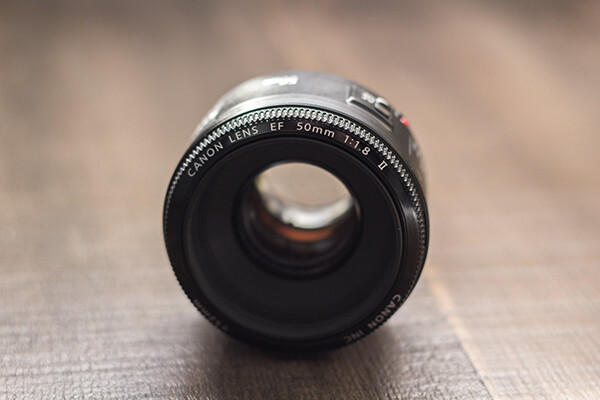
The 50mm prime lens, commonly known as the Nifty Fifty, is a lens that even inexperienced photographers have likely heard of. Most of us know it for its outstanding qualities; it’s an inexpensive, high-quality, prime lens that is in plenty of photographers’ bags around the world and is one of the most popular lenses of all time.

What we might not think of a Nifty Fifty as, however, is a lens normally used for landscape photography. The field of view is tight, and the lens doesn’t possess a focal length wide enough to usually be considered proper for this sort of work.

But I have. For four years, the 50mm f/1.8 has been my workhorse for portfolio building (which is primarily nature and landscape), and even though I’m branching off with other lenses, I can’t stress the usefulness of the Nifty Fifty. And I’m not alone.

50mmLens

My primary reasoning for using the 50mm instead of going out and buying a proper wide-angle lens such as a 35mm or even wider?

Cost.

I was diving back into photography, and I was on an extremely tight budget. After buying my camera, spending $ 500 on a lens simply wasn’t an option. It didn’t take long for me to hear my fellow photographers sing the praises of this wonderful lens: cheap, fast, and sharp. Right up my alley.

There are no tricks or immaculate revelations here, and you won’t likely become famous for taking only landscape shots with 50mm lenses. But there are a few reasons why shooting landscapes with a 50mm lens can produce great results.

Giving it a try can only improve your photography and make you a better observer of the world around you.

Focus on what’s important

We think of landscapes as sprawling, wide shots that include many elements in one frame, but do they have to be that way? Can we not capture the beauty of the area around us in a tighter package? The rolling hills and an interesting tree in an outdoor scene are more than enough to create a photo that provokes thought.

The Nifty Fifty makes it easier to focus on whatever is most important in your photo, while still capturing enough around the subject to lend it scope.

The Nifty Fifty makes it easier to focus on whatever is most important in your photo, while still capturing enough around the subject to lend the shot scope.

Shooting at this focal length forces us to focus on the most important parts of what we’re seeing around us. Trimming the fat, as they say. In doing this, we’re also training ourselves psychologically to do the same in all of our shots.

Quality

Landscapes usually require very good sharpness, and 50mm prime lenses excel at that. No extra moving parts normally required for zooms makes for a crisper, sharper result. As with most lenses, the Nifty Fifty sweet spot isn’t wide open, but more in the f/4 to f/5.6 range. And narrower apertures will still yield excellent results.

The 50mm prime allows you to capture very sharp images

The 50mm prime allows you to capture very sharp images.

Take your time

Since the 50mm is a prime lens, you’ll get an added benefit (or detriment, depending on how much you care for walking): The single focal length means you can’t just shoot from anywhere. Instead, you’ll need to move around to find the best angle and distance. This automatically forces you to think about your shot a bit more, which is always a good thing.

The 50mm allows you to think differently about the landscape or subject you're framing, and to make more creative choices.

A 50mm lens allows you to think differently about the landscape or subject you’re framing and to make more creative choices.

With a zoom, you’d adjust focal length without even thinking until the scene is framed in a way that looks good. But what if that isn’t the best angle or distance? The Nifty Fifty will give you the incentive to take a chance and try something different, whether it be an angle, a distance, or a perspective.

No wide angle…or can there be?

Of course, there can! The 50mm gives you a gentle push into playing around with some panoramic shots. Three, four, five, or more shots can be stitched into a flattering wide-angle composite, sometimes with even more dramatic results than a single wide-angle shot.

By stitching together shots, we can create a panorama that gives us the wide field of view we're looking for

By stitching together shots, we can create a panorama that gives us the wide field of view we’re looking for.

Lightweight is king

If you’re serious about landscape photography, you’re probably already lugging around a considerable amount of gear. Camera bodies, other lenses (you don’t go out with just one lens, do you?), tripods; the list goes on.

The last thing you need is more heavy lenses when you’re out and about, right? Do you know what the Canon 50mm f/1.8 weighs? 4.6 ounces (130 g). It’s short, sweet, and light to boot.

At the end of the day, all lenses and focal lengths have advantages and disadvantages, and the case can certainly be made for using wider glass. But, as a teaching tool, the 50mm prime lens is a great option for your landscape photography; it will make you think a bit differently about your photos and easily provide you with clear, sharp images.

The post 5 Quick Reasons to Use the Nifty Fifty for Landscape Photography appeared first on Digital Photography School. It was authored by Tim Gilbreath.


Digital Photography School

 
Comments Off on 5 Quick Reasons to Use the Nifty Fifty for Landscape Photography

Posted in Photography


Weekly Photography Challenge – Shallow Depth of Field

29 Aug

The post Weekly Photography Challenge – Shallow Depth of Field appeared first on Digital Photography School. It was authored by Sime.

Our dPS Weekly Challenge this week is ‘Shallow Depth of Field’ #dPSShallowDOF

After our challenge last week, ‘Mistakes‘ it reminded me of when I first purchased my EF 50mm f/1.4 lens and pretty much had it at f/1.4 or ‘wide open’ the whole time! The shallow depth of field (Where you have your subject nice and sharp, and everything else out of focus, the quality of the ‘out of focus’ area sometimes referred to as ‘Bokeh‘) look was something I loved at the start, and as I learned to use it more effectively, became another ‘tool’ in my photography toolbox.

Shallow depth of field lets you isolate a subject or highlight an area in your frame, my first example below, highlighting the lens details on my new Sony 12-24mm, you see everything else nice and blurry – This was shot with another Sony lens, the FE 35mm f/1.4 (Maybe my favourite ever) it’s great for shallow depth of field!

You might not have a lens with a wide aperture (f/1.4 / 1.8 / 2 / 2.8, etc) but you can use whatever you have to go for the most shallow depth of field that you can.

Check out Kevin’s article here for some good tips on ‘depth of field’

Weekly Photography Challenge – Shallow Depth of Field
A Sony photographs a Sony ‘Wide open’

We look forward to seeing what you come up with this week!

Congratulations to all of you that Tweeted, Instagrammed, Facebooked or posted a photo in the comments below our blog post! There were some great ‘mistakes’ in there! Well done to Elena, on this photo! Doesn’t look like a mistake to us! ? Congratulations on your recent awards, too! It’s great to see members of our dPS community progress in their photography!

Weekly Photography Challenge – Shallow Depth of Field
Congrats to our dPS Group Member, Elena

Great! Where do I upload my photos?

Simply upload your shot into the comments field (look for the little camera icon in the Disqus comments section) and they’ll get embedded for us all to see. Or, if you’d prefer, upload them to your favourite photo-sharing site and leave the link to them.

Weekly Photography Challenge – Looking Up

Share in the dPS Facebook Group

You can also share your images in the dPS Facebook group as the challenge is posted there each week as well.

If you tag your photos on Flickr, Instagram, Twitter or other sites – tag them as #DPSShallowDOF to help others find them. Linking back to this page might also help others know what you’re doing so that they can share in the fun.

Follow us on Instagram?

The post Weekly Photography Challenge – Shallow Depth of Field appeared first on Digital Photography School. It was authored by Sime.


Digital Photography School

 
Comments Off on Weekly Photography Challenge – Shallow Depth of Field

Posted in Photography


Landscape Photography: Complete Guide for Beginners; Equipment, Settings, and Tricks

26 Aug

The breathtaking landscape before you is just begging to be photographed. The only problem is that you don’t know how to do it. You try taking a few images, but upon reviewing them your disappointment sinks in. They don’t hold a candle to the real thing — and they certainly don’t look like those gorgeous landscape images that show up Continue Reading

The post Landscape Photography: Complete Guide for Beginners; Equipment, Settings, and Tricks appeared first on Photodoto.


Photodoto

 
Comments Off on Landscape Photography: Complete Guide for Beginners; Equipment, Settings, and Tricks

Posted in Photography


How does anamorphic photography work?

25 Aug

Last time we posted about an anamorphic lens there were lots of questions about what anamorphic photography is and how it works, so we thought we’d offer a simple guide to the basics to help everyone understand what it is.

The word ‘anamorphic’ comes from the Greek words ‘ana’ and ‘morph’ which together suggest something that alters its shape but then changes back to normal again. In photography, it relates to a situation in which an image is distorted as it is taken, but is then undistorted to a normal shape when it is projected or displayed. A common example of anamorphic imagery can be seen in the cinema, when a movie is shown in that long letterbox format that stretches across the screen. This characterizes what most of us think of as anamorphic.

A 2.35:1 format image shot using the Sirui 35mm F2.8 1.33x anamorphic lens. The image was recorded in 4K video, so it started life in the 16×9 format.

The optical anamorphic process was invented during World War I to help observers in tanks get a wider view of the battleground without having to make the observation hole any larger, and the system was used on-and-off in cinema once the war was over. Anamorphic films became more popular in the early 1950s with the process re-energized to provide an exciting alternative to the almost-square format of television.

With the growing number of TVs in homes, Hollywood wanted to ensure cinema retained some unique qualities that would still make people leave their living room and part with their money to watch a movie. The long letter-box format is now synonymous with epic cinema all over the world and is a subconscious indicator for the audience that the movie they are watching has high production values.

That link with the atmosphere of ‘serious’ filmmaking is why anamorphic photography is so attractive to amateur and professional filmmaker alike, as it can lift production value in the eyes of the audience (or client), and elevate the filmmaker from the throng of video-makers shooting 16:9 or 4:3 on ‘lower-end’ equipment. Warranted or not, many people see using the anamorphic process as a leg-up on the way to artistic greatness.

The [anamorphic] letter-box format is now synonymous with epic cinema all over the world

The image formats associated with anamorphic cinema are also pretty interesting in their own right and engage some different compositional properties that are genuinely useful and unique compared to those that apply to a typical still image – in the same way that panoramic formats work in still photography.

Anamorphic aspect ratios

While in stills photography we tend to use whole numbers when discussing the aspect ratio of any given format, such as 3×2, 4×3, 5×4, 10×8, in anamorphic cinema these things are measured using 1 as the height of the frame. So, popular aspect ratios these days include 2.35:1, 2.39:1 and 2.40:1, though the official standard according to the Society of Motion Picture and Television Engineers (SMPTE) specifies 2.39:1 for widescreen projection.

CinemaScope is 2.66:1 and belongs to 20th Century Fox, but there were a whole load of other formats devised by other studios that didn’t fancy paying Fox for the license to use 2.66:1. Hasselblad fans will recognize the CinemaScope proportions as they are approximately the same as the XPan format that lives on via the 65:24 ratio in the X1D II camera.

This is a 2.66:1 CinemaScope format image, created by using a 2x anamorphic lens while recording 4:3 full-sensor video in a Micro Four Thirds camera

In this digital age, filmmakers can use whatever format suits them, though there is some value in sticking to an established ratio just for familiarity and what it might mean to the audience. The movie La La Land, for example, is shown in CinemaScope to help invoke a sense of the age it portrays – audiences, not just of a certain age, pick up on these things subconsciously and it adds something to the picture.

This diagram shows how different popular projection formats compare. The 4:3 aspect ratio was popular in film and still is in digital sensor formats, while 3:2 is what you get when you shoot full frame and with APS-C/Super 35 sensors, while 16:9 is the standard for most digital cameras in video mode and what we see most in popular video. Widescreen really starts at 2.35:1 and 2.39:1 with moderate anamorphic lenses, and 2.66:1 provides a really long and thin widescreen format.

In film-based cinema, the ends of a wide format might be cropped from the picture to meet the 2.39:1 requirement, especially when a 2x anamorphic lens is in use, but in digital video, a timeline of any proportions can be created to show a finished product in 3.5:1 if desired.

How the format is made

Normal, spherical, lenses look all around themselves in equal measure – viewing at the same angle left/right as they do up/down. Anamorphic lenses capture an elongated horizontal field of view. To achieve this, the lens squeezes the image horizontally to fit within the constraints of the sensor’s dimensions.

This anamorphic image was captured using an anamorphic lens on an iPhone 11 Pro. Use the slider to compare the desqueezed image (L) with the squeezed image (R).
Photo by Dale Baskin

This effect can be seen in the anamorphic video clips below.

That squeezed view has to fit on to a relatively square sensor, such as a 4:3 Micro Four Thirds chip, so the anamorphic element group in the lens squeezes/distorts the horizontal view so that it will fit into the available sensor space. To do this a cylindrical element is used that has the shape of a section cut from a tube – it is bent in only one plane rather than being convex all round as a normal lens would be.

This is clearly a piece of paper and not a glass lens element, but it gives you an idea of the shape of the anamorphic cylinder element that creates the wider horizontal field of view without changing the vertical field of view.

That cylindrical lens is the shape produced when you bend a sheet of paper – bowed in the horizontal aspect but still flat in the vertical aspect – allowing it to capture a wider field of view horizontally than it does vertically. Like in a Hall of Mirrors, this distorted surface creates a distorted image on the sensor or film. When projected to show the audience, that distorted image is passed through another anamorphic lens to distort the view once again, but this time in reverse – un-distorting it so that it looks normal. Historically, in anamorphic cinema, both the camera and projector are fitted with anamorphic lenses.

In the digital world an anamorphic lens is needed only to record the image, as software can be used to stretch the recorded image and make the subjects look geometrically correct again.

This picture was taken with a 1.33x anamorphic lens in stills mode on the Lumix GH5. The recorded image measured 5184 pixels wide and 3456 high, as shown in the Image Size window of Photoshop
To find the length that the image needs to be for the subject to look normal you multiple the recorded length by the anamorphic factor – in this case 1.33x
With the width and height dimensions unlinked you just enter the new width dimensions. In this case 5184 x 1.33 = 6895 pixels. Hit ‘OK’ and the image stretches to the right anamorphic format

In still photography de-squeezing a picture is pretty straight forward. You simply multiply the horizontal pixel count by the squeeze factor of the lens. So, if your original image measures 4000×3000 pixels, for example, you multiply 4000 pixels by the squeeze factor to get the width the final image should be. If the lens had a 1.33x factor we multiply 4000 x 1.33 to get 5320 pixels. In the Resize dialogue of your editing software, unlink the horizontal and vertical resolution figures so the aspect ratio can change, and then replace the 4000 with 5320 for the horizontal dimension, keeping the 3000 pixel (vertical) dimension unchanged.

Why not just crop?

You would think it would be easier just to crop a normal picture to make a letterbox format than going to all the bother of getting special lenses – and you’d be right. The issue though is that when you crop you create a lower resolution image – whether on film or on a digital sensor – and either waste film or pixels in doing so. Anamorphic lenses create an image that fills the film frame/sensor area so all those pixels you paid for are used.

This is a frame from a 4K video recorded with the Sirui 35mm 1.33x anamorphic lens. It uses all eight million of the sensor’s pixels. In contrast, cropping a 16:9 video frame to this 2.35:1 format would give us an image with roughly 6MP of data.

Shooting video using a 4K camera produces frames that are each about 8MP. Once you crop that 4K image to an anamorphic format, such as 2.39:1 for example, you end up with footage containing far fewer pixels. 4K frames shot in 16:9 (1.78:1) are 3840 x 2160 pixels, but when that frame is cropped to 2.39:1 it becomes 3840 x 1606, which is only 6.2MP. Using an anamorphic lens allows you to record using the full 4K area of the sensor, thus retaining all those pixels so the resulting 2.39:1 footage retains 8 million captured pixels instead of just 6.2MP.

This is a still image recorded on the GH5 through the Sirui 35mm 1.33x anamorphic lens. The top image represents what the view looked like, and the second image is how the image looks once the lens has squeezed the wide aspect onto the 4:3 sensor. In software, I de-squeezed the 4:3 captured frame to 16:9 so that the subject would look normal.

Some cameras, like the Panasonic Lumix GH5 and GH5s offer a specific Anamorphic mode that allows the whole 4:3 sensor area to be used to record the footage. In this mode, the GH5 can create 6K footage in which each frame contains the full 20MP resolution of the sensor. When that image is de-squeezed to produce the anamorphic final result those 18 million pixels will still be present.

If you were to use a 1.33x anamorphic lens like the Sirui 35mm F1.8 the footage de-squeezes to a 16:9 format, but one that contains 18MP instead of the 14MP you’d get by simply cropping the full frame to 16:9. Even then, cropping this 16:9 image to 2.35:1 will deliver a higher resolution frame than shooting with a 16:9 area of the sensor in 4K – 10MP instead of 8MP.

Here’s the Cooke 32mm T2.3 Anamorphic/i 2x lens on the Lumix GH5 – well, it’s more like the camera is on the lens rather than the other way round. With the camera in its Anamorphic Mode the 4:3 sensor-captured image de-squeezes to make a 2.66:1 CinemaScope format picture.

The difference is more pronounced when using lenses with a greater than 1.33x anamorphic squeeze factor. A 2x lens, such as the Cooke 32mm Anamorphic/i would create a 2.66:1 output from the full area of a 4:3 sensor or a 3.5:1 final result from a 16:9 area. So, if you were cropping 4K footage to match those aspect ratios you’d end up with 3840 x 1444 pixels (5.5MP) for a 2.6:1 format or 3840 x 1098 pixels (4.2MP) for 3.5:1 format. Both of those represent a significant drop in resolution from the original 8MP of 4K footage – which is all preserved when using an anamorphic lens.

Resolution isn’t the only benefit

Retaining decent resolution isn’t the only reason to shoot with an anamorphic lens: these lenses have specific characteristics many people find attractive.

The almost trademark blue streak extending across the frame of an anamorphic picture comes from point light sources reflecting in the surface of the anamorphic cylinder and spreading out across the scene.

The most commonly recognized characteristic is a blue streak that shoots across the frame when a point light source is aimed at the camera – a car headlight for example. This is caused by direct light reflecting off the anamorphic cylinder and then spreading out left and right across the frame.

Obviously, these blue lines are more prevalent in lenses that have the anamorphic cylinder at the front of the construction, and much less obvious in those that place the cylinder at the rear. The new Arri/Zeiss anamorphics spread the cylinder effect throughout the lens construction, rather than having a specific group of elements to do the job, which allows a degree of control over how dominant the blue streaks will be. In more regular anamorphics the blue streak effect can be played up with reflective coatings inside the forward elements to enhance the color of the streak and how easily it can be ‘activated’.

The bulbous anamorphic cylinder can be a magnet for light and can reduce contrast when even off-center lights are pointed towards the lens.

As well as this specific type of flare, light falling on the front element will create an overall flare that in turn can give anamorphic footage a low contrast atmosphere even when contrast is quite high. This again depends on the design of the lens. Older lenses tend to flare more easily while newer designs aim for more contrast and allow filters to be used when lower contrast is desirable.

The oval shape of out-of-focus highlights is usually demonstrated in night scenes with distant car lights, but this characteristic is also visible during daylight hours. Here you can see the light between the trees – which would usually appear round – takes on an upright oval shape.

The other immediately recognizable characteristic of anamorphic lenses is the elongated shape of out-of-focus highlights. These highlights – a street light in the distance for example – would reproduce bright discs in pictures taken with a normal spherical lens, but when shot using an anamorphic lens they appear as ovals. In fact, all out-of-focus details are reproduced with an elongated shape that exaggerates the degree to which things are out of focus. This in turn only makes the focused subject stand out more.

The appearance of an extra-shallow depth-of-field is further enhanced by the complications of the altered angles of view we get with an anamorphic lens. A lens with a 1.33x anamorphic effect will have its marked focal length widened by the anamorphic factor – so a 100mm 1.33x lens would deliver the angle of view of a 75mm (100 divided by 1.33 = 75). With more dramatic anamorphic lenses the effect is more pronounced too, so a 1.8x which would give that 100mm the view of a 56mm. The final look is of a 56mm lens that exhibits depth-of-field characteristics similar to those we would expect from a 100mm lens.

Above you can see how the same scene is reproduced differently by a normal spherical lens and an anamorphic lens of the same focal length. I used the Lumix X-Vario 12-35mm set to 35mm to compare with the new Sirui 35mm 1.33x anamorphic lens.

The camera-to-subject distance remained the same, as did the F2.8 aperture, but there is a slight difference in the degree to which the background appears out-of-focus. As you can see, the subject appears much smaller in the anamorphic images due to the extra width of the view, so naturally, a photographer would normally get closer to make the subject fill the frame, and thus increase the shallow depth-of-field effect simply by using a closer focus distance to achieve the same subject magnification.

What is also clear from these images is that the anamorphic lens delivers a considerably wider view for the same marked focal length. This comparison also shows the shape of out-of-focus highlights from the same scene rendered quite differently.

Is it worth the effort?

That’s a matter of opinion of course, but those wanting to make the most of all the tools available to influence the audience will say ‘yes’. The look is special and it can add something very substantial to the atmosphere of a film. As mentioned earlier though, an anamorphic lens can’t make a poor film into a good film, compensate for bad lighting, primitive camera work or wooden acting – it is only a part of the many elements that can make a movie an award winner or a rotten tomato.

Street lights just out of the frame (and a high ISO setting) contribute to a nice soft contrast in this scene, even though the actual scene was filled with deep shadows. The look and feel of the shot are different enough to that which we would expect from a regular spherical lens that we can tell there is a certain something else about it. The highlights and background details look a bit different and there is a wide feel but without the usual distortion of a close perspective.

Anamorphic photography also isn’t suited to all subject types, and while not a fast rule it tends to work best with drama rather than documentary. The widescreen says ‘now I’m going to tell you a story’ and can prepare the audience for all the exaggeration that makes a story moving, dramatic and emotional, while more regular formats might be better for presenting strictly factual information.

There are in-between cross-over areas though that still work well, such as those old wildlife films that present factual information with a deep Hollywood voice-over and in which all the lions in the family have a name and roam the grasslands to the sound of a full studio orchestra.

There’s also a sense of cinema about a still shown in anamorphic format

In stills photography, what an anamorphic lens will give us is something a bit different. ‘Different’ is something I value, though obviously ‘good different’ rather than the other. ‘Different’ makes our work stand out from the rest, and as there aren’t many stills photographers using anamorphic lenses ‘different’ is what you will get.

There’s also a sense of cinema about a still shown in anamorphic format, and with the built-in characteristics of an anamorphic lens that inherent atmosphere will feel stronger, making it possible to present movie-stills filled with an implied storyline – without actually having to go to the bother of shooting the movie.

Articles: Digital Photography Review (dpreview.com)

 
Comments Off on How does anamorphic photography work?

Posted in Uncategorized