RSS
 

Posts Tagged ‘Photography’

5 Composition Tips for Landscape Photography

09 May

So what exactly is composition in photography and why is it such a big deal? Composition is the way you intentionally arrange or put together the visual elements in an image, in and around your subject. The goal is to catch the viewer’s interest and keep it wandering around your photo. While some people have an innate ability to “see” and compose great images, it is a skill that can be taught.

Once you have identified your subject, here are a few useful precepts you can use when composing your next great image.

5 Composition Tips for Landscape Photography

1. Simplicity

Now that you have your subject in mind, the first question is how do you showcase it so there is no doubt of your intent? Keeping it simple is a good approach, as clutter can distract or even make it difficult to identify your focus. Most times in landscape photography, you have no control over what is around your subject. Here the use of lighting can reduce clutter, as the brighter areas of your photo will draw the eye in. You can also find an angle that helps you remove any

Most times in landscape photography, you have no control over what is around your subject. Here, the use of lighting can reduce clutter, as the brighter areas of your photo will draw the eye to them. You can also find an angle that helps you remove any strong elements that can detract the focus of the object. Thus use only what you consider necessary components. Good composition is as much about what you leave out as it is what you include.

Good composition is as much about what you leave out as it is what you include.

5 Composition Tips for Landscape Photography

2. Lines

You have no doubt heard the term lead-in lines – which are lines that direct the eye where you want it to go. This is a powerful tool in composition and can add a three-dimensional feel to your image. It does this by creating movement and can take away that static/flat feeling.

Lines can be literal (such as roads, streams, power lines, or fences) or implied (those that link different subjects in the frame). While diagonal lines are considered the strongest, you are not limited to it as experimenting with horizontal, vertical and converging lines can also be a source of inspiration.

5 Composition Tips for Landscape Photography

3. Oddities

If you have more than one subject in your image, choose an arrangement with an odd number of subjects (at least three e.g. three rocks or trees). Similarly, you can frame or surround your main subject with two objects to add visual stimulation. Odd numbers within a frame are said to be more pleasing and comforting to the eye.

5 Composition Tips for Landscape Photography

Side Note: In landscape photography, even numbers in the frame can seem less natural and informal, although an even number of subjects can produce symmetry. This is just something to keep in mind if you are breaking the “rule of odds”.

4. Interest

The easiest way to create interest is by having a foreground element in your shot which adds extra depth and dimension. Following on from the point above, you can feature a subject in the foreground, middle, and background, keeping them harmonious or having subjects that complement each other. Complementary subjects are those that have some association (e.g. they are the same color, similar appearance, or add to your story in some way). On the opposite side of this, you can use juxtaposition to create some tension in your image.

Other ways to add interest can be showing the scale of the scene by including an object or person or even by framing your photo in an interesting way.

5. Rules? What Rules?

Most composition articles start with the rule of thirds. This rule divides the image into thirds horizontally and vertically and suggests that you arrange your subject and other important elements near these division lines or at their intersections. The objective is to be more visually pleasing, as placing your subject in center of the frame stops the eye there and takes away from the movement you are trying to create and use to your advantage.

5 Composition Tips for Landscape Photography

It is a classic rule that is widely used with great results, so it is an excellent place to start as a beginner. However, what if you want to create a perfectly symmetrical image, such as a mountain with its perfect reflection in a lake? What if you have just as much interest in the sky as in the ground? An image like that will clearly not follow the rule of thirds, would it?

When you are out in the real world looking at the scene before you, these rules become more like handy suggestions. You need to allow your subject to influence your composition and not force it to conform to the “rules”. Therefore knowing the rules helps you decide when it is okay to break them, this is a skill you will develop over time.

5 Composition Tips for Landscape Photography

5 Composition Tips for Landscape Photography

Conclusion

Composition is important. To get a sense of how important, think about the impact of what you perceive as a really good or bad image. First, analyze the elements and how they work or do not work together. Identify the subject(s) of the photo and break it down into which compositional “rules” are present or broken. Are there lead-in lines? Is there a point of interest in the foreground or odd numbers present? Remember to move around your scenery and try different angles for your composition and in time you will know which rules to apply or ignore.

Please share any images you have created that use one or more of these tips, in the comments below.

The post 5 Composition Tips for Landscape Photography by Nisha Ramroop appeared first on Digital Photography School.


Digital Photography School

 
Comments Off on 5 Composition Tips for Landscape Photography

Posted in Photography


Low-Key Photography – Highlighting Darkness

09 May

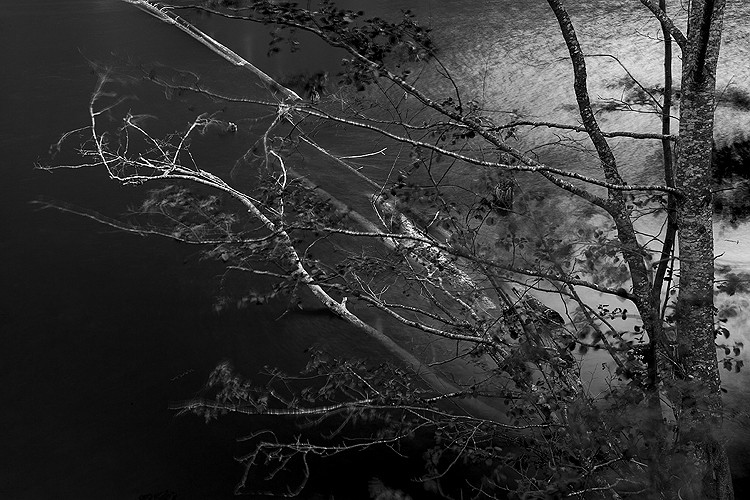
Black is the new black. Low-key photography is a style where the main elements are darkness and negative space. It’s an excellent way to create a certain mood or to use contrast to highlight a subject, such as an item, gaze, or outline. These dark images might suggest a dark mood – loneliness or danger – but they don’t have to! Darkness can also be used to create a sense of safety or adventure, for instance.

You can create a low-key photograph in a variety of ways. It can be an underexposed or high-contrast photo; it can be made in the studio, at home, or outdoors; the subject matter can be anything from a landscape to a tiny detail. The main thing is to create something overwhelmingly dark. As darkness is the absence of light and light is the main ingredient of photography, this is a pretty simple recipe.

lo- key photography

Still, low-key photography might be a bit of a challenge for a complete beginner, as you need to know how to manually control the exposure of your pictures. But don’t let that discourage you from trying.

Technically speaking, you should make sure you don’t have a lot of light reaching the sensor, by using shutter speed, aperture, and ISO – the histogram should be heavily left-biased. Most of the time these kinds of photos can be made using a very low ISO, so always start with that if you can – that way, you can make sure your photos are as high-quality as possible.

low-key photography

Let’s use some examples to get an idea of how low-key photographs can be created. When you browse through the pictures, try to pinpoint the mood of each photograph and what role the darkness plays in it. Is it playing a supporting role – for instance, creating an opportunity for something else to be the focus? Or is the darkness the main point of the photograph?

Let’s begin!

Using flash or shooting in the studio

Using a flash might seem like a surprising suggestion for a style which is defined by a lack of light. Yet, it’s perhaps the easiest way to accomplish exactly what you want, since it gives you precise control over the amount of light that’s used (and where it falls). A black background helps, but isn’t required. The important thing is that there’s a large enough difference in light levels between the highlights and the rest of the image.

low-key photography

ISO 100, 1/125th, f/10.

This photo was made in a studio, with a black background, two flashes, and a good friend. Leather or another textured, dark material works really well for this kind of photography.

low-key photography

ISO 100, 1/125th, f/8.

To get this profile image, I used two flashes behind and slightly to the right of the model, one higher up and one lower down. This photo could have worked with most backgrounds, as long as the flashes are strong enough.

low-key photography

ISO 100, 1/125th, f/8.

To light a very specific area of this scene, I used a snoot over my flash.

Using natural light for low-key portraits

To get a low-key portrait in natural light, the most important thing you need to watch out for is that the light source is confined by something, such as a window or a door. You also want the spot where the subject is located to be much darker. The examples below show this in two different ways.

low-key photography

ISO 400, 15 seconds, f/7.1,

Calling this ”natural light” is perhaps a stretch, since it’s coming from inside a house at night. Still, the same applies; it’s a restricted light source shining into a relatively dark space. This time, the space is outdoors and the light source is indoors.

low-key photography

ISO 640, 1/200th, f/2.8.

Here, the subject is sitting in a room with daylight shining through a window with curtains. The background was actually a white wall, but since the light from outside wasn’t shining directly onto it, it was dark enough to turn black in this picture.

Using natural light – textures

Low-key photography is a great way to bring out the feature of a subject that is hard to notice when it’s well lit.

low-key photography

ISO 400, 1/60th, f/2.8.

I found a lot of subtlety in the whites of this wilting flower once I underexposed the shot. The background was very busy, but it became almost completely black once I exposed the shot the way I wanted. I added a slight vignette to darken some lighter spots in the corners of the shot. Another nice thing about this style is that it’s easy to extend a black background if you want more space or to make slightly lighter parts black in post-processing.

low-key photography

ISO 3200, 1/200th, f/5.6.

Sometimes there are also nuances to be found in the blacks. This crow, and its beak, were on a table next to a window (the joys of knowing biologists!) which only got indirect light from outside, so the light levels were very low. Still, it was enough to capture the shades and shapes of the beak.

low-key photography

ISO 4000,1/125th, f/4.

The lighting of these crow feathers was the same as for the above photo. The focus on an all-black scene let all the textures and tones be expressed.

Low-key landscapes

Do you prefer landscape photography? No worries, the low-key photography style works wonderfully for that, too! A night scene usually works very well, but clouds are also very useful. They might make the sky less bright, but they also create interesting light patterns on the ground.

low-key photography

ISO 500, 1/250th, f/8.

An overcast day and an industrial, urban scene provided a great opportunity to capture something dark.

low-key photography

ISO 100, 1/320th, f/8.

The clouds added some nice texture to the sky. But what I was most grateful to them for in this picture was the spotlight effect they created on the landscape.

Conclusion

Experimenting with low-key photography is a great way to get creative – there are so many ways to do it! I hope this basic introduction has whet your appetite to try it out. I’d love to hear from you and see some of your creations in the comments section below!

The post Low-Key Photography – Highlighting Darkness by Hannele Luhtasela-el Showk appeared first on Digital Photography School.


Digital Photography School

 
Comments Off on Low-Key Photography – Highlighting Darkness

Posted in Photography


8 Tips for Mastering Your Portrait Photography

05 May

Becoming a master of portrait photography takes lots of patience and practice. It’s likely there are a few mistakes you are making with your portraits that hold them back from excellence. In this article, I will walk through eight tips to instantly boost your portrait photography game and take it to the next level.

#1 Adapt to the available light

Light is one of the most important elements to keep in mind when taking portraits – specifically how the light looks on your subject’s face. Proper lighting, or lack thereof, can make or break your image. Direct the person you are photographing to turn their head towards the main light source, whether it’s a street lamp or the sun. If you’re having them look towards the sun, tell them to look in a direction that won’t cause them to squint or be unpleasant for them. You don’t want people going blind on your shoot, right?

Portrait photography

While the golden hour is a fabulous time to photograph portraits, you won’t always have the luxury of perfect lighting thanks to the whims of Mother Nature. In these situations, you need to adapt to the available light to maximize your portrait opportunities.

Keep in mind, there is no such thing as bad light. It can all be used to your advantage if you know what you’re doing. Here are some basic tips for different natural lighting scenarios:

  • Harsh sunlight – have your subject stand in the shade to provide even lighting across their face.
  • Golden hour – have your subject face the sun to give a nice glow on their face or put the sun behind them to get some halo lighting.
  • Cloudy day – you will pretty much be good to shoot anywhere since the clouds will naturally diffuse the sun and provide flattering, even light on your subject’s face.
  • Night time/low light – look for a street light or other light source that can provide good lighting on your subject’s face.
Portrait photography Portrait photography

#2 Give directions to your subject

Let’s face it, most people are not confident or even comfortable being in front of the camera. Providing gentle directions to the person you are photographing can help them relax. Keep your directions simple and positive. If you don’t know any poses, focus on one thing to improve each shoot. Perhaps you ask your subject to lift their chin to provide a more flattering view of their face. A little positive direction goes a long way.

#3 Find a clean background that contrasts with the subject

Backgrounds are extremely important in creating pleasing portraits. The key role of the background is to provide context to the environment the person is occupying and make them stand out. Finding a clean background that provides contrast with your subject is crucial.

Some things to be mindful of:

  • Branches, poles or other objects may look like they are growing out of your subject’s head, depending on where they are in the image. Try to frame the shot so that your subject’s head is distanced from distracting elements.
  • Try to find colors or tones that either complement or contrast your subject’s skin tones and clothing.

Portrait photography

#4 Focus on the dominant eye

This is particularly important if you’re shooting with shallow depth of field. Be sure to focus on the dominant eye of your subject, the one that is closest to the lens. If the dominant eye is out of focus, your photo will end up looking slightly off. This can ruin an otherwise good portrait.

#5 Keep your lines straight

Crooked horizon lines can give your portraits a weird look, so make sure to keep those lines straight. The same goes for environmental elements like doors and the edges of buildings. If these types of lines aren’t straight, it can give your portraits a tilted look that isn’t flattering. Of course, you can straighten important lines in post-production, but this will involve cropping, which may ruin the composition. Focus on getting it right in camera.

Portrait photography

#6 Be careful where you crop extremities

Hey, I get it. Sometimes you don’t want to frame up a full body shot of your subject. Maybe you want to pull in closer for an upper body profile or headshot. In these cases you will be cropping a portion of your subject’s body out of the frame, so be very careful where you crop their extremities.

Some tips about cropping:

  • Don’t crop body parts at the joint: Cropping your subject at the elbows, knees, or wrists can make them look like they have lost a limb. Try cropping halfway between joints instead. For instance, if you are cropping out part of the arm crop halfway up the wrist or bicep rather than at the elbow.
  • If your subject’s hands/feet are in the frame make sure they are all the way in: Don’t accidentally lop off fingers or toes at the edge of the frame. This can ruin your portrait.
Portrait photography

Look at the hand here, it appears somewhat cut-off or missing.

Portrait photography

This is better, it includes her while arms and hands.

#7 Pay attention to the edges of the frame

If you’re shooting portraits on the street, get that trash can out of the corner of your frame! Or at the very least, make sure it’s out of focus and blends into the background.

When you’re photographing a person, it’s easy to have all your focus on them to the point where you lose track of the outside of the image. But having distracting elements on the edges of the frame can ruin your portrait. Make the proper adjustments in framing before you press that shutter and keep those edges tidy.

#8 Incorporate something interesting

If you really want to take your portrait photography game to the next level, it’s important to think outside the box and get creative. A lot of portraits can be boring and look the same; properly exposed pictures of people just standing there.

To spice up your portraits, try incorporating some interesting props or environmental elements. Now, you don’t need to grab onto Instagram trends, like wrapping your subject in LED lights, but including props can help your portraits stand out from the crowd. Get creative and start mastering your portrait photography game.

Portrait photography Portrait photography

Conclusion

Follow these eight tips and see how your portrait photography improves. Please share any comments or questions you have in the section below, as well as your images.

The post 8 Tips for Mastering Your Portrait Photography by Dan Bullman appeared first on Digital Photography School.


Digital Photography School

 
Comments Off on 8 Tips for Mastering Your Portrait Photography

Posted in Photography


Let’s Have a Laugh! – Using Humor in Photography

05 May

Go on! You know it is good for you! Let’s have a laugh! This article is about using humor in photography.

Let’s Have a Laugh! - Using Humor in Photography

Clearly, somebody has something to laugh about – even in the rain.

This article is not so much Five Handy Tips, as it is more a case of Three Gentle Nudges. Maybe you are like me and can be a bit too serious about your photography. I am suggesting that you let go a little. Even one photograph which makes you smile has got to be worth letting go, relaxing a little. It may be that it is only you who is caused to smile, but I absolutely think that is worth it on its own. Then again, you might make tens, hundreds, even thousands of others smile. That has got to be a good thing, hasn’t it?

1. It is not that funny

Please notice that above that I said smile, I did not say laugh.

Let’s Have a Laugh! - Using Humor in Photography

You think you’re funny, don’t you?!

I once asked the teenage daughter of a friend of mine why she liked a particular teacher. She said that the teacher was funny. She gave the example that he would lean against the board, put a piece of chalk in his mouth, and pretend to smoke it as if it were a cigarette. Even 20 years ago, this was a bit dodgy, but the thing which really struck me was … it was NOT that funny! Mildly amusing, worth a smile, but not really what you would call funny.

Let’s Have a Laugh! - Using Humor in Photography

Captions for a postcard, please.

That may be the first lesson which we need to learn in respect to seeking humor in photography. It is unlikely that you will ever, in your whole life, take a photograph which is going to cause people to roll on the floor, kick their legs in the air, and clutch their ribs with laughter. You will have done very well, to even cause a mild chuckle.

Much more likely is that you will raise a smile. But, frankly, that is enough. I think you should relax about it and be happy to raise one single smile. Surely, if you manage to make just one other person smile, that is a good thing.

2. The great snapshot!

Though I have admitted above that I can be too serious about photography, I have long been a strong advocate of the snapshot. That is a photograph, taken quickly, with little premeditation, with no great artistic pretensions, with any camera which is at hand.

Let’s Have a Laugh! - Using Humor in Photography

Those girls do!

If you have a daughter, it is very likely that you have an image like one the above. I wonder, though, is that image in your mind, or did you actually take the photo? Whether it is your big “proper” camera, your phone, or pocket camera, I would encourage you to abandon all other thoughts. Just get on with it, and take that snapshot.

Let’s Have a Laugh! - Using Humor in Photography

Pink Cadillac? Taken through a window, with whatever phone I had 10 years ago.

I would have thought that the above meets most peoples’ definition of a snapshot. It certainly lacks any artistic pretentions. But, a pink Lamborghini has got to be something which makes most people smile, even if they have very little interest in cars.

The fact that it is parked in handicapped reserved parking is only funny because the evidence would seem to be that there was, in fact, plenty of parking available. The whole thing is also somewhat of a reflection of the culture of the location in which it was taken.

Listen to Wayne

One of my favorite quotations was born in ice hockey, but very applicable to photography.


I think this is a good thought to have in your mind for any type of photography. It is especially pertinent in respect of these type of snapshot photographs. Just for a moment, abandon your aspirations as a serious photographer, and simply take the shot. There is almost zero chance of any downside, no negative consequences, and you might just manage to create an extra smile or two in the world.

3. No thinking here, please

This is an extension of the above point. It is consistent with saying, “take the shot”. However, can I urge you further in that direction?

Do not question the process of taking the photograph in any way at all, please. Don’t think about it, just point the camera and push the button. I think we are in the territory of sports again, and the Nike slogan “Just do it” applies here. Take the shot. (Is anybody else hearing Judi Dench as M, from a recent James Bond film, or is it just me?).

Let’s Have a Laugh! - Using Humor in Photography

Al-fresco hairdressing.

You should not overthink it. If you see something which pricks your interest even slightly, which even starts to elicit a smile … raise the camera and take the shot. You don’t know why it might be funny, you do not even know for sure that it is funny. Again, my advice to you would be, take the shot.

Let’s Have a Laugh! - Using Humor in Photography

Do as you are told!

Just enjoy it

I took the above photograph a few years ago, in Malaysian Borneo. It is not printed and displayed on my wall, nor is it of great importance to me. But it does pop its little head up now and then, and when it does, it makes me smile. Does it make you smile at all? If so, why does it make you smile?

It makes me smile because of what I assume is the obvious reason, the irony of telling people to walk by means of a notice on a motorbike. That is why I took the shot. Years later, I realized that it is also the declamatory nature of the exclamation mark which makes me smile. You are not being asked, you are being told to walk, by someone from the comfort of sitting on a motorbike.

Yes, of course, in this context, “walk with” has a different meaning, but you should not worry too much about letting the facts get in the way of a bit of humor, should you?

Let’s Have a Laugh! - Using Humor in Photography

Relax!

I did not think about anything like all of the above as I was taking these photographs. As I suggest, if you see something which even makes you think about smiling – photograph it! It is not likely to be that funny anyway, the humor might only fully reveal itself later, so take the shot, it’s only a digital file.

Let’s Have a Laugh! - Using Humor in Photography

Which way are you going?

Further thoughts

I would like to talk about unguarded moments, juxtapositions, discovered photographs, constructed photographs, kids, smiles eliciting smiles, distortions of reality, and the strange things people do. But for now, can you please just take this article as a firm nudge to be open to possibilities.

In summary

  1. Do not worry about trying to be funny. It is unlikely that you will take a photograph which will actually make people literally LOL (Laugh Out Loud, just in case anyone is not sure).
  2. Stop being a serious photographer for a moment. It is a snapshot!
  3. Take the shot! Do not think about it for one millisecond, just do it.
Let’s Have a Laugh! - Using Humor in Photography

Let’s dance! 

Go on! Have a go! I hope you have been nudged in the right direction. I don’t think I am alone in wanting to see something of a humorous nature from you. Please share your humorous images in the comments below.

Editor’s note: keep it clean, please. No nude or partial nude photos, or images which are disparaging, disrespectful, or hurtful to any other person. 

The post Let’s Have a Laugh! – Using Humor in Photography by Richard Messsenger appeared first on Digital Photography School.


Digital Photography School

 
Comments Off on Let’s Have a Laugh! – Using Humor in Photography

Posted in Photography


5 Hacks and Tricks to up your Landscape Photography Game

05 May

Landscape photography is something that most photographers do. You may be a beginner or an advanced landscape photographer, you may have your own style, or you prefer certain subjects, but there’s always room for something more, something different.

This article is meant to show you five ways in which you can experiment with landscape photography. The techniques will force you to think differently about the surrounding landscape and will uncover new potential shots in places or situations where you might not have considered even getting your camera out.

Let’s see what these five landscape photography hacks that will up your game:

#1 – Long exposures in unusual places

When you think about long exposures you may be thinking of water flow, night photography, or everything that is in low light. The thing is, you can do a long exposure on anything that moves or changes over time. If something is still, then there is no point of doing this technique.

Sometimes you’ll need a Neutral Density filter of 6-stop or maybe even 10-stops if you want to do this during the day when the light is bright. In this case, you would need an ND to dim it down. The idea is to seek subjects that are moved by the wind for example; it works better if some elements of are still and some are moving. Maybe leaves or some thinner branches are moving and the thicker tree trunk is still.

5 Hacks and Tricks to up your Landscape Photography Game

5 Hacks and Tricks to up your Landscape Photography Game

Place your camera on the tripod, use the ND filter if necessary, and take the shot. You’ll get a simple, yet powerful image that represents not only a glimpse of time but few seconds. You can also try this with crops blown by the wind.

#2 – Move your camera while shooting

You usually try to stay still when you shoot so that’s why, as a landscape photographer, you use a tripod. But sometimes it’s interesting to bend the rules and see what the unexpected offers. You can try and move the camera while shooting. Move it from up to down or maybe you can rotate it slightly while the shutter is pressed.

This technique will produce more of an impression of what you see and certain movements work better with certain types of subjects; for example, move your camera up and down if you have straight tall trees. It also helps to have an exposure time of about one second.

5 Hacks and Tricks to up your Landscape Photography Game

5 Hacks and Tricks to up your Landscape Photography Game

5 Hacks and Tricks to up your Landscape Photography Game

5 Hacks and Tricks to up your Landscape Photography Game

5 Hacks and Tricks to up your Landscape Photography Game

#3 – Zoom your lens

Another element that usually stays the same while you press the trigger is the focal length. But what would happen if you changed it during the exposure? Of course, it helps a lot if you have longer exposure time so that you’ll have time to actually zoom.

You have two options with this technique. You can just zoom in or out and you get an interesting effect like everything is “running” to the edges of the photo.

5 Hacks and Tricks to up your Landscape Photography Game

Or you can first zoom your lens in all the way and hold the zoom ring. While you press the shutter button keep the zoom ring fixed and rotate the camera so that the lens zooms out. Don’t forget to keep the hand that is holding the zoom ring still; you are actually zooming out by moving the camera. You’ll get a twisted effect that I find it works better on pines or similar trees.

5 Hacks and Tricks to up your Landscape Photography Game

5 Hacks and Tricks to up your Landscape Photography Game

5 Hacks and Tricks to up your Landscape Photography Game

#4 – Use graduated filters in unusual ways

As a landscape photographer, you likely know how to use graduated ND filters to balance the brightness of the sky with the foreground, but you can do so much more with them too.

In the old days, photographers used to dodge and burn certain areas of a photo to lighten or darken those spots. The technique is still used today in post-processing.

But what if you could do this right in the camera using two graduated ND filters to darken the margins of an image. You only need to place the grad ND filters at a 90-degree angle, one facing left and the other facing right. You don’t even need to have the same filters; you can use a 2-stop and a 3-stop, for example. This will create a light beam effect.

5 Hacks and Tricks to up your Landscape Photography Game

#5 – Create Cinemagraphs

Cinemagraphs are the new thing, and they look cool. You may be wondering what is a Cinemagraph? Well, it’s a combination of still photography and video. The result is a video, but because of this combination, I included this idea here. Here’s an example of what they look like:

In short, the technique requires you to record a video, preferably with the camera on a tripod, freeze one of the frames and make it a photo, and then creating a mask that reveals only one element that moves. It looks better if you make the video loop-able but that is not absolutely necessary. The effect plays with your mind because everything is still apart from one element that moves.

Conclusion

I hope you’ll find these ideas interesting and you’ll use them to open new horizons and explore new techniques. I think experimenting plays a big part in photography and landscape photography is no exception.

Share your landscape tricks and tips in the comments below.

The post 5 Hacks and Tricks to up your Landscape Photography Game by Toma Bonciu appeared first on Digital Photography School.


Digital Photography School

 
Comments Off on 5 Hacks and Tricks to up your Landscape Photography Game

Posted in Photography


6 Reasons Why You Should Use a Standard Lens for Street Photography

03 May

Henri-Cartier Bresson is well-known for his use of a 50mm lens, a standard lens on a 35mm film camera. If it’s good enough for Henri, then I guess it’s good enough for most modern street and travel photographers. When I worked at EOS magazine (Canon) we published an article about a photographer who traveled to India with nothing but a standard 50mm f/1.2 lens. His photos were beautiful.

But what is it about the standard lens that’s so appealing to street and travel photographers? I’m glad you asked! Let’s take a look.

Why You Should Use a Standard Lens for Street Photography

What is a standard lens?

A standard lens is a prime lens with a focal length roughly equivalent to the length of the diagonal measurement of the sensor (or film). A standard lens on a full-frame camera would have a focal length of 42mm. It is a lens that produces a field of view that is similar to the human eye or appears natural. 

In practice, the 50mm lens is considered the standard for full-frame cameras (although Pentax makes a 42mm lens). A 35mm or 28mm lens is standard for an APS-C camera, and a 25mm lens is standard for a Micro Four-Thirds camera.

I made all the photos in this article with a Fujinon 35mm f1.4 lens, a standard lens on my Fujifilm X-T1 camera. Standard lenses have lots of benefits. Here are some of them:

My Fuji 35mm f/1.4 standard lens.

1. Standard lenses are relatively small

Standard lenses are easy to design and make. The optical quality is superb. They are not big lenses and don’t require as many raw materials as larger lenses. They are inexpensive to manufacturer and the savings are passed onto the buyer.

But that doesn’t mean you should buy the cheapest standard lens you can find. You also need to take build quality, autofocus performance and weatherproofing into account when buying a standard lens. That $ 100 standard lens may look like a bargain, but you could easily end up wishing you had bought something better.

The small size of standard lenses is good news if you are going to be walking around for hours at a time taking photos. The lighter your kit the more energy you will have for photography.

Smaller lenses are also more unobtrusive when taking photos of people in the street. If you use a telephoto lens and point it towards somebody it’s obvious that you are taking a photo of them. But use a standard lens and you could be taking a photo of a building, the street, or the scene in general. You can take a photo of somebody without pointing the camera directly at them (as long as you’re not too close). You are much more likely to be ignored.

Why You Should Use a Standard Lens for Street Photography

I made this photo in Hangzhou, China with a standard lens. The girls didn’t notice me. It helped that they were totally engrossed in what they were doing.

3. Standard lenses have wide apertures

This is good news if you work in low light or like to use wide apertures for creative effect. If you like bokeh you’ll love using a standard lens. I used a wide aperture on my standard lens to make this photo. I deliberately focused on the dragon’s head and blurred the background.

Why You Should Use a Standard Lens for Street Photography

4. You can focus close to the subject

Most standard lenses are capable of focusing quite closely to the subject. That means you can take close-up photos without having to change lenses or use an extension tube or close-up lens. This ability, combined with the wide aperture, make standard lenses incredibly versatile.

You can step back from the subject and take a photo that includes plenty of the scene. Likewise, you can move in close and take a close-up. You can open up the aperture and create bokeh, or stop it down and get much more of the scene in focus.

The close focusing ability of a standard lens helps you create a variety of images that show both the entire scene to small details and everything in-between. It’s a great tool for building a body of work around your subject. I used my standard lens to create both these images below, taken in the same building in Beijing, China.

Why You Should Use a Standard Lens for Street Photography

5. Standard lenses teach you to see

When you use the same lens for an extended period of time you get to know it really well. You’ll understand how it sees the scene. You’ll know what to expect in terms of perspective and depth of field, and how that changes as you get closer to the subject.

There is nothing wrong with zoom lenses, but they add an extra element to the photo taking process as you have to decide what focal length to use. An 18-55mm kit lens, for example, can be very useful. But there’s also a dramatic difference between the 18mm and 55mm focal lengths in terms of composition and angle of view. Deciding which focal length to use wastes precious time, especially in a situation where something interesting is happening.

For example, in China, I often didn’t have much time to think. Something happened in front of me, like this boy posing for a photo, and I had to react quickly. A prime lens helped me do that as I didn’t have to think about focal length.

Why You Should Use a Standard Lens for Street Photography

With a standard lens (or any prime) you are committed to that focal length. You don’t have the option to zoom in or out. You can only change the framing by moving closer to or farther away from your subject. It simplifies the photo taking process and helps you create photos with simpler, stronger compositions.

6. Standard lenses occupy the middle ground

Telephoto lenses are great for taking photos of people from a distance, but photos taken with them can lack a feeling of intimacy as they are shot from a distance. It’s also harder to stop down and get the background in focus as well.

Wide-angle lenses are a real challenge as they tend to include too much of the background. It’s hard to create a simplified composition with a wide-angle lens, especially in the street where lots of things happen that are outside your control. You also need to get much closer to your subject, and may need to invade their personal space. It’s hard to do this and not have the subject react to you in some way.

Standard lenses occupy a good middle ground between these two extremes. You can get close to your subject without getting too close. You can create simpler and stronger compositions than you can with a wide-angle lens, but can still stop down and keep the background sharp.

This photo is a good example. I was fairly close to this couple. But, I if had been using a wide-angle lens I would have had to get even closer, invading their personal space and changing the dynamic. A photo taken with a telephoto lens would have a greater sense of distance and separation from the couple. In either case, I wouldn’t have made a photo capturing a candid expression like this.

Why You Should Use a Standard Lens for Street Photography

Your turn

What lenses do you like to use for street and travel photography? Are standard lenses part of your kit or do you prefer something else? Let us know in the comments – it will be interesting to see which lenses DPS readers prefer to use.


Andrew is the author of the ebook The Candid Portrait.

The post 6 Reasons Why You Should Use a Standard Lens for Street Photography by Andrew S. Gibson appeared first on Digital Photography School.


Digital Photography School

 
Comments Off on 6 Reasons Why You Should Use a Standard Lens for Street Photography

Posted in Photography


How to Start and Finish a Photography Project

02 May

A comment I get a lot on my workshops is how hard it is staying motivated to take photos on a regular basis, especially when your time and attention is being dragged away by all of the other things in life – work, family, living! I find one of the best ways to remain motivated and to have a regular feeling of achievement, is to do a photography project.

photography project

Benefits of doing a photography project

What I love about a photography project is that I have a focus to my shooting. If I manage to grab a few hours on a Saturday afternoon to go out, I know what I’m looking for, I have an instant place to start. I am not faffing around thinking – where should I go today, what should I shoot?

I also find that a project encourages me to do more photography because I am thinking more about my images and the project itself. Even when I am not thinking consciously about it I know that it’s percolating in the back of my mind. I sometimes daydream about my photography project, ideas for it will suddenly pop into my head – all as I am going about my daily life.

How to Start and Finish a Photography Project

Motivation and a sense of accomplishment

Having the focus of a project is an easy way to get myself more involved with my creativity, and that to me is super exciting. The more creative I am, the more involved I am with creating and not just doing (doing is all the other stuff, mending the broken washing machine, writing emails, talking to my accountant), the happier I am. It’s simple.

I also love to have a sense of accomplishment that comes not from a bunch of nice images, but from a collection, a story, something that I can refine and develop. Photography projects also show me where the weak spots are in my work – because I am not just reacting to what’s around me, I am pulling my skills together to create something compelling. That drives me to work on the skills I need to develop.
How to Start and Finish a Photography Project

Now starting – and finishing – a photography project is not always a straightforward process. So here are my tips about how getting a project off the ground, and the ever important issue of getting it finished!

Let’s start with your subject

Picking a subject is, of course, the most important first step. There are endless choices, endless ways to shoot, and endless ideas. For me this is the toughest stage, nailing down the subject and the concept of the project.

I want my subject to be something that is new and exciting to me. I want to put my own stamp on the subject, to say something new and fresh.

How to Start and Finish a Photography Project

Here is what I consider when picking a subject:

1) Passion

Creativity is piercing the mundane to find the marvelous. Bill Moyers

This is the most important criteria for me in picking a project. I need to be super passionate about what I am shooting, not only because that will help me get great shots but also it will keep me motivated to create a good body of work, and finish it.

The world is littered with unfinished projects, don’t let yours be one! So ask yourself this – are you really passionate about your proposed subject? Does it really excite you?

How to Start and Finish a Photography Project

Sometimes it seems like a project idea is amazing, but once you get started you realize it is too difficult to execute or it’s not what you thought it was going to be. No problem, just move on and start again.

2) What do you love outside of photography?

My favorite projects are usually things connected to what I love to do outside of photography. When you combine two passions then there’s brilliant potential.

I love exploring cities – most specifically at dawn when the light is beautiful and the streets are usually quiet and empty. I love the urban landscape – but I don’t really like crowds! So this is why I can go out day after day, year after year, to the same places in my city, or in other cities around the world, and take photos. It’s combining two things I love.

How to Start and Finish a Photography Project

Being in nature and lying on beaches also inspires me – but not as much as the urban landscape. For me nature is all about relaxing – so your subject has to be something you love and you find compelling to photograph.

How will I shoot this project?

Once you have some ideas for a subject, start thinking about how you want to shoot it.

What is your vision? For example – will it be color or b&w, reportage or posed portraits, epic landscapes etc.? Will the photos have a similar look and feel? What do you want the photos to look like?

How to Start and Finish a Photography Project

Gear

Also thinking about your kit – what lenses will you be using? Do you need any special equipment? This kit and equipment issue can be a tricky thing because you can stall on a project forever if you get too focused on gear that you don’t have. I have delayed projects for months because I became fixated on getting certain special equipment together, or having too many challenging arrangements to make, so in the end they never came together.

If you are new to doing projects I advise you to only shoot something you can do with the equipment that you have already. Make it as simple as possible to just get started.

Choose a subject that is accessible

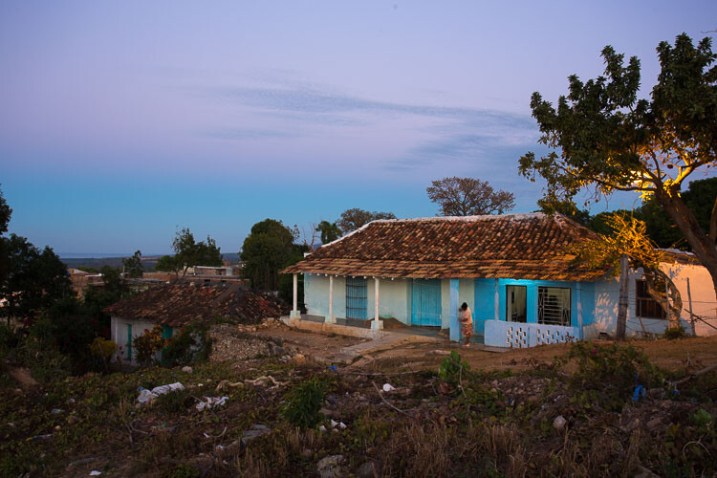
The photos in this article are from a new project I recently started in Cuba. This is not an accessible place for me as I live in London – and I’ll only be shooting there a couple of times a year until I’ve finished my book about Havana. So I also have a project that is closer to home. That way when I am not traveling I have something close by to keep me focused and inspired.

How to Start and Finish a Photography Project

I think a lot of people rely on taking photos when they are outside of their normal day to day life, when they feel more inspired because they are somewhere new and different. Ultimately, though, getting inspired by the world that is immediately around you is much better training for your photography. If you can make something interesting of a scene you see every day, then you can definitely take an interesting photo of anything.

Don’t have too many projects going at once, though. If you are new to doing projects I’d recommend you start with just one.

Consistency is crucial

The more regularly you take photos, the quicker seeing and thinking like a photographer will become part of you. It’s just like going to the gym – regular consistent work results in the biggest overall impact.

How to Start and Finish a Photography Project

Creativity is a habit, and the best creativity is a result of good work habits. That’s it in a nutshell. – Twyla Tharp

Will I realistically have time to shoot this?

All of the points so far have been about refining the possibilities so it makes it easier for you to pick a subject for your project.

Working out the time to do it is a very simple point, but it’s super relevant. Are you going to actually have time to shoot this on a regular basis? You need to keep that creative juice flowing and if you aren’t shooting regularly you will lose your ability to stay inspired and be in the flow with your project.

How to Start and Finish a Photography Project

Keep it realistic – if you only have three or four hours a month, then that’s it. Plan to fit it in easily with your life.

Move out of your comfort zone

Step out of your comfort zone. Comfort zones, where your unrealized dreams are buried, are the enemies of achievement. – Roy T. Bennett

It’s super easy to get in a rut with your photography – shooting similar subjects in similar ways. Telling yourself – this is what I’m good at shooting, or this is what I love doing. While I encourage you to really dive deep into a subject and develop your own style, make sure you are not using it to limit yourself.

How to Start and Finish a Photography Project

Staying where you are comfortable in your photography is not where you are going to find yourself taking stunning, amazing photos. What you’ll be taking are photos that are just like the ones you took yesterday, last week, last year. Photographers need to keep developing and that often means pushing yourself out of your comfort zone.

Don’t park… Arrival is the death of inspiration. Ernst Haas

If you want to do something new, something fresh, something unique – you have to move away from the safety of what you’ve always done, and move toward things you’ve never done before.

For me that’s been things like asking strangers if I can photograph their bellies (scary!), to travelling to new places or accepting commissions for big projects (weirdly it can often be more stressful getting paid to do a very creative job than doing it for yourself. After all, if you come back with a terrible personal project it just sucks for yourself.)

How to Start and Finish a Photography Project

Are you in your zone?

Photography doesn’t always have to be done outside of your comfort zone. Just keep an eye on the things you are choosing to photograph and making sure that you aren’t always playing it safe.

When you ask yourself what you really want to photograph and you come up with something that is both exciting and a little terrifying, that’s great! Then you definitely have something that is going to be interesting for you to explore. The line between being comfortable shooting and being on the edge of your comfort zone is a fine one.

Plan your project – but leave room for spontaneity

I couldn’t find the quote but I’m pretty sure that Napoleon said that you always want to go into battle with a plan, but that you’ll never follow the plan once you’re in battle. It’s the same with photography!

How to Start and Finish a Photography Project

You want and need a plan for how you are going to get this project going. Just don’t be afraid to adapt as the creative forces start working when you are out there shooting. I’ve sometimes had projects totally change shape, even the subject, while I am shooting.

Be open to change and adapt

For example, when I shot my first book, London at Dawn, I thought the book would be all about the workers who are up at 4 am and what they were doing. You know, the market traders, the cleaners, the bus drivers. It seemed like a really cool angle.

When I started shooting, though, not only are people really hard to find at dawn, and are usually inside buildings, and what I discovered was that the light of sunrise and the empty streets were way more interesting to me than tracking down people inside buildings working. I wanted to capture all this quiet and beauty.

How to Start and Finish a Photography Project

Make a project description

I like to have a basic description of my project before I get started which acts as my vision, the essence of my plan. To give you some ideas about how to do this, here are some descriptions of projects that I’ve done:

  • The Homeless World Cup: Create beautiful, colorful portraits of homeless football players that echo the powerful persona of the subjects in sports advertising. Pose subjects in strong and proud postures which, combined with the colorful backgrounds, promote a positive message about the homeless football players and the tournament.
  • Arboreal Dreams: An abstract exploration of trees inspired by my childhood memories of lying on the grass and staring up at trees for hours on end. The look of the photos will be dream-like and surreal, just as my childhood memories are, with the trees morphing into different shapes.
  • The Belly Project: The belly is an under-photographed part of the body (in my opinion) and rarely displayed (unless it’s in perfect condition). It’s often a source of personal dislike. I say free the belly! This project will be shot out on the street in a fun, spontaneous, and candid style. I will approach people with all kinds of bellies – and explore what lies hidden under people’s shirts.

How to Start and Finish a Photography Project

Can you see how in these short descriptions I covered what was interesting to me about the subject, how I wanted to shoot it and the style I would use? This is the kind of thing you want to end up with.

Is it a short term or long term project?

When starting out, I find many people aim to tackle these really big subjects that will take a year or two. That’s totally cool, but it’s really hard to sustain momentum for a two-year project. Even professionals find it difficult – well, I know I do! Life always gets in the way and distracts you from your project.

I think a short term project is the best place to start. Then as you build the skills for completing projects, you can extend yourself.

How to Start and Finish a Photography Project

What are you hoping to achieve with this project? What is the end result you hope to see? To give it to a friend, put it on social media, hang it on your wall, make a book? How many final images will you have?

These all sound quite specific but I find that when I ask these questions they help me to refine why I am doing a photography project, and the more refined I am the easier I find the project is to shoot.

Ultimately, I want to end up with such a good vision for my project that I can almost see the photos before I even step out the door. Of course, things will develop and change but working out these details really helps me when I am out there in the world faced with the actual – so where do I begin?

How to Start and Finish a Photography Project

The power of the deadline

Deadlines are the single best motivation for me to finish a project. To be honest, I rarely feel that I am totally finished. I could go on forever with most projects – there is always more to shoot, there are always more ways to make it better (even if that’s just in my mind). I do, though, like to get to the end and feel a sense of accomplishment, having something to tell the story of the subject I’ve been shooting.

The world is littered with unfinished creative projects of all types. Don’t let yours be one of them! A deadline is an amazing way to help you get it finished. You can pick a time frame – a year, a month, or 6 months. You can also create other deadlines by agreeing to do a project at the same time as a friend. Or by committing to creating a project before Christmas or for an exhibition.

Now – get started!

An idea that is developed and put into action is more important than an idea that exists only as an idea. – Edward de Bono

How to Start and Finish a Photography Project

This is where I get stuck all the time. I often have an amazing concept for a project, and I can see it in my mind. Then I try to get started, and… I procrastinate. This is often because I am waiting for perfect timing – be it the perfect light, perfect models, or a perfect day. All that thinking about perfect ends up feeling totally intimidating. So I have to say to myself – don’t wait for perfect conditions, they don’t exist! Don’t wait for more time, it won´t come.

It won’t be perfect straight out (or maybe even ever!) Perfectionism is the true enemy of creativity. Now think ahead to a few months from now with a finished photo project in your hands that you are showing people. It will feel awesome to know you created something from nothing, a photo project that is all about your passions and creativity. All you have to do now is get started.

Do whatever brings you to life, then. Follow your own fascinations, obsessions, and compulsions. Trust them. Create whatever causes a revolution in your heart. – Elizabeth Gilbert

I’d love to know what you think and if you plan to do a photography project this year, or may you are doing one now. Let me know in the comments below.

The post How to Start and Finish a Photography Project by Anthony Epes appeared first on Digital Photography School.


Digital Photography School

 
Comments Off on How to Start and Finish a Photography Project

Posted in Photography


Weekly Photography Challenge – Insects

02 May

Earlier I share 19 images of bugs for you to use as inspiration.

By wsquared photography & creative

By Craig D

Weekly Photography Challenge – Insects

Time to get outside and find some bugs to photograph. Go macro if you’re so inclined. Here are some articles to help you out:

  • 4 Tips for Photographing Bugs and Insects
  • How to Get Stunning Macro Photos with Your Mobile Phone
  • 10 Tips for Photographing Dragonflies
  • Backyard Macro Photography Safari
  • Behind the Scenes of Marvellous Macro Insect Imagery

By trekchina0907

By LadyDragonflyCC – >;<

By Stefano

Share your images below:

Simply upload your shot into the comment field (look for the little camera icon in the Disqus comments section) and they’ll get embedded for us all to see or if you’d prefer, upload them to your favorite photo-sharing site and leave the link to them. Show me your best images in this week’s challenge. Sometimes it takes a while for an image to appear so be patient and try not to post the same image twice.

Share in the dPS Facebook Group

You can also share your images on the dPS Facebook group as the challenge is posted there each week as well.

The post Weekly Photography Challenge – Insects by Darlene Hildebrandt appeared first on Digital Photography School.


Digital Photography School

 
Comments Off on Weekly Photography Challenge – Insects

Posted in Photography


How to Use Monochrome Color in Photography

01 May

Although photography is relativity new in terms of history, color still provides us with the opportunity to convey meaning and draw the eye. Monochromatic pallets take color photography to the next level.

From the origins of color photography, photographers have honed in on the emotional bond humans have with color. First used in prehistoric cave paintings, red ochre is one of the oldest pigments still in use. Blue was popular in Egypt and later in the medieval era to depict the delicate robes of deities. Fast forward to the present and we are surrounded by the same array of colors that impressed our ancestors. The difference now is only that we are able to harness it for our own uses with much greater ease.

How to Use Monochrome Color in Photography

What is monochrome color?

Black and white photography (which renders a photograph in varying degrees of gray) is the dominant example of monochromatic photography. You may be surprised to learn, however, that monochromatic photography is not limited to black and white.

A classic example is sepia, the warm tone that is reminiscent of aging photographs. Over time, sepia slowly claims the tones of black and white images and transforms them into shades of reddish-brown instead.

Basically, any photograph containing only the hues or tones of a specific color are considered monochromatic. A photograph can be organically similar in tone or edited in post-production by adjusting the blending mode of a solid colored layer. Either way, monochromatic photography is about prioritizing color to enhance mood and atmosphere.

How to Use Monochrome Color in Photography

Red

The color red traditionally conveys vigor, love, anger and valor  – all of which are passionate emotions. The blood vessels in our face expand in times of stress making our cheeks flush red. We bleed red blood when we are hurt. When suffering from lack of sleep (or hay fever) we even develop bloodshot eyes. Red has a unique physical relationship with the human body. We are attracted to it because we are so familiar with it in ourselves.

Red also catches our eye so effectively because it triggers an evolutionary response. As humans evolved, we came to understand red as a color that could portend danger. The color which drew the watchful eye of our prehistoric relatives registers as an attention-grabbing color in the modern day. An example of this is red stop signs or signs warning of danger. Photographers can use this evolutionary connection to catch a viewer’s attention quickly and hold it for longer.

How to Use Monochrome Color in Photography

Monochromatic red conveys unease or unrest but also appears more gentle in nature with the change of seasons. It’s boldness contrasts pattern and texture, and blends with darker shades to lend the illusion of voyeurism or intimacy.

How to Use Monochrome Color in Photography

Orange

Sharing properties with yellow and red, orange is a versatile color most often associated with heat, health, and strength. It encourages extroversion and activity. Red, yellow and orange combine to depict flames and desert landscapes. Orange pumpkins carved out at Halloween lend their color to the annual festival. Red squirrels are actually orange, as is the red fox. The tiger, striped with orange lends its reputation of courage to the color itself.

How to Use Monochrome Color in Photography

A monochromatic orange color scheme could indicates sunset to a viewer.

In the color version of the “chicken or the egg” scenario, the color orange is believed to have been named after the fruit, not the other way around. In ancient Egypt, artists used orange mineral pigment for tomb paintings, and medieval artists used the pigment to color manuscripts. Before the late 15th century, Europeans had no specific name for orange, calling it yellow-red instead. Portuguese merchants, trading orange trees to Europe from Asia also imported the Sanskrit word “naranga” which evolved into “orange” in English.

Orange in photography is atmospheric and dense, but like red, it can also indicate danger or the need for caution. Because of its associations with sunsets and autumn, orange is useful for alluding to the time of day or the season. It can lend energy to a photograph, but its warm tones can also emphasize relaxation and warmth, reflecting the warmth of a fire or candle flame.

How to Use Monochrome Color in Photography

Orange can remind the viewer of the sweet fruit that shares the color’s namesake.

Yellow

Yellow is the color of joy, spontaneity, and laughter! As the color of the sun, yellow lends vibrancy to a photograph, creating lightness and a sense of ease. Alongside red, prehistoric cave paintings were decorated with yellow ochre and ancient Egyptians used yellow in elaborate tomb paintings to represent gold. The painter Vincent van Gohn was a great admirer of yellow, describing the color to his sister in a letter saying, “The sun, a light that for lack of a better word I can only call yellow, bright sulfur yellow, pale lemon gold. How beautiful yellow is!”

Our predominantly positive associations with the color yellow mean that photographers can convey scenes of happiness more effectively with color. Although darker yellows can be associated with autumn, lighter tones are associated with spring, renewal, and clarity.

Highly discernible from any background, yellow is useful for safety purposes. Bright yellow high-visibility jackets and reflectors are worn universally as a safety precaution. However, yellow’s vibrancy can prove to be fatiguing on the eyes, which could be the reason why jarring shades of yellow are sometimes associated with unease and anxiety. Try balancing yellow out with negative space or a range of soft yellow tones to avoid over-saturated photographs.

Green

In some cultures, green denotes jealousy and sickness. In others, it represents wealth or a lack of experience. Overall, however, most would agree that the dominant association of green is with nature. Green’s associations with health and growth stem from the life cycle of trees, seeds, fruit, and vegetables. Its ties to nature have even been borrowed by environmental groups who aim to preserve the natural environment.

Some scientists suggest that the calming and centering nature of the color green is due to the composition of the human eye. Our eyes have three types of receptors called cones, each dedicated to a particular wavelength – red, green or blue. Two of the three types of cones have a reasonably high degree of sensitivity to the green wavelength. When color information is relayed to the brain, the majority of that information is about green. This means that we are able to decipher variations in green tones much more effectively than we can for other colors which make the color more dynamic to a viewer.

Often green has been described as having a calming or even hypnotic effect due to its tonal variations. Monochromatic green color allows photographers to create densely rich imagery that appeals to our eyes and our emotions.

Blue

Blue is another color that has strong associations with nature. It is an incredibly changeable color, with perhaps the most diverse connotations. Overwhelmingly selected by many as a favorite color, blue speaks to many with the emotion even a picture cannot fully dictate. Interestingly, the distinction between blue and green as separate colors is not universal. For example, ancient Japanese people used the word “ao” as a blanket term for both green and blue. Modern Japanese has a separate word for green – midori – but the boundaries between the two colors is not as cleat-cut as that of English speakers.

Blue can convey sorrow, depression, harmony, relaxation, or modernity. When fluorescent, it can lend a scene of other-worldly surrealism. It’s a color that is often tied to internal emotion. A monochromatic blue scheme can subtly allude to a subject’s state or emphasize detail.

With the invention of new synthetic pigments in the 18th and 19th centuries, impressionist arts began to observe the color that existed in shadow. It became the favorite color of impressionist painters to convey nature, mood, and atmosphere. Later Picasso, realizing the emotional effect of blue tones, began to paint only in blues and greens after the death of a friend.

Pink

Often associated with young love, spring time, sensitivity, and femininity, pink takes its title from a flower of the same name. Ancient poets of Rome described the color in their verse, and Renaissance artist Raphael depicted baby Jesus presenting a pink flower to his mother Mary.

The luxurious hue of the color pink has perhaps been most stunningly captured by the films of director Wes Anderson. The rich wedding-cake pallet of movies such as The Grand Budapest Hotel are heavy with the atmospheric luxury and manicured design. But Wes Anderson’s color pallet is also somewhat stifling. The constant presence of the color pink becomes claustrophobic for the characters who inhabit the hotel. It’s presence, depicting traditional ideas of femininity is beautiful and smotheringly repetitious.

Because of its strong associations of softness and joy, pink can be used ironically to contrast darker imagery teetering between dark surrealism and a sweet dream.

Purple

Because of its associations with lavender, many cultures have come to view purple as the color of health and relaxation. As an intermediate between blue and red, purple is a color that stimulates contemplation but doesn’t belie a greater sense of sorrow as blue.

As the process for obtaining the color purple was long and laborious. Only royalty, nobles, kings and priests of the Mediterranean and Eastern Europe wore a very rich strain of purple dubbed “Tyrian purple”.  While purple was worn less frequently by Medieval and Renaissance kings and princes, it continued to be worn by professors of Europe’s new universities, hence the association with wisdom.

While purple is readily available nowadays, it can often be a contentious topic of discussion. In my days of retail, I learned from discerning customers that purple is a color you either love or hate. While I consider myself a fence sitter in the matter, I can understand the passion that the color purple stimulates, worn by the wisest and often the most mysterious individuals in history.

Conclusion

So how do you use monochrome color in your photography? Use this information to use color to add mood and feeling to your images. Please share your monochrome images in the comments below.

The post How to Use Monochrome Color in Photography by Megan Kennedy appeared first on Digital Photography School.


Digital Photography School

 
Comments Off on How to Use Monochrome Color in Photography

Posted in Photography


Wildlife in Context – The Short Lens Approach to Wildlife Photography

01 May

I was on my stomach in the grassy tundra of the coastal plain of Alaska’s Arctic National Wildlife Refuge. In front of me, some 10 meters away, a Pomerine Jaeger sat relaxed on the tundra. 50 meters beyond it, a small band of caribou, some 20 animals, grazed slowly across the landscape. The light was hot and bright, not ideal, but there was a story to be told here. The bird had flown in with the herd, as did two or three other Jaegers which still cruised about over the caribou. They were not interested in the caribou themselves, but Jaegers prey on small mammals which are kicked up by the hooves of the migrating caribou.

Wildlife in Context - The Short Lens Approach to Wildlife Photography

In my image, I wanted to show that relationship so a long lens zoomed in tight, was not going to tell that story. I pulled back, composing so that the caribou were visible beyond the bird, almost lost in the heat waves coming off the summer tundra (above).

Often, you don’t need a lens as long as your leg to tell the wildlife story that matters. Huge telephotos are sexy, don’t get me wrong, I love my 500mm f/4 and drool regularly over other long glass in online camera catalogs. That said, long lenses can be extremely limiting. They help you get close, but close isn’t always what you need to tell a good wildlife story, in fact, it’s often counter-productive.

Wildlife in Context - The Short Lens Approach to Wildlife Photography

Telephoto lenses are key in wildlife photography – or not?

There is a myth, prevalent among wildlife photography enthusiasts, that an effective image is a close image. Headshots or tight, full-body portraits, with perfectly clean backgrounds are the formula for good images… or, not.

While there is a place for wildlife portraiture, that style leaves out one very important element; the story. To include the story, you’ve got to have context. To get context you need to back off. Like my Jaeger on the tundra, the location and the environment matter. To tell the story within the image, it’s ALL that matters.

Rather than give a bulleted list of tips, I thought it might be more illustrative to show you a few images that I think tell an effective story, something less superficial than a portrait. (As a side note, you can use your beloved super-telephoto to make these types of images, you just need to make sure your composition reflects the context. So go crazy, spend your kid’s college tuition on that lens, just be sure to use it judiciously.

Gentoo Penguin, South Georgia Island

Wildlife in Context - The Short Lens Approach to Wildlife Photography
I was guiding on an expedition cruise to Antarctica and South Georgia Island a few years back and spent some time with a group of nesting Gentoo Penguins high on a ridge above a protected bay on South Georgia. I’d been using my 500mm to make some headshots, but realized that wasn’t getting at the core of the story.

This was a unique place to nest, these birds were waddling more than a half mile and 500 vertical feet to get to their rocky nests high on the hillside. THAT was the story, the context. So I slapped on a wide angle zoom and composed with the penguins in the foreground and the blue water of the South Atlantic in the background. The weather and fog only add to the sense of place. When one Gentoo raised its bill to call, I snapped the image above.

Skua, South Georgia Island

Wildlife in Context - The Short Lens Approach to Wildlife Photography
Showing context doesn’t necessarily mean being distant. As I was working on photographing the penguins in the previous image, a Skua, an opportunistic predator that snatches eggs and chicks from careless penguin parents, appeared. It landed nearby, so I lay down flat on my stomach (trying not to think of the reddish brown penguin poop that covered the hillside) and waited. The curious bird, perhaps wondering if I was about to expire and provide an unexpected meal, approached.

The curious bird, perhaps wondering if I was about to expire and provide an unexpected meal, approached.  Eventually, it leaned forward and almost pecked the glass on the front of my lens. As it did, I composed to include a pair of nesting penguins in the background and clicked the shutter. Curious predator, wary prey, and interaction are all wrapped up nicely in the resulting photo.

Sandhill Cranes, Fairbanks, Alaska

Wildlife in Context - The Short Lens Approach to Wildlife Photography

If there is one thing that matters to Sandhill Cranes on migration, it’s having company. On their way south, these birds congregate in huge flocks at stopover locations where they refuel for the next stage. Many eyes mean a better chance of avoiding predators. While in flight, their long V-shaped flocks provide extra lift to each of the birds in line. In other words, for an image to show the real nature of a Sandhill Crane in migration, it’s got to show more than one.

In this case, I was out shooting in the early morning hours at Creamer’s Field State Game Refuge, not far from my home in Fairbanks. It was a foggy morning and the huge flocks of cranes and geese were restless. They kept lifting off in groups of a hundred or so, before settling again. This image shows how they gather, and a bit of the habitat. To me, it screams of migration.

Caribou, Arctic National Wildlife Refuge, Alaska

Wildlife in Context - The Short Lens Approach to Wildlife Photography
I was camped with a couple of clients on a photo tour a stone’s throw from the Arctic Ocean on the coastal plain of the Arctic National Wildlife Refuge. We’d been concentrating our photographic efforts to the late night hours when the arctic light was low and sweet. So I was fast asleep when around midday, I was woken by a distant splashing. Curious, I clambered from my tent and looked out over the river to the south of our camp. Hundreds, no, thousands, of caribou were crossing the river a few hundred yards from our camp.

I grabbed a camera and ran down to join my clients who were standing, watching, and photographing. It took three or four hours for all the caribou to pass. With the last few bands of animals, the light finally improved, and I was able to make this image. The caribou moving across the coastal plain with the distant Brooks Range in the background tells something of the animals, as well as a story about the Refuge itself.

King Penguin, South Georgia Island

Wildlife in Context - The Short Lens Approach to Wildlife Photography

Early in the morning, I landed in a zodiac on the shore of Saint Andrews Bay on South Georgia Island. I’d skipped breakfast to make the early morning landing. The storms that had plagued our trip to that point were holding off for the moment. But a bruised sky lay to the south, threatening more weather to come.

While everyone else scurried off to the main penguin colony a quarter mile away, I lingered around the landing area to make a few images. I concentrated on this single King Penguin, who was standing alone on the beach with a few resting Giant Petrels and fur seals. My favorite of the resulting images, this one, reminds me of a museum display, more than an isolated individual, it says something about the ecosystem the penguin shares. And the soft sunlight and purple sky help set the stage about the storm-battered Southern Ocean.

Composition Techniques

Wildlife in Context - The Short Lens Approach to Wildlife Photography

Brown Bears living in southeast Alaska spend a lot of time wandering beaches where it’s easy to walk and foraging is productive. In this image, my group and I spotted this bear walking toward us down the beach. I wanted to show some of that context, the forest in the background, the gravel shore, and the water’s edge are all important parts of this bear’s life.

Creating images of wildlife in context is a more of a creative than a technical discipline. As I think about it, it’s really more like landscape photography than anything else. There are many articles here on dPS about camera settings, exposure, and sharpness, so I won’t trouble you with you that. But I do want to take a moment to talk about composition.

As I noted, these images are often similar to landscapes. The setting is just as important as the animal you are photographing. Consider the balance of the image, and the aspect of the life of the critter you are trying to show. Do you want your animal to appear as a just another part of its world, or the dominant part? Both can work.

Below are a few images of bears. All show some context, but in some, the bear is the unquestionable subject, while in others the animal is part of the landscape. Neither composition strategy is right, nor wrong. Rather, it depends on your goals for the image and its ultimate use. Most of these images have sold for publication, and editors have selected them for different reasons. But in every case, the context and setting were the selling points.

Wildlife in Context - The Short Lens Approach to Wildlife Photography

This Brown Bear in Katmai National Park was grazing peacefully in this sedge meadow. In this case, I wanted to show the bear in a larger setting, so I pulled back, showing the mountain in the background and the vast, green tundra.

Wildlife in Context - The Short Lens Approach to Wildlife Photography

This is the same bear as the previous image. I made this image just moments after the one above, when the bear, curious at our appearance across the river, rose to give us a look. The composition still shows her in the meadow, the flowers, the sedges, the tundra hill in the background, but she is suddenly, very clearly the subject.

Wildlife in Context - The Short Lens Approach to Wildlife Photography

This aerial image of a Brown Bear searching for clams on a muddy shore in Katmai National Park, Alaska is an extreme example of wildlife in context. Yet, it tells a story. Coastal bears in Katmai spend a lot of time digging clams. It’s a lot of work, there is an enormous amount of ground to cover. This image is effective at telling that story.

Wildlife in Context - The Short Lens Approach to Wildlife Photography

Small in the frame, yet clearly the subject, I photographed this Brown Bear walking along the shore of a river.

Final Note

This is not “spray and pray” photography. Unlike birds in flight, or other fast moving subjects where you shoot a rapid burst of images in the hopes that one will end up sharp and pleasing, showing animals in their environment is more of a mind-game. Spend time composing. Consider the wildlife, their ecology, and place in their environment. Play with the balance of elements in the image, the focal length, and depth of field. Only then, once you’ve weighed your options, should you start shooting.

When photographing wildlife, by all means, make some clean, close-up shots, but don’t stop there. Think deeper about the story at hand, about the environment in which the animal lives, and its relationship to it. Don’t be afraid to go wide, or ease back that zoom.

Are you a wildlife photographer? Have you tried making this type of image? If so, please share your stories and images in the comments below.

The post Wildlife in Context – The Short Lens Approach to Wildlife Photography by David Shaw appeared first on Digital Photography School.


Digital Photography School

 
Comments Off on Wildlife in Context – The Short Lens Approach to Wildlife Photography

Posted in Photography