RSS
 

Posts Tagged ‘Photography’

How to Use the Star Walk 2 App for Milky Way Photography

28 Jun

Photographing the Milky Way is unlike any other kind of photography. The camera settings are completely different, as are the post-processing techniques, and there’s a lot more planning that goes into a successful outing than people (who haven’t done it before) realize.

How to Use the Star Walk 2 App for Milky Way Photography

The Milky Way over Half Dome in Yosemite NP, shot from Glacier Point.

The trick is how to find the Milky Way

You see, finding the location of the Milky Way in our sky is always changing. In the northern hemisphere the best time to photograph the Milky Way is in the late spring to early fall. It isn’t even visible during most of winter because it’s only above the horizon during the day when we can’t see the stars. And of course in the southern hemisphere, everything above is reversed.

How to Use the Star Walk 2 App for Milky Way Photography

The Milky Way over a group of oak trees in San Luis Obispo, California.

When the Milky Way is visible, it’s hard to know when it will be in peak position and in which direction (north, south, east, or west) it will be visible. Then there’s the question of whether or not it will be rising straight up from a certain direction or appear as an arc across the sky.

Plan your trip accordingly

All of the answers to these questions will, of course, determine what foreground subjects you can use at any given time of the year. For example, if you’re trying to shoot Half Dome in Yosemite National Park, you’ll need the Milky Way to be visible in the northeast sky. Plus, you need it there at a time of night when the moon is either beneath the horizon or during a moon phase where the light from the moon will be minimal. If it’s a full moon for example, the Milky Way and night sky will be considerably dimmer than say during a new or crescent moon.

How to Use the Star Walk 2 App for Milky Way Photography

The Milky Way over Delicate Arch in Arches National Park, Utah.

As you can see, there are a lot of variables. That’s where the app Star Walk 2 comes in.

I found this app years ago when it was in its first incarnation, and still use it today for most of my night sky photography planning. This app is beautifully designed and will let you know exactly when and where the Milky Way will be at any given time, along with every other star and constellation in the sky. It’s an incredible resource for photographers. I created a video showing how I use it.

Have a look below and let me know what you think.

Conclusion

I know there are other options and apps that do similar things available as well, so comment below and tell us what you use. I’m always open to trying new things and would love to hear them.

You can find the Star Walk 2 app in the Google Play Store for Android and on iTunes for Apple devices.

The post How to Use the Star Walk 2 App for Milky Way Photography by James Brandon appeared first on Digital Photography School.


Digital Photography School

 
Comments Off on How to Use the Star Walk 2 App for Milky Way Photography

Posted in Photography


Underwater Photography Tips from Aquapac

27 Jun

A wise crustacean once said that it’s better down where it’s wetter.

Singing crabs normally should not be trusted, but when it comes to photography, he does have a point.

So we turned to a more trust-worthy source, our pals at Aquapac – makers of the Underwater DSRL Case – for their top underwater photography tips.

So waterproof up your favorite cam and dive right in to this wonderful splashy world.
(…)
Read the rest of Underwater Photography Tips from Aquapac (449 words)


© laurel for Photojojo, 2017. |
Permalink |
No comment |
Add to
del.icio.us

Post tags:

The post Underwater Photography Tips from Aquapac appeared first on Photojojo.


Photojojo

 
Comments Off on Underwater Photography Tips from Aquapac

Posted in Equipment


Weekly Photography Challenge – Friends

27 Jun

Let’s start our day with a little friendship. It’s good for the heart and soul. Check out 18 friendly photos here.

By Felipe Bastos

By Tambako The Jaguar

Weekly Photography Challenge – Friends

Friendship comes in many forms and can be as varied as the friends themselves.

Your job for this weekly photography challenge is to create a photo of friends and show what that means to you. Friendships can cross borders and boundaries and are formed in the heart, not logically. How can you represent friends in a photo?

By bagsgroove

By Marciaaa.

By Ralf Steinberger

Share your images below:

Simply upload your shot into the comment field (look for the little camera icon in the Disqus comments section) and they’ll get embedded for us all to see or if you’d prefer, upload them to your favorite photo-sharing site and leave the link to them. Show me your best images in this week’s challenge. Sometimes it takes a while for an image to appear so be patient and try not to post the same image twice.

Share in the dPS Facebook Group

You can also share your images on the dPS Facebook group as the challenge is posted there each week as well.

The post Weekly Photography Challenge – Friends by Darlene Hildebrandt appeared first on Digital Photography School.


Digital Photography School

 
Comments Off on Weekly Photography Challenge – Friends

Posted in Photography


7 Tips to Help You Start and Grow a Photography Business

27 Jun

I have been a Digital Photography School writer for the past three years and I have to say, I absolutely love writing and sharing my photography experiences and knowledge. Every time one of my articles get published, my Facebook page and my website get a lot of visitors. I know this is because I use google analytics for my website which tracks visitors on any given day and shows where they spend most of their time (I highly recommend using Google Analytics for your website). I also get a ton of questions on my Facebook business page and the recurring theme of the questions is always something like this, “I love photography, but can you advise me on how to start my photography business and make money from it?”

So I decided to address that burning question in the hopes that it resonates with so many other photographers, who are thinking the same thing and are perhaps a little nervous to write in for the fear of showing their vulnerability. If you are, please don’t be, because everyone, including me, started somewhere and we all had similar thoughts.

#1 – Just Start

If you are thinking about starting a photography business to such a large extent that you cannot think about doing anything else, then just start. Go ahead and take that first step towards making your passion your career. Remember that “done” is so much better than “perfect”.

We, photographers, are always learning new things every day, be it in business, technology or photography skills. If you wait to be a perfect photographer, you will be waiting a long time. Now, I am not saying that you should not invest time and effort in understanding and practice. Skill is very important. But if you are considering learning the craft and the art of photography, then there is no better time than now!

7 Tips to Help You Start and Grow a Photography Business

My lovely friend and fellow photographer during a casual meet up where we exchanged headshots and talked shop over coffee and cupcakes!

# 2 – Use Social Media

Social media has exploded over the past few years in terms of the number of people who are using it for business, no matter what business they are in. Because so much of social media is both visual and text, photographers and writers have a slight advantage in terms of creating and sharing quality content.

So as a photographer, it behooves you to take advantage of the channel at your disposal. But be aware that the whole point of social media is to be social online, showcase your work, show who you are as a photographer and a person. Network, connect and interact online. It is one of the relatively inexpensive ways to make yourself know and recognized.

7 Tips to Help You Start and Grow a Photography Business

I love Instagram and think it is one of the best tools out there, especially for photographers. It is so visual and by engaging the right way, you can get a loyal following, new clients, and industry contacts. But like anything else it takes time and a concentrated, thoughtful approach.

# 3 – Practice, Learn and Practice Some More

Photography is an art form with many different nuances. Each aspect of photography has many different interpretations and to really excel in photography, you have to know and understand the basics.

Light, color, composition, emotion, and movement are all critical aspects of a good photograph. You have to learn them, practice them, and then put your own spin on them to make your own photographs go from good to great. There is no time limit for learning photography. The only way you can get better is to keep at it and photograph every chance you can get.

I carry my camera everywhere I go. I have been doing this for so long that it’s second nature now and I don’t think twice about it. Sometimes I will only shoot ten to twelve frames and sometimes I will shoot several hundred. But what I tell myself every time I bring the camera to my face is that this time I have to try something different and create something I have not created before.

7 Tips to Help You Start and Grow a Photography Business

I always give myself permission and time to play – sometimes it’s with florals from my neighbor’s backyard.

7 Tips to Help You Start and Grow a Photography Business

Whereas other times it is a quick click while hiking in the mountains around Boulder. The snow and the clear blue sky made for a pretty backdrop for this ranger outpost!

#4 – Market Your Work

Marketing is crucial to any business but so few of us really put much into it. Most of us have the mindset that if you produce quality work, then your photography will speak for itself and clients will line up outside your studio for all eternity.

But sadly, that is far from the truth. Like any good product or service, we have to take the time and the effort to educate our clients and our potential clients on why working with us is a great idea. The more you think about promoting your work on a daily basis, the more effort and heart you will put into your marketing. And remember, marketing takes a lot of time. Very rarely does a marketing effort pay off immediately.

7 Tips to Help You Start and Grow a Photography Business

One of my marketing pieces for a show that I am participating in – the show is aimed towards other businesses as well as creative women entrepreneurs!

#5 – Use Your Network

Unless you live in a personal bubble, you have a network. Networks can be social (i.e. friends and family), professional (peers or work colleagues), or industry related (other businesses that support photography).

So I challenge you to do a network analysis (sorry, I am a computer science major from my previous life so I love all this technical jargon!) and figure out who are all the people that you can reach out to and tap into for work. They might not be your direct clients but they may know someone, who knows someone, who knows someone, who is looking for a photographer. Never underestimate the power of word of mouth marketing.

7 Tips to Help You Start and Grow a Photography Business

Word-of-mouth and referrals are the best kind of marketing you can ever invest in and they are free (for the most part). Your only expenses – making genuine connections and friends among your networks!

#6 – Hustle

You have probably heard this adage before – there is no such thing as a free lunch. There are no shortcuts to anything in life, so what makes you think that there are shortcuts to photography?

Photography, like any other profession, is extremely competitive with a relatively low barrier to entry. This means you have to hustle that much harder and longer to make an impression and to have an impact on your business bottom line. If you are starting out, try many genres of photography.

If you are starting out, try many genres of photography. Use any opportunity you can to improve your skills. Make friends with others in the industry and share experiences. Give it your all and eventually, you will reap the benefits.

7 Tips to Help You Start and Grow a Photography Business

I met these two local creatives via social media. We really hit it off well and collaborated on a beautiful spring tablescape inspiration shoot.

7 Tips to Help You Start and Grow a Photography Business

7 Tips to Help You Start and Grow a Photography Business

I also routinely go out for shootouts with many other photographers. It is a chance to make friends in the industry and geek out on all things photography!

#7 – Share

Share your work, your knowledge, and your expertise. The more open and willing you are to share among your peers, your competitors, and your clients, the more satisfying the journey to photography business success will be.

People, especially clients, will understand that you are genuine in building professional and personal relationships and the next time they hear of any photography work, they will connect with you. Photography friends and peers will refer clients if they are booked, help you when you are in a pinch, and work with you on creative projects – all of which as so important for your personal growth and growth of your business.

Conclusion

If you have other tips on growing a photography business, feel free to share with the larger dPS community in the comments below. Remember it’s not what you know, but how good you are building a community.

The post 7 Tips to Help You Start and Grow a Photography Business by Karthika Gupta appeared first on Digital Photography School.


Digital Photography School

 
Comments Off on 7 Tips to Help You Start and Grow a Photography Business

Posted in Photography


6 Ideas for More Creative Landscape Photography

26 Jun

In the following article, you will learn how to do creative landscape photography using a variety of different techniques.

The level of technical skill in photography these days is amazing. A quick Google search for any given location will show well-composed photos, taken during the correct lighting conditions, and edited to perfection. The number of people capable of taking these perfectly crafted photos is also increasing, and therein lies the problem. The number of people with similar photos diminishes all the others when placed together. What’s the solution to this? If you still want to take a photo of a particular landscape consider other creative approaches to photographing it.

So what’s the solution to this? If you still want to take a photo of a particular landscape consider using some other creative approaches to photographing it. Read on for six ideas to help you do better and more creative landscape photography.

6 Ideas for More Creative Landscape Photography - long exposure

This photo has used a long exposure to flatten the water. It’s also the same image used for the 360-degree panoramic image below.

#1 – Infrared Photography

Infrared photography is great fun to experiment with and has been around along time. This particular form of photography uses, as the name suggests, infrared light to capture images. Now you can’t see the infrared spectrum with your eyes, but your camera sensor or special infrared film can.

When using a digital camera you will either need to adjust the White Balance in camera or use post-processing to bring out the signature infrared look (note you can also get an old camera body converted especially for capturing infrared images). What is the infrared look? These photos have dark black skies, bright white foliage and often they have still water caused by a long exposure. In order to take this type of photo with a digital camera you will need a filter or a reconditioned camera.

6 Ideas for More Creative Landscape Photography - infrared

Infrared is a lot of fun if you’re prepared to put the time into learning this technique.

#2 – Aerial Photography

One of the best angles in photography is a high angle looking down, this can lead to some great creative landscapes. The advances in drone technology have seen many people take amazing photos from the sky, though the consumer-level drones still don’t produce the highest quality still images. There are a few options if you want to try out aerial photography yourself.

  • Airplanes – Yes get the window seat of your plane, and take photos from the sky. Ensure you have a high shutter speed, remember you’re plane is moving fast so you need a fast shutter speed to get a sharper image.
  • Drones – The consumer drone will get you great angles, and images with good enough quality for online sharing, but not for printing. The professionals use larger drones that allow their dSLR to be attached to them.
  • Hot air balloons – It’s a great experience to take a hot air balloon ride, and the photos can be incredible. Even more extreme is attaching a camera to a weather balloon, and sending it up almost into space!
6 Ideas for More Creative Landscape Photography - aerial photo

A great angle if you can get it is overhead for a creative landscape. This photo was taken from a hot air balloon, but a drone would also get an angle like this.

#3 – Refraction

The concept of refraction to use light bent through a glass object is essentially how your lens puts an image onto your camera sensor. You can create this effect with spherical glass objects, or even ones filled with water. The image inside the refracting object will be upside down, and a vast amount of the scene behind the ball will be captured.

This is an interesting way to capture a creative landscape because the image inside the ball the image has the characteristics of a fisheye lens. Using a lens with a long focal length will compress the scene.

6 Ideas for More Creative Landscape Photography - refraction

This scene of St Paul’s Cathedral was captured inside a crystal ball, using the refraction technique.

#4 – Shoot a 360-Degree Panorama

This creative landscape idea utilizes post-processing to create a tiny planet effect. The effect is similar to the refraction idea, in that you are creating a globe, however, the look is very different.

To create this photo you will need a panoramic landscape image. If you’re a purest, then the panoramic landscape will be created by rotating the camera through 360 degrees. Once you have your panorama it needs to be reformatted into a square image, flipped upside down, and then the polar coordinates filter should be applied in Photoshop. To find this filter go to filter > distort > polar coordinates.

6 Ideas for More Creative Landscape Photography - 360-degree pano

This photo was turned into a tiny planet. It has the feel of a 360-degree panoramic photo.

#5 – Long Exposure

The different types of images that are possible with long exposures will lead to a burst of creative landscape photography. All you need is a tripod, and a camera capable of taking long exposure photos. The effect of long exposure is to make things move. The main subjects are car light trails, water, and cloud movement. Now, of course, astrophotography is also long exposure, but you’ll learn about that next.

  • Car light trails – These are produced by taking photos that are generally five seconds or longer. An overhead angle from a bridge or tall building is often best for shooting car trails, but photos from street level also look nice.
  • Water – Anywhere there is moving water, a long exposure can look nice. When photographing waterfalls the white water becomes like silk, with exposures over two seconds. The sea and its waves can be flattened by using long exposures over 10 seconds.
  • Cloud movement – Clouds moving across the sky make for a dreamy look in your photo, to achieve this you’ll need lots of clouds, with some clear sky. The faster the clouds move the easier it is to capture this movement. A sturdy tripod is important here, clouds move faster on windy days, so you need the camera to be still.
6 Ideas for More Creative Landscape Photography - long exposures

It’s a lot of fun to play creatively with traffic light trails in a photo. The photo of Big Ben in London is a popular one.

#6 – Astrophotography

One of the most popular forms of photography for those interested in landscapes is astrophotography. The latest cameras help you capture starry skies, with better noise performance at high ISO levels. Recent excursions to the deserts of Dubai and the coastline of southern England revealed a phalanx of photographers interested in this kind of photography. The most popular types of astrophotography are capturing the Milky Way, or showing the rotation of stars around the pole.

  • The Milky Way – Positioning the Milky Way in your frame can create a dramatic and creative landscape photo. This is the subject of a whole different article. The basics are to shoot at the constellation of Sagittarius between March and October in the northern hemisphere. Use the largest aperture you have, with exposures generally being 25 seconds long, and an ISO of 6400 or greater.
  • Star trails – The aim here is to point your camera at the north or south pole, and capture the earth’s rotation during a long exposure. The photo can be an ultra long 15-minute exposure or a series of shorter ones. The best method is to take multipl30-secondnd exposures, and then stack them together. StarStax is a good piece of software that will help you create this type of photo.
6 Ideas for More Creative Landscape Photography - Milky Way

Shooting the Milky Way is hard to photograph, so the chance of your photo being more unique is higher if you can do it.

Which creative landscape will you make?

There are many creative landscape photography ideas, which one will you choose to try out? There are other ideas we’d love to hear about as well, how did you make a creative scene your own?

In this article, I stuck strictly to still photos, but experiments with video allow for time-lapse or cinemagraphs as well. Please share your examples of the above styles that you’ve done, and tell us why and how you create your shot.

The post 6 Ideas for More Creative Landscape Photography by Simon Bond appeared first on Digital Photography School.


Digital Photography School

 
Comments Off on 6 Ideas for More Creative Landscape Photography

Posted in Photography


10 Amazing Photography Tricks You Can do at Home with Everyday Objects

26 Jun

Here is a quick video showing you 10 photography tricks or projects you can try at home using everyday objects. You may have some of these things lying around your house, if not most are inexpensive to buy.

Try some of these ideas:

  • Make it snow indoors
  • Use a magnifying glass for fun effects
  • Create your own light flare
  • Try some refraction using water drops or a glass

Have any others? Please share your ideas in the comments below.

The post 10 Amazing Photography Tricks You Can do at Home with Everyday Objects by Darlene Hildebrandt appeared first on Digital Photography School.


Digital Photography School

 
Comments Off on 10 Amazing Photography Tricks You Can do at Home with Everyday Objects

Posted in Photography


How to Tell a Story With Your Street Photography

26 Jun

Street photographs on the surface may seem like they are independent of one another and can only go so far at telling a story, unlike say photojournalism. In some cases, this can be true, but there actually is a lot of crossover between documentary and street photography. Your street photographs can certainly tell a story.

How to Tell a Story With Your Street Photography

If you look at the individual books or even the entire bodies of work of photographers like Martin Parr, Trent Parke, Garry Winogrand, or Josef Koudelka, you can see that these photographers had a point of view. They were able to tell real stories with their photography.

How do you tell stories with street photography?

But how do you do this? If you are just starting out with street photography, you’re most likely focused on taking good shots and not on overarching themes. You never have to start trying to show comprehensive themes in your work, many great photographers don’t. But if you want to, plan on developing this over time.

The reality is that there is nothing more important than consistent time spent shooting. But while you are developing, here are some tips to help you get there.

*The photos used in this article are all part of a series called Luxury for Lease, which is about the disconnection, hyper-gentrification, conformity, and consumerism that has noticeably increased in New York since 9/11.

1. Create collections in Lightroom and group your images based on ideas and themes

How to Tell a Story With Your Street Photography

When you’re out shooting you want a clear head. Be open to whatever happens, so you give yourself the best chance to get lucky. Sometimes, if you’re too focused on one thing, you will miss everything else around you.

But during the editing phase is when you can really start to figure out what you are shooting. This is where you can develop your voice. Look through your photos, choose your favorites, and start to put them together. Pick out your images that seem to have some similarities in content, tone, or look.

They don’t have to perfectly relate, just in some way. Brainstorm, try a lot of things, and just have fun with it.

How to Tell a Story With Your Street Photography

I use Collections in Lightroom to do this. Collections allow you to put images into a folder without moving them physically on your hard drive. It is a great way to build portfolios of your work and to build and change around stories and ideas.

Over time, these stories will develop. Sometimes they will turn into nothing and you will scrap them, but other times they will morph. Sometimes the seed will develop into a fully formed idea over years of shooting, and the end result will be something that you couldn’t have imagined at the beginning.

That’s the fun part, and it will help you to think critically while you are out shooting. It will add a new layer to your abilities as you are photographing since you will begin to notice things that will fit into your projects.

2. Study the work of other photographers

How to Tell a Story With Your Street Photography

I can’t state the importance of this enough. It is hard to truly fathom the power of this type of photography unless you look at the work of photographers who have lived it for decades. Sometimes seeing what others have been able to do, particularly when looking at how diverse the ideas and styles are, will help you to form your own ideas. You may pick a characteristic from one photographer and a different attribute from another photographer and blend them both into your style.

Some photographers that I recommend you look up for street photography are; Robert Frank, Martin Parr, Trent Parke, Garry Winogrand, Josef Koudelka, William Eggleston, Todd Hido, and Daido Moriyama. Although, there are so many others that I could have mentioned here.

3. Go to the same areas consistently to shoot

How to Tell a Story With Your Street Photography

I like to think about style as consistency in what you shoot versus just how those photographs look. Yes, there is a large element of how your photos look that go into your style, but it’s more than that. It’s about the feeling behind the images.

By repeatedly shooting in the same areas, you will allow this consistency to rise to the surface. You will begin to understand the place better and give yourself more time to come across the right images. Most likely you will know the area well since you can only really photograph consistently in places that are close to where you live – so you will have a nuanced understanding of the place already.

Try to show a feeling for what the area is like under the surface. Capture the feeling of being there. Is it happy or sad, are there fun aspects or stressful characteristics? What makes the area interesting (or not interesting)? There is so much you can do with this.

4. Capture emotions and gestures

How to Tell a Story With Your Street Photography

This is street photography 101, but you can portray so many ideas and feelings based on the expressions on people’s faces or the gestures in their bodies. When putting together a cohesive body of work, this will be a way to add some powerful emotion to push a story forward. Try to understand what people are feeling and attempt to capture them as they show those feelings.

5. Look for images with something going on beneath the surface

How to Tell a Story With Your Street Photography

This is a tip that is hard to explain exactly how to do. Look for images where there is something going on beneath the surface. What that is you don’t exactly have to answer – it could be left for the viewer to decide.

These images will begin to show themselves more often as you start following the other tips in this article. In addition, the more you photograph in the same place and start to understand the place, the more these images will begin to pop out.

6. Think about yourself

How to Tell a Story With Your Street Photography

There are some photographers who show something about themselves in their images. This feeling makes their work that much more powerful. Happy photographers often take happy images, depressed photographers often take depressed images. Some photographers who seem happy on the surface, use their photography to express emotions that they are holding inside. Think about what emotions you are feeling and use them. The more you know yourself, the more you can let that shine through.

Josef Koudelka is one example – he grew up behind a wall so to speak during the Soviet invasion of Prague in 1968. He eventually got out, became a stateless person, wandering and traveling, and he spent much of his life photographing travelers. He has also been working on an ongoing project on the Israeli-Palestinian Walls and on the bleak landscapes that have been influenced by contemporary man. He grew up behind a wall and he was drawn to photographing walls. You can see in his images, even in random places and at random times, that the subjects he was drawn to were the ones that showed his inner feelings.

Putting it all together

This may all seem difficult to do, particularly if photography is your hobby. Don’t get me wrong, it is hard. But if you photograph frequently enough and think about all of this, you can really see your work transform in just a few years. The more you are in tune with it, the faster it should come, and it is very enjoyable to see.

So go out and keep shooting!


If you’d like to learn more about Street Photography, then please check out my ebook The Essentials of Street Photography.

The post How to Tell a Story With Your Street Photography by James Maher appeared first on Digital Photography School.


Digital Photography School

 
Comments Off on How to Tell a Story With Your Street Photography

Posted in Photography


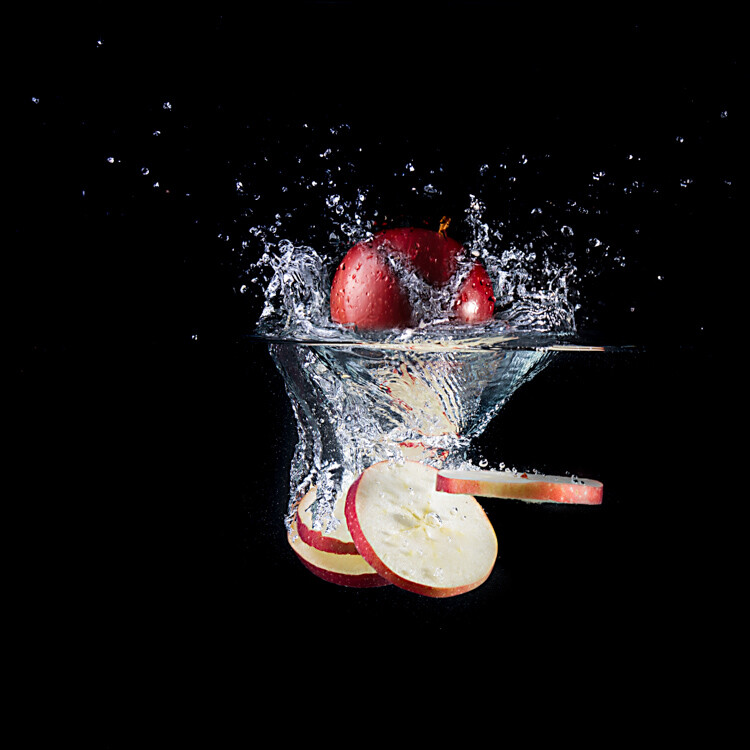
Water Splash Photography Made Easy

22 Jun

How exciting is it to freeze things in action? High-speed photography and water make the perfect recipe to get stunning images – and creating them is incredibly fun and easy too! Here are some tips for doing your own water splash photography.

Water Splash Photography Made Easy

What will you need to do splash photography?

You will definitely need an assistant. He/she will make your life much easier. It’s true that you can do everything by yourself but it’s way more productive if you have some help, a person who can throw the objects into the water, get them out and then throw them again. And again. And again.

Water Splash Photography Made Easy

  • Next you want a glass aquarium with a minimum size of 24x12x16”, preferably made of transparent glass.
  • Set up a table covered in black fabric.
  • Use a black background (paper or textile) standing at a minimum of six feet away from the aquarium.

Setup

Fill the aquarium with tap water, half or 2/3 full, depending on how deep you prefer the subjects to fall. Please keep in mind that if you fill the tank too high, every splash will probably result in water spilling. Please be careful with both flashes and your camera, when working with water.

Gear

Setup Water Splash Photography Made Easy

Any decent camera will be okay, but to obtain better quality you would probably like to use a crop-sensor or full-frame DSLR – or a mirrorless camera, with a good lens. Shooting from a distance, I used a 70-200mm f/2.8 lens at 200mm in order to obtain as much depth of field as I could.

As subjects you can use anything you like. I personally prefer fruits and vegetables because they vary in size, shape, and color.

Water Splash Photography Made Easy

Always use a tripod for your camera. Set the camera at a position where you have the desired framing of the aquarium, leaving enough space up, down and on both sides to capture most of the splashes. After you have positioned the camera, set the focus manually.

Focusing

For this step, ask your assistant to hold the subject in the water approximately where you want to make the splashes happen. Leave the camera on manual focus (or use back button focus). This way, the camera won’t need to refocus every time you make a picture, and you’ll know that the subject will be in focus every time the object is thrown into the same location.

Freezing the water splash

You have to know that freezing the motion (in this case) is done by the flash and not by the camera. Here’s a little bit of theory to explain this.

You have probably already made pictures where you stopped a human or an animal in motion. You’ve achieved that result by using a really quick shutter speed, somewhere between 1/4000th or 1/8000th of a second. But in the studio, where you use flashes or strobes, things change.

Water Splash Photography Made Easy

Your camera has to be in sync with the flashes (sync speed) and in most cases, this results in a shutter speed of 1/125th – 1/200th which is way too slow to freeze fast action. Luckily, there is this magic word called “flash duration”. This is the short period of time when the flash emits light which, if short enough, gives you the freezing effect you wanted.

You can use hot shoe flashes (speedlights) as they generally have pretty short flash duration, but only at very reduced power settings of 1/32 or 1/64 of full power. That results in low light, but you can compensate for that by increasing the ISO and opening the aperture.

The other option I prefer is using strobes with short flash durations. Most manufacturers make the flash duration of their strobes public information and the power at which you get the shortest flash duration. For the pictures of this article, I used Elinchrom ELC Pro HD 500 strobes, which have the shortest flash duration – 1/4000th of a second – at power 3.1.

Setting up the flash and camera

For your water splash setup, you will need two flashes, one on each side of the aquarium, aimed directly at your subject. I prefer to use light shapers which restrict the light to hit only the subject, so it doesn’t spill all over the scene, thus avoiding unwanted reflections and highlights.

For this shoot, my camera settings were ISO 100, 200mm, f/16, at 1/125th of a second.

Water Splash Photography Made Easy

Taking the pictures

This is the fun part! If you an assistant you’ll have to synchronize your movements. As he drops the objects in the water you’ll need to capture the perfect moments. In practice, this means that you will count to three, after which he’ll drop the object while you press the shutter release and pray to get the moment just right!

I sincerely suggest you repeat these four steps for a few hours. I prefer to set my camera to continuous or burst mode (my flashes recycle very fast) and record three or four pictures per drop. That way I increase the probability of capturing the subject and the splash of the water.

Water Splash Photography Made Easy

Some quick tips:

  • Use subjects with vivid color, this way you will have good separation of the subject from the black background and the white/blueish splash. This makes your pictures really pop.
  • If you photograph small subjects, try to use a minimum of 6-10 pieces at once.
  • Try to combine subjects of different sizes, colors, and shapes.
  • The heavier the subject, the faster it will fall, making it harder to capture at the right moment. So take that into consideration.
  • To get larger splashes, use subjects with a larger surface are, or let them fall from a higher position.
  • Wash the fruits and vegetables well before you use them, this way you can keep the water cleaner for a longer period of time.
  • If the water starts becoming dirty, change it. It’s pretty unpleasant as the tank is heavy and you’ll have to do that a couple of times. But the good news is that by doing so, you’ll have to work less in the post-processing phase, while also getting sharper, more cleaner images.
  • Frequently clean the front glass of the tank to get rid of the water drops that tend to accumulate on it.

Water Splash Photography Made Easy

Post-processing tips

This part is crucial! Despite all the efforts you have made to capture the perfect splash, the raw images you’ll get will definitely still need a little bit of polishing and processing.

Water Splash Photography Made Easy

Raw unprocessed image.

I only use Lightroom and Photoshop for post-processing, but you can achieve the desired effects in any preferred image processing application.

Clean up the water

After you’ve selected the image you want to retouch, you’ll first need to clean the water. I suggest that you use the Adjustments Brush, with Blacks set to -100. Apply this brush everywhere on the image except the subjects (that would make the subject too dark).

Water Splash Photography Made Easy

Adjustment Brush settings to apply to the water.

You can use the brush even on the splash itself, because this will make it cleaner and sharper, but be careful not to over do it because you can lose some details on the splash.

Water Splash Photography Made Easy

After the Adjustment Brush has been applied.

Final touches

Now open the image in Photoshop, create a new empty layer, select the brush color black, and start painting the new layer black. Be careful near the subjects, to avoid painting them also. This way you can achieve a clean black background around the subject. You can even paint away small drops of water that you consider unnecessary. Try to preserve a little bit of the surface of the water though.

If you like the painting you applied, it’s time to add sharpness to the image using the Unsharp mask at the level of your taste. You can also add some contrast or saturation depending on the final look you want to get.

Water Splash Photography Made Easy

Water Splash Photography Made Easy

Water Splash Photography Made Easy

Your turn

Are you ready to give water splash photography a try? Here’s another dPS article that can give you some more splash tips, How to do Creative Water Splash Photography with Off-Camera Flash.

If you have any questions please post them in the comments section below, and also share your images so we can see your results.

Bio

Stefan Mogyorosi is a photographer based in Oradea, Romania. He works mostly on commercial projects for the beauty industry, but also likes to do personal projects photographing still life, macro, fashion, portraits, or glamour. Experimenting with freezing motion and working with liquids are his top priorities right now.

Personal page – http://www.mogyorosistefan.ro
Facebook page – https://www.facebook.com/mogyorosistefanphotography/
Instagram page – https://www.instagram.com/mogyorosistefan/

The post Water Splash Photography Made Easy by Stefan Mogyorosi appeared first on Digital Photography School.


Digital Photography School

 
Comments Off on Water Splash Photography Made Easy

Posted in Photography


How to Practice Low Impact Nature Photography

21 Jun

In many parts of the world, spring has blossomed into summer, furry and feathered babies were being born and summer is on its way. Photographers are pulling out their camera gear and finally heading back outside for some nature photography. I am so ready to get out and photograph the bounty that warm weather brings, I bet you are too. Before you head outside though, here are a few tips on having a little lower impact on the nature you’re photographing.

Low Impact Nature Photography - nature in bloom

Spring has sprung so let’s all get outside and shoot. Canon 5DIII, 70-200 @ 121mm, ISO 500, f/4, 1/750th.

Reduce your carbon footprint

When you do head out to do nature photography, consider your carbon footprint. We lead such comfortable lives these days that’s it’s easy to forget that hopping into the car for a two-hour drive isn’t all that great for our environment. Car-pooling with two or three of your friends is an easy way to reduce emissions. It’s a lot more fun to spend the day shooting with friends, too.

Low Impact Nature Photography - shoot with friends

Planning a day trip or holiday to shoot with your friends is not only more fun, it also helps to reduce your carbon footprint when you carpool and share vehicles.

Doubling up

Another way to reduce your carbon footprint is something I call “doubling up.” Whenever you fly somewhere, research what else you can easily see while you’re there. For example, this fall I’ll be a special guest photography teacher for Big Sky Yoga Retreats “Yogatography,” a combined yoga and photography retreat in Montana.

The ranch I’m staying at is only about a 90-minute drive from Yellowstone National Park so it makes perfect sense to add a few days in the park after the retreat ends. Of course, I also save money by combining my visit to Yellowstone with the Yogatography retreat but more than that, I reduce emissions by flying to Montana once instead of twice.

Low Impact Nature Photography - Mammoth Hot Springs

The last time I was in Yellowstone I was only carrying a little point and shoot while I hiked so I’m pleased to be able to “double up” this fall when I’m in Bozeman teaching and have another crack at shooting Mammoth Hot Springs with some beefier gear.

Heed the signs

Once you arrive at your location, heed the park signs. Often, the signs are meant to protect you from harm. But sometimes they’re meant to protect the wildlife around us.

How to Practice Low Impact Nature Photography

On the left, a sign from Antelope Island in Utah requesting that cars and hikers stay on the road to avoid aggressive wild buffalo encounters. On the right, a funny and scary bathroom sign from a Nevada park. For heaven’s sake, don’t slip. There are rattle snakes!

Several years ago in Utah, I left the trail while I was shooting in Arches National Park. My guide quickly pulled me back and pointed out what I hadn’t seen. Right next to where I’d planted my foot was a type of very slow growing fungal plant life that, when crushed, will not revive for hundreds of years.

How to Practice Low Impact Nature Photography - Arches National Park

It’s hard to see, but tucked in and around the rocks and bushes are delicate fungal plants that are easily crushed when stepped on. Canon 5DIII, 24-105 @ 22mm, ISO 100, f/16, 1.5 seconds.

We all want the best, most unique photographs but if we all leave the trail, our combined impact can destroy the beautiful environments we are trying to capture not to mention causing a lot of potential injury to ourselves.

Share special locations judiciously

While I greatly admire photographers who openly teach and share, consider very carefully whether you should share every amazing location you stumble upon with every photographer you know. Unfortunately, delicate environments can’t handle hordes of photographers. The wear and tear of too many people hiking in and out can destroy the natural beauty of the location itself, even if everyone stays on the trail.

Low Impact Nature Photography - secret location

Canon 7DII, 70-200mm with 1.4xIII extender @ 280mm, ISO 1000, f/5.6, 1/250th.

I love to photograph the tiny Key Deer on Big Pine Key in Florida. When I drive the island, I know just where these little creatures like to hang out. I don’t tell very many people about this location though, because the deer have become too habituated to humans, frequently approaching people and begging for food.

Too many human visitors can also frighten wildlife, disrupt nesting, and impact natural reproductive cycles. While complete secrecy about a magical location seems stingy, consider sharing more environmentally fragile places only with photographers who know and understand the impact they have on where they shoot.

Look, don’t touch!

When I see a lush, velvety plant growing at the Chicago Botanic Garden, all I want to do is run my fingertips across its surface. The rule at the garden, however, is to look and not touch. Sometimes I practically have to put my hands in my pockets to stop myself from touching the amazing specimens on display!

Luckily, they have a wonderful Sensory Garden where visitors are encouraged to physically touch the plant life. The Sensory Garden is mainly a teaching and learning area. But by allowing visitors to touch the plants there, it also helps prevent wear on the rest of the garden, leaving it pristine for the thousands of weekly visitors, many of whom are photographers.

Low Impact Nature Photography - velvet leaf

These broad velvety leaves beg to be touched. Canon 5DIII, 24-105mm lens @ 105mm, ISO 1000, f/4, 1/2000th.

If you’re shooting in a wild and remote place, use the same rule as that applies at the Chicago Botanic Garden, and don’t touch the plant life. Imagine hundreds of people walking through that same wild area and touching the same plant you’re touching. It wouldn’t take much before the plant started to wither around the edges, and ultimately turn brown and die. Next time, before you touch, ask yourself whether you’re truly leaving no impact on the plant. If you are impacting it, perhaps reconsider your actions.

Don’t pick the flowers

It probably goes without saying that when you pick wildflowers you’re impacting the environment in a negative way. Acres and acres of wildflowers are a breath-taking sight. A field left with only one or two flowers standing? Not so much.

Low Impact Nature Photography - field of tulips

Like a field of wildflowers, a picked-over field of tulips wouldn’t be nearly as stunning to photograph as this lush bed was. Canon 5DIII. 70-200mm lens @ 111mm, ISO 250, f/4, 1/1000th.

In some locations, it’s also illegal to pick wildflowers. It’s also illegal to remove shells, bones, pottery shards, and petrified wood from many state and national parks. While we humans seem to have a knee jerk reaction to gather and collect things, leaving plants and artifacts alone preserves them so that all of us can visit, enjoy and photograph them.

Avoid leaving tracks

Is that mud flat, playa or sand dune you’re photographing absolutely pristine? If it is, take care not to walk on it or leave footprints. Don’t drive on it or leave tire tracks either. Environmental recovery from this sort of carelessness can take decades before there will be enough wind or rainfall to smooth out your tracks. You’re not only wrecking the image-making opportunity for the next photographer that comes along, you’re destroying the beauty of the location for everyone who visits it.

Low Impact Nature Photography - Cumberland island boardwalk over dunes

On Cumberland Island, in Georgia, the National Park Service has constructed boardwalks so that visitors can view the dunes without damaging them. Canon 5DIII, 100-400mm lens @ 100mm, ISO 12800, f/8, 1/6000th.

Keep wild animals wild

Because I mainly photograph wild horses, I’m frequently asked if I touch, pet, or ride them. These questions always strike me as naive but, because most people are used to domesticated horses, perhaps they think that wild horses tolerate or accept humans more readily than other wild animals. They don’t.

Low Impact Nature Photography - cautious wild horse

Does this wild stallion look like he wants to be petted? He doesn’t. His ears are pinned back and he has an eagle eye on me too. Canon 5DIII, 100-400 @ 400mm, ISO 1250, f/6.7, 1/500th.

The same rules apply to wild horses that apply to any other wild animals. No matter how sweet or cuddly a wild animal seems, never approach, feed, touch, hug, or pick it up. Wild animals are often so much bigger than we are and even if they fearfully strike out with mildly aggressive behaviors, you can be seriously injured. Always keep a safe distance between you and the animal you’re photographing and, in some cases, shoot from the car or another protective structure like a blind. If, as a photographer, you’re afraid you’ll be too far away, buy or rent a bigger lens.

If you’re afraid you’ll be too far away to get a good photo, buy or rent a bigger lens.

Low Impact Nature Photography - don't feed wild anmals

Visitors to Big Pine Key often get too close to the Key Deer that live there. This woman fed the deer her lunch leftovers (!!) and then tried to pet them. This is the perfect example of what not to do when you’re photographing wild animals.

These rules may not seem like much “fun” but they are for the animals’ safety as much as for yours. Animals that become too accustomed to humans become less wild, more dependent on humans for their food, and ultimately nuisances when they start to forage for food in suburban areas. When too many wild animals invade populous areas, they are often culled, which is just a more politically correct word for killed. Keep your distance and keep wild animals wild, free, and alive.

Pack it in – pack it out

You’ve probably heard this bit of advice before. Whatever you carry in with you when you head into a refuge, preserve, or wilderness area, you should also plan to carry out with you. Garbage littering the landscape doesn’t make a very pretty picture. Of course, you can just “Photoshop it out in post-processing” but for the environment’s sake, and for the safety of the animals who might ingest any garbage left behind, take everything you brought in with you back out when you leave.

Low Impact Nature Photography - trash in water

The Salt River Wild Horse Management Group volunteers do an amazing job of regularly cleaning up the river but too many people toss their trash into it rather than carrying everything out with them when they leave. Even the day after a massive clean up effort, these wild horses were drinking next to floating trash. Canon 5DIII, 100-400 with 1.4xIII extender @ 560mm, ISO 1250, f/8, 1/500th.

An even nicer thing to do is to leave the area cleaner than you found it. On your way out, pick up the garbage other less savvy hikers and photographers have left behind and dispose of it appropriately once you get back home.

Leave Fido at home

If you’re a weekend warrior type of photographer – and many of us are – it might seem like a natural thing to bring your faithful pup along with you. In a very few situations, bringing your dog (or any domestic animal) may work out just fine, but at best bringing your dog along is a distraction from making images. At worst, your dog can wreck a field of flowers or scare off wildlife (or get injured).

Low Impact Nature Photography - dogs on boat

These two dogs are having a much better time relaxing at sea than they would be out hiking while you photograph wildlife. Canon T3i, 55-250 @ 240mm, ISO 200, f/6.3, 1/320th.

Perhaps if you’re a macro flower photographer, your well-behaved and leashed dog won’t a problem. He can rest on the path while you shoot. A puppy however (at least any that I’ve ever met) probably won’t be content to relax on the trail. Instead, he’ll be crashing through the flowers, possibly damaging them, and rendering them less likely to be image-worthy for the next guy that comes along with a camera.

Domestic animals affect the behavior of wild animals

If you’re photographing butterflies, birds, or wild animals, your dog should really stay at home for his safety, as well as the other animals. I’m sure that some of you are scratching your heads right now and exclaiming how well-behaved your dog is, but seriously… I’ve been out there on the range photographing wild horses when someone shows up with their “amazing dog.” The horses’ behaviors always change as they become aware of the dog.

Low Impact Nature Photography - alert wild stallion

This stallion has just sighted a hiker and her two dogs on the river bank. He’s alert and ready to protect his family. Canon 5DIII, 100-400 @ 241mm, ISO 500, f/4.5, 1/3000th.

Your dog might be cool with wild animals but the wild animals are immediately on alert. Remember, dogs are instinctually predatory animals and other animals recognize that. The behavior dynamic shifts when you bring your dog, no matter how amazing he is. Yell at me all you want, but please, leave Fido at home. Your dog impacts the environment and not in a good way for photography.

Reduce nature’s impact on yourself

I was in North Carolina a few weeks ago hiking on Shackleford Banks and photographing the wild horses. The first thing I did when I got back to my rental house was to shower off the sweat, sand, sunscreen and bug spray. As I toweled my hair dry, I kept itching my ear. That’s when I discovered the tick. Thankfully it wasn’t attached yet and I could just pick it off my skin but, ugh, so gross.

Low Impact Nature Photography - wear protective clothes

Photo Credit: Eden Halbert. Here I am in on Shackleford Banks in 80F+ degree weather, covered head-to-toe in UPF 50 quick dry clothing. Depending on your environment, wear a hat, sun- and bug-protective clothing, sunscreen and bug spray. Don’t forget to bring and drink plenty of water.

To reduce nature’s impact on you, my recommendation is to wear a hat, sun- and bug-protective clothing, sunscreen, and bug spray. Plus, remember to do what I forgot to do. After your photography hike and before you get into your car, check yourself, your clothes and your camera bag for ticks, burs and other clinging critters.

Teach others

Finally, set yourself up as a good example for your fellow photographers. More often than not, when another photographer crashes around like King Kong, it’s not with the intent to be destructive. It’s usually because he/she doesn’t know any better. If you model more appropriate behaviors, and explain why all these strategies are so important to preserving nature, your friends will follow your lead.

What strategies do you use to lower your impact on the nature and wildlife you photograph? Please share your thoughts in the comments. The dPS community would love to hear from you.

The post How to Practice Low Impact Nature Photography by Lara Joy Brynildssen appeared first on Digital Photography School.


Digital Photography School

 
Comments Off on How to Practice Low Impact Nature Photography

Posted in Photography


Photos from the edge of the earth: World Photography Organization interviews Kiliii Yuyan

18 Jun
An Iñupiaq whaling crew cleans the hide of a polar bear that attacked their camp the previous day. Many Iñupiaq believe that declining sea ice has lead to these animals starving.
Photo by Kiliii Yüyan

Seattle-based photographer and traditional kayak-maker Kiliii Yüyan has spent years documenting the lives of people who live at the edges of the world. We’ve had the pleasure of working alongside him in Seattle and Alaska, but his work has also taken him as far as central Australia and Scandinavia.

In an interview with the World Photography Organization, Kiliii goes into detail about his current project, featuring the Iñupiaq whaling community of Utqiagviq (formerly known as Barrow, AK) and explains what motivates him as a photographer.

A humpback whale and calf feed on anchovies in the waters of Monterey Bay.
Photo by Kiliii Yüyan
California Condors feed on a stillborn calf. Photo by Kiliii Yüyan

Read the full article at worldphoto.org

Watch Kiliii’s talk at PIX 2015

Articles: Digital Photography Review (dpreview.com)

 
Comments Off on Photos from the edge of the earth: World Photography Organization interviews Kiliii Yuyan

Posted in Uncategorized