RSS
 

Posts Tagged ‘Photographing’

Photographing a ‘First Look’: The Pros and Cons for Wedding Photographers

18 Oct

The wedding timeline can be different for every couple. That’s why you need to learn to ask important questions, such as whether they’ve considered a ‘First Look’ or would rather keep it traditional. This simple decision can change the entire course of the day in terms of taking portraits.

Let’s dive in and look at the pros and cons of having the couple see each other before the wedding ceremony.

What is a ‘First Look’?

Traditionally, the bride and groom don’t see each other until the bride walks down the aisle. It’s thought to be good luck, and keeps in line with centuries of tradition.

A ‘First Look’ is where a couple decides to see each other either before the wedding ceremony or before the important events  begin. This new concept is growing in popularity, with many couples opting to go for the first look rather than keeping the ceremony traditional.

Sometimes, as is normal with weddings, other factors will determine whether keeping it traditional or doing a first look is best in terms of both the photography and the day’s timeline.

The pros of having a first look

One pro of having a first look is when the wedding day timeline calls for it due to a schedule that might interfere with the bride and groom portraits. For example, if there isn’t enough time to take portraits after the ceremony because the couple would rather attend their cocktail hour, doing a first look earlier in the day will give you enough time to capture the couple. (Click here for other tips on overcoming common wedding day setbacks).

Another example is if the sun sets early on the wedding day and you’re not sure you’ll have enough light to take the couple’s portraits. This is where a first look can let you choose the best time during the day for the portraits.

Another pro of the first look is that when a couple sees each other before the ceremony it can calm their nerves and help them relax for the portraits. A first look can also act as a seamless transition into the bridal portraits without anyone else being present or having to wait for guests to move to the next event.

The first look will usually give you more time for bridal portraits. After the ceremony, many of the guests will want to congratulate the couple, which can eat up your precious time. They may also want photos taken of them with the couple, cutting further into your bridal portrait time.

A first look can make the transition to the couple’s portraits smoother on a wedding day.

I tell couples that the first look is usually the only time during the entire day they’ll be completely alone. This helps them savor each moment and really lean into each other during the photos. Since the first look typically lasts about ten minutes, it’s easy to transition into portraits of the couple. This works in your favor, as you get to spend more time with the bride and groom capturing real emotions before you seamlessly transition into the couple’s portraits.

A first look can bring out a lot of those nervous emotions and relax the couple before the day unfolds.

The cons of having a first look

One major con of doing a first look is it usually happens in the hottest part of the day or when the sun is at its brightest. First looks are typically done between 11am and 3pm. Photographing in the midday sun has its challenges, and the harsh direct light can sometimes mean changing locations for the bride and groom portraits.

Try to find a covered walkway, or somewhere that keeps the couple out of the sun. Look for large trees with lots of shade, but be aware of spotted light. In direct sunlight it may be easier to find big natural reflectors that bounce light back onto your subject. You can also help fill the shadows with flash or a photo reflector.

Another con to the first look can be the couple needing to get ready much earlier than anticipated just to fit it into the day’s schedule. Be sure to communicate with the couple so everyone knows the best time to photograph the first look and how long it will take.

How to photograph a first look

You can set up the first look in many different ways. A common way is to place the groom in a position where the bride comes come from behind and taps the groom on the shoulder. The groom then turns around and faces the bride. This is where emotions run high, and you can photograph from all angles so they can enjoy the moment.

The best angle is to photograph the groom facing away from the bride as she comes behind him. Then switch to the other side to get the groom’s reaction of seeing his soon-to-be bride in her dress. If you have an assistant photographer, place them at the opposite end of where you are so you can cover it from all angles.

Give the couple time to take in the moment and simply enjoy it.

Another way to do the first look is to have the groom facing the same direction the bride will be walking from. This will give you an instant reaction to them seeing the bride in her dress, so be ready to photograph all of those real emotions.

When you place the groom, take some solid portraits of him to help him relax before the bride walks into the scene. Talk to him, making sure your tone is soft, positive and excited. 

Tell the couple that it’s their time, you don’t exist, and that they should just enjoy the moment. Let them know that kissing, hugging and looking into each other’s eyes is what the first look is all about. 

Once the couple has relaxed and finished with the first look, move right into the portraits by taking them to the location you’ve scouted (if it’s different from the first look location). 

In conclusion

A first look helps you get the most out of your wedding timeline for bride and groom portraits. It also helps the couple relax and feel even more excited about walking down the aisle. Having this beautiful and emotive experience will create more authentic photos, and give you more time to create them.

Ask your next client if they’d like a first look, and refer to these tips when answering their questions. You may be able to help make their special day even more special.

Have you ever photographed a first look? Let us know in the comments.

The post Photographing a ‘First Look’: The Pros and Cons for Wedding Photographers appeared first on Digital Photography School.


Digital Photography School

 
Comments Off on Photographing a ‘First Look’: The Pros and Cons for Wedding Photographers

Posted in Photography


5 Tips for Photographing Handheld Without a Tripod

27 Sep

Are you frustrated by the inconvenience of a tripod and you prefer shooting handheld? Do you want to take sharp images, but without having to lug around such a large piece of equipment?

Fortunately, it is possible to get stunning images, even images in low light, without using a tripod. In fact, tripods often limit your flexibility.

5 Tips for Photographing Handheld Without a Tripod - dunlin

I rarely use a tripod, myself. While I do appreciate the added stability a tripod provides, I find myself struggling to compose images. I prefer the ability to quickly flow from composition to composition. I also like to shoot from angles that tripods struggle to cover. Hence, I have a lot of experience in photographing handheld.

In this article, I discuss various ways you can shoot without a tripod while still getting sharp images. I will show you how, with very little work, you can take your handheld photography to the next level.

5 Tips for Photographing Handheld Without a Tripod - golden retriever and woman

1. Stabilize Your Body Against an Object

I’ll start with the least technical tip for shooting handheld, that is to become a human tripod!

By this, I mean that you should seek to stabilize your body and arms against an object. I find that the ground is an excellent choice (after all, it’s reliably present).

So, when shooting handheld, I often get down on the ground. I’ll lie on my stomach and press my elbows firmly against the soil. Then I can feel fairly confident when taking my image that things will remain sharp.

Photographing Handheld Without a Tripod - aster

I stabilized my elbows against the ground in order to photograph this aster.

If you don’t want to get down on your stomach, that’s okay. You can also try out several other positions.

For instance, you can crouch down and put your elbows on your knees. Or you can tuck your elbows into your body.

You can also find some other object to stabilize yourself against. I sometimes use large rocks or fallen trees when shooting flowers. It pays to be creative.

2. Use Your Camera or Lens’s Built-In Image Stabilization

Does your camera or lens possess image stabilization technology? If so, switch it on!

You see, image stabilization technology is built in by clever camera manufacturers. It reduces (or eliminates) camera shake using image stabilization.

Image stabilization technology generally works in one of two ways. If it’s built into the camera, the sensor physically moves to counteract any camera shake that the camera has experienced. If it’s built into the lens, an optical element inside the lens is what moves.

Regardless, here’s the key takeaway: Image stabilization technology help to minimize or eliminate camera shake.

Photographing Handheld Without a Tripod - urban abstract

Without image stabilization, getting this urban abstract would have been very difficult.

The downside of image stabilization technology is that it’s expensive. Only some cameras and some lenses possess it, and they tend to be on the pricier side of things.

For those of us who dislike shooting with a tripod, however, image stabilization is a worthwhile investment.

3. Shoot with Shorter Lenses

An oft-cited rule in photography circles is this: you can handhold your lens at a shutter speed that is the reciprocal of the focal length (that is, 1/focal length).

This may sound complex, but it’s really not. To find an acceptably fast shutter speed, take the focal length and make it into a fraction with a one on top.

For instance, if you’re shooting with a 100mm lens, you can handhold at a shutter speed of 1/100th of a second or faster. When you’re shooting with a 400mm lens, you can handhold at a shutter speed of 1/400th of a second or faster. Finally, if you’re shooting with a 25mm lens, you can handhold at a shutter speed of 1/25th of a second.

Do you see the pattern? The longer the lens, the faster your shutter speed must be. Conversely, you can use a longer shutter speed when using a short lens.

Photographing Handheld Without a Tripod - golden retriever

I used a wide angle lens to capture this golden retriever in low light.

This is for a couple of reasons. First, long lenses tend to be bigger and heavier, causing more camera shake. Second, longer lenses magnify camera shake, resulting in blurrier pictures.

Therefore, if you don’t have a tripod to cut down on camera shake, you should use a lens that is more forgiving of the rule (based on the 1/focal length rule).

So if you’re shooting handheld, use shorter focal lengths for more success.

4. Shoot in Burst Mode

Another tip for photographing without a tripod is to shoot in burst mode (high-speed drive mode).

To activate burst mode, you simply have to set the camera to high-speed drive mode and hold down the shutter button. If you have a camera with this capability, you’ll hear the rapid-fire sound of images being taken.

Photographing Handheld Without a Tripod - white-morph reddish egret

Burst mode was essential for getting this early-morning shot of a White-Morph Reddish Egret.

This mode helps with handheld photography for two reasons.

First, when you jab the shutter button with your finger, it generates camera shake. When you use burst mode, however, you only press the shutter button at the beginning of your image sequence. This means that later photographs are taken with very little camera shake because the shutter button is not actually pressed just before the image is captured.

Second, when you shoot in burst mode, the mirror doesn’t cause extra vibrations. You see, many cameras (DSLRs) have mirrors in front of the sensor. When the shutter button is pressed, the mirror flips up, briefly exposing the sensor to light (to capture the image).

When the mirror flips up, this causes small vibrations throughout the camera, another form of camera shake. Yet when you activate burst mode, the mirror only flips up only at the beginning of the burst. The later shots aren’t affected by the vibrations caused by the mirror and as a consequence, they are sharper.

NOTE: This last point doesn’t apply to mirrorless cameras as they do not have a mirror, hence the name!

5. Use the self-timer

My final tip for photographing without a tripod is to use your camera’s self-timer.

The self-timer allows you to press the shutter button, and then it waits a specified number of seconds before the image is taken.

Photographing Handheld Without a Tripod - cosmos

I love using the self-timer when photographing flowers.

This useful for the same reason cited above in favor of burst mode. It prevents the camera shake generated when you press the shutter button.

So, next time you’re out in the field and you’re struggling to get sharp images without a tripod, try using the self-timer to reduce your camera shake.

Photographing Handheld Without a Tripod - purple abstract

Conclusion

Many photographers think that tripods are a necessity, but this isn’t necessarily the case. There are methods that you can use to shoot without a tripod while still capturing stellar images.

Photographing Handheld Without a Tripod - architecture ann arbor

  • First, steady yourself by placing your elbows against the ground.
  • Second, switch on your camera or lens’s image stabilization software.
  • Third, shoot with shorter (e.g., wide-angle) lenses.
  • Fourth, photograph using burst mode.
  • Fifth, use your camera’s self-timer.

photography without tripod yellow flower

photography without tripod cosmos

If you follow these tips, your tripod will become far less important, and you’ll take fantastic handheld images.

Have any more tips for photographing without a tripod? Please share them in the comments below.

photography without tripod little blue heron

The post 5 Tips for Photographing Handheld Without a Tripod appeared first on Digital Photography School.


Digital Photography School

 
Comments Off on 5 Tips for Photographing Handheld Without a Tripod

Posted in Photography


4 Tips for Photographing Fog to Create Mystical Images

31 Aug

There’s nothing that I’ve seen so far that compares to the ethereal and mystical beauty of capturing long exposure and photographing fog. There’s something so compelling about the soft silky texture that results from it. So much so, that photographers all over the world are constantly chasing it.

4 Tips for Photographing Fog

In fact, where I live in the Bay Area, we call these people “fog-chasers,” and they spend their days in popular local spots waiting for it to make an appearance just so that they capture this mystical geological phenomenon. The fog can create mystique and drama. It can add mood, be a soft blanket over a scene, a floor, or a wall. It can take many forms in shapes and create some very compelling photographs.

The main challenges in capturing these fog shots are:

  • Focus issues for getting a sharp image.
  • Preventing camera shake.
  • Preparing for the shot.

4 Tips for Photographing Fog

Tip 1 – Finding the fog

This is the most challenging aspect of doing this type of shot since as a photographer you, unfortunately, have no control over the weather. So, what I do is scour the web for weather sites that can provide me with the information I need.

I also check out the weather on the local news religiously as well as follow weathermen on Twitter and Facebook. Once the word is out that fog is on its way, webcams are the best way to monitor it on the day you want to shoot. You can see what the fog looks like and if it’ll be cooperative for the type of shot you have in mind.

4 Tips for Photographing Fog

Tip 2 – Composition

Fog, in general, has a way of turning an ordinary scene into something spectacular. For fog waves, wide landscapes with forest treetops make an interesting subject. So do iconic structures or monuments.

4 Tips for Photographing Fog

Here in San Francisco, the Golden Gate Bridge is a local favorite. At certain times during the year, the fog gets so low that it flows beneath the arches. It serves as the perfect opportunity to cream a soft blanket from these types of long exposures.

Another local favorite is Mount Tamalpais, which consists of long ranges of hills adorned with redwood trees. The way the fog flows over the treetops creates these spectacular waves as it flows through the peak’s ridges.

4 Tips for Photographing Fog - Golden Gate bridge in the fog

Tip 3 – Use an ND Filter

Neutral Density filters are an absolute necessity for smoothing out fog and making it appear almost silk-like. The time of day will dictate the density of the filter needed. If it’s bright daylight out you’ll need something quite dark while if you’re shooting at twilight you’ll need something lighter or you may not need a filter at all.

When using an ND filter, make sure to first set up your shot using autofocus, without the filter. Then set the camera to manual focus and add the filter. This way you’ll assure the proper focus for your shot. Alternatively, you can also use back button focus.

4 Tips for Photographing Fog

Most of the time if the filter is too dark the camera will not be able to focus on a specific focal point. Also, because fog is a moving entity and puts a veil on any element in your composition the camera’s autofocus will most likely fail. Fear not and simply find something in the frame that’s sharp enough to focus on, then lock focus on that spot.

Tip 4 – Experiment with shutter speed

There are two types of fog shots that be taken from the techniques above that will produce different results based on your shutter speed.

4 Tips for Photographing Fog

A shorter shutter speed will give the fog more texture while a longer exposure will make it look silkier and smoother. You’ll need to experiment to see what looks better to you. Sometimes keeping the shutter open too long will result in the fog looking too messy and it could lose its lines and consistency.

Conclusion

Hopefully, these tips are helpful and will inspire you to get out there and experiment photography fog. The most difficult aspect of this type of photography is first finding it, then capturing it in a way that’ll showcase it as well as the scene it should be complementing.

4 Tips for Photographing Fog

In order to achieve this ND filters will help you soften the fog flow and turn it into waves. After that experimenting with shutter speeds will create various results.

In the end, it’s your aesthetic as the photographer that will dictate what is most pleasing to you. I hope that the photos that I’ve captured from the years of shooting the fog will inspire and get you on your way to becoming a fog chaser too!

4 Tips for Photographing Fog

The post 4 Tips for Photographing Fog to Create Mystical Images appeared first on Digital Photography School.


Digital Photography School

 
Comments Off on 4 Tips for Photographing Fog to Create Mystical Images

Posted in Photography


3 Tips For Photographing Kids in Harsh Light

02 Aug

You’ve probably heard that the absolute best time for taking gorgeous portraits is before sunset at golden hour. I love the golden hour as much as the next photographer. But I’m also a mom, and I know the importance of being able to capture photographs of your kids throughout day-to-day life, not just when the lighting conditions are ideal.

Let’s face it – birthday parties, parades, celebrations, and field trips often happen in the middle of the day when the light is harsh and more difficult to work with. How do you capture those special midday moments?!

kids eating popsicles - 3 Tips For Photographing Kids in Harsh Light

You can absolutely take amazing photos of your kids no matter the time of day! In this article, I’ll share three quick and easy tips for those times when you want to capture memories and are photographing kids in harsh lighting conditions.

1. Find or Make Some Shade

One of the easiest ways to approach photographing kids in harsh lighting conditions is to find or make some open shade.

If you’re outdoors, look for a group of trees, a small hill, a tall building, or even part of a play structure that can provide you with a bit of shade for your photo. When you’re looking at the shadows on the ground, try to find a patch of shade that doesn’t have “hot spots” of sunlight mixed in with the shade. Mottled light is generally not the most flattering type of light for photographs.

If you aren’t able to find open shade, you can also create it. I’ve used everything from a sun hat to a couple of friends holding a beach towel in the air to create a small patch of shade for a photo of my kiddos. Be creative!

girl in a watermelon hat - 3 Tips For Photographing Kids in Harsh Light

2. Find Your Light

Unless you’re shooting right at high noon, the light from the sun will still have some direction to it. If you’re familiar with the circle trick, this is a great time to utilize it so that you can easily visualize the direction of the light.

Snapping photos without taking the direction of light into account often results in lackluster images with squinting subjects and uneven unflattering lighting.

kids squinting in the sun - 3 Tips For Photographing Kids in Harsh Light

This is an example of what NOT to do when shooting in harsh lighting conditions. See how the girls are squinting and the light is uneven across their faces?

However, spending just a few seconds thinking about the direction of the source of light makes for a much better image in exactly the same location. One simple way that I often communicate this to kiddos is to ask them to stand with their feet pointing towards the head of their shadow.

two girls backlit by the sun - 3 Tips For Photographing Kids in Harsh Light

Nine times out of ten, this simple instruction quickly orients kids so that the direction of light (backlit) is most flattering. You may still end up with some hot spots across their shoulders and the tops of their heads, but typically the light will be nice and even across their faces, which is really my goal when shooting in harsh light or full sun.

3. Try a Fill Flash

girl backlit with water in the background - 3 Tips For Photographing Kids in Harsh Light

So, what if the background you’re trying to capture doesn’t allow you to orient your child in the best way given the direction of light?

Whether you’re taking photos of a historical landmark or a hometown parade, there is another trick you can utilize in harsh lighting conditions. That is to use your on-camera flash as a fill light to help diffuse any harsh shadows and brighten your subject’s face.

For example, the above image was taken at a local lake. Because of the location of the dock coupled with the time of day, I wasn’t quite able to get the sun all the way behind my daughter, resulting in a bit of a hot spot on the right edge of her face, while the rest of her face is just a bit dark.

If this effect bothers you, give fill flash a try!

This second image (above) was taken at the same time, in the same place. But this time I used my camera’s flash to soften some of the highlights near her face. You’ll notice that the coloring of the water is entirely different when using a fill flash versus without it. Additionally, her eyes seem to have more pop with the flash compared to without it.

Whether or not to use fill flash in harsh lighting conditions is really a matter of aesthetic preference. But it’s certainly worth a try if something feels a bit off when you’re shooting in harsh light.

In a nutshell, don’t be afraid of photographing kids in full sun – it’s easier than you may think. Give it a try, and chime in and share your best images with us below.

The post 3 Tips For Photographing Kids in Harsh Light appeared first on Digital Photography School.


Digital Photography School

 
Comments Off on 3 Tips For Photographing Kids in Harsh Light

Posted in Photography


Tips for Photographing Artwork for Marketing Purposes

29 Jul

You have come a long way as a photographer and people are constantly telling you, “Your photos look great! You should start to sell some!”. As you are excited at the prospect, take their advice, and begin to post photos of printed products on your social media or perhaps you even develop a website.

However, you notice something. When you take an image of your images the color is off, there is a reflection of the lights in the room, and you are generally unhappy with how it looks. Not only that, but you realize your print products do not look that desirable to purchase based on the photo you took.

The reality is taking photos of your print products or artwork (paintings for example) for marketing can be difficult. But for a few dollars and a little bit of work you can increase the marketability (and hopefully sales) of your hard-earned images (and photograph other artist’s work for them too).

Tips for Photographing Artwork for Marketing Purposes - photo of an owl in a rustic wood frame

I create a lot of my own artwork from my images and depend on quality images of my artwork to help market them.

I hope you will learn a few key things while reviewing this article.

You will learn how to make an inexpensive lightbox, how to change lighting direction and source, and how to set up a camera for shooting photos of your photos. With those skills in your arsenal, I hope you will begin to market your own work!

Tips for Photographing Artwork for Marketing Purposes - photo in a frame on a small stand

Pre-matted prints are a common way to sell your work. But in my opinion are difficult to photograph because of the gloss from the cover and reflections is causes. A properly lit lightbox can help you create marketable images of your artwork.

Make a Lightbox for Less Than $ 20

The first thing you will need to do is create (or buy) a lightbox. A lightbox is a simply a structure that provides a neutral background for making images.

This is beneficial because it helps your camera control the color of your image and as well as removing distracting background elements. The construction of the lightbox will allow you to creatively light your artwork and ensure it is evenly lit as well.

Let’s look at how you can build a lightbox for under $ 20. I like this design because it comes apart for easy storage or transportation.

DIY Do It Yourself lightbox - Tips for Photographing Artwork for Marketing Purposes

In the steps below I will show you how to build this simple lightbox.

What you will need:

  • 5 sheets of 3/32” foam core board. These can be any dimension and should be large enough to fit your artwork into once the box is completed.
  • A utility blade
  • And a yard (meter) stick.

Steps to make the lightbox

Use the meter stick to measure in 2 inches from the edge of the foam-core board and then draw a line from the top that is half the length of the board.

Now measure in from the same edge 2 3/32” inches and draw another line paralleling the first. You should now have two lines that are 3/32” apart that span half the board

Using the utility blade, cut out the 3/32” space down half the board.

Tips for Photographing Artwork for Marketing Purposes - diy lightbox cutout

Repeat on the other side of the board so that you have parallel cuts in the board (see below).

Tips for Photographing Artwork for Marketing Purposes

Put that board aside and repeat on two more of the boards. Once you are done should have 3 boards with 3/32” grooves cut into them.

Assemble the walls of the lightbox by sliding the grooves of the boards into each other.

Tips for Photographing Artwork for Marketing Purposes

Place one, uncut board underneath the walls for a bottom and place the other on top. You now have a lightbox!

Display in the Lightbox

You will now use your newly built lightbox for displaying, lighting, and photographing artwork. You will want an easel-style stand that fits the feel of your artwork. If you have any extra foam-core board laying around, consider using that to build a neutral easel that will not detract from your artwork.

Tips for Photographing Artwork for Marketing Purposes - DIY lightbox in use

Once completed with an easel, your lightbox will help you create beautiful images of your artwork such as this metal print of the Aurora Borealis.

Lighting

Getting the lighting in the box set correctly is the most important thing you can do. Correctly lighting your image will remove reflections from the artwork, evenly light it, and ensure the color of the light allows your camera to capture the white-balance of the image correctly.

You may consider backlighting, lighting angle, and lighting intensity to help address these things. For each of these things, you should adjust and modify accordingly until you are happy with the shot.

Tips for Photographing Artwork for Marketing Purposes

I use this light panel to light my products, but a cell phone or other light source will suffice, too!

Lighting Angle

Lighting angle is the most important thing you can do to create a quality shot. Try lighting your artwork from the top and the side and see what you like better.

If your artwork is tilted backward in an easel, lighting it from the top and then shooting the image straight on with your camera will remove the reflection of the light in your final image. Lighting from the top and the sides simultaneously will evenly distribute the light over your print to accurately portray your product.

Tips for Photographing Artwork for Marketing Purposes - canvas print on a stand

This image of a canvas print is lit from the top.

Tips for Photographing Artwork for Marketing Purposes

In this image, it was lit from the bottom.

Tips for Photographing Artwork for Marketing Purposes

This image of a canvas print was lit from the side and creates the best finished product to my eye.

Back Lighting

Backlighting the image is another way to evenly distribute light. To backlight, place a lighting source behind your artwork so that it cannot be seen by the camera. Reflect the light off the roof of the lightbox or the side of it to light your image. A properly used backlight will give your image the appearance of floating in mid-air.

Tips for Photographing Artwork for Marketing Purposes

This image of a metal print was lit from behind with a cell phone and from the top with a light panel.

Lighting Intensity

You will need to control the lighting intensity inside the lightbox. There are several ways to do this.

First, be sure to take advantage of those white walls by bouncing light off them. Second, you may want to cover your light source with something to soften the light. This could be a tissue over the light of a cell phone, or a professional cover on a light panel.

As you progress with your skills you may consider purchasing a professional lighting source that allows you to adjust the intensity of the light.

Tips for Photographing Artwork for Marketing Purposes

I needed to reduce the intensity of the light and adjust my camera’s exposure compensation settings to keep this image from blowing out.

Tips for Photographing Artwork for Marketing Purposes

I changed my lighting intensity to get the proper exposure on this metal print.

Camera Settings and Setup

The next thing you need to do is get your camera set up. I like to use a 50mm lens because it is sharp to the corners and will not distort the final image. If you have a tripod, it is best to use it and set it up in front of your artwork.

Try starting your camera in aperture priority mode, your aperture at a couple of stops past wide open (e.g, if you have a f/2.8 lens stop it down to f/5.6), the white balance on auto and your ISO at 200.

You can alter these settings, but use I like to use a shallow depth of field to emphasize the surface of your artwork. Since a picture is two dimensional you will not have to worry about it being out of focus!

With your camera on a tripod, step down the aperture and shoot at a low ISO to reduce noise in the final image. A slow shutter speed should not be an issue with the camera on a tripod.

Practice Makes Perfect

Each of the things discussed in this article is just a starting point. Be sure to experiment with lighting angles, light sources, intensity, and camera settings to get the most stunning image of your product possible.

Remember, “pixels are cheap”, so make lots of them as you go out marketing your art!

The post Tips for Photographing Artwork for Marketing Purposes appeared first on Digital Photography School.


Digital Photography School

 
Comments Off on Tips for Photographing Artwork for Marketing Purposes

Posted in Photography


4 Tips to Help You Overcome the Fear of Photographing People

13 Jul

Are you someone who shies away from photographing people?

I this article, I want to share with you some of my journey and four tips to help you become more confident photographing people. I went from being fearful of photographing people to absolutely loving it.

Portrait of an Asian woman with a Nikkormat FTN film camera - 4 Tips to Help You Overcome the Fear of Photographing People

She’s holding the same camera and lens I used to take the next photo in this article.

The fear is real

Many photographers who join our workshops tell us they find it a real challenge to photograph people. Whether it’s people they know or complete strangers, so many people struggle to photograph others. I think this my be one reason selfies have become so popular.

When I bought my first camera I was 19 years old and very shy. I had a small group of friends and a few places I enjoyed socializing. But beyond that, I preferred not to interact with others. I loved taking photos – landscapes, flowers, still life, but not people. I could not bring myself to do it.

My sister encouraged me. She said she loved my photos, but they would be better if there were people in them. So I started photographing her.

girl on the beach in the morning - 4 Tips to Help You Overcome the Fear of Photographing People

One of my favorite photographs of my sister when we were on a camping trip in 1986. Shot with the Nikkormat camera above.

Build your courage and confidence

She was a reluctant subject, which gave me more of a challenge. We used to hang out a lot together with a few other friends, and I started photographing them as well. Slowly my confidence built.

Sometimes I would sneak candid photos of strangers. I had bought a zoom lens which made this easier. Being separated by the distance the long lens gave me, I was not as uncomfortable.

After a while I packed my camera and bag and headed off. When I traveled overseas I found it easier. Somehow being a tourist changed things. I became more confident. Even so, there were many people I connected with along the way that I did not photograph and now regret that I was not bold enough.

Asian woman with a camera - 4 Tips to Help You Overcome the Fear of Photographing People

The story continues

I returned to New Zealand after only six months. My sister had died suddenly so I went back. Thankfully, I have a number of lovely portraits of her.

Not long after I landed a job at a daily newspaper in the Illustrations Department. No, I wasn’t doing drawings, this was where the editorial photographers worked. The task of an editorial photographer is to illustrate the story. Hence the department name.

man holding a photo of himself - 4 Tips to Help You Overcome the Fear of Photographing People

There I learned many things very quickly. The most challenging thing I learned was that most photos published in newspaper stories include at least one person in the image. If I was going to make the most of this lucky break I needed to overcome my fear, quickly. I knew I would not keep my job long if I returned from an assignment with no photos of people and an excuse that I was too shy.

It has not been easy and it has taken a long time to really be confident photographing people, most of the time. But not all the time. Sometimes I can’t do it, as I am still essentially a shy person.

Young Thai woman in traditional costume - 4 Tips to Help You Overcome the Fear of Photographing People

4 Tips for Overcoming the Fear of Photographing People

1. Find someone who will let you photograph them.

This might be a spouse or sibling, or maybe a good friend. If you can find someone who enjoys being photographed then you have already overcome the biggest hurdle.

Photograph them whenever you can. Build a photographer/model relationship. Be aware of times you and your model have the most fun and replicate the circumstances again in future.

If things work out well, invite some other people to join you. Sharing your photos with them and asking them to post to their social media accounts will help boost your confidence.

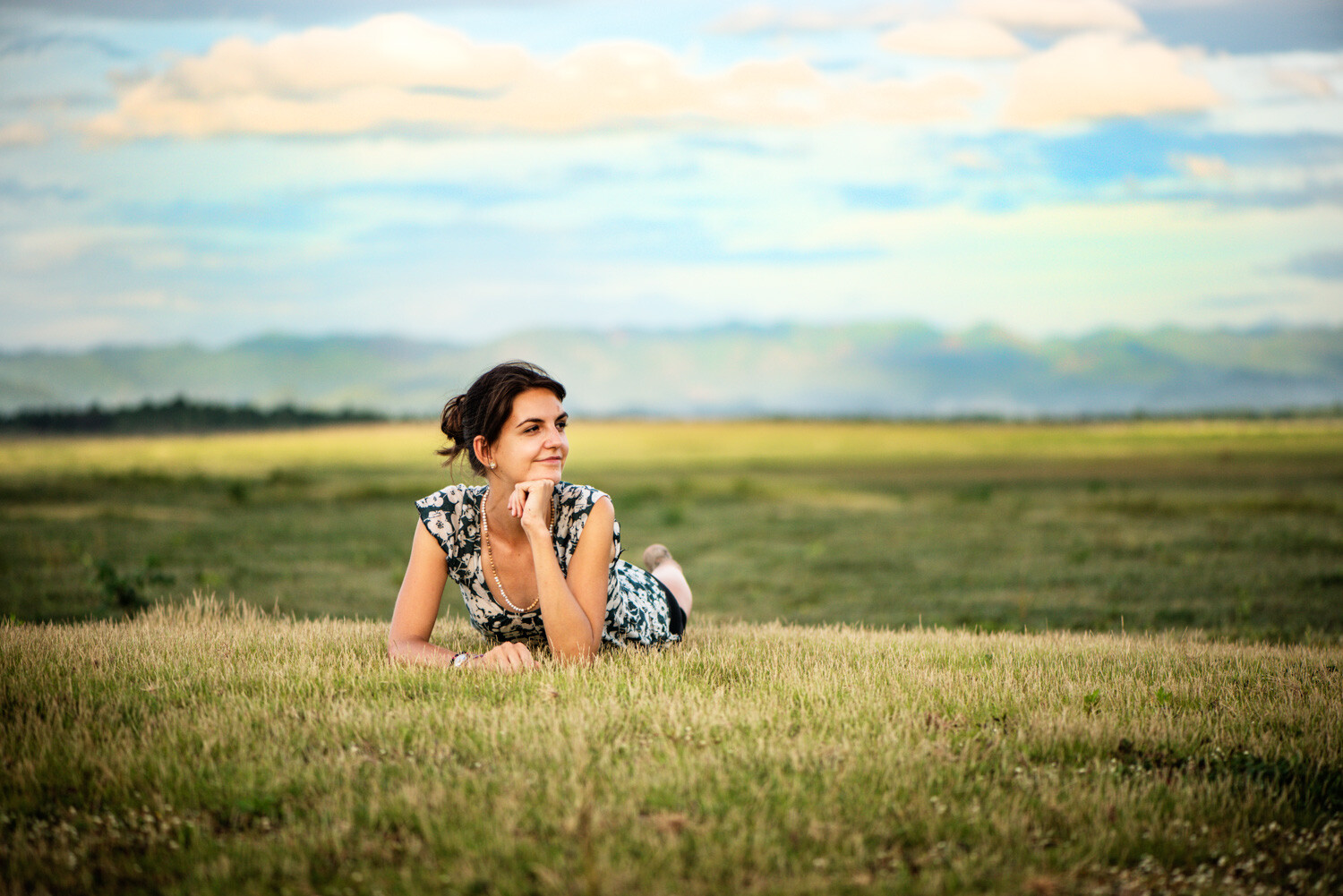
young woman lying on the grass - 4 Tips to Help You Overcome the Fear of Photographing People

2. Join a club or group and volunteer to be their photographer.

Maybe you are already a member of an organization you could offer your services to. You might be the official photographer for your church picnic. Or perhaps you could start making a series of portraits of gardeners in their element for the local gardening club.

Think of other ways you can offer your services which will give you a valid reason to take people’s photographs. I found this a great confidence boost when I started at the newspaper.

Studio portrait of a mud covered woman holding clay - 4 Tips to Help You Overcome the Fear of Photographing People

3. Offer to cover events for your local newspaper or community website.

Put yourself on the spot. Commit yourself to a task. Make a reason that you have to come up with pictures. You can’t offer to cover an event and then only supply photos with no people in them.

Woman being kissed by an elephant - 4 Tips to Help You Overcome the Fear of Photographing People

4. Practice being bold enough without appearing to be rude or pushy.

Practice this without being self-effacing. Having your camera in your hand will help.

People will respond to you very differently if you display confidence when you ask them to take their photo. If you come across apprehensive they may doubt your ability as a photographer and respond with reluctance.

So much of creating a good portrait is in how you present yourself. If your subject is comfortable when they are being photographed you will get better pictures of them. They are also more likely to appreciate the portrait you have made.

Portrait of a rice vendor at Muang Mai Market - 4 Tips to Help You Overcome the Fear of Photographing People

Start Today

If you have been wanting to start photographing people and have not – today is the day to start. You never know how much you might truly bless someone by taking their photo.

Here’s a video story of how I was able to share a special portrait I had initially been reluctant to make.

?

The post 4 Tips to Help You Overcome the Fear of Photographing People appeared first on Digital Photography School.


Digital Photography School

 
Comments Off on 4 Tips to Help You Overcome the Fear of Photographing People

Posted in Photography


A Guide to Photographing Birds and Wildlife in a Wetland Area

13 Jul

A short drive from my home north of Fairbanks, Alaska lies a small wetland. It’s a bog-like mosaic of ponds and water-filled inlets lined with cattails and thickly growing willows. Though much of the year, here in the sub-arctic, the ponds are frozen with a thick layer of ice, during our brief summers the wetland comes alive with birds.

From mid-May until late June, I try to stop by for an hour or so each morning, camera in hand. In reality, an hour is not enough for photographing birds and wildlife, but I know the place well, and can quickly move into the most promising locations. Knowing a place is actually one of the best tools a wildlife photographer can have at their disposal. But there is more to it.

A Guide to Photographing Birds and Wildlife in a Wetland Area - bird photo

This is one of my most-published bird photos. Rusty Blackbirds are a species of conservation concern, and they are common breeders at my local wetland. Images of them in their breeding plumage are relatively rare, so this photo has been in demand. Know your area and the species that live there!

Photographing birds and wildlife

Bird photography has exploded in popularity in recent years. As high-quality, super telephoto lenses have become more affordable, wildlife photography has grown approachable. No longer is it limited to pros or wealthy amateurs who could afford the $ 10,000 USD price tag on the big lenses by Canon and Nikon.

Whether you are shooting with an f/4 bazooka, or a more manageable, compact telephoto lens, field technique, and composition will play the most important role in your success. Here are a few tips for your next visit to your local lake, pond or wetland for photographing birds and wildlife.

Ethics

A Guide to Photographing Birds and Wildlife in a Wetland Area - sandpiper in the water

Pectoral Sandpiper on its way to the Arctic to breed.

First, the most important rule of wildlife photography is – don’t harm your subject! If you are approaching a duck on a pond, and the duck moves away from you, you’ve come too close, too quickly. Back up and try again, this time approaching more slowly.

If the bird flushes, you’ve screwed up badly. You’ve wrecked any opportunity for photos and stressed the bird unnecessarily. Don’t approach birds on nests, they are particularly vulnerable.

In short, be aware of the impact of your actions, and remember that the well-being of the animals you are photographing is more important than the images.

Equipment

A Guide to Photographing Birds and Wildlife in a Wetland Area - 2 photographers with big lenses in the water

Lenses

While a monster 500mm or 600mm f/4 lens is not a necessary piece of equipment for quality bird and wildlife photography, a decent telephoto is definitely an important part of any wildlife photographer’s kit.

There are advantages and disadvantages to different types of telephotos. Big, fast lenses like the aforementioned 500-600mm f/4 options, allow faster shutter speeds at lower ISOs, have exquisite sharpness, and a wonderful, shallow depth of field for isolating your subject. But they are large, cumbersome, heavy, hard to use hand-held, and cost more than a good used automobile.

Smaller lenses, like the increasingly popular telephoto zooms, are more compact, easier to carry and have optics that are improving with every generation. Canon’s 100-400mm and Nikon’s 80-400mm and 200-500mm, are good options. Third party manufacturers have also joined this race in a big way with high-quality 150-600mm lenses coming from both Sigma and Tamron. These lenses still aren’t cheap, but you probably won’t have to take out a second mortgage to afford one.

My choice: For years, I used and relished in using a big Canon 500mm F4. This big white lens was sharp with a beautiful, dreamy bokeh, and its enormous size had great snob-appeal. But as I have begun focusing my efforts on remote areas, the size and weight became a serious hindrance, and more often than not, I found I was leaving it behind in exchange for something smaller.

This winter, even though it broke my heart a little bit, I sold it and the rest of my Canon gear. I now shoot two systems, Sony mirrorless for landscape and night photography, and the Panasonic Lumix system for wildlife and most travel photography.

The micro four-thirds sensor on the Lumix buys me a built-in 2x crop factor. I’m using the Lumix G9 with an Olympus 300mm f4 (600mm equivalent) which, in my opinion, is easily comparable in sharpness to the big Canon lens. So far, I don’t miss the bazooka even a little bit.

bird in the grass

Camera Settings for Wetland Wildlife

Fast shutter speeds are very important for creating sharp images of wildlife with long telephotos. In bird and wildlife photography, particularly in wetland environments, the subjects are in constant motion. I am almost always shooting above 1/1000th of a second, and often much faster.

The aperture serves two purposes, allowing in more light (and thus faster shutter speeds), and controlling the depth of field. Very often in bird photography, you want to isolate your subject from a cluttered backdrop. So shooting wide open, or nearly wide open is important.

Some lenses have a notable loss of sharpness with a wide aperture, so be aware of your own equipment and its limitations. With my own gear, whether it was the Canon 500mm F4 of my previous life or my current Olympus 300mm F4, I find I’m comfortable shooting wide open, or nearly so. Play with your own equipment and see what works for you.

A Guide to Photographing Birds and Wildlife in a Wetland Area - bird in a spruce tree

An f/4 aperture on my Olympus 300mm allowed me to isolate this singing Swainson’s Thrush from its forest environment.

Use the ISO to balance your previous settings. As most cameras on the market these days can easily handle ISO settings of 800, 1600 or above, feel free to crank it up a bit.

Focus settings are also important. When shooting wildlife I almost always use single point focus (so I can grab the subject’s eye), and AI Servo, continuous or tracking focus mode. If the animal moves, I want my camera to automatically stay focused where I want, and not have to constantly be pressing and re-pressing my focus button.

Use a high frames per second shooting rate, and set your camera for burst mode. While my Lumix G9 is capable of nearly 30 fps with the electronic shutter, I rarely go that high. Instead, I opt for a standard high-speed shutter of about 9 frames per second. That is more than enough to assure a fast burst, without cluttering up my memory cards with hundreds of unnecessary shots. A frame rate of anywhere from 5-12 frames per second is sufficient.

Field Techniques

A Guide to Photographing Birds and Wildlife in a Wetland Area - white egret

Getting Close

The first, and most important, skill for getting close to wild birds is really a non-technique, technique. It’s called “patience”. When I have the time to dedicate to a shoot, I will frequently take a small waterproof pad, plop it down on the waterline of my local pond, spritz myself with a generous dose of insect repellent, put the camera on a tripod, and sit down. There, I will remain, sometimes for hours.

In time, the local birds relax after my initial appearance and go back to doing what they do. Often, they will paddle close, forgetting (or not caring) that I’m sitting there, clicking away. Wearing neutral colors will help you blend in. Or if you are really into it (or your subject is very skittish), you can make a “blanket blind” by taking a piece of camouflage cloth, cutting lens holes into it, and throwing it over yourself after you sit down. This simple type of blind will help mask your fidgety movements and obscure your human-outline.

A Guide to Photographing Birds and Wildlife in a Wetland Area - ducks in the water

The other even simpler technique for getting close is to go shoot somewhere the wildlife is accustomed to people. At popular birding areas, wildlife refuges, and national parks, wildlife is frequently used to people being around. The animals will be much less shy, allowing a closer approach.

Regardless of where you shoot, move in slowly, a few steps at a time, pause for a minute, and then move in a bit further. When you see the animal show signs of stress, stop and wait for them relax before approaching again.

Your goal as a bird and wildlife photographer should always be to photograph animals exhibiting their natural behavior. A stressed-out bird, flying or swimming away, will be inherently less interesting than one that is relaxed, or interacting with other animals.

Get Low

A Guide to Photographing Birds and Wildlife in a Wetland Area - bird with long beak

I was laying on my stomach for this shot, my lens just inches from the ground.

The biggest mistake I see wildlife photographers make is shooting from too high a perspective. When standing upright, you will be aiming down on wetland birds that are sitting on the water. This is never the best angle.

Instead, kneel, crouch, sit or even lay down on the ground. The low angle will provide a better separation between your subject and its surroundings, and can create a pleasing blur of foreground and background.

Focus Carefully

Always focus on the eye. While it’s a general rule, with plenty of exceptions, when your subject’s eye is not in focus, you’ve missed the shot. Using a single focus point, select the animal’s eye, focus, and then click the shutter.

Find a Good Background

A Guide to Photographing Birds and Wildlife in a Wetland Area - bird in the water swimming

In the cluttered habitat of a local wetland, it can be hard to find a place where you can isolate the subject from the background. Distance helps. When the bird is well away from its background (this is where getting down low comes in) the backdrop will fade to a nice blur, which is frequently exactly what you will want.

A Guide to Photographing Birds and Wildlife in a Wetland Area - bird in a tree

There was no cropping out this tangle of branches surrounding this White-crowned Sparrow, so I just used them to emphasize the new, green buds and tell a little story about the time of year I made the shot.

Sometimes, particularly when photographing songbirds in the pond-side brush, there is a chaos of branches that disrupt the scene. Shooting with a wide open aperture helps narrow the depth of the field providing some separation. But sometimes showing the habitat becomes a necessary part of the shot. Compose carefully, don’t center the bird, and let it blend in with the scene.

A Guide to Photographing Birds and Wildlife in a Wetland Area - duck swimming

You Don’t Have to Be Close

Sometimes a full-frame portrait isn’t what you want. Some of my favorite wildlife shots show some context and tell a bigger story about the place where the animal lives. In this type of shot, good compositions are vital. You need to show the scene in a pleasing way, and avoid distractions.

A Guide to Photographing Birds and Wildlife in a Wetland Area

I wasn’t particularly close to this Horned Grebe when I made this photo, but the nice reflections and good light provided an interesting setting.

When your subject is too far away for a portrait, think about how it is interacting with its surroundings, and find a way to place it in the broader scene. Think of these as landscape shots that include a wildlife element.

A Guide to Photographing Birds and Wildlife in a Wetland Area

Conclusion

Wildlife photography can try one’s patience. I’ve spent many hours, sitting still, being devoured by mosquitoes, watching, waiting, and taking zero pictures. On such days, I can leave utterly dejected and frustrated. On other days, that patience pays off, with a wild animal in beautiful light, or with some fascinating or humorous behavior.

Wildlife photography is a lot more than just using a long lens. It’s about understanding the animals and the place. It’s about knowing how to compose, to get low, to hide, and being patient. And your local wetland, like mine, is the best place to practice, and maybe the best place to get something remarkable.

Sometimes, you’ll just get something meme-worthy! The two images below, of a beaver at my local wetland, I made within seconds of one another. In the first, he’s blowing a raspberry at me, in the second, he’s laughing at me. What a jerk! (Never underestimate the power of humor in your images).

A Guide to Photographing Birds and Wildlife in a Wetland Area - beaver sticking his tongue out

A Guide to Photographing Birds and Wildlife in a Wetland Area - beaver laughing

The post A Guide to Photographing Birds and Wildlife in a Wetland Area appeared first on Digital Photography School.


Digital Photography School

 
Comments Off on A Guide to Photographing Birds and Wildlife in a Wetland Area

Posted in Photography


5 Crucial Mistakes You Need to Avoid When Photographing Clients

12 Jul

Don’t make these 5 crucial mistakes when photographing clients!

Over the years I have read dozens of articles explaining tips, tricks, and things to keep in mind for successful photo sessions. As I was wrapping up a family shoot recently I started to think about the situation from the opposite end of the spectrum. Kind of as a way of giving some advice to my younger self or other photographers who might still be honing their craft.

So instead of five tips to try here, are five things you should never do if you want your photo sessions with clients to run smoothly.

5 Crucial Mistakes You Need to Avoid When Photographing Clients - family photo

Mistake #1 – Not showing up on time

This one is a bit of a carryover from my childhood and is based on a lesson my dad taught me at a very young age. Whether my siblings and I were going to church, to school, or even just to a friend’s house he would repeatedly stress that we ought to arrive at our destination at least 10 minutes early. If we show up on time, he reminded us over and over again, we’re already late.

That might have been a bit of an oversimplification but the lesson still sticks with me to this day. It’s also one that is especially true when it comes to photographing clients.

If you are to meet at a certain location at a certain time, do not arrive when you have agreed to. Instead, make sure to get there at least 10 minutes early, and that’s the bare minimum. The earlier you arrive the more you can prepare, especially if the session is outdoors or in another type of uncontrolled environment.

fossil watch - 5 Crucial Mistakes You Need to Avoid When Photographing Clients

As my dad would say – if you get there on time you’re already late.

Arriving early allows you to assess the situation, get your cameras and lenses in order, double-check your settings (did you remember to turn on Image Stabilization? Are you still shooting at ISO 3200 from last night’s star-trail experiment?) and mentally prepare yourself for the photo session.

It also sends a message to your clients that you’re responsible and you care about the job. If you show up on time you might end up arriving after your clients. If they’re like my father and got there early they may be wondering where their photographer is. It doesn’t take much effort to arrive well in advance but it can pay huge dividends and set a positive tone for the rest of the photo session.

Mistake #2 – Don’t dress casually

portrait of a couple in a garden - 5 Crucial Mistakes You Need to Avoid When Photographing Clients

Your clients go out of their way to dress for the session. You should too.

This one is a big deal for me because I’m perpetually wearing the same clothes I wore in college: jeans and a t-shirt. It’s my go-to outfit for just about any situation and there were a few times early in my photography work with clients that I treated sessions as just another day out when I could dress casually. However, doing that sends an unfortunate message to your clients that you can easily avoid with very little effort.

Jeans and a t-shirt might seem fine to you but your clients might take this as a sign that you are a bit of a slacker or that you don’t care enough about your work (or them) to look the part. Clients are more likely to see your work as high-quality if you take the time to dress up a bit.

Wear nice clothes as a way of projecting a professional image. It will help clients have a more positive view of you, your work, and the session as a whole.

family sitting on the grass - 5 Crucial Mistakes You Need to Avoid When Photographing Clients

Some clients prefer a more casual style for themselves, and that’s fine. But it never hurts for you to wear nicer clothes as a way of projecting an image of professionalism.

Mistake #3 – Don’t make fun of your clients to get a laugh

Tell me if this sounds familiar. You’re doing a photo session and it’s going reasonably well but your clients aren’t responding quite how you would like. You’re trying to get them to loosen up, relax, and smile but they still seem a bit reserved and hesitant. As a result, your pictures just aren’t quite as good as you know they could be.

So you decide to crack a joke at the expense of one of your clients who is balding, wearing mismatched socks, doesn’t realize his shirt is un-tucked, or maybe just not quite paying attention.

Oh no, the glare from Bob’s head is messing up my camera! Hang on a second, I’m being blinded over here!

Does that scenario ring a bell? I have almost done this on a couple of occasions but stopped each time, and I’m so glad I did. You might think your comments are benign and all in good fun, but the person might be sensitive about the very thing you are pointing out. You could easily cause some hurt feelings or even downright anger.

Your clients might respond to these quips with laughter but on the inside, they may feel something entirely different that could cost you referrals, repeat business, or in-person sales.

family walking on a pathway - 5 Crucial Mistakes You Need to Avoid When Photographing Clients

This family was an absolute joy to work with. I would never want to sacrifice meaningful professional relationships with them or anyone else just for a quick laugh.

The damage that is done by what seems like benign comments could linger for a long time and have consequences well beyond the session itself. Instead of aiming for a cheap laugh, strive to maintain a level of professionalism when interacting with and photographing clients on a shoot.

If you get to know them a bit (another benefit to showing up early!) they will be more likely to loosen up, cooperate, and give you the type of pictures you are really striving for.

Mistake #4 – Don’t use your phone during the session

I know how tempting it can be to reach for your phone during a photo session, and there might even be a thousand good reasons to do so. What if it’s a text from your landlord? Maybe your cousin sent you a Snapchat message about his new job? What if your spouse is going to be home late and needs you to pick up the kids? Certainly, your clients would understand if you peeked at your phone for just a bit…right?

They might understand, but they might also wonder why you are getting distracted while they are paying you to do a job. One little peek at your phone often turns into two, then three, and pretty soon you find yourself missing shots or watching your clients roll their eyes in exasperation because you’re looking at your phone more than your camera.

portrait of teenagers - 5 Crucial Mistakes You Need to Avoid When Photographing Clients

My advice is simple, just ignore your phone. Better yet, leave it in your car or put it on silent and stick it in your gear bag. If you think you might need to check it during a session, tell your clients in advance (yet another reason to arrive early) and ask their permission to take a minute at a certain pre-planned time to do so.

This might seem overly restrictive, but it’s so easy to get caught up in the alerts and messages on your phone that you might not even realize how much you are actually using it. Your clients will probably not notice if you are NOT using your phone, but they will certainly notice if you ARE using your phone and they might not want to hire you back as a result.

Mistake #5 – Don’t over-extend the session

Many photographers charge clients a certain amount based on the length of time that they offer for sessions. One-hour portraits, two-hour engagements, 15-minute minis, or 3 hours of wedding plus 2 hours of reception coverage, for example.

This usually works well and gives both the photographer and the clients a set of shared expectations, but it can backfire in some unexpected ways depending on the type of clients you are working with.

little girl in a blue dress - 5 Crucial Mistakes You Need to Avoid When Photographing Clients

15 minutes in and this precious little girl was ready to be done. Extending the session would have made her fussy and stressed out her parents too.

Know when to fold

There’s a line in an old Kenny Rogers song that’s quite à propos for photographers, “You got to know when to hold ’em and know when to fold ’em”. As a photographer, you need to learn how to read the situation, watch your client’s body language, and get their input on how to proceed when you feel like the session needs to draw to a close.

Your clients might be paying you for a one-hour session but if the kids are fussy, the grandparents are tired, and the shirts are getting sweat marks after only 40 minutes then you really need to find a way to shut it down tactfully and gracefully.

The best way I have found to do this is to keep an open dialog with clients throughout the session. Talk with them as you take their pictures and let them know that you are willing to adjust as needed especially if kids are involved. Your clients expect you to be in charge and they often won’t speak up for fear of being rude or confrontational.

So read the situation closely and take the initiative if you think it’s time to put the camera away. Your clients will probably be glad you did.

couple portrait - 5 Crucial Mistakes You Need to Avoid When Photographing Clients

Talk to your clients and make the call

I have had parents thank me profusely for ending sessions early because their children were wilting after only 30 minutes. I once did an entire one-hour family session in 20 minutes on a single spot in a grove of trees because three generations were involved and the elders were exhausted and tired.

In both situations, I got input from the clients constantly and let them know that I was aware that people were ready to be done even though there was still time left on the clock.

The time might not be up, but if the session needs to be over then you have to bring it to a close. Extending it needlessly just to fill the time allotted could cause more headaches than it’s worth. Alternately, don’t go over your time unless you get permission from your clients. If they are expecting one hour and that time is up, don’t keep shooting unless you’re sure it’s fine with them. Doing otherwise could come across as rude or insensitive, no matter how good the pictures turn out.

Conclusion

I hope this gives you a few ideas to try or, more accurately, to avoid the next time you are photographing clients. If you have any tips on what to avoid I’d be glad to have your input in the comments below, and I’m sure other dPS readers would as well!

The post 5 Crucial Mistakes You Need to Avoid When Photographing Clients appeared first on Digital Photography School.


Digital Photography School

 
Comments Off on 5 Crucial Mistakes You Need to Avoid When Photographing Clients

Posted in Photography


A Beginner’s Guide to Photographing Flowers

21 Jun

Photographing flowers is one of the most enjoyable and rewarding types of photography around. Yet it can be surprisingly difficult, even for more seasoned photographers. Getting strong flower images often requires new settings, new lighting, and new gear, not to mention a new approach to your subjects.

flower photography macro abstract - A Beginner's Guide to Photographing Flowers

In this article, you will learn the ins-and-outs of flower photography. Starting off with a discussion of flower photography gear and camera settings. Then moving into flower photography lighting, focusing primarily on the best types of natural light. Finally, you’ll get few guidelines for strong flower photography compositions.

Gear

There are a few types of flower photography gear to think about: cameras, lenses, and accessories (such as flashes and tripods).

flower macro photography abstract red tulip - A Beginner's Guide to Photographing Flowers

1 – Cameras

My camera recommendation is straightforward: the best cameras for photographing flowers are DSLRs. They offer great flexibility in terms of settings and have a huge array of excellent lenses available.

Which DSLR camera should you use? Especially if you are a beginner, it matters little. Most DSLRs allow for outstanding quality images, whether marketed for professionals or consumers.

Mirrorless cameras are another option. However, the macro lens line-up is still fairly limited. So at least for the time being, I’d go with a DSLR.

clematis flower - A Beginner's Guide to Photographing Flowers

I took this clematis photograph using a DSLR and a dedicated macro lens.

2 – Lenses

First, take note: It is possible to get good images of flowers using any lens, macro or non-macro, wide-angle or telephoto. I have taken some of my best flower images using a Canon 50mm f/1.8 lens.

flower photography macro abstract poppy - A Beginner's Guide to Photographing Flowers

I took this poppy image with my Canon 50mm f/1.8 lens.

On the other hand, the higher your lens’s magnification capabilities, the more opportunities you’ll have. You can make intimate and detailed images of flowers. You can also experiment with more abstract photography techniques.

This is why I generally recommend a dedicated macro lens for flower photography. Such a lens usually offers life-size magnification, pin-sharp images, and excellent bokeh. Some of these are available for a decent price, and I have written previously about choosing the perfect macro lens.

flower photography macro yellow - A Beginner's Guide to Photographing Flowers

This image was taken using a dedicated macro lens.

Another option is to use a regular lens (often a telephoto lens) plus extension tubes. Extension tubes are a cheap way of reducing your lens’s minimum focusing distance, therefore allowing for you to shoot at higher magnifications. The primary downside to extension tubes is flexibility.

When mounted between your camera and lens, extension tubes greatly decrease your maximum focusing distance, preventing you from quickly changing your point of focus. That is, with extension tubes mounted, you cannot take images of distant objects; you are restricted to only subjects within a few feet.

A third way of doing inexpensive flower photography is to freelens. By detaching the lens and placing it in front of the camera body, you can increase magnification (while also generating some interesting effects). I often do this with my Canon 50mm lens and backup body, because there is a risk of getting dust in the sensor.

pink coneflower - A Beginner's Guide to Photographing Flowers

I used freelensing to photograph this coneflower.

3 – Artificial Lighting

Flower photographers often like to use artificial lighting (e.g., flashes or ringlights). These can be both bulky and costly. I prefer natural lighting, but a flash can be especially useful in situations when the natural light isn’t ideal; for instance, bright, midday sun.

4 – Tripods

Flower photographers rarely leave home without a tripod. This is where I’m going to break with the prevailing opinion and say – you don’t need a tripod.

Let me qualify that statement. You don’t necessarily need a tripod for photographing flowers. You can shoot all kinds of pleasing flower images while handholding your camera. But there are certain techniques that do require a tripod. I will discuss those below.

white flowers - A Beginner's Guide to Photographing Flowers

I photographed these aster flowers without a tripod.

Camera Settings

Flower photographers generally aim for one of two looks: sharp throughout the frame or shallow focus.

Sharp throughout the frame requires a very narrow aperture, especially at higher magnifications, often at f/16 or beyond. This is where a tripod is necessary, as this is difficult to do without one. It may also require special techniques (i.e., focus stacking) in order to prevent the diffraction that comes from higher apertures.

flower photography macro dahlia - A Beginner's Guide to Photographing Flowers

An example of a “sharp throughout the frame” look.

However, my personal preference is shallow-focus macro photography. This requires no extra equipment, no flashes, and no tripod. Instead, you use a wide aperture (in the f/2.8-f/7.1 range) to render a small portion of the flower in focus.

The rest of the image is blown out of focus which can produce unique and stunning effects.

flower photography macro daisy abstract shallow focus - A Beginner's Guide to Photographing Flowers

This daisy photograph is an example of my preferred type of flower photography with only a small part of the subject in focus.

In both cases, it is the aperture that is important. The shutter speed and ISO should be adjusted in response to the aperture (though I wouldn’t recommend dropping your shutter speed below 1/160th or so unless you have very steady hands or some form of image stabilization).

Lighting

I am going to primarily discuss natural light for photographing flowers. This is not because artificial light in flower photography is useless, but because I think it’s much more enjoyable to experiment with the light that’s available.

My first piece of lighting advice is to shoot on overcast days. When the sky is cloudy, the light becomes diffused. The flower will be evenly lit, and the soft light makes colorful petals pop.

tulip flower photography abstract macro - A Beginner’s Guide to Photographing Flowers

This tulip abstract was taken on an overcast day, which produced deeply saturated colors.

My second piece of lighting advice is to shoot in the morning or evening when the sunlight is golden. This prevents strong sunlight from falling on the flower and can generate some outstanding images.

flower photography macro evening light - A Beginner’s Guide to Photographing Flowers

This image was taken in the evening when the light was soft and golden.

I also like to shoot in the shade with the sun behind me, so that the bright sunlight is falling behind the flower (but not on it directly). One way to ensure this lighting is to find a flower that is in the shadow of a tree. Another is to cast the shadow yourself, by using your head, arm, or even your camera bag.

flower photography macro hyacinth - A Beginner’s Guide to Photographing Flowers

I cast a shadow over this grape hyacinth, in order to avoid the direct light of the sun.

Composition

A final aspect of flower photography to consider is the composition. This may seem daunting for the beginner, but there are a few simple compositional guidelines that will help you take better flower photographs instantly.

flower photography macro abstract - A Beginner’s Guide to Photographing Flowers

Fill the frame with your subject

In flower photography, you rarely want to have a lot of empty space in your frame. More empty space means more opportunities for distraction, for confusion, and for loss of impact. So instead of leaving space around the flower, move in closer to fill the frame as much as you can.

flower photography macro tulip - A Beginner’s Guide to Photographing Flowers

The more colorful, the better

When photographing flowers, you often have a whole palette of colors right in front of you. Use it to your advantage!

Put color in the background by placing another flower behind your main subject. Add color to the foreground by shooting through several other flowers.

macro photography flower colorful abstract - A Beginner’s Guide to Photographing Flowers

Keep things clean

In flower photography (or any type of photography, really), it’s important to have a point of emphasis (or a focal point). This can be the edge of a petal, the flower itself, the flower plus its environment, but regardless, you must ensure that the viewer’s eye is drawn to this spot.

One of the easiest ways to guarantee a strong point of focus is simply to have little else but that point of focus. I hope this sounds simple because it is. Hence, before taking a photograph, rid your potential composition of all distracting elements. This includes out-of-focus stems, as well as bright colors or dark spots in the background that don’t fit the image as a whole.

Think simplify.

macro photography flower abstract rose - A Beginner’s Guide to Photographing Flowers

The eye immediately focuses on this rose stamen.

Conclusion

By following this guide, you should be on your way to becoming an excellent flower photographer. While there are a number of elements to considergear, settings, lighting, and compositionI feel confident that you’ll be taking strong flower photographs in no time.

Any questions about photographing flowers? Let’s discuss them in the comments!

macro photography flower colorful abstract - A Beginner’s Guide to Photographing Flowers

The post A Beginner’s Guide to Photographing Flowers appeared first on Digital Photography School.


Digital Photography School

 
Comments Off on A Beginner’s Guide to Photographing Flowers

Posted in Photography


Consent in Photography – What to Think About When Photographing People

10 May

You might not think about it, but as a photographer, you possess a certain power over the people you photograph. In her well-known book On Photography, Susan Sontag wrote:

”To take a photograph is to participate in another person’s mortality, vulnerability, mutability.”

Consent in Photography – What to Think About When Photographing People - street portraits

Photographing someone exposes them to scrutiny, both by others and by themselves. The photographer captures a representation of the person which may be very different from how they see themselves; it’s a representation made by someone else. This is not a bad thing or a good thing, but it is the basis for this discussion about consent in photography.

What is consent in photography?

People have a basic right to integrity, to make their own decisions about their bodies. Consent is someone’s agreement for another person to do something that would violate their integrity if it were done without their approval. For instance, we can consent to take part in a medical examination, joining a dance, or performing on stage, all of which would be wrong for someone to force us to do.

So how is this relevant to you? When do you need to ask for consent in photography, and how is it done?

Silhouettes at sunset on the beach in Brighton, England. - Consent in Photography – What to Think About When Photographing People

Consent in photography

When it comes to photography, the absence of consent usually isn’t about a direct physical violation. It’s (fortunately) rare for someone to be dragged into a studio against their will or forced to pose. The legal and ethical issues have more to do with the ”aggression” of the act itself, the right to privacy, and also to some extent the control the person may want to have over how they’re represented.

Even if you may not have considered it in those terms, you’ve probably encountered the question of consent if you’ve ever taken photos of other people, especially if you do street photography. For example, maybe you’ve considered whether to photograph people kissing or taken a photo and received an annoyed or angry expression in return.

Photographing demonstrations and consent. - Consent in Photography – What to Think About When Photographing People

When considering consent, you need to keep in mind both the making of the photograph and its publication.

For instance, imagine that you’ve been hired to photograph a wedding reception. The consent in these situations is often implied, meaning that even if you’re an outsider in a private space at a private occasion, you can assume that photographing the guests is okay unless they specifically ask you not to. However, this implied consent does not extend to publication on your website or anywhere else, so you’ll have to ask for explicit consent from photographed persons before publishing those photos.

When do you need to ask for consent?

 Consent in Photography – What to Think About When Photographing People

Photographing children and consent.

Legalities

Laws obviously differ from country to country, so you should familiarize yourself with the laws concerning photography in your country or where you travel. For many places, you can find handy summaries of your legal rights as a photographer.

In general, it’s legal to take and publish photographs in and from a public space without asking, whereas taking photographs in a private space requires consent. Selling a photograph usually requires consent from the persons in the picture. If you’re unsure or traveling to a foreign country, it’s always worth looking up the rules.

Anonymous street photography -- tips on consent in photography.

Ethics

Apart from the legal aspect, there is also an ethical one. This one is up to you and your values. Do you feel it’s okay to take a picture of a child playing on a beach or publish a series of portraits of people leaving a bar on your website, without asking first?

We all take part in creating the atmosphere and shaping the attitudes of the society we live in or the communities we visit. Thinking about consent makes it easier to decide which photographs are worth making and which ones are not.

Consent in Photography – What to Think About When Photographing People

Photographing Pride parades and other festivals where people may wish to remain anonymous.

In the end, there’s a spectrum of situations in which you can ask for consent. The range goes from just asking when you’re legally required to do so, to asking every single time you take a photo with a recognizable person in the frame. Don’t expect that doing unto others what you want them to do to you will always work in these situations. People’s attitudes toward being photographed differ a lot between individuals.

Interpreting the law in its least strict sense means you may never need to ask for consent as long as you avoid certain situations, whereas asking every single time will help you avoid unpleasant confrontations. Consent may seem tricky, but in the end, it’s not. All it requires is awareness of the law, knowing your own limits, and respecting the people around you.

Street photography, religion, anonymity, and consent. Consent in Photography – What to Think About When Photographing People

Getting consent in practice

So you’ve decided that you are required to or want to ask for consent from someone you’d like to photograph. What does that actually mean? How do you get a person’s consent to photograph them and maybe publish their picture somewhere?

To get written permission to photograph someone and use their photograph, you can use consent forms or a model release.

There aren’t any correct or incorrect forms; you can make your own and include whatever you want in it. However, the form should at least contain the photographed person’s name and what they’re consenting to (being photographed and the photographs being published in a certain place or a specific context).

The purpose and date are good to add, but it’s also good to keep forms simple so there won’t be any question as to whether the person who signs the form understood it or not.

Who do you ask for consent to take and publish pictures? Consent in Photography – What to Think About When Photographing People

Who do you ask for consent?

Implied consent

Implied consent is when you can assume that the subject is okay with being photographed without explicit written or oral permission. This requires that the person understands that they are being photographed and that they react in a way that implies that they’re okay with it.

As a paid event photographer, you can often assume that the guests know that they may be photographed and that they’ll approach you if they don’t want to be photographed. You can also put up a clear sign at the venue, identifying you as the photographer and explaining that guests can ask to be avoided in the photos if they wish.

In my experience, it’s very rare that people aren’t okay with being photographed at weddings or other events.

Publishing pictures taken at private events often requires permission. -Consent in Photography – What to Think About When Photographing People

Publishing pictures that were taken at private events often require permission.

There are many consent-related issues to consider in street photography. Tips on how to avoid most issues are presented in this article on how to take an anonymous approach to street photography.

And if you’re unsure, you can always just ask!

Summary

This article is a very general overview of what consent in photography entails, with the intent to inspire you to think about the subject. I have no legal training, so please only use this article as a basis for discussion, and please do add your own ideas to it!

Do you think about consent when you’re making photographs? Which of the photos in this article would you have made sure to get consent for, and which do you think don’t call for consent? Have you ever wished that a photographer had asked before taking a picture of you? I’d love to hear your thoughts on this, please add your comments below.

In the end, maybe we can participate not only in the photographed person’s mortality and vulnerability, but also in their pleasant memories, self-confidence, and all the positive sides of mutability.

The post Consent in Photography – What to Think About When Photographing People appeared first on Digital Photography School.


Digital Photography School

 
Comments Off on Consent in Photography – What to Think About When Photographing People

Posted in Photography