RSS
 

Posts Tagged ‘Photographically’

Tips for Learning How to See Photographically

09 Aug

Open your eyes: learn to appreciate the wonder that is all around you

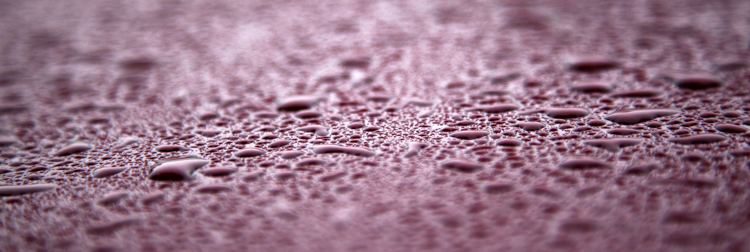
The camera is definitely a tool that can be used to capture moments in time, and record memories for posterity. However, the potential is there for so much more than that. If you think of the assembly of plastic, metal, and electronic gadgetry you hold in your hands as a paintbrush, and the world around you as paint, then untold possibilities await.
1 rain drops 9682

Look at ordinary objects in a new way

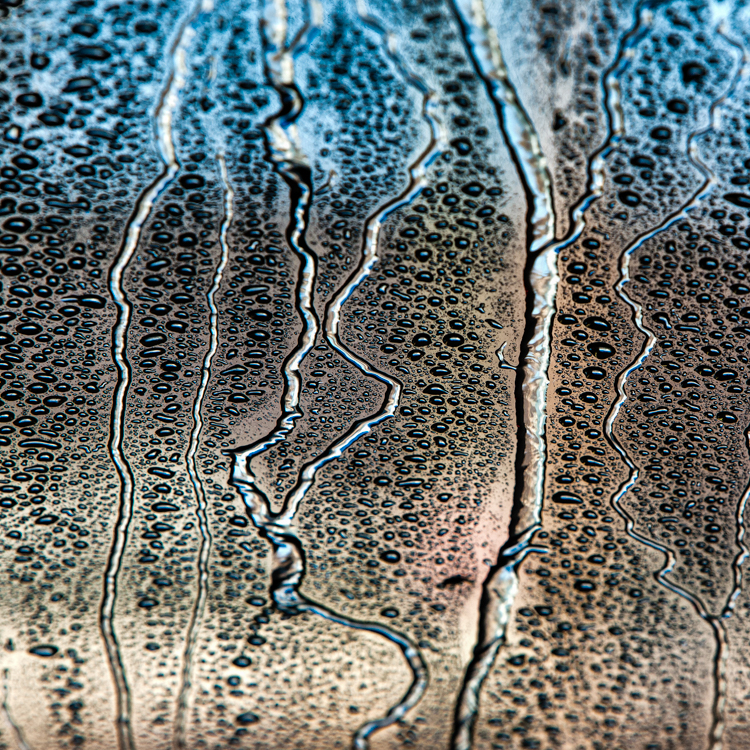
One way to investigate this idea is to use your camera as an instrument, to turn the ordinary and mundane aspects of life into something unique. For example, when you take your vehicle to the car wash and sit inside while the machines do their work on the vehicle’s exterior, what do you do? Sit and wait patiently? If you’ve got your camera with you, why not turn those few minutes into an opportunity to look through your window and consider the colours, details, and shapes that the lights, water, soap and wax make as they go through their different cycles.
2 car wash 4994

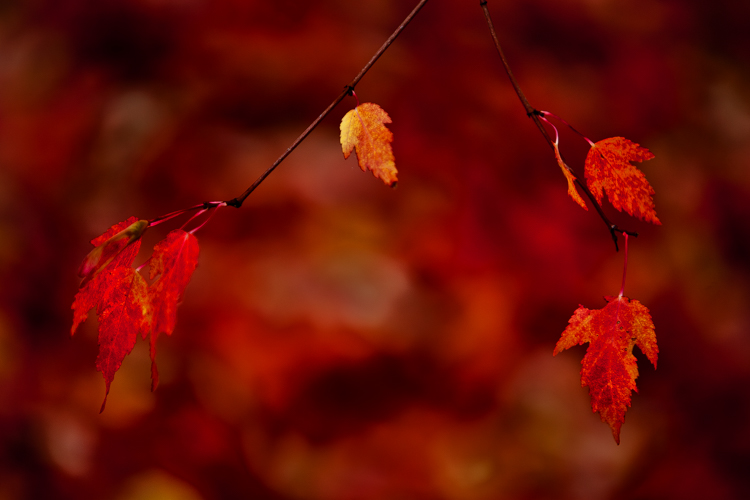
While there is certainly a whole world of possibilities when considering the abstract, sometimes a scene will present itself that simply stops you in your tracks. The subject and its background are arranged in such a way, that all you have to do is look through the camera’s viewfinder and press the shutter release.
3 fall leaves 1376

Slow down and take notice

Of course if you go about your day in a hurried manner, if you’re rushing here and there, so focused on the task at hand that you don’t notice your surroundings, then your chances of appreciating the beauty around you will be dramatically decreased. Here’s a non-exhaustive list of some ideas (and examples) to help guide your photography adventures:

  • Slow down – when you’re rushed, you will be less likely to notice interesting details.
  • Look for juxtapositions, such as the motion of water against the solidity of a rock.
  • Look for lines and shapes – like standing on a railway track, you could photograph the tracks as they converge towards the horizon.
  • Look around in all directions – if you go for a walk on a path, stop every once and a while and look back at what you’ve passed, look down at what you are walking on, or look up to the sky.
  • Photograph ordinary items in non-traditional ways – try and photograph a stream of water falling on an inflated balloon.
  • Photograph the same subject in different light and seasons – if you have a favourite tree, photograph it from the same perspective at different times of the day, or do a seasonal series.
  • Look for things that shouldn’t be there but are – a leaf poking it’s way through the snow in the middle of winter, for example.
  • Use both standalone images, and image sequences to tell a story – ski tracks in the snow leading their way up to a mountain.

4 susie triptych

Practice and practice some more

In time, and with much practice, you will most certainly develop your own style and discover what appeals to you. At first, there may be a temptation to make several exposures, which is fine. When you look at the photos later you can use the many different images to compare them with each other. This practical exercise of discovering what you like, and don’t like, is a great way to learn. Try different techniques on the same scene and compare the results later.

5 corduroy snow 0118

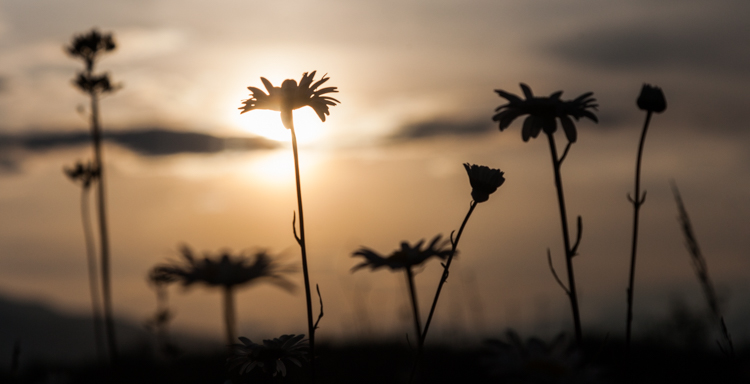
With practice, you’ll be able to consider a scene and learn how it speaks to you, even before you make a single exposure. Then use the knowledge you’ve gained to minimize the number of images you make, until you end up with a photograph you’re ultimately happy with.
6 backlit flowers 8935

Do you take photos, or make images?

Lastly, consider the words make and take. One suggests theft and aggression (take), the other, contemplation and creation (make). Perhaps it’s only a minor thing, but when talking about your own photography, how do you describe your method? Are you a taker or a maker?

Ultimately, photography is about how you respond to a scene, and with the idea of being an image maker in mind, you’ll be in a better position to creatively express your feelings. Case in point, the following photograph of some snowflakes.

It was a very cold day on the ski hill when I stopped on a trail to consider some snowdrifts on my left. The bright sun was illuminating the snow in a brilliant way, and after half an hour or so, I left with a handful of images. This particular one stands out because of the visible details in the snowflakes. It’s a testimony to the power of something so tiny and delicate, for without it and untold billions of its friends, no ski hill would exist.

7 snow flake 1220

Time to go apply and get shooting

Homework time. Your mission, should you choose to accept it, is to go out and have fun. In the words of a former photography tour leader, go and play. I’d love to see the results!
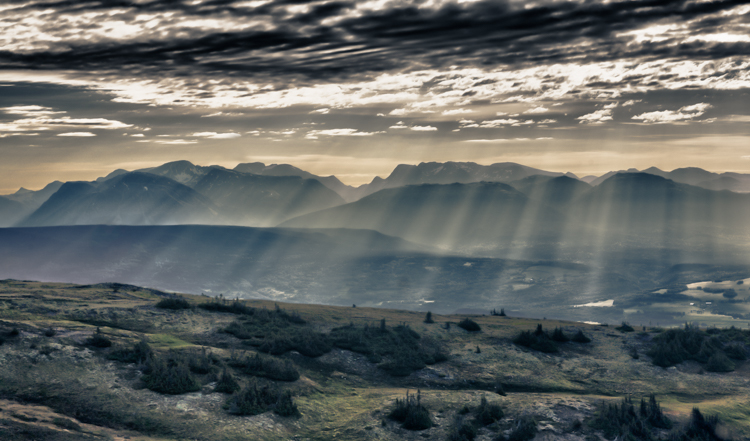
8 crater lake hike 9995

googletag.cmd.push(function() {
tablet_slots.push( googletag.defineSlot( “/1005424/_dPSv4_tab-all-article-bottom_(300×250)”, [300, 250], “pb-ad-78623” ).addService( googletag.pubads() ) ); } );

googletag.cmd.push(function() {
mobile_slots.push( googletag.defineSlot( “/1005424/_dPSv4_mob-all-article-bottom_(300×250)”, [300, 250], “pb-ad-78158” ).addService( googletag.pubads() ) ); } );

The post Tips for Learning How to See Photographically by Curtis Cunningham appeared first on Digital Photography School.


Digital Photography School

 
Comments Off on Tips for Learning How to See Photographically

Posted in Photography


Start To See Photographically In Six Easy Steps

19 Nov

We are living in a time of unlimited free shutter clicks. This is both an advantage, and a disadvantage for you as a photographer. On one hand, the learning curve is faster, easier and definitely a lot cheaper. On the other hand, many photographers have a tendency to shoot without taking much care in their composition and rely on the occasional lucky shot.

Stop shooting randomly and start photographing with intent. Before you click that shutter, ask yourself: “What do I want to convey? What story do I want to tell?” There are many ways to achieve this, here are few easy steps to help you step up your game, no matter what camera or lens you use.

Six Steps to Start Seeing Photographically

1 – See the light

Play with light and shadows. Be aware of the quality of light around you (hard versus soft light) and its effect on objects, buildings, etc. The more aware you become of the quality and quantity of light, the better you will be at harnessing it and making it work for you, no matter the time of day.

See the light, its effect on building and objects around you.

See the light, its effect on buildings and objects around you ©Valérie Jardin

When you see light, any ordinary object will become a wonderful subject. ©Valérie Jardin

When you see light, any ordinary object will become a wonderful subject ©Valérie Jardin

2 – Express your vision with basic composition rules

There are many ways to express your vision and they all start with the decisions you make before you press the shutter.

Use focus point and depth of field

The obvious way to lead the eye of the viewer is by focussing on the subject and using the right depth of field so that there is no mistake as to where the eye should go. It only takes a fraction of a second to lock your focus and recompose. You have to put some thought into it and soon you will make quick decisions that will make your images stronger.

Use focus point and depth of field to lead the eye to your subject ©Valérie Jardin

Leading lines

Too often ignored, the use of lines is a powerful tool to lead the eye.

Use leading lines in your composition. ©Valérie Jardin

Use leading lines in your composition ©Valérie Jardin

The rule of thirds

Positioning your subject in your frame is one of the most important decisions you will make in regards to your composition. You cannot overuse the rule of thirds, but it’s okay to break it as long as it is done intentionally.

The rule of thirds works, use it! ©Valérie Jardin

The rule of thirds works, use it! ©Valérie Jardin

Break the rule of thirds as much as you want, as long as you know why you’re breaking it. ©Valérie Jardin

Using color

Just like using focus point to draw the eye, using color is another powerful compositional tool. Alternatively, because color draws the eye, it is also a reason to convert your color image into B&W to remove distracting colorful elements and make stronger images!

Negative space

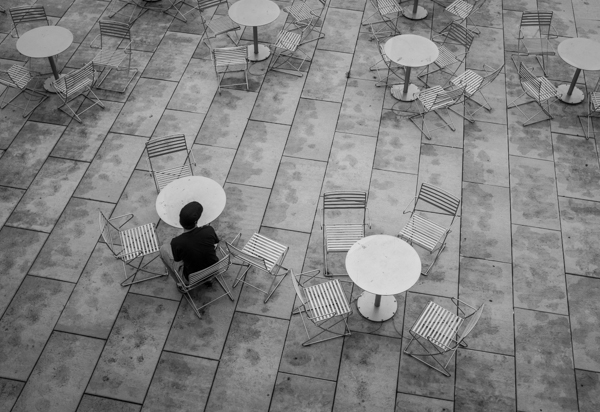
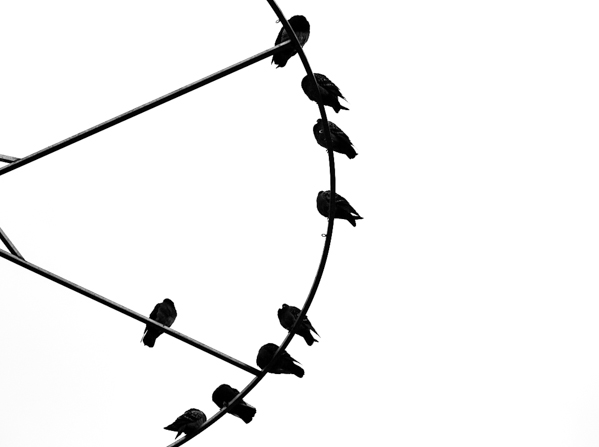
The clever use of negative space makes stronger images as it puts more emphasis on the subject (positive space).

Use negative space to give more impact to your images. ©Valérie Jardin

Use negative space to give more impact to your images. ©Valérie Jardin

Patterns

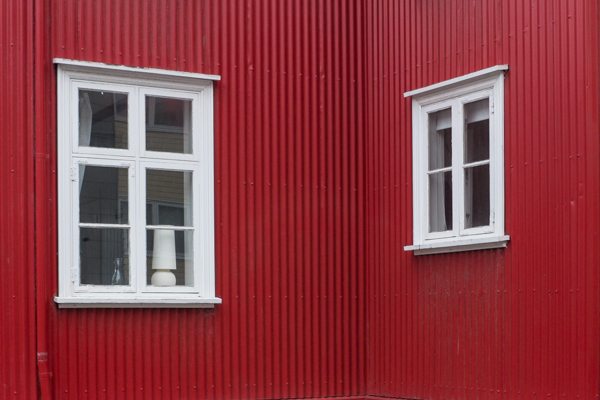
See and use repeated patterns or, even better, look for breaks in the pattern!

See repeated patterns. Even better: a break in the pattern!  ©Valérie Jardin

See repeated patterns. Even better: a break in the pattern! ©Valérie Jardin

Soon you will see stronger images that incorporate several element such as repeated patterns, leading lines, rule of thirds and color that draws your eye to the main subject. Use focus point and depth of field to lead the eye to your subject. ©Valérie Jardin

Soon you will see stronger images that incorporate several elements such as repeated patterns, leading lines, rule of thirds and color that draws your eye to the main subject. ©Valérie Jardin

3 – Less is more

Learn to make stronger images by leaving unnecessary elements out of the frame. One thing I notice all the time when I look at my students’ work is that they tend to include too much in their frame. What you decide to leave out of the frame during your composition will make or break the image. Keep it simple. Learn to see and crop in camera.

You don't need the subject in it's entirety to have a strong image. Practice cropping in camera. The use of a fixed lens will help you! ©Valérie Jardin

You don’t need the subject in its entirety to have a strong image. Practice cropping in camera. The use of a fixed lens will help you! ©Valérie Jardin

Less is more, think minimalist and give more impact to your images! ©Valérie Jardin

4 – Get close and fill your frame

Objects, even the most ordinary ones, look more interesting if you frame them tight. Get close. You think you’re close enough? Now get closer!

Fill your frame! ©Valérie Jardin

Fill your frame! ©Valérie Jardin

Get close, and then get closer! ©Valérie Jardin

Get close, and then get closer! ©Valérie Jardin

5 – Work your frame

Try shooting from different perspectives, shoot high, shoot low. Tilt your camera for more dynamic images.

Work your frame: Shoot high, Shoot low... Things don't look very interesting at eye level. ©Valérie Jardin

Work your frame: shoot high, shoot low… things don’t look very interesting at eye level. ©Valérie Jardin

6- Watch your background!

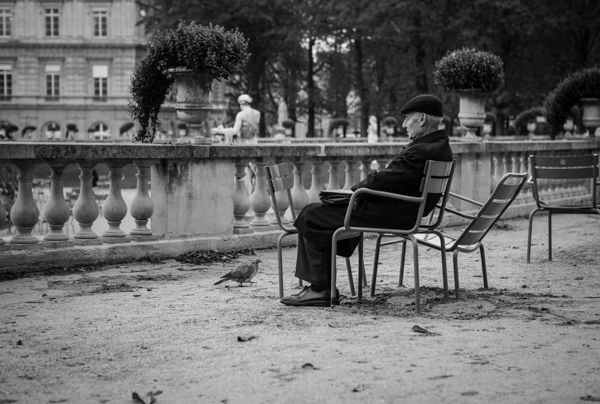
It only takes a second to scan the edges of your frame and check your background for distracting elements. It also only takes a quick second to move one step in either direction to get rid of a distracting element or avoid a branch to stick out of someone’s ear.

This image would have been ruined had I not stepped slightly to the right to avoid the potted plant to be directly on top of the gentleman's head...  ©Valérie Jardin

This image would have been ruined had I not stepped slightly to the right to avoid the potted plant to be directly on top of the gentleman’s head… ©Valérie Jardin

Next time you go out with your camera, try to slow down and think more about what you want to convey with your images. Unless you are photographing birds, busy toddlers or action sports, try to make every shutter click count!

Soon these composition rules will become second nature. You will see them without having to even think about them, you will learn to see photographically, and your work will improve.

Have fun!

Post originally from: Digital Photography Tips.

Check out our more Photography Tips at Photography Tips for Beginners, Portrait Photography Tips and Wedding Photography Tips.

Start To See Photographically In Six Easy Steps

The post Start To See Photographically In Six Easy Steps by Valerie Jardin appeared first on Digital Photography School.

Digital Photography School

 
Comments Off on Start To See Photographically In Six Easy Steps

Posted in Photography