RSS
 

Posts Tagged ‘Photographers’

Connect: White balance tips for smartphone photographers

30 Oct

whitebalance.jpg

Connect: Creative white balance tips for smartphone photographers. White balance can make the difference between a bland image and an engaging photograph. Smartphones are increasingly giving control over this important tool for getting color ‘right’ in your photos – we give some tips about how it’s used.

News: Digital Photography Review (dpreview.com)

 
Comments Off on Connect: White balance tips for smartphone photographers

Posted in Uncategorized


Town and Country Club – Minneapolis Wedding Photographers – Katie & Don

27 Oct

Bellagala www.bellagala.com was voted MN Bride All Around Best Wedding Vendor and Knot.com Pick. Award Winning Minneapolis Wedding Photographer. Call 651-227-1202
Video Rating: 0 / 5

 
Comments Off on Town and Country Club – Minneapolis Wedding Photographers – Katie & Don

Posted in Photography Videos


Covering a snow event, a photographers point of view.

24 Oct

Testing out my new Hero HD cam while having to cover a little snowstorm in Fond du Lac Wisconsin.
Video Rating: 5 / 5

this is terrible. i edited it all wrong. ugh. i dont own this song alright? its just a fucking brilliant song.
Video Rating: 0 / 5

 
Comments Off on Covering a snow event, a photographers point of view.

Posted in Photography Videos


10 Items from a Photographer’s Wish List to Make Santa Faint

24 Oct

I was recently browsing through B&H catalog and one thing struck me quite a bit, namely this: Okay, it’s Broncolor, one of the best lighting brands, but… It is a light stand! You know, a stick with wheels. $ 6 000? Come on guys, maybe it makes 0 to 60 mph in 2 seconds? Or what? Anyway, I thought it would Continue Reading
Photodoto

 
Comments Off on 10 Items from a Photographer’s Wish List to Make Santa Faint

Posted in Photography


Low-res iPad Mini likely a disappointment for photographers in Apple refresh

24 Oct

iPadMini.png

Apple has announced an updated iPad but its low-resolution iPad Mini is likely to be a disappointment for photographers looking to do precision work. While the fourth-generation iPad features a 263 pixel-per-inch ‘Retina’ display, the 7.9″ (20cm)  iPad Mini makes do with a 163 pixel-per-inch panel with a quarter of the pixel count (just 1024 x 768, rather than its big brother’s 2048 x 1536 pixels). The iPad Mini’s screen is step behind the latest panels, such as the 217ppi, 1280 x 800 pixel display in the less expensive Nexus 7. The fourth-gen iPad also features a faster A6X processor that is claimed to offer twice the performance, plus an HD (720p) front-facing camera.

News: Digital Photography Review (dpreview.com)

 
Comments Off on Low-res iPad Mini likely a disappointment for photographers in Apple refresh

Posted in Uncategorized


Architecture Photographers On Holiday (Part 1)

23 Oct

Hands up guilty ones! Who here gets itchy feet after about 2 months and needs to travel? Worse still, do you need to have a holiday reserved as if you are trapped without this planned escape? My hand is most definitely reaching for the skies but I did just get back from Italy. I travel a lot.
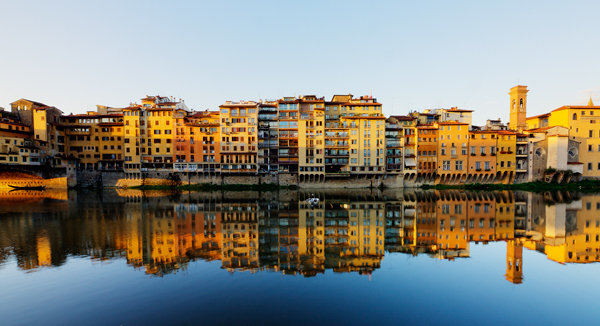
In the past I have been less than prepared and, all too late on my return, it was obvious in the quality of my images. For this article, I will highlight some of my tips and tricks to make the most from a photo trip away. In addition, I have restricted the images in this article to my recent destination, Florence, to further illustrate a little planning ahead can yield great results.
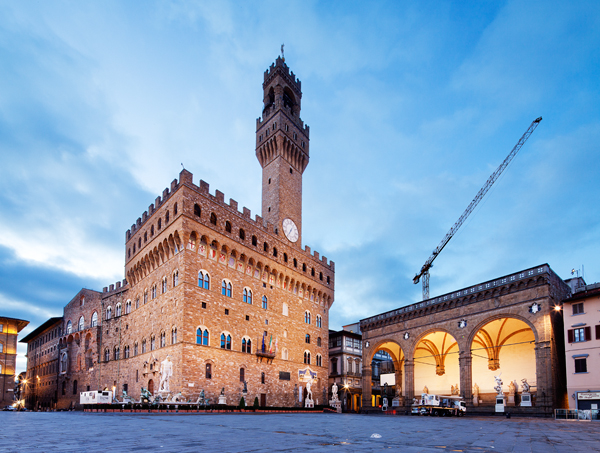
I am principally interested in architecture and landscape so my planning revolves around the light and the aversion of as many tourists as I can reasonably manage. People are good for scale but a 2 storey high statue of an intensely staring God, Neptune, surrounded by balloons and a massive throng of blue shirted people will not make an impressive image.

Not having visited Florence previously, I go straight to Flickr, Wikipedia and Google. Searching Flickr, ordering by ‘most interesting’ does seem a little like cheating, but I only had 3 dawns and 4 sun sets to play with. I doubt I would have found any undiscovered Florence in such a small time scale!
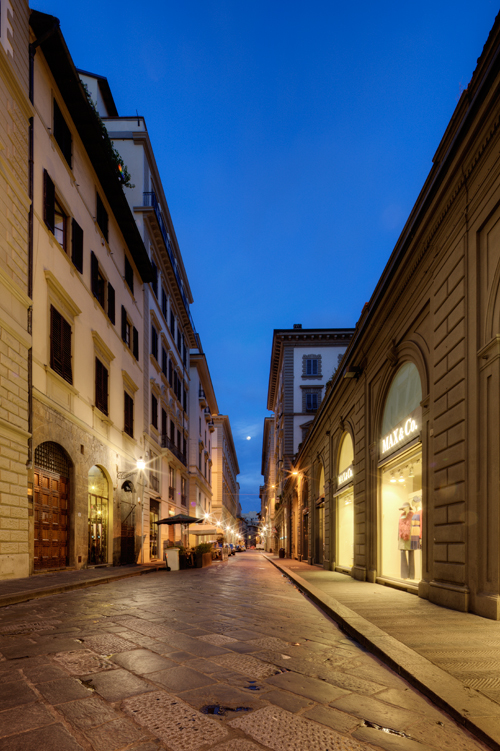
Utilizing image sites like Flickr, Google and Wikipedia will net you interesting buildings and scenes to photograph. It will be obvious where the good light is coming from and , on checking the timestamps in the EXIFs, what time of day too.

A slight digression on the importance of not losing images. I always take a laptop, 2 portable hard drives and spare Compact Flash cards. A drive that will directly take a CF/SD card, if your laptop fails, is also a good precaution. Also remember large capacity cards are very useful, but how many images are you prepared to lose in one go?

Dawn and dusk are the obvious times to be outside however I will use the time in between to venture inside buildings. If Europe is anything to go by each place of interest is closed on at least one day in the week and when they are open, access is potentially restricted to specific times. There may also be the requirement to book ahead. Did you notice all these lovely Italian scenes are outside? Guess who forgot to book tickets to indoor attractions?! Ahem. Many sites, open to the public, will have a policy on bags and tripods. You can pretty much always get away with a monopod, but I do get a little stressed when I find out I have to check in my back pack.
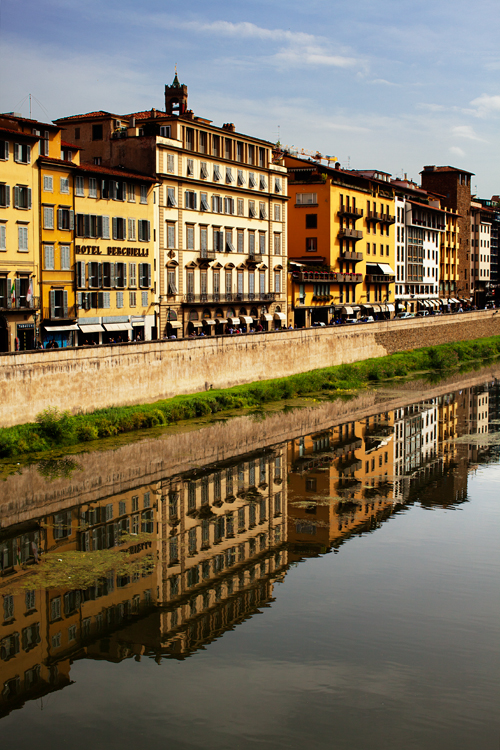
I encourage photographers to get somewhat lost in new places; there’s no quicker way to find and get a real sense of the local ‘scene’, but do take a guide book. My partner gets excited about trips and buys several. Lonely Planet and Rough Guide are great examples. Check they are recent editions.
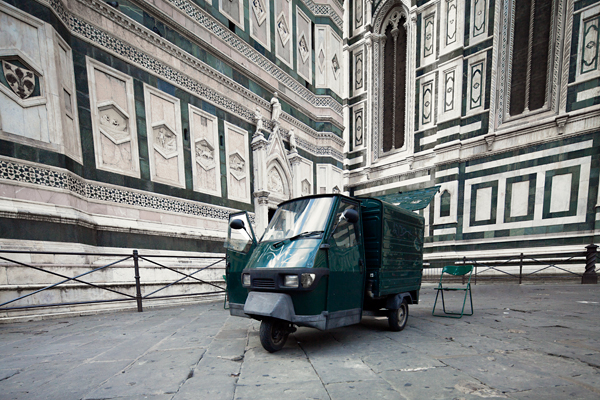
As soon as you get to your destination scout your locations ahead of Sun up and Sun down. The internet got you to this point and you know the buildings and scenes to capture, but this is an opportunity to cultivate your own shooting style so take the time to look around each scene. There are some useful compositional tips in my previous post, Photographing Buildings.

The light will dictate the main aspects of your compositions, but there are many factors you can influence.

Balance your positive and negative space. Do the surroundings complement or weaken the main subject or building? Don’t be afraid to get closer – in Namibia, I spent hours literally 8 feet from a tall tree to get a ‘solitary imposing tree in a desert’ shot.

Do you need to emphasize the depth of field or the sheer scale of the scene. Setting your tripod low for a wide angle will help. You can force perspective by shooting a multiple shot panorama with a longer focal length.
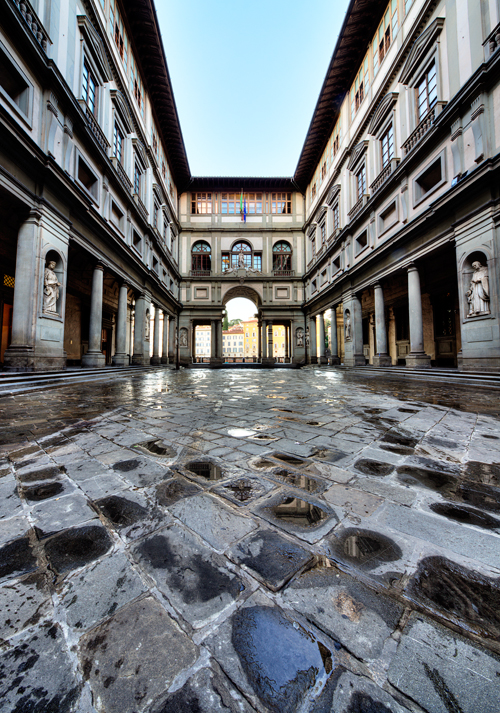
When you prepare to go out ensure you can cover focal lengths to at least 100mm. I don’t use filters, but you might. Take a spare card or 2 – they do corrupt. Spare batteries, especially if cold outside and/or using live view. Does your remote trigger use batteries also? I actually use a wired shutter release, for this very reason. Take cleaning cloths, times two, lens wipes – the ones that come soaked in lens cleaner. Also take water, food, a torch and several plastic bags in case of heavy rain. Finally, in the field, who else has forgotten the tripod adapter was not already screwed to the base of the camera body?!
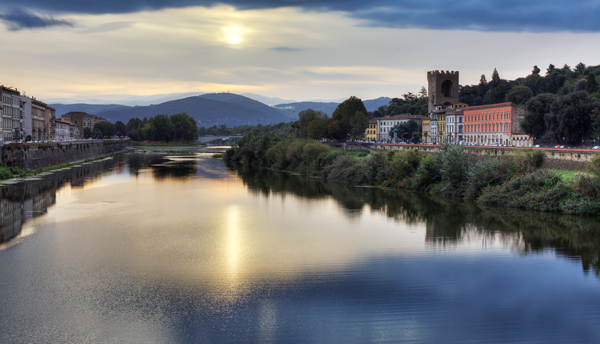
On location, and for each composition, I will shoot close focus images in addition to the main exposures. Not entirely trusting of histograms, I will pretty much always shoot a set of bracketed shots.

Be the humble photographer and don’t assume you have captured the best scene. Here’s the test when you think you’re done – ask yourself, “Am I coming back to shoot this scene properly?”.

Make best use of the light. Use your feet and shoot from somewhere else. Countless times I have berated myself for not taking an additional set of images 30 feet to the left or right, or closer. And for such simple mistakes too, like clutter I simply didn’t see or vertices that are obscured or just look weird with my chosen perspective.

Don’t forget you’re on holiday! After the dawn shoot is the perfect time for a local breakfast. Camera straps were also invented to solve the problem of free hands to hold pizza and ice cream whilst walking!

Use the busy and touristy day times to walk light with a camera and lens and capture the faces and details on the street. I confess I am a bit ‘old school’ and will just attach my 50mm f/1.2. Walk, shoot and eat. It is your holiday, after all!

You’ll notice this is a Part 1. As you head home, if you’re anything like me, you’ll be keen to process and publish those images. My camera settings are perpetually in a neutral state, so I definitely have work to do in front of the monitor. In Part 2, along with some sample Photoshop files, I will reveal my image editing workflow; how I process my images for screen and print.

Post originally from: Digital Photography Tips.

Check out our more Photography Tips at Photography Tips for Beginners, Portrait Photography Tips and Wedding Photography Tips.

Architecture Photographers On Holiday (Part 1)


Digital Photography School

 
Comments Off on Architecture Photographers On Holiday (Part 1)

Posted in Photography


National Geographic photographer’s surprise encounter with deadly predator

19 Oct

Leopard_Seal.jpg

National Geographic photographers can find themselves in unusual, extreme and potentially dangerous situations, trying to capture the ‘never before seen’ images the magazine is famous for. However, contributing photographer Paul Nicklen’s story of his close encounter with a huge Leopard Seal (one of the top predators in the Antarctic), shows there’s still opportunity for surprises in the job.

News: Digital Photography Review (dpreview.com)

 
Comments Off on National Geographic photographer’s surprise encounter with deadly predator

Posted in Uncategorized


What Goes In the Modern Wedding Photographer’s Kit Bag

18 Oct

The Kit Bag has changed dramatically for the modern wedding photographer. It’s no longer enough to simply have a flashgun mounted on a camera and a tripod! www.patbweddingphotography.com Distributed by Tubemogul.
Video Rating: 4 / 5

 
Comments Off on What Goes In the Modern Wedding Photographer’s Kit Bag

Posted in Photography Videos


YouTube for Photographers: 3 Ways to get Started Using YouTube to Show and Promote your Photography

18 Oct

A Guest Post by Marlene Hielema

Video is all the rage. With virtually all digital cameras now able to capture live video, if you’re not shooting video you’re going to start to feel left out.

But video has a very steep learning curve!

Yes it does, but that doesn’t mean it’s impossible to get going. In this post I’m going to tell you about three ways you can use video to promote your photography, and I’ll start on the shallow end of the learning curve.

Why YouTube and not Vimeo or private hosting?

In a word: Traffic.

The goal of these videos is lead generation and they are used for marketing.

  • Video helps people to know, like, and trust you
  • From the video you can send them to your website where they can learn more about you
  • Then, get them to buy your photos, or to book a photo shoot with you

I’ve talked to photographers who have been scared off of YouTube. I say, “Embrace it and use it for what it’s best at”. Use YouTube for traffic, visibility and lead generation. Use YouTube for your public side, and save Vimeo and private hosting for private client videos.

google-youtube-logo.jpg

Benefits of YouTube

  • YouTube is owned by Google and is the #2 search engine (Google is #1).
  • Like other social media, it’s possible to build community on YouTube by getting comments, likes and subscribers.
  • Unlike other social media, YouTube videos are easy to keyword, and as a result easy to search and find.
  • Random access and always available – YouTube videos don’t disappear down the stream like Facebook and Twitter posts.
  • YouTube videos get better with age. More time online, equals more views. 
  • Your YouTube videos will show up alongside other related videos so that people you don’t even know, will see them. 
  • With other social media – people have to follow you or like you to see your content. Not so with YouTube.
  • Google likes videos, so it’s highly likely your videos will rank higher in search results than your website content.
  • And people are turning to video, and especially YouTube, more than ever to learn things and find out about products and services.
  • You don’t need a full fledged video production setup to start taking advantage of YouTube’s benefits.
  • Read the official YouTube stats here

yt-for-photo.png

Three types of videos you can make for YouTube

1. Portfolio video: Slideshow of still images – simplest way to get a video online

  • Take a gallery of no more than 20 photos – make it very specific not everything you do – for example family portraits
  • Use Lightroom’s Slideshow feature and export to video – Simplest and fastest way to get your photos to video
  • If you don’t have Lightroom, use PowerPoint or Keynote to make a slideshow of your photos 
  • Upload to YouTube
  • Add keywords and phrases in the description and title of your video when you upload it – Example – Calgary family portrait photographer
  • Make several galleries of each type of photography you do
    • weddings – you can also break these topics down further
    • destination weddings
    • second time around weddings
    • maternity
    • babies
    • kids
  • Music: yes or no? It depends on your market, but current trends say “no”
  • 2. Profile: About you – builds trust and rapport

    • Involves you getting in front of the camera and that can be hard, but you’ll just need to get over it. 
    • It’s a great way for people to see if you’re a good fit for their photo shoot.
    • Your profile video can also be done with a voiceover and photos, but I think it’s best to get in front of the camera so you can speak directly to people.

    3. Behind the scenes: Show what happens on one of your photo shoots

    • Maybe you’re a nature photographer and you can show how you approach a landscape or a wildlife shoot. You can do this with still photos and a voiceover similar to your portfolio video.
    • Keep the production simple and use your iPhone.
    • This adds value to your photographs as people see the amount of work that goes into a shoot.
    • Stop motion videos are also fun and easy to make and you can do behind-the-scenes videos this way too.
    • Some family and wedding photographers are using stylized stop motion videos as a bonus to a shoot.

    Video editing options

    Shooting video is relatively simple, especially if you start by using your iPhone. The steep part of the learning curve is the editing and exporting for web use.

    • You can use simple video editing software or screen recording software to produce your videos
    • iMovie – Free for Mac users
    • Camtasia for Mac and PC
    • Adobe Premier Elements – for Mac or PC. An affordable choice for beginners.
  • You can edit a movie right within YouTube as well.
  • START NOW!

    If you’ve never done video before, start with the portfolio video.

    • Review the steps above and remember to:
    • Keep it short 1-2 minutes in length.
    • Add a watermark – your url is best.
    • Add a picture of yourself too – remember this is to build trust. 
  • Embed the video on your website or blog too.
  •  

  • Share it on Twitter, Facebook and G+.
  • Repeat the process with another group of images.
  • Remember it’s better to have more videos of shorter length than to have a large group of photos in a 20 minute video.
  • Before long you’ll have a collection of searchable, randomly accessible videos and you’ll be sending people to your website.
  • In future tutorials I’ll show you how to approach each method in greater detail, and some tools you can use to produce your videos.

    Do this next: Watch the video above to see an example of how I used it to drive traffic to this blog post. I’ve got an invitation and a benefit at the end of the video for you too.

    Are you using video to promote your photography yet? Let us know what technique you use in the comments.

    Marlene Hielema teaches photography and photo editing online, in the classroom, at corporate workshops and one-to-one. She’s also a camera raw evangelist and YouTube video blogger. Find out more about what she can help you with at www.imagemaven.com and look for her weekly video blog post on YouTube.

    YouTube: 

    Post originally from: Digital Photography Tips.

    Check out our more Photography Tips at Photography Tips for Beginners, Portrait Photography Tips and Wedding Photography Tips.

    YouTube for Photographers: 3 Ways to get Started Using YouTube to Show and Promote your Photography


    Digital Photography School

     
    Comments Off on YouTube for Photographers: 3 Ways to get Started Using YouTube to Show and Promote your Photography

    Posted in Photography


    Connect: Why Google+ has become a key community for photographers

    16 Oct

    plus-badge.png

    While Google’s social experiment may not have taken off for other users, photographers have flocked to Google+ and somehow transformed it into one of the most vibrant photographic communities in recent years. What makes it so attractive to photographers and how are they using the platform to interact?

    News: Digital Photography Review (dpreview.com)

     
    Comments Off on Connect: Why Google+ has become a key community for photographers

    Posted in Uncategorized