RSS
 

Posts Tagged ‘Photographer’

Photographer creates time-lapse showing D600 ‘dust’ accumulation

22 Nov

Screen_Shot_2012-11-21_at_12.02.24_PM.png

Canadian photographer Kyle Clemens has created a timelapse video which shows the slow accumulation of debris on the sensor of his brand new Nikon D600. When we reviewed the D600 we expressed concern about the propensity of its sensor to gather specks of debris, and Clements raises the troubling possibility that whatever it is that’s ending up on the D600’s sensor could be coming from inside the camera. Click through for the full video and a link to Kyle Clements’ blog where he investigates the issue. 

News: Digital Photography Review (dpreview.com)

 
Comments Off on Photographer creates time-lapse showing D600 ‘dust’ accumulation

Posted in Uncategorized


Documentary Photographer Daniel Milnor Photography Tips and Advice

20 Nov

www.silberstudios.tv Documentary photographer Daniel Milnor joins us today on the Marc Silber show to talk about his approach to photography and the work he loves to do. He loves focusing on documentary work, especially long-term black and white documentary projects, both domestically and internationally. In the field, Dan uses a very stripped down system of equipment. He often works with a single camera and a lens and occasionally mixes cameras and formats only when he teaches. Typically, he advises against mixing formats, such as color and black & white photographs. You only have a split second to catch an image when analyzing a scene, and having too complex a set-up may cause you to miss the moment. Developing the idea of a project’s story is crucial, so he always does his research beforehand. Nowadays, it is easy to do documentary work by going out into the field and winging it, but when you have a theme in mind, it’s better to perform research for a more complete picture. BTW, a big thanks you to the folks at Calumet San Francisco for helping us out with the shoot. Thanks to WPO for their assistance with the interviews.

 
Comments Off on Documentary Photographer Daniel Milnor Photography Tips and Advice

Posted in Photography Videos


12 Ways to Inspire the Creative Photographer Inside You: Part II

19 Nov

A Guest Post by Andrew Gibson

Note: Andrew Gibson is currently offering his 5 popular eBooks for under $ 20 on SnapnDeals.

0707.jpg

In the first part of this article I came up with six ideas that you can use to break out of a creative rut. I’ve been there myself, when it seems as if there is nothing around to photograph and no subject seems appealing.

The idea behind these articles is to give you some inspiration for those times when creativity seems hard to come by. Here are the rest of the ideas:

7. Try a new Genre

Part of the fascination of photography is that there are so many genres and techniques to try out. That’s part of the fun. Even professional photographers have a comfort zone of subjects and techniques that they are familiar with. Anybody can learn a lot by trying a new genre.

For example, if you’ve never photographed a stranger before then why don’t you look for a model on a website like Model Mayhem? The whole exercise of finding a suitable model and coming up with the concept of a shoot and taking the photos will be challenging and educational.

08

I tried some steel wool spinning photos last week for the first time. Great fun, and a new way to use a local location for photos.

8. Build a photoblog or a website

What do you do with your photos after you’ve taken them? Uploading to Facebook, Flickr or 500px is one thing, but an interesting challenge is to set up your own website or photoblog.

If you have no idea how to do this, don’t panic – it’s fairly easy once you know how. You can use WordPress or Pixelpost to set up a photoblog with an absolute minimum of programming knowledge. The instructions for both are easy to follow. And if you don’t want to buy your own domain name and a hosting plan (essential in order to have your own website) then Blogger, WordPress.com or Tumblr may be the answer. The important thing here is to create your own personalised space on the web for publishing your photos.

The best approach is to be critical of your work and only post your best images. Online portfolios are usually judged by the strength your weakest images. Weed those out to improve your portfolio.

A website or photoblog can work well if you have a long-term project to publicise. Check out Bill Wadman’s 365 portraits as an example.

An added bonus, if you’ve never done this before, is that learning to create a website or blog may be a useful skill to add to your CV.

09
I created the photo gallery on my website using photo blogging software Pixel Post.

9. Create a Photo Book

Do you print your photos? I printed some of my favourites out a few years ago on a borrowed A3 printer and most of them are still stored in a wardrobe. I framed a few, but not the rest. This is a problem for me when it comes to making prints – what to do with them afterwards?

One answer is to create a photo book instead. Blurb is perhaps the most well known photo book service but there are plenty of others. The quality from the best companies is extremely high.

Designing a photo book is not just a matter of placing photos on pages. It will force you to edit your images, look for themes, juxtapose images on the same spread and learn about graphic design. If you have a long-term project a photo book could be a great end product and a nice reward for the hard work you put it in.

Another reason I like the concept of photo books is for the legacy. Books are easier to give out to friends and relatives than prints. You can create a meaningful collection of your best images that people can look at for many decades to come.

10. Make the most of the Light

Are you lazy with light? One of the quickest ways to improve your photos is shoot in the best light. If the light is beautiful, this will inspire you to take better photos.

Here are three types of light that I like:

The golden hour

This is the hour around sunset and sunrise when the sun is low in the sky and casting low, raking light over the landscape. Ideal for landscapes, seascapes, architecture and portraits.

The blue hour

This is the period from after sunset to night when the natural colour of the ambient light is deep blue. This is a beautiful time for taking landscapes and seascapes. If you take photos by the sea, as long as you have a tripod you can take photos until it is nearly dark. The water reflects the light left in the sky so that you don’t end up with large black areas in the image.

Shade

For portraits my favourite type of lighting is shade. The light is soft, flattering and beautiful. On a bright sunny day any light bouncing off nearby sunlit areas brings a real glow to the model’s face.

It’s important to make the most of the light. It requires effort to make sure that you’re in position when the light is at its best for your subject. But you’ll be rewarded with stronger images.

Now, reverse that idea. Why not try different types of light? For instance, is it possible to take photos of the landscape in strong midday light? I’ve seen it done – one solution is to convert to black and white to take advantage of graphic shapes and shadows created by the direct light.

And what about portraits? Shade is beautiful, but what if the subject is backlit? Or in the midday sun? How can you make this light work? A technique to try in midday light is to use portable flash to fill in the shadows or overpower the light from the sun.

10

One of a series of photos shot on the beach in the middle of day in the summer. I used portable flash to light my model and counter the harsh light of the sun.

11. Shoot in Black and White

I love black and white photography. In black and white there is no colour and the image requires a strong composition using elements such as shape, line and tonal contrast to succeed. It takes time to learn how to see in monochrome. Here’s an easy way to get started.

Set the camera to its black and white mode (check your camera’s instruction manual if you don’t know how to do this). Set the filter colour to red or orange and increase the contrast. Now, when you take photos, the image is displayed on the LCD screen in black and white. This gives you immediate feedback on how well the composition works in black and white.

The image is displayed in black and white even if you set the file format to Raw. The beauty of shooting in Raw is that you have a full colour file that you can do anything with afterwards. That includes converting to black and white in software that gives a better result than the black and white mode on your camera.

11
You may not think of photographing colourful subjects like flowers in black and white. It’s a different approach to a common subject that can work really well.

12. Work in Colour

Here’s another way to look at things in a fresh way. Why not set a colour project? Spend the day just taking photos of things that are red. Or blue, yellow or green…whatever colour inspires you.

An alternative is to work with a more subtle colour such as brown or grey. This can really challenge your creativity as you look for ways to make interesting photos from subtle colour palettes.

14

A selection of photos utilising the colour red. Not all taken on one day – but it shows how effective it can be to group photos together that share a strong visual element such as colour. Going back through your old photos and arranging them by colour may give you a new way to present your work – or inspire you to take more colour based photos.

Andrew Gibson currently is offering a bundle of 5 of his amazing eBooks for sale for under $ 20 on SnapnDeals. You’ll get eBooks on Understanding Lenses, Understanding Exposure, Understanding DPP and square format photograph. Check them out here.

Post originally from: Digital Photography Tips.

Check out our more Photography Tips at Photography Tips for Beginners, Portrait Photography Tips and Wedding Photography Tips.

12 Ways to Inspire the Creative Photographer Inside You: Part II


Digital Photography School

 
Comments Off on 12 Ways to Inspire the Creative Photographer Inside You: Part II

Posted in Photography


Photography Tips from Landscape Photographer Andy Katz

17 Nov

Photographer Andy Katz joins us today on the Marc Silber show to share advice on achieving great natural lighting and composition for photographs. He does not confine himself to only one type of photography—although he mainly shoots landscapes, he also enjoys working with people, especially when he’s able to shoot record album cover photographs. Andy enjoys working outdoors to use the light of the sun, rather than staying in a studio with lighting equipment. He refers to the three elements present in any great photograph: content, composition and light. Any photo must have all three of these to successfully draw a viewer into the image. He loves taking photos when the sun is close to the horizon, since it produces a rich, golden light and creates gorgeous shadows. He is adamant about shooting photos only when the light is ideal and will often wait until the sun hits the right angle for that perfect shot. As a seasoned photographer, Andy understands how crucial it is to have reliable equipment with him at all times. When working with natural light, he needs to capture as many photographs as he can in a limited amount of time. With SanDisk large-capacity memory cards, photographers never have to worry about missing that perfect photograph.

 
Comments Off on Photography Tips from Landscape Photographer Andy Katz

Posted in Photography Videos


How To Experience Rapid Growth As A Photographer

16 Nov

Growth is a direct result of being outside your comfort zone. But being outside your comfort zone can be wonderful thing and it can also be your worst nightmare. The trick is in striking the perfect balance between doing what you know how to do well and doing what you have no idea about. Let’s say someone asks you to Continue Reading

The post How To Experience Rapid Growth As A Photographer appeared first on Photodoto.


Photodoto

 
Comments Off on How To Experience Rapid Growth As A Photographer

Posted in Photography


12 Ways to Inspire the Creative Photographer Inside You: Part I

14 Nov

A Guest Post by Andrew Gibson

Note: Andrew Gibson is currently offering his 5 popular eBooks for under $ 20 on SnapnDeals.

01

Have you ever had the feeling of being stuck in a rut with your photography? It happens to all of us at one time or another. Sometimes it’s difficult to find inspiration or to think of new subjects to photograph.

Here are some ideas to get your creative juices flowing again. Pick one or two that interest you and take the opportunity to learn some new skills and challenge yourself. Afterwards, you can look back at what you’ve achieved with a renewed sense of accomplishment and satisfaction.

1. Read a Photography Book

The photography book (both printed book and ebook) publication industry is booming and there is no shortage of inspiration. You don’t have to buy a new book either – your local library should have plenty in stock.

Try reading a photography book written by an author you’re unfamiliar with or who is writing about a genre you’ve never tried before. Then go out and put some of what you’ve read into practice. The great thing about the best photography books is that they have both beautiful photos to inspire you and the practical information you need to try out the same techniques.

Don’t limit yourself to photography books. I spent time yesterday looking at Jamie Oliver’s latest cookbook. The quality of photography is breathtaking and makes me want to try out food photography for myself (as well as the recipes).

02

I learnt the toning technique used in this photo from a book about black and white photography.

2. Use a New Lens

Buy (or borrow) a new lens – then use it. Or you may have a lens in your kit that you haven’t used for a while. Lenses are the eye to your camera’s system and using a new lens (or rediscovering one you have’t used for some time) can give you a new way of seeing.

Try this. If you normally use a wide-angle lens, then try a telephoto lens instead. Or if you normally use a telephoto, try a wide-angle. If you usually use a zoom lens, then how about a prime? You get the picture. It’s all about using a new lens to force yourself to take a fresh approach.

New lenses don’t have to be expensive. There are plenty of inexpensive wide-angle and normal prime lenses around. Another option is to buy a Holga lens for your digital camera (they are available for all the major camera manufacturers at Holga Direct). These are inexpensive and great fun.

03

A simple image taken with a Holga lens on an EOS 40D.

3. Take a Photo Holiday

Sometimes all that is needed to re-energise your creative self is a trip to somewhere new. Even a short trip for a day or a weekend can help. What’s important is that you dedicate it to photography. That way you can concentrate on exploring the most photogenic locations and making sure you are then when the light is best.

You don’t necessarily have to travel far. But it helps if you’ve never been there for a while so you see it with fresh eyes. It should also be visually exciting and inspiring.

04

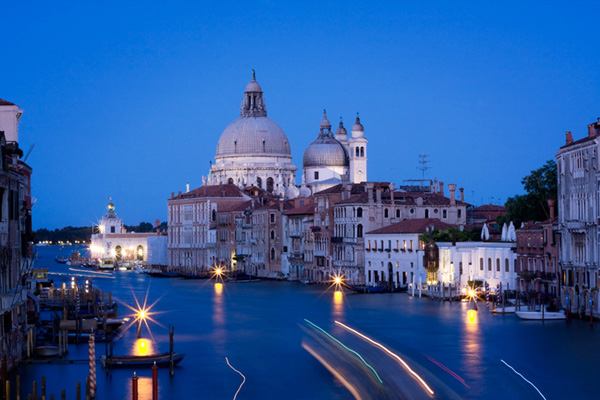
Who could fail to be inspired by a trip to Venice? But any trip to somewhere new has the power to re-energise your creative vision.

4. Be more Critical

Look at your work through fresh eyes. What are your favourite images? What photography and post-processing techniques do you like to use? How can you improve?

Editing your photos ruthlessly. What are the ten best photos that you have taken in the past 12 months? Don’t be afraid to ask someone else’s opinion. It’s often difficult to be objective about your own work. Does a style emerge when you look at your best images? Does this suggest fresh ideas for future projects?

Imagine that an art director or magazine editor is looking at your portfolio. What might they say about your photos? What are your strengths and weaknesses? Don’t be over critical. It’s just a thought exercise that may help you obtain a clear idea of your strengths and the skills you’d like to develop.

Here’s an idea. Once you’ve selected your best photos why not send them to a photography magazine? They may be published, earning you some money or a prize. Seeing your images in print is always a good feeling, especially the first time.

05

Photos of mine used in a spread in EOS magazine.

5. Enter a photography Competition

There are plenty out there. Just beware of competitions that are rights grabs (there is a list of approved photography competitions here). Most competitions have tight briefs that can inspire and focus you. The prizes can be pretty good too.

6. Set a photographic project

Set a project, something you can return to again throughout the year. Projects give you direction. For example, this year I’ve been experimenting with long exposure photography. This new way of taking photos has encouraged me to view my local area with new eyes, evaluating different locations for their photographic potential.

Projects are good because they give you chance to develop your skills in a certain area. The photos taken at the end of the project will be better than the ones taken at the beginning. You’ll also need a good variety of images to create a cohesive set of photos. Thinking long term gives you time to think up ideas and execute them.

06

A long exposure photo taken a few minutes walk from my front door. Choosing a project that you can carry out close to home can save you time and motivate you to complete the project.

Have you ever been stuck in a creative rut? How did you get out of it? Leave your comments below, I’m sure we will see some good ideas.

The next six ideas will be published in part II of this article.

Andrew Gibson currently is offering a bundle of 5 of his amazing eBooks for sale for under $ 20 on SnapnDeals. You’ll get eBooks on Understanding Lenses, Understanding Exposure, Understanding DPP and square format photograph. Check them out here.

Post originally from: Digital Photography Tips.

Check out our more Photography Tips at Photography Tips for Beginners, Portrait Photography Tips and Wedding Photography Tips.

12 Ways to Inspire the Creative Photographer Inside You: Part I


Digital Photography School

 
Comments Off on 12 Ways to Inspire the Creative Photographer Inside You: Part I

Posted in Photography


How to Become a Photographer: The Natural Way

13 Nov

So you want to become a photographer, huh? Then just forget it, you’ll never be one! And even if you will – you won’t be a good one anyway… What’s the catch? I’ll tell you. But first I want to share a little story from my own life. The “Wannabe” Syndrome For the past 10 years or so I’ve had Continue Reading

The post How to Become a Photographer: The Natural Way appeared first on Photodoto.


Photodoto

 
Comments Off on How to Become a Photographer: The Natural Way

Posted in Photography


Connect: Photographer puts GoPro in bride’s bouquet for unique wedding video

09 Nov

Screen_Shot_2012-11-08_at_11.30.28_AM.png

The tiny GoPro camera can make some spectacular videos. From Red Bull’s record breaking skydive to a cat’s perspective on chasing a laser pointer, there is serious potential for the $ 200-$ 400 video camera. The GoPro is built to survive extreme photographic situations, but it can also work well for more conventional video needs. When San Diego-based photographer Ben Horne got married earlier this year, he put a GoPro HD Hero2 in his bride’s bouquet to create a unique camera angle. Click through for more details, and to see the video on connect.dpreview.com

News: Digital Photography Review (dpreview.com)

 
Comments Off on Connect: Photographer puts GoPro in bride’s bouquet for unique wedding video

Posted in Uncategorized


Where Does a Former National Geographic Photographer and Current Yahoo Exec in Charge of Flickr Share His Photos? Yep, You Guessed it Google+

06 Nov

Late last week over at All Things Digital, Kara Swisher reported on the appointment of the latest high profile Yahoo exec, Adam Cahan. In addition to reporting directly into Marissa Mayer and overseeing mobile for Yahoo (super important!) it was also announced that Cahan would be put in charge of Flickr, the photo sharing site that so many of us love.

On the surface this is great news. The fact that the guy who is now overseeing Flickr reports directly into Mayer may mean that Flickr’s profile is moving up internally at Yahoo. After a few years of Flickr layoffs and shrinking, it looks like Yahoo once again is staffing up in photo sharing!

In addition to staffing up, over the past year Yahoo has probably improved Flickr more than any other year in its existence. They’ve added a really nice new justified page layout for your contact’s photos and favorites (hopefully coming to search, photostreams and sets soon!), they added a new meet up page where they are getting active with photowalks again (check out this shot from their Austin photowalk this past weekend), they created a new liquid photo format that expands photos to the size of your monitor (slick!), they also increased the maximum size for photos for paid accounts to 50MB! (Facebook and Google+ downsize your photos).

So my question is, why with so much excitement going on around Flickr, why don’t Yahoo employees use or care more about the service?

A lesser known thing about Adam Cahan, the new Yahoo exec in charge of Flickr, is that according to the San Jose business Journal he’s a former National Geographic wildlife photographer. So here’s the guy who is in charge of Flickr, definitely talented with a camera, and where is he choosing to share *his* photographs? Yep, you guessed it Google+! Here’s a photo he posted earlier this year there for the 75th Anniversary of the Golden Gate Bridge.

Of course, Cahan is just following by example really here, his boss Marissa Mayer chooses to post her own photos over at Instagram instead of Flickr.

Why is Flickr such a pariah that Yahoo’s own executives (even the one directly in charge of Flickr) won’t dare to use it personally?

Certainly Google and Facebook employees share their photos on Google+ and Facebook. So why aren’t Yahoo executives doing the same thing?

I believe that leadership is done by example. I also believe that every company should encourage dogfooding and should encourage their employees to use their own products. I think this sends a better message to users when you feel like people who work for the company use it too.

The message that Mayer and Cahen send when they shun Flickr and instead post their photos on competing photo sharing sites is that those sites are better than Flickr. The exact message that they should be trying to change if they really care about Flickr.

Now I’m all for Yahoo executives testing out the competition. Actually I think that’s smart. They *should* have accounts on Instagram and Google+ and Facebook and all that — but they should *also* have accounts at Flickr and they should be acting as Flickr’s biggest cheerleaders in the same way that Vic Gundotra does for Google+ over there.

There is a current conversation going on over at Flickr in their highest profile discussion group that Flickr is dying. Yahoo should care about discussions like this. Yahoo employees should actually be involved in them and trying to convince people that Flickr is not dying, that a comeback is just around the corner — but in order to be involved in conversations like this Yahoo employees need to actually, you know, have an actual Flickr account.

It’s not hard, really, you can even use your Facebook or Google+ account to sign into Flickr these days. Directly from the Flickr sign up page: “It takes less than a minute to create your free account & start sharing! Have a Google or Facebook account? You can use them to sign in!”

Flickr’s tagline is “almost certainly the best online photo management and sharing application in the world.” That’s been it’s tagline for years now. So if this is true, why don’t Yahoo execs want to use it to manage and share their photos? If that tagline isn’t true anymore maybe Yahoo execs should think about changing it to “almost certainly *was* the best online photo management and sharing application in the world.”

I was thinking yesterday back to all the excitement that was around Flickr back in the olden days. Natural disasters tend to be things that galvanize social sharing, and especially photos. Back in 2005 when Katrina hit, Flickr was the go to place for people to post photos online about the disaster. Not only were the best user generated photos flowing into Flickr, they were flowing in fast and furious. Flickr was recognized for the Katrina photos in the national press. A group was started on Flickr to do a print auction to raise funds for Katrina survivors. The very next year Time Magazine named Flickr co-Founders Stewart Butterfield and Caterina Fake as two of the 100 most influential people in the world! Butterfield and Fake both had Flickr accounts by the way.

More recently hurricane Sandy hit New York. Was Flickr the go to place this time for photos? No. Everywhere you went in the national press it was 24/7 Instagram. It’s telling that Time Magazine — the very same Time Magazine that recognized Flickr and their founders/managers after Hurricane Katrina — recruited five professional photographers this time around to cover hurricane Sandy for them on… Instagram, the same photo sharing site where Yahoo CEO Marissa Mayer shares her photos.

By the way, photos taken after Oct 15th tagged Sandy on Flickr? 36,000. Photos tagged Sandy on Instagram? Over 800,000. Now just today Instagram announced photos on the web.

On a personal level, my photos at Facebook and Google+ get far more views and engagement than they do on Flickr — not just a little more, a lot more — as in hundreds of times more. I’m still rooting for Flickr though. They were the photo sharing service that I started out with back in 2004. They still have the best photo organizational tools on the web and at $ 25 for over 70,000 full high res photos of mine they are a bargain. Competition in the photo sharing space is good for all of us. It benefits the user. I just wish I felt like Yahoo actually wanted to win more with Flickr. Maybe this will change though and some day soon I’ll be able to add Mayer and Cahan as contacts of mine on Flickr. I bet as a former National Geographic pro Cahan has got some great shots. :)

Comments on this post at Google+.


Thomas Hawk Digital Connection

 
Comments Off on Where Does a Former National Geographic Photographer and Current Yahoo Exec in Charge of Flickr Share His Photos? Yep, You Guessed it Google+

Posted in Photography


What Makes You A Professional Photographer?

05 Nov

Seattle's Pike Place Market | Seattle, Washington | James Brandon Photography

There are quite a few hot photography debates floating around the internet. Whether it’s HDR, watermarks, Nikon vs. Canon, Mac vs. PC, straight out of the camera vs. post processing; there’s certainly no shortage. One of the newer ones I’ve seen pop up recently is this big fuss over what makes a photographer a professional. This is a debate that I feel truly does have a black and white answer and shouldn’t be a debate at all. So let me explain and then let’s see if you agree…

When In Doubt, Use A Dictionary

First things first, let’s get the definition of professional and amateur and settle this debate real quick, then I’ll expound on it a bit.

professional

adjective

1 [ attrib. ] of, relating to, or connected with a profession: young professional people | the professional schools of Yale and Harvard.

2 (of a person) engaged in a specified activity as one’s main paid occupation rather than as a pastime: a professional boxer.

amateur

noun

1 a person who engages in a pursuit, esp. a sport, on an unpaid basis.

2 engaging or engaged in without payment; nonprofessional: an amateur archaeologist | amateur athletics.

Ok, thanks for reading!

Hehe, just kidding. But that really does settle this whole debate right? A professional photographer is someone who’s paid occupation is photography. An amateur is someone who engages in photography without payment just for the love it. So what’s wrong with that?

Nobody Wants To Be An Amateur

Well, almost nobody. I’ve found that most amateurs who have never been professionals want to be professionals. But many professionals miss being amateurs and the purity that came with it. When you get money and clients involved, the purity of creating art seems to get tainted to some extent, especially when you’re creating images to suit your clients needs instead of clients hiring you for your creativity and giving you freedom over the images. See the difference there? Being a professional has nothing to do with quality of work. There are amateurs that are better photographers than I am. There are amateurs that are better photographers than you are.

There are professional photographers out there who:

  • Have been making a living for 30 years with their grip-n-grin, hand under your chin, head slightly tilted, perma-smile, muslin backdrop in a studio type images.
  • Shoot weddings and charge $ 800 for 6 hours in JPG mode and burn the images straight out of camera to a disk, yet they make good money because they are so cheap and shoot so many weddings.
  • Run travel photography workshops around the world with a litany of sponsors and followers. Yet their images are plagued with halos and over saturation. Good marketing can take anyone a long way.

On the flip side, there are amateurs who:

  • Take far better images than most professionals, but just do photography for the love of it.
  • Have full time jobs and make enough money from their photography to buy new gear regularly.
  • Have full time jobs yet are more connected and intertwined in the photography community than a lot of professionals.
  • Make great money through photography but still work somewhere else to have steady income, health care, pensions, etc.
  • Take and create award winning photographs worthy of any gallery.
  • Make more money part time than some professionals make full time.

So why is being an amazing and unbelievably talented photographer not enough? Why do we also want to be considered a professional when our work shines above (what we feel is) the rest? I think it’s just the general disconnect around the two words and the secondary meanings that they have formed over recent years. I mean, think about this:

A teenager who goes out and races his car at a drag strip every single weekend, who lives and breathes racing, who works on his car every day after school, isn’t considered a professional. It’s his hobby, even though it takes up a very large portion of his every day life. Yet a NASCAR driver who hasn’t won a race in three years is still considered a professional race car driver. Why? Because that’s what he does for a living and he earns a paycheck for it!

My wife loves to cook. She’s a foodie to the core. She can take just about any recipe she sees on the Food Network and recreate it and make it her own. It’s amazing. But she isn’t a professional chef is she? Yet the guy that works at the burger joint up the street and runs the kitchen is considered a (professional) chef because that’s his living and his main source of income.

So why is photography any different? I really don’t understand…

Conclusion

Well, in this case, the conclusion is really up to you. Do you agree? Disagree? Voice your opinion in the comments below and let me know what you think. Or hit me up on twitter (@jamesdbrandon) and let me know there.  Be sure to use the hashtag #DPSdebate


Post originally from: Digital Photography Tips.

Check out our more Photography Tips at Photography Tips for Beginners, Portrait Photography Tips and Wedding Photography Tips.

What Makes You A Professional Photographer?


Digital Photography School

 
Comments Off on What Makes You A Professional Photographer?

Posted in Photography