RSS
 

Posts Tagged ‘Photographer’

20 Photography Tips Every Travel Photographer Must Know

17 May

1

1. Get up Early

The best light to capture most kinds of subjects is in the golden hours- one hour after sunrise and one hour before sunset (depend off course on where you are on the glove). So get up early to get that amazing photo opportunities, while all the other tourists are still asleep.

2. Do your research

Don’t leave it to chance and learn as much as you can about the place you are about to travel. The more you know, the more “intelligent” your images will be.
2

3. Learn your Craft

Don’t waste your expensive traveling time on learning how to operate that new camera, lens or flash. Do your homework at home.

4. Choice the Right Lodging

Staying on the center of town, or having a room with wonderful views can create a lot of great photo opportunities.
3

5. Say Hello

Learn how to say “Hello” in the local Language, and greet the locals when taking their photo.

6. Get Inspired

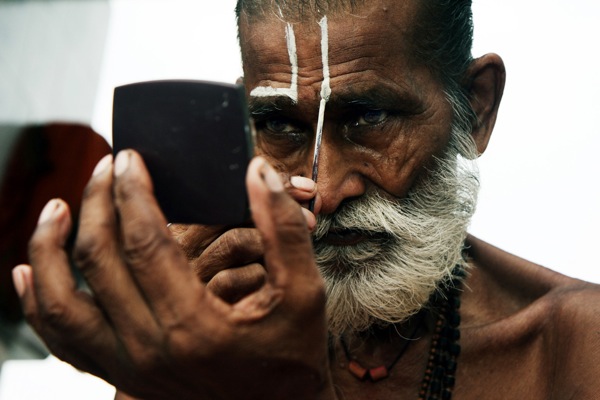
Watch the portfolio of other photographers in order to get new ideas and get inspiration. You can read the interview I did with Steve McCurry, the photographer of the “Afghan girl”, to get few great tips for a true master.Also, If you perceive yourself as an artist, you must acknowledge the work of other artists. Do not underestimate inspiration: visit art galleries, attend some photography lectures, listen to classical music, read good books.
4

7. Feel the Place

Photography is not only about visual inspiration. Try the local food, smell local markets and hear local music, this will help you to better understand the story of the place.

8. Find a Fixer

Talk to locals and seek their advice on great photo opportunities in their own country.
5

9. Travel Light

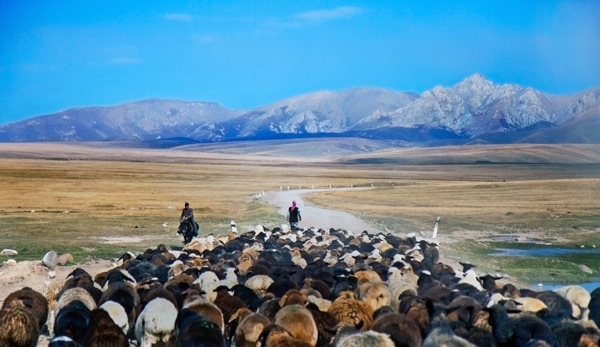
Don’t take your entire house with you. When I travel I take with me only two lenses: One zoom and one prime lens. This is extremely important tip if you plan to do some hiking or trekking.

10. Get off the Beaten Path

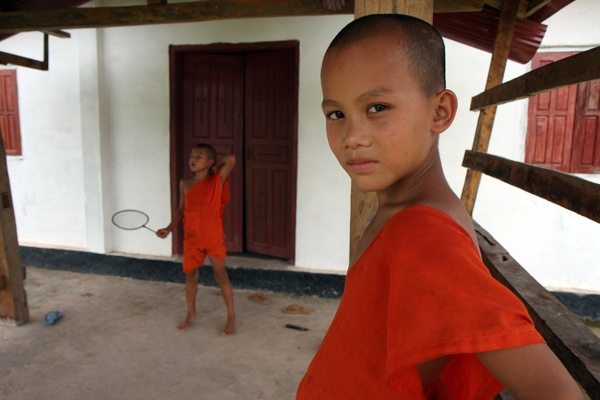
Yes I know that in Cuba they smoke cigars and that in Thailand they have monks. Tell your viewers something fresh and new. Share your own point of view of the place. You will be able to do so, only after following tip number 2 and 6.
6

11. Don’t try to get it all in once

Don’t try to see everything on your limited time. It is much smarter to get a better understanding about each place you visit on your journey. Slow things down, and your images will get better.

12. Travel Slow

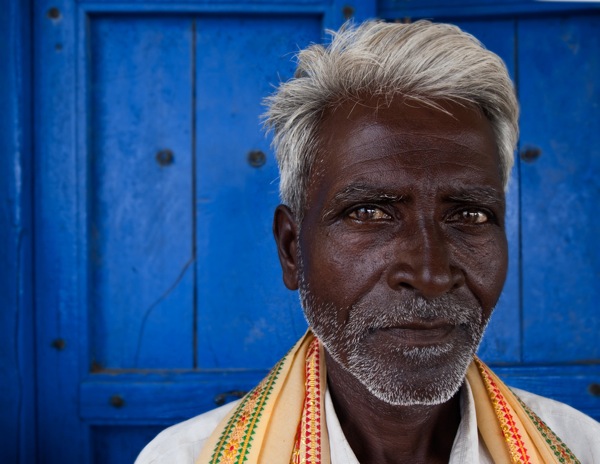
If time allows you, always choice to travel by train or bus over flying. As it will allow you to have better Interactions with the locals.
7

13. Leave the Camera Behind Sometimes

Don’t spend your entire trip looking through the lens. Enjoy your time just traveling and enjoying the ride.

14. Keep it Natural

One of the most important and influential photographers of all time, Henri Cartier Bresson- Never ever used flash in his photography. A practice he saw as “impolite…like going to a concert with a pistol in your hand.” Try to learn how to use and enjoy the benefits of natural light before you buy that expensive flash or reflector.

15. Get Higher

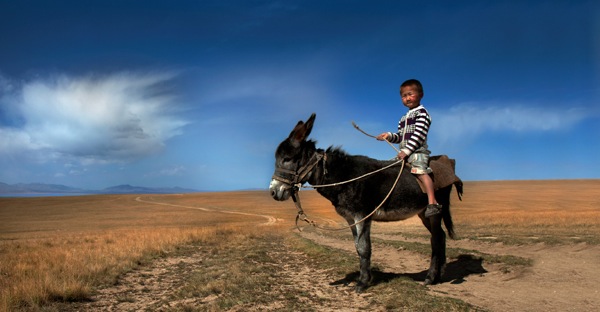
Every good travel photo series must have at list is one bird’s eye view of the place (Being referred sometimes as the “establish shot”). Find yourself a vintage point overlooking the entire city or town.
8

16. Stop with the Excuses

“Well, if I had an expensive camera and lenses like you have” or “If someone would pay me to travel”, or “but, you have so much time on each destination”.

All of those, are excuses I often hear from my travel photography students. Excuses they tell themselves to answer the question of “Why cant I get Strong images?”
So, A. My first newspaper published cover image, was taken using a pocket camera.
yes, equipment is important and it certainly makes life easier. But don’t forget the camera is just an instrument. A “pipe” which captures your vision and thoughts. Do not cry over the equipment you don’t own. spend the time and money to learn photography, reading books about it and travel as much as you can.

And B. For my first 8 journeys, no one paid me anything. I worked very-very hard at my day job for a whole year, and then I spend my money on traveling. I slept in some shitty places got bus rides from hell. This lifestyle requires commitment. And today, even as I get paid for traveling somtimes. The lengths are usually one to two weeks per assignment. Two weeks to come back with an amazing results. Not excuses like “but it was raining and I was sick” are accepted.

So, stop the excuses, and get back to work.

17. Find Yourself a Master

: the best way to learn (anything) is by watching a master working on his craft. Try to find a photographer which you can accompany as his assistant. It is true that most travel photographers like to travel alone. But it doesn’t have to be a travel photographer. Most of my knowledge about using light, I learned from a great fashion photographer, which I served him as an assistant for a while.

18. Stop Using Excuses

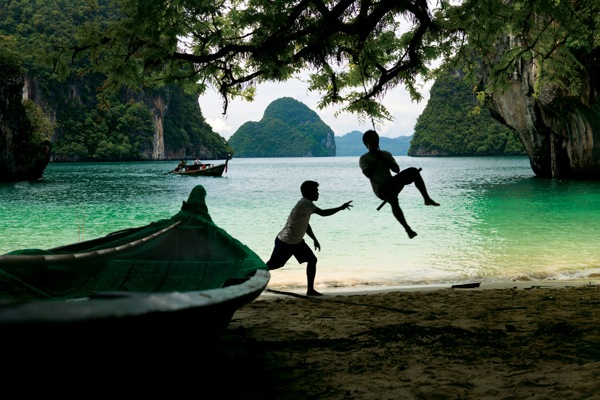
“Well, if I had the time \ money to travel the world or if I had the money to buy that new camera \ new lens … I’d probably be an excellent photographer”. Excuses are just our way to explain ourselves why our photography doesn’t get any better. No matter where you live in the world: New York, the Middle East or a small village in France. Try to see the beauty of the place you live in. if you will find the beauty of that place and bring within your images, people will follow.
9

19. Don’t stop Traveling

A good travel photographer must keep is portfolio alive. Keep on traveling, and as the last tip mentioned: you don’t have to travel to far and exotic places to do so. As it is very easy to travel to India and get “good” travel photography. Try to bring the beauty of your own local town. Travel to the nearest market or attend the next festival as a way to keep your craft improving.

20. Be Human

Treat your subject as well as you can. Don’t shoot people for a far distance, don’t shot people who don’t want to get snapped. If you promise to send their photos, please do so. This will ensure that the photographer that will come after you will be received with a smile. And don’t forget, sometimes it is best to just leave the camera behind and enjoy the ride.

Oded Wagenstein is a Travel photographer and writer. He is a regular contributor to the National Geographic Traveler magazine (Israeli Edition) and his images have appeared in many national and international publications and websites.
He is known for his intimate culture portraits. In his works he put the emphasis on understanding the culture and achieving good relationship with the person being photographed pre-shooting.

You can join his Travel photography group on Travel photography group on Facebook and continue to discuss on travel and people photography.

Post originally from: Digital Photography Tips.

Check out our more Photography Tips at Photography Tips for Beginners, Portrait Photography Tips and Wedding Photography Tips.

20 Photography Tips Every Travel Photographer Must Know


Digital Photography School

 
Comments Off on 20 Photography Tips Every Travel Photographer Must Know

Posted in Photography


Meet the photographer behind Apple’s product pictures

09 May

Peter-Belanger-Verge-portrait_large.jpg

When you think about Apple products, the pictures that come to mind of gleaming glass and aluminium are likely the work of a photographer you’ve never heard of – until now. In an interview with The Verge, industrial photographer Peter Belanger offers an insight into his painstaking processes, including his complex lighting schemes and choice of camera equipment. Learn more on connect.dpreview.com.

News: Digital Photography Review (dpreview.com)

 
Comments Off on Meet the photographer behind Apple’s product pictures

Posted in Uncategorized


Macro Photographer Teresa Franco Shares Her Best Phoneography Tips!

07 May

Scenario: A ladybug turns your shoulder into its new resting spot. What do you do?

Some might say Make a wish. Teresa Franco? She’d say Take a photo.

Snapping a photo of something so tiny can be a challenge. Do not let your camera phone deceive.

You can use your phone to get great macro shots of the tiniest objects, from crystal-ball-esque dew drops on a leaf to a caterpillar snacking on a blade of grass.

Teresa Franco is living proof. Have you seen her macros? They’re the best of the best on Instagram!

We asked her how she does it, and she shared all her favorite phone lenses, apps, and tips for getting fantastic photos of nature’s tiniest details.

So the next time a bug takes a liking to your shoulder, you’ll be set.

Phoneography Tips with Teresa Franco

p.s. WE ARE HIRING A WEB DEVELOPER. If you love photography and San Francisco and codes, APPLY HERE.

p.p.s. WE ARE ALSO HIRING AN EVANGELIST/BIZ DEV HERO. Creative deal-maker types, APPLY HERE.

Who’s Teresa?

Teresa first caught our eye with her undeniably legit macro skills.

Once we realized she wasn’t using a DSLR or a 3-piece lighting setup — that was when we were really impressed.

Teresa’s a nursing student who happened upon her awesome talent for macro while perusing Instagram one day.

That’s when she discovered the Olloclip, a three-in-one phone lens that lets you shoot fisheye, wide-angle, and macro photos on your phone.

When she’s not studying up on medical stuffs, she’s chasing grasshoppers and fungi to get the best macro photos ever.

The advantage to shooting macro on your phone?

Its small size and light weight makes it very easy to maneuver around tight spaces like under a tiny mushroom or between blades of grass.

It also allows me to free up one hand to use to stabilize a flower or a branch when it’s windy.

What’s in your phoneography camera bag?

before

  • Microfiber lens cleaning cloth — gotta keep my lenses clean
  • Snacks
  • My iPhone
  • Squidcam, Photojojo, and Olloclip macro lenses
  • I love my i.Trek Super Mount (a phone tripod adapter). I use it by itself. It’s great for stabilizing your iPhone when you’re very low on the ground.
  • iPhone charger
  • iPhone earphones with remote

What apps do you use? Do you edit your photos?

before
My go to camera app is Camera Awesome (for iOS).

It has a “Fast Burst” option that comes in very handy when I’m taking photos of flying/jumping/crawling bugs. I also love that you can lock in the focus. I use both of these features all the time.

The biggest problem I have with macro photography is lighting. So when I edit my photos, I usually just increase the “brightness” in Snapseed (works for both Android & iOS).

I also like VSCO CAM (iOS) and Vintique filters (iOS). I try not to edit my photos too much because I lose a lot of important details.

How many shots does it take to get that one photo? before

Before, I used to follow a bug and blast the camera button like crazy and just hope that one of the hundreds of photos that I took will come out decent.

Now, I’m more patient and can usually anticipate their next move. I’m proud to say that I can take 1-3 photos of a bug and walk/run away very happy.

Your top 3 fave Instagrammers?

before

  • @tanaka_tatsuya creates miniature worlds using household items and tiny little figures. I just want to shrink myself and live in his world.
  • @alozor lives in the same city as me, but when I see his photos, I always think “Where in San Diego is this??” “I’ve been living here for fifteen years, how come I’ve never seen this??”. He also knows when and where to catch the best California sunset.
  • @movable takes us behind the streets of Shanghai. He knows how to make grungy post-apocalyptic street alleys look so elegant.

What are your top 3 macro things to shoot?

I love sharing photos of the little things in nature that people don’t usually pay attention to. Photographers tend to go for the most colorful flower.

I want to show people that beauty can be found in the most mundane. My favorite subjects:

  1. Little seedlings and sprouts
  2. Dry petal curls
  3. Mushrooms- there’s something magical about them

Your advice for aspiring macro photographers.

beforeDon’t be discouraged if your first few photos come out blurry.

Everything in life takes practice. 

If you want to take photos of flying/crawling/hopping bugs, experiment with different camera apps that have fast shutter speeds. 

Have patience. A lot of it! I promise it will yield rewarding results.

So like, any extra editing tips?

beforeI would suggest to try as much possible to keep the tones of your photos consistent.

It makes for a pretty and attractive gallery. If you like using filters, use photo editing apps such as “Vintique” that let you adjust the settings of each filter — that way you can still make a style of “your own” even when you’re using pre-set filters.

Your top 3 places to shoot macro photos.

beforeIf I want to take photos of mushrooms, usually go to the park early in the morning before sunrise.

I also love going to local nurseries because they have a wide variety of flowers, plants, and trees on display.

The best thing about living in California is that there is green EVERYWHERE you go, all year round. If you’re ever in San Diego and you see a girl with an iPhone out in public on her elbows and knees, it’s probably me.

How do you get out of a creativity rut?

beforeI look at photos of my favorite photographers — Instagram, Flickr, online portfolios, photography books.

I also love watching sci-fi and japanese animation. Hayao Miyazaki is definitely the inspiration behind my whimsical photographs of moss forests and toadstools.

More Phoneography Tips & Inspiration

before

  • Photojojo’s 10 great tips to improving your phone photos (pictured above!)
  • Read up on tips from awesomesauce phoneographer, Dirk Dallas
  • Bring your phone photos into *real life* — 5 ideas here

Related posts:

  1. Dirk Dallas Shares His Favorite Phoneography Apps, Tips & More! Extra photos for bloggers: 1, 2, 3 If a photo…
  2. 10 Tips to Make Your Phone Photos Amazing;
    Plus, Our New Phoneography Blog! Phoneography is the best. No matter where you go, you’ve…
  3. How To Make Macro Photos Without Buying An Expensive Macro Lens! Extra photos for bloggers: 1, 2, 3 Photography: it can…


Photojojo

 
Comments Off on Macro Photographer Teresa Franco Shares Her Best Phoneography Tips!

Posted in Equipment


Photographer turns camera on teenage ‘freighthoppers’

03 May

Photographer-Mike-Brodie-Captures-Freight-Train-Hitchhikers-10.jpg

Mike Brodie spent five years riding freight trains across America, returning with an astonishing visual record of the teenage ‘freighthoppers’ that travel the USA illegally, by rail. Brodie had no formal training in photography, but began  documenting his experiences after finding a discarded Polaroid camera behind a car seat. Brodie’s images are collected in his new book ‘A Period of Juvenile Prosperity’. Click through for more details and a selection of images.

News: Digital Photography Review (dpreview.com)

 
Comments Off on Photographer turns camera on teenage ‘freighthoppers’

Posted in Uncategorized


3 Minutes with Photographer John Paul Caponigro

24 Apr

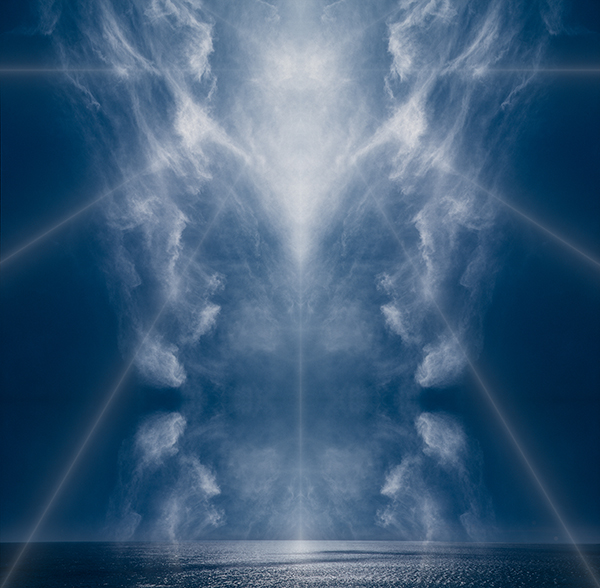
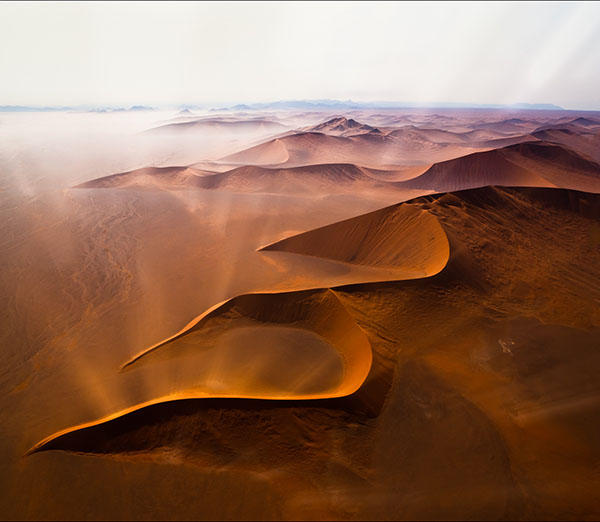
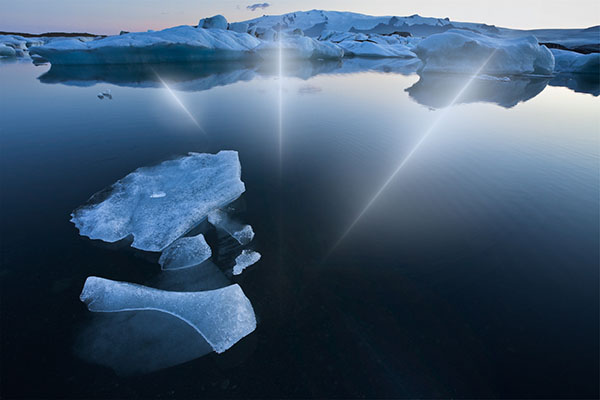
Inspiration comes in many forms and fine art photographers can be a great source of inspiration. While fine art photography can often make a new photographer scratch there head wondering what the big deal is, if you take the time to look at the photographers body of work or better  yet read articles written by the photographer the work can take on much more meaning. One photographer who is an excellent source of inspiration via his visual work and numerous articles is John Paul Caponigro, an Environmental Fine Art Landscape Photographer, who is today’s guest on “3 Minutes with…”

1. Describe your photography in 100 words or less.
My life’s work is both a call to connection with nature and a call for conscientious creative interaction in our environment during a time of rapid change. My artist’s statements will tell you much more.

ExhalationIV_2006_5_1

2. What gear/software do you use?
Canon 1DS MKIII and 5DMK II and iPhone 4. Lightroom 4 and Photoshop CS6. But that will change soon, won’t it? I list all the equipment I use on my website.

20100924_AFRNamibiaSossusvlei_0479-Edit_1

3. What’s one quick tip that you’d give people interested photography?
It’s not about tools and techniques, it’s about vision. Uncover the unique contribution you have to make and pursue developing it as well as you possibly can. It helps to make a personal plan for your creative life. I’ve written a number of articles on this that are available online.

refraction_LXXIV_5_1

4. What 3 Photography Sites or Photo blogs do you recommend?
Julianne Kost’s Adobe TV episodes (How To)
Luminous-Landscape.com (Tech)
Pixelatedimage.com (Soul)
TED.com (Inspiration) [bonus]

To view more of John Paul’s photography visit his web site: johnpaulcaponigro.com

Post originally from: Digital Photography Tips.

Check out our more Photography Tips at Photography Tips for Beginners, Portrait Photography Tips and Wedding Photography Tips.

3 Minutes with Photographer John Paul Caponigro


Digital Photography School

 
Comments Off on 3 Minutes with Photographer John Paul Caponigro

Posted in Photography


The Delight of Photography: An Instructional Book Series for the Aspiring Photographer

16 Apr

At last, here is the photo course that you have always wanted to do but never had the time! The majority of new camera owners just want to know some of the key basics so that they can take good images and enjoy them. I have not yet met a book that caters for this – they all (even the Continue Reading

The post The Delight of Photography: An Instructional Book Series for the Aspiring Photographer appeared first on Photodoto.


Photodoto

 
Comments Off on The Delight of Photography: An Instructional Book Series for the Aspiring Photographer

Posted in Photography


So You Want to be a Stock Photographer, Part I

16 Apr
The photographer has spent a fair amount of time creating this image both in shooting the elements and model, and compositing in post production.  But as a stock image - what does it say?  How will the end user use the image for their messaging?  License cost was 3 credits or about $  2.58; photographer will receive about 52 cents.

The photographer has spent a fair amount of time creating this image both in shooting the elements and model, and compositing in post production. But as a stock image – what does it say? How will the end user use the image for their messaging? License cost was 3 credits or about $ 2.58; photographer will receive about 52 cents. How much is the photographers time worth?

A few weeks back there was an opinion piece posted on dPs that raised the ire of many, and garnered supporters from others.  The fact remains that while it was an interesting read from a single individual, there were several inaccuracies in that piece.

First,  iStock was not the first microstock agency to enter the marketplace; the most widely known perhaps, but it definitely was not the first.  That claim to fame can be laid on another Canadian upstart – Corel.  While I can’t recall the exact dates, in was around 1993-94 time frame when Corel started to purchase images outright for inclusion in CD bundles and incorporation in Corel Draw and Word Perfect. In those days it was pretty much called clip art.  Now it can be argued that Corel wasn’t a microstock agency. I would suggest they were as they purchased images from amateurs and professionals alike. The only difference between them and an iStock, for example, was that Corel purchased the rights and owned the image whereas the microstock agencies today simply work on a royalty basis with the contributor.

The other inaccuracy in the article was the implication that agencies only provide 20% royalty to the photographer.  In some cases this may be true; however, there are also agencies that provide 50% royalty to the contributor, and any percentage combination below that which you can think of.  Usually, the extreme low percentages are in microstock and traditional agencies marketing RF images.  However, in order to compete traditional rights managed agencies are also making package and bundle deals that can see rights managed license fees dramatically reduced to levels even below royalty free image fees.

But let’s not get hung up on the 20% royalty. Yes, the contract most likely states that the photographer will receive 20% royalty from “monies received.” Let’s put that in context.  Somewhere else in that contract you are most likely giving the agency the exclusive right to redistribute the image through their other supply networks.  What this means is that you will not get 20% of the purchase price, but 20% of your contracted agencies receipts.

Put in context it translates to this:  Photographer A makes an image available to his contracted agency – let’s call them Agency X.  Agency X then places that image in the redistribution circuit with Agency Y.  (Photographer A usually does not know who Agency Y is or what the financial arrangement between Agency X and Agency Y might be.)  Agency Y licenses the Royalty Free image to a client for $ 10.00 USD.  Agency Y then remits $ 5.00 to Agency X (assuming their split if 50%), and agency X then redistributes its 20% obligation amounting to $ 1.00USD to Photographer A.

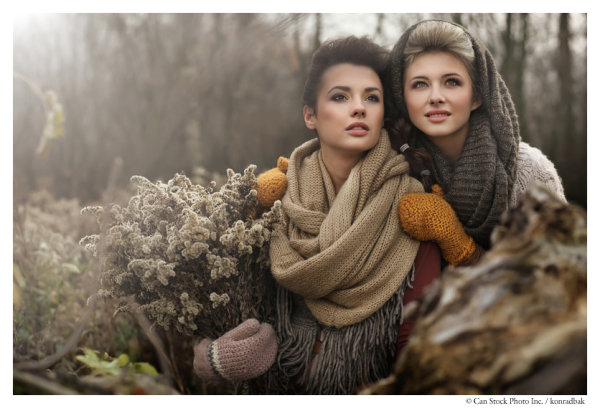
This is a really nicely executed stock image. Are the two ladies friends, or lovers? Is this image about fashion, seasons, or simply looking toward the future? The image provides options for the copy writer, and the more options provided typically the better sales. However, this image has only been licensed twice in more than one year. The license for appearance here cost one credit or about 60 cents; the photographer will receive, unfortunately,  about 12 cents.

This is a really nicely executed stock image. Are the two ladies friends, or lovers? Is this image about fashion, seasons, or simply looking toward the future? The image provides options for the copy writer, and the more options provided typically the better sales. However, this image has only been licensed twice in more than one year. The license for appearance here cost one credit or about 60 cents; the photographer will receive, unfortunately, about 12 cents… it is most definately worth more just in production value alone.

So as you can see, if you are signed with a small agency who more than likely is clamouring to get their material with the large image machines that have far reaching marketing clout, you are more than likely only going to receive 10%, or less, of the initial license price.

Let’s put this financial translation into further context.  I am going to assume you are a Canon user, and you need a new popular lens; let’s say the 70-200mm F4L which retails for about $ 700.  You offer that you can warrant purchasing the lens because of your stock sales and over time you will recover the purchase price.  But wait, when you receive the $ 1.00 from that sale, that is not a deposit in your bank account.  How much time did you take to edit and prep the image by sizing and ensuring the right colour space? How much time did you spend ensuring the correct metadata and keywords were applied. How much is your time worth?  Now that you have received your royalty I suspect you have the usual income tax deductions that can range anywhere from 15-40% depending upon where you live. And on it goes – the list of expenses is endless. However, a general rule of thumb is to endeavour that you would like to retain 30% of your gross income as profit … although many stock photographers today are suggesting they are in a negative profit position and are getting out of the business.

Therefore, and assuming we are going to keep good business practises and retain 30% of the gross sale, we would have 30 cents from each sale from which to purchase that lens. (I don’t want to get into the minutiae of whether or not your capital reserve is included in your business plan.)  Quick translation realizes that we would have to make 2,333 sales in order to purchase that lens!  I can tell you that in more than 20 years as a full time stock photographer I have not had one image be licensed for even half that many times.

So the point of this primer on the financial benefit of the microstock industry and part-time photographer is this: There probably isn’t any financial benefit and in all likelihood it will cost you money.

So yes, if you want to continue shooting for pizza and beer go for it; but at the same time you should calculate all your costs, including time, to see if you would be further ahead by spending that time and money with family.

In the next installment we’ll take a look at cost per image versus return per image.

Post originally from: Digital Photography Tips.

Check out our more Photography Tips at Photography Tips for Beginners, Portrait Photography Tips and Wedding Photography Tips.

So You Want to be a Stock Photographer, Part I


Digital Photography School

 
Comments Off on So You Want to be a Stock Photographer, Part I

Posted in Photography


Art or Intrusion? Photographer Johnny Tergo’s ‘drive-by’ Portraits

11 Apr

MG_7543_printed_V2.jpg

Street photography isn’t everyone’s cup of tea, and for every Cartier Bresson, watching from a distance, there’s a Weegee, pushing a camera into the faces of their bemused subjects without asking permission. Los Angeles-based photographer Johnny Tergo has taken this approach to a new level, rigging up his truck with a camera and bright studio strobes in order to ‘bring the studio lighting aspect to everyday real life on the streets’. Click through for the full story, and images (via wired.com)

News: Digital Photography Review (dpreview.com)

 
Comments Off on Art or Intrusion? Photographer Johnny Tergo’s ‘drive-by’ Portraits

Posted in Uncategorized


Photographer Finn Beales shares his best (mobile) shot

10 Apr

Taking-a-break-from-the-apocalypse.jpg

Photographer Finn Beales primarily uses his Canon EOS 5D Mark III when shooting for major brands as well as media outlets, but he also uses his smartphone to capture poignant moments like this image of his son floating in the Blue Lagoon in Iceland, which recently won the children’s category in the annual Mobile Photography Awards. Learn more about Beales’ work on connect.dpreview.com.

News: Digital Photography Review (dpreview.com)

 
Comments Off on Photographer Finn Beales shares his best (mobile) shot

Posted in Uncategorized


Photographer revisits images of Vietnam War

29 Mar

haughey_portrait.jpg

Soon after being drafted into the Vietnam War as a rifleman in 1967, photography enthusiast Charlie Haughey was taking photos of his unit for the Army and US publications. Upon returning home his negatives sat untouched in boxes. In 2012 Haughey viewed these images for the first time in 45 years and began the emotionally charged process of captioning them for public display. The images are available on Flickr and digital prints will be on exhibit at the ADX gallery in Portland, Oregon on April 5. (via The Boston Globe)

News: Digital Photography Review (dpreview.com)

 
Comments Off on Photographer revisits images of Vietnam War

Posted in Uncategorized