RSS
 

Posts Tagged ‘Photographer’

Essential Gear for the Landscape Photographer

03 Feb

Essential gear landscape photographer 06

A great landscape photo can capture the imagination and inspire the soul. It brings a static scene to life and reminds us why we’re drawn to nature’s cathedrals. And while you can clearly envision the kind of picture you’d like to make of your favorite vista, what may not be as clear is the gear that is essential to taking a great landscape photograph. So, let’s talk about that.

My list of essential gear for the landscape photographer . . .

What is the must-have equipment for capturing awesome landscape photos?

Camera body

We’ll begin with your camera body. Any camera will do for making a shot to share on Facebook. But to elevate your landscape game to the next level, it is essential to use a camera body that allows you to get off Auto and start shooting in Aperture Priority.

One of the keys to a great landscape photo is having tack sharp focus throughout your depth of field. In other words, everything from the leaf in the foreground to the distant mountain range should be in clear focus. To achieve this, you need to shoot at a focal ratio offering great depth of field. Shooting in aperture priority allows you to choose the right focal ratio for the scene. Something in the range of f/8 to f/16 should produce images with good depth of field and crisp focus throughout.

Another setting you’ll be able to select in Aperture Priority is ISO. This is the sensitivity of your camera’s sensor to light. Shooting with a low ISO delivers cleaner images having less noise or graininess. For better landscapes, try to shoot as close to your camera’s base ISO (100 or 200) as possible.

The combination of a large focal ratio (f/8 or higher) and a low ISO (100 or 200) means longer exposures will be needed to make a good image. If you shoot landscapes at midday when the sun is high in the sky, there is more than enough ambient light to make a good image with very short exposures. But truly dramatic landscapes, the kind you’re after, are typically captured in very different lighting conditions.
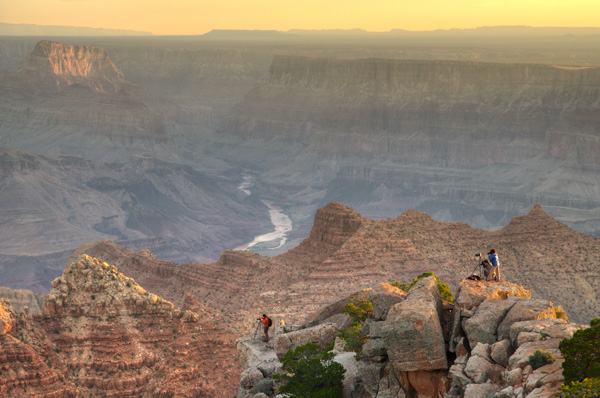
Essential gear landscape photographer 02

Many great landscape photos are taken during the golden hour; that all-too-brief window of time at sunrise or sunset when dramatic lighting paints the scene. Cloudy skies also add an element of drama which can transform a so-so view into a stunning image. Under such conditions, the available light is much lower and this creates the need for our next piece of essential kit: a photographic tripod.

Tripod

A tripod provides a stable platform for your digital camera. It allows you to take the time to carefully compose a shot and then lock down your camera in that position. Since you’ll be shooting in low light conditions, using a large focal ratio and low ISO, the length of the exposure needed to capture the scene will be fairly long. Too long to steadily handhold the camera. Mounting your camera on a tripod will keep it steady during very long exposures that record amazing detail.

Essential gear landscape photographer 05

Lenses

Of course, one of the most important pieces of equipment for a photographer is the lens through which a scene is captured. For landscape photography, your most versatile lens will be a wide angle. These are short focal length lenses that deliver wide, true fields of view. That wide field of view allows greater flexibility in composing a shot encompassing the full grandeur of a landscape. I recommend a minimum focal length of 12mm for APS-C bodies (cropped sensor) and 18mm for full-frame cameras.

Fortunately for your wallet, this does not need to be a fast lens which are designed to have focal ratios of f/2.8 or faster. They are consider fast because their large apertures collect enough light to keep exposures brief, even in low light conditions. Large apertures demand a large front lens element, which comes at a steep price. And while the performance can be well worth the investment, many photographers simply don’t have room in their budgets for such a purchase. Since you’ll be shooting at f/8 or greater, a lens with a maximum focal ratio of f/4 should more than meet your needs.

Essential gear landscape photographer 04

Filters

Let’s talk briefly about filters. They can be a great tool for the landscape photographer. Among the most useful are graduated neutral density (GND) filters and variable polarizing filters. However, as useful as filters can be, I don’t consider them essential gear. In the right lighting, filters are unnecessary. In situations where a GND filter would be of use, it’s often possible to compensate for significant differences in brightness in your photo editing software of choice. In short, filters are useful but not absolutely necessary.

Essential gear landscape photographer 01

Yourself

The last piece of essential gear we’ll discuss is, you. Your eye for composition is the most important asset in your photographer’s tool kit. Your ability to recognize good light is essential. If you look at a scene and your inner voice is saying, “Ooh, that’s cool,” that’s a good sign the lighting is outstanding. Listen to that inner voice, stop and compose a shot.

Walk around the scene. Look for a foreground element to include in the composition. One of the biggest challenges of landscape photography is conveying a sense of scale. Including a foreground element helps immensely. A bush, leaf, rock or person provides a sense of scale for the rest of the image. It also helps simplify the scene, making the resulting image more approachable to the viewer.

Essential gear landscape photographer 03

Summary

With a keen eye for composition, a camera body allowing you to shoot in Aperture Priority, a solid tripod and a sharp wide angle lens, you can take your landscape photography to the next level. Your images will convey the magic you felt while standing amidst a grand scene. The resulting “oohs” and “aahs” will be the reward feeding your satisfaction as a landscape photographer.
Now, get out there and shoot some great landscapes!

The post Essential Gear for the Landscape Photographer by Bill Ferris appeared first on Digital Photography School.
Digital Photography School

 
Comments Off on Essential Gear for the Landscape Photographer

Posted in Photography


3 Minutes with Portrait Photographer Alex Huff

02 Feb

The beauty of portrait photography is that it is as diverse as its subjects and often takes its cues from traditional paintings. One photographer who has found such inspiration is Alex Huff who is today’s guest on “3 Minutes with…” .

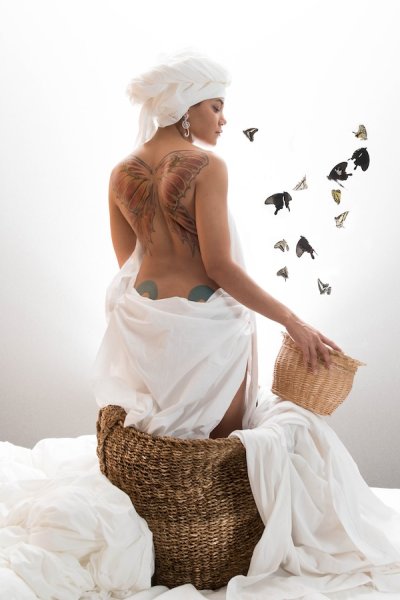
Butterfly Tattoo

Describe your photography in 100 words or less

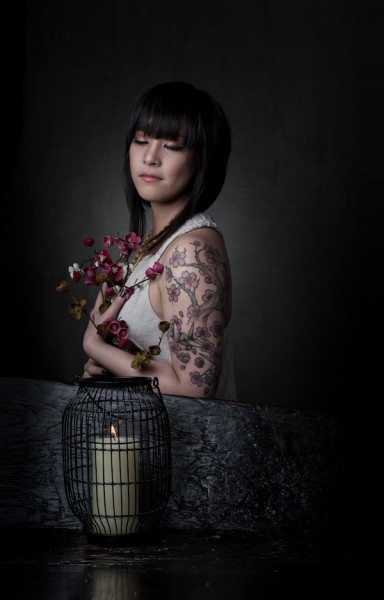
My photography style strives to depict simple beauty with some influence from Dutch Golden Age paintings. The purpose of this particular collection is to showcase individual tattoos in the same frame as the objects and subjects they are designed after. This has allowed my models to revisit symbols that influenced them to get their ink in the first place. My goal is to photograph tattoos in a way that is true to their natural colors and gives them the same life and depth as the items they represent. I describe this process as my “tattoography”.

What gear/software do you use?

I use the Nikon D800 DSLR, 24-70mm f/2.8 & 85mm f/1.4 lenses, Elinchrom D-Lite monoheads, and SB-910 flashguns. My favorite modifiers are the Elinchrom 39″ Deep OctaBox, the Photoflex Extra Small OctoDome with eggcrate, and the Westcott 7′ parabolic umbrella. I edit almost entirely in Adobe Lightroom.

AlexHuff_Tattoography-6

What’s one quick tip that you’d give people interested portraiture photography?

My quick tip to portrait photographers would be to constantly reassure your model, especially while “chimping” or checking your monitor. As an occasional model myself, I understand how discouraging it is to witness a quiet, grimacing photographer behind the lens. Keep it lively, even if you are panicking inside. I also highly recommend letting models see their images halfway through a shoot and don’t be afraid to take their suggestions.

CherryBlossomMea

What three photography sites or photo blogs do you recommend?

Strobist – this blog always reminds me that lighting is creative and doesn’t have to be complicated.
Juxtapoz – they tend to feature a lot of tattoo photography which helps me keep up with how other people approach that subject.
The Unprofessional Photographer – This is my unconventional go-to. Sometimes you just gotta laugh. (Editor’s note: warning may contain crude or x-rated content, visit at your own risk!)

To view more of Alex Huff’s photography visit her web site: alexandriahuff.com

The post 3 Minutes with Portrait Photographer Alex Huff by Jim Goldstein appeared first on Digital Photography School.


Digital Photography School

 
Comments Off on 3 Minutes with Portrait Photographer Alex Huff

Posted in Photography


Iconic photographer Don McCullin on war and landscapes

31 Jan

McCullin.jpg

Many have seen Don McCullin’s haunting pictures of conflict, but few have heard his own thoughts on his acclaimed career. Created by photographer David Sims for the Dunhill ‘Voices’ campaign, for three minutes and twenty seconds we are taken into the mind of one this generation’s most iconic photographers. ‘The majority of the last 50 years of my life has been wasted photographing wars. What good have I done showing these pictures of suffering’, McCullin says. See video

News: Digital Photography Review (dpreview.com)

 
Comments Off on Iconic photographer Don McCullin on war and landscapes

Posted in Uncategorized


A Year of Photographic Lessons – Journey of a Novice Photographer

30 Jan

About a year ago I decided to try and take my photography to the next level – to go beyond basic snapshots and try and get the wow factor into my images. I hope this article covering my photographic experiences of 2013, and the lessons I’ve learned gives you some ideas for 2014.

This is the story of my year of photographic lessons – maybe you can relate, or are on a similar journey.

Note: the images in this article are in chronological order with my early work near the top, and my most recent images at the bottom. Hopefully you can see where I’ve started from and how much I’ve progressed in a year. You can do this too!

Photography lessons novice 01

STEP ONE: – join a photography club

The single biggest thing that made a difference to my photography in 2013 was joining a local club in Dublin, Ireland (www.offshoot.ie). This proved to be the turning point for a few reasons:

  • It was an opportunity to learn from like-minded, enthusiastic and friendly photographers; and a chance to be inspired by their stunning work.
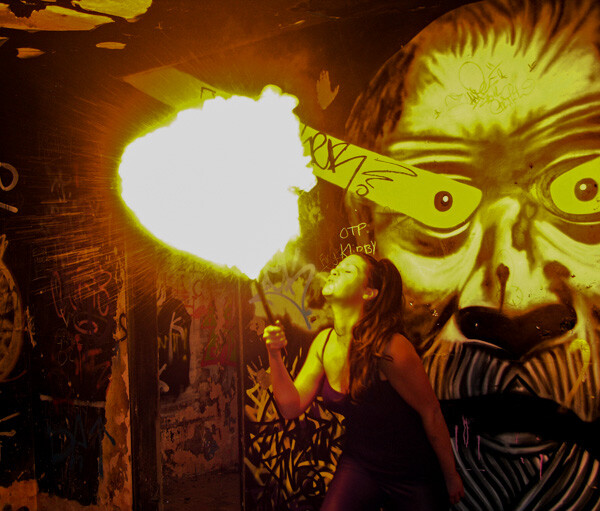
  • Organized field trips; providing some amazing photo opportunities including; a fire breather, light painting, model shoots, etc.
  • Learning by practical sessions – new techniques like portraits and lighting, or macro to introduce new areas of photography I had never explored previously.
  • Joining a club, above all, provided an opportunity to learn, as well as inspiration and motivation to get out taking photos more often, and to do it better.

Photography lessons novice 02

STEP TWO – try entering competitions

Competitions are one aspect of photography clubs which tends to put a lot of people off. However, I found that the competitions are very useful to help concentrate the mind on a particular topic, or learn a new technique. For example: long exposure or macro photography, which I had never tried before.

Getting expert feedback from judges can be invaluable – usually they will want to help you improve, and will provide helpful feedback on your image, e.g.. exposure, cropping, etc. Competitions are also a chance to show your off your work, and let’s face it, we all like some recognition. So winning competitions doesn’t exactly do any harm.

STEP THREE – Learn the basics

It’s important to get to know the basics on the technical side. It’s no substitute for the photographer’s eye, but the lack of technical skills might prevent you from capturing the image that you want. The good news is there are loads of great sources from the photography club, great websites like dPS, flickr, books, and podcasts. The big lessons for me included:

  • Exposure and how to control it with aperture and ISO – is the image too bright or too dark
  • How to get sharp images by adjusting focus modes, shutter speed and using a tripod
  • Depth of field – controlling what is in focus
  • Composition – some of the classic components of a good image, like using the rule of thirds
  • Cropping images – using software to crop to the important part of the image, and remove distracting elements
  • How to do the basics in photo editing software like Lightroom or Photoshop to crop images, correct exposure, resize images and more importantly, to build and safely store your library of images

Getting a good understanding of the above should make a big difference in the quality of your images.

Photography lessons novice 03

STEP FOUR – know your camera

I try to consider the basics above and the results are improving. I generally manage to get a few images that I really like, and I think the occasional one at least that has the wow factor. With a modern DSLR you don’t need to understand all its complexities but you do need to know the key features, to get the most out of it. You don’t want to miss a shot of a spectacular sunset while you trawl through the manual, so understanding the main controls are essential including:

  • Focus – manual and auto focus modes
  • Image stabilization
  • Metering modes
  • Manual mode – controlling aperture, ISO, and shutter speed
  • Image file type – Jpeg or Raw
  • White balance

A big milestone for me as I got to know my camera, and got more confident, was stepping out of Auto mode and going Manual. I can attest, when you get it right, it really works. When you get it wrong, delete – it’s the busiest key on my keyboard. I still need to get my head around the focus modes, white balance and some of the more exotic possibilities like HDR.

STEP FIVE – get the right gear

Photography lessons novice 04When I joined the club I must say I had a bit of camera envy – mine being a Nikon 8 megapixel E8700 bridge camera, of 2004 vintage, which had served me well. People in the club correctly told me that it’s not the camera that makes the difference but the photographer. My vintage Nikon was great for many situations, but couldn’t match the quality and versatility of a modern DSLR.

Unfortunately, when I bought it on a family visit to New York in 2004 I explained to my wife that this $ 1100 camera was a lifetime investment. After some negotiation with my wife, I made a new lifetime investment in 2013, and am delighted with my Nikon D7100, although I’m still trying to come to grips with its incredible capabilities. I would definitely recommend a tripod also as one essential piece of gear that will improve your results, and help you to with long exposure, night shots and getting sharp images in focus.

Don’t rush into buying a whole load of gear however, wait until you find that your current camera or lens is holding you back.

Note: the images below were all taken with my new D7100.Photography lessons novice 05

Photography lessons novice 06

WHAT’S NEXT – plan for 2014

So where to next? What does 2014 bring, I hear you ask. Now is the time to put a plan together!

  1. Make a calendar of the many sports and cultural events that might provide new and varied photo opportunities
  2. Projects – to develop your skills; e.g. one day in your city, monochrome (B/W), sports, nature, architecture
  3. New things to explore – some new techniques or skills to master to take you out of your comfort zone and try a new area such as long exposures or portraits

Photography lessons novice 07

Most of all – think before you shoot

This was the biggest lesson of all for me – use everything you have learned to get the best possible result. Use your knowledge of the exposure and composition. Try a different camera angle or point of view, depth of field, lens, or shutter speed to try and create an image with the wow factor.

Above all get out there taking photos and enjoy, there is no substitute for practical experience.

Photography lessons novice 08

Further reading

For more tips for beginners – head over here.

Photo Nuts and Bolts – know your camera and take better photos, a dPS ebook.

The post A Year of Photographic Lessons – Journey of a Novice Photographer by Rob Hackett appeared first on Digital Photography School.

Digital Photography School

 
Comments Off on A Year of Photographic Lessons – Journey of a Novice Photographer

Posted in Photography


Masters of Photography – Yousef Karsh Portrait Photographer

27 Jan
Karsh-self-portrait

Self portrait of Yousef Karsh from his official website

This is the next instalment of my series on the masters of photography, last time we looked at The Decisive Moment with Henri Cartier-Bresson. Something that my photography instructors gave me was an appreciation and love for the history of photography. If you are not familiar with some of the masters I will be featuring one now and then to help you become acquainted with some of the best in history.

Today we’re going to look at a man that was considered to be the world’s premiere portrait photographer in his time, perhaps of all time, and his images still stand among the best today. The word “iconic” is often used when speaking of his images of people like:

  • Winston Churchill
  • Ernest Hemmingway
  • Princess Elizabeth (later Queen)
  • Elizabeth Tailor
  • Albert Einstein
  • Georgia O’Keefe
  • Mother Teresa

Just to name a few! If you haven’t already guessed, or read the title, yes I’m talking about the legend, Yousef Karsh.

Yousef Karsh 1908-2002

I’m not going to give you his bio or list his accomplishments here. I want you to do your own research. Google his name and find his famous portraits. Study them. Watch the interview below (ignore the age and quality of this video, instead really focus and listen to what he says). What can you learn from him?

As I ultimately found myself doing portraits and weddings early in my photography career Karsh was highly influential on my style. I wanted to created the dramatic lighting he used on his subjects, but more than that I wanted to strive to connect with the person in front of my lens the way he did. He was not only a master of lighting, he was a master of getting the expression and making his subject feel at ease.

Watch and learn from Mr. Karsh!

Keep in mind this is Part One of this interview. Make sure to view Part Two and Part Three as well.

Want to take better portraits? Well you are in luck! Starting tomorrow, over the next two weeks we will be doing a Portrait Photography Deep Dive. What that means is we’ll be publishing articles on all things portrait related by both regular and guest authors. Make sure you’re signed up for the newsletter so you don’t miss anything!

If you want to read some past articles on portrait photography you can try these:

  • Reflectors: Your Secret Weapon for Amazing Portrait Photography
  • Portrait Tutorial Feast – Best of dPS 2013
  • Our 14 Best Portrait Photography Tutorials of 2012

Want to read more about Karsh and see his stunning portraits?

Here are a few books. I personally have the middle three in my library!


The post Masters of Photography – Yousef Karsh Portrait Photographer by Darlene Hildebrandt appeared first on Digital Photography School.

Digital Photography School

 
Comments Off on Masters of Photography – Yousef Karsh Portrait Photographer

Posted in Photography


AP cuts ties with Pulitzer-winning photographer

24 Jan

Contreras.jpg

The Associated Press news organization has cut ties with freelance photographer Narciso Contreras after he admitted to digitally altering a photo taken last September in Syria. The photo in question shows a Syrian opposition fighter taking cover during an exchange of fire. In the original photo, a fellow journalist’s video camera can be seen in the lower left corner. Contreras cloned out the camera before sending back to AP editors. Learn more

News: Digital Photography Review (dpreview.com)

 
Comments Off on AP cuts ties with Pulitzer-winning photographer

Posted in Uncategorized


Are you Ready to be a Wedding Photographer?

22 Dec

ready-to-be-wedding-photographer-12As a photographer the time will come that you are asked to shoot a friend’s wedding for free or for payment. Most photographers baulk at the idea, citing the importance of the day and fear of failure as the main reasons. In this article I want to look at what it takes to shoot someone’s wedding to help you decide if it is your lack of self confidence that is preventing you for taking one on, or a honest reflection of your abilities coupled with a moral obligation telling you not to ruin the day.

Are you ready?

This is clearly subjective and to a certain extent determined by the visual literacy of the bride and groom. What are their expectations and do they match what you are technically able to do? From your perspective, before you can even entertain the proposition, you should be competent, technically, with a camera. This means being able to use it comfortably in full Manual mode with an understanding of how shutter speed, aperture and ISO work together to give the correct exposure. If you currently work in Program ( P ) mode, although you may get okay results, you should probably decline the opportunity.

The above may seem harsh so let me explain my reasoning. If you do not understand the principles of how to nail exposure fairly accurately in Manual mode, then chances are that you will not be well versed in composition or the use of light, both of which are integral to creating images the bride and groom will love. You may ask at this point ask what does it matter if I shoot in Program mode – I spent a lot of money on my camera and I get well exposed images. Well, the problem is that you are not in control. Wedding photography is about translating what is in your mind’s eye into a photo, and you need the technical know how to do this, at the same time as capturing the couple’s and guests’ emotions. In short you need to control the depth of field which means shooting in Manual or Aperture priority mode (the latter in fine as long as you can do it manually as well and know about exposure compensation).

Do you have the right gear?

ready-to-be-wedding-photographer-01

If I shoot a wedding I take at least three bodies with me (often five) so as not to miss a special moment while changing lenses, and to act as back up. The latter is incredibly important. You do not need a top of the range kit – in fact a good photographer could shoot a wedding very well with an entry level DSLR, but it does help. Do you have fast glass (f/2.8 or faster) or are you using a kit lens? If you have a kit lens, is it fast enough to give a sufficient shutter speed to capture the ceremony? The last thing you want is to ruin the proceedings and romance by using a flash. A 50mm f/1.8 can be purchased very quickly and are ideal as they all come with a built in zoom – your feet!

Can you direct people and blend into the wedding?

Even photojournalists will usually take portraits of the bride and group and arrange group shots, so being able to pose people is really important. It is an area that most photographers struggle to get right though and this shows up in the final images. They look awkward and unnatural, which is the last thing you want. It is something you can learn before the wedding and practice to get right. You really don’t want to be doing this on the day and lining the family up like a firing squad.

ready-to-be-wedding-photographer-08

Do you have insurance?

Even if you are covering a wedding for a friend you should still have insurance in case something happens. Your bride and groom may be forgiving, but suppose staff member at the venue trips over your bag, which you momentarily put down, and hurts themselves? You do not want to be sued!

How do the bride and groom want their images?

They may have expectations of a grand album. Can you provide this, design it and deliver it? Do you have the time to do this or would you prefer to just hand over a disk of images?

ready-to-be-wedding-photographer-03

Set the expectations for the bride and groom

A wedding is a serious thing and if you decide to take one on for the first time it is important to be very honest with the couple. Tell them that you are nervous and that it will be your first time. Unless they are very misguided, they will likely have asked you to cover it because you are either free or inexpensive, or they simply want a record of their day and you have a flash camera which works better than a camera phone.

You may be an excellent photographer, but can you handle your nerves? Can you think straight and logically if something goes wrong? Can you work to a strict deadline, like when the meal is due to be served. Are you comfortable shooting in bright sun, rain, snow or dark conditions? You need to ask yourself these questions, and ideally do a complimentary engagement shoot with the couple to ensure they like what you produce.

ready-to-be-wedding-photographer-10

Conclusion

So, are you ready to be a wedding photographer?

The above hardly touches the surface, but if you have the self belief and confidence that you can shoot a wedding, then go for it. Just be honest with the bride and groom, and set expectations. From their point of view they may not have a budget for a professional and would prefer that you got something for them instead of none. It is hard work. Your brain will ache and you really need to do your homework first, but if you do, then chances are you will love every second.

The post Are you Ready to be a Wedding Photographer? by David Pearce appeared first on Digital Photography School.

Digital Photography School

 
Comments Off on Are you Ready to be a Wedding Photographer?

Posted in Photography


15 Gift Ideas For The Photographer In Your Life Or Yourself

06 Dec

The post 15 Gift Ideas For The Photographer In Your Life Or Yourself appeared first on JMG-Galleries – Landscape, Nature & Travel Photography.


Related Stories

  • The Old Guard – Bristlecone Pine Forest, California
  • The Old Guard – Bristlecone Pine Forest, California – Enclosure
  • Save 25% on my eBook and Star Trail Webinar Now Through Dec. 2nd
Feed Ads by FeedBlitz
powered by ad choices


JMG-Galleries

 
Comments Off on 15 Gift Ideas For The Photographer In Your Life Or Yourself

Posted in Equipment


Stop Calling Yourself a Real Photographer if You Suck

02 Dec

It has been about five years since I left my office job to make photos on a full-time basis. Still, I feel quite uncomfortable calling myself a photographer. Yes, my photos occasionally appear on glossy magazines covers; sometimes I see my photos on billboards in the center of the city, but still, am I a real photographer? While this may Continue Reading

The post Stop Calling Yourself a Real Photographer if You Suck appeared first on Photodoto.


Photodoto

 
Comments Off on Stop Calling Yourself a Real Photographer if You Suck

Posted in Photography


Want a Great Gift for a Photographer This Holiday Season? Get Them a Scottevest

29 Nov

Brother and Sister Bonding Time
Brother and Sister Bonding Time, by April Joy Gutel.

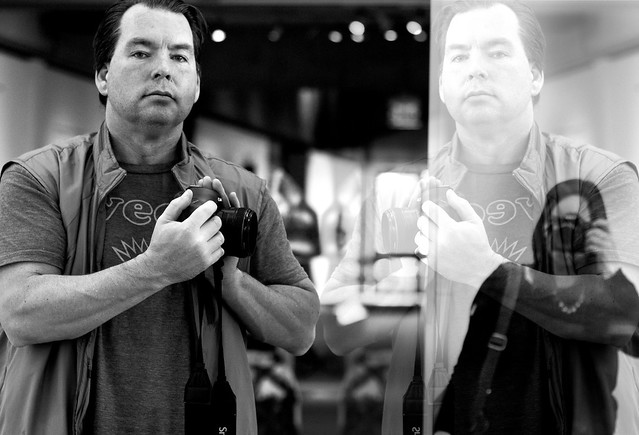
On Wednesday I spent the afternoon shooting the Oakland Museum of California with my sister April Joy Gutel (her photo of me above, thanks April). I always love shooting in museums and find myself inspired by the art even as I create new art in that sort of a space.

A lot of museums don’t allow photography, but the ones that do almost always disallow backpacks. Because I shoot mostly prime lenses, I need a lot of different lenses wherever I go.

On Wednesday I tried shooting in a museum in my new Scottevest for the first time. It worked great. I was able to pack an iPhone 5s, 4 different lenses (my 8-15 fisheye, 14mm, 24mm, 135mm), an extra battery and two CF cards easily into the vest. This was in addition to the Canon Mark 3 and 50mm lens on my camera. While I definitely felt the weight as I shot (those lenses are heavy), it felt much better than wearing a backpack. The lenses were also much more accessible to me as I didn’t have to take a backpack off to get to them. I simply unzipped the pocket and pulled out what I needed.

Even with this much gear, I still had lots of room to pack more stuff into the vest if I needed it.

The vest has sleeves that come on or off, in case you want to wear it as a jacket. It was very light weight and very comfortable to wear. It’s a great thing to have around for those times when you want more than just your camera, but don’t want to (or can’t) take your whole backpack set up with you.

You can check out photos I’ve taken at the Oakland Museum of California here.


Thomas Hawk Digital Connection

 
Comments Off on Want a Great Gift for a Photographer This Holiday Season? Get Them a Scottevest

Posted in Photography