RSS
 

Posts Tagged ‘Photographer’

Craigslist ad wants wedding photographer to also shoot the… uh… consummation

02 Jul

The Craigslist ad headline reads ‘All Day Wedding Photographer Needed,’ followed by a small, but extremely important, parenthetical: (see details). That bit is important because when the couple in question says ‘all day,’ what they actually mean is ‘all night long.’

The ad, posted to Craigslist in Wisconsin and sent to PetaPixel by one of its readers, is seeking a wedding photographer who wouldn’t mind sticking around and photographing the couple’s first time. Their consummation. The… moment of truth, if you will.

“We are hoping someone will document the whole day from beginning to end,” reads the ad, innocently enough. “We are specifically hoping someone will document the end, which we are finding difficult to find someone who will.”

Now you see where this is going.

“We have both saved ourselves for marriage and understand our first time will be awkward,” writes the bride and groom. “But [we] do not think it will be that much more awkward for the photographer to be there and we’d really like it documented (in a beautiful and tasteful way).”

So… any boudoir photographers want to take their work to an extremely awkward new level? We’ve got a job prospect for you.

Articles: Digital Photography Review (dpreview.com)

 
Comments Off on Craigslist ad wants wedding photographer to also shoot the… uh… consummation

Posted in Uncategorized


Pete Souza talks about life as a presidential photographer

27 Jun

Photojournalist Pete Souza served as the presidential photographer for both Ronald Reagan and Barack Obama. In an interview with Pulitzer Prize-winner Marcia Nighswander at Ohio University, he tells the story behind several of his most noteworthy images from the Obama presidency. Some of his most memorable photos of Obama were taken at the Christ the Reedemer statue in Rio and while crossing the Edmund Pettus Bridge in Selma, Alabama.

Souza has a popular Instagram account and will be publishing a book with 300 photos from the eight years he spent in the Obama White House.

Articles: Digital Photography Review (dpreview.com)

 
Comments Off on Pete Souza talks about life as a presidential photographer

Posted in Uncategorized


Photographer uses ‘antique’ photo technique to illustrate struggles of Native Americans

17 Jun

$ (document).ready(function() { SampleGalleryV2({“containerId”:”embeddedSampleGallery_4545210807″,”galleryId”:”4545210807″,”isEmbeddedWidget”:true,”standalone”:false,”selectedImageIndex”:0,”startInCommentsView”:false,”isMobile”:false}) });

During the Dakota War of 1862, the United States government hung 38 members of the Dakota Indian Tribe in Mankato, Minnesota – the largest single-day mass execution in US history. A day after Shane Balkowitsch learned about this event – something most Americans have never heard of – he made the plate ‘Death by Oil’ (pictured above) using an antique photo process called wet plate collodion, which was first developed (no pun intended) in 1848.

The oil in the photo links the struggles of Native Americans in 1862 to the present time, in which they are again standing up to the US Government to protect their homeland. In this case, it is from the proposed Dakota Access Pipeline.

Wet plate photography requires subjects to sit still for long exposures, sometimes as long as 30 seconds. It involves applying a collodion emulsion onto a glass plate and sensitizing the plate for 3 minutes in a bath of silver nitrate, then taking the photo while the plate is still wet (which requires a portable darkroom). According to Balkowitsch, while the photos come out black and white, ‘they capture real life more beautifully and romantically’ and they will last for hundreds of years, unlike more traditional modern photographic prints. Balkowitsch is one of a very small group of photographers still using the collodion wet plate process and has made over 2300 plates since 2012.

Balkowitsch’s full collection of wet plate photos is available for viewing online.

Articles: Digital Photography Review (dpreview.com)

 
Comments Off on Photographer uses ‘antique’ photo technique to illustrate struggles of Native Americans

Posted in Uncategorized


Photographer captures Miami Beach air show with Nikon 800mm and custom rig

07 Jun
Jim Winters with his TRIAXEZ rig. Photo by Pete Boden

The AF-S Nikkor 800mm F5.6 VR is an absolute beast of a lens. Shooting handheld with it for more than a few seconds is pretty much unbearable unless you’re a champion bodybuilder. Wanting it utilize it for aviation photography, Jim Winters built a rig to accommodate the lens and a camera body that he can use for hours.

His ‘triple axis’ TRIAXEZ rig includes a counterweight and 12V battery. The battery provides additional counterweight to balance the rig – an earlier evolution used lead pellets as counterweights – and also provides charge to the camera for long shooting sessions. Winters says he can even use it to charge his phone. The whole thing is easily transported to and from shooting locations thanks to a pair of wheels.

It’s a pretty clever piece of engineering, and the proof is in the images below, shot at the National Salute to America’s Heroes in Miami Beach over Memorial weekend.

Photo by Jim Winters

It looks like the rig is working well for Winters, but he’s envisioning ways to improve it. ‘Due to the weight of the rig assembled with lens and counterweight, I was experimenting with a single shoulder mounted rig. You would look through a POV set of glasses so that you don’t have to look through the camera body, nullifying the need for a counterweight.’ That’s a pretty enticing solution, but in the meantime, we think he’s done an excellent job of adapting his equipment to his needs.

See all of his photos from the Miami Beach show at his Team Nikon Miami website.

Articles: Digital Photography Review (dpreview.com)

 
Comments Off on Photographer captures Miami Beach air show with Nikon 800mm and custom rig

Posted in Uncategorized


5 Surprising Habits That Will Make You a Better Photographer

01 Jun

When you’re learning photography, it seems natural to pay the most attention to the gear and techniques you use to create images. You’ve probably received advice about developing great habits like photographing every day, carrying your camera everywhere you go, trying different compositions, learning processing skills, and backing up your photos. These things are important, no doubt! But there is more to becoming a better photographer than that.

Getting the shot often comes down to being there at the right time, so these tips have to do with getting out in the field and staying out in the field. If you cultivate these surprising habits, you’ll surely become a better photographer.

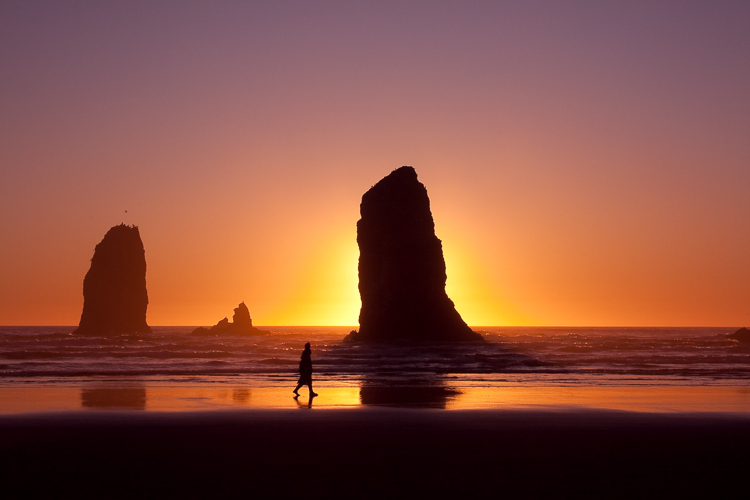
Canon Beach, Oregon, by Anne McKinnell - better photographer

#1 – Research Locations

Before you set off on your photo shoot, doing a little research can go a long way to making better images. First, think about what potential subjects are available. I like to create a Pinterest board and start collecting images I like from the location. Once you get an idea of what is there, how can you create images that are different from what you have seen? Is there a different perspective you want to check out? Or maybe a night shot? Don’t forget to take note of the direction of light in the images you see. Imagine what it would look like at a different time of day.

Once you get an idea of what is there, how can you create images that are different from what you have seen? Is there a different perspective you want to check out? Or maybe a night shot? Don’t forget to take note of the direction of light in the images you’ve seen. Imagine what it would look like at a different time of day.

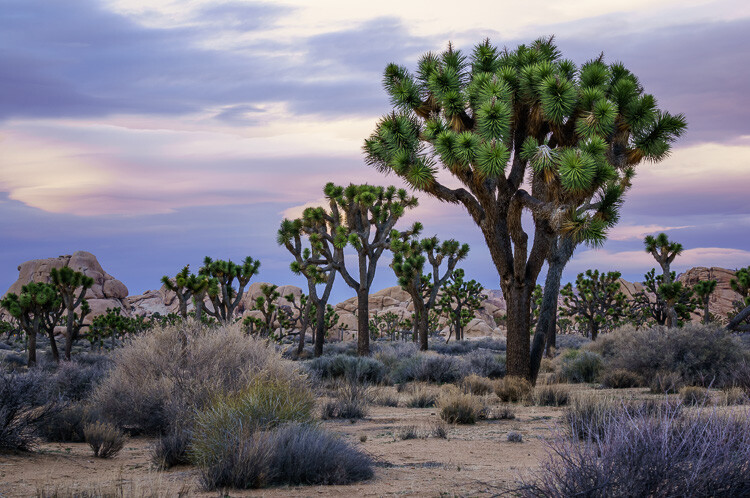
Joshua Tree National Park, California, by Anne McKinnell - habits better photographer

This is the location where the Joshua Trees are the densest in Joshua Tree National Park, California.

The second part of your research should be looking at maps and figuring out where exactly the best subjects are located and how to get there. Is the location close to the road or will you have to hike there? How long will it take?

#2 – Watch the Weather

Keeping a close eye on the weather forecast will dramatically affect your photos. Remember, bad weather is usually a good thing for photography! Storms bring the potential for seeing dramatic clouds, wet leaves, and even rainbows. You’ll get photos with fewer people in them too.

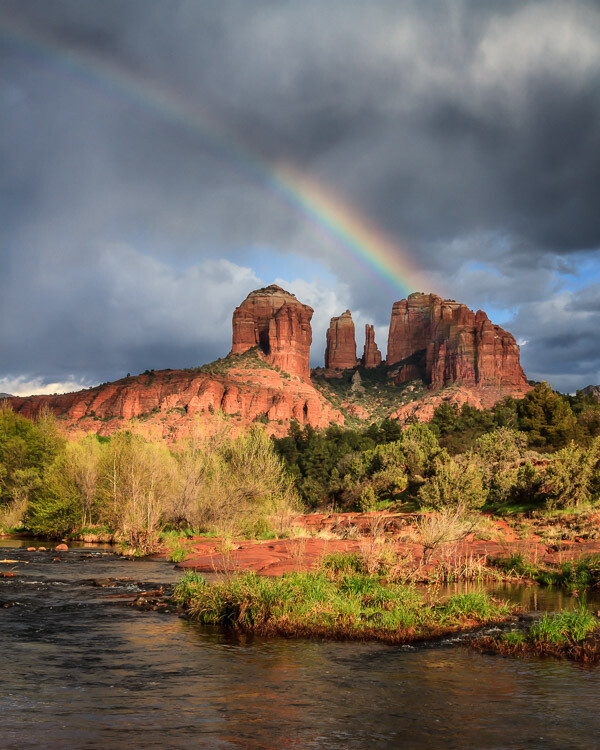
Red Rock State Park, Sedona, Arizona by Anne McKinnell - habits better photographer

Waiting for a break in the weather resulted in this rainbow at Cathedral Rock, Arizona.

When I was visiting Cathedral Rock in Sedona, Arizona, I noticed that there were a lot of people around and it was difficult to get a photo without a lot of tourists in it. Then it started to rain and everyone left. I waited in my truck for 45 minutes during the downpour. Mine was the only vehicle in the parking lot, and when the rain began to die down, I headed out and was rewarded with a beautiful rainbow. I had the location all to myself.

If a clear sky is in your forecast, instead of photographing your scene with a plain blue sky, you might have the potential for a great night shot.

While you’re at it, don’t forget to check when the sun rises and sets and when the moon rises and sets. If you’re going to be on the beach, tides are also important.

#3 – Carry Less Stuff

Whether you choose to go out with your camera and only one or two lenses or switch your whole system to a lightweight mirrorless system, you’ll undoubtedly find that you can hike farther and get to more remote locations with less weight on your shoulders. The potential for finding unique subjects and unique compositions increases the farther away you get from the beaten track.

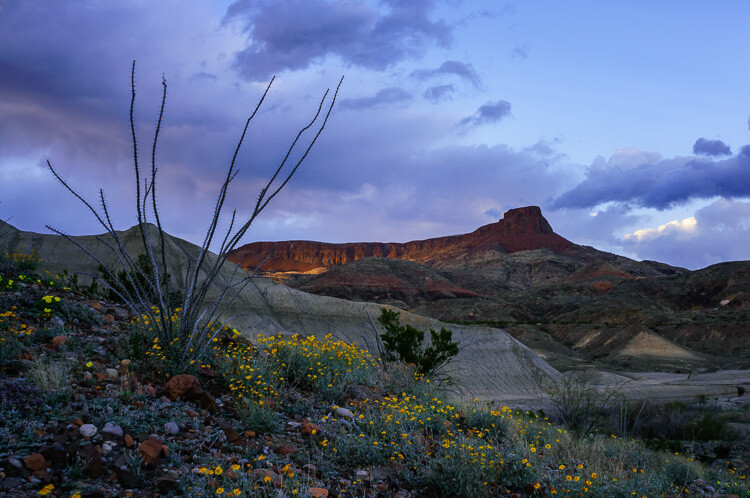
Big Bend Ranch State Park, Texas, by Anne McKinnell - habits better photographer

I don’t think I would have made it this far up the hill if I had carried all of my heavy gear.

#4 – Don’t Forget the Comfort Essentials

Despite the last tip about carrying less stuff, it’s equally essential that you carry the right stuff to allow you to stay out there longer. Anything that makes you uncomfortable in the field will probably cause you to leave earlier than otherwise.

Thirst, hunger, being cold or wet, getting bitten by bugs and looming darkness are just a few things that can make you leave a location too soon. A few things on my “always carry” list are food, water, rain jacket, sweater, bug spray, and a headlamp. These items will get you more potential shots than that extra lens.

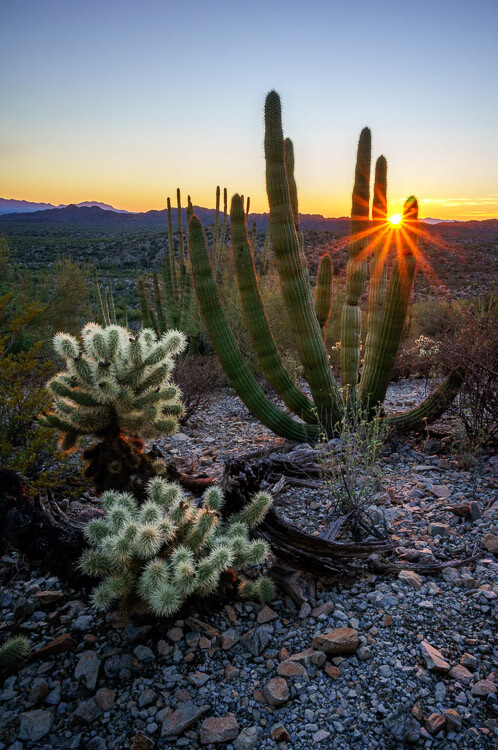
Organ Pipe Cactus National Monument, Arizona, by Anne McKinnell habit better photographer

I probably wouldn’t have this photo if it were not for my trusty headlamp that I used to make my way back through the cacti in the dark.

#5 – Hike With a GPS

Getting lost is one of my fears when I’m out exploring, so I have started hiking with a handheld GPS. It took me awhile to get used to it because it’s not the fancy kind with built-in maps. All I do is mark a waypoint where I park my truck and then it tracks me as I walk. No cell signal or internet required. I can always figure out the direction to get back to my waypoint, or even follow my tracks to go back using the exact route I took to go out. It’s worth it to carry a couple of extra batteries for it too.

Now that I have the GPS, I am more willing to go off the trail and explore new things. It’s a whole new level of freedom!

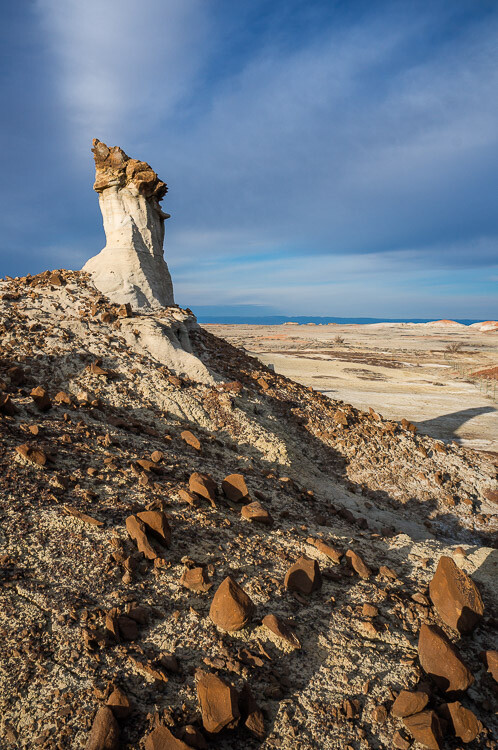
Bisti Badlands, New Mexico, by Anne McKinnell - habits better photographer

At Bisti Badlands, New Mexico, it is very easy to get lost with no trails and strange rock formations in every direction. My GPS was a lifesaver.

Conclusion

These tips should help you figure out where to go when to get there and make sure you are comfortable in the field so you can stay as long as you like to get that special shot. Sometimes photography is a waiting game, but if you are comfortable you can be patient and wait for the magic moment to happen.

The post 5 Surprising Habits That Will Make You a Better Photographer by Anne McKinnell appeared first on Digital Photography School.


Digital Photography School

 
Comments Off on 5 Surprising Habits That Will Make You a Better Photographer

Posted in Photography


How one photographer 3D printed this beautiful medium format camera

27 May
It’s named PK-6142016, aka the ‘Cycloptic Mustard Monster,’ and is a 3D printed medium format camera with a Kreuznach 90mm f/8 Super Angulon lens attached.

Photographer Paul Kohlhausen has created what he calls a ‘really precisely engineered box,’ the PK-6142016 ‘Cycloptic Mustard Monster’ medium format analog camera. Kohlhaussen designed the camera himself using Autodesk Fusion 360 and produced it via a 3D printer and SLS polyamide material. The Cycloptic Mustard Monster utilizes 120mm film and produces 6×14 cm negatives.

Kohlhausen detailed the camera on his website, where he explains that he used a Schneider Kreuznach 90mm f/8 Super Angulon lens designed for 4×5 cameras, with focusing being possible via fixed spacer brackets. Camera features include a viewfinder and a removable top plate for inserting film. In an interview with The Phoblographer, Kohlhaussen stated that he is considering launching the product on Kickstarter, but difficulties sourcing the aforementioned lens may be a hindrance.

Via: The Phoblographer

Articles: Digital Photography Review (dpreview.com)

 
Comments Off on How one photographer 3D printed this beautiful medium format camera

Posted in Uncategorized


5 Things Every Newbie Photographer Must Learn and Practice

21 May

There are certain things as a photographer you should know regardless of if you are an expert or a novice. These simple yet powerful lessons not only differentiate you but also help you grow in your art and your photographic career. For every newbie photographer, these are essential lessons to learn and practice.

Note: For the purposes of this article, all the images used here are SOOC (Straight out of camera). This is done to demonstrate key concepts highlighted here. My camera of choice is Canon 5D MKIII with a few common Canon L-series lenses like the 50mm and 85mm.

#1 – Know your gear inside out

This almost seems like a no brainer but I am surprised by the number of people who say that they have a really fancy (and expensive) DSLR camera but still shoot in auto mode 100% of the time. Now before you get all upset and say that there is nothing wrong with shooting in auto, I will raise my hand and say that yes, I also shot in auto when I got my first DSLR camera. But very quickly I realized that my camera (a Canon 5D MKII at that time) was a fantastic and sophisticated piece of equipment that was capable of some incredible shots if I only knew how to operate it.

So take the time and really know the ins and outs of your gear. The user manual is a great place to start to not only familiarize yourself with what all the buttons do but also where they are located on the camera. You should be able to adjust settings without removing your eye from the eyepiece/viewfinder when you are composing your frame. Think about it this way, would you like to own a convertible and always drive with the top up (i.e. closed), even on the most gorgeous of summer days?

Here are some ways to learn the ins and outs of your gear.

ISO – Play around with various ISO settings to understand how it affects exposure and what is an acceptable ISO grain (for you). This will help you make photography decisions in low light situations. Some of these ISO decisions may be limited to the kind of camera you have. Regardless, you should know the upper limits of your gear.

5 Things Every Newbie Photographer Must Learn and Practice

The quality of light at the stables where my kids ride is terrible. Even though they have lots and lots of flood lights, there isn’t enough light just because of the sheer size of the barn. These images were shot handheld at ISO 3200 – the one on the left was at 1/60th shutter speed whereas the one on the right was at 1/400th. That was because of the natural light coming in closer to the wall that illuminated my son and gave me a higher shutter speed to capture the motion of the horse.

Sweet spot – Find the sweet spot for your lens. Every lens has an aperture setting where the image is sharper overall than others. This will help you analyze what is the widest aperture (smallest f-stop) you can shoot in and still have the image in focus. This is different than the depth of field (which is how much of the scene is in focus) in that the actual resolution of the image is sharper at the sweet spot.

Minimum shutter speed – Find out what is the lowest shutter speed you can handhold your camera and get a sharp image. This will also help in low light situations as well as in creative motion blur type shots when you don’t have a tripod handy. The general rule of thumb is to shoot at one over the focal length of your lens.

5 Things Every Newbie Photographer Must Learn and Practice

Here I was shooting in a dark canyon with dark stone walls. I was using a 35mm lens at f/1.4 (completely wide open aperture) because I wanted a very low ISO (100) to eliminate any noise. My shutter speed dropped to 1/30th – which I clearly could not hold steady…the image is completely blurry and out of focus!

Weight – Find out what is the maximum weight you can comfortably carry without hurting yourself or almost passing out because of discomfort from carrying excess weight (true story!)

#2 – Know and understand light

There are some photographers who only shoot in natural light while others only shoot using some form of artificial light. Then there are photographers who shoot in any type of light and do a fantastic job at that. There is no right or wrong answer here in terms of preference but it is important to know how to shoot in any form of light. That might be the only thing that stands between you and the shot of your dreams.

Knowing how to read, analyze, and play with light is one of the most basic and important skills every newbie photographer should know, in my opinion. Keep in mind that not all light is equal from a purely technical standpoint (tungsten versus fluorescent versus white-balanced light). Certain types of light are good and others are not so good. Experiment with many different kinds of light so you know how to read light, then learn how to shoot in each.

These three images were all shot within the hour just before sunrise.

Here my settings are as follows ISO1250, f/2.8, 1/60th shutter speed. I LOVE the blue in the sky falling on the snow covered Pike’s peak in Colorado.

5 Things Every Newbie Photographer Must Learn and Practice

The warm sunrise cast such a magical glow on the mountain and surrounding areas. My settings here were ISO 320, f/5.0, and 1/500th. The sky filled with so much light that I had to stop down my aperture to be perfectly exposed.

5 Things Every Newbie Photographer Must Learn and Practice

The overcast sky with little spots of blue took my breath away. My settings here were ISO 320, f/5.0, and 1/800th to get a perfectly exposed photo.

5 Things Every Newbie Photographer Must Learn and Practice

I do not like indoor yellow tungsten light…everything become so orange! (A custom white balance or correction in processing is necessary)

5 Things Every Newbie Photographer Must Learn and Practice

But neutral natural light is so much easier to work with and to get even natural-looking skin tones.

3 – Practice good ethics

Be respectful of the people, places, and things you photograph. I cannot tell you how much it pains me when I see photographers (both amateurs and professionals) disrespect their surroundings. Be it climbing where they are not supposed to, keeping heavy equipment on delicate surfaces, overcrowding and overstaying their welcome in public places and not giving other general tourists the opportunity to enjoy the scenery.

Pay special notice to other photographers. These are folks in your industry even if they are beginners. They are all in it for the same reasons you are – love for the art! Leave that sense of entitlement behind, just because you have more expensive gear does not make you a better photographer or a creative artist. Take the extra effort to find out what the photography rules are in the places that you intend to photograph and stick to them.

5 Things Every Newbie Photographer Must Learn and Practice

I belong to several groups of photographers and we regularly meet to shoot the breeze, photograph together and just generally geek out about all things photography. There is no pressure, no tension and everyone plays nice! Community over competition!

4 – Safety

Be safe when you are out and about. Always be aware of your surrounding especially if you are a female photographer who tends to travel alone. Check out this article  Safety Tips for Travel Photographers (Particularly Women) that addresses this issue. Remember safety always comes first, art next.

5 – Be your true self and be patient

Whether you choose to be in business or not, be true to your art. Get inspiration not just from other photographers but also from daily life. There are many amazing things around us at any given point in time. Just because no-one else photographs it does not make it boring. Similarly think outside the box, just because everyone photographs something a certain way does not mean you have to follow the pack.

When you are starting out, don’t obsess over clients, getting work, and making money. Yes, they are absolutely important, I will not disagree, but take the time to perfect your art (to the point where you are confident charging money for your photography) and then the money and fame will follow.

Also give out as much as you can, be helpful and uplift others who are on this journey with you. The more you put out there the more you will receive from the universe! I truly believe in that mantra across all walks of life.

5 Things Every Photographer Must Learn and Practice

I am always coming up with shoot concepts and ideas to keep experimenting. Some work and some fail miserably but that’s okay. I take everything as a learning experience and try to stay positive in my game. An editorial shoot with my daughter captured on film was a complete disaster as I got all the setting wrong and ended up with grainy, grudge frames! – but I learned a whole lot about film and light and how different it is to digital!

5 Things Every Photographer Must Learn and Practice

Leftover florals from Valentine’s day gave me a chance to practice some styling as well as a more moody, contrasty way of editing – which I sort of like and dislike at the same time! But no money was lost and I only used 10 digital frames and spent 30 minutes in editing experimentation.

Conclusion

Are there any other life lessons that photography has taught you? In the spirit of building this community of creatives, feel free to share it with others.

The post 5 Things Every Newbie Photographer Must Learn and Practice by Karthika Gupta appeared first on Digital Photography School.


Digital Photography School

 
Comments Off on 5 Things Every Newbie Photographer Must Learn and Practice

Posted in Photography


National Geographic highlights early ‘People’ entries to Travel Photographer of the Year 2017 competition

12 May

Travel Photographer of the Year 2017: People entries

National Geographic’s Travel Photographer of the Year competition is open once again for entries, and its editors have shared a few of their favorite early contenders in the ‘People’ category. Submissions are being accepted until June 30th, and a Grand Prize win will get you a ten-day trip for two to the Galápagos Archipelago with National Geographic Expeditions.

Photo and caption by Brandon Kusher / National Geographic Travel Photographer of the Year Contest

Slam Dunk. A basketball player flies high through the air attempting a slam dunk in which he puts the ball between his legs first!

Travel Photographer of the Year 2017: People entries

Photo and caption by Akiomi Kuroda / National Geographic Travel Photographer of the Year Contest

M. Portrait of Miho

Travel Photographer of the Year 2017: People entries

Photo and caption by Jobit George / National Geographic Travel Photographer of the Year Contest

Bridging Generation. A beautiful photo of a father and son sitting in white traditional attire with beautiful blue sky on the day of Eid al-Fitr in a mosque in New Delhi, India. The photo shows the beautiful bond which these two generation have been building up in a very simple and lovable manner.

Travel Photographer of the Year 2017: People entries

Photo and caption by Lorraine Yip / National Geographic Travel Photographer of the Year Contest

Retro Ride. Traveling through Cuba in a vintage 1950 Chevrolet with a speedometer which no longer works. We were passing by the city of Camagey known for its winding streets. The modern American Hawaiian hula figure and yellow taxi cab sign on the dashboard adds to the time travel-esque element of the classic Chevrolet, set against the backdrop of an old and perhaps dilapidated , but not forgotten, Cuba.

Travel Photographer of the Year 2017: People entries

Photo and caption by Hua Zhu / National Geographic Travel Photographer of the Year Contest

Old and Young. This photo was taken in a small village in Wuyuan, China. It estimates that there are about 250 million countryside people living in the big cities. Many young people are making money in the cities, leaving their parents and kids at their hometown.

Travel Photographer of the Year 2017: People entries

Photo and caption by Pradeep Raja / National Geographic Travel Photographer of the Year Contest

Ramadan Prayers. This is a shot of women praying inside Istiqlal Mosque, Jakarta which is the biggest mosque in Southeast Asia during the month of Ramadan.

Travel Photographer of the Year 2017: People entries

Photo and caption by Lauren Breedlove / National Geographic Travel Photographer of the Year Contest

Lady Havana. During a recent visit to Cuba, I encountered this bold woman on the street while strolling around Old Havana. Something about her just struck me, like her eyes held a million stories. Not having any cash on me, I borrowed some change from a friend and approached the woman with it, asking to take her photograph. She nodded and posed like a boss, stogie and all.

Travel Photographer of the Year 2017: People entries

Photo and caption by Mattia Passarini / National Geographic Travel Photographer of the Year Contest

Tibetan’s soul smile. This monk was running back to his room after the afternoon prayer. I was chasing him trying to get a nice shot, but he kept covering his face. In Chinese i called after him: (pai yi zhang ba) “just one shot!” He looked back and started to laugh..
Tashi Lhunpo Monastery, Tibet

Articles: Digital Photography Review (dpreview.com)

 
Comments Off on National Geographic highlights early ‘People’ entries to Travel Photographer of the Year 2017 competition

Posted in Uncategorized


Filmmaker and photographer collaborate to show natural beauty of ocean waves

10 May
 

How do you capture the beauty of an ocean wave with a single still image? You turn it into a cinemagraph, of course.

After discovering the potential of the Puppet Warp tool in Adobe effects, Dutch cinematographer Armand Dijcks started to experiment with creating ‘cinemagraphs’ of images of moving water, using Flixel Cinemagraph Pro to create the infinitely looping animations.

After perfecting the technique, Dijcks reached out to Australian ocean photographer Ray Collins for source images. Their collaboration, titled ‘The Infinite Now’ can be viewed above.

Read more about the process of creating ‘The Infinite Now’

Articles: Digital Photography Review (dpreview.com)

 
Comments Off on Filmmaker and photographer collaborate to show natural beauty of ocean waves

Posted in Uncategorized


National Geographic photographer shares tips for controlling light

09 May

National Geographic photographer Bob Holmes has posted a video on YouTube explaining how to control the three different types of light to give your pictures the trademark look from the famous magazine.

Articles: Digital Photography Review (dpreview.com)

 
Comments Off on National Geographic photographer shares tips for controlling light

Posted in Uncategorized