RSS
 

Posts Tagged ‘Park’

Airball with a View: Play in the World’s Sexiest Car Park

23 Dec

[ By Steph in Art & Installation & Sound. ]

airball 1

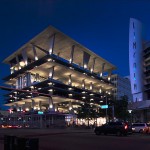
When a parking garage is considered a landmark in itself and used as the setting for fashion shows, music videos and orchestral performances, perhaps it’s no surprise that people are happy to hang out there for hours on end playing airbag. 1111 Lincoln Road by Swiss architecture firm Herzog de Meuron is a work of modern art, so it was a natural setting for Snarkitecture to show off some of their own designs.

airball 2 airball 3

Known for unexpected installations and temporary works of architecture, the Brooklyn-based collaborative practice set up a bright white game room on level 5 of the carpark, inviting users to play ball and compete side-by-side on two fully-custom basketball arcade-style shootout games.

airball 4 airball 6

Of course, what takes this installation to the next level isn’t just the fact that it’s located in a parking garage – it’s the stunning views of the Miami skyline that guests take in as they play. No worries about losing your ball over the side, as there are safety nets in place.

airball 5

airball 7

The garage itself is famed for appearing incredibly light despite its concrete construction, influenced by designer Jacques Herzog’s perception of Miami as “all muscle without cloth.” Some of the levels feature triple-height ceilings to accommodate special events with the city’s Art Deco district as a backdrop.

Share on Facebook


[ By Steph in Art & Installation & Sound. ]

[ WebUrbanist | Archives | Galleries | Privacy | TOS ]


WebUrbanist

 
Comments Off on Airball with a View: Play in the World’s Sexiest Car Park

Posted in Creativity


Lowline NYC: World’s First Underground Park Slated for 2018

08 Dec

[ By WebUrbanist in Architecture & Cities & Urbanism. ]

lowline prototype rendering

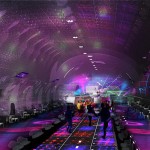
Using fiber optics as “remote skylights” to pipe illumination down from the surface, this bold plan aims to transform a century-old trolley station into a bright and green subterranean park. New York City is a natural candidate, having already inspired rail-related and elevated parks around the world with its innovative High Line Park.

the low line diagram

the lowline abandoned station

Located beneath Delancey Street in the Lower East Side of Manhattan, the former Williamsburg Bridge Trolley Terminal is adjacent to active lines but has itself been abandoned for over 50 years. Proposed as the site of the Lowline, the space is being vetted for structural feasibility as well as civic support – discussions with the MTA as well as the city are ongoing and progressing.

lowline test area subterranean

lowline installation prototype mockup

lowline light collector demo

As shown above and below, the group behind the project is already working with the city on crowd-funded prototypes that demonstrate the technologies to be deployed on the target site, including tests of illumination levels with live greenery.

lowline surface generated solar

lowline real life test

Boasting 20-foot ceilings and multiple blocks of open space, the dilapidated station still has a lot of deserted-place charm including old cobblestones, trail tracks, vaulted ceilings and vintage signage.

lowline technology lights plants

lowline conept design

lowline rendering

Much of this will be preserved, rehabilitated and otherwise highlighted in the renovation, creating a balance between new design, urban exploration and historic context. “To explore our vision in greater detail, we commissioned a preliminary planning study in 2012 with Arup, the global engineering firm, and HR&A Advisors, the leading consultant behind the High Line. The study concluded that the Lowline was not merely technically feasible, but would also vastly improve the local economy and the adjacent transit hub. Once built, the Lowline would be a dynamic cultural space, featuring a diversity of cultural programming, youth activities, and popular retail.”

underground solar collection stratregy

lowline tree underground

lowline conceptual design phase

The ingenious sun-redirecting technology has already been tested, and works as follows: “Designed by James Ramsey of Raad Studio, the proposed solar technology involves the creation of a “remote skylight.” In this approach, sunlight passes through a glass shield above the parabolic collector, and is reflected and gathered at one focal point, and directed underground. Sunlight is transmitted onto a reflective surface on the distributor dish underground, transmitting that sunlight into the space. This technology would transmit the necessary wavelengths of light to support photosynthesis, enabling plants and trees to grow. During periods of sunlight, electricity would not be necessary to light the space.”

Share on Facebook


[ By WebUrbanist in Architecture & Cities & Urbanism. ]

[ WebUrbanist | Archives | Galleries | Privacy | TOS ]


WebUrbanist

 
Comments Off on Lowline NYC: World’s First Underground Park Slated for 2018

Posted in Creativity


Yellow Brick Ode: The Mainly Abandoned Land Of Oz Theme Park

03 Nov

[ By Steve in Travel & Urban Exploration. ]

Land of Oz 1
Closed since 1980, the Land of Oz theme park only opens for one October weekend annually. The rest of the time it looks like it’s been abandoned 35 years.

Land of Oz 2

Joel Handwerk of Lithium Photo visited the “Creepy Land of Oz” and if anything, he’s understating the oppressive atmosphere of doom and decay that permeates the former theme park. One wonders how the park’s skeleton staff manages to freshen up the place so visitors arriving on the first weekend of October each year don’t immediately turn their cars around and burn rubber in a frenzied effort to escape!

Land of Oz 3

While Handwerk may be better known for his infrared images – what his friends refer to as “those nuclear winter photos” – this choice selection of shots definitely casts the mainly abandoned Land of Oz theme park in a stark and uncritical light.

Land of Oz 4

You read that right: “mainly abandoned”… time for some backstory goodness. The Land of Oz theme park was planned, built and opened in 1970 by Grover Robbins and was situated in the North Carolina ski resort town of Beech Mountain. In related news, North Carolina has (or had) a ski resort. Who knew?

Next Page – Click Below to Read More:
Yellow Brick Ode The Mainly Abandoned Land Of Oz Theme Park

Share on Facebook


[ By Steve in Travel & Urban Exploration. ]

[ WebUrbanist | Archives | Galleries | Privacy | TOS ]


WebUrbanist

 
Comments Off on Yellow Brick Ode: The Mainly Abandoned Land Of Oz Theme Park

Posted in Creativity


23 October, 2014 – Arches National Park – A Quick Guide To Photography

25 Oct


The National Parks in the US offer a wide variety of photographic opportunities for the landscape photographer.  There is so much to see and photograph, and all of these great parks have something unique to see.  This is the second of a continuing series of National Park Quick Guides by QT Luong.  In his previous guide QT described all the good location in Acadia National Park.  Today QT takes us to Arches National Park, which is one of the most famous parks for photographers.


The Luminous Landscape – What’s New

 
Comments Off on 23 October, 2014 – Arches National Park – A Quick Guide To Photography

Posted in News


Under London: Disused Tunnel Now a Subterranean Skate Park

26 Aug

[ By Steph in Architecture & Cities & Urbanism. ]

House of Vans Skate Park 1

The infamous Old Vic Tunnels under London’s Waterloo Station are now home to the city’s first subterranean skate park with the opening of House of Vans, a cultural complex taking up the entire 32,000-square-foot space. In addition to the pool-style bowl, street section and mini-ramp for skaters, the space will offer a music venue, cafe, bar, cinema, artist studios and gallery space.

House of Vans Skate Park 2

House of Vans Skate Park 5

The four massive tunnels were the subject of a bidding war once the Old Vic Theather vacated the underground space, with Vans reportedly beating out Apple and Nike. The skate park is a fitting usage for it, located adjacent to London’s largest legal graffiti wall and another skate park on the Thames River.

House of Vans Skate Park 3

House of Vans Skate Park 4

The smooth new concrete surfaces and black-and-white checkered floors contrast with the centuries-old weathered brick surfaces of the original tunnels, which are still under control of England’s Department of Transport. Before it was taken over by Old Vic, the disused tunnel played host to the premiere of Banksy’s movie Exit Through the Gift Shop.

House of Vans Skate Park 6

House of Vans Skate Park 7

Skate sessions are free, but must be reserved in advance, with time slots getting snapped up as much as a month ahead of time. Artists selected to utilize the studios for free get the opportunity to display their work in the gallery space at the end of their tenancy.

Share on Facebook


[ By Steph in Architecture & Cities & Urbanism. ]

[ WebUrbanist | Archives | Galleries | Privacy | TOS ]


WebUrbanist

 
Comments Off on Under London: Disused Tunnel Now a Subterranean Skate Park

Posted in Creativity


26, June 2014 – Acadia National Park – A Quick Guide To Photography

26 Jun


It’s summer time and a lot of you will be heading out to America’s National Parks to capture their beauty and to enjoy the great outdoors.  I was in Yosemite NP last week working on a NEW LuLA tutorial.  It’s one of the grandest National Parks of them all. I’m still working on images and will post some on the home page soon.  Today’s article is by QT Luong.  He is known for being the first person to photograph all 59 US National Parks in Large Format.  He has come on board as a regular contributor and we will be regularly publishing his articles on his National Park Photography guides.  we’ll start with the ‘A’s and today’s article is  Acadia National Park – A Quick Guide To Photography.


The Luminous Landscape – What’s New

 
Comments Off on 26, June 2014 – Acadia National Park – A Quick Guide To Photography

Posted in News


National Park Photography Workshop Permits: Are They Really Necessary?

10 Jun
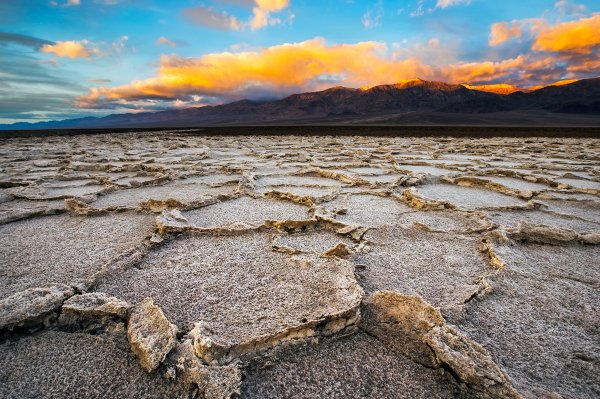
badwater-sunrise

Sunrise on the West Side Road at Badwater Basin, Death Valley

Back in February of 2014, I led two back-to-back photography workshops in Death Valley National Park with my friend and fellow photographer Mike Mezeul. Planning workshops is a lot of work and takes a lot of love and dedication to do right. Before the process of getting everything set up (making sure the students had all booked their flights, hotels, rental cars, etc.) we needed to apply for a workshop permit. This is sort of a tough thing to do timeline wise. You can apply for it ahead of time before you even announce the workshop; but then you run the risk of paying the $ 210 (average cost) and the workshop falling through or something like that. Or you can wait until you book spots for the workshop and then apply for the permit; but then you run the risk of not getting the permit in time for the workshop. We opted for the latter because we had plenty of time to get the application in and get the permit back. We got our workshop permit in time and had nothing to worry about. We weren’t going to risk getting in trouble with the park in an effort to save a few hundred bucks.

Now fast forward to the second workshop. We had just wrapped up a beautiful sunrise shoot at Badwater Basin on the West Side Road (Death Valley. The patterns at the main part of Badwater (by the parking lot) were in pretty terrible shape but we decided to take the group there after the sunrise shoot so they could see all the educational signs, walk around for a bit and get a picture of the “280 Feet Below Sea Level” sign. While we were there, a man came up to me and asked if we had found any good patterns. I’ve never been one to withhold secrets so I told him about the spot we found over on West Side Road. I noticed he had a van full of people and shortly after, they were on their way.
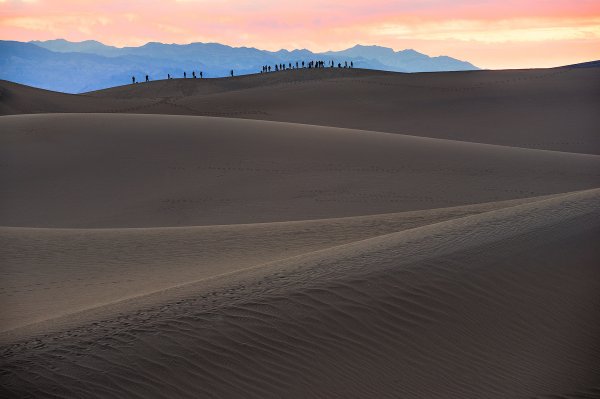
Workshop students set up for sunrise at the Mesquite Flat Sand Dunes

Workshop students set up for sunrise at the Mesquite Flat Sand Dunes

Our group stayed at the Badwater parking lot for another 30 minutes or so before heading back into Furnace Creek for breakfast. When we got to the Forty Niner Cafe we saw a large table of around 20 people (all with their photography gear) sitting in silence. It was really strange. Nobody was really talking and everyone looked stressed out and upset. I went to use the restroom and that’s when I saw the same guy who I’d spoken to at the Badwater Basin parking lot.

He told me that he was a workshop instructor and they were on day two (the first full day) of their photography workshop. He had taken my advice and driven his group down to the West Side Road but when he got there, a Park Ranger was waiting for him. As it turns out, the instructor and his partner had decided to forgo the workshop permit because they had applied for one the year before and never got asked about it at during that workshop. He figured, “Why not save the $ 210?” It’s not like Death Valley has much staff left after all the government cutbacks, right? Wrong.

The Ranger asked for his permit and when the instructor said he didn’t have one, he was told to leave the park immediately. He was instantly given a $ 2,000 fine for conducting a workshop inside a National Park without a permit. He had to leave his group of around 20 students inside the park–students who had paid the tuition for the workshop, bought plane tickets into Vegas, rental cars to drive into the park and $ 200/night hotels within the park. On top of that, he had to appear before a judge in federal court in California three months later. That meant another flight to book, a couple nights in a hotel, a rental car and living expenses for the trip. Based on the outcome of the court appearance, he was facing upwards of $ 10,000 in fines and a lifetime ban from the park. I’m not sure what the outcome was with his group of students but I’m assuming they got their money back for the workshop.
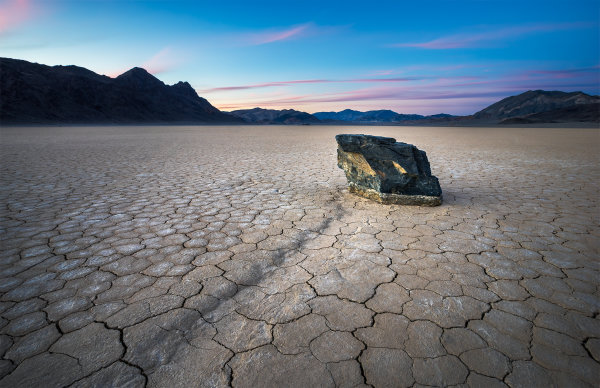
A mysterious sailing rock during sunset at the Racetrack Playa

A mysterious sailing rock during sunset at the Racetrack Playa

The Lesson to be Learned

The takeaway here is not to cut corners. If you are conducting a workshop inside of a national park, a national monument or even some state parks; get a permit. It’s not worth taking the risk and there are Park Rangers out there doing research. I talked to another photographer who was holding a workshop out in Zion National Park a while back. He had applied for a permit (and got one) to take his group into the Subway. When he got to the parking lot to start the hike, a Ranger was waiting there for him to check his permit. I’ve heard other stories of the Rangers looking up workshops on Google and then keeping track of the instructors on social media. They then try and pinpoint where the group will be and see if they can track them down to make sure they have the permit. All it takes is a tweet saying, “Beautiful sunrise at the Mesquite Dunes this morning.” To be honest, $ 210 is a very small fee to pay for holding a workshop inside of a national park. On top of that, you are supporting the park by paying the fee much in the same way you support it by purchasing park passes and entry fees.

If you are a student and will be attending a workshop inside a park, make sure that your instructor has the right permits. In my opinion, an instructor that cuts corners to save their bottom line isn’t an instructor worth paying tuition for a workshop.

For more information on choosing a photography workshop or tour, read these:

  • Taking a Photography Workshop; Why it is Different from a Photo Tour
  • Choosing a Photography Workshop Or Tour
  • Is that a Workshop, Tour or Seminar [Part I]

The post National Park Photography Workshop Permits: Are They Really Necessary? by James Brandon appeared first on Digital Photography School.


Digital Photography School

 
Comments Off on National Park Photography Workshop Permits: Are They Really Necessary?

Posted in Photography


Turning Tides: 10-Mile Park to Protect NYC from Flooding

30 May

[ By WebUrbanist in Architecture & Cities & Urbanism. ]

green park ring manhattan

Designed to shield the exposed edges of Lower Manhattan from increasingly-disastrous storms, this impressive system of parks and other public spaces is also designed to serve the everyday needs of New York citizens.

green city edge view

green ocean level indicator

green park swimming pools

Rising sea levels and increased flood frequencies may eventually are the driving threat behind this competition entry. Big U, an urban design scheme authored by Bjarke Ingels Group (BIG) and others, is one of a set of submissions to Rebuild by Design, a competition from the U.S. Department of Housing and Urban Development (HUD). This plan calls for a series of discrete interventions that together form a protective buffer.

Jeremy Siegel, one of the project leads, elaborates: “Because they all work individually, you end up with a system that’s resilient. If you have a breach in one area, it’s localized and you can organize evacuation into neighboring compartments. It’s a little bit like the hull of a ship, where you’ve got different segments, and breaching one area doesn’t necessarily mean that the whole system fails.”

green park section diagram

One of the advantages of this segmentation is the ability to build in sections, breaking a massive construction project down into discrete steps that can be implemented sequentially for budgeting and other pragmatic reasons. Each area features its own personality and amenities, including aquariums, swimming pools, walking paths and seasonal markets.

Learning local lessons from Hurricane Sandy (and national ones from the likes of Katrina), the architecture teams participating in the competition sought to address social as well as engineering needs. Located anywhere else and their ambitious plans might sound far fetched, but New York City is already home to Central Park and The High Line.

green park fall leaves

green park swimming pool

green area under rails

Siegel notes that, particularly in a place like NYC, “If you’re going to be investing so much money into an infrastructure for resiliency–that’s going to be sitting along one of the most spectacular coastlines in the world–there’s a huge opportunity there to also improve civic infrastructure, so it can protect the city, but also become a platform for civic life.” As for other proposed schemes, you can see and read more about the finalists and (eventual) winners at Rebuild by Design.

Share on Facebook


[ By WebUrbanist in Architecture & Cities & Urbanism. ]

[ WebUrbanist | Archives | Galleries | Privacy | TOS ]


WebUrbanist

 
Comments Off on Turning Tides: 10-Mile Park to Protect NYC from Flooding

Posted in Creativity


National Park Foundation 2013 photo contest winners announced

25 May

15.jpg

The National Park Foundation, a charitable organization partnered with the National Park Service, has announced the 2013 winners of its annual ‘Share the Experience’ photo contest. Open to U.S. residents, amateur photographers are invited to submit their photos taken within National Parks to compete for a top prize of $ 10,000. Take a look at the winning photographs from 2013 and submit your photos for this year’s competition. Learn more

News: Digital Photography Review (dpreview.com)

 
Comments Off on National Park Foundation 2013 photo contest winners announced

Posted in Uncategorized


Park & Slide: 100,000 Sign Up to Slip 300 Feet Down a Street

07 May

[ By WebUrbanist in Art & Installation & Sound. ]

urban slide go now

For one day only, residents of Bristol were offered just 360 ‘tickets to slide’ (out of nearly 100,000 applicants) down a main city street at over 10 miles an hour, surrounded by thousands of jealous onlookers.
urban installation art design

Inspired by the previous year’s heat wave and created by Luke Jerram, this participatory crowdfunded project was an inclusive, all-ages community endeavor, with sliders ranging from 5 to 73 years old.

urban slide go detail
The slide was installed on Park Street in Bristol as part of Make Sunday Special and the Bristol Art Weekender, drawing a mix of participants from within and beyond the city.

urban slide ticket line

urban slide in action

Plastic sheets over padded mats were shaped and held in place by hay bales – this simple canyon was then supplied with continuous water to ensure a smooth ride from top to bottom.

urban water slide build

urban public water slide

While he has no plan to tour his own creation, Luke is going to make the plans freely available for other people who want to follow suit, making public water slides in their own towns or cities around the world.

Share on Facebook


[ By WebUrbanist in Art & Installation & Sound. ]

[ WebUrbanist | Archives | Galleries | Privacy | TOS ]


WebUrbanist

 
Comments Off on Park & Slide: 100,000 Sign Up to Slip 300 Feet Down a Street

Posted in Creativity