RSS
 

Posts Tagged ‘Over’

Crash drones over and over again with Microsoft’s open source simulator

17 Feb

Microsoft has released a free, open source simulator to help engineers test drones in a photo-realistic environment. The AirSim, as it’s called, offers a space for developers to run simulated flights again and again, gathering data and seeing how a drone’s onboard perception systems react to a complex environment. Naturally, that’s a lot cheaper and less time-consuming than studying repeated real-world drone crashes.

The cross-platform software supports manual or programmatically controlled flights, and thanks to its open source nature, data gathered from test flights can be easily used to create new algorithms to guide drone operation. There you have it – hundreds of simulated drone crashes aren’t just amusing to watch, they may be actually useful.

The code is available for download via GitHub.

Articles: Digital Photography Review (dpreview.com)

 
Comments Off on Crash drones over and over again with Microsoft’s open source simulator

Posted in Uncategorized


Absurdism: Artists Fight Over Use of World’s “Blackest Black” & “Pinkest Pink”

15 Feb

[ By WebUrbanist in Art & Drawing & Digital. ]

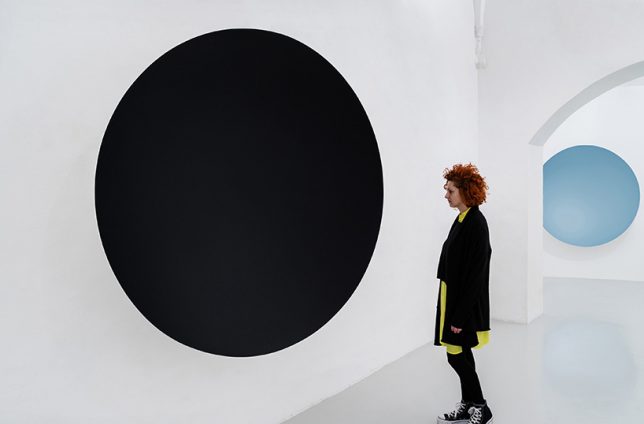
black whirlpool

For the past few years, British artist Anish Kapoor has been making use of his exclusive rights to something called Vantablack, a high-tech pigment touted as the blackest shade of black. His unique access, however, has sparked an escalating (and increasingly absurd) feud in the art world.

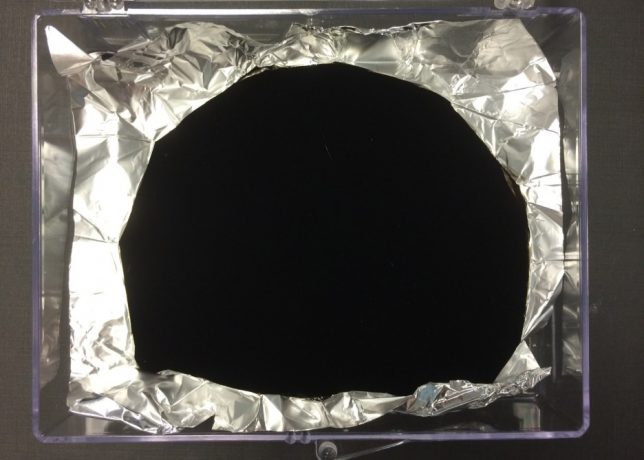
Developed by NanoSystems, the remarkable Vantablack pigment uses microscopic tubes oriented to capture light and deflect it internally rather than letting it bounce in a way visible to viewers. Designed for military and astronomical applications, it absorbs an incredible 99.96% of light.

ventablack

But Kapoor’s usage rights have been criticized by other artists like painter Christian Furr who see it as monopolistic, limiting the potential of other creatives to explore artistic potential of the material.

“Using pure black in an artwork grounds it,” he notes. “All the best artists have had a thing for pure black – Turner, Manet, Goya. This black is like dynamite in the art world. We should be able to use it – it isn’t right that it belongs to one man.”

pink attack

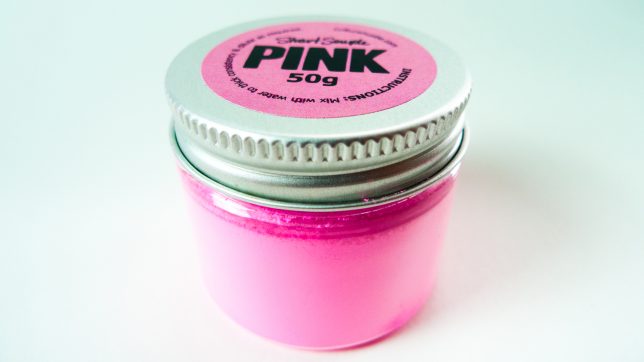
Recently, as a sort of satirical retaliation, British artist Stuart Semple created a flourescent pink pigment, designed to be the “pinkest pink” in the world. To drive the point home, the shade is available for purchase (just a few dollars per pot) to anyone on the planet except Kapoor, who is legally banned from buying the stuff.

Anyone placing an order has to agree that they are not Anish Kapoor, nor associated with him or purchasing it on his behalf. It is designed to be the exact opposite of the blackest black, reflecting a maximum amount of light to make it appear as garishly bright as possible.

pinkest pink

Kapoor, however, managed to procure some anyway, posting images on social media and further fanning the flames of this off-color artistic war.

“I was really sad and disappointed that he felt so left out that he needed to orchestrate some conspiracy to steal our pink,” says Semple. “It would be nice if he owned up, said sorry and gave me my Pink back.” All in all, his reactions paint Kapoor as somewhat petty given his own exclusive use of the blackest black.

diamond dust glutter

Semple, meanwhile, has also created the “world’s most glittery glitter”, “the “world’s greenest green” and the “world’s yellowest yellow” and is similarly banning Kapoor once again from these creations — at this point, presumably any reaction would paint Kapoor further into a corner.

The idea of artists “owning” a color is not unique to this particular feud. A deep shade of blue (International Klein Blue) was patented by an artist decades ago. Since his death, however, it has been used in various contexts, including by performers of the Blue Man Group.

Share on Facebook


[ By WebUrbanist in Art & Drawing & Digital. ]

[ WebUrbanist | Archives | Galleries | Privacy | TOS ]


WebUrbanist

 
Comments Off on Absurdism: Artists Fight Over Use of World’s “Blackest Black” & “Pinkest Pink”

Posted in Creativity


Bike Over Traffic: World’s Longest Elevated Cycling Path Opens in China

11 Feb

[ By WebUrbanist in Architecture & Cities & Urbanism. ]

first cycleway china

China’s first aerial bike path spans nearly five miles, raised over streets and highways and connecting six public transit hubs in the heart of Xiamen. If the new route is even close to as successful as its designers and planners expect, it could help usher in a new cycle-centric transport paradigm across the country.

Sixteen feet wide, the bike-and-pedestrian pathway network can accommodate 2,000 or more bicycles per hour. At night, 30,000 lights allow travelers to continue using the paths safely. Its planners anticipate an influx of ridership and have a system in place to actually close down the on ramps if too many bikers are already on the path.

raised bike track

Some sections of the cycleway are positioned under overhead mass-transit express lanes, offering some shelter from the elements (and less noise than riding alongside). Along the route, riders access the system via a variety of ramps tied into the city bus and subway system, aiming to bridge the gap between various forms of transportation.

elevated cycle path

Would-be bikers can also pick up bicycles via a ride share system positioned at entry and exit points. If the system does reach full utilization, city officials may extend the network further in the near future. Other cities in China (and around the world) can also look to this integrated system for inspiration for similar bike-oriented urban design strategies.

Share on Facebook


[ By WebUrbanist in Architecture & Cities & Urbanism. ]

[ WebUrbanist | Archives | Galleries | Privacy | TOS ]


WebUrbanist

 
Comments Off on Bike Over Traffic: World’s Longest Elevated Cycling Path Opens in China

Posted in Creativity


Take flight over Australia: aerial photos by Scott McCook

21 Jan

Take flight over Australia: Aerial photos by Scott McCook

Originally a tailing pond image, I have created a fictional piece of work to convey a story about Australia riding the mining boom, Boddington Western Australia

Scott McCook is a native Australian and an award winning landscape photographer with a serious passion for aerial photography. All of the images that you see in this article were shot from the skies high above remote areas of Australia and New Zealand. His goals are to not only highlight the beauty in areas that are remote and far removed from the public eye, but also to illustrate the impacts that industry can have on the world around us.

To see more of his work, check him out on Facebook and Instagram.

What inspired you to begin your aerial work?

Big Lagoon Shark Bay, an isolated birrida, these birridas are gypsum clay pans that used to be saline lakes

I have two main sources of inspiration, the first of which is my drive to photograph what hides in plain sight. This started many years ago with astrophotography, which was something I pursued in my earlier days of landscape photography. The idea of something so beautiful hiding above cities and street lights every night with many people never even seeing the Milky Way with their own eyes drove me to the dark spots of Western Australia (of which there are many) to capture the incredible beauty of the Milky Way and show people here in Western Australia what’s in their backyard every night.

This concept of showing people, via my imagery, what hides just below the surface (or above your head) is what fanned my obsession for aerial photography. It’s the very same principals, the idea that these beautiful and sometimes abstract landscapes that we see every day from the ground can explode into life from the air.

My second source of inspiration is to show people the impact of mankind on nature, as in the case of my mining aerial imagery. It’s showing people areas that they would never normally be able to see on that scale. It has the possibility to empower people to make their own opinion on these landscapes and how far man will go to chase our precious resources.

I should also mention that there are a number of truly amazing landscape photographers based out of Australia that inspire me on a daily basis. The collective of landscape photographers from ND5 put life back into the aerial genre here in the last 10 or so years and their work sparked my interest in what our beautiful country has to offer from the air. Photographers like Tony Hewitt, Christian Fletcher and Peter Eastway have not only supplied inspiration over the years but have been great mentors for myself and many other budding landscape photographers here in Australia.

What’s your favorite aspect of aerial photography?

Shark Bay Western Australia, coastal floodplain

It really comes down to two questions: Is it the unique photography? Or the thrill of being in a plane or chopper?

I think it’s the pure thrill and enjoyment of flying that keeps bringing me back and then it’s the excitement of having no idea what incredibly unique moment or landscape you’ll capture from the air. Often with aerial photography, it feels like you’re an early explorer, going over uncharted territory, the feeling is quite amazing because often we are lucky enough to be the first people shooting a location from the air.

This is often the case because you can travel to very remote locations in a short amount of time. You can really feel the excitement come over you when you know you’re shooting something completely new. So let’s go with 50% the thrill, 50% the photography, how’s that for a safe answer?

What lenses and equipment do you normally shoot with?

Perth, Western Australia. Alcoa Tailing Ponds

Everything!!! Would be my short answer, but the slightly extended answer is as follows:

My Full-frame Go to Kit:

  • Nikon D810
  • Nikon 24-70 F2.8
  • Nikon 70-200mm F2.8 VR2
  • Sigma 35mm F1.4 Art

My Medium Format combo:

  • Phase XF + IQ150
  • 80mm blue ring Shnieder
  • Mamiya 35mm

When it comes to aerial photography I have found shooting large sensor MF images really helps with not only print but the editing process, but the extra data can make all the difference to your creative vision and post processing.

How do you go about composing a shot from that high up in the sky?

Useless Loop salt farm, the different colors coming from varying stages of the process and product, Western Australia

You often have a very small window space to shoot from and you’re traveling 160km an hour at around 1500 ft, so the ground is going fast, very fast! This means you need to be on your game, with the camera settings tuned into something you would possibly find in sports photography: high shutter speeds, high ISO and looking for that sweet spot aperture.

Research using Google Maps is the key to this scenario – often I will know what is coming up, so I’m preparing myself physically (putting my arms in positions thought not humanly possible) and mentally as well, thinking ‘What orientation do I want this area in?’ Then in a matter of seconds your shooting window comes and before you know it, it’s gone. You can ask the pilot to lock into a loop pattern over the area, but time is money and I find if you can nail it first go, you can be onto the next location and maximize your shooting time and minimize your wallet taking a beating.

How much planning goes into a single aerial photography trip?

Southern Alps, New Zealand, this is an image of the ice that feeds the Fox Glacier in the South Island

Weeks or months. I did two very different aerial expeditions last year which I’ll touch on because of the difference in planning. The first was to Shark Bay Western Australia, a World Heritage Listed area and a location that is totally mind-blowing from the air. I spent around four weeks using Google Maps (My Maps) to scan areas of Shark Bay to shoot. Once I found a potential location I would run a screen grabbed image through Lightroom and the de-haze filter, along with some minor color balance adjustments – this helps me envision what I will be shooting when I arrive to the location.

The satellite images provided by Google are pretty good but with a little tweaking you can really get some detail from them and this helps me know what I’ll be coming across when we’re in the air. I would then save these screen grabs along with the location drawn onto a map, these will then be loaded onto my iPad and used when I’m discussing the flight plan with the pilot. This is extremely helpful because it allows our pilot to see exactly what we want to shoot and where it is, allowing him/her to be more precise.

The other shoot I did was in the Southern Alps of New Zealand in May last year. This was from a Hughes 500 Helicopter with all the doors off. Now, this shoot was different because using Google Maps to do reconnaissance is very limited. Why? Well because it’s a mountainous region it’s a lot harder to use the aerial perspective for a gauge on what you’re going to see. Adding to the difficulty is the fact that the snow in such areas is highly reflective, meaning large areas of Google Maps data can be blown out.

Being in a chopper allows us to hover and hold locations, so there’s no need to try and capture that one moment in a split second. We can now spot an amazing location and tell our awesome pilot (thanks Michael from Mountain Helicopters Fox Glacier, complete legend!) to head on over and bank the chopper in just the right spot. This type of aerial expedition feels far more like exploring on foot, just with the added bonus of a multi million dollar piece of machinery giving us the gift of flight wherever we want.

Okay, so slightly different than traveling by foot but I have to admit it’s an incredibly beautiful experience when you fly with all the doors off in such a location.

How do you think drones will impact aerial photography?

Shark Bay, Western Australia

How do I think drones will impact aerial photography? EVERYWHERE! That happened fast didn’t it? I’m still waiting on drone delivery of alcohol in bars, so I feel they haven’t quite achieved their full potential yet.

On a more serious note it’s impacting photography right now, the whole aerial genre has exploded in the last few years. The effect I think is largely positive, if anything it’s sparking the passion of photography in more and more people. I notice many drone operators will start off just wanting to fly drones as their primary objective and in time they develop a love for photographing the world from above, and proceed to learn the photography side of things properly.

On the not-so-positive side I’ve seen it very rapidly develop a bad name in some areas due to pilots breaking the rules and flying dangerously. This puts a bad spin on aerial photography, and in most cases the actions of very few are ruining the potential for some amazing shots for many people. But in general, I think drones are having a positive impact. Do I fly drones? Not yet, I still need my buzz! Looking at the world fly past via an iPad or iPhone just doesn’t quite do it for me yet, I like to be up there experiencing it.

What’s your favorite aerial image to date and how did you go about getting the shot?

Dirk Hartog Island, Western Australia. Coastal Sand Dunes, spot the Kangaroo tracks coming in from top of frame

It’s really hard to pick just one image, but I’m going to have to go with an image I captured near Dirk Hartog Island Western Australia. It was around 7:30am in the morning on our 5th and last day of shooting the an area called Shark Bay. Paul Hoelen and I had decided that we would burn some fuel and head over to a remote strip of sand dunes. This particular area wasn’t shot often because you had to spend a fair bit of time and money to just get there so we were pretty excited about finding some untouched landscape.

Upon our arrival we found what we were after, beautiful clean dunes, we shot the location and both nodded to each other in appreciation of our gamble paying off. We then spoke to our pilot Ryan and said lets head south then home, as we made our way down the coast something happened, Paul can barely contain himself, he’s just waving his arm and pointing down “Scott, Scott, Scott!!! Down, look down!”, I look over and this gorgeous half moon shaped sand dune just appears from nowhere. It was so out of place in relation to the rest of the landscape, like mother nature had just created the most stunning sand dune possible then placed it hidden away for Paul and I to find.

I haven’t got to the really cool bit yet, so after shooting this mind blowing sand dune, we get back to our motel that night and load up the images, I go straight to the sequence of this stunning half moon dune and start looking at the images, I zoom in 50% and suddenly spot tracks, it’s kangaroo tracks! This perfect set of Kangaroo tracks is cutting into my composition and up the spine of the sand dune. I couldn’t believe it, the chances of all those things lining up were incredibly rare and it’s why I love photography so much. Yes it’s skill and creativity, but it has equal doses of luck.

How do you keep yourself inspired?

The Salt Farms of Useless Loop Shark Bay, Western Australia

I get much of my inspiration from the amazing, kind-hearted and adventurous landscape photographers I’ve made friends with along the way. It’s so cool in this amazing field we’re in, the community is a place you can draw many things from and inspiration is available everywhere. Beyond that I gain much inspiration from the people who have come before me, I read a lot and attempt to piece together the past as it helps pave the road to my future in this craft.

What are your aerial photography goals for 2017?

Arteries of coastal floodplains pump across the land, Carnarvon, Western Australia

Push the aerial genre to new heights, pardon the pun! I love aerial photography, I am well and truly hooked. I look at 2017 as my chance to challenge myself within this genre, I enjoy story telling via my aerial imagery and look forward to sharing that this year.

Behind the Scenes

This is the Hughes 500 Helicopter with all the doors taken off that was used for the flight over the Southern Alps of New Zealand. Huge thanks to Michael from Mountain Helicopters Fox Glacier!

The below video was shot when I snagged my favorite image to date. It gives you a great idea of the feverish pace at which you are taking images while shooting aerials in a plane.  

Articles: Digital Photography Review (dpreview.com)

 
Comments Off on Take flight over Australia: aerial photos by Scott McCook

Posted in Uncategorized


Lily Robotics sued over claims of false advertising

14 Jan

Yesterday Lily Robotics, the company behind the waterproof subject-tracking Lily Drone, announced that it was ceasing operation after failing to secure necessary funding, despite $ 34m worth of pre-orders. Now it looks like there’s more to that story: the company has been sued by the San Francisco district attorney’s office over claims of false advertising and unfair business practices.

After a lengthy investigation the attorney’s office alleged that the promotional video, which was used during the initial crowdfunding campaign for the Lily Drone, had not been shot with an actual prototype of the device but a “much more expensive, professional camera drone that requires two people to operate.”

“It does not matter if a company is established or if it is a startup,” District Attorney George Gascón said on Thursday. “Everyone in the market must follow the rules. By protecting consumers, we protect confidence in our system of commerce.”

On its website and in a letter to pre-order customers, Lily Robotics promised it would be issuing refunds to customers over the next 60 days but now the attorney’s office has also obtained an order from a judge requiring the company to return all the money it received from customers and not use it for other purposes. Lily had received approximately 60,000 pre-orders at between $ 499 and $ 899 each.

Articles: Digital Photography Review (dpreview.com)
 
Comments Off on Lily Robotics sued over claims of false advertising

Posted in Uncategorized


Earliest known Nikon camera fetches over $400,000 in Austrian auction

01 Dec

$ (document).ready(function() { SampleGalleryV2({“containerId”:”embeddedSampleGallery_1322935571″,”galleryId”:”1322935571″,”isEmbeddedWidget”:true,”standalone”:false,”selectedImageIndex”:0,”startInCommentsView”:false,”isMobile”:false}) });

A Nikon 1 camera sold at auction in Austria this month has become the most expensive Nikon ever, achieving a sale price of €384,000 (approx $ 406,000) – double the expected maximum estimate. The camera, which is said to be only the third Nikon body ever made, is the earliest known surviving Nikon camera having been made in occupied Japan in April 1948. It was matched with the 11th 5cm F2 Nikkor H lens ever made.

Originally this rangefinder camera was known simply as the Nikon, but in later years it took on the name Nikon 1 as additional cameras, such as the M and S, were produced. Only available in Japan at first, Nikon came to the attention of the rest of the world when Life photographer David Douglas Duncan came across Nikkor lenses while covering the Korean war and spread the word among other press photographers.

The Nikon 1 camera is similar in design to the German Contax but used a 24x32mm film frame. This ultimately meant that it wasn’t taken up beyond Japan, and America wouldn’t allow the company to export to US because the film frames didn’t fit Kodak slide mounts. As a consequence the Nikon M was introduced in late 1949, which created standard 24x36mm frames. Japan finally got its way though, as many of us now use Micro Four Thirds and 6×4.5cm sensors with the same 3:4 ratio as that original 24x32mm film frame.

E. Leitz New York Leica Gun RITEL *

Second version of the famous RIFLE for the 40cm Telyt in 100% original, very fine and perfect working condition. Special viewfinder engraved ‘E.LEITZ INC. NEW-YORK PATENT PENDING’, modified PLOOT mirror housing no. 2486, special extended bottom plate, special leather belt, modified Leica IIIa no.235568, Telyt 5/40cm no.492069 with hood and cap, complete with extremely rare carrying case NUFIR. This is the only set in this combination we know to exist !

Leica M3 black paint ‘Herbert List’

Extremely rare and fully original double-stroke black paint M3 with black film counter and all early features of these un-official pre-series black cameras, the camera was delivered on March 15th, 1958 to Tiranty, Paris (code “Igemo” for black paint M3), with rigid Summicron 5cm no.1510883 (IROOA hood) – only about 90 of these pre-series cameras were produced, much less are known to exist. Camera and lens were owned and used for many years by the famous German photographer Herbert List (1903 – 1975) who worked for magazines, including Vogue, Harper’s Bazaar, and Life, and was associated with Magnum Photos.

The sale took place at the WestLicht Photographica auction along with a collection of 685 other lots of cameras, lenses, accessories and prints, including two Leitz New York Leica Gun rifles which sold for €168,000 each and a Leica M3 in black paint that belonged to Magnum photographer Herbert List – which reached €78,000.

For more information on the Nikon 1 auction and the other items visit the WestLicht

Auction notes

Nikon One

The earliest known surviving production Nikon in the world! Nikon started in March 1948 to assemble cameras (with serial number 60922). The offered camera is one of two cameras made in April 1948 and the 3rd of all Nikon production cameras. It comes with the original early Nikkor-H 2/5cm no.70811 (this is the 11th lens made, with matching Nikon cap) and is still in fantastic original condition. As all very early cameras it has the “8” screw front plate and sharp corner edges on top plate. The camera has still the original shutter. The interior shows the single pair of guide rails, with removable take-up spool. The baseplate with large ‘MADE IN OCCUPIED JAPAN’ engraving. It comes with the original and extremely rare double strap everready case. Published in: ‘The Complete Nikon rangefinder System’ by Robert R. Rotoloni (ps 51-59), ‘Nikon 100 Anniversary’ by Uli Koch (p 68) – provenience: collection of the famous Japanese collector Tad Sato.
World records at WestLicht Anniversary Auctions

Post sale report

384,000 Euro for the earliest Nikon camera

A Nikon One climbed from 90,000 to 384,000 Euro, the highest price ever paid for a camera from the long-standing Japanese manufacturer at an auction. The world record was achieved at the 30th Camera Auction in WestLicht’s 15th year. The record lot is the earliest known surviving example of a Nikon camera in the world, manufactured in April 1948 as the third ever serially produced camera by Nikon. This was also an early birthday present for Nikon company, which will celebrate its 100th anniversary in 2017.

Articles: Digital Photography Review (dpreview.com)
 
Comments Off on Earliest known Nikon camera fetches over $400,000 in Austrian auction

Posted in Uncategorized


Evolution of Decay: Watch American Buildings Fall Into Ruin Over 40+ Years

19 Nov

[ By SA Rogers in Abandoned Places & Architecture. ]

detroit-time-lapse-2

Architecture that was at its prime in the 1970s has slowly fallen into decline and often ruin thanks to decades of neglect, especially in America’s poorest and most racially segregated communities, including Gary, Detroit, Camden and Harlem. Many of these structures were historically significant, built between the late 1880s and the 1920s, but when no budget exists to care for them and entire cities are left behind by economic progress, the forces of nature and decay take over.

screen-shot-2016-11-18-at-10-01-16-am

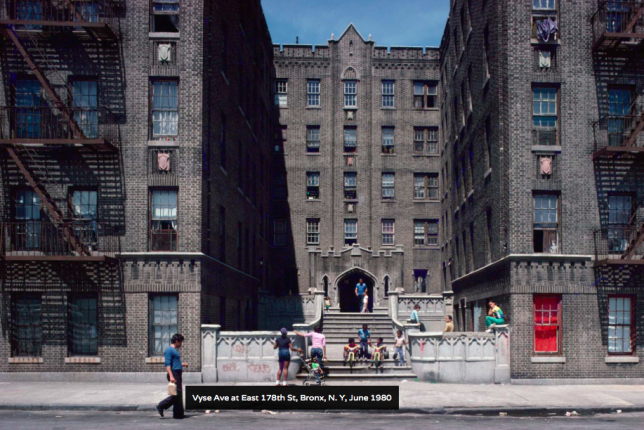
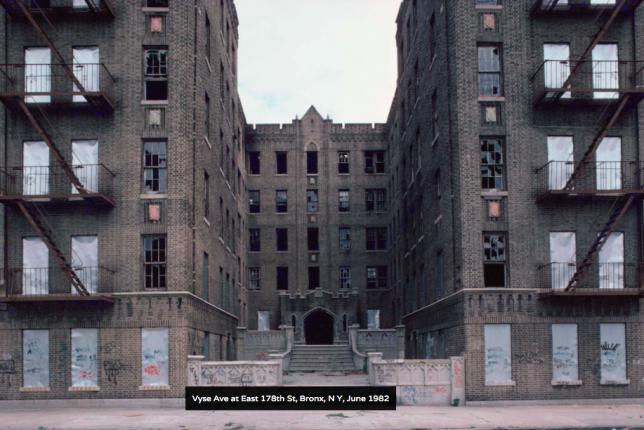
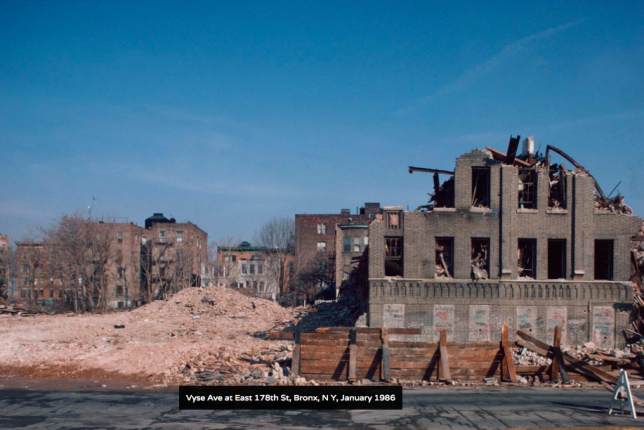
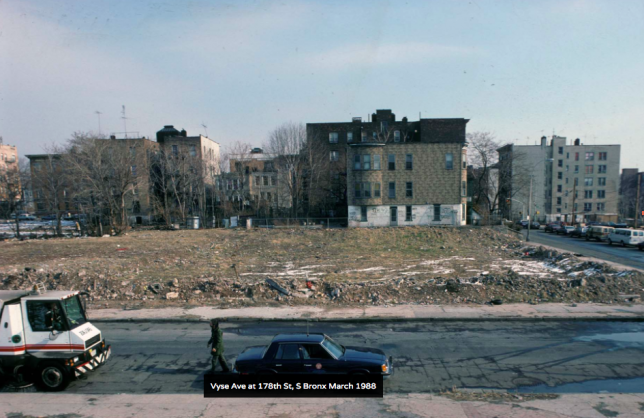
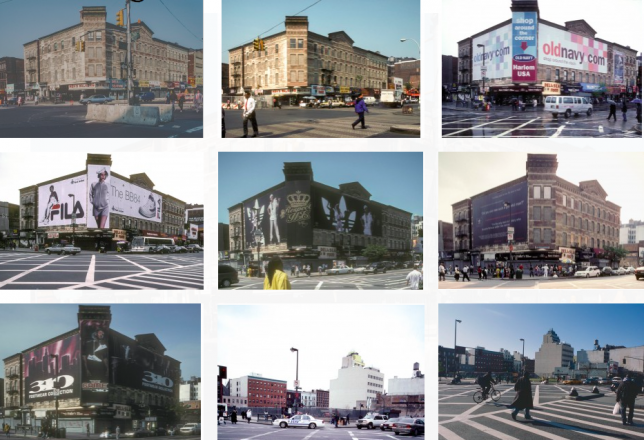
In a potent visual representation of poverty in America’s urban centers and the loss of historic architectural character via demolition, Chilean-born photographer Camilo José Vergara has spent the last 40+ years documenting the downfall of dozens of structures and city streets. The resulting series, ‘Tracking Time,’ is a time-lapse in slow motion, photographing the same buildings once every few years.

screen-shot-2016-11-18-at-10-01-52-am

screen-shot-2016-11-18-at-10-02-16-am

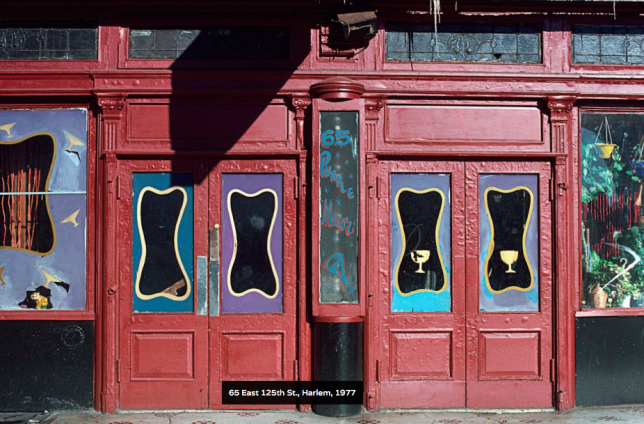
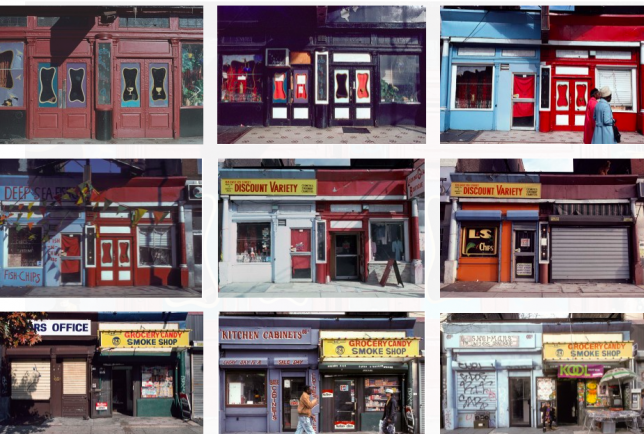
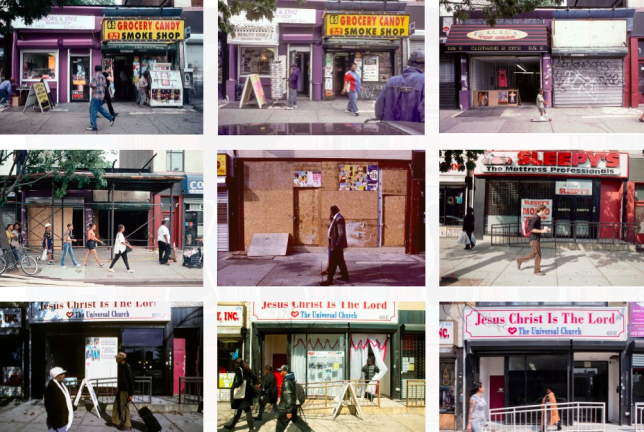
One old shop in Harlem gets painted several times over, has its stained glass windows knocked out, loses a facade to an ugly garage door and is split up into multiple smaller businesses before finally being boarded over and transformed into a mini-mall-style church in 2014.

screen-shot-2016-11-18-at-10-21-00-am

screen-shot-2016-11-18-at-10-21-08-am \
screen-shot-2016-11-18-at-10-21-22-am

screen-shot-2016-11-18-at-10-21-30-am

screen-shot-2016-11-18-at-10-21-38-am

screen-shot-2016-11-18-at-10-21-50-am

screen-shot-2016-11-18-at-10-22-01-am

A massive brick building in South Bronx becomes modest row houses, while The Ransom Gillis House in Detroit (top) sinks into the ground, its bricks falling in clumps, the roof caving in, ivy and trees taking over. It’s almost completely obscured by greenery before a restoration brings it back to its former glory.

screen-shot-2016-11-18-at-10-00-54-am

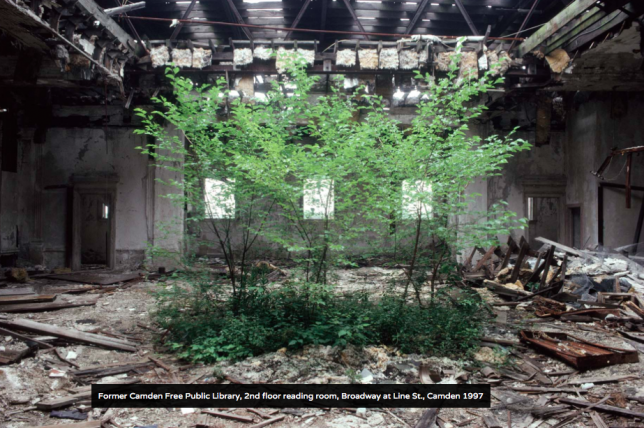
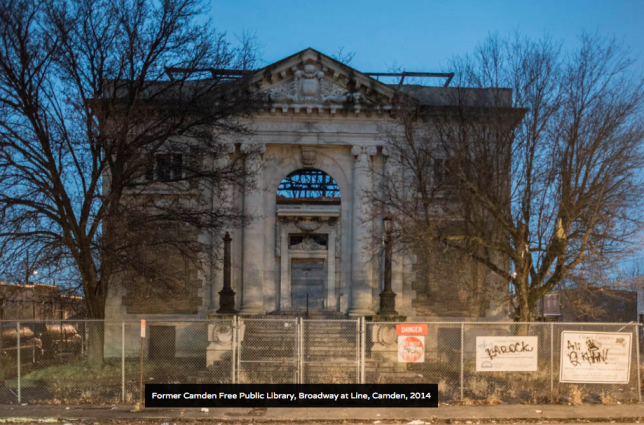
But other stories aren’t so positive, since people care more about mansions than they do about public housing projects, row houses, and modest residential neighborhoods. Occasionally, Vergara ventures inside to show us that even though the facades still look beautiful, like that of the former Camden Free Public Library, the interiors are utterly destroyed.

screen-shot-2016-11-18-at-10-10-30-am

screen-shot-2016-11-18-at-10-10-40-am

screen-shot-2016-11-18-at-10-11-08-am

screen-shot-2016-11-18-at-10-11-24-am

screen-shot-2016-11-18-at-10-11-54-am

It can be a heartbreaking journey but also a fascinating one, watching some of these structures remain the same for many years while the world changes around them before transforming into something new. And some do manage to endure.

Share on Facebook


[ By SA Rogers in Abandoned Places & Architecture. ]

[ WebUrbanist | Archives | Galleries | Privacy | TOS ]


WebUrbanist

 
Comments Off on Evolution of Decay: Watch American Buildings Fall Into Ruin Over 40+ Years

Posted in Creativity


Parasitic Art: 11 Installations Taking Over Buildings Like Organic Growths

26 Oct

[ By SA Rogers in Art & Installation & Sound. ]

parasitic-art-1

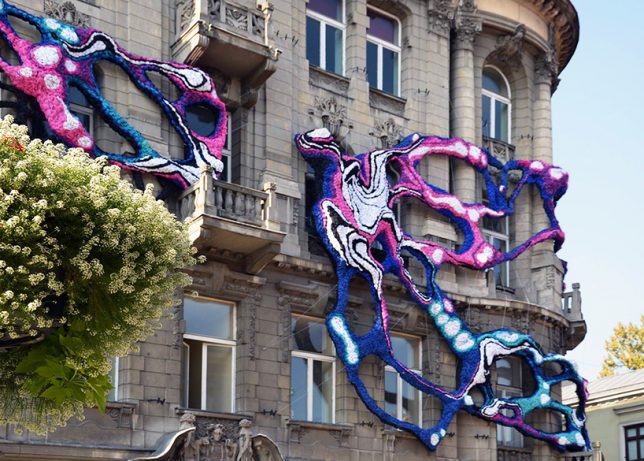
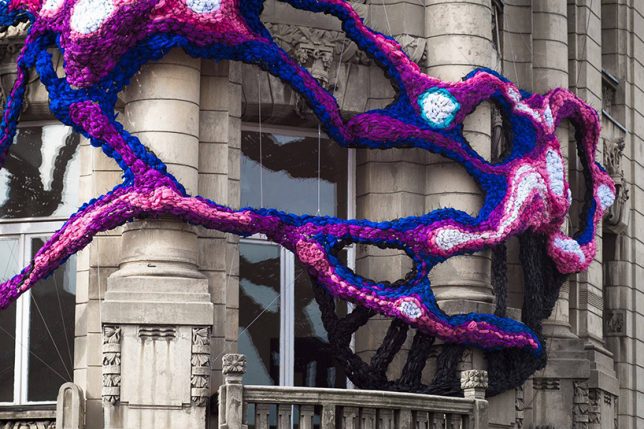
Some art just can’t be contained, even by the buildings that house it, expanding beyond these constrictions like alien appendages to burst through windows, wrap around columns and slink onto the sidewalks below. Inorganic materials take on the qualities of living things, manifesting as artificial parasitic growths as they cling to the facades of buildings in architectural installations that take on lives of their own.

Hyperbolic Installation by Crystal Wagner, Poland

parasitic-art-2

parasitic-art-3

parasitic-art-4

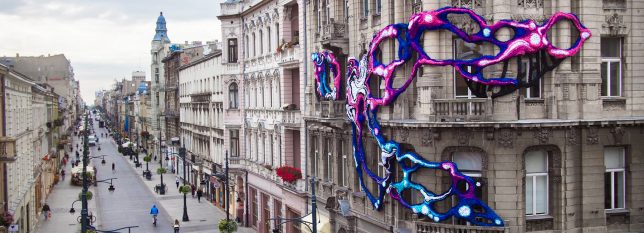
An alien-like growth wraps itself around the corner facade of a historic building in Lodz, Poland, stretching tentacle-like appendages in shades of vivid pink, blue and purple. The site-specific work by Crystal Wagner is made from woven strips of plastic.

Wood Tentacles by Henrique Oliveira

parasitic-art-wood-4

parasitic-art-wood-3

parasitic-art-wood-2

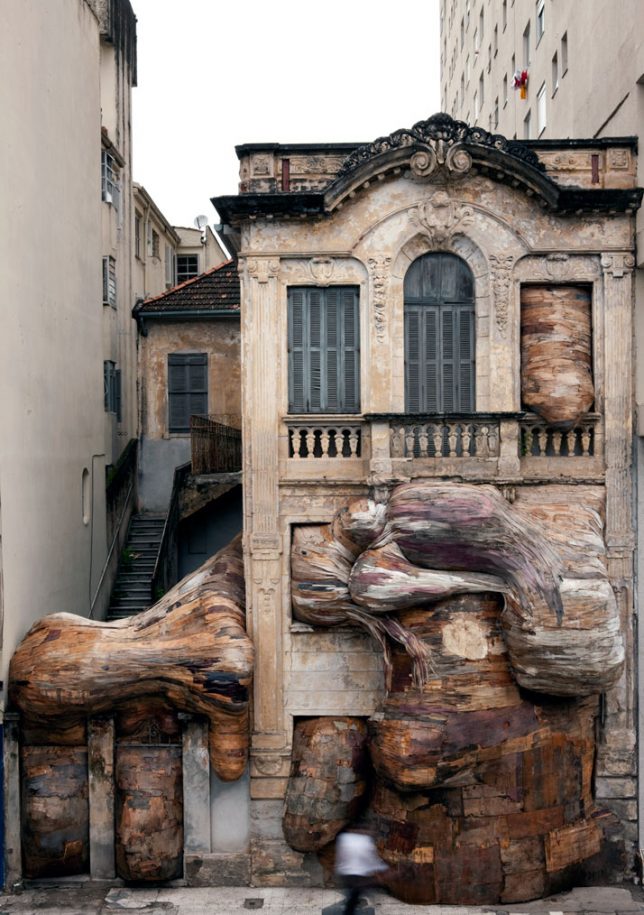
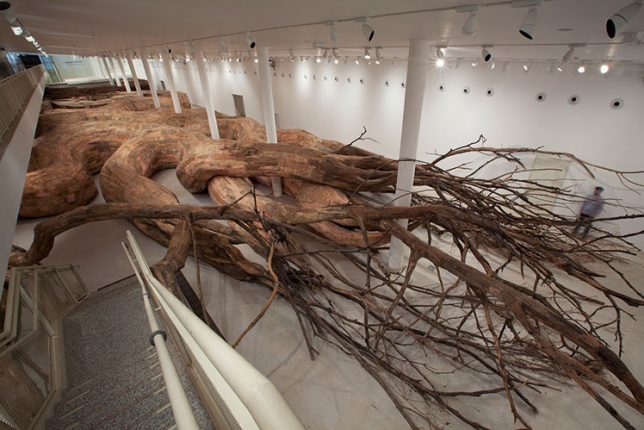
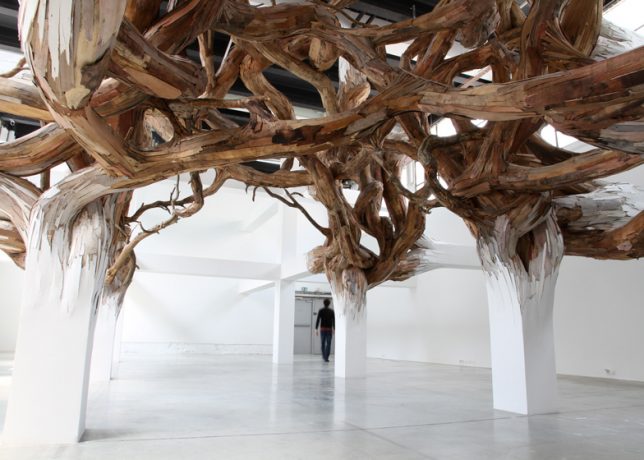
Wooden forms expand to fill entire interior spaces, taking over light root systems to push through windows and doorways and into the streets, or in one case, to act as a secret system of interior tunnels. Artist Henrique Oliveira of Brazil typically installs his organic sculptures in gallery spaces, but one particular work has it bursting out of the confines of Casa dos Leoes in Porto Alegre.

10,000 Bats on the Nature Concert Hall

parasitic-art-bats

parasitic-art-bats-2

parasitic-art-bats-3

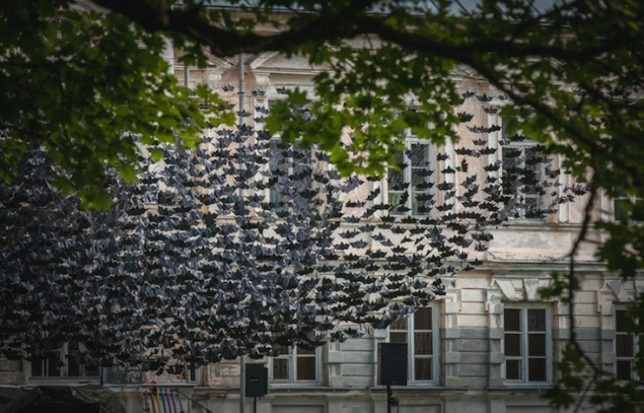
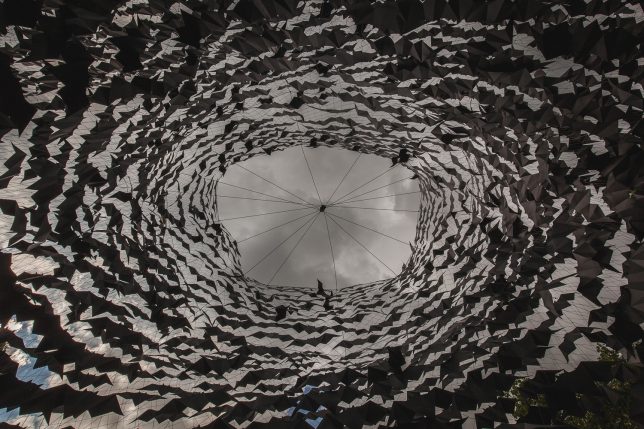
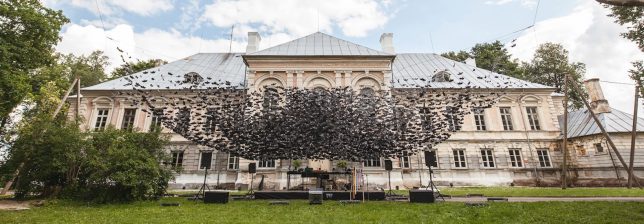
Thousands of bats stream straight out of the front door of the Nature Concert Hall at Zalenieki Manor in Latvia, forming a surreal cloud on its lawn. Architecture firm DJA took inspiration from the unpredictable formations found in nature when assembling the congregation of 10,000 paper bats, which create a tunnel effect when viewed from below.

Vortex by 1024 Architecture, Bordeaux, France

screen-shot-2016-10-25-at-9-36-26-pm

screen-shot-2016-10-25-at-9-37-33-pm

screen-shot-2016-10-25-at-9-36-45-pm

screen-shot-2016-10-25-at-9-37-42-pm

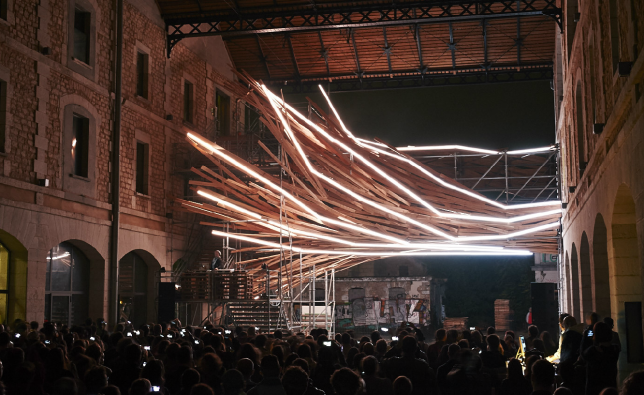
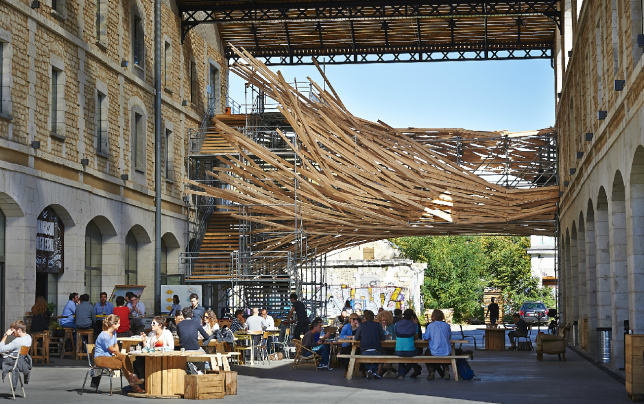
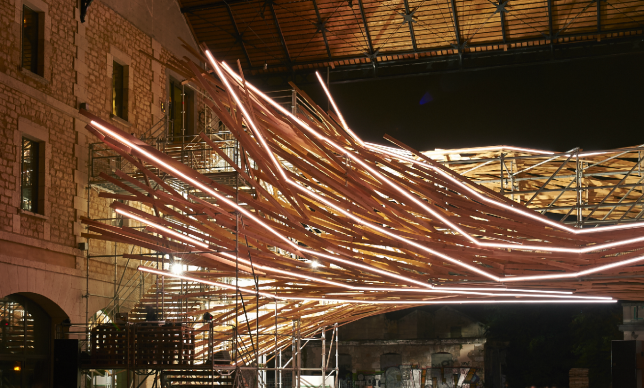
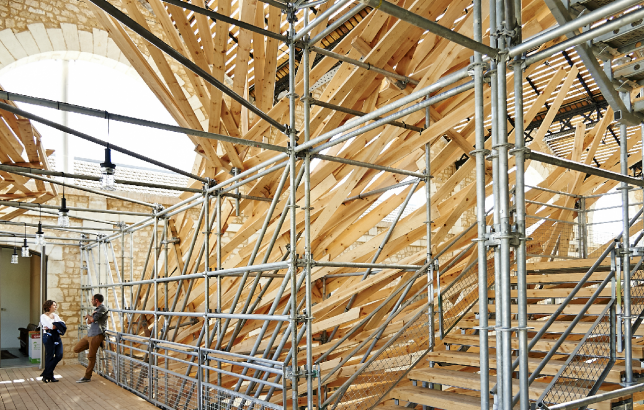
Strips of wood have taken it upon themselves to escape one building and grip the exterior of another, streaming toward it in a manner suggestive of autonomy. ‘Vortex’ is a generative light sculpture by 1024 Architecture almost completely made of scaffolding, installed on the Darwin Ecosystem Project’s green building in Bordeaux, France. “Merging organic materials with new technologies, this hybrid architectural artwork wraps around and embraces the footbridge between the complex’s two buildings, revealing and enhancing the venue’s dynamic energy while working as a live visualizer of energy consumption.”

Biografias by Alicia Martin, Madrid

parasitic-art-books-1

parasitic-art-books-2

parasitic-art-books-3

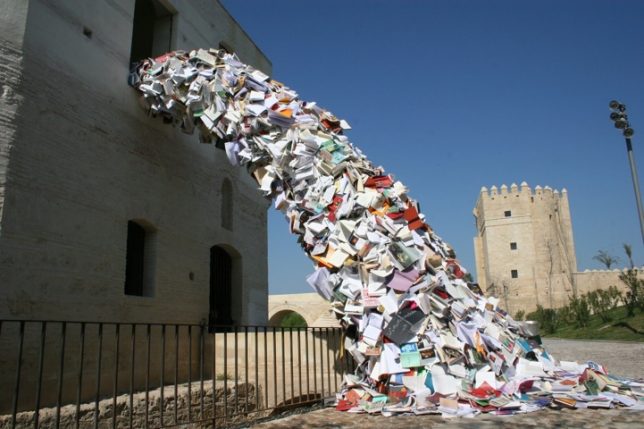
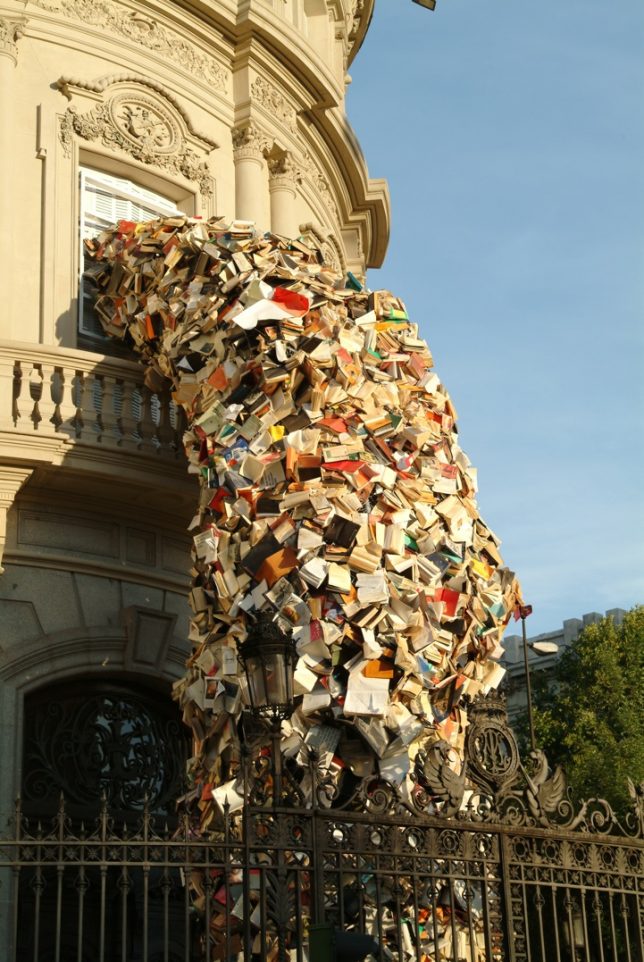
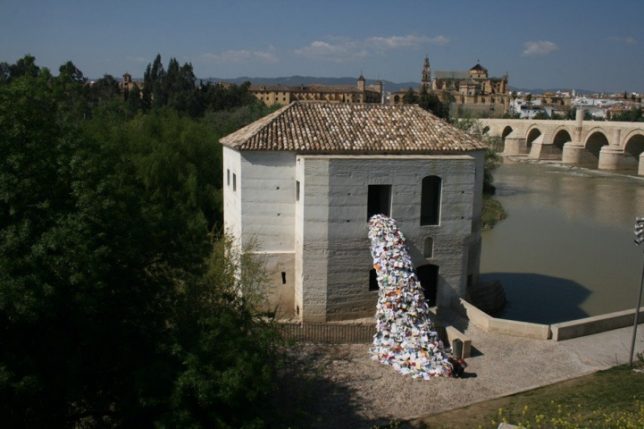
An ornate second-floor window seems to vomit thousands of books onto the sidewalk below in this installation by artist Alicia Martin, as if they, too, are hoping to escape the building. The effect is enhanced by the movement of the pages as they’re blown by the wind. Martin has created similar site-specific installations in buildings all over her home country of Spain.

Glowing Star in an Unfinished Building by Jun Ong

parasitic-art-star

parasitic-art-star-2

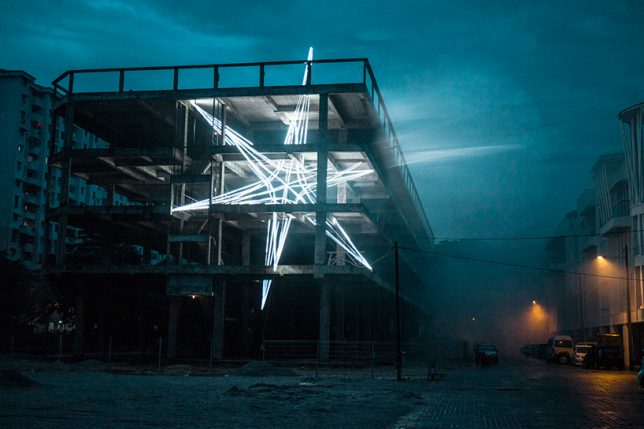
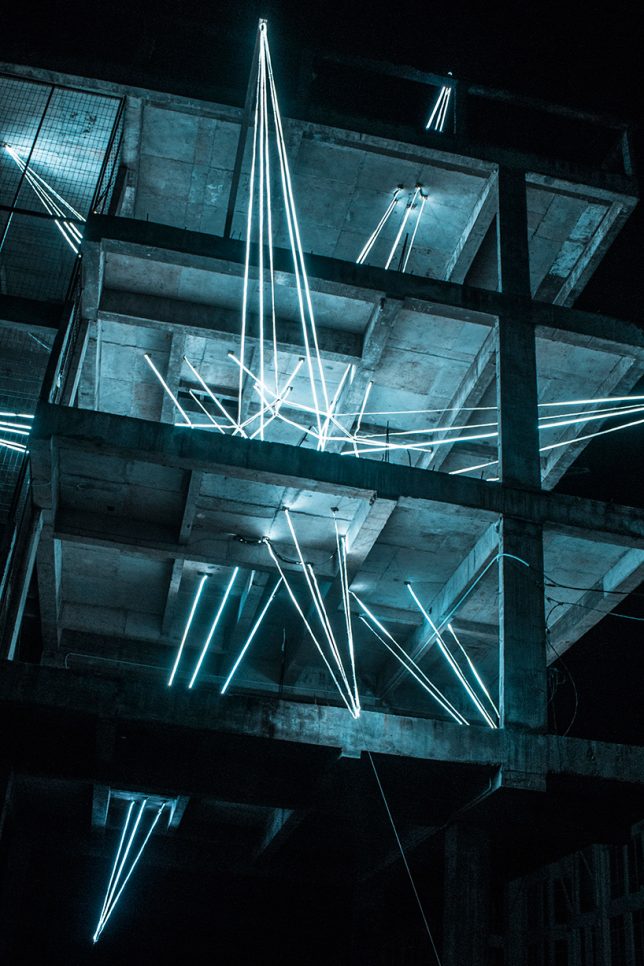
Like some kind of alien life form that started out tiny and suddenly expanded, impaling an entire building upon itself, this five-story star made of light by Jun Ong suggests rapid growth that could not be contained. The artist envisions the LED sculpture as a physical manifestation of a glitch.

Next Page – Click Below to Read More:
Parasitic Art 11 Installations Taking Over Buildings Like Organic Growths

Share on Facebook


[ By SA Rogers in Art & Installation & Sound. ]

[ WebUrbanist | Archives | Galleries | Privacy | TOS ]


WebUrbanist

 
Comments Off on Parasitic Art: 11 Installations Taking Over Buildings Like Organic Growths

Posted in Creativity


Art Exhibitionism: Neighbors Threaten Lawsuit Over Museum Voyeurs

15 Sep

[ By WebUrbanist in Destinations & Sights & Travel. ]

room-with-a-view-644x460

Visitors to the new panoramic rooftop deck of the Tate Modern are being told not to take pictures … and not just of artwork on display inside the galleries: voyeuristic snapshots inside neighboring apartments are now off-limits as well.

The neighborhood Neo Bankside apartments have threatened to sue the institution over this addition, an extension to the Tate designed by Herzog & de Meuron that opened earlier this summer. The problem: people are shooting zoomed-in photographs from the viewing platform then posting them online, exposing living rooms and bedrooms behind floor-to-ceiling and wall-to-wall glass facades.

tate extension

London politician Adele Morris calls it a “tricky situation” and notes that “residents were very distressed to suddenly discover they had no privacy at all in their homes. Nobody had anticipated that people would literally be hanging over the balcony and taking photographs of their rooms and then posting them on the internet.”

Architectural responsibility aside, solutions have been proposed to the situation. For the Tate, ideas like closing the deck or installing a screen of plants on it have been considered. On the Neo side, a film could be applied to the glass to deflect gawkers.

tate photo copy

One resident described the experience as “terribly intrusive” and said “I bought this apartment because of the view but now I have to keep my blinds down whenever the platform is open, otherwise you get people waving at you.If I had known what it would be like, I would never have bought a flat here. Now I think I would struggle to sell it.”

tate viewing platform

Of course, there is arguably a ‘buyer beware’ component to this fiasco – living in an urban condo with extensive glass (particularly in a vertically-growing city like London) means making certain concessions to privacy. Those who live in glass houses may need to be aware of the risks they are taking – having a room with a view means that people can probably view you, too. Meanwhile, the Tate defends the design.

tate privacy

“The viewing level is an intrinsic part of the free public offer of the new building, providing a 360-degree experience that is virtually unique to London,” said representatives of the museum in a statement. Realistically, if someone can sue over viewers in this case and place, it also opens the door to lawsuits between basically any set of urban buildings.

“Since the very first plans were drawn up in 2006 we have been through an extensive consultation and planning process, and have maintained an ongoing dialogue with local residents. At no point during this process were any concerns raised regarding the viewing platform. There is signage encouraging the public and visitors to use it respectfully and responsibly” (Instagram images by refik, ellarog and karen_1605).

Share on Facebook


[ By WebUrbanist in Destinations & Sights & Travel. ]

[ WebUrbanist | Archives | Galleries | Privacy | TOS ]


WebUrbanist

 
Comments Off on Art Exhibitionism: Neighbors Threaten Lawsuit Over Museum Voyeurs

Posted in Creativity


Cats, Not Ads: Feline Photos Take Over London Tube System

15 Sep

[ By SA Rogers in Design & Guerilla Ads & Marketing. ]

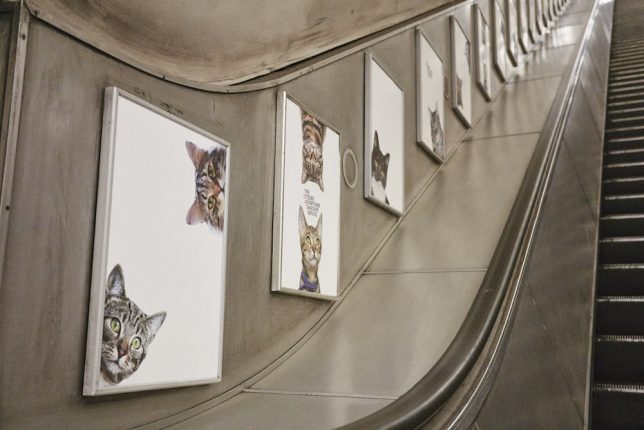
subway cats 1

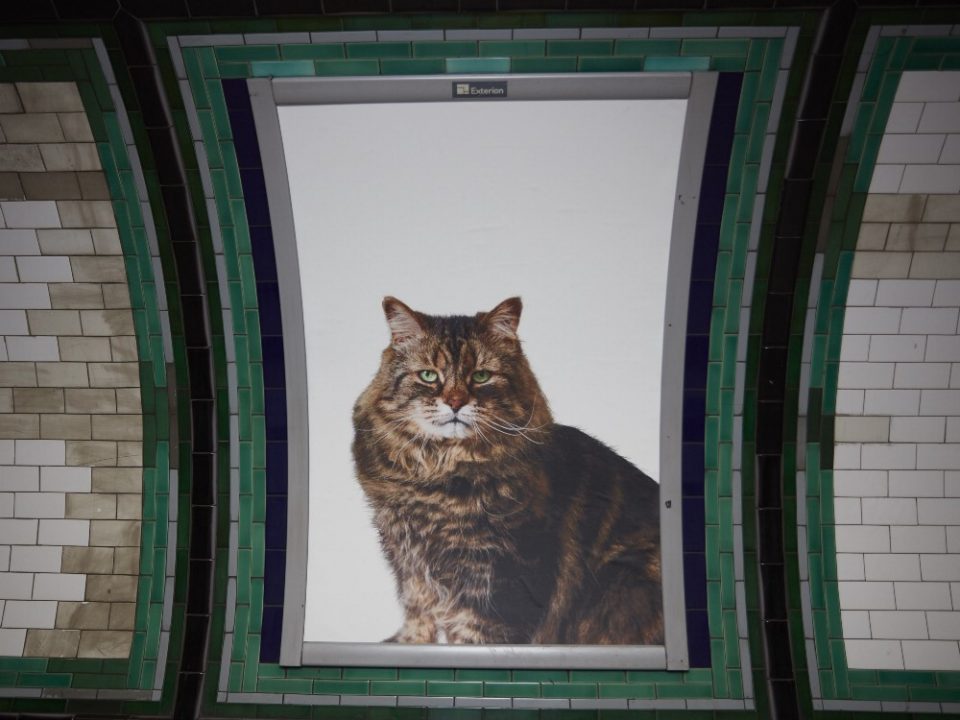
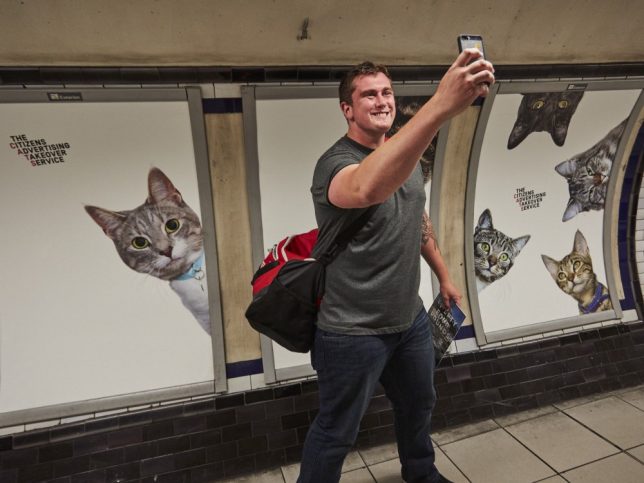
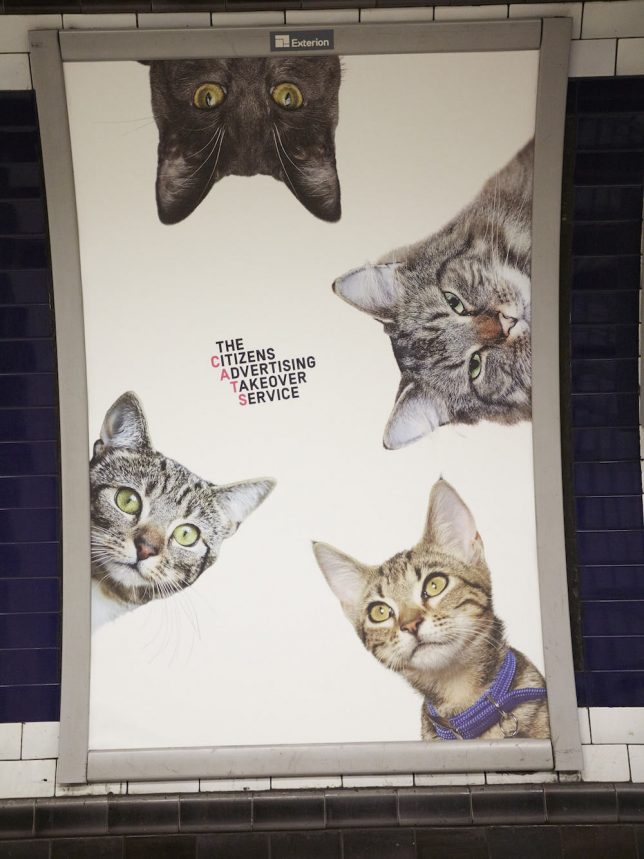
The same ad spaces that shouted about insurance and laundry detergent last week now contain nothing but fluffy cats, as an art collective uses the internet’s number-one obsession to temporarily transform the London Tube system. The Citizens Advertising Takeover Service (CATS) is the result of a Kickstarter campaign by brand-new collective Glimpse aiming to “create a rip in the space time continuum.”

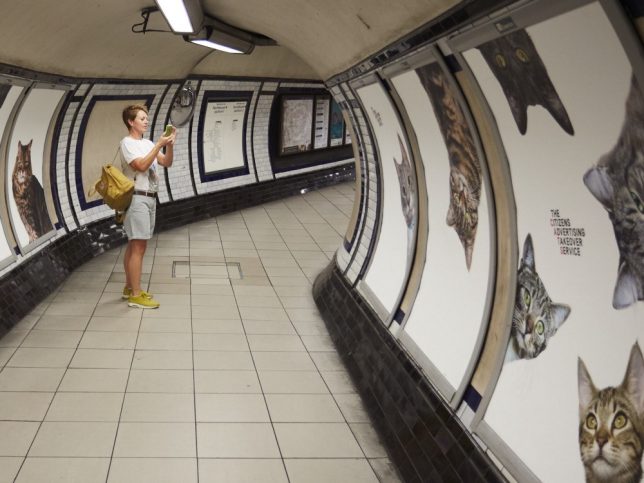
cat ads 3

The group raised enough money to buy all of the ad spaces in the Clapham Common station – a total of 68 – for a two-week period, and the new posters feature cats from the Battersea Dogs and Cats Home and the Cats Protection charity. The organizers are careful to note that they’re not against advertising per se, but rather hope that the project will “inspire people to think differently about the world and realize they have the power to change it.”

The Citizens Advertising Takeover Service replaced 68 adverts in Clapham Common tube station with pictures of cats. Organisers say they hope the pictures will help people think differently about the world around them. Credit: CatsnotAds.org

But the broader point – and appeal – of CATS is the citizen takeover of public spaces, with everyday people getting to decide what they want to look at as they navigate their cities. Wouldn’t you rather be surrounded by what essentially functions as an ad for animal rescue services than dozens of posters pushing a bunch of junk corporations want you to purchase?

cat ads 2

“Back in February we asked ourselves to ‘imagine a world where friends and experiences were more valuable than stuff you can buy,’” says Glimpse founder James Turner in a post on Medium. “The team began thinking about crowdfunding to replace Tube adverts with something else. Beautiful forests? Time spent with family? Hmmm. We wanted this to become famous, so we needed something the internet would love. Frame it that way and the answer’s obvious. Cats.”

The Citizens Advertising Takeover Service replaced 68 adverts in Clapham Common tube station with pictures of cats. Organisers say they hope the pictures will help people think differently about the world around them. Credit: CatsnotAds.org

“We’ve been on the news in China, and one of our backers is flying in from America to see his cat in one of the final posters. This project has uncorked a kind of energy that I haven’t experienced before. When you talk about CATS, eyes light up and new ideas start to flow. We don’t know exactly how Glimpse is going to work, but we want to carry this energy with us as we grow up.”

Share on Facebook


[ By SA Rogers in Design & Guerilla Ads & Marketing. ]

[ WebUrbanist | Archives | Galleries | Privacy | TOS ]


WebUrbanist

 
Comments Off on Cats, Not Ads: Feline Photos Take Over London Tube System

Posted in Creativity