RSS
 

Posts Tagged ‘Open’

ESPN publishes iPhone 7 Plus photos from US Open

13 Sep
 Photo by Landon Nordeman for ESPN

Last week Apple announced its new iPhone 7 models, including the dual-cam equipped iPhone 7 Plus that combines a 28mm wide angle lens with a 56mm ‘tele’ variant. In the camera app this setup allows you to zoom optically and create a simulated shallow depth-of-field.

At the launch event Apple showed off some sample images but now it has, as it usually does, given the device to a couple of sports photographers to demonstrate what the camera can do in the capable hands of professionals. ESPN photographer Landon Nordeman used the iPhone 7 Plus to shoot at the US Open in New York City.

As you can see below, some of the samples look pretty impressive, although none of them appear to make specific use of the shallow depth-of-field simulation feature. More samples from the Open are available on ESPN.com, and you can see more from Sports Illustrated photographer David E. Klutho’s coverage of an NFL game.

Photo by Landon Nordeman for ESPN

Articles: Digital Photography Review (dpreview.com)

 
Comments Off on ESPN publishes iPhone 7 Plus photos from US Open

Posted in Uncategorized


VSCO Open Studio is a free NYC workspace for photographers

12 Aug

VSCO has announced the launch of VSCO Open Studio, a free-to-use photography studio in the NoMad neighborhood of Manhattan, New York City. ‘It’s expensive to rent studio space for your passion projects. We get it,’ the company explains, saying that is why it decided to launch a free workspace replete with a permanent cyclorama, lighting equipment and gear that can be borrowed.

The Open Studio is located in VSCO’s NYC office, and while it is free to use, there is limited availability and therefore a $ 250 deposit is necessary to reserve the space. Those who fail to cancel at least 72 hours before their scheduled session will forfeit the deposit. Up to six people can be on the premises (though special permission for higher numbers can be requested), and the photography must be for a non-commercial project. Sessions are available once a week for 2-hour blocks.

VSCO has temporarily stopped accepting requests due to high demand.

Via: VSCO Blog

Articles: Digital Photography Review (dpreview.com)

 
Comments Off on VSCO Open Studio is a free NYC workspace for photographers

Posted in Uncategorized


Apple planning to open imaging research lab in France

16 Jul

It seems Apple is determined to stay at the forefront of smartphone imaging. According to French newspaper Dauphiné Libéré, the iPhone-maker is planning to open a dedicated imaging research laboratory in Grenoble, France. The focus of the new facility will be on image sensors and technology for iOS devices. 

The reports say that an Apple team has been working on imaging at the Minatec European research center in Grenoble for over a year, but now the company wants to establish its own lab and has recently signed a lease for a building that offers 800 square meters of floor space. This will provide space for a team of approximately 30 engineers and the equipment needed for sensor development.

The Dauphiné Libéré article also says that work on iPhone and iPad sensors will be undertaken in collaboration with STMicroelectronics, which previously has been an Apple supplier. It’s good to see smartphone manufacturers investing in imaging, and we may find that the upcoming iPhone 7 generation will come with some technology that has been, at least partially, developed in France.

Articles: Digital Photography Review (dpreview.com)

 
Comments Off on Apple planning to open imaging research lab in France

Posted in Uncategorized


Facebook’s open source Surround 360 captures 3D-360 video at up to 8K

13 Apr

$ (document).ready(function() { SampleGalleryV2({“containerId”:”embeddedSampleGallery_7094366011″,”galleryId”:”7094366011″,”isEmbeddedWidget”:true,”standalone”:false,”selectedImageIndex”:0,”startInCommentsView”:false,”isMobile”:false}) });

Facebook has introduced the Surround 360, which captures 3D, 360 degree video using a total of 17 cameras and can output resolutions of up to 8K per eye. Unusually, Facebook will be making both the camera and processing software open source to give developers the opportunity to improve both.

The Surround 360 itself features 17 synchronized cameras: 14 horizontal, a fisheye on top and two more on the bottom. Each camera has a global shutter (which eliminates rolling shutter) and has been designed for long periods of operation without overheating. Raw Bayer data is captured, which is later processed in the stitching software. All 17 cameras are bolted onto an aluminum chassis so everything stays in place.

Facebook says it has used Point Grey industrial cameras in the Surround 360, which hints at the use of Sony 2nd generation Pregius CMOS sensors with global shutters. The lenses used are 7mm F2.4 lenses designed for up to 1″-type sensors, which could even mean the use of the latest Sony IMX253 or IMX255 chips. If that’s the case, then these lenses are roughly equivalent to 19mm.

With incredible amounts of data coming from all of those cameras Facebook uses a Linux-based PC with a RAID 5 SSD array that shares the writing out across eight drives simultaneously. The company has made controlling the camera rig easy, via a web-based interface that allows users to adjust shutter speed, exposure, frame rate and gain.

The stitching software uses the concept of optical flow to resolve disparities between what pairs of cameras can see. The company says this method is ‘mathematically trickier’ than traditional systems, but yields better results. The end results are 3D/360 videos which can be output at 4K, 6K or 8K per eye. Videos can be viewed on Oculus Rift and Gear VR headsets using Facebook’s Dynamic Streaming codec. Videos can also be output and shared on Facebook and other websites.

A big part of the Surround 360’s story is that Facebook is opening up both the camera blueprints and processing software to developers, stating that ‘we know there are ideas we haven’t explored’ and ‘we know from experience that a broader community can move things forward faster than we can.’ The company says that the design and code will be on GitHub this summer.

More technical information can be found on Facebook’s developer site, while consumer-friendly info about the camera can be found here.

Articles: Digital Photography Review (dpreview.com)

 
Comments Off on Facebook’s open source Surround 360 captures 3D-360 video at up to 8K

Posted in Uncategorized


First Time in 100 Years: Forbidden City’s Secret Garden to Open

06 Apr

[ By WebUrbanist in Destinations & Sights & Travel. ]

forbidden city secret garden

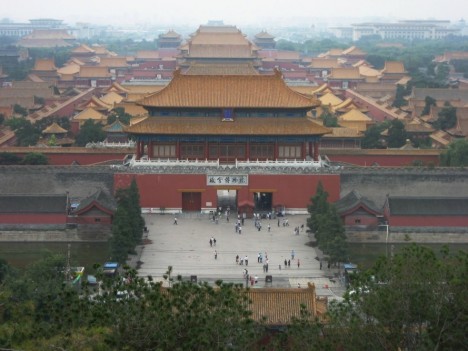
The Forbidden City in Beijing, China, is one of the most-visited landmarks in the world, but now its secret garden, closed to the public for close to a century, is scheduled to open its gates.

forbidden space hidden garden

Built in the 15th Century, the Forbidden City was a center of power for hundreds of years, a vast and sprawling complex of residential, cultural and political spaces. While tourists are welcome to explore much of the complex, the Secret Garden within its walls was shut off from view after the last emperor was deposed.

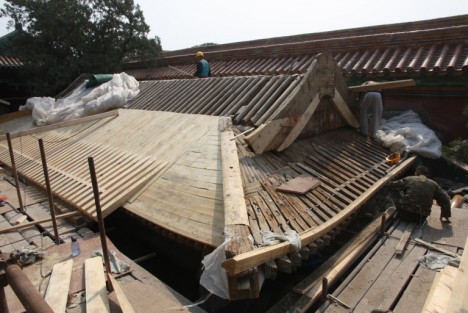
secret garden roof

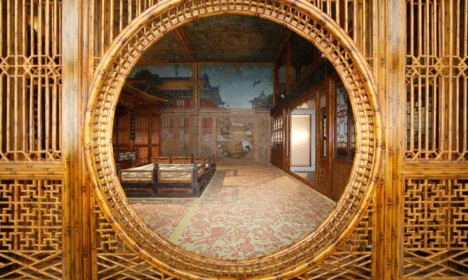
Current conservation efforts are underway, aimed at making the space historically accurate down to the last detail. For better and worse, the Secret Garden has been largely untouched for hundreds of years, closed off and left theoretically intact but also subject to decay. The first stage of the project was completed in 2008, and the final phases are scheduled to finish by 2020, at which time visitors will be able to enter once more.

secret garden space interior

More details from Hyperallergic: “The Qianlong Garden Conservation Project is a joint initiative between the Palace Museum, which manages the Forbidden City, and the World Monuments Fund (WMF). Last month WMF Senior Advisor Henry Ng discussed the project’s progress at a gathering of WMF’s Moai Circle at the bar Lumos. ‘Many of the threads were lost for how this place was built,” he explained, adding that the major challenge is retrieving traditional Chinese crafts that vanished in the country’s 20th-century cultural upheaval.’” (images via Si Bing/Palace Museum, the Palace Museum/World Monuments Fund and David Stanley via Inhabitat).

Share on Facebook


[ By WebUrbanist in Destinations & Sights & Travel. ]

[ WebUrbanist | Archives | Galleries | Privacy | TOS ]


WebUrbanist

 
Comments Off on First Time in 100 Years: Forbidden City’s Secret Garden to Open

Posted in Creativity


Nothing to Hide: Open Glass Islamic Culture Center for NYC

26 Mar

[ By WebUrbanist in Architecture & Public & Institutional. ]

islamic center facade

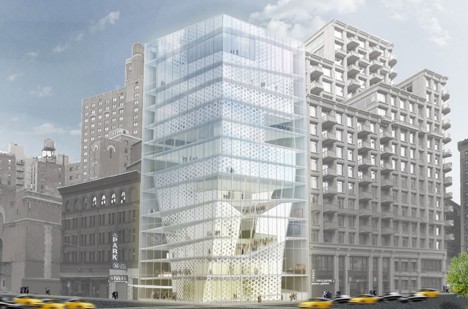
Designed to dispel fears surrounding Muslim culture, practices and traditions, a new wide-open skyscraper design for New York City invites people of all faiths to enter, through both programmatic functions and a clear facade.

islamic center facade glass

The schematic proposal by local firm Buro Koray Duman was commissioned by the American Society for Muslim Advancement (ASMA), aiming to promote progressive change and social justice. The Society hopes to show another side of Islam to the city and the world.

islamic center entry door

The idea is, in part, to highlight cultural aspects of Islam as apart from the strictly religious (and particularly: radicalized) associations, distinguishing between peoples and religions.

islamic center design diagrams

The building is structured to be as welcoming and open as possible, consisting of horizontal floors stacked to fit a vertical urban landscape.

islamic center walkways interior

From Dezeen: “His studio’s schematic design for the centre features a 100,000-square-foot (9,290 square metres) building that takes its cue from historic Islamic cultural complexes, called kulliyes.”

islamic center vertical stacks

“In these complexes, which are laid out horizontally, low-slung buildings with varying functions are organised around a centrally placed mosque.”

islamic center central volume

A central volume contains an auditorium, library, prayer room, restaurant and offices, connected by walkways that span public and private spaces around the perimeter.

islamic center vertical wrap

This design may or may not be realized; the idea of building Islam-centered architecture near the site of the 9/11 attacks has been contentious for well over a decade.

islamic center nyc

Supporters hope, however, that structure (conceptual or actual) can show another dimension to even the wariest members of the public, at least opening the door to interfaith and intercultural dialogue.

Share on Facebook


[ By WebUrbanist in Architecture & Public & Institutional. ]

[ WebUrbanist | Archives | Galleries | Privacy | TOS ]


WebUrbanist

 
Comments Off on Nothing to Hide: Open Glass Islamic Culture Center for NYC

Posted in Creativity


Last Stop: Japan Keeps Old Train Station Open for Lone Passenger

27 Jan

[ By WebUrbanist in Culture & History & Travel. ]

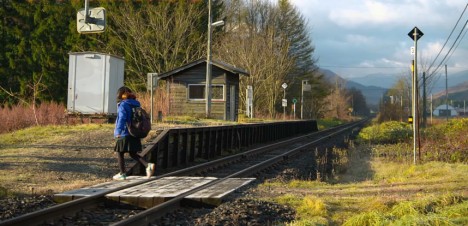
japan railways deserted abandoned

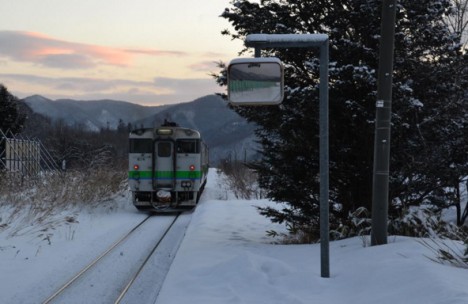
In a remote area of Hokkaido, the northernmost island of Japan, a train stops just twice a day, as it has for years: once to pick up a girl on her way to school, and once to drop her back off afterward.

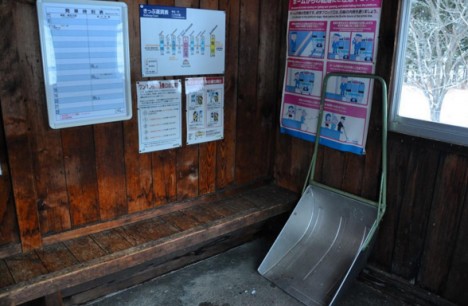
rural station interior

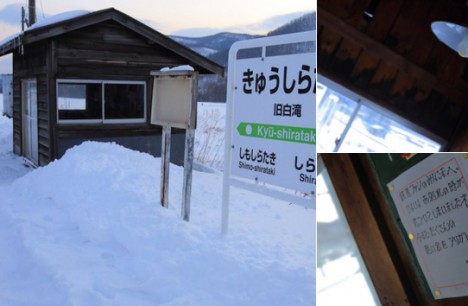
The otherwise-abandoned Kyu-Shirataki station remains open, thanks to Japan Railways, which honored the request of two parents to continue transporting their daughter back and forth until she graduates.

rural station last stop

The physical space is remarkably well-kept despite its relative disuse, still containing route maps and schedules as any other station would, despite serving as essentially a single-person shelter for the place’s only daily passenger.

rural station in japan

As the country’s population continues to shrink as well as urbanize, rural routes like this one have been forced to close – only high-speed railway lines remain on the rise. Fans of Japan Railways’ actions in this case see it as a victory for common courtesy as well as education. The line will ultimately close completely after the girl graduates and moves on (via CityLab).

Share on Facebook


[ By WebUrbanist in Culture & History & Travel. ]

[ WebUrbanist | Archives | Galleries | Privacy | TOS ]


WebUrbanist

 
Comments Off on Last Stop: Japan Keeps Old Train Station Open for Lone Passenger

Posted in Creativity


Floating Blue: Bold Plan to Expand Dense Cities into Open Seas

23 Sep

[ By WebUrbanist in Conceptual & Futuristic & Technology. ]

floating ocean city ecosystem

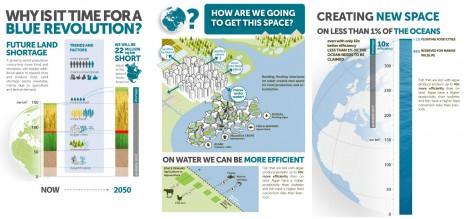
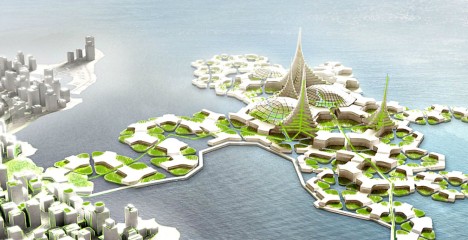
Ocean cities are a longstanding Utopian dream, but many such schemes fail to address the immediate need of cramped urban centers, many of which around the world are bordered and constrained by large bodies of water.

floating city design strategy

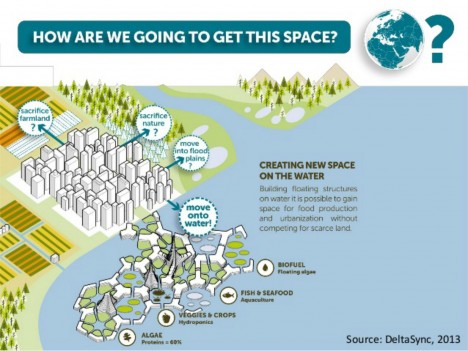
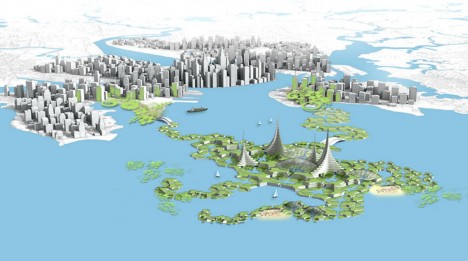
Blue 21, a Dutch architecture and design group, aims to sustainably extend such cities into adjacent lakes and oceans, alleviating the stress on existing metropolitan areas and providing vital resources (like space to grow food) in close proximity to urban cores. The team has experience building floating homes in the Netherlands but wants to take their experience global and work at a larger scale.

floating city on the water

These modular buoyant extensions can be added to over time and used to grow algae, veggies, crops and seafood, producing food and biofuels to support existing populations on land.

floating city blue revolution

At the same time, they can serve to productively process and recycle city wastes and absorb emissions, becoming a productive rather than consumptive part of the regional ecosystem. “As an integrated concept it proposes floating development that can be ‘plugged in’ to existing cities and help them recycling waste nutrients and CO2 that often end up in the environment, polluting it.”

While Blue 21 may not be a solution on the immediate horizon as yet, it represents an approach that bridges the gap between fantastical floating cities and more realistic solutions that engage accessible stretches of ocean. “We are Blue21, starting a Blue Revolution. This is how: by building world’s first floating city with a positive impact on nature. Because we believe our future is on the water for seven reasons: 1. We are running out of land, 2. Cities on land are vulnerable, 3. Water will save us from our addiction to fossil fuels, 4. Water is the new oil, 5. Water is an innovation playground, 6. We can actually have a positive impact, 7. We can do this, now.”

Share on Facebook


[ By WebUrbanist in Conceptual & Futuristic & Technology. ]

[ WebUrbanist | Archives | Galleries | Privacy | TOS ]


WebUrbanist

 
Comments Off on Floating Blue: Bold Plan to Expand Dense Cities into Open Seas

Posted in Creativity


Blurring Boundaries: 14 Modern Houses That Open to the Air

15 Sep

[ By Steph in Architecture & Houses & Residential. ]

willow house singapore 2

Ceilings retract and glazed walls swing open to connect intimate indoor spaces with courtyards, terraces and gardens in these modern residences blurring the lines between indoors and out. Located everywhere from Colorado to Kuala Lumpur, these open-air homes take advantage of mild climates and spectacular views, with alternatives to conventional walls enabling natural ventilation and a sense of being connected to nature.

Kloof House, Johannesburg, South Africa
open air house kloof 5

open air house kloof 4

open air house kloof 3

open air house kloof 2

open air house kloof 1

Every room in the sculptural Kloof House by Nico van der Meulen Architects opens directly to the outdoors via gigantic sliding glass walls. The kitchen, living room, dining room and bedrooms can all be fully connected to various outdoor spaces like courtyards, balconies and gardens. The swimming pool becomes part of the living room area, and one bedroom connects to a cantilevered koi pond.

The Fish House, Singapore
open air house fish 4

open air house fish 3

open air house fish 2

open air house fish 1

This modern tropical residence in Singapore seamlessly integrates courtyard spaces into the interiors on every level for natural ventilation and nearly uninterrupted views of the ocean. A glass-walled lounge cantilevers out over the swimming pool, and residents can walk up onto the green roof, which is partially shaded with solar panels.

Loft 24-7, Sao Paulo, Brazil
open air houses loft 4

open air houses loft 3

open air houses loft 2

open air houses loft 1

Decks and terraces connect the various freestanding volumes that make up Loft 24-7 by Fernanda Marques Arquitetos Associados, with the effect continued indoors using glazed walls and ceilings. “Being inside feeling like one is outside. I believe that to be a key issue in understanding the interior design being produced today,” says the architect. “In times when environmental awareness is growing, and, of course, also the desire to be close to nature.”

Casa P, Sao Paulo, Brazil
open air house casa p 4

open air house casa p 3

open air house casa p 2

open air house casa p 1

The ground floor of Casa P by Studio MK27 is enclosed with a slatted wooden ‘freijó’ wall, which acts as a privacy screen and offers natural ventilation. These oversized shutters can be opened completely to connect the interiors to the courtyard. Two more concrete volumes are stacked on top of the first, with the topmost one boasting all-glass walls for optimal views.

Willow House, Singapore
willow house singapore 5

willow house singapore 4

willow house singapore 3

willow house singapore 1

Greenery from the planted roof drips down into a living space via an open oculus, living spaces overlook swimming pools and reflecting pools, and trees grow indoors in this boundary-blurring house by Guz Architects. Taking advantage of Singapore’s warm, humid climate, the tropical residence blends traditional Singaporean architectural typologies with modern aesthetics.

Next Page – Click Below to Read More:
Blurring Boundaries 14 Modern Houses That Open To The Air

Share on Facebook


[ By Steph in Architecture & Houses & Residential. ]

[ WebUrbanist | Archives | Galleries | Privacy | TOS ]


WebUrbanist

 
Comments Off on Blurring Boundaries: 14 Modern Houses That Open to the Air

Posted in Creativity


Open Competition: Redesign the World’s Largest Temporary City

01 Sep

[ By WebUrbanist in Architecture & Cities & Urbanism. ]

back rock center camp

Creating a one-of-a-kind opportunity for urban designers and aspiring planners, Black Rock City is soliciting fresh layouts from anyone who wishes to contribute. Winners selected by the BRC Ministry of Urban Planning will be featured in an upcoming publication but will also influence the future shape of this surreal city.

black rock aerial view

As the home of the Burning Man Festival, BRC is unique not only due to its intermittent existence, rising from the desert for just one week every year, but also because of its density and size, with 75,000+ annual residents making their home in less than 2 square miles.

black rock circular layout

The fact that the place is rebuilt anew with each iteration means lessons learned one year can be applied the next, while the absolutely flat desert landscape makes for effectively endless possible layouts. Likewise, the architecture that populates the place is highly varied and ever-evolving, reflecting the radical changes in temperature from day to night and the ever-present threat of rain and dust storms.


black rock city early

While critics and ‘citizens’ alike have strong feelings and differing views about other aspects of the gathering, once attendees have arrived they effectively become residents of a grand urban experiment. Reliant on streets and other public infrastructure, everyone fills into the grid, from individual campsites (often on the fringes) to large theme camps (arrayed primarily around a central circular Esplanade) and core communal functions (generally near the entrance).

fractal pattern

These designs, past through present, reflect the need for clear navigation within the city as well as the desire to foster density and (through that) community interactions, all while maintaining critical services at key places or appropriate intervals.

brc design idea

While leeway is given for creative variation, submitters to the contest are similarly encouraged to reinforce density and interactivity, through fractal patterns or other applicable configurations and shapes. Far-fetched, implausible or even physically impossible entries will still be considered, however, even if they cannot be incorporated in a near-future plan.

brc 99

The shape of the city has changed significantly over time, but certain elements like the centrality of The Man have remained largely the same. Tall relative to its surroundings and aligned with axes of the city, it serves to help orient people (particularly at night) while also providing a central locus around which activity revolves. While it was initially arrayed closely around it, the city pushed back from The Man over the years, creating a broken circle with views to and beyond this center figure.

brc move over time

As the city grew in size, its location also shifted, pushing it deeper into the wide-open desert. However, since 1999, major changes have been fewer and farther between – a fact that may change with the right submission to this competition.

black rock city urbanism

More on the origins of the competition: “We founded the Black Rock City Ministry of Urban Planning with the goal of enabling people to share and discuss ideas for the spatial and geometric possibilities for Black Rock City and regional events, and to give architects and urban designers a platform to participate more directly in this process. Design competitions such as this are a familiar format in these trades, and as such, are an efficient way to get lots of ideas on the table for consideration.”

brc 2015

Types of and evaluation criteria for submissions: “(1) Individual design elements : boulevards, roundabouts, street lights, all of the things that are part of a cityscape that can be incorporated into larger scale plans. Have an idea for a park, or a winding boulevard? Submit this as a design element. (2) Conforming city plans : these are large scale city plans that make adaptations to the existing time + named street coordinate system without altering the fundamental character of the plan. The objective with this type of plan is to make aesthetic or practical improvements to what’s already in place, for example by adding pedestrian boulevards (think Las Ramblas in Barcelona). (3) Non-conforming city plans : here we explore BRC, or a regional event city, as an imagined or science fictional space, and invite people to submit radically new configurations for the city.” (Images via Burning Man, Duncan Rawlinson and Jonathan LaLiberty).

Share on Facebook


[ By WebUrbanist in Architecture & Cities & Urbanism. ]

[ WebUrbanist | Archives | Galleries | Privacy | TOS ]


WebUrbanist

 
Comments Off on Open Competition: Redesign the World’s Largest Temporary City
Posted in Creativity