RSS
 

Posts Tagged ‘Nikon’s’

Nikon’s 100 year anniversary video is both amazing and ridiculous

11 Jan

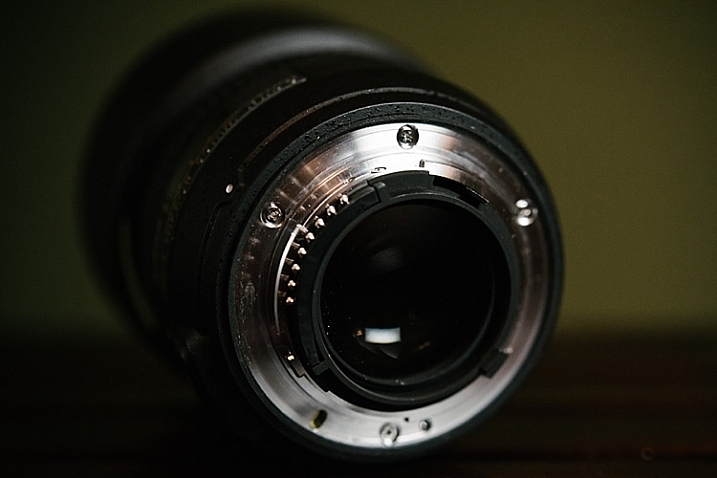
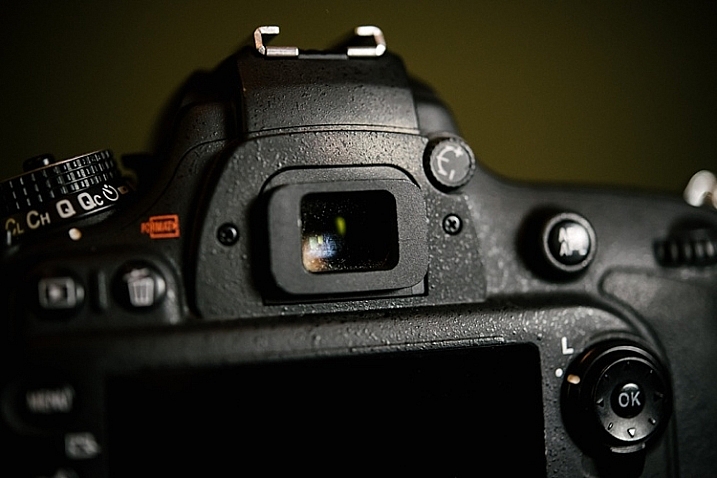
Nikon has been around for 100 years, which is pretty cool, and to celebrate the anniversary it has launched a dedicated anniversary site alongside a pretty amazing movie that traces Nikon’s history.

The video features an epic intro from outer space and a catchy song with the lyrics ‘I can see the light, oh yes I can see the light,’ repeated. It’s the kind of song where if I lived in say, Berlin and enjoyed underground dance parties, I wouldn’t bat an eyelash if it came on in the club. There’s also cameos by famous photographers, recreations of historic moments, famous magazine and newspaper covers and a narrator with a Hollywood blockbuster-style voice.

In all seriousness it’s a very cool, albeit over the top, video. And Nikon is certainly a company with a rich and important history worth celebrating. The anniversary site also features a really cool timeline of the company’s achievements. Here’s hoping they’ll be around for another 100 years.

Articles: Digital Photography Review (dpreview.com)

 
Comments Off on Nikon’s 100 year anniversary video is both amazing and ridiculous

Posted in Uncategorized


Hands-on with Nikon’s latest kit at Photokina

21 Sep

AF-S Nikkor 105mm F1.4E ED

Nikon’s stand at Photokina is split fairly equally between displays of its DSLRs and demonstrations of its new KeyMission 360, 170 and 80 cameras. We took a look at everything they had to offer, starting with the Nikkor 105mm F1.4E ED. It’s as big as it is beautiful. At 106mm long and 95mm across, it’s quite a handful. That said, it didn’t feel disproportionate when mounted on a D5, despite its 985 g (2.17 lbs) weight.

AF-S Nikkor 105mm F1.4E ED

The ‘E’ in the lens’ name means it offers an electromagnetic diaphragm. This not only operates faster than apertures operated by mechanical coupling, which is ideal when shooting at high frame rates, but also means many recent Nikon cameras can control the aperture even when they’re in live view mode, which is great news for video shooters.

Nikon D3400

Also on show is Nikon’s D3400, the company’s latest entry-level DSLR. It looks a lot like the D3300 and shares many of its specifications, with it still being built around a 24MP APS-C sensor. Without AA filter, in this instance.

Nikon D3400

The big news with the D3400 is the inclusion of Bluetooth Low Energy, which it uses to stay constantly connected to a smartphone. The iOS version of the SnapBridge app is now available, to which the camera can upload images automatically. The camera also includes a significantly boosted battery life (1200 shots per charge), but some of this will stem from the use of a less powerful built-in flash.

KeyMission 360

Originally announced back at CES in January, the KeyMission 360 is about to become available. Nikon says the two >180 degree lenses that combine to give 360 degree coverage are one of the aspects of the company’s expertise that it can bring to the sector.

KeyMission 360

From the top, it’s apparent just how small the camera is. In part the lenses have to be mounted close to one another in order for them to provide an overlapping field of view.

KeyMission 170

A slightly more conventional action cam, the KeyMission 170 offers a wide-angle lens that provides the field of view that the name implies. Rather than needing a special housing, the camera is itself already waterproof and shockproof, though an additional accessory is available to allow the 170 to be submerged to much greater depths.

KeyMission 170

The KeyMission 170 includes a standard tripod thread but Nikon says it will offer an accessory to adapt this so the camera can be used with common mounts designed for GoPro cameras.

KeyMission 80

They KeyMission 80 is a wearable style camera with a (you guessed it) 80 degree field of view, and is designed to be used in a vertical orientation. On the front is a 12MP 1/2.3″ CMOS sensor that’s capable of 1080/30p video – no 4K here.

KeyMission 80

On the back there’s a rear-facing 4.9MP selfie camera and a 1.75″ touchscreen. The whole camera is waterproof to about 1m/3.2ft, shockproof to 1.8m/6 ft and freezeproof to 14 F/-10 degrees C.

Whither the DLs?

Despite looking high and low, we couldn’t find any sign of the much-anticipated DL compacts. Prototypes are not yet available, we were told. We’re still looking forward to them, though, and are hoping there’ll be more news at Photo Plus Expo next month.

Articles: Digital Photography Review (dpreview.com)

 
Comments Off on Hands-on with Nikon’s latest kit at Photokina

Posted in Uncategorized


Collector’s item: Nikon’s 87th F SLR camera up for auction on eBay

02 Jul

$ (document).ready(function() { SampleGalleryV2({“containerId”:”embeddedSampleGallery_4189097372″,”galleryId”:”4189097372″,”isEmbeddedWidget”:true,”standalone”:false,”selectedImageIndex”:0,”startInCommentsView”:false,”isMobile”:false}) });

A rare Nikon F SLR camera with the original cloth-type shutter and a Nippon Kogaku Tokyo Japan 1:1.4 F = 50mm lens has surfaced in an eBay auction. Per the listing and product photos, this camera was the 87th unit to come off the production line; it was originally owned by the seller’s deceased grandfather who is said to have collected hundreds of cameras during his lifetime.

The Nikon F SLR was developed by Nippon Kogaku in the late 1950s and launched in 1959. The very first models off the production line used the same cloth shutter curtains as the Nikon SP. Nikon switched to using much more durable titanium shutter curtains in all subsequent F bodies, and it is estimated that Nikon produced only around 100 Nikon F SLR units with a cloth shutter before switching to titanium.

The seller started the auction at 99 cents without a ‘reserve’ price, and it currently sits with a bid of $ 4,050. The auction ends this upcoming Sunday.

Articles: Digital Photography Review (dpreview.com)

 
Comments Off on Collector’s item: Nikon’s 87th F SLR camera up for auction on eBay

Posted in Uncategorized


Maximum sharpness: Nikon’s automated AF Fine Tune explained

22 Apr

Among the features introduced in Nikon’s new D5 and D500 DSLRs, we’re very excited by automated AF Fine Tune. This feature allows users to quickly fine-tune their specific camera bodies and lenses, maximising the chances of a sharp shot and avoiding the lengthy process of trial-and-error tuning that was previously necessary. Watch our video and read our in-depth analysis.

What’s the problem?

If you’re a DSLR shooter, you may be acutely aware of consistent front or back-focus issues with some of your lenses, particularly fast ones like F1.4 primes. Mirrorless users tend to not have such issues, because their cameras focus using their image sensors. When a mirrorless camera says it’s achieved focus, generally it’s actually in focus. That doesn’t necessarily hold true with DSLRs, which use a secondary phase-detect sensor under the mirror as a sort of proxy for focus at the imaging plane. This makes DSLR focus sensitive to misalignments between the secondary AF module and the image sensor, and also requires calibration of the optics inside the module itself. Furthermore, the way these phase-detect AF modules makes them sensitive to certain lens aberrations, like spherical aberration.

Manufacturers of DSLR bodies and lenses do a lot of calibrations to make sure that this isn’t an issue, calibrating every AF point at the factory, writing look-up tables into lenses, and more. But the reality of tolerances is such that you’ll be best off if you calibrate your particular copy of a lens and your particular copy of a body yourself. That’s what AF Fine Tune, or AF micro-adjustment as Canon calls it, is all about.

State of the current art…

Up until now, this calibration procedure has required cumbersome procedures for accurate calibration. We’d often set a camera up on a tripod and align it to a LensAlign (which has a sighting tool), then have to change the set up to test different subject distances, lighting, or lenses. Some photographers even try to Fine Tune on the spot by trying different values and seeing if a real-world target looks sharper or not – but this method is extremely prone to error. Solutions like FoCal have tried to automate the procedure, but again, the requirement of a chart and a computer is cumbersome.*

… disrupted

Nikon’s new automated AF Fine Tune makes things as easy as child’s play. It uses contrast-detect AF in live view, which focuses using the image sensor and is nearly always accurate, to calibrate its own phase-detect AF system. Watch our video above to get an idea of just how easy it is to calibrate your lenses on the new D5 and D500 cameras.

A couple of things are worth keeping in mind. For some lenses and systems, the optimal calibration value can change for different subject distances. This isn’t necessarily always the case, but you may wish to calibrate for the subject distances you’re most likely to shoot for any particular lens. For a good all-round calibration, we’re told that using a target approximately 40x the focal length away strikes a good balance.

The key here is to play around a bit. Try a couple different distances, a few different runs, and make sure you’re getting a consistent result. Sometimes we’ve found the optimal value to change with lighting temperature, but this sort of thing is precisely why the automated procedure is so valuable: if you’re running into trouble with focus, you can – right at the wedding reception you’re shooting – set the camera on a table, point it at a static object, and calibrate your camera in under 10 seconds. Yeah, we timed ourselves.

The result

Here’s an example of how Fine Tune helped calibrate our Nikon 24/1.8 to our D5. Roll your mouse over the ‘OFF’ and ‘ON’ buttons to see Sam’s eye sharpen up. If you click on the main image, you can see the full image in a separate window, where you’ll notice that the ‘OFF’ shot is front-focused on Sam’s nose, while the ‘ON’ shot is focused correctly on his eye. We placed a single AF point over Sam’s left eye (on camera right) for focus in both cases.

AF Fine Tune OFF
(focused on nose)
AF Fine Tune ON
(focused on eye)

In this case, for this lens paired to this body, automated AF Fine Tune found a value of +14 was best. This indicates that for correct focus, the camera has to shift focus backward an arbitrary 14 units from the focus reading the phase-detect sensor makes. In other words, out of the box, this lens on our D5 front-focuses. If it had back-focused out-of-the-box by a similar amount, we might have expected the automated procedure to find -14 to be the optimal value.

How we’d like to see this feature evolve

AF Fine Tune currently only writes one global value per lens. This means the calibration value can’t be adjusted for either end of a zoom. Furthermore, only the center point can be calibrated – the camera assumes that the calibration at the factory ensures all points are consistent with one another and, importantly, the center point. Finally, as mentioned earlier, sometimes the optimal value can change based on subject distance.

Canon cameras currently at least offer to microadjustment values for either end of a zoom, but don’t offer any sort of automation to help you out. Sigma and Tamron USB docks allow for calibration at either end of the zoom, and for 3 to 4 different subject distance ranges, allowing for a high degree of accuracy of calibration. Unfortunately, entering 4 different subject distance ranges for two ends of a zoom mean the user has to literally set up the camera 8 times, with some sort of test target for accurate assessment – hardly practical for most working photographers.  

The key here is automation: automating opens up a world of opportunities, and automated Fine Tune is an important first step. We’d even imagine a future implementation where calibration data for all focus points is stored and learned from over time. Every time you calibrate a particular point, the camera could retain subject distance information (passed on to it via the lens), and over time learn the best calibration values for each point, for all subject distances, for different temperatures and lighting as well (the latter are often minor concerns).

To sum up…

Nikon’s automated AF Fine Tune is truly one of the most welcome features we’ve seen added to a DSLR in recent times. We’ve wondered for years why camera companies don’t use their contrast-detect AF to self-calibrate their phase-detect systems, instead relegating calibration to a cumbersome end-user experience.

Automated Fine Tune changes all that. It’s a really useful feature that takes a lot of guesswork and cumbersome aspects of calibrating yourself out of the equation, allowing you to do it on the spot, at an event, anywhere, on the fly. In fact, anyone working with shallow depth-of-field imagery should absolutely perform this procedure. Wedding, newborn, portrait, lifestyle, photojournalist, and even sports photographers: take note.


* We really like Reikan FoCal for research purposes though: you get a plethora of data for how a body/lens combination behaves at different subject distances, on different days, under different lighting, and even a map of the optimal calibration value per AF point. Of course, since you can only enter one global adjustment value into your camera, this information is a bit more academic, but if you want to get an idea of the behavior of your system, there’s probably no more comprehensive tool than FoCal.

Articles: Digital Photography Review (dpreview.com)

 
Comments Off on Maximum sharpness: Nikon’s automated AF Fine Tune explained

Posted in Uncategorized


5 Troubleshooting Steps for When Your Nikon’s Autofocus Stops Working

03 Apr

You’re in the middle of a photoshoot and suddenly you notice nothing in your viewfinder is in focus. Your shutter and AF-ON buttons (if using back-button focusing) do not seem to work. All eyes are on you, and the pressure is on to quickly fix the problem. Where do you start? Or perhaps you have just changed lenses and suddenly nothing works. Where might you have gone wrong?

This has happened to me one too many times, so I have now come up with a system of troubleshooting in the quickest time possible on the spot. It goes without saying, of course, that your camera needs to be switched to ON and the lens cap needs to be off.

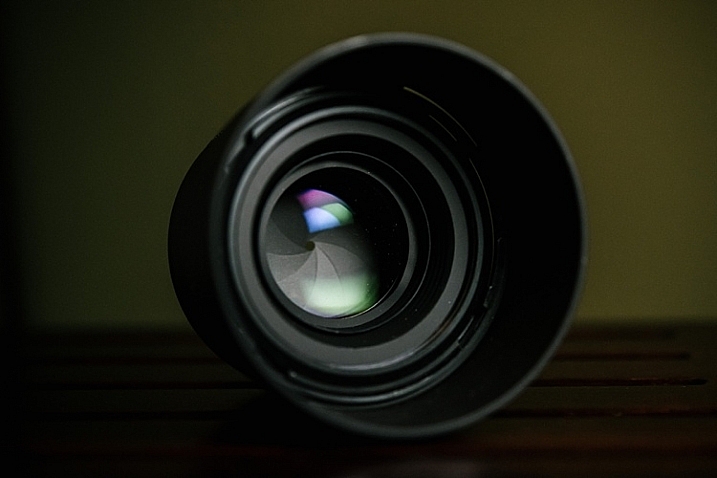
nikon-autofocus-troubleshooting-photo-tips

#1 Autofocus not Manual

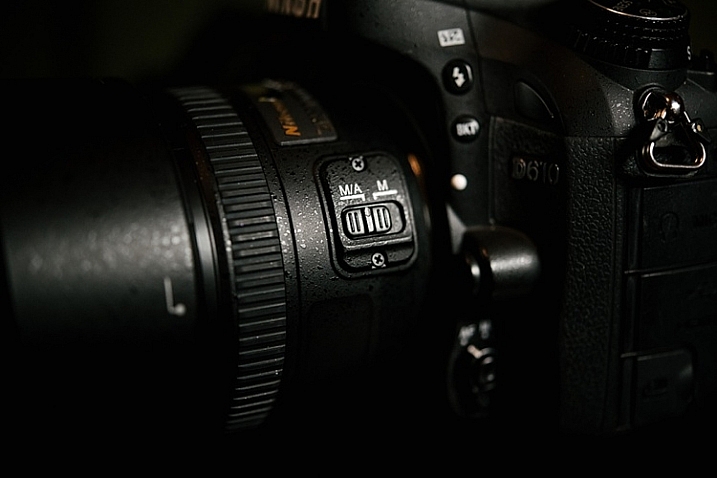
Check that both the lens and the camera switches are both pointing towards Autofocus. On the camera it must be set on AF, not M, and on the lens put it to M/A (A stands for Autofocus and M for Manual, M/A allows you to use both). Flicking the lens switch to Manual can be done unwittingly and fairly easily, especially if you are in a rush to change lenses.

nikon-autofocus-troubleshooting-photo-tips

nikon-autofocus-troubleshooting-photo-tips

#2 Back dial is not Locked

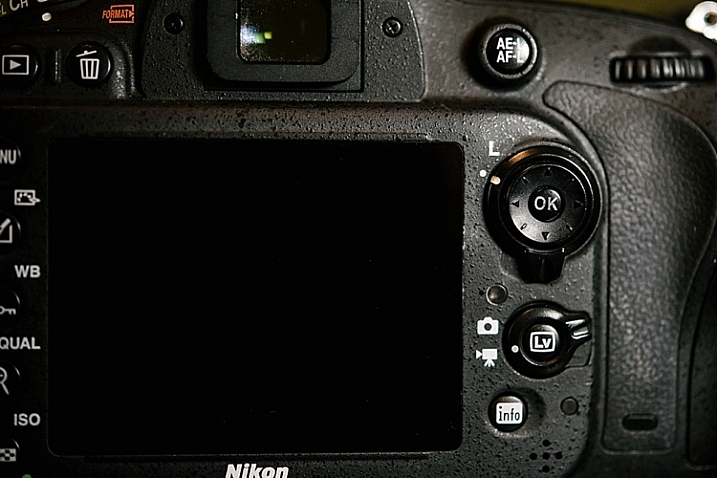
Check that the dial is pointed towards the camera icon and not the L, which stands for lock.  You can easily flick this dial, especially if you are back-button focusing and your dial sees so much action.

nikon-autofocus-troubleshooting-photo-tips

#3 AEL / AFL

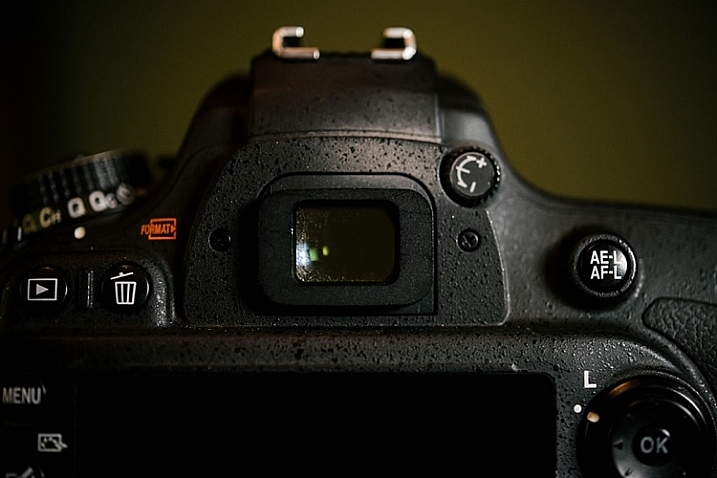
Check your AEL/AFL button that you haven’t locked focus. Clicking it once locks focus so click it another time to unlock focus.

nikon-autofocus-troubleshooting-photo-tips

#4 Check the lens

Remove the lens. Inspect the front and rear lens aspects for smudges or dirt. Check also that no part of the lens is broken. If you have filters on your lens, check that they are clear and there are no cracks. When you re-attach the lens, make sure you hear a click once the lens is twisted in place.  If there are any smudges on the lens, make sure you clean it with a lens cloth, and do not blow on the lens.

Lens cloths are usually lint-free pieces of material, and should be used with a lens cleaning solution, rather than anything with solvents. Blowing on the lens can contribute to lens damage since a person’s breath can contain harmful acids. If you feel you have to blow, use a lens bulb blower and a brush.

nikon-autofocus-troubleshooting-photo-tips

#5 Viewfinder

Finally, check your viewfinder and make sure there are no oils, smudges or dirt covering your sight. You can clean the viewfinder the same way you clean your lens.

nikon-autofocus-troubleshooting-photo-tips

#6 Bonus

This applies to any camera, not just Nikons. If something is going on with your camera that is odd – turn it off for a few seconds, then turn it back on. It’s like a reboot for your camera, just like you do with your computer. If that doesn’t work you can also try removing the battery for a minute or more (remember to turn the camera off before removing the battery). As a last ditch effort you could try resetting all functions and settings on the camera to factory default. If it still isn’t working test the camera with another lens, if that one works you may need to take your lens in to get serviced. If the

I hope this little troubleshooting guide helps when you get stuck with focusing problems. Do you have any other quick focus troubleshooting tips to share?

googletag.cmd.push(function() {
tablet_slots.push( googletag.defineSlot( “/1005424/_dPSv4_tab-all-article-bottom_(300×250)”, [300, 250], “pb-ad-78623” ).addService( googletag.pubads() ) ); } );

googletag.cmd.push(function() {
mobile_slots.push( googletag.defineSlot( “/1005424/_dPSv4_mob-all-article-bottom_(300×250)”, [300, 250], “pb-ad-78158” ).addService( googletag.pubads() ) ); } );

The post 5 Troubleshooting Steps for When Your Nikon’s Autofocus Stops Working by Lily Sawyer appeared first on Digital Photography School.


Digital Photography School

 
Comments Off on 5 Troubleshooting Steps for When Your Nikon’s Autofocus Stops Working

Posted in Photography


Nikon’s New D5 and D500 Push the Boundaries of DSLR

09 Jan

Nikon D5 and D500 Push the Boundaries of DSLR

CES 2016 saw the announcement of two important DSLRs from Nikon, including an update to its flagship line, as well as an almost mythical product many had given up hope of ever seeing: a true D300 replacement.

The newly announced D5 is Nikon’s top-of-the-line professional DSLR, with a 20.8MP full frame sensor capable of shooting at up to 12fps with AF and 14fps without (with the mirror locked up). The headline feature, though, is arguably the new 153 point AF system with 99 cross-sensors. AF tracking with this new system will also benefit from the doubling in resolution of the RGB metering sensor used for scene analysis, and the D5 is the first Nikon camera capable of 4K video.

The biggest news though may be the long-awaited replacement of the D300S. The 20.9MP APS-C D500 is Nikon’s ‘best enthusiast DX offering’, and the term ‘enthusiast’ might be an understatement. With continuous shooting speeds of 10 fps and a 200 shot buffer for Raw images, the camera is aimed squarely at action and fast-paced photographers who don’t mind the smaller sensor, or even benefit from its extra reach. It features the same 153-point AF system and 180k-pixel RGB metering sensor of the D5, along with the EXPEED 5 processor. It can also capture 4K/UHD video and also features ‘SnapBridge’, a constant connection to a smartphone using Bluetooth.

Join us as we take a closer look at the technologies inside these cameras.* Pro tip: you may find viewing this slideshow easier if you hover over and click the ‘fullscreen’ button at the upper right of the slide, and use left/right keys to leaf through the slideshow.


* Some of the information in these slides come from Nikon’s technology digest on the D500, here.

Nikon D5 and D500 Push the Boundaries of DSLR

Let’s start with the AF module, which is shared between both the D5 and D500. Here is the Multi-Cam 20K in all its glory. It’s a major step up from the Multi-Cam 3500FX module, variants of which were found in the D4s, D810, and D750. Up from 51 total AF points with 15 central cross-sensors, the module in the D5 and D500 offers 153 phase-detect points with 99 cross-sensors spread across much of the frame. 

The improvements don’t stop there though: the module has its own dedicated processor, to deal with the computationally intensive information coming from 153 AF points cross-referenced with the scene analysis system (more on that later). The center AF point is now sensitive down to -4 EV. All 152 other points are sensitive down to -3 EV, much like the D750 and D7200, albeit now with an even wider spread of points.

If Nikon’s claims are true, we can expect formidable AF performance in low light from the D5 and D500 – possibly the best from any DSLR. Although we’ve previously found Sony’s a7S to focus in at nearly -5 EV, its contrast-detect AF, and associated hunting, made it quite slow in practice. -4 EV phase-detect AF on a DSLR should be seriously impressive because it will likely be far more decisive than mirrorless, contrast-based systems. Additionally, cross-type sensors tend to perform better in low light and with low contrast subjects: cross-sensors are able to make focus measurements from subjects containing both horizontal and vertical detail (or, at least, detail that has either a horizontal or vertical component to it). In low light or backlit situations, where lowered contrast already makes it difficult to distinguish subject detail, sensors looking along multiple axes for detail to ‘lock on’ to simply have a higher chance of success than sensors that can only ‘see’ detail with a, say, horizontal component.

Nikon D5 and D500 Push the Boundaries of DSLR

Here’s the spread of AF points across the frame in the D5. The new AF module appears to provide more AF coverage across the frame than any previous Nikon full-frame camera (and likely any full-frame DSLR), though not quite as much coverage of phase-detect points as Sony’s recent Alpha 7R II mirrorless full-frame.

55 of the points are user-selectable, indicated by squares. The AF points indicated by dots are essentially assist points, used by the camera if your subject moves to or simply happens to fall in between the user-selectable points. What makes these assist points particularly useful in a Nikon? Nikon’s industry-leading 3D tracking, which’ll select any one of them for you automatically if your subject happens to move, or you recompose, such that it falls under one of these assist points (in AF-C ‘Auto’ and ‘3D’ modes, that is). The video below shows how 3D tracking can be used on a D750 to precisely track an eye, so those wondering how 153 points might be useful, well, imagine this sort of performance but even more precise, with wider AF point coverage.

35 of these 55 points are cross-type: the outermost two sections of 10 points each as well as the central section of 15. This is more clearly demarcated in the next slide.

Nikon D5 and D500 Push the Boundaries of DSLR

Here’s what you get by putting the designed-for-full-frame Multi-Cam 20000 module inside the APS-C D500. The AF points stretch out to the literal edges of the frame. Red points indicate cross-sensors. While Canon’s nearest competitor, the 7D Mark II, comes quite close to this level of coverage – with all cross-sensors to boot – it doesn’t quite match it.

But it’s not even these headline features that excite us the most. It’s details such as the addition of an automated system for applying AF fine tune that have really caught our eyes. We’ve written before about how mirrorless cameras, with their direct measurement of focus (rather than a secondary sensor, acting as a proxy) tends to be more accurate when it comes to fine-focusing, especially when using fast lenses. However, we’re not alone in proposing the idea of using DSLR’s often slow, but highly precise live view autofocus to help make it easier to correct for the cumulative errors that can undermine dedicated sensor phase detection systems. Patents have been issued yet this is the first time we’ve seen it implemented in a final product. Automating the process means far more photographers may actually calibrate their lenses for more accurate focus. Furthermore, the reality of DSLR AF is that the optimal calibration values can depend on lighting, environmental factors, wide or tele end of zoom, and subject distance; hence, automating the process will realistically allow users to calibrate more often for any given scenario. Sadly, there’s no indication that calibration values can be saved for different focal lengths or subject distances (a la Sigma lenses via their USB dock), nor is there any mention of higher precision central points that give the latest Canon cameras’ central AF point nearly mirrorless-levels of precision.

We’ve not yet had a chance to use the D5/500’s automated AF fine tune but you can be sure it’ll be one of the first things we try when one gets into our studio.

Nikon D5 and D500 Push the Boundaries of DSLR

Remember that ‘scene analysis system’ the AF system cross-references with information from the 153 AF points? It’s enabled by essentially a whole separate image sensor in the DSLR whose sole job is to analyze the scene to understand how to expose and focus it. Now with 180,000 pixels in the D5 and D500, this sensor has doubled in resolution compared to the D4s, D810, and D750.

Confused by how this works? Let’s break it down. Your smartphone or mirrorless camera projects light from the lens directly onto the imaging sensor, which can ‘see’ the scene to focus and expose it properly, even find faces or other subjects and track them no matter where they move to in the frame. DSLRs have it much tougher – all the light entering the lens is being diverted either upward to the optical viewfinder, or downward to a dedicated AF module with its phase-detect sensors that understand only distance. Some of that light going to the viewfinder is itself diverted to a metering sensor, which determines appropriate exposure. Some time back, DSLR manufacturers replaced this rudimentary metering sensor with an actual RGB 2D array or, essentially, an image sensor.

While years ago this image sensor started at a measly 1,005 pixels in the D300, it did enable rudimentary subject tracking (‘3D tracking’ in Nikon terms), since the sensor provided some color and spatial information about the subject underneath any AF point, which the camera could combine with an understanding of subject distance from the phase-detect AF sensors to understand where your subject of interest is at any given moment. Today, cameras like the D750 and D810 provide uncanny subject tracking with their 91,000-pixel metering sensors – able in many cases to track even objects as specific as a human eye. Nikon DSLRs are the only DSLRs we’ve tested to-date that are capable of the level of class-leading tracking precision you see in the videos linked above (Canon’s newer DSLRs do well with distant subjects well isolated with respect to depth, but lag behind in more demanding applications requiring higher precision). Hence, a doubling in resolution of the metering sensor is likely to further Nikon’s lead in this arena. Furthermore, metering applications also benefit from the increased resolution: as the flowchart above indicates, numerous features like face exposure, fill-flash, Active D-Lighting, and highlight-weighted metering will experience increased accuracy. 

Nikon D5 and D500 Push the Boundaries of DSLR

Click on the button at the upper right of the image to view this entire slideshow in fullscreen for a better view.

So what exactly does this 180,000-pixel RGB metering sensor ‘see’ such that it can aid the camera in finding faces and tracking subjects? We’ve taken the liberty of doing some guesswork to simulate a ‘worst case’ representation of how a 180k-pixel sensor might ‘see’ a typical scene being photographed.

If we assume that the 180k figure refers to the total number of red, green and blue pixels, then we can surmise that there’s only, at best, 60k pixels of true spatial information for any given color. For a 3:2 aspect ratio, that’s about 300×200 pixels. So we’ve taken an image and reduced it to 300×200, then blown it back up for ease of viewing. That’s what you see above.

In reality, the metering sensor is likely to ‘see’ a bit more resolution, since the above only represents the spatial resolution of any one color channel (or 3 R, G, and B pixels combined). Even still, you can get an idea of how the sensor can detect faces, and even understand what was underneath your selected AF point when you initiated focus in order to track it even if it moves to a position underneath a different AF point. With such increases in resolution of the scene analysis system, we wouldn’t be surprised if DSLRs one day were capable of eye detection. And while we fully expect the D5/500 to be capable of tracking an eye, it’ll only do so in ‘3D tracking’ mode once you’ve ‘told’ the camera where the eye of interest is by initiating focus with your focus point over it. We’ll be curious to see if the automatic face detection in ‘Auto’ area mode prioritizes eyes of faces. 

Nikon D5 and D500 Push the Boundaries of DSLR

Click on the button at the upper right of the image to view this entire slideshow in fullscreen for a better view.

Compare the last image to this one (use the left/right keys on your keyboard for ease): a 213×142 pixel representation of the same image that simulates the spatial resolution of any one color channel for the 91,000-pixel RGB metering sensor in previous full-frame Nikon DSLRs. It’s not hard to imagine how even with this level of understanding of a scene, previous Nikon full-frames were able to track quite well. But every bit of resolution helps increase precision of tracking, so while the image above isn’t a huge step down from the last image representing what the new 180k-pixel sensor sees, there’s still a significant difference.

And remember, Nikon already led the industry with its previous 91,000-pixel RGB sensor, even performing better at subject tracking than the Canon 5DS and 7D Mark II with their 150,000-pixel RGB+IR metering sensors. Hence, we expect the doubling in metering sensor resolution to further widen the gap in performance between Nikon and all other DSLRs, potentially making the Nikon platform the best for applications that benefit from continuous subject tracking (barring any missteps on Nikon’s part). Continuous eye tracking on a Sony a7R II is still likely to give the D5/500 a run for its money, but general subject tracking of any subject, even to aid ‘focus-and-recompose’ by having the camera automatically select an appropriate AF point to stick to your subject as you recompose, will likely remain unparalleled on these Nikons compared to any other camera. 3D tracking’s ability to combine scene analysis with the distance information reported by every AF point on the phase-detect sensor makes for subject tracking that I, personally, find indispensable shooting candid portraits or weddings and events in a more photojournalistic style: I ‘define’ my subject by initiating focus on it, and the camera retains focus on it no matter how I recompose or where the subject moves to as long as I keep the shutter button half-depressed.

Nikon D5 and D500 Push the Boundaries of DSLR

Click on the button at the upper right of the image to view this entire slideshow in fullscreen for a better view.

The 180k-pixel metering sensor is a huge step up from previous DX offerings from Nikon, which only featured – at best – a 2,016-pixel RGB metering sensor. The 90-fold increase in metering sensor resolution should bring a level of subject tracking to the DX format never before seen.

Above is a 55×37 pixel representation of our previous image – and this time that’s a sort of ‘best case’ representation of what cameras like the D7200’s scene analysis system ‘saw’. Instead of showing you what any one color channel sees, we’ve decided to show you what 2k pixels in total looks like, as one-third of this resolution is a pixelated, unintelligible 32×21-pixel mess (from this forum discussion). In other words, the image above represents only a 30x drop in resolution compared to our previous 180k-pixel representation, and so likely underestimates the increased performance the scene analysis system in the D500 is likely to exhibit compared to previous DX offerings (which still performed surprisingly well for their low resolution metering sensors).

Nikon D5 and D500 Push the Boundaries of DSLR

Another feature enabled by the RGB metering sensor is flicker reduction. While this is only available in video on the D5, the D500 is capable of waiting until the right moment to fire the shutter under flickering light, so as to achieve and maintain proper exposure. Although Canon has been offering this since the 7D Mark II, it’s the first time we’re seeing this feature in a Nikon camera.

Nikon D5 and D500 Push the Boundaries of DSLR

It’s worth emphasizing here something Nikon clearly emphasized in their press conference: one of the true advantages of a DSLR over current mirrorless cameras is the lack of viewfinder lag and the true view of the scene – at least in between mirror blackouts – compared to the typical stop-motion sequence of last-shot images most mirrorless cameras exhibit during fast bursts. This simply makes it easier to follow action with an optical viewfinder than with a mirrorless camera, which is why in the video screenshot above, the photographer was able to maintain the center AF point over his subject with the D5, while missing the subject with the ‘mirror-less’ camera example on the left. It’s worth noting though that Nikon’s own 1-series cameras provide a live feed even during continuous shooting, which actually circumvents this shortcoming of mirrorless (hint: that’s how mirrorless cameras will undoubtedly address this issue in the future).

DSLRs have also been optimized to make quick phase-detect AF measurements in between those quick mirror blackouts, allowing cameras like the D5 and Canon’s 1D X to acquire AF almost instantaneously even during 12 and 11 fps bursts. Impressive to say the least. That’s not to say mirrorless cameras aren’t catching up – in good light, Samsung’s NX1 can often successfully continuously refocus at 15 fps. Which means, yes, we do have to call out Nikon for suggesting that all mirrorless cameras have ‘soft and slow AF’: we can’t help but wonder if in that particular video sequence, the Sony Alpha series camera were left in AF-S, as cameras like the a7R II can, in fact, successfully refocus on approaching subjects (and when it can’t, the box doesn’t remain green as it does in the out-of-focus example in the Nikon press conference video – unless the focus mode is left in AF-S).

Regardless, though, with mirrorless cameras you’re still left with the issue of difficulty in following the subject without a live view during bursts.

Video: Matt Granger

Nikon D5 and D500 Push the Boundaries of DSLR

Another feature that really helps fast-paced photography is direct access to AF point selection. The D500 is the first DX-format Nikon to sport a dedicated AF-selection joystick, pictured right below and to the left of the AF-ON button. In fact, short of the D4/D5-series of cameras, it’s the only Nikon camera to feature this joystick. Cameras like the D750 and D810 dedicate their D-pads (pictured here above the ‘info’ button) to AF point selection, which works well, but never felt as fast as Canon’s dedicated AF-selection joystick. So the joystick is a welcome addition.

And if we understand correctly, the D500’s touchscreen LCD can also be used to directly access AF point selection (don’t quote us on this yet though). We first saw this on the D5500, where in OVF shooting you could dedicate the right half of the touchscreen to AF point selection. This made it really easy to use your thumb to instantly jump over to any AF point instantaneously, without your eye ever leaving the viewfinder. It’s actually faster than using a dedicated joystick, and we’re hoping to see similar functionality in the D500. The D5 does not retain this functionality with its touchscreen, though.

This brings me to a point I’ve made for some time to manufacturers now: why not just replace the AF joystick and area where your thumb rests with an AF touchpad? It could be relatively small, but with a 1:1 mapping to selectable AF points such that – over time – your thumb would learn to quickly jump to, or near, any desired AF point. For enhanced precision of selection, make the touchpad pressure sensitive and have different pressures activate different granularity of AF point movement. Want to avoid accidentally shifting the AF point? Allow the user to adjust pressure sensitivity of the touchpad. The possibilities are limitless with some good hardware and some clever programming.

Speaking of fast AF point selection, those fond of the ‘focus and recompose’ technique should take note: turn on Nikon’s ‘3D tracking’ in AF-C, place your selected AF point over your subject, half-press and hold the shutter button, then recompose. This is probably the fastest way to select a different AF point: by having your camera do it automatically using Nikon’s industry leading subject tracking. If your subject falls outside of the AF area, just let the camera track it all the way out to the nearest AF point, then hold down the AF joystick (‘sub-selector’) to lock AF, and continue recomposing.

Nikon D5 and D500 Push the Boundaries of DSLR

Speaking of ergonomic improvements, notice anything different near the shutter button? That’s right, you no longer have to re-assign the movie button to ISO, because there’s now a dedicated ISO button! This is a boon for one-handed shooting: previously, I’d always reassign the movie record button to ISO so I could change ISO setting during one-handed shooting (since the ISO button is usually on the left side of Nikon DSLRs).

It’s also worth pointing out the button next to the ISO button: the dedicated exposure compensation (EC) button. Common to most higher-end Nikons, this button is really not to be overlooked. It means easy, consistent access to exposure compensation no matter what shooting mode you’re in, including M mode with Auto ISO. Certain competitors without dedicated EC dials or buttons make it it quite difficult to bias brightness in M mode with Auto ISO engaged (looking at you: 1D X, which will make you sacrifice the SET button for EC or make you pull your eye away from the viewfinder to use the Q menu to adjust EC in M mode).

Nikon D5 and D500 Push the Boundaries of DSLR

Not to be overlooked is the new SB-5000 Speedlight: the company’s new flagship flash. Its standout feature is its ability to operate and trigger via radio frequency, a first for Nikon’s line of portable flashes. This brings the Nikon system in-line with what Canon has offered for some time now, and also obviates the need for 3rd party accessories.

Nikon claims that when the flash is paired with the WR-R10 Wireless Remote Adapter set and a D5 or D500, the flash will operate without a direct line of sight at a range of up to approximately 98 feet (30 meters). With that same combination, the flash will be able to control up to six groups or 18 Speedlights. Photographer Todd Owyoung confirms that Nikon CLS features like TTL, Manual power, Groups, and Flash Exposure Compensation settings are all accessible directly via the camera menu system as it essentially always has with Nikon’s sensible flash system design. Just with the added power of radio control, now. And with Nikon’s extensive button customization, this will all be accessible with just one button press.

The SB-5000 is a significant addition to Nikon’s flash line-up, not only for the radio-triggered control it brings during applications where line-of-sight isn’t feasible or practical, but also because pairing flashes to the WR-R10 is arguably preferable to pairing to the outdated SU-800 commander – which is so dated that it attaching it to your camera disables Auto ISO. That said, we really hope to see an radio-controlled update to the SU-800 commander, since the WR-R10 remote adapter doesn’t have an IR/red AF assist beam, which I personally find indispensable for dance floor photography at weddings where I typically only use off-camera flash anyway and, therefore, prefer not to waste the weight of a full-blown flash on my hotshoe.

Which reminds me: I don’t mind the lack of a built-in flash one bit on the D500 (or D5 for that matter), as I’ll take the bigger pentaprism box and its increased viewfinder magnification (or space for a higher resolution metering sensor) over an on-board flash that I’ll never use compared to the bounce or off-camera flash of a Speedlight.

Nikon D5 and D500 Push the Boundaries of DSLR

The D5 and D500 are Nikon’s first 4K capable DSLRs, but 4K comes with some severe limitations. On the D5, recording is only available for 3 minutes at a time (29:59 for the D500), and both cameras record 4K UHD (no DCI 4K) with a heavy crop factor. It’s nearly a 1.5x crop factor (nearly Super 35) on the full-frame D5, while the D500 experiences an even larger crop factor for 4K, pictured in red above (the yellow rectangle outlines the DX/Super 35 area on the D500, compatible with Full HD).

All in all – and perhaps we’re being a bit cynical – we’re not terribly excited about the inclusion of 4K on the two cameras. Yes 4K can be a pretty handy thing to have (and the uses for it will only increase as more people buy 4K capable displays), but there are numerous hints that these cameras aren’t making the most of it. Aside from the heavy crop factors above, lack of oversampling and almost certain presence of rolling shutter will likely limit the usefulness of 4K video from these cameras. Furthermore, the continued absence of focus peaking to aid manual focus or zebra warnings to help set exposure are starting to look like major oversights. And, although we’d love to be surprised, we’re concerned that Nikon’s continued adherence to the less efficient 8-bit H.264 compression system and its reluctance to publicize bitrates means the in-camera capture won’t be as exciting as the headline specs suggest. That said, there’s always the option to output 4K over HDMI to an external recorder, so it might find some use for more dedicated video shooters – if a good signal is sent over HDMI.

And then there’s autofocus in video, where Nikon DSLRs tend to fall well behind the competition. Lack of any form of on-sensor phase-detect AF, even available in Canon’s nearest D500 competitor the 7D Mark II, means that AF in video is essentially unusable.

Nikon D5 and D500 Push the Boundaries of DSLR

On a more positive note, there are some solid additions to video on these cameras, like Active D-Lighting (ADL). We’ve always found Nikon’s ADL to be quite effective at reducing exposure to retain highlights, while boosting deeper tones to retain shadows. And ADL does a nice job of this global contrast reduction while attempting to preserve local contrast using its advanced tone-mapping algorithms.

This can be computationally intensive though, so has not been available previously in video. With the new EXPEED 5 image-processing engine, though, ADL is available in movies at resolutions up to 1080p.

For incredibly high contrast scenes, when ADL’s highest setting may not be enough to tame the scene’s extreme contrast, you can use the Flat picture profile and grade your footage later.

Nikon D5 and D500 Push the Boundaries of DSLR

On the D500, the EXPEED 5 processor even enables electronic vibration reduction (VR) in videos up to 1080p. Electronic VR can correct for horizontal and vertical movement, as well as rotation. This helps stabilize video footage, particularly when combined with optical VR in lenses.

The combination of electronic (or ‘digital’) and optical VR or IS (image stabilization) is something we tend to see more of in mirrorless cameras, like Olympus’ E-M5 II or the latest 1″-type sensor compacts from Canon and Sony. It’s great to see in a DSLR form-factor.

There’s no mention of this feature in the D5, though.

Nikon D5 and D500 Push the Boundaries of DSLR

Then there’s that continuously-connected wireless system. Snapbridge sounds very impressive – making use of the low-energy Bluetooth standard to maintain a connection between the cameras and a smart device so that images can be transferred without having to constantly re-establish connections. Our experiences suggest that the easier a feature is to use, the more likely we are to use it and the more likely we are to appreciate its benfits (something that often crosses our minds when DSLR shooters tell us they don’t use video on their camera). 

And in our connected age, there’s no excuse for camera manufacturers to not facilitate ease of image management and sharing. DSLRs have it a little tough in this regard: they’re not running the full-blown OS smartphone cameras have access to, which means that apps and ecosystems are limited in scope. But we’ve seen smartphone connectivity evolving in DSLRs, and we’re all for it. We’ll be curious to test out how SnapBridge functions on the D500.

We’ve covered a bit of ground in this slideshow, so if we were to sum up our overall thoughts on these cameras, they’d be as follows: we’re impressed that Nikon has taken a tried-and-true system and improved significantly on it. Nikon has addressed shortcomings, like lack of cross-type AF sensors, radio-controlled flash, buffer depth and burst speeds in DX format, as well as added some serious goodies: unprecedented AF frame coverage, low light AF ability, and automated focus calibration. Combine these with best-in-class object tracking in continuous AF, and the high performance sensors we typically see from Nikon that offer class-leading ISO performance and dynamic range, and we potentially have some industry-leading DSLRs on the horizon.

Articles: Digital Photography Review (dpreview.com)

 
Comments Off on Nikon’s New D5 and D500 Push the Boundaries of DSLR

Posted in Uncategorized


Nikon’s New D5 and D500 Push the Boundaries of DSLR

08 Jan

Nikon D5 and D500 Push the Boundaries of DSLR

CES 2016 saw the announcement of two important DSLRs from Nikon, including an update to its flagship line, as well as an almost mythical product many had given up hope of ever seeing: a true D300 replacement.

The newly announced D5 is Nikon’s top-of-the-line professional DSLR, with a 20.8MP full frame sensor capable of shooting at up to 12fps with AF and 14fps without (with the mirror locked up). The headline feature, though, is arguably the new 153 point AF system with 99 cross-sensors. AF tracking with this new system will also benefit from the doubling in resolution of the RGB metering sensor used for scene analysis, and the D5 is the first Nikon camera capable of 4K video.

The biggest news though may be the long-awaited replacement of the D300S. The 20.9MP APS-C D500 is Nikon’s ‘best enthusiast DX offering’, and the term ‘enthusiast’ might be an understatement. With continuous shooting speeds of 10 fps and a 200 shot buffer for Raw images, the camera is aimed squarely at action and fast-paced photographers who don’t mind the smaller sensor, or even benefit from its extra reach. It features the same 153-point AF system and 180k-pixel RGB metering sensor of the D5, along with the EXPEED 5 processor. It can also capture 4K/UHD video and also features ‘SnapBridge’, a constant connection to a smartphone using Bluetooth.

Join us as we take a closer look at the technologies inside these cameras.

Nikon D5 and D500 Push the Boundaries of DSLR

Let’s start with the AF module, which is shared between both the D5 and D500. Here is the Multi-Cam 20K in all its glory. It’s a major step up from the Multi-Cam 3500FX module, variants of which were found in the D4s, D810, and D750. Up from 51 total AF points with 15 central cross-sensors, the module in the D5 and D500 offers 153 phase-detect points with 99 cross-sensors spread across much of the frame. 

The improvements don’t stop there though: the module has its own dedicated processor, to deal with the computationally intensive information coming from 153 AF points cross-referenced with the scene analysis system (more on that later). The center AF point is now sensitive down to -4 EV. All 152 other points are sensitive down to -3 EV, much like the D750 and D7200, albeit now with an even wider spread of points.

If Nikon’s claims are true, we can expect formidable AF performance in low light from the D5 and D500 – possibly the best from any DSLR. Although we’ve previously found Sony’s a7S to focus in at nearly -5 EV, its contrast-detect AF, and associated hunting, made it quite slow in practice. -4 EV phase-detect AF on a DSLR should be seriously impressive because it will likely be far more decisive than mirrorless, contrast-based systems. Additionally, cross-type sensors tend to perform better in low light and with low contrast subjects: cross-sensors are able to make focus measurements from subjects containing both horizontal and vertical detail (or, at least, detail that has either a horizontal or vertical component to it). In low light or backlit situations, where lowered contrast already makes it difficult to distinguish subject detail, sensors looking along multiple axes for detail to ‘lock on’ to simply have a higher chance of success than sensors that can only ‘see’ detail with a, say, horizontal component.

Nikon D5 and D500 Push the Boundaries of DSLR

Here’s the spread of AF points across the frame in the D5. The new AF module appears to provide more AF coverage across the frame than any previous Nikon full-frame camera (and likely any full-frame DSLR), though not quite as much coverage of phase-detect points as Sony’s recent Alpha 7R II mirrorless full-frame.

55 of the points are user-selectable, indicated by squares. The AF points indicated by dots are essentially assist points, used by the camera if your subject moves to or simply happens to fall in between the user-selectable points. We’ll get to why these assist points are still incredibly useful in a bit. 35 of these 55 points are cross-type: the outermost two sections of 10 points each as well as the central section of 15. This is more clearly demarcated in the next slide.

Nikon D5 and D500 Push the Boundaries of DSLR

Here’s what you get by putting the designed-for-full-frame Multi-Cam 20000 module inside the APS-C D500. The AF points stretch out to the literal edges of the frame. Red points indicate cross-sensors. While Canon’s nearest competitor, the 7D Mark II, comes quite close to this level of coverage – with all cross-sensors to boot – it doesn’t quite match it.

But it’s not even these headline features that excite us the most. It’s details such as the addition of an automated system for applying AF fine tune that have really caught our eyes. We’ve written before about how mirrorless cameras, with their direct measurement of focus (rather than a secondary sensor, acting as a proxy) tends to be more accurate when it comes to fine-focusing, especially when using fast lenses. However, we’re not alone in proposing the idea of using DSLR’s often slow, but highly precise live view autofocus to help make it easier to correct for the cumulative errors that can undermine dedicated sensor phase detection systems. Patents have been issued yet this is the first time we’ve seen it implemented in a final product. Automating the process means far more photographers may actually calibrate their lenses for more accurate focus. Furthermore, the reality of DSLR AF is that the optimal calibration values can depend on lighting, environmental factors, wide or tele end of zoom, and subject distance; hence, automating the process will realistically allow users to calibrate more often for any given scenario. Sadly, there’s no indication that calibration values can be saved for different focal lengths or subject distances (a la Sigma lenses via their USB dock), nor is there any mention of higher precision central points that give the latest Canon cameras’ central AF point nearly mirrorless-levels of precision.

We’ve not yet had a chance to use the D5/500’s automated AF fine tune but you can be sure it’ll be one of the first things we try when one gets into our studio.

Nikon D5 and D500 Push the Boundaries of DSLR

Remember that ‘scene analysis system’ the AF system cross-references with information from the 153 AF points? It’s enabled by essentially a whole separate image sensor in the DSLR whose sole job is to analyze the scene to understand how to expose and focus it. Now with 180,000 pixels in the D5 and D500, this sensor has doubled in resolution compared to the D4s, D810, and D750.

Confused by how this works? Let’s break this down. Your smartphone or mirrorless camera projects light from the lens directly onto the imaging sensor, which can ‘see’ the scene to focus and expose it properly, even find faces or other subjects and track them no matter where they move to in the frame. DSLRs have it much tougher – all the light entering the lens is being diverted either upward to the optical viewfinder, or downward to a dedicated AF module with its phase-detect sensors that understand only distance. Some of that light going to the viewfinder is itself diverted to a metering sensor, which determines appropriate exposure. Some time back, DSLR manufacturers replaced this rudimentary metering sensor with an actual RGB 2D array or, essentially, an image sensor.

While years ago this image sensor started at a measly 1,005 pixels in the D300, it did enable rudimentary subject tracking (‘3D tracking’ in Nikon terms), since the sensor provided some color and spatial information about the subject underneath any AF point, which the camera could combine with an understanding of subject distance from the phase-detect AF sensors to understand where your subject of interest is at any given moment. Today, cameras like the D750 and D810 provide uncanny subject tracking with their 91,000-pixel metering sensors – able in many cases to track even objects as specific as a human eye. Nikon DSLRs are the only DSLRs we’ve tested to-date that are capable of the level of class-leading tracking precision you see in the videos linked above (Canon’s newer DSLRs do well with distant subjects well isolated with respect to depth, but lag behind in more demanding applications requiring higher precision). Hence, a doubling in resolution of the metering sensor is likely to further Nikon’s lead in this arena. Furthermore, metering applications also benefit from the increased resolution: as the flowchart above indicates, numerous features like face exposure, fill-flash, Active D-Lighting, and highlight-weighted metering will experience increased accuracy. 

Nikon D5 and D500 Push the Boundaries of DSLR

Click on the button at the upper right of the image to view this entire slideshow in fullscreen for a better view.

So what exactly does this 180,000-pixel RGB metering sensor ‘see’ such that it can aid the camera in finding faces and tracking subjects? We’ve taken the liberty of doing some guesswork to simulate a ‘worst case’ representation of how a 180k-pixel sensor might ‘see’ a typical scene being photographed.

If we assume that the 180k figure refers to the total number of red, green and blue pixels, then we can surmise that there’s only, at best, 60k pixels of true spatial information for any given color. For a 3:2 aspect ratio, that’s about 300×200 pixels. So we’ve taken an image and reduced it to 300×200, then blown it back up for ease of viewing. That’s what you see above.

In reality, the metering sensor is likely to ‘see’ a bit more resolution, since the above only represents the spatial resolution of any one color channel (or 3 R, G, and B pixels combined). Even still, you can get an idea of how the sensor can detect faces, and even understand what was underneath your selected AF point when you initiated focus in order to track it even if it moves to a position underneath a different AF point. With such increases in resolution of the scene analysis system, we wouldn’t be surprised if DSLRs one day were capable of eye detection.

Nikon D5 and D500 Push the Boundaries of DSLR

Click on the button at the upper right of the image to view this entire slideshow in fullscreen for a better view.

Compare the last image to this one (use the left/right keys on your keyboard for ease): a 213×142 pixel representation of the same image that simulates the spatial resolution of any one color channel for the 91,000-pixel RGB metering sensor in previous full-frame Nikon DSLRs. It’s not hard to imagine how even with this level of understanding of a scene, previous Nikon full-frames were able to track quite well. But every bit of resolution helps increase precision of tracking, so while the image above isn’t a huge step down from the last image representing what the new 180k-pixel sensor sees, there’s still a significant difference.

Nikon D5 and D500 Push the Boundaries of DSLR

Click on the button at the upper right of the image to view this entire slideshow in fullscreen for a better view.

The 180k-pixel metering sensor is a huge step up from previous DX offerings from Nikon, which only featured – at best – a 2,016-pixel RGB metering sensor. The 90-fold increase in metering sensor resolution should bring a level of subject tracking to the DX format never before seen.

Above is a 55×37 pixel representation of our previous image – and this time that’s a sort of ‘best case’ representation of what cameras like the D7200’s scene analysis system ‘saw’. Instead of showing you what any one color channel sees, we’ve decided to show you what 2k pixels in total looks like, as one-third of this resolution is a pixelated, unintelligible mess. In other words, this image represents only a 30x drop in resolution compared to our previous 180k-pixel representation, and so likely underestimates the increased performance the scene analysis system in the D500 is likely to exhibit compared to previous DX offerings (which still performed surprisingly well for their low resolution metering sensors).

Nikon D5 and D500 Push the Boundaries of DSLR

Another feature enabled by the RGB metering sensor is flicker reduction. While this is only available in video on the D5, the D500 is capable of waiting until the right moment to fire the shutter under flickering light, so as to achieve and maintain proper exposure. Although Canon has been offering this since the 7D Mark II, it’s the first time we’re seeing this feature in a Nikon camera.

Nikon D5 and D500 Push the Boundaries of DSLR

It’s worth emphasizing here something Nikon clearly emphasized in their press conference: one of the true advantages of a DSLR over current mirrorless cameras is the lack of viewfinder lag and the true view of the scene – at least in between mirror blackouts – compared to the typical stop-motion sequence of last-shot images most mirrorless cameras exhibit during fast bursts. This simply makes it easier to follow action with an optical viewfinder than with a mirrorless camera, which is why in the video screenshot above, the photographer was able to maintain the center AF point over his subject with the D5, while missing the subject with the ‘mirror-less’ camera example on the left. It’s worth noting though that Nikon’s own 1-series cameras provide a live feed even during continuous shooting, which actually circumvents this shortcoming of mirrorless (hint: that’s how mirrorless cameras will undoubtedly address this issue in the future).

DSLRs have also been optimized to make quick phase-detect AF measurements in between those quick mirror blackouts, allowing cameras like the D5 and Canon’s 1D X to acquire AF almost instantaneously even during 12 and 11 fps bursts. Impressive to say the least. That’s not to say mirrorless cameras aren’t catching up – in good light, Samsung’s NX1 can often successfully continuously refocus at 15 fps. Which means, yes, we do have to call out Nikon for suggesting that all mirrorless cameras have ‘soft and slow AF’: we can’t help but wonder if in that particular video sequence, the Sony Alpha series camera were left in AF-S, as cameras like the a7R II can, in fact, successfully refocus on approaching subjects (and when it can’t, the box doesn’t remain green as it does in the out-of-focus example in the Nikon press conference video – unless the focus mode is left in AF-S).

Regardless, though, with mirrorless cameras you’re still left with the issue of difficulty in following the subject without a live view during bursts.

Video: Matt Granger

Nikon D5 and D500 Push the Boundaries of DSLR

Another feature that really helps fast-paced photography is direct access to AF point selection. The D500 is the first DX-format Nikon to sport a dedicated AF-selection joystick, pictured right below and to the left of the AF-ON button. In fact, short of the D4/D5-series of cameras, it’s the only Nikon camera to feature this joystick. Cameras like the D750 and D810 dedicate their D-pads (pictured here above the ‘info’ button) to AF point selection, which works well, but never felt as fast as Canon’s dedicated AF-selection joystick. So the joystick is a welcome addition.

And if we understand correctly, the D500’s touchscreen LCD can also be used to directly access AF point selection. We first saw this on the D5500, where in OVF shooting you could dedicate the right half of the touchscreen to AF point selection. This made it really easy to use your thumb to instantly jump over to any AF point instantaneously, without your eye ever leaving the viewfinder. It’s actually faster than using a dedicated joystick, and we’re hoping to see similar functionality in the D500. The D5 does not retain this functionality with its touchscreen, though.

Speaking of fast AF point selection, those fond of the ‘focus and recompose’ technique should take note: turn on Nikon’s ‘3D tracking’ in AF-C, place your selected AF point over your subject, half-press and hold the shutter button, then recompose. This is probably the fastest way to select a different AF point: by having your camera do it automatically using Nikon’s industry leading subject tracking. If your subject falls outside of the AF area, just let the camera track it all the way out to the nearest AF point, then hold down the AF joystick (‘sub-selector’) to lock AF, and continue recomposing.

Nikon D5 and D500 Push the Boundaries of DSLR

Speaking of ergonomic improvements, notice anything different near the shutter button? That’s right, you no longer have to re-assign the movie button to ISO, because there’s now a dedicated ISO button! This is a boon for one-handed shooting: previously, I’d always reassign the movie record button to ISO so I could change ISO setting during one-handed shooting (since the ISO button is usually on the left side of Nikon DSLRs).

It’s also worth pointing out the button next to the ISO button: the dedicated exposure compensation (EC) button. Common to most higher-end Nikons, this button is really not to be overlooked. It means easy, consistent access to exposure compensation no matter what shooting mode you’re in, including M mode with Auto ISO. Certain competitors without dedicated EC dials or buttons make it it quite difficult to bias brightness in M mode with Auto ISO engaged (looking at you: 1D X, which will make you sacrifice the SET button for EC or make you pull your eye away from the viewfinder to use the Q menu to adjust EC in M mode).

Nikon D5 and D500 Push the Boundaries of DSLR

Not to be overlooked is the new SB-5000 Speedlight: the company’s new flagship flash. Its standout feature is its ability to operate and trigger via radio frequency, a first for Nikon’s line of portable flashes. This brings the Nikon system in-line with what Canon has offered for some time now, and also obviates the need for 3rd party accessories.

Nikon claims that when the flash is paired with the WR-R10 Wireless Remote Adapter set and a D5 or D500, the flash will operate without a direct line of sight at a range of up to approximately 98 feet (30 meters). With that same combination, the flash will be able to control up to six groups or 18 Speedlights. We expect Nikon CLS features like TTL, Manual power, Groups, and Flash Exposure Compensation settings will be accessible via the camera menu system. 

This is a significant addition to Nikon’s flash line-up, not only for the radio-triggered control it brings during applications where line-of-sight isn’t feasible or practical, but also because pairing flashes to the WR-R10 is arguably preferable to pairing to the outdated SU-800 commander (which is so dated that it attaching it to your camera disables Auto ISO). 

Also new for the SB-5000 is a redesigned cooling system promising improved consecutive firing times before cool-downs, and 120 continuous shots at 5-second intervals. Controls are updated with an ‘i’ button for frequently used settings, and the flash head maintains tilt-and-rotate capability.

Nikon D5 and D500 Push the Boundaries of DSLR

The D5 and D500 are Nikon’s first 4K capable cameras, but 4K comes with some severe limitations. On the D5, recording is only available for 3 minutes at a time (29:59 for the D500), and both cameras record 4K UHD (no DCI 4K) with a heavy crop factor. It’s nearly a 1.5x crop factor (nearly Super 35) on the full-frame D5, while the D500 experiences an even larger crop factor for 4K, pictured in red above (the yellow rectangle outlines the DX/Super 35 area on the D500, compatible with Full HD).

All in all – and perhaps we’re being a bit cynical – we’re not terribly excited about the inclusion of 4K on the two cameras. Yes 4K can be a pretty handy thing to have (and the uses for it will only increase as more people buy 4K capable displays), but there are numerous hints that these cameras aren’t making the most of it. Aside from the heavy crop factors above, lack of oversampling and almost certain presence of rolling shutter will likely limit the usefulness of 4K video from these cameras. Furthermore, the continued absence of focus peaking to aid manual focus or zebra warnings to help set exposure are starting to look like major oversights. And, although we’d love to be surprised, we’re concerned that Nikon’s continued adherence to the less efficient 8-bit H.264 compression system and its reluctance to publicize bitrates means the in-camera capture won’t be as exciting as the headline specs suggest. That said, there’s always the option to output 4K over HDMI to an external recorder, so it might find some use for more dedicated video shooters – if a good signal is sent over HDMI.

Nikon D5 and D500 Push the Boundaries of DSLR

On a more positive note, there are some solid additions to video on these cameras, like Active D-Lighting (ADL). We’ve always found Nikon’s ADL to be quite effective at reducing exposure to retain highlights, while boosting deeper tones to retain shadows. And ADL does a nice job of this global contrast reduction while attempting to preserve local contrast using its advanced tone-mapping algorithms.

This can be computationally intensive though, so has not been available previously in video. With the new EXPEED 5 image-processing engine, though, ADL is available in movies at resolutions up to 1080p.

For incredibly high contrast scenes, when ADL’s highest setting may not be enough to tame the scene’s extreme contrast, you can use the Flat picture profile and grade your footage later.

Nikon D5 and D500 Push the Boundaries of DSLR

On the D500, the EXPEED 5 processor even enables electronic vibration reduction (VR) in videos up to 1080p. Electronic VR can correct for horizontal and vertical movement, as well as rotation. This helps stabilize video footage, particularly when combined with optical VR in lenses.

The combination of electronic (or ‘digital’) and optical VR or IS (image stabilization) is something we tend to see more of in mirrorless cameras, like Olympus’ E-M5 II or the latest 1″-type sensor compacts from Canon and Sony. It’s great to see in a DSLR form-factor.

There’s no mention of this feature in the D5, though.

Nikon D5 and D500 Push the Boundaries of DSLR

Then there’s that continuously-connected wireless system. Snapbridge sounds very impressive – making use of the low-energy Bluetooth standard to maintain a connection between the cameras and a smart device so that images can be transferred without having to constantly re-establish connections. Our experiences suggest that the easier a feature is to use, the more likely we are to use it and the more likely we are to appreciate its benfits (something that often crosses our minds when DSLR shooters tell us they don’t use video on their camera). 

And in our connected age, there’s no excuse for camera manufacturers to not facilitate ease of image management and sharing. DSLRs have it a little tough in this regard: they’re not running the full-blown OS smartphone cameras have access to, which means that apps and ecosystems are limited in scope. But we’ve seen smartphone connectivity evolving in DSLRs, and we’re all for it. We’ll be curious to test out how SnapBridge functions on the D500.

Articles: Digital Photography Review (dpreview.com)

 
Comments Off on Nikon’s New D5 and D500 Push the Boundaries of DSLR

Posted in Uncategorized


CES Video: Nikon’s Mark Soares talks about the D5 and D500

07 Jan

Today at CES Nikon announced two new DSLR cameras: the pro-oriented D5 and the enthusiast-oriented D500, which is possibly the longest-awaited successor to any camera we can remember, replacing the D300S after almost six years.

Just after the announcement we slipped away from the CES crowds with Nikon’s DSLR product manager, Mark Soares, to get his take on the new bodies, a rundown of some major features, and insight into why Nikon chose to break the number sequence by skipping ‘400’ and calling the new DX flagship the D500 instead.

Articles: Digital Photography Review (dpreview.com)

 
Comments Off on CES Video: Nikon’s Mark Soares talks about the D5 and D500

Posted in Uncategorized


CES Video: Nikon’s Mark Soares talks about the D5 and D500

06 Jan

Today at CES Nikon announced two new DSLR cameras: the pro-oriented D5 and the enthusiast-oriented D500, which is possibly the longest-awaited successor to any camera we can remember, replacing the D300S after almost six years.

Just after the announcement we slipped away from the CES crowds with Nikon’s DSLR product manager, Mark Soares, to get his take on the new bodies, a rundown of some major features, and insight into why Nikon chose to break the number sequence by skipping ‘400’ and calling the new DX flagship the D500 instead.

Articles: Digital Photography Review (dpreview.com)

 
Comments Off on CES Video: Nikon’s Mark Soares talks about the D5 and D500

Posted in Uncategorized


Hands-on with Nikon’s new D5500

06 Jan

Nikon’s D5500 is, on the face of it a pretty minor update to the D5300, but with the key addition of a touch-sensitive rear LCD screen and slightly altered ergonomics. In almost every other respect the D5500 is a compact, lightweight 24MP entry-level DSLR cut from almost exactly the same cloth as its predecessor. We’re at the Consumer Electronics Show in Las Vegas, where we got our hands on a pre-production camera. Click through for some pictures

Articles: Digital Photography Review (dpreview.com)

 
Comments Off on Hands-on with Nikon’s new D5500

Posted in Uncategorized