RSS
 

Posts Tagged ‘Nikon’

Nikon D7100 Review

26 Sep

Nikon D7100 Review.jpg

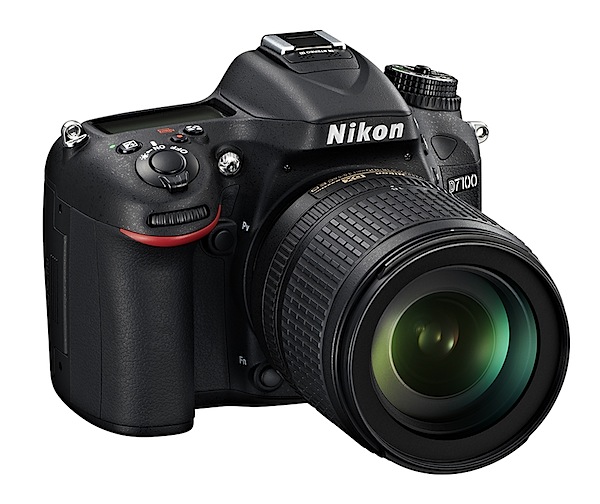
An attractive camera, aimed at the enthusiast, the Nikon D7100 follows on from the well-regarded D7000 which, I noted in my DPS review at the time, was described as a ‘professional-standard’ camera, not a professional one!

Nikon D7100 Review back.jpg

Nikon D7100 Review top.jpg

The company has bumped up the CMOS resolution to 24.1 effective pixels from the D7000′s 16.2 megapixels, reason enough to whet your appetite! However, don’t get too excited because the sensor is the same size, which means the pixels are working harder.

And that’s not all: the LCD screen is slightly larger and has increased resolution (1,229,000 pixels); the AF system performance has been lifted and given a higher low light ability; purists will appreciate the removal of an optical low pass filter. And more.

ISO range runs from 100-6400, reaching 25600 in expanded mode.

There is now a maximum rate of 6 fps continuous shooting at full resolution or 7 fps in cropped mode (4800×3200).

The camera can shoot in cropped mode for both stills and HD video. Stereo audio can be recorded via the inbuilt or an external mic.

The AF system has 51 points, with 15 of these sensors of the cross type.

You can attain spot white balance in Live View mode.

Maximum image size is 6000×4000 pixels, or 51x34m as a print.

HD video at 1920×1080 pixel resolution can be shot. If you fire off a still mid video recording, the latter will stop.

Two SD card slots can be used for overflow or backup; files can be copied between cards.

The camera is built with magnesium alloy and has water and dust resistance.

Images can be shared wirelessly with an attached WU-1a Wireless Mobile Adapter.

Possibly because I had not encountered a DSLR for some time or was a little in awe at the swell of positive comment this ‘un was generating. I took things gently at first: by that I mean I jumped in at the deep end and set about the task of shooting my ISO tests without a glance in the manual.

I dialled A on the PASM dial, adjusted the f stop, dropped the ISO mark to its start point — and shot the tests.

Very straightforward. Easy peasy. Which means there is a degree of comfortable user friendliness. Well done Nikon!

Handling

Immediately you know this is a DSLR if, like me, you’ve recently encountered a swag of compacts, MILCs etc: a bit on the bulky side, with a pronounced speed grip, but with a nice texture on the handling surfaces and evenly distributed weight, so it has an agreeable balance in the hand. With the review camera was the AF-S f3.5/24-85mm lens. Total weight: a manageable 1.2kg. Maybe a little heavy for handheld video shooting.
House and ocean.JPG

Pool.JPG

Sun shapes 2.JPG

Controls

You tend to forget the generous real estate in a DSLR, which allows largish, well-spaced control IDs. Another factor is the large, bright white ID texts used on control points.

Front: off to top left is the lens release button; to the right and flanking the lens are the flash release button, the BK button for bracketting exposure and a tiny two position lever to switching between manual and AF.

I also noticed that the lens barrel’s lever for auto and manual focus plus another on/off for VR (Vibration Reduction) crammed in very close to the manual/AF button. Suggest you get used to it!
Scene modes.JPG

Special effects.JPG

Top: at left is a generously sized mode dial with positions for auto, PASM, special effects (night vision, color sketch, high and low key etc), U1 and U2 custom settings and scene modes (portrait, child, close up, sunset etc) plus a position for flash off. I should point out that the various positions are secured by a detent button. Brilliant!

Flowers orig.JPG

Flowers color sketch.JPG

Flowers silhouette.JPG

Beneath the mode dial is a release mode dial offering shooting options: single shot, continuous low and high speeds, quiet shutter release, self timer and mirror lockup.

Still on top: the control panel display, on/off lever and shutter button, exposure compensation, the poorly placed video record button and one that allows you to directly format any card and swings you through the various metering options; just for’ard is the sub command dial. And a note: swing the on/off lever farther right and you illuminate the control display.

Rear and above the screen: replay button, trash and across to the right is the AE and AF lock button plus the main command dial.

Lower and left: menu, white balance (amongst other matters), enlarge display, image quality and size, ISO, the i button to change settings such as image size and quality, screen brightness etc.

To the right: focus selector lock then, lower down, are the Live View button and display options.

All in all, quite comprehensive. Many of them you will pick up in the early hours of ownership but I do suggest some trial shooting with manual firmly in hand in the aim of making your camera-person interface intuitive.
Menu 1.JPG

Menu 2.JPG

Menu 3.jpg

The viewfinder menu system is typically Nikon: comprehensive and clear.

Nikon D7100 ISO Tests

Nikon D7100 ISO 100.JPG

Nikon D7100 ISO 400.JPG

Nikon D7100 ISO 800.JPG

Nikon D7100 ISO 1600.JPG

Nikon D7100 ISO 3200.JPG

Nikon D7100 ISO 6400.JPG

Nikon D7100 ISO 12800.JPG

Nikon D7100 ISO 25600.JPG
Only at the ISO 6400 level does quality begin to drop off in terms of sharpness and noise.

ISO 12800 equivalent: noise up but still useable.

ISO 25600 equivalent: noise and image sharpness make this level a no-no.

Nikon D7100 Review Verdict

Quality: excellent as you would expect, with an exceptional range.
Why you would buy the Nikon D7100: an affordable DSLR with many bells and whistles.
Why you wouldn’t buy the Nikon D7100: maybe your ambition is to shoot full frame.

A well-priced DSLR with many pro features makes this number an ideal enthusiast camera.

I only question the APS-C format for those who want to make really big images or perform severe cropping. But it will sure please many a keen photographer unwilling or uncashed enough to dive into the full frame market.
Should sell by the truck load.

Nikon D7100 Specifications

Image Sensor: 23.5×15.6mm CMOS. 24.1 million effective pixels.
Metering: Multi, centre-weighted, averaging and spot.
A/D processing: 14-bit.
Lens Mount: Nikon F.
Exposure Modes: Auto, Program AE, shutter and aperture priority, manual.
35 SLR Lens Factor: 1.5x.
Shutter Speed: Bulb, 30 to 1/8000 second. Flash X-sync: up to 1/250 sec.
Continuous Speed: 5-7fps.
Memory: SD/SDHC/SDXC cards in two slots.
Image Sizes (pixels): 6000×4000 to 2400×1344. Movies: 1920×1080 to 1280×720.
Viewfinders: Eye level optical pentaprism and 8cm LCD (1,228,000 pixels).
File Formats: NEF (RAW), JPEG, NEF (RAW)+JPEG, MPEG4.
Colour Space: Adobe RGB, sRGB.
ISO Sensitivity: Auto, 100 to 6400 with expansion up to ISO 25,600.
Interface: USB 2.0, AV, HDMI mini, DC input, external stereo mic, remote, audio in- and output.
Power: Rechargeable lithium ion battery, AC adaptor.
Dimensions: 136x107x76 WHDmm.
Weight: Approx. 765 g (with battery and card).
Price: Get a price on the Nikon D7100 (body only) or Nikon D7100 with 18-105mm f/3.5-5.6 AF-S DX VR ED Nikkor Lens.

Post originally from: Digital Photography Tips.

Check out our more Photography Tips at Photography Tips for Beginners, Portrait Photography Tips and Wedding Photography Tips.

Nikon D7100 Review

Digital Photography School

 
Comments Off on Nikon D7100 Review

Posted in Photography


Nikon Coolpix A Review

24 Sep

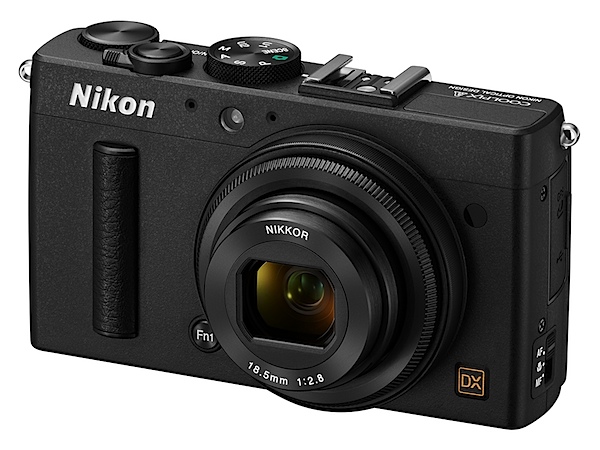
Nikon Coolpix A BK_front34l_lo.jpgMy how the game has changed. A few months ago everyone was agog (and still are!) with maxi zoom cameras. Now it seems a few major makers seems to be intent on feeding the market with large aperture, fixed focal length cameras. Among them: Ricoh, Sony, Fujifilm, Sigma.

I’ve used quite a few of these and have to admit their effective use demands quite a bit of restraint and understanding. There’s no point in venturing out to a sports event with the desire to catch superb, close up on-field action; similarly, there’s no joy in banging away on animal and kiddie shots as they duck and weave in an attempt to foil the photographer’s intent; likewise, water-borne subject matter where you have little control of the camera-to-subject distance.

These specialist cameras come into their element where the photographer has complete control: portraits, people shots in general, landscapes, interiors and so on. Another use for them is to go ‘commando’ and hold the camera out from your body, roughly aiming at your target, banging away when you think you’ve caught a ‘live’ one!

Their main attraction is that the photographer can work with fewer concerns to distract him or her: no zoom to worry about (or be distracted by!); just set the aperture and shutter speed … and go shoot!

Where they really sing and dance is where the sensor is on the large side, as with this camera. Another factor (hopefully) is where the camera maker has installed an above average quality lens.
Nikon Coolpix A_BK_back.jpg

Nikon Coolpix A_BK_top_lo.jpg

Nikon Coolpix A_CMOS.jpg

The Nikon Coolpix A has a largish CMOS sensor, in DX format, sized as 23.6×15.7mm, or nearly half the original 35mm frame.

The f2.8 lens is fast-ish and has a 35 SLR equivalent focal length of 28mm that is, to my mind, an ideal focal length for fixed lens photography.
Dee Why church int 2.JPG

The lens has a seven-blade iris diaphragm which avoids the artefacts captured by odd-shaped lens irises, capturing natural out of focus blurs and highlights.

The 16.2 megapixel capture creates a maximum image size of 4928×3264, enough to make a 42x28cm print. You can capture in JPEG or NRW (RAW) images at 14-bit depth.

Video? Full HD MPEG4 video at 1920×1080 pixel resolution. Due to the unusual video recording arrangement (see below), you can’t shoot stills mid video.

Nikon Coolpix A Features

The magnesium and aluminium alloy body is accompanied by a small leather speed grip patch at the right edge of the body and the rear corner.

The camera is without an optical low-pass filter, so expect superior rendering performance and images with superior resolution.

The ISO range runs up to 25600, thanks to an expansion routine.
The camera has in-camera movie editing and you can save a single frame as a still JPEG image.

Continuous shooting at approximately 4fps.
Flowers.JPG

Nikon Coolpix A Controls

Nikon has taken an unusual route to external control points, some of which may take a bit of getting used to.

First up, there is a function button tucked away beneath a corner of the lens; to this can be assigned such functions as AE and AF lock, RAW capture, AF etc.

The lens itself has a focus ring which comes in to play when you select manual focus from a three position selector (other positions: AF and macro). The camera includes autofocus with manual override: when the shutter button is held halfway down and the focus ring is turned the camera focuses automatically.

Top deck: at left is the flash pop up trigger; further right is the mode dial with auto, PASM positions, scene modes (portrait, candle light, silhouette etc), U1 and U2 custom settings.

The shutter button also stands in as the power button; you swing the lever and power turns on, then you shoot, then swing the lever again to turn off the power.

Flanking the above is the command dial to cycle through menu choices.

Rear: at left of the LCD screen is the exposure compensation button, ISO access, screen zoom, screen enlargement in playback, among other options.

To the right of the screen is replay, menu, four way jog dial, an ‘i’ button which takes you into an information display of current settings.

I have to say I did not find the whole arrangement intuitive. To get my head around some of the functions took a careful study of the manual.

For example: there’s no red video record button. To shoot video you tap the ‘i’ button and choose that mode. To get out of it you enter the menu and choose single frame shooting. Far from an ideal arrangement!
Menu 1.jpg

Menu 2.jpg

Menu 3.jpg

The viewfinder menu is extensive and one that I had no quibble with.

To me, one of the joys of a fixed focal length lens is simplicity of use. The menu and options arrangement make life unnecessary difficult on the shooting front.

Nikon Coolpix A Accessories

Some nice new add-ons could well heighten your experience with the Coolpix A.

One of these is an optical viewfinder DF-CP1, with a high eye point, approximately 90% frame coverage and 0.52x magnification.

The camera further supports accessories for Nikon SLRs, such as Nikon Speedlights and the GPS Unit GP-1. The wireless mobile adapter WU-1a can also be used, for easy uploading and sharing of captured images and movies to a smart device.

Nikon Coolpix A ISO Tests

Nikon Coolpix A ISO 100.JPG

Nikon Coolpix A ISO 400.JPG

Nikon Coolpix A ISO 800.JPG

Nikon Coolpix A ISO 1600.JPG

Nikon Coolpix A ISO 3200.JPG

Nikon Coolpix A ISO 6400.JPG

Nikon Coolpix A ISO 12800 equiv.JPG

Nikon Coolpix A ISO 25600 equiv.JPG

A good result all the way to ISO 6400. It was only when we reached above that level and the camera resorted to ISO expansion did we see evidence of noise and loss of definition.

At ISO 25600 equivalent the shots would be ‘acceptable’, depending on subject. But plenty of noise!

Startup Time

It took about two seconds from power on to first shot; follow-ons came in at a little over a second apart.

Distortion

Very slight barrel distortion was evident at frame edges.

Dee Why beach 1.JPG

Nikon Coolpix A Review Verdict

Quality: above average in resolution and colour quality but notice the edge vignetting in the beach shot.

Why you would buy the Nikon Coolpix A: you like the idea of a fixed focal length lens.

Why you wouldn’t: fiddly control points; I have encountered better stabilisers when shooting video.

Nothing more to say except that this one would make an excellent camera, especially when paired to a fully accessorised Nikon DSLR.

Nikon Coolpix A Specifications

Image Sensor: 16.2 million effective pixels.
Metering: Multi, centre-weighted and spot.
Sensor: 23.6×15.7mm CMOS.
Lens: Nikkor f2.8-5.6/18.5mm (28mm as 35 SLR equivalent).
Exposure Modes: Program AE, shutter and aperture priority, manual.
Shutter Speed: 30 to 1/2000 second.
Continuous Speed: 4fps.
Memory: SD/SDHC/SDXC cards.
Image Sizes (pixels): 4928×3264 to 2464×1632. Movies: 1920×1080, 1280×720, 640×480.
Viewfinder: 7.6cm LCD (921,000 pixels).
File Formats: JPEG, NRW (RAW), MPEG4.
ISO Sensitivity: Auto, 100 to 25600 (with boost).
Interface: USB 2.0, HDMI mini, accessory.
Power: Rechargeable lithium ion battery, AC adaptor.
Dimensions: 111×64.3×40.3 WHDmm.
Weight: 299g (inc battery and SD card).
Price: Get a price on the Nikon Coolpix A at Amazon.

Post originally from: Digital Photography Tips.

Check out our more Photography Tips at Photography Tips for Beginners, Portrait Photography Tips and Wedding Photography Tips.

Nikon Coolpix A Review


Digital Photography School

 
Comments Off on Nikon Coolpix A Review

Posted in Photography


Nikon creates Nikkor 1 AW 10mm f/2.8 and 11-27.5mm f/3.5-5.6 lenses

19 Sep

AW10_BK_1.png

As part of its ‘AW’ launches, Nikon has announced the Nikkor 1 AW 10mm f/2.8 and 1 AW 11-27.5mm f/3.5-5.6 lenses. Both lenses are existing designs built into waterproof, shockproof housings and are only compatible with the Nikon 1 AW1 body. The 1 AW 10mm f/2.8 offers a 27mm equivalent field-of-view and will be sold separately for around $ 200/£300. The Nikkor 1 AW 11-27.5mm zoom offers a rather limited 30-74mm equivalent range and will only be available as part of a kit with the camera – meaning there are no image-stabilized AW lenses yet.

News: Digital Photography Review (dpreview.com)

 
Comments Off on Nikon creates Nikkor 1 AW 10mm f/2.8 and 11-27.5mm f/3.5-5.6 lenses

Posted in Uncategorized


Nikon 1 AW1 is world’s first rugged, waterproof digital mirrorless

19 Sep

AW1_11_27.5_WH_front.png

Nikon has announced the 1 AW1, the world’s first rugged, waterproof mirrorless interchangeable lens camera. It has also made AW versions of its 11-27.5mm f/3.5-5.6 and 10mm f/2.8 lenses that are both shock and waterproof. The Nikon 1 AW1 features similar underlying specifications to the J3, featuring a 14MP sensor capable of shooting at up to 15 fps with continuous AF (60 fps with focus fixed), but is waterproof to a depth of 15m (49ft) and shockproof from a height of 2m (6.6 ft). It will cost around $ 800/£750 with 11-27.5mm lens and $ 1,000/£950 with the 10mm f/2.8 added to make a two-lens kit.

News: Digital Photography Review (dpreview.com)

 
Comments Off on Nikon 1 AW1 is world’s first rugged, waterproof digital mirrorless

Posted in Uncategorized


Nikonos reborn? Our first impressions review of the submersible Nikon AW1

19 Sep

News2.jpg

The Nikon 1 System has been around for a couple of years now, but the emergence of the AW1 signals a radical departure from what has been the norm. Functionally very similar to the 14MP J3 which Nikon announced earlier this year, the AW1 is waterproof to 15m (49ft), shockproof from 2m (6.6 ft), and freezeproof. It’s being announced alongside two equally rugged lenses, and a range of colorful silicone skins for underwater and wet weather use. We had the opportunity to use the new camera recently, and we’ve put together a first impressions review covering its design, operation and key features. Click through for a link. 

News: Digital Photography Review (dpreview.com)

 
Comments Off on Nikonos reborn? Our first impressions review of the submersible Nikon AW1

Posted in Uncategorized


Nikon reveals LD-1000 LED movie light for 1 System and Coolpix

05 Sep

LD-1000_J3_DB.png

Nikon has announced an LED movie light for its Coolpix and 1 System cameras. We could swear the LD-1000 was already available, but maybe that’s because we’ve been seeing mockups of it attached to 1 System cameras at tradeshows for a couple of years. The lamp is fairly compact and uses LEDs behind a diffusion panel for soft, even light. Although it comes with a bracket to mount it onto compatible cameras, the LD-1000 can be hand-held for more control. It will be available next month at an MSRP of $ 99.95.

News: Digital Photography Review (dpreview.com)

 
Comments Off on Nikon reveals LD-1000 LED movie light for 1 System and Coolpix

Posted in Uncategorized


Nikon unveils tiny Coolpix S02 for ‘trendy individuals’

05 Sep

S02_SL_front34l_lc_DB.png

Nikon has taken the wraps off the Coolpix S02 – a tiny metal-bodied 13MP compact camera with a smartphone-sized CMOS sensor and 2.7-inch touch-sensitive LCD. The entire package, built around a 3x (30-90mm equiv) zoom lens is small enough to fit in the palm of your hand. In possibly the most cringeworthy press release we’ve seen from a major manufacturer this year, Nikon describes the S02 variously as ‘stylish’, ‘hip’, and ‘fashionable’, and suggests that it would make an ideal gift for a ‘trendy individual’. If this is up your street, note that the S02 will be available later this month in no less than three colors, at an MSRP of $ 179.95.

News: Digital Photography Review (dpreview.com)

 
Comments Off on Nikon unveils tiny Coolpix S02 for ‘trendy individuals’

Posted in Uncategorized


The same but different: Nikon announces Coolpix P7800 with EVF

05 Sep

P7800_front_on_DB.png

Nikon has announced the Coolpix P7800, which sits at the top of its compact camera lineup, replacing last year’s P7700 as flagship zoom camera. The P7800 is extremely similar to its nominal predecessor, the most notable change being the addition of an electronic viewfinder. Other specifications are more or less unchanged. The camera is built around a 28-200mm (equivalent) F2-4 zoom lens, and features a fully-articulating rear LCD screen, and plenty of manual control and exposure options, at an expected MSRP of $ 549.99. Click through for pictures and Nikon’s press release.

News: Digital Photography Review (dpreview.com)

 
Comments Off on The same but different: Nikon announces Coolpix P7800 with EVF

Posted in Uncategorized


Sharp thinking: Nikon creates selectable strength low-pass filter

30 Aug

shared:NikonLogo.png

Nikon has patented a technology that can adjust a camera’s low-pass (AA) filter based on the situation. By using an electronically controlled liquid crystal panel, the AA filter can either be turned on and off, or set to ‘normal’ or ‘high’ intensity. The first design would allow for a D800 that become a D800E at the push of a button. The second design would have a mild anti-aliasing effect for stills, and a stronger effect to reduce moiré in movies. More details on this exciting development after the link.

News: Digital Photography Review (dpreview.com)

 
Comments Off on Sharp thinking: Nikon creates selectable strength low-pass filter

Posted in Uncategorized


Nikon cuts 2013 sales forecast citing poor mirrorless camera sales

09 Aug

shared:NikonLogo.png

Nikon has lowered its sales and revenue estimates for this year, prompting a rethink of its 1 Series mirrorless cameras. Nikon cites poor market conditions, a large drop in compact camera sales and, most interestingly, a ‘deceleration’ in mirrorless camera sales. Nikon’s measures against these changing conditions include accelerating production of entry-level DSLRs and ‘reconsider[ing] product planning’ of their Nikon 1 mirrorless camera system. Follow the link for additional details.

News: Digital Photography Review (dpreview.com)

 
Comments Off on Nikon cuts 2013 sales forecast citing poor mirrorless camera sales

Posted in Uncategorized