RSS
 

Posts Tagged ‘Nikon’

CP+ 2017: Not special enough for you? Nikon shows off 100th Anniversary D5 and D500

25 Feb

CP+ 2017: Nikon shows off 100th Anniversary D5 and D500

Nikon is celebrating its 100th anniversary this year, and as part of the celebrations, the company has unveiled special editions of its professional D5 and D500, alongside the ‘holy trinity’ of F2.8 zooms.

Here’s the D5, in its special gunmetal finish and special gunmetal flight case, with special body cap, special shoulder strap and special booklet, full (presumably) of special information.

CP+ 2017: Nikon shows off 100th Anniversary D5 and D500

As special editions go, this one is admirably restrained.

CP+ 2017: Nikon shows off 100th Anniversary D5 and D500

Here’s a boring old normal D5 (yawn) pictured with the special 100th anniversary strap. Nikon has released precisely zero information about any of these special editions and accessories as far as we can tell, so it’s unclear whether this strap will be available for general sale. 

CP+ 2017: Nikon shows off 100th Anniversary D5 and D500

Not to be left out, here’s the D5’s baby brother, the D500 in a matching gunmetal finish, inside a matching, but slightly smaller gunmetal flight case. So special. So limited. 

CP+ 2017: Nikon shows off 100th Anniversary D5 and D500

Bow down before the ‘holy trinity’. Here are the 14-24mm F2.8, 24-70mm F2.8 and new 70-200mm F2.8E, in matching special finishes, in a matching special flight case. Even the hoods look like they’ve been given a lighter finish, but its very hard to tell from behind the glass display case. At any rate, it’s special. There’s absolutely no doubt about that. 

CP+ 2017: Nikon shows off 100th Anniversary D5 and D500

Again, we have no idea whether this exploded 70-200mm F2.8E will be available to purchase as a collectable item, and if so how much you’ll pay. We’d hope it will cost considerably less than the regular lens though, because this very special anniversary edition is entirely useless for photography. Why? Because it’s been cut in…

Sorry, wrong article.

CP+ 2017: Nikon shows off 100th Anniversary D5 and D500

As part of its 100th anniversary, Nikon is (literally) showcasing some key products from the past 100 years. The original Nikon F is in there, alongside an F4 and a Nikonos, and of course the D1. Also included is a Df. Maybe by the time Nikon’s 200th anniversary comes around they’ll have released a Df2.

Articles: Digital Photography Review (dpreview.com)

 
Comments Off on CP+ 2017: Not special enough for you? Nikon shows off 100th Anniversary D5 and D500

Posted in Uncategorized


Nikon PC Nikkor 19mm F4E sample gallery

20 Feb

The Nikon 19mm F4 is a wide-angle tilt-shift, or as Nikon calls it, Perspective Control lens. It offers the ability to independently rotate the direction of tilt or shift, making it the perfect tool for keeping those parallel lines straight when working with architecture or interiors. We also took it for a bit of ‘freelensing’ and got experimental with the tilt function.

Take a look at what is possible when you’re given complete control in our real world sample gallery.

See our Nikon PC Nikkor 19mm F4E ED sample gallery

$ (document).ready(function() { SampleGalleryStripV2({“galleryId”:”7086018100″}) })

Sample photoSample photoSample photoSample photoSample photo

Articles: Digital Photography Review (dpreview.com)

 
Comments Off on Nikon PC Nikkor 19mm F4E sample gallery

Posted in Uncategorized


Throwback Thursday: the Nikon D80

16 Feb
Ten megapixels ought to be enough for anybody.

It was ten years ago this past September that Nikon introduced its 10 megapixel, twin-dial D80 DSLR. It was also ten years ago that my dad picked up a shiny new example of one to act as a backup to his workhorse studio camera, the D200. I didn’t really know all that much about photography at the time, but that didn’t stop me from drooling over it.

Apart from the increase in resolution, the D80 was otherwise a significant step up from the D70S that it effectively replaced. It offered a smaller, lighter body, bigger and brighter viewfinder, larger rear screen and an all-new autofocus system borrowed from the D200. Unfortunately, it lost out on the CCD electronic shutter option from the D70S, and the flash sync speed dropped from 1/500 sec to 1/250 sec.

After finally getting my hands on one, the D80 quickly became my constant companion, accompanying me on a six week trip to Nepal in 2010. I wish I had brought a faster lens, though. Nikon AF-S 18-135mm F3.5-5.6. ISO 1600, 1/15 sec, F3.5. Photo by Carey Rose

Years later, my dad found himself with a D300, and I found myself borrowing the D80 for the beginning photojournalism class I’d signed up for. I never gave it back. He has since forgiven me for that.

The D80 was a near-perfect camera to really get into photography with. The twin dials made it exceptionally easy to control, it was built well, and in good light, took great images. But as I saw my friends around me graduating to new D700’s, 5D Mark II’s and even D90’s, my little D80 began to feel a bit inadequate. Since I was basically living off of student loans at the time, I had a hard time justifying any upgrade.

I still see people raving about the color and tonality of older CCD sensors, and in good light, the D80 did well in this regard even at moderately high ISO values. Shame about the (very) clipped highlights, though. Nikon AF-D 80-200mm F2.8 ‘push-pull.’ ISO 800, 1/320 sec, F4. Photo by Carey Rose

As a photojournalism student in northern Washington state in the winter time, there wasn’t an abundance of great light…or any light…during much of my time shooting for school publications. So, while the D80 could reach ISO 3200, it was so noisy that it up being a setting that I reserved for dire emergencies only.

The D80 could also shoot continuously at 3 fps, which more than respectable when it arrived in 2006, but by the time I began shooting more seriously in 2010, newer models, such as the D7000, had arrived that could shoot at double that speed (to say nothing of existing D300 and D200 models).

The concert venues in Bellingham didn’t always have the best lighting, either. Through some strange process, the EXIF doesn’t show the ISO, but I’d be willing to bet I was bumping up to 3200 here. Nikon AF-D 80-200mm F2.8 ‘push pull.’ ISO 1600-3200, 1/100 sec, F2.8. Photo by Carey Rose

Okay, so these days the D80 doesn’t really hold up as an ideal action or low light camera. That said, working around these limitations proved educational to some degree – instead of firing away at 8 fps during a basketball game, I would do my best to anticipate peak action and capture it with one or two quick frames. Without any stabilized lenses or in-body stabilization, I really had to work on my shooting technique to take sharp shots with slower shutter speeds.

Looking back through a handful of images from my early photographic days with the D80 reminded me of something that I too often forget, especially in my current career. While it’s true that in many situations a nicer, newer camera would have made certain photographs easier for me to get, the D80 wasn’t really the limiting factor. I was.

The D80 was even there for when I photographed my first wedding. Nikon AF-D 80-200mm F2.8 ‘push pull.’ ISO 400, 1/1600 sec, F2.8. Photo by Carey Rose

I don’t really need the D80 these days to be honest, but I hold onto it as a fun camera to go out with every so often. And as with so many of these older APS-C DSLRs, it can be had at an absolute bargain these days if you’re chiefly concerned with just taking pictures instead of examining a spec sheet. The D80 is still a highly capable camera for beginners and advanced users alike.

What was the first camera you acquired when you got ‘serious’ about photography? Let us know in the comments!

Read our full Nikon D80 Review

If you’re okay carrying a medium-sized DSLR, the D80 still makes for a great, low-investment travel camera. Nikon AF-S 35mm F1.8G DX. ISO 100, 1/1600 sec, F2.8. Photo by Carey Rose

Nikon D80 review sample gallery

$ (document).ready(function() { SampleGalleryV2({“containerId”:”embeddedSampleGallery_0484646418″,”galleryId”:”0484646418″,”isEmbeddedWidget”:true,”standalone”:false,”selectedImageIndex”:0,”startInCommentsView”:false,”isMobile”:false}) });
Articles: Digital Photography Review (dpreview.com)

 
Comments Off on Throwback Thursday: the Nikon D80

Posted in Uncategorized


Nikon cancels DL compact series citing high development costs

14 Feb

Nikon has officially put an end to the DL series. Announced just under a year ago, the three DL compacts would have had 1″ sensors. Nikon missed its June target ship date, citing problems related to the image processor. Now, Nikon says that the development costs had become too great to continue. A statement released today also mentions the company’s concern that it wouldn’t sell enough units to make up for the increased costs, due to a slow down in the market.

That wasn’t the only piece of bad news from Nikon this morning. The company released its third quarter financial results and due to costs of a ‘voluntary retirement’ program it initiated last year and semiconductor inventory write-offs, has announced an ‘extraordinary loss’ from April to December of 2016. The impact of this is reflected in an updated forecast for the financial year ending in March, lowering predictions of net sales and operating income. The statement acknowledges a ‘sluggish and shrinking’ market for digital cameras.

Articles: Digital Photography Review (dpreview.com)

 
Comments Off on Nikon cancels DL compact series citing high development costs

Posted in Uncategorized


Nikon D5600 sample gallery

03 Feb

New to the US (but not to the rest of the world), the Nikon D5600 builds on the strengths of its mid-range predecessor. Its well-regarded 24MP APS-C sensor is complemented now by SnapBridge (a Wi-Fi/Bluetooth/NFC combo), an improved touchscreen experience and a new time-lapse feature. We’ve had the D5600 on hand long enough to put together a preliminary sample gallery.

$ (document).ready(function() { SampleGalleryStripV2({“galleryId”:”8757803421″}) })

Sample photoSample photoSample photoSample photoSample photo

See our Nikon D5600 sample gallery

Articles: Digital Photography Review (dpreview.com)

 
Comments Off on Nikon D5600 sample gallery

Posted in Uncategorized


Throwback Thursday: doing the twist with the Nikon Coolpix 950

03 Feb

Few cameras in the early days of consumer digital photography are as legendary as the Nikon Coolpix 950. This graphic pulled from the DPReview archives says it all:

In case you’re wondering, the answer was ‘yes’. It earned a ‘Highly Recommended’ award, with site founder Phil Askey calling it an ‘important camera at an important time for digital photography.’

The thing about the Coolpix 950 that grabbed the most attention was, of course, its rotating lens (or was it the body that rotated?). It wasn’t Nikon’s first camera to use that design: the original Coolpix 900 has that honor. 

The lens was reasonably fast (F2.6-F4), though its equivalent focal length of 38-115mm didn’t make it a great choice for wide-angle shooters (and forget about selfies which, thankfully, didn’t become a fad for another 15 years or so.) Nikon did offer accessory lenses for the 950: a telephoto adapter that doubled the focal length, a wide-angle adapter that dropped it to 24-72mm and a fisheye adapter with a 183° field-of-view.

The CP950 had a whopping 1/2″, 2.1 Megapixel CCD, which saved those 1600 x 1200 images to a CompactFlash card. Nikon made a lot of noise about the camera’s autofocus system, boasting that it had 4,746 steps, allowing it to be ‘unerringly accurate.’ The CP950 could shoot continuously at a speedy 1.5 fps and featured Best Shot Selector, a feature which Nikon cameras offered for many years, which took three shots in a row and picked the sharpest one. Another feature that was a big deal then was automatic file numbering.

The Coolpix 950 had a magnesium-alloy frame and feels as solid as a modern-era enthusiast camera.  As you can see, it had a built-in flash. What you can’t see is that it also had a flash sync terminal, and Nikon sold a flash bracket for off-camera Speedlights.

As with most cameras those days, it had an optical viewfinder along with a 2″, 130k-dot LCD that doesn’t look very good in 2017. The physical controls and menus may have been competitive then, but they’re baffling now.

The CP950 was priced at $ 899 back in 1999, which is just under $ 1300 in 2017. That would make this Coolpix one of the most expensive fixed-lens cameras on the market. While it’s hard to imaging paying that now, back in ’99 the Coolpix 950 was definitely worth the price.

Read DPReview’s Coolpix 950 review

Articles: Digital Photography Review (dpreview.com)

 
Comments Off on Throwback Thursday: doing the twist with the Nikon Coolpix 950

Posted in Uncategorized


First samples from the new Nikon 70-200mm F2.8E FL ED VR

02 Feb
ISO 100, 1/400 sec at F4.5. Photo by Dan Bracaglia

The Nikkor 70-200mm F2.8E FL ED VR is the third version of Nikon’s workhorse telezoom. Most of us on staff have spent a bit of time with the previous two versions, and the latest iteration features a new optical design, improved VR and an electromagnetic diaphragm.

We have not had it in the office long but the impression already is that it’s both impressively sharp and well-stabilized. In short, it’s going to appeal to a wide range of photographers. We’ll be sure to add additional images to this gallery once we’ve had more time with the lens, but for now take a look at some initial samples.

Articles: Digital Photography Review (dpreview.com)

 
Comments Off on First samples from the new Nikon 70-200mm F2.8E FL ED VR

Posted in Uncategorized


A Couple of Overviews of the New Nikon D3400

26 Jan

Last fall an update to the D3300 was released, the new Nikon D3400. I looked around and was able to find a couple of videos that go over the features and how it compares to the D3300, and also to the relatively new Canon T6.

The Nikon D3400 Review by Chris Winter

In this video photographer, Chris Winter goes over the features in the Nikon D3400 as compared to upgrades from the D3300, and some pros and cons. He mentions the new Nikon app Snapbridge as one of them, which allows you to receive photos to your smartphone directly from the camera without wifi.

Nikon D3400 versus the Canon T6

This next video compares the Nikon D3400 and the Canon T6 in several areas. See which one Chris rates on top:

  • Size and weight
  • LCD screens
  • Menus
  • Wireless integration
  • Video
  • Battery life
  • Burst mode
  • Autofocus

Field test of the Nikon D3400

In this last video you can see the D3400 in use in the field in more practical situations, and how it performs.

Which camera is for you?

So if you are looking for an entry-level DSLR the Canon T6 or the Nikon D3400 might be for you. Have you given them a look? Which fits your needs and why? Tell us your thoughts in the comments below.

  • Shop for the Nikon D3400 on Amazon.com or on B&H Photo
  • Shop for the Canon T6 on Amazon.com or on B&H Photo

Note: The D3400 also made this list: The 19 Most Popular DSLRs Among our Readers

googletag.cmd.push(function() {
tablet_slots.push( googletag.defineSlot( “/1005424/_dPSv4_tab-all-article-bottom_(300×250)”, [300, 250], “pb-ad-78623” ).addService( googletag.pubads() ) ); } );

googletag.cmd.push(function() {
mobile_slots.push( googletag.defineSlot( “/1005424/_dPSv4_mob-all-article-bottom_(300×250)”, [300, 250], “pb-ad-78158” ).addService( googletag.pubads() ) ); } );

The post A Couple of Overviews of the New Nikon D3400 by Darlene Hildebrandt appeared first on Digital Photography School.


Digital Photography School

 
Comments Off on A Couple of Overviews of the New Nikon D3400

Posted in Photography


Dear Nikon: Please let us keep the 20mm F1.8G, Love, Dan

20 Jan

An open letter to Nikon 

Dear Nikon, 

Dan Bracaglia here from DPReview.com. It’s been brought to my attention (mostly due to the nagging of coworkers) that the Nikkor 20mm F1.8G lens you’ve loaned us needs to be returned to Nikon ASAP. I guess this makes sense, seeing as we’ve had it for about 20 months now. But perhaps I can convince you, beyond a reason of a doubt to allow us just a little more time with it. I ask because I truly love this lens. And here’s why:

There’s no such thing as a perfect lens, but a lens can certainly be the right tool for a specific job, and to that extent, it’s perfect. Your 20mm F1.8G is just that for me.

I first moved to Seattle about five months before you shipped DPReview the lens. I’d previously been living in New York City and photographing live music. Back then I largely shot with a 17-35mm F2.8 (the lens motor has since died) and an on-camera flash. It was the perfect setup for the rowdy punk rock shows I frequented.

ISO 12,800, 1/160 sec at F2. Edited to taste in Lightroom.

But, after moving I realized I was going to have to switch up my music rig. I became aware that shows in small and mid-size venues in Seattle were well-documented, but shows happening in less traditional spaces, like friends’ basements, living rooms or art/community centers were often not photographed (despite being well-attended). So I launched a photoblog with the goal of documenting my local music community.

Out of respect for these intimate environments, I vowed to leave my flash at home and shoot available light only. And what could be better for documenting in the dark than fast primes? 

When shooting shows with available light, three things matter most to me in a lens: its size/weight (too large = too intrusive), it’s brightest aperture and its focus speed. Your 20mm, Nikon, is a perfect balance of all these things. A look at the Sigma 20mm F1.4 to gives an idea of how big and cumbersome a brighter 20mm lens could be.

And when paired with my D750, the combination is fast-to-focus (using the center area) even in conditions that are often too dark for me to physically see. This is incredibly impressive and useful. Even if I can’t tell whether or not my subject is in focus, I need to be able trust that my camera and lens can. Simply put, when used together the D750 and 20mm F1.8G sing.

ISO 12,800, 1/160 sec at F1.8. Edited to taste in Lightroom.

I’ve been mostly shooting it alongside your marvelously cheap 50mm F1.8D, which was actually my favorite Nikon lens (shocking!) before I got my paws on the 20mm 1.8G. I use the 50mm for detail shots and the 20mm to capture the tone of the room. Both are coat-pocketable and don’t add much bulk to the D750. Moreover both are sharp enough for me by F2.2 and fast-to-focus. The only thing I don’t like about the 20mm against the 50mm is the price, which is much more than the quintessential fast 50. 

That’s where the loan comes in. I know, I know, I’m lucky to be able to have access to loaner gear (we do ALSO use the lens for camera testing and sample image shooting), it’s just hard to justify spending $ 800 on a lens that will likely be soaked in beer within two weeks of my purchase (not that it’s ever happened to your 20mm…). I suppose I should be grateful for having had the chance to use a piece of gear and fall in love with it before buying it. After all, the inherent danger of using loaner gear from any brand, is getting attached.

At the the end of the day, maybe I should look at the $ 800 price tag as less about the cost of the lens and more about the price of being able to continue to document something I love, without drawing much attention. And to that regard, I owe it to myself, my community and you, to pony up and buy one. 

I’ll do that, but maybe after just one more loan extension?

Sincerely,

Dan Bracaglia

P.S. Anyone at Nikon want to purchase a slightly busted 17-35mm F2.8 for $ 800?

Articles: Digital Photography Review (dpreview.com)

 
Comments Off on Dear Nikon: Please let us keep the 20mm F1.8G, Love, Dan

Posted in Uncategorized


Review of the New Flagship DX Camera – The Nikon D500

20 Jan

Everyone thinks they need a full frame camera but are they really that much better? Most people feel the only reason they have cropped sensor cameras is because they can’t afford a full frame one. Then you have to wonder why Nikon have produced one that is not full frame and comes with an expensive price tag. So who would be interested in the new Nikon D500? There are a lot of people who would love this camera and what it has a lot to offer.

Earlier this year Nikon released the new flagship D500 camera as part of their DX range or cropped sensor line-up. It is fast and designed with a specific user in mind. It is also one of the first cameras Nikon has produced that is using Snapbridge, the new phone app that allows you to take photos and upload them to your phone for sharing on social media straight away.
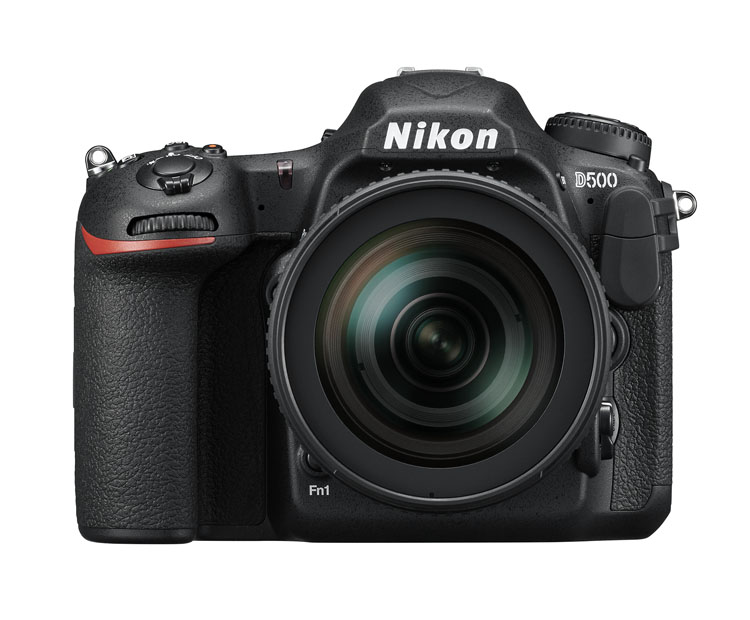
Nikon D500 review

The Nikon D500 – image courtesy of Nikon.

Price out the Nikon D500 on Amazon or B&H Photo’s site.

First impressions

Unlike many of the other DX cameras, it is quite large. People tend to think that cameras with cropped sensors are smaller, but the D500 is in the Pro range and you can see that just by looking at it. It looks like a camera that a professional photographer would use, and many indeed do.

One of the first things I noticed was how similar many of the controls and the layout is to the D800. In many ways, it seems like a cropped sensor version of that camera. This also means that most of the buttons are around the camera body, so you don’t have to keep going back to the menu to change settings. There are everywhere, but it doesn’t make it confusing. You can make changes without really having to stop and look at what you are doing.

Nikon D500 review

Sunset image shot with the Nikon D500.

If want to do long exposure photography there is a small blind in the viewfinder that will close to stop light leaking into your image. It means you never have to worry about whether or not you have the cover for it. You just need to remember to use it when doing long exposures. Very handy.

ISO and noise

The D500 is Nikon’s replacement for the popular D300 range that they stopping making a few years ago. The D300 was fast and great for many types of photography, however, the ISO range was not good. As soon as you increased the ISO the images became very noisy.

It also didn’t go very high, with ISO 3200 being the maximum. The D500 ISO goes up to 512,000, so it will get you images no matter the shooting conditions. The level of noise in the images is also significantly better and not as noticeable.

Review of the New Flagship DX Camera - The Nikon D500

Image shot using a tripod with the Nikon D500 at ISO 200.

Review of the New Flagship DX Camera - The Nikon D500

Image shot with the Nikon D500 hand held at ISO 6400.

Megapixels and image size

The camera is 20 megapixels, which is enough for most people. A RAW image is around 25 MB. Not as large as some cameras, but still large enough that you have to consider how you will store them. Jpegs are a lot smaller, but you don’t get as much information to work with as shooting RAW.

Battery

The battery is very similar to the battery for the D800 but it is a new version, so should only be used in the D500. If you have similar batteries for other cameras it is a good idea to mark them in some ways so they don’t get mixed up. You don’t want to be putting the wrong battery in the camera. While the battery is different the charger is the same.

The battery lasts a long time and you can safely go out for a day of shooting and not use much. Like most Nikon cameras you can go out and shoot for a few days without having to recharge it. Though that is dependent on how many photos you take. Of course, if you do a lot of chimping (image review on the camera) or use LiveView frequently the battery will run out faster. Likewise, if you’re shooting in the cold.

The batteries do typically last a long time as well. You can use a battery for quite a few years before you start noticing that it doesn’t last as long.

Remote shutter release
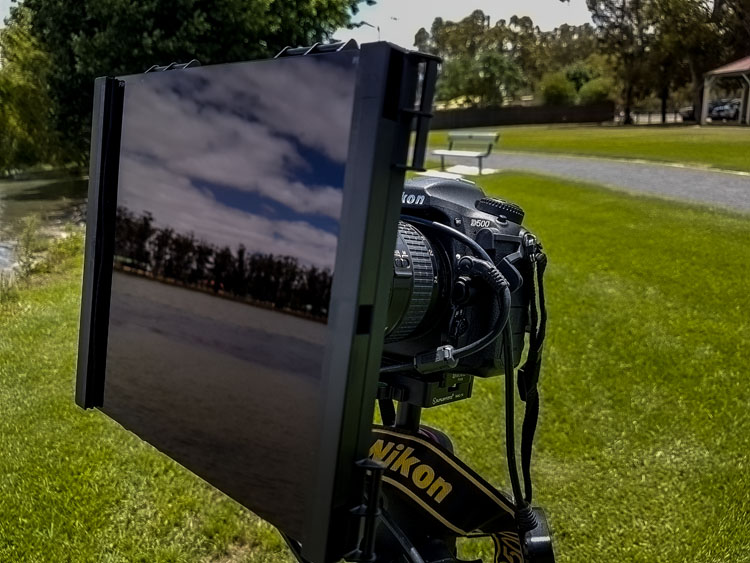
Review Nikon D500 DX camera

Using some ND filters and the MC-36 remote shutter release on the Nikon D500 for some long exposures.

When you are looking at a new camera you need to be aware of all the accessories and whether or not you will have to buy a lot of new ones. The remote shutter release that I purchased for the D300s, the MC-36, was fine for the D800, and it is also good to use on the D500. That makes it a good match for the gear I already have. It is something you need to consider anytime you are buying a camera, it isn’t just the expense of the camera, but what other equipment you may need as well.

Review Nikon D500 DX camera

A long exposure of some recently painted silos using the D500.

Focusing area

The focusing area takes up larger space in the Nikon D500 than it does in other bodies. It has the same focusing center as the Nikon D5, their top pro model, but on the cropped sensor of the D500. In practice, that means you can focus on subjects almost up to the very edges of the viewfinder. You can focus on a much larger area than other DX cameras.

If you want to use spot focusing, but have found it hard in the past because you couldn’t focus on subjects at the side, it is now possible to do that. Any camera that makes focusing easier for you has to be good.

Memory card


The D500 has two slots for memory cards. You can put an SD card in one, and the other is for XQD cards, which are reasonably new but only needed for a few Nikon cameras. It is mainly used in the higher end bodies that are fast and shoot a lot of frames per second, which is why the card is used. Normal cards would find it hard keeping up with the speed and writing the images. If you are taking photos at 10 frames a second it is important.

Apparently, you can buy the cards at all good camera stores. Though, you would also need a memory card reader for it as well.

Touchscreen

The screen at the back is a touchscreen which makes it easy to scroll through your images. It works a lot like your smartphone. You can make the images bigger or smaller and flip through them with your fingers.
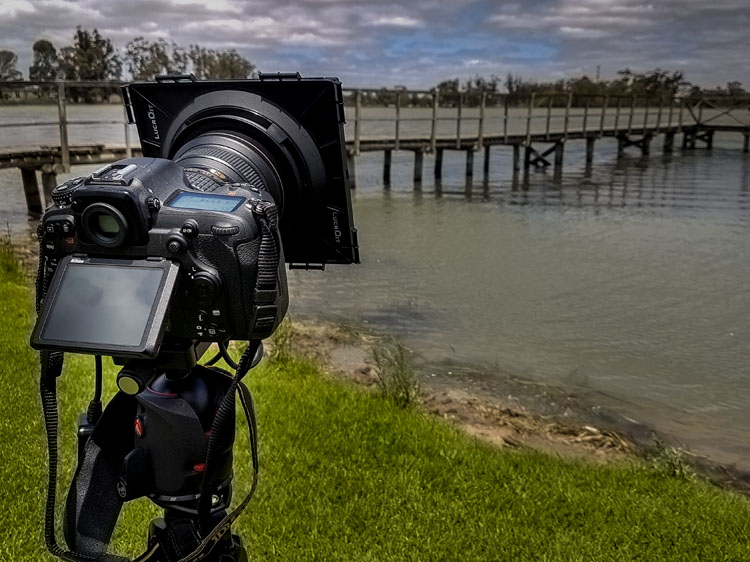
leannecole-nikon-d500-review-15

The back screen of the D500 can be moved for better viewing and is also a touchscreen.

Crop factor

The Nikon D500 has the 1.5x crop factor. Basically, that means that if you have a full frame lens, like the 70-200mm, when you use it on the D500 the lens becomes essentially like a 105-300mm. It is the advantage of using a DX camera body with high-quality lenses.
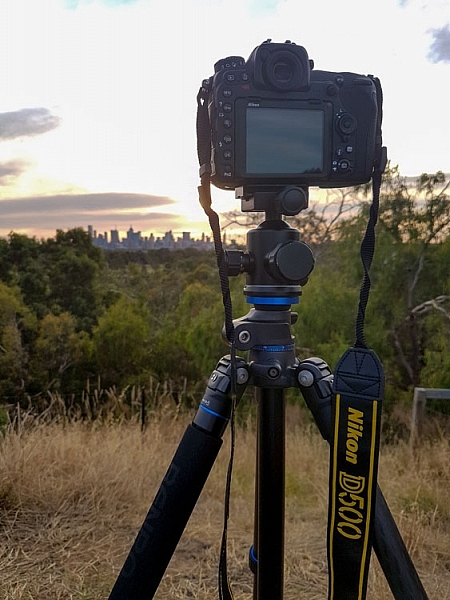
Nikon D500 review

It is all set up to take some sunset photos of the city of Melbourne.

Who is the Nikon D500 for?

The most likely person to buy this camera is someone who is interested in the 1.5x crop factor. Photographers who can’t afford those great big long lenses, but want to be able to get as close as they can to the action. Having the ability to make a 300mm lens go to 450mm is fantastic. The longer the telephoto lens, the more expensive it is, so the cropped sensor is great for that reason.

leannecole-nikon-d500-review-20

The sunset shot with the Nikon D500. The DX camera allowed me to get a lot closer with the 80-200mm, this was at 277mm.

Sports photographers would also be interested where speed and getting closer to the action is very important. Full frame is great, but to get a camera that is fast enough to shoot lots of frames per second you would need to spend around $ 6500 on a Nikon D5 or similar. If you don’t have that kind of money, $ 2000 USD will get you the Nikon D500 which will do many of the things that the others can, but you also get the cropped sensor.

There are many other kinds of photographers who would benefit from the D500 as well. Bird and wildlife photographers would love being able to get more length with their lenses. The 10 frames per second capability of this camera would also be an advantage for capturing birds and animals on the move.

Macro photographers will get a lot closer to their subjects with their lenses, and when you put on extension tubes, a whole new world will be seen.

leannecole-nikon-d500-review-23

Taken using the D500 and the Nikon 105mm macro lens, with the cropped sensor you can get in a lot closer than you can with a full frame.

Snapbridge app

This is a new app that Nikon has developed that makes it possible to connect your smartphone with the camera. It is unlike others that use Wi-Fi to do it, Snapbridge stays connected to your phone all the time. You can upload photos, use it to take your photos, and it also keeps your camera’s firmware up to date.

It is available for Apple iPhones and Android, though it is a little harder to use with an Android.

Using the camera

I found the camera easy to handle and work my way around. Then again, I’ve been using Nikon cameras for many years, and as previously stated I found a lot of similarities with the D800. I found the weight fine, but others who picked it up thought it was heavy. Then again, you would expect a camera of this quality to be that heavy. Good quality cameras of this caliber are always a bit hefty.

The fast frame rate blew me away and as someone who always likes to bracket photos to get more options, I really enjoyed it. With the D800 I would never do more than three shot hand holding, but with the D500 I felt there was enough speed to let me do five. I also really enjoyed just listening to how fast it was.

leannecole-nikon-d500-review-14

Using the D500 for night photography in Melbourne.

If I had one criticism, it would be that there is an overall blue cast and how, in some cases, it made the blues far bluer than they really were. I’m not a fan of blue in images, so I didn’t like it, but I know a lot of other photographers would.

Overall

The Nikon D500 is a great camera and anyone who purchases it will really enjoy using it. Full frame is great, but if you are a photographer who likes to zoom in, then the DX may suit you more. If you shoot sports, birds, wildlife or macro, look at this camera, it could be just what you need.

Price out the Nikon D500 on Amazon or B&H Photo’s site.
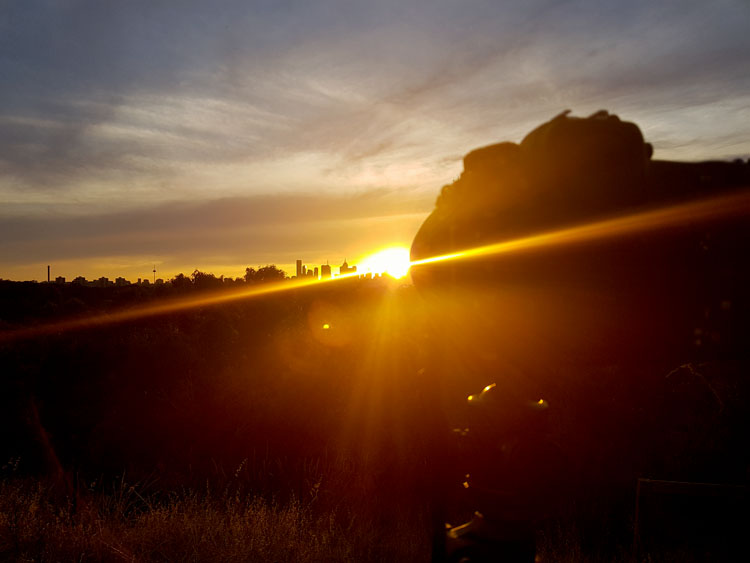
leannecole-nikon-d500-review-19

The sun as it sets and the camera taking photos.

googletag.cmd.push(function() {
tablet_slots.push( googletag.defineSlot( “/1005424/_dPSv4_tab-all-article-bottom_(300×250)”, [300, 250], “pb-ad-78623” ).addService( googletag.pubads() ) ); } );

googletag.cmd.push(function() {
mobile_slots.push( googletag.defineSlot( “/1005424/_dPSv4_mob-all-article-bottom_(300×250)”, [300, 250], “pb-ad-78158” ).addService( googletag.pubads() ) ); } );

The post Review of the New Flagship DX Camera – The Nikon D500 by Leanne Cole appeared first on Digital Photography School.


Digital Photography School

 
Comments Off on Review of the New Flagship DX Camera – The Nikon D500

Posted in Photography