RSS
 

Posts Tagged ‘Next’

Report: Canon to release new 70-200mm F4L and F2.8L lenses next month

18 May

Canon Rumors is reporting some big news if you’re in the market for a new 70-200mm lens. According to the rumor site, it’s a near certainty that Canon will be debuting two new 70-200mm lenses in early June: the Canon EF 70-200mm F4L IS II, and the Canon EF 70-200mm F2.8L IS III.

Both of the current versions—the Mark I of the F4L and the Mark II of the F2.8L—are certainly due for an upgrade. The 70-200mm F2.8L IS II was released in 2010 and the F4L IS even farther back in 2006. Meanwhile, third-party manufacturers like Tamron and Tokina have released their own 70-200mm F2.8 and F4 lenses more recently, and Sigma confirmed to DPReview that it will release its much-anticipated 70-200mm F2.8 Art lens “not too far in the future.”

In other words, early June would be a great time for Canon to get the jump on Sigma and fight back against the Tamron 70-200mm G2 that people have been so positive about.

The good news is, this isn’t just a thin rumor. Canon Rumors says they can “100% confirm” that the 70-200mm F4L IS II is coming, and “95% confirm” that the 70-200mm F2.8L IS III will join it. Of course, as the rumor site points out, lens announcement and release dates can change at the last minute, but we’ll be keeping our fingers crossed for both these announcements in the coming month.

Articles: Digital Photography Review (dpreview.com)

 
Comments Off on Report: Canon to release new 70-200mm F4L and F2.8L lenses next month

Posted in Uncategorized


Report: Apple won’t release the next Mac Pro until 2019

07 Apr
Credit: Apple

Apple delivered some slightly disappointing news to professional users in an interview with TechCrunch this week. Speaking with the tech publication, Senior director of Mac Hardware Product Marketing Tom Boger revealed that the next version of the Mac Pro is not coming in 2018. It will be a 2019 product.

The current Mac Pro—colloquially referred to as the trash can Mac Pro because of its form factor—was released all the way back in 2013, and even Apple admitted that the design was a mistake. In April of 2017, Apple executive Craig Federighi told BuzzFeed News that the company had “designed ourselves into a bit of a corner” with the circular form-factor, and Phil Schiller promised users that Apple was “completely rethinking the Mac Pro” for the next generation.

Since then, we haven’t heard much, and professional users not content with the all-in-one form-factor of the powerful new iMac Pro were holding out purchasing it in the hopes that the next Mac Pro was right around the corner. It sounds like Apple knows this, and decided to be un-characteristically candid with the professional community through this TechCrunch interview:

“We want to be transparent and communicate openly with our pro community, so we want them to know that the Mac Pro is a 2019 product,” says Boger. “We know that there’s a lot of customers today that are making purchase decisions on the iMac Pro and whether or not they should wait for the Mac Pro.”

Professional creatives who are married to the Apple ecosystem—particularly high-end video producers—still have a choice to make: purchase an iMac Pro now, or wait a year (or more) for the next generation Mac Pro? But at least now they won’t have to worry that a new Mac Pro will come out a few days or weeks after they pull the trigger on their iMac purchase.

To find out more about Apple’s Mac Pro plans—including some interesting tidbits about the company’s secretive “Pro Workflow Team”—head over to TechCrunch to read the full interview.

Articles: Digital Photography Review (dpreview.com)

 
Comments Off on Report: Apple won’t release the next Mac Pro until 2019

Posted in Uncategorized


Five Ways to Take Your Macro Photography to the Next Level

30 Mar

Macro photography can be incredibly rewarding. However, it can also be frustrating if you find yourself shooting the same photographs over and over again, struggling to improve. You find yourself uninspired. Trust me, I’ve been there.

Clemantis macro photography

But there are a few simple tips that you can take to improve your macro photography, right now. The tips that follow will help you take your macro photography to the next level, and they won’t bog you down with technical details, either.

1. Move in close (and keep going closer)

You might be tempted to shoot subjects such as flowers the way that you would a headshot – putting space around the subject, so that flowers are fully recognizable as, well, flowers. However, I urge you not to take a step back, but rather to take a step closer. If you can, think not in terms of “flower” and “background,” but in terms of shapes and lines.

If you have a dedicated macro lens, use it. Experiment with high magnifications and see how that opens up whole new worlds for you to shoot. Look for abstract compositions that make use of shapes and color.  Fill the frame completely with your subject.

dahlia macro photography colorful

I used my macro lens to emphasize the lines and colors of this dahlia.

2. Consider the light

Lighting is incredibly important in macro photography. However, you can boil things down to a few simple rules of thumb:

  • Photograph in the morning.
  • Photograph in the evening.
  • Only photograph at any other time of day if it’s cloudy.

Photograph in the morning and evening

When I say “morning,” I’m talking about very early, during what photographers often call the “golden hours“. Essentially, these are the first two hours after sunrise.

The same goes for the evening. If it is sunny, I suggest you wait until two hours before sunset. One hour before is even better.

flower macro photography golden

I took this image in the evening, which ensured some great golden light.

These morning and evening hours are the times when soft, golden light falls on your subject. Not only does this result in a more evenly lit subject and an easier exposure, but the golden cast simply looks beautiful.

If conditions seem a bit too bright, you can also create really interesting images by using the shade. For instance, try working with a subject that is in the shade, while the background is lit by the (hopefully setting) sun.

flower macro sun shade - Five Ways to Take Your Macro Photography to the Next Level

I photographed this flower as the sun was setting, positioning myself so that the background was well lit, but the flower itself remained shaded.

Photograph in cloudy midday light

Midday sunlight tends to be incredibly harsh and results in photographs that are very washed out and contrasty.

Hence: if you’re shooting in the middle of the day, make sure that it’s cloudy. The clouds will serve to diffuse the light, allowing for wonderfully saturated colors.

coneflower macro color - Five Ways to Take Your Macro Photography to the Next Level

I photographed this coneflower on a cloudy day, ensuring that the colors were nicely saturated.

If you find yourself in a situation where you absolutely must take images and you cannot wait until conditions become better, then you can try to offset the harshness of the sun by shooting in the shade, using a reflector, or by using a flash.

daisy background night macro

The artificial lights plus this flower made for a fun photography session.

3. Consider the angle

One of the mistakes that I made most when I was first starting macro photography was not thinking about my angle to the subject. For instance, I would point my camera down at a 45-degree angle, so that I would capture subjects as if I were a few feet in front of me as I walked.

While intuitive, this approach often results in a less appealing image. It causes elements of the subject to become messy, to cross over one another. It also tends to distort the shape of the subject, so that the overall impact is lessened.

Instead, I recommend two main approaches:

First: place the subject at eye level. For instance, if you are photographing a tulip, crouch down so that the tulip is directly before you. If you are photographing an insect, you should be staring directly into its face.

macro flower pink - Five Ways to Take Your Macro Photography to the Next Level

By photographing this flower at eye level, I was able to create an even composition.

Second: place the subject directly below you. That is, you should be looking straight down so that the petals of an open flower are parallel to the camera sensor.

Hibiscus flower macro photography

By composing from directly above this hibiscus, I was able to emphasize its geometry.

Of course, these are just starting points. Pleasing images can be made from many angles, and a lot depends on the subject itself. But these are good places from which to begin.

4. Think about the subject quality

This tip is very simple – before taking an image, look your subject over. Is it at its peak? Or is it on its way out, wilting, or dying?

If the latter is the case, then try to search for a better-looking flower. Unfortunately, such elements can really detract from an otherwise excellent image.

Rose macro close up - Five Ways to Take Your Macro Photography to the Next Level

I found this rose in excellent condition.

Also, look for things like bugs, dirt, and torn petals. These are all indicators that you should search for a better subject.

Though it’s worth noting that sometimes wilting flowers can make for very interesting images. Just be sure that, if you are photographing a subject that’s on its way out, you compose with that in mind.

daisy macro - Five Ways to Take Your Macro Photography to the Next Level

I focused on this wilting daisy in order to create a more somber photograph.

5. Consider the background

One final tip for really enhancing your macro photographs is to think about the background before taking that shot. This is probably the most important of all these tips because careful attention to background can make for incredibly special images.

What should you consider?

First and foremost, look for backgrounds that are simple and uncluttered. A background that doesn’t distract is often enough to ensure a great image. However, it can also pay to be creative, by shifting your position so that colorful elements, such other flowers, or a sunset, sit behind the subject.

You might also use bright spots to your advantage, working so that they frame your subject.

flower macro cosmos - Five Ways to Take Your Macro Photography to the Next Level

The colorful flowers behind this subject made for an interesting background.

In Conclusion

By moving in close, considering the light, angle, subject quality, and the background, you can quickly improve your macro photography. Hopefully, you’ll have a lot of fun doing it as well.

If you have any other tips for people just starting with macro photography, please share them in the comments below.

peony macro flower - Five Ways to Take Your Macro Photography to the Next Level

The post Five Ways to Take Your Macro Photography to the Next Level appeared first on Digital Photography School.


Digital Photography School

 
Comments Off on Five Ways to Take Your Macro Photography to the Next Level

Posted in Photography


Our Next Two Strobist X-Peditions:Havana, Cuba and Hanoi, Vietnam

20 Feb

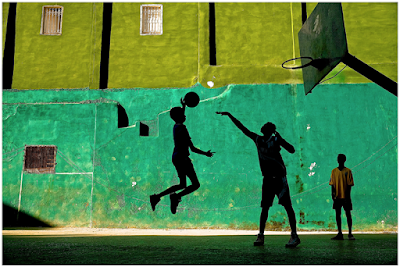
We are back from our inaugural Strobist X-Pedition, which was held last month in Havana, Cuba. The attendees are readjusting to life back on the grid, and busy editing photos and trading stories via email.

Havana X-Pedition, January 2018


Photo by Jeremy Langsky

Our week in Havana was filled with photography, new friends, eye-opening experiences and perhaps even a spot of Cuban rum. Now that we are back, I wanted to send a quick note out to Strobist’s readership both to show off some of the student work and give you a heads-up about plans for next year’s X-Peditions.


Photo by Martin Stephens


Photo by Michael Grigoriev


Photo by Bob Plotkin

Upcoming X-Peditions

If you would like to learn more about our planned X-Peditions for next year, you can read all about them here. We are planning to return to Havana in the winter and then we’re off to Hanoi in the fall. (I am headed to the latter on a shooting/scouting trip in three weeks.)

The info page linked just above is also where to sign up to ensure you’ll get advance notice about next year’s trips. As with 2018’s Havana X-Pedition, these will certainly sell out. There are only 12 slots available for each of the two trips. And because of the advance interest sign-up sheet, they may not be publicly announced.

I hope to see you next year, someplace really interesting.

-David
Strobist

 
Comments Off on Our Next Two Strobist X-Peditions:Havana, Cuba and Hanoi, Vietnam

Posted in Photography


5 Ways to Invest in Your Photography Over the Next 365 Days

02 Jan

Happy 2018! Can you believe it is already 2018? Seems like just a little while ago we were all celebrating ushering in the Y2K era and now to think that 2020 is just two years away seems unreal. I love the new year. It brings forth hope, aspirations, and positivity.

Metaphorically, it is like the slate has been wiped clean and you have a chance to chase some of your most amazing and lofty goals. So why not use this new year to invest in something that you really love as well – your photography. Here are some simple easy ways to invest in bettering your creativity and your craft over the next 365 days.

Sunset golden hour photo - How to Invest in Your Photography Over the Next 365 Days

#1 – Create smart goals for your photography

Let’s drop the myth that only professional photographers who are in business are allowed to have photography goals. I don’t care if you are just beginning to learn photography or have been doing this for years, one of the best ways to improve at anything is to have realistic goals for what you aspire to and want to achieve.

Goals can be things like learning to photograph in manual mode, selling stock images or booking your first wedding client. No matter what your goals are, I encourage you to take it a step further and create SMART goals. A SMART goal is defined as one that is;

  • Specific
  • Measurable
  • Achievable
  • Results-focused
  • Time-sensitive

So for each of your goals, add additional parameters to convert them to SMART goals by figuring out how to measure them, how to achieve and execute them, and what specific timeframe you want them to be completed by.

Jaipur Lake Palace Photo - 5 Ways to Invest in Your Photography Over the Next 365 Days

A SMART goal to travel and explore my home country has lead to some amazing opportunities. All because I really thought through what I wanted to do, how I wanted to execute it, and what outcomes I wanted from those opportunities and really working towards those goals!

#2 – Plan to do at least 4 personal photography projects

I really believe that personal projects are the cornerstone to helping you improve your photography. Once you take the pressures of working with clients out of the equation, you are free to explore, get creative, and challenge yourself. This creative freedom is bound to reflect positively on your work.

Personal projects can be short exercises directed to help you improve in some area of your photography or extended self-assigned projects that really take you completely out of your comfort zone to try something different. You can choose to space out your personal projects throughout the year – perhaps even commit to doing one per quarter.

No matter what you choose, have SMART goals on what, when, and how you are going to execute your personal projects. You can see more details on the importance of personal projects in this previous article.

Ocean views from the caribbean - 5 Ways to Invest in Your Photography Over the Next 365 Days

One of my ongoing personal projects to learn and master film photography because it provides so much more room for learning and improving my photography in general. I even went so far as only taking a 35mm film camera on vacation to the Caribbean.

#3 – Practice photography every day

One of the easiest ways to practice photography every day is by signing up for a 365 series. Quite simply put, a 365 series is a commitment to creating one photo every day for 365 days. You can use a DSLR, a point and shoot camera, or even a smartphone to work on this series.

You can even take this a step further by joining one of the many online groups available. They are created solely for the purpose of encouraging you to photograph and post a single photo every day for 365 days straight. They even provide photo prompts to help you stay on track so you are constantly thinking of what to photograph every day.

Small waterfall photo - 5 Ways to Invest in Your Photography Over the Next 365 Days

A picture a day is literally just that – a photo a day. Get as creative as you want with this exercise. Use it as a way to get out of the house, meet fellow photographers, or just as some quiet time to reflect on who you are as a photographer and what motivates you.

#4 – Share your work online and offline

Join online groups or even local camera clubs to meet and socialize with other photographers. Many clubs have critique nights where members submit photos and comment on each other’s work. This is a great way to not only have your work be seen by others but also to get unbiased feedback on your work, which can be used for improvement and growth.

Many times we are our own worst critic and downplay our talents and skills because we are afraid or maybe lack the confidence in our photography. And you know what’s the best part? Having a group of like-minded people that you can talk photography about with all day long without them tuning you out within the first five minutes of any conversation (Can you tell this is how my family is when I start to talk photography!?).

Photo of the Taj Hotel in Mumbai at sunrise - 5 Ways to Invest in Your Photography Over the Next 365 Days

I have made some amazing friends via online communities – we have collaborated together, referred work to each other and bounced life and business challenges off one another. But most importantly, I have made some incredible friends who I know have my best interests at heart.

#5 – Attend a photography workshop, conference or take an online course

Like most other professions, the photography industry is continually evolving and changing. New products, techniques, and styles are constantly being introduced. So attending a photography workshop or conference is a great idea.

Plus you never know who you might meet there in terms of future friends, potential clients, or even referral opportunities. There are numerous workshops, seminars, and even free online events and tutorials to keep you busy learning new things.

Keeping abreast of the latest in any business is a good thing. It shows your clients, both present, and future, that you value your business and skill, enough to invest in it.

 Mirror reflection of an alpine lake in Oregon - 5 Ways to Invest in Your Photography Over the Next 365 Days

Workshops, and conferences are another great way to expand your professional circle, make industry friends and learn new skills/techniques. Make sure you do your research prior to committing funds to attend an event/workshop or conference.

What will you do with the next 365 days?

I hope these tips were helpful to you as you plan out 2018. Remember, getting your photography to a level that you are proud of takes time and a lot of hard work. Make this your year to shine with your photography.

The post 5 Ways to Invest in Your Photography Over the Next 365 Days by Karthika Gupta appeared first on Digital Photography School.


Digital Photography School

 
Comments Off on 5 Ways to Invest in Your Photography Over the Next 365 Days

Posted in Photography


So you got a brand new camera? Here’s what you need next

26 Dec

If you’re the proud owner of your first camera, congratulations! Now the fun starts. We’ve got some ideas to help you get started and get the most out of your new gift.

Articles: Digital Photography Review (dpreview.com)

 
Comments Off on So you got a brand new camera? Here’s what you need next

Posted in Uncategorized


Snapdragon 845 will bring 10-bit color, faster burst and more to next year’s smartphones

07 Dec

With smartphones, image processing is as important—if not more important—than the camera hardware components themselves, which is why the chipset is a crucial element in the imaging pipeline. Most Android smartphones come equipped with Qualcomm’s Snapdragon chipsets, and the company has just unveiled its latest top-end product, the Snapdragon 845.

We will probably see the Snapdragon 845 in many of 2018’s high-end devices, and that’s a very good thing for the camera system.

As you’d expect from any new chipset, it’s faster than the predecessor Snapdragon 835, comes with more integrated AI processing power and supports higher data speeds. However, the Snapdragon 845 also offers a range of important improvements in the imaging department.

Images can now be captured in 10-bit color with a Rec. 2020 gamut, offering a wider range of tones and hues than the previous 8-bit color. While that’s impressive, the 845’s capability to shoot 60 frames per second at 16MP is even more important when you consider image stacking applications, such as HDR modes or low-light modes that combine several frames to average out noise and improve overall quality.

Another area of improvement is slow-motion video. Next year’s Android flagships will be able to record an impressive 480fps slow motion at 720p in HDR—unfortunately, 1080p resolution will still be limited to 120 fps, lagging behind the current iPhones’ 240 fps capability. Qualcomm is catching up with Apple in terms of video frame rates, though. Like the iPhones 8, 8Plus and X, Snapdragon 845-equipped phones will be able to record 4K footage at 60 fps.

The Xaomi Mi 7 will be the first 2018 model to come with the new chipset, but it’s also expected to be installed on the Samsung Galaxy S9 (which may also come with a variable aperture…). Other brands will likely follow soon after, giving mobile photographers a lot to look forward to in 2018.

Articles: Digital Photography Review (dpreview.com)

 
Comments Off on Snapdragon 845 will bring 10-bit color, faster burst and more to next year’s smartphones

Posted in Uncategorized


Phase One unveils Capture One 11 with ‘next level layers’ and more

01 Dec

Watch out Adobe. Early this morning, Phase One unveiled the next major update to Capture One. The new version, Capture One 11, promises improvements in every regard: from “new, highly responsive tools,” to “workflow enhancements” to a new “finely tuned processing engine.”

Here’s a quick introduction to what’s new in Capture One 11 straight from Phase One itself:

The major improvements can be broken down into three categories: layers, workflow, and performance.

Performance

When Phase One talks about ‘optimized’ performance, the company is not just talking about how quickly Capture One can open and edit your Raw files. Included in these improvements is ‘re-engineered’ color handling, as well as the addition of a LAB Readout option for “customers who wish to measure image output to critical values.”

‘Next Level Layers’

With this update, Phase One is now characterizing Capture One 11 as a ‘layer centric application.’ All of the program’s adjustment tools are now compatible with layers, masking tools have been improved with the ability to refine and feather masks after drawing, and you can now control the opacity of individual layers.

Workflow

Since Capture One 11 is trying to be “the professionals’ choice in imaging software,” several improvements have also been made on the workflow side.

You can now add annotations and graphics on top of your image as overlays, and export them as separate layers in a PSD file; crops can be added as a ‘Path’ when exporting to a PSD file, so you don’t lose any pixels if you transfer out to Photoshop; and, finally, you can now export watermarks as a separate layer in an exported PSD file as well.

As with all major Adobe competitors—and Capture One is arguably one of the best-known and most widely-used—the message Phase One wants to send loud and clear is, “we care about our customers’ needs.” In fact, you could say Phase One stopped just short of calling Adobe out by name in its announcement:

In keeping with Phase One’s commitment to its customers’ choice, Capture One 11 is available for purchase by either perpetual license or by subscription – whichever best suits the customers’ needs.

For photographers eager to escape Adobe’s subscription-only model, Capture One 11 represents a very tempting choice.

Capture One 11 is available now for both Mac and Windows at $ 300 for a brand-new perpetual license or $ 20/month on subscription (or $ 180 if you pay for a year in advance). If you already own Capture One Pro 9 or 10, you can get a perpetual license for just $ 120, and if you purchased Capture One Pro 10 on October 31st, 2017 or later, you can actually upgrade to Capture One 11 for free by using your same license key.

To learn more or download a fully-functional 30-day free trial, head over to the Phase One website.

Articles: Digital Photography Review (dpreview.com)

 
Comments Off on Phase One unveils Capture One 11 with ‘next level layers’ and more

Posted in Uncategorized


Expect twice the resolution and speed from the next Fuji GFX and Hasselblad X1D

17 Nov

It’s hard to say much about the next generation mirrorless medium format cameras at this point—even the rumor mill has been quiet—but if you look at Sony’s recently updated sensor roadmap, you can confidently assert one thing: the next-gen Fujifilm GFX and Hasselblad X1D models will contain a 100MP backside illuminated sensor with twice the readout speed of the current models.

This is a BIG deal.

It seems like just yesterday (it wasn’t) Sony released the a7R II, the first camera with a full-frame BSI sensor. But they’re already planning to scale that tech up to medium format in 2018. In fact, their 2018 sensor lineup includes two new MF sensors: a 100MP BSI 44×33 sensor and a 150MP BSI 55x41mm sensor.

These sensors first appeared on the roadmap back in April, but they only received their official announcement on Sony’s Semiconductor website on November 9th. That’s when Sony revealed the readout speeds of the new sensors, which is what really caught our eye.

The IMX161 is the chip (with some modifications…) that you find inside the current stock of 44x33mm medium format cameras—the X1D-50c, the GFX 50S, and the Pentax 645Z. That sensor’s max readout is 3.3 fps, and it offers 50MP of resolution. The upcoming IMX461 that you’ll very likely find in the next-generation models of these same cameras not only doubles the resolution to 100MP, it also nearly doubles the max readout speed to 6fps at 14-bit.

For the next Pentax model, that might not make a huge difference, since it’s a DSLR. But for the next Hasselblad X1D and Fujifilm GFX models, which are mirrorless and require on-sensor AF, that will make a huge difference in performance. Plus, the new sensor can record video at both 4K/30fps and 8K/18fps at 12-bit, which means it should comfortably capture the 8-bit and 10-bit flavors we’re more accustomed to seeing.

For fans of ‘real’ medium format digital (55x41mm sensor), keep an eye out for the IMX411 to show up in a PhaseOne camera of the future. That sensor is also backside illuminated, ups the resolution to 150MP, and can shoot 12-bit 4K/30fps and 8K/16fps.

Articles: Digital Photography Review (dpreview.com)

 
Comments Off on Expect twice the resolution and speed from the next Fuji GFX and Hasselblad X1D

Posted in Uncategorized


How to Plan and Take Killer Sunset Photos on Your Next Vacation

31 Oct

Who doesn’t love a good sunset photo? There’s something about that colorful, ethereal time of day that strikes a cord with just about every person. But as appealing and ordinary as sunsets are, the ability to capture that magical time of day as a photo can be surprisingly difficult.

Sunset Photos

Photo by Martin Genev

Yes, gear and camera settings are important. However, the ability to be in the right place at the right time of day is arguably the most important factor to photographing a sunset. Below, I’ll highlight several tips for planning

Yes, gear and camera settings are important. However, the ability to be in the right place at the right time of day is arguably the most important factor to photographing a sunset. Below, I’ll highlight several tips for planning

Find the best sunset location

How to Plan and Take Killer Sunset Photos on Your Next Vacation

If you’re visiting a new town and searching for an ideal sunset spot, your best bet is to do some online searches. Do a Google image search for “[location] sunset” and see what pops up. Better yet, visit stock image sites and enter similar search queries.

In most cases, you’ll see sunset photos taken from one or two popular locations. It might take some digging to find out exactly where those spots are, but once you have the answer, you’ll know where to shoot.

What time is the sunset?

A simple Google search will tell you exactly when sunset happens in the location of your choice. Keep in mind, however, that the hour or so before sunset is the ideal time of day for most photographers, so you’ll want to show up at your chosen sunset location closer to Golden Hour.

To really hone in the ideal times of day to shoot in a new location, the PhotoPills app is a handy tool. It’s packed full of information that can help you plan and execute outdoor photo shoots.

PhotoPills Sunset Planner - How to Plan and Take Killer Sunset Photos on Your Next Vacation

Image courtesy of PhotoPills

Camera settings for sunset photos

Your ideal camera settings for shooting a sunset depend on a variety of factors, but generally speaking, these are some rules to go by.

Shoot in RAW

When it comes to shooting the sunset, one of the biggest challenges is making sure your camera captures the same warmth and vibrancy that your eyes are seeing. You can typically make White Balance and Picture Style tweaks in camera (more on those below). But just in case, it’s also a good idea to shoot in RAW to give you greater creative control when you post-process the image.

Set White Balance

Leaving your camera White Balance set to Auto might suffice. However, if the color cast of your image is looking too cool or slightly off, try setting your White Balance to Daylight or Cloudy to warm up your shot.

Shoot in Aperture Priority

What shooting mode you should use is certainly debatable, but Aperture Priority will give you greater control over the depth of field. Shooting with a small aperture (f-step of f/16 or higher) will give you a large depth of field. This is ideal if you want more of your scene in focus.

How to Plan and Take Killer Sunset Photos on Your Next Vacation

Keep ISO Low

To avoid excessive noise in your image, maintain the lowest possible ISO for the amount of light you have available. If it happens to be a cloudy sunset or you’re shooting a scene with lots of shadows, you might have to increase your ISO unless you use a tripod.

Composition tips for unique sunset photos

After you’ve got your ideal sunset spot secured, it’s time to start thinking about what kind of sunset image you want to capture.

Keep this in mind: the way that most people photograph a sunset is to whip out their camera at hand, point it directly at the sunset and start snapping away. There’s nothing wrong with capturing the sunset this way, but it doesn’t always make for unique images.

If you’re trying to think outside of the box and get an interesting sunset photo, try some of these tips.

Zoom in

How to Plan and Take Killer Sunset Photos on Your Next Vacation

For most spontaneous sunset photographers, the camera at hand is their point and shoot or cell phone. These cameras are usually equipped with wide-angle lenses. Set yourself apart from the crowd by picking an interesting feature and zooming in.

Shoot away from the sun

Instead of shooting directly into the sun, consider pointing your lens in the opposite direction. The bright and often vibrant colors generated by the sunset can make the scene in the opposite direction equally alluring, without having to compensate for shooting directly into bright light.

Wait for Blue Hour

Every photographer has heard about Golden Hour, that magical time of day just before sunset. Lesser known is Blue Hour, that brief time of day that begins roughly 10 minutes after the sun has set (and before it has risen at dawn).

Blue Hour Photography - How to Plan and Take Killer Sunset Photos on Your Next Vacation

This image was taken just after sunset during Blue Hour.

The sky isn’t as obviously colorful during Blue Hour as it is during sunset or Golden Hour. However, Blue Hour still offers a window of time when it can be best to shoot cityscapes or landscapes with deep blue tones in the sky. You will almost certainly need a tripod to shoot during Blue Hour as it is significantly darker without the sun. But the lesson here is that many more photo opportunities exist even after sunset.

Over to You

Do you have any tips for shooting sunset photos? Share your photos and tips below!

The post How to Plan and Take Killer Sunset Photos on Your Next Vacation by Suzi Pratt appeared first on Digital Photography School.


Digital Photography School

 
Comments Off on How to Plan and Take Killer Sunset Photos on Your Next Vacation

Posted in Photography