RSS
 

Posts Tagged ‘Necessary’

Necessary Apps for Your Photography Business

17 Dec

The post Necessary Apps for Your Photography Business appeared first on Digital Photography School. It was authored by Darina Kopcok.


necessary-apps-for-your-photography-business

The key to becoming a successful photographer these days is business skills. It’s not always talent that sets a photographer apart. Knowing how to market your work and stay organized and efficient is what most allows a photographer to thrive in today’s competitive photographic market. Luckily there are so many applications that can help you do that. Here is a summary of ten necessary apps for your photography business.

Dubsado

Dubsado is a CRM system designed for creatives. This app has an attractive and easy to use interface that helps you keep track of projects, create a client list, and track when you have contacted them.

You can also keep track of your invoices, your Chart of Accounts, and integrate it with your Google calendar. You can create email templates, questionnaires, and photography packages.

The biggest bonus Dubsado offers is that it allows you to create contracts, releases and user agreements from within the software and send it out for a signature. Contract signature software like Hello Sign can cost you almost as much on a monthly basis as Dubsado, without all of the additional benefits.

Necessary Apps for Your Photography Business

Evernote

Evernote is not specifically for photographers. Rather, it’s a complete organization system.

It allows you to keep track of your business projects, personal and professional notes, and search for PDFs, images and scanned documents quickly. Evernote automatically syncs across all devices.

You can quickly snap a picture of your receipts and upload it directly to Evernote so you can have electronic copies that won’t fade with time as paper receipts do. This is very important if you happen to be the subject of a tax audit down the road.

Basically, Evernote is a robust tool to help you live a more paperless life.

Like many apps, there is a free plan but you can upgrade for extended features. The most popular plan is the Premium plan, which integrates with Google Drive and communication tools like Slack.

Necessary Apps for Your Photography Business

Blink Bid

If you’re a commercial photographer, Blink Bid is a must for estimating and invoicing jobs professionally. Used by photographers and larger agencies and production companies alike, Blink Bid offers several pricing packages. Most photographers will benefit from their cheapest package, which is only $ 16 a month, or $ 14 a month when paid annually.

In addition to a clickable list of line items you can add to your estimates, it also allows you to create usage licenses with their Usage Builder, or customize Terms and Conditions.

Blink Bid allows you to share with agents, producers, and other collaborators. You can also track your receipts and manage your budget.

Not sure you want to commit? You can sign-up for a free 14-day trial with no credit card required.

Necessary Apps for Your Photography Business

Prodibi

There are several apps available for sharing your work with clients, varying in quality and cost. Based in Switzerland, Prodibi is a top-tier app that allows you to display your high-resolution images and transfer them at full speed.

It also features a Capture One plug-in to get client feedback in full resolution.

The color management, image compression, and responsiveness are unbeatable.

You can also build a one-page portfolio to showcase your work in high quality with full zoom.

Prodibi offers free and paid options.

Necessary Apps for Your Photography Business

Shootproof

Shootproof is a great app to have if you shoot consumer photography like family portraits or weddings.

It’s an app that allows you to create beautiful online galleries and slideshows that align with your branding and style. It also offers several tools for business management, such as contracts and invoicing.

You can also create price sheets, packages, and discounts, and there is a self-fulfillment option that will allow you to work with partner labs such as Miller’s and ProDPI.

There is a free option that will allow you to upload up to 100 images. However, there are four other tiers you can choose from, depending on how many images you plan on uploading.

Necessary Apps for Your Photography Business

Sun Seeker

If you shoot outdoors, Sun Seeker in an important app to have downloaded on your smartphone or iPad.

Whether you’re a wedding photographer or shooting landscapes – or even some commercial projects – there are many situations where you’ll need to know where the sun will be situated at a certain time. It will help you plan your Golden Hour shoots, or be prepared to take beautiful sunrise photos in the mountains.

The app uses GPS, magnometer, and gyroscope to find the sun and solar path at any location. You can choose and any date to view what the sun path and position will be.

Sun Seeker is available for iPhone, android and iPad. For an overview, check out this link on Youtube.

Necessary Apps for Your Photography Business

Google Earth

For photographers doing location scouting, Google Earth is an incredibly valuable resource to have. It will allow you to explore worldwide satellite imagery, and the buildings and terrain of hundreds of cities.

Looking for an out-of-the-way spot for romantic engagement photos? Google Earth will help. Check out streets and landscapes before you go, and plan the details of your shoots well in advance so you don’t end up with surprises.

Easy Release

Whether you photograph models, buildings or other types of property, or if you want to license images with recognizable people in them through stock sites, you’ll need a model release.

Easy Release is an app that will help you to grab signatures on the go using your smartphone. No more needing to remember to have paper copies on hand that could get lost. You can collect the signatures and data you need on your device, automatically saving it to PDF and JPEG.

These releases are also accepted by the major stock sites, such as Getty and Shutterstock.

Necessary Apps for Your Photography Business

Sylights

One super-useful app to have is one that allows you to create lighting diagrams. This is where Sylight comes in. It’s free and simple to use.

If a regular client asks you to create a previous lighting scenario, having a diagram handy can help you out of a pinch if you can’t remember what you did.

To create a diagram, simply right click to add lights, modifiers, and subjects to your set. You can do this without an account, but signing-up will give you access to some premium features.

Wave

Accounting is often the thorn in every photographer’s side.

Luckily, Wave is a small business bookkeeping app that makes it a lot easier with a user-friendly interface and a variety of tools to help you simplify the process. The features that most photographers will need come for free, with no set-up fees or hidden charges.

The ability to run payroll is a paid-for service with Wave. You can also accept payments on a pay-per-use basis. Credit card processing is 2.9% + 30 cents per transaction. Bank payments are 1% per transaction.

Not only can you create professional invoices with Wave, but you can also integrate your business bank account and credit card, which will allow you to track expenses and generate reports, such as your Profit & Loss, Cash Flow, and General Ledger.


Necessary Apps for Your Photography Business

Conclusion

In reality, there are so many apps that can help you in your business as a photographer. This is just a recommended few that you might find helpful.

If there are any apps for your photography business that you find invaluable, let us know in the comments below.


The post Necessary Apps for Your Photography Business appeared first on Digital Photography School. It was authored by Darina Kopcok.


Digital Photography School

 
Comments Off on Necessary Apps for Your Photography Business

Posted in Photography


4 Necessary Reasons to Look Through Your Old Photos

27 Aug

The post 4 Necessary Reasons to Look Through Your Old Photos appeared first on Digital Photography School. It was authored by Simon Ringsmuth.

As photographers, we mustn’t live with our heads stuck in the past. If we’re not trying new ideas, exploring new techniques, or finding ways to push ourselves to be better, we might quickly find ourselves drowning in a sea of irrelevance and mediocrity. However, there is a time and a place to look in the rear-view mirror. Looking back at some of your old photos can have incredible benefits, aside from just happy feelings of nostalgia. Sometimes the best way forward is to look at the path we have taken. Even though to look through your old photos can be embarrassing, there are some clear benefits to doing so.

Reasons-to-Look-Through-Your-Old-Photos

1. It helps you realize you weren’t that bad

I’m a pretty self-conscious guy, and as such, I don’t like looking at pictures of myself. I always find something to criticize, even if they are things that no one else would ever notice! Looking back at some of the earlier pictures in my photography portfolio is the same way. Sometimes seeing the pictures I shot is enough to make me cringe. So I want to throw my old albums out the window!

This is precisely why it’s good to dust off your old photo albums or look through the image folders on your computer you’ve been neglecting for years. Looking through the images you shot when you were new to photography, can more often than not, let you see how you really weren’t as bad and probably much more talented than you realize.

Reasons-to-Look-Through-Your-Old-Photos

I shot this in 2013. While I had a lot to learn about lighting and editing, it’s actually a pretty decent image.

If the thought of looking at your old pictures makes your skin crawl, there’s a good chance you might have been a lot better than you thought. While your early images were probably not perfect, they can be a source of encouragement. You see that you clearly did have some skills – even if they had a little way to go before maturing.

2. You can learn from your mistakes

Even though your older pictures might not be as bad as you think, you can learn a lot from going through your earlier work. Over the years, you have almost certainly improved your techniques in terms of lighting, composition, framing, or even just posing your clients.

Reasons-to-Look-Through-Your-Old-Photos

I shot this in 2014 when I didn’t know how to use a reflector but brought one with me to the session anyway. The colors on his face just don’t look right.

I know how it can be painful or embarrassing to scroll through your photos from five or ten years ago. It’s almost like looking through your high school yearbook and cringing at the silly hairstyles and weird fashion choices from days gone by. If you do this with your images, instead of turning away from your mistakes, learn from them. Realize what not to do now and in the future.

The image below is a good example of this. While my clients were happy, and so was I at the time, when I look at this picture now all I see are errors to fix. I shot it with a 50mm lens at f/2.8 and focused on the man in the back, which meant everyone else is out of focus. I didn’t have a sense of how to pose, nor was I really paying attention to lighting. The list goes on.

However, rather than pretend this session didn’t exist, I use it as a learning opportunity.

Image: One of my first portrait sessions, shot in early 2013.

One of my first portrait sessions, shot in early 2013.

Here’s another illustration of how much I have learned since my early days, especially when it comes to formal sessions. Why is there an orange shoe in the middle of the picture? Also, why is there a giant tree growing out of the head of the child on the left? Why did I use a 1/80th shutter speed?

The world may never know the answers, and I certainly don’t. However, when I see this old picture, it helps me also see what I can do differently today.

Image: Another family portrait session from 2013. Don’t judge me…I was new and didn...

Another family portrait session from 2013. Don’t judge me…I was new and didn’t know what I was doing. My clients liked it though!

3. It helps you refine your editing style

In addition to photography style and techniques, searching through your old pictures can give you a great deal of insight into your editing process.

It’s not easy to see slow, incremental changes over time. However, when you compare your current editing style to that of when you first started, you might be surprised. You may even be shocked at the difference. This can be a learning opportunity and help give you insight into how you might continue to refine and hone your edits.

I took the following picture in the summer of 2013, and I clearly remember spending a long time working with it in Photoshop. The result is what you see here: over-saturated sky, poor dynamic range, and a weird color balance that seems unnatural and icky.

4 Necessary Reasons to Look Through Your Old Photos

When I edited this RAW file, I was way, way over-thinking the process and ended up with kind of a mess. I can still see myself hunched over an old iMac, refining my selections, creating new layers, and fiddling with color edits ad nauseam. Now I’d just pull this into Lightroom, tweak a few sliders, and end up with a much cleaner and more pleasing image.

Here’s another picture that, upon first look, makes me want to chuck my computer out the window and never look at my cameras again.

Image: Shot in the fall of 2014, when I still had an awful lot to learn.

Shot in the fall of 2014, when I still had an awful lot to learn.

This picture is practically a textbook example of what not to do when shooting or editing a picture. Aside from all the issues in the image itself (soles of shoes, people sitting on an old canvas, awkward posing and hand placements, an disregard for background objects), the editing was atrocious.

My subjects are underexposed. The white balance is all wrong, and there’s no sense of contrast. Moreover, I didn’t bother using any noise reduction, so their faces are kind of patchy if you zoom in to 100%.

I’m a much better editor now than I was back when I shot this seven years ago. When I look at this picture and others like it, I can immediately see how I have changed my editing process over the years. It gives me a few ideas of what I should continue refining in the future.

Reasons-to-Look-Through-Your-Old-Photos

When I edited this picture in 2013, I didn’t know what I was doing. But looking back at it helps me remember what to do, what not to do, and what I can change in my current style.

4. Early photos can inspire you!

There’s a lot I wish I could take back about my early photography. However, I feel some of my work now lacks something: a spark of life and a sense of abandon. When I first picked up a camera, I would see photo opportunities everywhere; inside my home, walking around the neighborhood, even my office at work.

With clients, I had a much more carefree attitude, shooting whatever I wanted, whether I thought it would look good or not. It was a carefree time when I didn’t worry about (or even know about) proper technique, good lighting, high ISO values, rolling shutter, or any of that. Like a kid in a candy store, I remember latching on to anything and everything around me.

I even set my alarm early so I could take pictures of my kids’ toys in the living room before the sun came up.

Reasons-to-Look-Through-Your-Old-Photos

I took my camera to a sporting event back in 2014 and shot everything I could see, even if I didn’t know what I was doing. Including these bocce balls sitting on astroturf. I kind of miss that approach, and looking at photos like this helps rekindle it.

When I started taking pictures more seriously, I saw the world differently. Every tree, building, or animal was a fun and exciting photographic opportunity. I’ve lost that over the years. Now I think I over-analyze situations – trying to find the perfect moment, subject, or lighting condition.

Going back through old photos takes me back to a time when I didn’t care about any of that. I just took pictures of what I thought was fun and interesting. It has inspired me to be a little more creative and a little less analytical with my photography now.

Image: I spent half an hour trying to capture this image with my brother in the summer of 2014. We h...

I spent half an hour trying to capture this image with my brother in the summer of 2014. We had such a fun time doing it! I need to do more shots like this…

Looking at your old pictures can bring up some strange emotions, and it can certainly be awkward or feel silly. But buried in your images from days gone by is a treasure trove of education just waiting to be unlocked.

Reasons-to-Look-Through-Your-Old-Photos

This image of a tree borer I took in 2013 remains one of my favorite insect pictures I have ever taken.

Conclusion

The next time you pull up your photo library on your computer or scroll through images in your photo app, go back to your earliest pictures and see what you can learn from them. You might be surprised at how enjoyable and educational your trip down memory lane can be!

Do you ever look through your old photos? What have you learned from them? Share with us in the comments!


Reasons-to-Look-Through-Your-Old-Photos

The post 4 Necessary Reasons to Look Through Your Old Photos appeared first on Digital Photography School. It was authored by Simon Ringsmuth.


Digital Photography School

 
Comments Off on 4 Necessary Reasons to Look Through Your Old Photos

Posted in Photography


National Park Photography Workshop Permits: Are They Really Necessary?

10 Jun
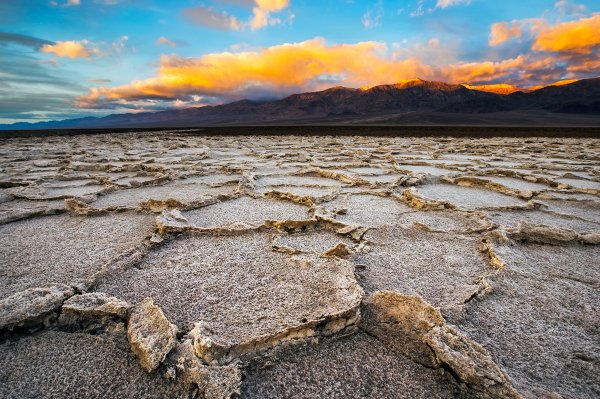
badwater-sunrise

Sunrise on the West Side Road at Badwater Basin, Death Valley

Back in February of 2014, I led two back-to-back photography workshops in Death Valley National Park with my friend and fellow photographer Mike Mezeul. Planning workshops is a lot of work and takes a lot of love and dedication to do right. Before the process of getting everything set up (making sure the students had all booked their flights, hotels, rental cars, etc.) we needed to apply for a workshop permit. This is sort of a tough thing to do timeline wise. You can apply for it ahead of time before you even announce the workshop; but then you run the risk of paying the $ 210 (average cost) and the workshop falling through or something like that. Or you can wait until you book spots for the workshop and then apply for the permit; but then you run the risk of not getting the permit in time for the workshop. We opted for the latter because we had plenty of time to get the application in and get the permit back. We got our workshop permit in time and had nothing to worry about. We weren’t going to risk getting in trouble with the park in an effort to save a few hundred bucks.

Now fast forward to the second workshop. We had just wrapped up a beautiful sunrise shoot at Badwater Basin on the West Side Road (Death Valley. The patterns at the main part of Badwater (by the parking lot) were in pretty terrible shape but we decided to take the group there after the sunrise shoot so they could see all the educational signs, walk around for a bit and get a picture of the “280 Feet Below Sea Level” sign. While we were there, a man came up to me and asked if we had found any good patterns. I’ve never been one to withhold secrets so I told him about the spot we found over on West Side Road. I noticed he had a van full of people and shortly after, they were on their way.

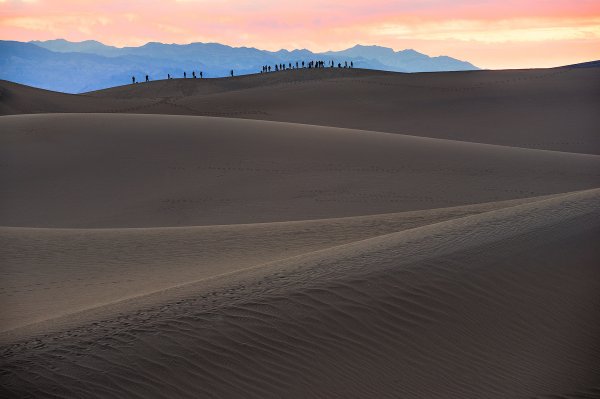
Workshop students set up for sunrise at the Mesquite Flat Sand Dunes

Workshop students set up for sunrise at the Mesquite Flat Sand Dunes

Our group stayed at the Badwater parking lot for another 30 minutes or so before heading back into Furnace Creek for breakfast. When we got to the Forty Niner Cafe we saw a large table of around 20 people (all with their photography gear) sitting in silence. It was really strange. Nobody was really talking and everyone looked stressed out and upset. I went to use the restroom and that’s when I saw the same guy who I’d spoken to at the Badwater Basin parking lot.

He told me that he was a workshop instructor and they were on day two (the first full day) of their photography workshop. He had taken my advice and driven his group down to the West Side Road but when he got there, a Park Ranger was waiting for him. As it turns out, the instructor and his partner had decided to forgo the workshop permit because they had applied for one the year before and never got asked about it at during that workshop. He figured, “Why not save the $ 210?” It’s not like Death Valley has much staff left after all the government cutbacks, right? Wrong.

The Ranger asked for his permit and when the instructor said he didn’t have one, he was told to leave the park immediately. He was instantly given a $ 2,000 fine for conducting a workshop inside a National Park without a permit. He had to leave his group of around 20 students inside the park–students who had paid the tuition for the workshop, bought plane tickets into Vegas, rental cars to drive into the park and $ 200/night hotels within the park. On top of that, he had to appear before a judge in federal court in California three months later. That meant another flight to book, a couple nights in a hotel, a rental car and living expenses for the trip. Based on the outcome of the court appearance, he was facing upwards of $ 10,000 in fines and a lifetime ban from the park. I’m not sure what the outcome was with his group of students but I’m assuming they got their money back for the workshop.

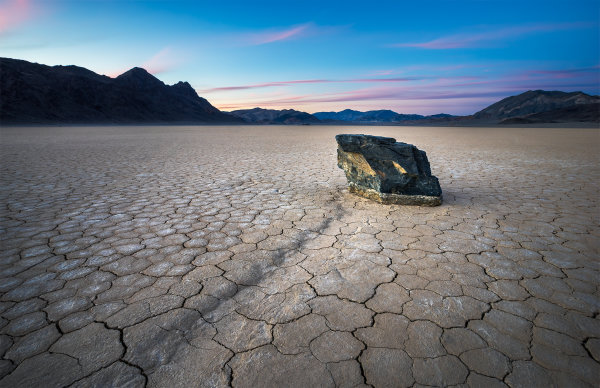
A mysterious sailing rock during sunset at the Racetrack Playa

A mysterious sailing rock during sunset at the Racetrack Playa

The Lesson to be Learned

The takeaway here is not to cut corners. If you are conducting a workshop inside of a national park, a national monument or even some state parks; get a permit. It’s not worth taking the risk and there are Park Rangers out there doing research. I talked to another photographer who was holding a workshop out in Zion National Park a while back. He had applied for a permit (and got one) to take his group into the Subway. When he got to the parking lot to start the hike, a Ranger was waiting there for him to check his permit. I’ve heard other stories of the Rangers looking up workshops on Google and then keeping track of the instructors on social media. They then try and pinpoint where the group will be and see if they can track them down to make sure they have the permit. All it takes is a tweet saying, “Beautiful sunrise at the Mesquite Dunes this morning.” To be honest, $ 210 is a very small fee to pay for holding a workshop inside of a national park. On top of that, you are supporting the park by paying the fee much in the same way you support it by purchasing park passes and entry fees.

If you are a student and will be attending a workshop inside a park, make sure that your instructor has the right permits. In my opinion, an instructor that cuts corners to save their bottom line isn’t an instructor worth paying tuition for a workshop.

For more information on choosing a photography workshop or tour, read these:

  • Taking a Photography Workshop; Why it is Different from a Photo Tour
  • Choosing a Photography Workshop Or Tour
  • Is that a Workshop, Tour or Seminar [Part I]

The post National Park Photography Workshop Permits: Are They Really Necessary? by James Brandon appeared first on Digital Photography School.


Digital Photography School

 
Comments Off on National Park Photography Workshop Permits: Are They Really Necessary?

Posted in Photography


How to Calculate Your Cost of Doing Business – And Other Necessary Numbers

21 Nov

Cards on the table time. Math and I are not friends. Never have been. From those dreaded flash cards in elementary school to my scary geometry tutor in high school, math and I have always been at odds with each other. In college, when it was suddenly optional, I avoided the subject like the plague. Even in my professional life, I’ve managed to get a handle on what I need to know and not much else. Thankfully, this mutual disdain that the mathematical arts and I share, seems to have skipped a generation. My 12-year-old son is doing high school algebra this year, and has been instructed by my wife to never, EVER, ask me for help. Ever.

Into every life, however, some math must fall, even those of professional creative types like photographers. Most of us don’t have the resources to hire business managers or year-round accountants to crunch the numbers, tell us what they mean, and how they need to change (although hiring such an individual is top priority when I win the lottery this weekend). Since we are left to our own mathematical devices, it is crucial for us, as photographers, to have a solid grasp on the numbers and how to calculate them. A common mistake among photographers is that they don’t take a methodical approach to calculating things like their creative fees, licensing fees, or even just the photography itself. Many seem to just pluck a number out of thin air. The difference between knowing, and not knowing, how to do this properly can be the difference between staying in professional photography or going to work at Starbucks, and I don’t drink coffee.

cost-of-doing-business-digital-photography-school1

Cost of Doing Business – What it Is and How to Figure it Out

Before you can even think of  putting a number on any of your services, you need to have a solid grasp and understanding of your cost of doing business (may be referred to as CODB). By the name alone, you’d think this would be an easy calculation. It certainly can be, but only if you take a logical, comprehensive approach.  Your cost of doing business is the result of an equation. Non-reimbursable expenses, plus your desired salary, equals your total annual costs. Your total annual costs divided by your number of billable days equals your cost of doing business.

I can practically see your eyes glassing over right in front of me. Stick with me, all will be made clear.

What are “non-reimbursable” expenses? These are the costs associated with keeping the lights on and the doors open. Rent, computers, phones, internet, insurance, gear, office supplies, etc., fall into this category. The American Society of Media Photographers has a great online calculator to help you with this, as does the National Press Photographers Association.

Obviously, we all want our salaries to be as high as possible. But, as with all things, you need to be realistic. Would you rather have the occasional, higher-paying assignment and sit around worrying the rest of the time, or maybe price yourself a little lower and work more consistently? Be realistic.

Billable days is exactly what it sounds like. As photographers, we don’t really work a “normal” week. We work early in the morning, late at night, on weekends, and everything in between. That doesn’t mean, though, that we don’t need time off. I know that I keep throwing the word “realistic” around, but it’s crucial for coming up with accurate numbers. There’s no way you can profitably work seven days a week, 52 weeks a year. Sick kids, your wife’s birthday, your anniversary, vacations, emergencies, car repairs, stopping to smell the roses and not just photograph them – there are going to be plenty of days where you can’t work or simply don’t want to. Being able to set a number of billable days is important to setting your fees (and maintaining your sanity).

Instead of thinking in terms of “billable days,” you may find it easier to think in terms of your number of shoots per month. You can download a basic Monthly Cost of Doing Business Worksheet here. As you can see, it requires taking a long, detailed look at your monthly expenses, both professional and personal, and it is by no means an exhaustive list. Everybody’s list will be different. You may find it useful to spend one full month accounting for each and every expenditure and seeing where it falls on the worksheet. Once you have a handle on your expenses, dividing that number by the total number of photo shoots you can do each month determines your monthly cost of doing business.

Once you’ve properly calculated your CODB, you are in a must better position to do the same for your creative and photography fees.

Setting Creative Fees

Unfortunately, this is not a fee that you can charge just for sitting around and thinking creatively. If it was, I’d be a multi-billionaire living in a medieval castle on my own private island. Instead, the creative fee is charged by the photographer for his or her efforts in bringing a project to a successful completion. In addition to time spent, the creative fee may be calculated to include factors like the photographer’s experience, special expertise, or anything that contributes to the overall creative effort. While this is where some of the intangibles like reputation, etc., can come into play, this is no place for your ego. You still have to start with your CODB. It is the foundation of your house. If it’s weak, everything else is going to crumble around you. You may be left with some nice stuff, but without the walls and the roof, you won’t have it for long.

cost-of-doing-business-dPS2

Pricing Your Photography

KNOW YOUR MARKET

Just as with the salary variable in calculating CODB, we all want to be able to price our photography as high as possible, but if you are going to succeed over a sustained period of time, you also have to be realistic (there’s that cursed word again!). For starters, you need to know what the market will bear.

A photographer in Manhattan is likely to have much higher expenses and overhead than a photographer in Detroit. On the other hand, a photographer in a more remote area might be able to charge similar rates to the New York photographer because the client may have fewer local options. Photography is a service industry and is subject to the same prevailing economic factors as any other. This is where research, networking, and relationships come into play. If you aren’t sure what your market will bear or why, you absolutely need to find out. Talk with other photographers, not only within your market, but within your specialty as well. If you are a commercial portrait photographer, knowing the value of wedding photography isn’t going to do you a whole lot of good.

KNOW YOUR CLIENT

You should also remember that you can (and should) charge different amounts for the same photograph under different circumstances. I may photograph a cup of coffee for a local coffee house identically to how I would photograph it for Starbucks, but guess who’s paying more for it?

KNOW YOUR PRODUCTION COSTS

Another factor in pricing your photography has to be your production costs for the specific assignment. Recurring production costs will show up in your cost of doing business analysis, but individual shoots can, and often do, require job-specific expenses. Will you have to rent equipment or studio space? Will you have to cater meals for your models and crew? Will you need to secure permits in order to shoot at your preferred location? These are just a few of the questions you need to ask yourself in order to evaluate your own investment in the shoot. How much do you have to make on this particular shoot in order to cover not only your CODB, but any additional expenses that it requires?

Convincing the Client

You already know you’re good. Now it’s time to make sure the client knows. You can have your Monthly CODB Worksheet all filled out. You can know everything about your market and specialty. You can even know how much your time is worth down to the penny. To the uneducated client, though, the biggest question they want answered is, “Why does this cost so much?” You need to be ready with an answer and it had better be a good one.

Now is the time for confident, not cocky. You need to be ready to explain exactly why your quote is what it is. Remember that old line, “Never let them see you sweat”? The moment a prospective client senses a lack of confidence, you’ve lost them. You already know the question is coming, so be prepared with a good answer. As with all things client-related, you have to listen to them and be ready to lay their objections and concerns to rest. Yes, I am an artist, but I’m also a businessman (I’m sure much to the chagrin of my high school geometry tutor). I have a family to feed and I can’t always be drawing lines in the sand around my artistic principles. If that means looking for compromises, so be it. If I know my CODB, though, I’m in a much better position to negotiate those compromises and create added value for the client.

Knowing When to Walk Away

Your cost of doing business is not just a number. It’s a ruler, against which you can measure many things, including the potential success or failure of a project. Remember that this number is a minimum. The rock bottom number that you need to meet on every job just to make sure your business survives another month. If this client isn’t going to let you do that, you have to be prepared to walk away. Do it nicely. Do it respectfully. Agencies, art directors, publishers all talk to each other. What do you want them to say about you?

Despite our differences, math and I have reached a sort of detente. I’d describe our relationship as being more of cautious respect than admiration, but we work well enough together to get the job done.  Now if my 12-year-old could just graduate college already, and become my bookkeeper, I’d be all set.


Post originally from: Digital Photography Tips.

Check out our more Photography Tips at Photography Tips for Beginners, Portrait Photography Tips and Wedding Photography Tips.

How to Calculate Your Cost of Doing Business – And Other Necessary Numbers

The post How to Calculate Your Cost of Doing Business – And Other Necessary Numbers by Jeff Guyer appeared first on Digital Photography School.


Digital Photography School

 
Comments Off on How to Calculate Your Cost of Doing Business – And Other Necessary Numbers

Posted in Photography