RSS
 

Posts Tagged ‘most’

Retrographic: The world’s most iconic black & white images brought to life in color

19 Nov

There’s an incredibly talented online community of colorization enthusiasts and professional retouchers who spend their free time bringing iconic black-and-white photography to life in color. You typically find their work on Facebook, Reddit, or occasionally featured on photo blogs, but we’ve never seen it published in any official printed capacity we’d want to display on a coffee table… until now.

Retrographic: History’s Most Exciting Images Transformed Into Living Color is a photo book released in September that any photo lover would be proud to own and display. A labor of love created alongside the aforementioned colorization enthusiasts and professional retouchers, the book is the brain-child of author, photo-curator, and Royal Photographic Society member Michael D. Carroll.

“Through the careful selection of striking images and dedicated colorization research, Retrographic takes the reader on a visual tour of the distant past,” explains Carroll. “Many of these moments are already burned into our collective memory through the power of photography as shared by people across the 190-year long Age of the Image. And now, these visual time capsules are collected together for the first time and presented in living color.”

The book contains 120 images in all, including some of the most iconic and influential in history—The Burning Monk, V-J Day in Times Square, The Wright Brothers’ First Flight, and many many more. As Carroll explained to us over email, the idea was to present people with a photographic history they could more easily relate to:

There is a tendency for people of the present to look back at history in black and white, which can be highly aesthetic in that black and white makes the subject look pleasing to many people. However, black and white can make the viewer feel detached from the subject. We hope that adding color breathes life into historical images and reconnects people to those who went before and helps us to understand and empathize with them.

And if the colorized photos aren’t enough, the book’s remaining 73 pages are filled will “informational gems” and narrative, including a forward by Royal Photographic Society Ambassador Jeff Vickers.

You can browse through a sampling of the images included in the book below, and if you want to learn more about Retrographic, visit the book’s Facebook page, or pick it up for yourself on Amazon.

$ (document).ready(function() { SampleGalleryV2({“containerId”:”embeddedSampleGallery_8897698142″,”galleryId”:”8897698142″,”isEmbeddedWidget”:true,”standalone”:false,”selectedImageIndex”:0,”startInCommentsView”:false,”isMobile”:false}) });
Articles: Digital Photography Review (dpreview.com)

 
Comments Off on Retrographic: The world’s most iconic black & white images brought to life in color

Posted in Uncategorized


Vixari is the world’s most portable tripod, but it can still handle DSLRs

10 Nov

A new tripod called Vixari is attempting to launch on Kickstarter, where it is billed as “the world’s most portable tripod.” Vixari has an ultra-portable foldable design that’s only a little bigger than a smartphone, but despite its ultra-compact size, Vixari is still able to handle large cameras, including DSLRs that weigh up to 2kg / 4.4lbs.

Vixari isn’t the first portable tripod, but the team behind it claims that it is the most compact. The tripod features extendable legs that fold into the unit’s body, which itself doubles as a folding case. Each of the three legs have a maximum length of 105cm / 41in, while the body has three mounting options: a slot for smartphones between 6mm and 9mm in thickness, a mount screw, and GoPro tripod mount adapter. And since it can be used to trigger smartphones, it includes a Bluetooth remote shutter that supports Android and iOS.

The tripod body is made from polycarbonate, while the legs are made from aluminum alloy, the combination of which makes it durable and lightweight. The tripod will be offered in black, white, and dark blue colors, assuming it successfully makes it to market. Overall, Vixari measures 19cm x 6.5cm x 3.4cm / 7.4in x 2.5in x 1.33in and weighs 600g / 1.32lbs.

Kickstarter backers are offered the tripod, plus mount screw, mount adapter, remote shutter, and charging cable for pledges of at least £49 / $ 65. Shipping to these early bird backers is expected to start in February 2018.

To learn more or put down a pledge, head over to the Kickstarter campaign.

Articles: Digital Photography Review (dpreview.com)

 
Comments Off on Vixari is the world’s most portable tripod, but it can still handle DSLRs

Posted in Uncategorized


How to Make the Most of Your Camera Gear and Skills

01 Nov

Several years ago as I was just getting serious about photography, my only pieces of gear were a Nikon D200 and a 50mm lens. I was instantly enamored with the lens and almost overnight I stopped taking photos of my family and friends with a pocket camera. Instead, I preferred to bring my large DSLR setup with me everywhere because the resulting images were so good.

However, the more I used it the more I became aware of its limitations and I once told my friend Ryan, one of two people who were instrumental in getting me started on my path as a photographer, that I liked the lens but it wasn’t very well suited to wildlife photography.

He took umbrage with that assessment, and quite rightly so because that lens can be ideal for wildlife photography!

How to Make the Most of Your Camera Gear and Skills

As I slowly reversed my position over the years I started to realize that the same principle holds true for all sorts of photography types. The camera gear you have, combined with the skills you possess, can work just fine if you simply adjust your perspective a bit.

Whether you like to shoot portraits, sports, wildlife, astrophotography, nature, still life, or any other kind of images you can probably find a way to make it happen with the gear already on your shelf. The first steps involve some mental adjustments that can be somewhat difficult to wrap your head around but make all the difference in the end.

Here are some tips to help you.

Define your terms

When I made that regretful statement about a 50mm lens not being suited for wildlife photography it was partly out of ignorance because I was a new photographer. But mostly it was because I didn’t understand what was meant by the term wildlife photography.

What I had in mind were images of lions, tigers, and bears set against sweeping African vistas. There was simply no way I could get shots like that with a 50mm lens while living in a small town in the middle of Oklahoma. What I realized over the years was that wildlife photography can mean many things, and I didn’t need to put that term in such a small, limiting box.

How to Make the Most of Your Camera Gear and Skills

Would you consider a turtle sitting on a rock at the edge of a college campus pond to be wildlife? At first, I did not, but now I most certainly do.

Instead, I decided to expand it to include animals I would encounter in my normal everyday routine and even bugs and insects that were literally in my very own backyard. The simple act of re-defining what I considered to be wildlife photography made all the difference in the world to me and has helped me get shots of which I am quite proud and now find great joy in pursuing.

What does it mean to you?

The question for other photographers in a similar situation then becomes: what does [insert type of photography] mean to you? If you want to start photographing people do you mean close-up headshots? Full-body pictures? Street photography? Parties and weddings?

You can even break this down further by looking at sub-genres and defining those terms to be what you want. When you think of a headshot your first mental image might be that of a magazine cover. But headshots can be any number of things and people can be photographed in infinite ways.

The same thing goes for other types of photography as well. You might think sports photography means prize-winning shots of soccer players scoring a goal. But it might also mean shooting an archery competition or even a chess match. And those require very different skills and equipment compared to a football match.

In short, don’t let your pursuit of a specific type of photography be defined by what you think it should mean or, even worse, what other people say. Let it be what you want it to be, then go out and pursue it.

How to Make the Most of Your Camera Gear and Skills

Can wildlife photography mean shooting a spider on the side of your house? Of course! There’s no rule that says it can’t.

Know what you’re working with

Along with knowledge of your own perceptions of a certain type of photography, it helps to have a solid understanding of the gear you own and the skills you possess. That way you can play to the strengths of what is available to you while also understanding areas in which you could improve.

As I started using my 50mm lens for more wildlife photography I developed a much clearer idea of what the lens could do and its limitations. That helped me understand the types of animal images I could get with it.

For example, instead of zooming in on animals that were far away I learned to be patient and find ways of physically getting closer to animals. That wasn’t always an easy task, but it taught me a lot about myself and my willingness to get the shot I wanted. It also helped me understand that my humble little 50mm lens was capable of a lot more than I initially gave it credit for.

How to Make the Most of Your Camera Gear and Skills

The best camera is the one you have with you

Every now and then I would get lucky and have an animal cross my path. Then almost as if it were aware of what I was doing, it would pause and wait for a picture. Of course, this type of scenario is only possible if you have your camera with you instead of sitting on a shelf at home.

No matter what type of pictures you are pursuing, by not practicing and not having your camera with you it will not help you advance. I also learned to conquer some of my fears and do what it takes to get the shot even if it makes me uncomfortable.

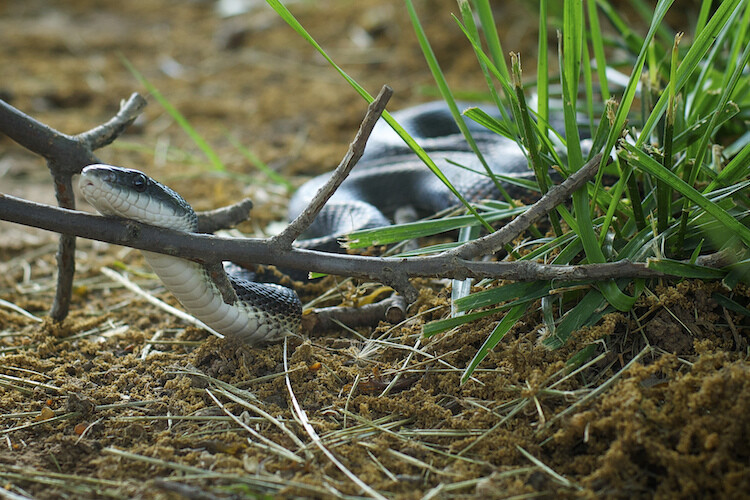
I made this image of a snake after seeing it crawl across the street and into my front yard. Not knowing whether the snake was venomous or not (turns out it wasn’t) I made sure to keep my distance and have an escape plan ready. But I wasn’t about to let an interesting photo opportunity pass me by.

How to Make the Most of Your Camera Gear and Skills

You’ll learn what gear you need

Several years ago I took the following picture of a spider outside my house and thought it was decent. But it was not nearly as good as it could have been because my lens would not focus any closer. (Are you seeing a theme here? You don’t need to go far to take wildlife photos!)

There were also problems with the picture from a compositional standpoint: the light is too harsh, the subject is somewhat unclear, and it’s not all that obvious exactly what is happening.

How to Make the Most of Your Camera Gear and Skills

One of my earlier photos of a spider eating on an evening snack. Much like the grasshopper, this picture clearly has some problems.

As I learned more about my gear while refining my skills I realized that I simply didn’t have what I needed to take close-up shots of bugs and insects. So I bought a set of close-up filters for about $ 35 that allowed me and 50mm lens to get much closer to subjects than before.

I also spent time studying light, composition, mood, emotion, and other principles of photography because I knew I had a lot to learn in those areas. The result is a similar image that I took recently which, in my opinion, is far superior to its earlier counterpart.

How to Make the Most of Your Camera Gear and Skills

It took several years and hundreds of shots before I was able to get a photo I was happy with.

Use what you have to its potential

The lesson here is that you don’t necessarily need to buy new equipment to get the kinds of shots you want. But you do need to know how to use what you’ve got and what you know.

Are you shooting with the kit lens that came with your camera? That’s fine! Those lenses are great for wide-angle shots and short telephoto images, and you can get fantastic shots especially if you have plenty of light.

Your camera might even have features you don’t know about, like fast autofocus or good high ISO capabilities that would make it well suited for sports or nighttime photography. The more you learn about what you have, the more photographic possibilities you will see open up right in front of your eyes.

Manage your expectations

No matter what type of photography you want to pursue it is essential that you have your expectations in line with the reality of what you are attempting to do.

If you want to take amazing poster-worthy images of basketball players going for a slam dunk, by all means, go for it! Are you looking to capture some brilliant wedding photos and fun memories from the reception afterward? Or maybe you want to do like I did and get into photographing animals and wildlife.

Have patience

Whatever type of photography you want to pursue, know that you won’t get from here to there overnight. Getting the pictures you want takes years of practice, education, and an intimate knowledge of what your photography gear can and can’t do.

Pursuing those photos is certainly a lofty and admirable goal and one that is obtainable given enough time and effort. But when you start out your photos will almost certainly not look like what you might be picturing in your mind.

How to Make the Most of Your Camera Gear and Skills

Be like this cottonwood borer beetle and reach for the stars! Just know that it might take a little while to get there.

Even if you can clearly define what you mean by portrait, sports, wedding, wildlife, landscape, real estate, or family photography and you have a solid understanding of your camera gear and your own abilities, your initial pictures will probably fall short of your expectations.

That’s perfectly fine, and it’s all part of the process of growing as a photographer. As long as you don’t let your initial shots get you down. Go into it with an understanding that you have time and room to grow. In the meantime, don’t let anyone tell you your pictures aren’t good enough, you don’t have the right gear, or you aren’t as skilled as you need to be.

This photo represents my White Whale: a goal I have been pursuing but always seems out of reach. I always seem to end up with images like this which are almost there…but not quite. Someday I would really like to get a shot of a bee drinking nectar from a flower, and I will keep at it until I finally get it.

Conclusion

What are some of your photography goals, and what are you doing to make those goals happen? Is there a type or style of photography you have always wanted to try but never thought you could do? Leave your thoughts in the comments below–I’d love to hear from the DPS community on this and hopefully help others find some encouragement and inspiration on their photographic journey.

The post How to Make the Most of Your Camera Gear and Skills by Simon Ringsmuth appeared first on Digital Photography School.


Digital Photography School

 
Comments Off on How to Make the Most of Your Camera Gear and Skills

Posted in Photography


HP reveals the ZBook x2: The ‘world’s most powerful detachable PC workstation’

18 Oct

$ (document).ready(function() { SampleGalleryV2({“containerId”:”embeddedSampleGallery_9365668628″,”galleryId”:”9365668628″,”isEmbeddedWidget”:true,”standalone”:false,”selectedImageIndex”:0,”startInCommentsView”:false,”isMobile”:false}) });

Step aside Microsoft, because HP just released a monstrous ‘detachable PC workstation’ that can compete with powerful laptops like the Surface Book 2 released yesterday… but in a form factor that looks more like a Surface Pro. Meet the HP ZBook x2: the so-called “world’s most powerful and first detachable PC workstation.”

In HP’s own words, this computer “was designed to solve the performance and mobility needs of artists, designers and digital imaging professionals who need to push Adobe Creative Cloud and other professional applications to the limit.” So what makes this computer more capable than HPs other two-in one solutions: the HP Spectre x2 and HP Elite x2. In a word: performance.

While previous two-in-one iterations with these kinds of specs put most of the components—the main CPU, GPU, etc—into the base unit, the HP ZBook x2 flips the script. The bluetooth keyboard is basically just that: a bluetooth keyboard; even when the tablet is detached completely it maintains the full performance from its CPU and GPUs. Think of it like a Surface Pro dressed up to star in the next Iron Man movie.

Spec-wise, the HP ZBook x2 can be configured with 8th Gen Intel Core i7 graphics, a discreet NVIDIA Quadro M620 graphics card with 2GB of dedicated GDDR5 memory, up to 2TB of local PCIe SSD storage, and up to 32GB of RAM. All of this sits behind a 14-inch 4K multi-touch screen with optional 10- bit, one-billion color HP DreamColor display that’s been calibrated 100 percent of Adobe RGB.

The computer can be used in four different modes:

  • Laptop Mode: attached to the bluetooth keyboard.

  • Detached Mode: Use the tablet with the new HP pen, while still having full access to your Bluetooth keyboard shortcuts off to the side.

  • Docked Mode: Using the ZBook Dock, the x2 can power two additional 4K displays or five total displays.

  • Tablet Mode: totally detached and disconnected from the keyboard, the x2 maintains full graphics performance.

In most modes, you’ll want to use the ZBook x2 with the new battery-free HP pen, which is based on Wacom EMR technology and offers 4,096 levels of pressure sensitivity with multi-directional tilt capabilities and a dedicated eraser. And when it’s docked and powering two 4K displays, the setup can look pretty … intense:

In short, the ZBook x2 is trying to be all things to professional creatives and designers. Instead of using some combination of laptop, iPad, and Wacom tablet, you can replace all of them (ostensibly) with one ZBook x2. And since it was designed in collaboration with Adobe, you can bet Photoshop, Lightroom, Illustrator, Premiere, and other powerful CC apps will work exceptionally well.

To learn more about the HP ZBook x2, head over to HP’s website. The new ‘detachable workstation’ will go on sale in December and starts at $ 1,750 for the base model with a dual core 7th generation Intel Core i7 CPU—no word yet on how much more expensive it’ll be to fully spec out one of these.

Press Release

HP Unveils World’s Most Powerful and First Detachable PC Workstation

HP ZBook x2 PC Allows Designers to Unleash the Power of Adobe Creative Cloud and Other Professional Applications

LAS VEGAS, NV – October 18, 2017 — Today at Adobe® MAX, HP will showcase the world’s most powerful detachable PC1 designed to solve the performance and mobility needs of artists, designers and digital imaging professionals who need to push Adobe Creative Cloud® and other professional applications to the limit. The performance of the HP ZBook x2, the world’s first detachable workstation,15 increases productivity and allows digital creators and storytellers the freedom to work when and where inspiration strikes.

HP’s reinvention of detachable PCs began earlier this year with the introduction of the HP Spectre x2 and the HP Elite x2. Today’s introduction of the HP ZBook x2 completes HP’s trifecta with its most powerful detachable solution targeted for the creative community. With this new offering, HP is extending its PC leadership by pioneering a new era for detachable PCs that offer superb performance, elegance and efficiency.

“As the world’s most powerful and first detachable PC workstation, there is no device better suited to turn the vision of artists and designers into reality,” said Xavier Garcia, vice president and general manager, HP Z Workstations, HP Inc. “With the HP ZBook x2, we are delivering the perfect tool to accelerate the creative process – with unprecedented power, performance and natural ease-of-use. This device will make it easier than ever for creators to do what they do best – bring inspiring new ideas to life and enrich the world around us.”

Liberating Digital Creativity

The HP ZBook x2 allows designers to effortlessly create with quad-core Intel® CoreTM processors2, twice the memory of any other detachable PC3 and NVIDIA® Quadro® Graphics that deliver 73 percent higher graphics performance compared to the Surface Pro4. A quiet, dual-fan active cooling system is designed to dissipate heat from the powerful graphics card and processor. To better meet the needs of the creative community, including Adobe users, HP also developed customizable, application-aware HP Quick Keys, to provide artists with 18 time-saving shortcuts.

“At Adobe, our goal is to accelerate creativity. Creative Cloud is the platform that enables us to deliver powerful innovation in our apps and cloud-based services supported by Adobe Sensei with artificial intelligence at the heart of every customer experience,” said Mala Sharma, vice president and general manager, Creative Cloud Product, Marketing and Community. “Adobe is thrilled with our collaboration with HP, which we know will further fuel creativity and give Creative Cloud members more power and freedom to create wherever inspiration strikes.”

Today, many creative professionals use multiple devices such as a MacBook Pro plus an iPad to accomplish the same tasks that can be done on the HP ZBook x2. Knowing that ultimate mobility is important, HP created a single device that delivers the same performance capabilities from inking to docked mode.

HP’s most versatile detachable to date, the HP ZBook x2 operates in four modes: laptop, detached, docked and tablet.

  • In laptop mode, the HP ZBook x2 is a powerful mobile workstation with a keyboard leveraged from the HP ZBook Studio.

  • In detached mode, it allows users to create on the tablet with HP’s most accurate and expressive pen while still having full access to all of their shortcut keys with the Bluetooth®-enabled keyboard off to the side.

  • In docked mode, the HP ZBook x2 can power two additional 4K displays or five total displays.

  • In tablet mode, it maintains full graphics performance allowing users to capture ideas with powerful NVIDIA 3D graphics.

Using HP’s most natural pen with the HP ZBook x2, users can create without interruption as the pen never needs to be charged. The battery-less, HP-designed pen based on Wacom EMR technology, responds instantly to every nuance of the artist’s hand for natural motion. The HP ZBook x2 offers 4,096 levels of pressure sensitivity with multi-directional tilt capabilities and includes a dedicated eraser.

As a member of the world’s most secure and manageable mobile workstation family10, the HP ZBook x2 features HP Sure Start Gen311 for BIOS protection, TPM 2.0 for hardware-based encryption to secure credentials, secure authentication methods through the Smart Card Reader and HP’s Client Security Suite Gen312 to protect data, device and identity, including facial recognition and fingerprint reader.

HP ZBook x2 Highlights

The HP ZBook x2 embodies the intersection of mobility and performance in a fully-machined, aluminum and die-cast magnesium body starting at just 3.64 pounds5 and 14.6 mm thin when in tablet mode, and 4.78 pounds5 and 20.3 mm in laptop mode. The HP ZBook x2 has a stunning 14-inch diagonal, 4K multi-touch display with an optional 10- bit, one-billion color6 HP DreamColor display calibrated to 100 percent of Adobe RGB. The HP ZBook x2 has the world’s most advanced detachable PC display16 and includes an anti-glare touchscreen allowing users to immerse themselves while working in any lighting condition. At the desk, it can power dual 4K displays from the HP ZBook Dock with ThunderboltTM 37.

This detachable PC has up to 10 hours of battery life13 for maximum productivity and ultra-fast recharge (50 percent in just 30 minutes8). The HP ZBook x2 offers up to 4.2 GHz of Intel®Turbo Boost, 32 GB RAM over dual channels for more responsiveness under heavier workloads like complex layering in Photoshop. The model’s HP Z Turbo Drive storage is up to 6X faster than SATA SSD and up to 21X faster than traditional HDD storage. The HP ZBook x2 offers up to 2 TB9 of local PCIe storage and incorporates a full-sized SD card slot, perfect for professional photographers. Using the dock or Thunderbolt 3 ports on the HP ZBook x2, it can transfer large files from cameras, external storage, phones and other peripherals.

Designed to go anywhere and handle the toughest workloads, the HP ZBook x2 mobile workstation is designed to pass MIL-STD 810G testing14. The HP ZBook x2 also undergoes dozens of tests for certification and optimized performance with the industry’s leading software providers like Adobe and Autodesk.

HP ZBook x2 Pricing and Availability

HP ZBook x2 is scheduled for availability in December starting at $ 1,749. The datasheet is available here.

Articles: Digital Photography Review (dpreview.com)

 
Comments Off on HP reveals the ZBook x2: The ‘world’s most powerful detachable PC workstation’

Posted in Uncategorized


Lego’s Largest and Most Expensive Kit Ever is an $800 Millennium Falcon

08 Sep

[ By SA Rogers in Design & Products & Packaging. ]

You don’t get a sense of just how large and complex Lego’s latest kit really is until you see it someone’s arms, or taking up the entire table surface in front of them. A gift for true enthusiasts of both the toy brick company and Star Wars, the Ultimate Collectors Series Millennium Falcon is the single largest and most expensive Lego kit ever sold, presented in a huge box full of 7,541 pieces. In fact, the box is so heavy that Lego teased on Twitter that they’d have to add wheels and a handle so customers can get it out the door.

An update on the last Ultimate Collector’s Millennium Falcon, which was released in July 2007, this new set expands it by over 2,000 pieces, adding a stunning range of details that will delight discerning fans. You can even swap out the deflector dishes to either look as they did in the original Star Wars trilogy or in The Force Awakens.

It comes with 10 minifigures, including Leia, C-3P0, Han and Chewbacca from the trilogy and Finn, Rey, BB-8, ‘Old Han’ and two porgs from The Force Awakens. You can even spin the original Han and Leia’s heads around to reveal optional faces outfitted with air respirators.

Fans who missed out on the 2007 model still pay up to $ 3,000 in the rare occasion that one pops up on eBay, and Lego expects the new set to sell out, so if all of this news has you swiping everything off your dining table in anticipation, you’d better run out and get one as soon as it goes on sale October 1st.

Share on Facebook


[ By SA Rogers in Design & Products & Packaging. ]

[ WebUrbanist | Archives | Galleries | Privacy | TOS ]


WebUrbanist

 
Comments Off on Lego’s Largest and Most Expensive Kit Ever is an $800 Millennium Falcon

Posted in Creativity


The 10 Most Important Marketing Strategies to Grow Your Photography Business

31 Aug

No photographer wants to get into the photography business with the aim of becoming a marketing expert. But the reality is that if you don’t focus on the marketing and business end of photography, your business will not be able to survive long enough to do the fun stuff. It stinks, but this is the truth.

The 10 Most Important Marketing Strategies to Grow Your Photography Business

Luckily, the learning curve at the beginning is the toughest part, and as you get used to the business side, everything will come much more naturally to you. Eventually, you might even learn to enjoy it, or at least appreciate the work, after you see how powerful it can be in getting you where you want to go.

So here are 10 of the most important strategies you can start right away to make sure your photography business succeeds.

1. Use Your Personal Network

The 10 Most Important Marketing Strategies to Grow Your Photography Business

Nobody wants to be that annoying marketer that always pushes their business on their friends and acquaintances. However, this fear can push photographers way too far in the opposite direction, never working with the people that have grown to trust them the most. Your personal network is your strongest asset and even more so at the beginning of your photography business. These are the people who will give you your first jobs and introduce you to your first clients.

Photography is unique in that no matter what genre you are involved in, people in your network will most likely need your services at some point, whether it’s wedding or event photography, business portraiture, family portraiture, or print selling. So let your network know what you do and how you can help them.

Create a mailing list and send out an announcement to your network. Show your best work, talk about your photography business, and make sure to explain how you can help people. How can your business benefit them? They will not know unless you tell them. In addition, make sure to ask for referrals.

2. Take Advantage of Local Marketing

The 10 Most Important Marketing Strategies to Grow Your Photography Business

Whenever you say the word marketing these days, for some reason everyone immediately starts talking about social media. That is funny, because as important as social media is, it should be one of the last steps to think about for any marketing plan.

Your first step should be working within your local community. Similar to the last point, these are people who know you. You are just down the street from them. There are businesses of all types in your community that can probably use your work, so create a plan for how to get in front of them.

Make a good impression

Keep in mind that you only get one first impression, so be smart about how you reach out. First and foremost, figure out how you can benefit them. If you are going to reach out to someone, you need to know how their business or life will be better with your services and explain how you can help. Always be kind and courteous with their time, and if possible see if you can get an introduction before contacting someone cold. Does anyone in your personal network know the person you want to contact? That’s always a great first step, but if not, just reach out yourself.

The more you are seen, the more people in your community will notice you and start to think about working with you. Whether it’s local events, business events, fundraisers, you name it, you should make the point to be there, particularly at first. This is the way to create new relationships and to spread your reach.

Similarly, reach out to the other photographers in your area. Many photographers will assist others when they need help and vice versus, and this will help strengthen everyone as a whole. It can be easy for photographers to feel competitive with each other but avoid this. The ones that work together and refer each other will do much better in the long-run than the ones who try to do it all on their own.

3. Create a Mailing List

The 10 Most Important Marketing Strategies to Grow Your Photography Business

Use a mailing list provider such as MailChimp or Aweber to keep up with your clients, personal network, and fans. Email lists have the highest engagement of any form of marketing, and it is the way for you to stay on people’s minds.

Ask people if you can add them to your list, and always have them opt into the subscription. Put signup forms or popups on your website that encourage people to join. Consider giving away something to encourage them to do so, such as free computer wallpapers of your photography.

When sending out emails, create content that your list will enjoy. Do not sell too often with it. The more benefit and interest that you provide for the people on your list, the more they will enjoy it and the more they will like you. Then when you sell, they will be primed to purchase your services or product. When it’s time to sell, sell.

4. Create a Personal Project

The 10 Most Important Marketing Strategies to Grow Your Photography Business

This image is part of a personal project I’ve been working on involving talking to and making portraits of people in my community.

Personal projects will not bring new clients to you right away, and they will take away time from building your business and making a living. This is the tougher side of doing projects, but they are immensely important for the long term growth of your business and for growing your voice as a photographer. A project can be done slowly over a long period of time, so you can build it into your weekly schedule.

Think of an idea that will resonate with both you and your community. This is a way of keeping your passion for photography alive. It will also help to set you apart from the other photographers in your community. It will show people that you are an interesting person. They will be more interested in working with you, even if the paid work you do is a completely different genre. It will be a way for you to gain press coverage and something for you to talk about to engage people. All in all, a personal project will make marketing yourself so much easier, and it will feel much more natural.

5. Respond Quickly

There is no point in building your photography business or marketing your work if you are not going to respond quickly to inquiries. Respond quickly at every step of the process throughout a job as well. Responding quickly does not have to mean within the hour, although sometimes that can help when getting a new inquiry. It can mean responding within 12 hours or a day, as long as you are consistent and prompt.

Fortunately for you, a lot of photographers are terrible at this, so this will quickly set you apart. It will show people that you are a responsible person, and it will make them more comfortable working with you.

6. Build Your Connections (Both Local and Online)

The 10 Most Important Marketing Strategies to Grow Your Photography Business

Building your network is a lifetime process. As you go further and further in your career, you will begin to create connections with people who can do more and more for you (and who are tougher to get in contact with).

Whichever point in your career you are at, and whatever level your skill level as a photographer, start at that point and build connections there. Then over time, work your way up the ladder. Be patient, be smart, and don’t try to push too hard at first, particularly with people who don’t know you. First impressions are impossible to get back. Grow your network carefully and consistently.

7. Keep Your Existing Clients Coming Back

It can help to create a client management system. You can start off with an excel document at first and eventually grow to a more robust system, such as Sprout Studio. Keep in contact with your best clients, and even consider sending them holiday cards or a small gift to stay on their minds. A small gesture can go a long way, and it is much easier to get an existing client to come back than it is to reach a new one.

8. Makes Sure Your Website Sells

The 10 Most Important Marketing Strategies to Grow Your Photography Business

Think about your website as your number one selling tool. Whatever your primary service is, your site should be developed for the specific purpose of leading people to hire you for that service or for purchasing one of your products.

Study the basics of copywriting, create specific sales pages for your offerings, and even consider creating sales funnels that lead people to an end goal. These can be very powerful ways of priming people to want to work with you.

9. Take Advantage of SEO

SEO, or ranking highly in search engines, is a long term strategy that takes some studying to understand how to do (beyond what we will be able to cover completely here). My belief is that you should always focus on local networking first, as that has the ability to get you very quick gains, whereas an SEO campaign can take years to truly get you where you want to be.

But that being said, SEO should not be ignored, because most people will use Google to find the right photographer for them. Always remember, the goal of Google is to serve up the most relevant websites for the query topic. If you want to rank for a specific term, make sure to create the best possible page that will answer that query. Without this, an SEO strategy will not work.

The 10 Most Important Marketing Strategies to Grow Your Photography Business

Listen to Google

Google runs on links, so you need to figure out how to get other related websites to link to yours. It’s interesting because while it may seem annoying to gain these links, Google is actually forcing you to do things you should be doing in the first place.

Network with websites that you would like to be featured on, and figure out how you can provide that site with some value before you contact them. You will get nowhere if you just ask for something, but if you contact them willing to help them out, it will help immensely. As you grow with your abilities and your marketing, your opportunities for getting covered will grow as well. Internet marketing gets much easier over time.

This is another area where a personal project can help grow your business. People want to share interesting topics, so even if you are not generating income from the project directly, you can use the project to get covered on websites and to make people more aware of you, which will ultimately help improve SEO and grow your network and mailing list.

10. Create a Daily Plan

The 10 Most Important Marketing Strategies to Grow Your Photography Business

All of this is way too much to do in a feverish month of working. Similarly, your marketing skills will grow gradually, so take your time and be strategic about how you work through your marketing plan. You do not want to spend a whole month contacting everyone you can only to burn out soon after.

Set aside a daily block of time to build your business. Contact a few people every day or every few days. Use the feedback from those to tweak your next pitch. Over time, you will figure out what works and what does not work. A small amount of work each day will eventually snowball into much bigger things.

Conclusion

The main theme throughout this article is that you need to put yourself out there. The work will not just come to you. Create an organized plan, stick to it, and go for it. Be both careful and relentless. That is what is needed.

It may seem like there is a huge wall in front of you that is impossible to cross. But if you chip away at it a little bit each day, within a few years you will find that you have opened up many paths through it.


For even more business help – join the Focus Summit 2017 Online Business and Marketing Conference for Photographers on Sept 26-28th 2017. We will cover marketing, business development, law, SEO, branding, blogging, and much more. Use the code “DPS” for a $ 50 discount.

The post The 10 Most Important Marketing Strategies to Grow Your Photography Business by James Maher appeared first on Digital Photography School.


Digital Photography School

 
Comments Off on The 10 Most Important Marketing Strategies to Grow Your Photography Business

Posted in Photography


Barack Obama photo and quote becomes most popular tweet of all time

17 Aug
Official White House Photo by Pete Souza

Former president Barack Obama’s recent photo response to the violent events in Charlottesville, VA has officially become the most popular tweet of all time. The 44th President of these United States tweeted the official White House photograph above—captured by the great Pete Souza—alongside part of a quote by the late Nelson Mandela:

“No one is born hating another person because of the colour of his skin or his background or his religion. People must learn to hate, and if they can learn to hate, they can be taught to love, for love comes more naturally to the human heart than its opposite.”

As of this writing, the tweet has received over 53,000 replies, 1.3 million retweets and nearly 3.4 million likes.

The new record just goes to show: pair a powerful message with a powerful photograph, and you’ve got a lot more power than the proverbial “1,000 words” that photo is supposedly worth.

Articles: Digital Photography Review (dpreview.com)

 
Comments Off on Barack Obama photo and quote becomes most popular tweet of all time

Posted in Uncategorized


Social Media Vs. Reality video calls out the most common Instagram lies

06 Aug

Anti-bullying organization Ditch the Label—the folks behind this 2017 survey that found Instagram is terrible for teens mental health—created a funny-but-also-very-sad video to accompany their findings. The video is called “Are You Living an Insta Lie? Social Media Vs. Reality”.

The video covers “some of the funniest and most common Insta Lies posted on social media,” and they really did cover most of their bases. Some of the tropes covered include #wokeuplikethis photos, the start of a ‘healthy’ juice cleanse, not-so-blissful relationship bliss and lots more.

We’re not sure any professional photographers use Instagram like this, but chances are good we’ve all… bent the truth on Instagram a time or two. If you can think of any common photographer Insta Lies, share them in the comments.

Articles: Digital Photography Review (dpreview.com)

 
Comments Off on Social Media Vs. Reality video calls out the most common Instagram lies

Posted in Uncategorized


Study finds most people can’t spot manipulated photos, can you?

21 Jul

A new photography study from researchers at the University of Warwick has found that many people aren’t very good at determining whether an image has been digitally manipulated.

The study, which has an online test component that anyone can take, asks volunteers to look at 10 different images and guess whether each is altered or unaltered. Volunteers are also tasked with choosing the part of the image they think was altered, and rating their certainty about the alteration(s) or lack thereof.

After compiling the results, the researchers found that only 65% of altered images were correctly identified by volunteers; even less unaltered images were identified, at just 58%. Given that chance performance is 50%, the results show that the volunteers did little better than they would have with simple guessing. Furthermore, the team found that age and gender did not affect the results, with the difficulty being notable across all volunteers.

“In the digital age, where photo editing is easy and accessible to everyone, this research raises questions about how vigilant we must be before we can trust a picture’s authenticity,” said the university in a release. “It is crucial that images used as evidence in courts—and those used in journalism—are better monitored, to ensure they are accurate and truthful, as faked images in these contexts could lead to dire consequences and miscarriages of justice.”

The question is, can a bunch of photography nerds wreck the curve? Take the online component and let us know how you did in the comments.

Articles: Digital Photography Review (dpreview.com)

 
Comments Off on Study finds most people can’t spot manipulated photos, can you?

Posted in Uncategorized


Palaces of Self-Discovery: Photos Document the World’s Most Beautiful Libraries

13 Jul

[ By SA Rogers in Art & Photography & Video. ]

Symmetrical photographs reveal the elegant geometries present in the architecture of some of the world’s most beautiful libraries, captured by Thibaud Poirier. The Paris-based photographer has traveled throughout Europe, visiting places like the Bibliotheque de la Sorbonne, the modern white Stadtbibliothek in Stuttgart, Dublin’s Trinity College Library and the church-like Biblioteca Angelica in Rome to highlight their classical beauty and make us all wish we were roaming around gazing at those rows of books right now.

“Like fingerprints, each architect crafted his vision for a new space for this sacred self-exploration,” says Poirier. “These seemingly minute details are everywhere, from the balance of natural and artificial light to optimize reading yet preserve ancient texts to the selective use of studying tables to either foster community or encourage lonely reflection. The selection of these libraries that span space, time, style and cultures were carefully selected for each one’s unique ambiance and architectural contribution.”

The photographer calls this library series ‘Palaces of Self-Discovery,’ noting that they provide the same kind of worship space and community interaction as a church, even while the act of reading is typically a solitary one. Within each of these buildings is countless opportunities to lose oneself in another place or time, take on another person’s identity and temporarily forget about all of our cares and worries.

The photos also offer something we couldn’t get from these libraries in real life: the chance to see them empty of people. Poirier seems to have gained permission to enter each library before or after opening hours to get his shots, further emphasizing the sense of solitary exploration. See the whole series at Thibaud Poirier’s website.

Share on Facebook


[ By SA Rogers in Art & Photography & Video. ]

[ WebUrbanist | Archives | Galleries | Privacy | TOS ]


WebUrbanist

 
Comments Off on Palaces of Self-Discovery: Photos Document the World’s Most Beautiful Libraries

Posted in Creativity