RSS
 

Posts Tagged ‘Monuments’

Memorable Memorials: 10 Extraordinary War Monuments

28 May

[ By Steve in Culture & History & Travel. ]

These extraordinary war monuments stand out from the crowd in commemorating those who have fallen while performing their duty in the service of their country.

Memorial Day was formerly known as “Decoration Day” and was traditionally celebrated on May 30th – a date upon which no major battles had been fought. Memorial Day differs from Veterans Day in that the latter honors veterans of war. We lead off with a unique war memorial designed to fulfill its mission, as it were, on only one day every year: November 11th, at 11:11am, no less. The Anthem Veterans Memorial in suburban Phoenix, Arizona, was dedicated in 2012. The monument’s white stones, red bricks and blue sky reflect the colors of the American flag.

The Anthem Veterans Memorial consists of five staggered stone pillars signifying the five branches of the United States military. Designer Renee Palmer-Jones precisely aligned the pillars so that at 11:11am on November 11th, the sun’s rays pass through elliptical cutouts in the five pillars. The sunlight spotlights a mosaic of The Great Seal of the United States set into the red-bricked Circle of Honor.

Soldierstone Memorial

Most people have neither seen nor even heard of Soldierstone… and that’s just as the memorial’s creator, the late Stuart Allen Beckley, intended. The retired Army lieutenant colonel and Vietnam veteran sought to pay tribute to the uncredited people who assisted foreign soldiers over many decades of war in Southeast Asia.

Secreted in a clearing deep in Colorado’s 1.8-million-acre Rio Grande National Forest at 10,000 feet above sea level, Soldierstone‘s central 10-ft-tall monument bears quotes engraved in Vietnamese, Laotian, Cambodian and French – the languages of America’s allies through thirty years of fighting. Flickr user MJM1977 visited the memorial on July 24th of 2014.

Polar Bear Monument

The Polar Bear Monument in Troy, Michigan, commemorates fallen soldiers of the North Russian Expeditionary Forces. About 75 percent of the 5,500 Americans sent to Archangel, Russia as part of the post-WWI Allied Intervention were from the Detroit area and called themselves the “Polar Bears”.

96 soldiers were KIA in Russia and in 1929; the remains of 56 were recovered and subsequently interred on this site on May 30th of 1930. Flickr user Jazz Guy (flickr4jazz) visited the Polar Bear Memorial on May 2nd, 2011.

Next Page – Click Below to Read More:
Memorable Memorials 10 Extraordinary War Monuments

Share on Facebook


[ By Steve in Culture & History & Travel. ]

[ WebUrbanist | Archives | Galleries | Privacy | TOS ]

WebUrbanist

 
Comments Off on Memorable Memorials: 10 Extraordinary War Monuments

Posted in Creativity


Makeup Not War: Soviet Army Monument’s Many Makeovers

29 Jan

[ By Steve in Art & Street Art & Graffiti. ]

soviet-army-monument-1a

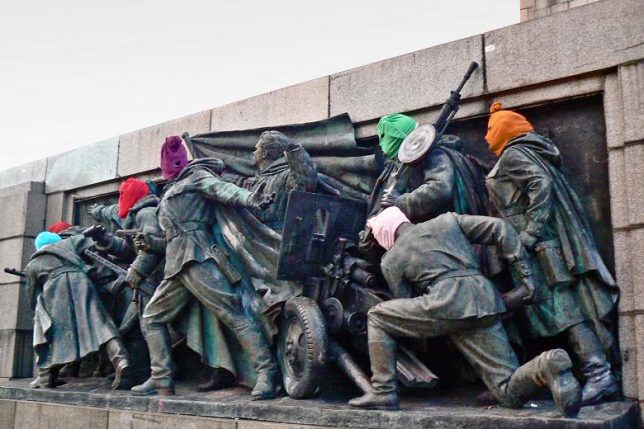
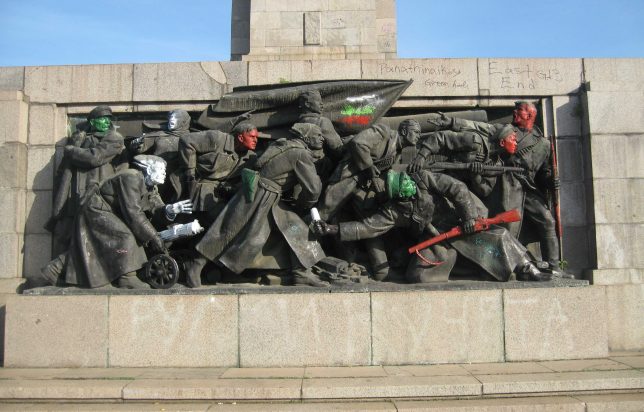
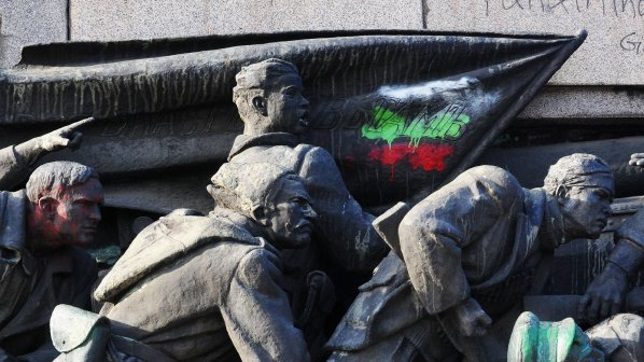
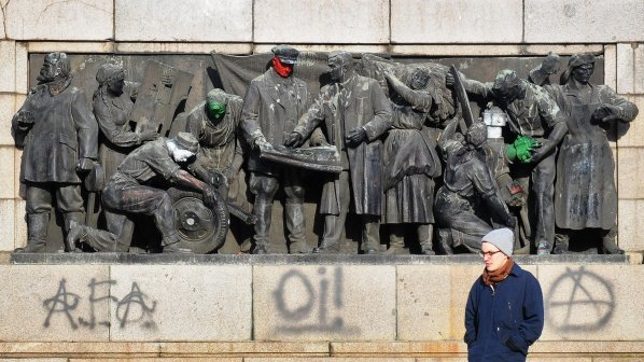
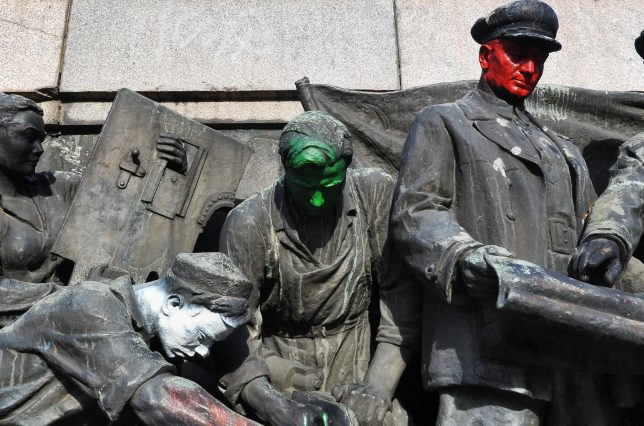
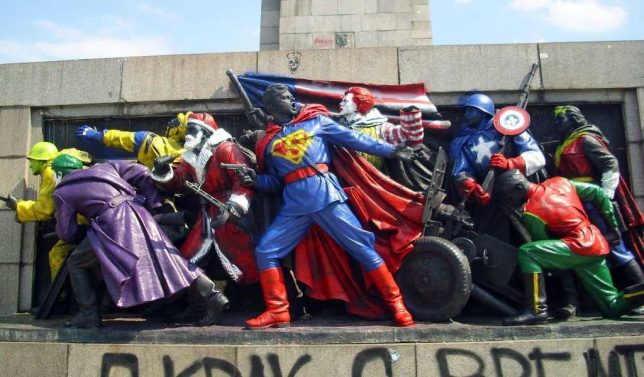
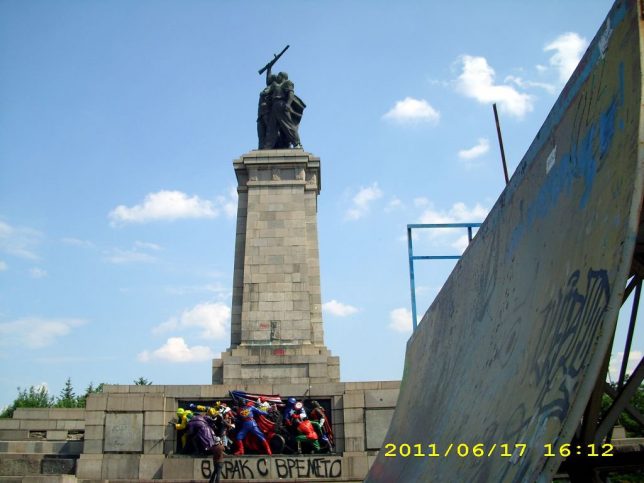
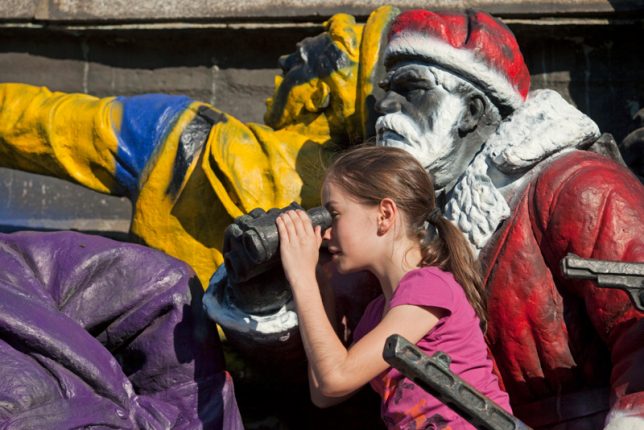
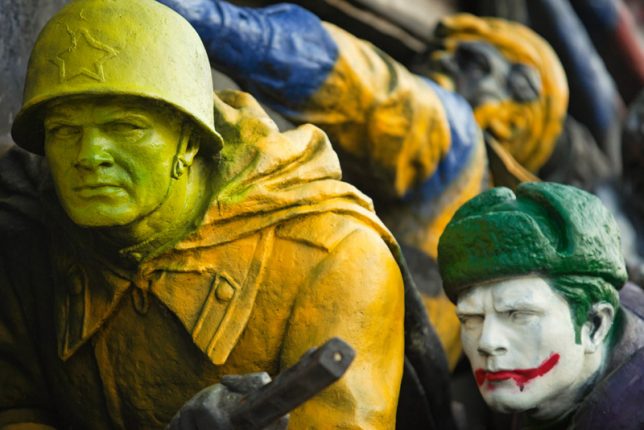
In recent years the Monument to the Soviet Army in Sofia, Bulgaria has become a colorful canvas for protesters, much to the chagrin of Russian politicians.

soviet-army-monument-1d

soviet-army-monument-1b

soviet-army-monument-1q

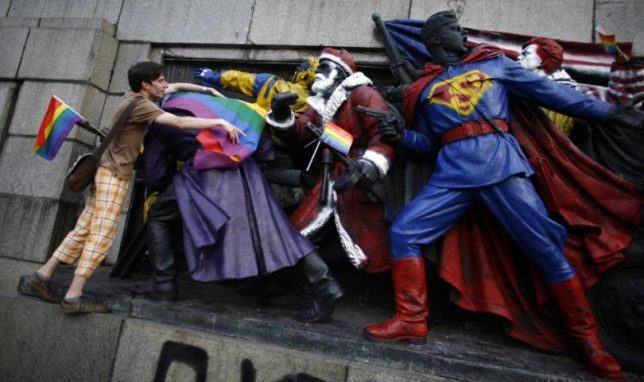
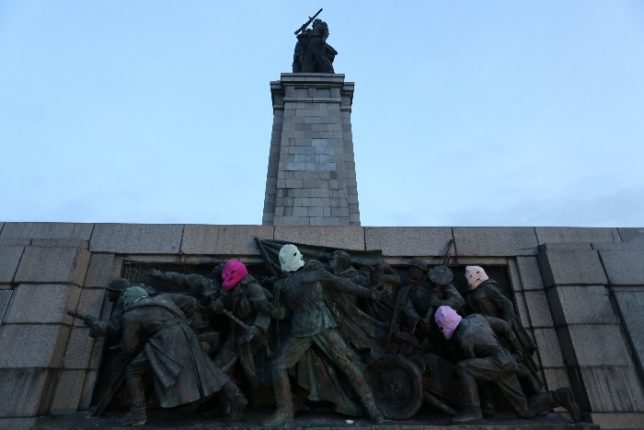
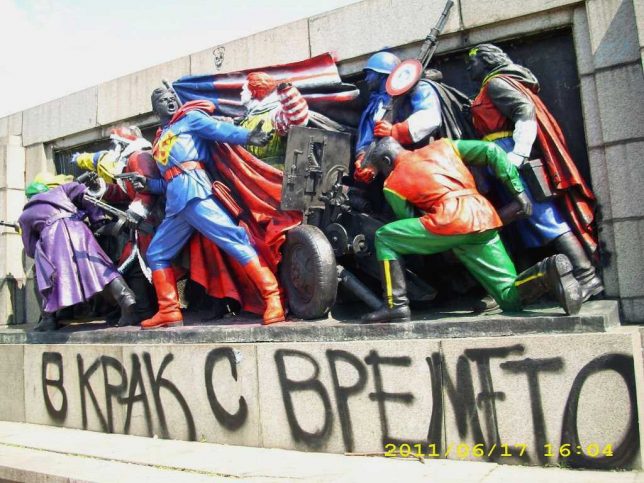
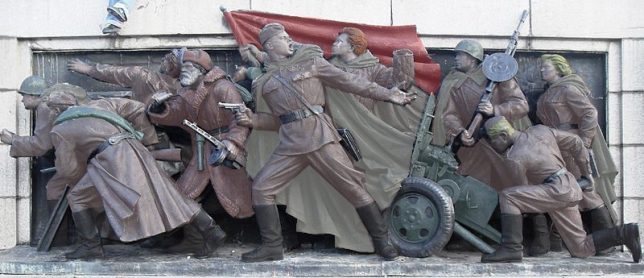
The Monument to the Soviet Army is quite large as military memorials go. Built in 1954, the monument is centered by a 120-ft-tall stone plinth supporting a statue of a Soviet soldier surrounded by admiring Bulgarian women. The monument also features large bronze sculptural compositions on all four sides at ground level. One of these secondary compositions was “artistically vandalized” on June 17th of 2011 by Destructive Creation, a group of street artists who for a variety of reasons have chosen to remain anonymous.

soviet-army-monument-original

soviet-army-monument-1o

soviet-army-monument-1p

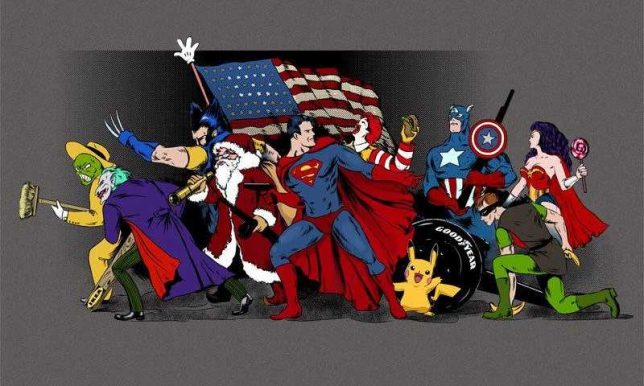
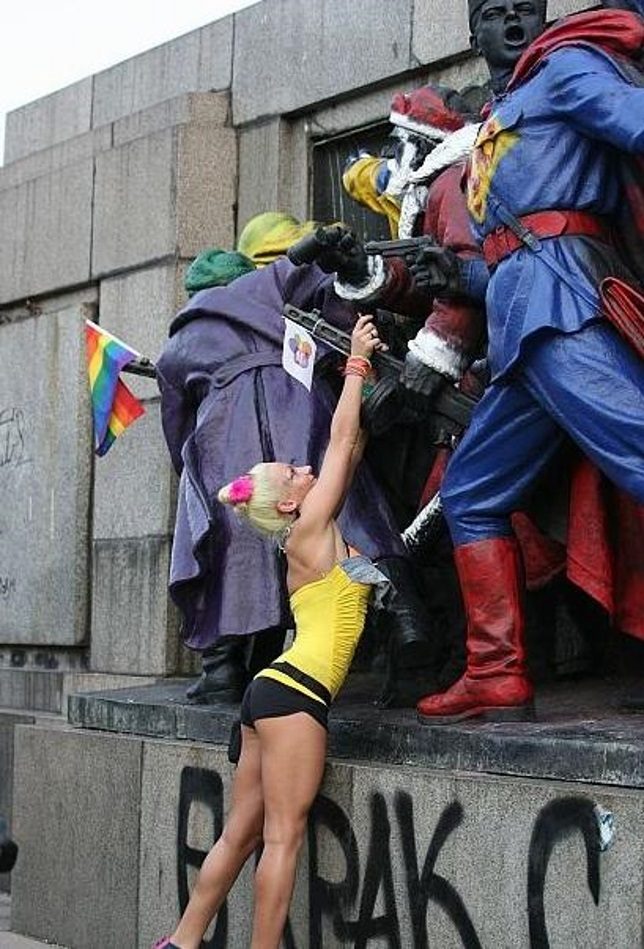
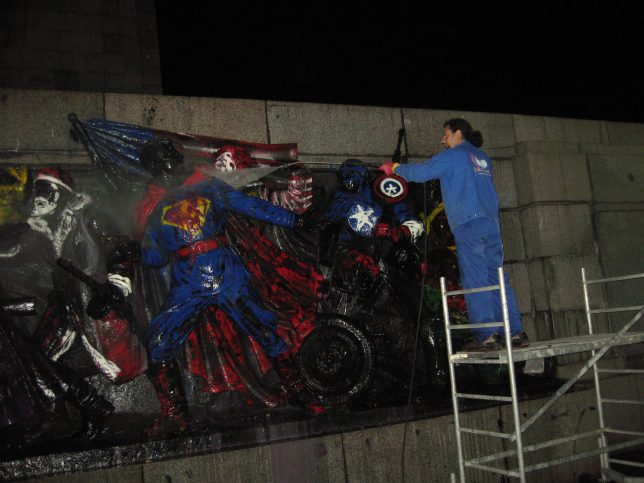
Destructive Creation descended on the monument at night and were able to paint every figure in the pantheon of attacking soldiers without interruption. The result was breathtaking no matter what one’s political bent, as the onrushing platoon of Soviet troops was transformed into a bizarre version of the Justice League: from left to right there’s The Mask, The Joker, Wolverine, Santa Claus, Superman, Ronald McDonald, Captain America, Robin, and Wonder Woman.

soviet-army-monument-1k

soviet-army-monument-1g

soviet-army-monument-1h

soviet-army-monument-1n

Spray-painted black text below the figures translates to “In Step With The Times”. Activists embellished the monument the next day, during the Fourth Annual Sofia Pride Parade, before city workers power-washed the monument.

Mask Communications

soviet-army-monument-2a

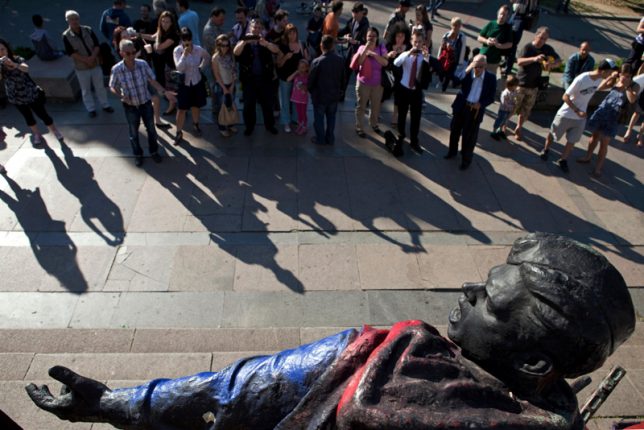
The initial vandalizing of the Monument to the Soviet Army resulted in an explosion of international publicity, mainly due to the skill and content of the artwork. In general the reaction was one of bemused admiration, especially from the global geek community, but Russia’s Foreign Ministry was of a different mind. Not only did Russia vocally condemn the vandalism, they pressed the Bulgarian government to find, arrest and punish the artists. This only served to embolden a host of copycat graffiti artists and make the monument the focus of repeated street art protests.

soviet-army-monument-2b

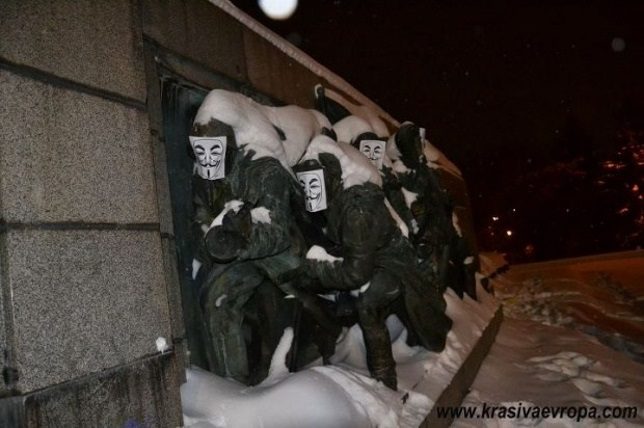
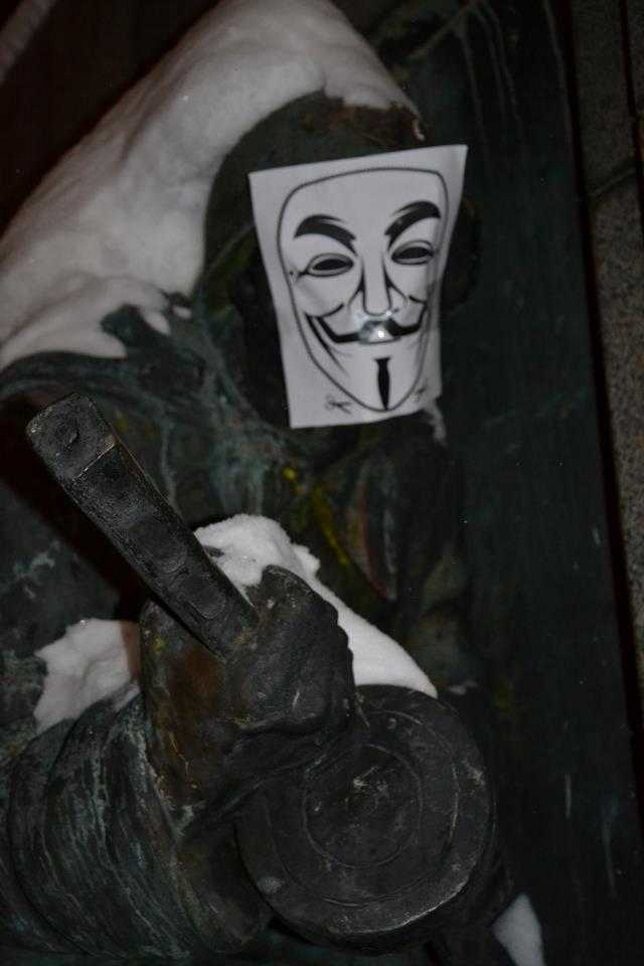
The next such incident occurred on February 10th, 2012 when the monument’s soldiers were fitted with Anonymous masks of Guy Fawkes in conjunction with anti-ACTA (Anti-Counterfeiting Trade Agreement) protests being held all over Europe. Not certain if the perpetrators were anonymous or Anonymous.

Pussy Riot Act

soviet-army-monument-3c

soviet-army-monument-3a

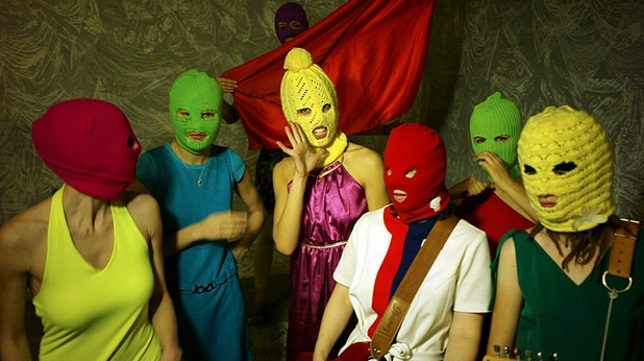
On August 17th of 2012, three previously arrested members of Russian feminist protest punk rock band Pussy Riot were convicted by a Russian court of “hooliganism motivated by religious hatred” and were sentenced to two years’ imprisonment each.

soviet-army-monument-3f

soviet-army-monument-3b

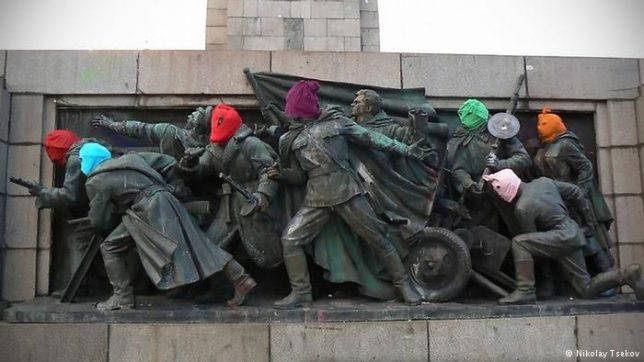
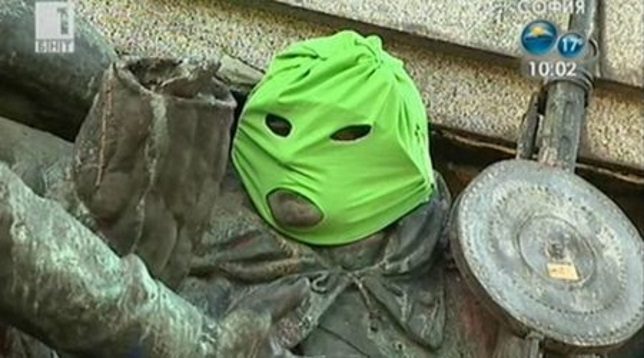
The sentencing was widely criticized outside Russia and on the same day of the conviction, activists placed colorful knit balaclavas (Pussy Riot members’ trademark costume) over the heads of figures at the Monument to the Soviet Army in Sofia.

soviet-army-monument-3d

soviet-army-monument-3e

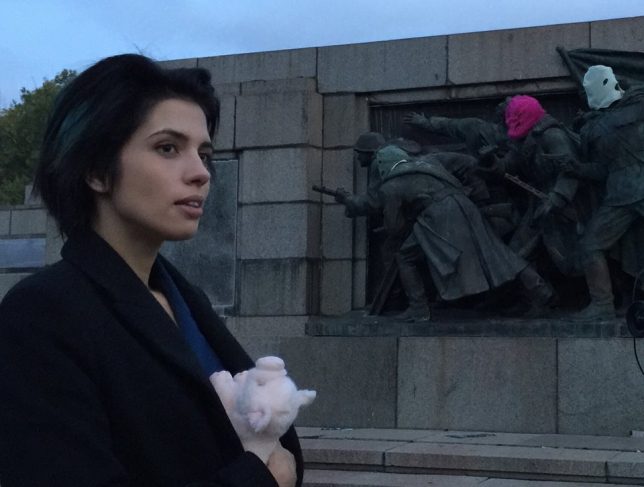
On October 15th of 2015, Pussy Riot member Nadezhda Tolokonnikova visited the monument and participated in a reenactment of the original masking event.

Bulgar Not Vulgar

soviet-army-monument-4c

soviet-army-monument-4d

Observed initially in 2010, the first day of February is officially the Day of Remembrance and Respect to Victims of the Communist Regime in Bulgaria. Approximately 20,000 to 30,000 Bulgarians lost their lives due to state-ordered repression between 1946 and 1990.

soviet-army-monument-4e

soviet-army-monument-4a

On February 1st of 2013, areas on several sides of the Monument to the Soviet Army were daubed with red, green and white paint – the colors of the Bulgarian flag.

Next Page – Click Below to Read More:
Makeup Not War Soviet Army Monuments Many Makeovers

Share on Facebook


[ By Steve in Art & Street Art & Graffiti. ]

[ WebUrbanist | Archives | Galleries | Privacy | TOS ]

WebUrbanist

 
Comments Off on Makeup Not War: Soviet Army Monument’s Many Makeovers

Posted in Creativity


Turn On: Backwards Glances From Famous Monuments

24 Jul

[ By Steve in Drawing & Digital. ]

Photographer Captures The World's Greatest Monuments - The Wrong Way Round

Photographer Oliver Curtis turns his back on some of the world’s most famous monuments, capturing a wholly unexpected side to these familiar cultural icons.

Photographer Captures The World's Greatest Monuments - The Wrong Way Round

If life is a journey and not a destination (to quote Ralph Waldo Emerson), then the ideal photographer to document the trip would be Oliver Curtis. In his Royal Geographical Society exhibition aptly titled “Volte-face”, Curtis visits the world’s most famous monuments and evocative locations… and then turns 180-degrees, snapping the polar opposite of what visitors have come from across the globe to see! The results are often enlightening in their own right, as the above views from the Chairman Mao Memorial Hall in Beijing, China’s Tiananmen Square and the Great Wall of China at Mutianyu illustrate.

American Dreaming

Photographer Captures The World's Greatest Monuments - The Wrong Way Round

Curtis’ odd odyssey unfolded over a period of four years and involved a staggering amount of travel – one would hope he’d enrolled in a frequent flyer program beforehand. From start to finish, however, Curtis never lost sight of his mission “to send our gaze elsewhere and to favor the incidental over the monumental.” The photo above, taken at the White House on a perfect summer’s day, epitomizes his curious yet enlightening vision quest.

Let My People Golf

volte-face_pyramids-giza-egypt

Curtis was inspired to record “counter-views” of the world’s most-photographed places in 2012, while visiting the Pyramids of Giza. Finding an ideal spot to capture the Great Pyramid of Khufu – the largest of the three main pyramids – Curtis glanced back in the direction from which he had came… and one might say he never looked back, er, sort of. “Immediately in front of me and under my feet,” explains Curtis, “the sand of the desert was adorned with an assortment of human detritus; litter, pieces of rusted metal, a large rubber washer and a torn hessian sack. Then, in the mid-distance I saw a newly constructed golf course, its fairways an intense green under the late morning sun.”

Acropolis Now

volte-face_parthenon-athens-greece

“I found this visual sandwich of contrasting colour, texture and form intriguing not simply for the photograph it made but also because of the oddness of my position;” adds Curtis, “standing at one of the great wonders of the world facing the ‘wrong’ way.” Though the locations may differ (that’s the Parthenon in Athens, Greece, above), Curtis’ photographic subjects evoke certain similarities due to they’re being cheek-by-jowl to greatness. Take the white stone bench in the image above: if you didn’t know it shared real estate with one of the world’s most iconic structures, it would seem perfectly at home in most any suburban garden.

Kodak Moment

Photographer Captures The World's Greatest Monuments - The Wrong Way Round

In a world too-often suffused with the profane, these photographs provide a refreshing atmosphere of the mundane by being the antitheses of the associated famous construction. This works on a number of levels: no doubt Lenin would spin in his tomb if he knew a Kodak kiosk was conducting capitalism just outside!

The Rio Thing

Photographer Captures The World's Greatest Monuments - The Wrong Way Round

Far from being overshadowed or perhaps because of it, these images display a subtle narrative all their own. Indeed, these reverse-views spotlight actual locales where workers and random folks display a palpable lack of awe; the consequence of daily exposure (or over-exposure, more likely) to what the rest of the world has put on a pedestal. Speaking of which, the trio above appear oblivious to Rio de Janeiro’s enormous Christ the Redeemer statue looming over them.

Next Page – Click Below to Read More:
Turn On Backwards Glances From Famous Monuments

Share on Facebook


[ By Steve in Drawing & Digital. ]

[ WebUrbanist | Archives | Galleries | Privacy | TOS ]

WebUrbanist

 
Comments Off on Turn On: Backwards Glances From Famous Monuments

Posted in Creativity


Full of Hot Air: Clever Urban Monuments Conceal Exhaust Shafts

20 Jan

[ By WebUrbanist in Architecture & Public & Institutional. ]

exhaust building closeup

Fenced off or set back from streets and sidewalks and often raised on platforms as well, civic monuments are oddly ideal candidates for concealing a peculiar secondary function: the ventilation of subterranean spaces, from sewage systems to subway tunnels.

exhaust sewage monument australia

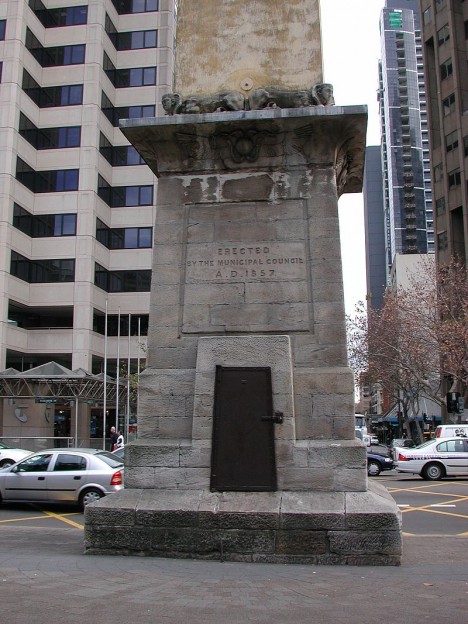
In Sydney, Australia, the Hyde Park Obelisk was built precisely for this purpose back in 1857. Modeled on Cleopatra’s Needle located on the banks of London’s River Thames, the 60-foot-tall tower was designed to allow noxious gases to escape upward from the sewers below. Today, the monument remains in place, but vents the city’s somewhat-less-smelly stormwater system instead.

fountain exhaust cover germany

Meanwhile, in Nuremberg, Germany, a controversial set of statues depicting the trials of married life was commissioned specifically to disguise the subway exhaust port located on the site.

marriage go round

The Ehekarussell (roughly translated: marriage-go-round) is critiqued not because of noxious fumes, but for featuring a sequence of scenes through its statuary: a young happy couple turning older and angrier before one spouse slays the other.

fake townhouse

Another approach that appears in many cities is more architectural, though no less monumental, using anything from small fake shell houses to huge multistory buildings as giant exhaust conduits.

ventilation house

In Burnaby, British Columbia, a boxy little house serves both to vent subway fumes but also acts as a mid-tunnel escape route for emergencies. Many of these structures not only act as exhaust pipes, but also contain bacterium-based odour removal plants so as to spew somewhat less obnoxious gasses.

exhaust hidden secret building

The Callahan Tunnel ventilation building in Boston is a relatively less-camouflaged and more-imposing affair built of bricks with vents where one would ordinarily expect to see windows. Many other American cities have similarly larger exhaust buildings, including New York City, where they vent infrastructure including the Holland Tunnel.

Share on Facebook


[ By WebUrbanist in Architecture & Public & Institutional. ]

[ WebUrbanist | Archives | Galleries | Privacy | TOS ]

WebUrbanist

 
Comments Off on Full of Hot Air: Clever Urban Monuments Conceal Exhaust Shafts

Posted in Creativity


Phantom Monuments: Haunting Works of Light Graffiti by Sola

23 Sep

[ By Steph in Art & Street Art & Graffiti. ]

Sola Light Graffiti 17

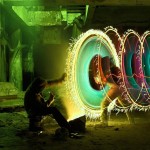
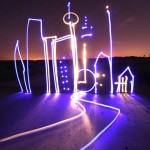
Swirls and pillars of light hover in fields or against dark urban backdrops like phantom monuments, captured on camera in a way that just can’t be perceived by the human eye. UK-based artist Sola literally paints with light, his amorphous creations seeming to take on three dimensions for just a split second as if the light itself has gathered up a mass of its own.

Sola Light Graffiti 13

Sola Light Graffiti 3

Sola Light Graffiti 1

Sola Light Graffiti 14

Looking for an outlet for personal expression led Sola to professional photography, documenting the sports, bands and lifestyles that he was into. Eventually, though, he wanted something that would give him more control over the creative process.

Sola Light Graffiti 2

Sola Light Graffiti 4

Sola Light Graffiti 6

Sola Light Graffiti 11

Sola Light Graffiti 15

“Then I found light painting. Quite by accident one night while shooting landscapes of the urban environment and instantly I knew it was what I’d been looking for. I like to keep things real. I shoot with digital cameras, yes, but I employ principles of analogue film technology – in that once I’ve made an image I don’t change it any more than I could in a darkroom and therefore what you see, is what I shoot.”

Sola Light Graffiti 7

Sola Light Graffiti 8

“I believe there’s a real magic to creating something wondrous that’s ‘real.’ Sure, there’s a place for post production in this world but on the whole, you won’t find any here. To the point that even if I am caught in the scene the image is thrown away. I aim to create images that allow the viewer to suspend their reality and simply enjoy the energy and mystery of the image.”

Sola LIght Graffiti 9

Sola Light Graffiti 16

See lots of more Sola’s work, including collaborations with NIKE and other brands, at LightBombing.com.

Share on Facebook


[ By Steph in Art & Street Art & Graffiti. ]

[ WebUrbanist | Archives | Galleries | Privacy | TOS ]

WebUrbanist

 
Comments Off on Phantom Monuments: Haunting Works of Light Graffiti by Sola

Posted in Creativity


Larger Than Life: 10 Monuments Honoring Nelson Mandela

08 Dec

[ By Steve in Global & Travel & Places. ]

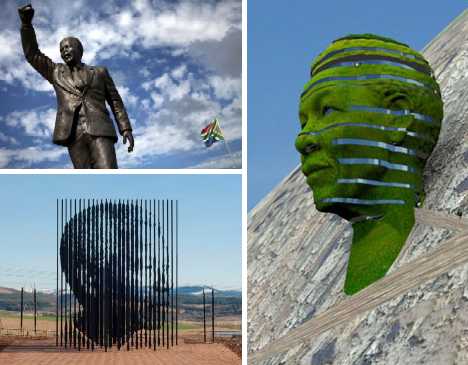
nelson mandela monuments memorials
Though Nelson Mandela’s passing will spur the creation of memorials worldwide, a number of larger-than-life tributes are already extant or planned.

Nelson Mandela Capture Monument

nelson mandela capture monument(images via: Lemay Online)

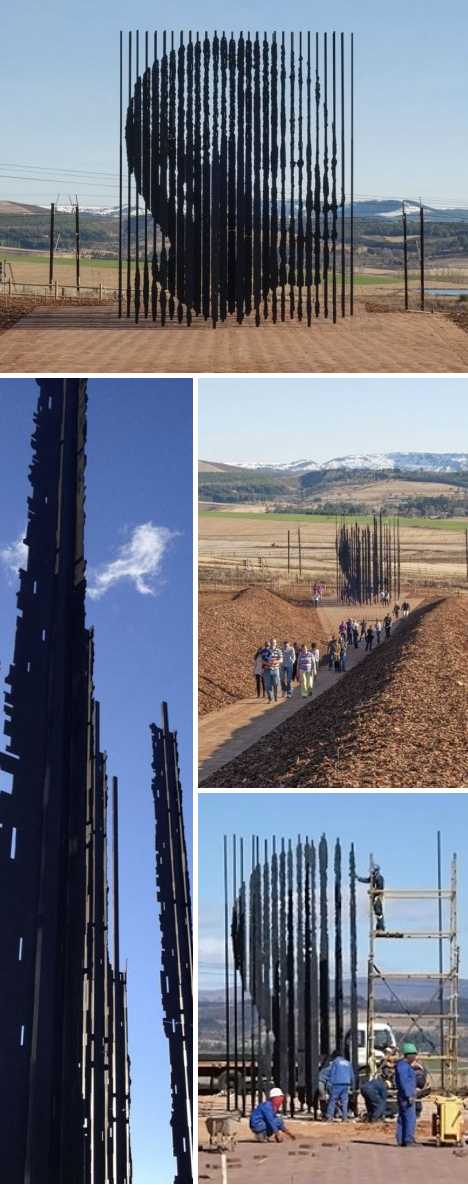
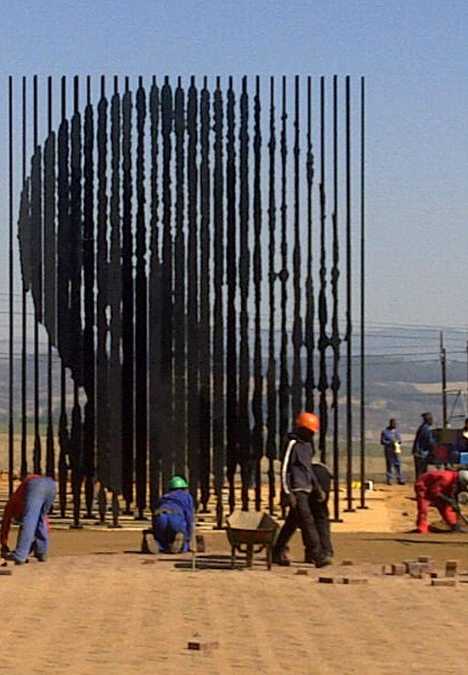
The Nelson Mandela Sculpture in Howick KwaZulu-Natal was inaugurated and unveiled by South African President Jacob Zuma on August 4th, 2012. Artist Marco Cianfanelli was commissioned to create the sculpture in time for the 50th anniversary of Mandela’s capture by police in 1962, after which he was imprisoned for 27 years.

nelson mandela capture monument(image via: Lemay Online)

The sculpture comprises 50 metal columns ranging in height from 5 to 10 meters (16 to 33 ft). Visitors can only discern the portrait of Mandela at a point 35 meters (115 ft) away from the front of the sculpture, signifying the fact that Mandela, dubbed “The Black Pimpernel”, was able to elude authorities for 17 months after his arrest was ordered.

Boxing Mandela Statue

nelson mandela statue boxing(images via: National Geographic and Howzit MSN News)

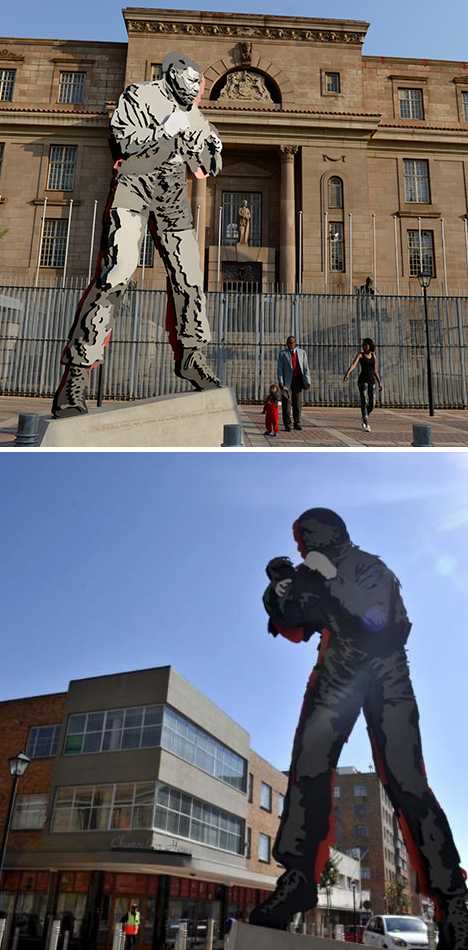
In June of 2013, a strikingly styled statue of Nelson Mandela was unveiled and unlike other Mandela statues on display around the world, this one depicts the famed freedom fighter as, well, a different sort of fighter. Situated in front of the Magistrate’s Courts in Johannesburg, the 5 meter (16.5 ft) tall steel statue by Marco Cianfanelli depicts Mandela in his younger days when he was known mainly for his skills in the boxing ring.

Nelson Mandela Park Public School, Toronto

nelson mandela park public school toronto(image via: Edwards13)

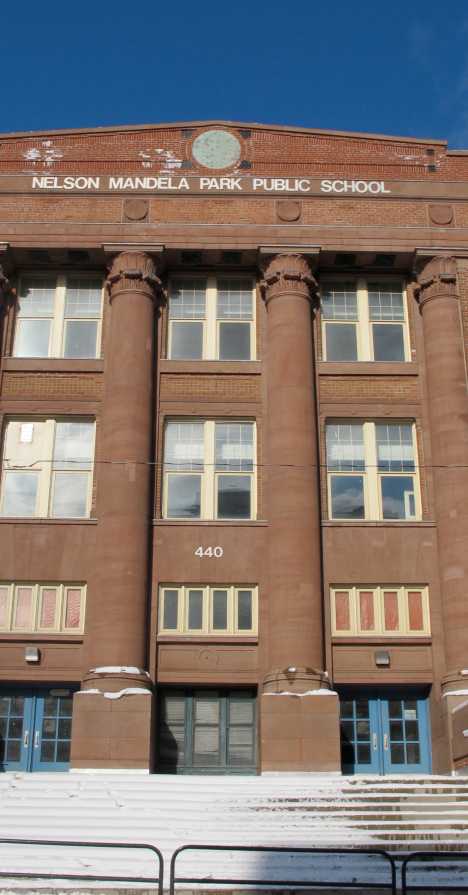
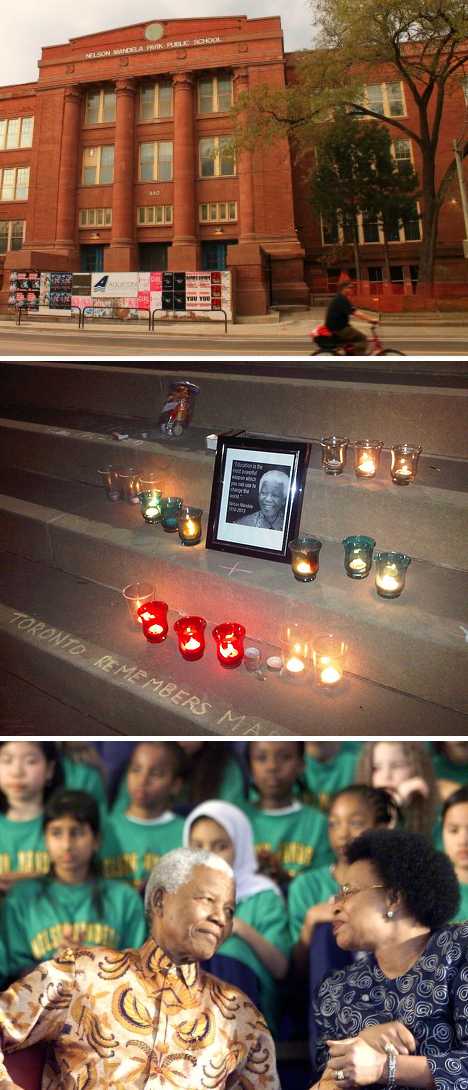
Built in 1917, Toronto’s Park Public School underwent a multimillion dollar renovation that included the school’s name being changed to Nelson Mandela Park Public School. Much of the structure’s imposing architectural elements and Beaux Arts detailing both inside and out were retained in the renovation while students learn the reasons why their school, located so far from South Africa, was named for someone whose fame knows no national boundaries.

nelson mandela park public school toronto(images via: Toronto Star, HiMY SYeD and CBC.ca)

Located in in downtown Toronto’s Regent Park neighborhood, the school’s official renaming ceremony on November 17th of 2001 was attended by none other than Nelson Mandela himself. Mandela took time out from his third trip to Canada (during which he accepted honorable Canadian citizenship) to visit the school named for him and spend time with some of the students.

Mandela & Biko Mural

nelson mandela steve biko mural Cape Town(image via: Hot 106.5FM)

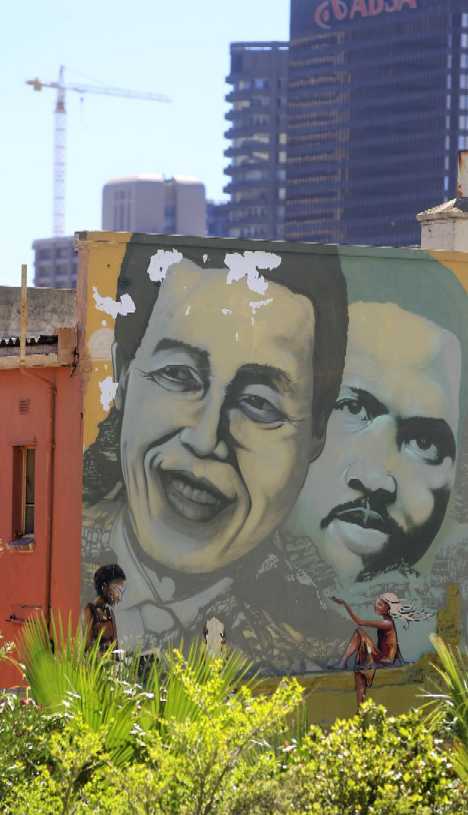
The epithet “man of the people” suits the late Nelson Mandela more than most who’ve been casually dubbed as such, and his accomplishments are perhaps greatest treasured by the lowest levels of South African society. Here in one of Cape Town’s rougher neighborhoods, a well-worn mural depicts anti-apartheid freedom fighter Steve Biko alongside a younger Mandela.

Next Page – Click Below to Read More:
Larger Than Life 10 Monuments Honoring Nelson Mandela

Share on Facebook


[ By Steve in Global & Travel & Places. ]

[ WebUrbanist | Archives | Galleries | Privacy | TOS ]

WebUrbanist

 
Comments Off on Larger Than Life: 10 Monuments Honoring Nelson Mandela

Posted in Creativity


Alternative Landmarks: 12 Monuments As They Almost Were

20 May

[ By Steph in Architecture & Public & Institutional. ]


Alternative Monuments Main

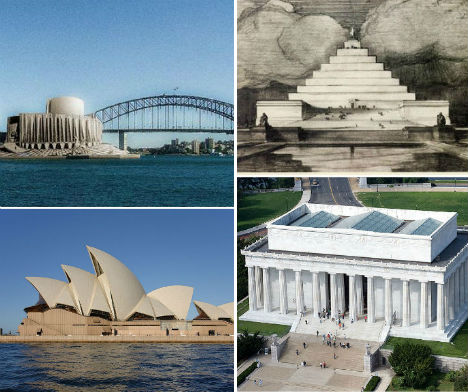
The Sydney Opera House might have been little more than a squat concrete building resembling a factory, and a visit to the statue of Abraham Lincoln at the Lincoln Memorial could have required scaling a massive stepped pyramid. Ranging from close second-place finishes in design competitions to proposals that were little more than pipe dreams, these alternative designs for 12 major iconic landmarks around the world represent radical departures from the monuments we’re accustomed to.

Sydney Opera House

Alternative Monuments Sydney Opera House

(images via: new world wonders, wikimedia commons)

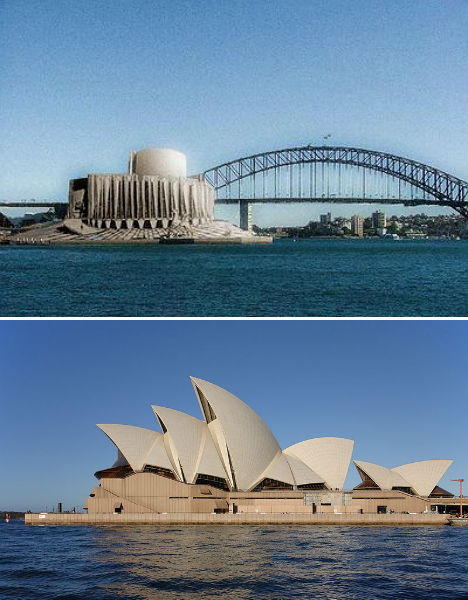
The Sydney Opera House is one of the most recognizable buildings in the world, with a dramatic series of vaults rising from the ground along Sydney Harbour. But Danish architect Jørn Utzon’s now-iconic design was controversial when it was first proposed in 1957, and the design that came in second place may have been more palatable to the public. American architect Joseph Marzella’s design was rather industrial in its appearance, but didn’t seem quite so out there.  It’s hard to imagine the magnificent performing arts venue looking so squat and dull.

Triumphal Elephant in Place of Paris’ Arc de Triomphe

Alternative Monuments elephant 2

Alternative Monuments Arc de Triomphe Real

Alternative Monuments Elephant 1

(images via: wikimedia commons)

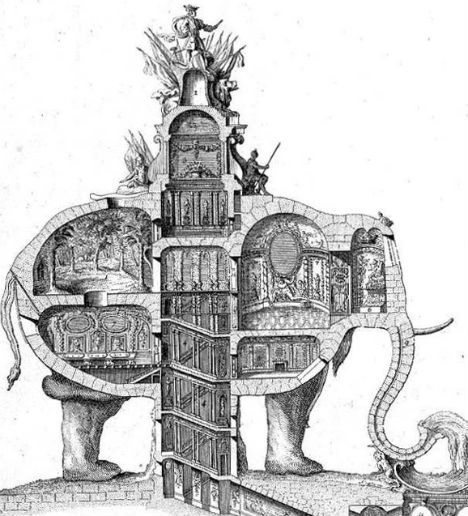
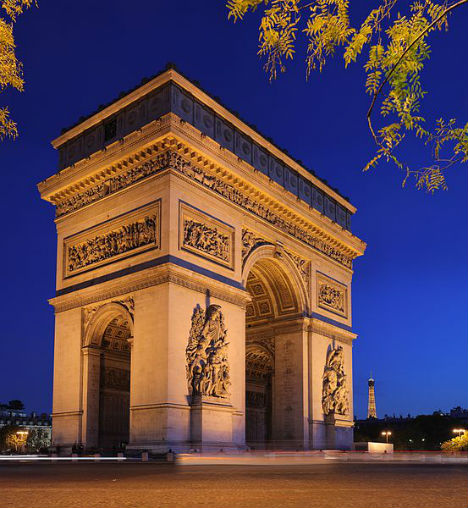
In place of one of Paris’ most famous monuments, the Arc de Triomphe, could have been a three-story elephant monument with a spiral staircase in the underbelly leading to the pinnacle. 18th century architect Charles Ribart offered this monument for the Champs Élysées, complete with a cross-sectional drawing showing the intricate rooms within, but was turned down by the French government.

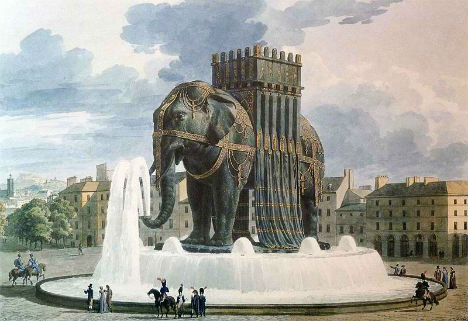
This isn’t even the only massive, ridiculous elephant statue envisioned for Paris. Originally conceived by Napoleon, the imposing Elephant of the Bastille (third photo) was meant to be cast of bronze and placed in Paris’ Place de la Bastille on the site of the old Bastille prison, which was the birthplace of the French Revolution. A stairway set into the legs would give access to the top, and the base would be surrounded by a fountain. However, only a plaster model was built, as memorialized by Victor Hugo in the novel Les Miserables, and eventually the July Column took its place.

Unbuilt Design for the Golden Gate Bridge

Alternative Monuments Golden Gate Bridge

(images via: pbs newshour, wikimedia commons)

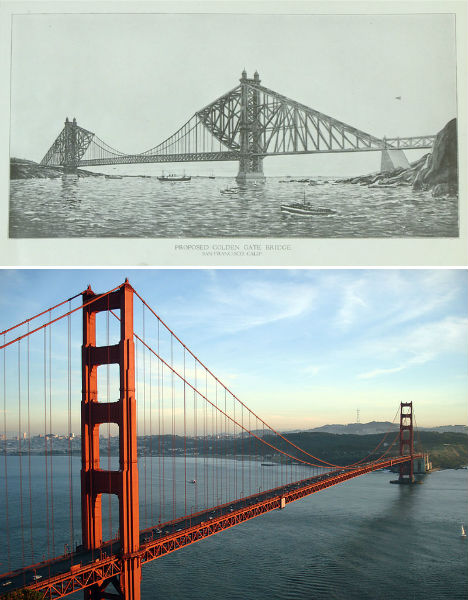
Now 76 years old, the Golden Gate Bridge is an iconic symbol of San Francisco, coated in literally millions of gallons of orange paint. The Art Deco-style bridge is one of the longest suspension bridges in the world, beating many experts’ predictions that it wouldn’t last against gale-force winds in the straight where the San Francisco Bay opens to the Pacific Ocean. But this wasn’t engineer Joseph Strauss’ first design. The original proposal is markedly different, with a heavier look combining cantilevered and suspension designs. It was rejected by the planning committee.

Lincoln Memorial Pyramid

Alternative Monuments Lincoln Memorial

(images via: i own the world, wikimedia commons)

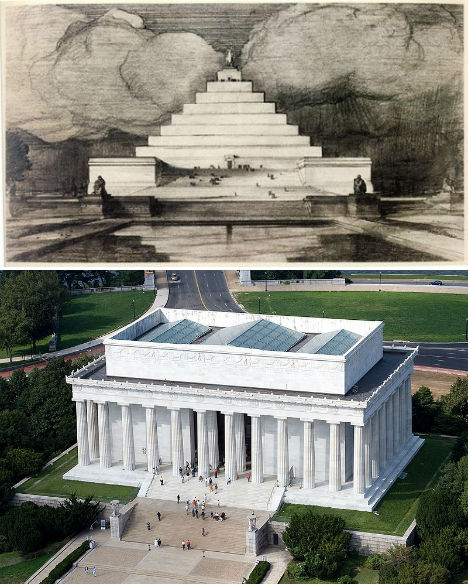
Highlighted at Unbuilt Washington, an exhibition at the National Building Museum in Washington D.C., John Russell Pope’s Lincoln Memorial Proposal replaces the columned rectangular building honoring the 16th president with a pyramid. Anyone who wanted to get up close to Abraham Lincoln’s statue would have had to climb that entire thing to reach it. Some historians believe that this proposal was ridiculous on purpose; Pope wasn’t a fan of the swampy location chosen for the memorial, and may have created this and other absurd designs in an effort to encourage the committee to seek a new setting. Pope went on to successfully design the Jefferson Memorial.

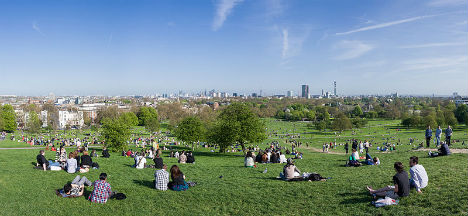
Pyramid Necropolis for London’s Primrose Hill

Alternative Monuments Primrose Hill Necropolis

Alternative Monuments Primrose Hill Real

(images via: andrew gough, wikimedia commons)

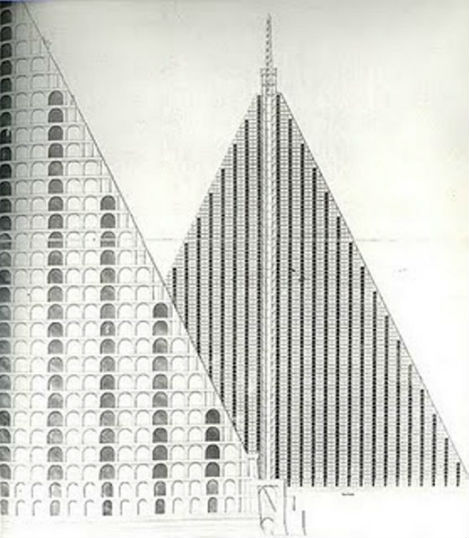
Infused in the Victorian preoccupation with melancholy and inspired by the Egyptian spoils of traveler and tomb-raider Giovanni Battista Belzoni, London architect Thomas Wilson proposed a massive, 15-acre pyramid-shaped necropolis for the city’s Primrose Hill. The granite pyramid would have towered into the air with 94 tiers of tombs in honeycomb shapes and a base measuring 18 acres, casting a gargantuan shadow over the hill many Londoners use for picnics and looking out over the city. Churchyards were so crowded at the time, that graves were bursting out of the ground – but concerns about what to do with London’s dead weren’t enough to convince the public that a necropolis was a good idea.

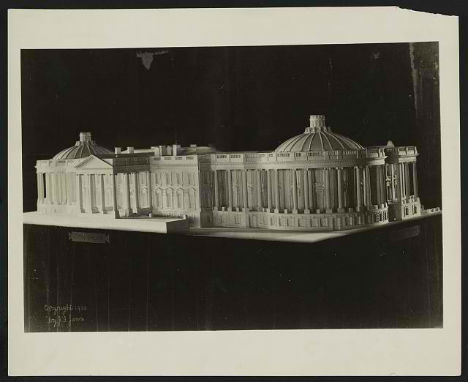
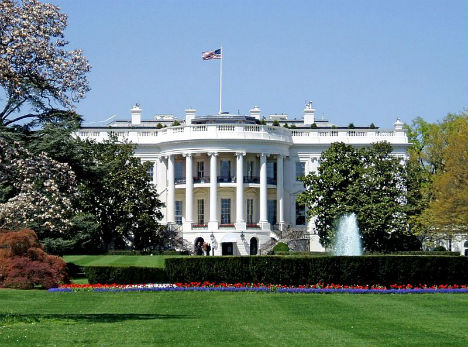
White House Alterations for President Harrison

Alternative Monuments White House

Alternative Monuments White House Real

(images via: loc.gov, wikimedia commons)

While he’s not nearly as forgettable as his grandfather, ninth United States President William Henry Harrison – who died after just 32 days in office – many Americans will struggle to recall any of twenty-third President Benjamin Harrison’s achievements during his tenure in the White House. However, Harrison could have made quite a mark. The first President to reside in the White House after it was wired for electricity, Harrison and his First Lady, Caroline Harrison, proposed significant changes to the complex that were never carried out. However, ten years later, Theodore Roosevelt made plenty of changes of his own, including the addition of the West Wing.

Next Page:
Alternative Landmarks 12 Monuments As They Almost Were

Share on Facebook


[ By Steph in Architecture & Public & Institutional. ]

[ WebUrbanist | Archives | Galleries | Privacy | TOS ]


WebUrbanist

 
Comments Off on Alternative Landmarks: 12 Monuments As They Almost Were

Posted in Creativity