RSS
 

Posts Tagged ‘Monopod’

Gudsen updates Moza Slypod Pro electric monopod arm with longer reach, better battery

16 Apr

Gimbal manufacturer Gudsen has updated its Moza Slypod electronic monopod, adding a longer extension, faster motion and better battery life. The Moza Slypod Pro is essentially a motor-driven monopod that allows videographers to create smooth slider and jib-style camera movements using automatically extending telescopic tubes.

The Slypod Pro can be controlled via the Moza App to extend the telescopic tubes at a given pace to allow mounted cameras to slide across the scene, towards or away from the subject, or to raise or lower the shooting angle. In this new version the range of movement has been increased, allowing a shift from start to finish of up to 53cm/21in, and the speed at which the camera can be moved has been increased to 40mm per second. A further improvement over the previous models is the 4 hour battery life, which can be supplemented with USB power via an external battery pack.

Made of carbon fiber, to keep the weight down, at 1460g it is still heavier than the previous Slypod and Slypod E due to the extra extension, and probably the bigger battery. It can support kit of up to 2kg for horizontal movement and 6kg when being asked to move vertically.

The Slypod can be linked to the Moza Aircross 2 gimbal to allow both devices to be controlled from the same app when the gimbal is mounted on the Slypod, allowing the camera to move in many more directions at the same time.

The Slypod Pro stores at 650mm and extends to a maximum of 1180mm, and comes with an Arca Swiss type mount instead of the Manfrotto mount used on the original Slypod and the E version. The company is launching the Pro version via a Kickstarter campaign that exceeded its very modest funding goal almost immediately. The campaign is offering the Slypod Pro for $ 459, with an estimated shipping date of May 2021. For more information see the Moza Slypod Kickstarter campaign page or the Gudsen Moza website.

Press release

MOZA Announces Launch of Slypod Pro – World’s First Electronically Adjustable Monopod

Imaging solutions experts MOZA, just announced the launch of Slypod Pro – an innovative electronically adjustable monopod for phone and camera photography. This impressive new monopod combines an electric slider & jib arm that lets users capture amazing photos at any angle and with smooth transition effects. Now, there is an affordable way for anyone to achieve professional results easier than ever. Slypod Pro is available now live on Kickstarter. https://www.kickstarter.com/projects/mozaslypodpro/moza-slypod-pro-do-wonders

This impressive new device is more than just a monopod. It’s a 3-in-1 monopod that combines an electronic slider & fully adjustable jib arm that lets users capture amazing photos at any angle and with smooth transition effects. As the world’s first electronic height adjustable monopod, Slypod Pro can be controlled with just one hand. Its motorized slider is internally geared and silky smooth, and extends out 530mm for a total length of 1460mm. It provides rock-steady support for perfectly smooth motion shots and compelling video.

With Slypod Pro, there are no more lost moments. The slider and jib arm can be placed at any angle and camera position. Previously impossible angles become easy to achieve for photos that come to life from new creative perspectives. Users can find the perfect shot by extending the slider in and out for compelling video and high camera angles.

Slypod Pro Redefines motion control when combined with the MOZA Master App other MOZA’s products such as the MOZA AirCross 2 gimbal to capture dynamic motion footage, and seamless cinematic shots with perfect stability.

“Collapsible monopods are a great option when it’s impractical to carry a bulky tripod. Combined with extensions and jib arms, they allow users to capture stable images at a variety of camera angles. At MOZA, our goal with Slypod Pro was to create the ultimate monopod, one that combines the smoothness of an electronic slider with a versatile jib arm for greater control and creativity. Fully electronic, Slypod can be operated with just one hand, or remotely by app. It gives users the features normally found in high-end photography gear, in a compact, portable and affordable option. Slypod Pro redefines the monopod so that you save time, streamline the photo process, and never, ever miss a shot.” Terry Guan, Founder Of MOZA

Sometimes the best photos happen without being behind the camera so the included MOZA Master APP works with smartphone to enable total control of the monopod to operate the motorized slider, perform precise movements at variable speeds and pre-program movements so users can concentrate on creativity instead of setup.

This full-featured monopod is durable and strong but made for portability. With a rigid carbon fiber body, and tri-legged support stand, it works on any surface. When it’s time to leave the studio and capture location shots, or during travel, the monopod collapses to a compact size that is lightweight, easy to carry and fits in a backpack.

SlyPod Pro supports most of the mainstream entry-level or pro-level photo and video cameras and other camera accessories for versatility and professional results and is available now on Kickstarter with special pricing for early adopters. To learn more visit the campaign here: https://www.kickstarter.com/projects/mozaslypodpro/moza-slypod-pro-do-wonders


Note/disclaimer: Remember to do your research with any crowdfunding project before backing it. Pledges to crowdfunding campaigns are not pre-orders. DPReview does not have a relationship with this, or any such campaign, and we publicize only projects that appear legitimate, and which we consider will be of genuine interest to our readers. You can read more about the safeguards Kickstarter has in place on its ‘Trust & Safety’ page.

Articles: Digital Photography Review (dpreview.com)

 
Comments Off on Gudsen updates Moza Slypod Pro electric monopod arm with longer reach, better battery

Posted in Uncategorized


Steadify wearable camera stabilizer features a hip-mounted monopod

02 Aug

Just launched on crowdfunding site Kickstarter, Steadify enables photographers to keep their camera steady using a wearable hip-based stabilizer rather than a tripod. The wearable device features a telescoping monopod attached to a three-axis ball-head on a base plate. That base plate is stabilized against the wearer’s hips, where it is carried using a strap around the waist.

Steadify has an anticipated $ 159 USD MSRP with shipping scheduled to start in October

Steadify is secured with a magnet when not in use, and features a universal mount that can be swapped out with a quick release ball-head. Users have the option of attaching a zip pocket to the base plate for storing batteries and other small items. The team behind Steadify bills their product as a highly portable, easily deployed alternative to tripods that can be used with a single hand.

Steadify is being offered to Kickstarter backers who pledge at least $ 99 USD; the device has an anticipated $ 159 USD MSRP with shipping scheduled to start in October. Assuming the campaign earns enough money to reach its stretch goal, the team also expects to release a smartphone adapter for the monopod.

Via: Kickstarter

Articles: Digital Photography Review (dpreview.com)

 
Comments Off on Steadify wearable camera stabilizer features a hip-mounted monopod

Posted in Uncategorized


Fotopro Mogo flexible monopod kits are designed for various photography needs

31 Mar

Photo gear company Fotopro has launched a crowdfunding campaign for a series of photography kits centered around Mogo, a flexible monopod based on the Fotopro UFO. Mogo features flexible legs that can be wrapped around a rail or post, used on uneven surfaces and more. The monopod has a universal screw-head and removable mount for use with mobile devices, action, mirrorless and any other type of camera.

“Our aim in delivering Mogo with additional gear was to ensure each gear kit was mobile, lightweight and easy to put together and apart for anyone,” Fotopro explains on Indiegogo, where the campaign is live.

The company is offering a total of four kits (detailed below), each designed for a different usage scenario. The Mogo monopod itself has an 800g / 1.7lbs maximum capacity, can be used underwater and features a metallic wire core covered by a rubber skin. Fotopro expects to ship the kits to Indiegogo backers starting in June; the prices listed below are discounts from the planned eventual MSRPs.

Mogo Starter Kit ($ 39):

– Mogo Monopod
– Bluetooth Remote Trigger
– Small Metal Tripod Stand
– Smartphone Clamp (x2)
– GoPro Screw

Mogo Tablet Kit ($ 49):

– Mogo Monopod
– Bluetooth Remote Trigger
– Metal Tripod Stand
– Smartphone Clamp (x2)
– Large Tablet Clamp
– GoPro Screw

Mogo Mobility Kit ($ 59):

– Mogo Monopod
– Bluetooth Remote Trigger
– UGO2 Flexible Tripod
– Smart Metal Tripod
– Smartphone Clamp (x2)
– GoPro Screw

Influence Kit ($ 99):

– Mogo Monopod
– Bluetooth Remote Trigger
– Smartphone Clamp (x2)
– Large Tablet Clamp
– Sliding Metal Bar
– Metal Tripod Stand
– Mic Clamp
– Mic Dampender
– LED Light
– GoPro Screw

Via: Indiegogo

Articles: Digital Photography Review (dpreview.com)

 
Comments Off on Fotopro Mogo flexible monopod kits are designed for various photography needs

Posted in Uncategorized


Tiffen announces foot operated gas-lift Steadicam Air monopod

24 Feb

Tiffen has joined the monopod market with the new Steadicam Air line, which uses a gas spring and a foot pedal to help photographers quickly and easily adjust the monopod’s height.

The Steadicam Air is a three-section carbon fibre model that features a foot pedal close to the base that, when pressed, assists in lifting the mounted camera to the desired height. The monopod will come in two configurations to hold either 25lb or 15lb, and are suitable for both still and movie photographers.

Of the three sections, one uses a twist lock that allows the top of the monopod to rotate about 360°, while the other two are spring loaded for lifting the camera. A large rubber foot makes it easy to angle monopod without it slipping across the floor.

Here’s a look at the Steadicam Air in action:

The Steadicam Air-25 is available now for $ 500, while the Steadicam Air-15 will go on sale “at a later date” with a price of $ 400. For more information, head over to the Tiffen website.

Press Release

THE TIFFEN COMPANY INTRODUCES THE STEADICAM AIR

A Lightweight Carbon Fiber Pneumatic Monopod for Photographers and Cinematographers

Steadicam, a division of The Tiffen Company and Master Cinematographers teamed up to release the Steadicam Air, a revolutionary monopod that is gas lift activated by a foot pedal for adjustable height.

Setting a new standard, the Steadicam Air brings versatility back to the monopod. With its gas lift spring, the Air makes it easy for professional photographers and cinematographers to raise their heights and never miss a moment. Available in two different configurations, a 25 lb and soon after a 15 lb weight capacity, the Air is the perfect complement for professional image-makers to stabilize and support their equipment.

What sets the Steadicam Air apart from any other monopod is that it’s gas lift and spring activated. Weighing only 3.5 lbs, the Steadicam Air is made up of three sections including one twist leg lock that allows for a 360 degree rotation. The height adjustment is activated by the rubberized foot pedal which allows for a non-slip operation.

Made of carbon fiber, the Steadicam Air is lightweight and compact making it easy for travel. The Air is accompanied by a deluxe carrying bag with added protection and an ergonomic shoulder strap. It is ideal for nature, wildlife, sports, wedding, venue photographers and cinematographers alike.

The Steadicam Air-25 will be available on February 2, 2018 for $ 499 USD. The Steadicam Air-15 will available at a later date for $ 399 USD.

Features:

  • 100% gas lift, spring activated height adjustable monopod – activated by adjustable foot pedal
  • Made of Lightweight Carbon Fiber
  • 3 – Section Monopod with 1 – twist leg lock
  • Allows for full 360 degree rotation without compromise
  • Ergonomic foam padded grip point with debossed Steadicam branding on the handle
  • Removable aluminum top plate with reversible screw thread allowing for 1/4in-20 and 3/8in-16
  • Oversized rubber foot giving you extra stability connected to ball point
  • Quick twist rubberized leg grips
  • Non-slip, rubberized foot pedal allows for easy grip operation. Pedal also folds up with travel purposes and quick transport
  • Collapsed Height = 28in
  • Fully Extended Height = 62.5in
  • Sleek red accents

Articles: Digital Photography Review (dpreview.com)

 
Comments Off on Tiffen announces foot operated gas-lift Steadicam Air monopod

Posted in Uncategorized


Manfrotto launches new FluidTech Base and monopod kits for stills and video

22 Oct

Accessory-maker Manfrotto has introduced a new series of monopod kits called XPRO Monopod+ and a new FluidTech Base to help videographers to achieve smooth pan, tilt and swivel motions. The new Monopod+ models come in a choice of four or five sections. The legs are made of aluminum or carbon fiber and kits are available with and without heads. The actual monopods are the same as the existing XPRO models but they come with the FluidTech base included.

The new base is slightly larger than the one it replaces and offers three-way motion instead of just support for panning. The rotation can be locked off to allow only panning or unlocked to support smooth action in three directions. The base attaches and detaches by screwing it to the foot of the monopod, and while the base will hold the monopod upright on its own Manfrotto doesn’t suggest using it self-standing with a camera attached.

The new FluidTech Base will be $ 99.99/£74.95 and the kits including a monopod will start at $ 189.99/£144.95.

For more information visit the Manfrotto website.

Press release:

Introducing the new FLUIDTECH – Full Fluid Base: first of its kind 3D-movement for the smoothest video footage

  • Easy, instant locking and adjustment with the Quick Power Lock system
  • Superior stability and portability thanks to powerful lightweight aluminium & carbon fibre
  • Flexibility to switch from photo to video thanks to the accessory base

October 2016: Manfrotto, world leader in the photography, imaging equipment and accessories industry, presents a new offering featuring high-performance monopods for professional videographers and photographers: the new XPRO Monopod+ family.

When volume and weight need to be minimal, set-up speed is of primary importance, in crowded places where there’s no room for a tripod, or for creative, overhead footage – whenever a tripod is not the option, monopods are the solution. They enable users to quickly and easily move from one shooting point to another, providing stable support to video and photo equipment, ensuring incredibly smooth footage, ultra-sharp photos and creative shooting perspectives.

This exciting new generation brings image makers the ground-breaking FLUIDTECH – Full Fluid Base, making Manfrotto XPRO Monopod+ the first of its kind on the market featuring fluidity on all 3 axes to deliver ultimate smoothness in an extremely compact solution for advanced video shooting.

Articles: Digital Photography Review (dpreview.com)

 
Comments Off on Manfrotto launches new FluidTech Base and monopod kits for stills and video

Posted in Uncategorized


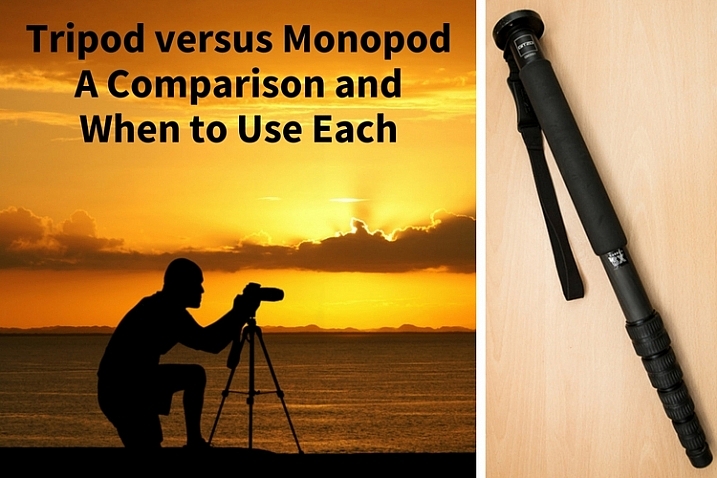
Tripod versus Monopod – a Comparison and When to Use Each

12 Oct

Tripods and monopods, you’re very likely to have seen them. They both have their uses and their purposes for existing. But when do you use one over the other and what advantages do each have? In this article, I’ll look to explain when you would use a tripod versus a monopod and how they’re not necessarily exchangeable in their properties.

Tripods

Jake Khuon

By Jake Khuon

Uses and pros of tripods

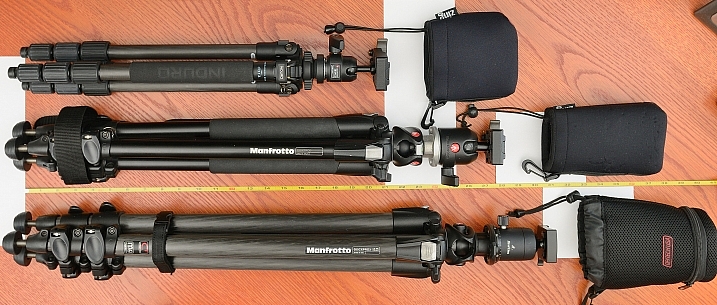
Let’s start off with tripods. You know, those three legged stands that nearly all photographers have?! They provide your camera with a sturdy platform to which you attach your camera. Tripods come in all different sizes and have a huge variety of heads (the actual mounting point) to suit different shooting styles. They are especially helpful for avoiding camera shake when using slow shutter speeds. This is most useful when you want to blur water in a stream, show car light trails at night or simply do a long exposure.

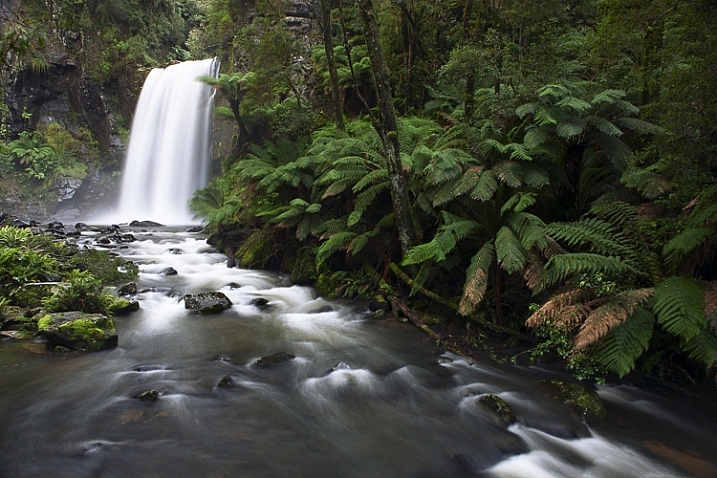
tripod versus monopod - use a tripod for long exposures

With this frame, I used a tripod to prevent camera shake that would have been caused by the 3.2 second shutter speed. This shutter speed was used to blur the water.

Tripods can also be extremely helpful with macro, still life, and studio photography as they hold the camera in the exact spot you want while you set your shot up. Time-lapse photographers can also benefit from using a tripod over a monopod as it will ensure that there is no jumping between each frame as the camera is securely locked in one position. However, tripods are not without their cons.

tripod versus monopod

Use a tripod for long exposures like this.

Cons of tripods

However, tripods are not without their cons. They can be heavy to carry around and take some time to set up. Depending on which head you are using, tripods can also be very limiting for quick camera movements which you may need when photographing moving objects. Everything about using a tripod is slower. So if it’s speed, and ease of portability that you’re looking for and stability isn’t your main priority, then perhaps a tripod is not the best item for you.

Monopods

tripod versus monopod - use a monopod for more mobility

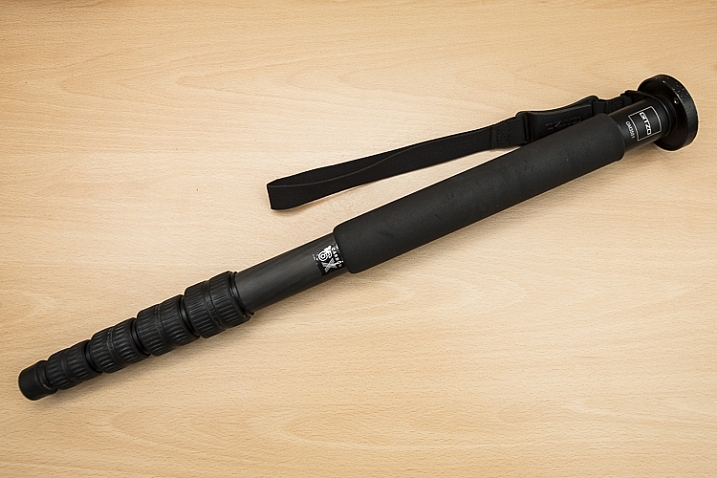
This is the monopod I use. Here, it is compacted (54cm/21.26″) but it extends to be 192cm (6’2″). It is made of carbon fibre and weighs in at only 620g (1.36lb) but can hold up to 18kg (39lb).

Uses and pros of monopods

When a rock solid platform for stability isn’t a priority many photographers turn to a monopod for their camera support needs. Just as the TRI in tripod means three, the MONO in monopod means – you guessed it – one! They are simply a single leg support on which you can mount your camera and/or lens. They too come in different sizes and will support different weight limits.

Monopods are perfect for taking the weight of a heavy lens/camera combination to stop aches and pains from a long day of shooting. If you’ve ever seen sports photographers with their long lenses, then you may have noticed that they are often being supported by a monopod. Monopods also offer much more versatility in movement as you now have only on one leg, not three, and they are much quicker to set up than their three-legged brethren.

tripod versus monopod - use a monopod for more mobility

This photo was taken using a 400mm f/2.8 lens. These lenses are quite heavy, so using a monopod is a great way to take the weight off your arms. Daniel Smith/Getty Images.

Cons of monopods

A monopod, however, will not offer you the same stability as a tripod, so if you’re considering a monopod as a lighter alternative to a tripod, do remember this. If it’s milky streams and flowing car lights that you’re after, a monopod will not help you here at all; you will still need a tripod.

But if your arms get tired from holding your camera up all day, then a monopod may well be very suited to your needs.

Conclusion

tripod-versus-monopod

While tripods and monopods offer extra support and in some cases, stability for your camera, there are times when one is more useful than the other and one cannot always be used in place of the other. Generally, for very long shutter speeds or time-lapse photography you’ll want to use a tripod to avoid camera shake and to maintain consistency between each frame. But if it’s a little extra support and to take the weight of a camera/lens combination, you can’t go wrong with a monopod.

Do you have either or both of monopod and tripod? How do you find using each of them?

googletag.cmd.push(function() {
tablet_slots.push( googletag.defineSlot( “/1005424/_dPSv4_tab-all-article-bottom_(300×250)”, [300, 250], “pb-ad-78623” ).addService( googletag.pubads() ) ); } );

googletag.cmd.push(function() {
mobile_slots.push( googletag.defineSlot( “/1005424/_dPSv4_mob-all-article-bottom_(300×250)”, [300, 250], “pb-ad-78158” ).addService( googletag.pubads() ) ); } );

The post Tripod versus Monopod – a Comparison and When to Use Each by Daniel Smith appeared first on Digital Photography School.


Digital Photography School

 
Comments Off on Tripod versus Monopod – a Comparison and When to Use Each

Posted in Photography


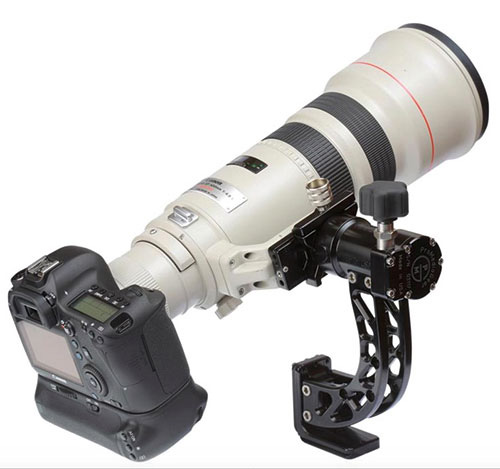
17 January, 2015 – Gimbal / Monopod Use With Long Lenses

17 Jan


The Luminous-Landscape team is about to embark on two back to back Antarctica Photo Adventures.  Micahel and Kevin are working out the logistics for getting their gear to Antarctica as well as what gear to bring.  Today Michael shares with us his new set up for handling his NEW 150-600mmm Tamron lens while on the trip.  Gimbal / Monopod Use With Long Lenses is Michael’s answer.  His article also has a video showing how this set up is used.


The Luminous Landscape – What’s New

 
Comments Off on 17 January, 2015 – Gimbal / Monopod Use With Long Lenses

Posted in News


Yuri’s Favorite Photography Gadget: The Manfrotto Monopod

13 Mar

Video Rating: 4 / 5