RSS
 

Posts Tagged ‘Miss’

An Opportunity Not To Miss: Art Wolfe Photography Webinar

28 Oct
Register today for $  7 using code: JMG7 (normally $  25)

Register today for $ 7 using code: JMG7 (normally $ 25)

Friend and photographer Art Wolfe is hosting a “Composition & Inspiration” webinar November 3rd, 2014 at 6pm.

Register today for $ 7 using code: JMG7 (normally $ 25)

If you’ve yet to hear Art  present now is your chance. Having attended their presentations in the past I’ve always found their insights and experience incredibly valuable. The webinar will be held on November 3rd, 2014 at 6pm PST / 9pm EST. Don’t miss out.

Copyright Jim M. Goldstein, All Rights Reserved

An Opportunity Not To Miss: Art Wolfe Photography Webinar

The post An Opportunity Not To Miss: Art Wolfe Photography Webinar appeared first on JMG-Galleries – Landscape, Nature & Travel Photography.


Related Stories

  • An Opportunity Not To Miss: Art Wolfe & Rick Sammon Webinar – Enclosure
  • An Opportunity Not To Miss: Art Wolfe & Rick Sammon Webinar
  • Blood Moon Eclipse: Mark Your Calendar 10.8.14
Feed Ads by FeedBlitz
powered by ad choices


JMG-Galleries

 
Comments Off on An Opportunity Not To Miss: Art Wolfe Photography Webinar

Posted in Equipment


An Opportunity Not To Miss: Art Wolfe & Rick Sammon Webinar

27 Oct


Register today for $ 7 using code: JMG7 (normally $ 25)

Friend and photographer Art Wolfe and Rick Sammon are hosting a “Composition & Inspiration” webinar November 3rd, 2014 at 6pm.

Register today for $ 7 using code: JMG7 (normally $ 25)

If you’ve yet to hear Art or Rick present now is your chance. Having attended their presentations in the past I’ve always found their insights and experience incredibly valuable. The webinar will be held on November 3rd, 2014 at 6pm PST / 9pm EST. Don’t miss out.

Copyright Jim M. Goldstein, All Rights Reserved

An Opportunity Not To Miss: Art Wolfe & Rick Sammon Webinar

The post An Opportunity Not To Miss: Art Wolfe & Rick Sammon Webinar appeared first on JMG-Galleries – Landscape, Nature & Travel Photography.


Related Stories

  • An Opportunity Not To Miss: Art Wolfe & Rick Sammon Webinar – Enclosure
  • Blood Moon Eclipse: Mark Your Calendar 10.8.14
  • Blood Moon Eclipse: Mark Your Calendar 10.8.14 – Enclosure
Feed Ads by FeedBlitz
powered by ad choices


JMG-Galleries

 
Comments Off on An Opportunity Not To Miss: Art Wolfe & Rick Sammon Webinar

Posted in Equipment


Big Miss Steak: 10 Eerie Abandoned Meat Packing Plants

08 Sep

[ By Steve in Abandoned Places & Architecture. ]

abandoned Swifts meat packing plant Fort Worth Texas 1
As the disconnect between the meat we eat and the places it’s processed grows, so does the number of urban and suburban abandoned meat packing plants.

abandoned Swifts meat packing plant Fort Worth Texas 2

abandoned Swifts meat packing plant Fort Worth Texas 3

Take the former Swift and Company meat packing plant in Fort Worth, Texas. The plant first opened in March of 1904 but by the 1950s, the consequences of local droughts and the reduced importance of the historic Fort Worth Stockyards saw the Swifts plant enter a long period of decline – it finally closed in 1971.

abandoned Swifts meat packing plant Fort Worth Texas 4

Even closure and abandonment couldn’t reverse the Fort Worth Swifts meat packing plant‘s spiral into decay. In the 1970s, two major fires reduced most of the plant’s buildings to ruins leaving only the firm’s administrative offices still salvageable: in the 1980s the building housed an Old Spaghetti Warehouse restaurant. More recently, one of the plant’s buildings acted as a very believable prison in the TV series Prison Break. Kudos to Flickr user Noel Kerns for capturing the Swift plant’s eerie afterlife in 2008 and 2009.

Forst To Close

abandoned Old Forst meat packing plant Kingston NY 1

abandoned Old Forst meat packing plant Kingston NY 2

abandoned Old Forst meat packing plant Kingston NY 3

Flickr user richie 59 fired up the wayback machine to post these two images of the decrepit red brick Old Forst meat packing plant in Kingston, New York. The first two photos date from early 1982 while the third was snapped in 1985. As for Old Forst, it was demolished in 2006 when developers planned to build a 7-story hotel (which ended up not being built).

Hello, Neuhoff

abandoned Neuhoff meat packing plant Nashville TN 1

abandoned Neuhoff meat packing plant Nashville TN 2

abandoned Neuhoff meat packing plant Nashville TN 3

The former Neuhoff Meat Packing plant is located in northern Nashville, Tennessee, just six blocks from the State Capitol building… one imagines summer legislative sessions must have been unbearable when the wind rose. The plant closed in 1979 after decades of operation on a site that hosted a slaughterhouse for some time before the Neuhoffs even arrived. The abandoned meat packing plant is at long last being cleaned up, however, as the main buildings are being re-purposed as a mixed-use development focused on arts and ecology. A tip of the hat to Flickr user Eva Wood who snapped these striking scenes of neglect and decay in October of 2008.

Next Page – Click Below to Read More:
Big Miss Steak 10 Eerie Abandoned Meat Packing Plants

Share on Facebook


[ By Steve in Abandoned Places & Architecture. ]

[ WebUrbanist | Archives | Galleries | Privacy | TOS ]


WebUrbanist

 
Comments Off on Big Miss Steak: 10 Eerie Abandoned Meat Packing Plants

Posted in Creativity


101 Landscape Visionary Insights Not To Miss – A New eBook & Video Series

22 Aug

If you love outdoor photography and are hungry to learn more from seasoned professionals then there is a great eBook and video series that has just been launched: 101 Visionary Insights. 10 professional photographers, including myself, discuss inspiring and creative techniques to improve your photography and get the most out of your time in the field.

Download a free eBook with 10 tips today

If you like what you see in the sample eBook linked above be sure to purchase the full ebook and video series for as little as $ 12. You’ll find insights from myself Jim M. Goldstein, Gary Crabbe, Ian Plant, Bob Holmes, David H. Wells, Jay & Varina Patel, Karen Hutton, Moose Peterson and Joshua Holko. A sample page from the eBook can be found below and to see more sample content grab the free 10 tip eBook linked above.  I highly recommend the video course as I put together some important tips that I’ve yet to share publicly on my blog, podcast or social media updates. Enjoy and happy shooting!


101 Visionary Insights eBook & Video series - featured Jim M. Goldstein


Copyright Jim M. Goldstein, All Rights Reserved

101 Landscape Visionary Insights Not To Miss – A New eBook & Video Series

The post 101 Landscape Visionary Insights Not To Miss – A New eBook & Video Series appeared first on JMG-Galleries – Landscape, Nature & Travel Photography.


Related Stories

  • 101 Landscape Visionary Insights Not To Miss – A New eBook & Video Series – Enclosure
  • The Insightful Landscape – A New Landscape Photography Book
  • Save 25% on my eBook and Star Trail Webinar Now Through Dec. 2nd
Feed Ads by FeedBlitz
powered by ad choices


JMG-Galleries

 
Comments Off on 101 Landscape Visionary Insights Not To Miss – A New eBook & Video Series

Posted in Equipment


Exhibit & Book Not To Miss – Carleton Watkins: The Stanford Albums

21 Aug

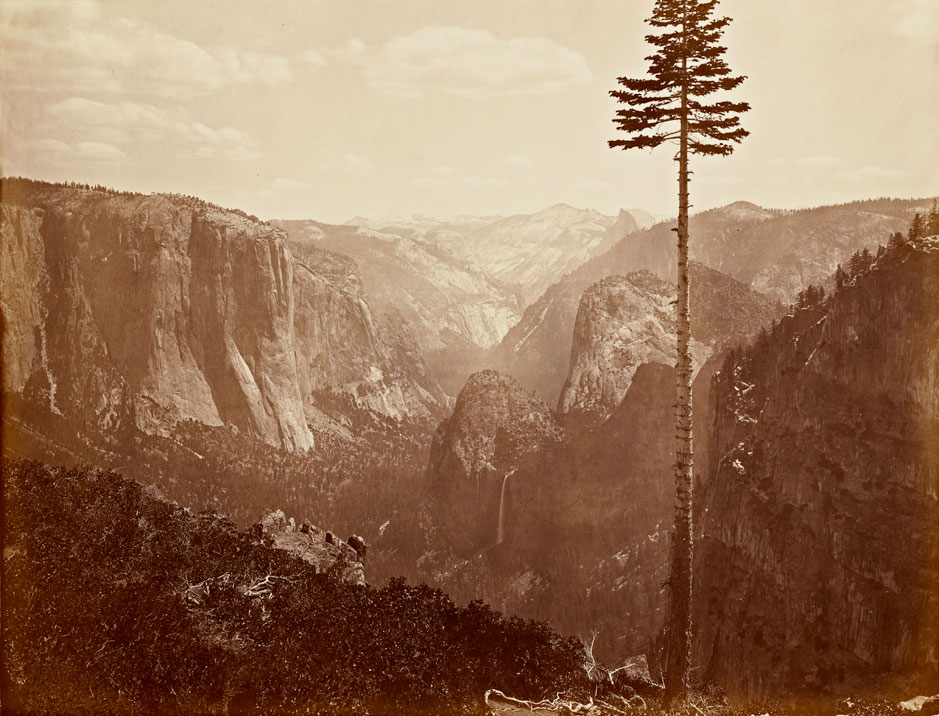
“The Yosemite Valley from the ‘Best General View,’” 1866

There is a lot we take for granted about National Parks, in particular the likes of Yosemite National Park, which are steeped in history particularly in the realm of nature conservation. If you’re a fan of Yosemite you may already know this year is the 150th Anniversary of the Yosemite Act of 1864. This single piece of legislation put the wheels in motion for the  eventual creation of our National Park system with the help of then U.S. President Abraham Lincoln.

What is particularly fascinating about this anniversary is that it may never have happened without Carleton Watkins photographing Yosemite in the early 1860′s with a camera capable of producing stereo views and another camera capable of holding 18×22 glass negatives. These 18×22 plates became known as the “mammoth plates”.    Watkins had a rough ride of it as a professional photographer losing his studio in the great San Francisco earthquake of 1906, but some of his photographs survived. (3) three of his albums reside at the Stanford University Libraries and select photos from these albums are now on display through August 17th, 2014 at the Cantor Art Center. Even more notable for Yosemite fans worldwide is the release of these 3 albums via a large format photo book aptly titled the Carleton Watkins: The Stanford Albums. Remarkably this beautiful large format book, containing 280 pages, is only $ 40. I received my copy this past week and it’s amazing. I highly recommend it both for the beautiful photos, rich history, and fine quality of the book. Before there was Ansel Adams there was Carleton Watkins and his photos are a rare glimpse into Yosemite Valley’s past.

Side Notes

What did I find so amazing about the images in this book?

  1. It reveals a view of San Francisco when it was still forming.
  2. It shows Yosemite more barren and populated in a different fashion than we see today.
  3. It shows how a single photographer first visualized wild landscapes setting the visual tone for future photographers to emulate for decades to come.

Copyright Jim M. Goldstein, All Rights Reserved

Exhibit & Book Not To Miss – Carleton Watkins: The Stanford Albums

The post Exhibit & Book Not To Miss – Carleton Watkins: The Stanford Albums appeared first on JMG-Galleries – Landscape, Nature & Travel Photography.


Related Stories

  • Exhibit & Book Not To Miss – Carleton Watkins: The Stanford Albums – Enclosure
  • Return of Film: Snowy Sunrise at Gates of the Valley
  • Wilderness Protection – Only As Strong As The Wilderness Act


JMG-Galleries

 
Comments Off on Exhibit & Book Not To Miss – Carleton Watkins: The Stanford Albums

Posted in Equipment


Three Tips for Being Ready to Shoot Faster so you Never Miss a Shot

11 Jul

We’ve all heard one of the cornerstones of making better photographs is to slow down; be deliberate and take your time. This is very true. In no way am I advocating not being purposeful in your shooting. However, sometimes there are situations when the difference between getting a good image, instead of a blurred and washed out frame, is separated by only a few precious seconds. This is especially true when it comes to working in action filled situations like sports or street photography, but it can also be just as easy to miss moments in nature and landscape photography if you go into situations ill prepared.

Here are three tips that can improve your reaction time and make you more ready to obtain quality images for processing when you find yourself in those “shoot from the hip” scenarios.

Being Ready to Shoot Faster – Never Miss a Shot

Be Self Aware

Knowbeforeyougo

“Know thyself.” No, Socrates wasn’t a photographer (though I’m sure he would have been awesome). In this case, the saying of “know thyself” means becoming aware of your surroundings more so than having a deep introspective understanding of your own self, although that’s a good thing to have, usually. We exercise this on a daily basis, albeit almost unconsciously. You notice a stain on your shirt, or you see the little boy chasing a ball towards the street, or you see a dark alley that’s just a little too dark to walk down alone. You can incorporate this same inherent awareness into your photography to make you a faster shooter.

Here’s an example: Let’s say you find yourself taking an afternoon to work on your street photography. When you first begin your expedition, it’s very bright outside. You are probably still able to shoot at a reasonably fast shutter speed and low ISO. As the evening starts giving way to night, there is of course less available light. So, a good idea would be to begin thinking about bumping up your ISO so that you can maintain the same exposure settings. Or alternatively, slowing down your shutter speed or increasing the size of your aperture (remember, low F-number means a bigger opening and more light into the lens such as f/2.8). Keep in mind however, that a higher ISO will introduce more noise into your final image, but it will have less of an overall impact than changing the shutter and aperture settings.

In photography, your surroundings are in a state of constant flux. So, to be a good photographer, you must be aware of the changes in your surroundings and mould yourself the best you can in order to produce consistent and quality work. This means learning to understand what is happening around you, whether it be: changing lighting conditions, approaching weather, wind, the presence or absence of people and objects, – the list goes on indefinitely. Anticipate what is going to happen next and make adjustments now, to save time later.

Shoot Comfortably

This would seem to go without saying, but you still see many photographers looking down right uncomfortable or awkward while they’re out shooting. Sadly, the majority of the pain is self-inflicted. To shoot faster and to be ready for the shot when the time is right, your camera must be available for use at a moments notice without restricting your movement or causing discomfort. One of the best ways to make this happen is to have your camera suspended from a quality camera strap. Camera straps, like most things, can become a very personal item for new and seasoned photographers alike. Don’t buy a strap because its got pretty flowers embroidered on it or because its made from the latest space age whatever-foam. Do a quick search for “camera strap” here on dPS and you will find a large number of reviews and write-ups of great camera straps. But don’t stop there. Shop around, read reviews, ask your photographer friends and sift camera forums. Being able to comfortably retrieve your camera quickly is key to not missing great images.

Have a budget? Most of us do, even more of us can’t afford to spend thousands on the latest lens or camera body that we dream of owning. Luckily, the majority of the accessory market is crammed with makers competing to sell you their wares. It’s easier than ever to strike a balance between what you need and what you can afford. If you can, have more than one camera strap in your kit so you can choose what fits best for a particular outing.

Badstrap

Prepare Beforehand

This is the big one, yet many people don’t seem to understand that preparation is golden. A close cousin to situational awareness, research and preparation prior to any photo work should become second nature and will pay huge dividends. It will also make you a faster shooter and help to prioritize your workflow, not to mention make you appear more competent as a photographer.

Preparedness

Know what you’re walking into beforehand and prepare accordingly. Are you going on a hike? Find out what wildlife and plants are native to the area and pack your bag with long lenses so you can get close to your subjects from a distance. Travelling abroad? Be sure to read up on the local attitudes towards photography before you start snapping away to avoid any awkward confrontations or worse. Of course, the most unpopular, but useful, aspect of being well prepared is practice, practice, pactice. Practice, and then practice some more. Want faster and more smoother lens changes? Practice at home, so you lose less time in the field and have fewer fumbles. Practice finding your camera adjustment buttons without looking. This will save you loads of time and frustration when you find yourself shooting at night. If you haven’t figured it out by now, the key word here is practice. Practice everything and you will be amazed at how much easier quicker most things suddenly become.

Do you have any other tips for shooting faster and being ready? Please share them in the comments below.

The post Three Tips for Being Ready to Shoot Faster so you Never Miss a Shot by Adam Welch appeared first on Digital Photography School.


Digital Photography School

 
Comments Off on Three Tips for Being Ready to Shoot Faster so you Never Miss a Shot

Posted in Photography


Exhibit & Book Not To Miss – Carleton Watkins: The Stanford Albums

12 May

“The Yosemite Valley from the ‘Best General View,’” 1866

There is a lot we take for granted about National Parks, in particular the likes of Yosemite National Park, which are steeped in history particularly in the realm of nature conservation. If you’re a fan of Yosemite you may already know this year is the 150th Anniversary of the Yosemite Act of 1864. This single piece of legislation put the wheels in motion for the  eventual creation of our National Park system with the help of then U.S. President Abraham Lincoln.

What is particularly fascinating about this anniversary is that it may never have happened without Carleton Watkins photographing Yosemite in the early 1860′s with a camera capable of producing stereo views and another camera capable of holding 18×22 glass negatives. These 18×22 plates became known as the “mammoth plates”.    Watkins had a rough ride of it as a professional photographer losing his studio in the great San Francisco earthquake of 1906, but some of his photographs survived. (3) three of his albums reside at the Stanford University Libraries and select photos from these albums are now on display through August 17th, 2014 at the Cantor Art Center. Even more notable for Yosemite fans worldwide is the release of these 3 albums via a large format photo book aptly titled the Carleton Watkins: The Stanford Albums. Remarkably this beautiful large format book, containing 280 pages, is only $ 40. I received my copy this past week and it’s amazing. I highly recommend it both for the beautiful photos, rich history, and fine quality of the book. Before there was Ansel Adams there was Carleton Watkins and his photos are a rare glimpse into Yosemite Valley’s past.

Side Notes

What did I find so amazing about the images in this book?

  1. It reveals a view of San Francisco when it was still forming.
  2. It shows Yosemite more barren and populated in a different fashion than we see today.
  3. It shows how a single photographer first visualized wild landscapes setting the visual tone for future photographers to emulate for decades to come.

Copyright Jim M. Goldstein, All Rights Reserved

Exhibit & Book Not To Miss – Carleton Watkins: The Stanford Albums

The post Exhibit & Book Not To Miss – Carleton Watkins: The Stanford Albums appeared first on JMG-Galleries – Landscape, Nature & Travel Photography.


Related Stories

  • Return of Film: Snowy Sunrise at Gates of the Valley
  • Return of Film: Snowy Sunrise at Gates of the Valley – Enclosure
  • In Defense of Pretty Pictures – Enclosure
Feed Ads by FeedBlitz
powered by ad choices


JMG-Galleries

 
Comments Off on Exhibit & Book Not To Miss – Carleton Watkins: The Stanford Albums

Posted in Equipment


101 Landscape Visionary Insights Not To Miss – A New eBook & Video Series

02 Apr

If you love outdoor photography and are hungry to learn more from seasoned professionals then there is a great eBook and video series that has just been launched: 101 Visionary Insights. 10 professional photographers, including myself, discuss inspiring and creative techniques to improve your photography and get the most out of your time in the field.

Download a free eBook with 10 tips today

If you like what you see in the sample eBook linked above be sure to purchase the full ebook and video series for as little as $ 12. You’ll find insights from myself Jim M. Goldstein, Gary Crabbe, Ian Plant, Bob Holmes, David H. Wells, Jay & Varina Patel, Karen Hutton, Moose Peterson and Joshua Holko. A sample page from the eBook can be found below and to see more sample content grab the free 10 tip eBook linked above.  I highly recommend the video course as I put together some important tips that I’ve yet to share publicly on my blog, podcast or social media updates. Enjoy and happy shooting!


101 Visionary Insights eBook & Video series - featured Jim M. Goldstein


Copyright Jim M. Goldstein, All Rights Reserved

101 Landscape Visionary Insights Not To Miss – A New eBook & Video Series

The post 101 Landscape Visionary Insights Not To Miss – A New eBook & Video Series appeared first on JMG-Galleries – Landscape, Nature & Travel Photography.


Related Stories

  • Save 25% on my eBook and Star Trail Webinar Now Through Dec. 2nd
  • Save 25% on my eBook and Star Trail Webinar Now Through Dec. 2nd – Enclosure
  • Extreme X-Class Solar Flare Is Erasing Digital & Film Photos Worldwide
Feed Ads by FeedBlitz
powered by ad choices


JMG-Galleries

 
Comments Off on 101 Landscape Visionary Insights Not To Miss – A New eBook & Video Series

Posted in Equipment


Don’t Miss The Big Picture Natural World Photography Competition

17 Mar


Big Picture Natural World Photography Competition

One of the best science museums in the world and a local favorite of mine here in San Francisco,  the California Academy of Science is in the final stretch of their Natural World Photography Competition. Winners have their photographs exhibited at the museum and are eligible to win a grand prize of $ 5000. Categories include “Land Mammals”, “Birds”, “Insects, Reptiles, Marine Mammals, Fish and Amphibians”, “Waterscapes, Landscapes and Plant Life” and “Conservation Imagery”. I should also note that the terms of the competition are  photographer friendly.

If you want to enter do so by the deadline of March 31st, 2014. Don’t miss it.

Enter the Big Picture Natural World Photography Competition

Also…

The contest is sponsored by the late Calumet, but from my conversation with the organizers there is no impact to prizes.

Have fun and good luck with your entries!

Copyright Jim M. Goldstein, All Rights Reserved

Don’t Miss The Big Picture Natural World Photography Competition

The post Don’t Miss The Big Picture Natural World Photography Competition appeared first on JMG-Galleries – Landscape, Nature & Travel Photography.


Related Stories

  • Don’t Miss The Big Picture Natural World Photography Competition – Enclosure
  • In Defense of Pretty Pictures – Enclosure
  • In Defense of Pretty Pictures
Feed Ads by FeedBlitz
powered by ad choices


JMG-Galleries

 
Comments Off on Don’t Miss The Big Picture Natural World Photography Competition

Posted in Equipment


Do you pack up and leave after sunset and miss the fun of night photography?

11 Feb

There’s no question that the best light occurs during the golden hours, but does that mean that you should pack up your cameras after sunset and miss all the fun of night photography?

city-skyline-example

Absolutely not!

Fun of Night Photography

Night photography offers so many great opportunities for photographers that it’s something that shouldn’t be overlooked. In fact – I think it should be experienced by everyone.

Of course photographing at night means that you’re going to be pushing your gear to its limits. High ISOs, long shutter speeds, fast lenses, tripods, remote shutters, and patience are a must when it comes to photographing after the sun has set, but the results will be worth it.

So what is there to capture at night, and more importantly how do you go about capturing each of these subjects?

City Lights

Walking-the-city

Cities are great places to take photos any time of the day, but at night, cities come to life. Just think of Times Square in NYC or the Vegas Strip for example. Of course, not everyone’s going to have access to such iconic locations, but that doesn’t mean that your local city won’t offer you the goods.

When photographing a city you have so many options open to you; from skylines, to the simple every day things that make cities run. Things like the traffic, the people, and the objects they use to get around are a great start. This photograph of a bike, chained to a parking meter, in front of a church lit up for the night, is a great example of what can be found walking the city streets.

For more tips and examples on photographing cities at night check out these great posts:

  • Nightscapes: Photographing the City at Night
  • 41 City Skylines to Inspire You

The Night Sky

When it comes to capturing the night sky there are two basic ways that you can go about doing this. You can either show the vastness of space and showcase the number of stars in the sky, or you can capture the motion of the Earth’s rotation by creating star trails.

night-sky-photography

Night photography showing vast open sky and stars

The basic concepts for capturing both types of night sky photos are the same. You’ll need a tripod, a wide angle lens, and you’re going to be working with a large aperture in most cases.

When it comes to the shutter speed and ISO that is where things start to differ between the two types of shots. As the Earth’s rotation is what causes star trails to form, you have to limit your shutter speed in order to capture a single frame shot before this rotation creates the trailing effect.

Startrails-OneWS

Night photography capturing star trails over a long period of time

A general guideline for this is known as the 600 rule which basically states that the longest shutter speed you can use is determined by dividing 600 by your focal length corrected for 35mm. So if you’re using an 18mm lens on a 1.5x crop sensor DSLR you’d take 600 divided by 27 (18mm x 1.5 crop factor) which would mean that the longest shutter speed you can use would be about 22 seconds. To control this you’re going to need to set a rather high ISO. However, with modern DSLR cameras being as good as they are with noise these days, this is becoming less and less of an issue.

However, if you DO want to capture the star trail effect, then the object is to capture the motion that you were trying to avoid before. Often times star trail photographs are created by stacking multiple long exposures of the same scene over a long period of time. Since shutter speed is not going to be an issue here it’s much easier to use longer speeds which will result in less frames in the end. You’ll also be able to use lower ISO and smaller apertures here if you prefer.

Here are some more great posts to send you in the right direction for taking better photos of the night sky

  • Tips for Photographing Star Trails
  • How To Take Better Photos of The Stars

Light Trails

light-trails-example

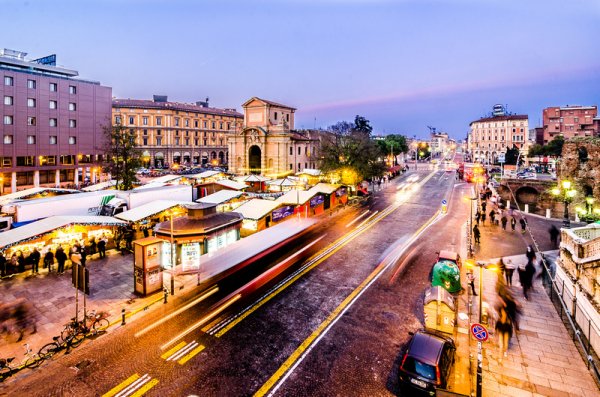
Light trails are a lot of fun to photograph and can be done just about anywhere you can find a busy road.

In general any shutter speed from one second, to a few seconds, should be enough to give you the look you’re after. But it doesn’t just come down to finding a road with traffic and photographing it – make sure you’re aware of your composition as well.
light-trails-example-2

As roads make for great leading lines, try to use those to your advantage. You can either shoot from above the traffic on a bridge or a building, or your can try and get down low and shoot from a median or side walk. No matter where you’re shooting from you’re going to want to be super aware of your surroundings and never do anything that would put your life in danger – no photograph is worth getting hit by a bus over.

For more tips and examples on light trails check out these posts:

  • How to Shoot Light Trails
  • 9 Tips for Capturing the City in Motion

What else?

What else can you think of for night photography? I know I left at least one big one off this list and I did that on purpose as I have no experience in light painting – oops did I just give one away?

The post Do you pack up and leave after sunset and miss the fun of night photography? by John Davenport appeared first on Digital Photography School.


Digital Photography School
 
Comments Off on Do you pack up and leave after sunset and miss the fun of night photography?

Posted in Photography