Think Tank Photo has launched two new bags, the Trifecta 10 DSLR Backpack and Trifecta 8 Mirrorless Backpack. Both backpacks are designed to hold a photographer’s ‘workhorse’ lenses, including ultra-wide, mid-range, and telephoto zoom lenses. As the names indicate, the bags are designed to accommodate DSLR and mirrorless systems. Read more
Tag: mirrorless
-
Sony rides wave of US Mirrorless sales surge
Mirrorless sales in the USA are rising, with sales values up 16.5% over the past year, says market researcher NPD Group. Sony highlighted the figures while celebrating its own success: with the success of the a7 series helping it generate 66% more income from mirrorless sales over the last twelve months. Sony also points out that the Consumer Electronics Association has recently chosen ‘Mirrorless’ as its approved term for the class of cameras. Read more
-
Mirrorless, DSLR or Point and Shoot: Which Camera is Best for Macro Photography?
Editor’s Note: This is part a series on macro photography this week. Look for a new one each day. The next newsletter will have them all if you miss any!
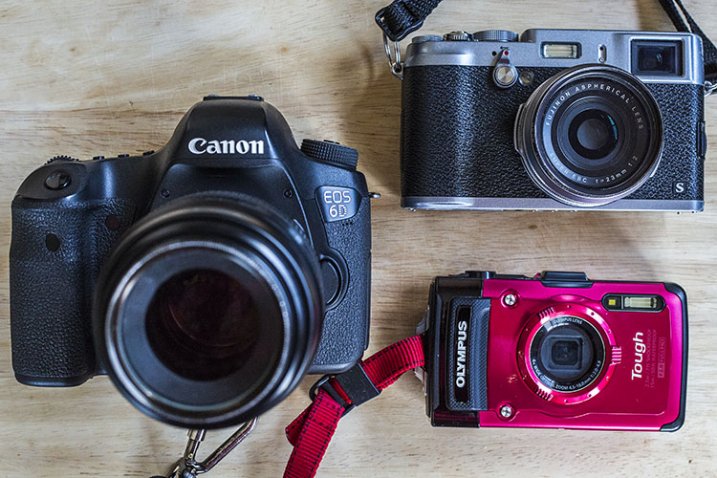
Macro photographers have a plethora of choices when it comes to selecting a camera with this feature. From DSLRs to even cell phones, the macro function is becoming a standard add-on to most forms of digital photography. But, when put to the test, which type of camera will give you the best macro photography results? This article compares the macro photography functions of a DSLR, mirrorless, and point-and-shoot camera to evaluate the pros and cons of using each to shoot extreme close-ups.
To start, can you tell which of the below images were shot with either a DSLR (Canon 6D with 100mm f/2.8 macro lens), mirrorless (Fujifilm x100s), or point-and-shoot (Olympus Stylus TG-2 Tough)? The answers, listed in sequential order below the image, may surprise you.

1) Fujifilm x100s
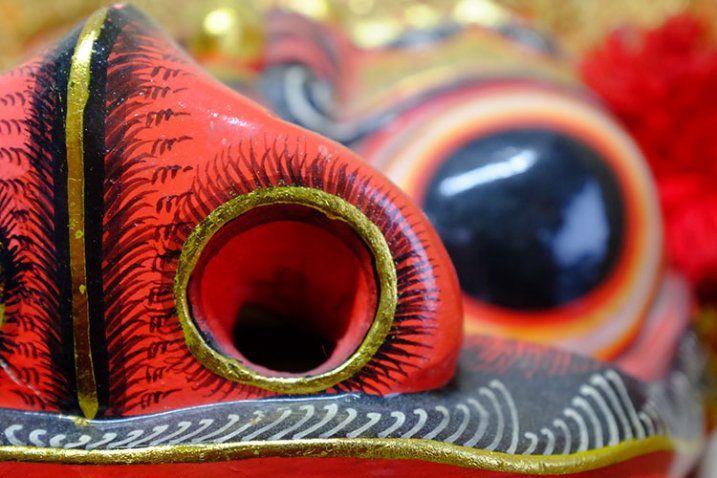
The image on the far left in the above montage was shot using the macro function of the Fujifilm x100s mirrorless camera. The x100s has a macro mode and can shoot images as close-up as 3.9 inches (10 cm). Accessing the macro mode is simple, requiring just a quick dial turn; the results can be seen below.
Pros:
Besides being an attractive camera with its retro body, the x100s has become popular among both professional and amateur photographers, thanks to its high quality features and ability to produce stunning images with its fixed Fujinon 23mm f/2.0 lens. At 15.7oz (445g), this camera is significantly smaller and lighter than a DSLR, yet it is relatively more affordable costing around $ 900. It also offers a unique hybrid viewfinder, meaning shots can be taken using the built-in optical viewfinder, or an electronic one.

Cons:
The fixed lens might bug some photographers since it can’t be swapped out, and the 23mm focal range means you have to get really close to your photo subject. This could produce shadows or block natural lighting, which can’t be overridden without purchasing the optional external flash unit. An additional possible grievance is the 3.9 inch maximum focusing distance. Some of the other cameras mentioned below allow you to get much closer.
These shots were taken at an aperture of f/2.8 using natural lighting, in JPG format (RAW shooting is also available) with no post-processing.
2) Olympus Stylus TG-2 Tough
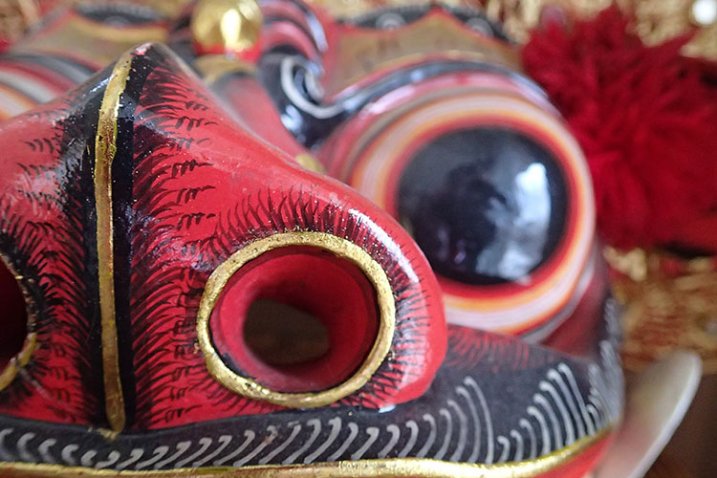
This little camera shot the middle image in the above photo montage. One of the most sophisticated, prettiest, and most durable point-and-shoots on the market today is the Olympus Tough line. It is your best friend for taking high quality photos while engaging in extreme outdoor adventures, and it has a superb macro mode.
Pros:
Waterproof, freeze-proof, crushproof, and shockproof, the TG-2 also has a 12 megapixel BSI CMOS sensor and a high-speed f/2.0 lens. It is pocket-sized, although a little bulkier than most other point-and-shoots, and it only costs around $ 350 (TG-4 is the current model). This camera also has many shooting modes including two macro options: Super Macro and Underwater Macro. Both allow you to get as close as 1 cm to the photo subject, and additional magnification of up to 7x with the optical zoom, and 14x with Super Resolution zoom, which is closer than either the x100s or Canon 100mm f/2.8 macro lens offer. Its unique 5:1 magnification really makes macro photography a joy on this little camera.

Cons:
This is the only camera of the bunch that doesn’t offer RAW shooting or an optical viewfinder, but it is the only one that has a built-in flash. While the flash produces a balanced output in most situations, it isn’t helpful when shooting in macro mode since it tends to blow out the image due to being too close to the photo subject. Along those lines, shooting in macro mode on the TG-2 does require the camera to be very physically close to the subject, again making it easy to obstruct lighting.
3) Canon 100mm f/2.8 Macro Lens
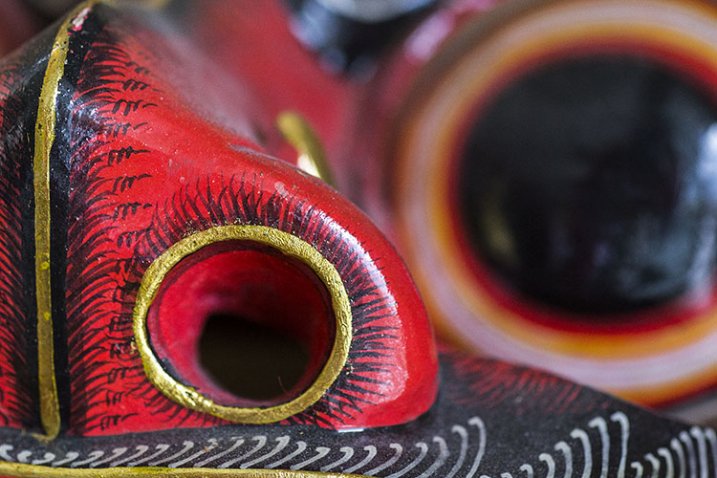
The final image on the far right of the montage above was snapped with the Canon 100mm macro lens. A newer version of this lens recently debuted featuring Image Stabilization and extra goodies, but the older model still boasts spectacular, sharp optics at a relatively lower price ($ 549 versus $ 899).
Pros:
Canon has a small but mighty line of macro lenses, and the 100mm is arguably the best choice. Its longer focal length causes images to be rendered at 1:1 magnification, giving you more working distance so you don’t scare away your living photo subjects, or cast shadows. Since this lens is paired with a DSLR, image resolution can be up to an astounding 50.6 megapixels if it is used with the Canon 5DS. That’s a huge number compared to the 16.3 megapixels on the Fujifilm or 12 megapixels on the Olympus.

Cons:
At 20.6 oz (584.2 g), the 100mm macro lens is by far the bigger, heavier, option of the three. With a cost of $ 550-899, and the requirement of using it with a Canon DSLR, this is also the most expensive macro photography tool.
Conclusion
So which camera option is the best for macro photography? It truly depends on how you define “best.” In moments when you need a compact option, the Fujifilm x100s or Olympus Tough point and shoot are the better options, the latter being the better deal for budget or extreme sports shooters. However, if high-quality, professional imagery is your goal, a DSLR with a macro lens is your best bet.
 Want to learn more about macro photography? Check out Ed Versosky’s Introduction to Close-Up & Macro Photography ebook – just $ 10 (over 30% off) this week with coupon code: DPS. You will need to enter the code to apply the discount.
googletag.cmd.push(function() {
tablet_slots.push( googletag.defineSlot( “/1005424/_dPSv4_tab-all-article-bottom_(300×250)”, [300, 250], “pb-ad-78623” ).addService( googletag.pubads() ) ); } );googletag.cmd.push(function() {
mobile_slots.push( googletag.defineSlot( “/1005424/_dPSv4_mob-all-article-bottom_(300×250)”, [300, 250], “pb-ad-78158” ).addService( googletag.pubads() ) ); } );The post Mirrorless, DSLR or Point and Shoot: Which Camera is Best for Macro Photography? by Suzi Pratt appeared first on Digital Photography School.
-
5 Lessons Learned Switching from DSLR to Mirrorless for Travel Photography
Two months ago, after shooting for 10 years with Canon, I completely switched to Sony. It surprised some readers of my blog, as well as some fellow photographers. To address the issue, I published a detailed post on my blog with the reasons behind my switch. To save you time, I will summarize my reasoning, not only in one sentence but in one word: INNOVATION. I could see that, in the last two to three years, the main innovation was happening in the realm of mirrorless systems and I felt that Canon was simply an outside observer.
I considered the switch for a long time. I first waited because mirrorless systems were not up to DSLR standards to which I was accustomed. Then suddenly, about a year ago, all mirrorless manufacturers began releasing new camera models that could compete with any DSLR and, in some cases, even surpassed them.

Big Sur, California – Sony A6000, Sony 10-18mm lens
That was when I decided to switch. But, it took another six to seven months to choose the right kit (camera and lenses) for my travel photography needs.
My initial choice was the Panasonic Lumix GX-7 which was the perfect camera for me feature-wise but I was not too crazy about the selection of high-end wide angle lenses.
My second choice was the full frame Sony A7 and, I almost pulled the trigger last fall. However, after holding it in my hands, the Sony A7II in combination with the newly released Zeiss 16-35mm lens was almost comparable to the DSLR in weight and size.
That was when my choice was made. Just before the Christmas holidays, I sold all of my Canon gear to prevent cold feet. Then, I ordered the Sony A6000, Sony 10-18mm f/4, and Zeiss 16-70mm f/4 in one shot. I paid $ 2000 in total. Sony lenses are always pricy but I found that the price of the complete kit was very reasonable.
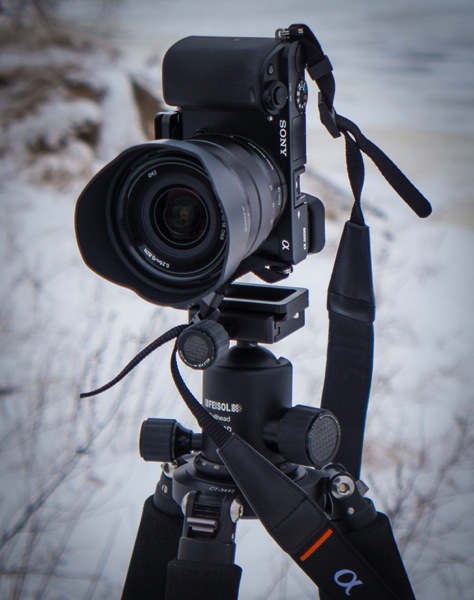
Sony A6000, Sony 10-18mm lens and Feisol Tournament Tripod
I just returned from my first photography trip of the year; I spent two weeks in Hawaii and Northern California where I exclusively shot with my brand new Sony gear.
Below are my thoughts after putting this new equipment through the real life test of travel photography. Please note, I only addressed the features of the camera which are important to me as travel photographer.
Lesson 1: Size does matter in travel photography
As a DSLR shooter, when preparing for a long and demanding sunrise/sunset hike, I always faced the same dilemma – what equipment to bring? Should I carry everything and look (and feel) like a Sherpa tackling Everest? Or should I hike light and risk missing important gear?
I do not have to compromise anymore as I can now put everything in a small camera bag and bring it with me. The Sony A6000 (344g) and the Sony 10-18mm (220g) weigh 564g (19.9oz) total. I still cannot believe that a high-quality wide angle zoom lens can weigh only 220g. I call it freedom.
Don’t get me wrong, the size and the weight were not the main reasons for my switch. I would never jeopardize quality for the sake of weight reduction but it was important consideration.

San Francisco, California – Sony A6000 with Sony 10-18mm lens
Lesson 2: Electronic Viewfinder (EVF) – a new way of looking at the scene
Somehow, in many mirrorless reviews, the EVF is presented as a negative factor and is portrayed as somewhat of a disadvantage compared to the DSLR optical viewfinder. I do not agree with that conclusion. For me, the EVF is one of the main advantages of mirrorless cameras. Finally, when I look through the viewfinder I can see what the camera’s sensor sees.
It is a very new and refreshing experience with the EVF, when you can assess the depth of field of the scene before taking the picture.
Here’s a real life scenario. Earlier I was shooting using exposure compensation -2EV and I forgot to reset it to zero. Now, when looking through the EVF, I can see right away that the exposure is wrong because the EVF picture is too dark.
When I shoot wide at 10mm, I can even see barrel distortion which realistically represents the photo I am about to take.
I often use manual focusing when shooting landscapes, which was pretty much an impossible task with the DSLR in bright conditions because of the display screen glare. Now, not only can I easily use the manual focus in any condition, I can also take advantage of Focus Peaking, an amazing feature that highlights areas that are in focus with the bright color. There is no more guess work.
In one of the reviews, I read how awful and pixelated the EVF picture becomes in dark conditions. I can confirm that it looks pretty bad but it is good enough for composing the shot and beats the DSLR where all you can see is pitch black.
For me, the EVF simplifies the process of taking pictures and makes it more predictable.
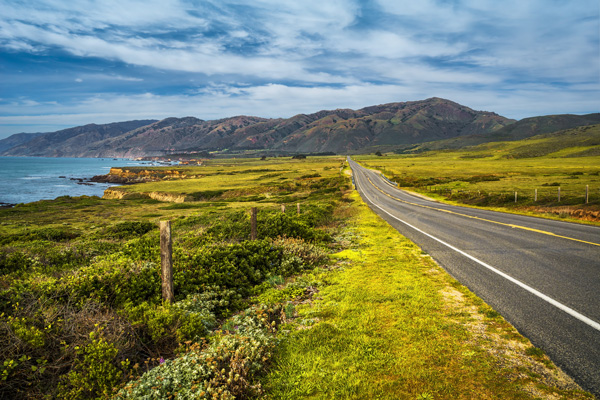
California State Route 1 – Sony A6000 with Zeiss 16-70mm lens
Lesson 3: I love the 24 megapixels sensor
During the silly megapixel war between major camera manufacturers, I decided for myself that 16Mpx was the right pixel count for my needs and I had no plans of upgrading only for that reason.
The Sony A6000 comes with 24Mpix, which I initially did not consider as an important upgrade. What I realized later, after starting to process photos, is that the 24Mpx sensor produces unbelievably clean and sharp images and, in combination with native quality lenses, it resolves an insane amount of detail. Photos look acceptable even at 100% magnification.
Although, I have to admit the higher pixel count is more taxing on my computer and I might need to upgrade it soon.
High ISO photography is not something that I do often when I travel and it was hard for me to assess low light performance of the sensor. But, what I can see based on family photos from the holidays is that ISO 3200 is still acceptable and excessive noise is easy to eliminate in Lightroom.

Lanikai Beach O’ahu, Hawaii – Sony A6000 with Sony 10-18mm lens
Lesson 4: 11fps is a game changer
Sports photography is somewhat of a hobby for me. The only times when I shoot sports are when professional cycling peloton comes to Montreal every September and when my daughter is playing water polo. In order to test 11fps in combination with the fastest focusing system in the industry, I went to the beach in Hawaii to photograph surfers.
I switched from RAW to JPEG, set the camera to a continuous shooting mode and enabled Object Tracking. I was amazed not only with the new experience of shooting but with the results as well. Shooting at 11fps reminded me of filming the video and then going frame by frame in the editing software, selecting the best frames. There are no missing moments. The focus was spot on, in pretty much every frame.
I can see how the Sony A6000 can be a game changer for sports and wildlife photographers.

Makapu’u Point O’ahu, Hawaii – Sony A6000 with Sony 10-18mm lens
Lesson 5: Not everything is perfect in paradise
Even though my initial experience of using the Sony A6000 is very positive, there are some shortcomings and annoyances I want to address.
Battery life:
According to Sony, you can take up to 360 shots on a single battery charge and I found this number to be pretty accurate. I even managed to take close to 390 shots when shooting in bracketing mode. It is not bad at all considering the small battery size and the EVF high power consumption. However, when you are accustomed to shooting 1500 shots on a single charge with the DSLR, the difference is very obvious. Now, I carry three spare batteries with me at all times and I have to remember to keep them charged.
Bracketing:
For some inexplicable reason you can shoot five bracketed shots at 0.7EV intervals only, which makes it completely useless. In extreme lighting conditions I have to shoot two sets of bracketed shots (-2, 0, +2), offsetting them manually using exposure compensation (-1 EV). This is very annoying.
No GPS tagging:
Even though the camera has decent wireless connectivity, the GPS tagging utilizing a mobile phone is missing.
Buffer writing lock:
When a camera transfers photos from the buffer to a memory card, the system is completely locked. You cannot even preview images during the transfer.
2-Second delay shortcoming:
You cannot trigger bracketed shots using the 2-second delay functionality. I had to buy, and carry around, an unnecessary extra piece of equipment: Wireless Shutter Release ($ 10).

Sandy Beach, Hawaii – Sony A6000 with Sony 10-18mm lens
Conclusion
The switch from a Canon DSLR to the mirrorless Sony A6000 was less stressful and less painful than I expected. I believe that one of the main factors that made it possible was my purchase of native Sony lenses so I did not have to deal with the glass from other systems with the converters.
I am waiting for the widely rumored Sony A7000 which is supposed to be the successor of the Sony NEX-7. I hope Sony addressed the shortcomings of the A6000 and introduces new pro features like: weather sealing, built-in body stabilization, GPS tagging and advanced bracketing. I am definitely planning to get the new A7000 and keep the A6000 as a backup body.
googletag.cmd.push(function() {
tablet_slots.push( googletag.defineSlot( “/1005424/_dPSv4_tab-all-article-bottom_(300×250)”, [300, 250], “pb-ad-78623” ).addService( googletag.pubads() ) ); } );googletag.cmd.push(function() {
mobile_slots.push( googletag.defineSlot( “/1005424/_dPSv4_mob-all-article-bottom_(300×250)”, [300, 250], “pb-ad-78158” ).addService( googletag.pubads() ) ); } );The post 5 Lessons Learned Switching from DSLR to Mirrorless for Travel Photography by Viktor Elizarov appeared first on Digital Photography School.
-
Tenba announces Switch bags for mirrorless cameras and lenses
Tenba has unveiled a new customizable camera bag designed for mirrorless cameras and their accessories. The product is called Switch, a name derived from its interchangeable front flap. A total of three sizes are offered, all of which are now available through Tenba’s website. Read more
-
A Beginner’s Guide to Mirrorless Cameras
Micro four-thirds cameras, otherwise known as mirrorless cameras, have been around for a little while now. And during the time they’ve been on the market, the companies that make them have been steadily improving on these pint-sized wonders. Many professional photographers in different fields are beginning to make the switch to mirrorless cameras, opting for something smaller than bulky DSLRs. Continue Reading
The post A Beginner’s Guide to Mirrorless Cameras appeared first on Photodoto.
-
Opinion: Does the arrival of the EOS M3 mean Canon is finally taking mirrorless seriously?
The Canon EOS M3 has 24 million pixels, an APS-C sensor, DSLR features and it looks like a camera. So, does this mean Canon is now taking the mirrorless market seriously? Senior DPR contributor Damien Demolder weighs in. Read more
-
Are Mirrorless Cameras Here to Stay?
In the late 2000s a new segment formed in the photography industry. This segment goes by many names, but the most common nowadays is “Mirrorless”. These cameras fall between the generic point and shoot cameras and the professional full frame DSLR systems.

By Zhao !
So what is Mirrorless all about?
The first mirrorless cameras came out with a traditional rangefinder design. They were small, had many manual settings, and were geared more towards street photographers who wanted great image quality in a small body. From these first cameras it became evident that a smaller camera with great image quality, professional grade, could be very useful. Soon there were several manufacturers developing mini-DSLR looking cameras, more rangefinder designs, and adding more and more features that are found in very high-end cameras. Along with these smaller bodies and variety of sensor sizes new lenses were engineered to take full advantage of the mirrorless design. Some of these manufacturers include Leica, Sony, Panasonic, Olympus, Fuji, Canon, Nikon.
First impressions
When these cameras hit the market they were sought after by photojournalists, and street photographers as well as the techie part of the industry. Some thought it was just a trendy segment while others laughed at their size and functionality, forever comparing with full frame DSLRs (this is due to the fact that many mirrorless cameras don’t use a full frame sensor). Even after many articles had come out talking about the benefits of these cameras, many looked passed them and considered them amateur gear. But, manufacturers continued to produce new cameras with more features and better performance.
What really sets Mirrorless apart?

As the segment continues to gain traction several key features are really starting to turn heads.
EVF: Electronic Viewfinder
Unlike traditional viewfinders which show you what is reflected via the mirror you actually see a small built-in display in the viewfinder showing you what the sensor sees. Try to picture a mini-tv monitor inside the viewfinder showing you what the camera sees.
This might seem strange, but there are tons of benefits to having it set up this way. You see what the sensor sees. So, you can point the camera into the sun and not get blinded. Or you can set the camera to black and white mode and you’ll see everything in black and white. On some cameras you can access your full camera menu through the viewfinder without having to look at the screen on the back. Also, you can fully customize the information you see in the viewfinder. What you see is what you get.
Ergonomics
 Mirrorless cameras are small, compact, and very well built. They are made with high grade materials, and just by holding them you know you’re not using a generic point and shoot. To some photographers this is a huge selling point as they look to get away from their heavy camera gear. It also makes it easier to blend into the background without a big DSLR pointed at someone. Some of these cameras are even fully weather sealed, or have a flip out display, and just about all of them have a hot shoe for an external flash.
But, it goes further. The button layouts and menu systems are designed to be easy to use for even the most demanding of photographers. Unlike point and shoot cameras all the main controls are easily accessible. Some of these design cues come from professional full frame cameras while others look towards old film cameras for inspiration. With all this variety there is system for everyone.
Image quality
As each new generation comes out there has been an improvement in sensors, autofocus, and even better lenses. All of these things have caught the eye of the whole industry. The mirrorless segment is maturing at a rapid pace and it shows! Unlike the large DSLR companies who are fighting the megapixel race, the mirrorless segment is working on improving image quality in low light situations, fast moving subjects and lens quality. They have found ways to make it easier to take photos with manual focusing lenses as well. Image quality is a very important part of the development of the mirrorless segment.
The future of mirrorless – predictions
The mirrorless segment of the industry has really caught fire in the last few years. All major manufacturers have jumped on board, which means there are lots of options for anyone interested in giving them a try. New adapters have come out so you can use your existing lenses on your new mirrorless camera. Improvement on sensors, auto focus, weather sealing, range of lenses, and options, are attracting more and more people to mirrorless. Fujifilm as well as others are already developing a huge loyal customer base. Firmware updates seem to be the big game changer regarding loyalty. The constant updates and improvements are much more useful than what we’ve seen from most DSLR manufacturers.

This segment will continue to grow and get better at a much faster rate than other segments. Although still young, mirrorless is here to stay. There is something for everyone. Even the most traditional photographers are getting excited about the possibilities of the Electronic Viewfinder as it keeps getting better and better. At the lower price point, much smaller form factor and close to equal image quality to the very large and expensive DSLRs means that it makes sense that more and more photographers will look to add, or replace, their gear with a shiny new mirrorless system.

By Zhao !
What are your thoughts? Where do you stand?
googletag.cmd.push(function() {
tablet_slots.push( googletag.defineSlot( “/1005424/_dPSv4_tab-all-article-bottom_(300×250)”, [300, 250], “pb-ad-78623” ).addService( googletag.pubads() ) ); } );googletag.cmd.push(function() {
mobile_slots.push( googletag.defineSlot( “/1005424/_dPSv4_mob-all-article-bottom_(300×250)”, [300, 250], “pb-ad-78158” ).addService( googletag.pubads() ) ); } );The post Are Mirrorless Cameras Here to Stay? by Tomas Haran appeared first on Digital Photography School.
-
CES 2015 Samsung Interview: Mirrorless to outsell DSLRs ‘in three years’
Since releasing the NX1 late last year, Samsung has been gathering feedback from users, and is preparing a major firmware update before the end of this month. We made time at CES in Las Vegas to sit down with Byungdeok Nam, Senior Vice President of Samsung’s R&D team in the company’s Digital Imaging division, to speak about the NX1, the new firmware, and the mirrorless camera market in general. Click through to read our interview
-
CES 2014 Samsung Interview: Mirrorless to outsell DSLRs ‘in three years’
Since releasing the NX1 late last year, Samsung has been gathering feedback from users, and is preparing a major firmware update before the end of this month. We made time at CES in Las Vegas to sit down with Byungdeok Nam, Senior Vice President of Samsung’s R&D team in the company’s Digital Imaging division, to speak about the NX1, the new firmware, and the mirrorless camera market in general. Click through to read our interview