RSS
 

Posts Tagged ‘Macro’

Large format macro: a crazy wet plate photography experiment

15 Mar

Austrian wet plate photographer Markus Hofstaetter is back with another crazy large format photography experiment. This time, he decided to find a way to shoot macro photos on a large format wet plate camera. To do this, he actually had to stack two wet plate cameras front to back, bellows fully extended.

Markus documented the whole experiment on his blog, and shares a behind-the-scenes ‘Making Of’ look at the shoot in the video above. His subject was a little snowdrop from his garden, with a simple tin-foil background for some pretty bokeh. But getting any sort of magnification with a large format camera is no easy feat. He needed a lot of distance between his film plane and the little flower.

That’s why he decided to ‘connect’ two large format wet plate cameras together, giving him enough extension to magnify the flower onto an 18x24cm plate.

Here’s a diagram that shows the difference between your standard “full-frame” size, a 10x12cm plate, and an 18x24cm plate (left) and that same diagram overlaid on the final plate:

The next problem he faced was getting enough light. The farther the plate is from the subject, the more light he needs—the plate has an ISO value of about 0.5—and he was pretty far away from his subject. The trick to solving this problem, says Markus, is using fresh chemicals and a LOT of artificial light.

“Freshly mixed chemicals are more sensitive to light,” he tells DPReview. “If I had used older chemicals, I’m not sure if this macro shot would have been possible.” Add to that two flashes of 7,000W of light, and you’ve got JUST enough exposure to make this work.

Mix all of this together and here’s what you get. Scroll to the very end to see the final image:

$ (document).ready(function() { SampleGalleryV2({“containerId”:”embeddedSampleGallery_9257219705″,”galleryId”:”9257219705″,”isEmbeddedWidget”:true,”selectedImageIndex”:0,”isMobile”:false}) });

Definitely check out the whole Making Of video at the top if you want to see how this shot came together. Markus goes into more detail, revealing interesting tidbits about the lens he used, his lighting setup, and lets you tag along for the entire developing process as well.

And if you like his work, don’t forget to visit his website, check out his blog, and give him a follow on Facebook and Instagram. His quirky experiments—several of which we’ve featured on DPReview—might just get your creative juices flowing, too.

Articles: Digital Photography Review (dpreview.com)

 
Comments Off on Large format macro: a crazy wet plate photography experiment

Posted in Uncategorized


Venus Optics officially launches the Laowa 25mm F2.8 2.5-5X Ultra Macro

10 Mar

$ (document).ready(function() { SampleGalleryV2({“containerId”:”embeddedSampleGallery_7760408335″,”galleryId”:”7760408335″,”isEmbeddedWidget”:true,”selectedImageIndex”:0,”isMobile”:false}) });

About a week ago, Venus Optics’ Japanese distributor Sightron announced two new lenses: the Laowa 9mm F2.8 Zero-D and 25mm F2.8 2.5-5x Ultra Macro. And while the 9mm F2.8 Zero-D still hasn’t made its way onto the English language Venus Optics site yet, today did see the official announcement of the strange Laowa 25mm F2.8 2.5-5x Ultra Macro.

Nothing has changed about the lens’ design since last week’s debut: the 25mm F2.8 2.5-5x Ultra Macro is still made from 8 elements in 6 groups—including an ultra low dispersion lens and multilayer coating on each element—which allow for a max working distance of 40 mm (5x) to 45 mm (2.5x). Ultimately, this lens was designed to be as portable as possible, as this comparison between it and the Canon MP-E 65mm F2.8 1-5x Macro demonstrates:

Size comparison: Laowa 25mm F2.8 2.5-5x Ultra Macro vs Canon MP-E 65mm F2.8 1-5x

The Venus Optics Laowa 25mm F2.8 2.5-5x Ultra Macro will be available starting in March for the price of $ 400 USD. You can also purchase an optional tripod collar ($ 30), Micro Four Thirds adapter ($ 30), or Fuji X mount adapter ($ 30).

For more information, if you’d like to pre-order your own, or if you want to scroll through a series of official sample images, head over to the Venus Optics website.

Articles: Digital Photography Review (dpreview.com)

 
Comments Off on Venus Optics officially launches the Laowa 25mm F2.8 2.5-5X Ultra Macro

Posted in Uncategorized


Working with Different Focal Lengths for Macro Photography

07 Mar

At some point in your photography journey you may be fascinated by pictures capturing living creatures in great detail, flowers close-up, and in general intimate vistas, which may go unnoticed in our daily viewing habits. Such shots are commonly described as macro photography.

Working with Different Focal Lengths for Macro Photography - red flower

The purpose of this article is to provide you with theoretical and practical insight, to help you select lenses for macro photography with focal lengths suitable for your style.

What is macro photography?

The Collins English Dictionary defines macrophotography as: extremely close-up photography in which the image on the film is as large as, or larger than, the object. Extending this definition into the world of digital, the word “film” can be replaced by “sensor”.

The terms magnification and reproduction ratio (RR) are two ways of quantifying this definition. They describe how big the capture on the sensor is as compared with the subject you are photographing.

  • “As large as” means that whatever object is captured it is the same size om the sensor as it is in real life (magnification of 1x or x1 and RR of 1:1).
  • “Larger than” means if the image on the sensor is N times the actual life size of the subject, the magnification is then Nx and the RR is N:1.

An important distinction has to be made between the image on the sensor and the printed image. 1cm of object captured on 1cm of sensor may appear on a typical 10x15cm print as much bigger than 1cm.

It is important to note that not all lenses are capable of reaching 1x (1:1) magnification, even if they contain macro in their name. So it is important during your gear selection to know what is a true macro versus a marketed as a “macro” lens. This does not mean that you cannot and will not make breathtaking close-up pictures with that lens, it just means that you will only able to reach lower magnifications and RRs (e.g. a 0.25x magnification = RR of 1:4)

Now that we have established the realm of macro photography, there are a couple of other terms that are essential in this article.

Other definitions

Minimum focusing distance (MFD). This is a lens’s construction characteristic. According to Nikon, MFD is the shortest distance at which a lens can focus. In the case of DSLR Cameras, the focus distance to the subject is measured from the focal plane mark on the camera body, not from the front of the lens. MFD is important because 1:1 or life size RR only happens at the MFD of any true macro lens.

2 focal plane mark - Working with Different Focal Lengths for Macro Photography

The focal plane mark on a D750 is shown below to the left of the strap handle.

Minimum working distance (MWD). This is the distance from the subject to the front of the lens barrel (excluding the lens cap if used), while the lens is set to its maximum magnification (i.e its MFD).

On the web, there are various tools to help calculate MWD. This is a lens and camera combination characteristic, as different cameras contribute differently to the MWD (even if minimally so). A simple graph illustrating MFD and MWD is shown below.

MFD MWD - Working with Different Focal Lengths for Macro Photography

The purpose of this article is to practically demonstrate the difference in Minimum Working Distance between two lenses of different focal lengths, as well as some implications that arise from this difference.

Gear and settings

For the examples used in this article, two macro lenses, the Tokina 35mm f2.8 and the Sigma 150mm f2.8 were mounted on a Nikon D750. This will demonstrate the MWD difference between two considerably different focal lengths (short versus long).

4 Tokina 35 Sigma150

5 D750 - Working with Different Focal Lengths for Macro Photography

The supporting platform (all-important for macro photography) consisted of a SIRUI T-025X carbon-fiber tripod, a Manfrotto 410 Junior Geared Tripod Head and a Velbon Super Magnesium Slider Macro Rail. A Nikon ML-L3 remote was used to trigger the shutter to avoid adding additional vibrations.

6 Platform tripod - Working with Different Focal Lengths for Macro Photography

Quick comparison

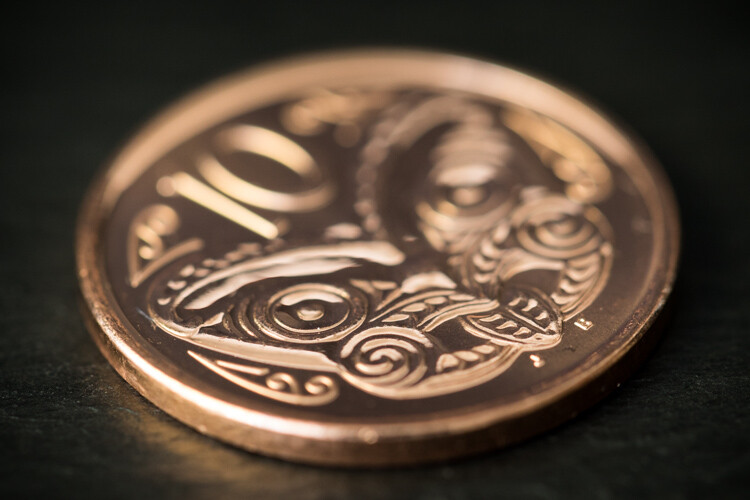
Let’s start with a 1:1 macro shot of an everyday item like a coin. In the photographs below the coin was shot 1:1 with both the 35mm and 150mm lenses. Rulers were placed to show the sensor size of 35.9 x 24.0 mm. The difference of a few mm is probably ruler set-up error on my part.

35mm lens

Ruler in cm and mm showing the size of the image on the sensor. This is 1:1 which would be 24x36mm.


The distance needed to shoot the coin at 1:1 with the 35mm lens.

150mm lens

1:1 shot showing the images size on the sensor, 36mm which is fully 100% for a full frame sensor 24x36mm.


The distance needed to shoot the coin at 1:1 with the 150mm lens.

I measured an MWD of 19.5cm for the 150mm and only 1.8cm for the 35mm!

To see how this big difference affects a real-world shooting scenario, the owner of a close by flower shop allowed me to use his grounds and beautiful flowers. Continue reading for more info on this.

Doing macro photography of flowers with different focal lengths

To obtain the 1:1 photo shown below, the 35mm lens needs to actually be on top of the bulb as shown in the second shot.

10 150 bulb

A similar shot was done using the 150mm lens.

9 35 MWD

35mm lens in close to get a 1:1 shot.

11 150 MWD

While getting a similar photo with the 150mm lens is much more comfortable.

12 screen

The settings for both flower macro shots were as seen here.

Focal length matters even more in macro photography

Macro photography is exciting. In the words of Roman Vishniac, “In nature every bit of life is lovely. And the more magnification we use, the more details are brought out, perfectly formed, like endless sets of boxes within boxes.”

However, in my experience, macro has more gear and technical considerations than other popular subjects (e.g., portrait or landscape), especially as magnification goes up. One primary point of concern is the Minimum Working Distance of the lens used (true macro or not). This will determine significantly, in my view, the ease of use of the lens and the subsequent willingness you may (or may not) show towards doing macro photography.

Working distance issues

Apart from static subjects, where you may be okay to handle a short MWD. But if at some point you want to shoot bees or other living critters, then most probably you will want a longer MWD. This will help you to not scare away your subject and also to avoid being bitten/stung by it.

Additionally and importantly, a longer working distance will allow access to more light (natural or flash). You can imagine the limitations trying to introduce extra light to the 35mm setup shown above. Things will get even more cramped if you introduce closeup lenses or do lens reversal to reach even higher magnifications.

A rough proposed working classification of focal lengths in macro photography could be as follows:

  • Focal lengths up to 60mm – Useful in product photography (e.g. jewelry) and small objects that can be approached and lit in a controlled environment.
  • 60-150mm – Usable with caution for insects, flowers, and small objects from a greater distance.
  • Above 150mm – Ideal for critters where additional working distance and additional lighting options are preferred.

Finally, there are other considerations, such as perspective differences due to varying focal lengths. These are more aesthetic than technical and not in the scope of this article.

The post Working with Different Focal Lengths for Macro Photography by Konstantinos Skourtis appeared first on Digital Photography School.


Digital Photography School

 
Comments Off on Working with Different Focal Lengths for Macro Photography

Posted in Photography


CP+ 2018: Hands-on with Sigma 105mm F1.4 Art ‘bokeh master’ & 70mm macro

01 Mar

CP+ 2018: Hands-on with Sigma 105mm F1.4 Art ‘bokeh master’

Sigma’s new 105mm F1.4 DG HSM is a beast, weighing in at 1.6 kilos. We’re at the CP+ tradeshow in Yokohama, Japan, where we just got our hands on what Sigma is calling the ‘bokeh master’.

CP+ 2018: Hands-on with Sigma 105mm F1.4 Art ‘bokeh master’

Even without the hood, the new 105mm is a large lens, with a front filter diameter of 105mm. It’s not particularly long, but as you can see from this shot, which shows the lens mounted on a Canon EOS 6D, it has a very wide diameter of 116mm (4.6 inches). The large tripod ring is included, and can be removed for hand-held shooting.

CP+ 2018: Hands-on with Sigma 105mm F1.4 Art ‘bokeh master’

With the hood attached, the 105mm gets even larger.

CP+ 2018: Hands-on with Sigma 105mm F1.4 Art ‘bokeh master’

The new 105mm is unstabilized, which means that the only controls on the lens are an AF/MF switch and a very broad, wide-diameter focus ring. Manual focus is a luxurious experience on all of Sigma’s ‘Art’ series and this lens is no different. Judging purely from our brief experience on the show floor, autofocus speed is similar to the 85mm F1.4: smooth and positive without being as quick and snappy as lenses with fewer pieces of glass to move around.

CP+ 2018: Hands-on with Sigma 105mm F1.4 Art ‘bokeh master’

And there is a lot of glass inside the 105mm. The new lens comprises 17 elements in 12 groups, including three FLD glass elements, two SLD glass elements, and one aspherical element.

Sigma claims that the lens creates a beautiful bokeh effect, and the well-controlled sagittal coma should make it excellent for capturing ‘starry skies’. A 105mm wouldn’t be our first choice for astrophotography, but we can’t wait to get hold of a shootable sample, and see what it can do.

CP+ 2018: Hands-on with Sigma 105mm F1.4 Art ‘bokeh master’

Also unveiled at the show was a new macro lens, – a first for the Art range. The 70mm F2.8 DG Macro offers true 1:1 reproduction, and a dust and splash-proof construction.

The lens features an extending, floating, two-group focus mechanism. Optical construction incorporates two FLD glass elements, two SLD glass elements, and one element with ‘a high rate of anomalous partial dispersion and a high index of refraction’. This should minimize axial chromatic aberration. Sigma claims that two aspherical elements ensure ‘razor-sharp’ images at close focusing distances.

CP+ 2018: Hands-on with Sigma 105mm F1.4 Art ‘bokeh master’

The 70mm macro is a pretty compact short-tele lens when focused at infinity, but gets bigger when the included hood is attached. The front filter diameter is a modest 49mm. Three focus limits can be set, for reducing autofocus ‘hunting’ at short working distances.

CP+ 2018: Hands-on with Sigma 105mm F1.4 Art ‘bokeh master’

When the lens is racked to its minimum focus distance of 26cm (10.2 inches) the lens itself grows considerably in size (but the hood stays put). Focus is ‘focus by wire’.

At 515g (18 oz) it’s reasonably lightweight, and balances well on our A7R III (with an adapter). We got our hands on a Canon-mount version, but the 70mm F2.8 is also available in Sony FE mount natively.

Articles: Digital Photography Review (dpreview.com)

 
Comments Off on CP+ 2018: Hands-on with Sigma 105mm F1.4 Art ‘bokeh master’ & 70mm macro

Posted in Uncategorized


Sigma introduces 70mm F2.8, first Art series macro

27 Feb

Gearing up for CP+ 2018, Sigma has announced two all-new lenses including the 70mm F2.8 DG Macro. It’s the first macro lens in the Art-series line, offering true 1:1 reproduction and a dust- and splash-proof design. Full-time manual focus is available even in autofocus shooting, and focus ring’s angle of rotation is tuned to the needs of macro shooting. Sigma gives no pricing or availability information for the 70mm F2.8 Macro.

SIGMA 70mm F2.8 DG MACRO

Stunning resolution and clarity for a breathtaking visual experience—a razor-sharp macro lens joins the Art line

1. Design prioritizing optical performance

2. Focus-by-wire system for comfortable and precise focusing

3. Compatible with Sony E-mount cameras with full-size sensors

4. Compatible with Canon Lens Aberration Correction

5. Compatible with SIGMA ELECTRONIC FLASH MACRO EM-140 DG (adapter required)

6. Compatible with SIGMA TELE CONVERTERS (Not available for Sony E-mount lens) Launch: TBD Accessory: Case, Hood (LH708-01) Available AF mounts: SIGMA, Canon, Sony E-mount Note: Appearance and specifications are subject to change without notice.

The long-awaited first macro lens in the Art line In recent years, macro lenses in the standard range have tended to employ inner focusing with the goal of maximizing autofocus speed. In contrast, the new SIGMA 70mm F2.8 DG MACRO | Art lens is designed to prioritize optical performance, fulfilling the demanding image quality requirements that define the Art line. In the standard to mid-telephoto range, it delivers stunning resolution and incredible clarity that greatly exceed expectations for a macro lens. The coreless DC motor further enhances image quality, while an optimized algorithm helps offer extremely smooth autofocus performance for a weightier, high-performance lens. Photography enthusiasts will recall a certain legendary, razor-sharp macro lens—the SIGMA MACRO 70mm F2.8 EX DG—and be glad to learn it is available in a new form, updated with outstanding Art line quality.

Key features
1. Design prioritizing optical performance In order to realize top-level performance at every shooting distance, the lens features an extending, floating, two-group focus mechanism. This configuration minimizes aberration to produce optimal results at any focus distance. To minimize axial chromatic aberration, the optical system incorporates two FLD glass elements, two SLD glass elements, and one element with a high rate of anomalous partial dispersion and a high index of refraction. In addition, two aspherical lens elements help increase resolution at close shooting distances. This optical system makes possible a razor-sharp in-focus area contrasted with a bokeh area free of color streaking.

2. Focus-by-wire system for comfortable and precise focusing The focus-by-wire system eliminates the direct mechanical connection between the focus ring and the focus drive system. Controlled by SIGMA’s latest algorithm, a newly developed coreless DC motor adjusts focus with optimal speed and low noise. Full-time manual focus is available even during autofocus, allowing the photographer to make minute focus adjustments simply by turning the focus ring. In addition, the focus ring’s large angle of rotation helps the photographer achieve the extremely precise focusing required for effective macro photography.

3. Compatible with full-frame Sony E-mount cameras The version of this lens compatible with Sony E-mount mirrorless cameras contains the same optical system as for SLRs. SIGMA MOUNT CONVERTER MC-11 is not required, as the lens performs the same functions as the converter, including in-camera image stabilization and in-camera lens aberration correction. In addition, the lens is compatible with Sony’s Continuous AF, which is not addressed by MOUNT CONVERTER MC-11. SIGMA plans to offer over time Sony E-mount versions of every full-frame prime lens currently available in the Art line, from 14mm to 135mm.

Note: This product is developed, manufactured and sold based on the specifications of E-mount which was disclosed by Sony Corporation under the license agreement with Sony Corporation.

4. Compatible with Canon Lens Aberration Correction The Canon mount lens is compatible with the Canon Lens Aberration Correction function.* Matching the optical characteristics of the lens, this function performs in-camera corrections of peripheral illumination, chromatic aberrations, distortion, and more, further enhancing image quality. *Function not available on all Canon cameras. Further, available corrections may vary by Canon camera model.

5. Compatible with ELECTRONIC FLASH MACRO EM-140 DG (adapter required) Exclusively for SIGMA 70mm F2.8 DG MACRO | Art, the 65mm MACRO FLASH ADAPTER makes the lens compatible with ELECTRONIC FLASH MACRO EM-140 DG (both accessories sold separately). Thanks to the 72mm filter thread, a 72mm MACRO FLASH ADAPTER can also be added so as to accommodate 72mm macro flash products and accessories, including macro flashes other than EM-140 DG as well as ring lights.

6. Compatible with SIGMA TELE CONVERTERS The lens is compatible with SIGMA TELE CONVERTERS (sold separately) designed for the company’s new lens lines. SIGMA TELE CONVERTER TC-1401 allows the lens to be used as a 98mm F4 mid-telephoto macro with autofocus functionality,* while SIGMA TELE CONVERTER TC-2001 allows the lens to be used as a 140mm F5.6 mid-telephoto macro with manual focus.
*Autofocus available at 0.5m to infinity.
*Not available for Sony E-mount lens

Other features

  • Mount with dust- and splash-proof design*
    *SIGMA mount lens does not include sealing, since sealing is present on compatible SIGMA cameras.
  • Rounded diaphragm
  • Fast AF with full-time manual override*
    * The operation of full-time MF may vary based on mount type.
  • Compatible with SIGMA MOUNT CONVERTER MC-11*
    *SIGMA and Canon mount lenses
  • Available SIGMA USB DOCK makes customization and flexible adjustment possible*
    *Not available for Sony E-mount lens
  • Available Mount Conversion Service
  • Brass bayonet mount
  • Evaluation with SIGMA’s own MTF measuring system: A1
  • “Made in Japan” with outstanding craftsmanship

For more information about the SIGMA GLOBAL VISION lineup of fine products, please visit the official SIGMA global website: SIGMA GLOBAL VISION: http://www.sigma-global.com

Specifications
All figures calculated for SIGMA

Lens Construction: 13 elements in 10 groups | Angle of view (35mm): 34.3° | Number of diaphragm blades: 9 (rounded diaphragm) | Minimum aperture: F22 | Minimum focusing distance: 25.8cm/10.2in. | Maximum magnification ratio: 1:1 | Filter size: ø 49mm| Dimensions (diameter x length): ø70.8mm x 105.8mm/2.8in. x 4.2in. | Weight: 515g/18.2oz.

Articles: Digital Photography Review (dpreview.com)

 
Comments Off on Sigma introduces 70mm F2.8, first Art series macro

Posted in Uncategorized


Venus Optics unveils Laowa 9mm F2.8 Zero-D and 25mm F2.8 2.5-5x Ultra Macro lenses

26 Feb

Venus Optics, the company behind the Laowa line of lenses, has announced two new lenses through Japanese parent company Sightron. The first is the Laowa 9mm F2.8 Zero-D, a ‘zero distortion’ wide-angle prime for mirrorless APS-C cameras. The second is another strange full-frame macro lens: the Laowa 25mm F2.8 2.5-5x Ultra Macro.

Neither of these lenses have appeared on Venus Optics’ English language website just yet, but we expect them to pop up soon. In the meantime, here’s what we know about the new glass.

Laowa 9mm F2.8 Zero-D

$ (document).ready(function() { SampleGalleryV2({“containerId”:”embeddedSampleGallery_2253990199″,”galleryId”:”2253990199″,”isEmbeddedWidget”:true,”selectedImageIndex”:0,”isMobile”:false}) });

The long-rumored Venus Optics Laowa 9mm F2.8 Zero-D is an wide-angle prime designed for mirrorless APS-C cameras—specifically, the Sony E, Fuji X, and Canon EF-M mounts. With its 113° angle of view, Venus Optics claims this lens is the widest angle F2.8 lens currently available for APS-C cameras.

Inside, you’ll find 15 lens elements in 10 groups—including three low dispersion elements and two aspherical elements—that attempt to reduce distortion to ‘zero’ (or as close to it as Venus Optics could manage). You’ve also got a 7-blade aperture and a metal construction that promises “excellent robustness and luxury.”

The lens is scheduled to arrive in April, but price for this one is still TBD.

Laowa 25mm F2.8 2.5-5X Ultra Macro

$ (document).ready(function() { SampleGalleryV2({“containerId”:”embeddedSampleGallery_8242421169″,”galleryId”:”8242421169″,”isEmbeddedWidget”:true,”selectedImageIndex”:0,”isMobile”:false}) });

Slightly more defined—and lots more weird—is the Laowa 25mm F2.8 2.5-5x Ultra Macro lens for full-frame cameras. Specifically, you’ll find this one in the Canon EF, Nikon F, Pentax K, Sony FE mounts when it, too, ships in April.

At its closest, the lens offers 5x magnification, using an optical design of 8 elements in 6 groups—including an ultra low dispersion lens and multilayer coating on each element—to deliver a working distance of just 40mm at 5x.

Here’s a full review of the newly announce lens by YouTuber Photos by Richard (sample photos available on his website).

Like the 9mm F2.8 Zero-D, the 25mm F2.8 2.5-5x Ultra Macro also ‘adopts a metal enclosure,’ and is scheduled to ship in April. Venus Optics hasn’t announced pricing yet, but according to Photo Rumors, the lens will cost $ 400 in the US.

To learn more about either of these lenses, check out both Google Translated press releases below.

Press Release

LAOWA 9mm F2.8 Zero-D

SiteLong Japan Co., Ltd. announces the new product “LAOWA 9mm F2.8 Zero-D” of LAOWA (Venus Optics).

Product Overview

  • Product name LAOWA 9mm F2.8 Zero-D
  • Suggested retail price Open price
  • Expected market price TBD
  • Scheduled release date around early April 2018

Main Product Features

  • This product is the best lens for photographing landscape photographs, architectural photographs, interior photographs, star photographs and so on.
  • Use 3 special low dispersion lens (ED lens) and 2 glass aspheric lenses luxuriously. By adopting an optical design with extremely reduced distortion to zero, it is possible to capture landscape photographs and architectural photographs without the influence of distortion.
  • It is the widest angle lens (113 °) lens among the wide-angle lenses for APS-C cameras of the open F 2.8 which are on sale now.*
  • It adopts metal enclosure with excellent robustness and luxury. Effective flower type hood is attached.
  • This product is the brightest, the most compact and lightweight lens among the same class products. Because it is very convenient to carry, it is also ideal for daily snapshot.
*As of February 1, 2018 VenusOptics examined

Main Specifications

  • Focal length: 9mm
  • Maximum F value: F2.8
  • Viewing angle: 113 degrees (corresponding format: APS-C)
  • Lens construction: 10 groups of 15
  • Number of diaphragm blades: 7
  • Shortest shooting distance: 12 cm
  • Maximum magnification: 0.13 times
  • Filter diameter: ? 49 mm
  • Weight: ~ 215g* Variable depending on mount
  • Corresponding mount: FUJIFILM X, Canon EF-M, Sony E

*Product specifications are subject to change without notice due to improvements etc.


LAOWA 25mm F2.8 2.5-5X ULTRA MACRO

SiteLong Japan Co., Ltd. announces the new product “LAOWA 25 mm F 2.8 2.5-5 X ULTRA MACRO” of LAOWA (Venus Optics). LAOWA 25mm F2.8 2.5-5x ULTRA MACRO is a macro exclusive lens with a magnification of 2.5x to 5x.

Product Overview

  • Product name LAOWA 25mm F2.8 2.5-5x ULTRA MACRO
  • Suggested retail price Open price
  • Expected market price TBD
  • Scheduled release date around early April 2018

Main Product Features

  • It is a macro lens for full size of manual focus.
  • The shortest shooting distance is 173 to 223.5mm and shooting magnification 2.5 to 5 times is available.
  • It is possible to secure a working distance of 40mm (5 times) to 45mm (2.5 times) by optical design with a special configuration. It can correspond to various lighting to obtain better shooting result.
  • By adopting ultra low dispersion lens (UD lens), by appropriately suppressing chromatic aberration and color fringe, it is possible to capture images with high sharpness and high color reproducibility.
  • Each lens is coated with multilayer coating, minimizing ghost and flare. Therefore, under a strong light source, it is possible to take pictures with a very high contrast and neutral color.
  • Adopting a metal enclosure with excellent robustness.
  • It is compact, lightweight and excellent in portability.

Main specifications

  • Focal length: 25mm
  • Open F value: F2.8
  • Field of View: 10.3 degrees
  • Lens construction: 6 groups 8 pieces
  • Minimum aperture: F16
  • Maximum aperture: F2.8
  • Minimum photographing distance: 173 mm to 223.5mm
  • Working Distance: 40mm – 45mm
  • Shooting magnification: 2.5 times to 5 times
  • Number of diaphragm blade: 8
  • Weight: 400g
  • Corresponding mount: Canon EF, Nikon F, Pentax K, Sony FE

*Product specifications are subject to change without notice due to improvements etc.

Articles: Digital Photography Review (dpreview.com)

 
Comments Off on Venus Optics unveils Laowa 9mm F2.8 Zero-D and 25mm F2.8 2.5-5x Ultra Macro lenses

Posted in Uncategorized


dPS Writer’s Favourite Lens: Canon 100mm Macro

21 Feb

The Canon 100mm macro lens was on my Want List for such a long time, next to the Canon 10-22mm Ultra Wide-Angle. Oddly, once I did get it, I never used it, and it sat gathering dust in the cupboard for a couple of years. Now it is my go-to lens for doing still life, food and of course, macro photography.

dPS Writer's Favourite Lens: Canon 100mm Macro

Why is it my favorite lens?

Sharpness, image quality, color, and versatility – it has it all!

I know when using this lens it is going to pick up absolutely every detail, and when it is sharp it is crystal clear. Unfortunately, due to the combined weight of the lens (625g) on my Canon 7D MK II, I find it difficult to handhold and get sharp shots. So I use it on my tripod to guarantee the focus is bang on.

dPS Writer's Favourite Lens: Canon 100mm Macro

Merits of the Canon 100mm macro lens

This lens has a richness to the colors that I appreciate, it gives the best color reproduction of any of my lenses. Also when you are shooting at its native 2.8, the soft background blur is quite delicious as well.

Finally, the versatility of this lens, given it is a macro lens, is impressive. I use it for macro, food photography, flower photography, and other still life subjects. It is also a favorite lens for portrait photographers due to the factors that make it my personal favorite.

It’s quiet, it’s fast and it’s a lovely lens to use. Once I mastered the art of fine focusing with a really tiny depth of field and was able to consistently get sharp shots, the quality of the images impressed me more and more.

dPS Writer's Favourite Lens: Canon 100mm Macro

How I use it

1 – Food Photography

Working with natural light in my home studio sometimes means the light is not always abundant. Or possibly you need to filter it quite heavily so you don’t blow out the highlights on some whipped cream or icing. So working in slightly less than ideal light conditions is where I find this lens really comes into its own.

With a 67mm filter diameter, it has a lot of surface area to bring in the available light.  The native f/2.8 aperture captures all the light possible. While I might have to increase ISO a small amount, it is not enough to affect the quality of the image.

With such high image quality, capturing the finest small details really adds character to food shots taken with this lens. Water droplets on fruit or the tiny hairs on a raspberry become things of wonder, brought into view by the capabilities of this lens.

dPS Writer's Favourite Lens: Canon 100mm Macro

2. Flower Photography

Doing photography of flowers is what finally forced me to get my Canon 100mm lens out of storage and start using it. I had become interested in still life photography and was using flowers as the subject to base my compositions around.

Flowers offer so many opportunities to be creative with this lens, you can shoot the whole flower, move in to shoot just a portion of it, or really get into the macro side of things.

dPS Writer's Favourite Lens: Canon 100mm Macro

The lovely colour and soft bokeh suit flower photography very well, and I enjoy using it a great deal. It is a lot of fun to experiment with areas of selective focus or just using depth of field in unexpected ways.

dPS Writer's Favourite Lens: Canon 100mm Macro

3. Macro photography

There is a whole world of things too small for our eyes to see naturally that suddenly become revealed when we shoot with a macro lens. It is fascinating to uncover tiny details in everyday objects.

Playing with abstracts of textures or just exploring the things we cannot normally see are possible with the 100mm macro lens. The ordinary becomes extraordinary when you can get up close and personal. When my camera is mounted on my tripod, I know that I can get sharp focus with a very narrow depth of field on a very small subject.

dPS Writer's Favourite Lens: Canon 100mm Macro


4. Other options

I am not a portrait photographer but I do have cats, and they are fun to shoot with this lens as it picks up so much detail. I personally struggle to sucessfully handhold my 7D Mark II with this lens and get sharp images, so I don’t shoot with it off my tripod very often.

dPS Writer's Favourite Lens: Canon 100mm Macro

Specifications

The Canon EF 100mm F2.8 IS L Macro lens – full specifications on Canon site – 625g, minimum focus distance 300mm, Hybrid Image Stabilization for handheld macro shooting.

Pros

  • Sharpness
  • Depth of field
  • Bokeh is smooth
  • Color
  • Hybrid Image Stabilizing
  • EF and EFS compatible
  • 1:1 magnification
  • Comes with a lens hood and carry bag

Cons

  • Heavy and can be difficult to handhold, requiring a tripod
  • Expensive
  • 300mm minimum focus distance

Conclusion

Overall for me, the pros of shooting with this lens far outweigh the cons. Have you used the Canon 100mm macro lens or one similar? Please share in the comments below if you enjoy it as much as I do.

dPS Writer's Favourite Lens: Canon 100mm Macro

The post dPS Writer’s Favourite Lens: Canon 100mm Macro by Stacey Hill appeared first on Digital Photography School.


Digital Photography School

 
Comments Off on dPS Writer’s Favourite Lens: Canon 100mm Macro

Posted in Photography


Fujifilm XF 80mm F2.8 OIS WR Macro sample gallery

17 Jan

$ (document).ready(function() { SampleGalleryV2({“containerId”:”embeddedSampleGallery_4627096713″,”galleryId”:”4627096713″,”isEmbeddedWidget”:true,”selectedImageIndex”:0,”isMobile”:false}) });

Announced in September last year, the Fujifilm XF 80mm F2.8 Macro is the first X-series lens to give full 1:1 reproduction. It’s a 122mm equivalent on Fuji’s camera bodies, and provides weather and dust resistance. The lens is a tempting option for Fuji shooters looking for a portrait-friendly prime; see how it performs with the X-T2.

See our Fujifilm XF 80mm F2.8 Macro sample gallery

Articles: Digital Photography Review (dpreview.com)

 
Comments Off on Fujifilm XF 80mm F2.8 OIS WR Macro sample gallery

Posted in Uncategorized


Lensbaby launches $50 macro filter kit

13 Jan
Background Photo by Kathleen Clemons, courtesy of Lensbaby

Lensbaby has launched a 46mm macro filter kit that can be combined with several of the company’s “bokeh effect” lenses, expanding their scope of application to close-up photography.

The filters screw onto the front of the lenses and the kit comes with three diopter options (+1,+2, and +4). The individual filters can be stacked for even higher levels of magnification and LensBaby says multiple coatings have been applied for enhanced contrast.

The 46mm kit is compatible with the Sweet 35, Sweet 50, Edge 50, Edge 80, Twist 60 and Creative Bokeh lenses, as well as the LensBaby macro converters, allowing for a multitude of close-up effects. In the Lensbaby product line-up it sits alongside the effect filter kit that was launched last October and comprises of an eight-point star filter, a three-stop neutral density filter and a circular polarizer.

The new macro filter set is available now for $ 50. You can find more information and additional sample images on the company’s website.

Articles: Digital Photography Review (dpreview.com)

 
Comments Off on Lensbaby launches $50 macro filter kit

Posted in Uncategorized


Weekly Photography Challenge – Macro or Close-Up Photography

13 Jan

Last week’s challenge was to get out and shoot some winter photography. Maybe you already tried some macro then – if not, now’s your chance.

Photo by Aaron Burden on Unsplash

Weekly Photography Challenge – Macro

Close-ups of snow, icicles, frost patterns, etc., can be stunningly beautiful. So bundle up, grab your macro lens or extension tubes and a tripod and get out there and shoot some winter macro photography.

Need more help? Try these dPS articles:

  • 7 Different Ways to Approach Macro Photography
  • 5 Quick Tips for Outdoor Macro Photography
  • How to Get Stunning Macro Photos with Your Mobile Phone
  • Behind the Scenes of Marvellous Macro Insect Imagery
  • Tips for Depth of Field Control in Macro Photography
  • 5 Macro Photography Tricks to Make Your Images Stand Out
  • Getting Started with Abstract Macro Photography

Simply upload your shot into the comment field (look for the little camera icon in the Disqus comments section) and they’ll get embedded for us all to see or if you’d prefer, upload them to your favorite photo-sharing site and leave the link to them. Show me your best images in this week’s challenge. Sometimes it takes a while for an image to appear so be patient and try not to post the same image twice.

Share in the dPS Facebook Group

You can also share your images in the dPS Facebook group as the challenge is posted there each week as well.

The post Weekly Photography Challenge – Macro or Close-Up Photography by Darlene Hildebrandt appeared first on Digital Photography School.


Digital Photography School

 
Comments Off on Weekly Photography Challenge – Macro or Close-Up Photography

Posted in Photography