RSS
 

Posts Tagged ‘LUMIX’

Just Posted: Panasonic Lumix DMC-GH3 review

16 Apr

GH3.jpg

Just Posted: Our Panasonic Lumix DMC-GH3 review. The GH3 is the latest model in Panasonic’s range-topping series of Micro Four Thirds cameras that aims to offer a tool as suited to keen film makers as enthusiast photographers. The GH3 has added a host of video industry-requested features as well as promising the best-yet stills image quality from a GH camera. However, the last year or so has seen other camera makers take an interest in movie shooting, so has Panasonic done enough to stay ahead? Read our review to find out.

News: Digital Photography Review (dpreview.com)

 
Comments Off on Just Posted: Panasonic Lumix DMC-GH3 review

Posted in Uncategorized


Panasonic Lumix DMC-LX7 Review

17 Feb

Panasonic Lumix DMC-LX7 Review.jpg

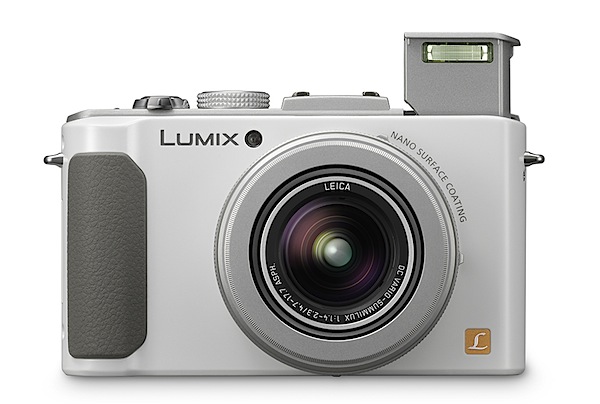
It seems to me that the fixed lens, compact camera game has spawned two sub species: ultra long zoom models and those with ultra fast lenses … to some they’re called ‘bright’.

The Panasonic Lumix DMC-LX7 belongs in the latter category and a dazzling model it is too: compact, light in weight and full of power.

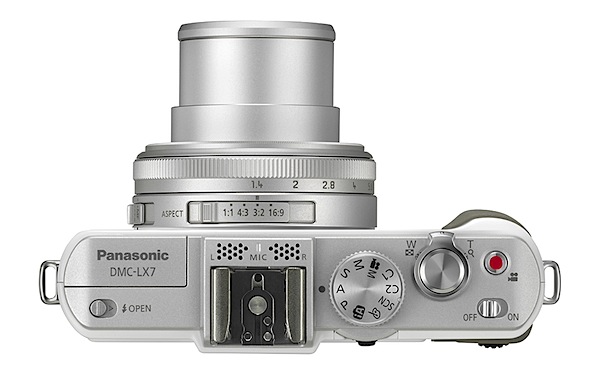
Panasonic Lumix DMC-LX7 Review Top.jpg

The Leica Vario Summilux lens has a maximum aperture of f1.4, stopping down to only f2.3 when the 3.8x zoom is extended from its wide 24mm to the tele end of 90mm (35 SLR equivalent).

Panasonic Lumix DMC-LX7 Features

The 10.1 megapixel MOS sensor captures a maximum 3968×2736 pixel image: 34x23cm as a print.

Video? Full HD 1920×1080 pixel resolution, saved in either AVCHD or MPEG4. No, you cannot shoot stills while recording video.

One oddity: although the camera has 70MB of internal memory, in addition that provided by any loaded SD card, it will record video only in VGA (640×480) format to that internal memory.

In typical fashion I kicked on the power before reading the manual, selected Program as my exposure mode, then spent some time scratching my head as to how to alter the lens aperture. Voila! Twirl the lens ring! With the LX7 you get direct access to the f numbers. Simply ‘mazing!

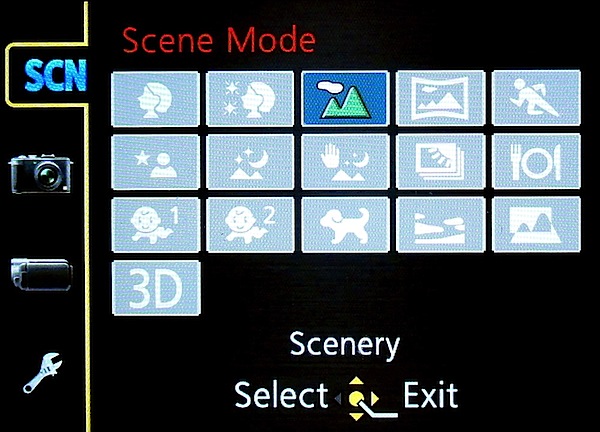
Scene modes.jpg

The camera’s top deck contains the mode dial (auto, Program, aperture and shutter priority, manual exposure, 15 scene modes (plus 3D), two custom modes and a creative video mode that offers manual control of shutter speed and lens aperture. Beside the mode dial are the shutter button and zoom lever, on/off switch, video record and flash button.
Fruit seller.JPG

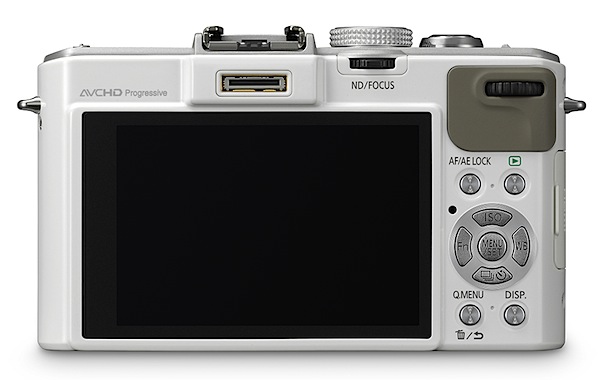
Rear: a button for exposure lock, menu, display and replay. The four way jog dial offers access to ISO settings, a Function button, single or continuous shooting and white balance. But note: these tiny buttons have incised text on a silver background that is almost illegible in most ambient situations. Black mark!

Panasonic Lumix DMC-LX7 Back.jpg

The side of the lens barrel has three settings: manual and two for auto focus (normal range and macro). Interestingly, to the rear of the lens is a direct control switch for the image aspect ratio (1:1 to 16:9).

Strand arcade 1.JPG

More: there is an internal neutral density filter equivalent to three f stops that allows you to reduce the incoming light and use a larger aperture for special effects. This is selectable via a tiny button behind the mode dial. The same button has a dual purpose: it can also control manual focus. Brilliant!
Westfield centre.jpg

Framing decisions are helped by the ever-increasingly seen level gauge. I hope this trend continues.

There are 16 Creative Control filters that include settings to capture images with an expressive look, high and low key, cross processing, sepia and others.

Other inclusions:

Time lapse, in which you can preset the camera to begin taking pictures at constant intervals for landscape scenes etc.

Photo Style gives you the ability to maximise the image quality to higher contrast, give a mono look, use a scenery setting and a ‘look’ for portraits etc.

The accessory shoe extends the LX7′s talents considerably. You can attach a live viewfinder, an optical finder and auxiliary flash.

Distortion

None at either end of the zoom. Excellent!

Start Up

Two seconds from power in to first shot; follow-ons as fast I could hit the shutter button.

Panasonic Lumix DMC-LX7 ISO Tests

Panasonic DMC-LX7 ISO 100.JPG

Panasonic DMC-LX7 ISO 400.JPG

Panasonic DMC-LX7 ISO 800.JPG

Panasonic DMC-LX7 ISO 1600.JPG

Panasonic DMC-LX7 ISO 3200.JPG

Panasonic DMC-LX7 ISO 6400.JPG

The level of noise only became evident at ISO 3200. Even more so at ISO 6400.

Panasonic Lumix DMC-LX7 Review Verdict

Quality: Excellent, especially at larger apertures.

Why you’d buy the Panasonic Lumix DMC-LX7: small, powerful camera.

Why you wouldn’t: no reason.

While this camera could easily serve as day-to-day snapshot camera, it would be wasted. It would be ideal as a companion shooter to a DSLR. IMHO it would not be ideal as a travel companion due to its limited zoom range.

Panasonic Lumix DMC-LX7 Specifications

Image Sensor: 10.1 million effective pixels.
Metering: multi zone, centre-weighted, spot.
Lens: Leica DC Vario-Summilux f1.4-2.3/4.7-14.7mm (24-90mm as 35 SLR equivalent).
Exposure Modes: Auto, Program AE, shutter and aperture priority, manual.
Sensor Size: 15mm MOS.
Shutter Speed (stills): 60 to 1/4000 second.
Continuous Shooting: up to 11 fps.
Memory: SD/SDHC/SDXC plus 70MB internal memory.
Image Sizes (pixels): Stills: 3968×2736 to 480×480.
Movies: 1920×1080, 1280×720, 1440×1080 and 640×480.
Viewfinder: 7.6cm LCD screen (920,000 pixels).
File Formats: JPEG, RAW, JPEG+RAW, MPO (3D), AVCHD, MPEG4.
Colour Space: sRGB, Adobe RGB.
ISO Sensitivity: Auto, 80 to 12800 (with boost).
Interface: USB 2.0, HDMI mini.
Power: Rechargeable lithium ion battery, DC input.
Dimensions: 111x68x46 WHDmm.
Weight: 298 g (inc battery).
Price: get a price on the Panasonic LUMIX DMC-LX7 at Amazon.

Post originally from: Digital Photography Tips.

Check out our more Photography Tips at Photography Tips for Beginners, Portrait Photography Tips and Wedding Photography Tips.

Panasonic Lumix DMC-LX7 Review


Digital Photography School

 
Comments Off on Panasonic Lumix DMC-LX7 Review

Posted in Photography


Panasonic Lumix DMC-LX5 Review

10 Feb

For the full Panasonic Lumix DMC-LX5 review, go to www.infosyncworld.com We had to wait two years for Panasonic to revamp the LX3, so when we initially locked eyes with the Panasonic Lumix DMC-LX5, a tidal wave of question marks bombarded our minds. How is this a different camera? Why has hardly anything changed on the outside? However, upon further investigation, it was apparent that nearly all of the LX5’s improvements resided under the hood, including AVCHD Lite with full manual video controls, gaggles of Art filters for creative expression, new image processing, and other enticing features. The Panasonic Lumix DMC-LX5 battles the Canon PowerShot G12 and Nikon Coolpix P7000, and we’ll tell you that the little LX5 gives both of the aforementioned giants a run for their money.

a driving time lapse


Panasonic announces Lumix G Vario 14-42mm F3.5-5.6 II ASPH Mega OIS

29 Jan

Panasonic_1442.png

CP+ 2013: Panasonic has announced the Lumix G Vario 14-42mm F3.5-5.6 II Asph. Mega O.I.S – its latest affordable kit lens for Micro Four Thirds mirrorless cameras. The 14-42mm F3.5-5.6 II is the company’s fourth variable aperture standard zoom (following the 14-45mm, original 14-42mm and 14-42mm power zoom), and gains two aspherical elements to help make the lens smaller than the existing version. The 14-42mm II will be available as a kit option with both the DMC-GF5 and DMC-G5 in most markets.

News: Digital Photography Review (dpreview.com)

 
Comments Off on Panasonic announces Lumix G Vario 14-42mm F3.5-5.6 II ASPH Mega OIS

Posted in Uncategorized


Bird photography and video with the Canon SX30 and Panasonic Lumix FZ100 cameras

17 Dec

With the 834mm 35mm equivalent focal length of the canon sx30 would this camera be a worthwhile addition to the bird photographer rather than a dslr, long (aka expensive) telephoto lens and the need for a monopod/tripod. This demo video shows some of the issues with the canon sx30 when used for this purpose. The fz100 can’t match the optical zoom of the canon and even with cropping the image is no where near as good as the canon image. for this purpose of long lens photography the Fz100 has to be dismissed. The only question remaining is the shortfalls I point out within this video. If it’s just stills your after then this might fit your needs and for simple video again the results are pretty good for most users, although you need to be aware of all the issues when deciding. I wish the FZ100 had better zoom as the camera features are excellent with total control in manual mode, maybe an additional teleconvertor may give enough resolution? Filmed at heaton Park in Manchester, edited with canopus edius 5 and rendered as WMV file.
Video Rating: 5 / 5

For more, like fb.com and SUBSCRIBE! Buy the book with 3 HOURS of video: amzn.to .49 eBook or .99 paperback: bit.ly OR, get the video eBook in your Kindle, iBooks, Google Play, or Nook stores. All versions include 3 hours of video, free lifetime updates, and free support. Questions? Add a comment and I’ll reply. My camera gear: * Best beginner camera: amzn.to * Canon 5D Mark II: amzn.to * Canon 5D Mark III: amzn.to * Canon 24-105 f/4 L IS: amzn.to * Canon 70-200 f/2.8 L IS MkII: amzn.to * Canon 500mm f/4 L IS: amzn.to * Sigma 150mm macro: amzn.to * Rokinon fisheye: amzn.to * YongNuo 568EX Flash: amzn.to Book links: * Paperback (Amazon): amzn.to * Paperback (discounted): amzn.to * iPad (recommended): bit.ly (“Tony Northrup” in iBooks) * Windows PCs: amzn.to (install amzn.to * Macs: amzn.to (install amzn.to * iPhone: bit.ly (“Tony Northrup” in iBooks) * iPod: bit.ly (“Tony Northrup” in iBooks) * Kindle: amzn.to * Android: amzn.to (install Kindle app) * Android: goo.gl (using Google Play) * BlackBerry: amzn.to (install Kindle app) * Windows Phone: amzn.to (install Kindle app) * Nook: bit.ly This video was recorded live in Berlin, Germany, and shows how to create High Dynamic Range (HDR) photos in Photomatix Pro and how to stitch photos together into a panorama using Microsoft ICE.


Panasonic Lumix FZ60 Review

03 Dec

Panasonic Lumix FZ60.jpg

I remember some years ago lusting after a (then) new Kodak (remember them?) digicam that had a 10x zoom. Wow! I thought what photographic horizons it would conquer.

Now, you can put your mitts on a 50x zoom digicam (thanks to Canon) but, as you will quickly find out, it’s not a dream holiday with such a powerful lens, with handholding at extreme tele settings a no-no.

Panasonic Lumix FZ60-front.jpg

IMHO the 24x zoom on the FZ60 is arguably a better length for average shooting in the hands of the average and lesser-skilled photographer.

Panasonic Lumix FZ60-top.jpg

Panasonic quaintly describes the camera as one that ‘caters to the camera buyer who wants that zoom reach, but doesn’t need the bright constant aperture, and the drawbacks it brings. If you’re willing to forgo the extra light capture, it could provide a compelling option.’

Eh?

It seems the company is comparing the FZ60 with another model which had an aperture of f4.5 as opposed to the FZ60′s smaller f5.2 at the tele end. For me, there’s little sense in the comparison.

The big plus is that the 24x zoom ranges from a 35 SLR wide equivalent of 25mm to a tele equivalent of 600mm. As I’ve mentioned many times before, try and get, use and lug a 35 DSLR lens of that focal length!

And it’s a Leica-designed optic.

Panasonic Lumix FZ60 Back.jpg

Panasonic Lumix FZ60 Features

The camera is set in the by now established bridge camera format: looks like an interchangeable DSLR, works like one but doesn’t allow lens switching and cannot take pictures equal in quality to a DSLR. So there!

But for many people, especially those on a foreign (or even domestic!) holiday this is the ideal single camera for the purpose: it’s relatively compact, won’t stow in your pocket but will hang quite happily on from your neck regions on a shoulder strap and few subjects, however distant, will be beyond your reach.

Panasonic Lumix FZ60 Menu_1.jpg

Panasonic Lumix FZ60 Scenes.jpg

The mode dial carries well-identified settings for intelligent Auto, PASM, creative movie, two custom settings, scene modes (soft focus, dynamic monochrome, cross processing etc) and creative control setting.

Creative movie allows you use Program AE, aperture and shutter priority settings plus manual when shooting video.

Creative control lets you select a variety of image effects in stills shooting, along with examples of how they look.

Topside carries a selection of buttons to shoot a burst of shots, a Function button, movie record and the zoom lever.

Move to the rear side and we see the four way jog dial, with the menu button set into its centre, along with another Function button, trash plus AF options.

The 16.1 million pixel CMOS captures a relatively largish maximum image size of 4608×2592 pixels or, in print terms, an output of 39x22cm output.

Movies in Full HD 1920×1080 can be recorded to a Class 4 SD card in the AVCHD format or MPEG4 at a lower resolution. This clip was shot with a stills pan head, which accounts for the jerky panning!

Overall, the camera offers a surprising level of manual and over-riding control as well as the useful ability to capture on RAW and JPEG.

A special note: I had a great time shooting some beach action in movie mode. The zoom’s full tele setting is perfect for such a subject.

Startup Times

I could shoot the first shots about two seconds after powering up, while follow on shots came in at about a second apart, until the buffer memory filled.

Distortion

No sign of any distortion at the wide or tele ends of the zoom.

Panasonic Lumix FZ60 ISO Tests

Panasonic Lumix FZ60 ISO 100.JPG

Panasonic Lumix FZ60 ISO 400.JPG

Panasonic Lumix FZ60 ISO 800.JPG

Panasonic Lumix FZ60 ISO 1600.JPG

Panasonic Lumix FZ60 ISO 3200.JPG

At ISO 1600 some artefacts were beginning to appear and by ISO 3200 these made picture taking a tricky chore.

(insert Full wide 2 and Full tele 2

Panasonic Lumix FZ60 Review Verdict

Panasonic Lumix FZ60  wide.JPG

Panasonic Lumix FZ60  tele.JPG
Quality: excellent.

Why you’d buy the Panasonic Lumix FZ60: above average as a stills camera; perfect for video.

Why you wouldn’t: a vari-angle screen could have made a difference.

Great camera, excellent zoom reach.

Panasonic Lumix FZ60 Specifications

Image Sensor: 16.1 million effective pixels.
Sensor: 11mm CMOS.
Metering: Multi, centre-weighted, spot.
Lens: Leica DC Vario-Elmarit f2.8-5.2/4.5-108mm (25-600mm as 35 SLR equivalent)
Exposure Modes: Auto, Program AE, shutter and aperture priority, manual.
Shutter Speed: 4-1/2000 second.
Memory: SD/SDHC/SDXC plus 70 MB internal.
Image Sizes (pixels): Stills: 4608×2592 to 480×480.
Movies: 1920×1080, 1280×720, 640×480.
Viewfinder: Turret (202,000) and 7.6cm LCD screen (460,000).
File Formats: JPEG, MPO 3D, MPEG4, AVCHD.
Colour Space: sRGB.
ISO Sensitivity: Auto, 100 to 6400.
Interface: USB 2.0, HDMI mini, remote control, DC input.
Power: Rechargeable lithium ion battery.
Dimensions: 120.3×80.8×91.9 WHDmm.
Weight: 493 g (with battery and card).
Price: Get a price on the Panasonic Lumix FZ60 at Amazon.

Post originally from: Digital Photography Tips.

Check out our more Photography Tips at Photography Tips for Beginners, Portrait Photography Tips and Wedding Photography Tips.

Panasonic Lumix FZ60 Review


Digital Photography School

 
Comments Off on Panasonic Lumix FZ60 Review

Posted in Photography


Panasonic LUMIX G3: Product Reviews: Adorama Photography TV

21 Nov

AdoramaTV presents the Panasonic LUMIX G3. This week Mark Wallace reviews the new Panasonic LUMIX G3 – a compact camera with the benefits of a DSLR. It uses interchangeable Micro Four Thirds lenses to give you the flexibility of shooting with a DSLR, but it has a compact body with a touch-screen LCD. It focuses extremely fast and takes phenomenal video! Products featured in this episode: Panasonic Lumix DMC-G3 16 MP Micro System DSLR Camera Body www.adorama.com The Panasonic LUMIX G3 will be available from Adorama.com soon in black, red, brown and white. To learn more about the Lumix G3 and for related videos and articles, go here: www.adorama.com Find the Panasonic LUMIX G3 and kits here: www.adorama.com Visit www.adorama.com for more photography videos! Send your questions to: AskMark@Adorama.com
Video Rating: 4 / 5

 
Comments Off on Panasonic LUMIX G3: Product Reviews: Adorama Photography TV

Posted in Photography Videos


Just Posted: Panasonic Lumix DMC-FZ200 Review

17 Nov

panasonic_dmcfz200.png

We just published a review of Panasonic’s flagship super-zoom camera, the Lumix DMC-FZ200. The FZ200 goes back to its roots, offering a constant-aperture zoom range, like the FZs of old, but in most other respects it’s similar to its well-regarded predecessor the FZ150. Features include a 12MP MOS sensor with a maximum ISO sensitivity of 6400, Raw shooting, and automatic panorama and HDR modes. We collaborated with Jeff Keller of the Digital Camera Resource Page to bring you this review of the FZ200 – click through to find out what we thought. 

News: Digital Photography Review (dpreview.com)

 
Comments Off on Just Posted: Panasonic Lumix DMC-FZ200 Review

Posted in Uncategorized


Lumix GH2 with Hasselblad Lenses (Sonar f_150mm)

13 Nov

First Test Lumix Gh2 with Hasselblad Lenses. The shots from Mike Kern made with Canon 7D + Nikon Lenses. Shots were done in our homeare Kramsach and Reith /Tirol/Austria.Enjoy PHOTO

First time using my new Canon EOS 60D. The clips are not color corrected in any way, they’re straight off the camera. Song: Dog Days Are Over – Florence + The Machine No copyright intended.
Video Rating: 4 / 5

 
Comments Off on Lumix GH2 with Hasselblad Lenses (Sonar f_150mm)

Posted in Nikon Videos


How to exchange the display for Lumix Fx8

08 Nov

Unser Ebayshop stores.ebay.de Unser Onlineshop www.chip-tip.de We are digital cameras and Camcorder- spare-parts wholesalers. We offer Displays, CCDs, objective and housing for all digital cameras ,for example Canon, Casio, Sony, Nikon, Samsung, Lumix, Kodak, Ricoh and Fujifilm! We are your partners when it comes to convenience and professional repairs to our fototechnischen workshops. We repair for you, so cheaply and quickly all devices, 250 digital camera models of 11 producers. Our Service has to repair all Canon, Nikon, Casio, Kodak, Fuji, Samsung, Pentax,Oplympus, Panasonic and Sony models and similar specialized devices. If you do need, please contact us without hesitation! Tel 0049 40 73442383 0049 40 73442383 Fax: 0049 40 73442382 Unsere Adresse: Chip-Tip Handel & Consulting GmbH Nordkanalstr.58 20097 Hamburg
Video Rating: 5 / 5

Learn more at www.tenba.com Tenba Shootout shoulder bags combine the comfort, versatility and quick access of a great camera bag, with the security and protection of the latest weather-proof materials and zippers. The outside of the shoulder bag is made from both dobby and ripstop nylon, an excellent combination of lightweight, weather resistance and durability, and each interior access point is protected by a weather-sealed, rubberized, YKK zipper. Rounding out the exterior shell are welded steel D-rings that won’t bend or break no matter how much weight you put in the bag, and Duraflex clips that will hold up even in extremely cold temperatures. Shootout shoulder bags are available in three different colors black/olive, silver black, and all black, and in three sizes; small, medium and large. There is also a Photo/Laptop Courier bag that you can learn more about on another video. If it’s wet and falls from the sky, it’s no match for the Tenba Shootout Shoulder Bag.
Video Rating: 5 / 5

 
Comments Off on How to exchange the display for Lumix Fx8

Posted in Nikon Videos