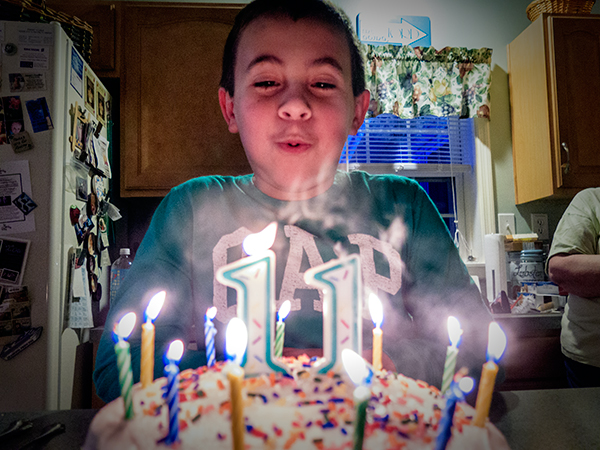
Canon Powershot G16; Exposure 1/60, f/1.8, ISO 640. Lens was zoomed all the way out to 6.1mm (28mm equivalent on a full-frame camera)
When starting out in photography, it’s easy to focus (pardon the pun) on the gear and learning about proper exposure, that you can overlook one of the easiest ways to improve your images, whether you use a DSLR, a point and shoot camera, or even just your cell phone’s camera. It’s amazing how a simple change of your point of view can make a bland image, into something much more exciting.
Get off of the usual eye level
When presented with a scene, try and think of unique ways to view it. Think about getting up high, getting as low as possible, or somewhere in between. The main thing is, try to avoid viewing the scene, and shooting the scene, at eye level. Everyone in the world sees things from eye level. To create a really eye catching photo, a good place to start is by getting out of most people’s eye level range. This can be as simple as dropping to one knee, laying on the floor, or getting up on a step ladder. Look through your viewfinder as you try different points of view. If you’re using a zoom lens, try zooming it over the entire range from these different points of view to see how that affects the image. I find the combination of getting low and close, and then using a wide angle lens is a great way to get started.
Get down low
In the image at the top of this article, I used a Canon Powershot G16, and creeped in low and close to the birthday cake, to get my son’s expression as he blew out the candles. I wanted the glow of the candles on his face, and I wanted something with more impact than the standard eye level shot from a normal distance. I wanted something with a little impact. Is it the best shot I ever took? Definitely not. But it’s probably the best “blow out your candles” shot I ever took!
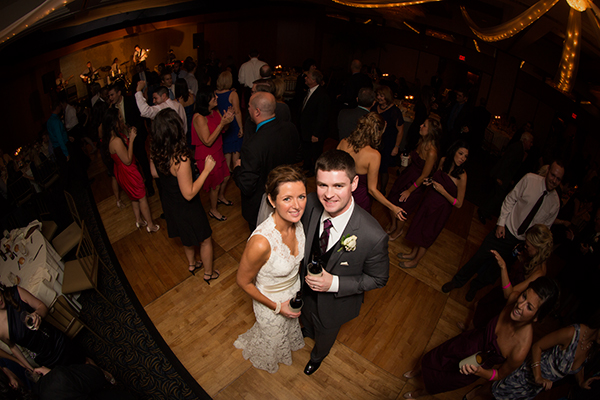
EOS 5D Mark III; with EF 8-15 f/4L. 1/60, f/4, ISO 800.
Take the high road
By the same token, getting a higher angle can also add some impact to your image. In the image above, I wanted to capture the newly married couple on the dance floor, surrounded by friends and family, and the jubilation that goes with a wedding celebration. To get this shot, rather than use a step ladder, I simply mounted the camera on a monopod with the Canon EF 8-15mm f/4L fisheye zoom. I used the TC-80N3 remote to fire the camera. The wide angle accentuates the higher point of view and allows me to get plenty of background action as well. I mounted a flash on the camera, and the light falloff created a spotlight effect on the couple, and falls off softly toward the corners. The wide angle also helps to ensure the subject is in the frame, since I am essentially doing this shot blind, unable to see the image through the viewfinder. Ultimately, the elevated point of view is one that most people don’t see, so it adds interest to the shot that wouldn’t be there had I simply been photographing from eye level.

EOS 1D Mark III, EF 24-105mm f/4L IS. 1/80, f/8, ISO 800.
The same is true with landscape photography as well. In the image above, I was able to get on one of the upper floors of the Hancock Tower in Boston, which gave a spectacular view of the city. The pattern created by this Back Bay neighborhood when viewed from above made a great scene through the viewfinder. After that, it was just a matter of framing the shot, and getting the exposure right.
EOS-1D Mark III with EF 24-105 f/4L IS. 1/60, f/8, ISO 400.
Look in all directions
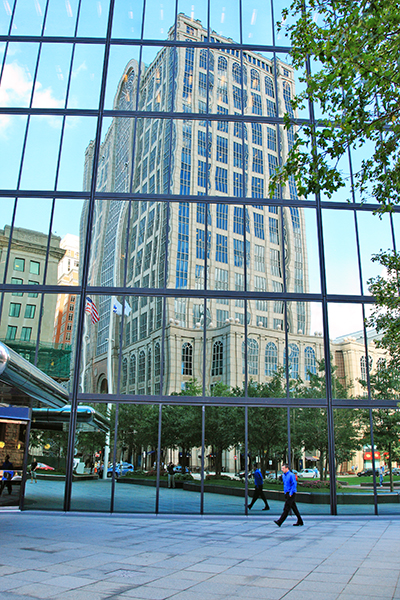
On that same day, as I was leaving the Hancock Tower, I was taken by the architecture of the building just across the street. However, I wasn’t thrilled with the scene overall, when looking directly at the building. But then I turned around and looked at the building another way, through its reflection in the Hancock Tower. I happened to catch a businessman walking into the Hancock Tower, which added some interest as well. The image to the left is what I captured. By changing my point of view, through the reflection, I was able to take an average scene and add a little more interest.
Try to see these other points of view as much as possible. Make it a habit not to settle for your eye level as the only shot you take. Look for ways to get high, or a lower angle that can really change perspective for you. The more you force yourself to do this kind of exercise, the easier it will become for you to imagine these points of view before you even put your camera to your eye.
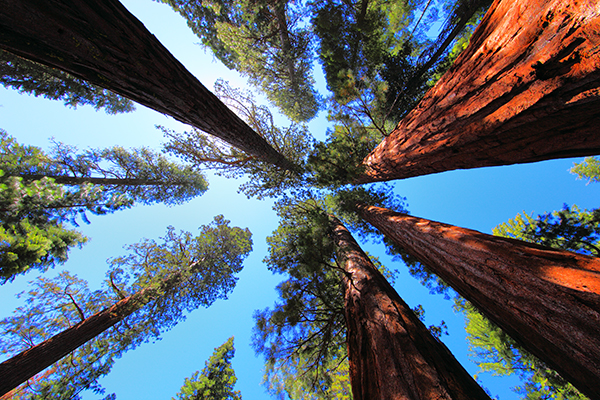
EOS 5D Mark II with EF 14mm f/2.8L II. 1/100, f/11, ISO 200.
For more ideas on shifting your perspective try these articles:
- The Power of Perspective in Photography
- Perspective in Photography – Don’t just stand there move your feet!
- Get Down Low For a Unique Perspective
- Get a New Perspective By Getting High… with your Camera
The post Change Your Point of View – Literally by Rick Berk appeared first on Digital Photography School.

Digital Photography School