RSS
 

Posts Tagged ‘Lens’

Leaked: Sigma preparing to release 14-24mm F2.8 DG HSM Art lens

09 Feb

$ (document).ready(function() { SampleGalleryV2({“containerId”:”embeddedSampleGallery_5721547623″,”galleryId”:”5721547623″,”isEmbeddedWidget”:true,”selectedImageIndex”:0,”isMobile”:false}) });

Earlier today, Sigma sprang a pretty major leak ahead of the CP+ show in Japan. According to leaked images from Nokishita, Sigma is planning to add a 14-24mm F2.8 DG HSM Art lens to its ultra-wide angle lineup very soon. In fact, it looks like Nokishita got their hands on all of Sigma’s standard product shots.

You can scroll through them above, and see some rumored specifications below:

  • Mount: Canon, Nikon, Sigma
  • Lens construction: 17 elements in 11 groups
  • Number of diaphragm blades: 9 (circular aperture)
  • Maximum photographing magnification: 1: 5.4
  • Size (Sigma mount): ? 96.4mm x 135.1mm
  • Weight (Sigma mount): 1,150g

Of course, this isn’t the Sigma 70-200mm that’s been rumored (and hoped for) since before the Photo Plus Expo, but it does make for an impressive lineup of ultra-wides in the much-beloved Sigma Art series.

If previous experience is anything to judge by, Nokishita’s product photo leaks usually come just days (sometimes less than 24 hours) before an official announcement, so we’re expecting this lens to make landfall very soon.

Articles: Digital Photography Review (dpreview.com)

 
Comments Off on Leaked: Sigma preparing to release 14-24mm F2.8 DG HSM Art lens

Posted in Uncategorized


Review of the Venus Laowa 15mm F/4 Wide Angle Lens for Landscape Photographers

07 Feb

The choice of camera lens always represents a crucial moment for every photographer. But it is not always easy to find the lens that fits our actual needs, as too often we get seduced by features that we don’t really need, and are therefore just useful in raising the price.

Have you chosen a stabilized lens and you always use the camera on a tripod? You exclusively take landscape photos in the daylight but have chosen to rely on a f/2.8 lens. Sound familiar?

Especially if you are at the beginning of your journey through the world of photography, your budget won’t likely be particularly high and you may want to maximize your investment by choosing something that can be really useful to you now.

Review of the Venus Laowa 15mm F/4 Wide Angle 1:1 Macro Lens for Landscape Photographers

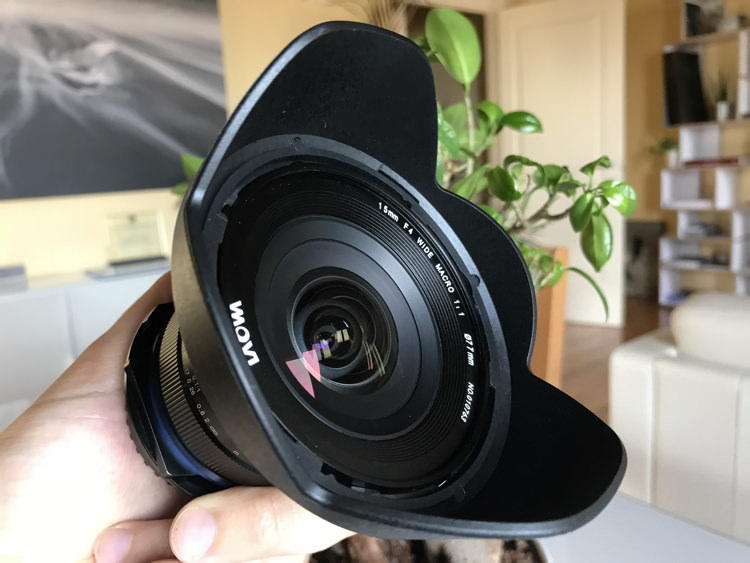
This is why today I want to tell you about the Venus Laowa 15mm f/4 Lens (with macro), an entry-level lens that every landscape photographer should take into consideration.

Why? Let’s see it together.

Review of the Laowa 15mm F/4 Lens for Landscape Photographers

Construction features

The Venus Laowa 15mm f/4 Macro is a lens that has been on the market since 2015. Although it certainly does not stand out for its cosmetic appearance, it comes with features that really make this a unique lens in the world. So much so that it can simultaneously seduce landscape photographers, lovers of macro photography, and architectural photographers.

Here are its main features, that I’m going to examine with you:

  • Focal length: 15 mm
  • Angle of view: 110.4°
  • Maximum Magnification: 1:1
  • Maximum Aperture: f/4
  • Shift function: +/- 6 mm
  • Minimum Focusing Distance: 12.2 cm
  • Filter Thread: 77 mm
  • Mounts: Canon, Nikon, Sony A, Pentax K, Sony E

Exactly, you’ve read it right. The Venus Laowa 15mm f/4 is a Macro 1:1 lens with an angle of view of 110° and a shift function that allows a translation equal to +/- 6mm.

The optical scheme is composed of 12 elements in 9 groups, including 3 high refractive index elements and one low dispersion element, and on paper that holds great promise for excellent performances in terms of sharpness.

And in case that wasn’t enough, add the fact that this lens is compatible with most of the mounts currently available on the market.

One last point, and it’s absolutely not a negative one, is the price. While I’m writing, the list price of the Venus Laowa 15mm f/4 Wide Angle 1:1 Macro is only $ 499.

Review of the Venus Laowa 15mm F/4 Wide Angle 1:1 Macro Lens for Landscape Photographers

Using this lens for landscape photography

When evaluating a lens, we’re always going to start from the analysis of its MTF charts, and then we carry out an almost infinite series of laboratory tests so as to bench-test it, from a perspective that is more theoretical than practical.

Of course, these tests are absolutely fundamental and I encourage you to look at them. But I also think that you are likely more interested in the real-world behavior of the lens. Knowing that certain optical limits of the lens will be then invisible in the real world, and what you are more concerned about is understanding whether the lens has the features that are really essential to you or not.

Review of the Venus Laowa 15mm F/4 Wide Angle 1:1 Macro Lens for Landscape Photographers

While there are many online reviews available regarding the use of this lens for macro and architectural photography, I haven’t found much regarding its use for landscape photography. So, my purpose here is to examine this lens from the point of view of the landscape photographer, omitting other features that are not fundamental for us hunters of sunrises and sunsets.

So let’s start to analyze the features seen in the previous chapter, now with a more critical eye.

Features

The fact that this is a prime lens and not a zoom gives us great hope with regard to quality, as the optical scheme will be optimized for a single focal length.

Review of the Venus Laowa 15mm F/4 Wide Angle 1:1 Macro Lens for Landscape Photographers

We are not afraid at all of the maximum aperture available, which is f/4. As good landscape photographers, we’ll be normally working around f/11, where sharpness will also be clearly higher.

The lens does not have stabilization or autofocus. While this may make you turn your nose up at first sight, surely you will soon realize that you really don’t care about those things. As you likely use the camera on a tripod you should turn off stabilization anyway, and you may choose to adjust the focus based on hyperfocal distance, making use of the hyperfocal marks available on the lens body.

Review of the Venus Laowa 15mm F/4 Wide Angle 1:1 Macro Lens for Landscape Photographers

So, those are two fewer functions that you don’t need, and their absence has certainly had a positive impact on the market price of the lens.

Using Filters with the Laowa 15mm Lens

With regard to the focal length, this clearly is not the first 15mm lens available on the market. But it is the only one with a feature that has convinced me to test this lens in action – the 77 mm filter thread.

Review of the Venus Laowa 15mm F/4 Wide Angle 1:1 Macro Lens for Landscape Photographers - filter thread 77mm

The 77mm filter size is very handy!

Normally all wide-angle and ultra wide-angle lenses (usually 15mm is considered the boundary between those two worlds) have a front optical element that is particularly curved. They often come with a built-in lens hood that makes it impossible to mount filters, unless we resort to particular solutions. Ultra wide-angle lenses whose front lens is not so curved and without a built-in lens hood, usually come with a large diameter and it’s therefore impossible to find filter threads smaller than 95 mm.

Thanks to the absence of a built-in lens hood (it does have a bayonet one) and to the 77 mm filter thread, the Venus Laowa 15mm f/4 lens opens the door to using a tool that I deem absolutely essential for every landscape photographer – drop-in filters.
Review of the Venus Laowa 15mm F/4 Wide Angle 1:1 Macro Lens for Landscape Photographers

As I was saying above, with a lens that has a built-in lens hood or a 95 mm filter thread it is possible to use systems that can hold 150 mm filters. But with a 77 mm filter thread, you will be able to use the same system that you use on any other lens equipped with a filter thread up to 82 mm. In a word, it is priceless.

Shift Function

The last of the features coming with this multi-purpose lens is the shift function. Thanks to a lever mechanism positioned next to the lens mount, it is possible to shift the lens by +/- 6mm. Even if this function might not seem very interesting for landscape photography at first sight (after all a rock is always a rock), it turns out to be useful in case there are human artifacts, like buildings, within the frame.

Review of the Venus Laowa 15mm F/4 Wide Angle 1:1 Macro Lens for Landscape Photographers

Shift lever.

Review of the Venus Laowa 15mm F/4 Wide Angle 1:1 Macro Lens for Landscape Photographers

The lens in shifted position.

The lens in action

If this lens appears very promising on paper, despite a very moderate price, let’s see its actual real-world behavior.

I have tested the Venus Laowa 15mm f/4 lens with my trusty Nikon D810, a full-frame camera body.

Testing the filter mount

Since this is fundamentally the reason why I decided to try this lens, again thanks to the existing 77 mm filter thread, I quickly mounted my loyal Nisi V5 Filter Holder, which holds 100mm filters. Even if it is possible to mount the holder, the fear of vignetting is too high, considering that we’re talking about a 15mm lens after all.

Review of the Venus Laowa 15mm F/4 lens

Review of the Venus Laowa 15mm F/4 lens


Although the Nisi filter holder is guaranteed to be vignette-free up to a 16mm focal length, once mounted on the Venus Laowa 15mm the result was doubtlessly amazing. Vignetting was practically invisible, as you’re going to see below, and it’s possible to quickly remove it in post-production by activating the lens correction profile.

A little dream of mine was substantially coming true. The dream of using an ultra wide-angle lens, and adding up to three 100mm filters and a polarizer without vignetting!

Review of the Venus Laowa 15mm F/4 lens

Review of the Venus Laowa 15mm F/4 lens

Review of the Venus Laowa 15mm F/4 lens

Review of the Venus Laowa 15mm F/4 lens

The lens barrel

On the lens body (which is sturdy metal, not plastic) you find the focus and aperture rings, whose operations are smooth and precise.

On the aperture ring, I would have preferred a locking system or a snap selection so as to make sure that I never lose the desired aperture. But actually, I haven’t encountered any problems during real-world use of the lens.

The focusing ring is really precise, as well as the existing focusing marks, which allow you to focus using the hyperfocal distance in no time. Just for the sake of being fussy, I would have placed the metric indications of distance upside down, or a vertical line next to each distance, just to be really precise. But you simply have to check the photo you’ve just taken, so as to make sure you have got the desired focus.

Review of the Venus Laowa 15mm F/4 lens

Review of the Venus Laowa 15mm F/4 lens

Although the manufacturer does not formally advertise this lens as weather sealed, most of my tests have been carried out in the rain (just for a change!). I protected the lens using only an umbrella or makeshift means, and no problems were detected.

Results

When I examine the images, the results were really comforting.

Sharpness

Shooting at both f/8 and f/11, the image definition is really excellent in the center of the frame. Obviously, the image becomes softer the closer you get to the edges, but doubtlessly the result is much more than acceptable. If you try to use higher apertures, you can naturally start to see that optical phenomenon called diffraction. But, as good landscape photographers, we know that we can go past f/16 only for situations of extreme necessity.

Definition Center - Review of the Venus Laowa 15mm F/4 lens

Centre image sharpness.

Definition Center Low - Review of the Venus Laowa 15mm F/4 lens

Lower center of the image sharpness.

Definition Corner - Review of the Venus Laowa 15mm F/4 lens

Corner of the image sharpness.

Aberration and vignetting

There are no particular problems with regards to chromatic aberration with this lens. I mean, some chromatic aberration is there, but nothing that can’t easily be solved using the automatic chromatic aberration removal included in any post-production software.

Chromatic Aberration With - Review of the Venus Laowa 15mm F/4 Wide Angle lens

Chromatic aberration showing before correction.

Chromatic Aberration corrected - Review of the Venus Laowa 15mm F/4 Wide Angle lens

After the chromatic aberration has been corrected in post-production.

As for vignetting, as I said above, the problem is almost non-existent when using the 100mm Nisi filter holder. For me personally, this fact alone is worth the purchase price of this lens.

Distortion

It is worthwhile to talk a little about distortion. It is predictable that a 15 mm lens will have barrel distortion. To landscape photographers, this is not a great concern. As I said before, a little distortion on a rock will not invalidate your image, as an irregular rock will always remain an irregular rock. Unfortunately, though, barrel distortion will invalidate the only real line included in your landscape – the horizon.

Review of the Venus Laowa 15mm F/4 lens

The distortion caused by this lens to the horizon is of the “mustache” type, which doubtlessly is the most annoying kind. If when we take a first look at the live view this problem may give us some concern,

If this problem gives you some concern when you first notice it in Live View, as soon as you import the image into any post-production software the correction becomes really easy and immediate.

Unfortunately, at the present time, there is no automatic correction profile for this lens included in Adobe software (Lightroom and Photoshop). But the Venus Laowa technical support is very efficient and within a few hours, they emailed the correction profile that I needed. Once installed, one click was enough to do the job and the image automatically recovered from both distortion (completely removing the mustache horizon) and peripheral shading.

Distortion Original - Review of the Venus Laowa 15mm F/4 lens

Original

Distortion Corrected - Review of the Venus Laowa 15mm F/4 lens

Corrected

Conclusion

The Venus Laowa 15mm f/4 lens has really turned out to be a surprise, exceeding my expectations. Although it comes with a very moderate price, this lens really provides remarkable results in terms of image quality.

Once the lens distortion is corrected, the only thing that still needs attention is edge softness which is absolutely within acceptable values for an entry-level lens.

Construction quality is really remarkable and you can notice that as soon as you take the lens into your hands. Lastly, the possibility of using a 100mm filter holder makes this lens really priceless.

If you are a landscape photographer who is looking for an ultra wide-angle lens with a very advantageous quality to price ratio, then the Venus Laowa 15mm f/4 lens is undoubtedly what you are seeking.

Review of the Venus Laowa 15mm F/4 Wide Angle 1:1 Macro Lens for Landscape Photographers


PROS

  • Price
  • Ability to use a 100mm filter holder
  • Excellent sharpness in the center of the frame
  • Low chromatic aberration when not used at macro distances
  • Lens shift function
  • Lightweight and small

CONS

  • Manual focusing
  • Slight edge softness
  • Barrel distortion (but it can be solved in post-production without any problems)
  • Cosmetic appearance

The post Review of the Venus Laowa 15mm F/4 Wide Angle Lens for Landscape Photographers by Francesco Gola appeared first on Digital Photography School.


Digital Photography School

 
Comments Off on Review of the Venus Laowa 15mm F/4 Wide Angle Lens for Landscape Photographers

Posted in Photography


Fujifilm introduces XC 15-45mm F3.5-5.6 lens, its first X-series power zoom

31 Jan

$ (document).ready(function() { SampleGalleryV2({“containerId”:”embeddedSampleGallery_2949550579″,”galleryId”:”2949550579″,”isEmbeddedWidget”:true,”selectedImageIndex”:0,”isMobile”:false}) });

Fujifilm has announced its first power zoom lens for X-series cameras: the XC 15-45mm F3.5-5.6 OIS PZ. This compact, stabilized lens is equivalent to 23-69mm on Fuji’s X-series cameras, such as the new X-A5 with which it will be kitted. It has a minimum focus distance of 5 cm, a length of 44mm (1.7″) when fully collapsed and a weight of just 136 g (4.8 oz).

The XC 15-45mm F3.5-5.6 OIS PZ comes in silver and black and will ship in early February for $ 299.

Press Release:

FUJIFILM ANNOUNCES THE NEW X-A5 – THE LIGHTEST CAMERA-ZOOM LENS COMBINATION IN THE X SERIES LINEUP

Featuring an enhanced sensor, newly developed zoom lens, the latest Bluetooth® technology, and 4K video recording, the X-A5 delivers outstanding image quality and ease of use

Valhalla, N.Y., January 31, 2018 FUJIFILM North America Corporation is excited to announce the new FUJIFILM X-A5 Digital Camera Body with XC15-45mm Lens Kit, the lightest camera-zoom lens combination within the X Series lineup. With a host of new and improved features, the X-A5 kit debuts the new FUJINON XC15-45mmF3.5-5.6 OIS PZ, the first electric powered zoom lens for X Mount digital cameras. Available in three colors of synthetic leather, the X-A5 is equipped with the latest Bluetooth® technology for quick and easy image transfer and allows for a broader range of video capabilities with its 4K output.

“The X-A5 packs Fujifilm’s renowned image quality and exciting fun features in a compact, lightweight body,” says Yuji Igarashi, General Manager of the Electronic Imaging Division & Optical Devices Division at FUJIFILM North America Corporation. “We are excited to bring a user-friendly camera that can capture great images, to the market at an affordable price.”

Featuring an Enhanced Sensor and Color Reproduction Technology

The X-A5 features a powerful 24.2MP APS-C sensor equipped with phase detection autofocus and a newly developed image processing engine with a processing speed 1.5 times faster than that of previous models. Combined with Fujifilm’s renowned color reproduction technology, the X-A5 achieves outstanding image quality and outperforms previous models in its scene recognition accuracy and skin tone reproduction, making it perfect for portraits.

The X-A5 is the first in the X-A series to feature phase detection pixels, and an intelligent Hybrid AF system that focuses twice as fast as previous models to ensure capture of swiftly moving subjects. With an ISO sensitivity range now up to ISO12800 and extended sensitivity range up to ISO51200, camera shake and noise are significantly reduced even in low-light conditions.

New Compact and Lightweight Electric Powered Zoom Lens

The new X-A5 introduces the first electric powered zoom lens for X Mount cameras, the FUJINON XC15-45mmF3.5-5.6 OIS PZ. With a minimum working distance of just 2 inches, this lightweight and compact lens is great for achieving clear close-up shots while making the photographic experience easy and comfortable. Capable of capturing crisp, intricate textures, the XC15-45mmF3.5-5.6 OIS PZ is ideal for food and macro photography. Starting at a wide angle, this smooth electric-powered zoom also allows for great freedom in composition framing.

The new XC15-45mmF3.5-5.6 OIS PZ lens will also be available for standalone purchase as a portable addition for existing X Series users.

Equipped with 4K Video Capabilities

The X-A5 features a variety of 4K video capabilities. Utilizing the Burst Function, users are able to shoot 15 frames per second in 4K image quality, ensuring that photo opportunities are never missed. Offering an HD video function to record videos up to quad speed for slow motion clips and a Multi Focus Mode which stacks 4K quality images and automatically changes the depth of field setting, the X-A5 is the perfect companion for a wide range of creative captures.

Bluetooth® Pairing Technology for Easy Image Transfer

Featuring the latest Bluetooth® technology, the X-A5 allows for automatic transfer of images and videos to paired smart devices using the free “FUJIFILM Camera Remote” app. The camera is compatible with Instax Share™ Printers to instantly transfer and print images directly from the camera.

Film Simulation Modes and Improved User Interface for Ease of Operation

The X-A5 allows for artistic expression through Fujifilm’s unique Film Simulation Modes that boast the company’s advances in color reproduction. Offering eleven different modes, users can add a creative twist to their images. In addition, the camera offers seventeen variations of Advanced Filters including the new “Fog Remove” and “HDR Art.”

An improved user interface allows for superior ease of use. The large LCD screen uses new touch-panel GUI, facilitating intuitive operation and is capable of rotating 180 degrees, making the X-A5 perfect for taking high quality self-portraits. When the panel is rotated 180 degrees, the Rear Command Dial switches to the Zoom and Shutter Release function and automatically activates the Eye AF function for sharp focus on the subject’s eyes. Additionally, the Portrait Enhancer Mode allows for users to select from three levels of skin tone enhancement with easy touchscreen operation.

FUJIFILM X-A5 Key Features:

  • 24.2MP APS-C CMOS sensor and newly developed processor equipped with phase detection AF system
  • FUJINON XC15-45mmF3.5- 5.6 OIS PZ wide angle electric-powered zoom lens with minimum working distance of 2”
  • 3” (approx. 1,040K-dot) high resolution LCD touchscreen using new touch-panel GUI can be tilted to 180°
    • Portrait Enhancement Level, Touch AF in Movie Mode, Advanced Filter Select
  • Standard output sensitivity of ISO200 – ISO12800
    • Extended output sensitivity: ISO100 – ISO51200
  • 4K video recording up to approx. 5 mins
    • Full HD 1920 x 1080 59.94p / 50p / 24p / 23.98p; continuous recording up to approx.14 mins
    • HD 1280 x 720 59.94p / 50p / 24p / 23.98p; continuous recording up to approx. 27 mins
    • High Speed Movie 1280×720 1.6x / 2x / 3.3x / 4x
  • Bluetooth® version 4.1 low energy technology
  • In-camera RAW processing
  • New Advanced Filters: “Fog Remove” and “HDR Art”
  • Wi-Fi® image transfer and remote camera operation
  • Improved battery life for still images – approx. 450 frames
  • Improved start-up period:
    • 0.4 sec., when High Performance mode set to ON
    • 0.8 sec., when High Performance mode set to OFF
  • Photos can be sent to instax SHARE printers using the free instax SHARE App (iOS and Android)
  • Accessories include:
    • Li-ion battery NP-W126S
    • AC power adapter
    • Plug adapter
    • USB cable
    • Shoulder strap
    • Body cap
    • Owner’s manual

Availability and Pricing

The new FUJIFILM X-A5 Camera Kit will be available on February 8, 2018 in the U.S. and Canada for USD $ 599.95 and CAD $ 749.99.

The new standalone XC15-45mmF3.5- 5.6 OIS PZ Lens will be available on March 15, 2018 in the U.S. and Canada for USD $ 299.95 and CAD $ 379.99.

Fujifilm XC 15-45mm F3.5-5.6 OIS PZ lens

Principal specifications
Lens type Zoom lens
Max Format size APS-C / DX
Focal length 15–45 mm
Image stabilization Yes
CIPA Image stabilization rating 3 stop(s)
Lens mount Fujifilm X
Aperture
Maximum aperture F3.5–5.6
Minimum aperture F22
Aperture ring No
Number of diaphragm blades 7
Optics
Elements 10
Groups 9
Special elements / coatings 3 aspherical + 2 ED elements
Focus
Minimum focus 0.13 m (5.12)
Maximum magnification 0.24×
Autofocus Yes
Motor type Stepper motor
Full time manual No
Focus method Internal
Distance scale No
DoF scale No
Focus distance limiter No
Physical
Weight 136 g (0.30 lb)
Diameter 63 mm (2.48)
Length 44 mm (1.73)
Sealing No
Colour Black, silver
Zoom method Rotary (extending)
Power zoom Yes
Zoom lock No
Filter thread 52 mm
Hood supplied No
Tripod collar No

Articles: Digital Photography Review (dpreview.com)

 
Comments Off on Fujifilm introduces XC 15-45mm F3.5-5.6 lens, its first X-series power zoom

Posted in Uncategorized


Canon patents innovative lens adapter with built-in electronic ND filter

27 Jan

A Canon patent from October, 2017 resurfaced on the Canon rumor mill today, and it describes something pretty innovative from the Japanese camera giant. The patent shows a lens adapter—ostensibly designed for a mirrorless camera—that features a built-in variable-voltage ND filter.

The ND filter component is “formed from an electrochromic device [or a liquid crystal element] which changes light transmittance on application of a voltage.” That way, you could electronically and silently change the amount of light hitting your camera’s sensor without stopping down the lens.

As Canon News points out, this would be particularly useful for video shooting, since it’s silent, and it would allow you to separate depth-of-field control from brightness (i.e. shoot with a shallow depth-of-field in bright light).

We could see this technology more readily appearing in a Cinema EOS system, but Canon has (naturally) written the patent as broadly as possible so that no one else can use the idea for stills. Canon Rumors also speculates that it might be the patent behind a rumored EF/EF-S to EF-M adapter specifically designed to adapt cinema lenses to an EF-M mount camera.

As always with patents, it’s impossible to know what parts of this idea—if any—Canon plans to bring to market. But it’s a rather innovative design that we wouldn’t mind seeing in action.

Articles: Digital Photography Review (dpreview.com)

 
Comments Off on Canon patents innovative lens adapter with built-in electronic ND filter

Posted in Uncategorized


Tips for Using Your Wide-Angle Lens Better

26 Jan

One thing I see beginners make mistakes doing when they first get into photography is using a wide-angle lens. Many think it’s just for getting more stuff to fit into your image, but there’s a lot more to it than that.

Here are three videos to help you understand wide-angle lenses and use them better so you can create more dynamic and effective images.

#1 – 5 Reasons you need a wide-angle lens

First up is this video from DigitalRev TV. It’s a few years old now but the information is still good, and the tips are solid.

Kai can be a bit unorthodox, but the tips here are good. Here’s a quick summary:

  1. Get closer
  2. Push things away and pull other things near
  3. Cool lines
  4. Expand spaces
  5. Reality distortion field (as he calls it)

#2 – How to use a wide-angle lens

In this video from Tom Greenwood, learn how using a wide-angle lens can help you tell a story and create a powerful connection between the subject and the viewer. Plus get tips on shooting wide angle portraits, action shots, and landscapes.

#3 – Three tips for using a wide-angle lens

Finally, three more tips for using a wide-angle lens from Matt Wallace in this video from Adorama TV. The one he emphasizes the most is to get close to the subject – that a wide-angle lens is for close-up photography. I personally could not agree more!

  1. Make sure you have an obvious and predominant subject in your frame
  2. Get closer to the subject
  3. Use leading lines

If your pictures aren’t good enough, you aren’t close enough.– Robert Capa

Need more help?

If you still need more help and tips for using your wide-angle lens try these dPS articles:

  • How to Use a Wide-angle Lens with Wildlife for a New Perspective
  • 10 Tips for Photographing Wide-Angle Landscapes
  • How to Create Compelling Wide-Angle Portraits Using One Off-Camera Flash
  • 7 Ways to Get More Out of a Wide-angle Lens

The post Tips for Using Your Wide-Angle Lens Better by Darlene Hildebrandt appeared first on Digital Photography School.


Digital Photography School

 
Comments Off on Tips for Using Your Wide-Angle Lens Better

Posted in Photography


Video: Using a $50 lens on a $12,500 5K RED cinema camera

18 Jan

YouTuber Potato Jet recently had a ridiculous idea (not out of character…): what would happen if you slapped a super-cheap 50mm photography lens onto an ultra-expensive cinema camera? That’s how we ended up with this video, in which he pairs a beautiful 5K RED cinema camera with Yongnuo’s 50mm F1.8 knockoff of Canon’s already-cheap nifty fifty.

As best we can tell—Potato Jet doesn’t reveal what camera he’s actually using—the cinema camera in question is the Scarlet-W RED Dragon 5K. That camera body alone retails for $ 12,500 on the RED store. On the other end of the spectrum, the Yongnuo nifty fifty knockoff retails for under $ 50, and even if you go for the official Canon version, you can usually find it for around $ 100 (or $ 125 brand new without any discounts).

So, can the RED camera redeem what is pretty widely accepted as a lackluster lens? Or does the lens ‘ruin’ what is otherwise a glorious camera body?

You can watch the video above—starting at around 0:46—to see the sample footage for yourself, but Potato Jet’s conclusion is surprisingly positive. Sure, the Yongnuo falls far short of almost any other 50mm F1.8 lens you could adapt, and getting focus with so little focus ring travel was a nightmare, but it turns out RED’s ultra-high quality sensor can still capture good quality footage in a variety of challenging situations, even behind such mediocre glass.

So, did we learn anything? No, not really. But if you’re like us, you’re still curious what that final footage looks like. Go ahead, hit play… we won’t tell anyone.

Articles: Digital Photography Review (dpreview.com)

 
Comments Off on Video: Using a $50 lens on a $12,500 5K RED cinema camera

Posted in Uncategorized


Leaked photo hints at Samsung Galaxy S9 with variable aperture lens

13 Jan

Samsung has confirmed its upcoming new flagship smartphone, the Galaxy S9, will be launched at MWC in Barcelona, so we’ll have to wait until late February to know for sure what features and specifications the new model will have to offer. That said, Reddit users have found an image of an alleged S9 retail box that is already giving us a good idea of what to expect from the new flagship.

From a photography point of view, the most interesting information on the box is the “F1.5 / F2.4” aperture specification, indicating that the Galaxy S9 might come with the same stabilized variable aperture 12MP camera as the China-only W2018 flip-phone.

On that phone, the camera switches between F1.5 and F2.4 when it senses there’s enough light around in an attempt to capture the background as much in focus as possible. Whether or not that really makes a lot of sense, given the small image sensors in smartphones, is for you to decide. In any case, the F1.5 aperture value is the fastest on any current smartphone, which should be appealing to any low-light shooter.

Source: Reddit

If the specifications on the box are true, the S9 camera will also record super slow-motion videos, hopefully at similarly high frame rates as the latest Sony devices. In addition, there is a pair of AKG-powered stereo speakers, and we’d expect the S9 to come with Qualcomm’s latest Snapdragon 845 chipset.

Most most of the additional information on the retail box is quite similar to the current S8 model: the S9 screen will have a Super AMOLED panel with Quad HD+ resolution (1440 x 2960 pixels), 18:9 aspect ratio, 4GB of RAM, 64GB of internal storage, and an 8MP front camera, all wrapped up in an IP68 water and dust resistant body.

Articles: Digital Photography Review (dpreview.com)

 
Comments Off on Leaked photo hints at Samsung Galaxy S9 with variable aperture lens

Posted in Uncategorized


Nikon’s 180-400mm F4E TC1.4 FL ED VR lens features built-in teleconverter

09 Jan

$ (document).ready(function() { SampleGalleryV2({“containerId”:”embeddedSampleGallery_5203459285″,”galleryId”:”5203459285″,”isEmbeddedWidget”:true,”selectedImageIndex”:0,”isMobile”:false}) });

Nikon has announced a new full-frame lens with one of the longest names we’ve ever seen: the AF-S Nikkor 180-400mm F4E TC1.4 FL ED VR.

Besides its impressive range, the highlight of this hulking lens is its built-in 1.4x teleconverter. Taking a leaf out of Canon’s book, the built-in converter boosts the focal range to 252-560mm with a corresponding 1-stop reduction in maximum aperture. If you’re using this $ 12,000+ lens on an APS-C body, the equivalent focal range becomes 270-600mm without the TC and 378-840mm with it.

The lens features 1 fluorite and 8 extra-low-dispersion elements plus fluorine, Nano Crystal and Super Integrated coatings. It has 9 rounded aperture blades, a Vibration Reduction system that reduces shake by up to 4 stops and a minimum focus distance of 2 meters. As you’d expect, this magnesium alloy lens (that weighs almost 8 pounds / 3500 grams) is weather-sealed. Drop-in 40.5mm filters are supported.

As an added bonus, if you’re using a camera with a 153-point AF system (D5, D500, D850) the outer row of AF points become cross-type sensors for improved coverage. A firmware update will be required in order for cameras to take advantage of this feature.

The AF-S Nikkor 180-400mm F4E TC1.4 FL ED VR will be available in March for a whopping (but unsurprising) MSRP of $ 12,399.

Press Release

NIKON ANNOUNCES NEW AF-S NIKKOR 180-400mm F/4E TC1.4 FL ED VR SUPER TELEPHOTO ZOOM LENS AT CES 2018

LAS VEGAS — CES BOOTH #14018 (January 8, 2018) – Today at the Consumer Electronics Show (CES), Nikon Inc. announced the new AF-S NIKKOR 180-400mm f/4E TC1.4 FL ED VR super-telephoto zoom lens, which is ideally suited for photographing sports and wildlife with astounding speed and clarity. This professional level FX-format lens is more versatile than ever, and has been updated with the newest NIKKOR lens technologies including Nikon’s first ever built-in teleconverter and an advanced optical formula to enhance performance and minimize weight.

“This lens is a great example of how Nikon continues to push the boundaries of innovation and what’s possible with pro-level optics and high-end imaging equipment,” said Kosuke Kawaura, Director of Marketing and Planning, Nikon Inc.

Popular Pro-Level Lens Gets Even More Versatile

This new NIKKOR lens is a professional super-telephoto zoom lens, which is even more versatile with an extended wide range of 180-400mm, and a constant f/4 aperture to easily isolate a subject from the sidelines, even in challenging light. This is also the first NIKKOR lens to include a built-in 1.4X teleconverter, allowing photographers to seamlessly swap to a 252-560mm1 (FX-format) focal range. The teleconverter is engaged at the flick of a switch, and is easily operated with a single finger while looking through the viewfinder. When used on the Nikon D500 and other DX-format DSLRs, the focal length is the equivalent of 270-600mm (378-840mm with teleconverter engaged).

Whether capturing fast-moving winter sports on the slopes or elusive wildlife at a distance, photographers can shoot with confidence from this high performance NIKKOR lens. The new 180-400mm f/4 is optimized for high-speed capture, and features an electromagnetic diaphragm, helping to create smooth and consistent exposures while shooting high-speed bursts of images. What’s more, the AF tracking algorithm controlling the motor drive has been enhanced to increase tracking performance of fast moving subjects. When using cameras equipped with Nikon’s advanced 153-point AF system (D5, D500, D850), the outer row of AF points are activated as cross-type sensors to significantly enhance the AF coverage throughout the frame.2

Enhanced Performance with the Addition of New Technology

The lens now uses a fluorite element, which contributes to improved balance while minimizing weight. To further enhance handling and agility, the lens has adopted a new ball-bearing tripod collar ring to create a seamless transition from shooting horizontal to vertical composition. The VR mechanism offers a normal and sports mode, with up to four stops3 of compensation to help create sharp images, even when handheld.

The lens construction includes the use of durable magnesium alloy for weight reduction, while the lens is also sealed against dust and moisture. A fluorine coating is also used to help repel water droplets and dirt.

The optical formula of the lens uses eight Extra Low Dispersion (ED) elements, doubling the amount of ED elements used by its predecessor, the NIKKOR 200-400mm. These help to provide extremely sharp and detailed images and 4K UHD / 1080p video, and is ideally mated to high resolution Nikon DSLR cameras. Nikon’s exclusive Nano Crystal Coat is used to effectively suppress instances of ghosting and flare.

Price and Availability

The AF-S NIKKOR 180-400mm f/4E TC1.4 FL ED VR lens will be available in March 2018 for a suggested retail price of $ 12,399.954. For more information on this NIKKOR lens and other Nikon products, please visit www.nikonusa.com.

1. When the built-in or an external teleconverter is used, the focal length may not be displayed correctly in shooting information / Image data.
2. This feature will be available with a firmware upgrade for the D5, D850 and D500 as of March 2018
3. Based on CIPA Standard. This value is achieved when FX-format compatible lenses are attached to a FX-format digital SLR camera and zoom lenses are set at the maximum telephoto position.

Nikon AF-S Nikkor 180-400mm F4E TC1.4 FL ED VR specifications

Principal specifications
Lens type Zoom lens
Max Format size 35mm FF
Focal length 180–400 mm
Image stabilization Yes
CIPA Image stabilization rating 4 stop(s)
Lens mount Nikon F (FX)
Aperture
Maximum aperture F4
Minimum aperture F32
Aperture ring No
Number of diaphragm blades 9
Optics
Elements 27
Groups 19
Special elements / coatings 1 fluorite + 8 ED elements and Nano Crystal + Super Intergrated + fluorine coatings
Focus
Minimum focus 2.00 m (78.74)
Maximum magnification 0.25×
Autofocus Yes
Motor type Ring-type ultrasonic
Full time manual Yes
Focus method Internal
Distance scale Yes
DoF scale No
Focus distance limiter Yes
Physical
Weight 3500 g (7.72 lb)
Diameter 128 mm (5.04)
Length 363 mm (14.29)
Materials Magnesium alloy
Sealing Yes
Colour Black
Zoom method Rotary (extending)
Power zoom No
Zoom lock Yes
Filter thread 40.5 mm
Filter notes Uses drop-in filters
Hood supplied Yes
Tripod collar Yes
Other
Notes Has a built-in 1.4x teleconverter

Articles: Digital Photography Review (dpreview.com)

 
Comments Off on Nikon’s 180-400mm F4E TC1.4 FL ED VR lens features built-in teleconverter

Posted in Uncategorized


Leak: Samyang to announce autofocus 14mm F2.8 lens for Canon EF mount

06 Jan

Nokishita has gotten their hands on two lens photos that have Canon users buzzing this morning. Just days after Yongnuo announced its (probably very cheap) YN 14mm F2.8 for Canon, Samyang/Rokinon are reportedly preparing to do you one better by releasing its own AF 14mm F2.8 for EF mount.

We have no details about the lens beyond the photos above, but if (or more likely when) this lens is announced, it will be the first Samyang autofocus lens for Canon’s EF mount—so far, all of the Samyang/Rokinon AF lenses released have been made for Sony’s FE mount.

Nokishita typically releases leaked image like the ones above only a day or two (if not hours) before the official announcement, so stay tuned for more.

Articles: Digital Photography Review (dpreview.com)

 
Comments Off on Leak: Samyang to announce autofocus 14mm F2.8 lens for Canon EF mount

Posted in Uncategorized


Sony introduces E-mount 18-135mm F3.5-5.6 OSS lens for APS-C bodies

05 Jan

Sony has introduced an optically stabilized 18-135mm F3.5-5.6 zoom lens that is ‘an ideal fit’ for its a6000 series of mirrorless cameras. The lens, equivalent to 27-202.5mm on APS-C bodies, features 2 ED and 1 aspherical elements, a minimum focus distance of 45cm and a weight of just 325 g.

The 18-135mm F3.5-5.6 OSS will be available in February for $ 599/£570. We wouldn’t be at all surprised to see this lens kitted with the a6300 and a6500 at some point in the future.

Press Release

New Compact, Lightweight E 18-135mm F3.5-5.6 OSS Features Outstanding Sharpness and Fast, Precise, Quiet AF for a wide variety of still and video applications

Sony, a worldwide leader in digital imaging and the world’s largest image sensor manufacturer, today announced its 46th E-mount lens. This new APS-C lens features a versatile 18-135mm focal length, aperture range of F3.5-F5.6 And Optical SteadyShot™ stabilisation.

The new lens (model SEL18135) features a compact, lightweight design measuring only 67.2mm x 88mm and weighing in at a mere 325g, as well as a high magnification 7.5x optical zoom that covers the wide-ranging focal length of 18-135mm on APS-C or 27-202.5mm in 35mm equivalent focal length. The lens is an ideal fit for Sony’s popular APS-C sensor cameras including ?6500, ?6300 and ?6000, and is an extremely useful tool for a wide range of shooting situations ranging from daily life to portraiture, landscape, nature and travel photography.

The E 18-135mm F3.5-5.6 OSS produces outstanding corner-to-corner sharpness throughout the entire zoom range thanks to its advanced design featuring one aspherical lens and two Extra-low Dispersion glass elements that minimise aberrations. This lens also allows photographers to produce close-up images with pleasing ‘bokeh’ or background defocus as a result of its maximum magnification ratio of 0.29x and minimum focus distance of 0.45m. It also offers built-in optical image stabilisation to support handheld shooting.

Additionally, the 18-135mm F3.5-5.6 Zoom lens offers fast, precise, quiet AF performance thanks to a linear motor, making it a perfect complement to the high speed shooting and impressive video capabilities of many of Sony’s mirrorless cameras.

Pricing and Availability

The SEL18135 will be available from February 2018, priced at approximately £570.

Sony E 18-135mm F3.5-5.6 OSS specifications

Principal specifications
Lens type Zoom lens
Max Format size APS-C / DX
Focal length 18–1325 mm
Image stabilization Yes
Lens mount Sony E
Aperture
Maximum aperture F3.5–5.6
Minimum aperture F22–36
Aperture ring No
Number of diaphragm blades 7
Optics
Elements 16
Groups 12
Special elements / coatings 1 aspherical + 2 ED elements
Focus
Minimum focus 0.45 m (17.72)
Maximum magnification 0.29×
Autofocus Yes
Motor type Linear Motor
Full time manual Yes
Focus method Internal
Distance scale No
DoF scale No
Physical
Weight 325 g (0.72 lb)
Diameter 67 mm (2.64)
Length 88 mm (3.46)
Sealing No
Colour Black
Zoom method Rotary (extending)
Power zoom No
Zoom lock No
Filter thread 55 mm
Hood supplied No
Tripod collar No

Articles: Digital Photography Review (dpreview.com)

 
Comments Off on Sony introduces E-mount 18-135mm F3.5-5.6 OSS lens for APS-C bodies

Posted in Uncategorized