RSS
 

Posts Tagged ‘Landscape’

How to Use Graduated Neutral Density Filters for Landscape Photography

03 Jan

The post How to Use Graduated Neutral Density Filters for Landscape Photography appeared first on Digital Photography School. It was authored by Francesco Gola.

graduated neutral density filters landscape photography

If you want to create stunning landscape photos without significant post-processing, then you need a graduated neutral density filter.

But why are GND filters so important? What do they do? And how do you use them?

That’s what this article is all about.

So if you’re ready to discover how you can capture beautiful landscape images with GND filters, let’s get started!

Dynamic range

Since the camera was invented, we have tried to copy one of the greatest wonders of our body: the human eye. Unfortunately, while it’s been nearly 200 years since we first captured light with the camera, we are still far from overcoming Mother Nature.

Why?

Because the eye sees much better than the camera.

beautiful lighthouse at sunset

The parameter that describes this behavior is called dynamic range. It basically defines the difference between the minimum and maximum value of brightness that a device (like your eye or the sensor of your camera) is able to record. From a practical perspective, dynamic range defines the ability of your camera to see details in very dark areas and very bright areas of a scene.

If you’re wondering how much more your eye sees compared to your camera, the answer is staggering. Your eye can see about twice as much dynamic range as older cameras (though camera technology has come a long way in recent years!).

long exposure seascape

The problem

Thanks to the eye’s massive dynamic range, when you look at a marvelous sunset, you’re able to see all the details in the scene (in both the sky and the land).

But as soon as you try to capture the scene with your camera, you’ll get an overexposed sky or an underexposed foreground. The dynamic range of your camera is limited, and can therefore capture detail in only one of these areas, so you have to choose.

Given that limitation, how can we hope to shoot a beautiful sunset or a wonderful sunrise and capture all the marvelous details, both in the sky and on the land?

There are different methods to overcome this problem, but my favorite is the use of graduated neutral density filters (also known as GNDs).

stormy seascape

What is a graduated neutral density filter?

A graduated neutral density filter is a piece of glass made up of two distinct parts:

A completely transparent area, and a darker section.

Now, by positioning the darkest part of the filter to correspond with the brightest portion of the scene you’re photographing, you can reduce the exposure difference (dynamic range) in the frame.

In other words, by positioning the dark part of a graduated neutral density filter over a bright sky, you can reduce the difference in brightness between the sky and the land for a much more even exposure.

To reduce the exposure difference is to reduce the dynamic range of the scene – so your camera can simultaneously capture detail in both bright and dark areas of the scene. GND filters are like sunglasses for your camera – except that the sunglasses are only applied to a portion of the image, rather than the entire shot.

Types of graduated neutral density filters

Graduated neutral density filters are typically distinguished by the type of transition between the transparent and dark areas of the filter. There are three main families of GNDs:

  1. Hard-edge filters are characterized by a clear boundary between the transparent and dark areas. You use a hard-edge GND when the separation between the bright and dark areas of your scene is very defined, such as when photographing a seascape with a flat horizon.
  2. Soft-edge filters are characterized by a soft transition (they change from light to dark more gradually), and are therefore used when the transition between light and dark areas is less distinct. A classic example is a mountainous scene, where the mountains intersect with the sky.
  3. Reverse filters are nothing more than hard-edge GNDs with a dark area that fades away as you move from the line of separation to the upper border of the filter (so the filter is darker in the middle than on the edge). Reverse GNDs were invented to better manage sunrises and sunsets, where the light is more intense on the horizon line (in the middle of the scene). If you love seascapes (like me!), this filter will be your best friend forever.
beach and castle at sunset

Another difference between filters is the material. Higher-quality filters are made of optical glass. Putting an inexpensive resin filter in front of a lens worth hundreds (or thousands) of dollars is not a great idea.

Finally, GND filters are distinguished by their ability to block light. In other words, how dark are they at their most extreme?

In landscape photography, you generally need one to four stops of darkness during sunrise and sunset, depending on the weather conditions. This is the reason why most filters on the market offer these gradations.

You can shop for graduated neutral density filters on Amazon or at B&H Photo Video (they ship worldwide).

How to use a GND filter in the field

Using graduated neutral density filters in the field is very simple.

First, try to take exposure readings off the darkest and brightest areas of the scene (usually the foreground and the sky, respectively). The difference in exposure will indicate the intensity of the filter you’ll need.

For instance, if the meter reading for the sky is 1/250s and the meter reading for the foreground is 1/30s, then the difference between those readings is three stops (1/250s > 1/125s > 1/60s > 1/30s), so to balance the exposure you should use a 0.9 (3-stop) GND.

At this point, just mount the filter with its dark side over the brightest part of the scene. This is why a GND screw-in filter doesn’t make sense. You would not be able to align the transition area with the scene, whereas a drop-in filter lets you position the transition area perfectly.

sea stacks long exposure GND filter

To avoid holding the filter with your hands, you can buy a filter holder. Once the holder is mounted in front of your lens, it will hold your filters in place. (Note that you can stack multiple filters this way.)

There are many nice holders on the market, but the best one (in my opinion) is the V6 Holder by NiSi filters. It’s the only filter holder that lets you simultaneously install three different filters and a polarizer without any vignetting issues (plus, it works as wide as 16mm on full-frame cameras).

Graduated neutral density filters in landscape photography: Conclusion

Without graduated neutral density filters, capturing sunrise and sunset scenes will be hard – and sometimes impossible.

That’s why I recommend you always have at least one GND in your bag.

And the limited dynamic range of your camera will just be a bad memory!

How to Use Graduated Neutral Density Filters for Landscape Photography

The post How to Use Graduated Neutral Density Filters for Landscape Photography appeared first on Digital Photography School. It was authored by Francesco Gola.


Digital Photography School

 
Comments Off on How to Use Graduated Neutral Density Filters for Landscape Photography

Posted in Photography


The dPS Top Landscape Photography Tips of 2020

27 Dec

The post The dPS Top Landscape Photography Tips of 2020 appeared first on Digital Photography School. It was authored by Jaymes Dempsey.

dPS top landscape photography tips of 2020

Today, we’re featuring the most popular landscape photography tips published in 2020.

So if you want to improve your landscape photography, take a look at these helpful landscape tips:

1. Beginners Tips for Night Sky and Star Photography

Beginners Tips for Night Sky and Star Photography

2. How to Predict Dramatic Sunsets

How to Predict Dramatic Sunsets

3. 6 Vital Things to Look for When Photographing Landscapes

6 Vital Things to Look for When Photographing Landscapes

4. A Step-by-step Guide to Long Exposure Photography

Step-by-step Guide to Long Exposure Photography

5. 12 Tips to Help You Capture Stunning Landscape Photos

12 Tips to Help You Capture Stunning Landscape Photos

6. How to Photograph Long Exposures to Create Dreamy Images

How to Photograph Long Exposures to Create Dreamy Images

7. How to do Long Exposure Photography and Light Trails at Night

How to do Long Exposure Photography and Light Trails at Night

8. Important Considerations for Great Coastal Photography

Important Considerations for Great Coastal Photography

9. How to Use Photography Filters for Amazing Long Exposure Landscapes

How to Use Photography Filters for Amazing Long Exposure Landscapes

10. 5 Ways to Capture More Diverse Landscape Photos

5 Ways to Capture More Diverse Landscape Photos

11. 5 Benefits of Using Photography Filters when Taking Photos

5 Benefits of Using Photography Filters when Taking Photos

12. 6 Tips For Capturing Better Urban Landscapes

6 Tips For Capturing Better Urban Landscapes

13. 6 Tips for Photographing Amazing Light Trails at Blue Hour

6 Tips for Photographing Amazing Light Trails at Blue Hour

14. Tips for Cyber-Scouting Photo Locations So You Can Get the Best Shots

Tips for Cyber-Scouting Photo Locations So You Can Get the Best Shots

15. Photographing Stars Using a Kit Lens

Photographing Stars Using a Kit Lens

Conclusion

I hope you’ve enjoyed these landscape photography tips!

And make sure to come back tomorrow, when we’ll reveal our top photography gear tips of 2020.

The post The dPS Top Landscape Photography Tips of 2020 appeared first on Digital Photography School. It was authored by Jaymes Dempsey.


Digital Photography School

 
Comments Off on The dPS Top Landscape Photography Tips of 2020

Posted in Photography


Weekly Photo Challenge – Landscape 2020

12 Dec

The post Weekly Photo Challenge – Landscape 2020 appeared first on Digital Photography School. It was authored by Sime.

We’ve done ‘Landscape’ before now, but after Darren posted this over on our Facebook page, and with the number of awesome replies, I thought it might be a nice time to see what landscape photographs you’re taking, around where you live, in 2020.

Make sure you tag your photograph #dPSLandscape2020 if you post on social media

If you haven’t had a look at the images that jumped out at us from our November Challenges, take a look over here, and see all of the previous challenges HERE.

Weekly Photo Challenge - Landscape 2020

We want to see your ‘landscape’ and for some, that might be the confines of your house or your local area, you can interpret the theme to suit your environment, or you can wander out into a forest – take a moment, get outside and make your landscape photograph.

Make sure you tag your photograph #dPSLandscape2020 if you post on social media

Great! Where do I upload my photos?

Simply upload your shot into the comments field (look for the little camera icon in the Disqus comments section) and they’ll get embedded for us all to see. Or, if you’d prefer, upload them to your favourite photo-sharing site and leave the link to them.

Weekly Photography Challenge – Looking Up

Share in the dPS Facebook Group

You can also share your images in the dPS Facebook group as the challenge is posted there each week as well.

The post Weekly Photo Challenge – Landscape 2020 appeared first on Digital Photography School. It was authored by Sime.


Digital Photography School

 
Comments Off on Weekly Photo Challenge – Landscape 2020

Posted in Photography


6 Tips for Capturing Dramatic Skies in your Landscape Photography

06 Dec

The post 6 Tips for Capturing Dramatic Skies in your Landscape Photography appeared first on Digital Photography School. It was authored by Hillary Grigonis.

Don’t let the “land” in landscape photography fool you; a great landscape photo relies just as much on the sky as the land. Boring gray skies make for boring landscape photos, after all!

That said, capturing a dramatic sky in-camera is trickier than it seems. When the sky is lighter than the land, your camera will typically overexpose it, turning a brilliant blue into a vague and unexciting gray or white.

But with a little fine-tuning, it is possible to capture a sky that is the cherry on top of a great scene! Here are six tips for capturing more dramatic skies in your landscape photography.

dramatic sky cityscape

1. Time it right

Landscape photography may not require the split-second timing that’s necessary for capturing a toddler’s smile or a wide receiver’s catch, but timing is still a big part of the picture. The sky that’s gray one day could be bright blue the next. So when planning out a landscape photo, consider how the timing will impact the sky.

Watch for weather patterns that add interest to a shot, like a storm brewing just above the horizon. Weather plays a big role in the overall mood of the image – so if you’re hoping to capture a dark and gloomy shot, head out when the sky is stormy.

On the other hand, if you’re hoping to capture a more relaxed or happy photo, look for blue skies dotted with clouds.

blue sky with fluffy clouds

The time of day matters, too. While the middle of the day will produce the most shadows on the land, it’s when the sky tends to be the clearest blue. And just after sunset and just before sunrise is often a good time to capture wispy clouds and a warmer tint of light.

Of course, sunrise and sunset is great for dramatic skies, as well.

2. Try the wrong white balance

Photography rules are sometimes meant to be broken, including rules about always using the correct white balance.

You see, the wrong white balance setting can create a more dramatic sky. This is especially true when shooting toward the beginning or end of the day – using a different white balance preset will adjust the color in the sky.

Auto, Cloudy, and Shade white balance presets will get you an orangish sunset with a light blue sky (with slight variations in warmth depending on the setting you choose). A florescent setting, on the other hand, will typically turn an orange sunset purple with a brilliant blue sky. Tungsten offers a similar effect, but with even deeper colors.

white balance examples

Using Kelvin temperatures to adjust your white balance results in even greater control over the colors in the sky. At around 5500K, you’ll usually capture a sunny sky with an accurate white balance – that is, where things that are white are still white in the picture, and where things that are gray are still gray in the picture.

A higher temperature – 6500K, for example – will give the land an orange glow but also enhance the colors in a sunset. A cooler temperature, on the other hand (e.g., 3000K), will play up the blues and purples. By using the Kelvin scale, you have more options for picking a white balance setting that best captures the colors in your photos.

Warm white balance for a warm sky
Here, the white balance was altered in post-processing to warm up the sky.

While it’s always best to get the shot right in-camera, shooting in RAW offers you even more flexibility when it comes to adjusting the colors in the sky (and the rest of the image, for that matter).

If you overdid things by making the shot too warm or too cool, you can easily adjust a RAW photo in post-processing, so that you use the color temperature that best fits the image. If you have a landscape photo that you already shot in RAW, open it and try different white balance presets, or the temperature slider, to see first-hand how shooting with a different white balance would have impacted the shot.

3. Compose for the sky

When the sky is more dramatic than the land, why not use that to determine your composition?

Pay attention to where you place the horizon when you are composing your shot. Use the rule of thirds to imagine the image is divided into threes, then place the horizon on one of those horizontal lines. If you are shooting a photo with an average-looking sky, try placing the horizon on the upper third of the image, so more of the land is included in the photo, like this:

horizon high up with a boring sky
As the sky here isn’t very dramatic, the higher placement of the horizon improves the composition.

But if the sky is really dramatic, take advantage of that and include more of it in the frame – by placing the horizon on the lower third:

horizon low in the frame with a dramatic sky
The sky here is dramatic, so the image was composed to show less ground and more sky.

4. Use a filter

There are two filters every landscape photographer should have in their camera bag in order to capture more dramatic skies.

The first is a graduated neutral density filter. Now, a regular neutral density filter is like putting sunglasses over your lens – it limits the light coming in for bright scenes or long exposures. But a graduated neutral density filter places that darkening effect only on a portion of the image. And by positioning the dark portion of the filter over a bright sky, you can properly expose the entire scene.

Without a graduated neutral density filter, the sky will often be overexposed and bland, or the land will be underexposed and dark. With the filter, you can achieve an exposure that works for both portions of the scene. The only downside is that graduated neutral density filters don’t work as well with an uneven horizon, like when shooting a cityscape. Graduated neutral density filters come in both circular and square formats, but the square is often preferred because you can place the horizon anywhere in the frame.

The second filter landscape photographers should use to capture more dramatic skies is a polarizing filter. Polarizing filters work by adjusting the reflected light coming through your camera lens. Since the sky is blue because of this reflected light, turning the front of the polarizing filter will adjust the intensity of the blues in the sky. Since polarizing filters only affect reflected light, they can still be used when mountains or buildings make the horizon uneven. Polarizing filters are also great for enhancing or removing reflections on water or other shiny surfaces.

polarizing filter example

5. Experiment with motion blur and long exposures

Long exposures aren’t just for photographing waterfalls. If you use a long enough shutter speed, the clouds will blur, too, creating a sky of wispy streaks and a slight feeling of motion.

To capture motion blur in the clouds, you’ll need to use a long shutter speed. The best settings will depend a bit on the weather and how much motion blur you’d like, but you can try starting with a two-minute exposure and adjust up or down from there.

motion in the sky

If you are shooting during the day, you may not be able to balance out a two-minute exposure with a narrow-enough aperture or a low-enough ISO; instead, you’ll end up with a photo that’s way too bright.

So how do photographers capture motion blur in the clouds when the photo obviously wasn’t taken at dusk or dawn?

They use a neutral density filter – which helps block out some of the light so that you can set a long exposure during the day.

(Note that a neutral density filter is the same thing as a graduated neutral density filter, but the entire filter is dark instead of just half of the filter).

motion in the water and sky due to a long exposure blur

6. Use the Adobe Camera RAW Graduated Filter tool

While it’s always best to get the shot right in-camera, there are a few editing tools that can improve the sky in your landscape photos. One of those tools is the Graduated Filter inside Adobe Camera RAW (this works the same in Photoshop and Lightroom).

With the Graduated Filter, you can drag an effect over the sky in your photo. Like an actual graduated filter, the effect will only cover the top portion of the image and gradually fade away, making it possible to create natural-looking edits.

The Graduated Filter tool can be used to adjust the exposure, creating an effect much like an actual graduated neutral density filter. But the tool can also adjust contrast, saturation, clarity, sharpness, and color. That opens up a lot of possibilities for applying edits just to the sky for more drama – creating effects that sometimes can’t be done in-camera.

rainbow in the sky
This is the original photo.
rainbow in the sky but with a Graduated Filter to enhance the drama
This is the same photo, but with a Graduated Filter used on the sky to increase the drama.

Capturing dramatic skies in your landscape photos: conclusion

The sky can make or break a landscape photo. From timing and composition to filters and post-processing, when you consider the sky as you shoot, you’ll end up with more dramatic, frame-worthy shots.

Do you have any other tips for creating dramatic skies in your landscape photography? Share them in the comments!

The post 6 Tips for Capturing Dramatic Skies in your Landscape Photography appeared first on Digital Photography School. It was authored by Hillary Grigonis.


Digital Photography School

 
Comments Off on 6 Tips for Capturing Dramatic Skies in your Landscape Photography

Posted in Photography


Aspect Ratios in Landscape Photography

22 Nov

The post Aspect Ratios in Landscape Photography appeared first on Digital Photography School. It was authored by Elliot Hook.

Composition is often the difference between a good landscape photograph and a great landscape photograph. There are oft-quoted rules that we all try to adhere to and break in equal measure (the rule of thirds, leading lines, golden spiral, etc.), yet when considering what we are trying to capture, we don’t always think about the frame itself.

The aspect ratio of a photograph can make or break the composition by either emphasizing the subject and removing distractions, or by putting the whole scene off-balance. When looking through the viewfinder, about to press the shutter, it’s a good idea to try and envisage the final shot, including the aspect ratio, in order to optimize your composition. Too often, the aspect ratio is an afterthought, applied during post-processing to correct for poor compositional choice.

But how does each aspect ratio impact compositions in landscape photography?

That’s where this article comes in. I’m going to discuss a few common aspect ratios (with examples). I’ll show the benefits and drawbacks for each, and explain where each aspect ratio may be applied.

Note that there is an argument for cropping your photo without sticking to a defined ratio; in other words, that you should give an image a custom ratio based on your subject matter. But that can make printing and framing awkward, so I will therefore be sticking to well-defined ratios that most should be familiar with.

1:1 – Square format

The square format can often be used to simplify an image and give your subject a striking presence at the center of the frame. 

By keeping the width equal to the height, the way in which we read the photograph changes, as there is less of a need to move from left to right through the frame. 

The square format also offers a good opportunity to break the rules we so often follow; place the horizon along the center of the image or place a subject in the center of the frame, and the composition may only get stronger. 

You’ll often see a 1:1 aspect ratio used to emphasize minimalism (again, it’s the theme of simplification).

Derwent Water, Lake District, UK presented in a 1:1 aspect ratio

4:3 – Four thirds format

This format is the default aspect ratio of cameras that use Four Thirds sensors. 

An image with a 4:3 aspect ratio is wider than it is tall, meaning that the eye naturally wants to move left to right through the image. However, given that the image is still fairly tall in relation to the width, this ratio is perfect for drawing the eye into the scene through leading lines. 

The relative height of a 4:3 image encourages the use of wide-angle focal lengths to capture the depth of a scene, without including excess details at the edge of the frame.

Lavender field at sunrise presented in a 4:3 aspect ratio

6:4 – 35mm format (also called 3:2)

This is the default aspect ratio for 35mm film, and therefore for full-frame and APS-C sensors used in most Nikon and Canon cameras. 

With a 6:4 image, the width is significantly wider than the height. This encourages viewing the image from left to right, meaning diagonal leading lines can work quite well.

A limitation of this aspect ratio is that the height is that much shorter in relation to the width. So capturing foreground detail using a wide-angle lens becomes more difficult due to the limited vertical space with which you can work. A 6:4 aspect ratio can even cause the subjects within the frame to become too disparate and therefore lose impact. 

The 6:4 ratio can, however, be suited to capturing scenes where there is little to no foreground interest, especially if you’re using midrange focal lengths (e.g., 35mm).

Rain over Lake Como presented in a 6:4 aspect ratio

16:9 – Widescreen panoramic

The widescreen panoramic format was supported in film by the Advanced Photo System (APS) upon its introduction, and has recently become more popular due to the prevalence of 16:9 aspect ratio displays in the home on TVs, computer monitors, and mobile devices. 

With this format, the width of the image is dominant, so leading the viewer in from the foreground is difficult.

But the format is ideally suited to presenting portions of landscape scenes captured with longer focal lengths (e.g., zoom lenses) from a distance.

Beach abstraction presented in a 16:9 format

12:6 or 18:6 – Panoramic (also called 2:1 or 3:1)

I’ve chosen to adopt 12:6 or 18:6 as the panoramic format here for a few reasons.

First, both 2:1 and 3:1 seem to be fairly well supported in that panoramic picture frame options are typically either 2:1 or 3:1. 2:1 is a panoramic format supported by a number of medium format film cameras and 3:1 was supported by the APS. 

Typically, panoramic ratios will be used to present the result of stitching two or more images together; it’s quite challenging to capture a 3:1 aspect ratio image in one frame and still be able to print at any meaningful size.

Often, frames to be stitched will have been captured using a longer focal length in order to pick out distant details in the landscape. There is no real option to include foreground detail here.

Chalkfields at sunrise presented in a 3:1 aspect ratio

Portrait mode

I’m aware that I’ve discussed a number of different aspect ratios in “landscape” format, and not in “portrait” format.

But that is because I believe the options for the successful presentation of landscapes in “portrait” format are much fewer in number. For a landscape to work, you need to balance the composition throughout the frame, and aspect ratios such as 6:4 make that very difficult, due to the image being too tall relative to its width. 

For “portrait” landscapes to work, fatter rectangles, such as 4:3, 7:6, or 5:4, are ideal. In fact, 5:4 is heavily used by professional landscape photographers with medium and large format cameras. This aspect ratio allows the eye to be taken through the image from left to right, without having an excess amount of sky knocking the frame off-balance.

Bwlch Y Groes, Wales, UK presented in three different portrait formats

Conclusion

While I have tried to describe specific uses of certain aspect ratios, I am aware that not all scenes will follow the suggestions I’ve made. Some images may work well with a certain ratio that’s contrary to what I’ve suggested.

However, I’m hoping this introduction to aspect ratios will encourage you to think about them when composing your shot, before pressing the shutter. It isn’t always ideal to fill the frame with the landscape in front of you.

And knowing that the aspect ratio you choose is not dictated by which camera you use means that you may be able to use aspect ratios effectively to boost the impact of your landscape photographs.

The post Aspect Ratios in Landscape Photography appeared first on Digital Photography School. It was authored by Elliot Hook.


Digital Photography School

 
Comments Off on Aspect Ratios in Landscape Photography

Posted in Photography


£10K Landscape Photographer of the Year prize goes to woodland view

06 Nov

Overall LPOTY Winner: Chris Frost, ‘Woolland Woods’, Dorset

Overall LPOTY Winner: Chris Frost, ‘Woolland Woods’, Dorset

Wild garlic, a misty morning and a low-down woodland view have combined to come out top in this year’s UK Landscape Photographer of the Year competition. Photographer Chris Frost picked up the title and a £10,000 cheque for his dawn picture that beat a field of ‘tens of thousands’ of entries in one of the biggest photography competitions in the UK.

In its thirteenth year, the contest is run by photographer Charlie Waite and aims to celebrate the wide range of landscapes in the UK, but can be entered by anyone from outside the country. Categories for adults and young photographers allow images of the countryside, as well as city views and special prizes, are awarded for pictures incorporating the UK rail network, for black and white photos as well as awards for pictures to do with history, the environment and nocturnal scenes.

Chris Frost won the overall Landscape Photographer of the Year title and prize, but there were five other category winners along with four special prizes.

The winning images as well as a selection of commended and shortlisted pictures will form an exhibition that will be held in London Bridge station from 16th November, while a book of the best pictures is already on sale. For more information, and to see all the shortlisted pictures, visit the Landscape Photographer of the Year website.

Historic Britain Winner: Graham Mackay, ‘Wallace Monument from the banks of the Forth’, Stirlingshire

Historic Britain Winner: Graham Mackay, ‘Wallace Monument from the banks of the Forth’, Stirlingshire

Lines in the Landscape Winner: Brian Nunn, ‘Ribblehead’, North Yorkshire

Lines in the Landscape Winner: Brian Nunn, ‘Ribblehead’, North Yorkshire

Changing Landscapes Winner: Graham Eaton, ‘When the Fog Parted’, North Wales Coast

Changing Landscapes Winner: Graham Eaton, ‘When the Fog Parted’, North Wales Coast

Classic View Winner: Leigh Dorey, ‘Roman Road’, Dorset

Classic View Winner: Leigh Dorey, ‘Roman Road’, Dorset

Black and White Winner: Neil Burnell, ‘Fantasy’, Dartmoor

Black and White Winner: Neil Burnell, ‘Fantasy’, Dartmoor

Your View Winner: Aleks Gjika, ‘Drama at the Lighthouse’, Wales

Your View Winner: Aleks Gjika, ‘Drama at the Lighthouse’, Wales

Urban Life Winner: George Robertson, ‘Got You’, Glasgow

Urban Life Winner: George Robertson, ‘Got You’, Glasgow

Landscapes at Night Winner: Alyn Wallace, ‘Protector’, Anglesey

Landscapes at Night Winner: Alyn Wallace, ‘Protector’, Anglesey

Overall Youth LPOTY Winner: Joshua Elphick, ‘Counting Sheep’, Sussex

Overall Youth LPOTY Winner: Joshua Elphick, ‘Counting Sheep’, Sussex

Articles: Digital Photography Review (dpreview.com)

 
Comments Off on £10K Landscape Photographer of the Year prize goes to woodland view

Posted in Uncategorized


Wide Angle Versus Telephoto Lenses for Beautiful Landscape Photography

28 Sep

The post Wide Angle Versus Telephoto Lenses for Beautiful Landscape Photography appeared first on Digital Photography School. It was authored by Will Crites-Krumm.

WILLCK 1 SNEFFELS

An easy assumption to make, when shooting landscapes, is to use a wide-angle lens. After all, most landscape photographers favor wide-angle lenses for a reason: They naturally give you the widest view and allow you to get the full landscape into the frame, from the foreground to the horizon.

Wide-angle lenses also have the widest depth of field, so you get the whole landscape in focus. And their distortion enlarges objects in the foreground, letting you show off close-up details. The same distortion also emphasizes leading lines, enhancing your compositions and giving your image a more dynamic feel. But when you default to wide-angle glass, you miss many hidden opportunities offered by telephoto lenses.

Field of view: The whole and its parts

This is the most basic difference between the two lens types:

Wide lenses give you a wide view; telephoto lenses give you a narrow view.

And while landscapes look great in their entirety, it’s a good habit to take a moment and look for details. These details are beautiful elements of the landscape that might get shrunken or ignored in the expanse of a wide-angle image. This is where your telephoto lens comes in. Its narrow field of view is perfect for trimming the extra elements and for focusing on small, beautiful scenes like the curve of a mountain, a reflection in a far-off pond, or the silhouette of a tree.

WILLCK 2 YOSEMITE

In the two images above, you can see this in action. They were both taken from Olmstead point in Yosemite National Park, one with a wide-angle lens and the other with a telephoto.

In the first image, the wide-angle lens shows off the total landscape. It includes both sides of the valley, the up-close textures of the rocks, and the far-off peak of Half Dome. In the second image, the telephoto lens brings the eye right up to the mountains, showing off their shapes and the details of the geology.

Another pair of images (below) shows this effect even more dramatically. The first image is not just a wide-angle image, but an aerial shot as well, taken from a small airplane over the Okavango Delta in Botswana. From this vantage point, all of the individual elements of the landscape become incredibly small and your eyes pay more attention to their arrangement than their individual shapes. In the second image, also from the Okavango area but this time on the ground, a telephoto lens is used to draw attention to the beautiful curves of a single Acacia tree.

WILLCK 3 OKAVANGO wide

WILLCK 4 OKAVANGO tele

Depth of field: Focusing the eye

The second major difference between wide-angle and telephoto lenses is the innate size of their depth of field.

Put succinctly, the higher the focal length, the narrower the area of focus. In practice, this means that when shooting wide, it’s much easier for you to get everything in focus, from the grass at your feet to the ridge on the horizon. This is especially true when you’re trying to use your lens’s sharpest apertures (the so-called sweet spot).

However, a narrower depth of field is much better for isolating your subject from the background, and this is where your telephoto lens comes into play. Try shooting a close-up detail at a wide aperture, using the landscape as a nice, creamy bokeh backdrop.

WILLCK 5 FLATTOPS

WILLCK 6 DENVER

The two images above are perfect examples of this effect. In the first image, the wide-angle lens brings the whole landscape into focus, from the close-up sunflowers to the far-off mountains.

In the second image, shooting with a telephoto blurs out the flowers and mountains in the background, turning them into a nice soft background for the main sunflower.

Depth compression: Playing with size

It’s no secret that wide-angle lenses expand the sense of depth in an image by enlarging elements in the foreground and shrinking those in the back. This is great for creating images that make you feel like you could step right into the frame.

On the flip side, you run the risk of making towering, awesome mountains in the distance look like puny hills. Telephoto lenses, on the other hand, compress depth, causing objects near and far to appear more similar in size. A compressed sense of depth is great for abstracting a scene and bringing out its graphical qualities. Colorful forest canopies, layered mountain ridges, and curving sand dunes are all great subjects for this kind of shooting.

WILLCK 7 MICA

In the left image above, notice how the wide-angle lens exaggerates the size of the flowers in the foreground at the expense of the mountains in the background. The mountains are so tall that they’re shrouded in clouds, but the lens keeps them from looking quite as grand.

Pull out a telephoto lens, and you can zoom straight in on the mountain, showing off the contrast between the rugged outline of the peak and the soft wispy form of the cloud (right).

WILLCK 8 BIGBEND wide

WILLCK 9 BIGBEND tele

Here are two more images, both taken at the same location in Big Bend National Park, that show off this effect. In the first image, you can see that the wide-angle lens increases the size of the plants and rocks in the foreground while shrinking the large desert mountains in the background. In the second image, a telephoto lens flattens out the depth of the many desert ridges, calling attention to their graphic patterns and outlines.

Summary: Space versus object

Have a hard time remembering all these details? Here’s an easy way to summarize it with a simple idea:

Wide-angle lenses show off space, telephotos show off objects.

The wide-angle lens’s big field of view, ease of uniform focus, and depth-distorting abilities are great at showing off big, expansive landscapes. However, they take focus away from individual elements within the landscape in favor of showing the whole. Telephoto lenses are naturally the opposite: they’re great at showing off the size, shape, and intricacy, of detail of individual elements within the landscape. But their narrow field of view, small depth of field, and depth-compressing qualities make it hard to capture the landscape as a whole.

WILLCK 10 WILLOW wide

You can analyze this pair of images to see exactly how all of these techniques work together. Starting with the photo above, you can see how the wide-angle lens fits the whole landscape into the frame, from close-up rocks to far off peaks and sky. Because of the lens’s large depth of field, the whole landscape is in acceptable focus as well. The lens’s depth distortion is readily apparent, as well: the foreground rocks look very large, creating a pleasing sense of depth, and emphasizing the leading lines that draw the eye from the edges of the frame to the center. Overall, you get a very good sense of the space and the expansiveness of the valley.

WILLCK 11 WILLOW tele

This image was taken in the same place, but the use of a telephoto lens captures it in a very different way. The photo brings out a single element of the landscape; look closely and you can see this peak in the previous image on the top right. It allows the viewer to appreciate its subtle details.

Because of the telephoto lens’s narrow depth of field, the sky is slightly out-of-focus while leaving the details of the peak itself perfectly sharp. And most of all, the compressed sense of depth flattens the image, showing off the rocky mass of the mountain, and calling attention to the beautiful curve of the ridgeline. Overall, you get a great sense of the mountain as a solid object, rather than a bounded space.

When to shoot what?

The best way to know which lens to use is to get out there, look, and think. What part of the landscape are you most drawn to? Does the landscape’s expansiveness give it its character? Are there stunning details surrounded by less photogenic elements? Are you shooting spaces or objects?

WILLCK 12 ZODIAC

That said, my personal strategy is to just shoot both, because almost any landscape has enough beauty that just one type of lens isn’t enough to get to all of it.

The post Wide Angle Versus Telephoto Lenses for Beautiful Landscape Photography appeared first on Digital Photography School. It was authored by Will Crites-Krumm.


Digital Photography School

 
Comments Off on Wide Angle Versus Telephoto Lenses for Beautiful Landscape Photography

Posted in Photography


5 Tips for Setting the Focus in Your Landscape Photography

13 Sep

The post 5 Tips for Setting the Focus in Your Landscape Photography appeared first on Digital Photography School. It was authored by Jim Hamel.

For many types of photography, the question of where you should set your focus is pretty simple. For example, in portrait photography, there is one simple rule: focus on the eyes. When the eyes aren’t on the same plane of focus, focus on the near eye. End of story.

It is pretty simple with other types of photography, as well. In wildlife photography, you focus on the animal. In fact, in any type of photography where there is a clear subject, you always focus on that subject. That’s not to say it is always easy, but at least it isn’t difficult to figure out.

Mullaghmore

Foreground sharpness is paramount in many landscape photos.

But what about landscape photography, where you are generally capturing more of a scene than a solitary subject? Where do you focus to ensure that everything in the scene is as sharp as possible? The answer isn’t always so clear.

Therefore, in this article, we’ll cover some tips for helping you know where to set the focus.

Tip 1: Don’t just set the focus at infinity

Again, oftentimes in landscape photography, you are trying to capture a scene rather than a solitary thing. Many times, the scene you are trying to capture is far away from you.

Most lenses have a range of focus values, and once you get beyond a certain distance (often 20-30 feet, or 8-10 meters) the focus is set at infinity. Everything beyond that point will just be infinity. Therefore, if you are taking a picture where most things in the frame are far away, it might seem that you should just set the focus at infinity. If you are using autofocus (and most of us are), you might be inclined to set the focus using something that is very far away from you.

If everything in the frame is truly at infinity, then setting the focus at its maximum distance is not a horrible idea. If there is nothing close to you, then there is just no need to do anything else; you don’t need to overly complicate things. But more commonly there are aspects of the scene that are closer to you than infinity. Where do you set the focus then?

Derryclare

You can get into hyperfocal distance (we’ll talk more about that in a minute) and make this as technical as you want. But often your time is precious when you’re out shooting. The light is changing and things are moving. You can get a pretty good sense of things without resorting to calculations.

As a result, consider this rule of thumb: Set the focus at infinity and then just turn it back a little bit. But there’s an obvious question: How do you define a little bit?

I’m afraid I don’t have a good answer for you. It will vary from lens to lens, but will usually be about a 5-10° turn or just to the highest distance number printed on the lens (if your lens has these numbers).

focus-ring-distance-600px

Why would you want to do that?

Because of the depth of field that will be in your picture (more on depth of field below). Since you are taking an outdoor photo, you will probably not be shooting wide open, or even with a large aperture. So there will likely be some depth depth of field involved. It doesn’t necessarily have to be a large depth of field, but the point is that it gives you some leeway. By pulling the focus forward, that leeway will still get everything out to infinity in focus. It will also get things a little closer in focus, as well.

Tip 2: Try focusing a third of the way into the picture

Many pictures are ruined because the foreground is not sharp. It happens all the time. Therefore, if you have something in your scene that is close to the camera, focus on it. If the ground is prominent in your picture, set your focus close to you. Make sure that foreground is in focus. Often you will set the focus only a few feet in front of you.

But wait a second, you might ask, what about my background? Won’t it be out of focus or blurry?

Probably not. If you’re using your wide-angle lens (and if you are taking an outdoor photo that has a discrete foreground, then you probably are) you will have a wide depth of field, even at moderate to large apertures.

Connemara

A sharp foregound focus furthers the viewer’s sense that they can walk into the picture.

Tip 3: Focus on the subject matter

Let’s not lose sight of the obvious, though. When you have a definite subject or center of interest in your photo, just focus on that. It is the most important part of your picture, and you absolutely need it in focus.

Don’t worry about your foreground, and don’t worry about your background. Just make sure the subject is in focus. Frankly, if there is a little fall-off in sharpness from your subject, that will probably not be such a bad thing.

Dingle-Sheep

Sometimes you just want a definite subject in focus, and having the background start to blur out is just fine, as in this image of a sheep.

Tip 4: Watch the aperture

There are no free lunches in photography. You probably already know that by using a smaller aperture to get a larger depth of field, it will cost you light. The smaller aperture lets in less light, so you will have to use a longer shutter speed (risking blur if you aren’t using a tripod) or raise the ISO (risking digital noise in your picture).

But the smaller aperture will also lead to something called diffraction, particularly in cameras with smaller digital sensors. Therefore, just using the smallest aperture possible isn’t always the answer. You cannot just set your focus anywhere and rely on a super-wide depth of field to save you.

There are two ways around this issue though, which we’ll talk about next.

Kinbane-Head

With everything in the shot at a distance of infinity (30 feet or more), I did not need a wide depth of field to keep everything in focus.

Tip 5: Know Your hyperfocal distance

Hyperfocal distance is just a fancy name for determining how close you can set your focus and still keep your background acceptably sharp. There are apps and calculators that will tell you this distance depending on your aperture, sensor size, and focal length.

For a full explanation of hyperfocal distance along with some charts and links to apps that will calculate it for you, check out this article: How to Find and Use Hyperfocal Distance for Sharp Backgrounds .

An example will illustrate the point made above about backgrounds tending to remain sharp when you are using wide-angle lenses. If you’re using a 16mm lens on a full frame camera and shooting at f/11, your hyperfocal distance is only 2.5 feet. That means you can set the focus on a point just in front of you, and keep everything behind that point sharp.

Knowing the hyperfocal distance will often liberate you to set the focus point quite close, in order to maintain sharp foregrounds in your picture. It also means you often don’t need to use the smallest aperture your lens offers, so you can avoid the effects of diffraction.

Ballintoy-Arch

Tip 6: Consider focus stacking

When the methods above won’t work for you, or you just need to make sure absolutely everything in the photo from front to back is tack-sharp, you may want to consider focus stacking. Here you take multiple pictures of the same scene using different focus points.

Start by setting the aperture of your lens where it is sharpest (also called the sweet spot; if you don’t know, that is usually in the range of f/5.6 – f/8). Take a shot with the focus set close to you, then repeat the process, gradually setting the focus point farther and farther away with each shot. Later you blend your pictures in Photoshop (for more about how to do that check out this article: Maximizing Depth of Field Without Diffraction).

This method is not a cure-all. It obviously won’t work with moving subject matter. In addition, it can be tedious, and you risk slightly moving the camera since you have to twist the focus ring between shots. Still it can be a powerful tool for maintaining focus and sharpness throughout your entire picture.

Setting the focus in landscape photography: Summary

No rule is going to cover every situation when it comes to focus. As with many aspects of photography, you’ll just have to use your own judgment in the field. Hopefully, as you do so, these tips will help you nail the focus and keep the picture tack sharp where it matters.

This week we are doing a series of articles to help you do better nature photography. See previous articles here:

  • 3 Habits Every Outdoor Photographer Should Develop to Avoid Missing Shots
  • 5 Tips for Better Nature Photography
  • 27 Serene Images of the Natural World
  • Weekly Photography Challenge – Nature
  • 10 Ideas for Photographing Nature in your Backyard
  • 6 Tips for Capturing Character and Personality in Wildlife Photography

The post 5 Tips for Setting the Focus in Your Landscape Photography appeared first on Digital Photography School. It was authored by Jim Hamel.


Digital Photography School

 
Comments Off on 5 Tips for Setting the Focus in Your Landscape Photography

Posted in Photography


Video: How to choose your focal length for landscape photography

06 Sep

Every landscape scene offers a collection of compositions just waiting to be framed by the proper focal length, but how do you choose what one to go with? While the answer will always be subjective, photographer Nigel Danson has shared a video showing how he goes about choosing the best focal length for certain scenes.

The video is a longer watch, coming in at just under 27-minutes, but through it, Danson explains how he chooses a specific focal length and shares example photos captured at different focal lengths to show what tends to work best with different lenses, from a 14mm ultra-wide-angle lens to a 200mm telephoto lens.

It’s a fantastic deep dive into the selection process for landscape photos and even Danson was surprised when he looked through what his most-used focal length was — 24mm. He notes this focal length is likely the most used due to it being difficult to capture portfolio-worthy shots at ultra-wide-angle focal lengths, leaving him ‘more disappointed than pleased,’ upon returning home to cull and edit the captured frames.

Despite his most-used focal length, Danson says his favorite focal lengths to shoot with are at either extreme — either ultra-wide or telephoto — due to the ability to ‘create something more dramatic […] and creative,’ despite it ‘not being easier.’

You can find more videos from Danson on his Youtube channel, follow him on Instagram and visit his website to view his portfolio of work and purchase his new 2021 calendar.

Articles: Digital Photography Review (dpreview.com)

 
Comments Off on Video: How to choose your focal length for landscape photography

Posted in Uncategorized


5 Quick Reasons to Use the Nifty Fifty for Landscape Photography

30 Aug

The post 5 Quick Reasons to Use the Nifty Fifty for Landscape Photography appeared first on Digital Photography School. It was authored by Tim Gilbreath.

The 50mm prime lens, commonly known as the Nifty Fifty, is a lens that even inexperienced photographers have likely heard of. Most of us know it for its outstanding qualities; it’s an inexpensive, high-quality, prime lens that is in plenty of photographers’ bags around the world and is one of the most popular lenses of all time.

What we might not think of a Nifty Fifty as, however, is a lens normally used for landscape photography. The field of view is tight, and the lens doesn’t possess a focal length wide enough to usually be considered proper for this sort of work.

But I have. For four years, the 50mm f/1.8 has been my workhorse for portfolio building (which is primarily nature and landscape), and even though I’m branching off with other lenses, I can’t stress the usefulness of the Nifty Fifty. And I’m not alone.

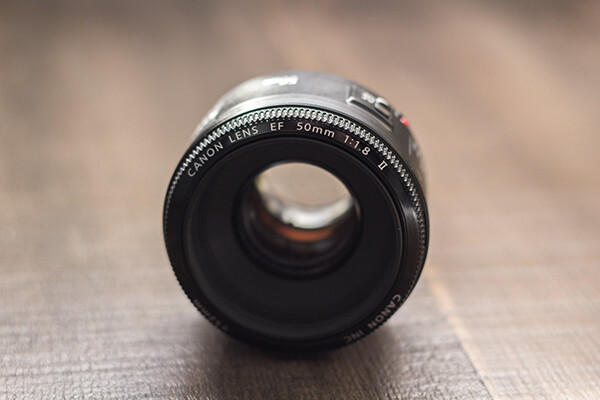
50mmLens

My primary reasoning for using the 50mm instead of going out and buying a proper wide-angle lens such as a 35mm or even wider?

Cost.

I was diving back into photography, and I was on an extremely tight budget. After buying my camera, spending $ 500 on a lens simply wasn’t an option. It didn’t take long for me to hear my fellow photographers sing the praises of this wonderful lens: cheap, fast, and sharp. Right up my alley.

There are no tricks or immaculate revelations here, and you won’t likely become famous for taking only landscape shots with 50mm lenses. But there are a few reasons why shooting landscapes with a 50mm lens can produce great results.

Giving it a try can only improve your photography and make you a better observer of the world around you.

Focus on what’s important

We think of landscapes as sprawling, wide shots that include many elements in one frame, but do they have to be that way? Can we not capture the beauty of the area around us in a tighter package? The rolling hills and an interesting tree in an outdoor scene are more than enough to create a photo that provokes thought.

The Nifty Fifty makes it easier to focus on whatever is most important in your photo, while still capturing enough around the subject to lend it scope.

The Nifty Fifty makes it easier to focus on whatever is most important in your photo, while still capturing enough around the subject to lend the shot scope.

Shooting at this focal length forces us to focus on the most important parts of what we’re seeing around us. Trimming the fat, as they say. In doing this, we’re also training ourselves psychologically to do the same in all of our shots.

Quality

Landscapes usually require very good sharpness, and 50mm prime lenses excel at that. No extra moving parts normally required for zooms makes for a crisper, sharper result. As with most lenses, the Nifty Fifty sweet spot isn’t wide open, but more in the f/4 to f/5.6 range. And narrower apertures will still yield excellent results.

The 50mm prime allows you to capture very sharp images

The 50mm prime allows you to capture very sharp images.

Take your time

Since the 50mm is a prime lens, you’ll get an added benefit (or detriment, depending on how much you care for walking): The single focal length means you can’t just shoot from anywhere. Instead, you’ll need to move around to find the best angle and distance. This automatically forces you to think about your shot a bit more, which is always a good thing.

The 50mm allows you to think differently about the landscape or subject you're framing, and to make more creative choices.

A 50mm lens allows you to think differently about the landscape or subject you’re framing and to make more creative choices.

With a zoom, you’d adjust focal length without even thinking until the scene is framed in a way that looks good. But what if that isn’t the best angle or distance? The Nifty Fifty will give you the incentive to take a chance and try something different, whether it be an angle, a distance, or a perspective.

No wide angle…or can there be?

Of course, there can! The 50mm gives you a gentle push into playing around with some panoramic shots. Three, four, five, or more shots can be stitched into a flattering wide-angle composite, sometimes with even more dramatic results than a single wide-angle shot.

By stitching together shots, we can create a panorama that gives us the wide field of view we're looking for

By stitching together shots, we can create a panorama that gives us the wide field of view we’re looking for.

Lightweight is king

If you’re serious about landscape photography, you’re probably already lugging around a considerable amount of gear. Camera bodies, other lenses (you don’t go out with just one lens, do you?), tripods; the list goes on.

The last thing you need is more heavy lenses when you’re out and about, right? Do you know what the Canon 50mm f/1.8 weighs? 4.6 ounces (130 g). It’s short, sweet, and light to boot.

At the end of the day, all lenses and focal lengths have advantages and disadvantages, and the case can certainly be made for using wider glass. But, as a teaching tool, the 50mm prime lens is a great option for your landscape photography; it will make you think a bit differently about your photos and easily provide you with clear, sharp images.

The post 5 Quick Reasons to Use the Nifty Fifty for Landscape Photography appeared first on Digital Photography School. It was authored by Tim Gilbreath.


Digital Photography School

 
Comments Off on 5 Quick Reasons to Use the Nifty Fifty for Landscape Photography

Posted in Photography