RSS
 

Posts Tagged ‘It’s’

KitSplit Giveaway Winners: It’s You!

17 Sep

Well, technically, we have just one grand prize winner: @camdenwalker won $ 200 in gear rental and gizmos!

But, we looooved seeing all your contest entries, and your big photo plans. You had so many great ideas, that we’ve decided to do what we can to turn all these dreams into reality.

We can’t giveaway everything (our accountants said no. boooo) but we can offer discounts! Use the code FALL for 20% off gear rental at KitSplit, and/or use the code DreamBig for $ 10 off any Photojojo order over $ 25.

Now, to really get your creative juices flowing, click on through for ten of our favorite photography ideas entered into the #KitJojoGiveaway.
(…)
Read the rest of KitSplit Giveaway Winners: It’s You! (0 words)


© laurel for Photojojo, 2016. |
Permalink |
No comment |
Add to
del.icio.us

Post tags:


Photojojo

 
Comments Off on KitSplit Giveaway Winners: It’s You!

Posted in Equipment


You Won’t Believe It’s Not Photoshop: 36 Fake-Looking Photos

18 Aug

[ By SA Rogers in Art & Photography & Video. ]

not shopped main

The very existence of Photoshop has made it easy to immediately dismiss impossible-looking images as digitally altered, but some bizarre scenes are more real than they appear. Anything from a particularly alien-like landscape to a rare cloud formation can provoke cries of ‘Photoshop!,’ but it’s particularly impressive when these illusions are created through art, with the help of mirrors, acrobatic models, trick perspective and serendipitous timing.

Coincidence Project by Denis Cherim

not shopped cherim 8

not shopped cherim 9

not shopped cherim 10

not shopped cherim 11

not shopped cherim 12

The almost too-coincidental-to-be-real photography of Denis Cherim relies on the patience to wait for exactly the right moment, when various elements of a scene come together in just the right way. His series ‘The Coincidence Project’ sees ordinary scenes from new perspectives, moving to particular vantage points to encourage serendipitous alignments.

Gravity-Defying Performances by Li Wei
not shopped li wei 20

not shopped li wei 21

not shopped li wei 22

not shopped li wei 23

not shopped li wei 24
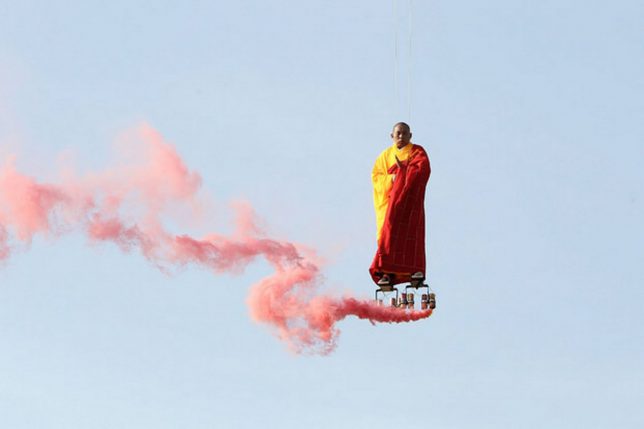
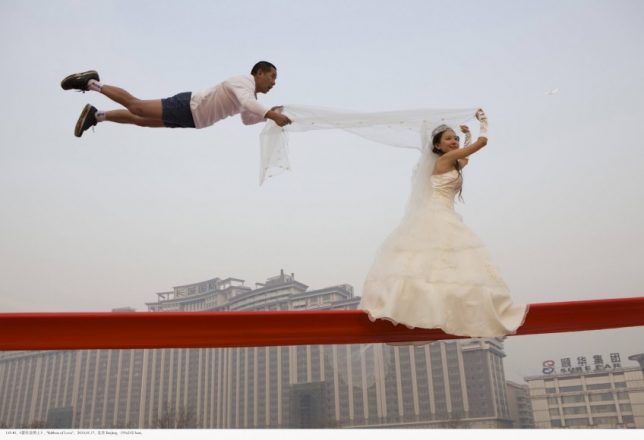
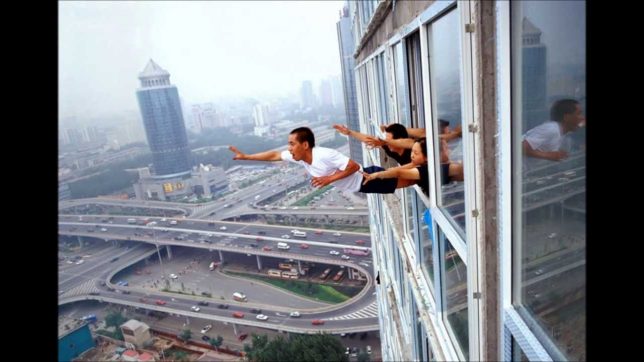
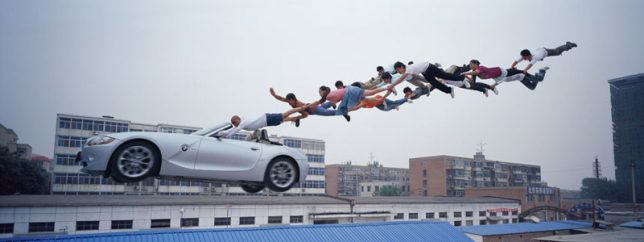
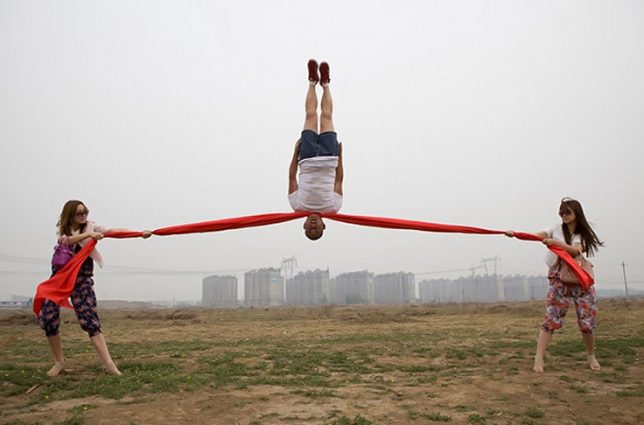
How can there possibly not be any photo manipulation going on in images where people are floating in mid-air? Li Wei’s particular blend of photography and performance art uses the strength of his subjects – including no small amount of acrobatics – along with invisible props and mirrors to create scenes that aren’t exactly as they appear.

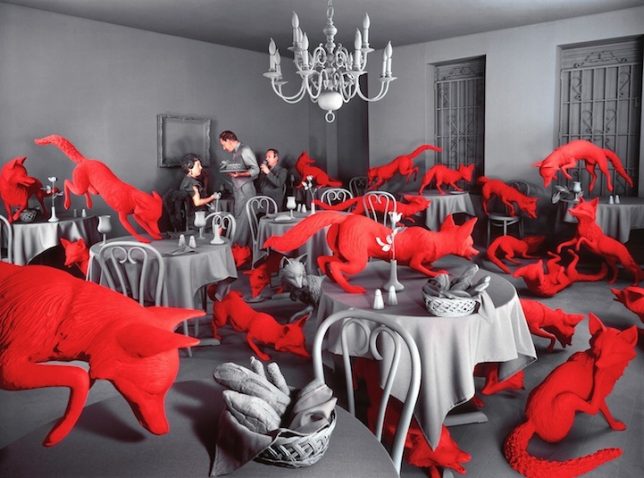
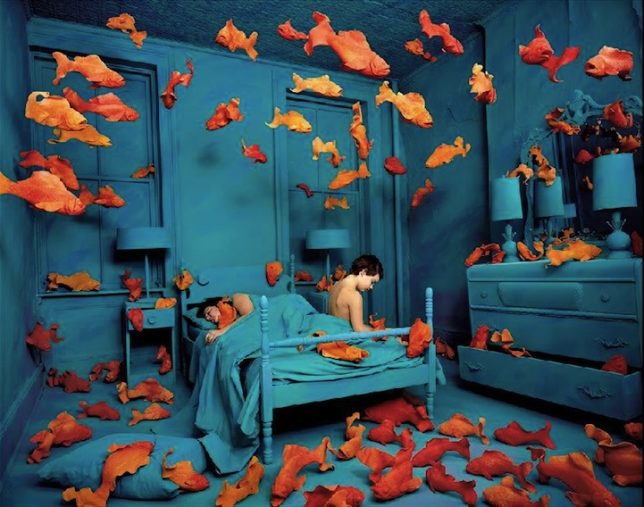
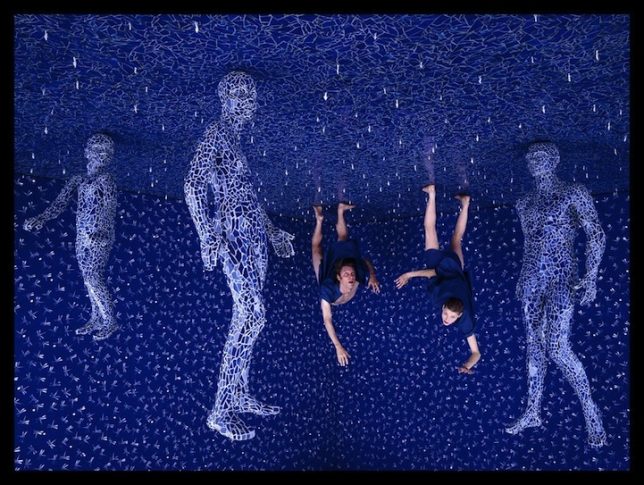
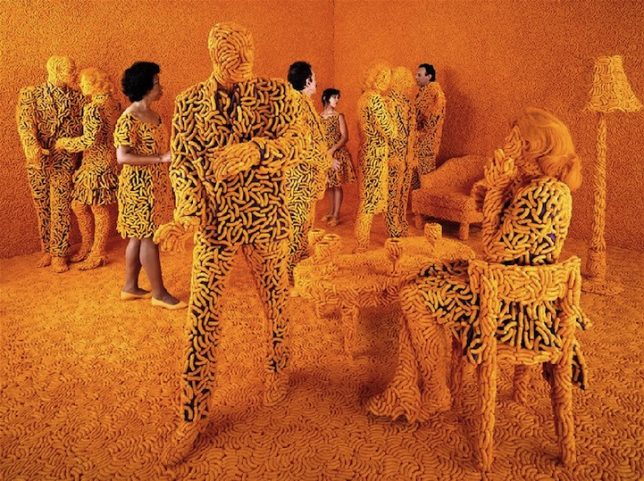
Surreal Scenes by Sandy Skoglund

not shopped skoglund 1

not shopped skoglund 2

not shopped skoglund 3

not shopped skoglund 4

not shopped skoglund 5

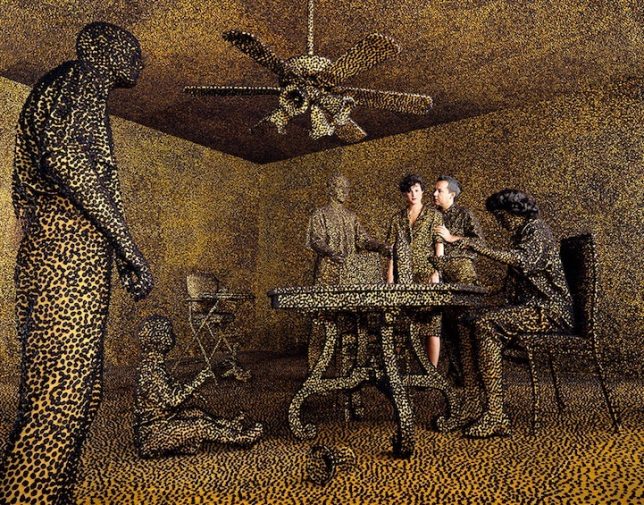
Fish fly through blue-toned bedrooms, foxes take over dining rooms and people hang from ceilings in dreamlike scenes by artist Sandy Skoglund, who spends months building each elaborate set. Favoring vivid color schemes, Skoglund mixes her hand-made sets and inanimate figures with live human models and takes photographs of the resulting contrasts.

Toy Dinosaur Travel Shots by Jorge Saenz

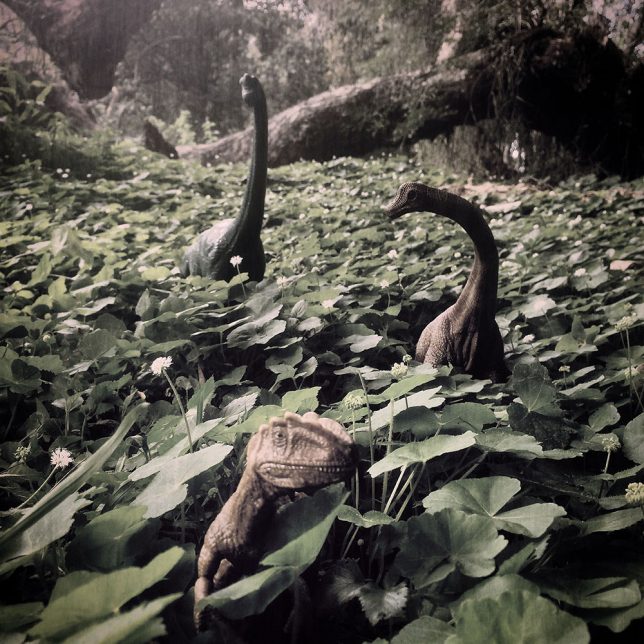
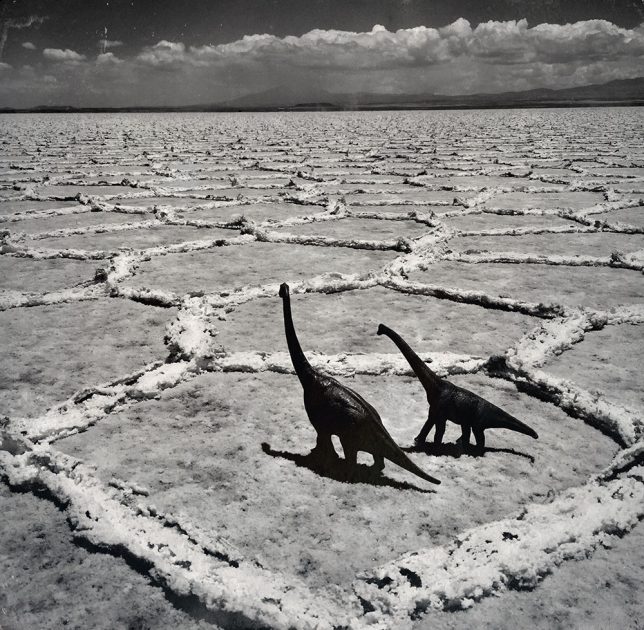
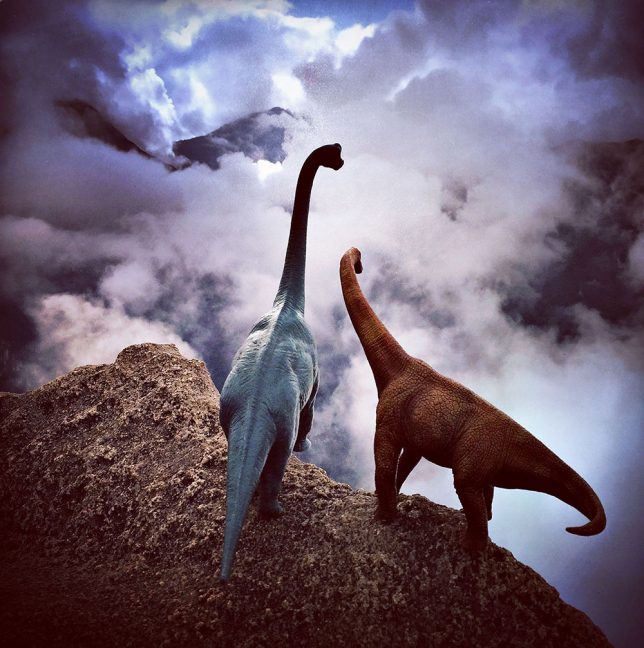
What look like screenshots from an old stop-motion animation dinosaur movie are actually just toy dinosaurs artfully placed within landscapes by photographer Jorge Saenz. His ‘#dinodinaseries’ project makes the figurines appear larger than life, sometimes looking surprisingly real in their incongruous modern-day settings.

Mirror Landscapes by Guillame Amat

not shopped amat 13

not shopped amat 14

not shopped amat 16

not shopped amat 18

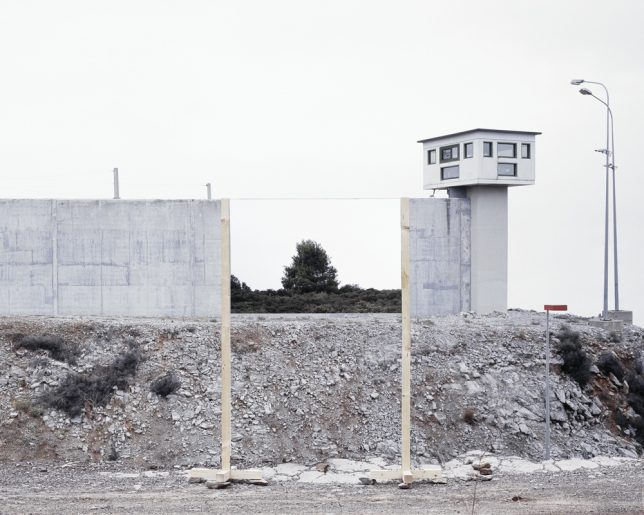
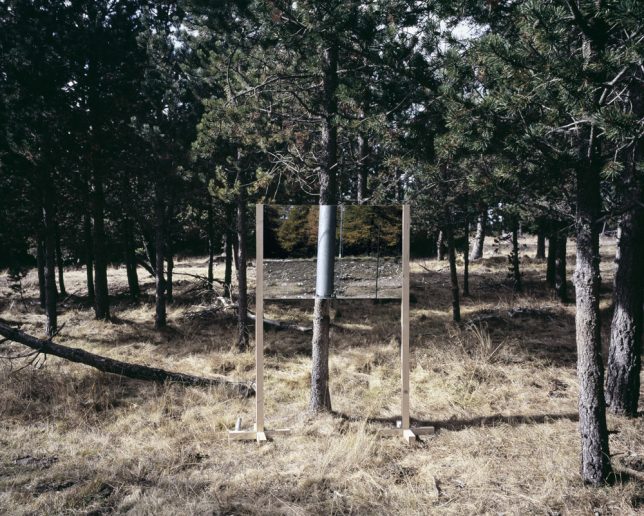
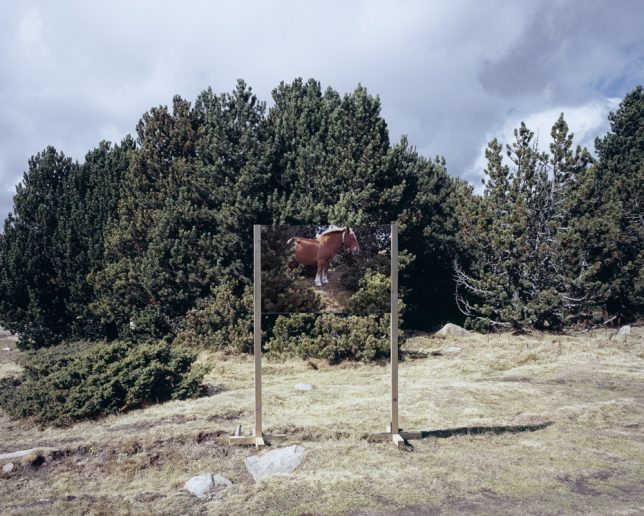
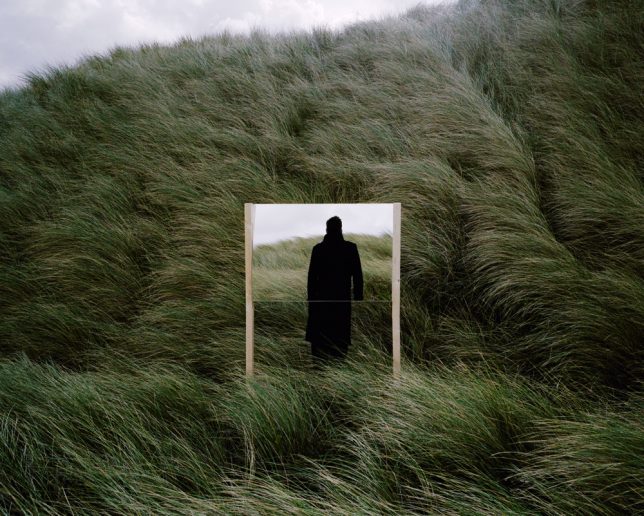
Mirrors seem to offer portals into a slightly different reality in Guillaume Amat’s ‘Open Fields’ project, which carefully places a reflective stand in various landscapes. The reflections almost blend into the scene, but not quite – leading to images that are inaccurate renderings of the setting, but in such a subtle way it can take a moment to realize what’s wrong with the picture.

Next Page – Click Below to Read More:
You Wont Believe Its Not Photoshop 36 Fake Looking Photos

Share on Facebook


[ By SA Rogers in Art & Photography & Video. ]

[ WebUrbanist | Archives | Galleries | Privacy | TOS ]


WebUrbanist

 
Comments Off on You Won’t Believe It’s Not Photoshop: 36 Fake-Looking Photos

Posted in Creativity


Virtual Reality: It’s not just for gamers anymore

31 May
The Nokia OZO is a state of the art VR camera.

Virtual reality, or VR, has the potential to redefine the way we interact with images, including still images, movies, and other forms of visual storytelling. It’s already being adopted by major news organizations to take you deeper into stories, Hollywood studios that want to generate more immersive entertainment, and content creators who want to share experiences that don’t work as effectively on a flat screen.

VR is still at a stage where it’s mostly of interest to early adopters, but it’s an exciting time to get involved with this new medium. In particular, it’s great time for photographers and filmmakers to start thinking about VR as this technology will likely impact the way we share our work, tell stories, and even remain competitive in business over the next several years.

Timing is everything

My first VR experience came many years ago when a technology incubator next to the molecular biology lab where I worked asked for volunteers to test a new ‘human interface technology.’ I found myself standing in a room full of computers, wearing a large headset with wires hanging out, and with something that looked like a hockey glove on my hand. A nerdy grad student was on hand to guide me through a virtual world.

The graphics in this world consisted of nothing more than rooms full of poorly shaded spheres, cubes, and cylinders. There was no illusion of reality, but I could navigate through doors and wonder around. I later discovered that the grad student was actually from the psychology department and that I was, for all intents and purposes, a lab rat trying to find my cheese in a virtual maze. The grad student never revealed whether I did a better job of navigating the maze than the real rat, but the VR experience stuck in my mind. My gut told me it had potential.

“I was, for all intents and purposes, a lab rat trying to find my cheese in a virtual maze…”

As Mark Banas’ recent article discusses, and as my own ersatz rat experience confirms, VR has been around for a while and has even enjoyed some success, particularly in the gaming world. However, the technology behind VR may finally be sophisticated enough to give it a fighting chance of being useful to a wider audience, particularly photographers and filmmakers. When I discuss VR in this article I’ll be specifically referring to VR in this context – for photographers, filmmakers, and also visual storytellers.

I’m not a hard core computer gamer or a rabid VR enthusiast; it’s likely that some of you reading this article know a lot more about VR than I do. However, I suspect I’m fairly representative of the typical photographer/filmmaker who’s followed VR from afar with a healthy bit of skepticism, waiting for someone to make a convincing argument that VR is relevant to me.

VR has enjoyed some success in the gaming world, but as a visual storyteller I’ve been waiting for someone to demonstrate how VR is relevant to me.

That’s not to say that I haven’t experimented with VR, it’s just that until recently it never seemed terribly compelling to me as a content creator. Almost every VR experience I tried boiled down the same basic formula:

  1. Videographer places a VR camera in an iconic location and captures video from a single spot.
  2. Viewer puts on a headset and watches video until he or she gets bored.

At this point it seems like I’ve (virtually) stood around a lot of places: the pyramids of Egypt, next to the Eiffel Tower, Machu Picchu… you get the idea. But the key words are ‘stood around’. The experience can be interesting at first, but after about 30 seconds you’ve spun in a circle, looked up and down, and pretty much seen all there is to see.

But that’s not what you do when you go to one of these places, in real life. You want to explore, to learn something, to understand the story of the people or the place that you’re visiting.

Viewing an iconic place, such as Machu Picchu, using VR can be interesting. However, unless you show your audience something unique, help them understand the place, or immerse them in a compelling experience, they will quickly lose interest.

Virtual Experiences

For VR to gain any type of traction it needs to go beyond this ‘stand there and look around’ model – and, fortunately, it has. This was particularly noticeable at the NAB trade show in April where VR technology appeared to be everywhere. There was even a Virtual and Augmented Reality Pavilion that served as a hub for numerous VR companies, including makers of capture devices, display systems, and even content creators.

My personal VR epiphany occurred at a technology showcase run by Kaleidoscope VR, a VR studio. In a roped off area dozens of people sat in chairs spread across the floor, each engrossed in some virtual world. What set the experience apart from most other VR demos I’ve seen was that the focus was on putting viewers into immersive stories and experiences.

Visitors trying virtual reality at the Kaleidoscope VR showcase.

‘Content is King’ may be one of the most overused phrases in modern media, but it keeps getting recycled because it’s fundamentally true. Lack of good content is why VR always seemed dull or gimmicky to me in the past, but my experience at the VR Showcase proved that with the right content VR can be incredibly compelling.

The first ‘film’ I selected was a VR experience called ‘Notes on Blindness: Into Darkness.’ Based on the audio diaries of a man named John Hull, who recorded hours of observations about how he learned to ‘see’ the world through sound after losing his sight in 1983, ‘Notes on Blindness’ isn’t, strictly speaking, an actual film. (It is, after all, an effort to help the viewer understand what it’s like to be blind.) Instead, it uses audio and 3D animations that mimic the real world.

Each scene begins mostly in darkness, accompanied by Hull’s narration of where he is and what he’s hearing. As different sounds enter the space, he describes them and indicates directionality, using phrases like “Behind my right shoulder I hear a car starting,” or “To my left I hear somebody running,” in a way that prompts you to move your head around to look. In essence, he’s directing you even if you don’t realize it. After a while you discover that Hull is able to draw a mental picture of what’s around him based on subtle cues such as the different sounds raindrops make when hitting objects, like a window or a teacup. As he speaks, scenes are gradually revealed in a manner reminiscent of The Matrix, but also rely on your imagination to complete the mental image.

I hope I never experience real blindness, however for the first time in my life I feel like I might have a very basic understanding of what it’s like for a blind person to try to ‘see’ the world using their other senses. The experience was more powerful than I anticipated.

The trailer for ‘Notes on Blindness’ (above) will give you a rough idea of what I’m trying to describe here. The VR experience will be available for download on June 30 if you want to try it yourself.

I also viewed ‘Witness 360: 7/7,’ a VR film that follows the experience of Jacqui Putnam, a commuter on the London Tube during the terrorist bombings of July 7, 2005. Shot documentary style, you see the places Jacqui went that day, including riding on the Tube itself, and hear her vivid descriptions of what happened. When she mentions something like “The person sitting next to me,” you turn and, sure enough, there’s a person sitting next to you that roughly matches her description.

The experience was more tense than I expected. I knew what was going to happen, and yet as I stood there on the train next to everybody else – real people who just happened to be on the Tube – I kept thinking to myself ‘These people are about to die.’ The fact that I could look around and feel immersed in the situation, able to see the things Jacqui was describing, generated a visceral reaction that I’m not used to feeling while watching a documentary. It felt personal.

Despite very different subjects and creative approaches, both these VR experiences had one critical thing in common: neither one would have worked as effectively on a flat screen. They depended on a VR environment to achieve their impact. 

By now you’re probably asking how still photography fits into the VR world. Quite nicely, it turns out. Of course, the obvious applications are things like real estate photography, where 360º views can be critically important to attracting eyeballs. The real estate industry has been finding ways of doing this for years already, and new tools will only make the experience better and smoother. But it’s the creative possibilities that are really interesting.

One thing photography has always been good at is closing distance, i.e. taking you to a faraway place you may not be able to visit in person. It’s the reason we know what most of the world looks like despite never having been to most of it. VR has the potential to take this a step further. In the same way that color photography allowed us to see places differently than we could in black and white, VR will allow us to see places in an immersive way that we can’t experience with a two dimensional picture. I’m not suggesting the VR is better than a still photo any more than I would suggest that a color photo is better than a black and white one. My point is that they are different, and each allows us to experience the world in a way the others don’t.

Nice kitty. Imagine using a VR camera to put your viewer right into the middle of a pride of lions.

Photo: Jeff Keller

The key to VR still photography will be figuring out how to leverage the strengths of the medium. For example, most people enjoy a great landscape or wildlife photo. If you show me a beautiful Serengeti landscape with a lion in it I’ll probably love the photo. However, if you show me that same landscape in VR it might not be as compelling since I can’t see it all at once. However, if you let me stand right in the middle of a pride of lions eating a wildebeest you’ll get my attention, because that’s something I haven’t experienced in a normal photo.

What all of these examples highlight is how important it will be for artists to take new and different approaches to capturing, editing, and presenting their work. It’s an open canvas, and one that’s still largely undefined.

VR Requires New Grammar

As Oscar-winning cinematographer Emmanuel Lubezki told us a couple months ago, the grammar and language of VR have yet to be written. This is true in a literal sense. Words like ‘framing’ and ‘panning’ simply don’t apply to VR. New words are needed, and nobody has agreed on what those words are yet. The one thing they do agree on is that VR will require different approaches appropriate to the medium.

This can be seen in the films described above, particularly ‘Witness.’ For example, the conventional documentary formula is to intercut interview footage with b-roll, but that never happens in ‘Witness.’ The convention works in flat films because you can lock the viewer into a rectangular frame and demand their attention. But what happens when the viewer has the freedom to look anywhere they want? Maybe they will get distracted by a picture hanging on the wall, or something happening outside a window. ‘Witness’ solves this by relying entirely on voiceover while featuring a few location shots of Jacqui Putnam throughout the film. This is just one example of where traditional filmmaking techniques don’t translate easily to VR, and there are many others.

It isn’t the first time content creators have faced this challenge. In the early days of television, studios often tried to repackage shows made for radio into TV, such as American soap operas. Daytime soap operas on radio were aimed at homemakers who could listen while working around the house. Studio executives had reservations about whether soap operas would even work on TV since they would require the homemaker to actually watch a screen.

Early soap operas were produced for radio; when TV came along producers had to figure out how to take advantage of the new medium.

By Photo by G. Nelidoff, Chicago, for CBS/Columbia Broadcasting Company. (Library of Congress) [Public domain], via Wikimedia Commons

Some production elements from radio didn’t translate well to TV. For example, producers had to re-think product placement and advertisements in shows – the very reason for the existence of soap operas in the first place – because having an actress pick up a box of laundry detergent and talk about its virtues in the middle of a scene just didn’t seem believable on TV. It took a few years before the industry perfected the formula.

The reason I point this out is because we’re still in the early days of VR. It’s easy to look at VR as it exists now and think of it as a gimmick, a tool for gamers, or a toy for tech nerds. And that’s OK – people thought similar things about TV at one point, but once content creators figured out how to effectively use the medium there was no turning back. I suspect the same will be true of VR: once the language of VR is fully developed, and hardware for consuming content becomes more convenient (it will), there’s a lot of opportunity to do creative things that may not work on a flat screen.

Why VR is not 3D Television

I mentioned above that VR seemed to be everywhere at trade shows like CES and NAB this year. That’s an encouraging sign, but it’s worth noting that ubiquity of a technology at an industry trade show does not equate to commercial success. I need only mention 3D television to make my point, and several people have dismissed VR to me as just ‘the next 3D TV.’

I believe VR is a much more promising technology than 3D television, and will ultimately be more successful, for a couple of important reasons.

One advantage of VR compared to 3D TV is that viewers can at least try it with an inexpensive viewing device, such as Google Cardboard, and a smartphone.

3D television struggled with a classic chicken-and-egg situation. Networks were reluctant to invest in infrastructure to produce 3D content without some assurance that there would be a critical mass of audience; consumers were reluctant to invest in $ 1,000+ devices without some assurance that content would be available. For studios, this was potentially a very expensive experiment that carried a lot of financial risk. Also, many consumers had only recently upgraded to HDTV, and it was a tough sell to convince them to invest in new hardware so soon. By now everyone knows how this ended.

The stakes around VR are different. First, most VR content is being distributed through platforms like YouTube or on mobile devices where production standards are less stringent than for broadcast television. VR also has the advantage that the lowest common denominator for viewing content is the smartphone, meaning that most consumers already have a screen on which to watch content (alone or when combined with an inexpensive viewing device).

The lowest common denominator for viewing VR is the phone most of us already have in our pocket.

Photo: Dale Baskin Photography

On the production side of the equation, low cost capture devices ranging in price from a few hundred to a few thousand dollars are easily accessible to content creators. It’s not an unmanageable risk for someone running a successful YouTube channel, or even an indie filmmaker, to invest a small amount of money to try the technology. Similarly, it’s easy to envision news media such as The New York Times, USA Today, or even your local TV station sending reporters into the field with a $ 1,000 VR camera to bring immersive experiences to their apps and web pages.

In one particularly telling move, last November The New York Times sent free Google Cardboard to all of their print subscribers – over one million of them – to insure that they could use The Times’ new VR app. The Times followed up a few weeks ago by announcing that they would also send free Cardboard to many of their digital subscribers as well. When the barrier to entry is so low that a content producer can afford to give all their subscribers a free device on which to consume their content it’s a great indication of how accessible the technology can be.

In November the New York Times sent Google Cardboard to all their print subscribers, and a few weeks ago announced similar plans for digital subscribers.

Are we there yet?

At this point I probably sound pretty enthusiastic about VR – which I am – but I’ll also provide a reality check and let you know that we’re not quite there yet in terms of the technology.

VR depends on belief; the belief that you’re somewhere you’re not. One of the things you figure out really fast with VR is that in order for it to be believable, every part of the experience must work. This includes image quality, the general viewing experience, audio, and even the space you’re in and how you interact with it. If any part of the experience is incomplete or breaks, then the experience becomes less believable.

As photographers, you’ll notice this immediately when it comes to picture quality. We’ve become spoiled by high resolution, high dynamic range sensors that are almost magic relative to what we had just a decade ago. VR cameras aren’t there yet. Resolution is limited (usually 4K, but spread across the entire 360 degree field of view), highlights may be blown or shadows lost, and the richness of color we’re used to just isn’t there. However, in the same way that early digital photographers managed to create great photos with 2MP and 3MP cameras, VR content creators are finding ways to work within the limits of their tools.

One of the most accessible VR cameras available today is the Ricoh Theta (above) which lists for $ 260. Alternatively, the Nokia OZO (seen at the top of the article) lists for $ 60,000. The one thing they both have in common is that neither captures the same resolution, dynamic range, or richness of color we’re used to with modern ‘2D’ cameras.

Viewing devices will need to improve as well. Not only are they large and unwieldy, but the thing that makes VR so accessible – your mobile phone – is also one of the bottlenecks to the experience. Magnified by VR lenses, video looks pixelated and low resolution by today’s standards, sometimes exhibiting a ‘screen door effect’ similar to looking through a mesh screen. When Sony introduced a smartphone with a 4K display I initially thought of it as marketing overkill. In retrospect, I don’t know if they had VR in mind, but VR is a case where a 4K phone really could provide an improved experience. Suddenly, I like the idea of a 4K smartphone.

Audio is a much bigger challenge. There’s an old adage in filmmaking, which I’ve discussed on the site before, which says that an audience will forgive a bad picture, but they won’t forgive bad sound. That’s actually more true in VR than on a flat screen because having an immersive experience is absolutely dependent on it. Audio for VR is in its infancy, and spatial audio that matches what you see, including directionality of sound as you move around, is critical to creating a believable experience. One studio executive I spoke with at NAB told me the biggest challenge in creating believable sound for VR is that 70% of viewers don’t actually wear headphones when watching VR, but instead rely on the speaker built into their phone, insuring a suboptimal experience.

Immersive audio, including directional audio, is crucial for VR experiences that include sound. One challenge for content creators is that 70% of VR consumers today use only the tiny speaker built into their phone.

Finally, there’s the disconnect between the virtual world and the real world. Its frustrating when you’re immersed in a VR experience at NASA Mission Control and you reach for the control panel only to find empty space, or when you’re standing in an open field but inadvertently bump into a wall. Some of this will be addressed through technology, but it’s also one of the challenges content creators will have to address through creative choices.

The good news is that all of these things are solvable problems, and smart people are working on them.

The Future is Now

As exciting as VR is, I’m not suggesting that it will replace traditional, two dimensional media such as photography or television. There’s plenty of room for both mediums to exist side-by-side.

I recently shared this thought with a friend, who thoughtfully responded “Then what type of stories are best told in VR versus other mediums?” After thinking about it I realized this was probably the wrong question to ask. After all, if you replace the word VR in that sentence with any other form of media, like TV or print, it doesn’t make sense. You can tell a story with any medium, but the challenge is figuring out how to leverage the strengths of each for maximum impact. In that sense, VR is no different.

Also, as much as I’m excited by VR, I really don’t want to have complete control over my viewing experience for everything. I want master filmmakers and photographers to craft a story in their image, or to show me the world as they see it, without necessarily giving me the freedom to mess it up. I can’t imagine how The Godfather would be any better if I had the freedom to look around the scene instead of watching it the way Francis Ford Coppola shot it. On the other hand, I look forward to as-yet-uncreated projects that allow me to participate more freely in the experience.

What’s potentially most exciting are the VR applications that haven’t been invented yet. I can’t wait for the day when NASA puts VR cameras on landers going to Mars or the moons of Saturn, allowing me to stand virtually on the icy surface of Titan, gazing out over a methane sea.

And now if you’ll excuse me, I’m off to make my first VR film.

Articles: Digital Photography Review (dpreview.com)

 
Comments Off on Virtual Reality: It’s not just for gamers anymore

Posted in Uncategorized


Huawei P9 camera is nice, but it’s still a smartphone camera

28 May

To dismiss the Huawei P9’s imager as ‘just another smartphone camera’ would be unfair. Its dual 12MP cameras aren’t your average dual cameras – Huawei claims that by using one monochrome and one RGB sensor, the camera is 100% more sensitive to light than your standard smartphone camera. It offers Raw capture, full manual exposure control and laser-assisted autofocus. Oh, and Leica had a hand in designing the module. All-in-all, there’s plenty going for it camera-wise. 

We approached the P9 eager to give it a try, but with a healthy dose of skepticism. And keeping our expectations measured, we were pleased by the Huawei P9’s results. For one thing, shooting with is a nice experience. There are multiple grid overlay options, a level gauge (praise hands emoji!) and you can easily toggle between full manual and full auto shooting. It’s also possible to shoot exclusively with the monochrome camera, which opens up other creative possibilities.

The P9 offers many of the comforts of an advanced point-and-shoot. So how’s the image quality? It’s pretty much as we expected. Good light JPEGs look just peachy on phone-sized screens, but at 100% they don’t look exactly ‘100 emoji’ 100. Grass turns mushy and halos start appearing around high contrast edges. Things obviously get quite noisy by the time you get to ISO 3200.

$ (document).ready(function() { ImageComparisonWidget({“containerId”:”reviewImageComparisonWidget-42824869″,”widgetId”:365,”initialStateId”:null}) })

But wait, there’s Raw! You can see some of the benefits in terms of detail retention in the studio scene widget$ (document).ready(function() { $ (“#imageComparisonLink2550”).click(function() { ImageComparisonWidgetLink(2550); }); }), but definitely check out the difference it makes in some of our real-world samples. It should be noted that Raw capture is only available in Pro mode, and can’t be used when shooting with the monochrome camera.

TL;DR, I’d be pretty happy if the Huawei P9 camera was the camera I had with me all the time. But the dual camera system hasn’t solved the low light troubles inherent to small sensors.

Articles: Digital Photography Review (dpreview.com)
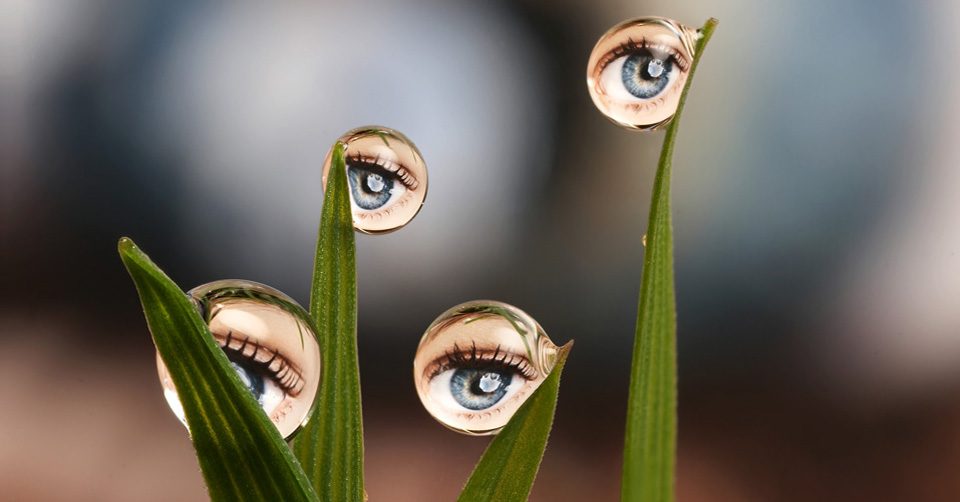
 
Comments Off on Huawei P9 camera is nice, but it’s still a smartphone camera

Posted in Uncategorized


It’s not the camera you have – it’s what you do with it

04 May

What you do camera 1

One day, as I was looking up to the stars, a revelation came upon me. It got imprinted into me that my career should be in photography. That’s the story I’d like to tell myself about how I entered photography. The reality is that I stumbled unto photography quite by accident. I saw a friend of mine who had this very nice professional looking camera. Big, black, sexy, it was a Nikon D80.

One faithful day I did the math while counting my money, and did a quick Craigslist search. My goodness! Looks like I could buy one! And that I did. But that was just the beginning. After being a Nikon shooter for a while, I started buying lenses, more and more.

What you do camera 2

I brought and sold cameras like crazy, my wife’s family had to ask if I was rich because it seemed like every month or so I would have a new camera. Thing was, I wasn’t rich by any stretch of the imagination, all I had was ebay: I sold some stuff, then bought some stuff, again and again.

It got so bad that I bought a large format camera, two graflex backs, about a hundred pieces of film, then only shot about three frames before selling it. I even had a medium format camera at some point too, with a box full of medium format film of which I only shot like two rolls, and they are still undeveloped to this day.

I’m not here to chronicle my old gear addiction, but to hopefully drive a simple point home that I’ve learned the hard way:

It’s not what camera you have, it’s what you do with it.

What you do camera 6 What you do camera 9

Your camera matters

But before going in, let’s get something out of the way. You’ve probably heard that your camera doesn’t matter, but let me share with you that I believe that yes, it does. I mean, of course your camera matters, how can it not? If you want to make images of birds and your camera doesn’t have a zoom, good luck trying to get close. It’s just a basic fact, all cameras are limited somehow, and because of these limits there are shots that you simply can’t get with certain cameras. Try low light with no flash on a smartphone and see what I mean.

But who cares?

But the thing is, it really doesn’t matter that your camera matters. It’s a tongue twister, I know. Not only are modern cameras good enough for pretty much any occasion, but mainly because you can either focus on what you can, or what you can’t, do with your camera. Focus on what you can’t do and you are signing yourself up for gear addiction, as there is ALWAYS something you can’t do with any camera.

What you do camera 3

That’s what got me to shell thousands of dollars in gear I never needed in the first place. My camera’s too big, my camera doesn’t look cool enough, or it doesn’t have a viewfinder, etc. I could find all the issues in the world when I needed to rationalize my next purchase. But, after spending thousands buying and selling hear, having used pretty much all of the formats and systems out there, I only have one thing to say – it’s not what camera you use, it’s what you do with it.

I remember a friend’s wedding. My jaw dropped when I saw the images that their paid photographer produced. The shooter had a serious Canon kit, I think the 70-200mm f/2.8, the whole shabang, a really nice kit if you ask me.

What you do camera 4

But goodness gracious I can’t even describe the images. The images looked like a random person with their pre-smartphone phone shot them. They were the blandest of bland – then I realized that they were made on probably $ 3000 worth of gear, but the results were $ 3000 point and shoot images. I had my humble Ricoh GXR back then and got a few shots for myself. The couple thanked me and said, “If it wasn’t for you, we wouldn’t have any nice pictures.”

I’ve seen point and shoot result from cameras worth thousands, and inversely, I’ve seen beautiful results from the humblest of cameras. I think it’s all about using your camera to its maximum potential, whatever that may be. What I realized too late (and it could have saved me lots of money) was that I could have made some nice images with whatever camera I had. From the most expensive one to the cheapest one. Between you and I, all of the images in this article were made with a discontinued, small sensor, pocket camera.

What you do camera 5

It’s something I’ve seen over and over again, not only in photography but in life in general. Like the people who only had $ 100 to their names and somehow ended up millionaires. It’s not the cards we have in life, it’s what we do with them. We all could be taller, prettier, whatever. But it’s about making the most of what you’ve got.

I think the more you understand this principle, the more confidence you will get. I think many of us get confidence from owning a camera, like I did. But I think that confidence is better handled if it’s in your own abilities as a photographer. Something that you can prove to yourself by making the most of your current camera.

What you do camera 7

In short, your camera matters – but who cares? Great images are possible with any camera, because it’s not what camera you have, it’s what you do with it. I’ve proven it to myself, have you? Be yourself, stay focused and keep on shooting.

What you do camera 8

googletag.cmd.push(function() {
tablet_slots.push( googletag.defineSlot( “/1005424/_dPSv4_tab-all-article-bottom_(300×250)”, [300, 250], “pb-ad-78623” ).addService( googletag.pubads() ) ); } );

googletag.cmd.push(function() {
mobile_slots.push( googletag.defineSlot( “/1005424/_dPSv4_mob-all-article-bottom_(300×250)”, [300, 250], “pb-ad-78158” ).addService( googletag.pubads() ) ); } );

The post It’s not the camera you have – it’s what you do with it by Olivier Duong appeared first on Digital Photography School.


Digital Photography School

 
Comments Off on It’s not the camera you have – it’s what you do with it

Posted in Photography


Intentional Blur- How to Create it and Why it’s Awesome

18 Feb

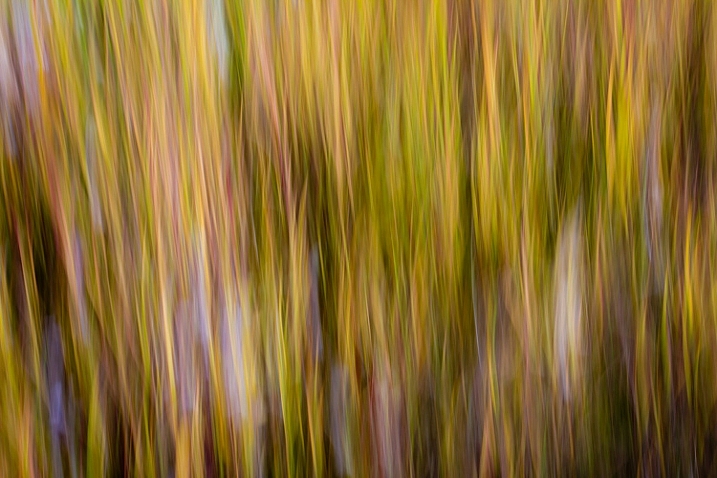
An abstract blur of cotton grass, Fairbanks, Alaska, in autumn.

Open up any photography magazine or website, and I promise there will be at least one article, and a half dozen ads, discussing image sharpness and how to get it through technique or gear. Don’t get me wrong, sharpness is great. When I’m shooting a classic landscape or portrait, if the image is a hair out of focus, it goes in the trash. But, at times, blur is exactly what you want, and occasionally, it’s exactly what your sharpness-obsessed brain needs. All you need, is a camera that allows you to manually control shutter speed.

Abstract Panning Blur

Creating abstract blurs is a chance to explore color, and pattern, and forget about the nit-picky details of composition. Frankly, it’s a fun way to screw around with your camera, and the results can be very cool.

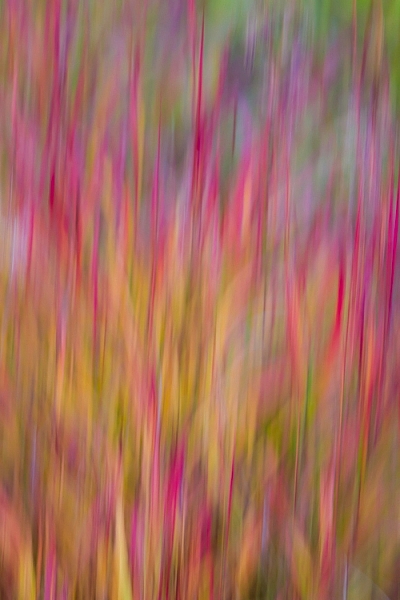
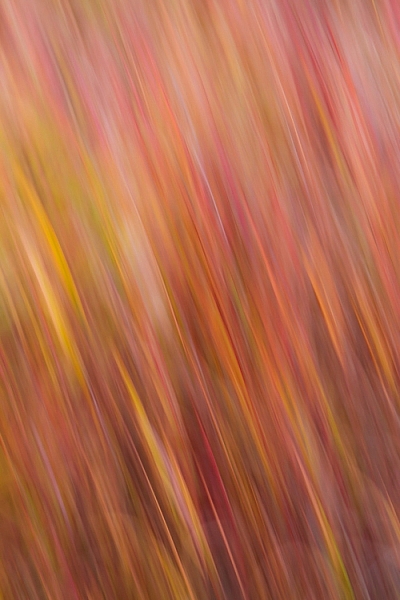
An abstract blur of Fireweed, Fairbanks, Alaska, in autumn.

I made the above image in the small wetland below my home in Alaska. In the autumn, the fireweed fades from green, to orange and red, and these plants erupted from the background. Photographically, I didn’t care about the fireweed itself, I wanted to create an image with the feeling of an explosion. After a moment of pondering, I decided a blur might do the trick. I set the camera shutter to 1/10th second, and panned the camera parallel to the direction of the stems (up and down).

The process is simple, but can feel strange. The camera must be in motion for the entire length of the exposure (usually longer than 1/15th of a second). If you pause, start too soon, or end too early, then elements of the image will retain detail, and the clean washes of color will become confused.

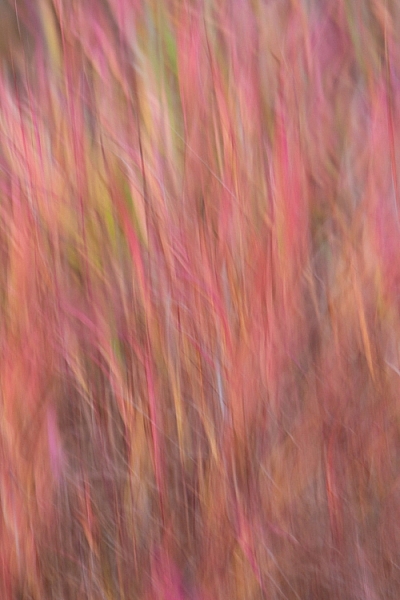
Below are a couple of examples using a patch of autumn foliage. In the first (below left), I moved the camera slowly, while the second (below right) is a quicker motion:

AK-FAI-autumn-blur-abstract-11 An abstract blur of Fireweed, Fairbanks, Alaska, in autumn.

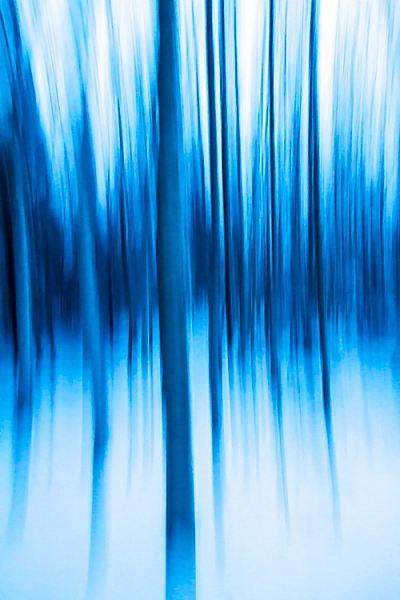
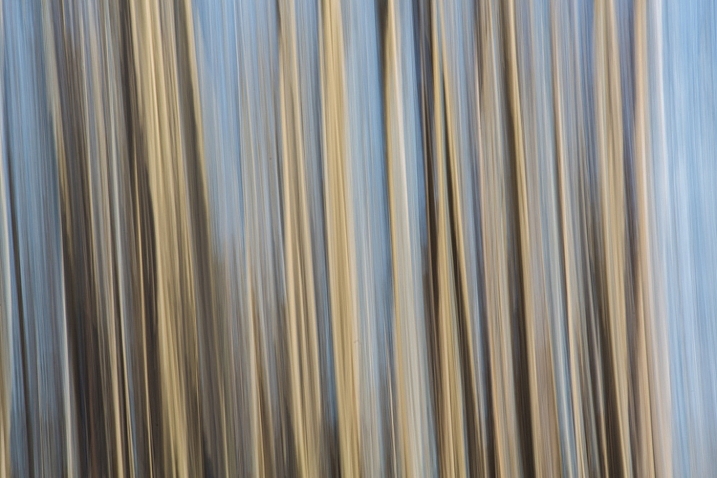
Linear patterns, like the fireweed stems I noted above, or trunks of trees, make great subjects for this kind of image. Below are two interpretations of a forest. The first of these images was made during the blue hour of a snowy winter morning, the second is a very fast vertical pan of cottonwoods, on a bright spring day.

AK-FAI-winter-abstract-6
AK-FAI-CreamersField-abstract-104284-25

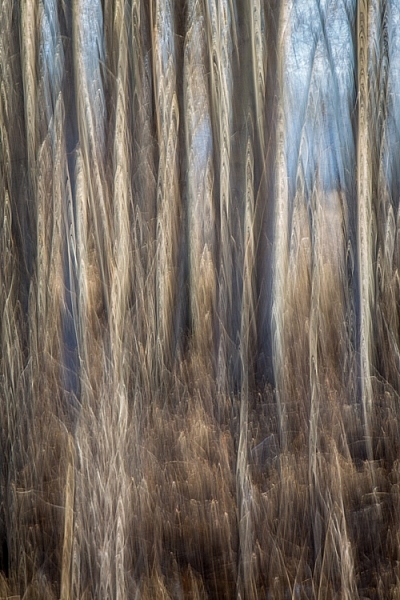
You can also experiment with jiggling the camera as I did in the image below. The results can be very painting-like, and are quite unlike any other type of image I know how to create.

AK-FAI-CreamersField-abstract-104284-33
Zoom Blurs

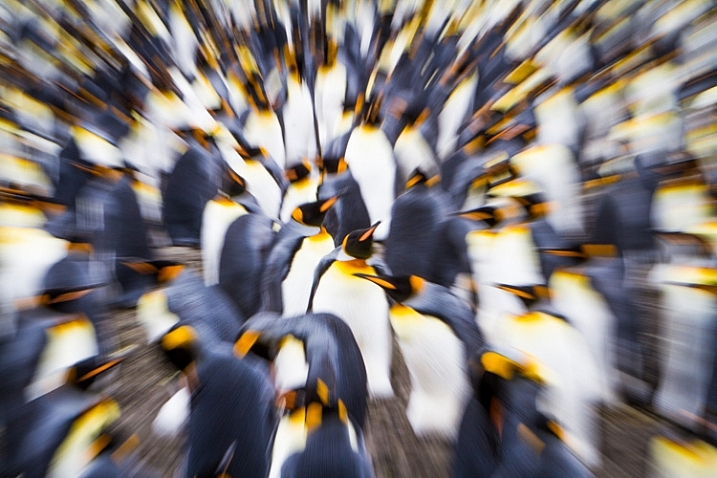
A zoom blur, as is obvious from the name, requires a zoom lens to execute. The result is an image that appears to blur outward, from a comparatively sharp center point. Often, it gives the impression of forward motion, or viewing the subject down a long tunnel of color and pattern. Bright subjects, like flowers, often work well. When done properly, this technique yields an image that is a celebration of color.

AK-Girdwood-fireweed-abstract-3

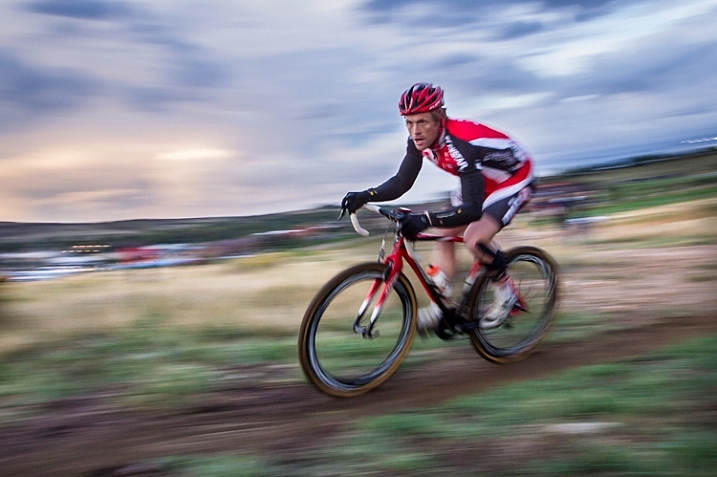
Just as you need the camera in constant motion to create an effective panning blur, you’ll need to make sure the zoom is activated throughout the exposure. Try 1/10th second as a starting point. I’ve experimented with this technique in a variety of situations, even on a colony of King Penguins (below), where I think the technique emphasizes the chaos and noise of the tightly packed birds. It can also be effective for portraying motion, as I did in the image of the mountain biker (second image below). For this image I used a small zooming motion, instead of a dramatic pull back, as the cyclist approached me.

SGeorgia-9Jan10-SalisburyPlains-53
AK-FAI-GoldstreamSports-Sep13-121

Subject Blur

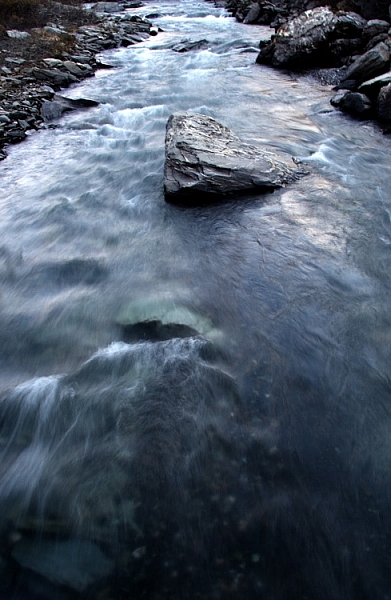
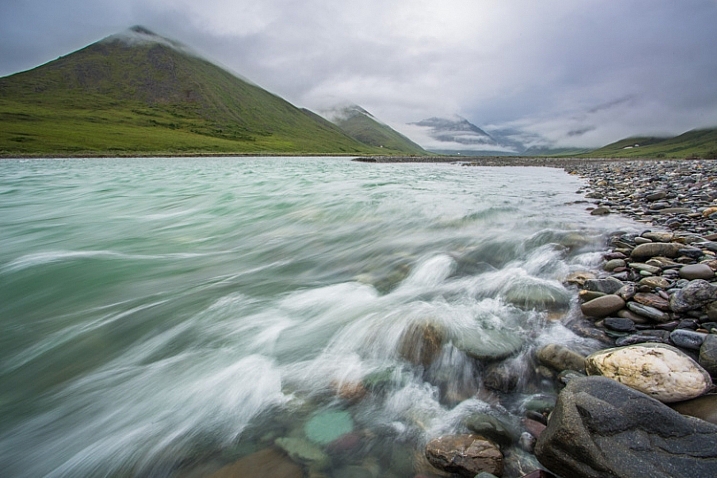
In the techniques I described above, either the camera, the lens, or both must be in motion, but blurs can also be effective when it’s the subject that’s moving. Most landscape photographers will already be familiar with the technique of blurring moving water through the use of a slow shutter speed. This technique requires a tripod to be effective, and composition, unlike in abstract blurs, now plays an important role.

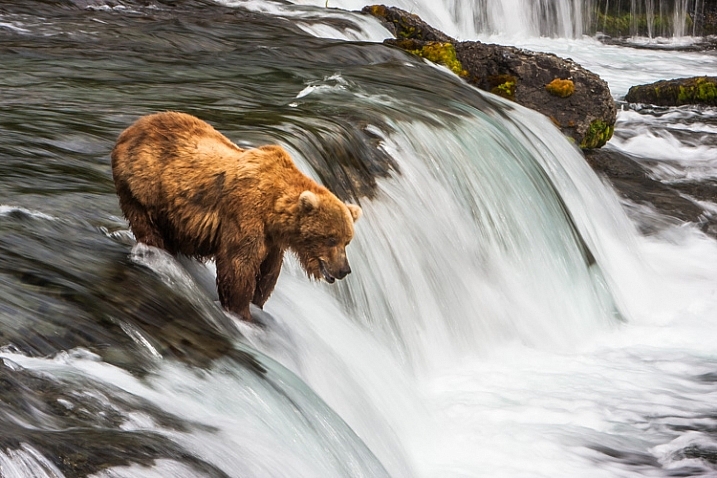
Your shutter speed will dictate how the blur appears in your final image. Slowly moving subjects like rippling waves, may require several seconds to blur, while a fast tumbling creek or waterfall may only need 1/15th second. Experiment, and see what you get. In the two images below, the bear and waterfall required only 1/15 second to blur, while the slower moving creek required nearly a half second.

A Brown Bear fishes for salmon at Brooks Falls in Katmai National Park, AK, USA.

AK-Denpark-Savageriver-01

1/8th second at f16

1/8th second at f16

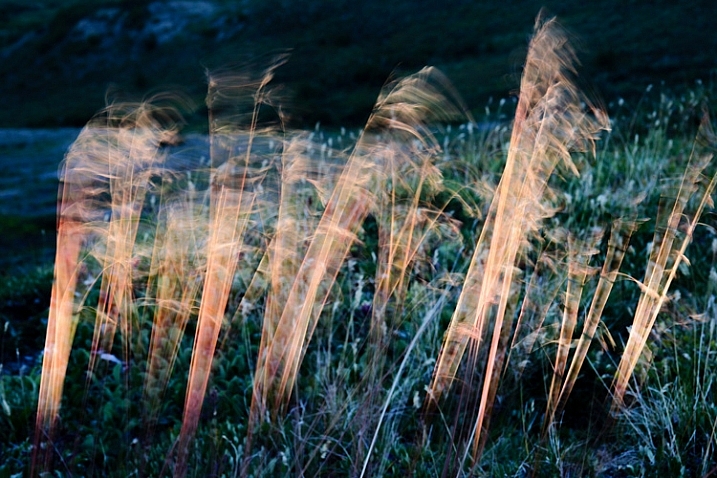
Water is the obvious subject for this kind of photography, but don’t limit yourself. Several years ago, I was hiking atop a ridge in the Alaska Range. It was mid-summer, a few minutes before midnight, and the sun was just setting behind the mountains. It was windy, and tufts of golden tundra grass were waving rapidly back and forth in the breeze. I knew that when the last light of day departed, those tufts of grass would be lit up, and all the rest of the world would be shadowed. Quickly, I set up: tripod placed low, long shutter speed (1/4 second), and waited. Sure enough, for just a moment, the only thing lit by the sun was the blowing grass stems:

Blowing tundra grass lit by evening sun, Alaska.

Action Blurs

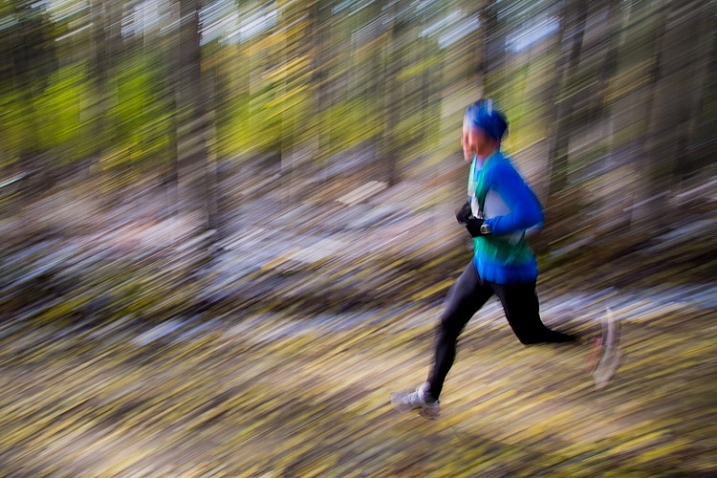
This last technique is frequently used to give the impression of movement and speed, and is often used in sports and wildlife photography. There are two flavors of action blurs. The first is when the camera is panned to track a moving subject. This results in an image with a sharp, or semi-sharp subject, and blurred background like the image below.

AK-FAI-Equinox-marathon-109203-3

The second is when the camera is still, and the subject is in motion. The outcome is a blurred subject, with a sharp background. Both result in an image that clearly tells the story of motion.

AK-FAI-GoldstreamSports-Sep13-128

Results using this technique are hard to predict. The combination of long shutter speeds, and moving cameras and subjects, can result in many failed images. But when it works, the results can be awesome.

CO-Golden-Cyclocross-26Sep2012-87

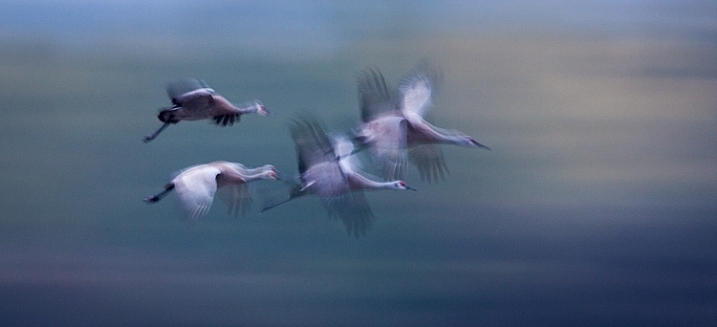
Rapidly moving subjects may require only 1/60th of second (or faster) to provide blurred motion, but slow subjects may need substantially longer shutter speeds. It’s a game of trial and error. Running and cycling races, or other sporting events, are great places to practice the technique, as you can shoot again and again while experimenting with different shutter speeds. Once you’ve mastered the method, you can break it out on higher stakes subjects like fast moving wildlife, where you may only get one opportunity to get the shot.

AK-FAI-CreamersField-Migration-Aug2009-54

Go out and experiment. Blurs, be they abstract, impressionist, or realistic, can be great fun to play with. For me, it’s a fallback technique when I need to jumpstart my creativity.

Have you tried making blurs? I’d love to see what you get. Feel free to post them in the comments below.

googletag.cmd.push(function() {
tablet_slots.push( googletag.defineSlot( “/1005424/_dPSv4_tab-all-article-bottom_(300×250)”, [300, 250], “pb-ad-78623” ).addService( googletag.pubads() ) ); } );

googletag.cmd.push(function() {
mobile_slots.push( googletag.defineSlot( “/1005424/_dPSv4_mob-all-article-bottom_(300×250)”, [300, 250], “pb-ad-78158” ).addService( googletag.pubads() ) ); } );

The post Intentional Blur- How to Create it and Why it’s Awesome by David Shaw appeared first on Digital Photography School.


Digital Photography School

 
Comments Off on Intentional Blur- How to Create it and Why it’s Awesome

Posted in Photography


How tough can it be? LensRentals looks at why it’s so hard to make lenses

11 Feb
Just check it and fix it, it can’t be that hard. Can it?

Why can’t you just make them better? It sounds like a reasonable question until you start unpacking exactly what it entails. This is exactly what Roger Cicala and company do in the latest LensRentals blog post. As usual with Cicala’s posts, the closer he looks, the more complicated the question becomes. So why can’t everyone just (repeatably and affordably) make lenses, you know… better?

With his usual critical (and somewhat wry) eye, Cicala looks at the importance and challenges of quality assurance (the processes to ensure you build things to standard) as well as quality control (checking that you’ve done so). This includes a look at the impacts of design tolerances, manufacturing tolerances, repeatability and the need to make products affordably-enough that people will be willing to buy them. And just what can you do with the ones that aren’t quite right?

It’s a long article but if you’ve ever wondered why they don’t just check and fix every lens as the last step of the production line, or you’ve found yourself using the phrase ‘you get what you pay for’ and you’d like to understand why it’s often true, it’s well worth a read.

And, if you get a chance to read it all, we’d love to know whether you end up more impressed by Leica’s ability to make expensive, mechanically simple, manual focus single-focal-length lenses really well or by the ability of the big brands to build collapsable, image stabilized kit zooms for next-to-nothing and have them work at all. Let us know in the comments.

Articles: Digital Photography Review (dpreview.com)
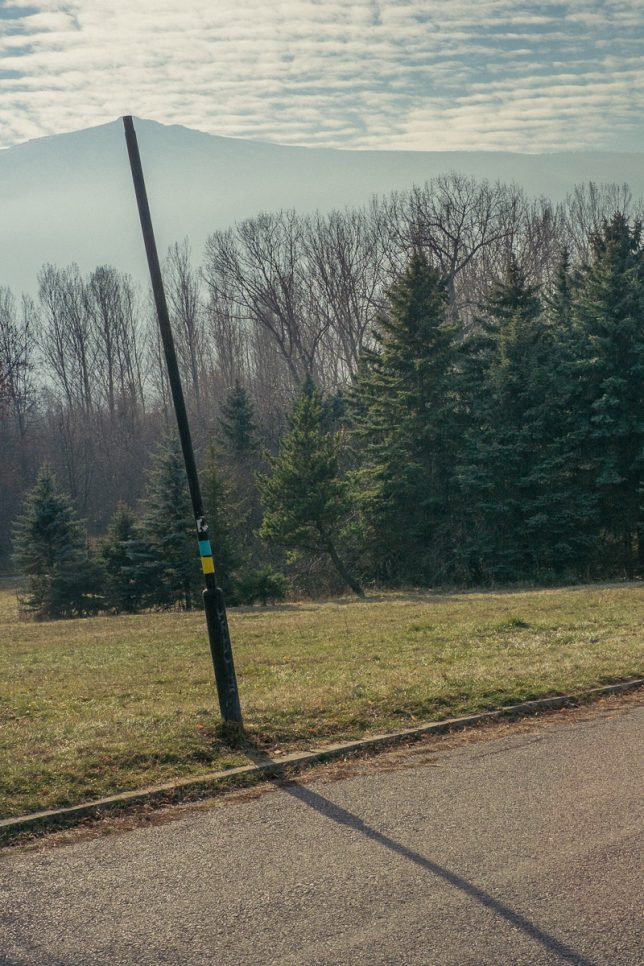
 
Comments Off on How tough can it be? LensRentals looks at why it’s so hard to make lenses

Posted in Uncategorized


It’s the little things: Nikon Small World Photomicrography Competition winners

17 Oct

Thirty years after it first began, the Nikon International Small World Competition continues to highlight outstanding photography of the invisible world right in front of our eyes – the world captured by photomicrography. The competition is open to professionals and amateurs alike worldwide, and first prize nets the winner $ 3,000 toward the Nikon gear of their choosing. Read more

Articles: Digital Photography Review (dpreview.com)
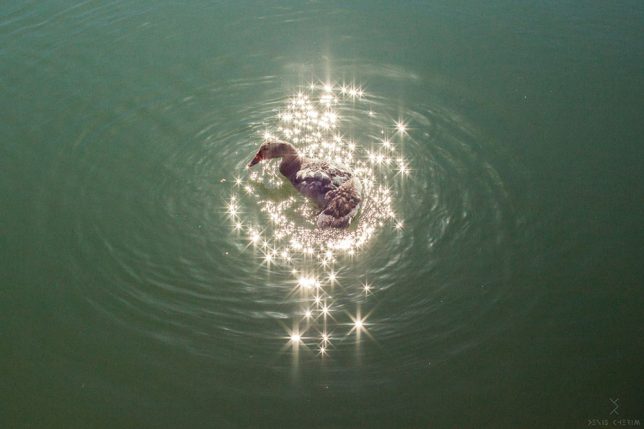
 
Comments Off on It’s the little things: Nikon Small World Photomicrography Competition winners

Posted in Uncategorized


It’s Finally Fall! Check Out Our Festive Faves.

05 Oct

Fall has arrived. How stoked are you to start photographing those fall colors, chunky knits and steaming cuppas?

We are so ready. So we’ve raked together all the best fall goodies from our shop, and blog, to share with you. Check ’em out!

(…)
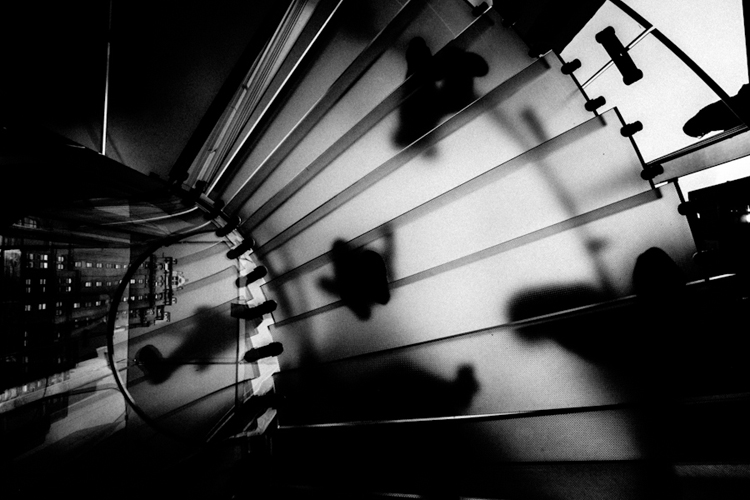
Read the rest of It’s Finally Fall! Check Out Our Festive Faves. (0 words)


© Erin for Photojojo, 2015. |
Permalink |
No comment |
Add to
del.icio.us

Post tags:


Photojojo

 
Comments Off on It’s Finally Fall! Check Out Our Festive Faves.

Posted in Equipment


Brace Yourself, it’s Time for Back to School!

31 Aug

Headed back to school, or know someone who is? Well, it’s time to prep yourself for the most photogenic year ever!

Check out our list of school supplies that are sure to put the cool in Back to School.

(…)
Read the rest of Brace Yourself, it’s Time for Back to School! (22 words)


© Erin for Photojojo, 2015. |
Permalink |
No comment |
Add to
del.icio.us

Post tags:


Photojojo

 
Comments Off on Brace Yourself, it’s Time for Back to School!

Posted in Equipment