RSS
 

Posts Tagged ‘It’s’

Why it’s Important to Have a Good Relationship With Your Camera

12 Nov

I don’t like upgrading my camera; I’m rather content with the old one I have. I’m not one to worry so much now about the changes in technology. These days it seems there’s nothing really new under the sun. My trusty Nikon D800 is like a close friend, we have a good relationship.

The Importance of Having a Good Relationship With Your Camera

The advancements in camera technology have now slowed down and we already have more than enough megapixels to overflow our hard drives. So in my opinion, being content with a (slightly) older camera can help improve your photography more than if you are continually hankering for an upgrade.

Is your camera good enough?

Recently we had a customer on one of our photography workshops tell us they’d bought a few new lenses and were happy with them and next they wanted to upgrade their camera. I pointed out the camera they already have is way more advanced and can produce higher resolution photographs than most of the cameras I have ever used, (over the last 35 years I have used quite a few).

The Importance of Having a Good Relationship With Your Camera

My wife also loves her Nikon D800.

Having a close relationship with my camera is important to me. We need to know each other. The feeling I have for my camera enables me to obtain more interesting, dynamic, and relational photographs than I could make if I was using a brand new camera, (especially if was a brand of equipment with which I am not familiar). Having such a close and good relationship with your camera will make you a better photographer.

Use your camera with ease

If you can get to know your camera so well that you don’t have to consciously think every time you want to change a setting, you will have more energy to focus on your subject and the creative aspects of picture making. Being able to enjoy photography without your camera being the main focus of your attention is far more conducive to making great photos than having a brand new camera that you are unfamiliar with.

The keys to any good relationship are:

  • Compatibility
  • Frequent connection
  • Meaningful communication
  • Positive feelings

The Importance of Having a Good Relationship With Your Camera

Working with a camera you are just not comfortable with will not result in a good relationship. If you have small hands and your camera is large, you will struggle to operate it easily and it will be uncomfortable for you to hold. Likewise, if you have large hands and a small camera you will not find the experience of making photos as pleasurable as when you have a camera that suits you better.

If you find the controls awkward to manage, the image resolution disappointing, etc., you might want to consider a camera that’s more compatible. However, most cameras these days are well designed and crammed full of technology that produces incredible quality images. So you are probably better off committing more time to getting to know your current camera better.

Use your camera often

Frequent connection with your camera, as with your friends, will produce a richer relationship, especially when it’s a meaningful connection. Finding a subject, a location, or style of photography you really enjoy will ensure you want to spend more time with your camera in your hands.

This can take time, and can change over time, but when you have a passion for something or someone you naturally want to dedicate more of your time to that relationship.

The Importance of Having a Good Relationship With Your Camera

When you are so familiar with your camera that your attention is more focused on your subject, the timing, composition, and lighting, you will find a far greater enjoyment in photography. You will also likely see a big improvement in the photos you are producing.

Know your craft

In our modern consumer societies you are constantly reminded by advertisers there’s something else you must buy. I believe if you constantly upgrade you are potentially missing out on the depth of artistry that can be achieved by being intimate with your camera and your craft.

The Importance of Having a Good Relationship With Your Camera

A while ago I had a wonderful experience photographing two men putting finishing touches to some beautiful artworks. I was in the Grand Bazaar in Istanbul looking for the copper workers quarter which I had read about. I spent quite some time searching for it and literally walked around in circles and ended up back at the same place more than once. But I was determined to find this place as I really love making photos of craftspeople working.

Eventually, I heard a “tink tink tink” sound and followed my ears down an ancient arched alleyway. I went up a staircase, and into a courtyard surrounded by two-story buildings with hundreds of pots, pans, lamps and other items all crafted in copper.

The Importance of Having a Good Relationship With Your Camera

I continued farther to the source of the sound and was welcomed into a small workshop. With no common language, I gestured to my camera and received a thumbs up for me to take photographs there. The two men working on the art pieces were being watched by an older man, (I learned he was the father of one and uncle of the other.)

Another man arrived after a while and some discussion took place. That man was a customer coming to buy their art and he spoke some English. I asked him to help me because I had a question. How long, how many generations, had this family been working with copper and creating such art?

The lost art of generations

My question was translated and a long discussion ensued. Then all three family members looked at me and shrugged. They did not know. Their families have been copper craftsmen for so long and been passing on the skills of this lifestyle so long that nobody knew the answer to my question.

I was not surprised. Looking at what they were producing and at the pride on the older man’s face, it was evident they were not novices. They know their craft and their tools so well they made it look like what they were doing was somewhat effortless. But this is the result of a generations-long relationship with their materials and tools, (some of which may be generations old) frequent use of them, and an obvious passion for what they do.

The Importance of Having a Good Relationship With Your Camera

Conclusion

For more on loving your camera, watch the video below:

As you are pushed to spend money, rather than time, on your creative photographic expression, I believe you are in danger of losing touch with the depth and meaning that can be obtained by a more conscious connection with the camera you already own.

So if you are tempted to upgrade your camera let me encourage you to consider holding on to the one you already have for a while. Learn to love it and you will see the results in an improvement in your picture making.

The post Why it’s Important to Have a Good Relationship With Your Camera by Kevin Landwer-Johan appeared first on Digital Photography School.


Digital Photography School

 
Comments Off on Why it’s Important to Have a Good Relationship With Your Camera

Posted in Photography


Why it’s a Good Idea to Take Lots of Photos

05 Nov

Take lots of photos. Lots and lots of photos. Make mistakes. Lots of them. The more photos you take and the more mistakes you make, the better the photographer you will become.

I’m not encouraging you to blaze away with your camera like you’ve got a machine gun and are an actor in a B-grade action movie, you won’t improve your photography doing that. You need to carefully consider many aspects of what you are doing and make sure every frame you shoot is different than the previous one.

Why it's a Good Idea to Take Lots of Photos

Increase your odds

Whether you’re photographing your kid’s birthday party, a street protest, graduation portrait or studio product shot for your website, there’s always a multitude of variables. Taking minimal photos is going to reduce your chances of success.

Varying the composition, timing, and exposure for each picture you take will give you more options when you come to edit your photos and choose the best of them.

Vary the composition and move around

Even the slightest changes in composition can produce significantly different photos. So if you only take one or two frames without moving your camera you might be missing the best angle.

Why it's a Good Idea to Take Lots of Photos

Small variations in composition can make a significant difference.

Moving your position from side to side and up and down, even just slightly, or adjusting the focal length when you are shooting a static subject will provide you with a series of different images.

Then later, when you’re editing, you will have the benefit of multiple different photos to choose from.

Moving subjects

Why it's a Good Idea to Take Lots of Photos

Taking a series of photos when one or more elements in your composition are moving gives different results.

When photographing a moving subject it’s always best to take lots of photos. As the location of your subject changes the dynamic of the photo can be varied in many ways. The relationship of your subject to the background will alter, for better or for worse.

The distance between your subject and your camera may change, possibly resulting in an out of focus photo. When your subject is moving, their position within your frame will be different from moment to moment. So it makes good sense to take a series of images, rather than just one or two.

Timing the moments you choose to make an exposure has a major impact on the outcome of your photo, especially when you have more than one element in your composition that’s moving. If you limit the number of photos you make you will risk the missing the best opportunity.

Continuous shooting mode

Why it's a Good Idea to Take Lots of Photos

In many situations, holding the shutter release button down with your camera set to continuous shooting (burst) mode will not often give you the best results unless you carefully consider your actions.

If you are observant and know your subject, taking time to track the action and choosing the moments you make your exposures will give you better results. Use continuous shooting mode carefully when you need it, otherwise, you will be trying to choose your best photos later from a myriad of exposures with insignificant differences.

Exposure variations

Why it's a Good Idea to Take Lots of Photos

Experiment with exposure settings.

Experimenting with different exposure setting is another good way to produce an interesting variety of images of the same subject, especially if the contrast range in your composition is broad.

If you prefer making photos using one of your camera’s auto modes, make a few exposures like that, then switch to Manual mode. Make more photos, adjusting the exposure slightly for each one.

By taking exposure meter readings from different locations with your camera’s spot meter and adjusting your settings accordingly, it can give you a range of more diverse photos than you would have if you only use an automatic exposure mode.

It’s all in the details

Why it's a Good Idea to Take Lots of Photos

Recomposing slightly avoided the bright line connecting with the flower.

Paying attention to detail when you are photographing can make the biggest difference in achieving fabulous photos or just mediocre ones. Taking your time to carefully observe the elements within your frame as you line up your camera to take a photo is essential.

Watch for changes to the light that will affect your exposure. Watch for movement and make deliberate adjustments to your composition. These are all ways that will add depth and an extra dynamic to your photography. However, if you are simply not taking enough photos you are truly limiting your opportunities to be making your best photographs.

Oftentimes the first angle you think of and photograph will not be the best. And, if you only make one or two exposures, you will not get the best photograph. The second composition you choose may be smarter, but all the smart people will do the same. The third step you make with your camera angle, composition, timing, etc., will likely give you a more pleasing, unique result and even lead to more inspired choices for subsequent frames.

Why it's a Good Idea to Take Lots of Photos

Over to you

By taking your time, observing carefully, and considering the various options of how you can set your exposure and frame your subject – it will give you an opportunity to get a diverse range of photos.

Time your exposures so the action is at its peak and your composition works. Then making variations on your choices will return you considerably more options of good photos to choose from. If you just make one or two exposures without making any changes it’s highly possible you will be missing out on making the best photographs possible. So always take lots of photos.

The post Why it’s a Good Idea to Take Lots of Photos by Kevin Landwer-Johan appeared first on Digital Photography School.


Digital Photography School

 
Comments Off on Why it’s a Good Idea to Take Lots of Photos

Posted in Photography


Macphun has changed its name to ‘Skylum’ now that it’s not Mac-only

02 Nov

Macphun—the Mac-based software company that launched about seven years ago—branched out onto the Windows platform this year with the debut of its HDR and Luminar products for PC. In light of that, Macphun has decided to change its name to the platform-agnostic moniker Skylum, explaining in a blog post that, “we think that this name is a better fit, since we’re no longer a Mac-only developer.”

The company will fully transition to the Skylum name in early 2018.

Articles: Digital Photography Review (dpreview.com)

 
Comments Off on Macphun has changed its name to ‘Skylum’ now that it’s not Mac-only

Posted in Uncategorized


The D850 is Nikon’s best video camera yet, but it’s not ideal for beginners

23 Oct

What’s it like to use D850 as a video camera?

Despite there being a mirror between the sensor and the thing you’re trying to film, the D850 is a pretty capable video camera

SLRs weren’t really designed for video but, thanks to the pioneering work of the Canon 5D Mark II, it’s increasingly expected to be a feature they offer. Nikon has struggled more than its big rival in this respect, not helped by a reliance on contrast detect AF and a lens mount designed around the assumption that you’d never need to change aperture while taking a shot. It’s also been somewhat held back by not having a camcorder or broadcast equipment division to lean on during the development process.

Despite all these hurdles, the D850 is the company’s most capable video camera yet, with 4K capture taken from the full width of the sensor. But how videographer-friendly is accessing this capability? And, just as importantly for this do-everything super camera, what’s it like to use for stills shooters, such as wedding photographers and photojournalists who’re increasingly being asked to capture clips as well as stills?

Features

Beyond the headline specs: 4K UHD capture from the full sensor width or 1.5x crop and slow mo 1080 from 120 fps capture, Nikon has added a host of features to make video capture easier.

The most obvious of these features is the addition of focus peaking to help indicate the plane of focus as you shoot. As is fairly common, there are three settings for peaking intensity and a choice of four colors. In addition, there’s a zebra-style highlight warning for setting exposure. But, as we’ll see, having a feature and having it well implemented are not always the same thing.

Having a feature and having it well implemented are not always the same thing

Other features include a Flat Picture Control color profile, which uses a low-contrast tone curve to avoid clipping to black as aggressively as the standard stills profiles do. Some users have tried to create Log or psuedo-Log profiles using Nikon’s Picture Control Utility software, but we’ve not had a chance to test any of these yet, and we’ve not heard of any attempts to build LUTs to simplify the grading process.

There are some other nice touches, too. The camera records its starting aperture and ISO setting along with other shooting metadata such as Picture Style and D-Lighting setting with each clip. This is something you take for granted as a stills shooter, but without any widely-adopted equivalent of the EXIF standard, it’s still pretty rare for the kinds of hybrid stills/video cameras we usually encounter.

The experience

The experience doesn’t always live up to the promise that this list of video-friendly features might imply. Sadly, it’s the headline features that fail first.

The D850 has focus peaking but it can’t be used when you’re shooting 4K. Or when you’re using electronic stabilization. Or Slo-Mo mode. Or when you’ve got highlight warnings engaged. Or in combination with Active D-Lighting. Which, in my experience, isn’t that different from not having focus peaking at all.

The highlight warnings are a lot better. They’re easily engaged* via the touchscreen and persist across the different view modes (grid view, histogram, audio meters, virtual horizon) as you cycle through them. They’re fairly simplistic, though, only indicating areas brighter than the threshold, so they can’t be set to indicate regions that are roughly 75% for Caucasian skin tones, for instance. Also, this threshold is specified in 8-bit brightness values, not IRE %, as is more common.

Then, of course, there’s video autofocus, which is every bit as bad as you’d expect of a system designed around contrast detection using lenses that weren’t. It’s jumpy and indecisive, even when asked to pull focus between two stationary objects.

However, the touchscreen access to many key settings is very good, allowing you to adjust the audio capture on-the-fly without the need for any noise or vibration-creating button presses.

Better still is the option to use the two buttons on the camera’s front plate to adjust either exposure compensation (if you’re using Auto ISO to maintain brightness in manual exposure mode) or Power Aperture, the smooth, motor-driven aperture control mode. These buttons are easily accessible as you shoot, without causing too much camera shake.

What does this end up meaning?

For experienced videographers, none of these are issues you can’t work around to one degree or another. Planning shots to minimize the need to refocus or ‘blocking’ a shot so that any movement is predictable are pretty basic techniques. When working this way, using magnified live view or tap-to-focus single AF to set initial focus then using the lens distance scale to judge movement may be enough.

Alternatively, adding on an external recorder will often bring much more powerful versions of Zebra and Peaking tools where the D850 fumbles, as well as features such as waveforms and false color that are vanishingly rare on hybrid cameras anyway.

Videographers are likely to appreciate the features gained from Nikon’s well-polished stills interface

The camera’s HDMI output is limited to an 8-bit 4:2:2 stream, so there won’t be a big hike in quality, but the videographer willing to experiment with homebrew Log-like profiles will no doubt find it a very capable camera. Ultimately, the D850’s video quality is easily good enough to make these sorts of workarounds worthwhile.

Videographers are also likely to appreciate the degree to which the video side of the camera has gained from Nikon’s well-polished stills interface. Hold the ISO button and the rear dial changes ISO while the front toggles Auto ISO, hold the WB button down when one of the camera’s 6 (!) Custom WB values is selected and you can set a new custom value at the tap of the rear controller. It’s pretty slick when you’re out and shooting.

For stills shooters

For the less experienced video shooter the D850 is likely to be quite a handful, though. Without usable autofocus, you’ll need to learn how to manual focus and minimize the need to, to work around the camera’s shortcomings. This makes it challenging for anyone who can’t control or choreograph the action, which is likely to include exactly the sort of wedding photographers and photojournalists who might be attracted to the D850.

However, you won’t need to learn too much about video exposure in order to make use of highlight warnings and the simple aperture control on the camera, beyond basics such as the 180 degree shutter ‘rule.’

This is helped by at least one feature we’ve been requesting for many years: the camera retains two banks of shooting settings, one for stills, one for video. This means you can specify a custom white balance and color profile and choose exposure settings (including ISO behavior) for video, then jump back to your stills settings at a moment’s notice.

In a clever piece of design, you can even define a button let you check your stills settings, while you’re shooting movies, so you need never be caught out. But this two-setting design is perfect for wedding shooters, who can hit the shutter button to shoot a grabbed still, fractions of a second after capturing some video footage, without the risk of everything looking, well, a bit Flat.

It’s also worth noting that the “e-stabilizer” mode that’s available when shooting 1080 footage is very impressive, making on-the-go handheld shooting a realistic proposition. Better still, its resolution is near indistinguishable from the unstabilized variety, so you can shoot both and intercut at will.

Overall, then, there’s a lot to like about the D850 and Nikon deserves recognition for putting a lot of thought and effort into making its video capture better. However, it does little to make video any easier to shoot for video novices in a way that Canon’s Dual Pixel AF system does. For now, at least, you still need to build up plenty of videography experience to work your way around the D850’s wobbly AF and occasional quirks.


Articles: Digital Photography Review (dpreview.com)

 
Comments Off on The D850 is Nikon’s best video camera yet, but it’s not ideal for beginners

Posted in Uncategorized


3 Times it’s Okay to Consider Offering Free Sessions

20 Oct

If you’ve made the transition from a hobbyist photographer to a part-time or full-time professional photographer, chances are that you’ve spent a lot of time thinking about your pricing. You’ve likely looked over your cost of doing business and the cost of goods sold. You’ve probably had to have some difficult conversations with friends and family members establishing that you can’t work for free.

These are all really important parts of starting (and maintaining) a photography business. However, it’s also just as important to sit down and identify some instances in which you would consider donating your services. In this article, we’ll talk about three times you might consider offering free sessions or options at a reduced rate.

3 Times it's Okay to Consider Offering Free Sessions

1. New Technique or Gear

If you’ve always wanted to try newborn photography, it might make sense to offer reduced rate or free sessions. This will help you build your portfolio while perfecting your technique at the same time. Let’s be clear–offering free sessions shouldn’t replace classes and workshops designed to teach you proper technique and safety. Instead, you should consider offering free or discounted sessions after taking a class or workshop in order to implement the new techniques you’ve learned.

Learning Newborn Photography - 3 Times it's Okay to Consider Offering Free Sessions

Similarly, if you want to break into wedding photography, it might make sense to offer to assist a local wedding photographer for free. You’ll learn a lot by watching the primary photographer manage the flow of the day and seeing how they interact with the bride, groom, and guests. Additionally, depending on your contract, you may even end up with images that you can use as part of your own portfolio.

3 Times it's Okay to Consider Offering Free Sessions

Likewise, if you’ve just upgraded from a crop sensor to a full frame camera, you’ll probably want to take that equipment for a test drive before using it with a paying client. It may very well be that you can get your bearings photographing your kids in your own backyard. However, depending on the genre of photography you specialize in, it might make more sense to put out a model call on social media and offer a mini session that will allow you to put your new gear to the test in a low stakes environment.

Learning Newborn Photography - 3 Times it's Okay to Consider Offering Free Sessions

2. For a Creative Photography Project

I spend most of my time photographing newborns, children, and families. As a young mom myself, I really love that genre of photography and feel passionate about helping families preserve their memories.

That said, because I spend so much time photographing people, I make a concerted effort to take on a creative photography project that doesn’t involve people at least once a year. Sometimes, that may mean begging a winery to let me come photograph their grapes after hours in exchange for allowing them to use the images on social media.

3 Times it's Okay to Consider Offering Free Sessions

Other times, it has meant asking a local photographer for half an hour to pick his brain about astrophotography in exchange for snapping a photo of his family for their annual Christmas card. For me, the point isn’t to actually become an astrophotographer. Lord knows this image isn’t winning any astrophotography awards anytime soon, and it feels really uncomfortable to share something publicly that isn’t perfect.

But the point isn’t to be perfect with a creative project. The point is to stretch yourself in ways that you normally don’t, realizing that sometimes the journey is more important than the final destination.

3 Times it's Okay to Consider Offering Free Sessions

Ideas for your project

Perhaps you are already an award-winning astrophotographer, and you’d really like to stretch yourself by doing some child or family photography. Consider asking a friend if they’ll meet you at a park to try photographing them and their children. Try snapping a few images at your nephew’s next soccer game. Ask a friend that loves to bake if you could photograph the next cheesecake he or she makes. The point is that you’ll never grow as a photographer if you don’t take risks. Similarly, it can feel easier to take risks and do something new if you’re not being paid–there’s really nothing to lose.

The point is that you’ll never grow as a photographer if you don’t take risks. Similarly, it can feel easier to take risks and do something new if you’re not being paid–there’s really nothing to lose.

3 Times it's Okay to Consider Offering Free Sessions

3. Partner With a Non-profit You Care About

You’ve probably already been asked to donate a photo session to a non-profit’s fundraiser or auction. This is a great way to give back to the community, and it’s not my intention to discourage you from doing so. However, more and more frequently I’m finding that donating my services directly to the non-profits that I care about is an even more rewarding way to stretch my creative ability and become involved in my community at the same time. Perhaps, instead of donating a session gift certificate, offer to come photograph the office staff, an event the non-profit is holding, or the population that the non-profit serves.

Perhaps, instead of donating a session gift certificate, offer to come photograph the office staff, an event the non-profit is holding, or the population that the organization serves.

3 Times it's Okay to Consider Offering Free Sessions

In doing so, you will likely learn more about the organization itself, their mission, and the community as a whole. Your local humane society would probably love images of the animals in their care. A nearby NICU may be completely blown away by the offer to come photograph the families and babies they serve. Your child’s school may love abstract photography of kids that they could hang on their walls or use as reminder postcards. If you’re religious, your church would probably love photos of their upcoming baptisms or other special religious ceremonies.

Serve your community

This sort of partnership isn’t about parlaying the non-profit organizations into future clients. Rather, it is about using your time and talent to bless others in your community. There are opportunities to use your gifts and talents to make the world better–use them.

Sometimes the things that a non-profit may ask for may be completely outside of your normal wheelhouse. You may have to tell them that you don’t think you’d be the best person for the job they have in mind. Other times, you may feel comfortable telling them that though their idea is outside your normal wheelhouse, you’d be happy to give it a try. Both responses are absolutely okay, but I’ve never regretted trying an unusual request that a non-profit has given me!

3 Times it's Okay to Consider Offering Free Sessions

Conclusion

Have you identified instances in which you will consider offering reduced rate or free sessions? Do you partner with any local non-profits in order to give back? Chime in below and tell us about your experiences.

The post 3 Times it’s Okay to Consider Offering Free Sessions by Meredith Clark appeared first on Digital Photography School.


Digital Photography School

 
Comments Off on 3 Times it’s Okay to Consider Offering Free Sessions

Posted in Photography


Landscape Photography: It’s All About the Light

16 Oct

There are many tools that photographers use for creating compelling landscape photography, but some fail to realize that light is the most important element. We only shoot in those magic hours when the sun’s rays hit our subject at an angle to create a warm glow.

Landscape Photography: It's All About the Light

What many people don’t realize is that there are lots of different types of light that can affect the quality of your landscape images. How you approach this light will make a huge difference in the quality of your photographic portfolio. Let’s get started and talk about a few of our favorite examples of beautiful light.

That magic time for landscapes, of course, is sunrise and sunset, but specifically what other types of light will make or break your images?

Reflected Light

Zion-Narrows- Reflected Light Landscape Photography: It's All About the Light

This picture was taken on one of our expeditions to Zion National Park in Utah. Part of the beauty and excitement of this trip is strapping on your water shoes, grabbing your hiking stick and wading through the river to get some amazing shots.

Reflected light, which can also be called bounced or diffused light occurs when there is direct sunlight reflected off an adjacent surface. The canyons in the Southwest are perfect for this type of light as the color of the canyon is bounced back and reflected giving a warm glow to the walls. The quality of this light is soft, even, and beautiful.

Overcast Light

Morro-Bay- Overcast Light Landscape Photography: It's All About the Light

Morro Bay on the Central Coast of California has many faces depending on the weather. It’s just as striking in the fog as it is on a beautiful sunny day.

This quality of light is found on overcast and foggy days and is very soft and bluish. The color of this light comes from the whole sky, which acts like one big softbox and in the right situation can be very dramatic.

Backlight

Big-Sur-morning-light Landscape Photography: It's All About the Light

This image was taken in Big Sur, one of our favorite shooting locations. It boasts incredible sunsets, especially in the winter.

A typical backlit picture will have a rim of the sun’s rays around the subject, or you will be able to see the sun as a bright spot in the photograph. If you are using a small aperture, you will be able to get a “sun star” or sun flare effect like this one.

Direct Light

White-Sands-Direct-Light Landscape Photography: It's All About the Light

Because of the reflection of light off the sand, White Sands, New Mexico is an unparalleled photography location.

Direct sunlight is usually found approximately one to two hours after sunrise and one to two hours before sunset. It can be hot and unforgiving while casting strong shadows. This light works great for black and white but can sometimes be overly intense for color photography.

Morning and Evening Horizontal Light

This light is warm and horizontal and is caught during sunrise and sunset. It is horizontal because the sun’s rays are cast at an angle as the sun is rising and setting. This is the prime light for photography due to its combination of low contrast and warm tones. Objects lit directly by this light may seem to glow, as if illuminated from within, with details emerging clearly. Learn to use this light on a regular basis and you will be amazed at the results.

Canadian-Rockies-Morning-Light

The Canadian Rockies in the fall never fails to disappoint us. The crisp mountain air and the deciduous larch trees make this an amazing photographic location.

Open Shade

In landscape photography, open shade consists of areas not lit by direct sunlight. This is very soft light and is common in forested areas. The best part about this type of light is you can shoot all day and still have the benefit of this soft, dreamy light.

Redwood-Forest-Big-Sur

This redwood forest is one of our favorite stops on California’s Big Sur coast.

Combination Light – Direct and Diffused

Here is an example of combination light, both direct and diffused. This was shot on Mt. Whitney in the Eastern Sierra, the highest mountain in the contiguous United States. This image depicts a highly unusual phenomenon. There were rays of morning horizontal sunlight shining from behind us while we were shooting. Only a portion of the mountain was shaded or diffused by the clouds overhead creating a spotlight effect.

Mt-Whitney-Spotlight

This shot was a result of several hours of “waiting for the light” and we were greatly surprised and rewarded for our efforts.

Manmade Light

You don’t really think of manmade light in landscape photography, but here is a great example!

This image was captured on the Big Sur coast at dusk. There were rows of cars waiting to get through a construction site. As the cars were let through, we captured the row of car lights with a long exposure and the camera mounted on a tripod.

Big-Sur-Highway

Photography Exercise

Try shooting the same subject in the exact same location before sunrise and after sunset. Notice the differences in the light? Are the color and tone different? Do the details look different in the light areas and in the shadows? Comment below and let me know how you do. Enjoy!

The post Landscape Photography: It’s All About the Light by Holly Higbee-Jansen appeared first on Digital Photography School.


Digital Photography School

 
Comments Off on Landscape Photography: It’s All About the Light

Posted in Photography


It’s Alive! 14 Algae-Powered Inventions for Food, Light, Energy & Oxygen

04 Oct

[ By SA Rogers in Conceptual & Futuristic & Technology. ]

If we could just get beyond pesky hiccups like catastrophic climate change and wanting to obliterate each other with nuclear weapons, we humans could learn from our mistakes and create a future that’s actually cooler and more sustainable than anything we dreamed up during the 20th century. Making the most of microalgae, one of the most ancient and prolific organisms on earth, we could produce abundant clean energy and healthy foods while also reducing the amount of CO2 in the air and producing more oxygen. These designs show just how this symbiotic process could manifest in our lives.

Living Chandelier Filled with Algae

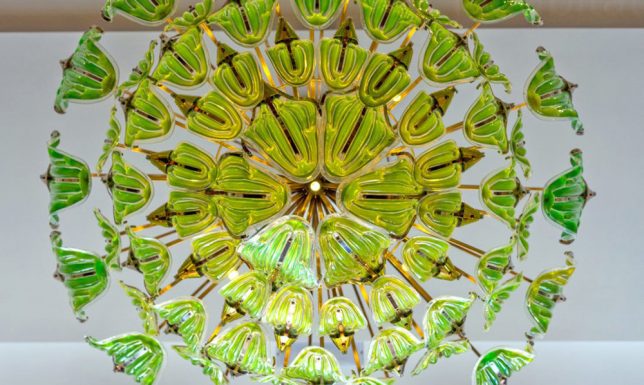
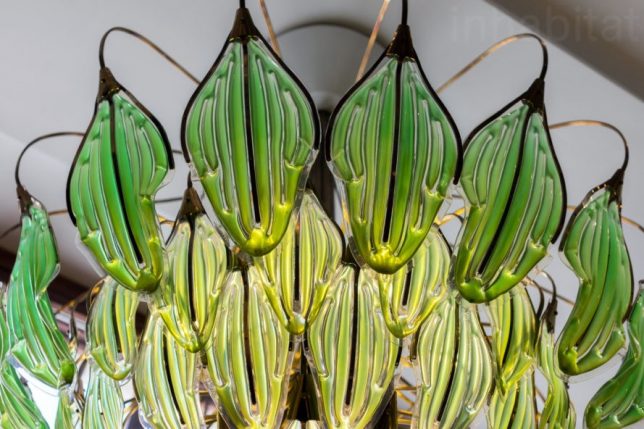
Embedded with LED bulbs and sustained by daylight, ‘Exhale’ by Julian Melchiorri is a living chandelier with beautiful glass components filled with various shades of green algae. The glass ‘leaves’ take in CO2 from the room and release oxygen, too, making it a striking air purifier. Melchiorri is a designer and engineer, but he’s also a leading biochemical technology researcher, and he’s been working on his ‘artificial leaf’ concept for years.

‘Algae Green Loop’ Proposal for Chicago’s Marina City Towers

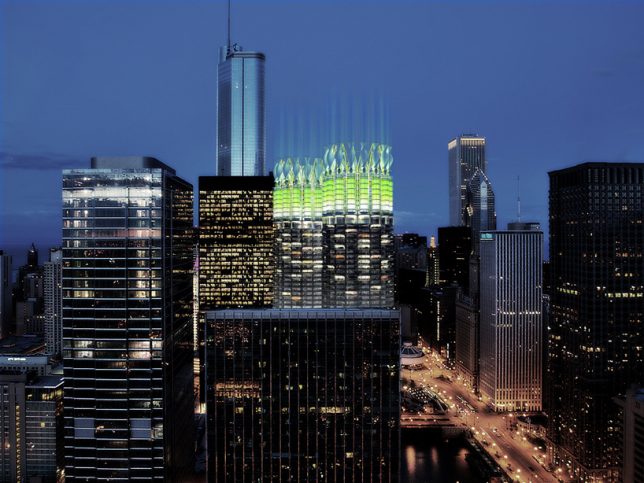
Architecture office Influx Studio imagines a dramatic makeover for the Marina City Towers in Chicago, retrofitting them to absorb CO2 through loops of bioreactors to help mitigate climate change. The closed-loop system sequesters carbon from the air, absorbs it through vegetal photosynthesis and produces its own energy through the same wind turbines that suck in CO2 and through the algae bioreactors that process it.

Photosynthetic Algae Furnishings

[vimeo128654962]

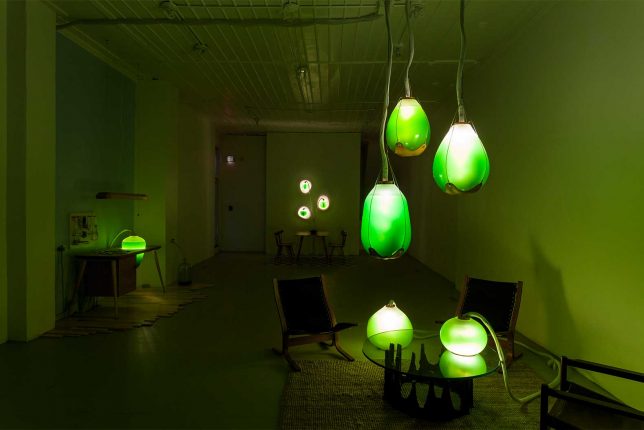
‘Living Things’ is a series of bio-powered furnishings exploring ‘symbiotic living,’ his which micro-algae help light up our homes. Presented in a series of vignettes, the project contains furniture and lamps that are both beautiful and beneficial. “The morphologies of hand-blown glass vessels function both as lighting and heating elements for the human occupants, and high functioning photobioreactors which provide heat, light, agitation, air supply nutrient and waste control to the living algae inside.”

World’s First Algae-Powered Building

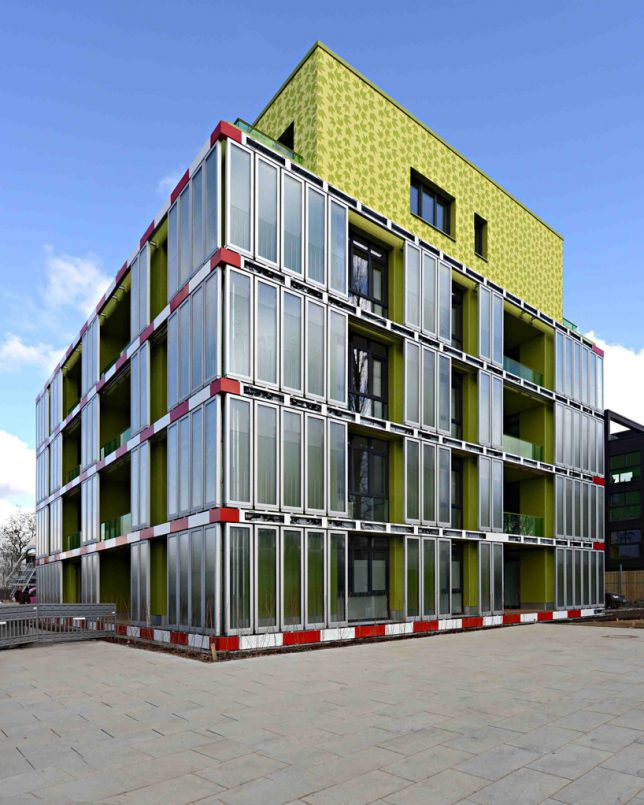
Lots of concepts tout the ability to power an entire building on algae, but have you ever actually seen one built? BIQ House in Hamburg, Germany by Austrian firm Splitterwerk features the world’s first iso-adaptive facade in the form of algae-filled glass panels shading the southeast and southwest faces of the building. The algae is sourced from a nearby tributary of the Elbe River and constantly changes color as it grows. The panes produce biomass as the algae multiplies, and reduce the amount of energy needed for cooling inside the building.

Living Portraits Made with Microscopic Algae

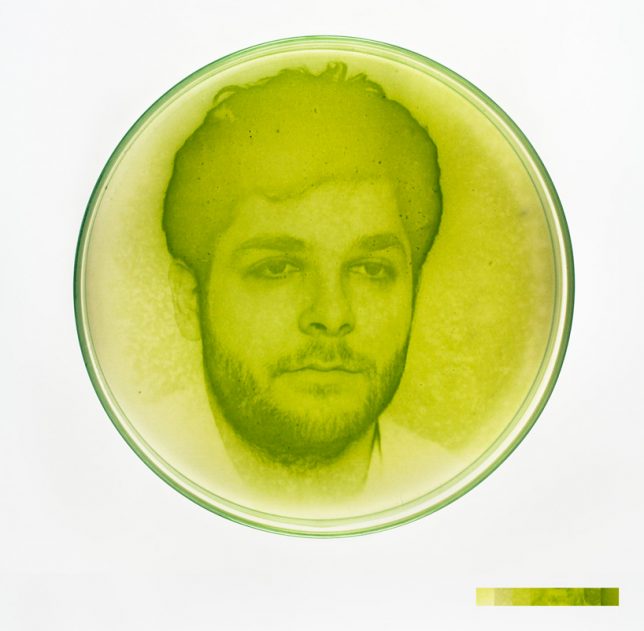
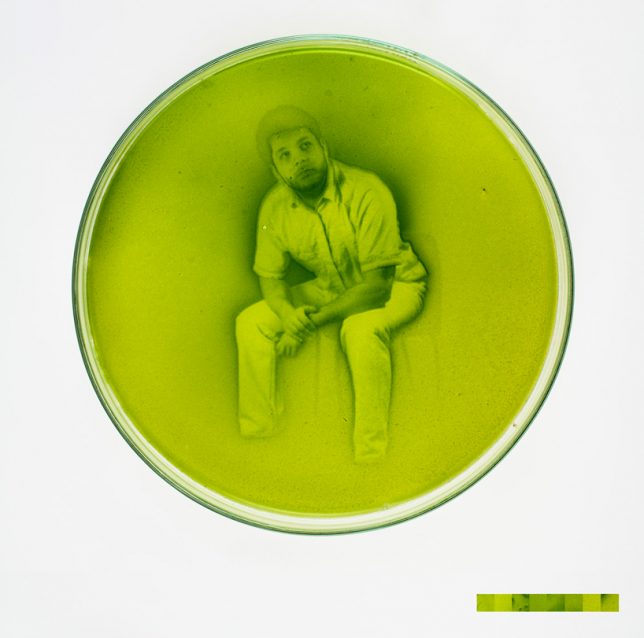
Living algae cultured in petri dishes clump together to form images in a living twist on traditional photography techniques. Artist and researcher Lia Giraud places a mix of chemical nutrients in the dish and exposes them to an image, and the cells react to the light and form solids of various densities, resulting in the different shades of green that produce the image.

Next Page – Click Below to Read More:
Its Alive 14 Algae Powered Inventions For Food Light Energy Oxygen

Share on Facebook


[ By SA Rogers in Conceptual & Futuristic & Technology. ]

[ WebUrbanist | Archives | Galleries | Privacy | TOS ]


WebUrbanist

 
Comments Off on It’s Alive! 14 Algae-Powered Inventions for Food, Light, Energy & Oxygen

Posted in Creativity


MIT’s newest photography tech can retouch an image before it’s captured

04 Aug

MIT has developed a new machine learning technology that is able to retouch an image in real-time, presenting the photographer with the final product before they snap the photo. The system, which is being presented by both Google and MIT researchers at the digital graphics conference Siggraph in Los Angeles, was trained using thousands of both raw and retouched images that comprise a dataset created by MIT and Adobe, among others.

The automatic image retouching system is lightweight enough to be used on an ordinary smartphone, and it can be equipped with multiple different styles. While real-time image retouching isn’t a new idea, the ability to perform it on a smartphone is. Talking about this, researcher Jon Barron explains:

Using machine learning for computational photography is an exciting prospect but is limited by the severe computational and power constraints of mobile phones. This paper may provide us with a way to sidestep these issues and produce new, compelling, real-time photographic experiences without draining your battery or giving you a laggy viewfinder experience.

In order for the image retouching to work in real-time on low power devices like smartphones, the researchers developed a system that modifies a low-resolution version of the final image, then translates those edits to the full-resolution photo.

With this method arose a big problem, however. Namely, that the low-resolution image doesn’t contain enough data to adequately determine edits for the full-resolution version. Two different solutions were found to solve this problem, the first being that the system outputs ‘a set of simple formulae’ rather than the low-res image itself, and the second being a method for applying the formulae to the full-resolution photo. The team explains that technology in detail in the video below:

Articles: Digital Photography Review (dpreview.com)

 
Comments Off on MIT’s newest photography tech can retouch an image before it’s captured

Posted in Uncategorized


I made a book of pictures of my cat, and I think it’s going to make me a better photographer

29 Jul

Hear me out.

Many years ago I made a Blurb photo book that was beautiful, but required hours and hours of my time to get it all just right. It was an enjoyable process really, but I just don’t find I have that kind of time or patience anymore. But I love a nice photo book – what better way to get photos off your phone or hard drive and make them into something tangible?

Whatever your level of interest and
time commitment, there’s a photo book
service for you

In the years since I made my first book, options for would-be photo book makers have exploded. They range from time-intensive to almost totally automated. Whatever your level of interest and time commitment, there’s a photo book service for you.

The other part of this story is that I’ve been struggling with finding inspiration for my personal photography lately. It’s hard to find a reason to bring a dedicated camera when I know I can get usable snapshots with my phone. Above all, I don’t end up doing anything with the photos I do take. I post the stray photo to Instagram or Facebook, but that’s as far as they go.

But recently, I downloaded Mosaic, an app from Mixbook that creates incredibly simple photo books out of 20 of your photos – no more, no less. You pick the photos from your camera roll, Facebook or Instagram account, put them in an order you like – and that’s about it.

The photos are arranged into a mosaic (see what they did there) for your front cover, which you can ‘shuffle’ to re-organize, but you can’t manually select how the images are arranged. Text can be added to the first page, but none on the following pages.

In trying it out I dove into my camera roll and looked for a story I could tell in 20 photos and by pure coincidence, I happened to have a large number of photos of my cat. I saw a theme emerge and began filling the pages of my book with pictures of him sleeping.

I know, I know. But you wouldn’t believe this cat. He sleeps in the strangest positions, and the photos fell into a neat symmetry as I placed them on opposing pages: two photos of him curled into a donut shape in his bed, two photos of him sprawled on the floor next to his bed, for some God damn reason. The book materialized in front of my eyes, and the temptation of the ‘order now’ button became too great.

See what I mean? He’s ridiculous.

Cats are bona-fide jerks but I’m in the part of the population that finds them irresistible against better judgement. And I know this sounds ridiculous, but my cat really does have a funny personality. One day he’ll be gone, not roaming around my apartment screaming for treats and attention, and I’ll have this silly little book to remember him by.

Mosaic is definitely not designed for professional photographers. For one, it only exists in app form, so it lends itself best to photos taken with your phone. You can source them from your Dropbox or a social media account, but the app certainly lacks the customization features a pro would want.

Creating a book is dead simple, and without the option to add text or captions, all emphasis is on the images and the story they tell

So Mosaic isn’t really intended for ‘serious photography,’ but to me there’s beauty in its limitations. Creating a book is dead simple, and without the option to add text or captions, all emphasis is on the images and the story they tell.

By making this book I may have unlocked a new cat lady achievement, but it also made me think about other stories I could tell in 20 photos. Open-ended photo projects feel too overwhelming to me, but the thought of assembling just 20 photos on a theme and having an easy, yet polished output mechanism for them is very appealing. Suddenly, I’m reconsidering the projects that seemed too onerous to take on. Documenting a trip or a social outing seems doable with a purpose, vision and boundaries for the final product.

Maybe this experience will help nudge me forward on a path I’m currently stalled on

Realistically, I’m not going to be making huge number of $ 25 photo books (plus an extra $ 5 for shipping). But maybe this experience will help nudge me forward on a path I’m currently stalled on. And isn’t that what it’s all about? At the very least, I’ve got one very fancy book of cat photos.

Also read: Ten ways to shake ‘photographer’s block’ for good

Articles: Digital Photography Review (dpreview.com)

 
Comments Off on I made a book of pictures of my cat, and I think it’s going to make me a better photographer

Posted in Uncategorized


10 Reasons Why it’s a Good Idea to Start Producing Video Content

22 Jun

If you spend any amount of time online you’ll be well aware of the rapid expansion of access to video content that has happened over recent years. Being largely user driven, this content varies from professionally produced through to home videos of cats, puppies and everything in between.

With the increase in internet speeds and processing power of viewing devices, we have the ability to watch countless hours of video content where and when we like. This provides some interesting opportunities for you as a photographer to consider, either through creating video content, or using video as a platform to show your work in a different way.

Ultimately it allows you to connect with people differently, using elements of storytelling and emotional connection that can only exist through the use of motion and sound. Here are some reasons why I have embraced video as a way of communicating.

Reasons to produce Video 01

1. Video allows you to tell stories in a more immersive way

Anyone who has been to see a film or documentary and become heavily invested in the story and its characters will be able to relate to this. While still images can communicate much of a subject, the depth of which you can tell stories through motion is effective in a different way.

Hearing the person’s voice rather than reading a quote, listening to them describe a situation or speak to another person and feeling the emotion in what they are saying and how they are presenting it. There is the element of moving images that cannot be replicated through stills. It is not to say that motion is a better way, just a different way to tell stories.

It also allows the viewer to have a different experience in seeing environments through motion. Seeing the elements that exist move and interact is again difficult to replicate through stills. Wildlife photos versus wildlife footage is an excellent example of how your understanding of an environment can shift based on the way you are viewing it.

Case study: Karma Coffee

2. Music can introduce a different kind of emotional pull

Music plays a significant role in every piece of film or TV content, from the news to drama to documentary. It has incredibly strong pulling power with our emotions and this is something anyone can take advantage of. The immediate tone that is set with music helps to identify what we can expect to feel, the anticipation of a lion hunting its prey, the feeling of accomplishment for a climber reaching a summit, or a family coming together after a long time apart. The ability to pull your audience further into a story with the emotive power of music is something we should look at seriously if producing video content.

While we may not have the budget for commercial music or large-scale productions, there are a lot of options available through stock music sites that will give you the style of music you are after. By using music that is available for licensing, you are free to have your video projects available for public viewing with no concern of copyright infringement as long as the music is licensed for the correct use.

Case study: Mates in Construction – Kokoda

3. Creating slide shows of your images adds a more dynamic element to your portfolio

This is a great way to bring a collection of images together and show them in a more dynamic way. The collection of images may simply be your portfolio, or it could be from a wedding you have shot, an overseas trip, or a family event. There are many benefits to presenting still images in this way as it allows you to include music and some animation or movement of your images within the frame as opposed to just a static position.

It also means your photographic portfolio can now be viewed on platforms that would otherwise be unavailable for still images, such as YouTube.

Case study: Damian Caniglia Photography Slideshow

4. You can bring together a collection of images and video that are connected

Producing video content doesn’t have to include exclusively just video. Incorporating stills and animation can help tell stories in a more complete way, as well as utilizing content that may already exist.

An example of this may be a short story telling project about a person’s life growing up. Using old photos as part of the visual elements means you are able to give greater context to that person’s life, their story, and what they were like at this time. It also brings a greater level of authenticity to the person’s story as the viewer is able to see a visual representation of what they are talking about.

Another example of this is you may be telling the story of an artist. Using images of their art as they describe their motivation, process, and aims allows to help show their work as they are discussing it. Again, giving better context to who they are as well as a visual representation of their work within the video piece.

5. You can develop character-driven stories and documentaries

Many documentaries have a narrator or voice-over directing the flow and narrative of the story. Character driven stories only allow the voice and vision of the person the story is about, to appear.

While often there is an interviewer involved, the voice of the person asking the questions is removed from the final edit leaving only the people appearing in the video as the ones directing the story.

This has some considerations when asking questions during an interview, and more specifically, the way in which the person being interviewed responds.

Case study: Kokoda 2013

6. Most social media channels favor video content

A quick look across the most popular social media platforms will show how much video content is being favored. In fact, doing a few tests will show you that the current algorithms being used by these platforms favor video content above almost all others.

While YouTube is still the king of video, other platforms such as Facebook and Instagram are definitely showing great reach and interaction with its users and video content. This can be a big advantage for those producing video as you have the potential to reach a bigger audience based on this shift.

Case study: Preserving the Ancient

7. You can offer more options to existing clients including time-lapse videos

It used to be the case that if a client wanted photographic work done, they hired a photographer and if they wanted video content produced, they hired a video producer or production company. But, there has been a shift in recent years with clients having the option of choosing one person who is capable of producing both. This has a number of benefits for the client as well as the supplier.

For the client, they only have to deal with one person or company. This is especially important if the styled approach needs to match across different content (photo still and video, for example. For the producer of content, it means you are able to offer more solutions for your clients, giving them a turnkey solution for production and more reasons to use you instead of anyone else.

Case study: PODS time-lapse

8. You can produce video for stock licensing

There has never been a greater demand for video content. That demand is only set to rise as video content is embraced across all sectors of our society and more online platforms.

Here lies the opportunity for content creators. While there is nothing better than custom footage made specifically for a story, film, or documentary project, there is not always the budget or easy access to what is needed. Stock content is an excellent way for producers to obtain content for their respective projects. This is not a new concept as stock content has been around for a long time.

By looking through the libraries of some of the larger stock libraries, you can quickly determine the style of content that is accepted by stock libraries, and what is the most popular for purchase and download. There are many options for your approach to creating stock video content. However, maximizing your existing connection or access to local areas or industries means you can take a more strategic approach to what you produce based on your knowledge of said industries or areas.

Case study: Sample Footage, Tasmania, Australia

9. You can start doing a regular vlog (video log) to showcase your work

This is almost like a behind the scenes process of telling your story. It is a great way for your audience to get a better idea of who you are as an artist and producer. It will allow your followers to become better invested in your work and your story so they become better connected to you.

By understanding your process in a transparent way, your followers can not only understand the amount of effort and resources that go in to producing your work, they will also develop a better understanding of what it takes to be a successful artist.

10. Producing video is a good skill to have

Even if you are not using video production within your business or work, it is a good skill to develop for the future. As mentioned earlier, there is no doubt we are consuming more video content than ever before.

Organizations that traditionally would not consider producing video content in-house are starting to do so. Developing the skill and understanding for what is needed to produce this content will give you a better understanding of the strategy needed, whether you are producing it personally, or engaging the services of an external producer.

This will often lead to better planning and execution of a project, which results in better quality outcomes.

Conclusion

If producing video content is of interest then get out there and start experimenting with this medium. As most, if not all cameras for photography also shoot video now, it means there is little or no investment in equipment to get started. Be sure to check out some articles on how to get started shooting video and hit the record button and start experimenting.

The post 10 Reasons Why it’s a Good Idea to Start Producing Video Content by Damian Caniglia appeared first on Digital Photography School.


Digital Photography School

 
Comments Off on 10 Reasons Why it’s a Good Idea to Start Producing Video Content

Posted in Photography