RSS
 

Posts Tagged ‘Iris’

Apple’s new 13-inch MacBook Pro features faster CPU options, latest Intel Iris Graphics configurations and updated keyboard

04 May

Apple has announced its new 13-inch MacBook Pro, bringing modest performances improvements and one physical improvement that should make keyboard warriors around the world much happier.

We’ll get to the specs in a minute, but first the most important update—the keyboard. Apple has eschewed its troubled ‘butterfly’ keyboard for its Magic Keyboard with this new 13-inch MacBook Pro. For nearly five years, Apple’s ‘butterfly mechanism’ keyboard has caused issues for MacBook owners, with individual keys sometimes becoming entirely non-functioning, causing all sorts of issues while typing. This transition means the ‘butterfly’ keyboard is no longer present in any of Apple’s laptops.

The physical ‘esc’ key is a welcomed change also.

In addition to the changes underneath the keys, Apple has also added a physical ‘Escape’ (esc) key to the left of the Touch Bar. On previous models, the ‘esc’ key was digital, located within the Touch Bar, a design decision that could wreak havoc if the Touch Bar glitched out or broke.

The updated 13-inch model is powered by Intel quad-core chips, with optional upgrades to configure the MacBook Pro with Intel’s 10th-gen CPUs that offer up to 2.3GHz per core and TurboBoost speeds up to 4.1GHz. Apple has also added the option to configure the 13-inch MacBook Pro with up to 32GB of 3733MHz LPDDR4X RAM and has doubled the base model storage to 256GB (with optional upgrades to increase it to 4TB).

If you upgrade to the $ 1,799 model, you’ll also get the latest Intel Iris Plus Graphics, which Apple claims will offer an 80% performance increase over the previous-generation dual-core MacBook Pros. In addition to improving overall graphic performance, models with Intel’s Iris Plus graphics will be able to power Apple’s Pro Display XDR at its full 6K resolution.

As for the laptop’s own display, the 13-inch screen supports P3 wide color gamut, offers a maximum 500 nits brightness and includes Apple’s ‘True Tone’ technology that automatically adjusts the screen’s white balance based on the ambient environment.

The base model starts at $ 1,299 and includes a 1.4GHz quad-core 9th-gen Intel Core i5 CPU, 8GB of RAM and 256GB of storage. However, if you’re planning on using this for editing photos or video though, we’d suggest you jump up to the $ 1,799 base model, which offers Intel’s 10-gen CPUs with the newer Intel Iris Plus graphics and 16GB of RAM. Further upgrades can be configured for additional costs, as usual.

You can find out more information about the latest 13-inch MacBook Pro models and browse through the different configurations on Apple’s website.

Articles: Digital Photography Review (dpreview.com)

 
Comments Off on Apple’s new 13-inch MacBook Pro features faster CPU options, latest Intel Iris Graphics configurations and updated keyboard

Posted in Uncategorized


Photographer applies iris design to Aperture Wrench concept

24 Dec

$ (document).ready(function() { SampleGalleryV2({“containerId”:”embeddedSampleGallery_7785582854″,”galleryId”:”7785582854″,”isEmbeddedWidget”:true,”standalone”:false,”selectedImageIndex”:0,”startInCommentsView”:false,”isMobile”:false}) });

Photography hobbyist and industrial designer Jordan Steranka has published images of a new concept tool called the Aperture Wrench, a wrench with a design inspired by a camera’s diaphragm. Unlike an ordinary wrench, the Aperture Wrench features blade-like elements that open and close via a rotating wheel and lock in place with the press of a button.

Steranka’s goal was to design a wrench that could be adjusted to fit any nut size, removing the guesswork involved in finding a correctly-sized wrench. The end result is a tool with aperture blades, an adjustment dial, a locking button, and a built-in light for better visibility. As with any concept, though, it’s possible the design will never make its way into mass production.

Via: DesignBoom

Articles: Digital Photography Review (dpreview.com)

 
Comments Off on Photographer applies iris design to Aperture Wrench concept

Posted in Uncategorized


Samsung Galaxy Note 7 combines S7 camera with large display, S-Pen and iris scanner

03 Aug

In keeping with its established product innovation cycle, Korean manufacturer Samsung has today launched the latest model in its Note line of large format smartphones, the Galaxy Note 7. Judging by its specifications the new device looks like an impressive package but is in many ways more of a refinement of previous models rather than a radical overhaul.

The camera module, for example, comes with the same specification as the smaller Galaxy S7 and S7 edge devices. A 1/2.5″ 12MP sensor with 1.4-micron pixel size is combined with a fast F1.7 aperture, optical image stabilization and dual pixel on-sensor phase detection AF. The front camera has a 5MP sensor and F1.7 aperture.

Processing specifications are identical to the S7 as well. The US version of the device is powered by a Qualcomm Snapdragon 820 chipset while the international versions will come with Samsung’s own Exynos octa-core chip. All models come with 4GB of RAM and 64GB of internal storage that is expandable via a microSD-slot.

The Note 7’s characteristic 5.7″ dual-edge display offers Super AMOLED technology and a 2560 x 1440 Quad-HD resolution. It’s also the first display to feature Gorilla Glass 5 which should survive a drop from 1.6 meters height. As on the predecessor, the edges of the display are curved and offer Samsung’s unique Edge interface for quick access to contacts and apps. While some competitors have started to dispense with the headphone-jack the Samsung still offers this standard connector, next to a new USB Type-C port. All the components are powered by a 3,500mAh battery, which is a little smaller than the variant in the S7 Edge.

Notable new features include an iris scanner above the display that allows you to unlock the phone or access secured content. Samsung says that in the future the scanner will let you log into accounts or use Samsung Pay, but none of these functions are currently implemented. The design of the Note series’ characteristic S-Pen stylus has been slightly altered, too. It is now water-resistant and at 0.7mm comes with a thinner tip which should make for a more natural writing experience. 

Overall the Galaxy Note 7 looks like an appealing proposition for those users who like to work with larger screens and a stylus for photo editing. The camera module has already been tried and tested on the Galaxy S7 models and currently among the very best. 

Articles: Digital Photography Review (dpreview.com)

 
Comments Off on Samsung Galaxy Note 7 combines S7 camera with large display, S-Pen and iris scanner

Posted in Uncategorized


Iris the Eye-Controlled Camera: Blink Twice to Take a Picture

10 Jul

[ By WebUrbanist in Gadgets & Geekery & Technology. ]

lens camera photographer subject

Simple, intuitive and innovative for the everyday photographer, Iris promises even more to the disabled, letting anyone control capture area, zoom level, the moment of a shot and other features … all with only eye movements.

Mimi Zou is a graduate of the Royal College of Art developed this eye-tracking camera design around biometric technology. The device can recognize people on both sides of the lens by their eyes – the person taking the picture (so it can pre-load preferred settings) as well as the person being photographed.

lense camera screen interface

A translucent screen inhabits the center of the circular device, allowing you to get an augmented-reality look at your subject matter, with optional overlays indicating prominent buildings or other features of the built environment you may wish to capture.

lense camera iris invention

Narrow your eyelids to zoom in, then open wide to zoom back out. Focus on a spot, blink twice, and a photo is taken. If a friend is recognized in the frame, there is also an option to tag them on the spot. And all of this functionality is rolled up into what looks like a cylindrical lens without a camera.

lense camera hand held

As of right now it remains a working model, but with luck, time and funding it might become the next wave in ever-more-minimalist photographic contraptions, and particularly powerful image-taking aid for those who cannot use hands to easily hold and point a camera.

Share on Facebook


[ By WebUrbanist in Gadgets & Geekery & Technology. ]

[ WebUrbanist | Archives | Galleries | Privacy | TOS ]


WebUrbanist

 
Comments Off on Iris the Eye-Controlled Camera: Blink Twice to Take a Picture

Posted in Creativity


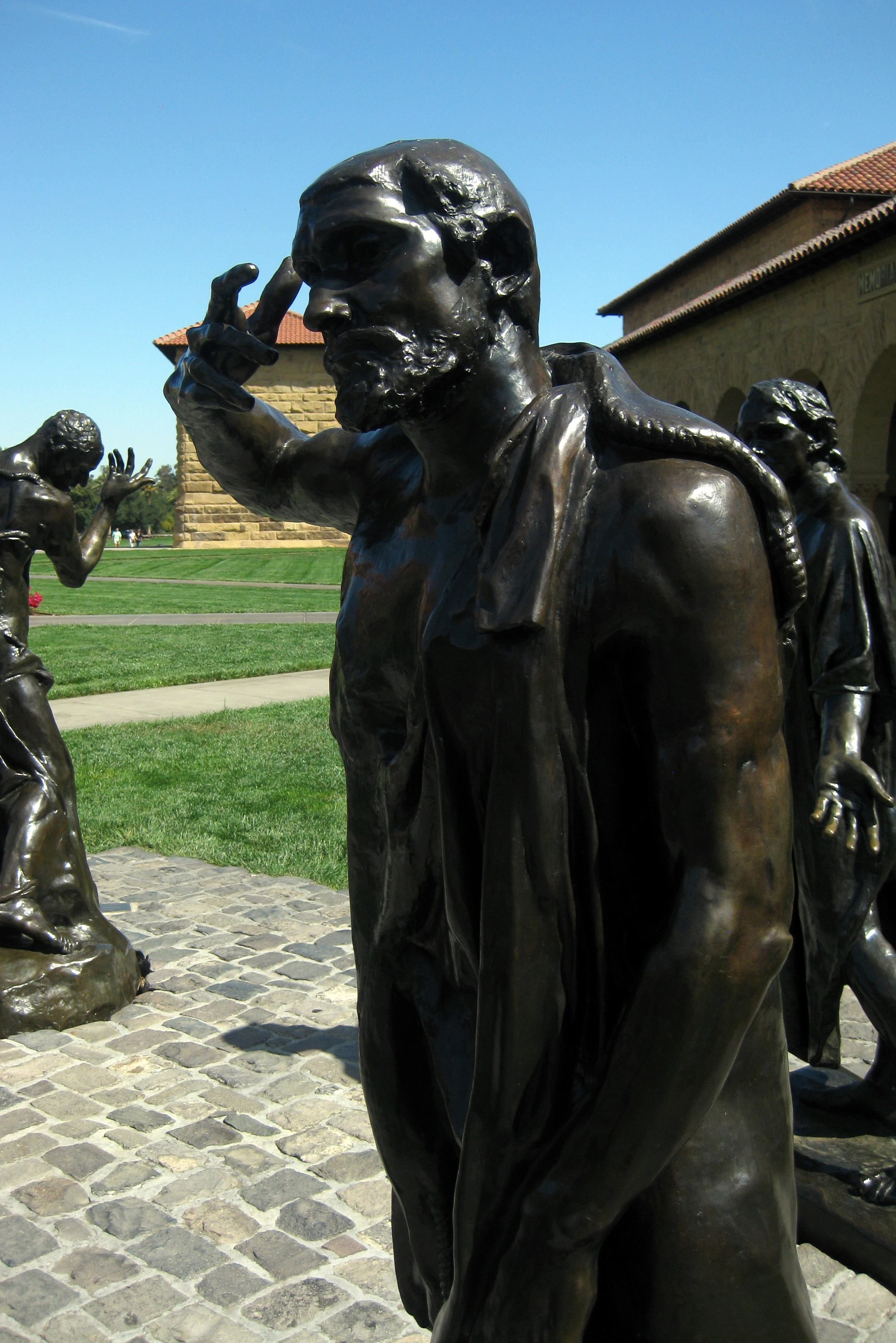
California: Stanford University – Iris & B. Gerald Cantor Center for Visual Arts at Stanford University – Burghers of Calais
14 Oct

Check out these visual art images:

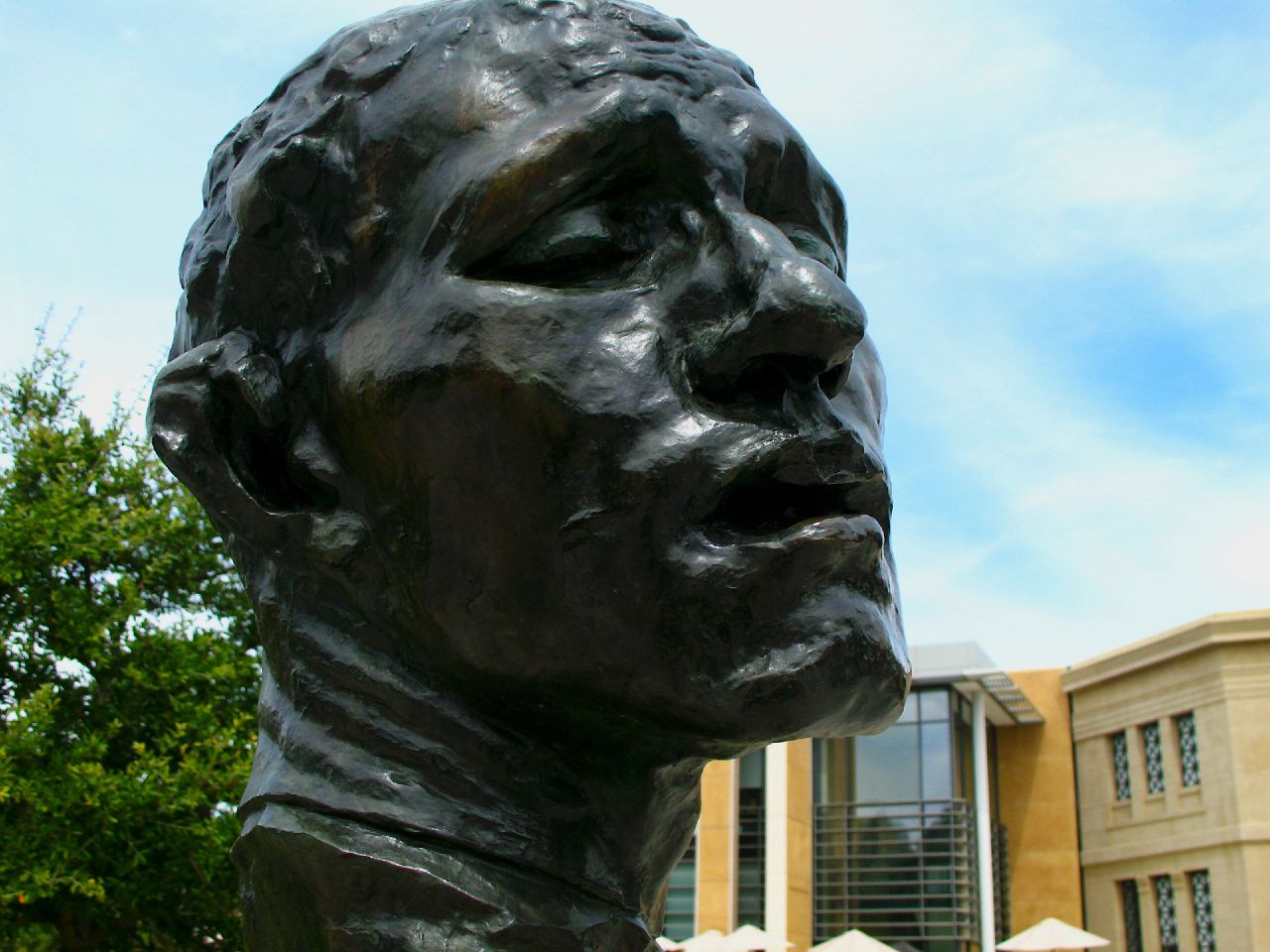
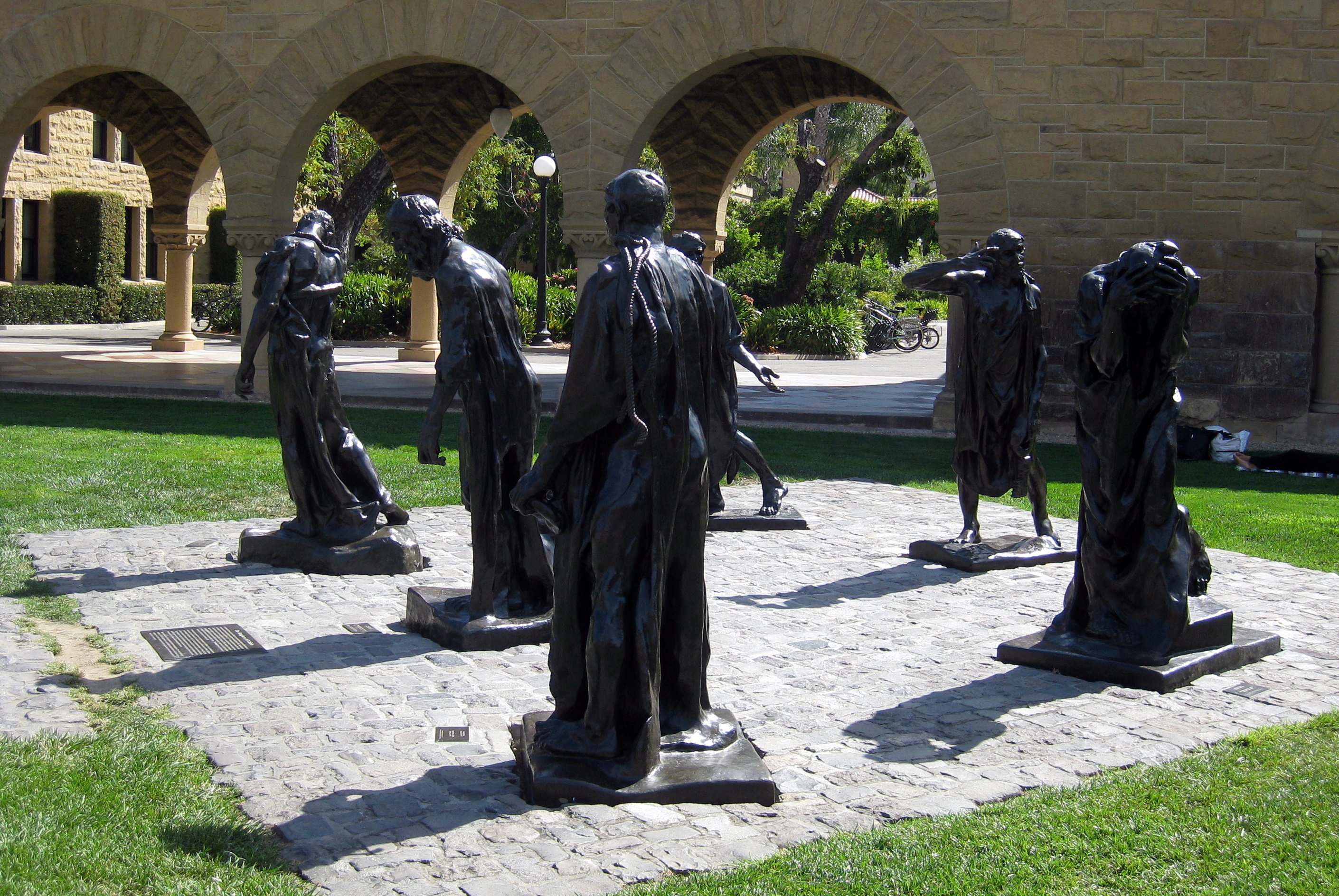
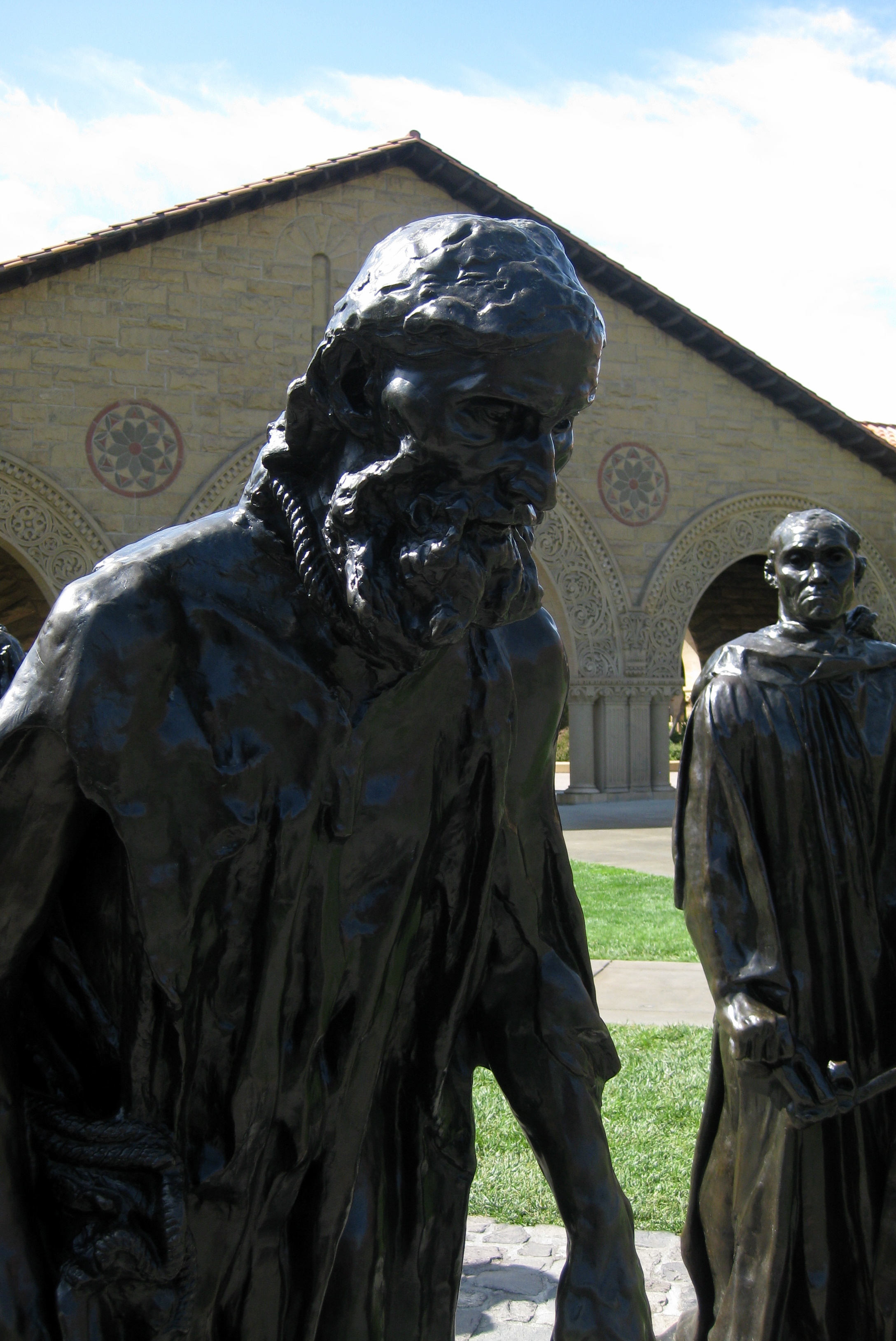
California: Stanford University – Iris & B. Gerald Cantor Center for Visual Arts at Stanford University – Burghers of Calais
visual art
Image by wallyg
Les Bourgeois de Calais (The Burghers of Calais) is one of the most famous sculptures by Auguste Rodin. It serves as a monument to the heroism of six burghers in Calais during a siege by the England in the Hundred Years’ War in 1347.

After a victory in the Battle of Crécy, England’s King Edward III besieged Calais, an important French port on the English channel, and Philip VI of France ordered the city to hold out at all costs. Which it did for a over a year. Philip failed to lift the siege and starvation eventually forced the city to parlay for surrender. Edward offered to spare the people of the Calais if any six of its top leaders would surrender themselves. Edward demanded that they walk out almost naked, wearing nooses around their necks and carrying the keys to the city and castle. One of the wealthiest of the town leaders, Eustache de Saint Pierre, volunteered first and five other burghers–Jean d’Aire, Jacques and Pierre de Wissant, Jean de Fiennes, Andrieu d’Andres–soon followed suit. Though the burghers expected to be executed, their lives were spared by the intervention of England’s Queen, Philippa of Hainault, who persuaded her husband by saying it would be a bad omen for her unborn child. Rodin depicts a larger than life Saint Pierre leading the envoy of emaciated volunteers to the city gates, prepared to meet their imminent mortality.

The monument was initially proposed by Omer Dewavrin, mayor of Calais, for the town’s square in 1884. Unusual in that monuments were usually reserved for victories, the town of Calais had long desired to recognize the sacrifices made by these altruistic men. Rodin’s controversial design echoed this intent–the burghers are not presented in a heroic manner, but sullen and worn. His innovative design initially presented the burghers at the same level as the viewers, rather than on a traditional pedestal, although until 1924 the city, against Rodin’s wishes, displayed it on an elevated base.

The original statue still stands in Calais. Other casts stand around the world–the Victoria Tower Gardens, in the shadow of the Houses of Parliament in London; the Israel Museum in Jerusalem, the Rodin Museum in Philadelphia, the Metropolitan Museum of Art in New York City, the Brooklyn Museum in New York City, Musée Rodin in Paris, the National Museum of Western Art in Tokyo, the Rodin Gallery in Seoul, and Glyptoteket in Copenhagen, to name a few. Some installations have the figures tightly grouped with contiguous bases, while others have the figures separated. Some installations are elevated on pedestals, others are placed at ground level. This bronze cast, at Stanford University’s Iris & B. Gerald Cantor Center for Visual Arts, consists of six separate pieces which are slightly sunken, concealing the bottom few inches of the bases, and spaced such that viewers can walk between the figures. The museum claims this is how Rodin wished them to be displayed.

California: Stanford University – Iris & B. Gerald Cantor Center for Visual Arts at Stanford University – Burghers of Calais
visual art
Image by wallyg
Les Bourgeois de Calais (The Burghers of Calais) is one of the most famous sculptures by Auguste Rodin. It serves as a monument to the heroism of six burghers in Calais during a siege by the England in the Hundred Years’ War in 1347.

After a victory in the Battle of Crécy, England’s King Edward III besieged Calais, an important French port on the English channel, and Philip VI of France ordered the city to hold out at all costs. Which it did for a over a year. Philip failed to lift the siege and starvation eventually forced the city to parlay for surrender. Edward offered to spare the people of the Calais if any six of its top leaders would surrender themselves. Edward demanded that they walk out almost naked, wearing nooses around their necks and carrying the keys to the city and castle. One of the wealthiest of the town leaders, Eustache de Saint Pierre, volunteered first and five other burghers–Jean d’Aire, Jacques and Pierre de Wissant, Jean de Fiennes, Andrieu d’Andres–soon followed suit. Though the burghers expected to be executed, their lives were spared by the intervention of England’s Queen, Philippa of Hainault, who persuaded her husband by saying it would be a bad omen for her unborn child. Rodin depicts a larger than life Saint Pierre leading the envoy of emaciated volunteers to the city gates, prepared to meet their imminent mortality.

The monument was initially proposed by Omer Dewavrin, mayor of Calais, for the town’s square in 1884. Unusual in that monuments were usually reserved for victories, the town of Calais had long desired to recognize the sacrifices made by these altruistic men. Rodin’s controversial design echoed this intent–the burghers are not presented in a heroic manner, but sullen and worn. His innovative design initially presented the burghers at the same level as the viewers, rather than on a traditional pedestal, although until 1924 the city, against Rodin’s wishes, displayed it on an elevated base.

The original statue still stands in Calais. Other casts stand around the world–the Victoria Tower Gardens, in the shadow of the Houses of Parliament in London; the Israel Museum in Jerusalem, the Rodin Museum in Philadelphia, the Metropolitan Museum of Art in New York City, the Brooklyn Museum in New York City, Musée Rodin in Paris, the National Museum of Western Art in Tokyo, the Rodin Gallery in Seoul, and Glyptoteket in Copenhagen, to name a few. Some installations have the figures tightly grouped with contiguous bases, while others have the figures separated. Some installations are elevated on pedestals, others are placed at ground level. This bronze cast, at Stanford University’s Iris & B. Gerald Cantor Center for Visual Arts, consists of six separate pieces which are slightly sunken, concealing the bottom few inches of the bases, and spaced such that viewers can walk between the figures. The museum claims this is how Rodin wished them to be displayed.

 
Comments Off on California: Stanford University – Iris & B. Gerald Cantor Center for Visual Arts at Stanford University – Burghers of Calais

Posted in Photographs


Iris & B. Gerald Cantor Center for Visual Arts at Stanford University

20 Aug

Check out these visual art images:

Iris & B. Gerald Cantor Center for Visual Arts at Stanford University
visual art
Image by Lisa Padilla

Iris & B. Gerald Cantor Center for Visual Arts at Stanford University
visual art
Image by Lisa Padilla

Iris & B. Gerald Cantor Center for Visual Arts at Stanford University
visual art
Image by Lisa Padilla

 
Comments Off on Iris & B. Gerald Cantor Center for Visual Arts at Stanford University

Posted in Photographs


California: Stanford University – Iris & B. Gerald Cantor Center for Visual Arts at Stanford University – Burghers of Calais

12 Dec

Some cool visual art images:

California: Stanford University – Iris & B. Gerald Cantor Center for Visual Arts at Stanford University – Burghers of Calais
visual art
Image by wallyg
Les Bourgeois de Calais (The Burghers of Calais) is one of the most famous sculptures by Auguste Rodin. It serves as a monument to the heroism of six burghers in Calais during a siege by the England in the Hundred Years’ War in 1347.

After a victory in the Battle of Crécy, England’s King Edward III besieged Calais, an important French port on the English channel, and Philip VI of France ordered the city to hold out at all costs. Which it did for a over a year. Philip failed to lift the siege and starvation eventually forced the city to parlay for surrender. Edward offered to spare the people of the Calais if any six of its top leaders would surrender themselves. Edward demanded that they walk out almost naked, wearing nooses around their necks and carrying the keys to the city and castle. One of the wealthiest of the town leaders, Eustache de Saint Pierre, volunteered first and five other burghers–Jean d’Aire, Jacques and Pierre de Wissant, Jean de Fiennes, Andrieu d’Andres–soon followed suit. Though the burghers expected to be executed, their lives were spared by the intervention of England’s Queen, Philippa of Hainault, who persuaded her husband by saying it would be a bad omen for her unborn child. Rodin depicts a larger than life Saint Pierre leading the envoy of emaciated volunteers to the city gates, prepared to meet their imminent mortality.

The monument was initially proposed by Omer Dewavrin, mayor of Calais, for the town’s square in 1884. Unusual in that monuments were usually reserved for victories, the town of Calais had long desired to recognize the sacrifices made by these altruistic men. Rodin’s controversial design echoed this intent–the burghers are not presented in a heroic manner, but sullen and worn. His innovative design initially presented the burghers at the same level as the viewers, rather than on a traditional pedestal, although until 1924 the city, against Rodin’s wishes, displayed it on an elevated base.

The original statue still stands in Calais. Other casts stand around the world–the Victoria Tower Gardens, in the shadow of the Houses of Parliament in London; the Israel Museum in Jerusalem, the Rodin Museum in Philadelphia, the Metropolitan Museum of Art in New York City, the Brooklyn Museum in New York City, Musée Rodin in Paris, the National Museum of Western Art in Tokyo, the Rodin Gallery in Seoul, and Glyptoteket in Copenhagen, to name a few. Some installations have the figures tightly grouped with contiguous bases, while others have the figures separated. Some installations are elevated on pedestals, others are placed at ground level. This bronze cast, at Stanford University’s Iris & B. Gerald Cantor Center for Visual Arts, consists of six separate pieces which are slightly sunken, concealing the bottom few inches of the bases, and spaced such that viewers can walk between the figures. The museum claims this is how Rodin wished them to be displayed.

Sainsbury Centre for the Visual Arts, Norwich
visual art
Image by Xavier de Jauréguiberry
C402_35
15/08/2008 : Norwich, University of East Anglia, Sainsbury Centre for the Visual Arts

 
Comments Off on California: Stanford University – Iris & B. Gerald Cantor Center for Visual Arts at Stanford University – Burghers of Calais

Posted in Photographs


Portrait Enhancements 2: Iris – Basic Colour

30 Aug

Part 2 in the series, Portrait Enhancements from Ginkgo Studios. This bite sized episode deals with colour changing and/or colour enhancing of the iris component of the subjects eyes.
Video Rating: 0 / 5

 
Comments Off on Portrait Enhancements 2: Iris – Basic Colour

Posted in Retouching in Photoshop