RSS
 

Posts Tagged ‘iphone’

SLC-0L-02: Shiny Object, Using an iPhone and the Sun

26 May

Whether photographing people or objects, how you approach your lighting is far more important than what camera and lighting gear you use.

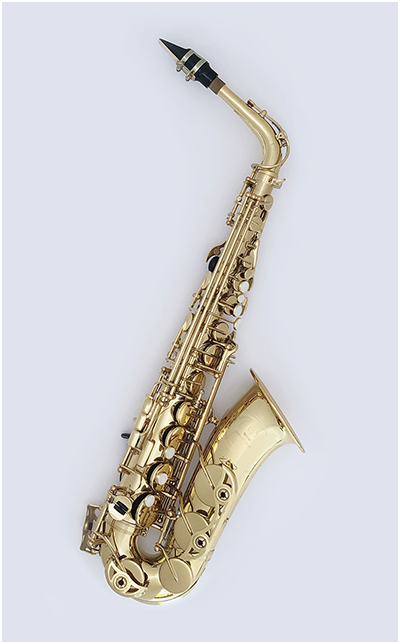
To illustrate, today we are going to photograph a complex, mirrored surface—an alto saxophone—using just an iPhone for our camera and the sun as our light source. Read more »
Strobist

 
Comments Off on SLC-0L-02: Shiny Object, Using an iPhone and the Sun

Posted in Photography


Latest Apple ad: iPhone Portrait Lighting is a ‘studio in your pocket’

20 May

No matter your attitude towards Apple and its products, it’s probably fair to say the company’s iPhone ads are among the more visually pleasing and entertaining commercials we get to see on TV or online. And like many recent ads, Apple’s latest clip is related to its smartphone’s photography capabilities.

The ad—titled ‘Studio in your pocket’—promotes the iPhone X and 8 Portrait Lighting feature. In the ad, a woman pulls out her iPhone to take a selfie in a train station when all sorts of studio lights, umbrellas and softboxes materialize out of nowhere around her—emphasizing one of the iPhone’s most distinguishing photography features.

Despite some manufacturers now offering similar functions, Portrait Lighting is still pretty much exclusive to Apple devices. It works on both front and main cameras (on the iPhone X, only rear on the iPhone 8 Plus and below) and applies computational effects to a subject that aim to simulate lighting effects you could achieve in a studio with proper lighting equipment. The effects can be applied at capture or later during editing. Options include Natural Light, Studio Light, Contour Light, Stage Light and Stage Light Mono.

You can read more about the feature in our iPhone X review or watch a tutorial here, and while it is most certainly not equal to a bunch of softboxes, umbrellas, or other professional lighting equipment, the feature is impressive in its own right.

Have you used Apple’s Portrait Lighting? Do you think the results can compare to the real thing? Let us know in the comments.

Articles: Digital Photography Review (dpreview.com)

 
Comments Off on Latest Apple ad: iPhone Portrait Lighting is a ‘studio in your pocket’

Posted in Uncategorized


Report: iPhone users will have to wait until 2019 for a triple-camera device

09 May

If you want a smartphone with a triple-camera setup, Huawei’s P20 Pro is currently your only option. And vy the looks of it, this won’t change any time soon… at least not if you prefer to stick to Apple’s iPhone over Android devices. According to a report in the Taipei Times—which is citing a research note from Yuanta Securities analyst Jeff Pu—Apple is likely to launch a triple-camera iPhone model, but this won’t happen before the second half of 2019.

Like on the Huawei, the third lens would likely provide a 3x optical zoom, improving zoom quality over the current top-models’ 2x lenses. It’s also fair to assume the triple-camera will be reserved for a flagship device, likely a third generation iPhone X that could launch around September of next year if Apple sticks to its usual launch schedule.

This scenario is supported by another previous report by former KGI Securities analyst Ming-Chi Kuo, who ruled out any significant changes to Apple’s current dual-camera system on the iPhone X and 8 Plus for the 2018 models.

Articles: Digital Photography Review (dpreview.com)

 
Comments Off on Report: iPhone users will have to wait until 2019 for a triple-camera device

Posted in Uncategorized


Olloclip launches Connect X lens system for Apple iPhone X

02 May

Smartphone accessory lens maker Olloclip has launched a new mobile lens system that is designed specifically for use with the Apple iPhone X.

With a number of interchangeable lenses and a “lens mount” that clips onto your device, Connect X works in a very similar way to previous Olloclip systems. However, the new lenses come with a number of features that are exclusive to Apple’s flagship smartphone, including a lens mount that aligns perfectly with the iPhone X’s front and rear cameras, allowing for use of the accessory lenses with both camera modules.

In addition, the lens mount is expandable and therefore usable in combination with most protective phone cases. The Connect X system also comes with a pendant stand designed to carry the set of lenses, but that also works as a mini-tripod.

There are six lenses available for the Connect X system:

  • Super-Wide: Four-element lens with 120° field of view
  • Ultra-Wide: 155° field-of-view
  • Fisheye + 15x Macro: 180° wide-angle spherical effect + 15x magnification
  • Telephoto: 2x optical zoom
  • 14x + 7x Macro
  • 21x Macro

The system is now available to order on Olloclip.com. Individual components range from $ 60 to $ 80. You can also purchase a Mobile Photography Box Set for iPhone X which contains the Connect X lens mount plus Super-Wide, Fisheye, and Macro 15x lenses. It will set you back $ 100. The bundle will also be available at Apple Stores starting in June.

Articles: Digital Photography Review (dpreview.com)

 
Comments Off on Olloclip launches Connect X lens system for Apple iPhone X

Posted in Uncategorized


Snapchat launches more realistic AR face masks for iPhone X users

07 Apr

It looks like more and more third party developers are starting to make use of the iPhone X’s TrueDepth front camera that was originally implemented on the device for Apple’s FaceID unlocking feature. Yesterday, Bellus3D launched a 3D face scanning app for the iPhone X. Today, Snapchat has delivered an update to its iOS app which lets iPhone X users decorate their selfie images with augmented reality masks that take advantage of Apple’s advanced facial mapping technology.

Apple’s TrueDepth front camera will help the masks more realistically superimpose onto the user’s face, and face motion will be tracked more precisely than for Snapchat users with other mobile devices. To start with, there are three Snapchat lenses that utilize the TrueDepth technology: a Mardi Gras-style mask, a Day of the Dead skull, and a gold-plated eye cover. More masks are expected to be made available in the near future.

The TrueDepth camera also allows for DSLR-style blurring of the background, and more accurate application of small details and 3D objects that reflect and react to ambient light in the image.

If you happen to own the iPhone X, let us know in the comments how the new feature works for you. With similar technologies being adopted by other smartphone makers, we’d hope the new Snapchat masks make it to Android devices (at least high-end ones) in the nearer future as well. Snapchat for iOS can be downloaded free of charge from the App Store.

Articles: Digital Photography Review (dpreview.com)

 
Comments Off on Snapchat launches more realistic AR face masks for iPhone X users

Posted in Uncategorized


Bellus3D uses the iPhone X’s TrueDepth camera to 3D scan your face

05 Apr

Bellus3D, a Silicon Valley startup that last year launched a 3D face scanning accessory camera for Android smartphones, today unveiled its FaceApp iPhone X application. The app does pretty much the same thing as the accessory camera but does not require any additional hardware as it is making use of the iPhone X’s front-facing TrueDepth camera, which Apple uses for Face ID.

FaceApp captures more than 250,000 3D data points on a face in 10 seconds while the user slowly turns their head in front of the camera. The app then reconstructs a virtual high-resolution version of the face that can be rotated, zoomed and viewed in three dimensions. Additionally, the face model can be viewed with interactive lighting, using the device’s gyro to control viewing angles.

The resulting 3D selfie videos can be saved, shared or posted on Facebook.

The app is not all about 3D selfies though. Bellus3D imagines the technology being used in a range of consumer applications, including: mobile gaming, custom eyeglass design, virtual make-up sessions, medical applications and custom dolls.

“We are thrilled to be introducing this exciting breakthrough to Apple iPhone X users,” said Eric Chen, co-founder and CEO of Bellus3D. “Our FaceApp takes full advantage of the TrueDepth camera to bring easy-to-use and professional quality face scanning capability to millions of users and will inject an entirely new level of personal presence into our daily use of digital media.”

Bellus3D is launching a public beta program today, and version 1.0 of FaceApp will be available at no charge. Future releases will allow file export in industry standard 3D formats and the company will also release a Face SDK for iOS to enable third party developers to use the technology.

If you are interested in the beta trial, you can sign up on the Bellus3D Facebook page, and developers can register to receive notifications about the SDK on the Bellus3D website. Check out the video above to see the system in action, and then head over to Facebook for some 3D sample scans.

Press Release

Bellus3D Announces High-Resolution 3D Face Scanning App for Apple iPhone X Utilizing Built-In TrueDepth Camera.

Bellus3D FaceApp for iPhone X is first to utilize the Apple TrueDepth Face ID Camera to capture and reproduce high-resolution lifelike 3D selfies.

Los Gatos, Ca. April 4, 2018 – Bellus3D, Inc. a Silicon Valley startup formed by leading computer vision experts, announced today the Bellus3D FaceApp iPhone X application, a remarkable advancement in face scanning technology. The company is the first to utilize the built-in TrueDepth camera incorporated in the Apple iPhone X smartphone to scan 3D faces in high resolution with a lifelike quality that was only previously available with expensive professional 3D scanners.

Bellus3D FaceApp for iPhone X is an easy-to-use, high-resolution, 3D face scanning application that captures over 250,000 3D data points on a user’s face in 10 seconds while the user turns their head in front of the smartphone camera. Immediately after the scanning, the user’s face is virtually reconstructed in 3D with lifelike detail and can be rotated, zoomed and viewed in three dimensions on the screen of the iPhone X.

The app allows: the 3D face to be viewed with interactive lighting; the use of the smartphone’s built-in gyro to control viewing and; the ability to save a 3D selfie video to their camera roll photo album to share with others. Users will also have the ability to immediately post their 3D selfie as a 3D post on Facebook.

Bellus3D is the first to use the iPhone X TrueDepth camera for high-resolution 3D face scanning and the company is already seeing many new uses that will impact millions of people. Consumer applications incorporating 3D faces include mobile gaming, custom eyeglass design, virtual 3D make-up sessions, medical applications, 3D selfies, custom dolls, and emerging 3D augmented and virtual reality experiences.

Bellus3D is starting a public beta program in April to enable early adopters and third-party developers to test the application as the company finalizes its formal release. Version 1.0 of Bellus3D FaceApp will be free and will include posting of 3D selfies to Facebook. A subsequent release of the app will allow users to export their 3D faces in industry standard 3D file formats to other applications and AR/VR digital environments. Bellus3D will also release a Face SDK for iOS to enable third party developers to add high-resolution 3D face-scanning capabilities to their own iPhone X apps.

“We are thrilled to be introducing this exciting breakthrough to Apple iPhone X users,” said Eric Chen, co-founder and CEO of Bellus3D. “Our FaceApp takes full advantage of the TrueDepth camera to bring easy-to-use and professional quality face scanning capability to millions of users and will inject an entirely new level of personal presence into our daily use of digital media.”

In addition to FaceApp for iPhone X, Bellus3D currently ships the Face Camera Pro USB accessory camera for Android & Windows platforms. The accessory camera captures up to 500,000 3D data points and is targeted for professional markets such as orthodontics and custom eyewear design. The Face Camera Pro is currently available and will continue to be offered for Android and Windows platforms.

Interested users can participate in the beta trial of the Bellus3D FaceApp for iPhone X by signing up at: www.Bellus3D.com/FaceApp.

Third party software and hardware developers can register to be notified of the availability of Face SDK for iOS by filling out an inquiry form at: www.Bellus3D.com/FaceSDKiOS.
To see examples of 3D Face Posts on the Bellus3D Facebook page, visit: https://www.Facebook.com/bellus3d/

Articles: Digital Photography Review (dpreview.com)

 
Comments Off on Bellus3D uses the iPhone X’s TrueDepth camera to 3D scan your face

Posted in Uncategorized


New Oppo flagship R15 comes with iPhone X-style design and portrait lighting

20 Mar

Chinese manufacturer Oppo has unveiled its latest two high-end Android smartphones, the R15 and R15 Dream Mirror Edition. The new devices are among the first of likely very many Android devices to be launched with an iPhone X style camera notch at the front this year. There is also a tall 6.28″ screen with 19:9 aspect ratio and 1080 x 2280 pixel resolution. The device comes with a metal frame and glass at front and back.

The R15 doesn’t only come with the iPhone X’s camera notch, though. It also borrows a face unlock feature from the X and the dual-camera comes with a portrait lighting mode, similar to what we’ve seen on Apple’s latest models.

In terms of camera specifications, the R15 features a main camera with a 1/2.6″ 16MP Sony IMX519 sensor and F1.7 aperture. The secondary lens comes with a 5MP resolution and F2.2 aperture. It is used to generate a bokeh mode and, according to OPPO, the new setup is capable of automatically recognizing up to 120 scenes and adjusting the camera settings accordingly, thanks to built-in Sony AI.

In the processing department the R15 runs a Helio P60 chipset with octa-core CPU and features 6GB of RAM. 128GB of storage and a 3,450 mAh battery are on board as well.

The Oppo R15 Dream Mirror Edition swaps the Helio chipset for a Snapdragon 660 but comes with otherwise very similar specs. That said, there is one important difference in the camera module: instead of the standard model’s 5MP sensor, the Dream Mirror Edition’s secondary camera comes with a 20MP sensor and fast F1.7 aperture, making it look very similar to the unit used in the 5T model of Oppo’s sister company OnePlus.

Scene recognition and portrait lighting modes are the same as on the standard R15, however. Both new models will be available from April 1 in China. The R15 will retail at CNY 2,999 (approximately $ 475), while the Dream Red model will set you back CNY 3,299 (approximately $ 521). There is no word on international availability yet, but we would expect the new devices to become available outside China at some point.

Articles: Digital Photography Review (dpreview.com)

 
Comments Off on New Oppo flagship R15 comes with iPhone X-style design and portrait lighting

Posted in Uncategorized


Shiftcam 2.0 iPhone add-on offers 6-in-1 lens-slider and ‘Pro’ lens options

13 Mar

The makers of the Shiftcam lens slider case for the iPhone have returned to Kickstarter to fund mass production of their latest development: the ShiftCam 2.0, an iPhone lens case that offers six integrated lenses in a single easy-to-use package, as well as a set of ‘pro’ lenses that slide into the same rail system.

Depending on the shooting requirements of a scene, Shiftcam users can pick a lens and slide it into place over the phone’s built-in camera, using a sliding mechanism and magnetic lens cap. Shiftcam 2.0 comes with a 2x tele lens, a 20x macro, a 10x macro, a 120-degree wide-angle lens, and a 180-degree fish-eye for the rear camera. There is also a 120-degree wide-angle adapter for the front-facing selfie camera.

The system is available in versions for the iPhones 7/Plus and 8/Plus, as well as the iPhone X.

If you want to move past the 6-in-1 slider, the ShiftCam ProLens expansion set adds that option to the Shiftcam product lineup. This series of individual interchangeable lenses includes a telephoto, wide-angle, 238-degree fisheye, “traditional” macro, and “long-range” macro options.

The lenses slot into the same rails on the Shiftcam case as the multi-lens slider, but offer what Shiftcam is characterizing as “pro level image quality.”

Pledging at least $ 50 on the Shiftcam 2.0 Kickstarter page gets you the basic 6-in-1 lens slider and case, but prices go up all the way to $ 350 for the slider, a full set of Pro lenses, and accessories. Delivery is estimated for May of 2018.

If you are interested in Shiftcam 2.0, check out the introduction video above for a quick overview. And before you put down your pledge, you might also want to have a look at our review of the original Shiftcam to get a better idea of how (and how well) the system works.

Articles: Digital Photography Review (dpreview.com)

 
Comments Off on Shiftcam 2.0 iPhone add-on offers 6-in-1 lens-slider and ‘Pro’ lens options

Posted in Uncategorized


The right tool: why one photographer brings only an iPhone to document his trips to Nepal

04 Feb
Chitwan National Park, Nepal. iPhone 8 Plus in HDR mode.
Photograph by Robert Rose

Robert Rose has operated the Brant Photographers portrait studio in Bellevue, WA for almost 35 years. He is an active member and past president of the Bellevue Rotary Club, a service organization and part of Rotary International. In 2006, he founded The Rose International Fund for Children (TRIFC.org), a nonprofit aimed at helping children and young adults with disability in Nepal. Also, he’s my dad.

The emotional and storytelling potential of a powerful image remains as strong as ever, regardless of the tools used.

At least once a year, dinner at my parents’ is a bittersweet affair as dad prepares to embark on another six-week (or longer) trip to Nepal. During these trips, he’ll lead tour groups whose members have raised funds for TRIFC, he’ll check in on project sites and, most importantly, document the positive impact that TRIFC is having on some of Nepal’s most vulnerable youth.

His documentary camera of choice these days? An iPhone 8 Plus.

This came up as we were chatting about DPReview’s recent iPhone X review, and I couldn’t help but be a bit bemused that my dad, a man who built much of his portrait business decades ago with a Hasselblad 500C, was using a phone for all of his documentary travel work.

But the more we talked about it, the more I became interested in – and began to appreciate – how the phone is really the perfect tool for the job he’s trying to do these days.

The transition

iPhone 8 Plus in portrait mode. Photograph by Robert Rose

My dad started regularly traveling to India and Nepal in the late 1990s (I would make my first trip with him as a fourth-grader in 1999). In those early days, he was partnering with existing nonprofits and local Rotary clubs, and volunteered his time and expertise as a photographer to help them tell their stories.

Back then, he traveled with a 35mm film SLR (a Canon EOS 650, if you’re curious), a zoom lens and a lead-lined bag stuffed with film. Sure, film was a pain what with worrying about x-ray machines and incredibly hot temperatures, but the results were far better than what was possible with digital at the time. This was especially important as he started displaying and selling prints to help fund projects.

Australian Camp, Pokhara, Nepal. iPhone 8 Plus.
Photograph by Robert Rose

Print sales helped raise a good amount of money for a while, but as digital photography took off, the monetary value of individual photographs came crashing down. No longer feeling as though the print exhibitions were worth the effort, dad started leaving the film at home – but he didn’t stop taking photographs. He just started taking them for different reasons.

Today, between events, marketing, social media and other forms of outreach, TRIFC brings in the vast majority of its funding through individual donations. But to reach people, you still need to give them a reason to donate, and you need to tell them a compelling story, and the emotional and storytelling potential of a powerful image remains as strong as ever – regardless of the tools used.

The right tool for the job

Sima was born with blindness, and today, her education is sponsored through one of TRIFC’s programs. iPhone 8 Plus in portrait mode.
Photograph by Robert Rose

For my dad, the camera used is one of the least important aspects of a photograph. Whether he’s using his Nikon D610 or his iPhone, he’s looking for the right light, the right angle and the right expression. He stays in the moment, endeavoring to honor whatever his subject might be by taking the best photograph he can.

The resolution of the iPhone isn’t much of a limiting factor these days; even when he’s giving presentations, the images hold up well when blown up on a projector screen. And it goes without saying that even 12 megapixels can be overkill for social media and email marketing.

Perhaps most importantly, my dad finds photography with the iPhone to be refreshing, fun and freeing. And as he turns 60 this year, he definitely isn’t missing the bulky DSLR swinging from around his neck.

Pokhara, Nepal. iPhone 8 Plus.
Photograph by Robert Rose

Then there’s the workflow advantages; On his most recent trip, dad went with only his iPhone and a bluetooth keyboard. Backups are taken care of automatically via the cloud, image editing is intuitive and non-destructive. He can choose an assortment of images or video clips, write a short Facebook post and publish it right then and there in a matter of minutes – all without a laptop, a hard drive or a ton of easily misplaced memory cards.

Convenience can be a huge plus, especially when you’re at altitude, fighting jet lag and trying to keep up with emails at the end of a long day.

But not the tool for every job

Niraj Acharya, a student with hearing impairment, poses for a portrait. iPhone 8 Plus in portrait mode.
Photograph by Robert Rose

My dad is quick to point out that, as transformative as a good smartphone camera has been for his travel and documentary work, it hasn’t changed much at home here in the Seattle area. Sure, it’s great to have a decent camera with you all the time when you happen upon a neat opportunity, but he’s not going to be doing corporate headshots with an iPhone any time soon.

For us photographers, it really comes down to personal preferences and purpose.

And though dad’s a big fan of portrait mode, he admits he’d like it to work a bit more reliably and he sees the lighting modes as ‘gimmicky.’ Contour lighting can add interest to an image that lacks great lighting to begin with, he says, but when you’re looking for good light every time you take a photo, augmenting that light digitally can look a bit phony.

Lastly, as we reported in our review, dad found that the low-light performance of the iPhone is pretty poor – images can be blurry, noisy, or both. The Google Pixel does some clever image stacking to offer far better results (keep an eye out for our upcoming review), but since Dad’s invested in (and really enjoys) the Apple ecosystem, he’s hoping that low light quality is something that Apple’s working on for the next generation of iPhones.

What’s next?

Bhoudanath Stupa, Kathmandu, Nepal. iPhone 8 Plus.
Photograph by Robert Rose

I’ll admit this was an enlightening conversation for me – after all, the last time I went to Nepal with my dad, I brought a D700 and constantly swapped between two lenses the entire time. I also ended up with some images I’m really happy with, and I think I’m just too much of a gear nut to travel somewhere like Nepal without a ‘real’ camera.

That said, it’s really hard to argue with the convenience, the compactness, the ever-improving image quality and the overall capability of smartphones for the seasoned world traveler. In fact, it’s not uncommon to go along on one of these trips and encounter someone who has just bought a camera for the purpose of this new venture, only to find that they mostly use their phone because they hadn’t bothered to practice or read the manual for their new device.

Kathmandu cucumbers. iPhone 8 Plus. Photograph by Robert Rose

My dad thinks that, while we’ll still continue to see cell phone cameras improve, there will always be a market for real cameras and lenses, though it may continue to shrink for a while. But for us photographers, it really just comes down to personal preferences and purpose.

There’s no doubt that a camera with a full-frame sensor will produce technically better images than a smartphone, but the resulting photographs depend much more on the hands that camera is resting in, and the perspective of the person hitting the shutter. And in the end, it’s the photographs – not the camera – that matter most.

Articles: Digital Photography Review (dpreview.com)
 
Comments Off on The right tool: why one photographer brings only an iPhone to document his trips to Nepal

Posted in Uncategorized


Steven Soderbergh shot his latest movie entirely on the iPhone, calls it a ‘gamechanger’

01 Feb

We’ve seen plenty of film makers shooting movies on an Apple iPhone in the past. However, director Steven Soderbergh—whose filmography includes movies such as Erin Brockovich, Traffic, and Ocean’s Eleven—is arguably the highest-profile iPhone movie makers yet.

His latest project, the psychological horror-thriller Unsane, was shot entirely on the iPhone, and Soderbergh wasn’t afraid to admit (and embrace) that fact when speaking to IndieWire.

“I think this is the future,” Soderbergh said. “Anybody going to see this movie who has no idea of the backstory to the production will have no idea this was shot on the phone. That’s not part of the conceit.”

In fact, the director was so impressed by the iPhone’s movie capabilities and the recorded levels of detail, that he is likely to also use the Apple smartphone for future projects. “People forget, this is a 4k capture. I’ve seen it 40 feet tall. It looks like velvet,” he told IndieWire. “This is a gamechanger to me.”

We don’t know which exact iPhone model(s) Soderbergh used in the production of the movie, but it’s fair to speculate that the latest iPhone X/iPhone 8 generation was deployed in combination with all sorts of professional lighting, audio and stabilization equipment.

By the way, in case you’re curious, the movie’s synopsis is the following:

A young woman is involuntarily committed to a mental institution where she is confronted by her greatest fear – but is it real or is it a product of her delusion?

You can find more information about the movie on its website and view the trailer at the top of this page.

Articles: Digital Photography Review (dpreview.com)

 
Comments Off on Steven Soderbergh shot his latest movie entirely on the iPhone, calls it a ‘gamechanger’

Posted in Uncategorized