RSS
 

Posts Tagged ‘into’

How To Trick Someone Into Thinking You’re Really, Really, Ridiculously Photogenic

04 Oct

In a world of digital keepsakes and endless selfies, there’s a definite pressure to be camera-ready at any moment. Between Youtuber friends and Instagram-addicts, you never know when you’ll next be thrown under the lens, so it never hurts to have a few tricks up your sleeve to help you look as good as you can, and feel happy with Continue Reading

The post How To Trick Someone Into Thinking You’re Really, Really, Ridiculously Photogenic appeared first on Photodoto.


Photodoto

 
Comments Off on How To Trick Someone Into Thinking You’re Really, Really, Ridiculously Photogenic

Posted in Photography


MAD Architects Redesign Turns Ugly Paris Tower into Giant City-Scale Mirror

03 Oct

[ By WebUrbanist in Architecture & Offices & Commercial. ]

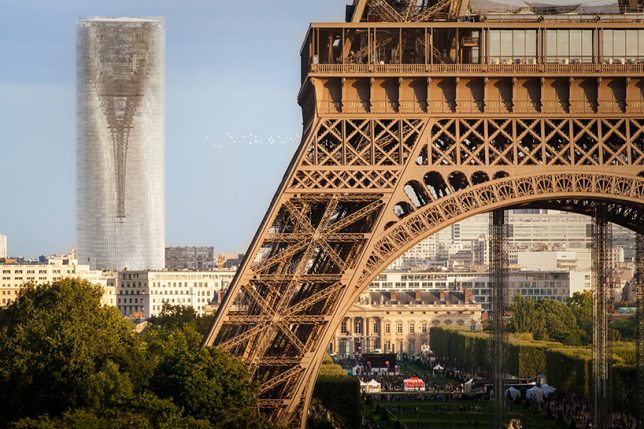
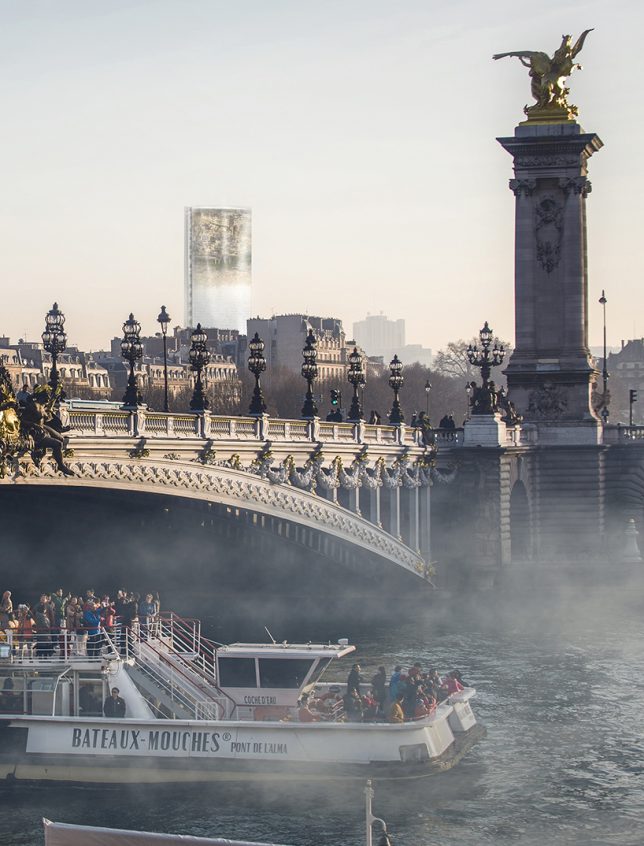
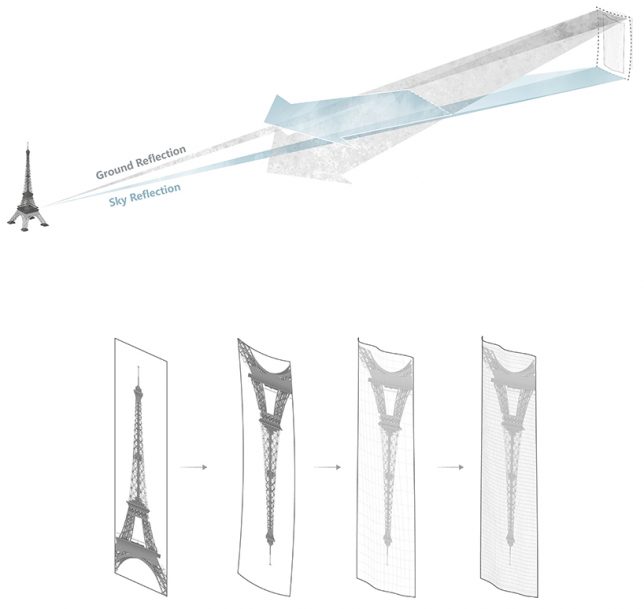
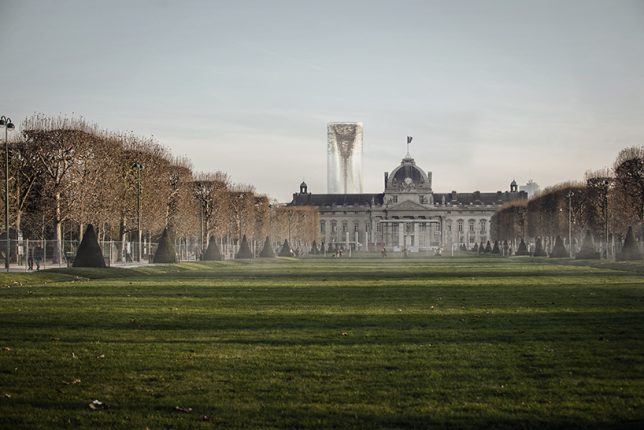
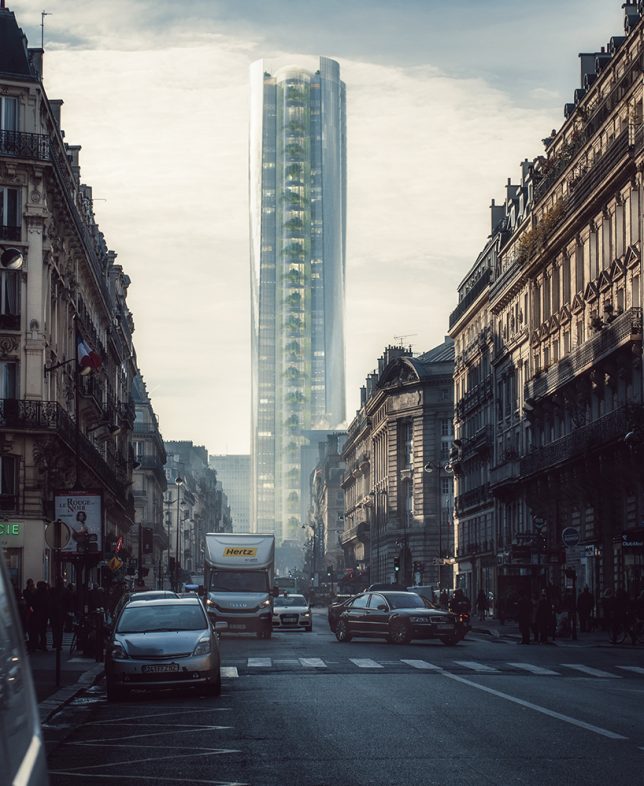
Tall, dark and brooding, the infamous Maine-Montparnasse Tower is an unexciting skyscraper, especially by Parisian standards, but that could all change if MAD Architects converts it into a city-scale mirror. Their renovation proposal employs clever optical tricks to reflect and invert the surrounding cityscape.

When it was built, Montparnasse was the tallest building in France and heralded as a technological achievement. But unlike the Eiffel Tower, which was controversial at first but became a symbol of the city, this skyscraper never gained iconic status — in fact, it led urban building heights to be capped at seven stories. Some quip it has the most beautiful views in the city, in part because those views don’t include the building.

MAD Architects aims to change perceptions of the tower and its role in the city using concave glass panels tilted at an angle to create reflections of the surrounding built environment.

Viewers would be able to see surrounding streets, roofs and buildings in its mirrored facade. In a way, the resulting design both blends into the environment while also highlighting the beauty of the French capital and showing it from generally unseen angles.

“Today, we cannot really demolish this building and the historical regrets it stands for,” explains one of the architects behind the proposal, “but we can establish a new perspective to re-examine and think about how humanity can co-exist and interact with the tower and its environment, to bring meaning to our hearts.”

Perhaps unfortunately, while the firm was shortlisted in a redesign competition, another team was chosen to renovate the structure before the upcoming Olympic Games. Still, the design idea is out there, and another city might have its own ugly tower in need of transformation.

Share on Facebook


[ By WebUrbanist in Architecture & Offices & Commercial. ]

[ WebUrbanist | Archives | Galleries | Privacy | TOS ]


WebUrbanist

 
Comments Off on MAD Architects Redesign Turns Ugly Paris Tower into Giant City-Scale Mirror

Posted in Creativity


Polaroid unveils flexible LED panel you can bend into different shapes

29 Sep

Polaroid has been on a lighting spree of late, and the brand continued that trend this week by launching a lightweight, flexible LED light panel that can be bent into various positions and shapes.

The 12×12-inch (30.5 x 30.5cm) panel offers flicker-free 5600K color temperature light at a thickness of just 16mm / 0.6in. Inside are embedded 256 total LEDs that output 4500 lumens of light, which Polaroid says makes it nearly as bright as direct sunlight; however, the panel does include a diffusion filter to produce a softer “dreamy glow.”

According to the product’s Amazon page, Polaroid’s new panel includes a remote control for toggling the light’s channels and settings, it is dimmable, and it’s being described as durable, though Polaroid doesn’t detail the exact materials it used to make the product.

The Polaroid flexible LED panel is available now for $ 125 USD.

Press Release

Polaroid Announces the Polaroid Flexible LED Lighting Panel; Brings Bendable, Controlled Lighting to Photographers and Videographers

Super-bright, featherweight LED light that folds and bends into the perfect shape for every shot

Edison, NJ – September 26, 2017 – Polaroid today announced the Polaroid flexible LED lighting panel, an incredibly lightweight, bendable light source that is a must-have accessory for any photographer or videographer. Mold the light to the desired form and position, as the pliable flat-mat material can be reshaped to give focused control over the light’s direction and fall-off. Anyone from professional photographers to casual enthusiasts can use the simple wireless remote control to quickly dim the daylight balanced light source, making it perfect as a main light or as a versatile fill light in larger set-ups.

The Versatile Light That Fits Any Situation

Perfect for both indoor and outdoor use, the 5600K color temperature light source delivers flicker-free brilliant light wherever you take it. Bright and flexible enough to be part of a larger professional shoot, the Polaroid flexible LED lighting panel is also light enough for use at solo outings, weddings and location shoots. The compact design and bendable material make this the perfect accessory for the photographer on-the-go.

Perfect Lighting for Portraits, Products or Macro Photography

Measuring at 12×12” and just 16mm wide, the super slim Polaroid flexible LED panel mat weighs a mere one pound, making it easy to arrange and mold the light into your ideal position. Even at this ultra-portable size, the Polaroid flexible LED lighting panel delivers superb color reproduction similar in comparison to a natural light source; with 256 LEDs it can produce up to 4500 Lumens – nearly the brightness of direct sunlight. For those looking to achieve a softer look, the included special diffusion filter turns the brilliant LED light into a dreamy glow – perfect for portraits and product shots!

Photographers and videographers can purchase the Polaroid flexible LED lighting panel from Amazon for 124.99 USD.

Articles: Digital Photography Review (dpreview.com)
 
Comments Off on Polaroid unveils flexible LED panel you can bend into different shapes

Posted in Uncategorized


SYMBIOZ: Renault’s Autonomous Car Integrates Into a Matching Residence

26 Sep

[ By SA Rogers in Technology & Vehicles & Mods. ]

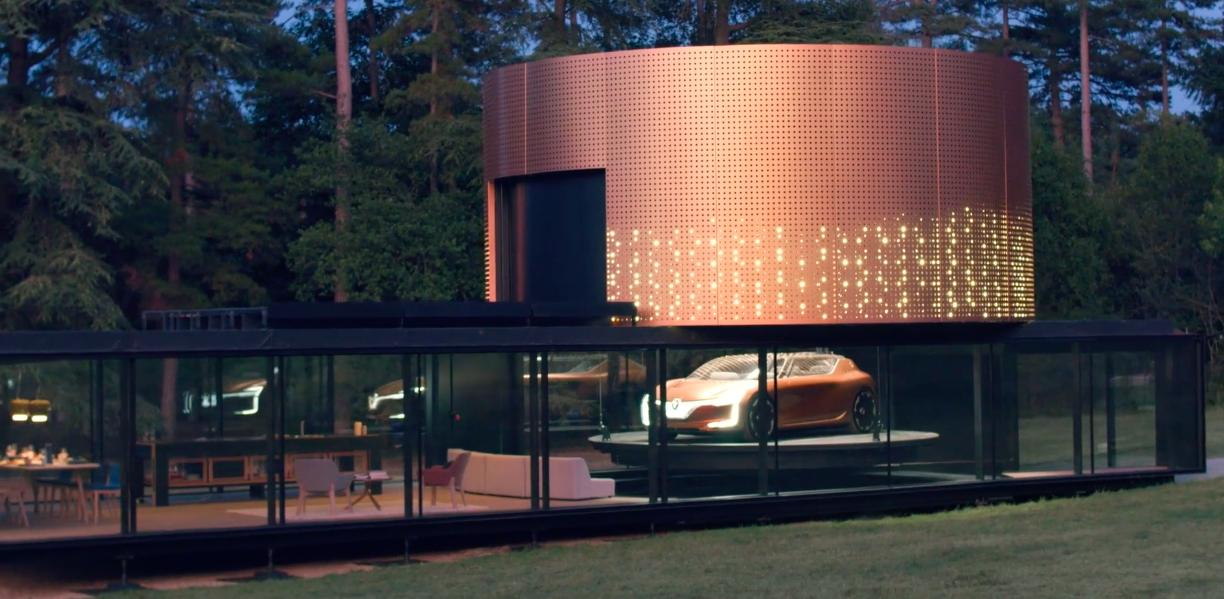
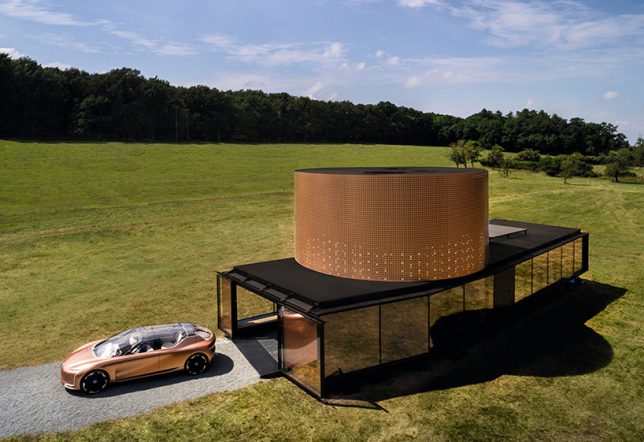
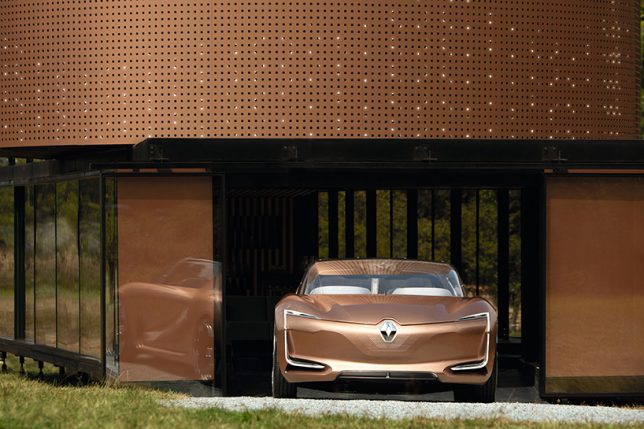
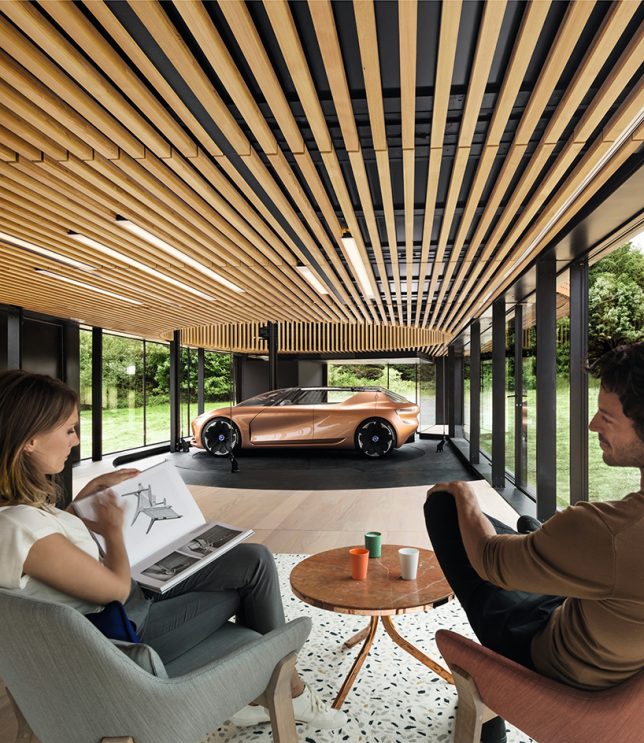
In the future, will our autonomous vehicles simply sit within our homes like a part of the living space, eliminating the need for garages and parking spots? Probably not. At least, not for most of us. Concepts like the new SYMBIOZ car and house combo are clearly made for the richest among us, and it’s not likely that most existing housing will be retrofitted to accommodate our driverless cars, especially since many people will likely use car services instead of owning their own vehicles. But Renault’s concept shows off one vision of how some of us might integrate autonomous cars into our lives in the decades to come.

“The way we use our cars is changing,” says Thierry Bolloré, Renault’s executive vice president and chief competitive officer. “Already a car is more than just a way to get from one place to another. It’s becoming an interactive and personalized space that connects passengers to other cars, people and objects around them. Looking to 2030 we imagine new scenarios with more efficient energy use, connectivity and autonomous driving scenarios that will improve how we live and travel.”

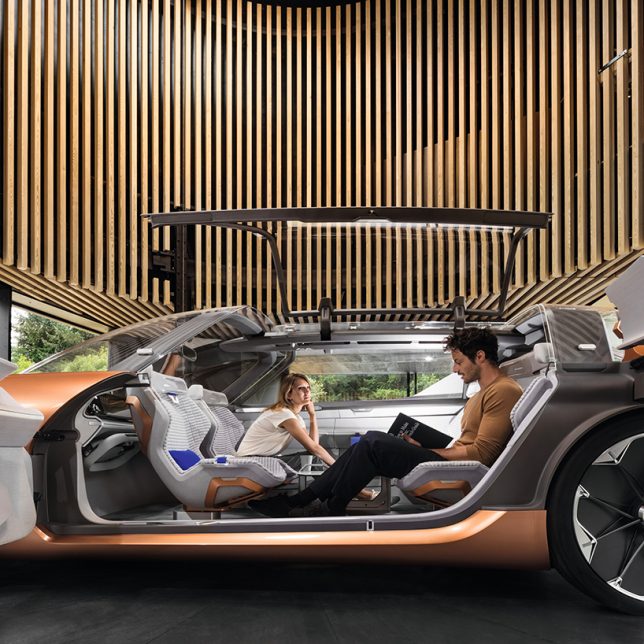
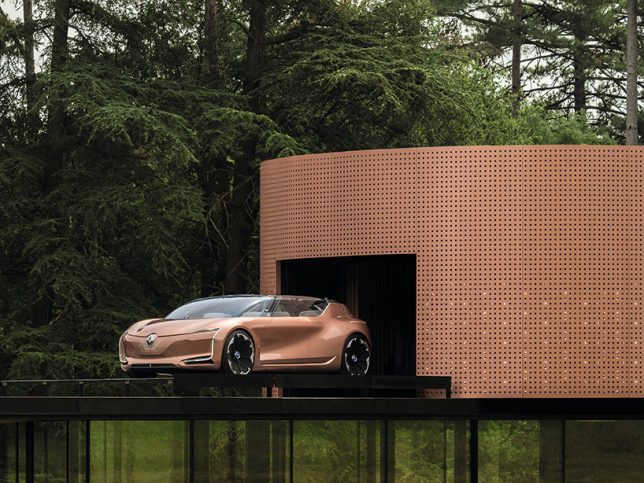
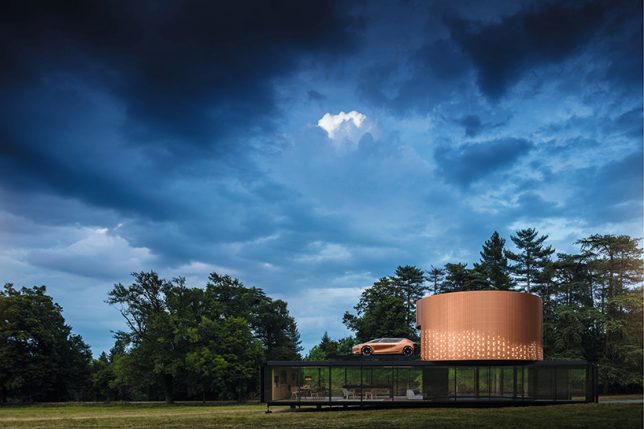
Presented at the 2017 Frankfurt Motor Show, the SYMBIOZ concept envisions the emissions-free,  all-electric car as a room within a room, entering the home to offer additional seating and make the transition between home and travel more comfortable. It’s easy to move objects and children back and forth between the home and the car, and once the car is brought inside, it starts to charge from the home’s energy systems automatically. The car can even act as an energy generator in case the power goes out.

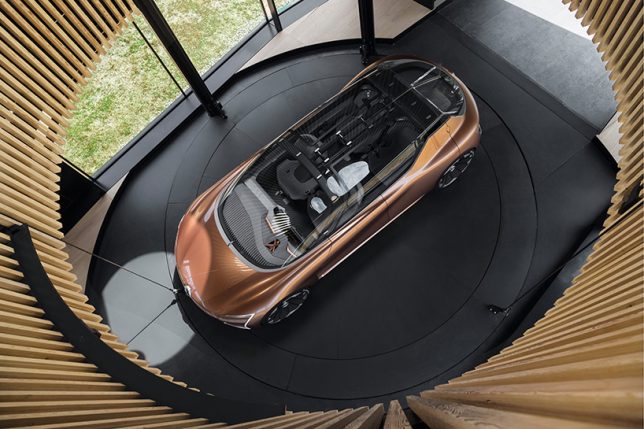
Clean energy means the car won’t bring in nasty exhaust fumes. The car-home combo shows it parking on a special circular pad that can be raised up to the second level on demand, freeing up space below and keeping the vehicle secure. Inside the vehicle, you’ll find a retractible dashboard and front seats that pivot to the back to enable easy conversation between passengers. What do you think – would you take advantage of technology like this, if it were accessible to you?

Share on Facebook


[ By SA Rogers in Technology & Vehicles & Mods. ]

[ WebUrbanist | Archives | Galleries | Privacy | TOS ]


WebUrbanist

 
Comments Off on SYMBIOZ: Renault’s Autonomous Car Integrates Into a Matching Residence

Posted in Creativity


Take Your Photography into Hyperdrive with Zoom Blur Photos

26 Sep

Warning: preg_replace(): The /e modifier is no longer supported, use preg_replace_callback instead in /home/forge/content.photojojo.com/content.photojojo.com/wordpress/wp-content/plugins/ozh-better-feed/inc/feed.php on line 134


Photojojo

 
Comments Off on Take Your Photography into Hyperdrive with Zoom Blur Photos

Posted in Equipment


Sony packed serious phase detect AF into these new 4K palm-style camcorders

16 Sep

If you’ve used a palm-style camcorder to try and film action at any point over the past several years, you’ve probably noticed an issue: most of these camcorders are god awful at finding and holding focus, usually relying exclusively on contrast detect AF or simply the deep depth-of-field their small sensors made requisite. Well, not anymore.

Sony has just debuted three new 4K camcorders with advanced, relatively large sensors aimed at three different tiers of users. But all of them have one thing in common: blazing fast, 273-point phase detect autofocus systems similar to (and, in fact, a bit more advanced than) the system found in Sony’s new RX10 IV. More advanced because the camera allows you to further customize features like AF Drive Speed, Tracking Depth Range and Subject Switching Sensitivity to make sure you nail every shot. We’re also told the focus ramping is more sophisticated, if you ask the autofocus to rack between two subjects. The hi-res touchscreen LCD should make focus easy and intuitive as well.

All three palm-style camcorders feature this same autofocus system, a 1-inch type stacked Exmor RS CMOS image sensor, and support 4K ‘Instant HDR’ recording using Hybrid Log Gamma (HLG) technology. However, not all three are meant for the same user. The AX700 is for serious amateurs, the NX80 for semi-pro video shooters, and the Z90V packs in some interesting broadcast capabilities such as XAVC L format recording, 3G SDI connectivity, and other features the support news reporting.

Of course, at $ 1,900 for the ‘cheapest’ model, it was obvious from the get-go that Sony wan’t aiming for the entry-level crowd with this release.

The most beginner-friendly model, the FDR-AX700, arrives in October for the aforementioned price of $ 1,900. The two higher-end models, the HXR-NX80 and PXW-Z90V, both arrive in December for $ 2,300 and $ 2,800 respectively. To find out more about any of these camcorders, read the press release below or visit the Sony 4K Palm website.

Press Release

Sony Unveils First Camcorders with Phase-detection AF

Sony’s newest camcorders are its first to feature phase detection Auto Focus (AF), and expand its line of 4K and HDR-capable tools for shooting applications ranging from video enthusiasts to corporate and events to broadcast news and TV production.

The three new palm-style models are the XDCAM PXW-Z90, the NXCAM HXR-NX80 and the Handycam FDR-AX700. The camcorders’ Fast Hybrid AF system ensures highly accurate focusing and tracking — especially useful during 4K shooting — delivered by 273 phase-detection AF points that cover approximately 84% of the shooting area, high-density placement of autofocus points and a newly developed AF algorithm. In movie recording mode, the appearance of phase-detection AF frames indicates the focused area and easily allows users to monitor a subject that is in focus.

Each camcorder combines fast and reliable AF adapted for video shooting with a 1.0-type stacked Exmor RS CMOS image sensor. The new camcorders support 4K HDR recording with Hybrid Log-Gamma (HLG) offering an Instant HDR workflow to produce high-quality HDR content smoothly. The Instant HDR Workflow enables simple shooting, editing and viewing of HDR content in HLG, without the need for color grading during post production.

The new camcorders feature a high-resolution OLED viewfinder (0.39-type OLED, 2,359k dots) and advanced touch screen operation, on the 3.5-type large LCD screen (1,555k dots), to allow users to quickly switch focus from one subject to another, while the AF Drive Speed, Tracking Depth Range and Subject Switching Sensitivity can all be configured as required for different subjects and content styles.

Simple, multi-camera live production

The PXW-Z90, HXR-NX80 and FDR-AX700 camcorders all work seamlessly with Sony’s MCX-500 live producer, a compact, cost-effective switcher that makes it easy for one operator to run a multi-camera live event. With the switcher and Sony’s RM-30BP controller, a Tally icon appears on each camera’s LCD panel and viewfinder. A red icon indicates when the shot is live (PGM) while Green indicates preview mode (NEXT).

The MCX-500 supports mixing between eight video sources, four stereo embedded audio channels plus two XLR Inputs, and a dedicated Title Input, up to nine video inputs, and five stereo inputs including XLR. Internal recording and live streaming is also possible via Ustream, Facebook Live and YouTube Live.

Users can also synchronize timecode among multiple camcorders using Sony’s free Content Browser Mobile 3.0 app with optional CBKZ-WTCL upgrade and devices running iOS® (9.0 – 10.3) or Android® (4.4 – 7.1) operating systems.

Versatile Shooting Capabilities

The new camcorders enable the following key technology and features to support versatile shooting, including:

  • 4K full-pixel readout without pixel binning using an enhanced BIONZ X™ image processing engine
  • Super Slow Motion recording up to 960fps, which is industry leading among palm categories and Slow & Quick Motion Full HD recording up to 120fps.
  • S-Log3/S-Gamut3 capabilities for users to create and work with images as they desire.
  • 29mm wide-angle ZEISS® Vario-Sonnar T* 12x optical zoom lens and 18x Clear Image Zoom
  • Less image distortion (rolling shutter phenomenon), in comparison to conventional models, when shooting moving subjects in motion

Workflow efficiency benefits such as proxy recording, relay recording and simultaneous backup recording are also delivered thanks to the new camcorders’ dual memory card slots and multi-camera operation capabilities supported by TC (time code)/UB (user bit). The new camcorders also have REMOTE terminals, Multi-Interface Shoe™, and HDMI Type A for enhanced operability.

The new models also feature dual XLR audio input, a detachable handle, and access to Content Browser Mobile a supporting smartphone application to enable Wi-Fi® monitoring, Camcorder remote control and wireless timecode sync between multiple cameras.

The PXW-Z90 also includes several features to suit broadcast-specific production requirements: XAVC L format recording, which provides high-quality images at 4:2:2 10 bit (HD) and 4:2:0 8 bit (QFHD) in addition to conventional broadcasting MPEG2HD format recording; 3G SDI connectivity for compatibility with existing broadcasting equipment; and networking functions to support news reporting, such as compatibility with XDCAM® air, Sony’s cloud-based ENG subscription service. The HXR-NX80 and FDR-AX700 adopt XAVC S, an extended format of XAVC for consumer use.

The following is planned availability and suggested list pricing for the new models:

  • FDR-AX700 – October 2017, $ 1,899 USD
  • HXR-NX80 – December 2017, $ 2,299 USD
  • PXW-Z90V – December 2017, $ 2,799 USD

Articles: Digital Photography Review (dpreview.com)
 
Comments Off on Sony packed serious phase detect AF into these new 4K palm-style camcorders

Posted in Uncategorized


Photographer transforms disabled kids into Justice League heroes for touching photo project

02 Sep

Last year, photographer Josh Rossi made headlines all over the world after he used his skills as a photographer and retoucher to turn his daughter into Wonder Woman. It was a fun passion project, but the viral outpouring of support it generated inspired him to do something more.

And so Josh and his wife Roxana teamed up with costume designer Julie Whiteley to find ‘the REAL Justice League’ and show them for the superhumans they are.

Roxana scoured the world to find six children with varying disabilities and diseases, who have shown incredible strength and resilience. The final Justice League lineup consisted of: 5-year-old Kayden Kinckle, 3-year-old Sofie Loftus, 9-year-old Teagan Pettit, 2-year-old Mataese Manuma, 7-year-old Zaiden Stolrow, and 5-year-old Simon Fullmer.

Each of the kids suffers from a disease, disability, or condition that makes them seem weak on the outside, and Rossi’s hope was that this photo project would showcase their inner strength. So they created costumes that cost up to $ 10,000 per child (donated to this good cause), photographed them, and then delivered poster prints to the family and taped the children’s reactions.

Here are some behind the scenes photos from the process, followed by all six reaction videos.

$ (document).ready(function() { SampleGalleryV2({“containerId”:”embeddedSampleGallery_4525959624″,”galleryId”:”4525959624″,”isEmbeddedWidget”:true,”standalone”:false,”selectedImageIndex”:0,”startInCommentsView”:false,”isMobile”:false}) });

You can read each of the children’s individual stories on Rossi’s website. From rare cancers, to heart conditions, to a young double amputee, these kids really are incredible humans. And, of course, you can see all of the final images in the gallery below:

$ (document).ready(function() { SampleGalleryV2({“containerId”:”embeddedSampleGallery_1057121361″,”galleryId”:”1057121361″,”isEmbeddedWidget”:true,”standalone”:false,”selectedImageIndex”:0,”startInCommentsView”:false,”isMobile”:false}) });

To see more of Rossi’s work, visit his website or follow him on Facebook and Instagram.


All photos by Josh Rossi and used with permission.

Articles: Digital Photography Review (dpreview.com)
 
Comments Off on Photographer transforms disabled kids into Justice League heroes for touching photo project

Posted in Uncategorized


Film reversal: How to turn a black-and-white negative into a direct positive

30 Aug

If you need a fun film photography experiment to try out this week/weekend, how about giving black-and-white film reversal a shot? The folks at Branco Ottico decided to give this process a shot—turning multiple black-and-white negatives into rich, direct positive transparencies… just because.

Branco Ottico’s Davide Rossi detailed the whole process in a dual-language blog post and the video above. But if your first question is less “how” and more “why,” he covers that as well:

Why reverse a black and white film to get a positive one?

Because it is the way to create a direct positve original by the extraordinary richness of detail, because it is unique and made alive by light, because you can make a backlight reveal the shape of an object.

It’s really a very detailed photograph, with fascinating nuances and deep densities, they take your eyes wondering marvelous.

Rossi promises that these direct positive transparencies look “alive” in a way that an inverted scan on a computer screen simply can’t. “This is what I see when I shed my eyes in front of a slide created by a big 20x25cm camera,” he writes. “Faces that live their own light with such a detailed skin roughness to make you smile because it does not even look alive with the your own eyes.”

Rossi was kind enough to share some behind the scenes and final images with us. Check them out for yourself in the galleries below:

$ (document).ready(function() { SampleGalleryV2({“containerId”:”embeddedSampleGallery_0759939532″,”galleryId”:”0759939532″,”isEmbeddedWidget”:true,”standalone”:false,”selectedImageIndex”:0,”startInCommentsView”:false,”isMobile”:false}) });

$ (document).ready(function() { SampleGalleryV2({“containerId”:”embeddedSampleGallery_8196077358″,”galleryId”:”8196077358″,”isEmbeddedWidget”:true,”standalone”:false,”selectedImageIndex”:0,”startInCommentsView”:false,”isMobile”:false}) });

Mind you, the process is no walk in the park. Even if you purchase a dedicated black-and-white film reversal kit online, each different film requires a different approach—then again, isn’t that what makes this an experiment worthy of the name?

For Rossi, it took 4 days of trial and error to figure out an easy-to-reproduce three-step process that he will soon publish as a followup to this video.

If you want to give the experiment a shot for yourself, check out the video and blog post for yourself, stock your homebrew darkroom, and give it a go this weekend. If you want a bit more guidance, keep an eye on the Branco Ottico site for a detailed breakdown of Rossi’s three-step process.


All photos by Davide Rossi/Branco Ottico and used with permission.

Articles: Digital Photography Review (dpreview.com)
 
Comments Off on Film reversal: How to turn a black-and-white negative into a direct positive

Posted in Uncategorized


LukiLink turns your smartphone into an external HDMI display for a DSLR

25 Aug

A new device called the LukiLink just popped up on Kickstarter, and it promises to transform your smartphone into an external HDMI displays for your DSLR.

LukiLink is very simple to use: just connect it to a DSLR camera via an HDMI cable on one side, and a smartphone/tablet via a USB cable on the other. Live video from the camera is then output to the smartphone via the LukiLink mobile app (Android and iOS). The system supports a maximum input/output resolution of 1080/60p.

The team behind the LukiLink, which resembles a simple dongle, explains that the system can be used to view live video from the camera with the smartphone serving as an ordinary external monitor. The system can also be used to livestream footage from the camera on platforms like YouTube, and to transform the smartphone (or tablet) into an external recorder.

LukiLink promises support for NTSC, PAL, and PAL-60 video format inputs, bitrates ranging from 3Mbps to “about 18Mbps,” as well as a maximum recording resolution of 1080/30p. Latency, meanwhile, is said to “usually” fall between 200ms and 300ms, though the exact rate will depend on the smartphone used.

The team behind the product is currently seeking funding on Kickstarter, where they have raised a little over $ 40k of their approximate $ 106k goal. Interested buyers can claim a unit by pledging at least €90 (~$ 105 USD), which is a €40 discount over the anticipated retail price. Assuming the LukiLink is funded, global shipments are scheduled to begin this upcoming October.

Articles: Digital Photography Review (dpreview.com)
 
Comments Off on LukiLink turns your smartphone into an external HDMI display for a DSLR

Posted in Uncategorized


Humans of New York is turning into a TV series on Facebook, debuts next week

25 Aug

Brandon Stanton, the photographer behind the wildly successful website-turned Facebook page-turned Best Selling Book “Humans of New York” surprised everyone today with a bombshell announcement. For the past 4 years, he’s been quietly filming over 1,200 personal interviews with his portrait subjects, and he’s turning those interviews into a HONY TV series starting next week.

The series was created in conjunction with cinematographer Michael Crommett, and the official announcement and trailer went live just 20 minutes ago on the Humans of New York Facebook Page.

“Early on I realized that video would add a deeper layer to Humans of New York. At the heart of all these posts are the conversations themselves,” writes Stanton. “I’m often deeply moved by the people I meet. Or they make me laugh. Or they make me think. And I always do my best to recreate the experience through photos and words. But I always knew that video would provide the closest thing to ‘actually being there.’”

Inspired by this realization, he began filming interviews… many many interviews. But instead of posting them one day at a time as he has been doing with his photos, he held onto them in the hopes of creating something special down the line. Down the line has finally arrived.

“My goal was not to make a television show based on Humans of New York. I wanted the television show to *be* Humans of New York,” explains Stanton. “I think I came pretty close. And I think/hope you will love it.”

Watch the trailer for Humans of New York (The Series) at the top of this article, and then head over to the HONY Facebook Page for more info. The Series premiers next week on Facebook Watch.

Articles: Digital Photography Review (dpreview.com)

 
Comments Off on Humans of New York is turning into a TV series on Facebook, debuts next week

Posted in Uncategorized