RSS
 

Posts Tagged ‘Indoors’

How to Do Digital Scrapbooking – A Fun Activity to do Indoors

24 May

The post How to Do Digital Scrapbooking – A Fun Activity to do Indoors appeared first on Digital Photography School. It was authored by Ana Mireles.

dps-how-to-do-digital-scrapbooking

Have you heard of digital scrapbooking? It probably sounds a little weird because a scrapbook is associated with crafts and handiwork. But it’s also a way of preserving and displaying your memories with a specific look that can be recreated digitally.

Digital Scrapbooking using GIMP

It’s also a fun activity for the whole family, and you can do it indoors. Keep reading to learn how to do it and even keep the crafting involved if you like.

Prep work

Selection

As you would do with any kind of album, you need to go through your photos and select the ones you want to include. Sometimes it’s easier if you choose a topic for it, especially in scrapbooking as the embellishment will be guided by it. For example, you could choose your first trip to the beach.

Digital Scrapbooking indoor family activity

If you want to make the most out of this exercise, you can even organize all those files that you’re reviewing. There are many programs dedicated to this, some of the most popular are Lightroom or ACDSee.

Decoration

The most characteristic thing about scrapbooking is the embellishment.

You can add notes, frames, and all sorts of decorations around the photos. Digital scrapbooking is not different, what changes is the way you do it. However, if you want to keep some of the craftings, it’s also possible.

Let me give you some examples and ideas.

  • Stock Images: This is the fully digital version. You can buy or download images from different websites. Unsplash and Pexels are great sites for free stock images. If you’re just using Google, always keep an eye on the licensing permissions of each photo so you don’t infringe any laws.
  • Photograph objects around the house: This is not exactly crafty, but it does involve your own creativity. Do you have flowers, fruits, or any home decors that can match the topic you’re working on? Photograph them! Best if you can put it in a neutral and contrasting background, as you are going to cut them out later. This is great when you want to involve more people in the activity – that way everyone can go find their favorite objects to include.
  • Make your own: This is just like the one before, except that you don’t use things that you already have. Instead, you make them, especially for this project. You can do some origami figures or ‘age’ a piece of paper with tea and coffee stains to use as background. This version is the one that includes more crafting and stays closest to the original tradition. It’s especially fun if you have kids. Once you have everything done, photograph it to use in your digital scrapbook.

Digital Scrapbooking

I’m going to do my scrapbook in GIMP because it’s free software, and this way, anyone can follow. You can also use Photoshop as the main feature you need is to work with layers. Just keep in mind that the individual tools and effects would be different.

Get your images ready

Okay, now that you have the photos of your elements, you need to have them ready for use in digital scrapbooking. That means that each one is cut-out so that it can interact freely with others.

For this, you can do the work right inside GIMP, or you can use any of the many free tools to remove backgrounds that are on the market. I’ll show you how to do one here in GIMP.

Open your image and make a selection around your subject using any of the selection tools from the panel.

There is no right or wrong when choosing the tool; it depends on the image you’re working and your skills. For example, here, it’s easier to use the Rectangle because of the shape of the object. However, I could also use the scissors or the path tool to draw the edge manually.

Selection tools

Once you have it, go to Select > Invert so that it’s the background that gets selected. Then right-click on the Layers dock and choose Add an alpha channel from the menu to allow the transparency and finally go to Edit > Clear.

Remove backgrounds

Now save your image in GIMP’s file extension by using Save As or Export to save as .png, which will make it available for other programs while preserving the transparency. Repeat the process for all the images you’re going to use and save them in the same folder for easy access.

Create your layout

To create the layout for your scrapbook, you need all the elements in the same document. To do this, you need to go to File > Open as Layers. Select all the files and click Ok. This will open one document with each photograph as an independent layer.

Digital Scrapbooking is done in layers

You can now use the Move, Scale, and Rotate tools to arrange your layout.

Keep in mind the order of your layers, as the ones on top will cover the ones below. So, if you want things to overlap, you can drag and drop the layers to change the order.

Summer layout

Once you’re happy, you can start adding notes, which is another important component of a scrapbook.

Add some text

There are many experiments you can do to play with your text. Here are a couple of simple ideas to get you going.

Use the Text tool to write a title, note, date, or whatever you want to include. If you click and drag, you can create a specific area where the text will fit. Then choose the font you like.

In my opinion, the ones that simulate handwriting are the best for digital scrapbooking.

Digital Scrapbooking includes notes

You can later change the Blending Mode to incorporate it more naturally into the image or create different effects. You’ll find this menu on top of the layer panel.

GIMP's text effects

Another choice is to type directly in the background. Then use the Rectangle Select Tool and draw a selection around it. Then go to Filters > Light and Shadow > Xacht Effect which is a default script included in GIMP – 2.10, which is the latest to the time of this article.

This will create a 3D effect that simulates a tag for your text.

Add some text to embelish

And there you go, add as much or as little as you like.

You can use it as a template and just change the image, or you can follow the same steps to create different layouts.

Have fun using digital scrapbooking to design albums, screensavers, wallpaper for your computer and so much more. I hope you enjoyed it!

Digital scrapbook summer layout

Try digital scrapbooking out at home and share your results with us in the comments!

The post How to Do Digital Scrapbooking – A Fun Activity to do Indoors appeared first on Digital Photography School. It was authored by Ana Mireles.


Digital Photography School

 
Comments Off on How to Do Digital Scrapbooking – A Fun Activity to do Indoors

Posted in Photography


Great Photography Ideas for When You Are Stuck Indoors

22 Mar

The post Great Photography Ideas for When You Are Stuck Indoors appeared first on Digital Photography School. It was authored by Megan Kennedy.

Great Photography Ideas for When You Are Stuck Indoors featured image

In Australia right now, it’s bushfire season. And this year, it has been a particularly bad one. That means that for a significant part of the Summer so far, I’ve been stuck indoors trying to avoid noxious bush fire smoke. To top it off, now we have the Coronavirus to contend with. Usually, the majority of my photography is based outside. But to keep myself sane, I’ve been busying myself with photography projects around the house. Here are some tried-and-tested photography ideas for when you are stuck indoors.

photography ideas for when you are stuck indoors abstract lines
f/7.1 1/40 ISO 500

Photograph the ordinary

When you’re stuck indoors, it can seem like the subject matter is limited. However, under the eye of the camera, ordinary objects can become extraordinary.

As photographers, we are trained to seek out unusual and distinctive subject matter, so day-to-day objects can fall by the wayside. But responding to the subjects in your immediate environment can offer a new creative perspective, expanding your photographic repertoire.

photography ideas for when you are stuck indoors objects
f/4.0 1/100 ISO 320 | f/4.0 1/100 ISO 1000 | f/4.0 1/40 ISO 1000

Try blurred or unfocused photography

Photographers generally strive to achieve sharply focused images. But if you’re stuck indoors, shifting your technique a little can be a refreshing change. Blurry or deliberately out-of-focus photography can render unexpectedly beautiful results.

During a longer exposure, try physically moving your camera around to cultivate streaks of light. Or, instead of focusing on achieving pin-sharp photographs, switch your camera to manual focus and embrace an intriguing blurry aesthetic.

photography ideas for when you are stuck indoors plant abstract
f/1.8 1/40 ISO 320

Adopt abstraction

Abstract photography is a field of photography that doesn’t rely on objective subject matter. Instead, abstract photographers aim to convey ideas by focusing on the emotive experience of image-making and viewing.

There are plenty of subjects found indoors that you can use to generate abstract images. Try isolating subject matter with macro photography, or focusing in on interesting textured surfaces.

photography tips for when you are stuck indoors color abstract
f/2.2 1/100 ISO 100

Pretty polarization

In terms of photography ideas for when you are stuck indoors, this has to be one of my favorites. This little project involves photographing the stress-points of plastic objects.

While it might not sound particularly exciting, taking photographs of polarized plastic reveals colorful, otherworldly visual attributes in materials that are often taken for granted.

With a polarizing filter, a computer screen and a selection of plastic objects, you can investigate the materials around you in a whole new light. Have a look at the full guide here.

Great Photography Ideas for When You Are Stuck Indoors

Get into physiograms

Another great photography idea for when you are stuck indoors is physiography. Physiography involves recording the movements of a swinging light suspended over a camera during a long exposure. Because the light source needs to be suspended from a sturdy roof or beam and the project needs to be performed in the dark, physiograms are a great photography idea for when you are stuck indoors.

Check out the how-to here.

Great Photography Ideas for When You Are Stuck Indoors
f/4.0 57 seconds ISO 100

Switch it up

This photography idea for when you are stuck indoors is a simple one – change it up a bit!

Photography at home can impact your practice in every environment. So, if you are inclined to photograph in color, why not take advantage of your time indoors and practice black and white photography instead?

If you shoot in aperture priority, try switching to shutter priority.

If you are used to shooting landscapes, try focusing on details around the house. Have a go with a lesser-used lens, or even have a go at improving your camera-phone skills.

Study time

Whether it’s online, in a book or a magazine or on a podcast, there is a wealth of information about photography available. Reading up on photography is a great photography idea for when you are stuck indoors. Study new techniques, brush up on your photographic history, revisit camera theory…the options are endless.

Grab a book or kindle etc, settle in and get some knowledge.

photography ideas for when you are stuck indoors study books

Re-visit old photos

If (like me) you have a steadily growing stockpile of digital images that need a little TLC, you’re in luck. Being stuck indoors is a great time to revisit those old files hidden in the depths of your hard drive.

If you aren’t in the mood for photography around the house, editing old photos is a great alternative. Plus, you may find some gems that somehow went under the radar!

Great Photography Ideas for When You Are Stuck Indoors
f/4.0 1/100 ISO 320

Conclusion

Being stuck indoors may seem like a real pain…until you realize the wealth of photographic opportunities around you! Whether it be experimenting with abstraction, polarization, or physiograms, or taking some time-out to study or re-visit old photos, there are plenty of photography ideas for when you are stuck indoors.

The hard bit is choosing which one to try first!

The post Great Photography Ideas for When You Are Stuck Indoors appeared first on Digital Photography School. It was authored by Megan Kennedy.


Digital Photography School

 
Comments Off on Great Photography Ideas for When You Are Stuck Indoors

Posted in Photography


10 Things to Photograph Indoors When There’s Bad Weather Outside

07 Apr

No matter where in the world you live, there are some seasons that are more conducive to outdoor photography than others. That said, bad weather is no excuse to stop learning about photography! Here are 10 beginning photography exercises to try the next time you’re cooped up indoors due to bad weather. Each exercise includes a subject theme, discussion about the type of skills you’ll practice with that particular subject, as well as some questions and/or ideas to walk through in order for you to really take your understanding to the next level.

1. Flowers

bad weather

Pick up an inexpensive bouquet of flowers the next time you’re at the grocery store and bring it home. Pop the flowers in a vase, and start shooting!

If you choose a bouquet with a range of colors (including white flowers if possible), you’ll be able to practice properly exposing your images across the dynamic range. Photographing flowers is also a great opportunity to play around with different apertures. If you’re currently shooting in Auto, pop your camera over into Aperture Priority mode, and give things a try. How does changing from f/2.0 to f/5.6 affect the image? Which look do you prefer?

2. Candles and/or a Fireplace

bad weather

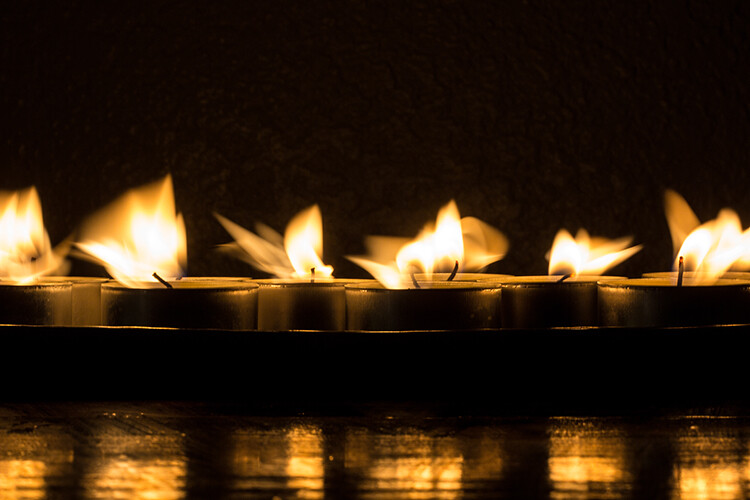
There are a few different benefits to spending some time photographing a flame. Whether you’re photographing a collection of candles or a fireplace, try experimenting with different exposure lengths in Shutter Priority mode. Try both long and short exposure times, and also be sure to note how the shutter speed affects the overall exposure of your image. Does a longer shutter time translate to a lighter or a darker overall image? How could you balance out a longer shutter opening without overexposing the entire image?

Another benefit to photographing flames is that it also makes you consider composition in a way that many subjects do not, especially in terms of reflections. Try putting a mirror or other shiny surface underneath a candle and photographing it. How does the reflection of the flame affect the overall image? Do you want to include the reflection in your image, or do you prefer to crop it out?

3. Oil and Water

This simple project packs a big punch!

bad weather

Equipment and supplies

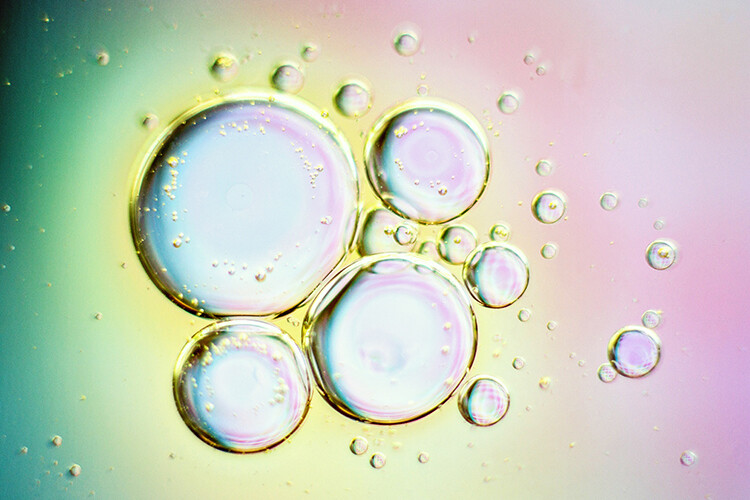
A macro lens will help you out tremendously here, but if you don’t have one, extension tubes are also a great option. This image was taken with a $ 15 set of extension tubes and a 50mm lens. Basically, all you need is a clear glass dish, two cups, colorful paper, water, and olive oil.

Setup

First, take your colorful paper, and set it on a table or counter. Then take your two cups and set them on top of the paper, several inches away from each other. Next, take your glass dish and set it on top of the cups, so that it’s elevated off of the colorful paper. Add a little water, then a little olive oil, and be ready to photograph the bubbles that appear. You may want to spend some time experimenting with photographing the glass dish at differing heights above the paper underneath. Experiment with different types of colorful paper; scrapbook paper is a great resource for this. Try differing amounts of oil and water, and see how those small changes affect your image.

This is a great opportunity to experiment with macro-like photography in a way that has a pretty big impact. If you are using extension tubes rather than a macro lens, keep in mind that your extension tubes may or may not work with your camera’s autofocus. If you’re having trouble getting the bubbles to come into focus, you may need to focus manually (try the LiveView focus technique).

4. Food

bad weather

Photographing food is a great opportunity to play around with styling, as well as post-processing. It’s my humble opinion that much of your direction in terms of styling and processing will come from the food itself. In this case, I had a rustic loaf of bread that was covered in different seeds. It reminded me of rustic, communal dinners, and so I wrapped it in a tea-towel and stuck it directly on my table (something that happens with fair frequency to loaves that have just come out of the oven around here). I also knew from the get-go that I’d apply a more matte post-processing technique than I usually use in portraits in order to echo the rustic feel of the bread.

On the other hand, what approach would you take to styling and photographing a sleek cheesecake? Or a classic fruit salad? This short little exercise allows you to push yourself in terms of styling and post-processing, trying out skills and techniques that you may not typically use, as well as spending some time thinking about what types of styling and post-processing would best represent the subject.

5. Window Silhouettes

bad weather

I don’t know about where you live, but around here it can often be rainy and sunny at the same time. If you find yourself faced with similar weather, it’s a great opportunity to try doing a window silhouette.

Window silhouettes are a great exercise if you are learning photography because it will help you understand how your camera sees light. If your camera is on auto, and you focus directly on your subject, what does your camera try to do? If you move your focal point off of your subject, what does your camera “see” then? Does it affect the focus of your image? What happens if you try out the different metering modes? Does one seem to be more effective than the others in creating a silhouette?

6. Food Coloring and Water

bad weather

Grab a tall glass or vase, fill it with water, and then drop a couple of drops of food coloring into it.

This is a simple and colorful way to examine both shutter speed and light. Try using a short shutter speed. What does the image look like? Try using a long shutter speed. How is that image different?

In addition, try shooting with all different types of light. The transparency of the water is a great opportunity to practice capturing backlit images.

7. Interiors

bad weather

You don’t need to have perfectly clean or perfectly decorated rooms in order to gain valuable experience and knowledge from photographing them. Just a pick a room and go for it.

Experiment with light sources. How does the final image look when you use only natural light? What happens when you use only overhead and/or floor lights with the curtains closed? How does the image look when you use a combination of natural light and accent lighting? Think both in terms of exposure, and also the color balance of the image. Which look do you personally prefer?

8. Books

bad weather

I’m a huge bookworm, so it’s no surprise that I really enjoy photographing books in all sorts of scenarios. I love the texture of the pages, I love the different colored spines. I love basically everything about books!

Photographing books is also a great way to learn about aperture. Pick any book, and crack it open. Look for a short passage that you enjoy. Set your camera to Aperture Priority mode, and start with the lowest number you’re able to select (f/4 or f/2.8 for example). Set your focal point to your desired passage, and shoot. How much of the image is in focus?

Now set your aperture to one or two numbers higher than your first setting. How much of the image is in focus this time? Continue shooting up and down your available aperture range, noticing how the image changes as you do so. When might you want to use an image with only a sentence or two in focus? When might you want an image that included more of the book in focus?

9. Pets

bad weather pets

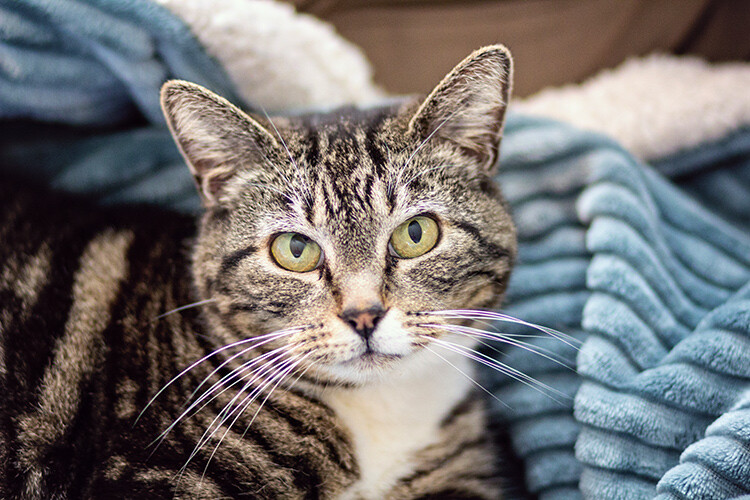
Photographing a pet can often present many of the same challenges that you might experience when photographing children. Certainly, this will depend greatly on the type of animal you have as well as their temperament, but it holds true for our cat.

She moves quickly and is often not super interested or cooperative when I’m attempting to photograph her. So, trying to photograph our cat is a good opportunity to practice shooting candidly, as well as waiting patiently for just the right moment. Our cat is obviously never going to walk right in front of me, sit, and smile for a photo. Instead, it’s my responsibility to sit on the couch with my camera, waiting patiently. When she decides to come over and investigate, I’ll be waiting and ready. (Read: 9 Tips for Taking Better Photos of Cats) 

10. Craft Supplies

bad weather

Craft supplies are a great tool for photographic exercises because they’re usually a good source of color. Play around with color and group items randomly. Then group similar colors together.

Next, pick one single item or color to focus on. Photograph it alone, as well as grouped with the others. Is the image stronger with only one color or with many? Do you prefer the colors to be randomized, or grouped together?

Conclusion

Have you tried any of these approaches? What other ideas do you have for bad weather, indoor photography exercises that would help beginners understand an element of photography better?

The post 10 Things to Photograph Indoors When There’s Bad Weather Outside by Meredith Clark appeared first on Digital Photography School.


Digital Photography School

 
Comments Off on 10 Things to Photograph Indoors When There’s Bad Weather Outside

Posted in Photography


Shooting Indoors in Ambient Light: Yoga Photo Session

23 Jul

Shooting indoors is always a challenge unless you have a professional lighting setup with you. The light is usually low, so it’s hard to get any kind of depth of field. Lightbulbs inside of lamps tend to glow orange, while overhead florescent lights show up on the greenish side, and aren’t very pretty. So what do you do? Let your Continue Reading

The post Shooting Indoors in Ambient Light: Yoga Photo Session appeared first on Photodoto.


Photodoto

 
Comments Off on Shooting Indoors in Ambient Light: Yoga Photo Session

Posted in Photography


5 Tips for Photography Using Natural Light Indoors

14 Oct

Indoor Portraits Using Backlight Window Light

You would probably love to have ideal lighting conditions for every shoot, especially if you are strictly an outdoor, natural light photographer. However there are many situations when the lighting is not ideal. Think winter, rain or even harsh midday sun. Sometimes you are stuck indoors, or your client wants to have a photoshoot inside their home. When used correctly, natural light indoors can be just as pleasing as outdoor lighting and can also provide opportunity for some creative portraiture with contrast, shadows, and drama. Here are some tips to get the most out of your photography using natural light shoot.

#1 Know your environment and know the light

Like any situation, do your research before you start photographing indoors. Many times the direction of the house, the position of the windows, along with the time of year plays an important part in the amount of light coming through. Is your house North-South facing or East-West? What are sunrise and sunset times where you live, or where you are going to be photographing? Does the room have a sunroof that lets in additional light? Light also changes depending on the time of day.  As light changes, so does the color of light. This directly affect the white balance (WB) of the image. If your camera has the ability to shoot in RAW use it, as white balance can then be adjusted in post-processing. If you really want to get it right in camera, experiment with the Kelvin scale.

When planning a shoot in your home, take several shots the day before to analyze what time is best for the light.  Sometimes this is not possible especially if you are going to a client’s home or photographing a venue. But this is where a little prep work goes a long way. Don’t be afraid to ask these questions or even google the venue to check it out online.

Indoor Portraits Using Window Light From the Side Angle Memorable Jaunts

#2 Know how to use window light to your advantage

One of the best sources of natural light indoors are windows. Learn how to use them to your advantage. In general, the closer you are to the window, the more light you will have to use and work with. Where you place your subject in relation to the window light will affect the image dramatically. There are three different scenarios for using window light:

  • Sidelight with the window: Here the subject is parallel or at a slight angle, to the window. Depending on the time of day and amount of light, this may yield images that have more contrast especially with midday sun streaming through the window.
  • Backlit by the window: Here the subject is sitting with their back to the window facing the photographer. You will need to meter for the subject and blowout the highlights to properly expose the image for the person. The other option is to expose for the highlights, as in the window and get an indoor silhouette. You can also use a reflector to pop light back onto the subject’s face.
  • Front lit by the window: Here the subject is directly facing the window, you are between the window and your subject. This type of lighting position produces the most even light of all the three.

Indoor Portraits Using Window Light From a Back Angle Memorable Jaunts

Indoor Portraits Using Window Light From the Front Angle Memorable Jaunts

#3 Know your settings and equipment

Remember your exposure triangle; the relationship between ISO, f-stop (aperture) and shutter speed. This plays an important role in indoor photography. Choosing a fast enough shutter speed will eliminate any camera shake if you are not using a tripod. Choosing a wide aperture (low f-stop number) will provide a shallow depth of field and blur out the background (particularly useful if there is some clutter around the house). Choosing a larger ISO provides more light; particularly useful if there isn’t much natural light coming indoors. Most of the newer DSLRs have a large range of ISO and handle high ISOs really well. Plus there are tools to help reduce noise in the image during post-processing if you want a less grainy look.

#4 Use open hallways, doors, or even the garage to emulate a situation of open shade

If for some reason you are not able to use window light to illuminate the subject (due to inaccessibility to a window ), you can use open hallways, doorways or even a garage to emulate a situation of open shade. Have the subject sit close to the edge of the doorway and face the light.

Indoor Portraits Using Open Shade From A Garage Memorable Jaunts

#5 Know when to use a reflector and a diffuser

A reflector and diffuser are great tools to use for indoor portraits. A diffuser softens the window light just like a white curtain or blinds. It is particularly useful for windows that have harsh midday sun streaming through. A reflector used in conjunction with window light, can add just the right amount of light bounce-back to dramatically improve your indoor portraits (especially for sideand backlit images).

Indoor Portraits Using Diffusers and Reflectors to bounce light back Memorable Jaunts
The next time the weather gods decide to ruin all your perfectly laid out plans to have an outdoor, natural light, photoshoot, don’t rush to reschedule your session. Try and experiment with natural light indoors and diversify your portfolio. If you want to use other forms of indoor lighting check out the article from the dPS archives on creating indoor portraits without flash.

For another dPS writer’s tips for using natural light read Melinda Smith’s Tips For Great Indoor Portraits Using Natural Light.

Do you have any other tips for using natural light indoors? Please share those and your images in the comments section.

The post 5 Tips for Photography Using Natural Light Indoors by Karthika Gupta appeared first on Digital Photography School.


Digital Photography School

 
Comments Off on 5 Tips for Photography Using Natural Light Indoors

Posted in Photography