RSS
 

Posts Tagged ‘improve’

Discuss: Better Equipment Versus Knowledge – Which Will Help You Improve Your Photography More?

22 Apr

As a photographer, you always have the urge to buy new equipment thinking it will bring you better results. This might be true, but only up to a certain point, because if you don’t have the knowledge you can’t make the most out of your equipment. I started with a Nikon D3200 and I use it to this day because, in my opinion, it’s not the equipment that is going to help me take better photos.

If you’re asking yourself, “What can I do with my entry-level camera?” then this is the article that’s going to prove that you can achieve great things and be a great photographer with your own camera. There are many photographers that took some amazing pictures with film cameras, photographers like; Andreas Feininger, Henri Cartier-Bresson, Eve Arnold, etc.

What keeps you from taking better photos, your EQUIPMENT or your KNOWLEDGE? - portait in a field

We cannot deny that their cameras were the best of their time. But my point is that even today they could compete with any owner of a fancy camera because having the latest camera is not going to guarantee a better vision.

I’m going to give you some tips and tricks on how to take better photos and overcome the obstacle of not having the latest equipment.

1. Read

The most important thing you can do is to read. Many people skip this step and think that only by practicing will they improve. It is true that you have to practice, but unless you study the theory first there is no way of practicing in an efficient way.

For example, if you read an article about shutter speed and aperture it’s easier the understand the mechanism and then apply it, than trying to figure it out all by yourself.

Start here to get to many great dPS articles and find the topics that interest you the most.

girl reading in the grass - What keeps you from taking better photos, your EQUIPMENT or your KNOWLEDGE?

2. Know your equipment

You just bought your first camera and you are stuck with your kit lens. But before buying a new lens you have to learn the basics. You can use your kit lens for numerous types of photos, from landscapes to portrait photography.

I took more than 5,000 images with my kit lens before buying my second one, and I learned a lot of helpful things. If you’re shooting portraits, 35mm focal length can get a nice bokeh having an aperture of f/4.5. This focal length is perfect because it’s not wide so you’re not going to distort the face and you can have more light than shooting the same lens at 55mm, f/5.6.

3. Know what to buy

Buying equipment can be difficult when you can’t afford expensive things and you have to spend your money right. I am speaking from the perspective of a portrait photographer. My first portrait lens was (and still is my main lens) a 35mm f/1.8. If you want nice bokeh for a cheap price this is the right choice. I’m still exploring with this lens and I always find new perspectives.

Knowledge Over Equipment

Next, I’m going to present some arguments on why better equipment doesn’t necessarily make you a better photographer and on why knowledge can help you overcome your equipment struggles.

Buying new equipment is always tempting, but you have to learn how to make the best of what you already have. The best thing you can do as an amateur is buying an entry-level camera and a prime lens. Stick with it and see if you can come up with a new vision every time you go out to take photos.

At first, I didn’t know how to use manual mode. But do you think buying a better camera is going to help with that? No is the answer, you have to read and understand how the relationship between ISO, shutter speed and aperture affect everything in a photo.

After learning that no picture is the same and the settings are going to change every time, you have to do a lot of trial and error. If you practice enough you can achieve great things. After learning how to use your equipment you have to learn how to process your pictures because it makes a big difference as well.
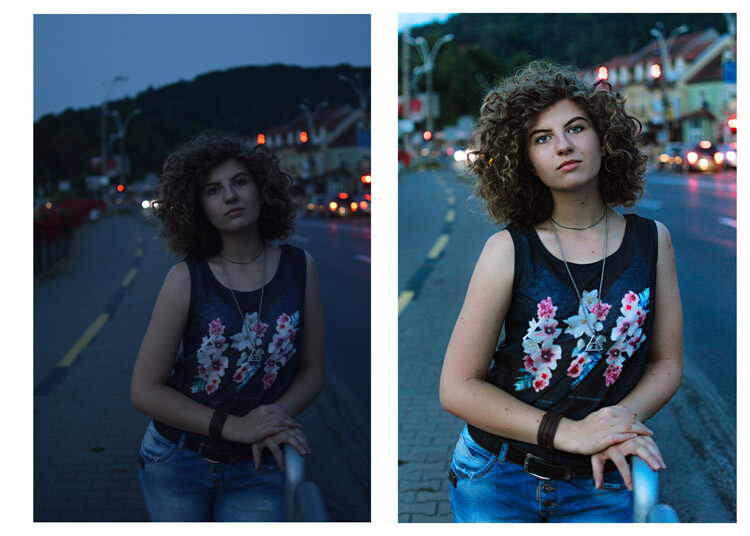
What keeps you from taking better photos, your EQUIPMENT or your KNOWLEDGE? - before and after processing

What keeps you from taking better photos, your EQUIPMENT or your KNOWLEDGE?

The next thing you have to know is that light makes the difference in every picture, you have to learn how to manipulate and control the light. Once you know how light works you are going to love your equipment.

lady and umbrella snowing - What keeps you from taking better photos, your EQUIPMENT or your KNOWLEDGE?

lady in leaves - What keeps you from taking better photos, your EQUIPMENT or your KNOWLEDGE?

When do you need better gear?

There are a few situations where better equipment can be helpful. I’ll give you a few examples and some tips to overcome the difficulties.

1. Shooting in low light conditions

Having expensive equipment can help you here, you can have a higher ISO without a lot of digital noise. With my entry-level camera, I can raise the ISO to 400 and it already looks really noisy. With a full frame camera or even an expensive DX sensor you can raise the ISO to 1600, or 3200 and your image is still going to look fine.

girl walking in the woods in winter - What keeps you from taking better photos, your EQUIPMENT or your KNOWLEDGE?

2. Sports photography

This is another hard thing to do with an amateur camera, you can still achieve great things. Your autofocus is going to play some tricks on you, so you have to work on your timing. Knowing where and when to press the trigger will help your autofocus a lot. Another thing you can do is to learn the panning technique.

Conclusion

So in summary, equipment is just a tool. It doesn’t help you to shape your vision and buying the latest gear as a beginner is not the best choice you can make. When you find that you have difficulty expressing your vision with your current equipment, then you can start thinking about upgrading.

The post Discuss: Better Equipment Versus Knowledge – Which Will Help You Improve Your Photography More? appeared first on Digital Photography School.


Digital Photography School

 
Comments Off on Discuss: Better Equipment Versus Knowledge – Which Will Help You Improve Your Photography More?

Posted in Photography


Five Simple Exercises to Improve your Photography

16 Apr

In this article, you will get five simple exercises to help you improve your photography.

How to grow as a photographer

Everyone, from beginners to professionals, seeks to improve their photography. Yet we often struggle to do just that, repeatedly asking the question, “How do I actively move my photography forward?

macro photography flower - Five Simple Exercises to Improve your Photography

Learning to take top-notch photographs isn’t like learning a musical instrument, where you can practice fingerings and scales while slowly gaining skills. When it comes to improving photography, the path often seems nebulous, difficult to grasp.

It doesn’t have to be this way. There are more focused ways of improving your photography. Below, I discuss five of these exercises, which, if done consistently, will help you improve your photography by leaps and bounds.

Exercise #1: Photograph every day for a month

The first exercise is simple; photograph every day. This may sound easy, but it often isn’t. With a job and family and life, it’s surprisingly difficult to get out and do photography.

But I’d like to emphasize this, if you’re serious about improving your photography, start here. Make sure that you use your camera each day, even if you only take one image. Carve out a particular time of the day that works. Or, if it’s easier for you, carry a camera around in your purse/backpack/briefcase, and bring it out during your lunch break.

macro photography flower abstract - Five Simple Exercises to Improve your Photography

I’ve found that there’s a sort of magic that comes from photographing—not just consistently—but daily. Your camera becomes a familiar tool in your hands. You start to see compositions everywhere. The photographic medium starts to make sense.

Trust me, if you do this your work will improve fast.

Exercise #2: Make 10 unique images of one subject

One of the main barriers to photographic improvement is not the technique so much as it is the ability to see.

A great photographer often views a subject and starts to visualize the many possibilities, quickly rejecting those which won’t work, and selecting that which does.

macro photography flower abstract aster - Five Simple Exercises to Improve your Photography

Hence, choose a subject and start by taking the obvious photographs.

Then, rather than moving on, force yourself to look for more. Get in close and take some more abstract or detail shots. Move back and look for more environmental images. Alter the background, the angle, and/or the lighting. If you normally use a tripod, try working handheld, or vice versa.

macro photography flower aster abstract - Five Simple Exercises to Improve your Photography

This exercise is meant to improve your ability to see. It is meant to take you out of your comfort zone so that you go beyond the obvious, and start looking deeper at your subject. Once that is ingrained, the photographic possibilities begin to open up, and your images will become unique and more satisfying.

macro photography flower abstract aster - Five Simple Exercises to Improve your Photography

Exercise #3: Share only one image per week

Let me explain this one. Part of improving one’s photography involves becoming a better self-critic. If you cannot recognize where you need to improve, then it’s very difficult to improve at all. But if you can pinpoint your strengths and your weaknesses, then you can improve upon the weaknesses—and harness your strengths.

To this end, I recommend joining a photo sharing site, one that is geared towards photography. Flickr, 500PX, and Tumblr would work well (or the dPS Facebook group). Then post one, and only one, image per week. Make sure that you’ve looked through your recent work, and that the image that you’re sharing is your best.

Before posting, think to yourself, “What is it that makes this a strong image? What would make it better? And what was it that made me reject the other images in favor of this one?” Take note of your responses, and remember them the next time you’re out in the field.

macro photography flower coneflower - Five Simple Exercises to Improve your Photography

So why can’t you just do this privately, rather than posting to a photo sharing site?

I find that there’s a bit of pressure that comes from posting your pictures publicly. This forces you to work slightly harder in identifying your best images. However, if you would strongly prefer not to post your images publicly, you could adjust the settings on your chosen sharing site so that only you can view the images—but imagine that you’re assembling them for a gallery showing.

Exercise #4: Critique at least 10 images per week

Similar to Exercise #3, but with a slightly different focus. Learning to critique your own work is great, but it’s also important to look at a broad array of photography with a critical eye. Hence, join a photo critique forum, and critique at least 10 images per week.

There are a number of forums out there that I recommend for nature photographers like myself: Naturescapes, Nature Photographers Network, and Birdphotographers.net are all good ones. They should allow you to make a free account in order to comment on other images.

macro photography flower abstract pink - Five Simple Exercises to Improve your Photography

This will help you in a few ways. First, constantly looking at images will help you to internalize compositions and get a sense of what works and what doesn’t. It’s difficult to improve your own photography if you don’t have a sense of what good photography looks like.

Second, it may give you ideas for your own photography. By this, I don’t mean that you copy other people’s photographs directly. But you can take note of interesting techniques, camera settings, and compositions, and incorporate them into your own work.

Third, being forced to articulate, in writing, what you find pleasing about an image will go a long way toward being able to understand how to make your own images more pleasing.

Notice that I’m not telling you to post your images on the critique forum—but if you feel confident enough to do so, then that is an excellent way to improve as well.

Exercise #5: Work in another genre of photography

This exercise is for those who would self-identify as intermediate or advanced photographers. Early on in your photographic journey, I would recommend focusing on a single genre and improving within that genre.

street photography ann arbor nickels arcade - Five Simple Exercises to Improve your Photography

I took a break from macro photography to work on my street photography skills.

However, once you have a decent amount of experience, I find that it is really beneficial to get out of your comfort zone by working on another photographic genre (the more different, the better!). Stick with this genre for an entire month.

street photography ann arbor - Five Simple Exercises to Improve your Photography

This forces you to expand your photographic eye and think in new ways. It can often generate unique ideas that you can apply to your primary area of photography. And when the month is up and you switch back to your favored type of photography, you’ll likely find that you’ll be seeing the world in a whole new light.

ann arbor street photography - Five Simple Exercises to Improve your Photography

In conclusion…

If you’re seeking to improve your photography, follow the exercises discussed above.

If you photograph every day, focus on expanding your photographic eye, look at numerous images and learn to critique your own, and expand your photographic horizons—you will soon be on your way to a higher level of photography. I wish you the best of luck!

macro photography flower abstract tulip - Five Simple Exercises to Improve your Photography

Have any exercises that you’ve found useful for photographic improvement? Share them in the comments!

The post Five Simple Exercises to Improve your Photography appeared first on Digital Photography School.


Digital Photography School

 
Comments Off on Five Simple Exercises to Improve your Photography

Posted in Photography


How Slow Photography Can Help You Improve Your Images

06 Apr

So often we are caught up in hectic schedules and checking completed items off our to-do lists that we don’t make time to truly enjoy our photographic experience. I believe slow photography can be a fabulously enjoyable, and even therapeutic experience, especially when you give yourself time to indulge.

Woman making giant soap bubbles in a park. - How Slow Photography Can Help You Improve Your Images

When you have a camera in hand you can set your mind and emotions free from the troubles of the day and step into another world, one of inspiration and creative expression. But you must be mindful and make time for yourself to achieve this.

Man with his tricycle taxi in Chiang Mai, Thailand - How Slow Photography Can Help You Improve Your Images

Being Patient

Patience is a virtue and should not be exclusive to bird and wildlife photographers. Maybe these genres require somewhat more patience, but street photography, sports, landscape and most other kinds of photography require you to slow down and take time to obtain the best possible images from most situations.

Some of the very best street photography is not brought about by spontaneity alone, but by careful planning, anticipation and patience. Finding a great location on the streets is one thing, but often you’ll have to wait for the best light and the most interesting action to present itself in your chosen location to capture the most impressive photographs.

Street with activity in Muang Mai Market, Chiang Mai, Thailand. - How Slow Photography Can Help You Improve Your Images

Even the best sports photographers take time with their photography. The time they invest may be in studying the game more or getting to know the players and coaches of the teams they photograph the most.

Doing this will give them the knowledge and relationships which will enable them ultimately to capture more dynamic pictures in the spur of the moment. They will more easily anticipate the flow of the game than someone who’s inexperienced and knows little or nothing of the character of the team.

Thai man working as a porter at the fresh market in Chiang Mai - How Slow Photography Can Help You Improve Your Images

Observe

Taking time to observe the environment in which you are photographing will help include more sense of feeling into your photos. Rather than rushing in to get some photos as soon as you arrive at your location, leave your camera in its bag or case and just observe what’s there and what’s happening.

Use your other senses too, not just your eyes. Listen, feel, smell and even taste (when it’s appropriate) to become more aware of the environment where you want to take photos.

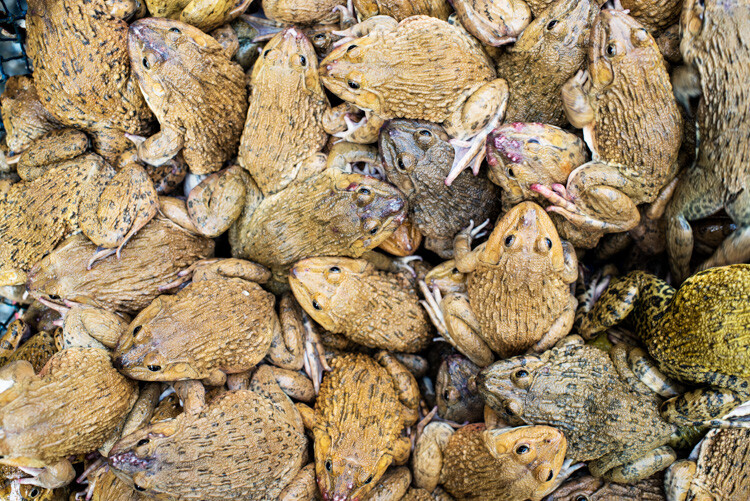
Lots of frogs - Slow Down and Take Your Time – Don’t Rush Your Photography

Give yourself space to slow down, to take a step back and observe what’s going around you. You will often discover interesting and photogenic subjects that you may not notice if you move in too quickly and start taking photos immediately.

Incorporate Photography into Your Schedule

Take your camera with you wherever you go. To work, school or university, when you exercise, when you go shopping, and when you walk the dog. By doing so you will learn to see your regular environment in different ways.

Thai woman outdoors - Slow Down and Take Your Time – Don’t Rush Your Photography

Making time to use your camera each day is one of the best ways to improve your skill and technique and to develop your own unique style. Giving yourself time within the regular context of your day might seem hard or a little strange at first. But as you commit yourself to doing this you can begin to find ways you hadn’t thought of to make interesting photos.

Think outside the box as you go about your regular routine. Make the ordinary things in your life look extraordinary in pictures.

Thai woman selling mangos at the fresh market in Chiang Mai - Slow Down and Take Your Time – Don’t Rush Your Photography

Revisit Locations and Subjects

Visiting the same locations multiple times and photographing the same subjects more than once is often worth taking the time to do. If you go someplace just once you will never really know if you’ve gotten the best photos possible.

Reviewing the images from your first or subsequent visits to a location will help you build a more critical eye. Then when you return to that place and subject you will have a more experienced perspective than at first go around.

Female butcher are a Chiang Mai market - Slow Down and Take Your Time – Don’t Rush Your Photography

By making time to do this you will most likely enjoy the experience more and produce better photographs.

Be careful to opt for places you really enjoy and feel good about as this will help compel you to return and seek to make better photographs than you have done previously.

Kayaw girl blowing bubbles in Chiang Mai, Thailand.

In Conclusion

By allowing yourself time to slow down and enjoy using your camera you will begin to see a progressive improvement in the quality of your images. Continuing to delve into techniques you’ve not previously mastered and experimenting with new subjects will help maintain a freshness in your pictures and you will enjoy your photography time even more.

Maybe we can make slow photography the next popular craze!

The post How Slow Photography Can Help You Improve Your Images appeared first on Digital Photography School.


Digital Photography School

 
Comments Off on How Slow Photography Can Help You Improve Your Images

Posted in Photography


Sony a7 III dynamic range and high ISO improve over its predecessor

17 Mar

Sony recently announced the a7 III, a comparatively affordable full frame mirrorless camera that incorporates a host of advanced features derived from the a9 and a7R III. The combination of price point and feature set makes it attractive to both enthusiasts and pros, particularly those looking to get into full frame or perhaps even make the switch to mirrorless. While we’ve already shot quite a bit with it and offered our thoughts on the camera as a whole, we hadn’t had a chance to take a deep dive into its image quality performance.

And we know many of you are wondering: what’s the dynamic range like? The high ISO performance?

Let’s take a look.

Low light (high ISO) performance

a7 III
ISO 25,600
a7R III
ISO 25,600
a7 II
ISO 25,600

Low light performance has improved markedly over the a7 II, putting it more or less in-line with the a7R III (and therefore a9) when images are viewed at the same size (we’ve downsized the a7R III shot to 24MP). These are 100% crops here (if you’re viewing on a smartphone or Retina / 4K display, see this footnote* below). Roll over the captions, or click on any of the images to view our full studio scene images for each camera.

This is a great result, but also comes as no surprise: noise performance is broadly determined by a combination of sensor size and technology, and we’ve recently seen some significant improvements to sensor technology made by Sony. In particular, the backside-illuminated (BSI) and dual gain architecture of most recent Sony sensors helps squeeze every last bit of performance out of these already low noise imaging chips. Furthermore, the original a7 and a7 II lagged in high ISO performance, often failing to surpass the best APS-C sensors.

Dynamic range vs. the a7R III

The a7 III more or less matches the base ISO dynamic range of the a7R III, when both are viewed at common size (we’ve normalized all our graphs to 8MP). That means both cameras will give you similar ability to make use of (brighten) shadows in Raw files if you want to show a wider dynamic range than shown with the default tone curve.

In numbers, that’s 14.6 EV and 14.8 EV for the a7 III and a7R III, respectively, which falls within our margin of error. You might see a difference in extreme pushes or exposure adjustments, but it’s not likely to be photographically relevant.

a7 III (orange) vs. a7R III (blue). There’s a slight chance you might notice the 0.2 EV advantage of the a7R III at base ISO or the 0.3 EV advantage of the a7 III at higher ISOs, but we doubt it. As our test scene images show, the two cameras look very similar when viewed at the same output size.

Note the jump in dynamic range at ISO 640 for both cameras. That’s essentially the camera’s second ‘base’ ISO, where the second stage of the dual-gain architecture kicks in. At ISOs 640 and above, most recent Sony sensors use a higher gain mode that essentially amplifies the signal at the pixel-level to get it above the (already pretty low) noise floor.** In laymen’s terms, that just means ‘more picture, less noise’, particularly in shadows – hence the increase in dynamic range.

Our analysis shows the a7 III to just edge out the a7R III at these higher ISOs, albeit only by about 0.3 EV (which happens to be right around our margin of error). You might see this in the deepest shadows – in fact, if you look very closely at the darkest patch in our ISO 25,600 rollover above, you can kind of see a tad bit less noise in the a7 III, but is that photographically relevant? Up to you.

… but it shows a marked improvement over its predecessor

While base ISO dynamic range remains the same as its predecessor, the dual-gain design brings a marked improvement at high ISO. Shadows at high ISO will be notably cleaner on the a7 III, and that’s before you consider the better overall high ISO performance – even in brighter tones – likely due to either a more efficient sensor or lower upstream read noise.

Compared with the a7 II (green), the a7 III (orange) shows much better dynamic range (at least 1.6 EV) at higher ISOs. Also, whereas you can see noise reduction being applied to the a7 II’s Raw at 25,600, it doesn’t kick in until ISO 64,000 (beyond the graph) on the Mark III.

Compressed continuous drive performance

If you shoot compressed Raw, the camera drops to 12-bit sensor readout in continuous drive modes. This negatively impacts dynamic range, dropping 1.4 EV at base ISO and roughly 1 EV at ISO 640. Dynamic range catches up at higher ISOs, though never quite matches the performance of 14-bit readout. Even at ISO 6400, 12-bit files are roughly 0.4 EV behind – though this is unlikely to significantly impact your photography. The differences at lower ISOs and at ISO 640, on the other hand, you might notice in more extreme pushes.

a7 III Uncompressed (orange) vs. Compressed 12-bit (light orange) performance. We’re not sure about the jumps at ISO 160 and 800, but for the most part there’s a drop in dynamic range at lower ISOs that more or less evens out at the higher ISOs.

In Single drive mode, compressed Raw continues to use 14-bit sensor readout, so measured roughly the same dynamic range as Uncompressed (it dropped 0.1 EV, but that’s within our margin of error).

And if you’re confused about when the camera drops to 12-bit – which is the only time you’d see these drops in DR – the only combination that diverges from 14-bit is when you shoot compressed Raw in (any) continuous drive mode. All other combinations of Mechanical or Electronic shutter, drive mode or Raw type are 14-bit.

vs. a7R II

We threw this one in here because the a7 III and a7R II are currently being sold for roughly similar price (the latter is $ 400 more expensive), so we’re aware of some discussion about choosing between the two. You’re unlikely to notice our measured 0.2 EV higher base ISO dynamic range of the a7 III, but you might notice the 0.5 EV advantage at ISO 640. At higher ISOs the cameras even out.

Realistically though, there’s not much difference between these cameras.

a7 III (orange) vs a7R II (red) dynamic range. You might notice the 0.5 EV advantage of the a7 III at ISO 640, but for the most part performance is similar.

Summary

We’ve summarized our results in numbers in the table below.

ISO 100 (24MP) ISO 100 (8MP) ISO 640 (24MP) ISO 640 (8MP)
a7 III 13.8 EV 14.6 EV 13.4 EV 14.2 EV
a7 III (compressed 12-bit) 12.4 EV 13.2 EV 12.3 EV 13.2 EV
a7 II 13.9 EV 14.7 EV 11.8 EV 12.6 EV
a7R III 14 EV 14.8 EV 13.1 EV 13.9 EV
a7R II 13.6 EV 14.4 EV 12.9 EV 13.7 EV
a9 12.6 EV 13.4 EV 12.4 EV 13.2 EV

So what’s the take-away? The a7 III’s image quality more or less matches what we’ve come to expect from modern, well-performing full-frame sensors. There’s really not much difference between the a7 III, the a7R III, the a7R II, or the Nikon D850 for that matter.

The a7 III does show a marked improvement over its predecessor at high ISOs, both in dynamic range and general noise performance, thanks to a number of sensor improvements (efficiency, BSI, dual-gain, etc.). Interestingly, the a7 III, which we’d imagine shares a similar sensor to the a9 minus the stacked design, offers roughly 1 EV more dynamic range than that camera at ISOs 100 and 640 (though the cameras even out at the highest ISOs). General noise performance of the a9 – if you’re not pushing your files – is similar though.

The a7 III’s image quality more or less matches what we’ve come to expect from modern, well-performing full-frame sensors

The a7 III offers great image quality performance at an affordable price point. That said, it’s not image quality that sets this camera apart from its contemporaries but, rather, its significant other capabilities like autofocus, silent shooting, video and a number of other things we’ll be delving into in our full review.


* Retina & smartphone optimized 100% crops:

a7 III
ISO 25,600
a7R III
ISO 25,600
a7 II
ISO 25,600

** Technically speaking, it’s not exactly more amplification. Rather, the sensor switches to a different circuit within the pixel that has different capacitance at the floating diffusion node. This essentially generates a larger voltage swing (signal) per photoelectron captured, which means the signal – your picture – is less affected by the noise floor of the sensor and electronics.

Articles: Digital Photography Review (dpreview.com)

 
Comments Off on Sony a7 III dynamic range and high ISO improve over its predecessor

Posted in Uncategorized


Exploring the Fundamentals of Light to Improve Your Photos

19 Feb

Let me point out from the start, it doesn’t matter what camera you use. From a fancy DSLR to your phone you can use these lighting tools to improve your photographs.

Photography and light go hand in hand. Simply put; if there is no light, there is no photograph.

Sunrise - Exploring the Fundamentals of Light to Improve Your Photos

Light is so important to great photography I’m going to ask you to put your camera down for a moment and observe. Really look at the light. The color of it, the way it’s falling on people and things. What shadows are being created?

Try looking at these different times of the day:

1. Early morning before the sun rises and while it rises

The color of light - Exploring the Fundamentals of Light to Improve Your Photos

You’ll see the light change from a cool blue to red, orange, and yellow light in the early morning. It will shift from a soft shadowless light to one that gives shape and texture to everything it touches. If the weather is right, you’ll witness the same in reverse, going from warm to cool at the other end of the day (sunset)!

Shape texture - Exploring the Fundamentals of Light to Improve Your Photos

Budding photographers tend to photograph the actual sunrise or sunset. It is beautiful to be sure. Instead, try looking at what the sun is doing to the trees or the plants or a person’s face and clothing. When the sun is low in the sky it creates gorgeous shapes and textures. On a beach, look at the texture of the sand or the shape of rocks and shells scattered here and there.

2. High noon

Raccoon eyes - Exploring the Fundamentals of Light to Improve Your Photos

High noon is a time better left to gunslingers! This can be the worst time for photography. It is the same light you see in office spaces with overhead lighting. It will give your portraits unflattering raccoon eyes like the image above.

What are you to do then? There are two easy solutions. Turn on your flash is one possibility. The second is head into the shade outside and use window light indoors.

3. Window light

Window light is beautiful directional light. What’s directional? This means the light is coming from one direction, one source.

What we too often see is a person standing with their back to a bank of windows with their faces dark or the outdoors completely white. Instead, place your subject perpendicular to the window using the light to illuminate one side of their face. You can use window light with equally effective results whether photographing a person or an object.

Window light - Exploring the Fundamentals of Light to Improve Your Photos

You’ll want to try using this kind of light when the sun is not shining directly through the window. Pick a cloudy day, use a north-facing window, or shoot after the sun has moved overhead away from the window.

4. Stormy weather

The light changes as you move into and out of a storm. Watch how the color of flowers, leaves, and even cars comes to life during these times of shifting weather. You can add saturation in Photoshop to images today, but you will find it far more realistic if you can capture the saturated color you enjoy at the end of a rainfall.

After the storm - Exploring the Fundamentals of Light to Improve Your Photos

And don’t be shy about heading out into a snowfall or rainstorm with your camera in tow. You will discover a whole new world most folks hideaway from. You will bear witness to people and scenes not normally seen. I guarantee people will exclaim, “Wow, how did you get that shot?!”

5. The Seasons

Your observations of light will inform you of many things. I imagine you will start to see things I don’t see as well. That’s my hope. One other thing you might observe is that light changes over the course of the year too.

Fall color - Exploring the Fundamentals of Light to Improve Your Photos

For example, the sun’s position in the sky changes. During the summer here in southern Ontario the sun rises directly out my back door facing east. Come November, that same ball of fire is rising about 45 degrees further south or to my right. So, it is now lighting things from a very different angle than it was in June, creating different shapes and textures on objects in the same space. How cool is that!

Another piece of the lighting puzzle I’ve discovered is the light becomes clearer and sharper almost overnight moving from August to September. The muggy air of August creates a softer light because it is filled with particulate scattering the light around. As the air cools in September the air is fresher and cleaner giving us a sharper light. This is in southern Ontario, but I guarantee the same effects will occur at some time in your neck of the woods.

Brave the weather

People in these parts complain when it hits -20 Celsius. That’s the time to grab your camera and head out into the world. We get a lot of gray weather during our winters. Ninety percent of the time when it’s very cold we get crisp, clean, beautiful light with these gorgeous blue skies.

Cold morning - Exploring the Fundamentals of Light to Improve Your Photos

I recognize I’m talking about my home, but I ask you to start observing what effect the seasons and the weather have on the light in your area. Which times excite you visually? When does the color jump out at you? Perhaps you like the softer light?

Conclusion

I encourage you to observe and then explore different light to discover your preferences. If you’re excited, you will start creating stronger images you want to share.

Let’s finish with a challenge to share. It’s hard to put your photographs out there. The thing is, with whatever medium you choose to express yourself, you bring a unique vision to the world.

What is truly fantastic about photography is that seven or 70 of us can photograph the same scene, and we will typically all come up with a different perspective. When we share, we learn. My recommendation? Be yourself and share. Start by posting an image in the comments below and tell us about the light you used to create it.

The post Exploring the Fundamentals of Light to Improve Your Photos by David McCammon appeared first on Digital Photography School.


Digital Photography School

 
Comments Off on Exploring the Fundamentals of Light to Improve Your Photos

Posted in Photography


3 Bad Habits You Need to Break to Improve Your Photography

31 Jan

Teaching our photography workshops over the years, my wife and I have come to recognize there are three things many people do habitually which do not help the advancement of their photography experience. Here are three bad habits for you to break in order to improve your photography.

Man who works making gold leaf in Mandalay, Myanmar - 3 Bad Habits to Break to Improve Your Photography

1. Don’t always stand when you take photos

Most beginner photographers do this. They stand at their full height to take a photo. It’s very natural to stand upright and take photos, but it is incredibly limiting. Sure, you see the world from a standing position most of the time, but it’s not always, (or even often,) the most interesting point of view from which to photograph something.

Climbing up on a chair or lying down on the ground will often give you a far more interesting perspective. Getting low or getting up high will afford you a different view of your subject which may be far more interesting because it is not how your subject is typically seen.

Parents and young daughter working in a field in Myanmar - 3 Bad Habits to Break to Improve Your Photography

Squat down to make eye contact with your smaller subjects.

Look around you for opportunities

I am always looking around for opportunities to get above my subject to make photographs. But you don’t have to go to extremes. Just squatting down or even bending your waist slightly and you will see your subject differently than when you’re standing upright – as will the viewers of your images (that is the key to standing out from the pack).

Snacks on a blue table in Myanmar. - 3 Bad Habits to Break to Improve Your Photography

Getting up higher, above your subject can create a more interesting photo.

Think about it each time you go to make a new photo. Consider getting lower or higher up than your subject. If you can, make a series of photos at each position and compare them all later on your computer. If you do this, pretty soon it will become a new habit.

men sitting having breakfast in a market in Myanmar - 3 Bad Habits to Break to Improve Your Photography

A lower perspective and using the man’s arm in the foreground created this interesting portrait.

2. Research and understand your subject

Starting to photograph something new and not knowing anything much about your subject is limiting. If you don’t have some understanding of what you are creating photos of they will be more likely to look like anyone else’s photos of the same subject. Getting to know and understand your subject, even a little, before you take any photos will help improve your photography.

I am often surprised when we begin a day photography workshop here in Chiang Mai, Thailand, how little our customers know about the location. We don’t spend a lot of time teaching about the history or the economy. But some essentials about culture and way of life are so beneficial to help people have some understanding of what they are photographing.

For example, knowing that it’s okay to politely photograph monks, knowing a few phrases in the local language, knowing which direction the traffic moves on the road, etc. These are all simple things that can help you have a richer photography experience if you know about them in advance.

Young novice monks in a morning market in Mandalay, Myanmar - 3 Bad Habits to Break to Improve Your Photography

Monks in a morning market in Myanmar.

Connect with people

Getting to know a person before you photograph them will help you relate to one another and certainly alter the type of images you will make compared to having no communication with them beforehand. Photographing someone you already know is often easier, unless they are adverse to having their picture taken. But when you meet a stranger and want to photograph them it’s often best to connect with them first, even on some level (a smile can work too).

Happy market vendor in Mandaly, Myanmar. - 3 Bad Habits to Break to Improve Your Photography

It does not often take much to encourage a smile.

A smile and saying “Hello”, (preferably in their language) are the best icebreakers most of the time. Often when I am photographing in the streets or markets I will just smile, say hello, and nod at my camera. If the person smiles back I go ahead and make a few pictures. I will then show them the back of my camera so they can see their photos. If I get a favorable response I will turn the camera around and continue to make some more photos.

When I find a person who enjoys the interaction and the experience I will spend more time. This relationship is valuable. Taking the time to relate to and get to know your subject even a little, will help you to make more creative photographs of them because they will be more relaxed and happy that you are showing an interest in them.

A quick internet search on anything you are want to photograph will provide you with more reading than you’re willing to do in a single sitting. You don’t have to go overboard with it, but do spend some time finding the essential information about your chosen subject so you are more informed and more interested in the location and/or person.

blue yellow and green painted boat on the water. 3 Bad Habits to Break to Improve Your Photography

3. Use Manual Mode

Learning to use Manual Mode consistently when you are photographing will help your photography more than anything. Having your camera set to any of the Automatic or semi-automatic modes means your camera is in control of the exposure.

Photography is so much about light. The word “photography” literally means drawing with light. If you have no light you cannot make a photograph. The more you can appreciate and understand light, the better you can learn to control the exposure settings on your camera, and the more you will develop as a photographer.

Worker in a field in Myanmar - 3 Bad Habits to Break to Improve Your Photography

Learn to master your camera

I know there are a lot of hard-core photographers who prefer using auto modes, but it’s really not that difficult to learn to master your camera in Manual Mode and gain the maximum amount of control and creativity with your exposures.

Your camera is incredibly intelligent and capable of making even exposures in many situations. But your camera is not creative. You are!

Kayan long neck woman cooking outdoors in Myanmar - 3 Bad Habits to Break to Improve Your Photography

Taking the time to study a little about how cameras function to capture an image will help you to control your camera more precisely. It doesn’t matter that much which camera you study as they have not essentially changed how they make an exposure since they were first invented.

Practicing in Manual Mode, (and not cutting corners and slipping back into an auto mode,) will help you build your confidence and speed every time you come to make photographs.

Kayan long neck woman in a house in Myanmar - 3 Bad Habits to Break to Improve Your Photography

Conclusion

Stepping out of your comfort zones and breaking some (bad) habits will help you to develop your style and you will come to enjoy your photography experience more and more.

Move around, look for alternative locations to make your photos. Learn about your subject. The more interested you are and the more knowledge you have will enhance your experience and you will therefore also produce more interesting photographs. Take the time and practice in Manual Mode. You may be frustrated at first because it is more difficult, but the results you will achieve will be well worth your effort.

The post 3 Bad Habits You Need to Break to Improve Your Photography by Kevin Landwer-Johan appeared first on Digital Photography School.


Digital Photography School

 
Comments Off on 3 Bad Habits You Need to Break to Improve Your Photography

Posted in Photography


Improve Your Photography in 2018 with These 6 Deals (48 Hours Only)

26 Dec

This year’s 12 days of Christmas was huge with some amazing savings on some great photography training and software.

However – because it’s a busy time of year – we know some of you missed out.

So for the next 48 hours only we’re brining all 6 deals back!

That’s right – all of our ebooks, presets, and courses are rarely all on sale at once, so now you can create your dream learning library – but only for 48 more hours.

We also have 3 amazing partner deals so be sure to check those out too while you still can.

Here are all the deals one last time…

  • 23 dPS Photography eBooks, only $ 9 each
  • THIS WAS HOT > 44 printable photography field guides, only $ 29, Save $ 191
  • 60% on All dPS Lightroom Presets
  • 70% Off ‘Behind the Scenes’ Travel Photography Course
  • 62% on All dPS Photography Courses
  • 67% on the Ultimate Lightroom Workflow Toolkit from 3 Colors

Don’t miss out.

Access our exclusive Partner Bonus Offers from New York Institute of Photography, KelbyOne, Perfectly Clear and ON1 when you purchase any dPS Christmas Deal. Check your purchase receipt email for the access link!

The post Improve Your Photography in 2018 with These 6 Deals (48 Hours Only) by Darren Rowse appeared first on Digital Photography School.


Digital Photography School

 
Comments Off on Improve Your Photography in 2018 with These 6 Deals (48 Hours Only)

Posted in Photography


Improve Your Photography Today with all dPS Courses 62% Off for 48 Hours

22 Dec

We’re nearly at the end of our popular Christmas sale and we’re really excited to offer you today’s deal, because we love helping people discover how to take great photos.

We’re offering our entire range of online photography courses at a massive 62% OFF.

These courses are normally $ 99, but today you can get any of our five courses for just $ 37 (USD) each. That’s incredible value!

5 Practical Courses Designed to Improve Your Photography

These step-by-step courses created by some of our talented photography experts include:

  • Night Photography by Jim Hamel – released just this year so that you can take amazing photographs at night
  • Lightroom Mastery by Mike Newton – every photographer should have a copy of this to create perfect photos!
  • Lightroom Mastery: People & Portraits by Mike Newton – will help you transform dull headshots into stunning portraits
  • Photo Nuts and Bolts by Neil Creek – the ideal course for the beginner photographer
  • Photo Nuts and Shots by Neil Creek – creative photography advice from a pro so you can get off auto

Each course is packed with tutorials and demonstrations shot in high-quality video by professional photographers. They’re designed so you can binge and do it all fast or slowly digest it at your own pace.

You get lifetime access to these courses, so you don’t have to rush to finish them and you can go back and review topics anytime you like.

Check out all the discounted courses here.

These courses are the perfect way to set you up for a great year of photography in 2018.

Bonuses from our Partners

This year we’ve arranged some exclusive partner bonuses for anyone who makes a purchase during our Christmas promotion. Thanks to New York Institute of Photography, KelbyOne, Perfectly Clear and ON1 for partnering with us. Check your purchase receipt email for the access link to the bonuses!

Christmas Deals:
Bonus Offers

Bonus Offers

Brought to you by

ON1
Athentec Perfectly Clear
KelbyOne
New York Institute of Photography

The post Improve Your Photography Today with all dPS Courses 62% Off for 48 Hours by Darren Rowse appeared first on Digital Photography School.


Digital Photography School

 
Comments Off on Improve Your Photography Today with all dPS Courses 62% Off for 48 Hours

Posted in Photography


Improve Your Composition by Changing Your Point of View

03 Nov

There are many rules, guidelines, suggestions, and ideas around what makes a good photographic composition. Every person has their own particular aesthetic and way of seeing, and it can be difficult to find your way through all the information to a concept that works for you.

Improve Your Composition by Changing Your Point of View

However, there is one simple tip that may be the easiest and quickest way for you to improve your images. It’s free and doesn’t usually require you to buy anything. All you need to do is stop, think, and make a different choice. What is that choice? The choice of changing your point of view.

The vast majority of images are taken from a standing position, looking out at, or down onto the subject. So, instead of doing what everyone else does, why not try something different?

Change Your Point of View

#1 – Go Low

Get down on the ground as low as you can get (depending on your physical capabilities or what might be in the way). This can give you a much more intimate connection with any creature you might be shooting – being at eye level with the subject is always ideal.

Being on the same plane as a ground-based subject is unexpected. Too often we view the world from a standing position so this viewpoint challenges us.

Improve Your Composition by Changing Your Point of View

I crouched as low as I could get without scaring this curious bandicoot.

Improve Your Composition by Changing Your Point of View

Lying flat on the damp sand at 6 am on a tropical island isn’t a bad way to start the day.

Improve Your Composition by Changing Your Point of View

I spent a couple of hours crawling around on my hands and knees on the edge of a cemetery, capturing these Fly Agaric in full bloom.

2. Go High

Climb onto a fence, up some stairs, a tree, or a ladder and use that height to better effect. Looking straight down on your subject is a very alien view for most people. This is a big part of why drone photography is so popular, it allows us to see our world in an entirely different way.

Improve Your Composition by Changing Your Point of View

3. See from a different angle

How many times do you point the camera straight or straight down? Most people rarely look immediately up above themselves, so that is quite a different image. If you combine adding height with looking down you can be very creative as it is unexpected by viewers who normally have their feet planted firmly on the ground.

Improve Your Composition by Changing Your Point of View

Vertical flat lay overhead still life shot.

Improve Your Composition by Changing Your Point of View

Pointing the camera directly down the stairwell from the top floor provides a unique angle.

Improve Your Composition by Changing Your Point of View

Stalactites in a limestone cave right above my head.

4. Make a Different Lens Choice

Changing from your standard lens to a different one can also make a big difference.

Try using a macro lens, or an ultra wide-angle. Even better, don’t use them conservatively. Use the ultra-wide to take macro shots, and use the macro lens to take portraits.

Get a cheap vintage lens, one that has all sorts of interesting visual effects inside the glass (they usually need to be focused manually). Play with a Lensbaby or another specialty type lens. Don’t be afraid to experiment. After all, whats the worst that could happen?

Improve Your Composition by Changing Your Point of View

The only way to fit this really wide piece of farm equipment into the frame was to shoot up close with an ultra-wide-angle lens. It also allowed the creative choice of including all the wonderful clouds in the sky as well.

Improve Your Composition by Changing Your Point of View

Macro lenses offer a window into a world we cannot normally see with standard eyesight. Fascinating tiny details become visible.

Improve Your Composition by Changing Your Point of View

Shot with an antique Russian lens, it has a lot of circular distortion around the edges, which when used creatively can be effective. The bonus is that these lenses are very cheap and easy to find in antique shops. Usually manual to operate though.

5. Shoot Tight

Stick that lens right up close to your subject, get in tight. Fill the frame with the subject, as much as you can. Go completely abstract if you like, but push yourself out of your comfort zone. Get in as close as you can, and then go closer still.

Improve Your Composition by Changing Your Point of View

Improve Your Composition by Changing Your Point of View

6. Take Your Time

Long exposures can be a lot of fun and give you a very different image. Soft flowing water effects are nice, but what about a really long exposure where the water looks like smoke and mist? Night shots of fire dancers making patterns in the darkness? Playing with light painting? ICM or Intentional Camera Movement? Slowing down the action and capturing it can offer a lot of creative fun.

Low light or night time photography offers lots of opportunities for using long exposures in creative ways. Astrophotography is very popular at the moment and requires you to use a tripod and take often several long exposure frames. Light trails from traffic on busy city streets or a car climbing its way up a mountain road in the distance.

These kinds of images take time to make, which requires you to think about and plan it in advance. It can be frustrating to have to wait to achieve them but the pay off for creating an image under difficult conditions is very rewarding.

Fire dancers on the beach

Fire dancer using a colored light bar and taken with a longer exposure to capture the spinning movement

A tree draped in strands of lights becomes a very different image when Intentional Camera Movement is applied. Just a slightly longer exposure time and a wiggle of the wrist and you get this.

7.  Be Abstract

Going really close to a subject or selecting just a part of it to include in the frame is a great way to bring abstract concepts into your work. You tease the viewer with just enough of the subject that they wonder what it is. This often makes them engage longer with the image as they think more about what it could be.

There is a fine line between enough and too abstract, depending on your subject. Of course, you may want to go all the way into very abstract which is perfectly valid, although might challenge your audience and lose engagement.

This is the very battered toes of a pair of ballet pointe shoes

Summary

Putting some effort and thought into the way you use your camera gear is one of the most effective ways to improve your images in my opinion. Strong and eye-catching compositions can be achieved with any kind of camera provided you put some thought and time into making it.

Yes, for some kinds of shots you might need special gear, like a macro lens for those really good close-ups. In general, though, you can still see a noticeable improvement in your images by just taking the time to stop and think BEFORE you shoot. Ask yourself the following questions before you press the button:

  • What is the obvious angle here?
  • What other options could I use instead?
  • Do I have time to experiment?
  • Is there space and opportunity for me to physically move to a different viewpoint?
  • Is it safe/legal?
  • Will I do any damage to property or environment by changing position?

Learning to see in a different way was a critical step in my photography path. By expanding my options and developing new styles, my work was noticed and commented on much more. This prompted me to experiment even more and really challenge my own preconceived boundaries.

Having the ability to shoot in many different ways adds flexibility and depth to your skillset. Cold rainy day? Break out the macro lens and raid the pantry for something different to shoot. Pick a flower from the garden and bring it inside. Wander the city streets looking for the small interesting details and focus on them. Be abstract, tell a story from your point of view. Get shots of people’s feet crossing a zebra crossing or panning shots of a cyclist dodging traffic.

Your turn

Take your time to look and see what is around you, then think about how you can frame it up. Be creative. Don’t be afraid to try something new. It might take a few goes to get the hang of it or you might fall in love with seeing the world around you in an entirely different way immediately.

Challenge yourself to grow and improve. And please share your thoughts and experiences in the comments below.

The post Improve Your Composition by Changing Your Point of View by Stacey Hill appeared first on Digital Photography School.


Digital Photography School

 
Comments Off on Improve Your Composition by Changing Your Point of View

Posted in Photography


How to Use Soft Light Blend Mode in Photoshop to Improve Exposure and Contrast

19 Oct

Do you have an overexposed sunny side and an underexposed shadow on the other side of your image? Or maybe a well-exposed photo that needs more vibrancy? There’s a tool so versatile that can help you fix any of these problems and more: the Soft Light Blend Mode.

What are Layers?

Imagine your photo as a printed one. Then you take a sheet of acetate and draw on it. Then you take another sheet and you put it on top of the others and obscure a part of it; and so on, and so forward. Each acetate sheet is a layer and you can make as many alterations as you want on top of your original this way.

To create layers in Photoshop you need to go to Menu > Layers > New. A pop-up window will appear where you can name your layer, choose the color, the blending mode and the opacity. When you click OK the new layer will appear on the Layers panel window on top of the background, which is the original image.

Layers - How to Use Soft Light Blend Mode to Improve Exposure and Contrast

What is the Blend Mode?

The default setting of a new layer is normal blending mode. This covers the background or the layer underneath. However, Photoshop gives you the option of choosing a different Blend Mode, which changes the way your edit affects the pixels. You can change it in the pop-up window of the new layer.

Blending Modes - How to Use Soft Light Blend Mode to Improve Exposure and Contrast

In the case of the Soft Light blending mode it is similar to using the dodge or burn tool. In other words, every color that is lighter than 50% grey will get even lighter, like it would if you shine a soft spotlight to it. In the same way, every color darker than 50% grey will get even darker. However it will never reach pure black.

So, why not use dodge and burn instead?

First of all, when you work in layers you don’t lose any information. You can always discard the layer and start over because there is no damage to the original image.

With layers, you can change the opacity or transparency of each one, which allows you to control how evident your edit is in the final image. You will find the opacity tool on the Layers panel with a slider that goes from 0 to 100 %.

Note that there is another slider next to it called Fill. There are 8 blending modes in which these two sliders make a difference, however, Soft Light is not part of these “special 8” so the Fill opacity and Standard opacity have the same result when using this Blend Mode.

Opacity - How to Use Soft Light Blend Mode to Improve Exposure and Contrast

Another advantage is that you can change the blending mode of each of the layers. In this article, we are exploring the use of Soft Blend, however, each mode offers different possibilities. One blending mode can have different uses, here are three of them.

3 ways to use Soft Light Blending Mode

1. Add punch to your image

Increase the contrast and saturation to have more vivid colors and give a punch to your image. You can do this by duplicating the background layer: Menu > Layer > Duplicate Layer and changing the blending mode from normal to Soft Light. Finally adjust the opacity until you are happy with the result.

Duplicate Layer - How to Use Soft Light Blend Mode to Improve Exposure and Contrast

BeforeSoftLight - How to Use Soft Light Blend Mode to Improve Exposure and Contrast

AfterSoftLight - How to Use Soft Light Blend Mode to Improve Exposure and Contrast

2. Gradient tool to balance the lighting

If you have an image that is underexposed on one side and overexposed in the other you can easily even it out with a Soft Light blend layer. First go to Menu > Layer > New Layer. Pick the Gradient tool and draw a line from the brightest side to the darkest one. The gradient will look like this:

Gradient How to Use Soft Light Blend Mode to Improve Exposure and Contrast

Then change the layer blending mode to Soft Light and lower the opacity to find the best results.

Before Gradient - How to Use Soft Light Blend Mode to Improve Exposure and Contrast

Before gradient

After Gradient - How to Use Soft Light Blend Mode to Improve Exposure and Contrast

After gradient

3. Dodging and burning with a Soft Light layer

The past workflows altered the entire image, however, if you need to do a more precise job you can also do that using Soft Light. First, add a new layer with Soft Light blending mode like you did in the previous procedure. Only this time instead of the gradient tool, you are going to use the brush tool. When you select it you can choose the size of the brush on the top menu and the color on the bottom.

Brush How to Use Soft Light Blend Mode to Improve Exposure and Contrast

If you paint with black you will darken the image:

Darken - How to Use Soft Light Blend Mode to Improve Exposure and Contrast

Painting with white will lighten certain areas, and with different shades of grey, you can also control tones of your image.

Painting - How to Use Soft Light Blend Mode to Improve Exposure and Contrast

Keep going until you are happy with the contrast and exposure of your image.

Before Painting - How to Use Soft Light Blend Mode to Improve Exposure and Contrast

After Painting - How to Use Soft Light Blend Mode to Improve Exposure and Contrast

Conclusion

Now you know that blending modes have a lot of potential, so keep exploring. How do you use Soft Light Blend Mode? Please share your ideas and tips in the comments below.

The post How to Use Soft Light Blend Mode in Photoshop to Improve Exposure and Contrast by Ana Mireles appeared first on Digital Photography School.


Digital Photography School

 
Comments Off on How to Use Soft Light Blend Mode in Photoshop to Improve Exposure and Contrast

Posted in Photography