RSS
 

Posts Tagged ‘Homes’

Nordic by Nature: Fanciful Models of Scandinavian Summer Homes

04 Jul

[ By WebUrbanist in Architecture & Houses & Residential. ]

nordic retreat treehouse

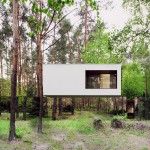
A series of sleek but whimsical models blend photorealism with fantastic concepts for treehouses, hilltop homes and even dwellings mounted on the sides of cliffs.

nordic cliff side dwelling

Santi Zoraidez is an art director and designer from Buenos Aires who does visual, graphic and architectural work, sometimes real and sometimes conceptual.

nordic modernism hillside home

In this set of summer homes, he bends, twists, warps and cantilevers wood in amazing (if sometimes implausible) ways, putting houses on spindly stilts or hanging them from steep rocky surfaces.

nordic modernist

The results are at once daring and provocative while retaining a sense of minimalism, that core feature common to Modernist Scandinavian designs.

nordic angled house modle

By maintaining a simple palette of colors and textures, the artist manages to accomplish a natural aesthetic that makes sense for countryside dwellings while letting the details of designs – long horizontals and asymmetrical shapes – define each work.

Share on Facebook


[ By WebUrbanist in Architecture & Houses & Residential. ]

[ WebUrbanist | Archives | Galleries | Privacy | TOS ]

WebUrbanist

 
Comments Off on Nordic by Nature: Fanciful Models of Scandinavian Summer Homes

Posted in Creativity


IKEA Indoor Gardens Produce Food Year-Round for Homes & Restaurants

13 Jun

[ By WebUrbanist in Design & Fixtures & Interiors. ]

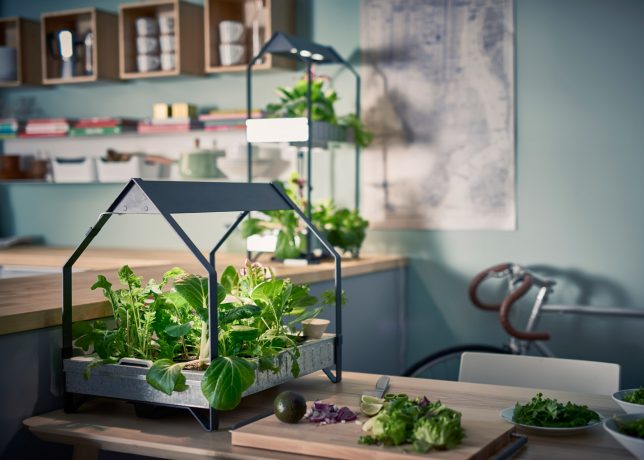
ikea home garden

IKEA recently launched a hydroponic gardening system to allow people to grow fresh produce at home (without soil or sunlight) and has just unveiled a similar system under development that is aimed at helping restaurants raise ingredients in-house.

ikea home grown

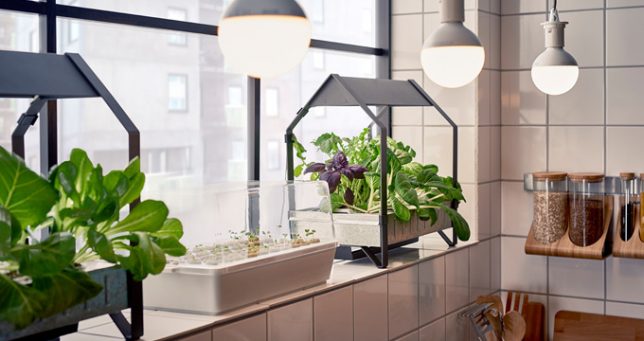
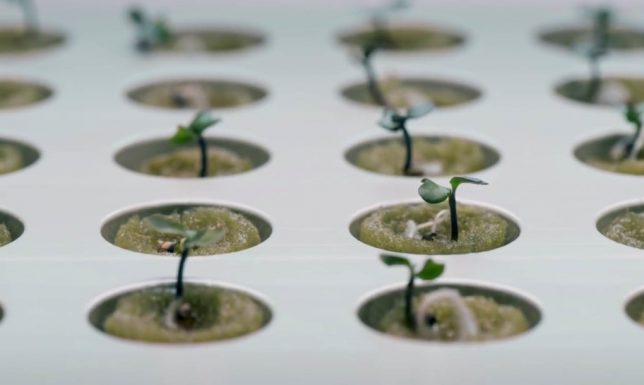
The KRYDDA/VÄXER hydroponic garden lets sprout seeds without soil using absorbent foam plugs that keep plants moist (without over-watering, thanks to a built-in sensor). Germinated seeds can then be transferred to pots fitted into a growing tray featuring a solar lamp. The system is designed to be easy to use for even inexpert gardeners.

ikea seeds

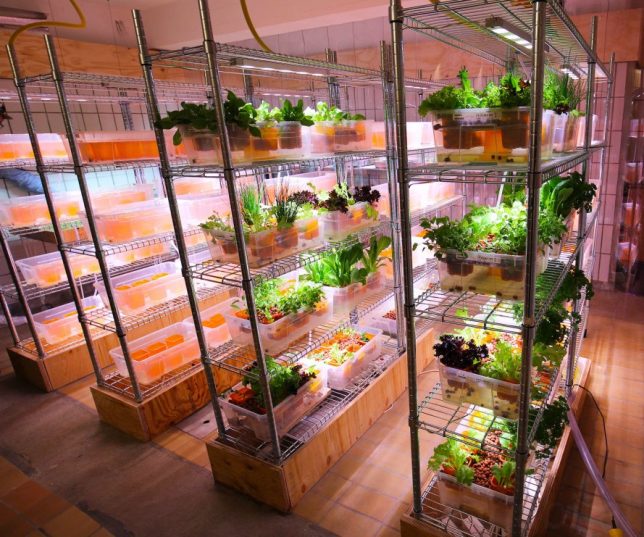
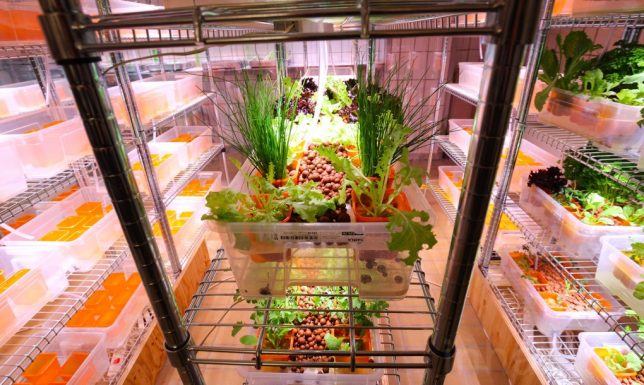
Meanwhile, in another bit to expand their sustainability model beyond furniture, furnishings and fixtures, IKEA has teamed up with Space10 to create The Farm, an aquaponic garden system for restaurants. A prototype is live and working the basement of Space10’s office in Copenhagen, and the two companies are planning to develop the system further for mass production and commercial deployment.

the farm ikea

Few customers realize that IKEA is actually already one of the largest restaurant chains in the world, selling over a billion Euros of food annually. It is well-positioned to push for changes in the food supply chain (photos by Kristine Lofgren for Inhabitat).

the farm meal

The Farm prototype can even create a complete burger (of sorts) on site, specifically: a “bugburger” made of mealworm, beetroot and gluten and top with freshly-grown herbs and lettuce. Aside from this particular (and peculiar) delicacy, however, the design is aimed at bringing as much of the food production process in-house, similar to a recent system developed in Germany allowing grocers to raise and sell their own fresh produce.

the farm fresh

ikea fresh food

On multiple fronts, IKEA is changing the face of the farm-to-table movement, operating in parallel to larger urban vertical farming systems to generate products that are cheap and accessible, making gardening something that any city dweller or restaurant owner can dig into.

Share on Facebook


[ By WebUrbanist in Design & Fixtures & Interiors. ]

[ WebUrbanist | Archives | Galleries | Privacy | TOS ]


WebUrbanist

 
Comments Off on IKEA Indoor Gardens Produce Food Year-Round for Homes & Restaurants

Posted in Creativity


White Water Roofing: Wild Water Tanks Top Cool Punjabi Homes

12 Jun

[ By Steve in Art & Sculpture & Craft. ]

punjab_water_tanks_1a
Out to impress the neighbors in Punjab, India? Try topping your humble abode with a cool water tank rendered as a jet, blossom, or bodybuilder.

punjab_water_tanks_1b

Keeping up with the Joneses (or their Punjabi equivalent) just got a lot tougher thanks to Santokh Singh Uppal, a successful entrepreneur who, in 1959 and at the age of 17, left his native village of Uppal Bhupa to make his fortune in the United Kingdom. “To me,” explained Santokh, “this Air India plane symbolizes the hopes and dreams of all those enterprising Punjab residents for whom going abroad is like the first step towards shaping their destiny.” Ajay Verma snapped the above shots of Santokh’s house-topper, completed in 2004 after five years of construction.

Leaving On A Jet Plane

punjab_water_tanks_2a

punjab_water_tanks_2c

punjab_water_tanks_2b

More than a few Punjabis share Santokh’s sentiments and show it by mounting similarly artistic water tanks on the roofs of their homes. Most of these home-owners are NRIs – Non-Resident Indians – who have achieved success abroad yet still maintain their home base in their homeland. Mounting a decorative water tank symbolic of their personal odyssey, main interest or both serves to signal their family’s prosperity while spurring their village neighbors to top – no pun intended – their folk art braggadocio.

Tanks For The Memories

punjab_water_tanks_3b

punjab_water_tanks_3a

punjab_water_tanks_3c

When, where and how did this weird water tank oneupmanship get started? “In Nawanshahr,” states photographer Rajesh Vora, “the proud owner of a restaurant in New Zealand celebrated his success as a chef with a pressure cooker-shaped water tank back home. Soon, villagers in neighboring villages started to copy it.” Not everyone is a successful restaurant owner, however, nor is constructing a rooftop water tank an endeavor anyone can engage in. True to their entrepreneurial spirit, enterprising Punjabis have opened off-the-rack water tank shops and will perform custom on-site installations upon request.

Next Page – Click Below to Read More:
White Water Roofing Wild Water Tanks Top Cool Punjabi Homes

Share on Facebook


[ By Steve in Art & Sculpture & Craft. ]

[ WebUrbanist | Archives | Galleries | Privacy | TOS ]


WebUrbanist

 
Comments Off on White Water Roofing: Wild Water Tanks Top Cool Punjabi Homes

Posted in Creativity


Prefab Hobbit Homes: Build Your Own Shire Dwelling in Just 3 Days

25 Dec

[ By WebUrbanist in Architecture & Houses & Residential. ]

modular hobbit homes

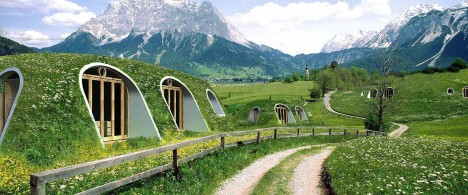
Composed of vaulted panels covered with reinforced soil, these modular hobbit-worthy homes can be adapted to just about any site and constructed in a matter of days.

modular home construction

Produced in pieces by Magic Green Homes, then shipped to sites for assembly, each dwelling is made from prefabricated panels clad in green. The results looking much like something straight out of a Tolkien novel, but made out of shaped composite laminate, the same material approach taken to creating curves in some types of boat.

magic green house

green hoome interior

The process is designed for simplicity, eliminating the need for heavy machinery of specialized knowledge. Integral electrical, plumbing and ventilation channels come tucked inside the wall-to-roof modules as well, making systems installations easier as well.

green module warehouse

modular house construction

Overlapping flaps allow builders to join the various parts together while the integrated layers of green on top further hide any seams, making each house look like a seamless (w)hole. An interior layer of waterproofing ensures the attached modules do not leak.

green magic homes

modular green house

The overall modularity of this lends itself to easy incremental additions, expanding housing units over time. Designers or homeowners can also site the structures to blend into the surrounding landscape, much like the approach taken in underground homes and with many earthships. As with geodesic domes and other curved habitats, however, it may take a bit more than three days to decide how to finish and decorate the rounded interiors.

Share on Facebook


[ By WebUrbanist in Architecture & Houses & Residential. ]

[ WebUrbanist | Archives | Galleries | Privacy | TOS ]

WebUrbanist

 
Comments Off on Prefab Hobbit Homes: Build Your Own Shire Dwelling in Just 3 Days

Posted in Creativity


Muji Huts: Affordable Pop-Up Modern Homes Made for Japan

05 Dec

[ By Steph in Architecture & Houses & Residential. ]

muji huts 1

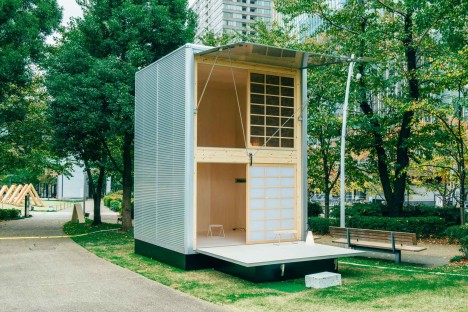
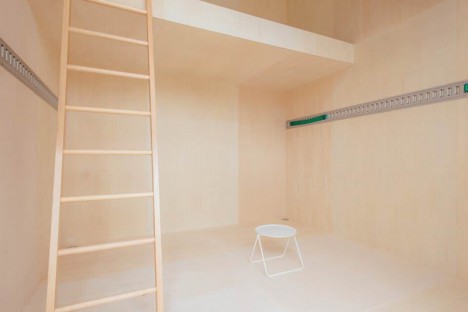
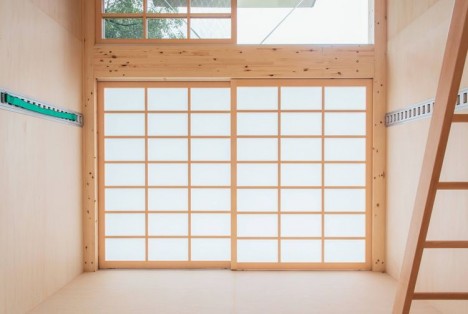
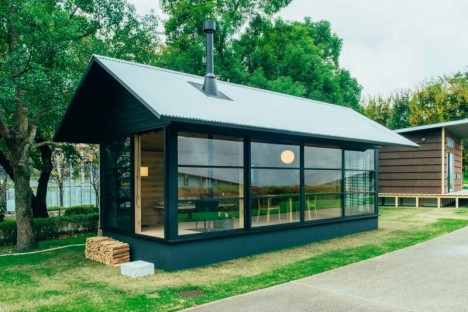
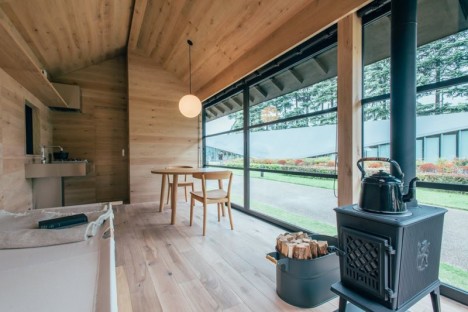
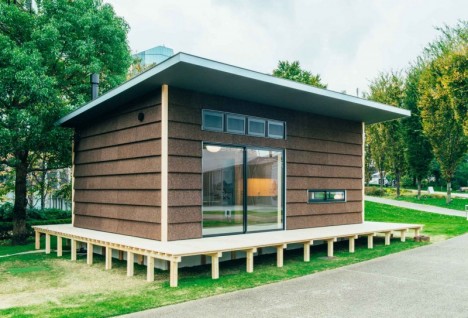
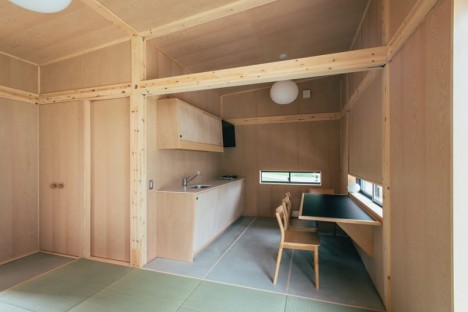
The same Japanese retail chain selling household supplies like space-saving furniture, bed linens and travel toothbrushes will soon sell pop-up houses, too, so you can literally walk out with a kit for an entire, fully-outfitted home in one trip. The Muji Hut, designed by Konstantin Grcic, Jasper Morrison and Naoto Fukasawa for retailer Muji, comes in three variations starting at $ 25K. Each offers just enough space for one or two minimalist residents.

muji huts 2

muji hut 7

The Japanese housing market is a little different from that of the U.S. and other parts of the world in that real estate doesn’t accrue value over time, and demand for preexisting houses is low. Not everybody has the money to knock down an old house and build a new one in its place, however, and lots tend to be tiny.

muji huts 3

muji huts 4

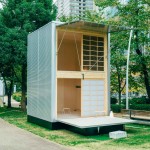
Each designer created their own version of an affordable, no-frills structure that can be assembled in short order, including one made of aluminum, a two-story timber creation and a little cabin clad in cork. Each takes inspiration from kyosho jutaku, the Japanese style of micro homes that aims to squeeze as much function out of tiny footprints as possible.

muji huts 5

muji huts 6

The Muji Huts are envisioned as weekend getaway destinations rather than full-time living spaces, but each contains a generous living room, bathroom and kitchen, and can be heated with a wood stove. The huts can be installed in virtually any location, from tight city lots to the banks of a river, and will be available for purchase in 2017.

Share on Facebook


[ By Steph in Architecture & Houses & Residential. ]

[ WebUrbanist | Archives | Galleries | Privacy | TOS ]


WebUrbanist

 
Comments Off on Muji Huts: Affordable Pop-Up Modern Homes Made for Japan

Posted in Creativity


Plug & Play Homes: Mobile Modules Slot into Urban Frameworks

28 Oct

[ By WebUrbanist in Architecture & Houses & Residential. ]

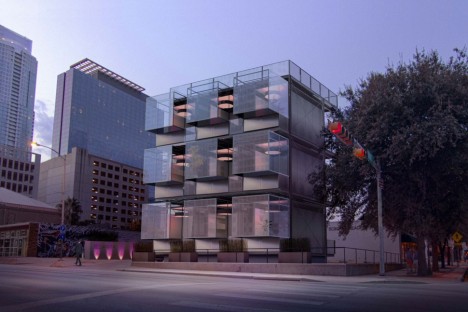
kasita slot box homes

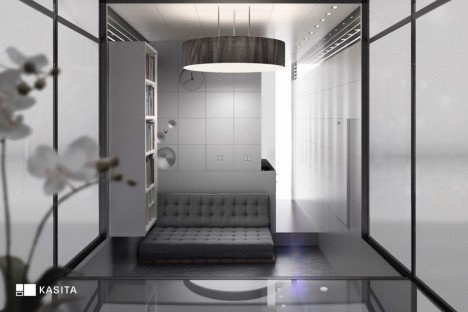
Coming to Austin next year, this mobile housing strategy takes portable living out of trailer parks, plugging you straight into the city grid and allowing you to easily hop metropolises on demand (at the tap of an app). Denver, Portland, Brooklyn, Stockholm, Seattle, Chicago, Los Angeles and Manhattan are also on the list.

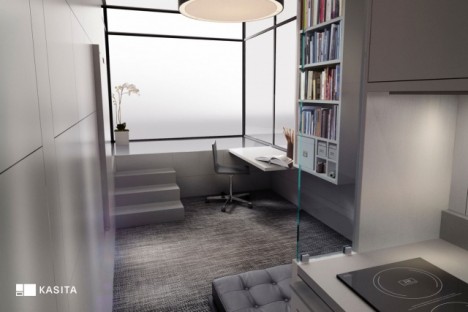
kasita home office cube

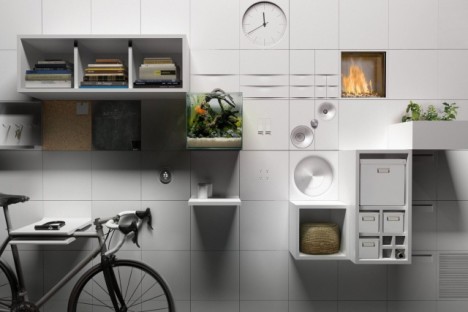
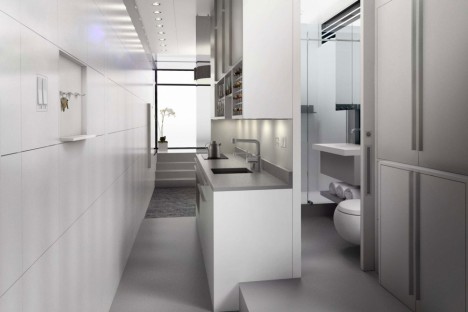
Kasita has created a system of prefabricated units that pack hideaway furniture but also a full kitchen, washer and dryer into a 208-square-foot living space. The real trick, though, is in the supporting framework – a grid-like structure into (and out of) which these units slot.

kasita modular wall panels

More than just a wrapper for a box, these allow external elements like staircases for circulation, patios and decks to remain in place while the core modules move around.

kasita kitchen bathroom

Initial deployment will take place in Austin, Texas, and the units will cost $ 600 a month, but as they roll out in other cities, the project will take on an additional dimension. Eventually, users will be able to swap into new slots in other cities on short notice and without packing a thing.

kasita modular interior design

kasitam modular urban houses

A collaboration between Professor Jeff Wilson, a teacher already famous for living in a tiny dumpster for a year, and Frog, an industrial design firm, this project was inspired as much by the sleek simplicity of the iPhone as it was by other container-type home projects.

Share on Facebook


[ By WebUrbanist in Architecture & Houses & Residential. ]

[ WebUrbanist | Archives | Galleries | Privacy | TOS ]

WebUrbanist

 
Comments Off on Plug & Play Homes: Mobile Modules Slot into Urban Frameworks

Posted in Creativity


Built of Bombs: Unexploded Ordinance Turned Into Boats & Homes

16 Oct

[ By WebUrbanist in Culture & History & Travel. ]

A legacy of living in the most-bombed country per capita in world history, Laotian citizens have spent decades since the Vietnam War dealing with close to 100 million undetonated objects of local destruction.

In the 1960s and 1970s, the US covertly dropped hundreds of millions of bombs on the country, at an average rate of one bomb per eight minutes. Today, converted bomb remnants are visible across the country, used virtually intact to loft houses above flood planes, hollowed out and turned into watercraft or containers, or stripped down for scrap.

bomb architecture scrap lift

An entire (now shrinking) nationwide industry has grown up around finding, stripping and transforming cluster bombs into metal pieces and parts deconstructed or refit for various new uses. In many villages, bombshells are visible throughout the built environment.

Photographer Mark Watson took a cross-country bike trip and documented these remarkable cases of reuse. “Scrap from such widespread bombing has been utilized in people’s homes and villages,” Watson said, “for everything from house foundations to planter boxes to buckets, cups and cowbells.”

bomb boat riverfront

While it may sound at first like an uplifting story of turning swords into ploughshares, there is a dark side to this tale. To this day, over 100 people die annually from accidental detonations, either from bombs still loose in the countryside or in attempts to deactivate or convert found ordinance.

Non-profit organizations working to clear the country of this danger estimate it may yet take another century to complete the cleanup process (via Inhabitat and Mark Watson of Highlux Photography).

Share on Facebook


[ By WebUrbanist in Culture & History & Travel. ]

[ WebUrbanist | Archives | Galleries | Privacy | TOS ]


WebUrbanist

 
Comments Off on Built of Bombs: Unexploded Ordinance Turned Into Boats & Homes

Posted in Creativity


Underwater Homes: Deserted Basements as Stormwater Cisterns

04 Oct

[ By WebUrbanist in Abandoned Places & Architecture. ]

basement cistern basetern

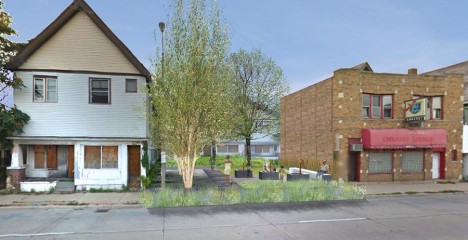
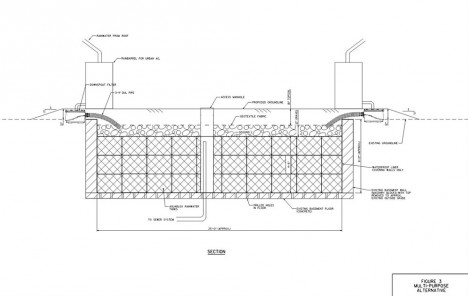
In a dual effort to address urban blight and ailing infrastructure, Milwaukee, Wisconsin, is piloting a new program to turn the basements of abandoned houses slated for demolition into rainwater basins. Meanwhile, the surface expression of these cisterns could be anything from a revealing expression of this new underground infrastructure to micro-parks or urban farms depending on neighborhood needs.

basement cistern project

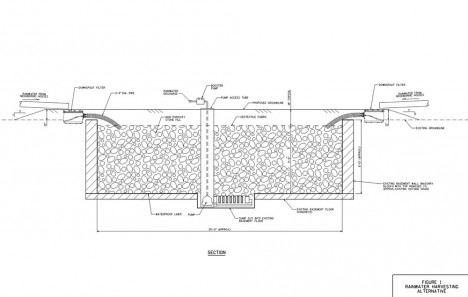
Conceived by Erick Shambarger, the deputy director of Milwaukee’s Office of Environmental Sustainability, “The BaseTern concept is simple. Stormwater will be directed to an abandoned or foreclosed property’s basement, which, after the aboveground structure is demolished, is waterproofed and filled with gravel and stormwater-harvesting cells.” Effectively, load on existing stormwater runoff systems is reduced and complete demolition costs are simultaneously mitigated.

underground cistern system milwaukee

GIS data shows that the neighborhoods with the largest flood risks are also those with the highest foreclosure rates. The city owns over 900 deserted and condemned buildings, now potential candidates for unusual adaptive reuses. A basement cistern can hold anywhere from 10,000 to 40,000 gallons of water during storms and reduce adjacent flooding accordingly. Similar systems could also be deployed in coastal areas particularly susceptible to floods and where many waterfront homes are already being abandoned.

underground basement abandoned fill

Author Geoff Manaugh observes that “while there is something metaphorically unsettling in the idea that parts of a blighted, financially underwater neighborhood might soon literally be underwater—transformed into a kind of urban sponge for the rest of Milwaukee—the notion that the city can discover in its own economic misfortune a possible new engineering approach for dealing with seasonal flooding and super-storms is an inspiring thing to see.” (Flooded basement image by Naql).

Share on Facebook


[ By WebUrbanist in Abandoned Places & Architecture. ]

[ WebUrbanist | Archives | Galleries | Privacy | TOS ]


WebUrbanist

 
Comments Off on Underwater Homes: Deserted Basements as Stormwater Cisterns

Posted in Creativity


Dirt Cheap: World’s Largest 3D Mud Printer Makes Green Homes

23 Sep

[ By WebUrbanist in Architecture & Houses & Residential. ]

3d printer aerial view

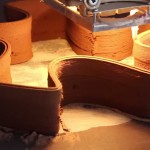
Able to print full-sized structures from mud and clay, this 40-foot-tall 3D printer represents a huge step toward printing affordable housing from free materials. The project was unveiled yesterday, debuting with a live demonstration at a three day rally event in Italy along with a series of workshops and conferences.

giant 3d house printer

wasp printer

Representing a hybrid of biomimicry, new technologies and ancient building techniques, the BigDelta printer from World’s Advanced Saving Project (WASP) draws inspiration from natural and human precedents.

3d printer demo

3d printer scale models

BigDelta’s structural strategies and resulting home shapes are informed by a breed of wasp that constructs mud homes as well as a long human tradition of creating earthen dwellings.

3d mud printer above

Building with water, dirt, clay and plant fibers taps into a set of plentiful organic resources, reduces environmental impacts, obviates the cost of and need to ship materials and provides naturally robust and insulated housing shells.

3d mud printer nozel

The lightweight steel frame of the printer itself, supporting a giant printing nozzle suspended in its open center, is easy to collapse and transport between construction sites.

3d printer italy stage

This larger model follows a smaller Delta prototype used to execute a series of complex geometric structures at reduced size, testing the technology and materials.

The design aims to address a growing housing crisis: “by 2030, international estimates foresee a rapid growth of adequate housing requirements for over 4 billion people living with yearly income below $ 3,000. The United Nations calculated that over the next 15 years there will be an average daily requirement of 100.000 new housing units to meet this demand.”

Share on Facebook


[ By WebUrbanist in Architecture & Houses & Residential. ]

[ WebUrbanist | Archives | Galleries | Privacy | TOS ]


WebUrbanist

 
Comments Off on Dirt Cheap: World’s Largest 3D Mud Printer Makes Green Homes

Posted in Creativity


Hoverboard Creators Patent Hovering Homes for Disaster Zones

15 Jun

[ By WebUrbanist in Architecture & Houses & Residential. ]

patent image

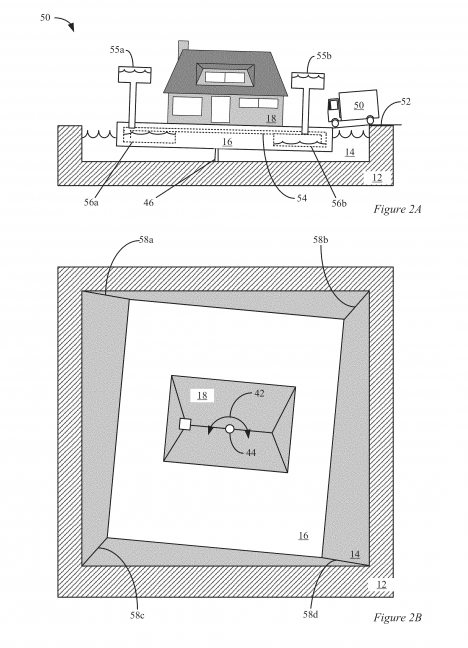
The creators of the world’s first working hoverboard have turned their sights toward larger-scale projects, patenting a three-part hovering foundation system to defend houses in earthquake- and flood-prone areas facing threats from natural disasters. The basic idea: decouple buildings from the ground temporarily, isolating them from unwanted movement happening below and around them.

floating box

arxpax hoverboard technology

Arx Pax, based in Silicon Valley and the creators of the Hendo Hoverboard using Magnetic Field Architecture (MFA), designed this new approach to floating homes during emergencies, using a buffer medium over a construction platform. Their physical technologies will be connected to ShakeAlert, an automatic warning software developed in part by the University of California, Berkeley and the U.S. Geological Survey.

patented natural disaster home

“The ShakeAlert program aligns well with our long-term vision,” said Greg Henderson, co-founder and CEO at Arx Pax. “Weaving ShakeAlert into our MFA seismic isolation solution provides a valuable new tool to architects, engineers, and developers who are looking for a better way to build in areas affected by earthquakes. Our goal is to eliminate structural movement by pinpointing the exact time an object or building’s ‘landing gear’ should retract and activate the hover engines.”


patented earthquake proof architecture

Currently, many large buildings already have countermeasures to protect them from strong winds or earthquake forces, but few small structures can afford similar protections. Arx Pax hopes to make similar approaches cost-effective for individual houses and lower buildings in general, raising them up in the face of floodwaters or shaking ground.

sensitive equipment

earthquake floating building system

In addition to helping homeowners, Arx Pax sees applications for this technology for places including surgical operating rooms where stability is essential or laboratories, server farms and other spaces with sensitively calibrated equipment.

Share on Facebook


[ By WebUrbanist in Architecture & Houses & Residential. ]

[ WebUrbanist | Archives | Galleries | Privacy | TOS ]

WebUrbanist

 
Comments Off on Hoverboard Creators Patent Hovering Homes for Disaster Zones

Posted in Creativity