RSS
 

Posts Tagged ‘Home.’

Lightning Fixture: Domesticated Cloud to Hang in Your Home

16 Jul

[ By WebUrbanist in Design & Fixtures & Interiors. ]

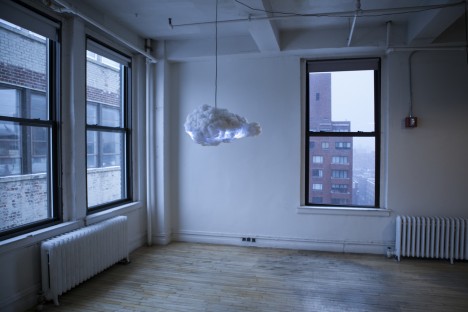
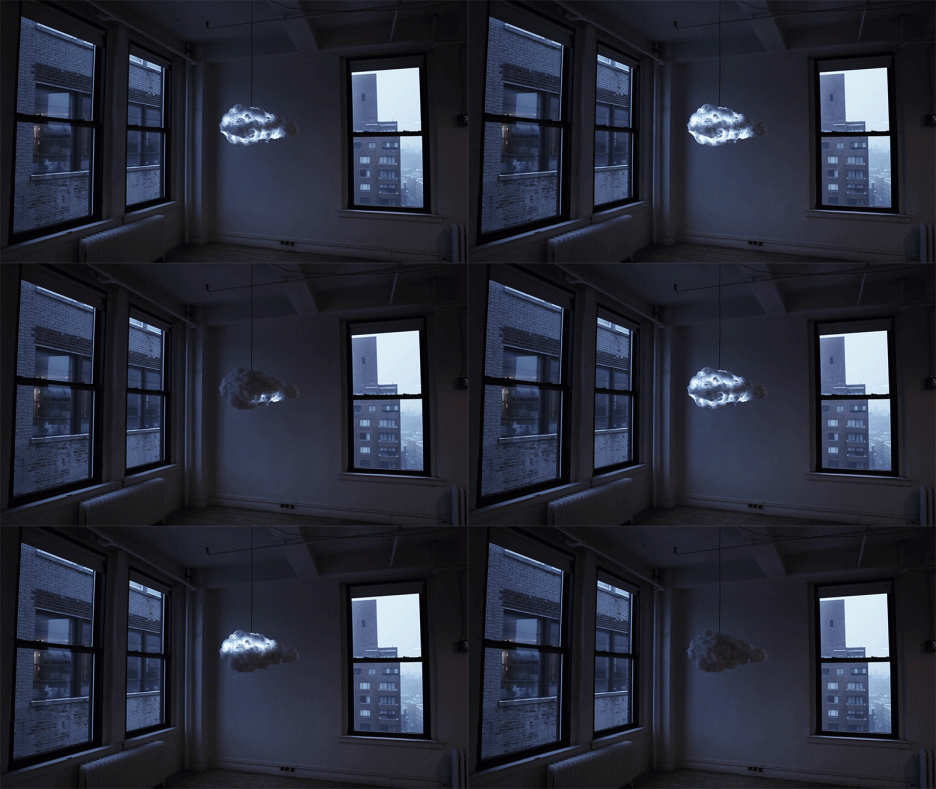
hanging cloude animated

A simple but provocative piece of dynamic home decor, this thundering cloud can be set to react to its environment, picking up cues from the weather or turning stormy on demand.

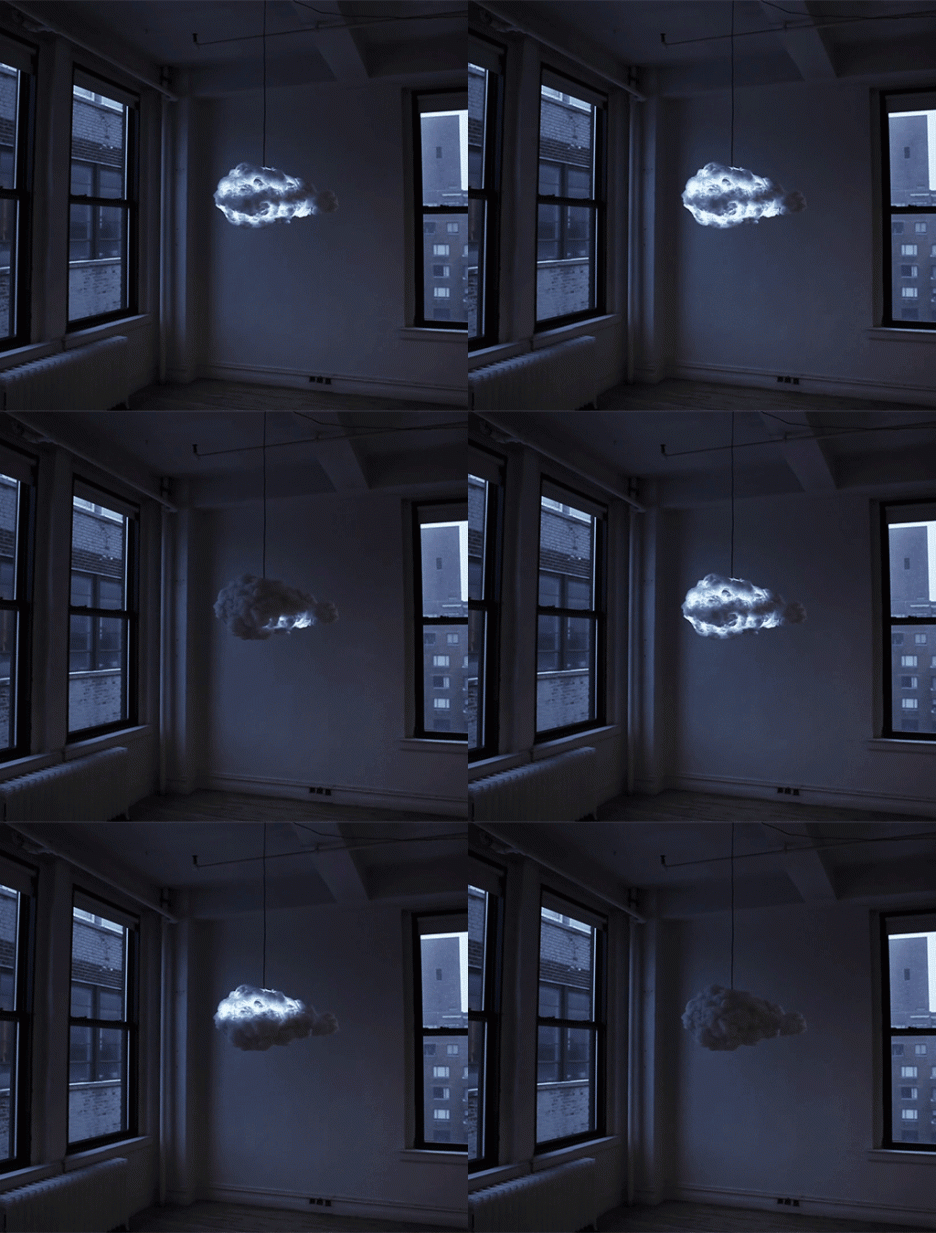
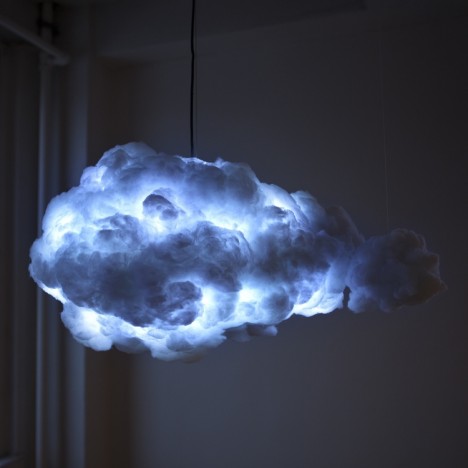
Designed and sold by Richard Clarkson, The Cloud is interactive light(n)ing piece made not just to look a thundercloud but also to create multicolored lights and generate customizable sounds. It can be set to automatic modes or manually operated by remote control to simulate different natural and synthetic effects.

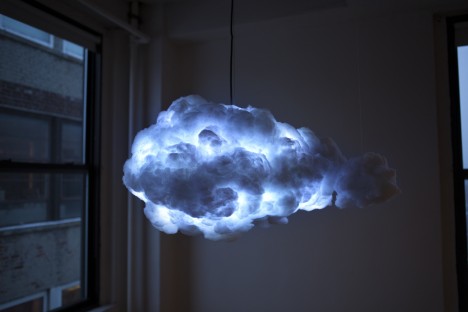
home lightning cloud closeup

hanging thundercloud home lighting

From its creator:  “The Cloud is an interactive lamp and speaker system, designed to mimic a thundercloud in both appearance and entertainment. Using motion sensors the cloud detects a user’s presence and creates a unique lightning and thunder show dictated by their movement.”

thunder-cloud-detail

smart cloud design

“The system features a powerful speaker system from which the user can stream music via any Bluetooth compatible device. Using color-changing lights the cloud is able to adapt to the desired lighting color and brightness. The cloud also has alternative modes such as a nightlight and music reactive mode.”

Share on Facebook


[ By WebUrbanist in Design & Fixtures & Interiors. ]

[ WebUrbanist | Archives | Galleries | Privacy | TOS ]


WebUrbanist

 
Comments Off on Lightning Fixture: Domesticated Cloud to Hang in Your Home

Posted in Creativity


Compact Cube Home: Storage Unit Turned Micro Apartment

03 Jul

[ By Steph in Design & Fixtures & Interiors. ]

Compact Cube Apartment 1

A compact space with thirty years’ history as a storage unit is now a sleek, modern apartment outfitted with everything a single occupant needs with the addition of a built-in bed platform with storage. Architect Karin Matz purchased the unit in a state of total disarray, as the previous owner had begun a renovation in the 1980s that was never completed. When she began, it was a mess of peeling wallpaper, no electricity and “a bathroom only with signs of rats as inhabitants.”

Compact Cube Apartment 2

Compact Cube Apartment 3

The new architectural volume consists mostly of IKEA kitchen units, extended beyond the food preparation space to form a storage-filled platform for the raised bed. A small void under the bed offers a closet space, and a glass partition gives the little loft a sense of separation from the kitchen.

Compact Cube Apartment 4

Compact Cube Apartment 6

Aside from the bathroom, which was modernized, the rest of the apartment has been left virtually as Matz found it, with all surfaces remaining the way they’ve looked for the past 20 years. The rough, weathered surfaces of the walls contrast with the smooth new wood of the floors and furniture.

Compact Cube Apartment 7

Says Matz, “In a city like Stockholm with enormous housing shortage and with every square meter increasing in price by the minute, this story was somehow impossible to understand and resist. The finished apartment is the result of a fascination for this; a try to let the previous layers and stories of a space live on and at the same time fill the requirements for the new story that will take place.”

Share on Facebook


[ By Steph in Design & Fixtures & Interiors. ]

[ WebUrbanist | Archives | Galleries | Privacy | TOS ]


WebUrbanist

 
Comments Off on Compact Cube Home: Storage Unit Turned Micro Apartment

Posted in Creativity


7 Proven Ways to Come Home with Better Travel Photos

26 Jun

It s all about the light

Your next vacation or around-the-world escapade is the perfect time to brush up on your photography skills.

After all, taking a great photograph is never more important than when you’re seeing people and places you may never see again. Travel opens your eyes to other cultures, and if you prepare before you leave, it can also open the eye of your camera lens to infinite possibilities.

But first things first – let’s make sure you have a basic understanding of photography before you step onto the plane. Here’s a list of seven proven ways to come home with better travel photos.

#1 Take a good look at your gear

You don’t need to spend a million dollars on crazy-expensive gear. However, you do need a camera from this century. Better yet, a camera that was made in the last five years. Technology is changing so rapidly that you’re really going to notice a difference with newer cameras.

Also, don’t be afraid to check out the new lightweight DSLR cameras that are all the rage. You may feel cooler hauling around a huge Nikon D5300, but a more compact model can take great pictures too (plus compact is always better when you’re traveling).

#2 Get intimate with your settings

Get intimate with your settings

You haven’t just been leaving your camera in Auto mode, have you? What fun is that? Now I’m not saying you have to learn how to manually focus before you take-off for say, Fiji, but at least get familiar with these three need-to-know settings (the Exposure Triangle) on your DSLR camera.

#3 Do your research

Dive into Google Images, Flickr, or 500px to look for photos (and photographers) you love. Choose at least three travel photographers and follow their blogs.

Not only will get some great ideas for photographs, you’ll be able to find tips and techniques for getting specific effects you’ve seen in the photos you admire.

#4 Get to know your subject

Get to know your subject

Photographing people is one of the most exciting parts of travel photography. Imagine getting great shots of Buddhist monks in Laos, a tribesman in the African bush, or mountain people in the Himalayas. But you’re not just going to walk up to someone you’ve never spoken to and stick a camera in their face (promise me you won’t do that).

So how are you supposed to approach your subject? The #1 tip is to make friends first. That can be tough in and of itself when there is a language barrier, but it’s not impossible. Read: Practical tips to build your street photography confidence (which also applies when travelling).

#5 Get lost
Get Lost

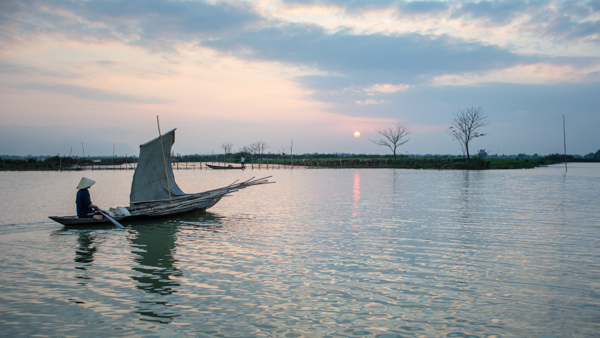
You’re not going to get great travel photographs taking pictures of the monuments and sites that every other tourist on earth has already photographed. When you travel, get lost! Venture out into villages and unknown areas that no one else goes to. Don’t be afraid to get off the beaten path.

The most exciting photos you’ll take won’t be of the Empire State Building, they’ll be of the ancient bartender in that random dive bar in Astoria, Queens (the one you never would have found if you hadn’t gotten completely lost).

#6 Get close

Repeat after me: “I will not be a lazy photographer.”

Get close

Lazy photographers use lenses instead of legs. I want you to use those legs of yours to walk, run, jump, swim, crouch, bend, and move any way you can to get close to your subject. Why? Because the simple act of getting close to your subject will drastically improve your travel photographs.

Once you’ve followed step #4, don’t be afraid to put your camera as close as possible to your subject, sometimes right in their face even.

Disclaimer: this tip does NOT apply to house fires, political violence, or wildlife safaris.

#7 It’s all about the light

It s all about the light

The other day a student of mine showed me a photograph that was taken in the middle of the day, under the hot Hoi An sun. There were several problems with the shot, but the main reason it looked flat and lifeless was simply because of the time of day it was taken.

I told her what I tell everyone; don’t bother getting out your camera between the hours of 8 a.m. and 4 p.m. The light is too harsh. Get up before the sun and/or wait until the sun is about to set, and you’ll enjoy amazing light that will work wonders for your photographs.

That same student sent me a photo the following day, this time taken just before sunset. It was 10x better. Had she suddenly become a better photographer in less than 24 hours? Yes. But only because she learned to tell time.

Follow these seven tips and I have no doubt you’ll be taking amazing travel photographs on your next trip. Have any additional tips you’d like to share? Please do so in the comments below.

Safe travels!

The post 7 Proven Ways to Come Home with Better Travel Photos by Etienne Bossot appeared first on Digital Photography School.


Digital Photography School
 
Comments Off on 7 Proven Ways to Come Home with Better Travel Photos

Posted in Photography


A Different Angle: 15 Great Geometric Home Accessories

19 May

[ By Steph in Design & Furniture & Decor. ]

Geometric Home Accessories Main

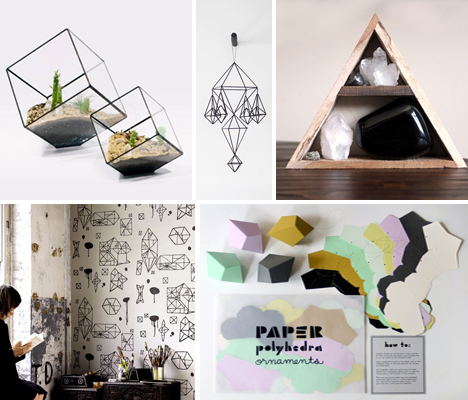
Bring the clean, graphic lines of cubes, pyramids, prisms and other polyhedrons to your home with these (often literally) sharp accessories. Hand-drawn shapes on wallpaper, icosahedron salt and pepper shakers, DIY origami ornaments, modernized Himmeli mobiles and diamond-shaped cookie cutters are among these 15 affordable geometric decorative objects.

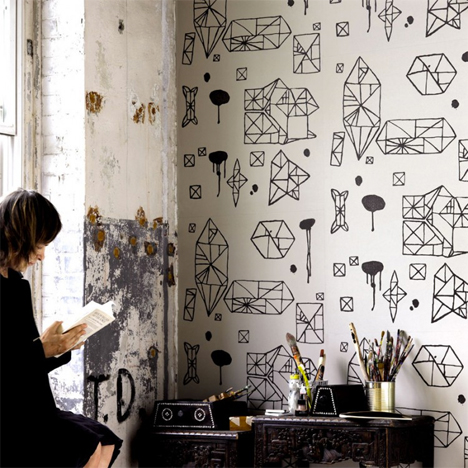
Random Geometry Wallpaper by Nama Rococo

Geometric Home Nama Rococo

The imperfect nature of hand-drawing adds a bit of a quirky feel to the ‘Random Geometry’ wallpaper by Nama Rococo. Plaster an entire room with it, create an accent wall or just frame a single sheet for $ 100.

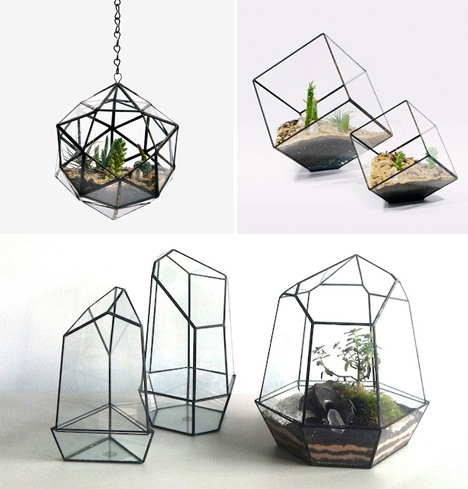
Score + Solder Terrariums & Planters

Geometric Home Score + Solder

Glassworker Matthew Cleland of Score + Solder creates stunning geometric terrariums, planters, lamps and more, handmade to order from his 13-acre farm in British Columbia.

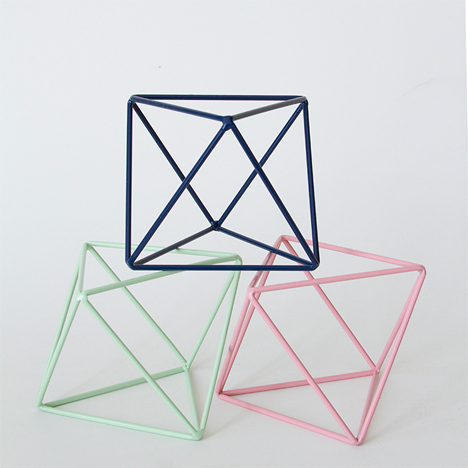
Octahedron Decorative Objects by Eric Trine

Geometric Home Octahedron Decor

Perfect for the mantle or as a conversation piece on the coffee table, this octahedron decorative object by Eric Trine costs just $ 32.

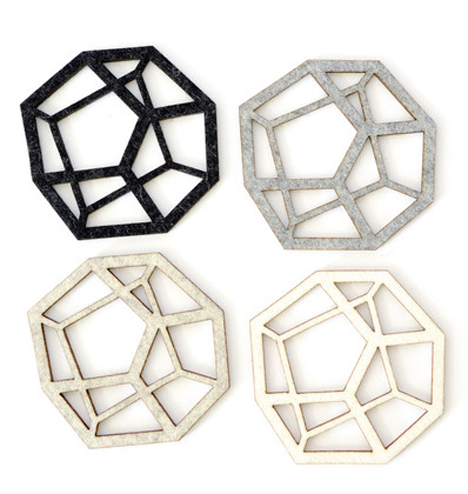
Pentahedron Coasters by Koromiko

Geometric Home Pentahedron Coasters

Protect your table from condensation with this set of four handmade felt pentahedron coasters, handmade in San Francisco by Koromiko, $ 40.

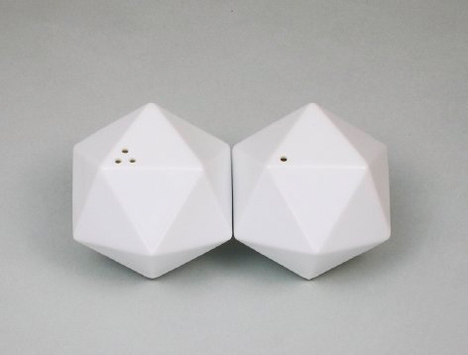
Icosa Salt & Pepper Shakers by Club88inc

Geometric Home Icosa Salt and Pepper

This set of icosahedron-shaped salt and pepper shakers by Club88inc, $ 35, will fit perfectly into the palm of your hand.

Next Page – Click Below to Read More:
A Different Angle 15 Great Geometric Home Accessories

Share on Facebook


[ By Steph in Design & Furniture & Decor. ]

[ WebUrbanist | Archives | Galleries | Privacy | TOS ]


WebUrbanist

 
Comments Off on A Different Angle: 15 Great Geometric Home Accessories

Posted in Creativity


Indestructable Cabin: Steel-Clad Apocalypse Home on Stilts

26 Apr

[ By WebUrbanist in Architecture & Houses & Residential. ]

raised cabin stairs entry

Steel shutters and sliding doors turn this award-winning lofted cabin into an ultra-secure shelter on demand, while stilts raise it up and help protect it from periodic floods.

raised olson kundig architects

raised cabin award winning

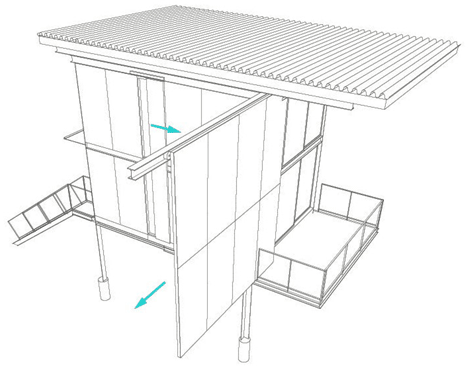
At the heart of the design is a giant steel panel that slides into place to close off the building then slides aside, suspended along a dramatic cantilevered steel beam.

raised cabin sliding wall

raised cabin closed context

As an outstanding response both to site conditions and client wishes, the Sol Duc Cabin by Olson Kundig Architects (photographs by Benjamin Benschneider), received one this year’s American Institute of Architects Housing Awards.

raised cabin forest section

raised cabin diagram 3d

raised forest cabin steel

A steampunk-worthy system of cranks, levers, gears and wheels allows the occupants to slide the main and subsidiary window-covering panels open and closed manually, engaging with the architecture.

raised cabin windows deckraised cabin kitchen loft

The cabin’s rugged patina and raw materiality respond to the surrounding wilderness while its verticality provides a safe haven during occasional floods from the nearby river.” Rusticated metal siding blends with the surrounding environment while clean wood surfaces provide for visual contrast and a modern interior.

Share on Facebook


[ By WebUrbanist in Architecture & Houses & Residential. ]

[ WebUrbanist | Archives | Galleries | Privacy | TOS ]


WebUrbanist

 
Comments Off on Indestructable Cabin: Steel-Clad Apocalypse Home on Stilts

Posted in Creativity


Home Ice: 12 International Antarctic Research Stations

02 Mar

[ By Steve in Architecture & Public & Institutional. ]

antarctic research stations
Constructing a research station in Antarctica means thinking outside the box-like building but not TOO far outside… Great Scott it’s COLD out there!

USA: Palmer Station

Palmer Station Antarctica(images via: Christopher Michel and WHOI)

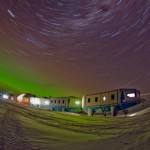
Built in 1968 on Anvers Island, Palmer Station is the only American antarctic base located north of the Antarctic Circle. The base’s activities focus on the study of marine life and most projects are seasonal in nature: the station’s resident population averages around 40 in summer but drops to 15-20 in winter.

Palmer Station Antarctica(image via: NASA)

But enough about the station, check out the photo above! In November of 2009, red-parka’d base personnel got together to send a friendly greeting to NASA’s DC-8 flying science laboratory flying overhead.

Ukraine: Vernadsky Research Base

Ukraine Vernadsky Research Base antarctica(images via: EYOS Expeditions, Wikipedia/Lewnwdc77 and Around This World)

Ukraine didn’t build the Vernadsky Research Base; the former Faraday Station on Winter Island was purchased from Great Britain in 1996 for the bargain price of one pound. The station’s main claim to fame is its bar, said to be the southernmost such establishment on earth, where thirsty and/or bored patrons can pay $ 3 a shot for vodka brewed on-site.

Ukraine Vernadsky Research Base Antarctica(image via: Rachel Lea Fox)

Now operated by the National Antarctic Scientific Center of Ukraine, the Vernadsky Station consists of nine buildings and can house up to 15 staff members. Full credit to Flickr user Rachel Lea Fox for the image above. Time for a new flag? Er, I wasn’t asking you, President Putin.

Norway: Troll Research Station

Norway Troll antarctic station(images via: Norwegian Polar Institute, Wikipedia/Islarsh and Reuters, Alister Doyle)

Constructed in 1990 and expanded 15 years later, Troll Station is Norway’s only year-round antarctic science base… problem? The Norwegian Polar Institute operates 8-person capacity Troll Station, which is located in the Norwegian antarctic dependency of Queen Maud Land. Troll Station is built on a bare rock outcrop poking through the ice cap and since the region is considered to be a “desert” in meteorological terms, heavy snowfalls and wind-blown drifting are not major concerns.

Norway Troll Station Antarctica(image via: Epoch Times/Heiko Junge/AFP)

As is the case with all antarctic research stations, accommodations at Troll Station are both limited and spartan… even if you’re Norwegian Prime Minister Jens Stoltenberg.

Belgium: Princess Elisabeth Antarctica Research Station

Belgium Princess Elizabeth antarctic station(images via: Treehugger, International Polar Foundation and Architects24)

Belgium’s futuristic Princess Elisabeth Antarctica Research Station opened in February of 2009 and claims to be “the world’s first zero emission polar research station.” The 16-person capacity station draws electric power from solar panels supplemented by a network of nine wind turbines.

Belgium Princess Elisabeth Antarctic Research Station bicycle(image via: IRM)

Though sunlight is unavailable for months at a stretch, Princess Elisabeth Antarctica Research Station’s location backing onto the rocky Utsteinen Ridge in Queen Maud Land exposes it to howling gales measured at up to 300 kph (190 mph). Calmer days are much appreciated by station staff. He’s rollin’, don’t be hatin’.

Next Page – Click Below to Read More:
Home Ice 12 International Antarctic Research Stations

Share on Facebook


[ By Steve in Architecture & Public & Institutional. ]

[ WebUrbanist | Archives | Galleries | Privacy | TOS ]


WebUrbanist

 
Comments Off on Home Ice: 12 International Antarctic Research Stations

Posted in Creativity


Alley Stack: Brooklyn Home Made of 5 Shipping Containers

01 Mar

[ By Steph in Architecture & Houses & Residential. ]

Shipping Container Home Brooklyn 1

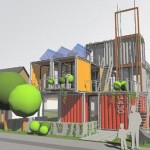
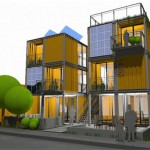
A tiny slice of real estate in Brooklyn is now an affordable, low-impact multi-level residence made of five stacked and renovated shipping containers. Williamsburg couple Michele Bertomen and David Boyle bought a 6×12-meter lot that had been vacant for 60 years, squeezed between two brick buildings. Conventional building materials would have stretched their budget, so they set out to design and build a shipping container house with a total cost of just $ 50,000 (not including the lot).

Brooklyn Shipping Container Home 2

That price is unheard of in New York City, and it took a lot of innovation – with more than a few bumps in the road – to make it happen. Getting the right permits took ten months, with city officials repeatedly requiring changes to the couple’s plans. Luckily Bertomen is an architect and Boyle a contractor, saving them a lot of money. Once the plans were done and the materials acquired, it took just a few hours to put it all together.

Brooklyn Shipping Container Home 3

The shipping containers were purchased for $ 1,500 each and once assembled, create an interior space measuring nearly 1,600 square feet. The container walls are insulated with Super Therm, a paint that contains ceramic particles, and the home is heated with radiant heat that runs through the concrete floors.

Brooklyn Shipping Container Home 4

Believed to be the first shipping container residence in New York City, the house features multiple outdoor areas (including a private porch for the couple’s dog) and a roof terrace. See a complete tour of the interior at Inhabitat and DNA Info.

Share on Facebook


[ By Steph in Architecture & Houses & Residential. ]

[ WebUrbanist | Archives | Galleries | Privacy | TOS ]


WebUrbanist

 
Comments Off on Alley Stack: Brooklyn Home Made of 5 Shipping Containers

Posted in Creativity


How to Create Great Photos without Leaving Home

17 Feb

Photos home easy 01

So you want to take pictures; or do you want to be a photographer? I deal with a strikingly similar question every time I swing a golf club; I want to be a golfer, but with life events and time constraints the reality is I merely play golf. Fortunately, making a great photo doesn’t consume the amount of time 18 holes does and since you’re here reading this, it’s safe to say you want to be a photographer.

WHAT TO PHOTOGRAPH?

Portraits, landscapes, sports, oh my! As a new photographer it is incredibly tempting to photograph everything, and that’s a good thing as it will help you understand where your true passion lies. However, I am a firm believer that early success leads to more success.

Let me say that again – early success leads to more success.

As a new photographer there is no better feeling than capturing a truly excellent photo; and if you’re anything like me, time is very limited. Luckily with a simple understanding of light, your home is a great place to create stunning photos.

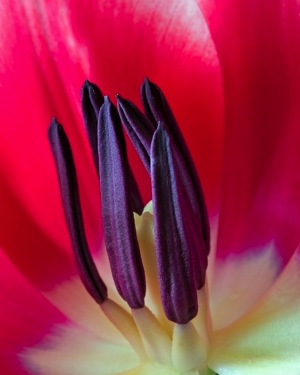
All of the photos in this article were shot in my home. I do not have a home studio, and as I mentioned earlier, I also have little spare time; but that’s ok because you don’t need either to make great photos. The photos of the tulip and baseball were shot with a cheap piece of white poster board and available light from a window.

USING WINDOW LIGHT

While there are no “essentials” to creating great photos with available light from a widow, I always use a tripod and would highly recommend one. However, if you do not have a tripod, you’ll need to raise the ISO to increase your shutter speed if you plan to hand-hold your camera. A generic rule of thumb is you’ll need a shutter speed of 1 divided by the focal length of your lens. For example, I used a 100mm lens for the tulip, and shot it at f/16 and an 8 second exposure. If I did not have a tripod, I would have had to increase the ISO (and realistically open the aperture as well) until I had a shutter speed of 1/100 (because I was using a 100mm lens) to keep the image sharp; but since I was making use of a tripod, an 8 second exposure was no problem.

There are endless opportunities for photography with available window light. Again, you could certainly hold your camera if you raised the ISO, but I would suggest the following as rough guidelines for photographing next to a window:

Photos home easy 02

  • Use a tripod, or raise your ISO until the shutter speed is 1 / the focal length of your lens
  • If using a tripod, set your ISO as low as possible
  • Set your camera to manual mode and the aperture to around f/11, then adjust the exposure via shutter speed from there

For a clean seamless background, such as the baseball photo here, grab a cheap piece or poster board from the school or office supply aisle at your favourite box store.

What do you do once you’re bored shooting next to the window, or want to learn something more? Stay at home of course!

WHAT’S NEXT? LEARN ABOUT LIGHT

There’s plenty of room to grow with your photography in the house. After all, what’s the underlying foundation of photography? Light! Even if you don’t have a flash you can still learn about lighting at home. Don’t have an off camera flash? No problem, I bet you have a flashlight! I created the photo of the kiwi fruit in a bathroom with the lights off and a flashlight lighting the fruit from behind.

Photos home easy 03

I would take a photo, look at it on the camera’s LCD, and then adjust the angle of light from there. So what if I spent an abnormal amount of time in a dark bathroom by myself, and got strange looks from my wife. I learned a lot about how the position of the light effects the look of the photo, and made a cool photo!

Bottom line, you don’t need a flash to learn lighting and take a great photo, all you need is a dark room (very dark, as in no light at all) and a flashlight.

Photos home easy 04

USING FLASH

So what about flash? I think using flash in photos is the key to creating photos that stand out from the rest. If you have a speedlite or other hot shoe flash, the best thing you can do to take your photography to the next level is learn to use it. After that, the next best thing you can do is take it off the camera when you use it. The photo of the little yellow guy smiling and the red silhouette of the golfer were both shot using off camera flash, and aside from a few tweaks in post processing, they look very close to what was produced in the camera with help from the flash. Once you understand about positioning and light fall off, you’ll be able to manipulate the light in such a way that creates great photos right in the camera.

Photos home easy 05

The point being here, and something you’ll learn either in due time, or right now as I tell you, all great photos have one thing in common: great light. Whether you use light from a window, a flash, or light from something as simple as a flashlight – there are numerous ways you can get great light right in the comfort of your own home.

To recap, here’s what I used in the photos:

  • Flower and baseball- window light, white poster board, and a tripod
  • Kiwi fruit- tripod and a flashlight
  • Golfer – single off camera speedlite with a red gel fired into a seamless paper
  • Little yellow smiling guy – white seamless paper, and a single off camera flash handheld above and to the left of the camera

Once you create one photo with great light at home, I guarantee you will be hooked! Best of luck to you, now go shoot!

The post How to Create Great Photos without Leaving Home by Brian Barthel appeared first on Digital Photography School.


Digital Photography School
 
Comments Off on How to Create Great Photos without Leaving Home

Posted in Photography


Blob: Oblong White Mobile Home Looks Like a Dino Egg

11 Feb

[ By Steph in Architecture & Houses & Residential. ]

Blob Modern Mobile Home 1

Designed as an extension to a home, this mobile live/work pod eschews conventional mobile home aesthetics in favor of something decidedly more eccentric. ‘Blob VB3′ is an oblong white living space that looks like a gigantic egg when it’s all closed up, but the sides open to reveal a gridded interior for storing small items, working and even sleeping.

Blob Modern Mobile Home 2

Architecture firm dmvA came up with the prototype in response to strict building codes in the client’s city. It contains lots of open niches for storage, multipurpose platforms, lighting, a kitchen and a bathroom. When the airplane-like ‘nose’ is open, it functions as a roof for a small indoor/outdoor space.

Blob Modern Mobile Home 3

Primarily made of polyester, the Blob VB3 is easy to transport, aerodynamic and versatile. It could be used as a guest room, office, pool house or garden house. A circular skylight lets light into the bright white interior.

Blob Modern Mobile Home 4

While the open shelves don’t exactly make it ideal for pulling behind a truck like an Airstream, it’s an interesting way to add a little extra space to an existing building without having to deal with local building regulations.

Share on Facebook


[ By Steph in Architecture & Houses & Residential. ]

[ WebUrbanist | Archives | Galleries | Privacy | TOS ]


WebUrbanist

 
Comments Off on Blob: Oblong White Mobile Home Looks Like a Dino Egg

Posted in Creativity


Hose To Home: 10 Reverently Restored Firehouses

14 Jan

[ By Steve in Architecture & Houses & Residential. ]

firehouse homes
America’s urban firehouses combine form with function in solidly-built structures, making them ideal candidates for respectful residential restoration.

Anderson’s Coop

Anderson Cooper restored home firehouse New York(image via: Daytonian In Manhattan/Alice Lum)

Architect Franklin Baylis, designer of the 1906-vintage Fire Patrol House #2 in New York City’s Greenwich Village, would no doubt be pleased to see his original work revealed after so many years. Bland and unappealing painting, re-painting and over-painting had obscured the firehouse facade’s intricate detailing but all that would change when media celeb Anderson Cooper bought the building for $ 4.3 million and embarked on an extensive (and doubtless expensive) restoration.
Anderson Cooper firehouse home NYC Greenwich Village(images via: Curbed)

The term “restoration” shouldn’t be taken literally – Cooper was looking to LIVE in the building, not fight fires from it. Even so, the new owner of the 8,240-square-foot former firehall at 84 West 3rd Street intends to restore the old fireman’s gymnasium for his personal use and although the front garage door is now black, the station’s iconic bust of Mercury is looking pretty good for a dude going on 108!

Newport Renews

Hose 8 firehouse restoration Newport RI(images via: H + A)

The town of Newport, Rhode Island was founded in 1639, which makes the historic Hose 8 firehouse one of the burg’s newer structures. When structural issues appeared to consign the late nineteenth century building to the wrecker’s ball, Boston-based Hacin + Associates architecture and design firm stepped in with an intriguing plan: completely dismantle the three-story firehouse and rebuild it, brick by brick, with a flexible modern interior suitable for homeowners. Upon completion of the three-year-long project, The Newport Restoration Foundation awarded H + A the Doris Duke Preservation Award honoring the firm’s “heroic efforts to save a building that would have otherwise been lost”.

Ravenswood; You Would Too

Ravenswood Chicago home firehouse(image via: Your Windy City Guide)

Chicago Fire anyone? The Windy City found itself chock-a-block with redundant firehouses in the late 1950s when the many competing private fire protection companies were absorbed by the municipal government. Some, like the restored Ravenswood beauty above, found themselves in revitalized residential neighborhoods where their form took precedence over their former function.

Chicago restored firehouse Ravenswood(images via: Hall Of Flame, StrawStickStone/Cragin Spring and Chicago Scanner)

In its previous life, the structure was Patrol #8 of the Chicago Fire Insurance Patrol. Listed for $ 1,275,000 in 2006 (just before the national financial crisis clobbered the housing market), the cozy firehall features two bedrooms, two baths, a wine cellar and an expansive first floor formerly reserved for parking fire engines. The building looked almost naked without its current covering of ivy, though the “before” photo above from StrawStickStone does reveal some of its architectural highlights.

San Francisco Treat

117 Broad St. fire station 33 SFFD home (images via: Zillow)

Give my regards to Broad Street… San Francisco that is! Operating from 1896 to 1974, Firehouse 33 enjoyed an eventful life that included the Great San Francisco Earthquake when it was just a decade old. These days, the station does double duty as a two bedroom/2 bathroom home and a working business: the San Francisco Fire Engine Tours & Adventures company – it even has a 1955 red Mack Truck fire engine parked in the garage. Kiss those traffic jams goodbye!

Next Page – Click Below to Read More:
Hose To Home 10 Reverently Restored Firehouses

Share on Facebook


[ By Steve in Architecture & Houses & Residential. ]

[ WebUrbanist | Archives | Galleries | Privacy | TOS ]


WebUrbanist

 
Comments Off on Hose To Home: 10 Reverently Restored Firehouses

Posted in Creativity