RSS
 

Posts Tagged ‘Historic’

Hutong Hostel: Modern Micro-Hotel Squeezes into Historic Chinese Context

13 Nov

[ By WebUrbanist in Boutique & Art Hotels & Travel. ]

hutong-above

Traditional hutongs found in Beijing wind in upon themselves, organically shaped by the forces around them to create nesting neighborhoods that are cozy and serene. Alleys branch off of larger alleys and even larger streets as visitors make their way deep into the heart of huge city blocks.

modern-hutong-space

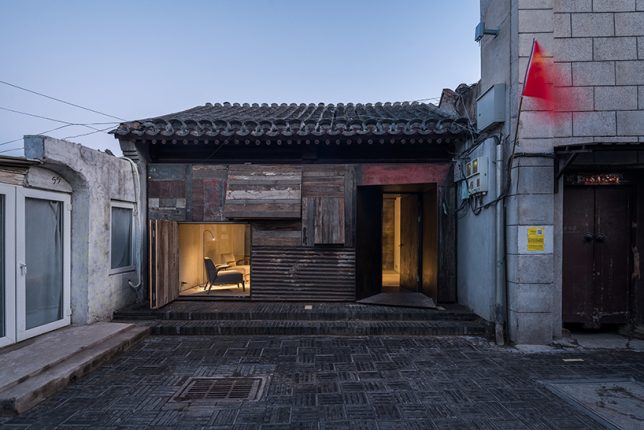
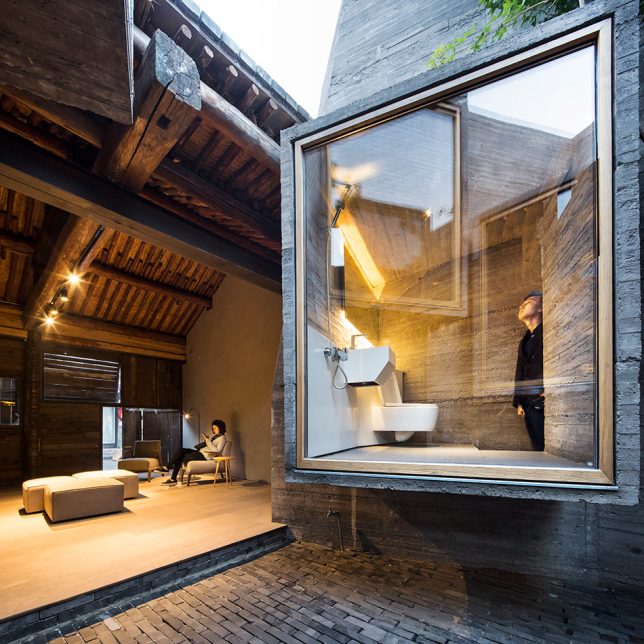
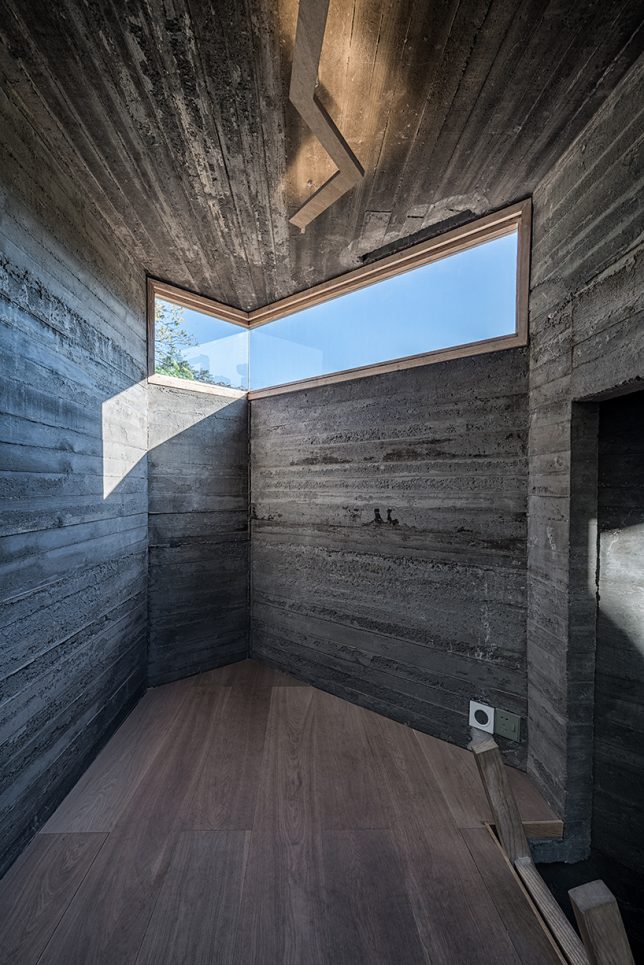
This new hostel project by ZAO and Standard Architecture builds on the long tradition of hutongs and measures just 320 square feet. It represents a Brualist/Modernist take on the alley-based architecture of China’s capital.

hutong-street-facing

hutong-shared-living-room

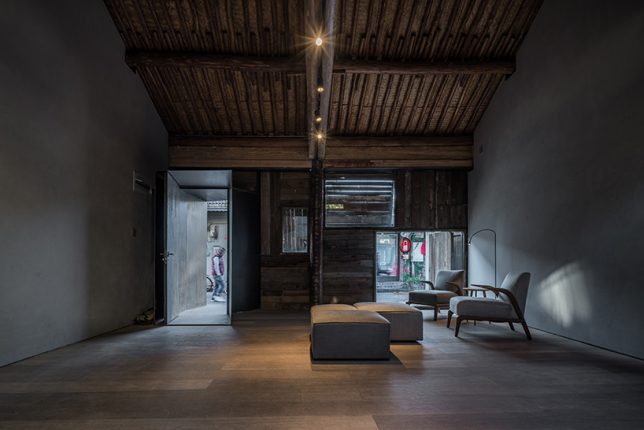
An expansion of previous hutong projects – including a co-living courtyard, library and gallery space – this hostel brings small-scale social housing into the mix.

hutong-brutalist-interior

hutong-bathroom

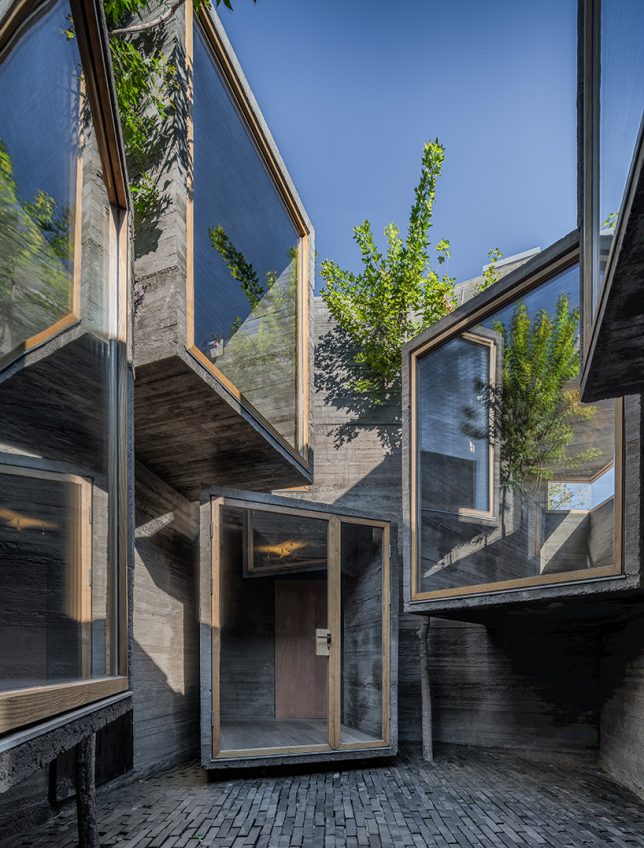
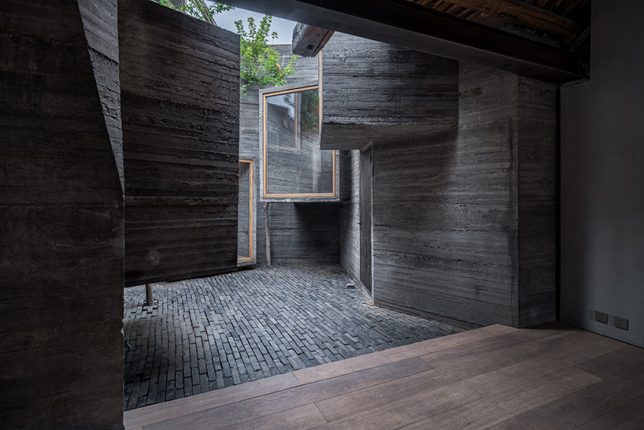
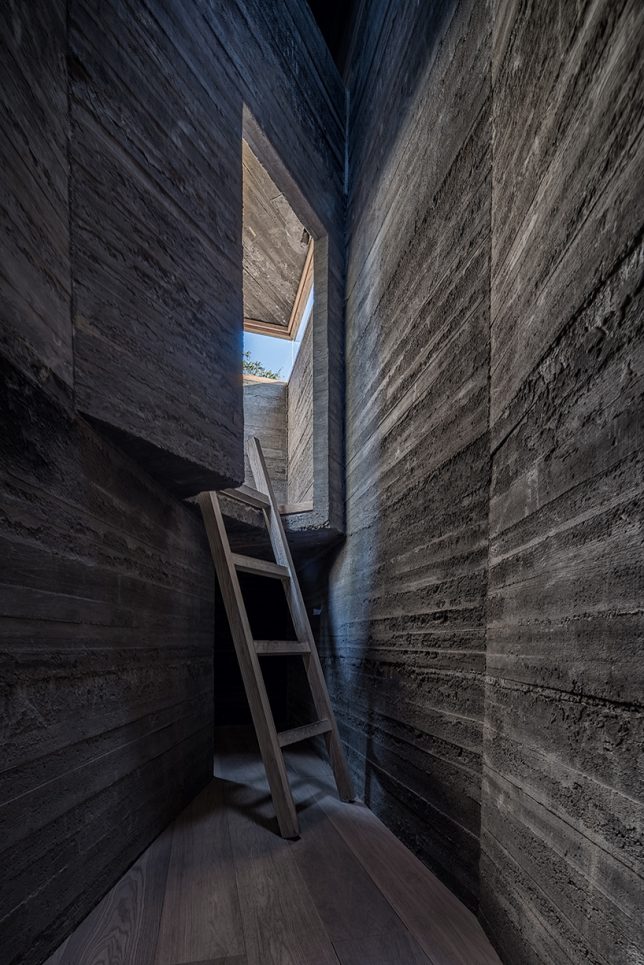
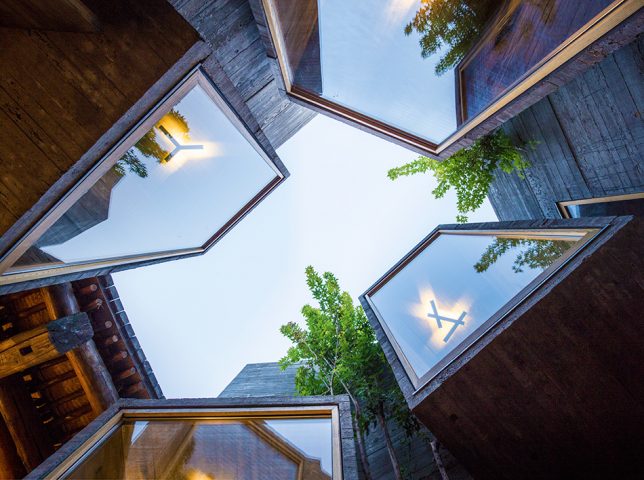
Guests enter through a semi-public transitional space, much like the branching alleys and courtyards of a normal hutong, then enters a complex of angular architecture forms composed of concrete and glass.

hutong-hostel

hutong-skylights

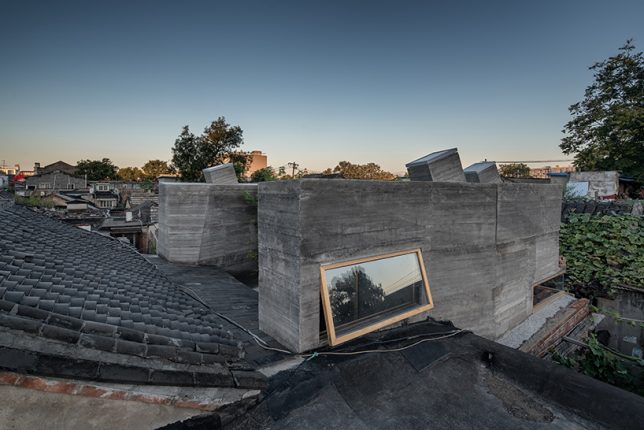
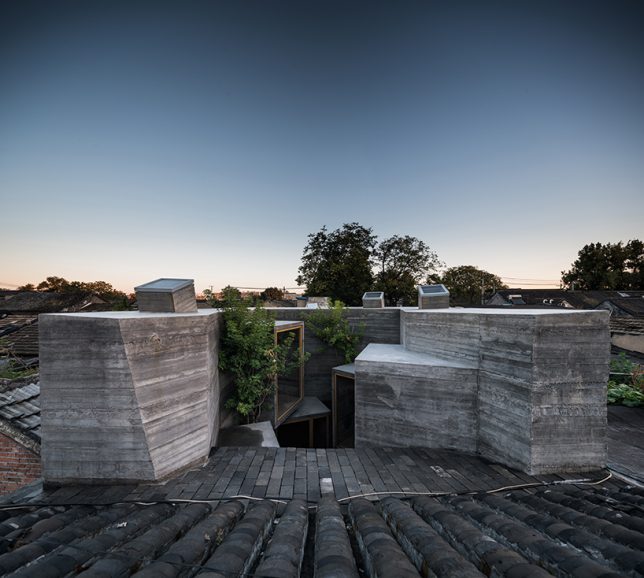
A series of extruded volumes rise up slightly above the adjacent rooflines to access views, air and light from beyond the compressed confines of the site. The courtyard at the heart of the plan serves to connect it to the neighborhood, acting as a liminal zone for guests and community members alike.

interior-room

hutong-second-floro

“The result is an architectural operation that brings back the courtyard as a generator of the program, as it activates the building by creating a direct relationship with its urban context,” say the architects.

Share on Facebook


[ By WebUrbanist in Boutique & Art Hotels & Travel. ]

[ WebUrbanist | Archives | Galleries | Privacy | TOS ]


WebUrbanist

 
Comments Off on Hutong Hostel: Modern Micro-Hotel Squeezes into Historic Chinese Context

Posted in Creativity


LEGO at Large: Modern Block Vehicles Hit the Historic Streets of Rome

11 Nov

[ By WebUrbanist in Art & Photography & Video. ]

block-car

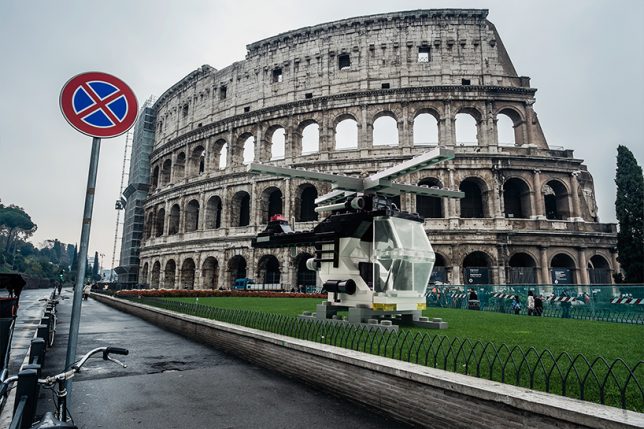
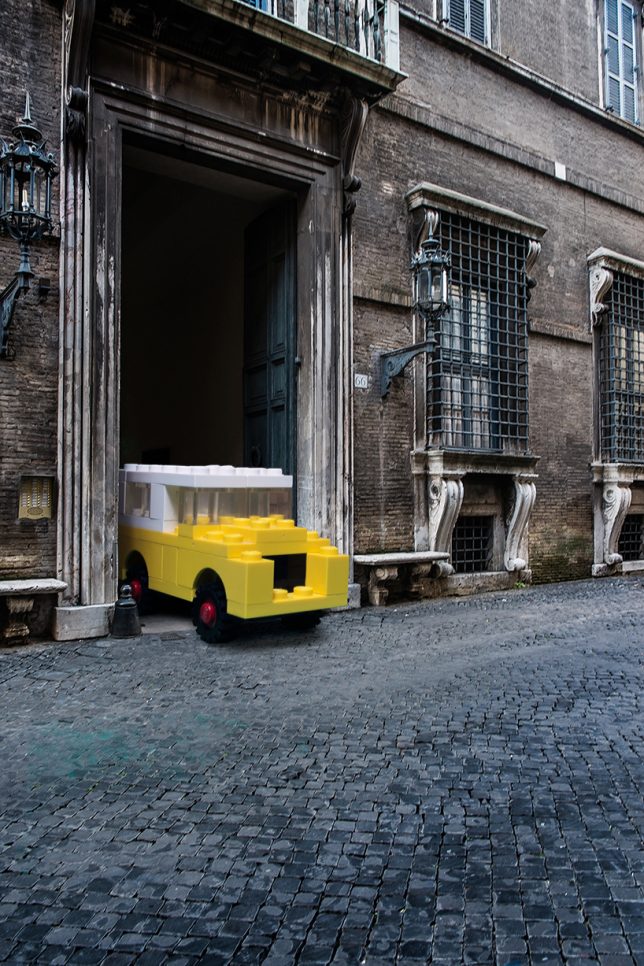
A sports car parked in a residential alley, train emerging from a tunnel and helicopter landing next to the Colosseum are all believable sights in Italy’s capital … except in this case they are constructed from LEGO.

lego-train-tracks-tunnel

lego-landing-helicopter

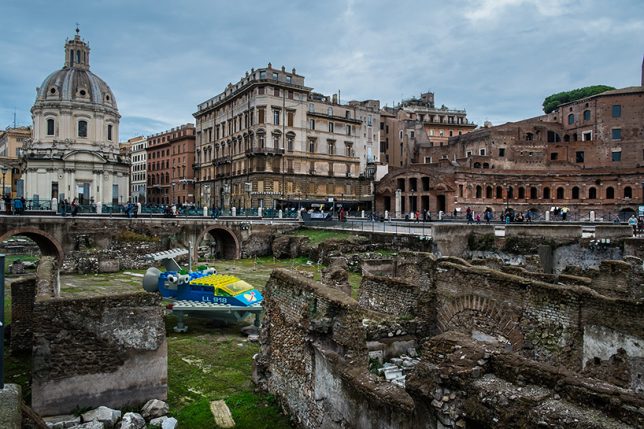
Italian photographer Domenico Franco imagines these block-built vehicles at human scale in his series LEGO Outside LEGOLAND, masterfully faked scenes of photo-realistic quality.

lego-race-car-unloading

lego-large-in-rome

In his series, normal conveyances are swapped with LEGO creations that stand out as simplified block forms against the rich historical fabric of Rome.

lego-parked-speeder

lego-construction-vehicle

While some are clearly toys writ large, others are more convincing: a passing glance at a tractor trailer doing road work might not immediately belie its fictional origins.

lego-car-tight

Landmark buildings and aged cobblestone roads come alive thanks to the contrast created by intervening toys. Ordinary gray-blue weather and aged architecture seems even more real than in a normal photograph.

lego-ambulance-parked

“The aim is to transform ordinary contexts in extraordinary ones,” says the artist, “thus compelling the toys to get out of the idyllic and politically correct landscapes belonging to their perfect and idealistic cities, with the result of instilling in them those vices, virtues and desires typical of human beings.”

Share on Facebook


[ By WebUrbanist in Art & Photography & Video. ]

[ WebUrbanist | Archives | Galleries | Privacy | TOS ]


WebUrbanist

 
Comments Off on LEGO at Large: Modern Block Vehicles Hit the Historic Streets of Rome

Posted in Creativity


Architectural Interventions: 12 Radical Modern Changes to Historic Buildings

25 Oct

[ By SA Rogers in Architecture & Houses & Residential. ]

architecture-intervention-main

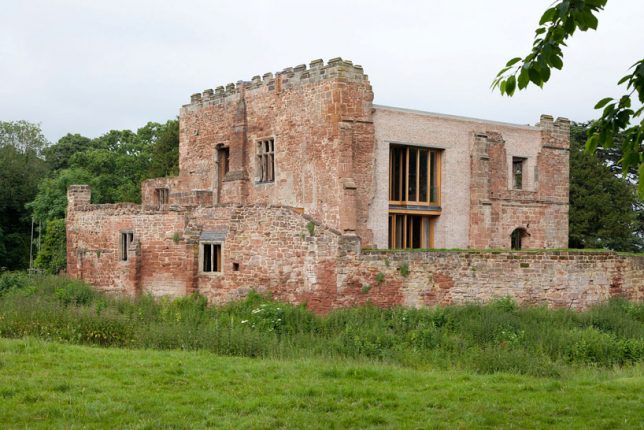
Honoring the historic significance of deteriorating buildings while reinventing them for modern contexts and usage, these architectural interventions don’t try to erase signs of aging and damage or blend the demarcation between old and new. Cracks in stone manors are filled with glass, elegant Parisian facades are recreated in stark concrete, rusted steel volumes are lowered right into the empty shells of ruined brick houses. Whether renovating or reimagining the original structures, these projects preserve history and highlight the passage of time instead of demolishing or disguising it.

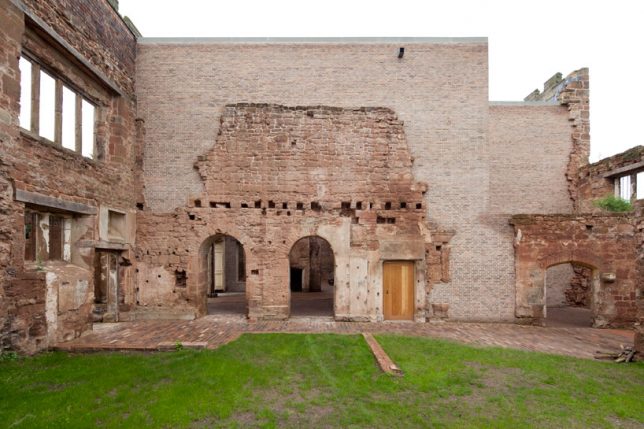
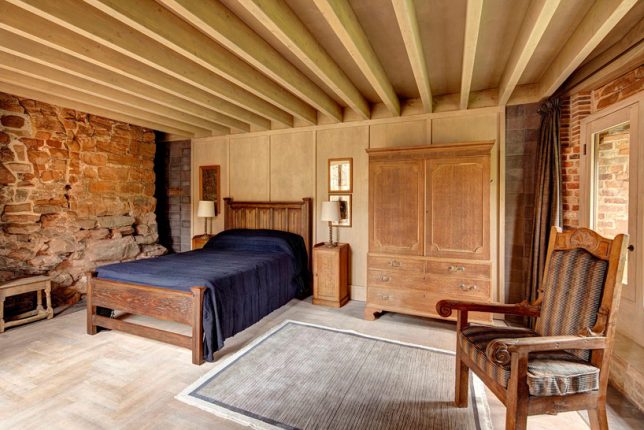
Astley Castle Renovation by Witherford Watson Mann, Warwickshire, England

architecture-intervention-astley-1

architecture-intervention-astley-2

architecture-intervention-astley-4

Ashley Castle, a former fortified manor for England’s Royal Family that fell into abandoned ruin for decades, comes back to life in the hands of London-based Witherford Watson Mann Architects, who repaired the damaged parts of the space with an insert that simultaneously blends and contrasts with the existing walls. The new brick follows the uneven breaks in the original masonry, preserving it not as it originally looked, but as it looked prior to the renovation, with all its years of history and wear.

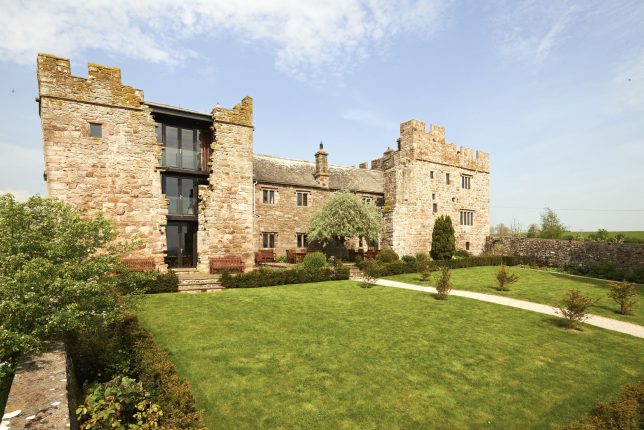
Blencowe Hall by Donald Insall Associates, England

All images copyright nicholas yarsley (wizzwam ltd).

architecture-intervention-main

A similar approach fills a crack in Blencowe Hall in Cumbria, enabling a deteriorating former manor house to become a luxury hotel in the countryside. The south tower was missing a roof and had sustained a large breach in its east wall. Donald Insall Associates worked with local architect Graham Norman to insert a steel frame and glazed wall into the reach, retaining it “as part of the story of the building.”

The Dovecote Studio by Haworth Tompkins, England

architecture-interventions-dovecote

architecture-intervention-dovecote-2

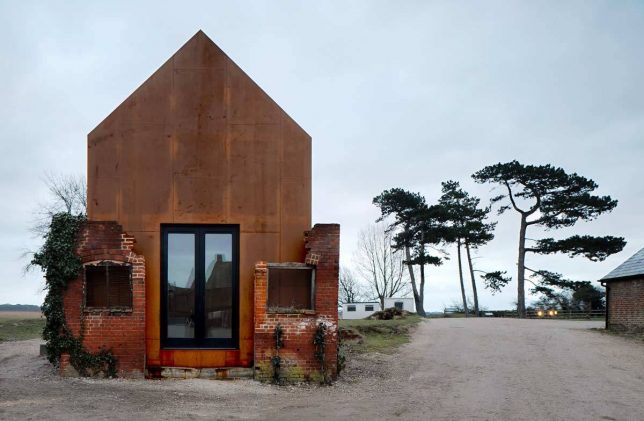
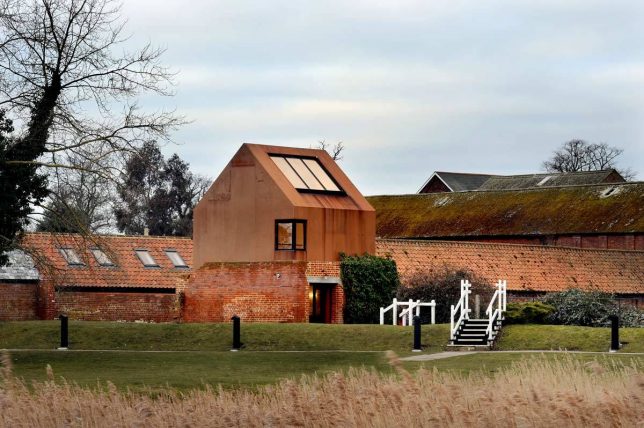
The Dovecote Studio is another example of radically preserving ruins that are deemed “too damaged to save” with some creative thinking. Studio Haworth Tompkins filled the empty shell of an abandoned building with a cortex steel building, which reads as an entirely separate structure within the original envelope but complements the red of the old brick as it rusts. The whole thing was preassembled and literally dropped inside by a crane. It now acts as housing for artists in residence, rehearsal space and temporary exhibition space at the internationally renowned music campus at Snape Maltings.

Kew House by Piercy & Company, London

architecture-intervention-kew-1

architecture-intervention-kew-2

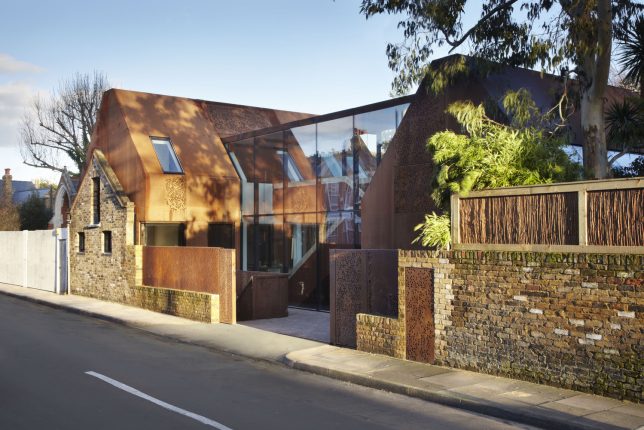
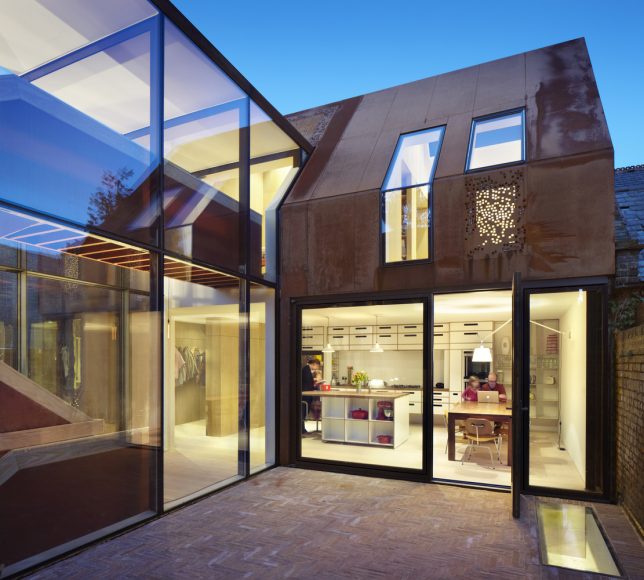
Very little was left of the original buildings that stood on this street within the Kew Green Conservation Area of southwest London, yet the new construction honors it all the same, incorporating it into the exterior facade. A nineteenth century stable wall acts as the defining architectural feature of the street-fronting side of a new four-bedroom family house by Piercy&Company, retaining its sense of history while allowing the construction of a modern home for modern needs.

Next Page – Click Below to Read More:
Architectural Interventions 12 Radical Modern Changes To Historic Buildings

Share on Facebook


[ By SA Rogers in Architecture & Houses & Residential. ]

[ WebUrbanist | Archives | Galleries | Privacy | TOS ]


WebUrbanist

 
Comments Off on Architectural Interventions: 12 Radical Modern Changes to Historic Buildings

Posted in Creativity


Book-Shaped Pavilion in Korea Celebrates Historic Birthplace of Printing

16 Oct

[ By WebUrbanist in Architecture & Public & Institutional. ]

printed-word-book

In 1377, nearly a century before the famous Gutenberg Bible was printed in Germany, the Jikji anthology was made using movable metal type, then bound and and protected for centuries to come.

book-pavillion-exterior

A new installation outside the Cheongju Art Centre in South Korea celebrates this historic achievement, acting as a shelter for public performances in the open plaza.

It also hints at a larger exhibit inside: an array of architecture, art, design and digital media that traces the history and impact of movable type on literacy and publishing.

book-art-stage

The pavilion itself, folded and stitched together with red twine, forms a canopy that mimics the properties of an open book “being pushed down onto a flat surface,” explains its creator Ron Arad. The thickness increases where the pages fan out, and the metal binding of the structure is derived from a traditional spine.”

movable-type

The Jikji is the abbreviated title of a Korean Buddhist document, whose title can be translated “Anthology of Great Buddhist Priests’ Zen Teachings.” It collects teachings of Buddhism passed down for generations.

Printed during the Goryeo Dynasty in 1377, it is the world’s oldest extant book printed with movable metal type. Prior printing techniques in China used ceramics to print volumes, but none of those works survive.

book-design-interior

book-monument

book-shaped-stage

book-space-deail

While other versions survive thanks to wood engravings in temples, only the final volume of the metal-printed Jikji is preserved by the Manuscrits Orientaux department of the National Library of France. The process used to create the anthology was only rediscovered in the early 1900s in the West.

Johannes Gutenberg, meanwhile, was the first to create his type pieces from an alloy of lead, tin, and antimony—and these materials remained standard for 550 years as printing evolved in Europe.

Share on Facebook


[ By WebUrbanist in Architecture & Public & Institutional. ]

[ WebUrbanist | Archives | Galleries | Privacy | TOS ]


WebUrbanist

 
Comments Off on Book-Shaped Pavilion in Korea Celebrates Historic Birthplace of Printing

Posted in Creativity


The AP and British Movietone publish more than 1 million minutes of historic footage to YouTube

24 Jul

The Associated Press and British Movietone have announced the addition of more than 1 million minutes of digitized historic footage to YouTube. The AP says that this project represents the largest ever upload of historic news content to YouTube, and will serve as a ‘visual encyclopedia’ for witnessing some of the biggest moments in recent world history. Read more

Articles: Digital Photography Review (dpreview.com)

 
Comments Off on The AP and British Movietone publish more than 1 million minutes of historic footage to YouTube

Posted in Uncategorized


Church Champing: Spend a Night in a Historic British Chapel

09 Jun

[ By Steph in Destinations & Sights & Travel. ]

champing main

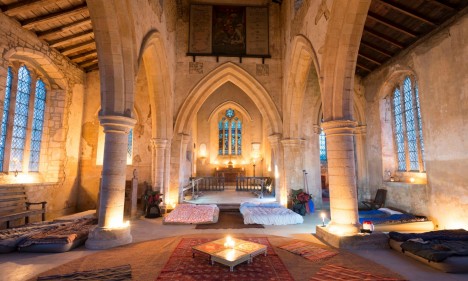
Spend an entire night climbing bell towers, composing your own sermons from a pulpit, examining historic artifacts up close or virtually anything else you want to get up to in one of England’s most picturesque rural churches. ‘Champing,’ or church camping, is somewhere in between mosquito-bitten nights in the wilderness and luxurious ‘glamping,’ with modest beds placed right in the nave of a centuries-old place of worship so paintings of Jesus can watch your every move.

champing 4

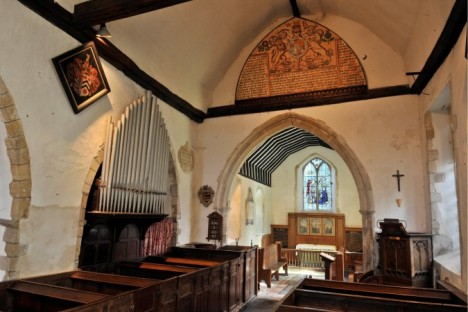
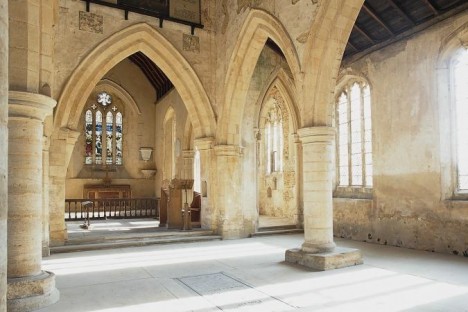
England’s Churches Conservation Trust, an organization that takes care of 347 churches that are no longer used for regular worship, has opened three of its buildings to the public for overnight stays. You can have St. Mary the Virgin in Kent, All Saints Church in Northamptonshire or St. Cyriac & St. Julitta in Cambridgeshire all to yourself. Once the medieval-looking iron key is in your hand, you’re free to act like you own the place.

church camping 2

champing 3

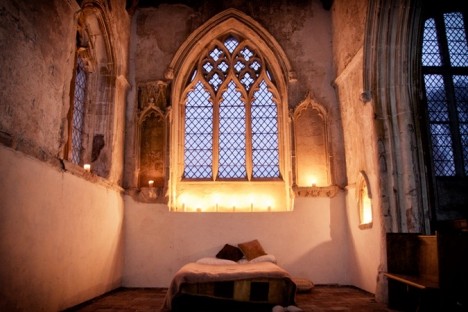
The experience is sort of like sleeping in a museum exhibit, getting all the time you want to look at every last detail of stained glass windows, architectural details, organs and sacred objects. St. Mary the Virgin, in England’s smallest and least-populated town, is quaint and provincial, while St. Cyriac’s features ornate Gothic windows. All Saint’s, with its soaring ceilings, can fit groups of up to twelve.

champing 6

champing 5

You’ll have to wash up with a jug and bowl, and the Conservation Trust offers to “very creatively turn a vestry into a champing toilet,” but for rates starting at roughly a hundred U.S. dollars per night, you’ll at least get breakfast delivered. Funds go to the continued preservation of these historic structures throughout Britain.


Share on Facebook


[ By Steph in Destinations & Sights & Travel. ]

[ WebUrbanist | Archives | Galleries | Privacy | TOS ]


WebUrbanist

 
Comments Off on Church Champing: Spend a Night in a Historic British Chapel

Posted in Creativity


Sky-High Ski Jump Penthouse: Win a Night at Historic AirBnB

13 Mar

[ By Steph in Boutique & Art Hotels & Travel. ]

ski jump penthouse 1

‘Please do not apply if you’re scared of heights,’ warns AirBnB about this private sky-high chalet located at the very top of the Holmenkollen ski jump, where some of the world’s top skiers have launched themselves onto the slopes. The fully-furnished apartment is 250 steps above the world’s first ski museum, and features the highest roof terrace in all of Oslo. Tell AirBnB why you’d like to stay here in 100 worlds or less, and you could win the chance to experience it yourself.

ski jump penthouse 9

ski jump penthouse 3

The vacation rental service is offering up a one-night stay at the Holmenkollen ski jump and as long as you’re available on March 26th or 27th, if you win, they’ll fly you in from anywhere in the world. You have until midnight on March 16th to submit your entry.

ski jump penthouse 6

ski jump penthouse 4

ski jump penthouse 7

The ski jump superstructure was first built in 1892 and hosted the 1952 Winter Olympics, where expert skiers gazed out onto the Nordic landscape before flying off the ramp in front of thousands of spectators. Since 1923, it’s also been home to a museum displaying over 4,000 years of ski history. The pinnacle, where the apartment is located, is 200 feet in the air.

sku jump penthouse 2

ski jump penthouse 8

Only pros are allowed to use the ski jump, “so don’t think you’re going to be pulling any tricks in your toboggan,” says AirBnB. But you’ll be steps away from thousands of miles of ski slopes, and if you want, you can even leave via zip-line when your trip is over. Apply here.

Share on Facebook


[ By Steph in Boutique & Art Hotels & Travel. ]

[ WebUrbanist | Archives | Galleries | Privacy | TOS ]


WebUrbanist

 
Comments Off on Sky-High Ski Jump Penthouse: Win a Night at Historic AirBnB

Posted in Creativity


Historic prints from the beginning of photography to go on auction in London

24 Feb

William Henry Fox Talbot prints from as early as 1844 are part of a collection of over 200 photographs that are due to go to auction in London next month. All of the pictures in the sale come from a single private collection which includes a many well-known and important works, and many of the prints were made at the time the original pictures were taken. See gallery

Articles: Digital Photography Review (dpreview.com)

 
Comments Off on Historic prints from the beginning of photography to go on auction in London

Posted in Uncategorized


Imperial Remnants: 7 Abandoned Wonders of Historic India

28 May

[ By Steph in Uncategorized. ]

Abandoned India Main

The remains of once-flourishing empires of India, from the ancient Mughal to the British colonies, now stand in varying states of decay, from the perfectly-preserved to the ruinous. Ghost stories, legends of curses and the shadow of thousands of fatalities hover about these historic abandonments located throughout the Southeast Asian nation.

Ross Island British Colony

Abandoned India Ross Island 2
Abandoned India Ross Island 1

Tree roots strange the remains of bunkers and other structures of Ross Island, a former British colonial settlement in the Andaman Islands of India first inhabited by Westerners in 1788. Poor weather conditions led to a high mortality rate in its first years as a colony, and it was abandoned, but in 1887, after a number of Indian uprisings, it was repopulated for use as a jail and penal colony. In 1942, Japanese troops invaded, but the British regained control after World War II was over and eventually passed the island onto the Indian Navy. Ross Island was established as a tourist attraction by 1993, and today, brick pathways enable visitors to explore the wild remains.

Bhangarh, India, “The Most Haunted Place in Asia”

Abandoned India Bhangarh
Abandoned India Bhangarh 2

Remote and rarely visited, the ghost village of Bhangarh is reputed to be ‘the most haunted place in Asia.’ Its location between the cities of Delhi and Jaipur, with no nearby shops or restaurants, makes it somewhat difficult to access. Established in 1573, the town began to decline by 1630 and was entirely uninhabited by 1783 after political strife an a famine. Entry is strictly prohibited between dusk and dawn, with locals claiming that anyone who does disappears, but during the day, occasional hardy tourists who have heard the legends about paranormal activity among the ruins trickle through. As the legend goes, the city of Bhangarh was cursed byt he Guru Balu, who sanctioned construction of the town, but warned “The moment the shadows of your palaces touch me, the city shall be no more!” A prince ignored the threat, raising a palace high enough to cast a shadow on Balu Nath’s retreat, resulting in a curse.

Whatever the reason for its decline, Bhangarh is a place of incredible beauty, the half-fallen village set against lush greenery and rocky cliffs.

Ancient Mandu

Abandoned India Mandu
Abandoned India Mandu 2

The ancient settlement of Mandu was the capital city of a northern Indian Muslim state between 1401 and 1561, but has lain abandoned for 400 years. Located in the Malwa region of western Madhya Pradesh, it’s a fortress town full of impressively ornate stone mosques, palaces, Jain temples and other structures and encircled by a battlemented wall. Places of interest include a ship palace between two artificial lakes, so named because it appears to float, as well as a royal complex that still bears witness to the once-great society its residents ruled. Rarely visited by Western tourists, the ruins are a bit of a hidden gem.

Kalavantin Durg, India’s Most Dangerous Fortress

Abandoned India Kalavantin Durg

Reputedly the most dangerous fortress in the world, Kalavantin Durg can only be accessed via an extremely strenuous trek up the side of a near-vertical mountain. Today, stairs make it a little easier for visiting tourists to access the top for views that reach all the way to Mumbai. The fort is believed to have been built around the time of Buddha, roughly 500 BCE, for a queen named Kalavantin, but that’s about all anyone knows of its origins. The local Adivasi people climb to the top of the fort on every Shimga Festival of Holi. It hasn’t been in use as a fort for centuries.

Next Page – Click Below to Read More:
Imperial Remnants 7 Abandoned Wonders Of Historic India

Share on Facebook


[ By Steph in Uncategorized. ]

[ WebUrbanist | Archives | Galleries | Privacy | TOS ]


WebUrbanist

 
Comments Off on Imperial Remnants: 7 Abandoned Wonders of Historic India

Posted in Creativity


Ancient Engineering Fail: 12 Historic Structural Disasters

16 Apr

[ By Steph in Culture & History & Travel. ]

Engineering Fail Main
You can’t exactly fault ancient architects for building structures that were unable to withstand stone-shattering earthquakes, or simply experimental in nature – failure is part of the learning process, after all, and engineering methods were obviously less advanced back then. Big ambitions led to taking big chances, which often resulted in faulty construction and, occasionally, deadly collapses. Here are 13 examples of mistake-riddled churches, statues, lighthouses, stadiums and more from the period between 2600 BCE and the Renaissance.

Bent Pyramid of Egypt

Engineering Fail Bent Pyramid

Why does Egypt’s Bent Pyramid, an unusual example of early pyramid development created around 2600 BCE, have a sudden change in angle about halfway up? Archaeologists believe that what we see today is basically a mistake created during the learning process, in which the builders realized that the steepness of the original angle would be unstable and prone to collapse. The lower portion of the pyramid inclines at an angle of 54 degrees, while the top is a shallower 43 degrees. Another 54-degree pyramid is believed to have collapsed while this one was under construction, leading the builders to suddenly change their plans. Subsequent pyramids in the area were constructed at the 43-degree angle instead.

The Colossus of Rhodes, Greece

Engineering Fail Colossus of Rhodes

One of the seven wonders of the ancient world, the towering Colossus of Rhodes was a statue of the Greek Titan Helios that stood over 98 feet high on a pedestal in the city’s harbor. Erected by Chares of Lindos in 280 BCE to celebrate Rhodes’ victory over Antigonis I Monopthalmus of Cyprus, the statue was among the tallest of the ancient world. The statue stood for 56 years until the 226 BCE Rhodes earthquake, which brought it crashing down. After the oracle of Delphi stated that the Rhodians had offended Helios, they decided not to rebuild.

It’s certainly not surprising that seismic activity would have caused the statue to collapse, given that it was built long, long before any real understanding of earthquake-resistant engineering. But the fact that such a tall structure could have been built in the first place during that time is a wondering itself; modern engineers have speculated about the bronze plates and iron bars that would have been attached to the feet to reinforce them.

The Lighthouse of Alexandria, Egypt

Engineering Fail Lighthouse Alexandria

Another ancient wonder, the Lighthouse of Alexandria stood somewhere between 393 and 450 feet in height, making it among the tallest structures on earth for centuries. But the limestone structure, completed between 280 and 247 BCE on the island of Pharos, couldn’t stand up to three earthquakes spread out over four hundred years. It likely lost its upper tier before the first one struck in the year 956 CE, and by the third disaster in 1323, it was abandoned. What was left of it was covered with a medieval fort in 1480.

Fidenae Amphitheater Collapse, Italy

Engineering Fail Fidenae Ampthitheater

20,000 people were killed or wounded in the worst stadium disaster in history, which occurred in 27 AD at the Fidenae Ampthitheater about 8 miles north of Rome. The structure was cheaply built of wood and not up to the task of accommodating the 50,000 people who amassed to watch gladiatorial games after a ban on them was lifted. The Roman Senate decided that too many lower class people were ruining everyone’s fun, so they banned anyone with a personal worth under a certain amount from attending the events.

Circus Maximus Upper Tier Collapse, Italy

Engineering Fail Circus Maximus

Built in the 6th century BCE, the infamous Circus Maximus was an ancient Roman chariot racing stadium capable of holding 250,000 spectators who gathered to watch the Roman Games and gladiator fights, and later, the races. The oldest and largest public space in Rome, and has been in near-constant use every since, with its latest incarnation as a public park and space for events like concerts and festivals. But in 140AD, it was the site of a major disaster: the upper tier of seats collapsed under the weight of too many spectators. 1,112 people were killed in what remains the deadliest sports-related incident in history.

Next Page – Click Below to Read More:
Ancient Engineering Fail 12 Historic Structural Disasters

Share on Facebook


[ By Steph in Culture & History & Travel. ]

[ WebUrbanist | Archives | Galleries | Privacy | TOS ]


WebUrbanist
 
Comments Off on Ancient Engineering Fail: 12 Historic Structural Disasters

Posted in Creativity