RSS
 

Posts Tagged ‘Here’

Here at last: Ricoh unveils the Pentax K-1 full-frame DSLR with 36MP sensor for $1800

20 Feb

$ (document).ready(function() { SampleGalleryV2({“containerId”:”embeddedSampleGallery_9218187924″,”galleryId”:”9218187924″,”isEmbeddedWidget”:true,”standalone”:false,”selectedImageIndex”:0,”startInCommentsView”:false,”isMobile”:false}) });

After years of development, not to mention months of teasers, Ricoh has made its Pentax K-1 full-frame DSLR a reality. The first 35mm format Pentax-branded DSLR (the first to make it to market, anyway), the K-1 offers a 36.4MP CMOS sensor, 5-axis sensor-shift image stabilization, a ‘nearly 100%’ optical viewfinder and 33-point AF system with 25 cross-type points. The 3.2″ 1.04M-dot LCD uses a new flexible tilting design which allows for horizontal, vertical and diagonal movement while keeping the screen in alignment with the lens axis.

The Pentax K-1 doesn’t have a conventional anti-aliasing filter, instead, like the K-3 II, offering a simulated AA filter by way of minute sensor vibrations. The K-1’s sensor is capable of moving in all directions, supporting Ricoh’s Pixel Shift Resolution system. This does not increase linear resolution, but as in the K-3 II, it shifts the sensor slightly to record full color information at each pixel, utilizing a motion correction function in an effort to neutralize the effect of moving subjects in the frame.

The K-1 provides a dustproof and weather-resistant construction along with built-in Wi-Fi, 1080/30p video, 14-bit Raw capture, 4.4 fps burst shooting for up to 23 images in Raw or 70 in JPEG.

The long-awaited Pentax K-1 will cost $ 1799 body-only when it ships it in April.

Press release:

Ricoh defines full-frame benchmark with new PENTAX full-frame DSLR offering

PENTAX K-1 camera offers innovations not available in any other DSLR

DENVER, Colo. February 17, 2016 – Ricoh Imaging Americas Corporation today announced the PENTAX K-1 full-frame digital single-lens reflex (DSLR) camera. The K-1 combines the performance of a full-frame sensor with unique, user-friendly PENTAX technology and convenience features loved by professional and serious amateur photographers the world over.  

The foundation of the PENTAX K-1 is its large, full-frame image sensor. This AA-filterless CMOS sensor with 36.4 effective megapixels sets the stage for ultimate creativity, facilitating super-high-resolution images rich in gradation and superb in high-sensitivity rendition. 

Built around the full-frame sensor is a compact, high-performance weather-sealed and dustproof body with features only found in PENTAX cameras. “The K-1 is a blend of advanced, full-frame performance with the kind of features and advancements that PENTAX users have come to know and love,” said Jim Malcolm, president, Ricoh Imaging Americas Corporation. “As a result, the K-1 creates a solution for full-frame shooters that is unique in the industry.”

Within its compact body, the PENTAX K-1 features several advanced technologies that help the photographer to produce top results in a wide variety of challenging conditions. SR II Shake Reduction is a newly refined and highly sensitive five-axis shake-reduction system that is capable of reducing camera shake with a compensation range of up to five exposure steps, allowing photographers to freely move and compose – and to focus on their subjects, not the gear. SR II also facilitates other advanced PENTAX-unique features such as AA Filter Simulator, which effectively eliminates moiré effect without the need for an anti-aliasing filter, while increasing sharpness and overall image quality. Key to great autofocus performance on the K-1 is the new SAFOX 12 autofocus mechanism with 33 autofocus points, assuring fast and accurate autofocusing, even in the most demanding shooting situations.  A newly-designed optical viewfinder equipped with the famous PENTAX Pentaprism boasts a bright, nearly 100-percent field of view.

In addition to a long list of technological advancements, the PENTAX K-1 also features a number of convenience features, making camera operation fast and easy. Designed to move in ways never before imagined is the new Flexible-tilt LCD monitor—a first for any DSLR camera. This rugged yet highly adjustable display can be positioned to the desired angle horizontally and vertically, making it easy to shoot at challenging angles. Other significant firsts include the K-1’s Operation Assist Lights – small, white LEDs that facilitate camera operation in low-light environments, making it easy to change lenses, swap memory cards and adjust back-of-camera controls, and a Smart Function dial that allows photographers to easy select frequently-used functions without going into the LCD menu. 

Current PENTAX lens owners will appreciate that they can incorporate their APS-C lens collection into their new PENTAX K-1 full-frame camera kit by utilizing the K-1’s Crop Mode, which offers settings in-camera for either APS-C or Full-Frame sized shooting, regardless of the attached lens. There is also an “auto” mode that detects the lens type and sets the camera accordingly. 

Upon launch, PENTAX is offering 12 full-frame compatible lenses, including two new models being announced concurrent with the K-1 camera: the HD PENTAX-D FA 15-30mm f.2.8 ultra-wide angle zoom lens and the HD PENTAX-D FA 28-105mm f/3.5-5.6 compact, lightweight zoom lens. (Note: separate news releases have been issued today to provide details on each lens).

| Pricing and Availability | 

The PENTAX K-1 camera will be available April 2016 at www.ricohimaging.com and retail outlets nationwide for a manufacturer’s suggested retail price of $ 1,799.95.

For further information, please visit www.ricohimaging.com/pentaxff


Main Features

1.  High-resolution, fine-gradation images supported by approximately 36.4 effective megapixels 

The K-1 features an AA (anti-aliasing) filterless design that prioritizes image resolution, as well as the new PRIME IV imaging engine, which is capable of 14-bit RAW-format image recording. The    K-1’s unique full frame sensor and imaging engine design also allows for super-high-sensitivity shooting up to ISO 204800, producing beautiful, high-resolution images.

2. New-generation SR II five-axis system

  • In-body SR II mechanism assures optimal shake reduction performance
    The SR II (Shake Reduction II) five-axis mechanism enables accurate control of the large full-frame image sensor with all compatible PENTAX interchangeable lenses.* In addition to camera shake caused by pitch and yaw, it effectively compensates for camera shake caused by horizontal and vertical shift, as well as camera shake caused by roll, which is difficult to deal with by lens-installed shake reduction mechanisms. Even when taking a panning shot, this system automatically detects the direction of the camera’s movement, and efficiently controls the SR II unit to always produce the best image possible.
  • Pixel Shift Resolution System with a new motion correction function
    This system uses the latest super-resolution technology, which captures four images of the same scene by shifting the image sensor by a single pixel for each image, then synthesizes them into a single composite image. Compared to the conventional Bayer system, in which each pixel has only a single color data unit, this innovative system obtains all color data within each pixel. It incorporates a new motion correction function, which automatically detects a moving object during continuous shooting.
  • Innovative AA filter simulator to minimize moiré
    By applying microscopic vibrations to the image sensor, the K-1’s AA (anti-aliasing) filter simulator provides the same level of moiré reduction as an optical AA filter.
  • Supportive shooting functions
    Since the K-1’s SR II unit has a flexible design that tilts the image sensor unit in all directions, it provides a host of handy shooting functions, including auto level compensation, image-composition fine-adjustment, and AstroTracer, which simplifies advanced astronomical photography using a built-in GPS module.

3. Flexible tilt-type LCD monitor to accommodate various shooting angles

The K-1 features a newly designed, Flexible-tilt LCD monitor, which tilts horizontally, vertically or diagonally with a single action, without deviating from the lens’s optical axis. 35 degrees of horizontal and 44 degrees of vertical adjustment can be achieved; the LCD panel can even be laid flat up or down. The 3.2-inch LCD monitor features a tempered-glass front panel for added durability, a unique air-gapless construction effectively reduces reflection, and a new Outdoor View Setting mode allows the user to instantly choose the desired monitor brightness level.

4. Newly developed SAFOX 12 with 33 sensor points and full-frame-proportioned AF frame

The SAFOX 12 AF sensor module features 33 AF sensors (25 cross-type sensors positioned in the middle). The center sensor and the two sensors located just above and below it are designed to detect the light flux of an F2.8 lens, making it easy to obtain pinpoint focus on a subject when using a large-aperture lens. 

5. Upgraded PENTAX Real-Time Scene Analysis System, with application of artificial  intelligence technology 

The K-1’s advanced PENTAX Real-Time Scene Analysis System performs near-instant analysis of exposure, color, movement and other factors. Combined with a breakthrough artificial intelligence technology called deep learning, the K-1 instantly optimizes settings for even the most difficult shooting situations.

6. Easy-to-focus optical viewfinder with nearly 100-percent field of view

Newly developed for its 35mm full-frame design, the K-1’s optical viewfinder provides a nearly 100-percent field of view and an approximately 0.7-times magnification. A Natural Bright Matt III focusing screen allows ease of focusing and a true-to-life rendition of defocused areas in the viewfinder image.

7. High-speed continuous shooting with a top speed of approximately 4.4 images per second

The K-1 has a larger shutter unit that easily accommodates the camera’s full-frame image sensor and provides high-speed, high-accuracy control of the mirror unit. A high-speed data transmission system incorporated in the PRIME IV imaging engine allows the user to continuously record as many as 17 images in the RAW format (or a maximum of 70 images in the JPEG Best format) in a single sequence, at a top speed of approximately 4.4 images per second. 

8. Supportive shooting functions to improve picture-taking efficiency and operational comfort

  • Operation assist light function, which provides LED lights above the lens mount, behind the LCD monitor, at the memory car slot, and at the cable switch terminal to facilitate fast and easy operation in poorly lit settings.
  • Key lock function, which prevents erroneous operation of the four-way controller and other exposure-related control buttons.
  • Smart function, which allows the user to swiftly choose and set desired functions using just the function dial and the set dial on the camera’s upper panel, without referring to the menu screen on the LCD monitor.
  • Control panel customize function allows the user to change aspects of the on-screen menu.

9. Compact, solid body with dustproof, weather-resistant construction

Constructed of sturdy yet lightweight magnesium alloy with the inclusion of 87 sealing parts in the body, the K-1 also boasts a dustproof, weather-resistant and cold-resistant construction.

Other Features 

  • Wi-Fi operation allowing camera control and image transfer to tablet or smartphone via the free ImageSync app
  • Full HD movie recording at 1920 x 1080 pixels in the H.264 recording format
  • Built-in GPS module and electronic compass
  • High-grade DR II (Dust Removal II) mechanism for effective elimination of dust on the image sensor using ultrasonic vibration
  • Crop mode with a choice of image area from AUTO, FF (Full Frame) and APS-C, to accommodate different types of lenses
  • Clarity control and Skin Tone correction functions, a pair of the latest image processing technologies developed by RICOH Central Laboratory
  • HDR (High Dynamic Range) shooting mode with RAW-format data filing, usable in handheld shooting
  • The PENTAX-invented hyper operating system for quick, accurate response to the photographer’s creative intentions
  • Dual SD card slots for memory card flexibility (compatible with SDXC UHS-1 speed class in SDR104 buss speed mode)
  • Compensation of various parameters: lens distortion, lateral chromatic aberration, diffraction, and brightness level at image-field edges. Fringe effect compensation is also available in RAW-format processing.
  • Compatibility with PENTAX Image Transmitter 2 tethering software (Software update required from RICOH IMAGING official website) 
  • Digital Camera Utility 5 software (latest version) included

Optional Accessory

  • D-BG6 Battery Grip
    This battery grip is designed to facilitate vertical-position shooting with the PENTAX K-1 camera body. It provides a shutter release button, a set of control buttons (AE lock, AF, ISO, exposure compensation, green), a preview lever, and dual electronic dials — just like those provided on the camera body. It also features the dustproof, weather-resistant construction identical to the PENTAX K-1 camera body. In addition to the dedicated lithium-ion rechargeable batteries, it also accepts six AA-size batteries.

Ricoh Pentax K-1 Specifications

Price
MSRP $ 1799/£1599 (body only)
Body type
Body type Mid-size SLR
Body material Magnesium alloy
Sensor
Max resolution 7360 x 4912
Image ratio w:h 3:2
Effective pixels 36 megapixels
Sensor photo detectors 37 megapixels
Sensor size Full frame (35.9 x 24 mm)
Sensor type CMOS
Color space sRGB, Adobe RGB
Color filter array Primary color filter
Image
ISO Auto, 100-204800
White balance presets 8
Custom white balance Yes (3 slots)
Image stabilization Sensor-shift
Uncompressed format RAW
JPEG quality levels Best, better, good
File format
  • JPEG (Exif v2.3)
  • Raw (PEF/DNG)
Optics & Focus
Autofocus
  • Contrast Detect (sensor)
  • Phase Detect
  • Multi-area
  • Center
  • Selective single-point
  • Tracking
  • Single
  • Continuous
  • Face Detection
  • Live View
Autofocus assist lamp Yes
Manual focus Yes
Number of focus points 33
Lens mount Pentax KAF2
Focal length multiplier 1×
Screen / viewfinder
Articulated LCD Tilting
Screen size 3.2
Screen dots 1,037,000
Touch screen No
Screen type TFT LCD
Live view Yes
Viewfinder type Optical (pentaprism)
Viewfinder coverage 100%
Viewfinder magnification 0.7×
Photography features
Minimum shutter speed 30 sec
Maximum shutter speed 1/8000 sec
Exposure modes
  • Program
  • Aperture priority
  • Shutter priority
  • Aperture and shutter priority
  • Sensitivity priority
  • Manual
Built-in flash No
External flash Yes (via hot shoe or flash sync port)
Flash modes Auto Flash Discharge, Auto Flash + Red-eye Reduction, Flash On, Flash On + Red-eye Reduction, Slow-speed Sync, Slow-speed Sync + Red-eye, P-TTL, Trailing Curtain Sync, Contrast-control-sync, High-speed sync, Wireless sync
Flash X sync speed 1/200 sec
Drive modes
  • Single Frame, Continuous, Self-timer, Remote Control, Bracketing, Mirror- up, Multi-Exposure, Interval Shooting, Interval Composite, Interval Movie Record, Star Stream
Continuous drive 4.4 fps
Self-timer Yes (2 or 12 sec, custom)
Metering modes
  • Multi
  • Center-weighted
  • Spot
Exposure compensation ±5 (at 1/3 EV, 1/2 EV steps)
AE Bracketing ±5 (2, 3, 5 frames at 1/3 EV, 1/2 EV steps)
Videography features
Resolutions 1920 x 1080 (60i, 50i, 30p, 25p, 24p), 1280 x 720 (60p, 50p)
Format MPEG-4, H.264
Microphone Stereo
Speaker Mono
Storage
Storage types Dual SD/SDHC/SDXC (UHS-I)
Connectivity
USB USB 2.0 (480 Mbit/sec)
HDMI Yes (micro-HDMI)
Microphone port Yes
Headphone port Yes
Wireless Built-In
Wireless notes 802.11b/g/n
Remote control Yes (wired, wireless, or smartphone)
Physical
Environmentally sealed Yes
Battery Battery Pack
Battery description D-LI90 lithium-ion battery & charger
Battery Life (CIPA) 760
Weight (inc. batteries) 1010 g (2.23 lb / 35.63 oz)
Dimensions 137 x 110 x 86 mm (5.39 x 4.33 x 3.39)
Other features
Orientation sensor Yes
Timelapse recording Yes (Still or video)
GPS BuiltIn

Articles: Digital Photography Review (dpreview.com)

 
Comments Off on Here at last: Ricoh unveils the Pentax K-1 full-frame DSLR with 36MP sensor for $1800

Posted in Uncategorized


Here at last: Nikon announces D500

06 Jan

$ (document).ready(function() { SampleGalleryV2({“targetContainerClass”:”sampleGalleryImageViewerContainer”,”galleryId”:”5622525111″,”isEmbeddedWidget”:true,”selectedImageIndex”:0,”startInCommentsView”:false,”isMobile”:false}) });

Nikon has announced the much-anticipated followup to its D300S, the 20.9MP D500 which the company calls its ‘best enthusiast DX offering.’ It features the same 153-point AF system and EXPEED 5 processor as the D5. It can shoot continuously at 10 fps with a 200 shot buffer for Raw images. It can also capture 4K/UHD video and also features ‘SnapBridge’, a constant connection to a smartphone using Bluetooth, similar to what Samsung did with its NX1. The D500 will be available from March at an MSRP of $ 1999.95 body only, or $ 3069.95 with the 16-80mm F2.8-4E ED VR lens.

The camera has a 100% coverage viewfinder offering 1.0x magnification. It also makes use of the XQD high speed memory format first used in the D4. It also has a flip up/down 3.2″ touchscreen LCD with 2.4 million dots.

The camera’s relationship to the D5 matches that shared between the D3 and original D300, with the APS-C format camera offering the same AF system and similar feature set with only a slight drop in continuous shooting speed and a much smaller body. And, as a first for one of Nikon’s APS-C DSLRs, the D500 also gets the illuminated buttons offered on the D5 for low-light working.

An AF module developed for full-frame means unprecedented frame coverage on the APS-C D500, in this case with cross-type sensors available out to the literal edges of the frame. Furthermore, Nikon is introducing Auto AF Fine-Tune, which appears to use Live View (focus at the image plane) to automatically calibrate (at least the center point of) the Phase Detect AF module for any given lens ‘with a few button operations’. This should help address arguably one of the biggest shortcomings of DSLRs relative to mirrorless cameras: the fact that the AF module is only a proxy for focus and, therefore, prone to inaccuracy. 

We were pretty impressed with the similar low power Bluetooth option on the NX1 as way of keeping a constant line of communication open between the camera and a smart device, meaning that images can quickly be pushed or pulled across from device to device. This continuous connectedness should make Wi-Fi much easier to use and consequently more appealing.

Jump to:

  • Press Release
  • Specifications

Press release:

PRO PEDIGREE, DX AGILITY: THE NEW NIKON D500 ESTABLISHES A NEW ERA OF DX-FORMAT PERFORMANCE 

The Highly Anticipated Resurrection of the DX-Format Flagship Gives Photographers the Best Combination of Speed, Reach and Connectivity 

LAS VEGAS, NV (January 5, 2016) – Today, Nikon Inc. announced the D500, a DX-format DSLR with pro-level features that gives photographers nimble handling, speed and extreme processing power in a compact and lightweight body. With amazing imaging capability, robust build quality and lightning fast performance, the D500 is sure to satisfy as the highly sought-after successor to the venerable D300S. Like its sibling the D5, the D500 benefits from Nikon’s latest technological innovations such as the totally new, blazing-fast Multi-CAM 20K 153-point AF system and 4K UHD video capture, yet adds a fun new way to share photos with Nikon SnapBridge built-in.

“Nikon has answered the call from photographers to once again re-invent this camera category and offer an unmatched combination of performance and value that is hard for any photographer to resist,” said Masahiro Horie, Director of Marketing and Planning, Nikon Inc. “When paired with the amazing imaging capabilities of legendary NIKKOR optics, photographers can capture intimate portraits, mind-blowing macros or action from extreme distances– the possibilities are endless.”

Pro-Level Image Quality, DX-Format Versatility

The D500 imagines the best of both worlds, offering advanced enthusiasts and pro photographers all the benefits of DX-format, such as smaller form-factor and lens crop, combined with many of the same advanced pro features found in the new Nikon D5. The new Nikon D500 features an all-new 20.9-megapixel DX-format CMOS sensor that renders images with outstanding colors and gorgeous tonality. This new sensor is coupled with Nikon’s new EXPEED 5 image processing engine, affording low noise and maximum processing power with a surprisingly small footprint and superbly balanced body.

The benefits of the DX-format are evident for long-distance applications like wildlife and sports photography, where telephoto ability is at a premium and weight reduction is welcome. With Nikon’s legendary FX or smaller-sized DX-format NIKKOR lenses, the sleek D500 is the ideal companion for wanderlust. When mated with the new AF-S NIKKOR 200-500mm f/5.6E ED VR lens, the D500 offers a remarkable 350-750mm equivalent focal range for a lightweight, yet super-telephoto duo. 

Because amazing images can happen even when the sun goes down, the D500 is capable of excellent low-light performance, with an ISO range of 100-51,200, expandable to 50-1,640,000 equivalent. From low-light cityscapes to action sports under the lights, the D500 is ready to tackle any imaging challenge.

Performance Meets Portability

Within the streamlined body of the D500 is a formidable processing powerhouse. Whether photographing sideline sports for the home team or animals in exotic destinations, a super-fast 10 frames-per-second (fps) burst speed with full AF and AE will help nail nearly any shot. This extreme speed lets users capture every fleeting moment in exceptional clarity, while a generous buffer allows for up to 79 shots (14-bit, uncompressed RAW/NEF) to be captured, so the moment won’t be missed.

To keep pace with the action, the D500 is fitted with the same AF system as the Nikon D5, the Multi-CAM 20K AF sensor module, with a separate dedicated processor for AF function. On the D500’s DX format sensor, the 153-point AF array fills the frame from side to side, letting users flawlessly track and lock-onto subjects from the edges of the viewfinder. Like the D5, the D500 utilizes the new 180K RGB Metering system and Advanced Scene Recognition System to help ensure balanced exposures and fantastic color rendition in nearly any shooting situation.

Controls and Rugged Construction Worthy of a Flagship

The D500 features an enhanced level of robust build quality, offering the same amount of rugged weather sealing as the Nikon D810. The durable body is a monocoque structure composed of magnesium alloy for the top and rear, while the front is reinforced with lightweight carbon fiber. The shutter mechanism has been tested for 200K actuations, helping to ensure maximum endurance. For further durability, the D500 excludes a pop-up flash, yet is compatible with Nikon’s newest radio frequency capable flash, the SB-5000 Speedlight (with optional WR-R10 & WR-A10)1.

It’s easy to compose and view images on the D500’s bright 3.2-inch, high resolution (2359K-dot) touchscreen LCD, which lets users interact with photos in playback, control the camera and operate menus. When mounted on a tripod or shooting from creative angles, landscape and event shooters will appreciate the reinforced tilting LCD screen, similar to that of the Nikon D750. Additionally, images are rapidly written to either a fast XQD card slot or to the additional SD card slot for maximum workflow efficiency.

Constant Connectivity with the New Nikon SnapBridge

The D500 marshals in a new way to share photos wirelessly with the new Nikon SnapBridge, making the camera’s built-in connectivity easier to use than ever before. SnapBridge allows for Bluetooth2 supported connection between your camera and compatible smart device, thus making automatic upload of your images possible. Once enabled, the camera stays connected to the smart device and transfers photos, eliminating the need to re-connect devices. Those looking to share images from their travels or from the field can also tag images for transfer in camera and can password protect their connection for added security. As an added benefit, the D500’s built-in Near Field Communication (NFC)3 capability easily connects the camera to a compatible smart device with just a tap, while built-in Wi-Fi3 capability allows for faster wireless image transfer.

For those looking for an even faster transfer solution, the D500 is also compatible with the new optional WT-7A Wireless Transmitter, enabling wired or wireless transmission of files to an FTP server or computer at faster speeds.

Advanced Video Features

Just like the D5, the D500 has the ability to capture striking 4K UHD video at up to 30p (3840×2160), as well as Full HD (1080p) video at a variety of frame rates. Ready for any production, the camera sports a host of pro video features derived from the D810, including uncompressed HDMI output and Picture Controls, but adds even more great features. These pro-level creative video features include the ability to create 4K time-lapse movies in-camera, Auto ISO smoothing to provide fluid transitions in exposure during recording, and the capability to record 4K UHD video to the card and output to HDMI simultaneously. When capturing 1080p Full HD content, the camera also has a new 3-axis electronic VR feature that can be activated regardless of the lens being used.  Challenging video exposures are no problem for the D500, as it also adds in Active D-Lighting to Full HD video to balance exposure values within a scene to help prevent blown-out highlights

Price and Availability

The new Nikon D500 DSLR will be available in March 2016 for a suggested retail price (SRP) of $ 1,999.95* for the body-only configuration. A kit will also be available, bundled with the versatile AF-S DX NIKKOR 16-80mm f/2.8-4E ED VR lens, for the SRP of $ 3,069.95*. The MB-D17-battery pack will also be available in March 2016 for the SRP of $ 449.95* and will add extended battery life and facilitate vertical shooting. The WT-7A Wireless Transmitter will be available in March 2016, for the SRP of $ 934.95*. For more information on these new Nikon products, please visit www.nikonusa.com.

1. Wireless Remote Controller WR-R10 and WR Adapter WR-A10 (both available separately) required. WR-R10 firmware must be updated to enable support for radio-controlled Advanced Wireless Lighting (see Nikon’s website).
2 The Bluetooth® word mark and logos are registered trademarks owned by Bluetooth SIG, Inc. and any use of such marks by Nikon Corporation is under license.
3 Wi-Fi and the Wi-Fi logo are trademarks or registered trademarks of the Wi-Fi Alliance. N-Mark is a trademark or registered trademark of NFC Forum, Inc., in the United States and/or other countries.
*SRP (Suggested Retail Price) listed only as a suggestion. Actual prices are set by dealers and are subject to change at any time.

Nikon D500 specifications

Price
MSRP $ 2000 (body only), $ 3069 (w/16-80mm lens)
Body type
Body type Mid-size SLR
Sensor
Max resolution 5568 x 3712
Other resolutions 4176 x 2784, 2784 x 1856
Image ratio w:h 3:2
Effective pixels 21 megapixels
Sensor photo detectors 22 megapixels
Sensor size APS-C (23.5 x 15.7 mm)
Sensor type CMOS
Processor Expeed 5
Image
ISO ISO 100 – 51200 (expandable to 50 – 1640000)
White balance presets 12
Custom white balance Yes (5)
Image stabilization No
Uncompressed format RAW + TIFF
JPEG quality levels Fine, Normal, Basic
Optics & Focus
Autofocus
  • Contrast Detect (sensor)
  • Phase Detect
  • Multi-area
  • Selective single-point
  • Tracking
  • Single
  • Continuous
  • Face Detection
  • Live View
Autofocus assist lamp No
Digital zoom No
Manual focus Yes
Number of focus points 153
Lens mount Nikon F
Focal length multiplier 1.5×
Screen / viewfinder
Articulated LCD Tilting
Screen size 3.2
Screen dots 2,359,000
Touch screen Yes
Screen type TFT LCD
Live view Yes
Viewfinder type Optical (pentaprism)
Viewfinder coverage 100%
Viewfinder magnification 1×
Photography features
Minimum shutter speed 30 sec
Maximum shutter speed 1/8000 sec
Built-in flash No
External flash Yes (Hot-shoe, Wireless plus sync connector)
Flash modes Auto, On, Off, Red-eye, Slow sync, Rear curtain
Flash X sync speed 1/250 sec
Continuous drive 10.0 fps
Self-timer Yes (2, 5, 10 or 20 sec)
Metering modes
  • Multi
  • Center-weighted
  • Highlight-weighted
  • Spot
Exposure compensation ±5 (at 1/3 EV, 1/2 EV steps)
AE Bracketing (2, 3, 5, 7 frames at 1/3 EV, 1/2 EV, 2/3 EV, 1 EV steps)
WB Bracketing Yes (2 or 9 frames in steps of 1, 2 or 3 mired)
Videography features
Resolutions 4K (UHD) 30p/25p/24p, 1080/60p/50p/30p/25p/24p, 720/60p/50p
Format MPEG-4, H.264
Microphone Stereo
Speaker Mono
Storage
Storage types SD/SDHC/SDXC (UHS-II compliant) + XQD
Storage included None
Connectivity
USB USB 3.0 (5 GBit/sec)
HDMI Yes (mini-HDMI)
Microphone port Yes
Headphone port Yes
Wireless Built-In
Wireless notes Wi-Fi with low energy Bluetooth
Remote control Yes (Optional, wired or wireless )
Physical
Environmentally sealed Yes
Battery Battery Pack
Battery description Lithium-Ion EN-EL15 rechargeable battery & charger
Battery Life (CIPA) 1240
Weight (inc. batteries) 860 g (1.90 lb / 30.34 oz)
Dimensions 147 x 115 x 81 mm (5.79 x 4.53 x 3.19)
Other features
Orientation sensor Yes
Timelapse recording Yes
GPS Optional
GPS notes GP-1

Articles: Digital Photography Review (dpreview.com)

 
Comments Off on Here at last: Nikon announces D500

Posted in Uncategorized


Upgrading? Here are Some Good Cameras Under $1000

21 Nov

Thinking of upgrading to a newer camera but don’t want to spend a fortune?  Here are two videos that will give you some options for both DSLR and Mirrorless in the under $ 1000 USD price range.

Best Mirrorless Camera Under $ 1000

The one they recommend in the video about is the Fuji X-T10 which comes in at $ 999 with the 18-55mm kit lens.

Other Cameras Under $ 1000

The guys at Digital Rev TV do a humorous comparison between the Canon 700D (T5i) at $ 649 with the 18-55mm lens, and the Panasonic Lumix DMC-GM5 at $ 669 USD with the 12-32mm kit lens.

An alternative choice

Or you could take the approach in the video below (he’s talking about doing video but the same applies to sill photography). You could save your money, and work on your photography education instead. This is a great place to start right here on dPS – do a search for topics you’re interested in, invest in some ebooks or a video course.

googletag.cmd.push(function() {
tablet_slots.push( googletag.defineSlot( “/1005424/_dPSv4_tab-all-article-bottom_(300×250)”, [300, 250], “pb-ad-78623” ).addService( googletag.pubads() ) ); } );

googletag.cmd.push(function() {
mobile_slots.push( googletag.defineSlot( “/1005424/_dPSv4_mob-all-article-bottom_(300×250)”, [300, 250], “pb-ad-78158” ).addService( googletag.pubads() ) ); } );

The post Upgrading? Here are Some Good Cameras Under $ 1000 by Darlene Hildebrandt appeared first on Digital Photography School.


Digital Photography School

 
Comments Off on Upgrading? Here are Some Good Cameras Under $1000

Posted in Photography


New iPhone 6s is Here! Come See What We’ve Got in Store For it.

10 Sep

Happy New iPhone Day!!!

While you’re queuing up to snag your brand new phone, check out these accessories to deck it out.

And remember: On Wednesdays, our iPhones wear pink.

(…)
Read the rest of New iPhone 6s is Here! Come See What We’ve Got in Store For it. (0 words)


© Erin for Photojojo, 2015. |
Permalink |
No comment |
Add to
del.icio.us

Post tags:


Photojojo

 
Comments Off on New iPhone 6s is Here! Come See What We’ve Got in Store For it.

Posted in Equipment


Foldio 2 is Here! Bigger and Brighter Than Ever.

11 Aug

Foldio, our favorite and only portable light studio, is back and reinvented. Bigger size, brighter lights, dimmable option and a diffuser. It is everything.

All the added goodness without added complication. Foldio 2 still folds flat and pops up easily. The even light and crisp backgrounds bring perfection to product shots, food blog photos, pictures of your pets, profesh manicure snaps and sooo much more.

Check out some fun examples of what people are doing with their Foldio, and tips on how to make the most of yours. Or, run to the shop and order your bigger brighter Foldio, now!

(…)
Read the rest of Foldio 2 is Here! Bigger and Brighter Than Ever. (422 words)


© Erin for Photojojo, 2015. |
Permalink |
No comment |
Add to
del.icio.us

Post tags:


Photojojo

 
Comments Off on Foldio 2 is Here! Bigger and Brighter Than Ever.

Posted in Equipment


Your Hunk-a, Hunk-a Burning Questions Answered Here

26 May

Meet our stellar customer service team. They’re chock-full of information about all of our shop goodies (also great at telling jokes!)

We picked their brains about some of our most popular products in order to answer your most FAQs.

Don’t see your question? Shoot them an E-mail, they love chatting!

CS FAQ ASAP

(…)
Read the rest of Your Hunk-a, Hunk-a Burning Questions
Answered Here (988 words)


© Erin for Photojojo, 2015. |
Permalink |
No comment |
Add to
Answered Here”>del.icio.us

Post tags:


Photojojo

 
Comments Off on Your Hunk-a, Hunk-a Burning Questions Answered Here

Posted in Equipment


Are Mirrorless Cameras Here to Stay?

02 Feb

In the late 2000s a new segment formed in the photography industry. This segment goes by many names, but the most common nowadays is “Mirrorless”. These cameras fall between the generic point and shoot cameras and the professional full frame DSLR systems.

Zhao !

By Zhao !

So what is Mirrorless all about?

The first mirrorless cameras came out with a traditional rangefinder design. They were small, had many manual settings, and were geared more towards street photographers who wanted great image quality in a small body. From these first cameras it became evident that a smaller camera with great image quality, professional grade, could be very useful. Soon there were several manufacturers developing mini-DSLR looking cameras, more rangefinder designs, and adding more and more features that are found in very high-end cameras. Along with these smaller bodies and variety of sensor sizes new lenses were engineered to take full advantage of the mirrorless design. Some of these manufacturers include Leica, Sony, Panasonic, Olympus, Fuji, Canon, Nikon.

First impressions

When these cameras hit the market they were sought after by photojournalists, and street photographers as well as the techie part of the industry. Some thought it was just a trendy segment while others laughed at their size and functionality, forever comparing with full frame DSLRs (this is due to the fact that many mirrorless cameras don’t use a full frame sensor). Even after many articles had come out talking about the benefits of these cameras, many looked passed them and considered them amateur gear. But, manufacturers continued to produce new cameras with more features and better performance.

What really sets Mirrorless apart?

2936145 orig

As the segment continues to gain traction several key features are really starting to turn heads.

EVF: Electronic Viewfinder

Unlike traditional viewfinders which show you what is reflected via the mirror you actually see a small built-in display in the viewfinder showing you what the sensor sees. Try to picture a mini-tv monitor inside the viewfinder showing you what the camera sees.

This might seem strange, but there are tons of benefits to having it set up this way. You see what the sensor sees. So, you can point the camera into the sun and not get blinded. Or you can set the camera to black and white mode and you’ll see everything in black and white. On some cameras you can access your full camera menu through the viewfinder without having to look at the screen on the back. Also, you can fully customize the information you see in the viewfinder. What you see is what you get.

Ergonomics

9977912 origMirrorless cameras are small, compact, and very well built. They are made with high grade materials, and just by holding them you know you’re not using a generic point and shoot. To some photographers this is a huge selling point as they look to get away from their heavy camera gear. It also makes it easier to blend into the background without a big DSLR pointed at someone. Some of these cameras are even fully weather sealed, or have a flip out display, and just about all of them have a hot shoe for an external flash.

But, it goes further. The button layouts and menu systems are designed to be easy to use for even the most demanding of photographers. Unlike point and shoot cameras all the main controls are easily accessible. Some of these design cues come from professional full frame cameras while others look towards old film cameras for inspiration. With all this variety there is system for everyone.

Image quality

As each new generation comes out there has been an improvement in sensors, autofocus, and even better lenses. All of these things have caught the eye of the whole industry. The mirrorless segment is maturing at a rapid pace and it shows! Unlike the large DSLR companies who are fighting the megapixel race, the mirrorless segment is working on improving image quality in low light situations, fast moving subjects and lens quality. They have found ways to make it easier to take photos with manual focusing lenses as well. Image quality is a very important part of the development of the mirrorless segment.

The future of mirrorless – predictions

The mirrorless segment of the industry has really caught fire in the last few years. All major manufacturers have jumped on board, which means there are lots of options for anyone interested in giving them a try. New adapters have come out so you can use your existing lenses on your new mirrorless camera. Improvement on sensors, auto focus, weather sealing, range of lenses, and options, are attracting more and more people to mirrorless. Fujifilm as well as others are already developing a huge loyal customer base. Firmware updates seem to be the big game changer regarding loyalty. The constant updates and improvements are much more useful than what we’ve seen from most DSLR manufacturers.

9144849 orig

This segment will continue to grow and get better at a much faster rate than other segments. Although still young, mirrorless is here to stay. There is something for everyone. Even the most traditional photographers are getting excited about the possibilities of the Electronic Viewfinder as it keeps getting better and better. At the lower price point, much smaller form factor and close to equal image quality to the very large and expensive DSLRs means that it makes sense that more and more photographers will look to add, or replace, their gear with a shiny new mirrorless system.

Zhao !

By Zhao !

What are your thoughts? Where do you stand?

googletag.cmd.push(function() {
tablet_slots.push( googletag.defineSlot( “/1005424/_dPSv4_tab-all-article-bottom_(300×250)”, [300, 250], “pb-ad-78623” ).addService( googletag.pubads() ) ); } );

googletag.cmd.push(function() {
mobile_slots.push( googletag.defineSlot( “/1005424/_dPSv4_mob-all-article-bottom_(300×250)”, [300, 250], “pb-ad-78158” ).addService( googletag.pubads() ) ); } );

The post Are Mirrorless Cameras Here to Stay? by Tomas Haran appeared first on Digital Photography School.


Digital Photography School

 
Comments Off on Are Mirrorless Cameras Here to Stay?

Posted in Photography


It’s Here! Gift Guide 1Six NEW Photo Gifts

24 Nov

The holidays snuck up on you a bit last year resulting in some less than stellar “gifts”… a stocking stuffed with actual socks and canned fruit?

Get a jump on things now and grab the stuff your friends and fam really want!

Take a gander at these 6 six brand new photo goodies (and a few old faves) we hand-picked to maximize your gift giving glory this year.

See Photojojo’s Gift Guide #1 of 2014 (…)
Read the rest of It’s Here! Gift Guide 1
Six NEW Photo Gifts (0 words)


© laurel for Photojojo, 2014. |
Permalink |
No comment |
Add to
Six NEW Photo Gifts”>del.icio.us

Post tags:


Photojojo

 
Comments Off on It’s Here! Gift Guide 1Six NEW Photo Gifts

Posted in Equipment


Hoverboards are Here! Design Floats Above Metal Surfaces

25 Oct

[ By Steph in Conceptual & Futuristic & Technology. ]

hendo hoverboard main

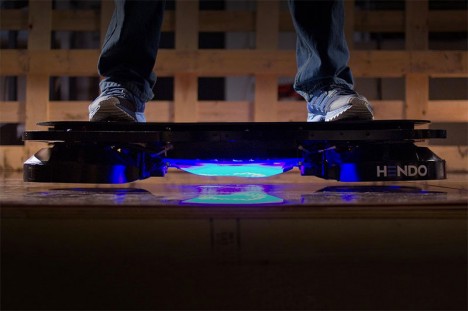
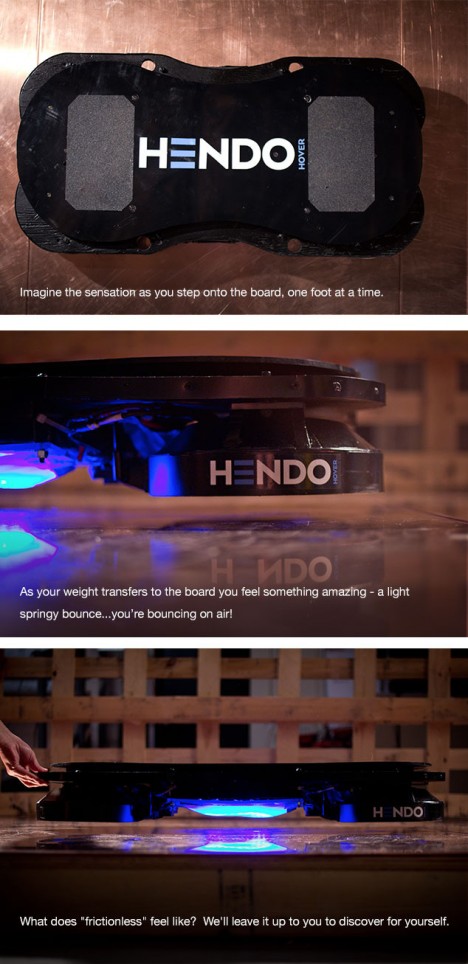
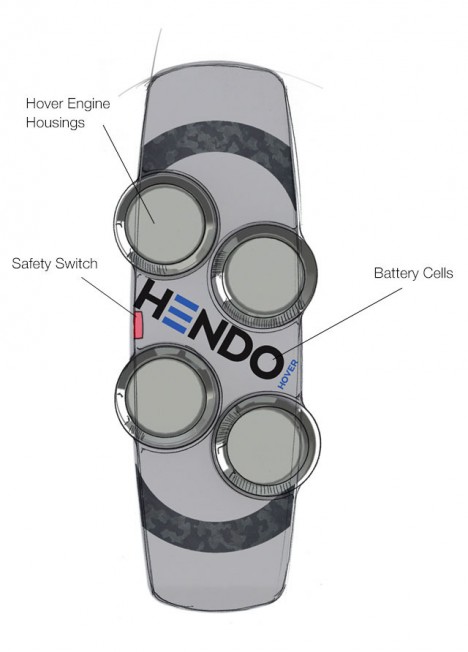
Twenty-five years after ‘Back to the Future’ convinced an entire generation that we’d soon be able to zoom around the city on wheel-less floating skateboards, it looks like we might finally get our wish: a working hoverboard actually exists. The Hendo Hoverboard, currently blazing past its funding goals on Kickstarter, features four disc-shaped hover engines that create a magnetic field to levitate the board off the ground.

Hendo Hoverboard 4

Hendo Hoverboard 5

Naturally, there’s a catch: it only works on certain metallic surfaces. The creators are currently using non-ferromagnetic conductor sheet metal, but are working on new compounds that could increase performance while minimizing cost. The magnetic field created by the board levitates it an inch above the ground, offering an ultra-smooth ride that you just can’t get on wheels.

Hendo Hoverboard 3

“While one day we expect to have hoverboards that can effortlessly float over any medium (even water!), our current technology requires special types of surfaces,” says Hendo. “Therefore, we need a hoverpark to go with our boards, and have been busy designing a park befitting the awesomeness of our technology.”

hendo hoverboard 7

In addition to snagging a ‘Whitebox’ developer kit that enables you to play around with the technology yourself, Kickstarter rewards include reserving a brick-sized piece of the eventual Hoverpark with your name engraved onto it. The first 10 production Hendo Hoverboards have already been snagged at $ 10,000 each.

gizmodo hoverboard gif

After all the hoaxes, it’s understandable that people are skeptical – but Gizmodo got to actually give it a try, confirming that it works. Check it out in the video above, and get all the technical details at Kickstarter.

Share on Facebook


[ By Steph in Conceptual & Futuristic & Technology. ]

[ WebUrbanist | Archives | Galleries | Privacy | TOS ]


WebUrbanist

 
Comments Off on Hoverboards are Here! Design Floats Above Metal Surfaces

Posted in Creativity


Shopping for a New Tripod? Here are a Few Options to Check Out

05 Oct

If you’re in the market for a new tripod, or perhaps looking to buy your first one here’s some help for you from the folks over at B&H Photo Video.

You can check out these dPS articles as well:

  • Beginner’s Guide to Tripods
  • Different Tripods for Different Subjects – Which to Choose?
  • How to use Your Tripod (it’s not as simple as you think!)
  • An Introduction to Tripods
  • How to buy a tripod

The post Shopping for a New Tripod? Here are a Few Options to Check Out by Darlene Hildebrandt appeared first on Digital Photography School.


Digital Photography School

 
Comments Off on Shopping for a New Tripod? Here are a Few Options to Check Out

Posted in Photography